Column Vectors Worksheets
All worksheets are created by the team of experienced teachers at Cazoom Maths.
What are column vectors and how do you write them?
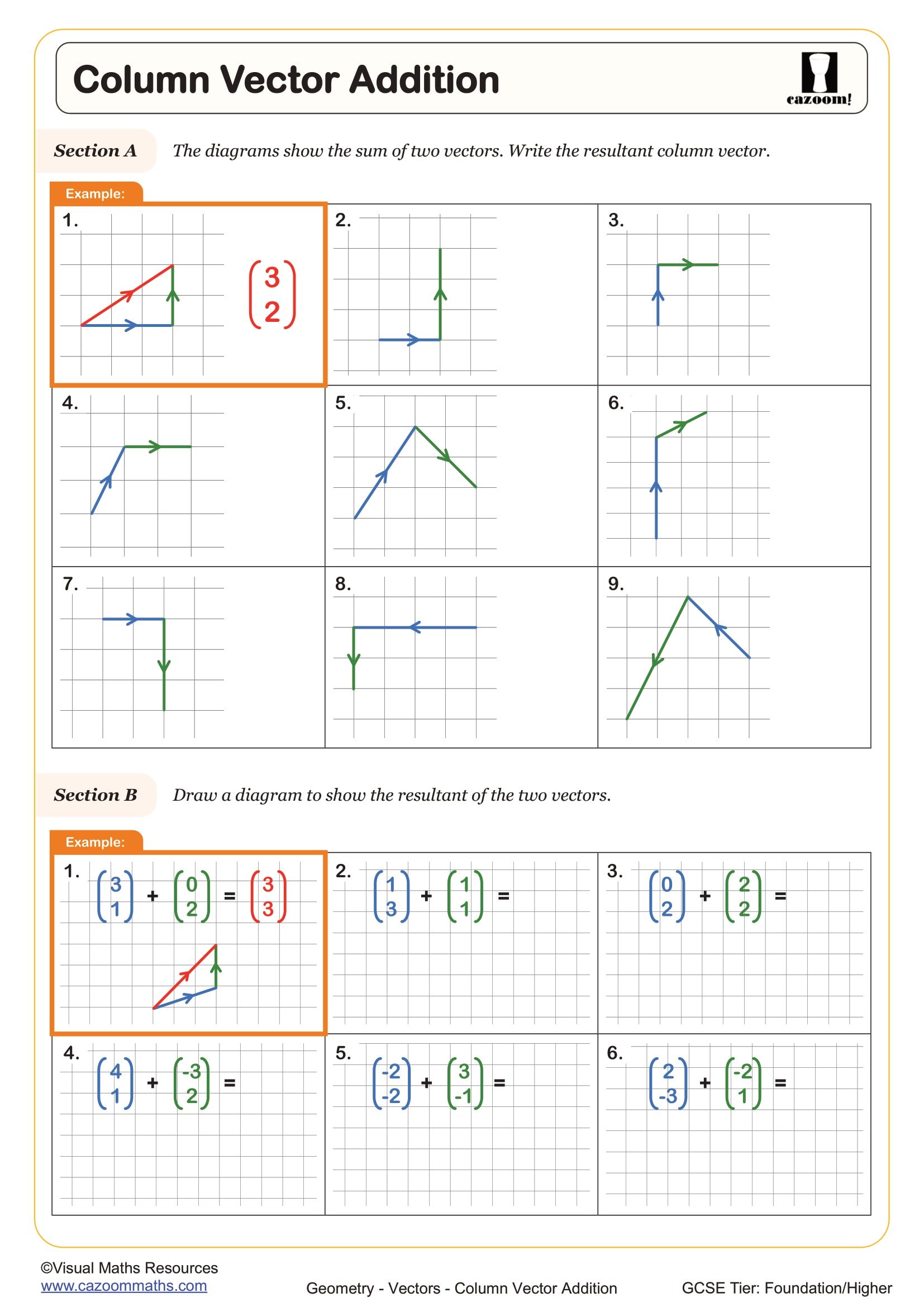
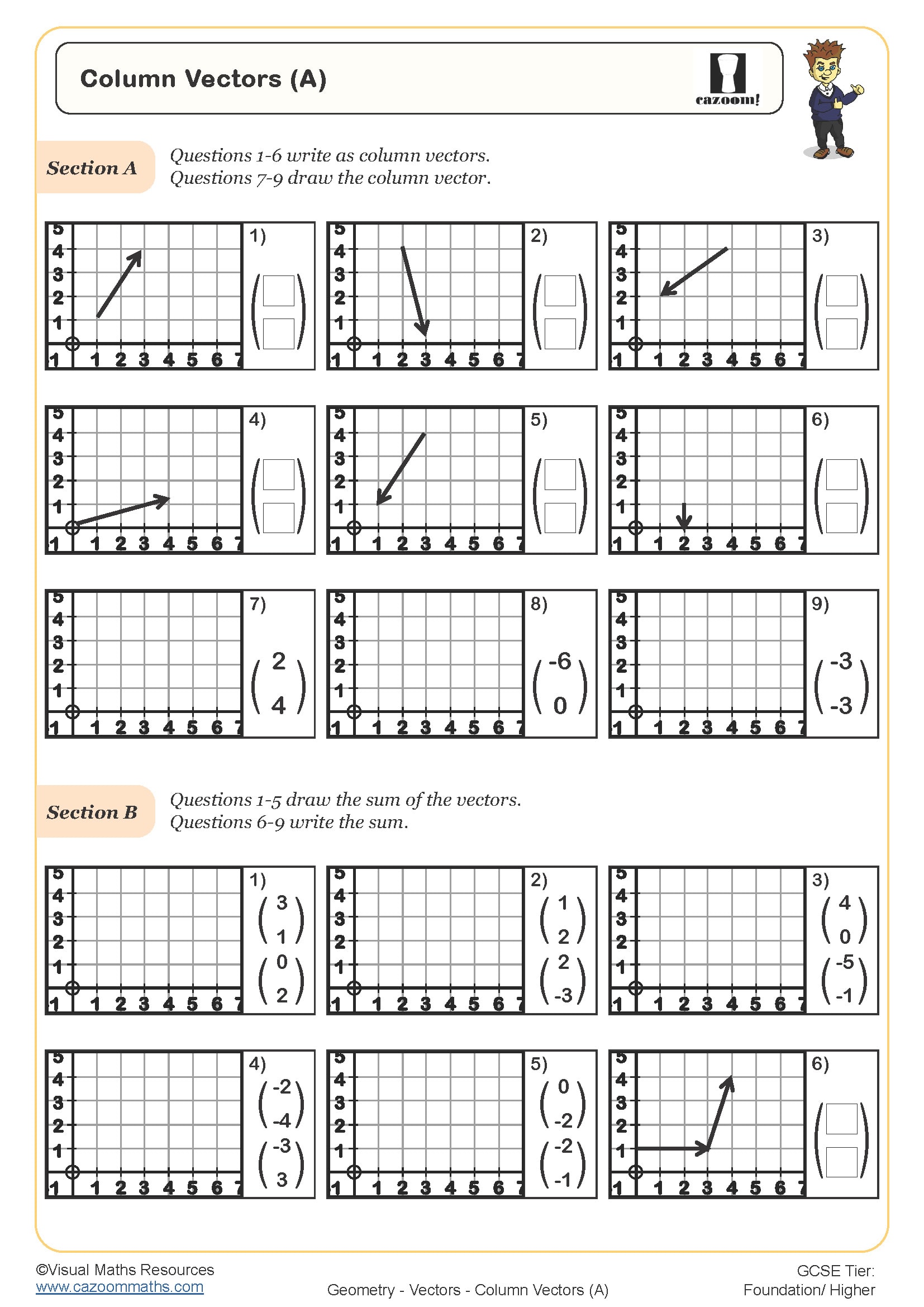
Column vectors represent translations or displacements using two numbers arranged vertically in brackets, where the top number shows horizontal movement (positive right, negative left) and the bottom number shows vertical movement (positive up, negative down). In GCSE examinations, students must use correct notation with parentheses, writing vectors in the form (x y) where x and y are the components.
A common error occurs when students confuse the order of components, placing the vertical movement first rather than the horizontal. Teachers frequently see students write coordinates instead of vectors, missing that column vectors represent movement rather than position. Exam questions often test whether students can extract vector information from diagrams and translate it into correct column notation, particularly when vectors point in negative directions.
Which year groups study column vectors?
Column vectors appear in the Year 10 and Year 11 curriculum as part of GCSE Higher tier mathematics, sitting within the geometry and measures strand of the National Curriculum. Students typically encounter basic vector notation and operations in Year 10 before progressing to more complex applications involving multiple vectors and geometric proofs in Year 11.
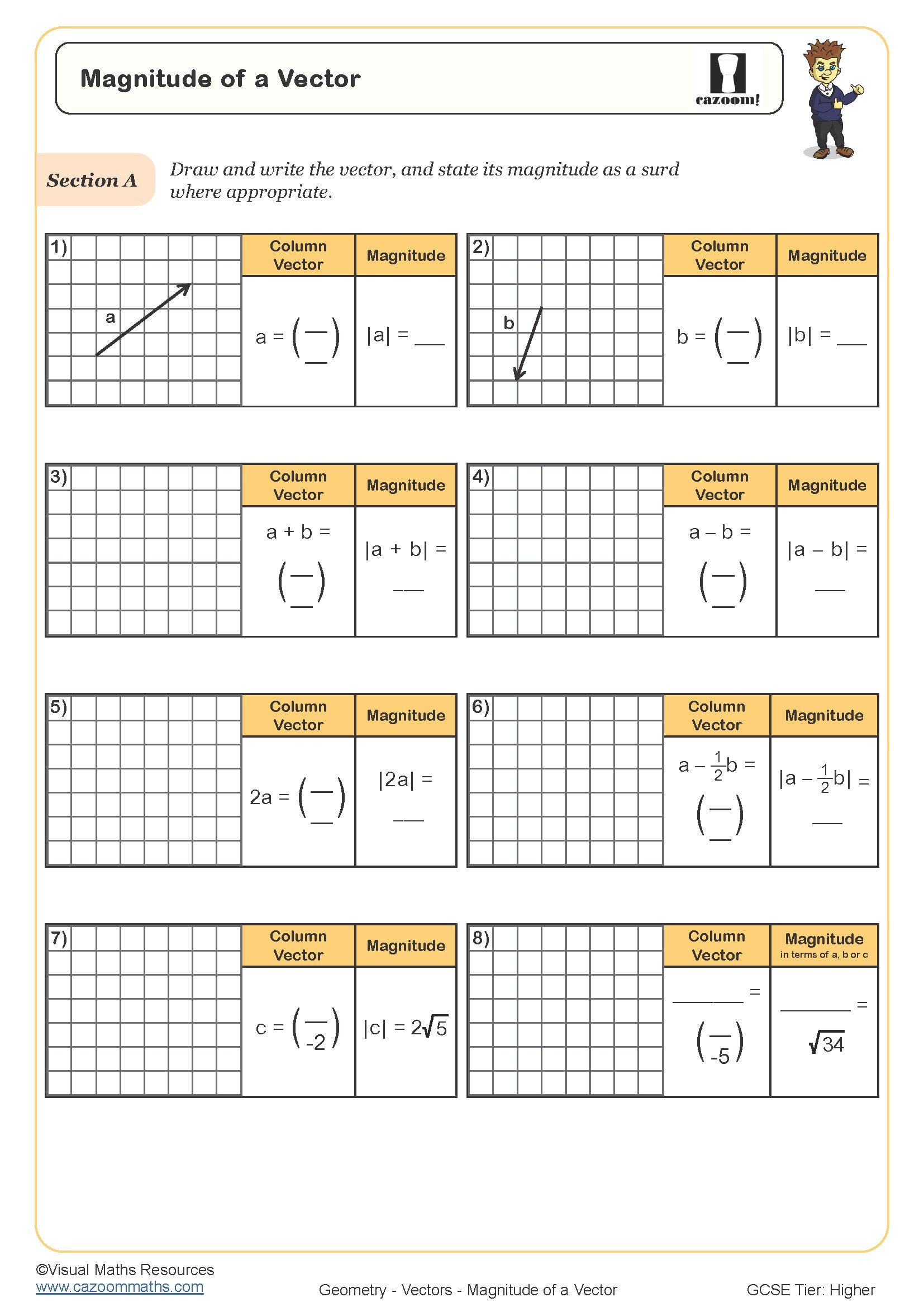
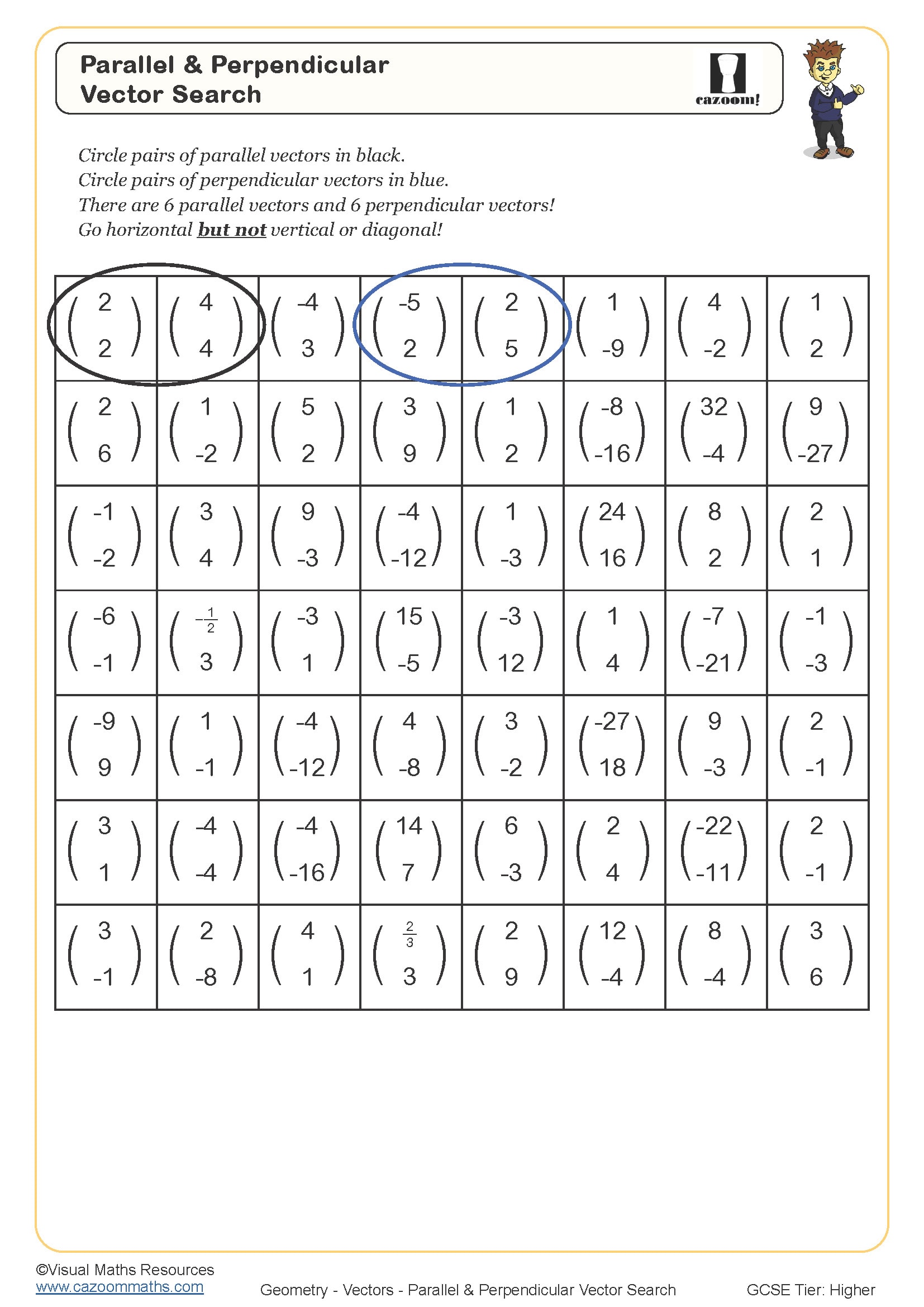
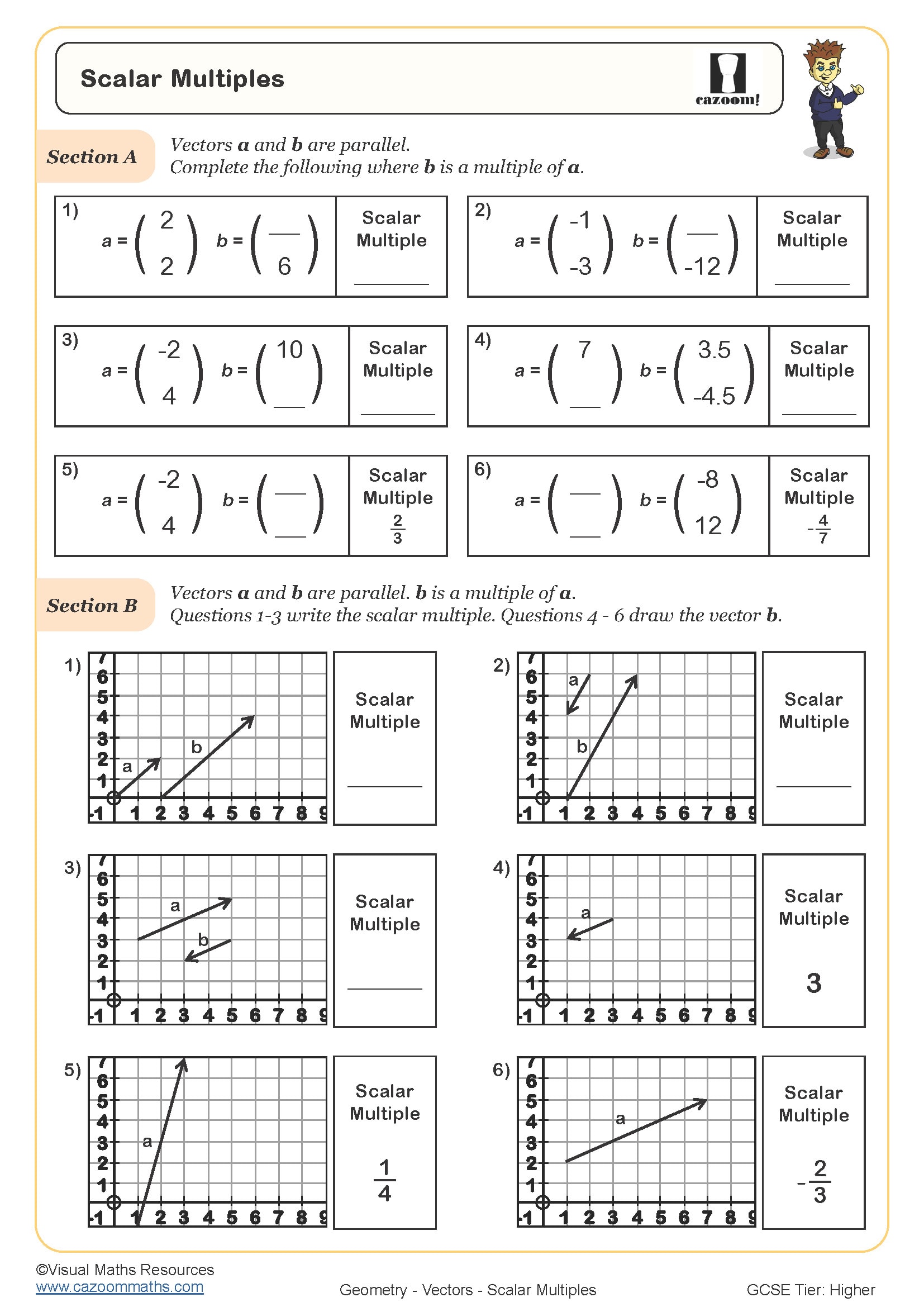
The progression moves from simple addition and subtraction of vectors through to scalar multiplication, finding position vectors and using vectors to prove geometric properties such as parallel lines or midpoints. By Year 11, students should confidently manipulate vectors algebraically and apply vector methods to solve problems involving shapes and transformations, connecting this work to their understanding of coordinates and translation.
How do you add and subtract column vectors?
Adding column vectors involves combining corresponding components separately: add the top numbers together for the horizontal component, then add the bottom numbers for the vertical component. Subtraction works similarly but requires careful attention to signs, particularly when subtracting negative values. Students must work component by component, treating the horizontal and vertical movements independently before recombining them into a single resultant vector.
Vector addition has direct applications in physics and engineering, particularly when calculating resultant forces or velocities. Navigation systems use vector addition to determine actual paths when multiple factors affect movement, such as an aircraft's velocity combined with wind speed. GPS technology relies on vector calculations to track position changes, demonstrating how this mathematical skill underpins technology students use daily without realising the vector mathematics happening behind the interface.
How do these worksheets help students learn column vectors?
The worksheets build understanding through carefully structured questions that start with straightforward vector notation before progressing to multi-step problems requiring several operations. Each worksheet typically includes worked examples or scaffolded questions that model the method, helping students develop confidence before attempting more challenging problems. The progression within each sheet allows students to consolidate basic skills before applying them in geometric contexts.
Teachers use these resources for targeted intervention with students who find vector notation confusing, as the answer sheets allow for immediate self-assessment and correction. The worksheets work well for homework when preparing for assessments, as students can attempt questions independently and check their understanding before the next lesson. Many teachers also use individual questions as starters to maintain fluency throughout Year 11, ensuring vector skills remain sharp ahead of final examinations when vectors often appear combined with other geometric topics.