Plans and Elevations Worksheets
All worksheets are created by the team of experienced teachers at Cazoom Maths.
What are plans and elevations in maths?
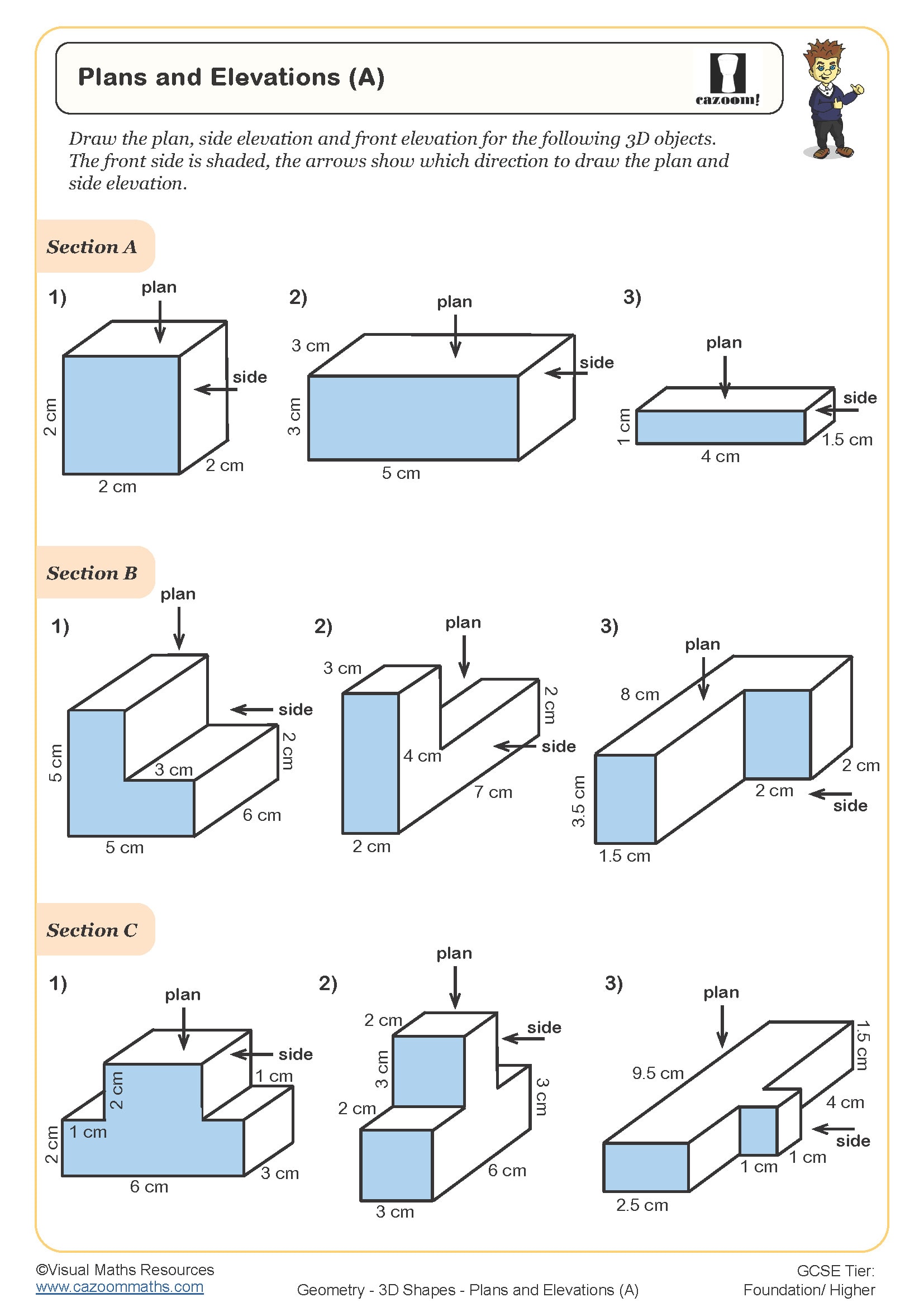
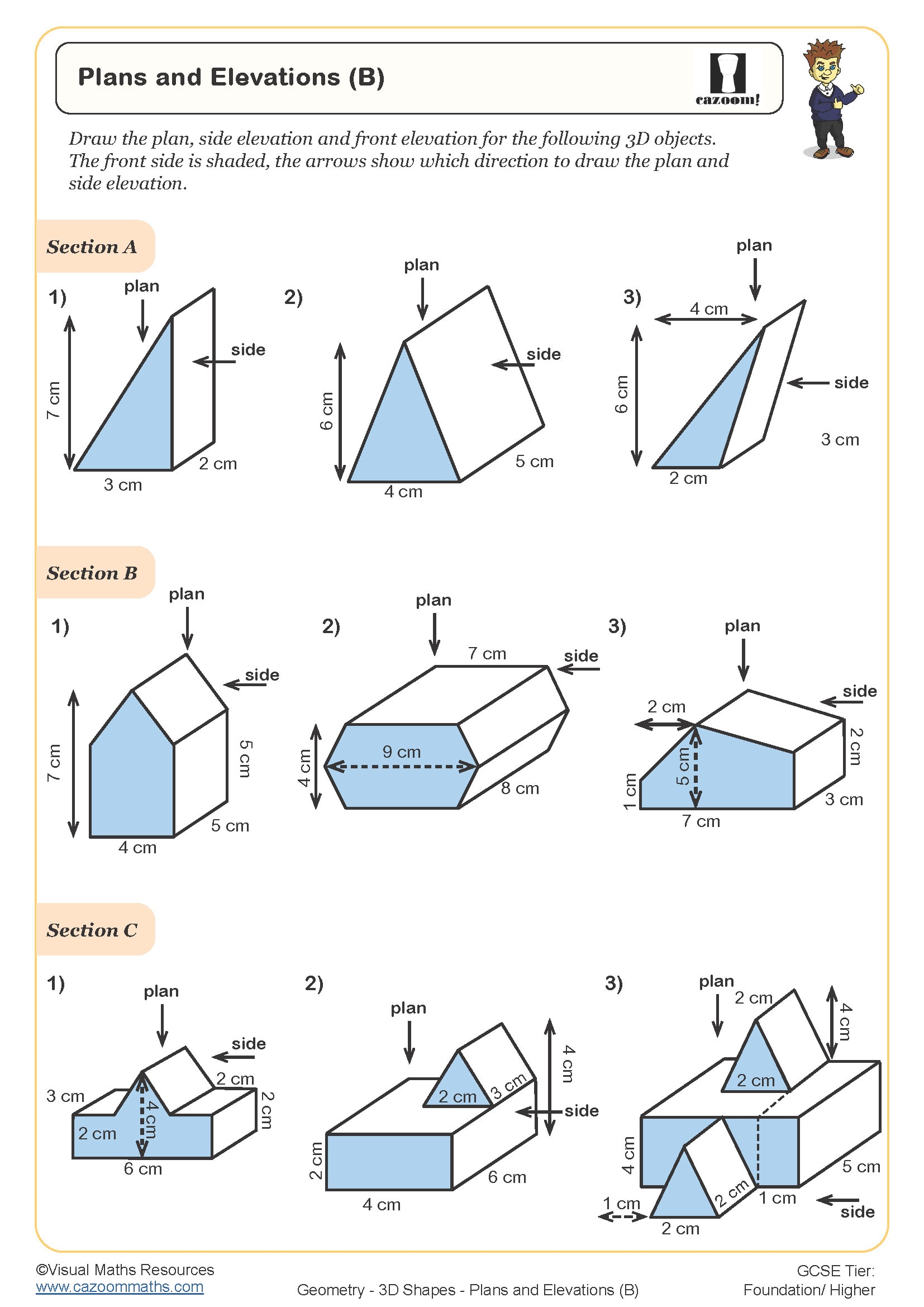
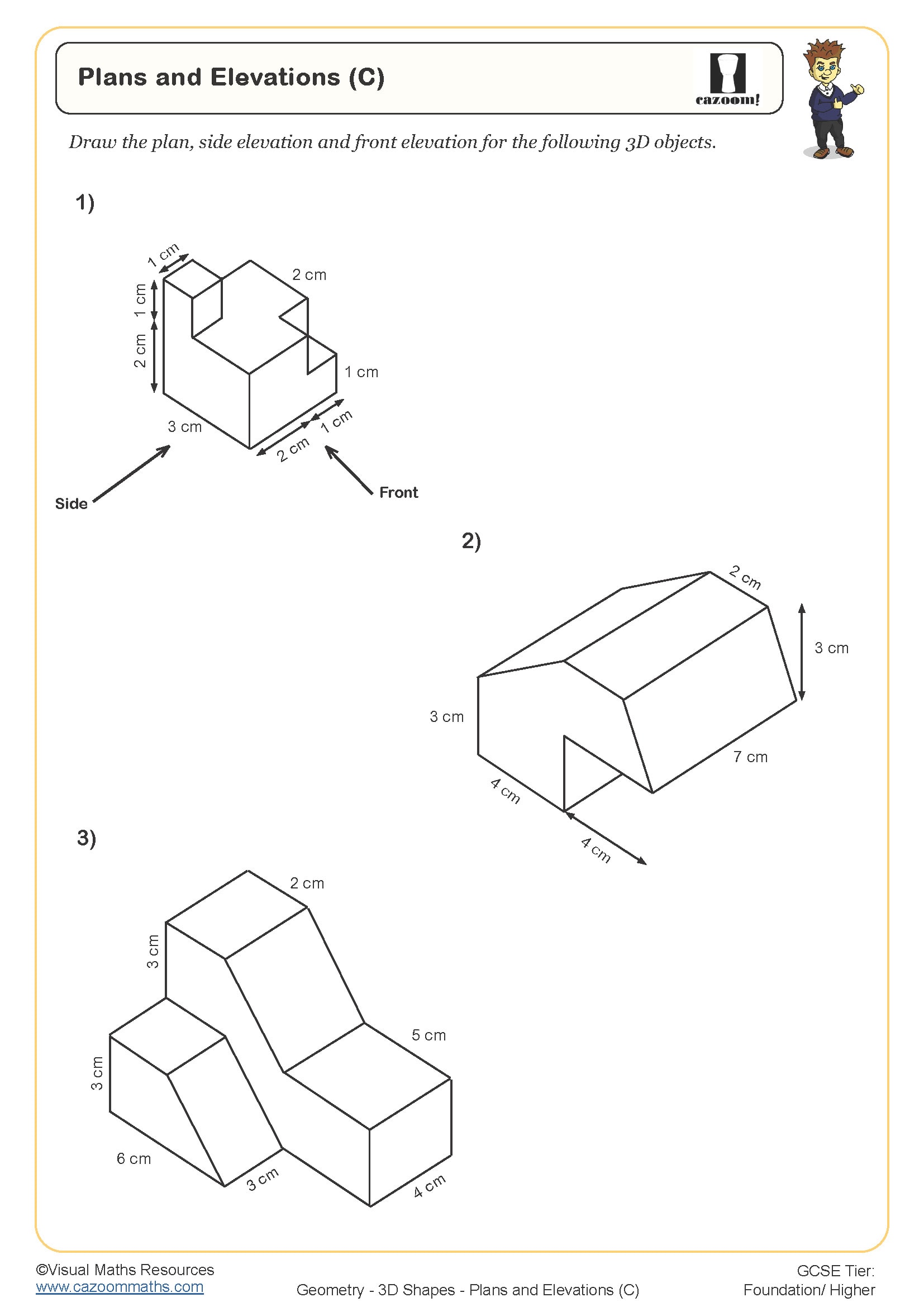
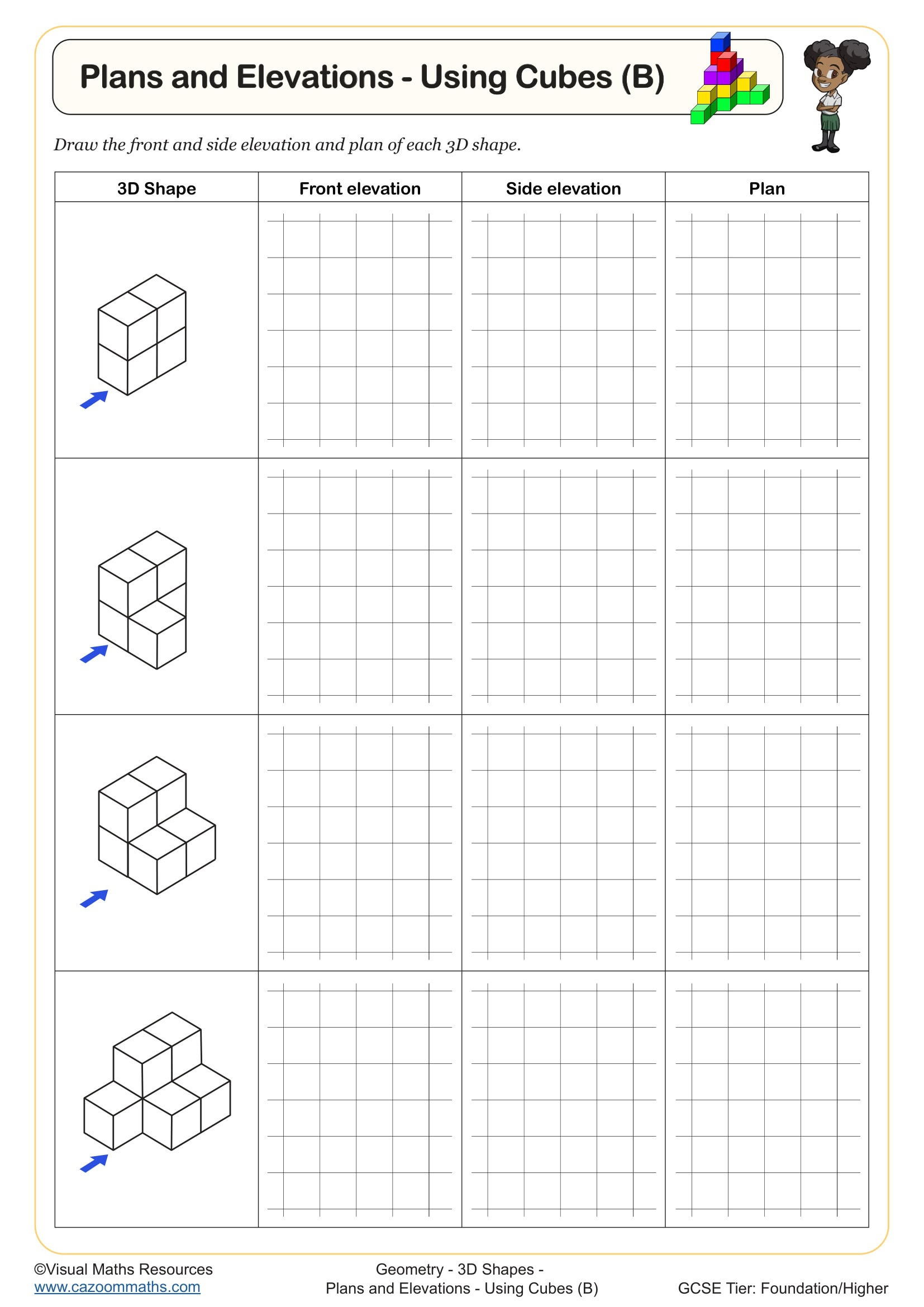
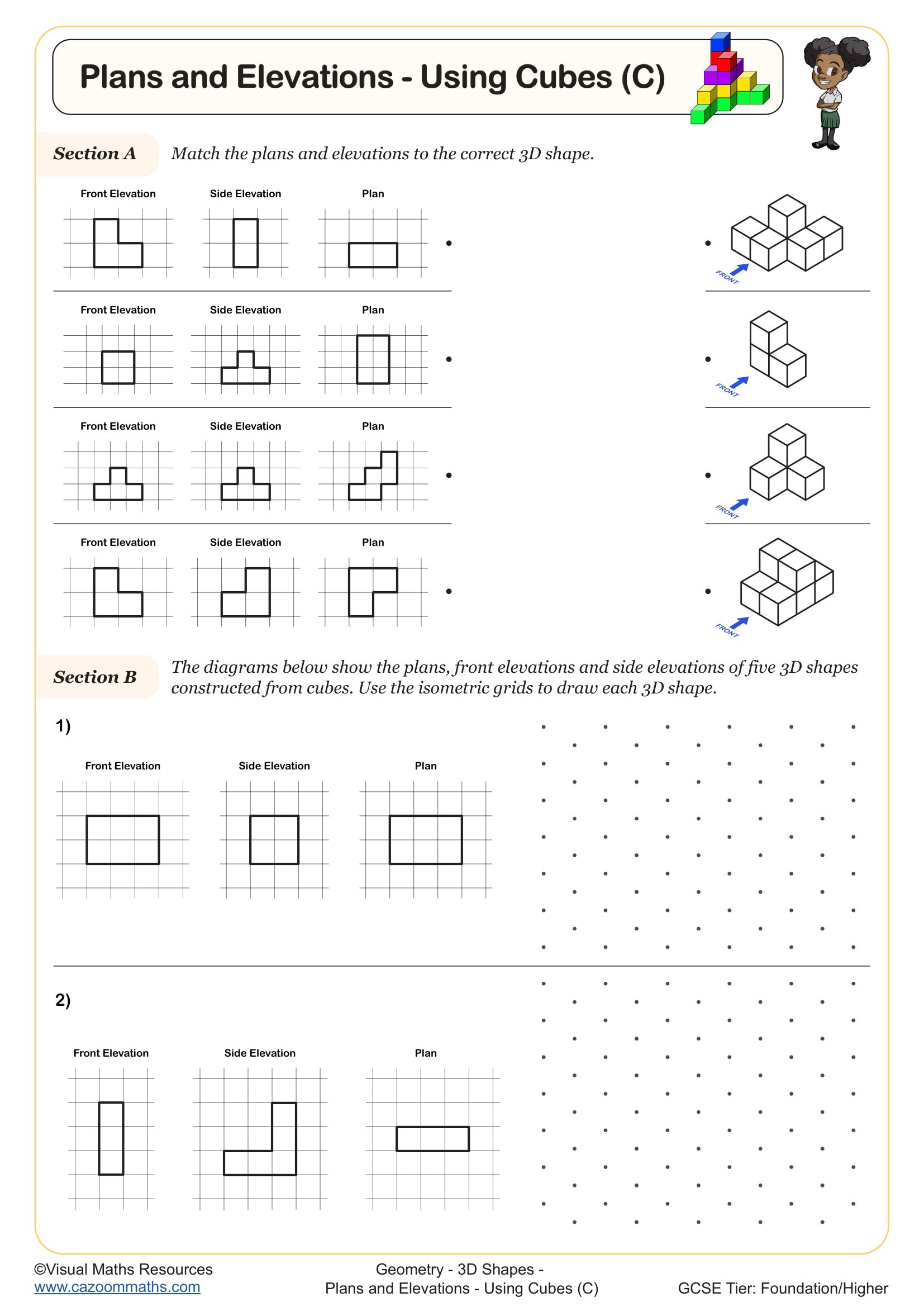
Plans and elevations are 2D drawings that represent different views of a 3D solid object. The plan view shows what the shape looks like from directly above, whilst the front elevation shows the view from the front and the side elevation shows the view from either side. This topic sits within the geometry strand of the National Curriculum and builds foundations for technical drawing, architecture, and engineering applications.
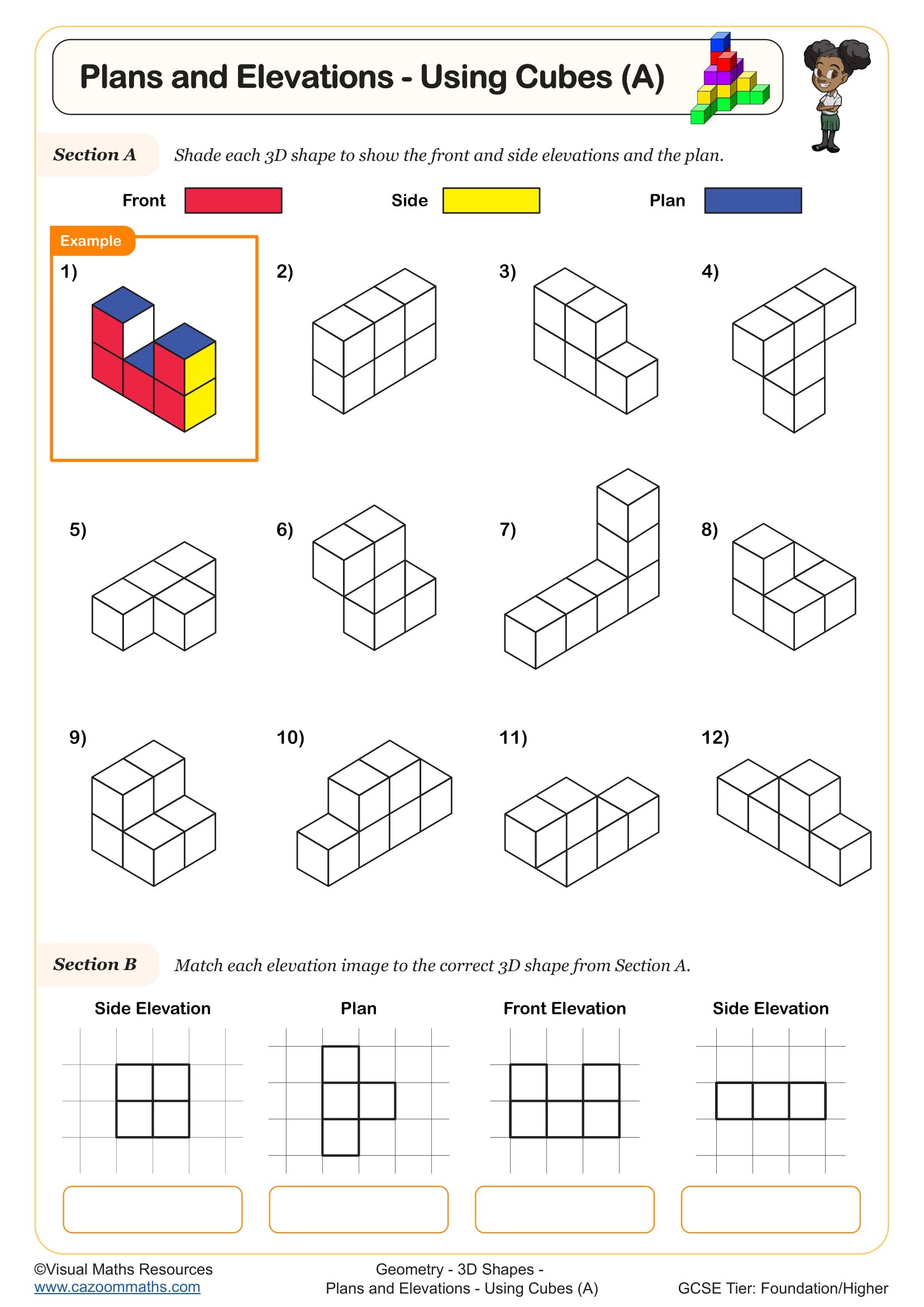
Students often struggle with counting hidden cubes when drawing elevations from isometric diagrams. A common error occurs when they only count visible faces rather than considering the depth of the structure. Exam mark schemes specifically penalise missing cubes or incorrect heights in elevation drawings, so teaching students to work systematically through layers helps avoid these mistakes.
Which year groups study plans and elevations?
Plans and elevations appear in the KS3 and KS4 curriculum, typically introduced in Year 8 and developed through to Year 10. At KS3, students begin with simple 3D shapes made from unit cubes, learning to identify and draw the three standard views. The topic reappears at GCSE Foundation and Higher tier, where it's frequently tested alongside isometric drawing and volume calculations.
Progression moves from basic L-shaped or stepped arrangements of cubes in Year 8 to more complex structures involving multiple layers by Year 10. Higher-achieving students tackle problems requiring them to work backwards from given elevations to construct possible 3D shapes, or to identify when a particular elevation is impossible for a given structure. This reverse reasoning significantly increases the cognitive demand.
How do plans and elevations connect to real-world applications?
Plans and elevations form the basis of orthographic projection, the standardised method used in architecture, engineering, and product design to communicate 3D designs through 2D technical drawings. Architects create floor plans (plan views) and exterior elevations to show exactly how buildings will appear from different angles, whilst engineers use these techniques to specify how mechanical parts fit together. Understanding these projections is fundamental for anyone pursuing STEM careers involving design or construction.
This mathematical skill directly supports Design and Technology lessons where students create their own technical drawings. Manufacturing relies heavily on orthographic projection because measurements can be taken directly from elevations, unlike perspective drawings which distort dimensions. Students studying construction, engineering, or architecture at post-16 level will encounter these concepts extensively, making solid foundations at GCSE valuable for future progression.
How can teachers use these plans and elevations worksheets effectively?
These worksheets provide structured practise moving from drawing elevations of given 3D shapes to the more challenging task of constructing shapes from provided elevations. The progression allows teachers to assess whether students can visualise accurately in both directions. Having answer sheets for every worksheet means students can self-mark during independent work, immediately identifying which viewpoints they've misinterpreted and revisiting those specific examples.
Many teachers use these resources for intervention groups where spatial reasoning needs targeted development, as this topic can differentiate students who struggle with visualisation from those who find it intuitive. The worksheets work well for homework because students can use physical cubes at home to build and check their answers. Paired work proves particularly effective, with one student building a shape from cubes whilst their partner draws the elevations without seeing the construction, then comparing results to identify discrepancies.