Problem Solving Using Pythagoras Worksheets
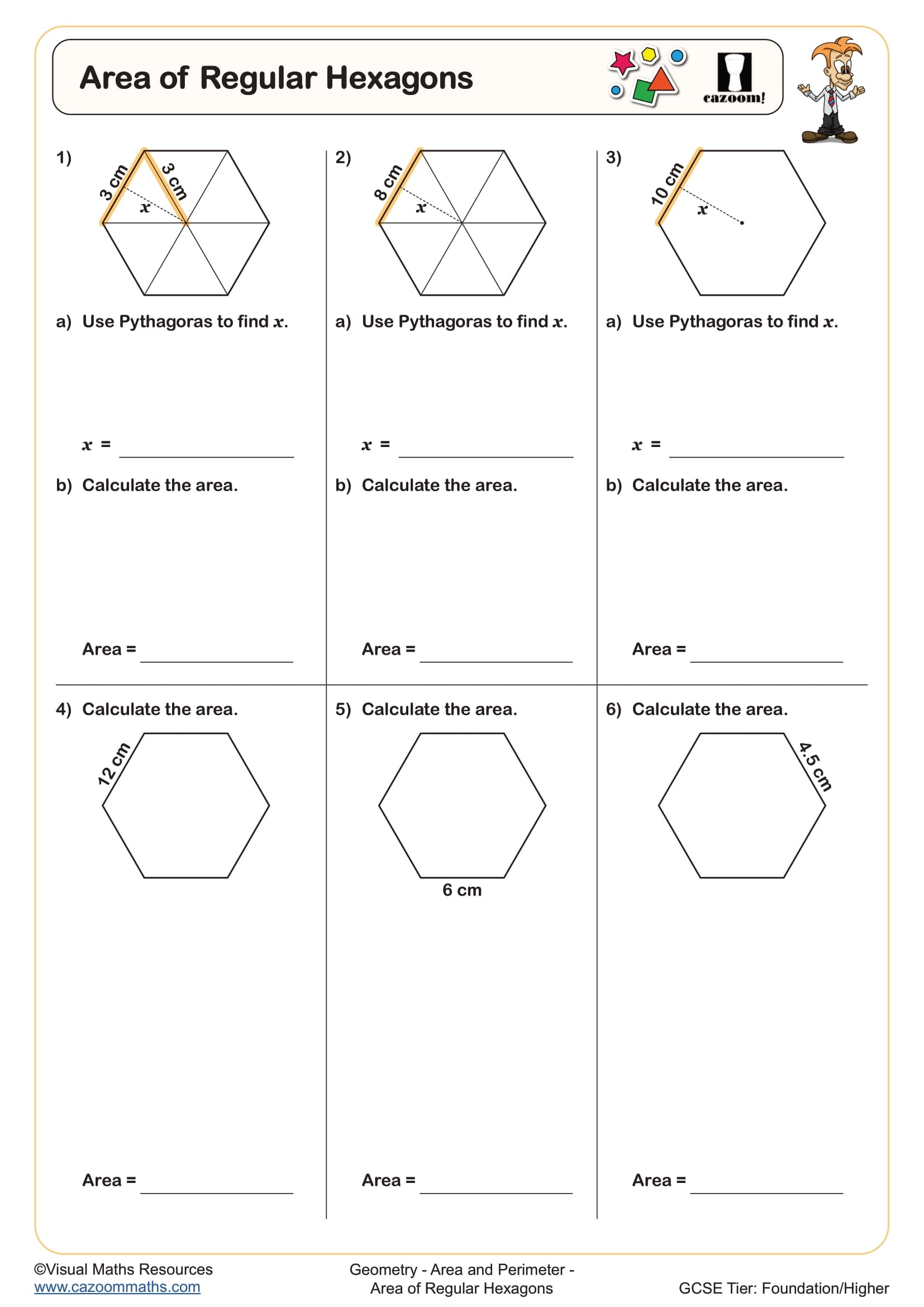
Area of Regular Hexagons
Year groups: 9, 10, 11
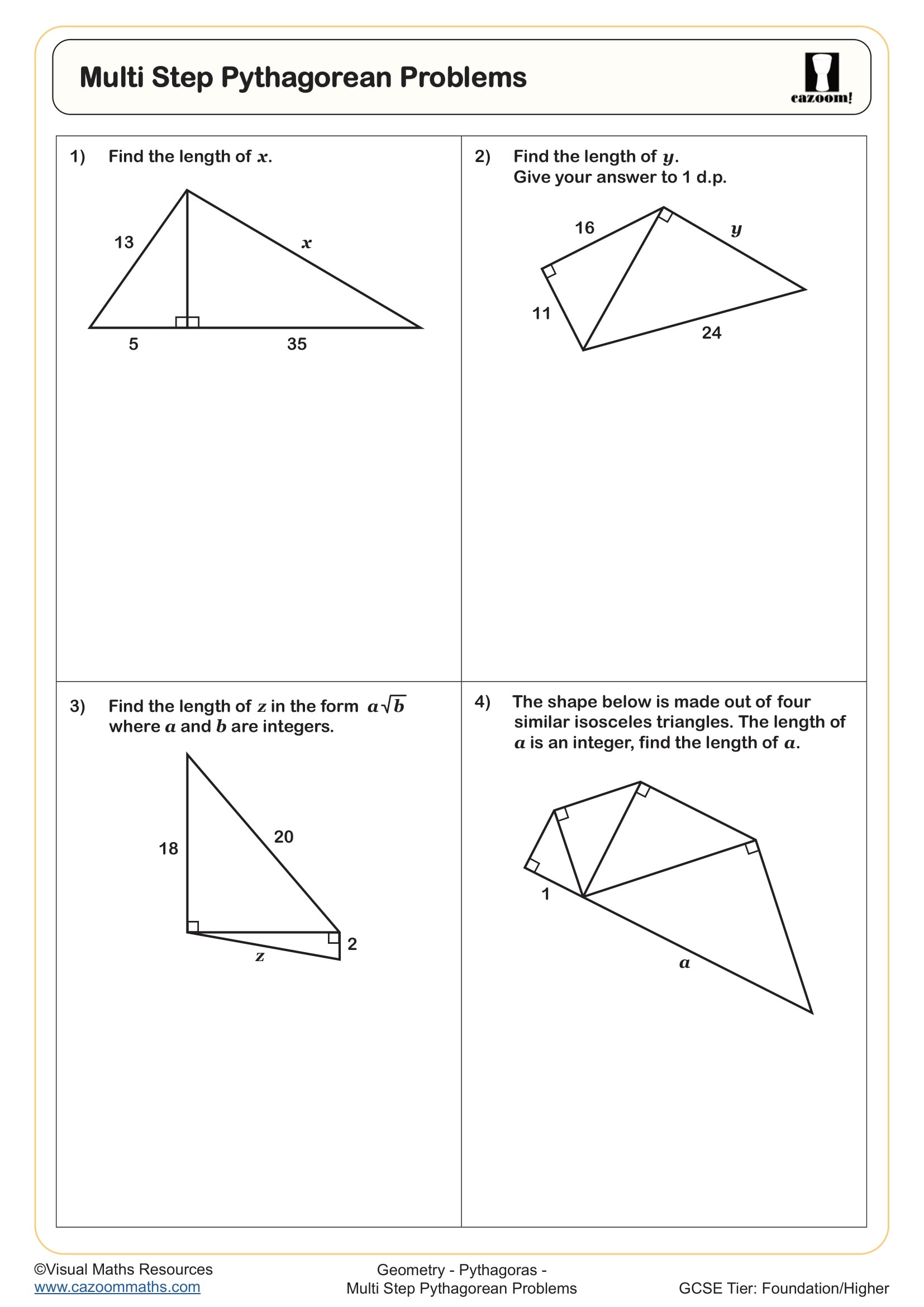
Multi Step Pythagorean Problems
Year groups: 9, 10, 11
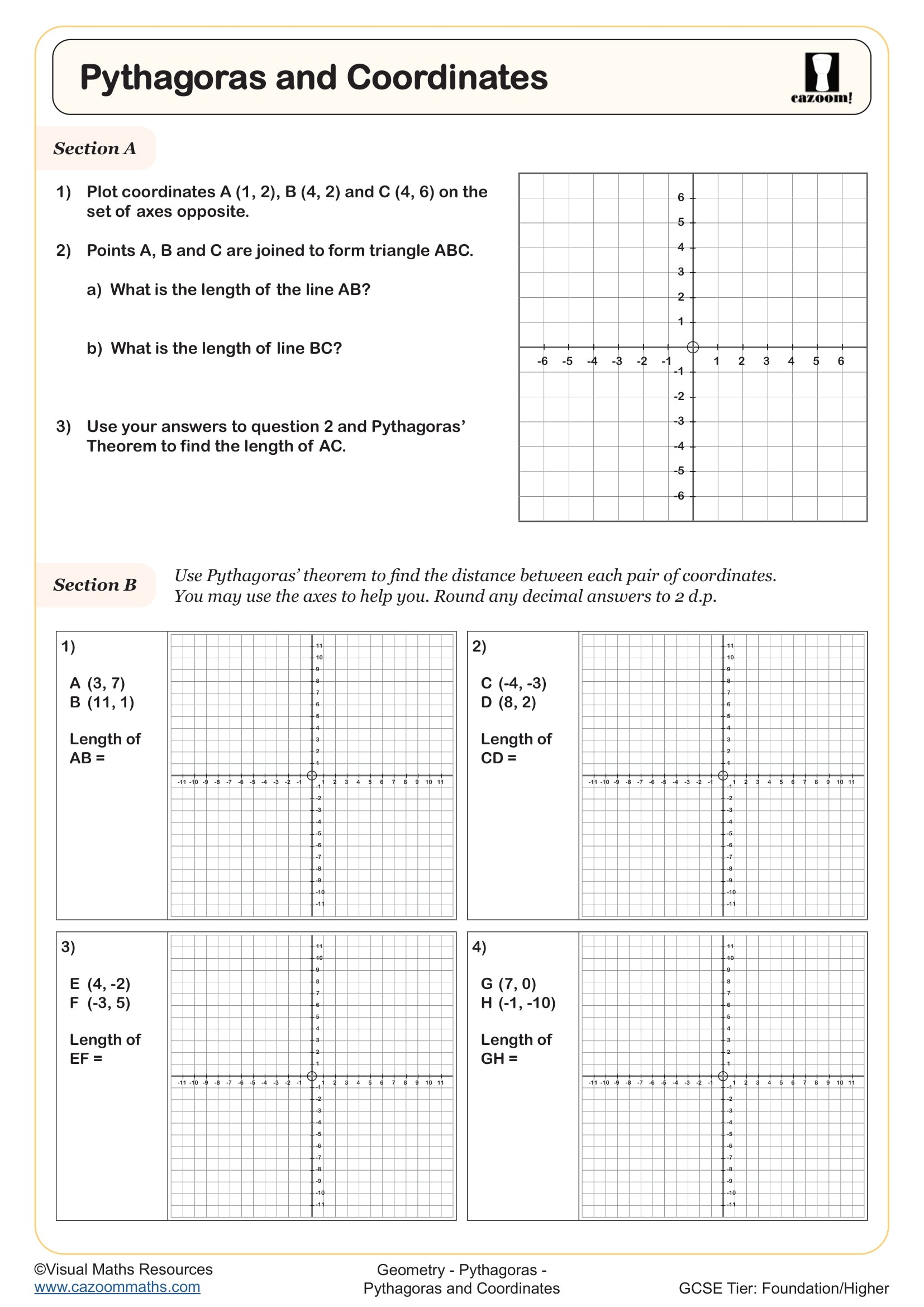
Pythagoras and Coordinates
Year groups: 9, 10
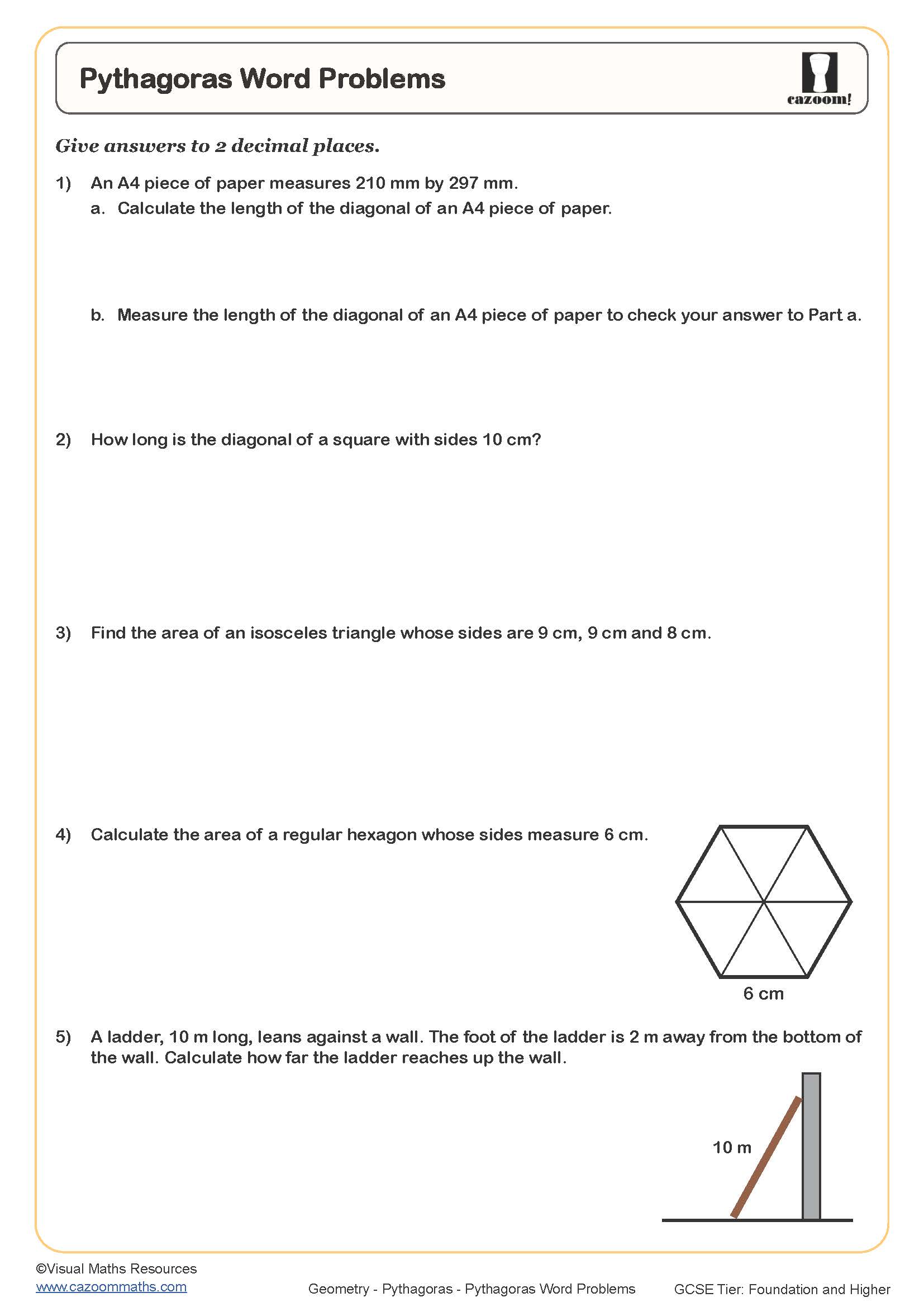
Pythagoras Word Problems
Year groups: 9, 10, 11
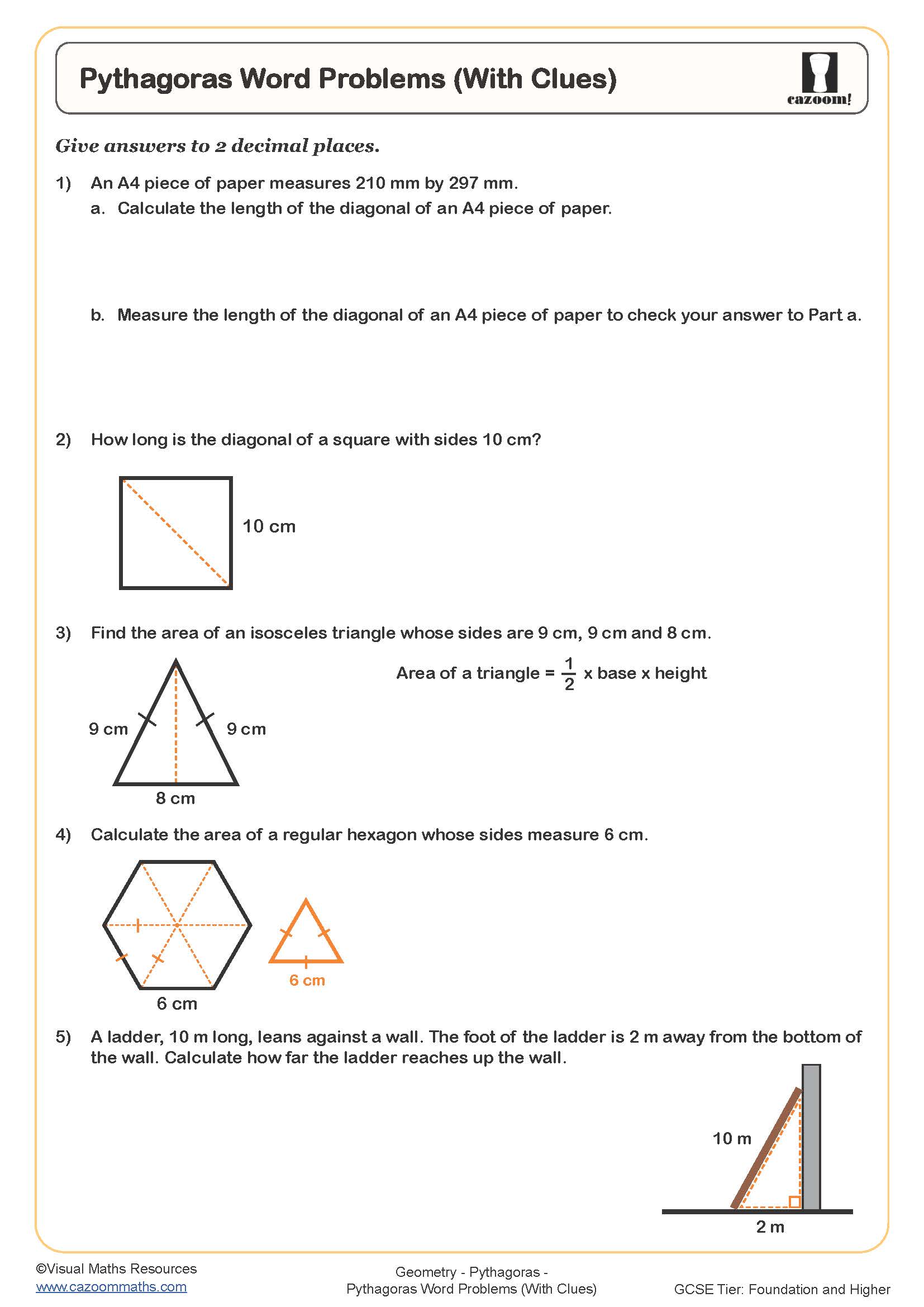
Pythagoras Word Problems (With Clues)
Year groups: 9, 10, 11
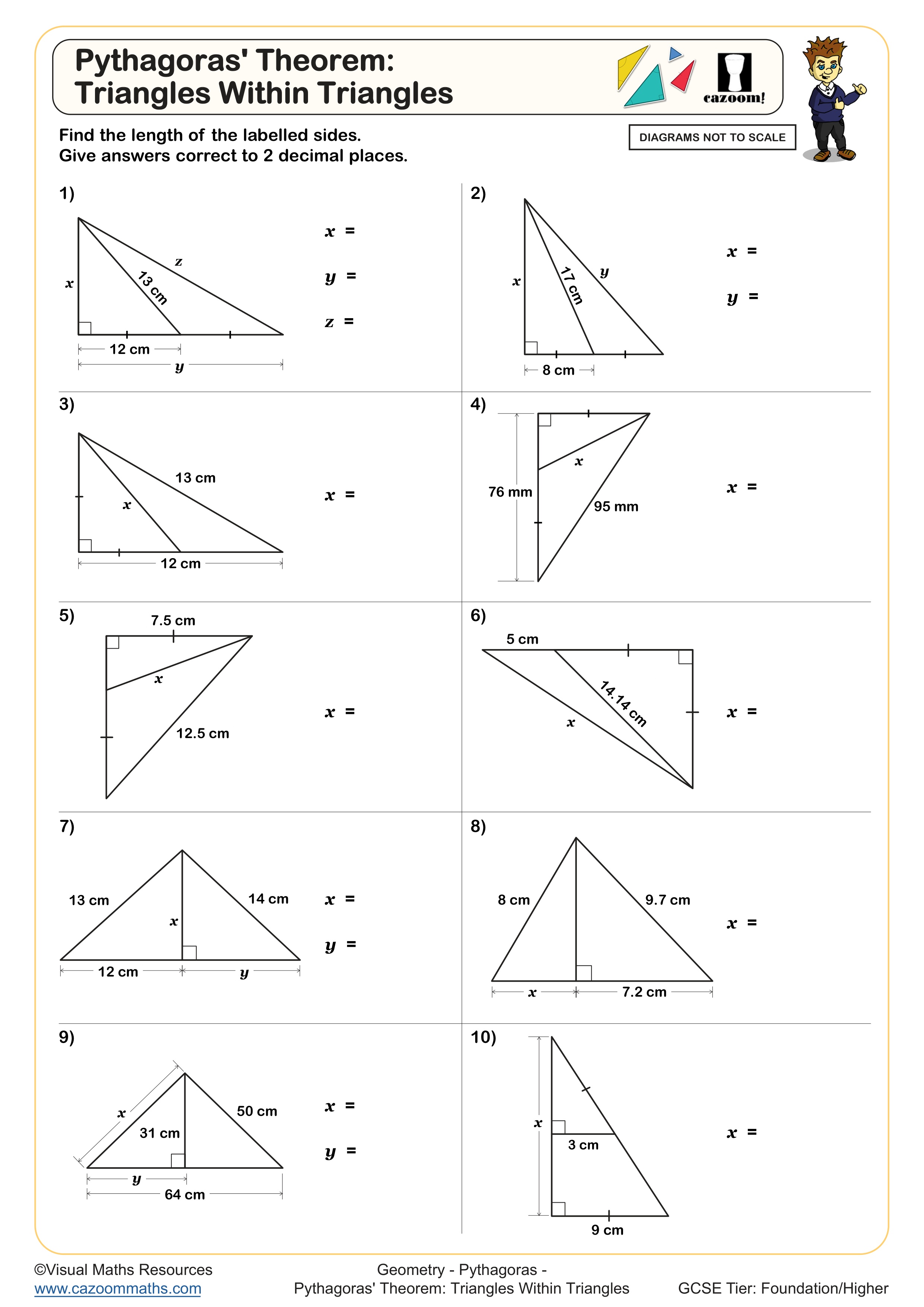
Pythagoras' Theorem: Triangles Within Triangles
Year groups: 9, 10
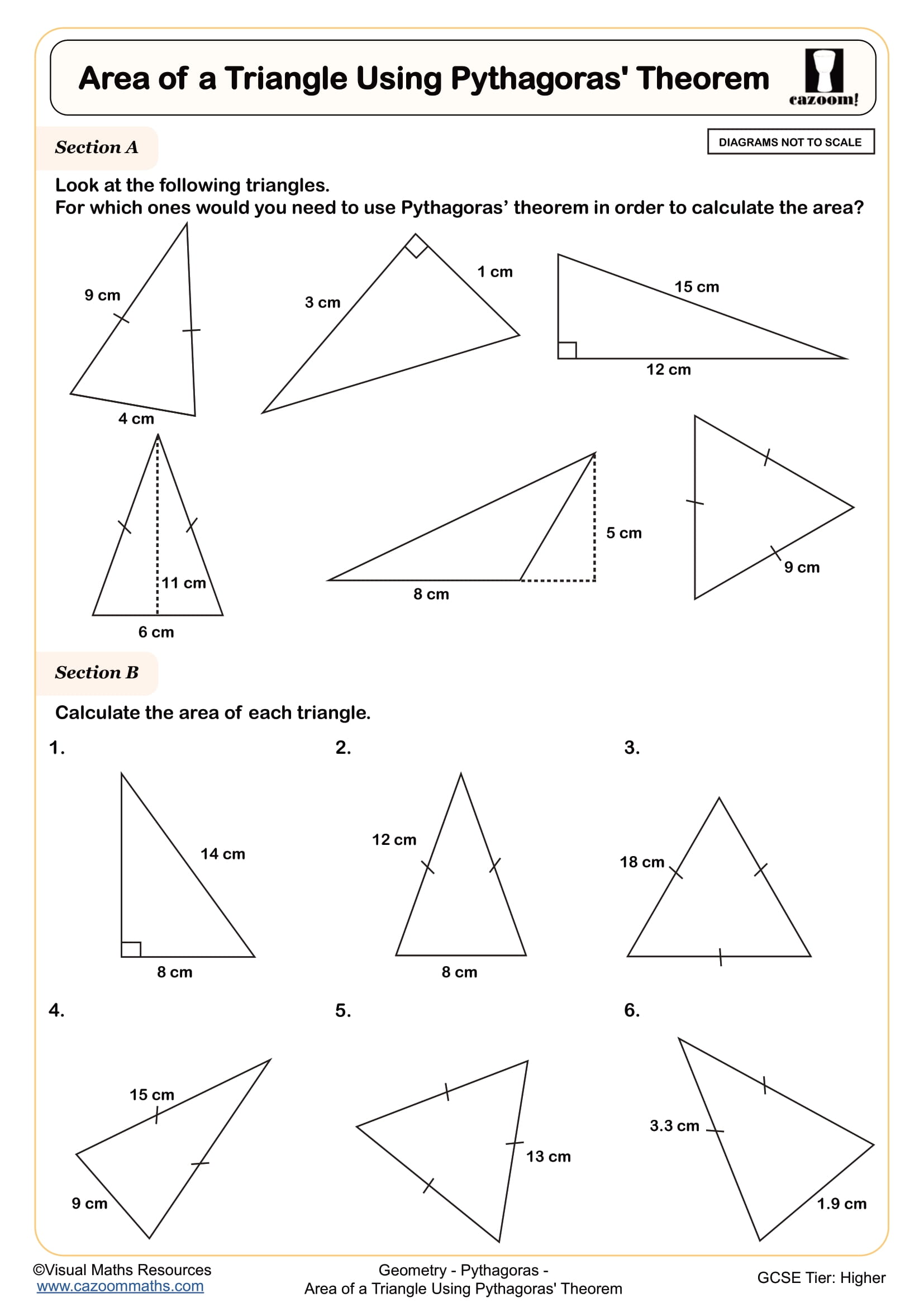
Area of a Triangle Using Pythagoras' Theorem
Year groups: 10, 11
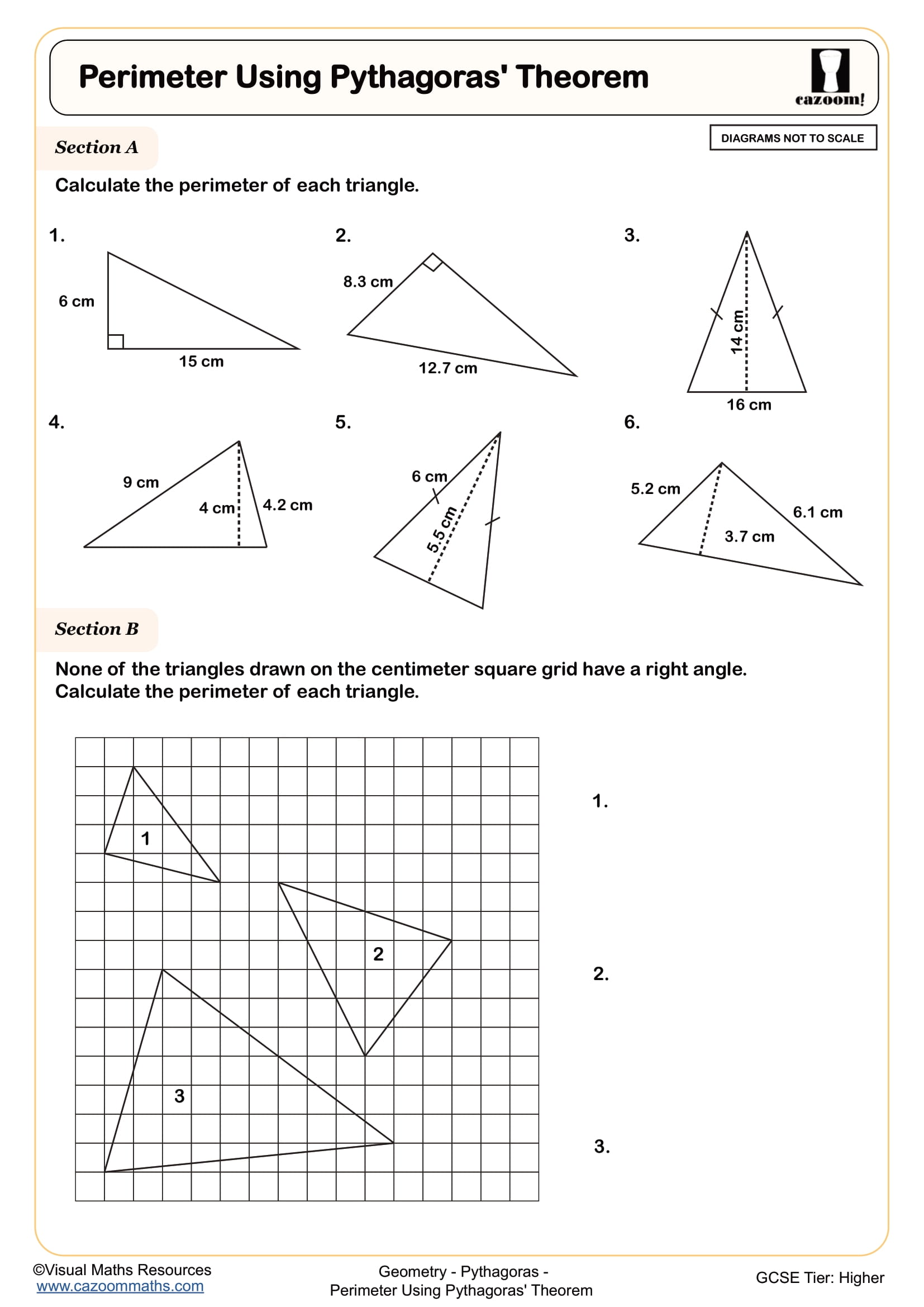
Perimeter Using Pythagoras' Theorem
Year groups: 10, 11
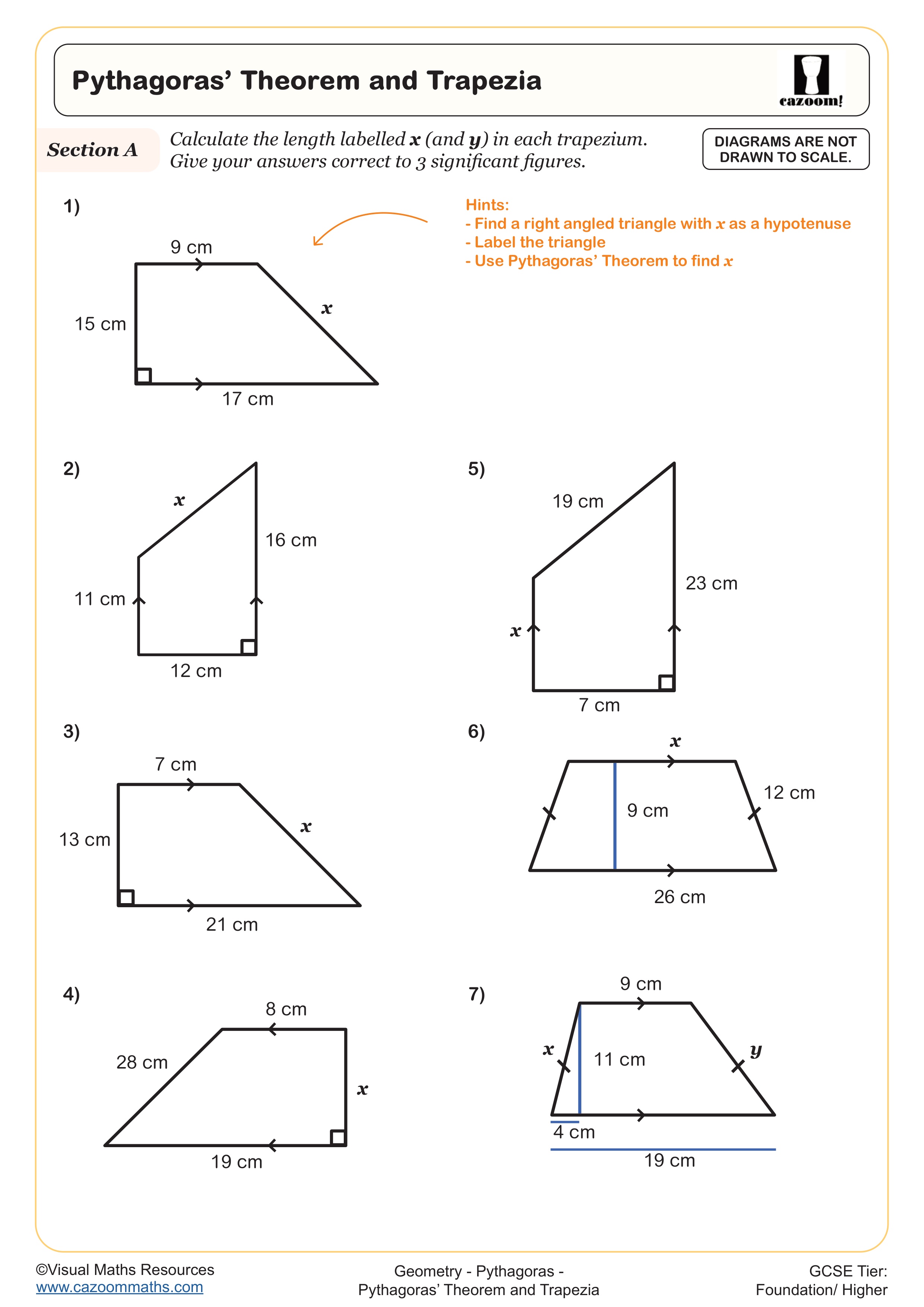
Pythagoras’ Theorem and Trapezia
Year groups: 10, 11
All worksheets are created by the team of experienced teachers at Cazoom Maths.
What types of problems use Pythagoras' theorem?
Pythagoras problem solving worksheets include finding distances between coordinates, calculating diagonal lengths in rectangles and cuboids, determining ladder reach against walls, and working with isosceles triangles. Students encounter problems where they must decide whether a triangle is right-angled by checking if sides satisfy the theorem, calculate perimeters of composite shapes containing right-angled triangles, and find shortest paths across rectangular surfaces. These contexts align with GCSE expectations where problem-solving questions typically carry higher marks.
A common error occurs when students apply the theorem to non-right-angled triangles without checking for the 90-degree angle. Exam mark schemes specifically award marks for identifying the right angle and labelling sides correctly before calculation. Students lose marks when they rush to calculate without first annotating diagrams to show which measurements correspond to the hypotenuse and shorter sides.
Which year groups study problem solving with Pythagoras?
These worksheets cover Year 9, Year 10, and Year 11, spanning Key Stage 3 and Key Stage 4. The National Curriculum introduces Pythagoras' theorem in KS3, where students initially practise straightforward calculations before progressing to problem-solving applications. By Year 10 and Year 11, students tackle Foundation and Higher tier GCSE questions requiring multi-step reasoning and justification of methods.
Progression across year groups moves from clearly labelled right-angled triangles towards problems where students must identify or construct right angles themselves. Year 9 worksheets focus on applying the theorem within recognisable contexts, whilst Year 10 and Year 11 materials include inverse problems (proving a triangle is right-angled), problems with compound shapes, and those requiring algebraic manipulation before applying Pythagoras. Higher tier questions may combine the theorem with trigonometry or circle theorems.
How does Pythagoras apply to 3D shapes?
Applying Pythagoras' theorem to cuboids and pyramids requires students to work in stages, typically finding a diagonal across a base rectangle before using this as part of a second right-angled triangle in the vertical plane. Students must visualise which faces form right angles and often need to sketch 2D extracts from 3D diagrams. Teachers often notice students attempting to apply the theorem directly to three measurements without recognising the need for two separate calculations.
This skill connects directly to structural engineering and architecture, where diagonal bracing strengthens frameworks and space diagonals determine clearance. Aircraft engineers calculate fuselage diagonals when designing cargo holds, whilst construction teams use the theorem to ensure staircases fit within ceiling heights. Manufacturing contexts include determining drill angles through rectangular blocks and calculating the longest rod that fits inside a shipping container, applications that demonstrate why breaking 3D problems into 2D right-angled triangles matters beyond the classroom.
How should teachers use these Pythagoras problem solving resources?
The worksheets provide structured practice where students must interpret problem contexts, identify relevant information, and select appropriate methods. Questions typically progress from straightforward applications with clear diagrams to those requiring students to draw their own sketches or work backwards from answers. This scaffolding supports students in developing the reasoning skills that GCSE mark schemes reward, particularly for AO2 and AO3 problem-solving objectives.
Many teachers use these sheets for targeted intervention with students who can perform calculations but struggle with application questions. They work well as homework following introductory lessons, allowing students to consolidate skills independently with answer sheets for self-assessment. In revision sessions, selecting specific question types helps address gaps identified through mock exams. The resources also suit paired work where students explain their reasoning to each other, helping identify misconceptions about hypotenuse identification or when the theorem applies.