Reflection Worksheets
All worksheets are created by the team of experienced teachers at Cazoom Maths.
What topics do KS3 reflection worksheets cover?
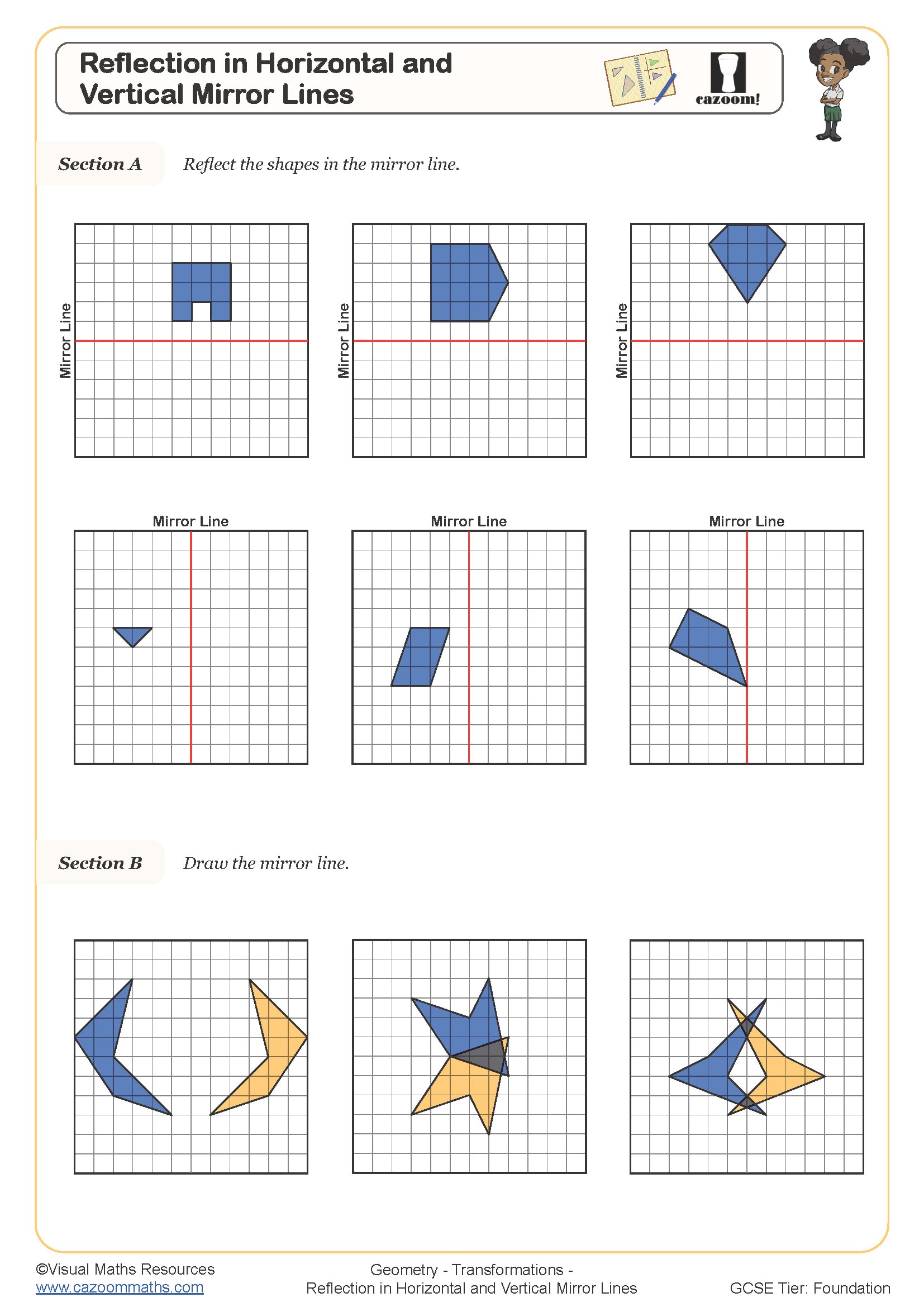
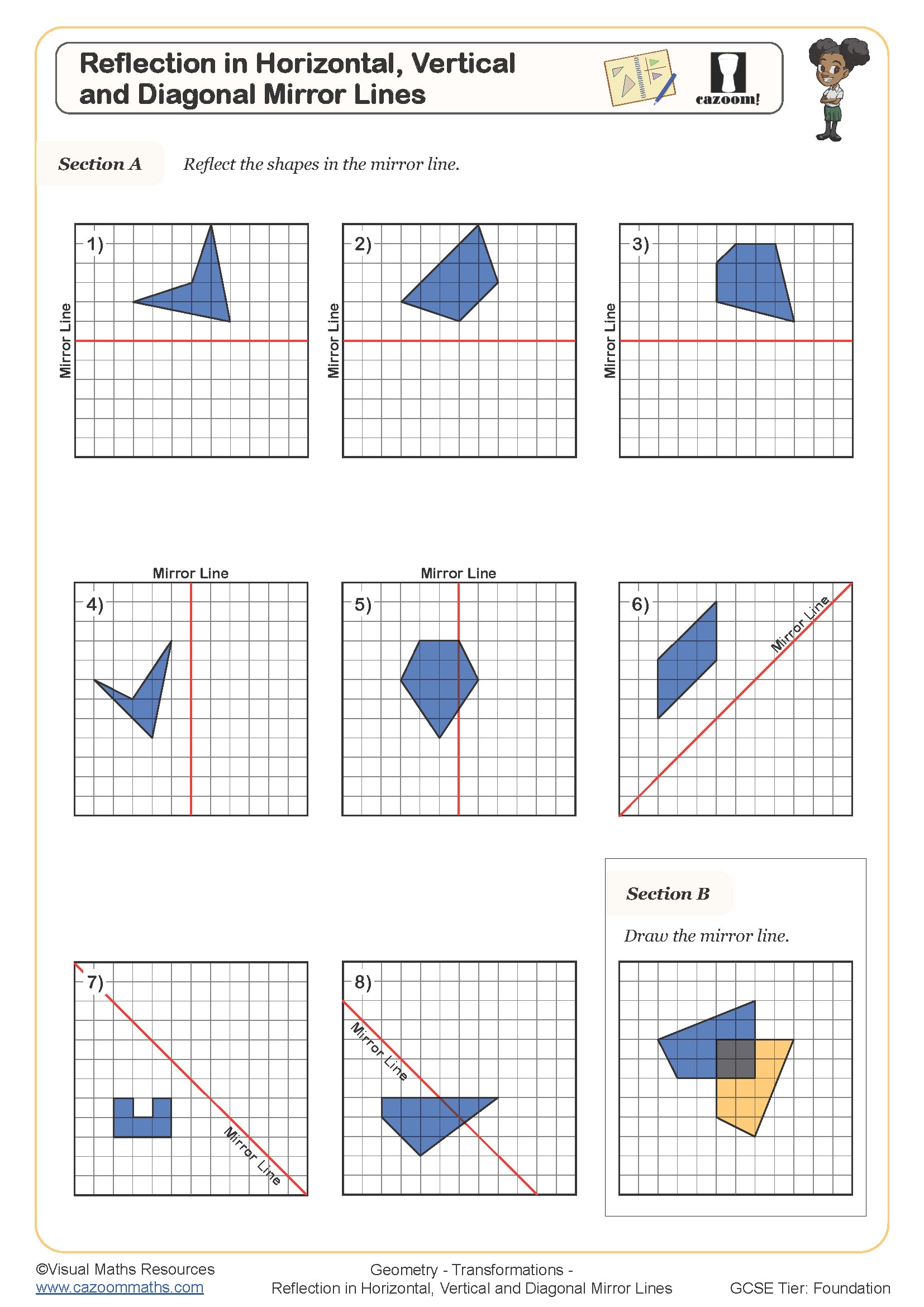
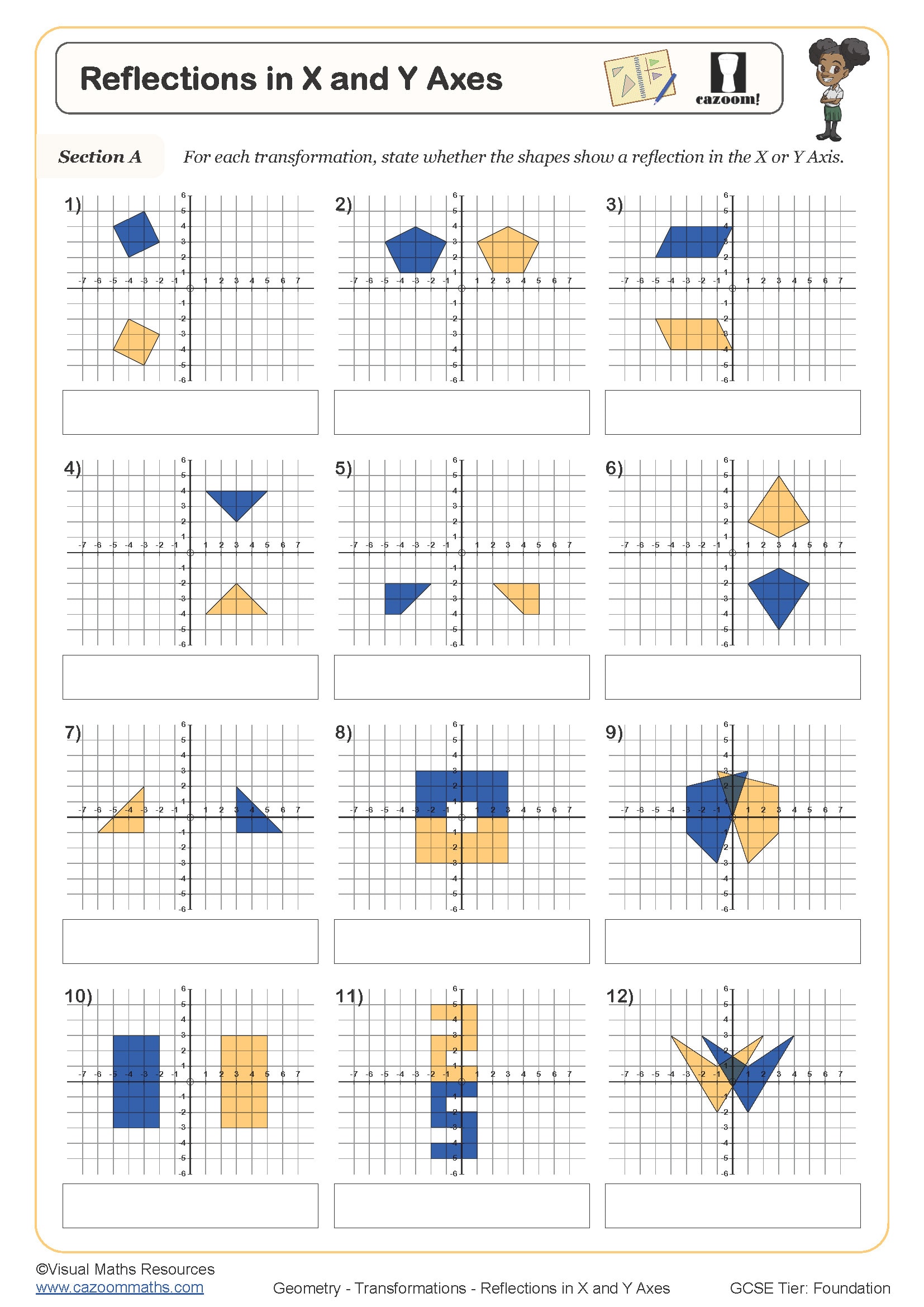
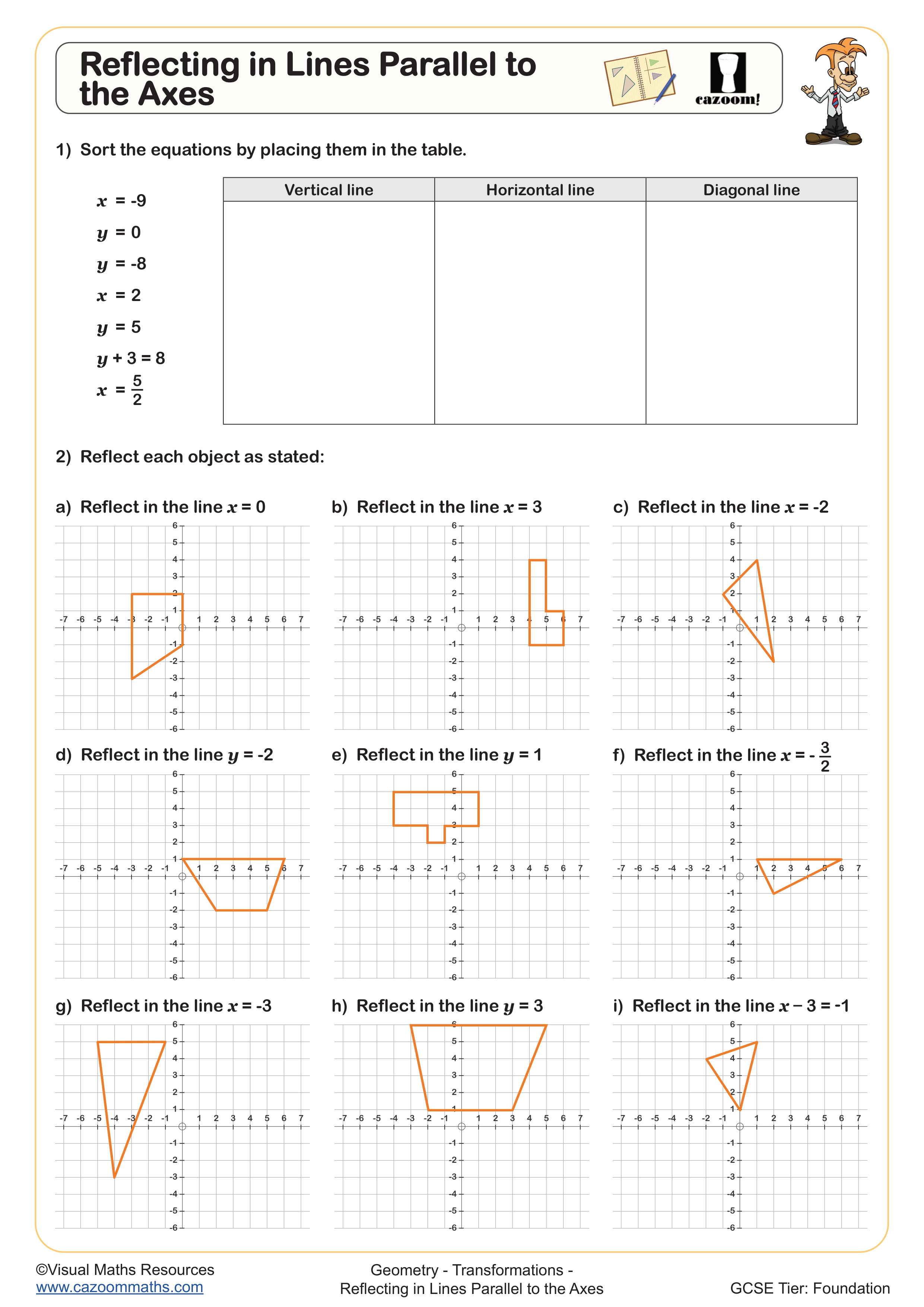
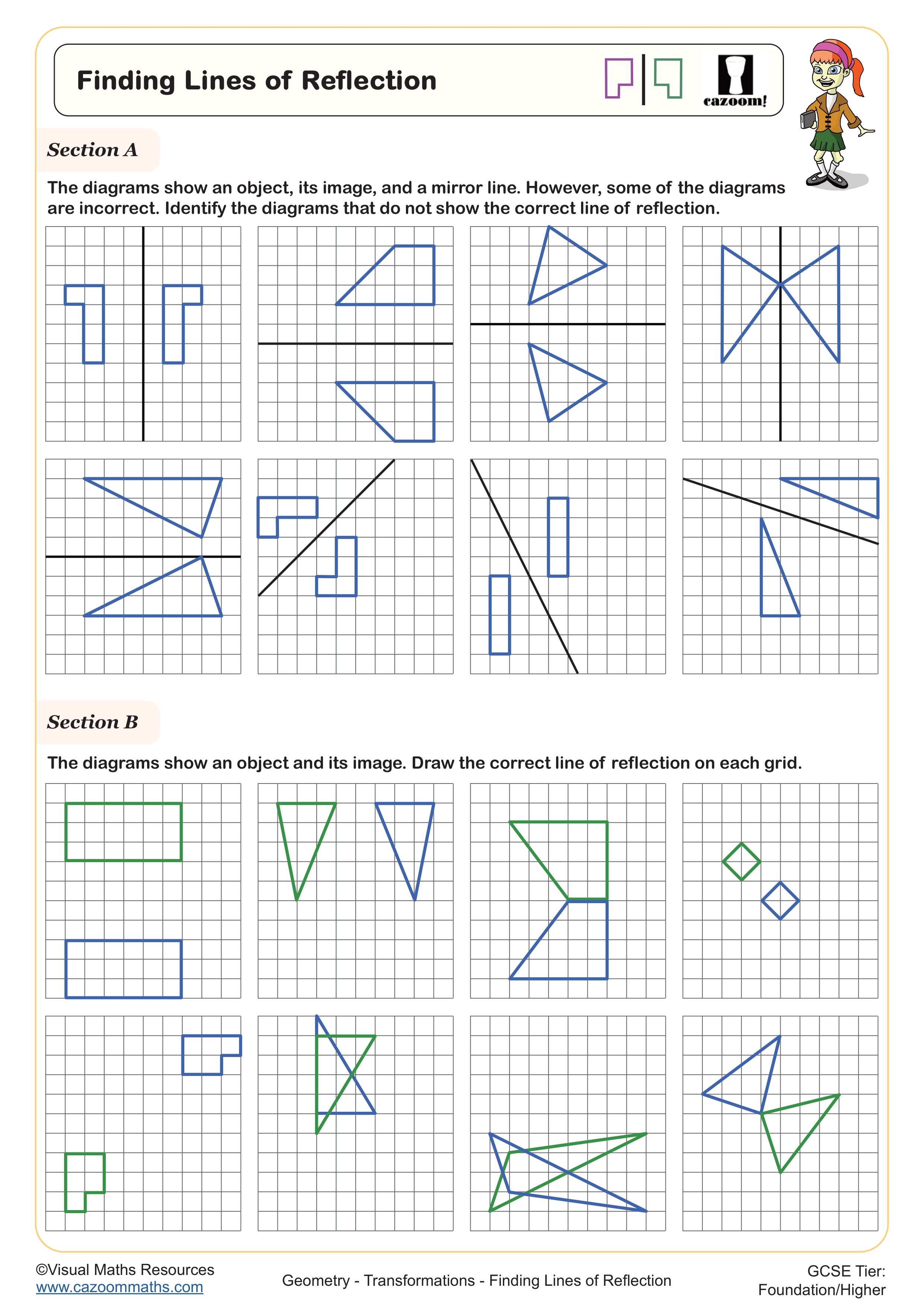
Reflection worksheet resources typically cover reflecting shapes in coordinate grids using vertical lines (such as x = 2), horizontal lines (such as y = -1), and diagonal lines including y = x and y = -x. Students practise identifying coordinates before and after reflection, drawing accurate reflections, and recognising reflection as a distance-preserving transformation.
Most worksheets progress from simple single-step reflections to combined transformations. Teachers often notice that students handle vertical and horizontal reflections confidently but struggle when diagonal mirror lines are introduced, frequently plotting reflected points in incorrect quadrants or miscounting grid squares.
Which year groups use reflection worksheets in secondary school?
Reflection worksheets are primarily used in Year 7 and Year 8, aligning with the KS3 geometry curriculum requirements. Year 7 students typically begin with reflections across axes and simple vertical or horizontal lines, whilst Year 8 extends to diagonal mirror lines and more complex coordinate work.
Some teachers introduce basic reflection concepts in Year 6 during transition work, whilst stronger Year 8 groups may progress to reflecting functions or combining reflections with other transformations. The worksheets adapt well across this range, with teachers selecting appropriate difficulty levels based on their class's coordinate geometry confidence.
How do students work with diagonal lines of reflection?
Diagonal lines of reflection, particularly y = x and y = -x, require students to swap coordinates or change signs systematically. When reflecting across y = x, the x-coordinate and y-coordinate switch positions, so point (3, 1) becomes (1, 3). For y = -x, students swap coordinates and change both signs.
Teachers frequently observe that students initially try to count squares or measure distances when working with diagonal reflections, leading to errors. The most effective approach involves teaching the coordinate rules first, then having students verify their answers by checking that the original and reflected points are equidistant from the mirror line.
How can teachers use these worksheets most effectively in lessons?
Teachers find reflection worksheets work best when students have access to coordinate grids and can physically trace or fold paper to visualise the transformation. Starting each lesson with a quick review of the previous reflection type helps reinforce learning, particularly when moving from axis reflections to diagonal mirror lines.
Many teachers use the answer sheets to create peer marking opportunities, encouraging students to discuss any discrepancies in their working. This approach helps identify common misconceptions early, such as students reflecting across the wrong line or miscounting grid references when plotting coordinate points.