Sectors and Segments Worksheets
Arc Length
Year groups: 10, 11
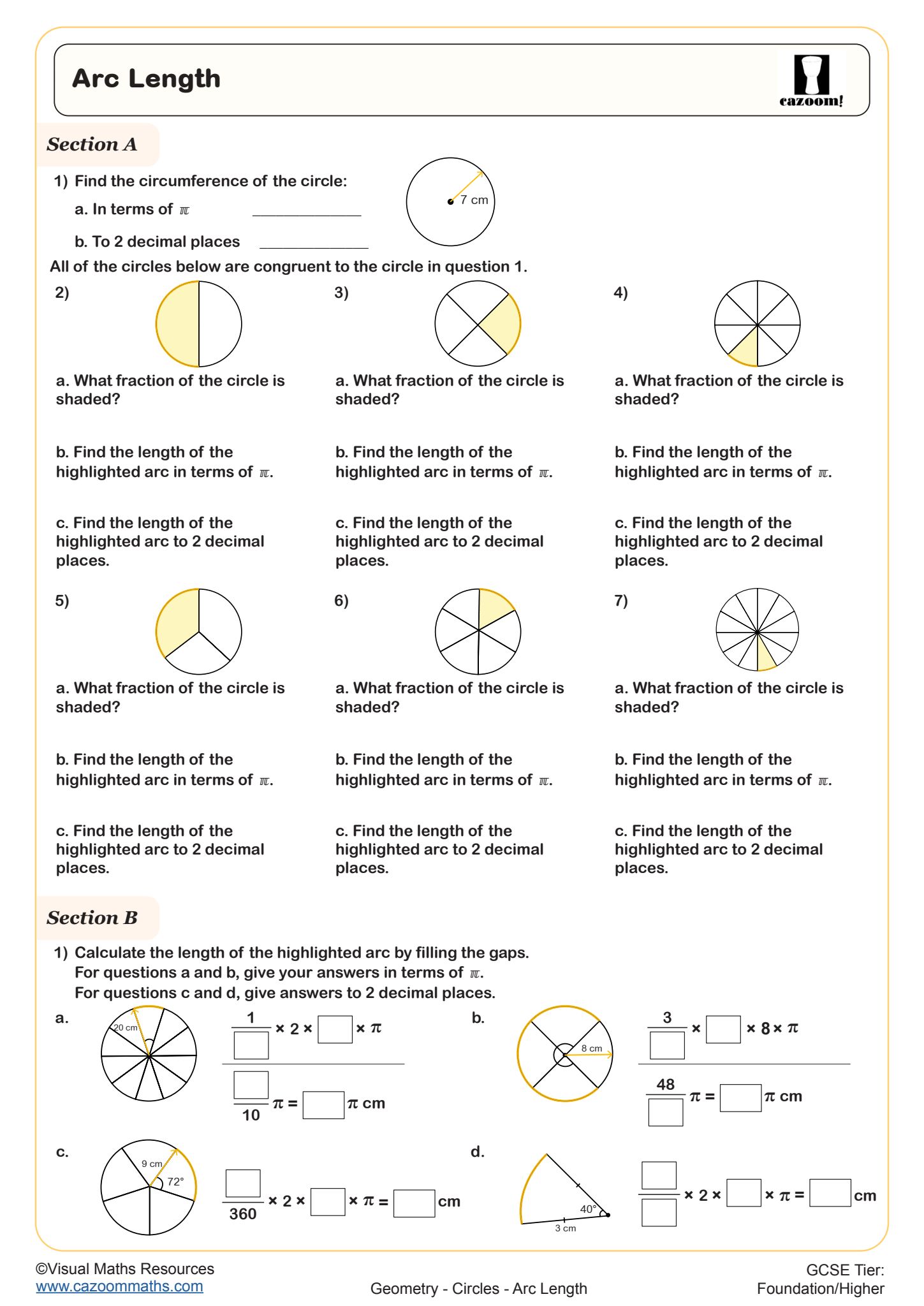
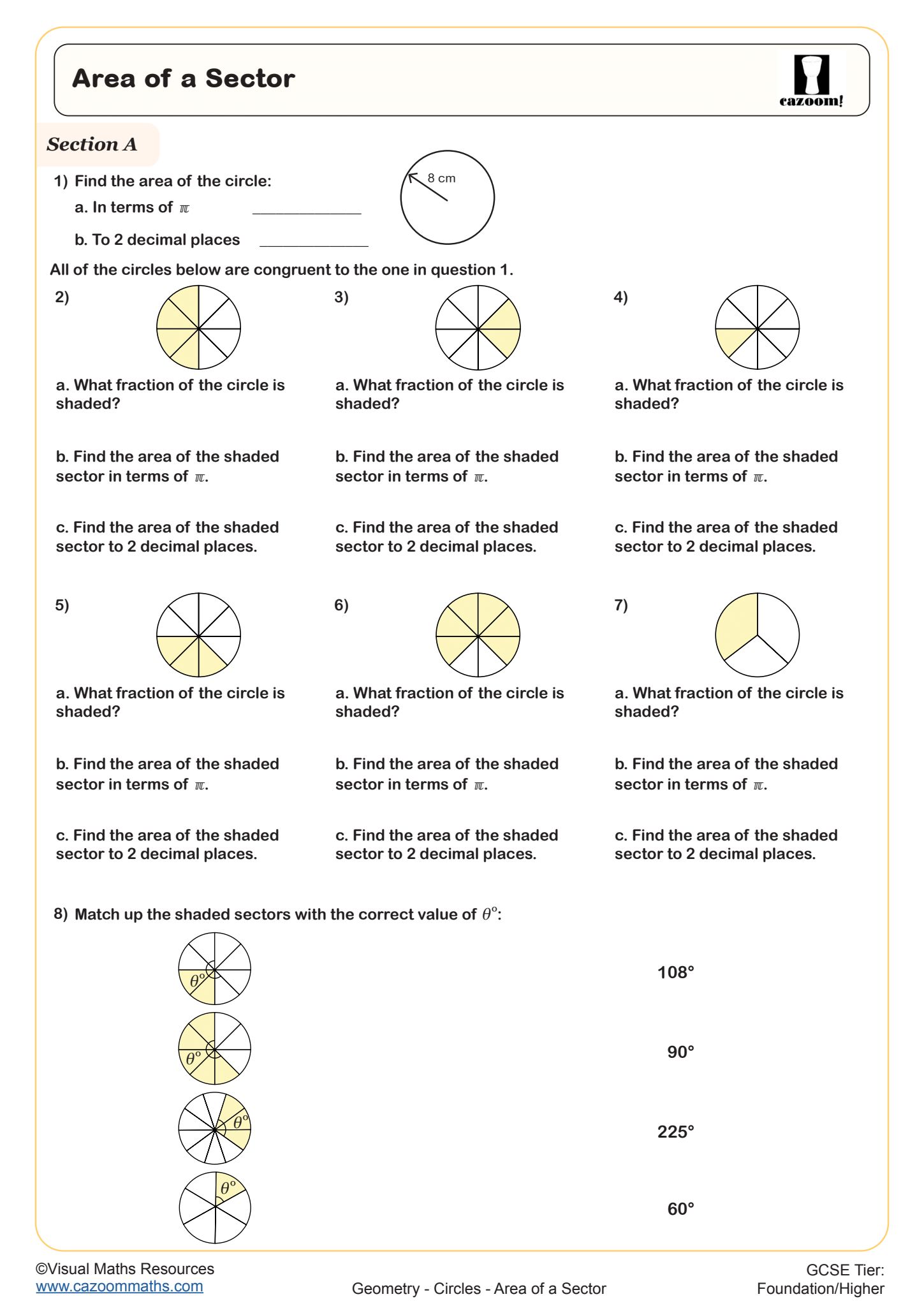
Area of a Sector
Year groups: 10, 11
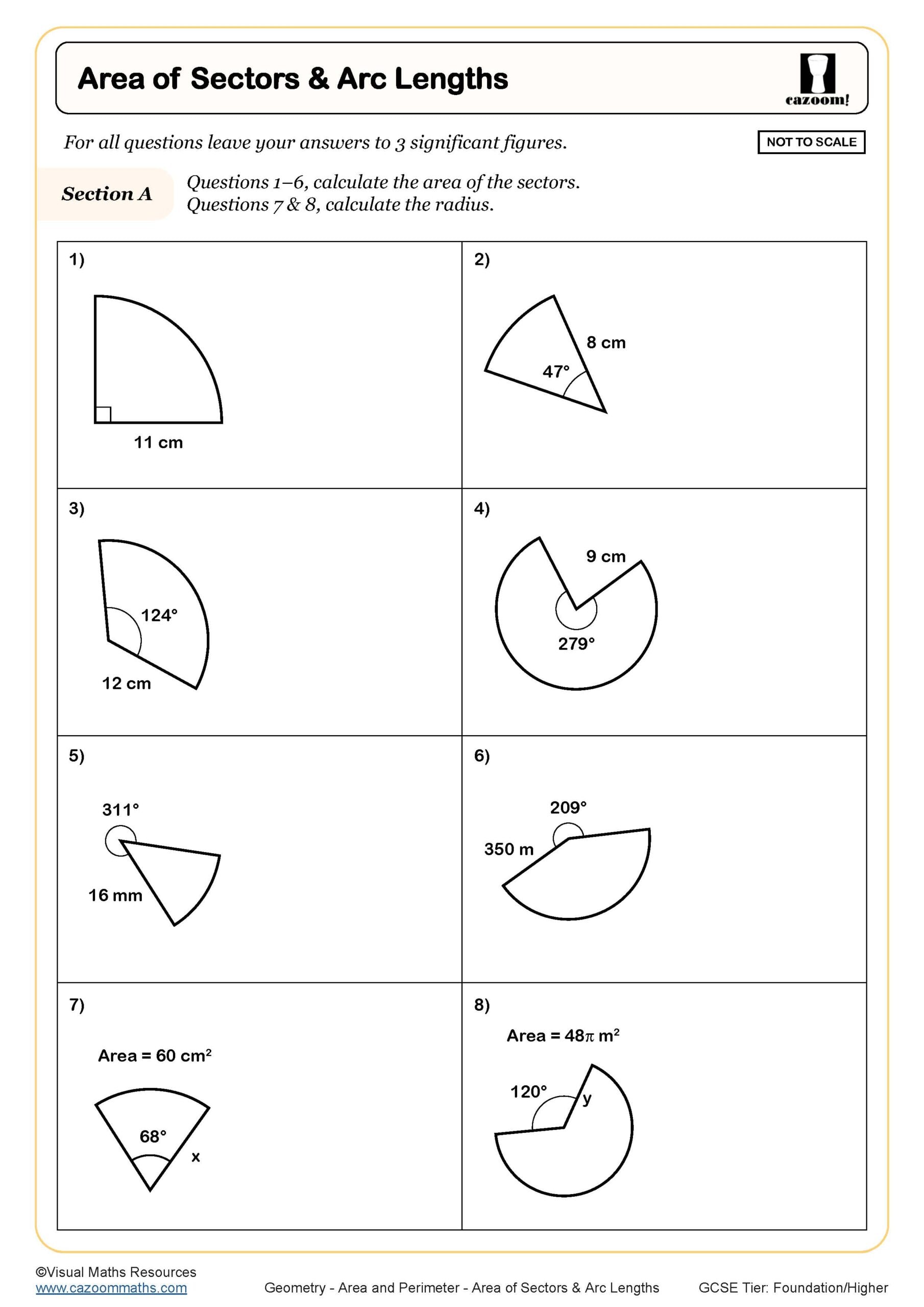
Area of Sectors and Arc Lengths
Year groups: 10, 11
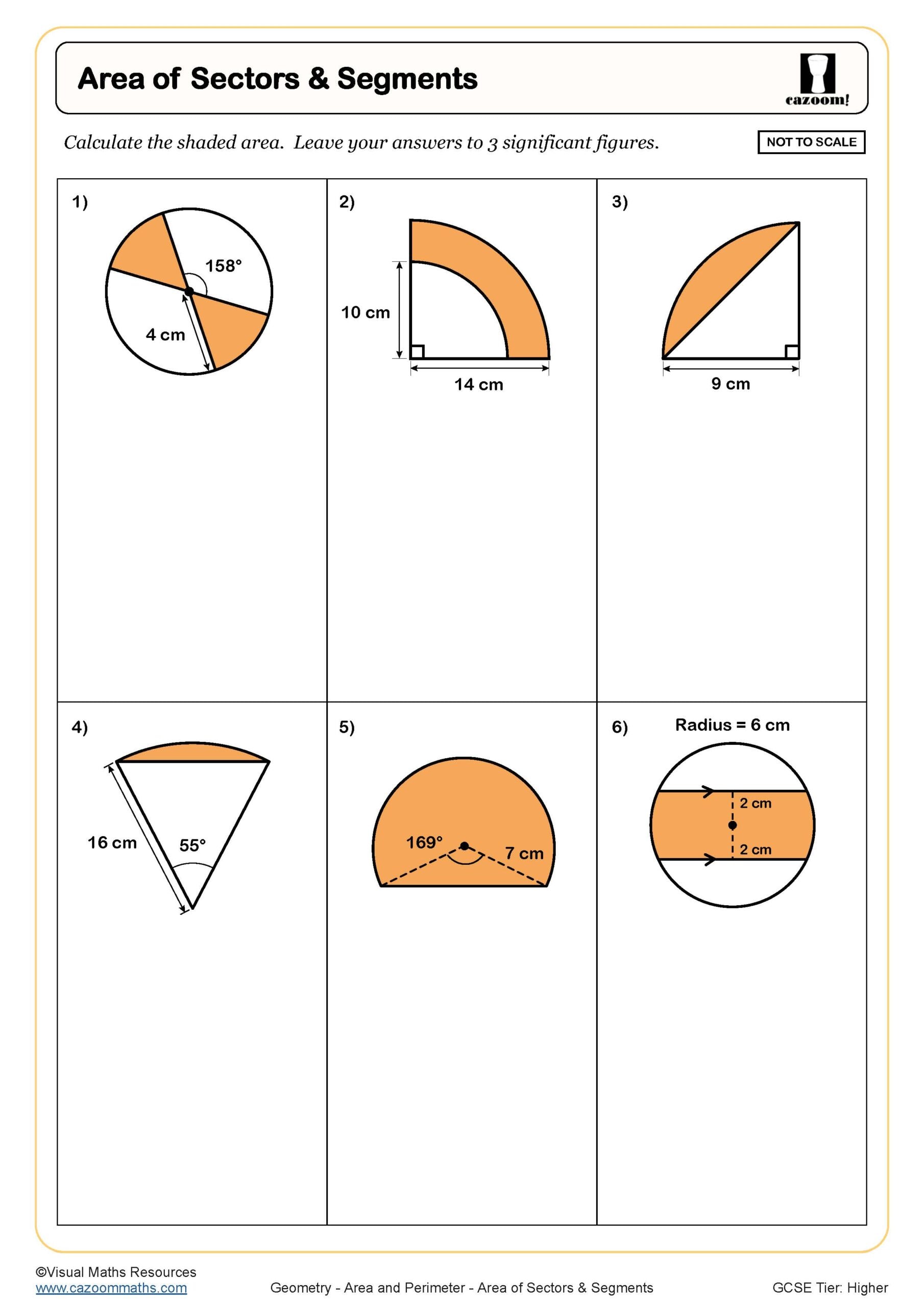
Area of Sectors and Segments
Year groups: 10, 11
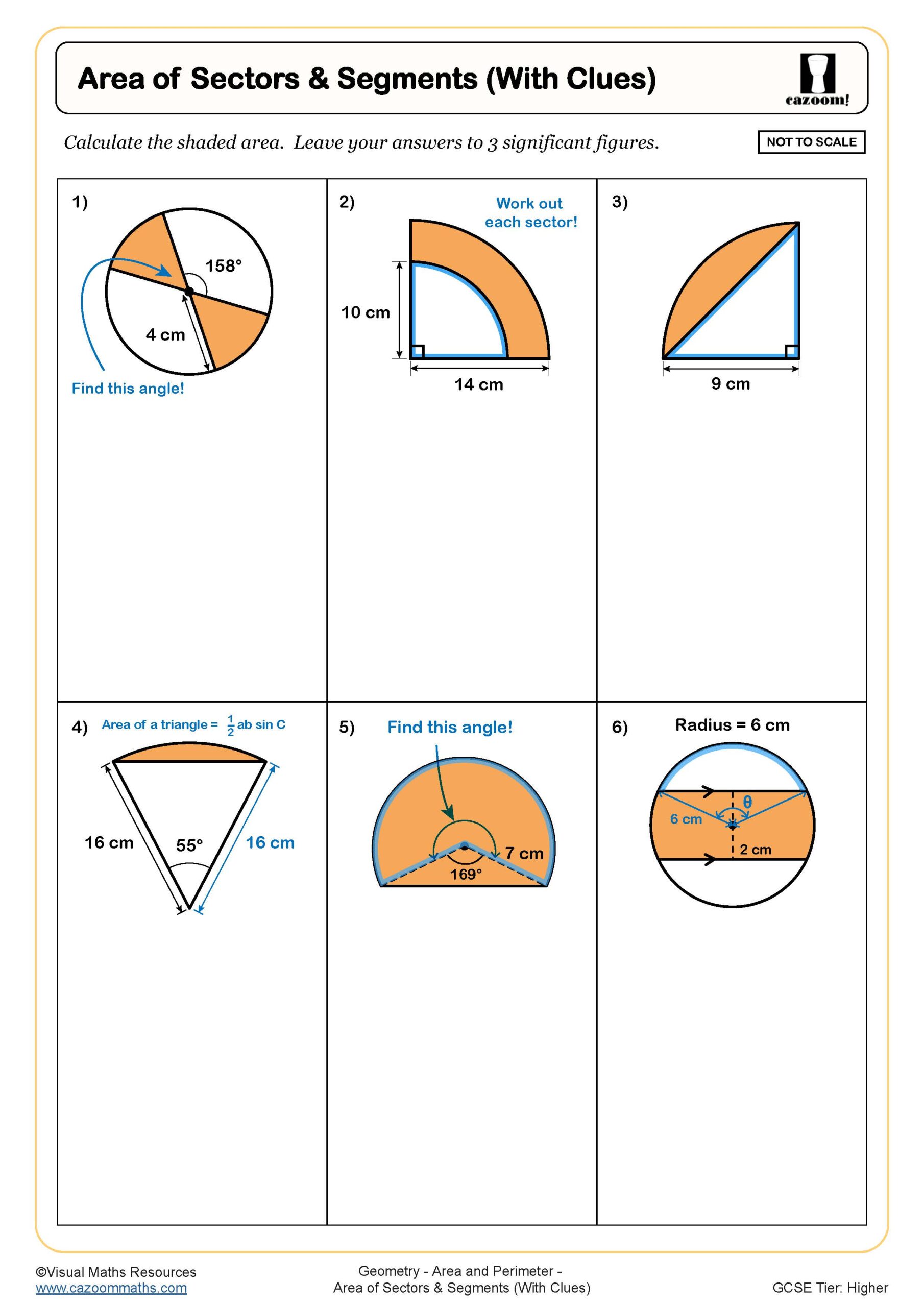
Area of Sectors and Segments (With Clues)
Year groups: 10, 11
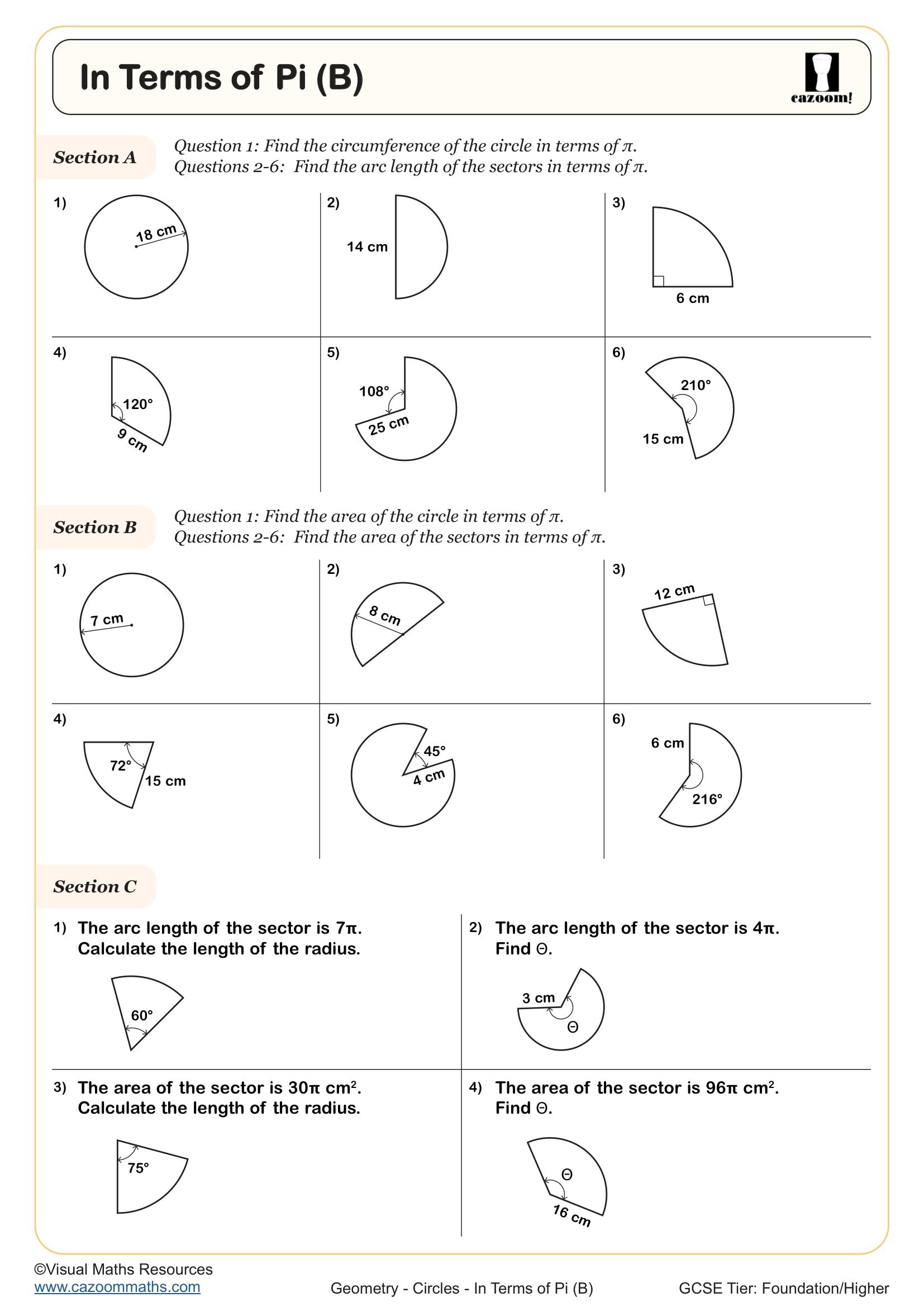
In Terms of Pi (B)
Year groups: 10, 11
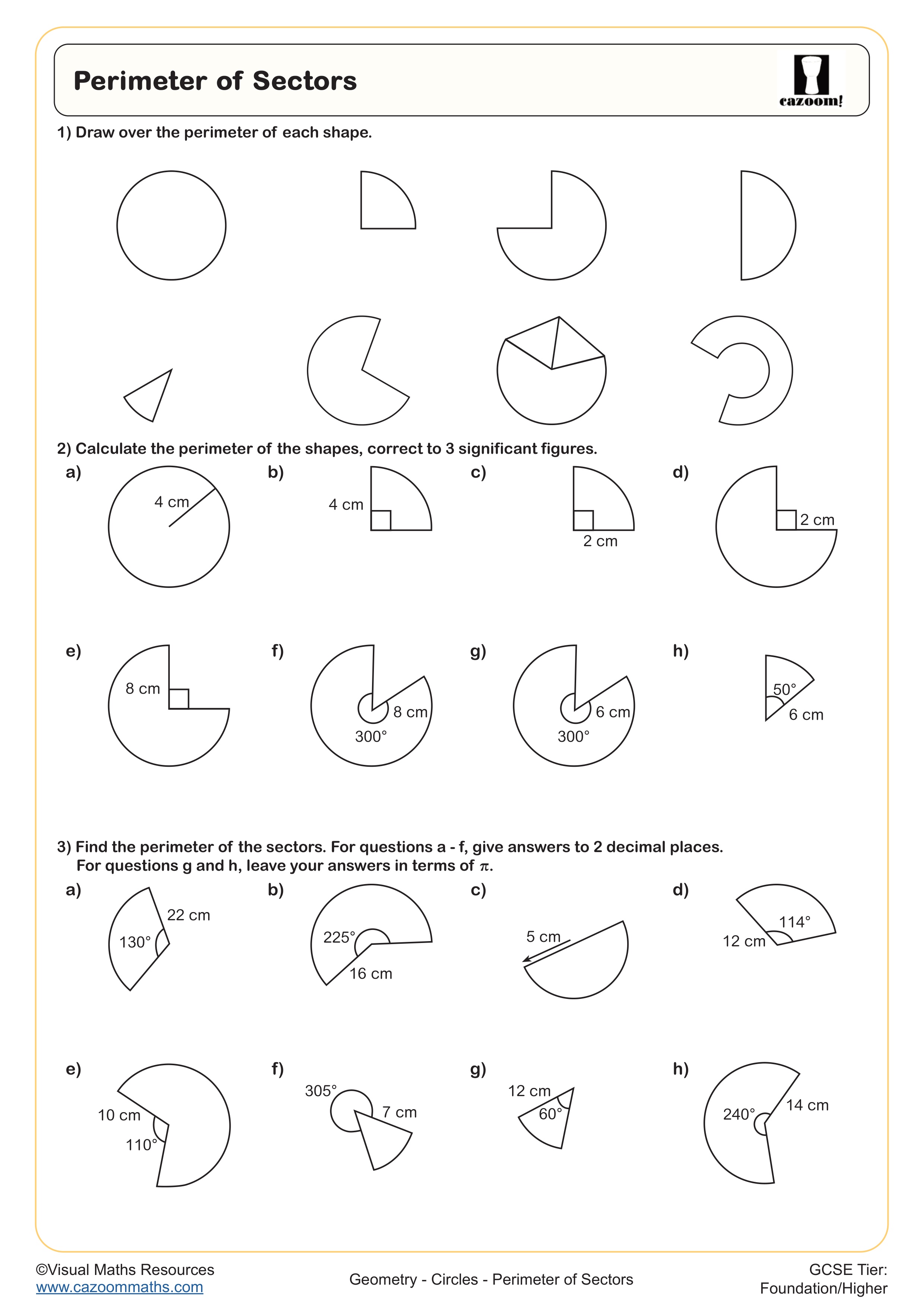
Perimeter of Sectors
Year groups: 10, 11
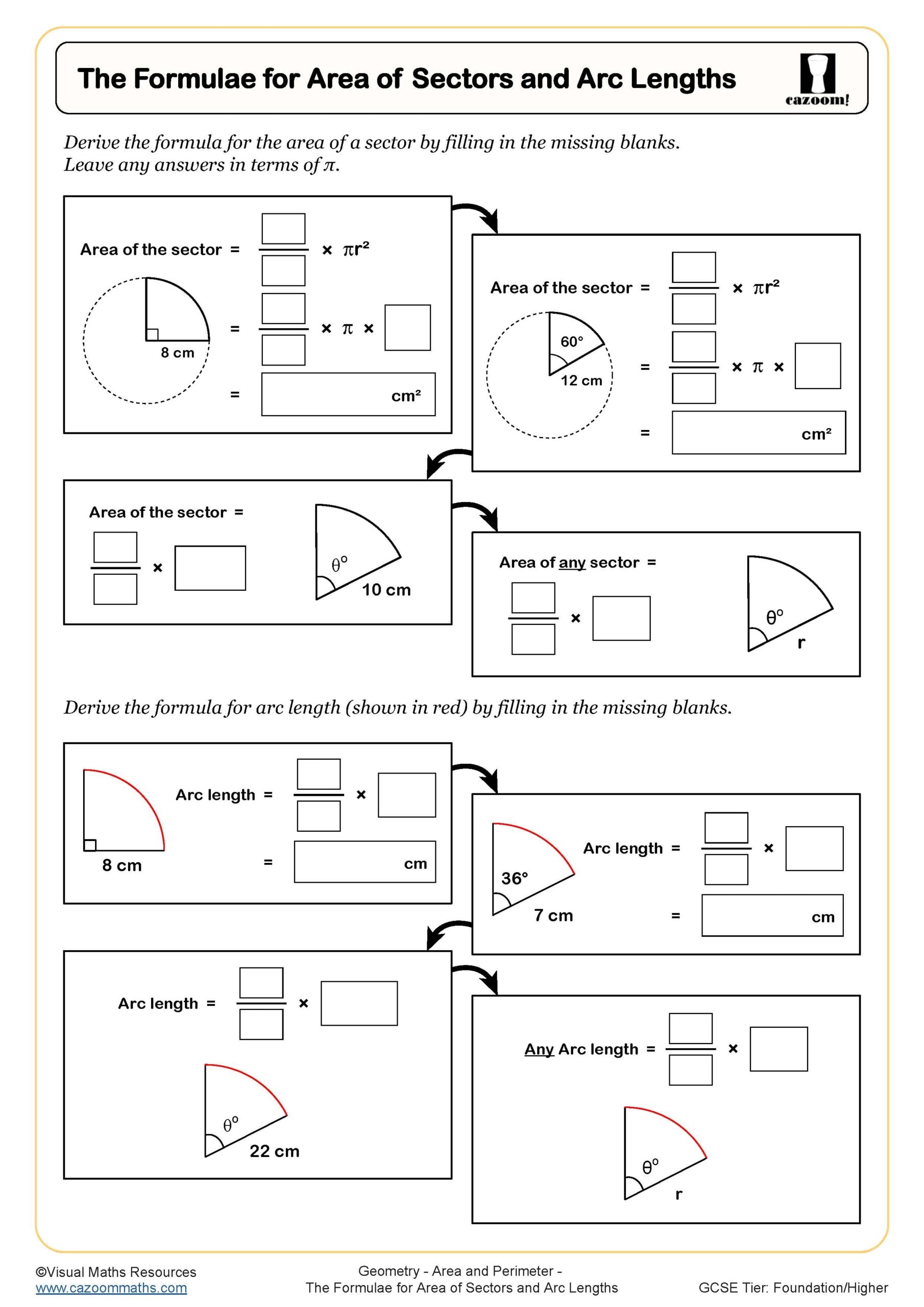
The Formulae for Area of Sectors and Arc Lengths
Year groups: 10, 11
All worksheets are created by the team of experienced teachers at Cazoom Maths.
What are sectors and segments in circle geometry?
A sector is the region enclosed by two radii and an arc, resembling a pizza slice, whilst a segment is the region between a chord and the arc it subtends. Both require students to apply fraction-of-circle thinking, using the angle at the centre to determine what proportion of the full circle area or circumference to calculate. This appears regularly in GCSE Foundation and Higher papers, often combined with Pythagoras' theorem or trigonometry.
Students frequently lose marks by forgetting to subtract the triangle area when calculating segment areas, treating the segment as if it were a sector. The worksheets address this by including mixed questions where students must identify which formula applies, reinforcing the visual distinction between these two circle regions and the multi-step nature of segment calculations.
Which year groups study sectors and segments?
Sectors and segments appear in Year 10 and Year 11 as part of the KS4 geometry curriculum, typically introduced after students have secure understanding of circle theorems and area calculations. This topic builds directly on earlier work with circumference and area of full circles, extending the proportional reasoning required when dealing with fractions of circles using central angles.
The progression across these year groups moves from straightforward sector problems with clearly stated angles and radii towards more demanding segment questions requiring triangle area calculations using trigonometry. Higher-tier students encounter reverse problems where they must work backwards from a given sector area to find the radius or angle, demanding stronger algebraic skills and formula rearrangement.
How do you calculate the area of a segment?
Calculating segment area requires a two-step process: first finding the sector area using the formula (θ/360) × πr² for the angle θ in degrees, then subtracting the triangular portion formed by the two radii and chord. The triangle area calculation depends on whether students know the perpendicular height or must use the formula ½r²sin(θ) with the angle at the centre, a method that Higher-tier students must master.
This skill connects directly to engineering contexts where segments appear in structural cross-sections and architectural design. Wind turbine blade designers calculate segment areas when optimising blade profiles for maximum efficiency, whilst civil engineers use these calculations when designing arched bridges and tunnel cross-sections, demonstrating how circle geometry underpins real-world STEM applications.
How do these worksheets help students learn sectors and segments?
The worksheets scaffold learning by separating sector and segment questions initially before mixing them, allowing students to consolidate each concept before tackling discrimination tasks. Questions include diagrams with varying orientations to prevent students from relying solely on visual pattern-matching, whilst answer sheets show worked solutions that model the correct formula selection and calculation sequence, particularly valuable for the multi-step segment problems.
Teachers use these sheets flexibly depending on class needs: as starter activities to diagnose misconceptions, for paired work where students can discuss which formula applies to each question, or as timed practice under exam conditions. The clues-based questions work particularly well as intervention material, providing additional support for students who struggle with initial problem interpretation whilst maintaining challenge through the underlying mathematics required.