Speed Worksheets
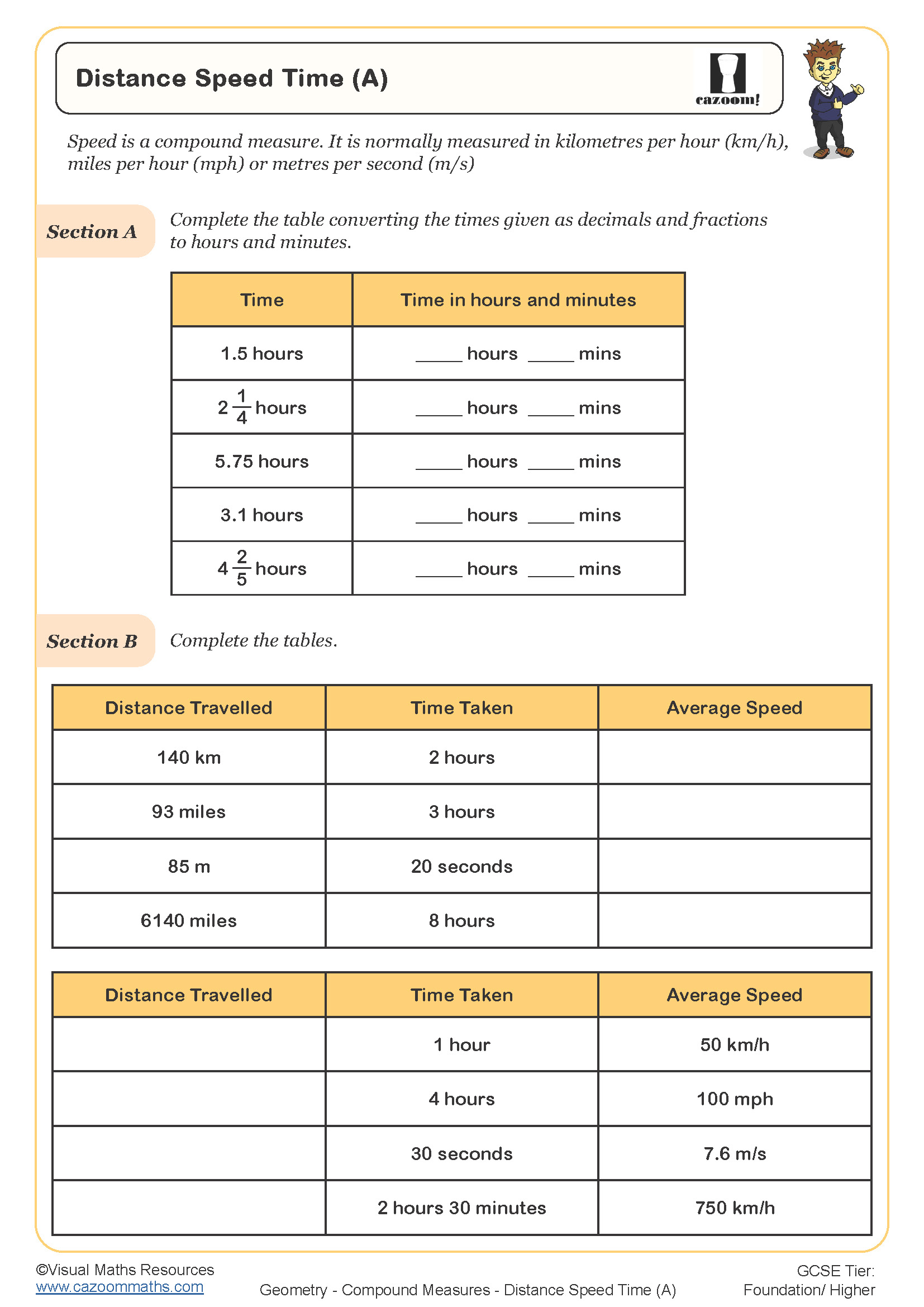
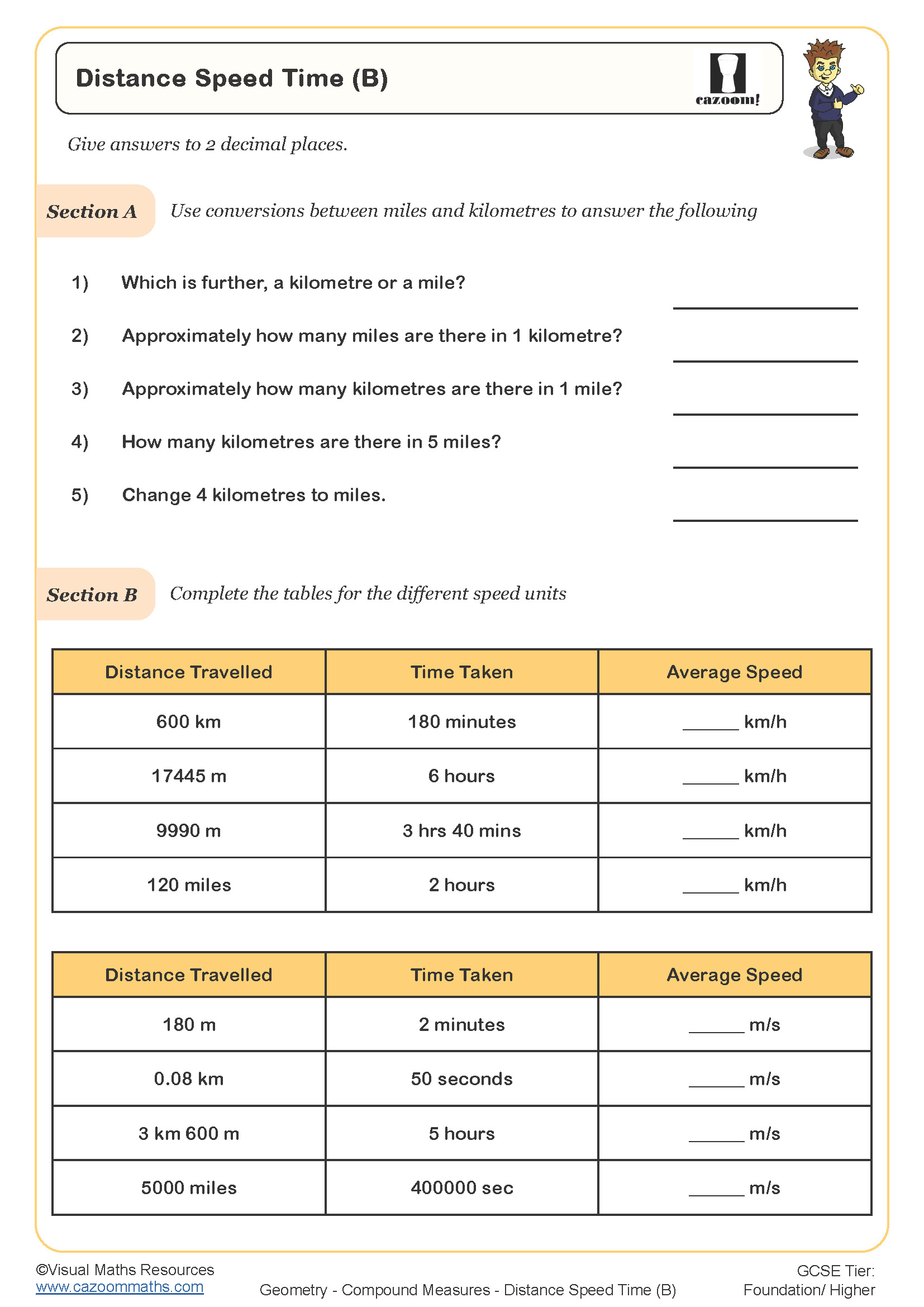
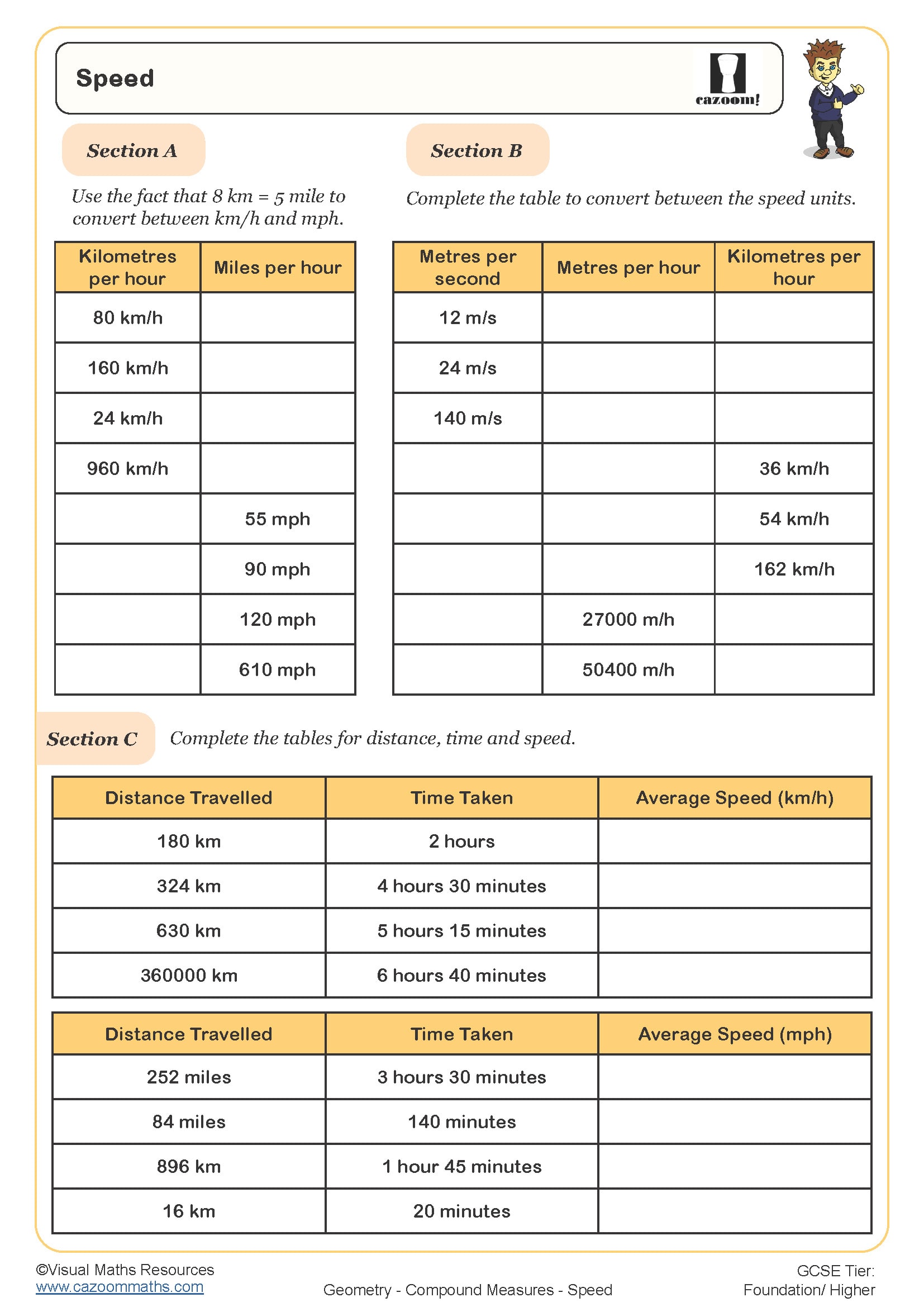
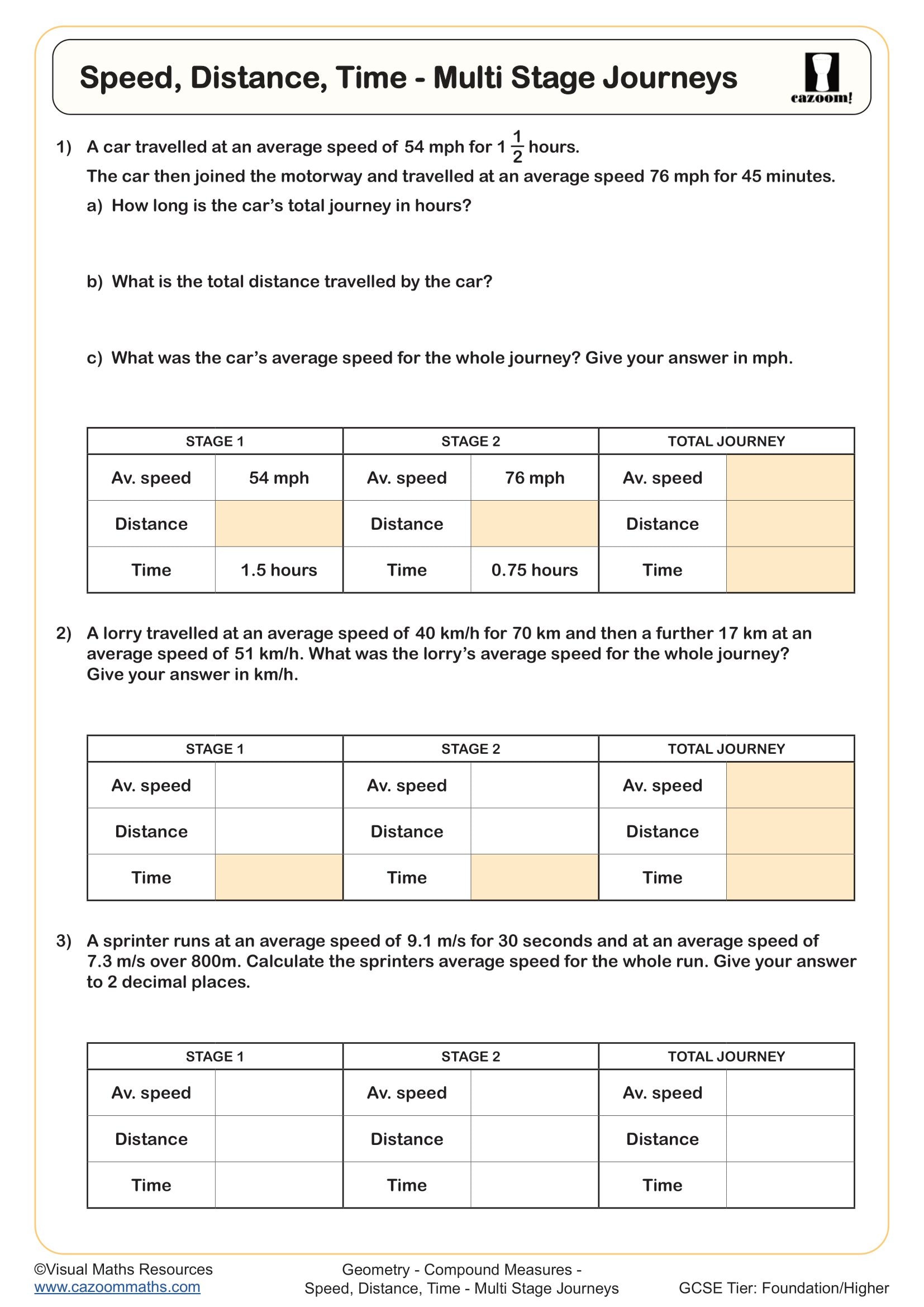
All worksheets are created by the team of experienced teachers at Cazoom Maths.
What makes an effective speed distance time worksheet ks3 level?
An effective KS3 speed worksheet should introduce the formula triangle systematically, starting with direct substitution problems before progressing to rearrangement exercises. Students need structured practice identifying which variable they're solving for and selecting the correct formula arrangement from speed = distance ÷ time.
Teachers notice that students often confuse the position of variables in the triangle, particularly when calculating time. The most successful worksheets provide visual reminders of the triangle throughout, with worked examples showing each rearrangement clearly. Questions should progress from whole numbers to decimals, then introduce unit conversions gradually rather than combining multiple challenges in early problems.
Which year groups should use speed worksheets?
Speed calculations typically begin in Year 7 as part of the ratio and proportion unit, with students learning basic substitution into the speed formula. By Year 8, students tackle rearranging the formula and converting between common units like m/s to km/h, building towards GCSE compound measures requirements.
Year 9 and above encounter more complex scenarios including average speed calculations and problems requiring multiple steps. Teachers find that revisiting speed calculations regularly throughout KS3 and KS4 helps students retain the formula arrangements, as these concepts frequently appear in physics contexts and GCSE mathematics papers where marks are often lost through simple formula errors.
How should students approach converting units of speed worksheet questions?
Unit conversion in speed problems requires systematic conversion of both distance and time components separately before applying the speed formula. Students should identify which units need changing first, then convert methodically using multiplication or division by appropriate factors like 1000 for metres to kilometres or 3600 for hours to seconds.
A common error teachers observe is students attempting to convert the final speed answer rather than converting the individual components first. This approach often leads to incorrect conversion factors and wrong answers. Successful students learn to write out their conversions explicitly, showing 72 km/h = 72 × 1000 ÷ 3600 m/s = 20 m/s with clear working that demonstrates understanding of the relationship between units.
How can teachers use these speed worksheets most effectively?
These speed sheets work best when introduced alongside practical contexts that students can relate to, such as journey times, athletics records, or vehicle speeds. Teachers find that starting lessons with real examples helps students understand why speed calculations matter before moving to abstract worksheet problems.
The answer sheets allow for immediate feedback during independent practice, but teachers should encourage students to show full working rather than just checking final answers. This helps identify where errors occur in the calculation process. Regular low-stakes testing using these worksheets helps students build automaticity with formula rearrangements, reducing cognitive load when tackling compound measures in GCSE examinations where speed calculations often appear within multi-step problems.