Vectors Around Shapes Worksheets
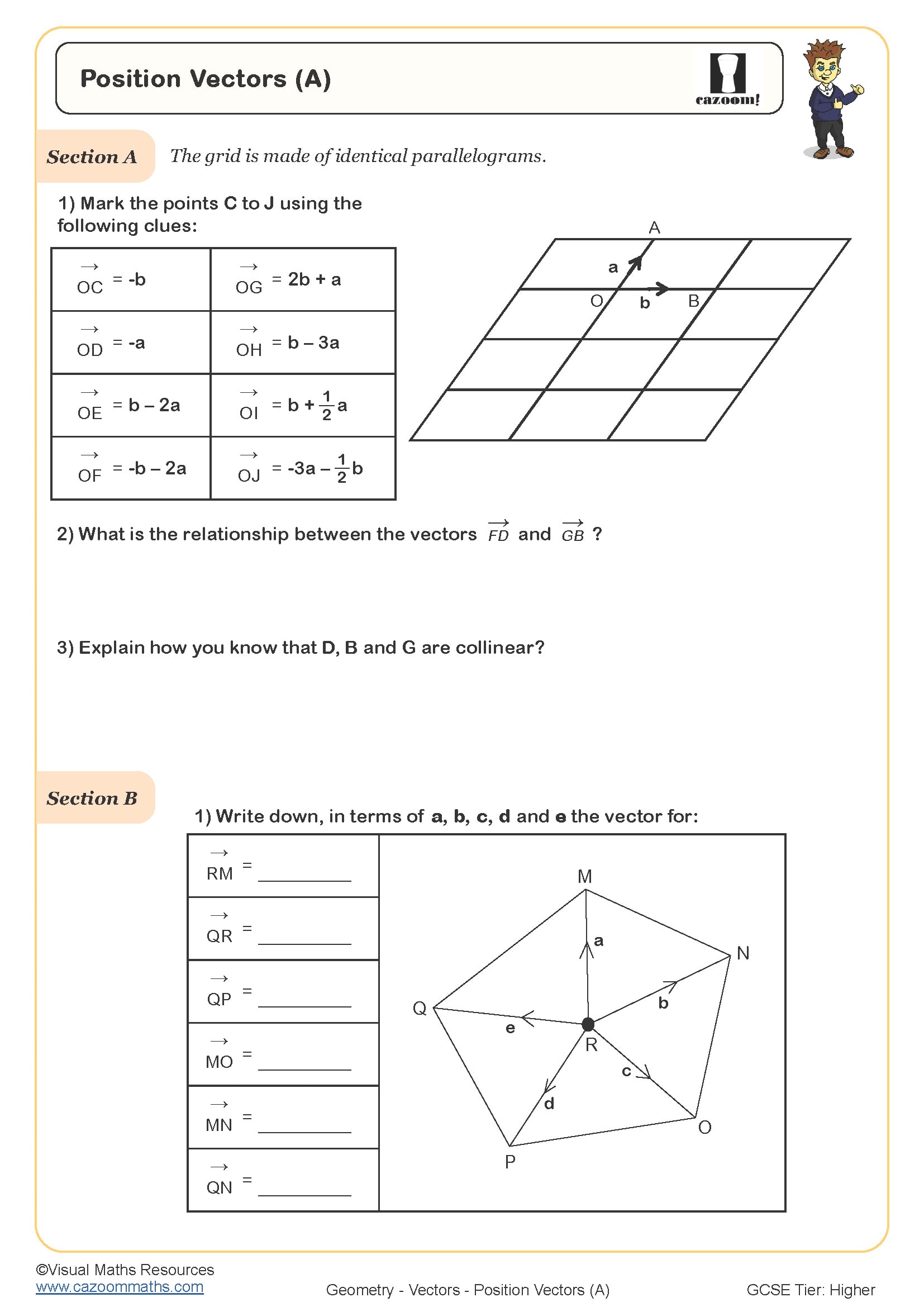
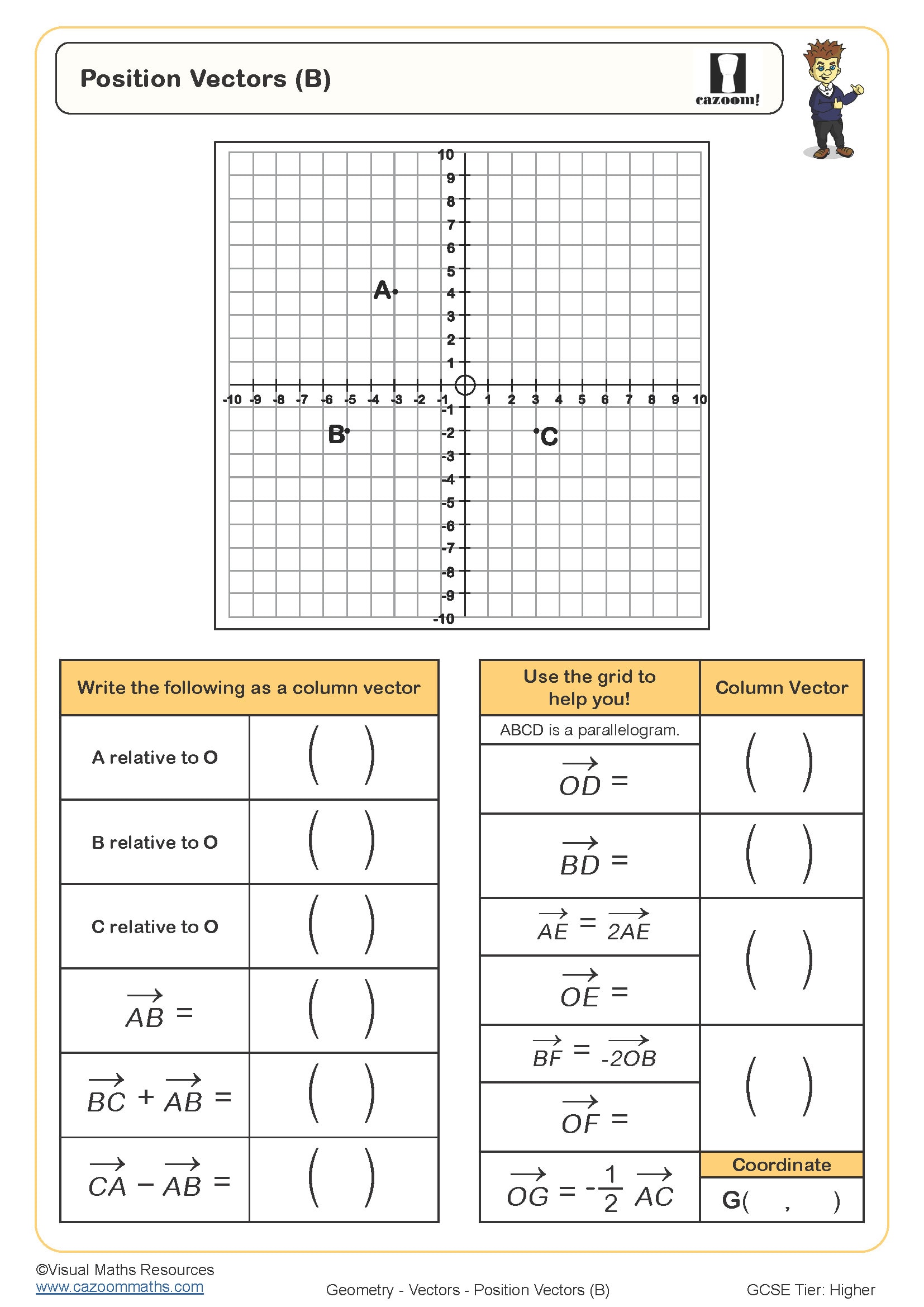
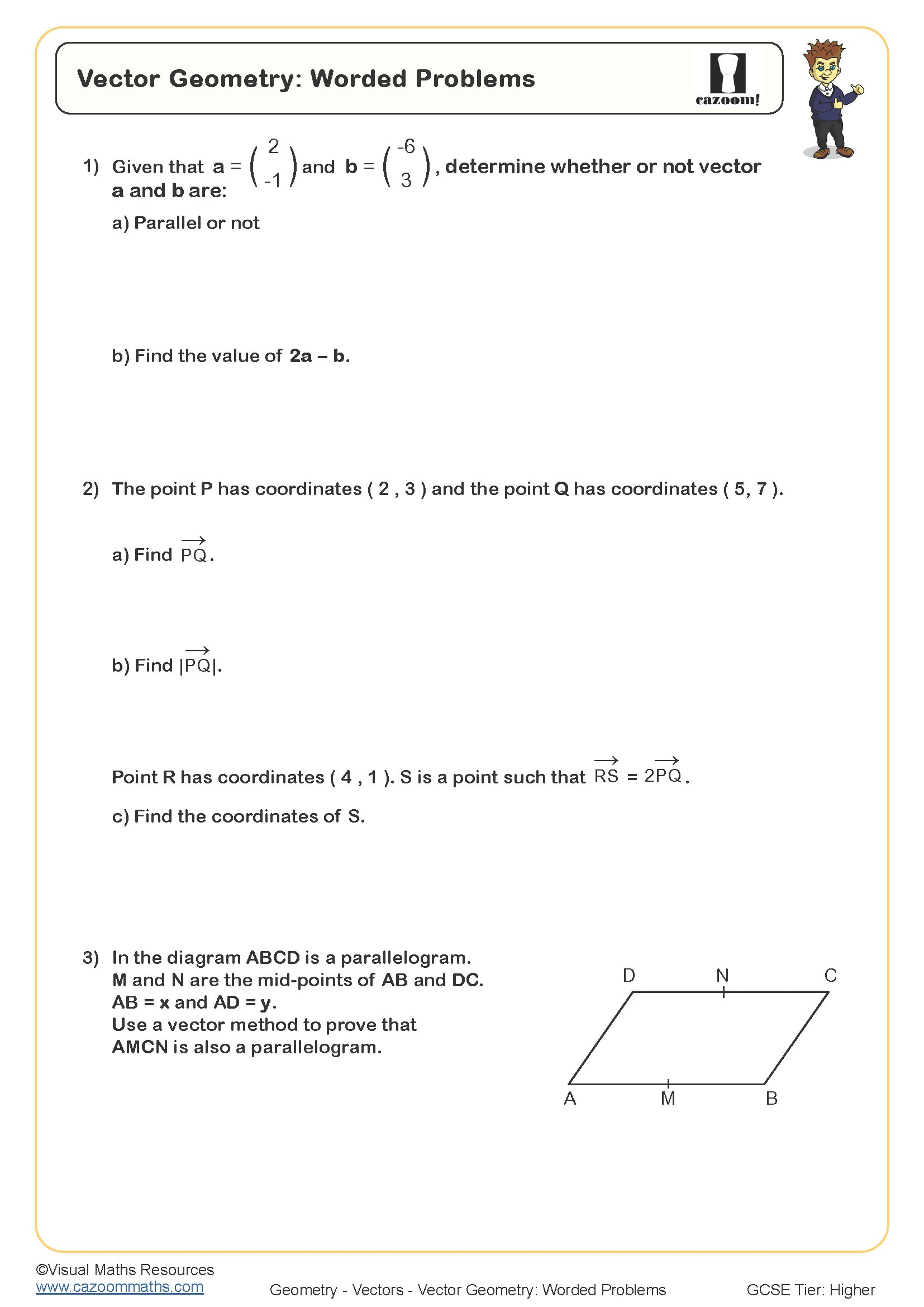
All worksheets are created by the team of experienced teachers at Cazoom Maths.
What makes an effective vector geometry worksheet for GCSE preparation?
Effective vector geometry worksheets scaffold learning from basic vector notation through to proof applications, aligning with GCSE Mathematics requirements for geometric reasoning. They typically progress from identifying vectors in simple shapes to using vector methods to prove properties of quadrilaterals and other polygons.
Teachers notice that students benefit most from worksheets that include clear vector diagrams with consistent notation, as this prevents confusion between vectors and ordinary lines. The most successful resources combine computational practice with reasoning questions, helping students develop both procedural fluency and conceptual understanding of how vectors describe geometric relationships.
Which year groups typically study vectors in shapes?
Vector work in geometric contexts typically appears in Years 10 and 11, forming part of the GCSE Mathematics higher tier curriculum. Students encounter vectors in shapes after establishing foundation knowledge of coordinates and basic geometric properties, usually following work on transformations and coordinate geometry.
The progression often begins with representing translations as vectors, then moves to position vectors within shapes and using vector addition to navigate around polygons. Many schools introduce this topic in Year 10 to allow sufficient time for consolidation, as students need to become comfortable with vector notation before attempting geometric proof applications required at GCSE level.
How do vector diagrams worksheet activities support geometric understanding?
Vector diagrams worksheet activities help students visualise abstract vector concepts by providing concrete geometric contexts. These activities typically show how vectors can describe movements around shapes, relationships between vertices, and prove properties like parallelogram theorems using vector addition rules.
Maths teachers observe that students who initially struggle with algebraic vector manipulation often gain understanding through diagram-based exercises. Working with vector pathways around triangles and quadrilaterals helps students see that vector addition follows the same rules whether expressed algebraically or geometrically, building confidence for more advanced applications in mechanics and further mathematics.
How should teachers use these worksheets to maximise student progress?
Teachers achieve best results by beginning each lesson with diagram interpretation before moving to calculation work, ensuring students understand what vectors represent geometrically. Using the answer sheets for peer assessment helps students identify common errors in vector notation and calculation methods early in the learning process.
Many teachers find success in combining individual worksheet practice with collaborative problem-solving, particularly for proof questions where students can discuss different vector approaches. The downloadable format allows for easy adaptation, enabling teachers to select specific question types that address gaps identified through ongoing assessment or to provide targeted support for students preparing for higher tier GCSE examinations.