KS3 3D Shapes Worksheets
All worksheets are created by the team of experienced teachers at Cazoom Maths.
What do students learn with 3D shapes KS3 worksheets?
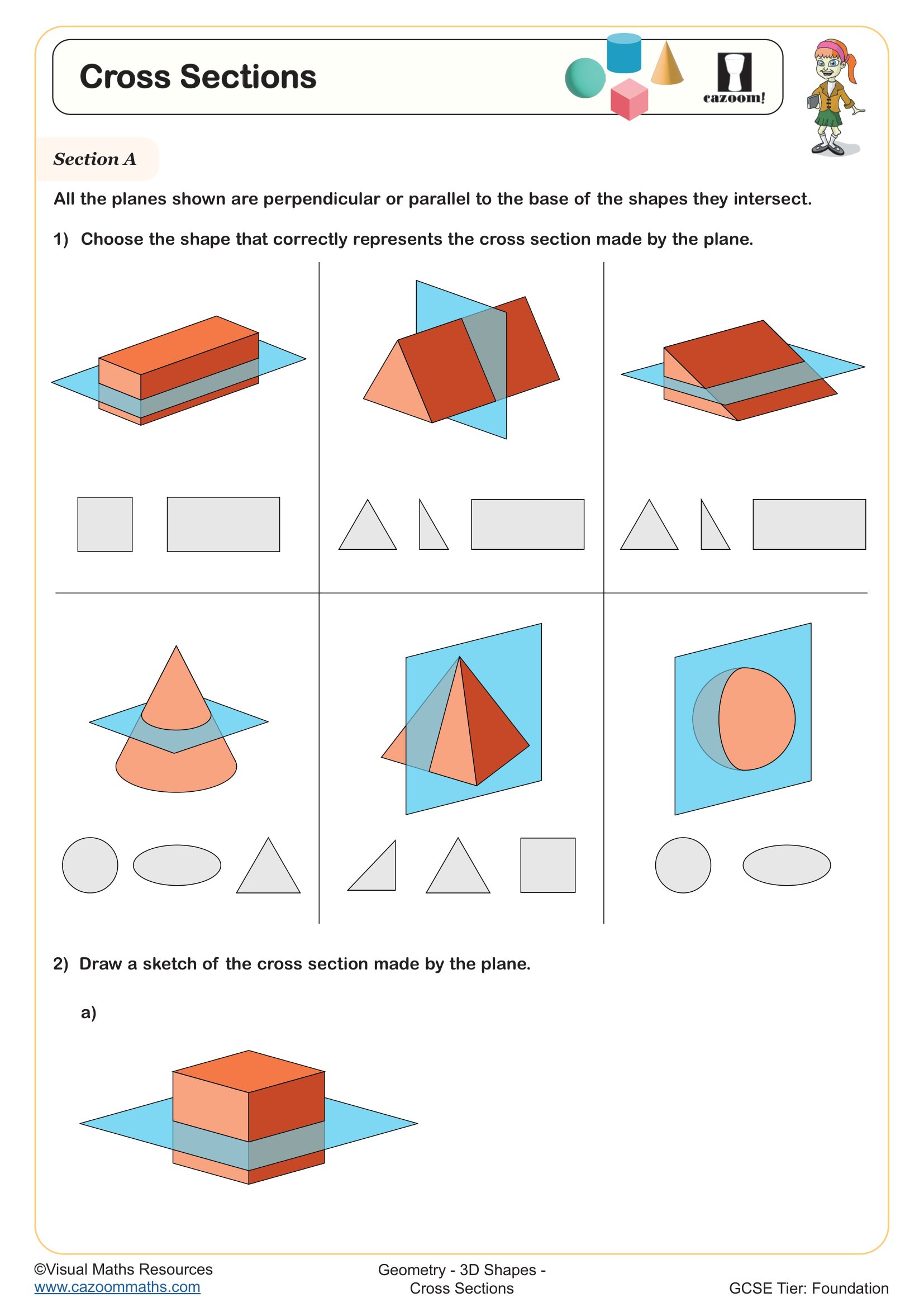
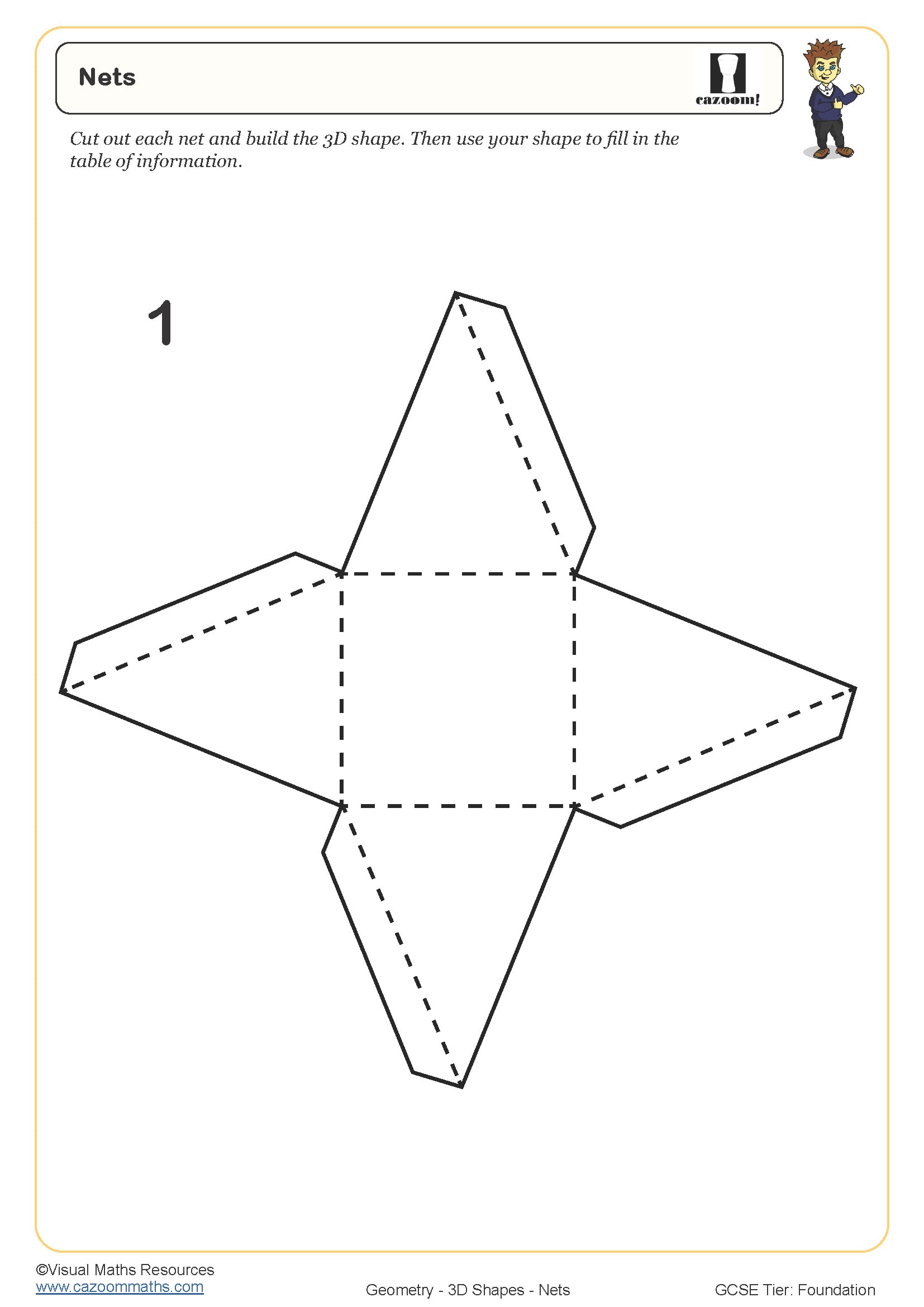
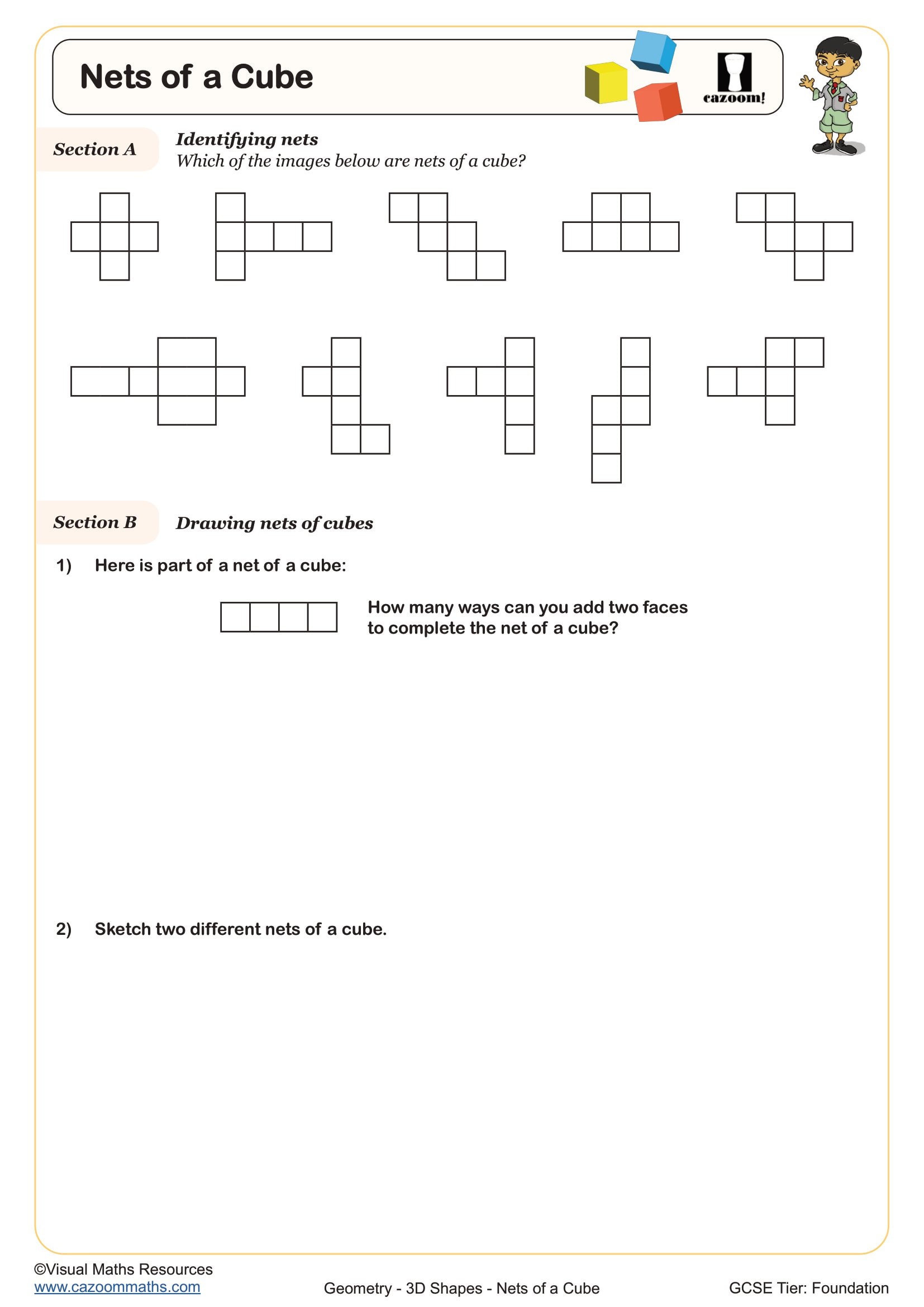
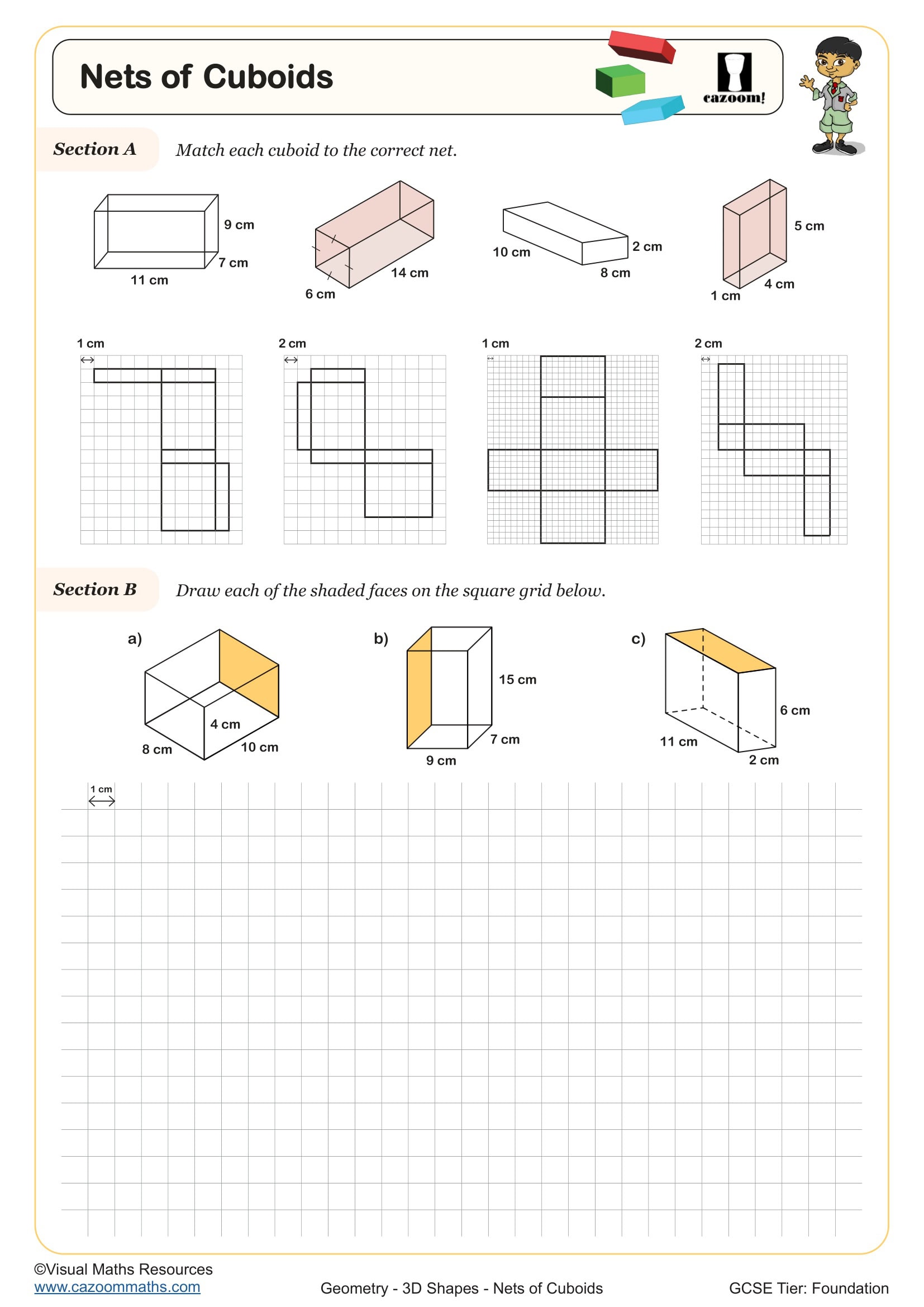
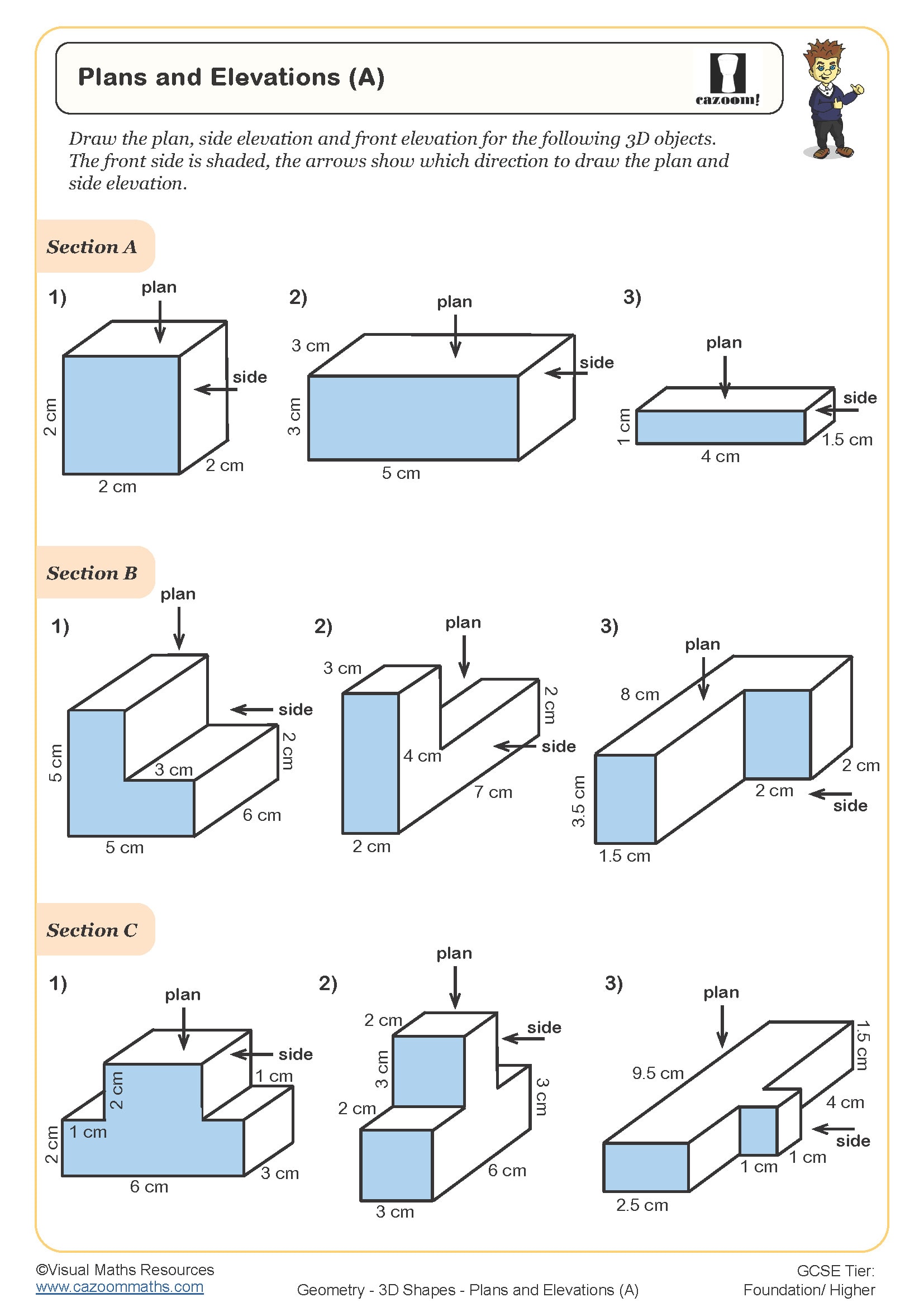
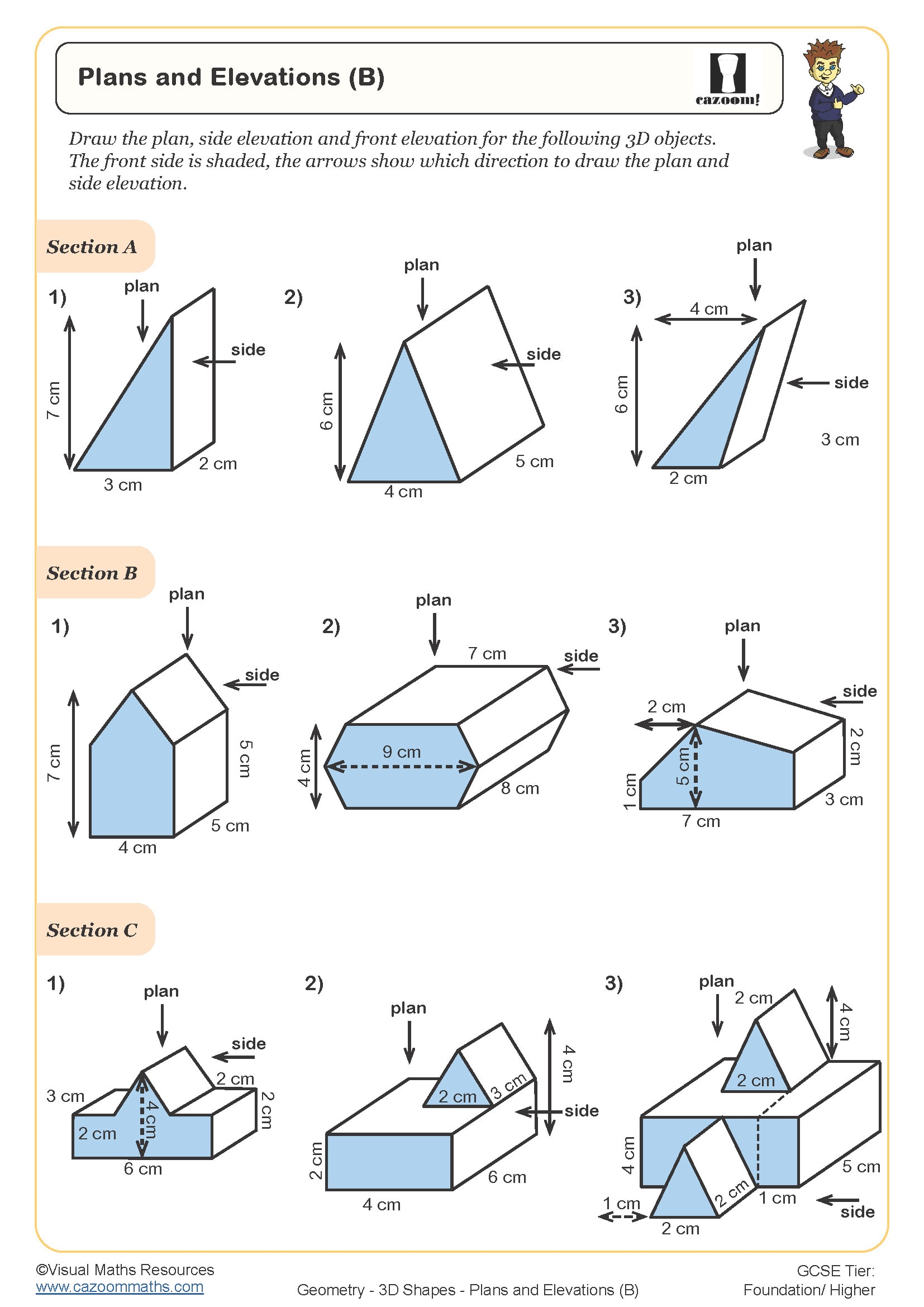
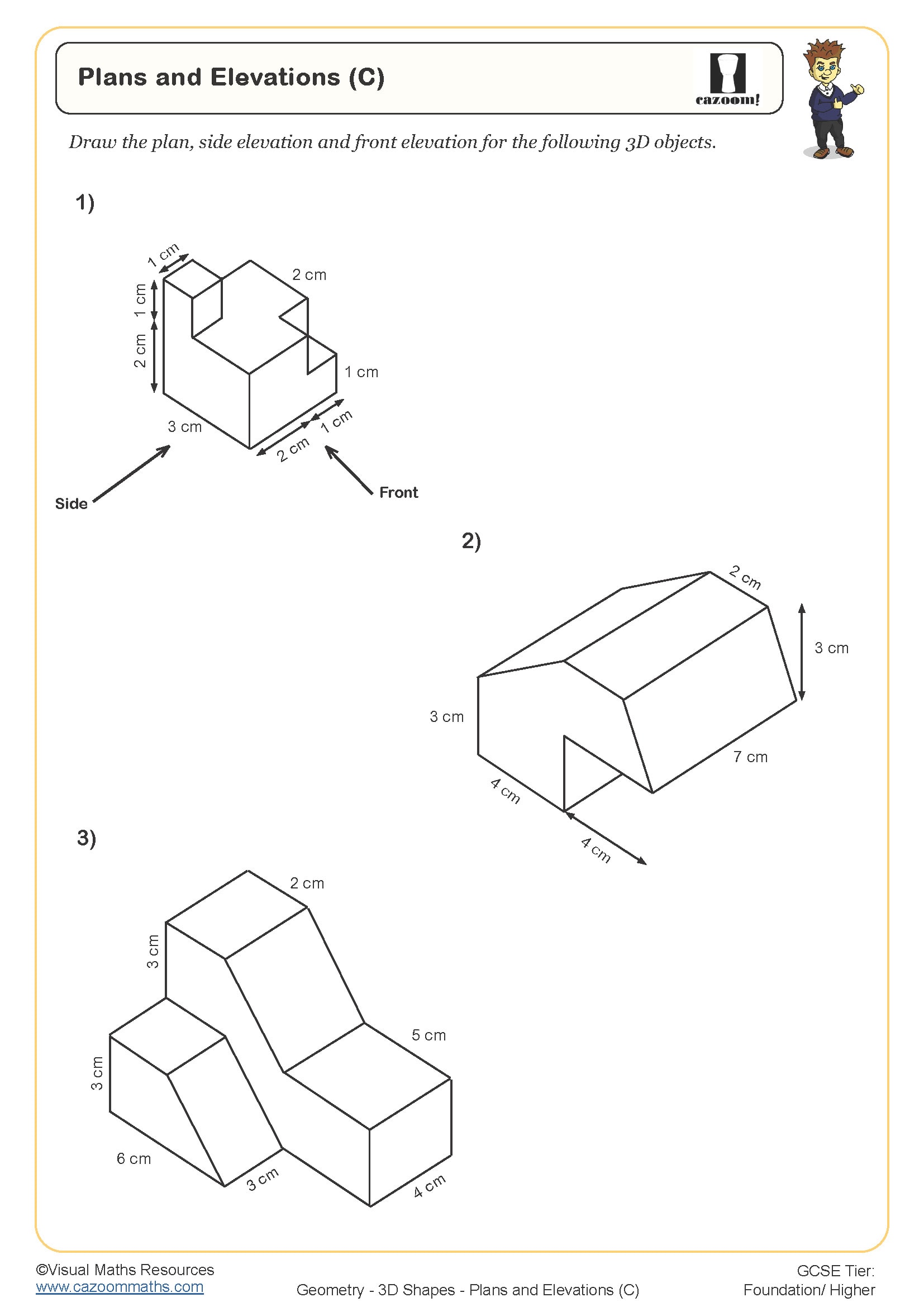
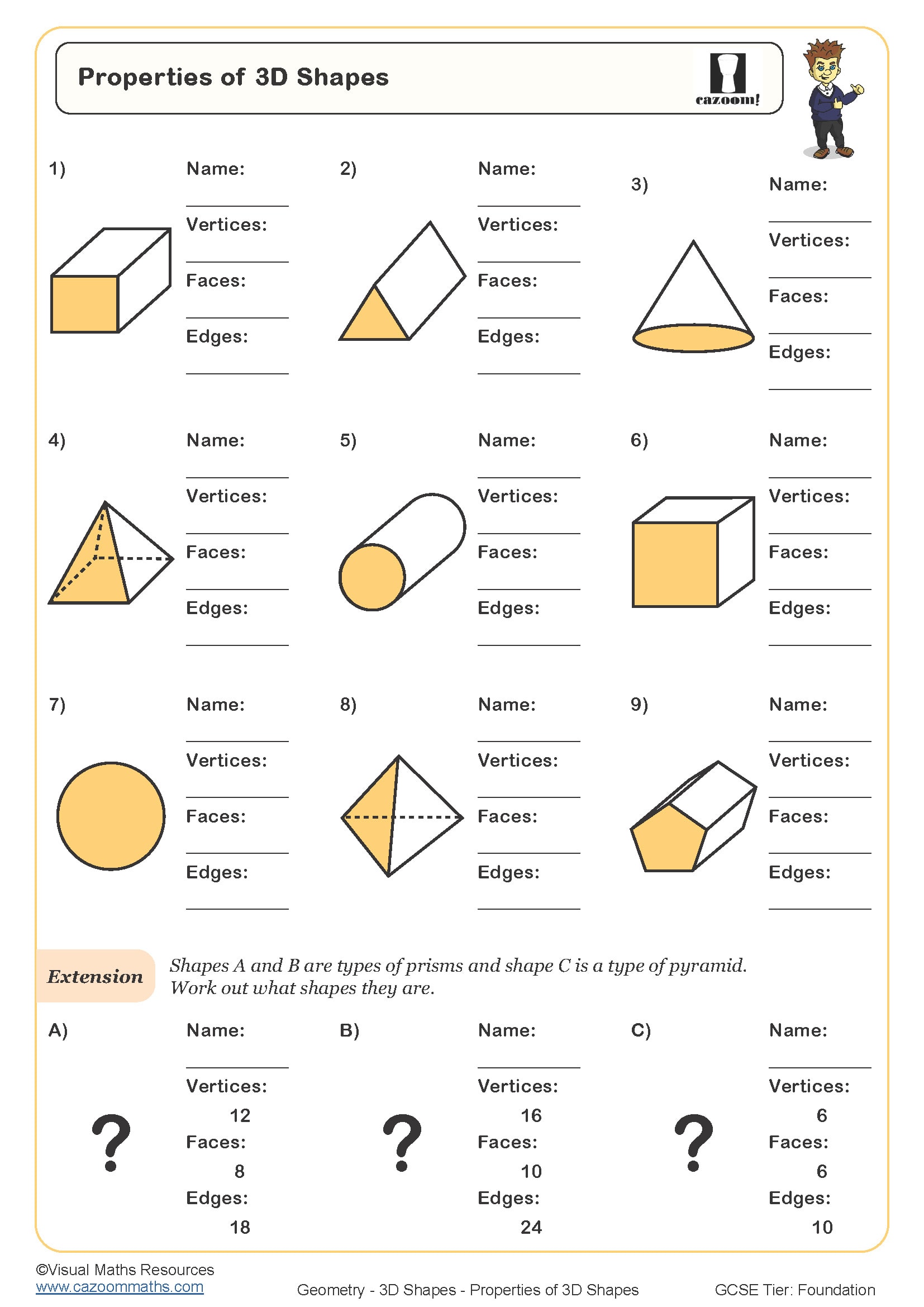
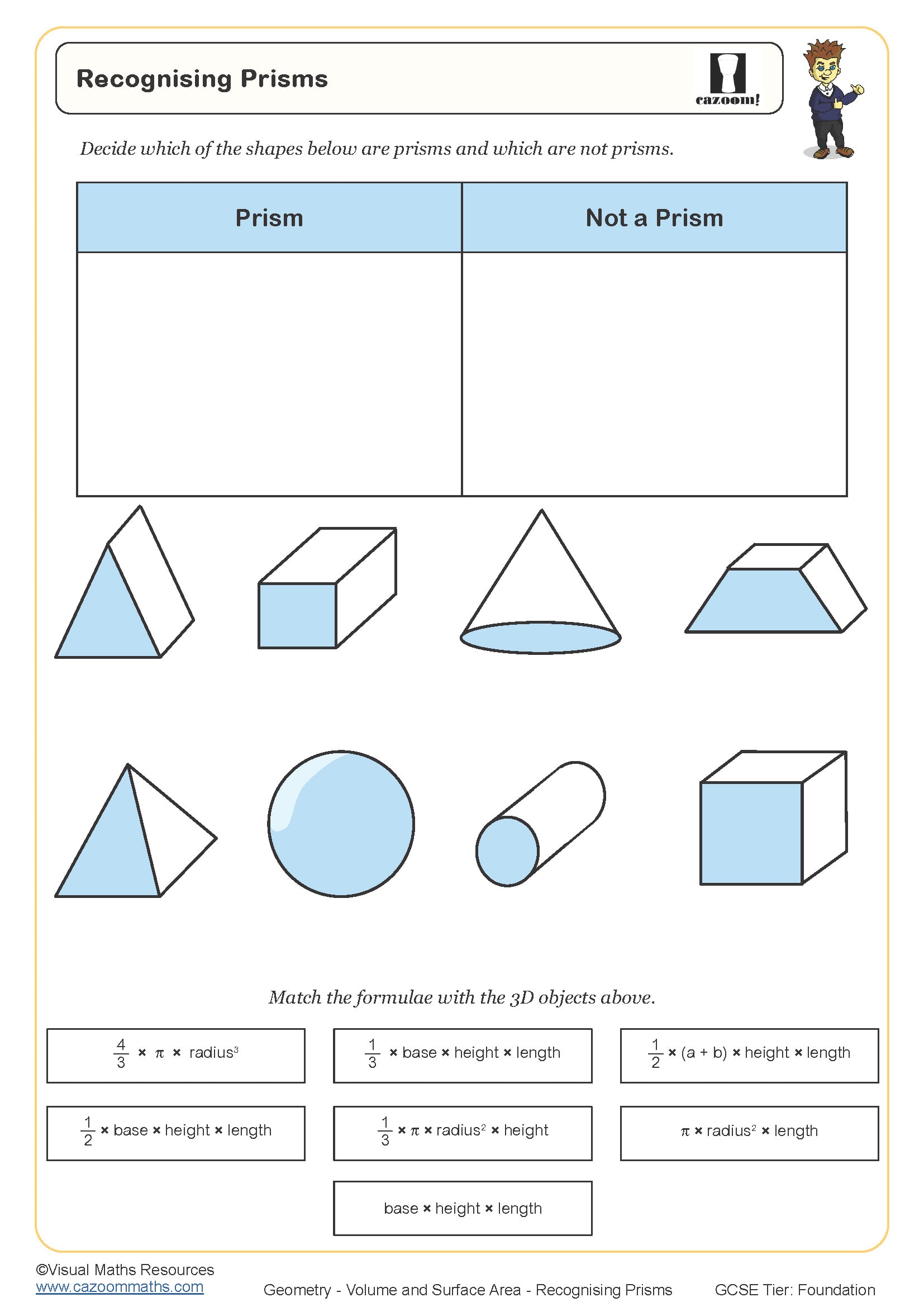
Students working with shapes KS3 materials learn to identify and describe properties of three-dimensional solids including cubes, cuboids, prisms, pyramids, cylinders, cones, and spheres. They develop skills in calculating surface area and volume using appropriate formulae, constructing and interpreting nets, and understanding how 2D cross-sections relate to 3D objects. The worksheets address National Curriculum requirements for geometry and measures at Key Stage 3, ensuring students can apply formulae accurately and solve problems involving composite shapes.
A common error occurs when students calculate the surface area of a cylinder: many remember to find the area of the two circular ends but forget that the curved surface area requires the formula 2πrh. Teachers report that students often write down all the faces they need to calculate but then miss one from their final addition, particularly with shapes like triangular prisms where the two triangular faces are easily overlooked.
Which year groups study 3D shapes at KS3?
Work with 3D shapes spans Year 7, Year 8, and Year 9 within Key Stage 3, with each year building on previous knowledge. Year 7 focuses on identifying properties, understanding nets, and calculating surface area and volume of simple shapes like cubes and cuboids. Year 8 extends this to prisms and cylinders, requiring students to work with more complex formulae and apply their understanding to problem-solving contexts.
Year 9 brings together these skills with more challenging composite shapes and questions that require multiple steps, such as finding the volume of a shape with a section removed or working backwards from a given surface area to find missing dimensions. The progression ensures students develop both procedural fluency with formulae and the conceptual understanding needed to select appropriate methods when faced with unfamiliar problems at GCSE.
How do students calculate the volume of prisms?
Students calculate the volume of any prism by finding the area of the cross-section and multiplying it by the length (or height) of the prism. This method works because a prism has a uniform cross-section throughout its length. For a triangular prism, students first calculate the area of the triangular face using ½ × base × height, then multiply by the prism's length. For a cylinder, they find the area of the circular cross-section (πr²) and multiply by the height.
This principle connects directly to manufacturing and construction, where calculating volumes determines material requirements. Architects use these calculations when specifying concrete for columns or beams, whilst packaging designers apply prism volume calculations to determine capacity and optimize material use. Understanding that volume represents the three-dimensional space a shape occupies helps students grasp why we measure it in cubic units and prepares them for density calculations in science, where they'll need to relate mass to volume.
How do these worksheets help students master 3D shapes?
The worksheets provide structured practice that moves from identifying properties and using single formulae to multi-step problems requiring students to combine different skills. Questions scaffold learning by starting with shapes in standard orientations before introducing rotated diagrams that require stronger spatial reasoning. Worked examples on some worksheets demonstrate the step-by-step process for more complex calculations, helping students develop reliable methods they can apply independently.
Teachers use these resources in various ways depending on student needs: as starter activities to recall formulae before tackling exam-style questions, for targeted intervention with students who struggle with volume and surface area, or as homework to consolidate classroom teaching. The answer sheets allow students to self-assess and identify which types of problems they find challenging, making the worksheets particularly effective for revision sessions where students need to diagnose their own areas for improvement before assessments.