KS3 Mental Methods Worksheets
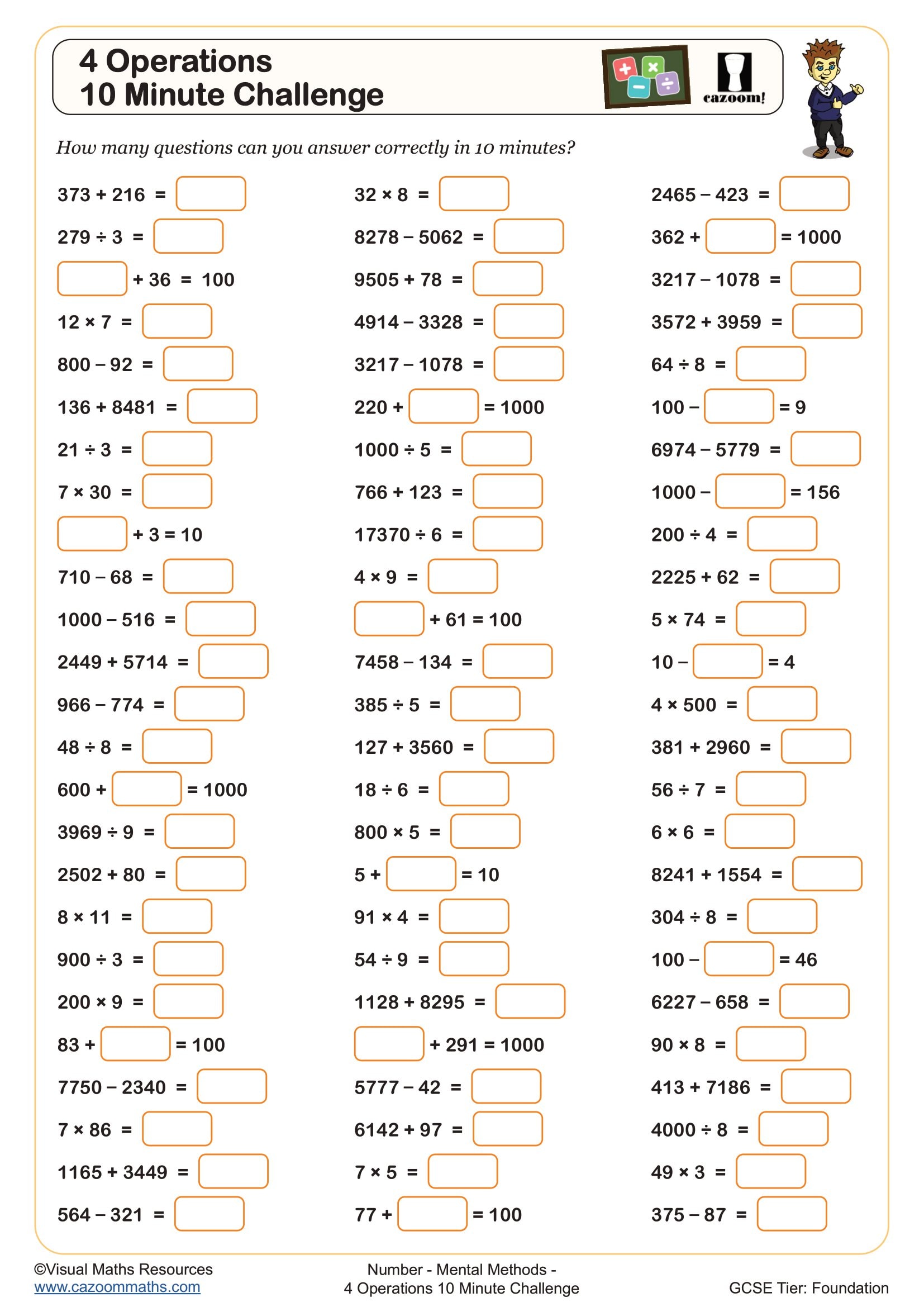
4 Operations 10 Minute Challenge
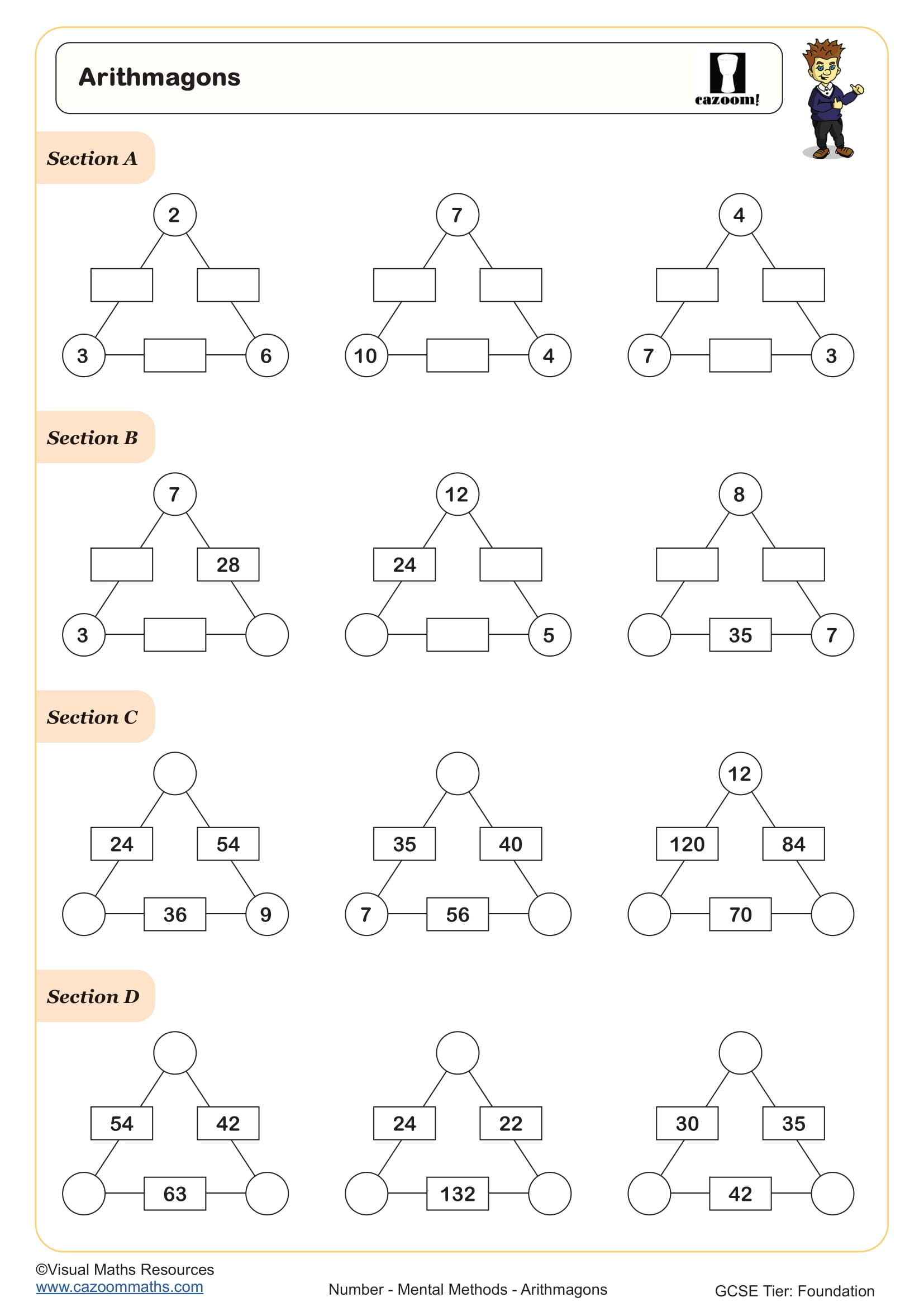
Arithmagons
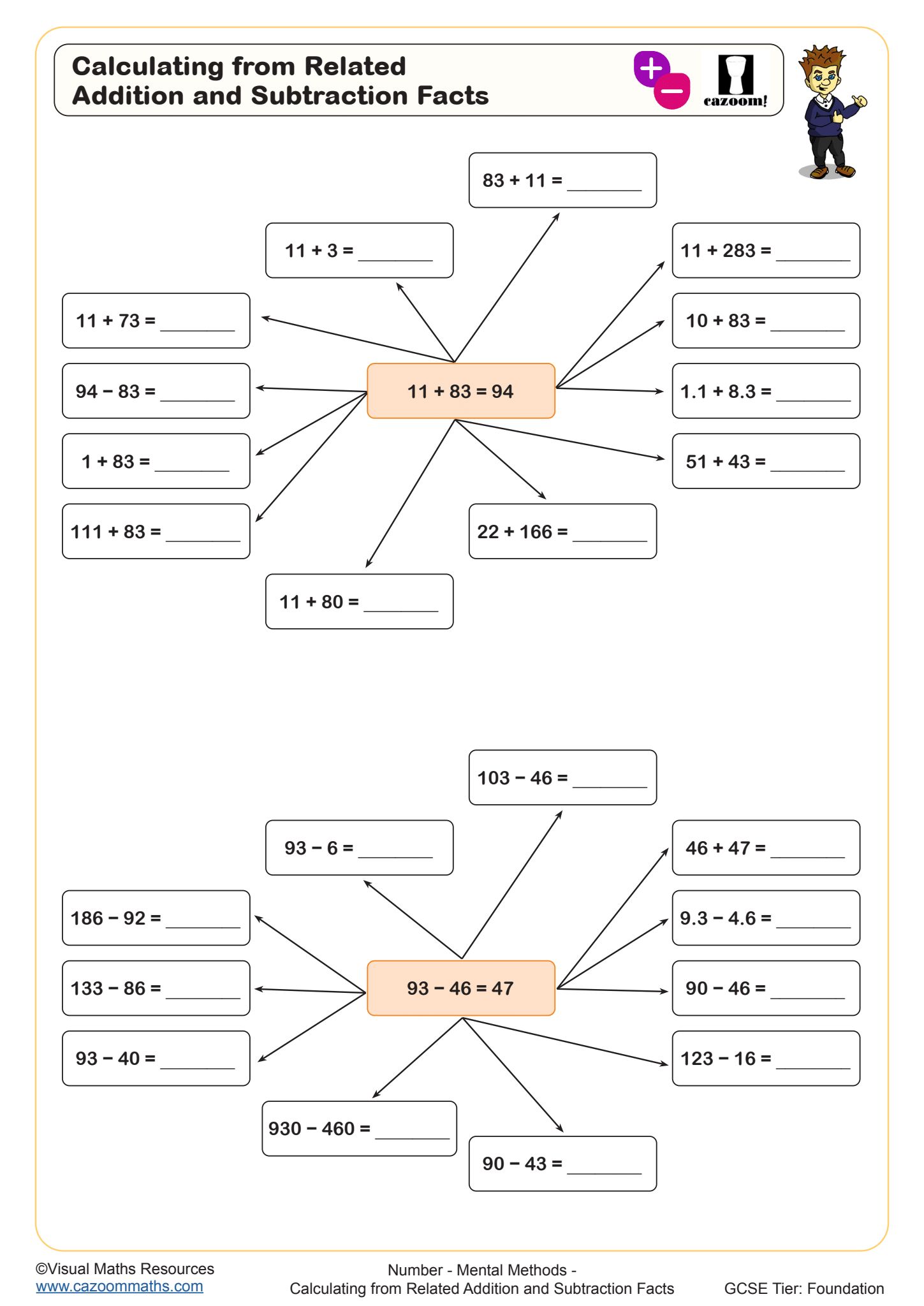
Calculating from Related Addition and Subtraction Facts
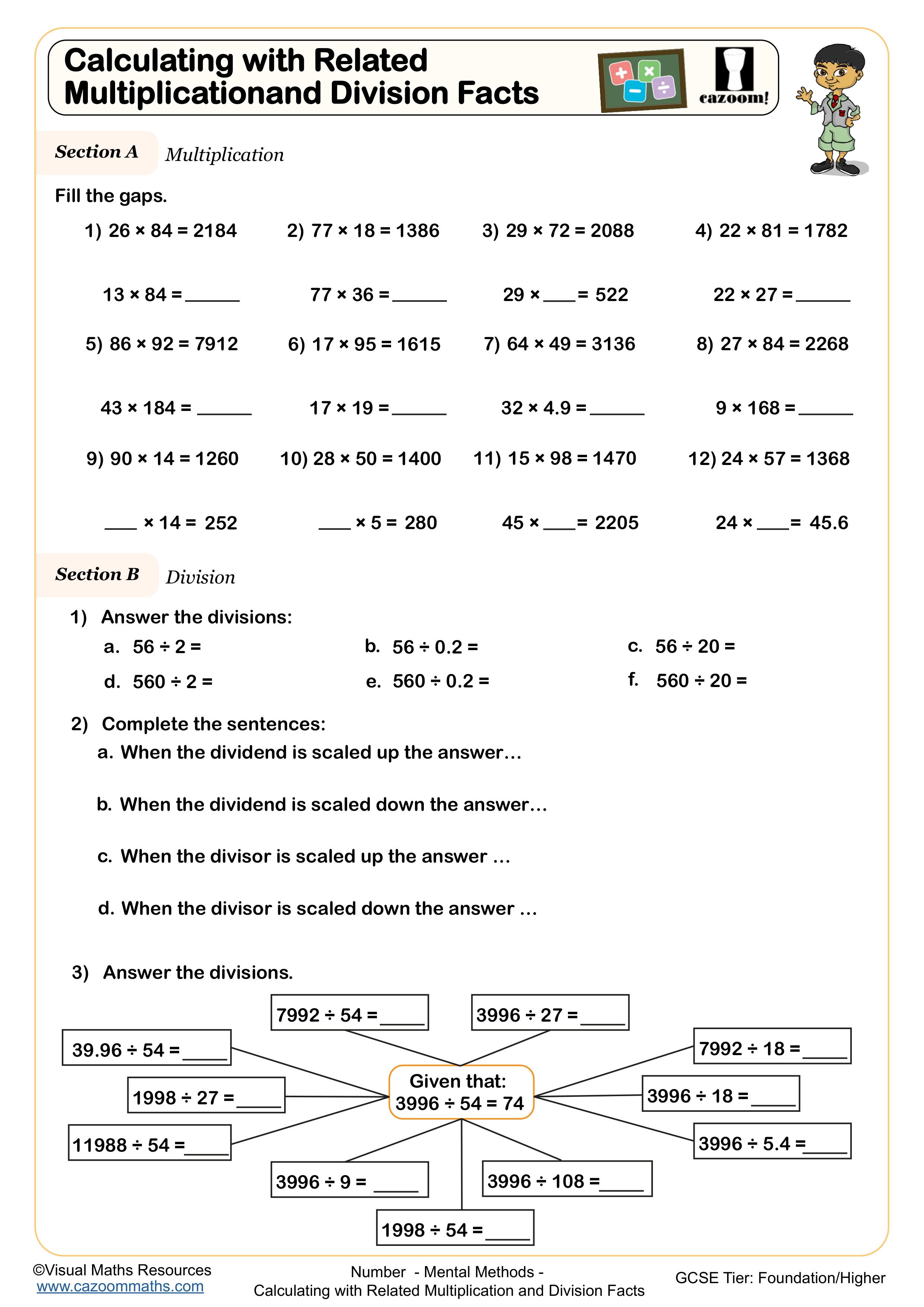
Calculating with Related Multiplication and Division Facts
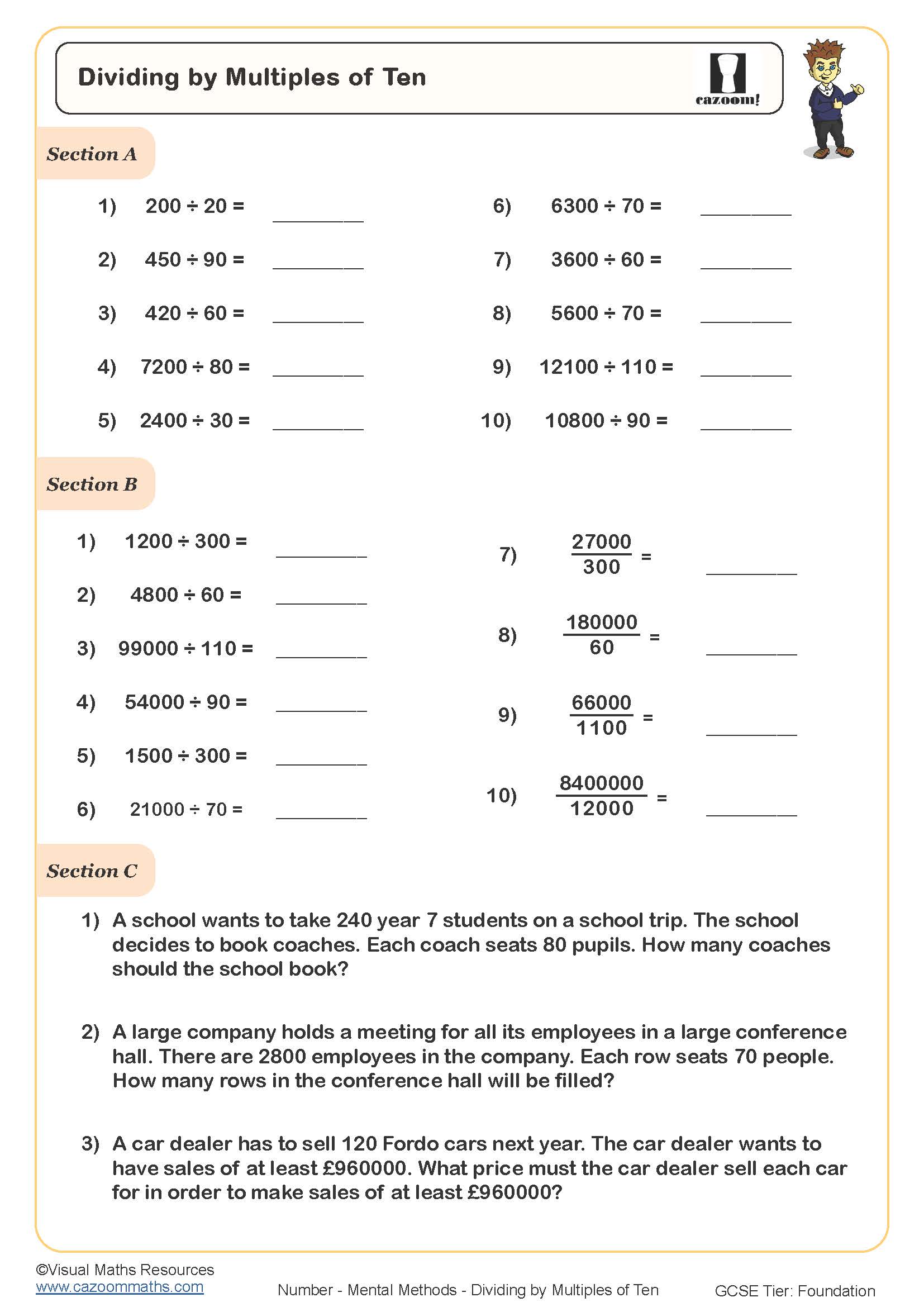
Dividing by Multiples of Ten
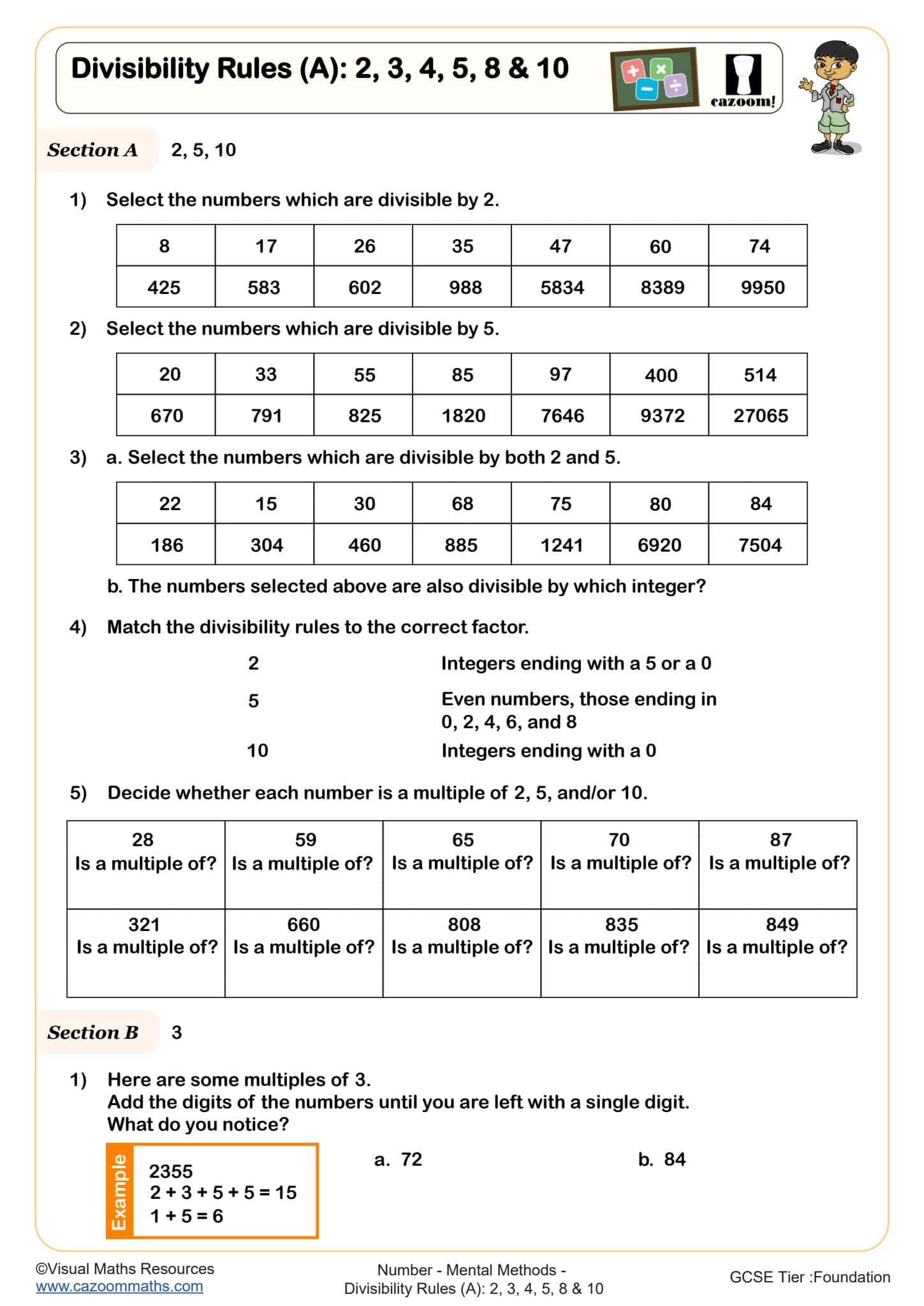
Divisibility Rules (A): 2, 3, 4, 5, 8 & 10
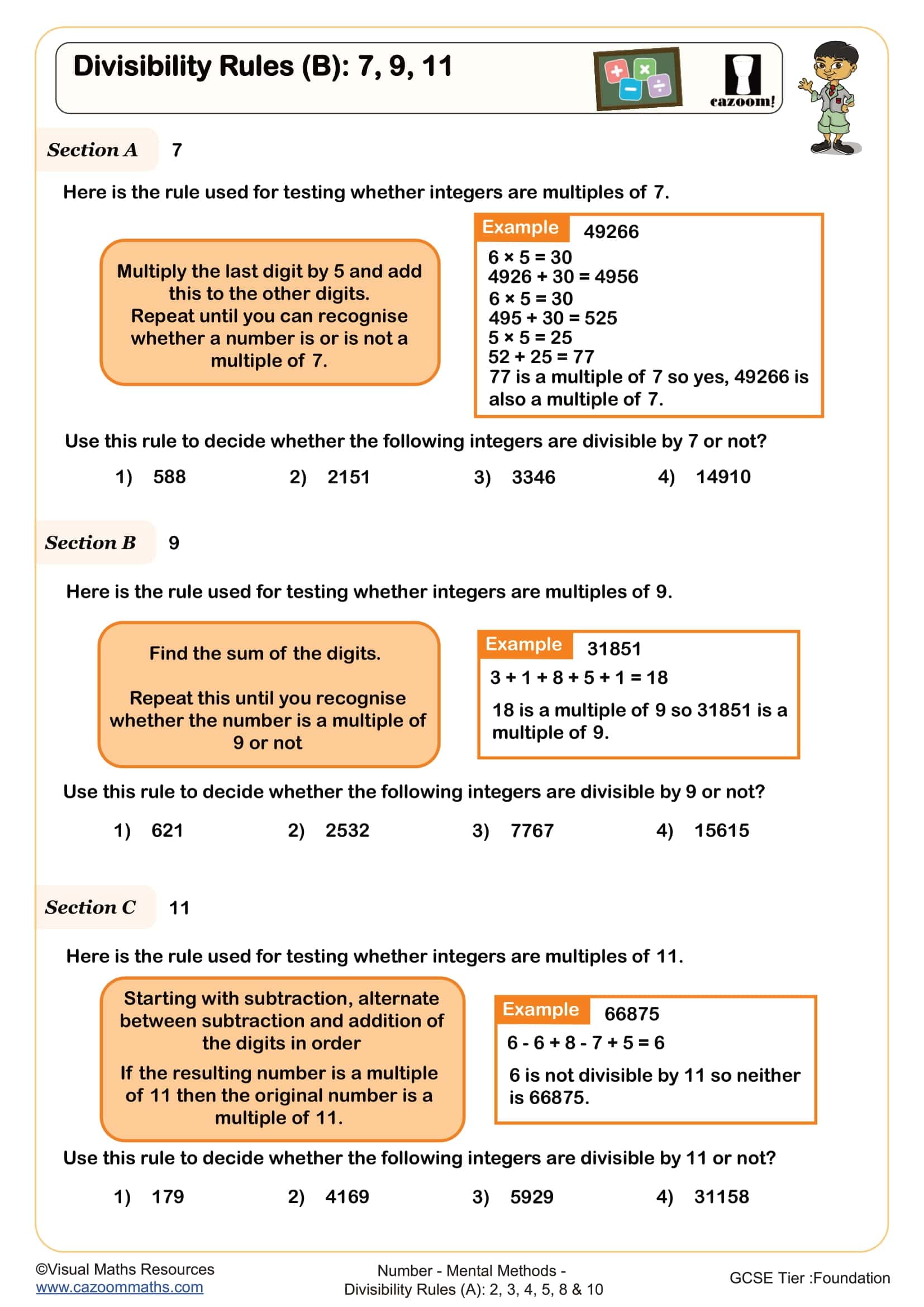
Divisibility Rules (B): 7, 9, 11
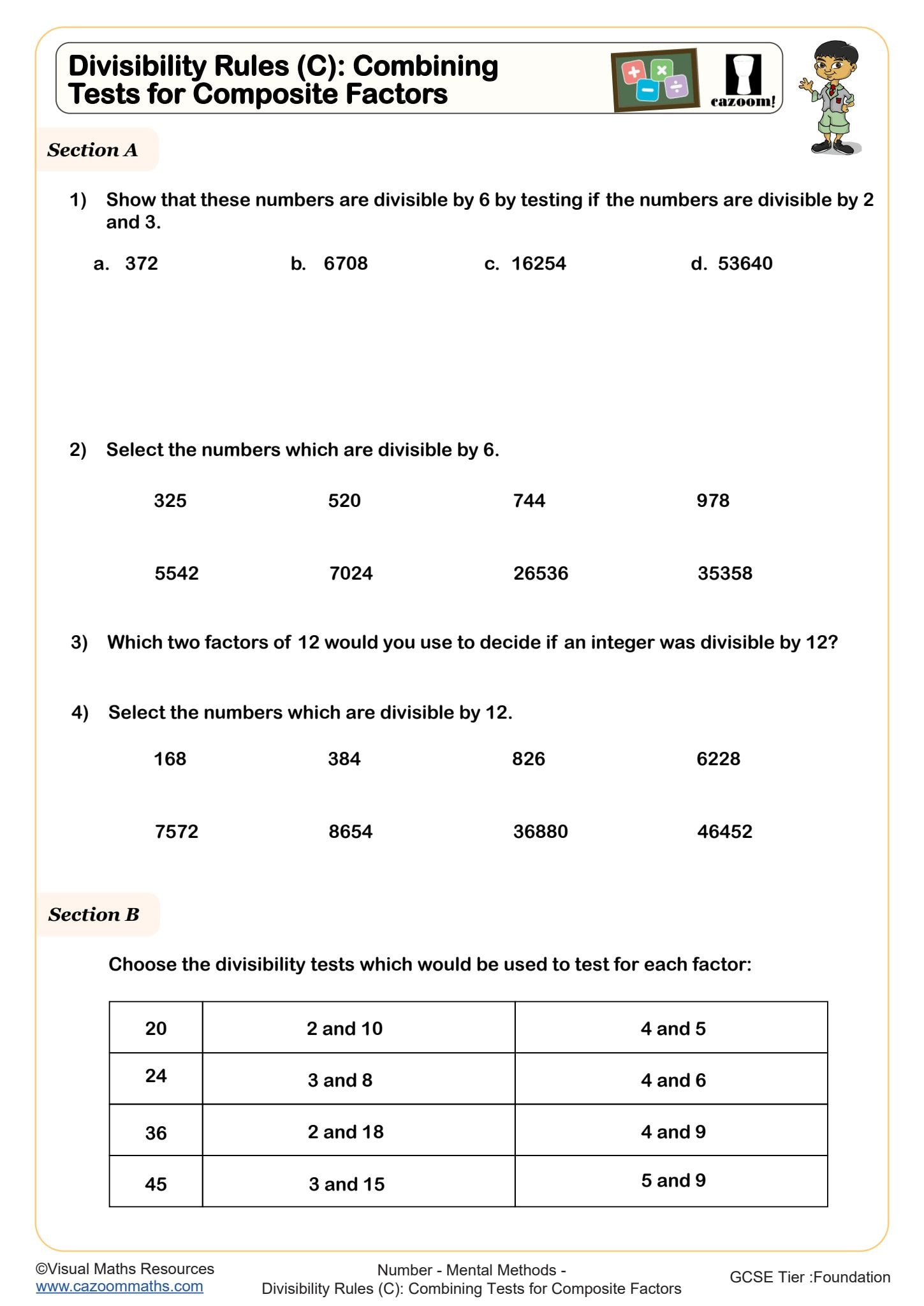
Divisibility Rules (C): Combining Tests for Composite Factors
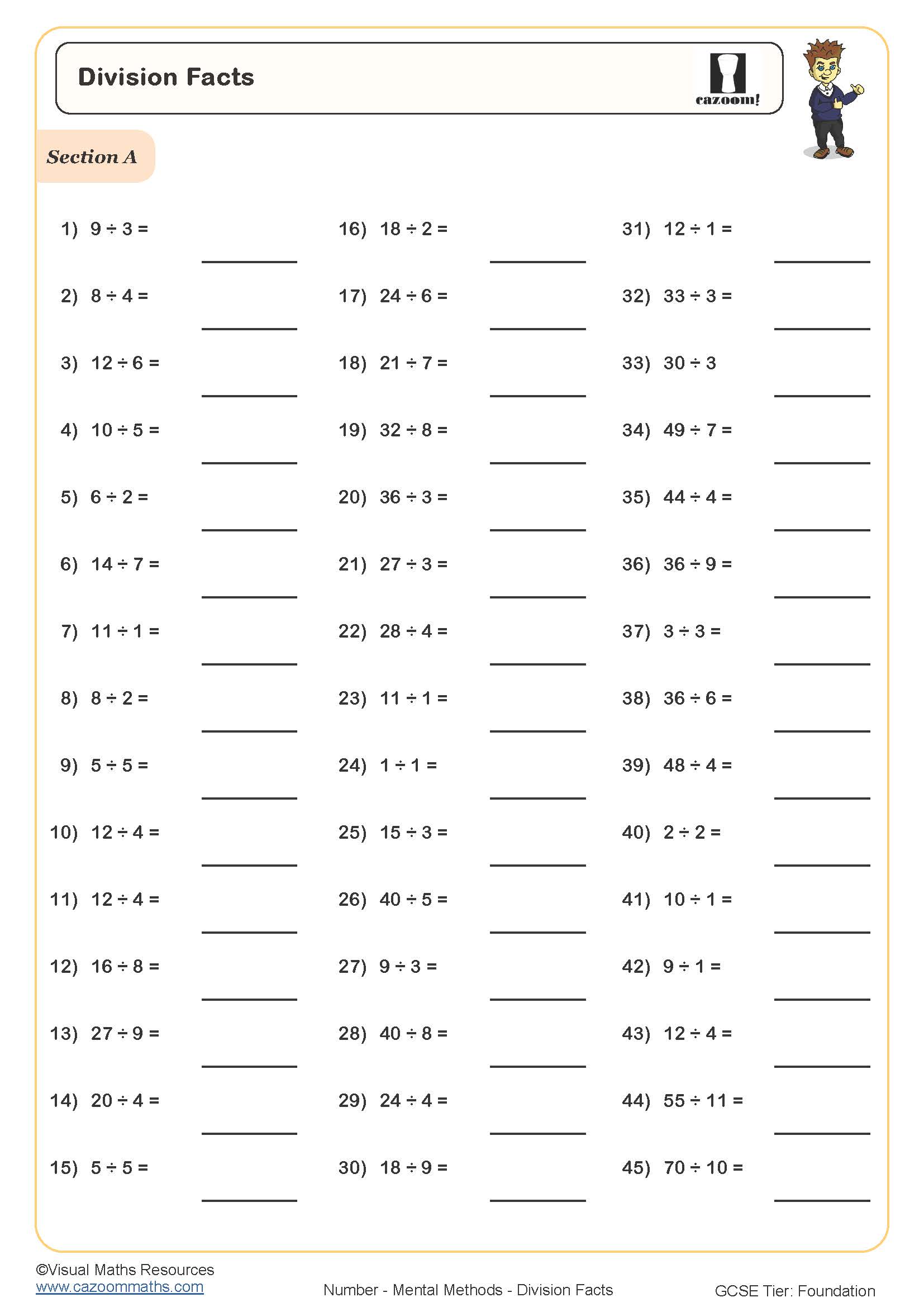
Division Facts
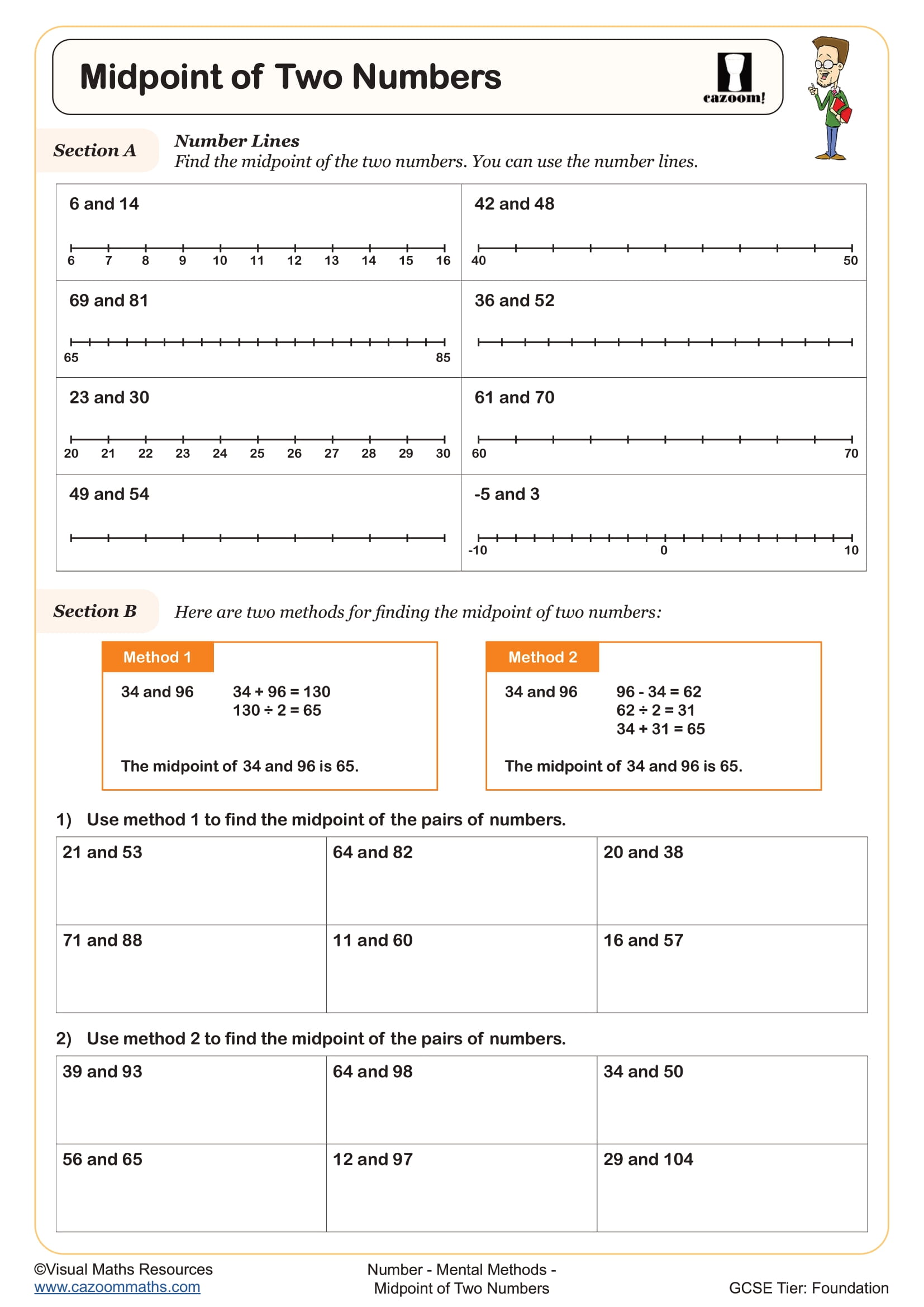
Midpoint of Two Numbers
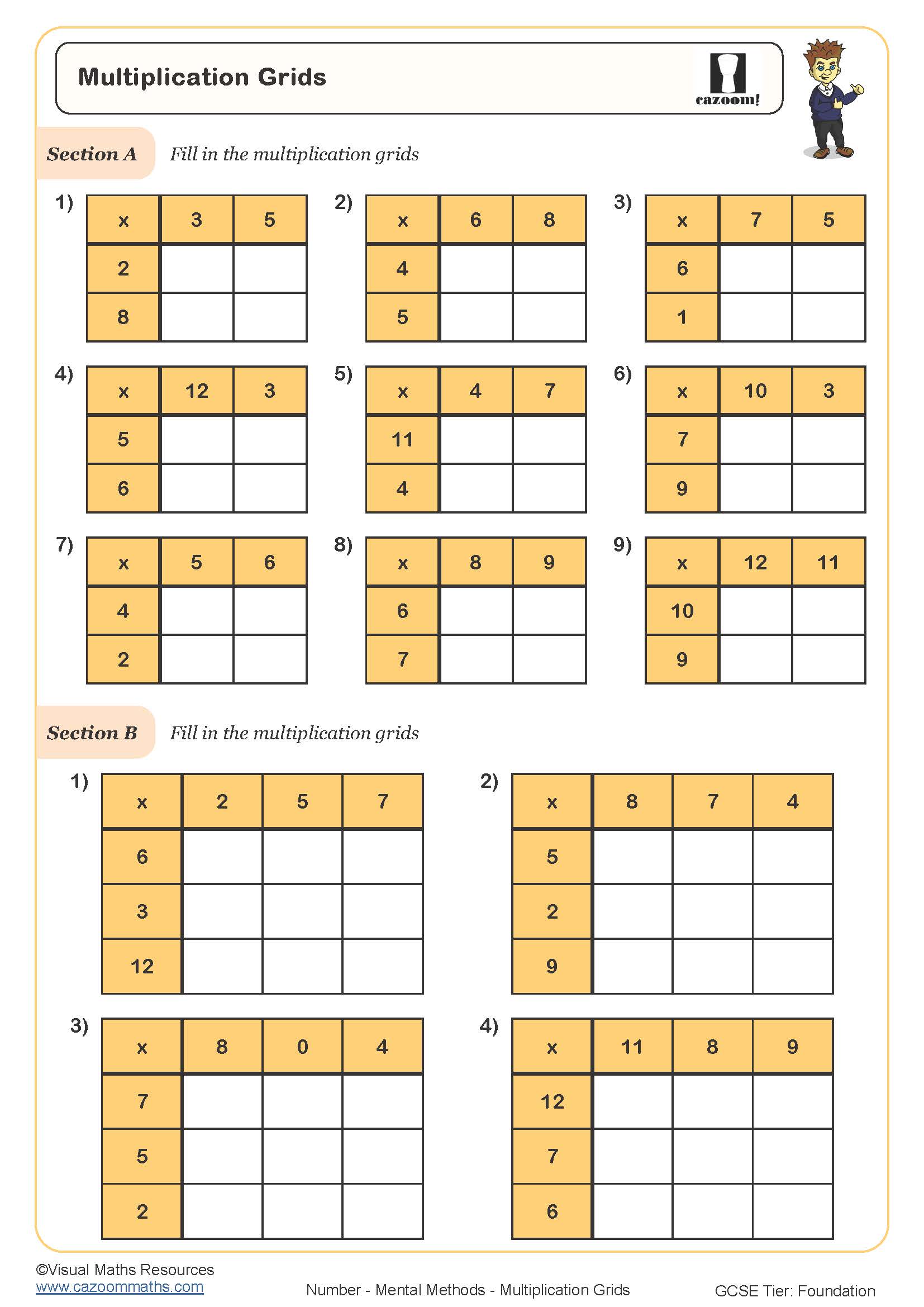
Multiplication Grids
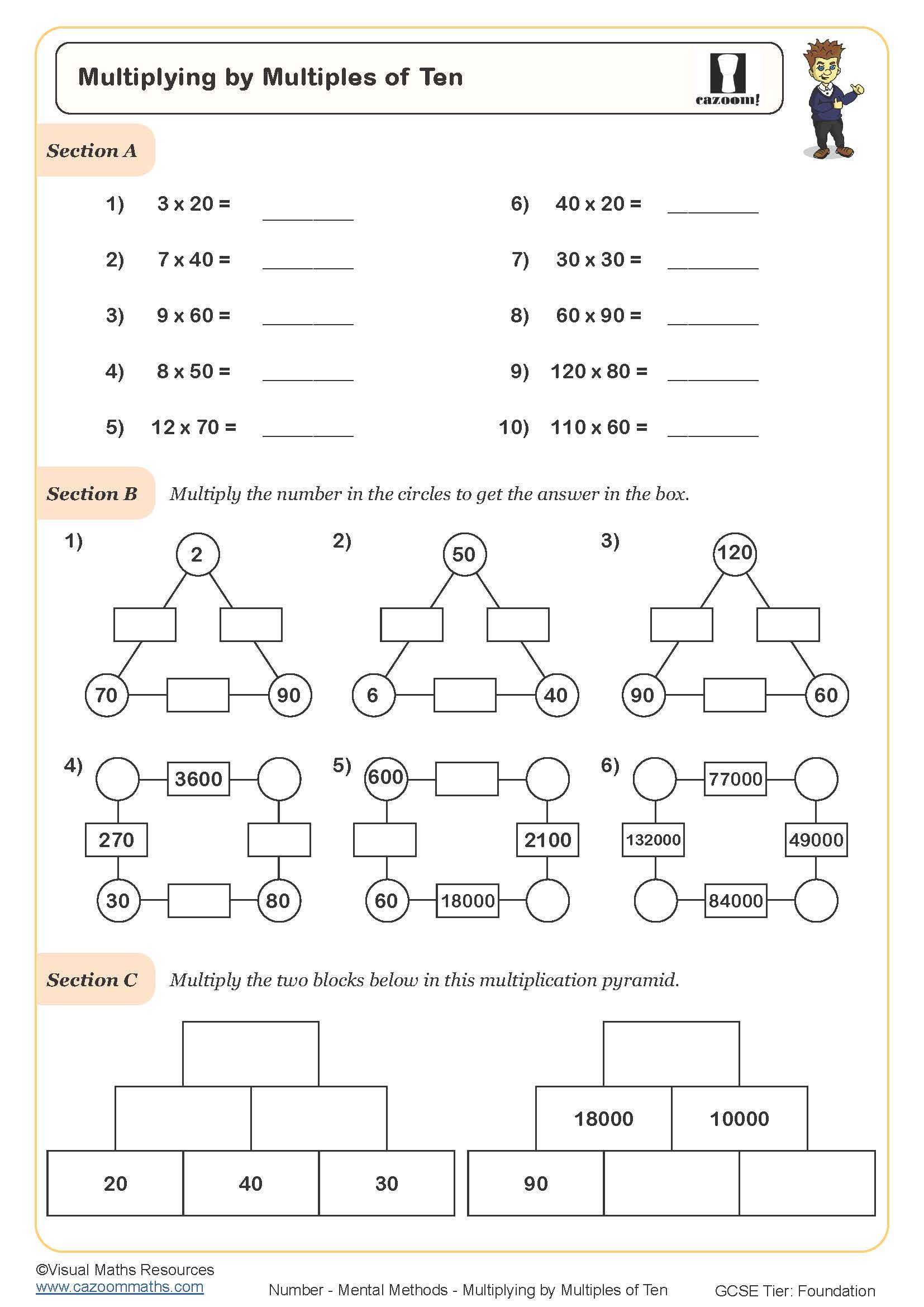
Multiplying by Multiples of Ten
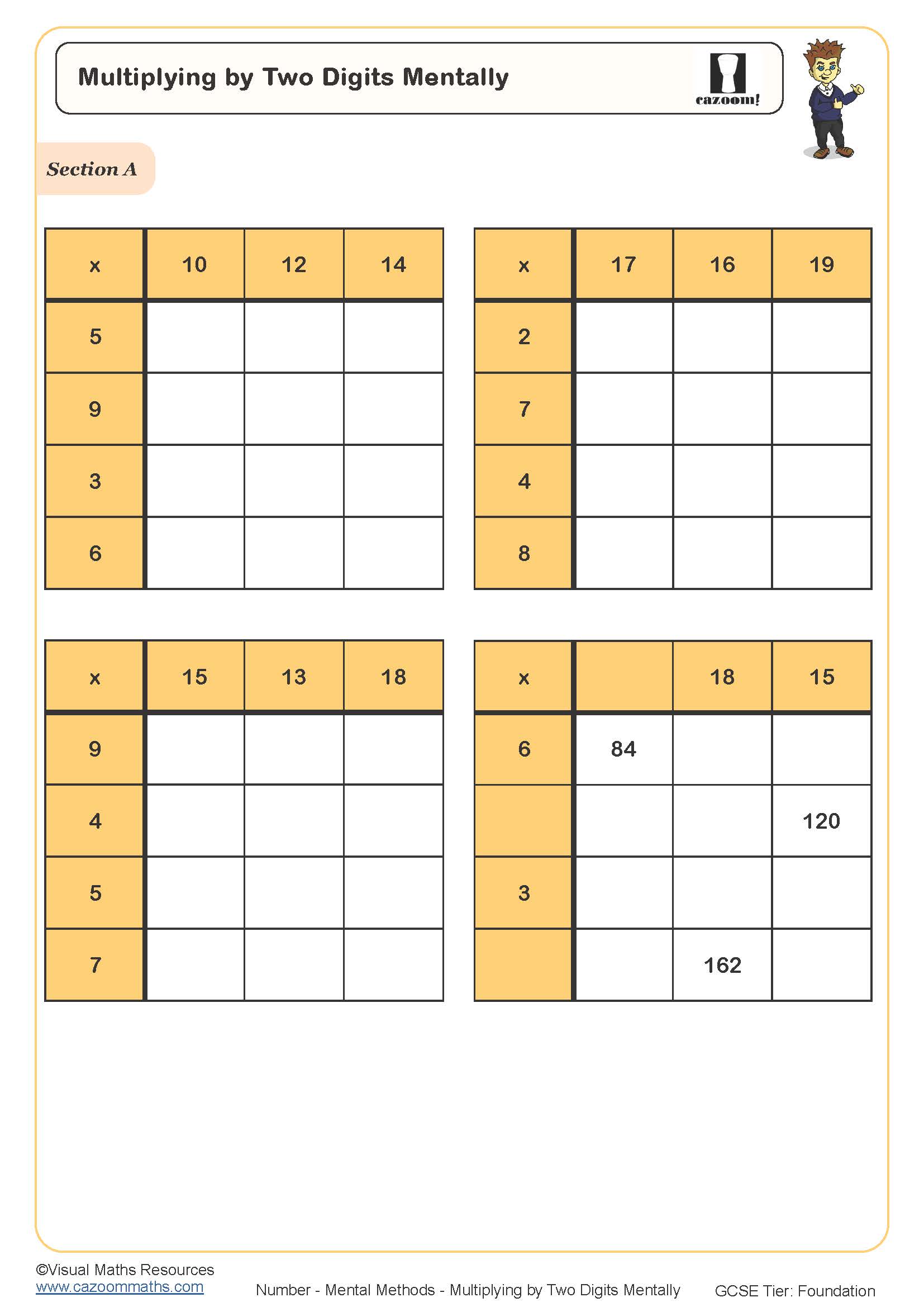
Multiplying by Two Digits Mentally
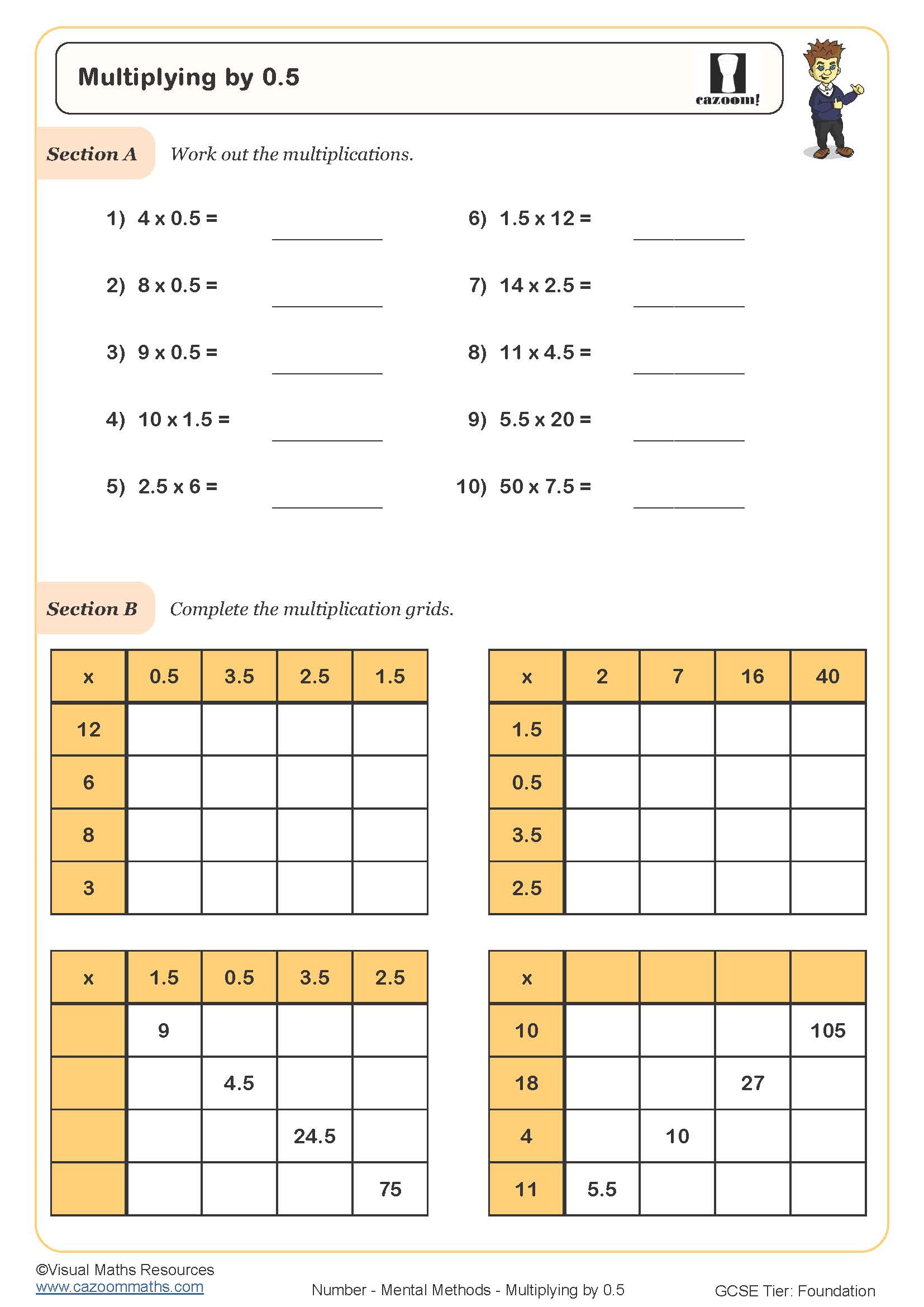
Multiplying by Zero Point Five
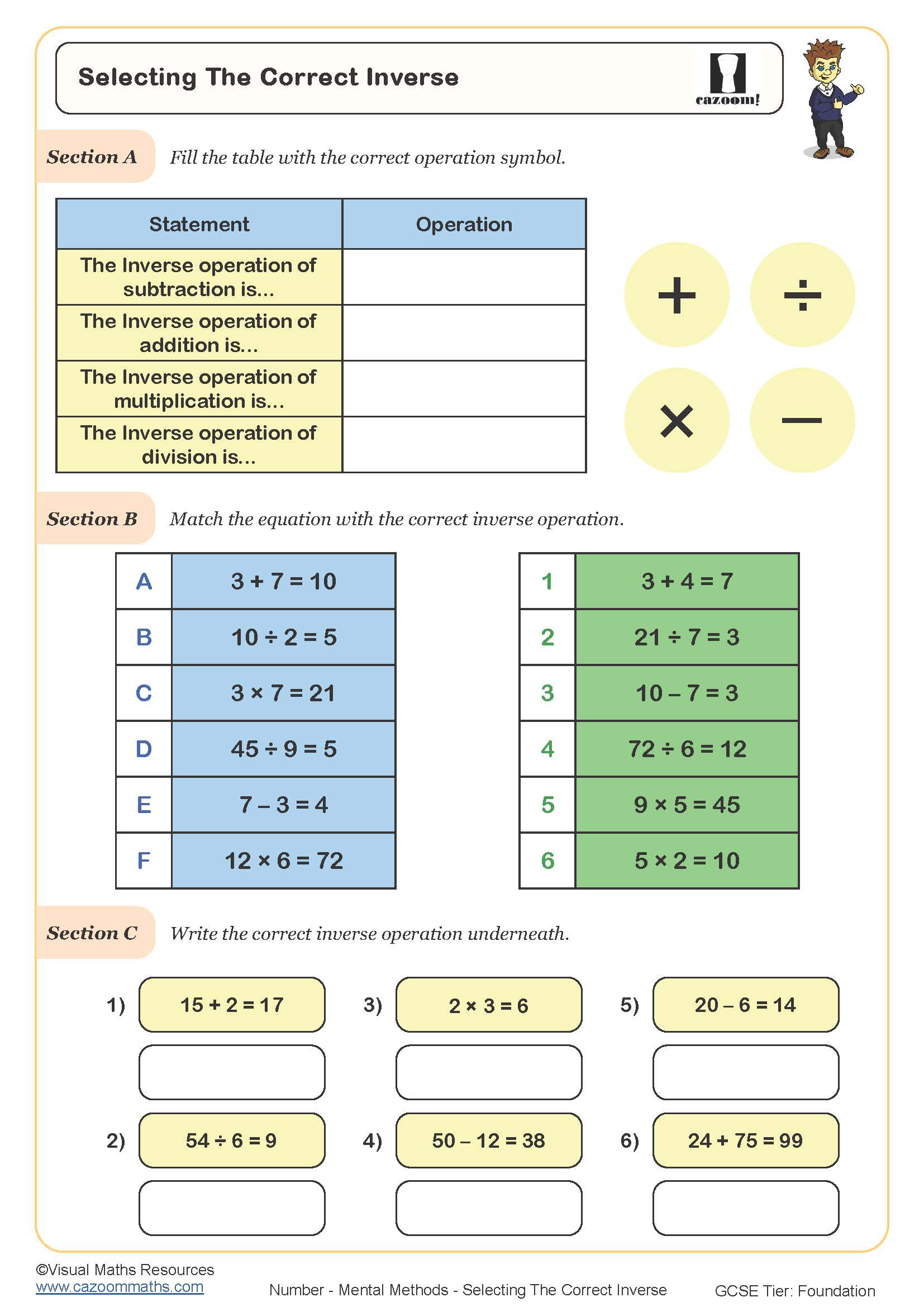
Selecting the Correct Inverse
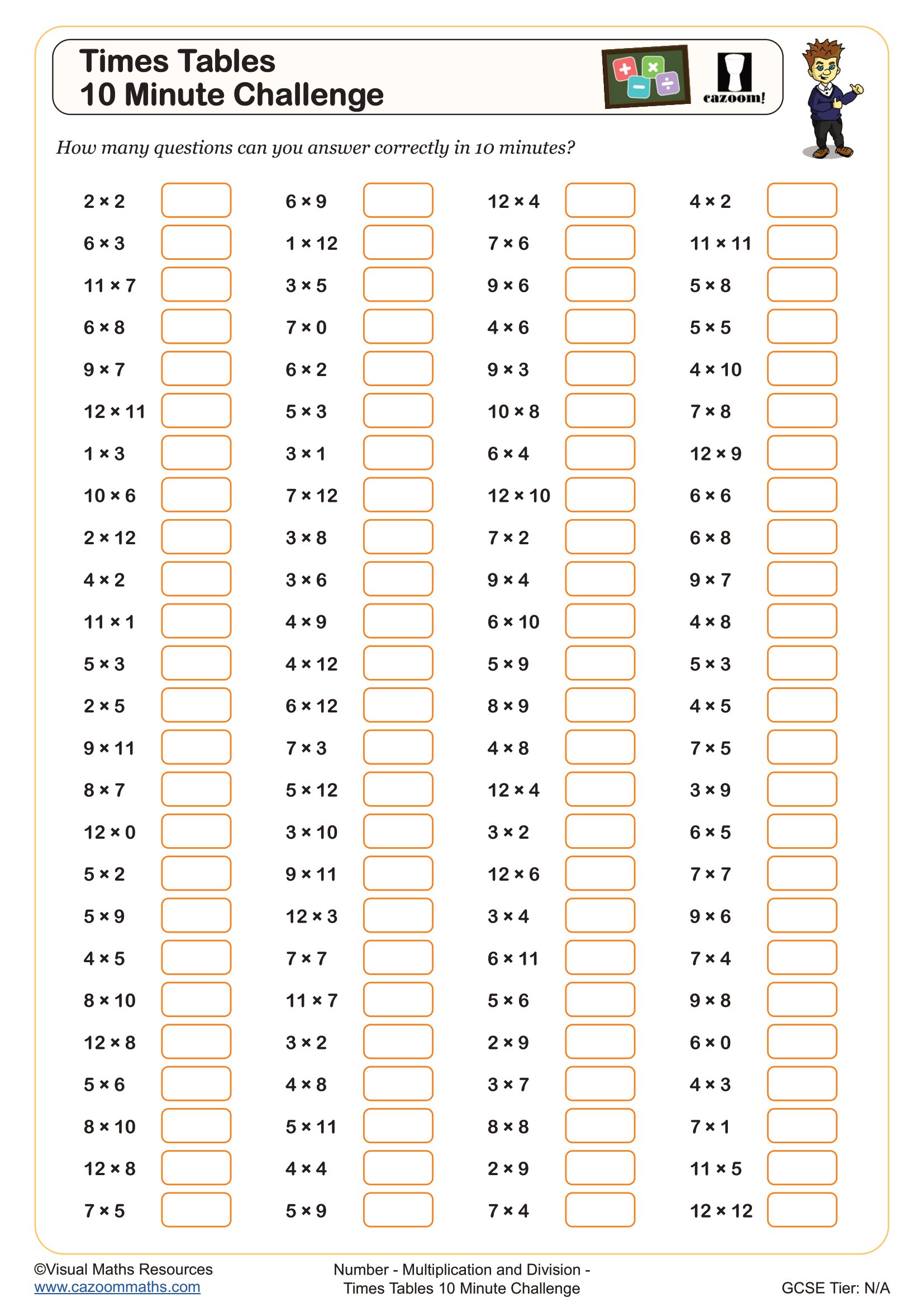
Times Tables 10 minute Challenge
All worksheets are created by the team of experienced teachers at Cazoom Maths.
What are mental methods in maths?
Mental methods are calculation strategies students use without written algorithms or calculators, relying instead on number relationships and properties. In the National Curriculum, mental calculation sits alongside written and calculator methods, with the expectation that students select the most efficient approach for each problem. Mental methods include partitioning numbers, using near-doubles, compensation (adjusting then correcting), and deriving answers from known facts.
Many teachers notice that students default to column methods even when mental calculation would be quicker, such as calculating 57 + 49 by recognising it as 57 + 50 - 1. This inflexibility becomes problematic in GCSE non-calculator papers where quick mental arithmetic saves valuable time. Regular practice with mental methods worksheets builds the number fluency that allows students to focus on problem-solving rather than basic calculation.
Which year groups use mental methods worksheets?
These worksheets cover Year 7, Year 8, and Year 9, supporting the KS3 National Curriculum requirements for developing fluency with mental calculation strategies. At Year 7, students refine techniques with integers and begin applying them to decimals and simple fractions. Year 8 extends this to more complex decimal operations and negative numbers, whilst Year 9 focuses on combining multiple methods and selecting the most efficient strategy for different contexts.
The progression across KS3 emphasises speed and flexibility rather than introducing entirely new methods. Year 7 students might take several seconds to mentally subtract decimals using compensation, whereas by Year 9 the expectation is near-instant recognition of the most efficient approach. Teachers often use these worksheets diagnostically to identify which students need additional support before tackling more abstract algebraic manipulation, which relies heavily on mental manipulation skills.
How do students subtract decimals mentally?
To subtract decimals mentally, students typically use compensation or counting up strategies. For 7.3 - 2.8, compensation involves adjusting to a friendlier calculation: subtract 3 instead of 2.8 to get 4.3, then add back 0.2 to reach 4.5. Alternatively, counting up from 2.8 to 7.3 (0.2 to reach 3, then 4.3 more) gives the same result. Both methods avoid the column subtraction that often leads to place value errors with decimals.
This skill connects directly to measurement contexts in engineering and construction, where workers regularly calculate material differences mentally. A carpenter determining remaining timber length after cutting 2.8 metres from a 7.3-metre piece needs rapid mental calculation. In science practicals, students subtract decimal measurements to find temperature changes or volume differences, making mental decimal methods genuinely functional across STEM subjects rather than purely academic exercises.
How can teachers use these mental methods worksheets effectively?
The worksheets provide structured practice with incremental difficulty, allowing students to build confidence with specific strategies before combining them. Each worksheet targets particular techniques, so teachers can assign specific sheets based on diagnostic assessment rather than working through sequentially. The answer sheets enable students to self-mark during lessons, immediately identifying which strategies they've misapplied and correcting misunderstandings whilst the work is fresh.
Many teachers use these as timed starter activities to build calculation speed, setting expectations that improve weekly. They work well for intervention groups where students have weak number sense holding back broader mathematical progress. For homework, the clear format means students can practise independently without needing extensive parental support. Paired work also proves effective, with students explaining their chosen mental method to a partner, which deepens understanding of why particular strategies suit certain calculations.