KS3 Percentages Worksheets
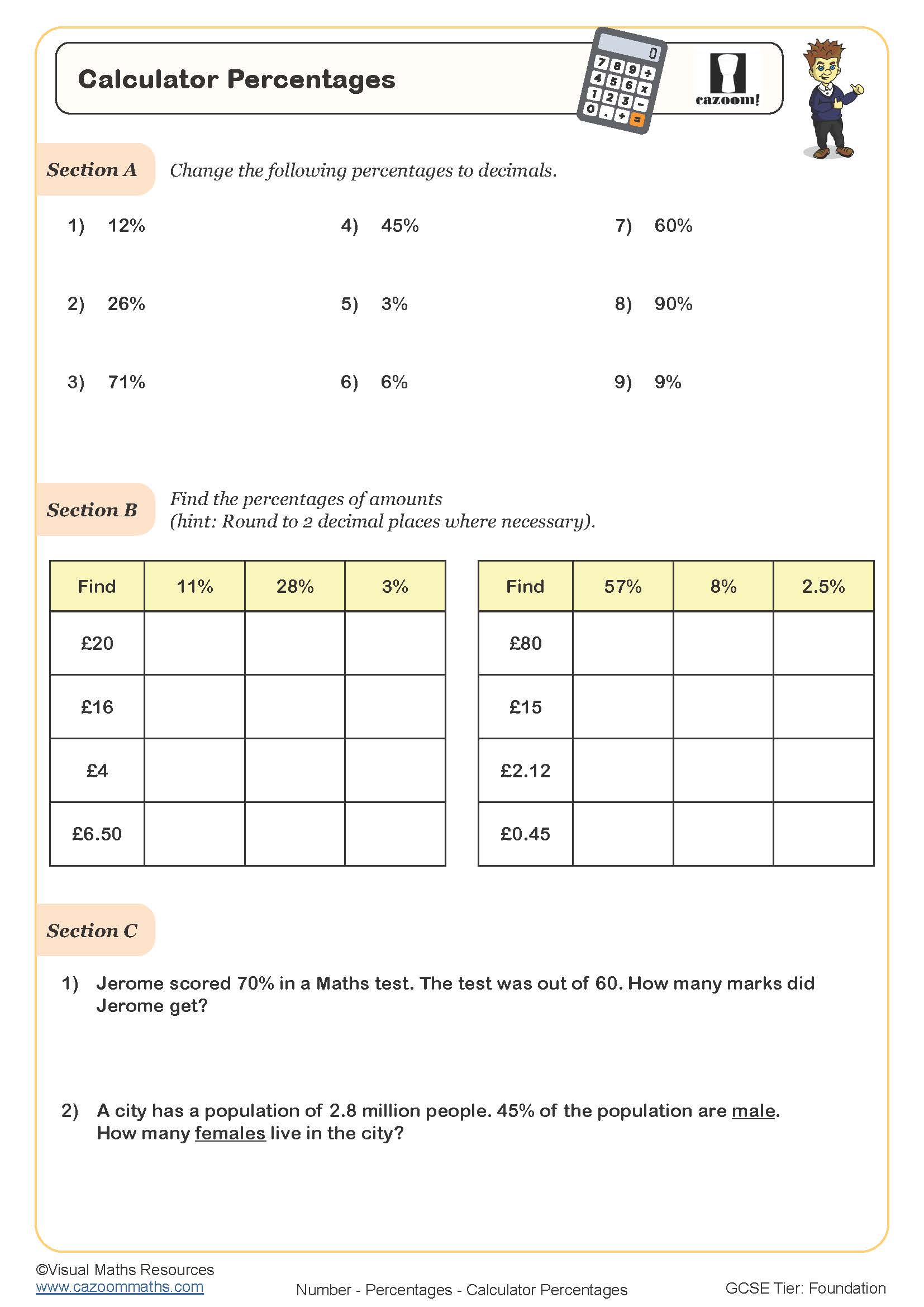
Calculator Percentages
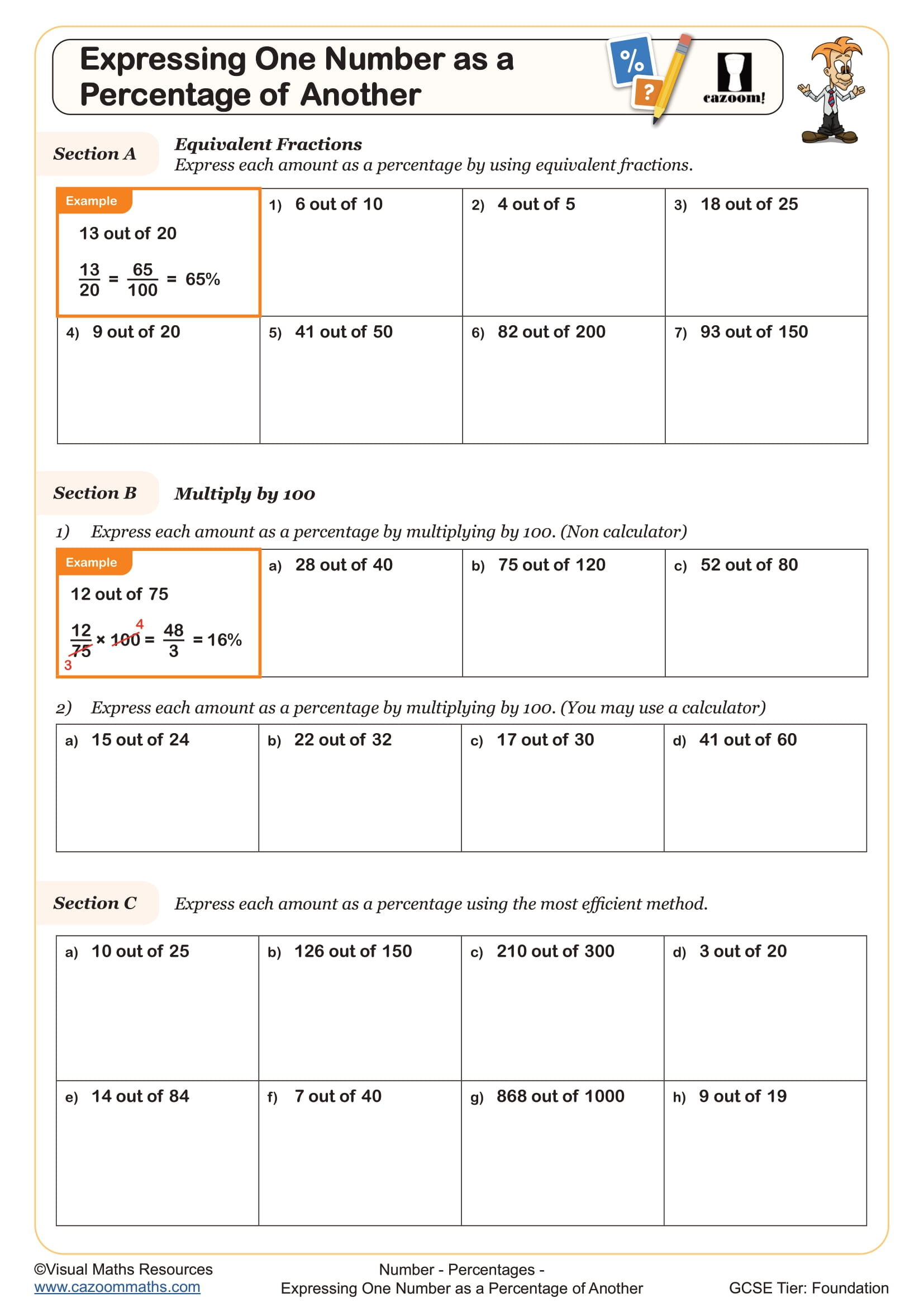
Express One Number as a Percentage of Another.
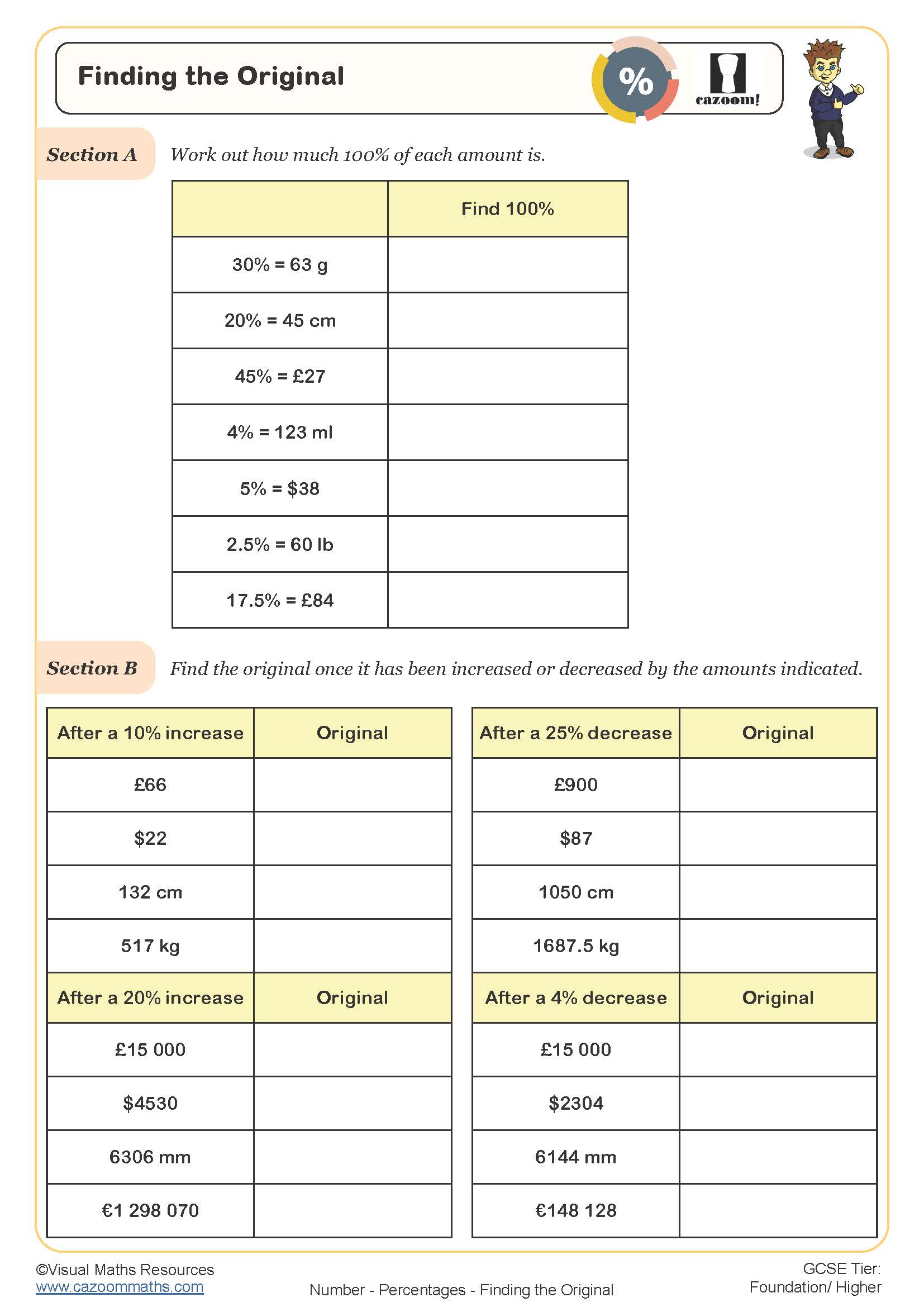
Finding the Original
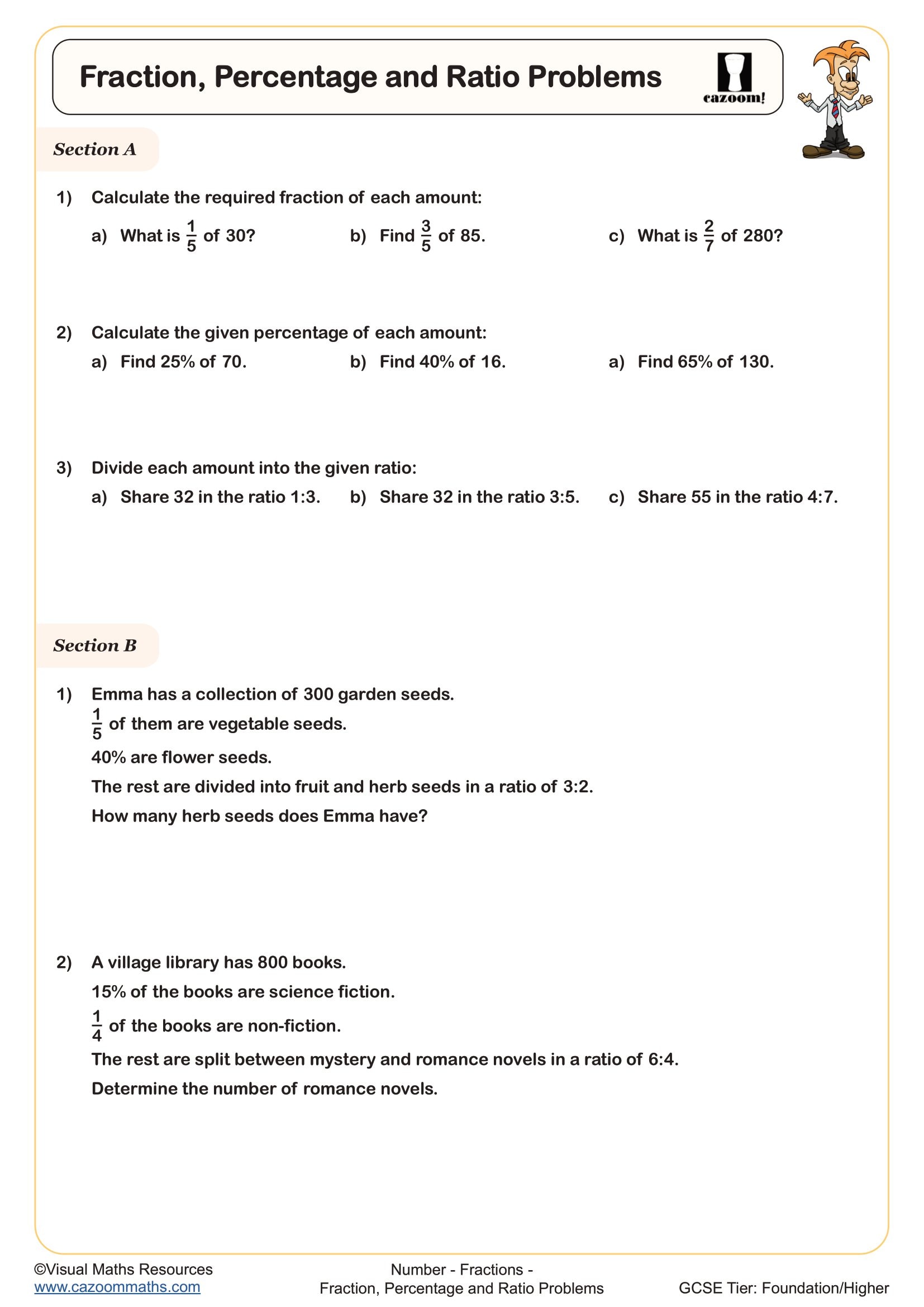
Fraction, Percentage and Ratio Problems
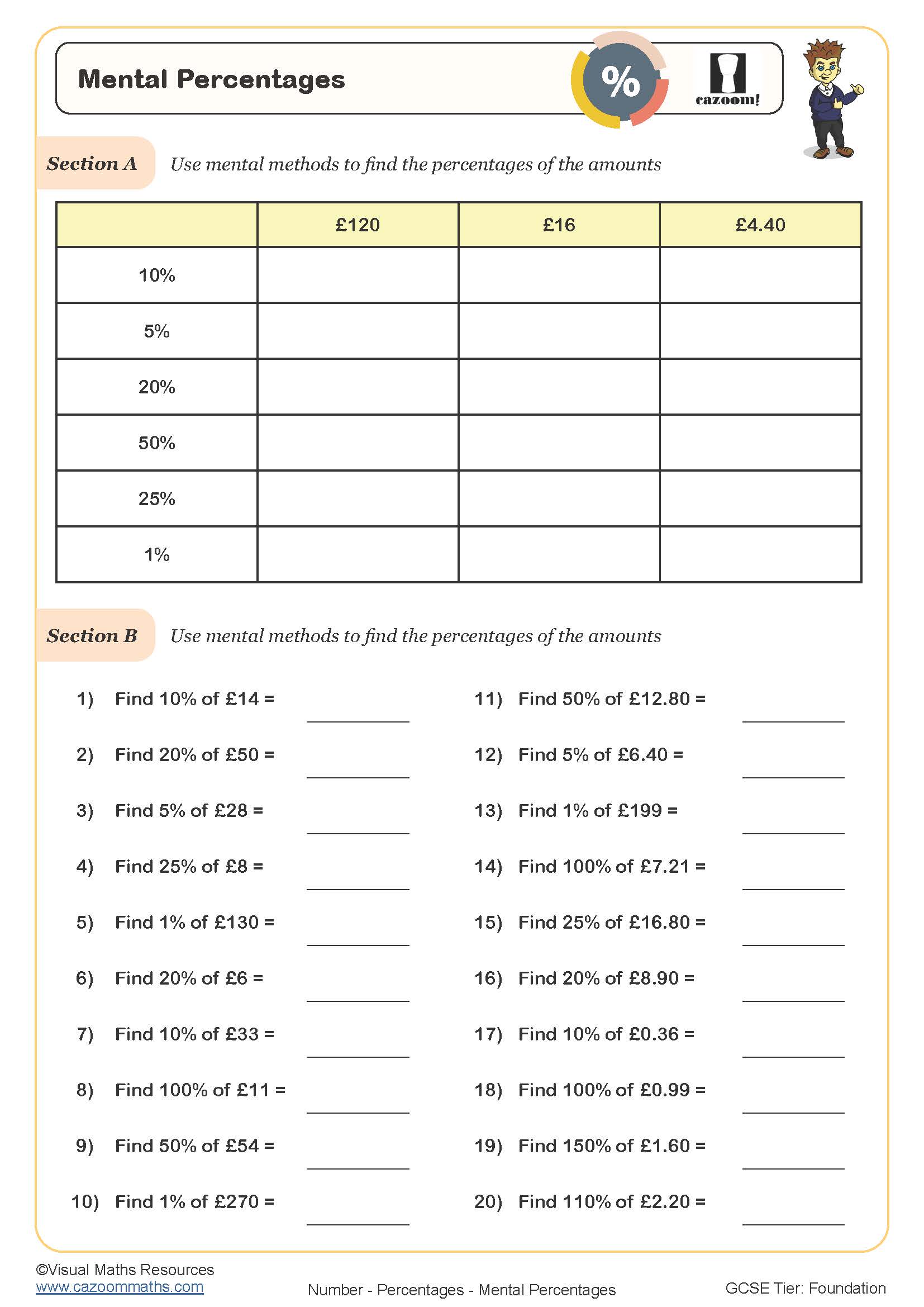
Mental Percentages
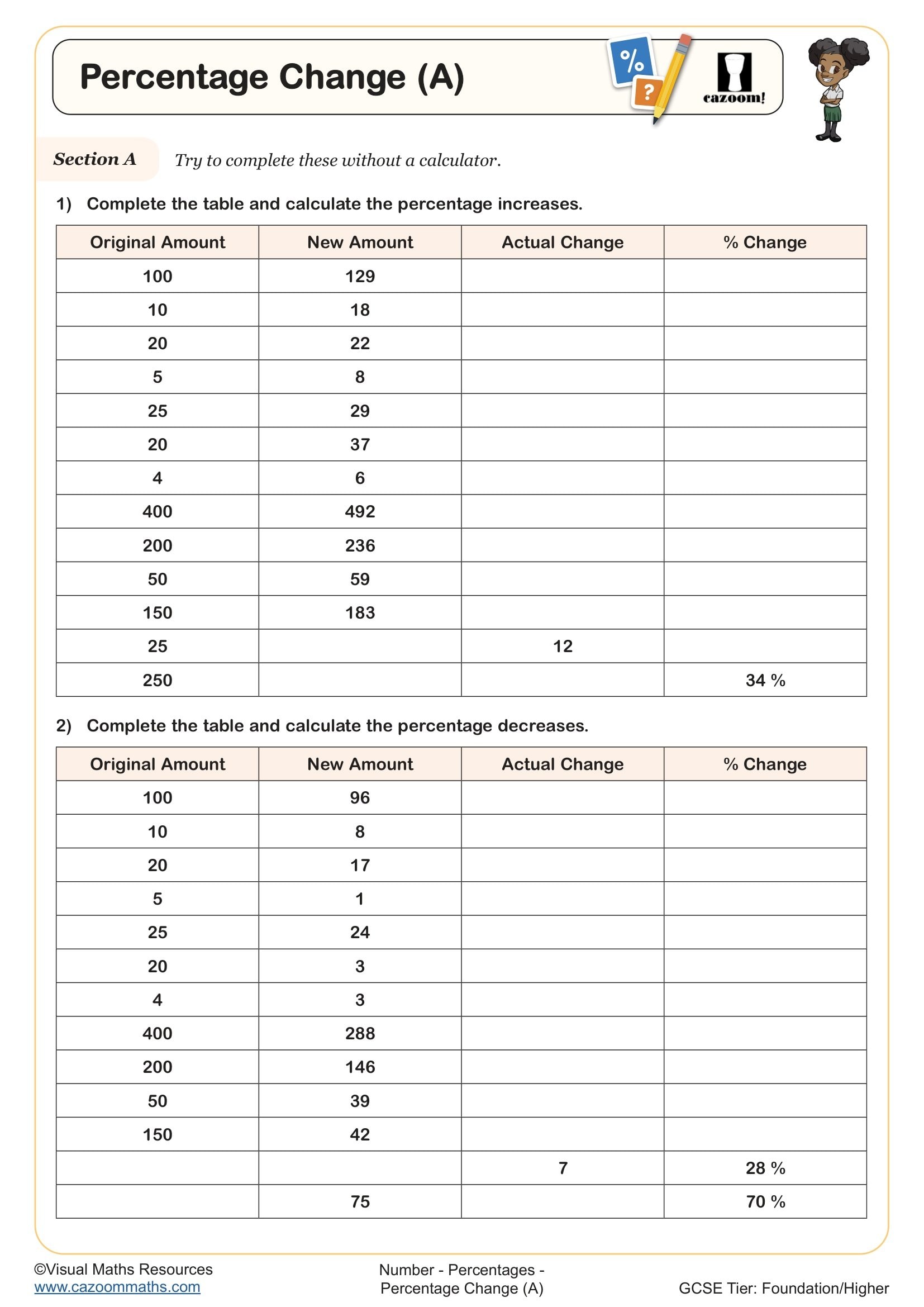
Percentage Change (A)
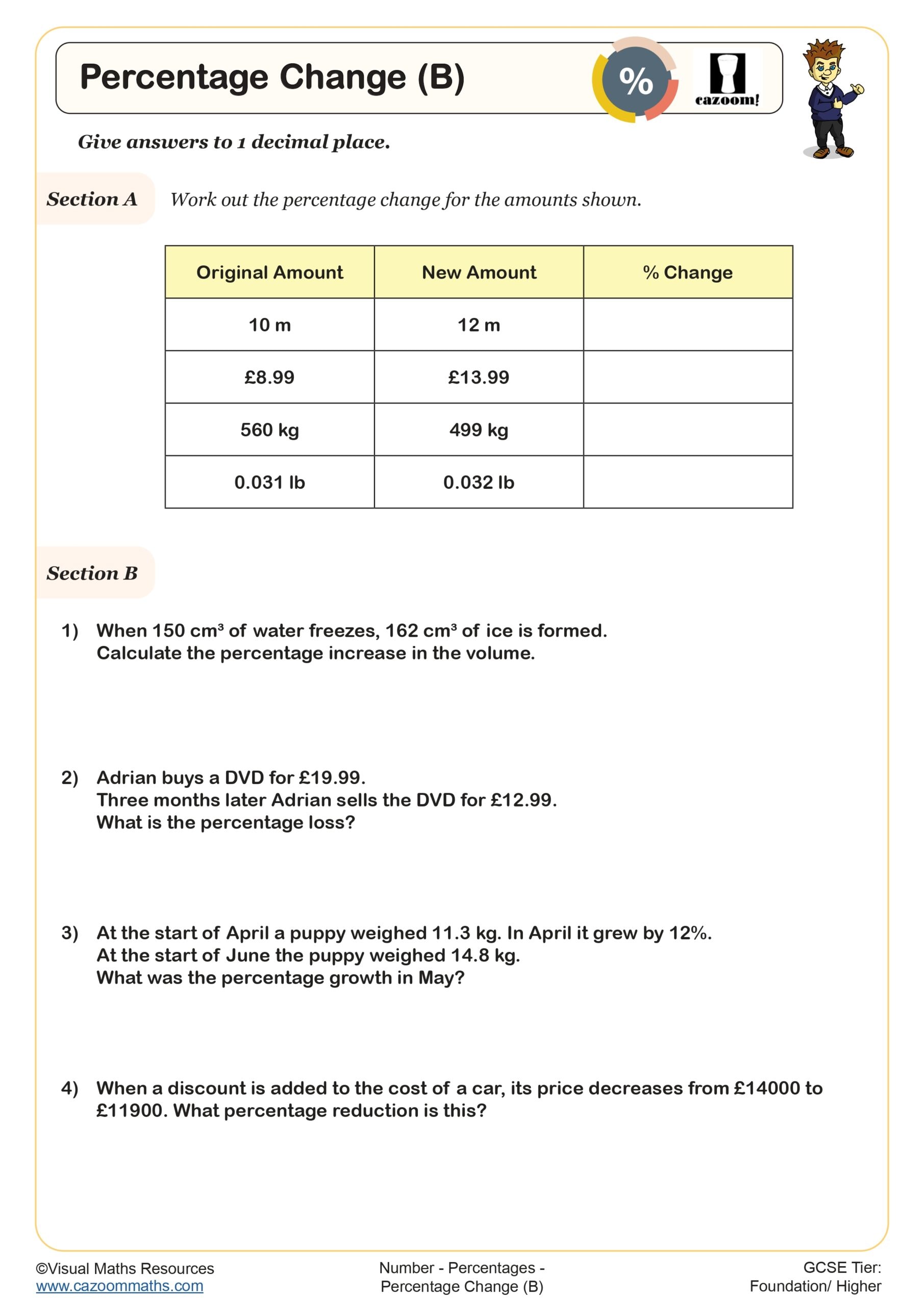
Percentage Change (B)
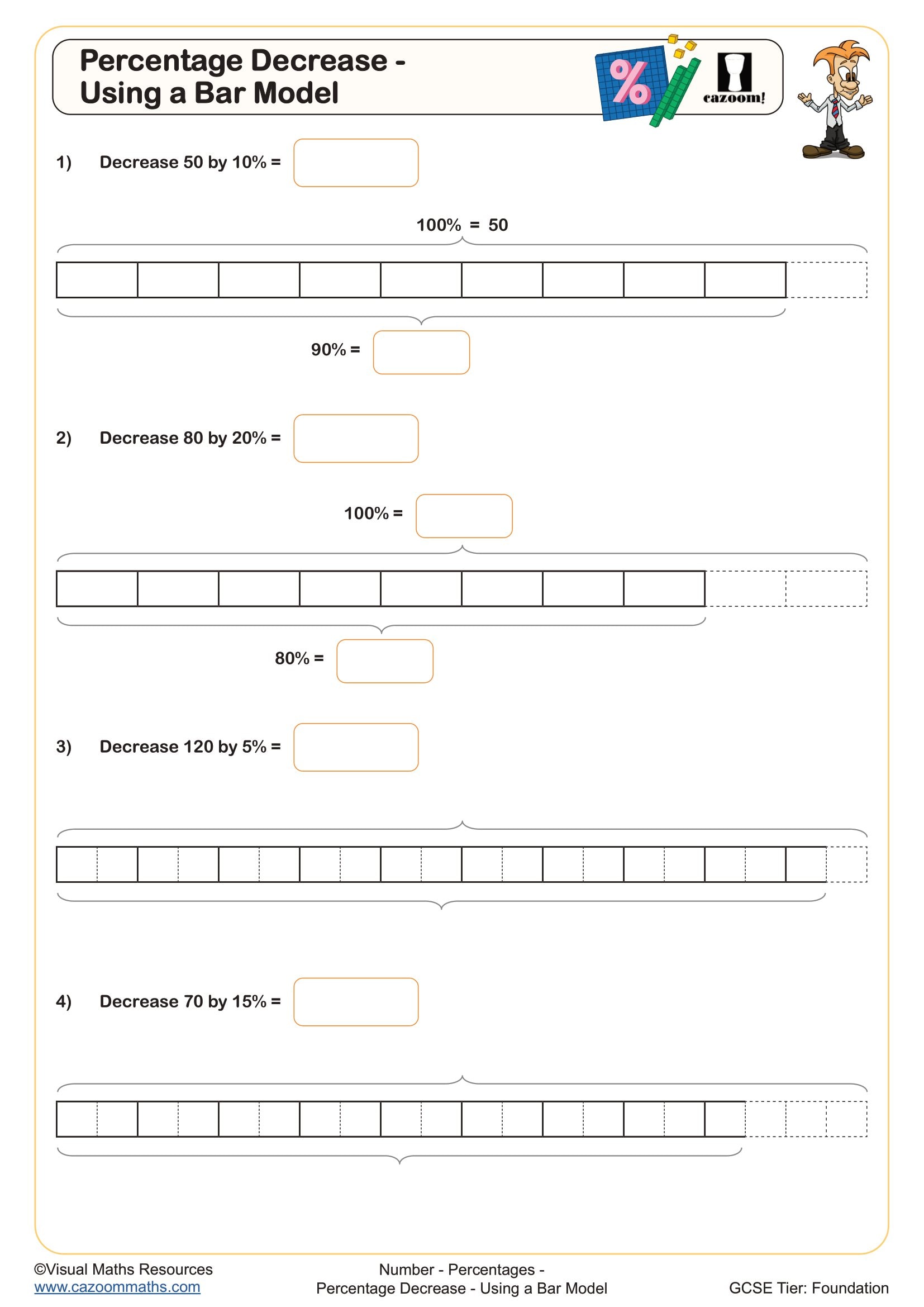
Percentage Decrease - Using a Bar Model
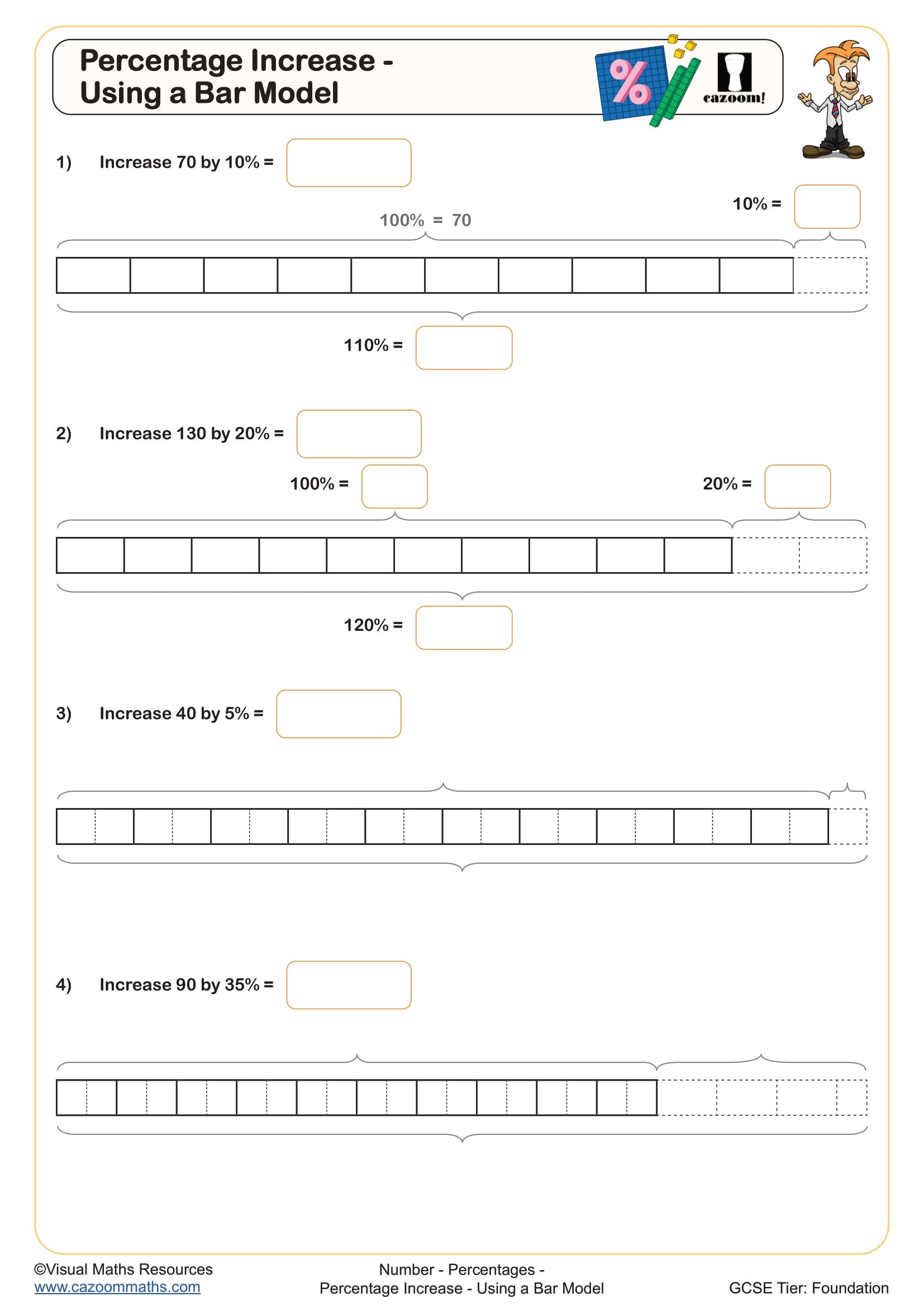
Percentage Increase - Using a Bar Model
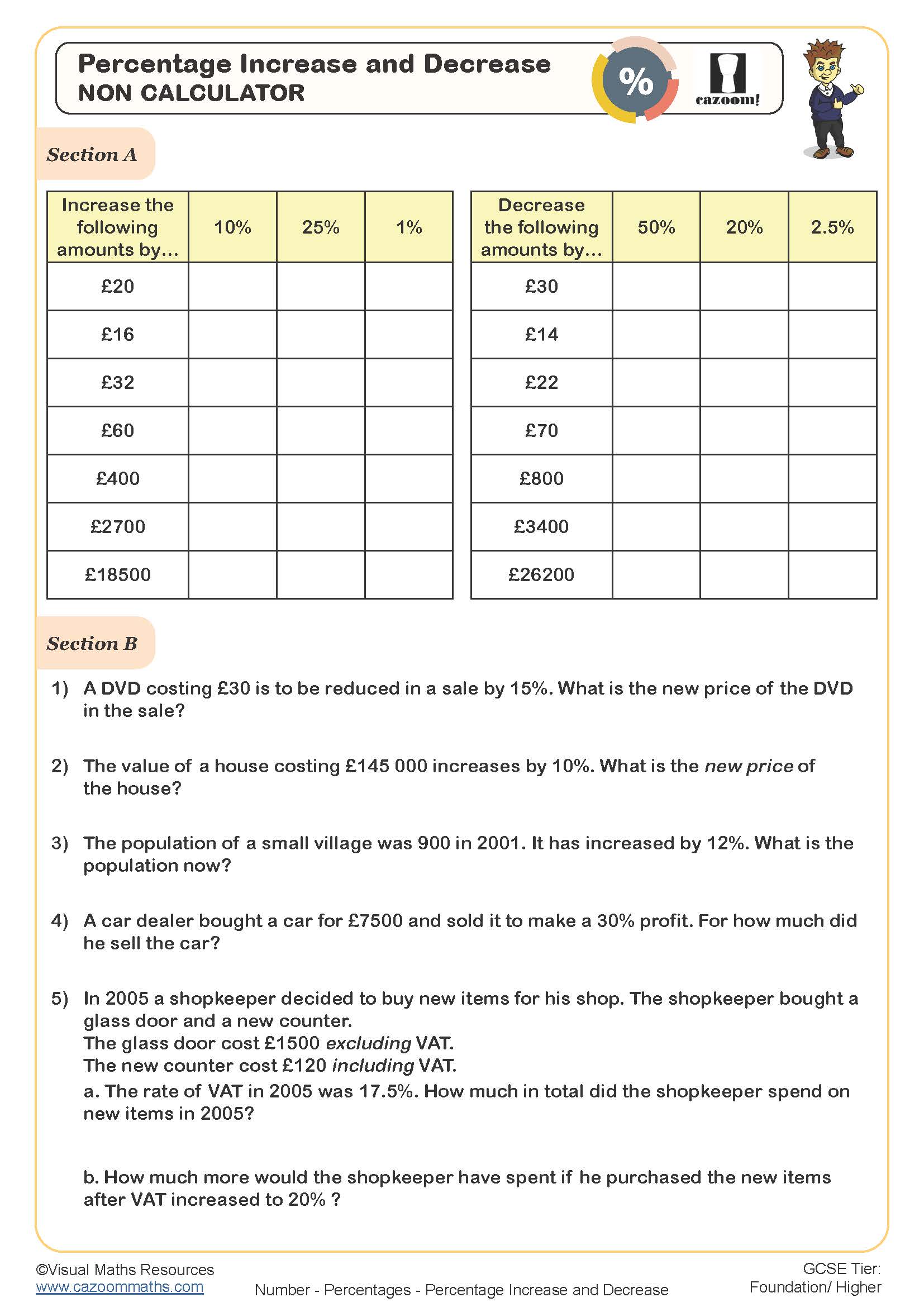
Percentage Increase and Decrease
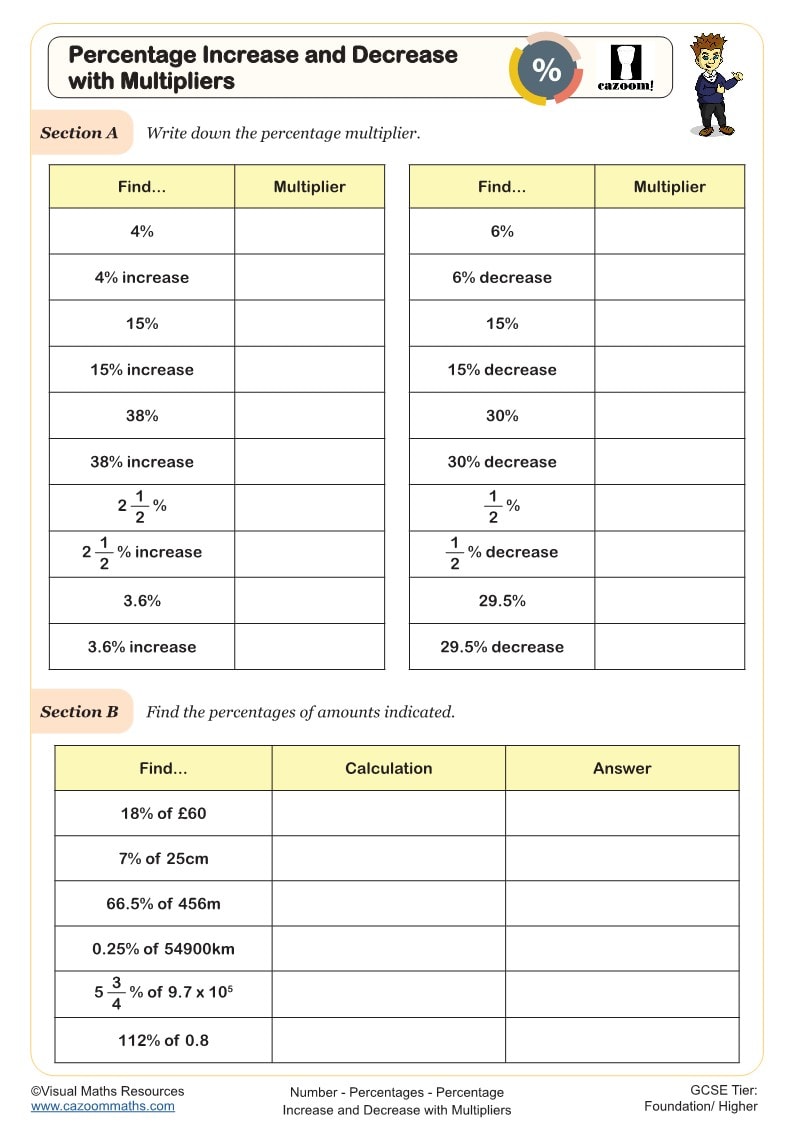
Percentage Increase and Decrease with Multipliers
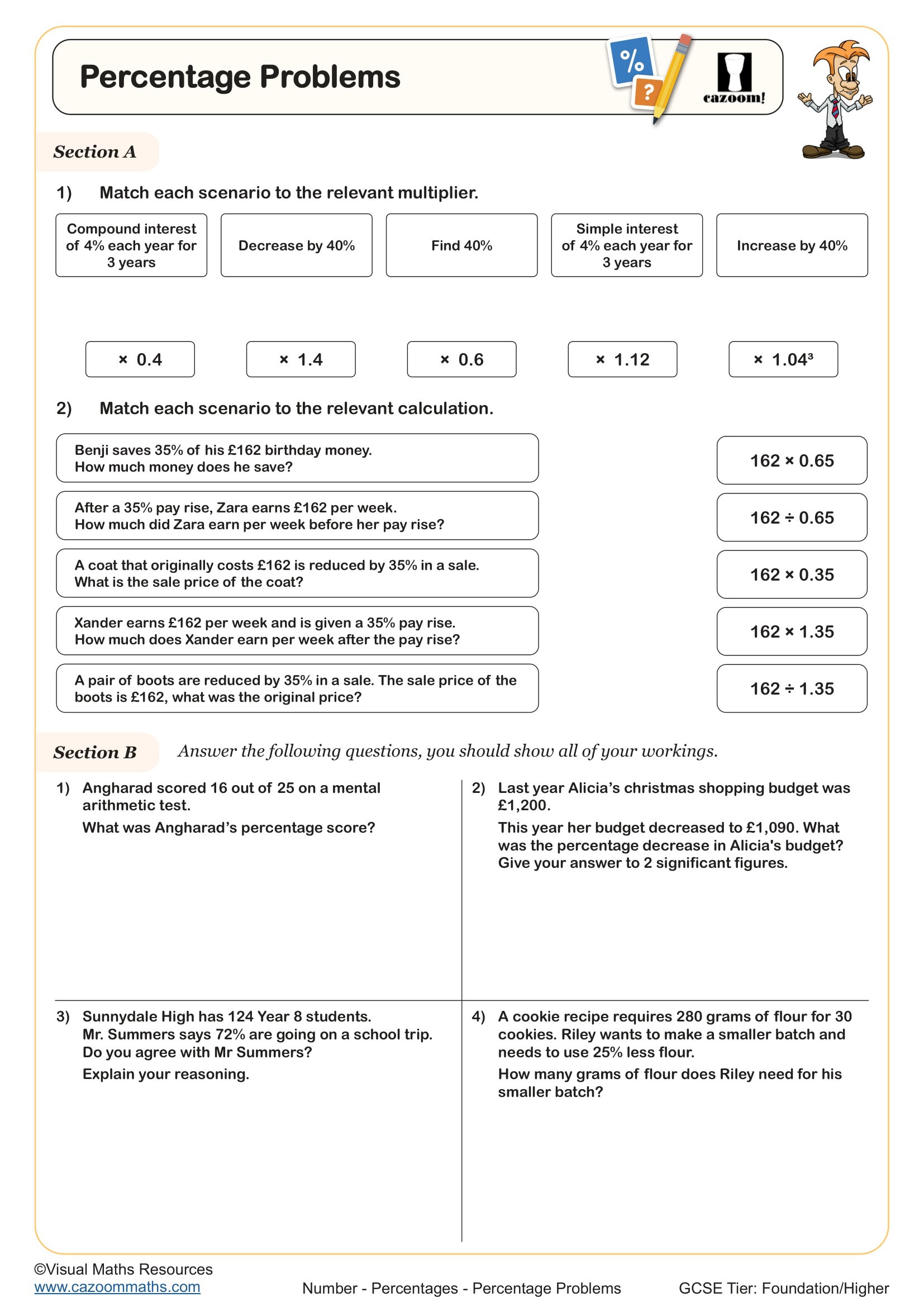
Percentage Problems
Percentage Profit and Loss
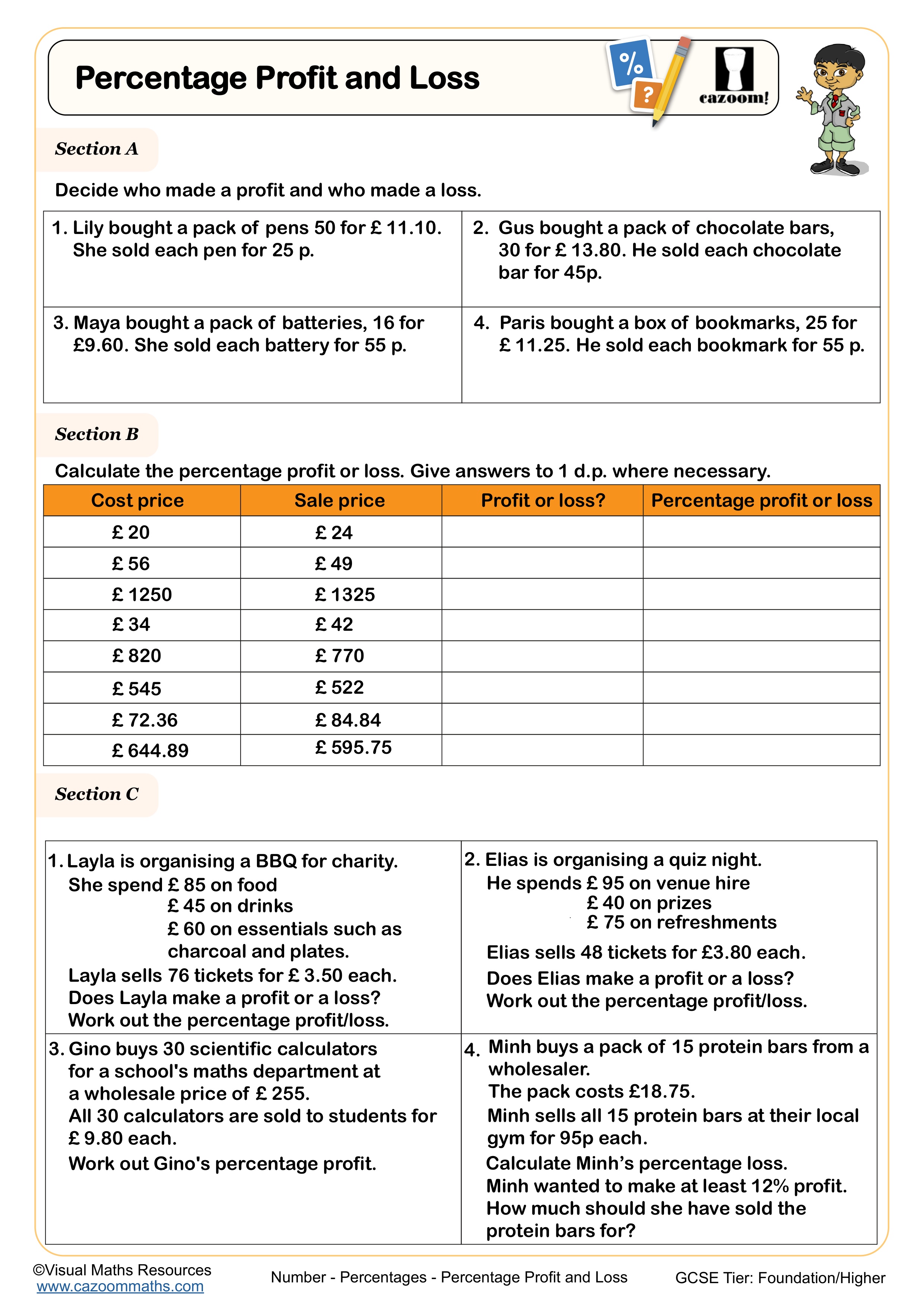
Percentages of Amounts - Using a Bar Model (A)
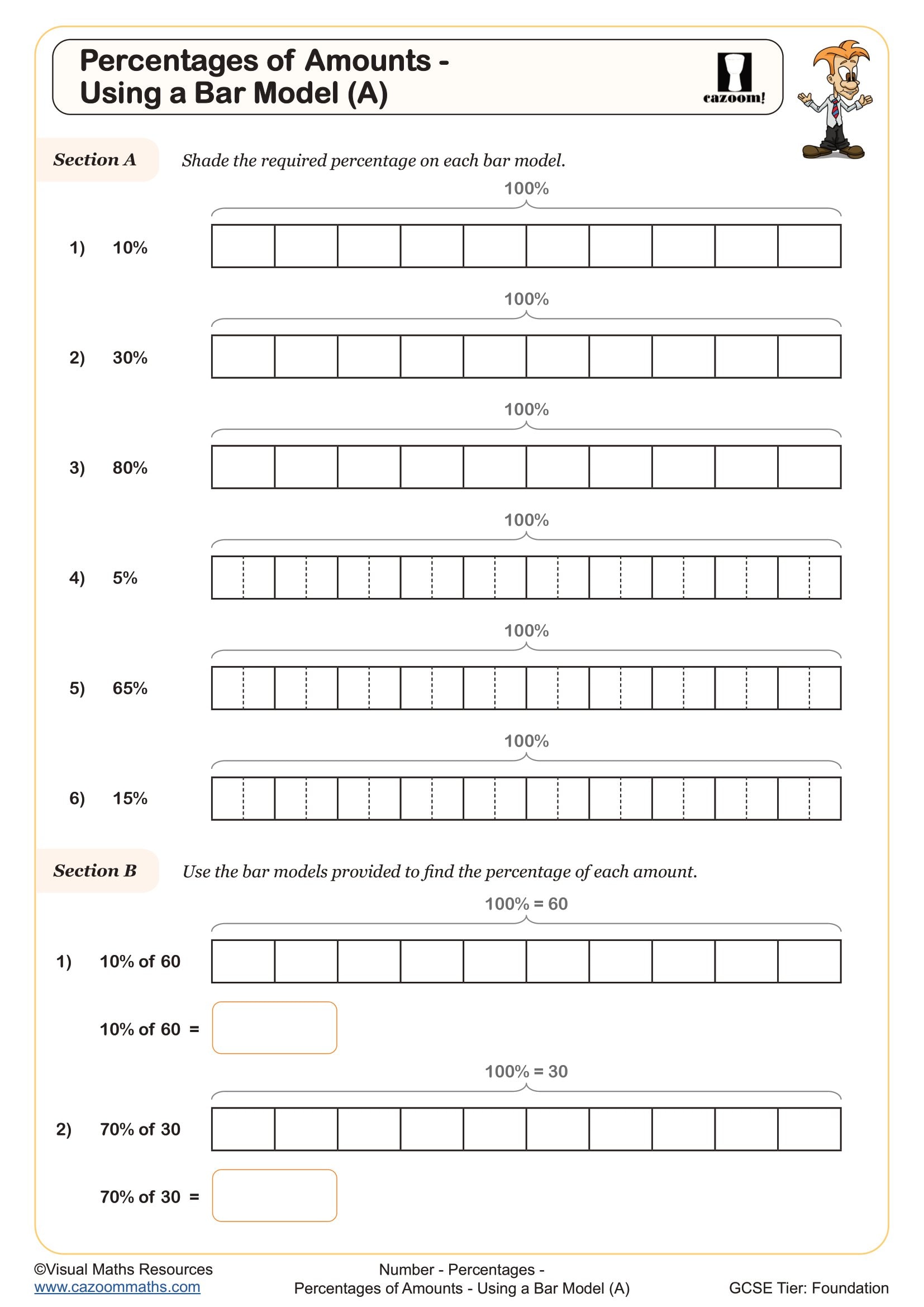
Percentages of Amounts - Using a Bar Model (B)
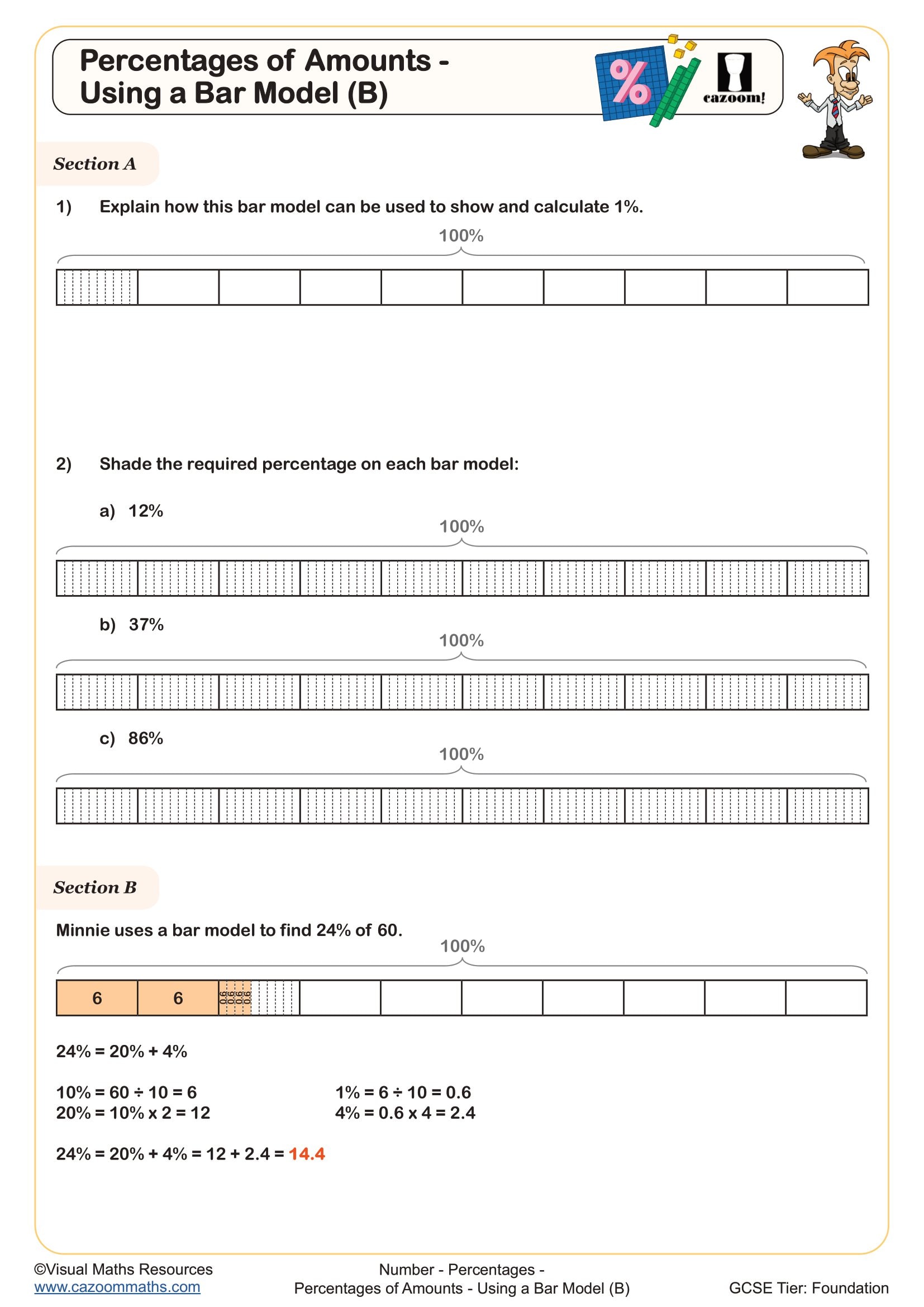
Percentages of Amounts (A)
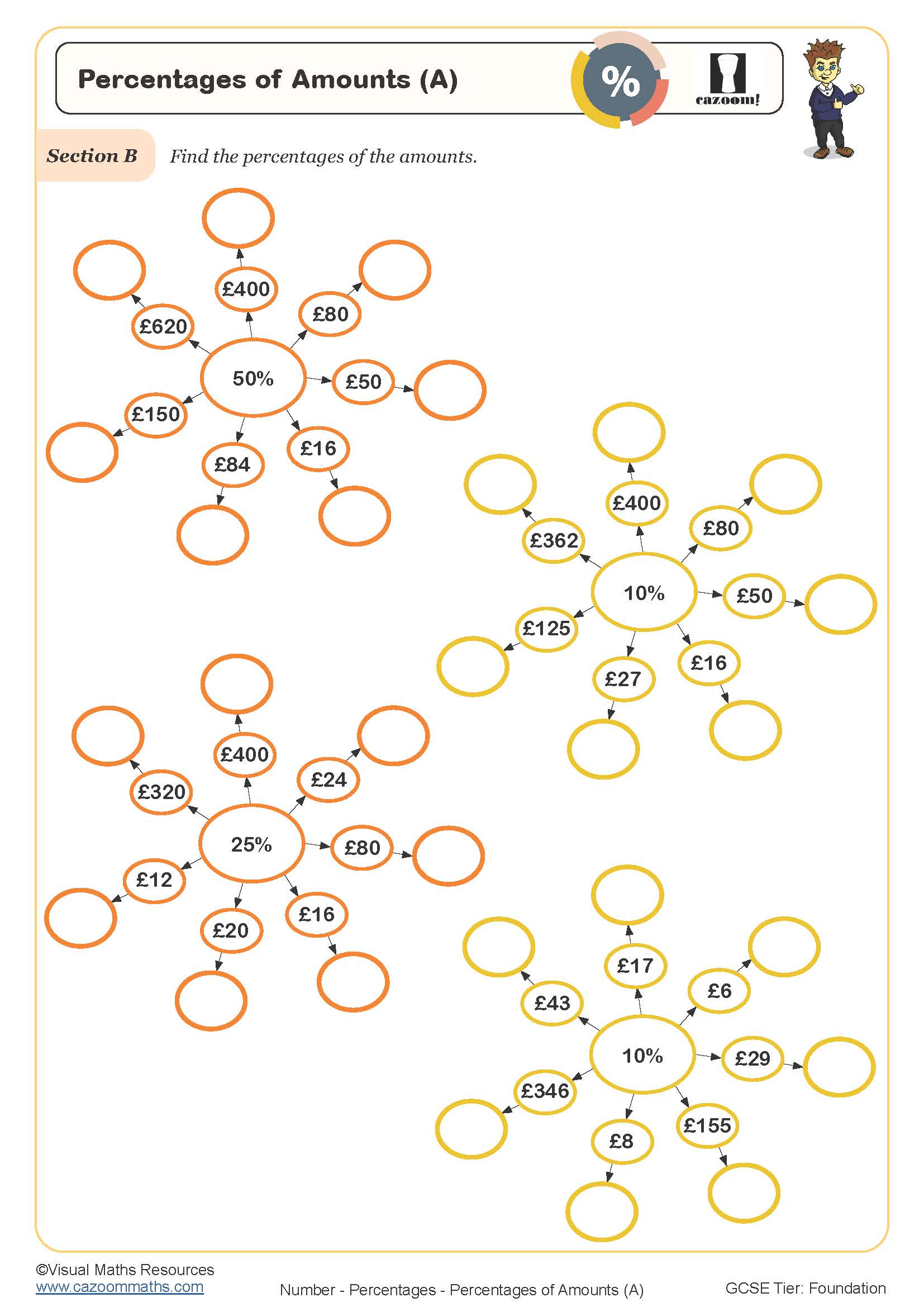
Percentages of Amounts (B)
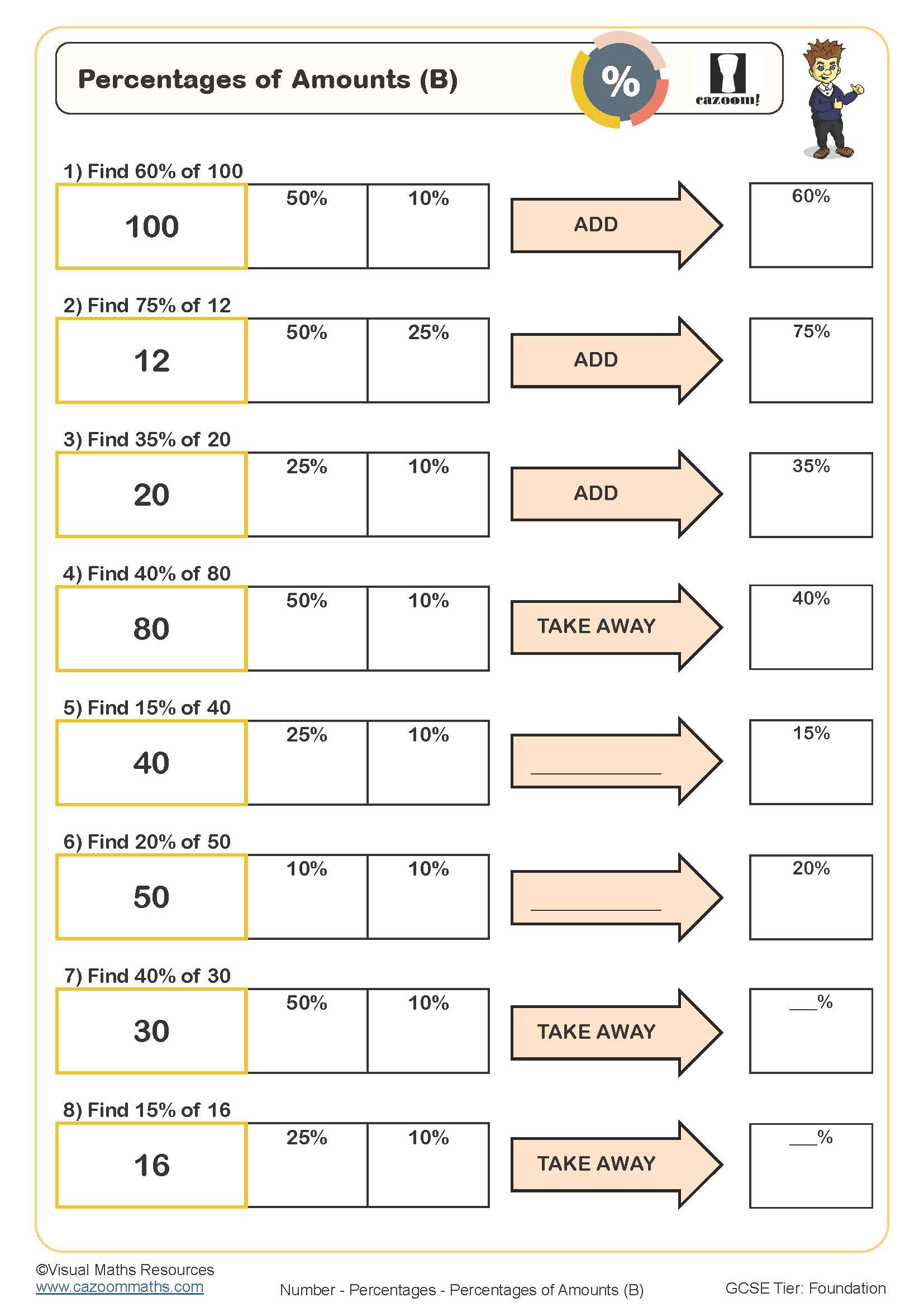
Percentages of Amounts (C)
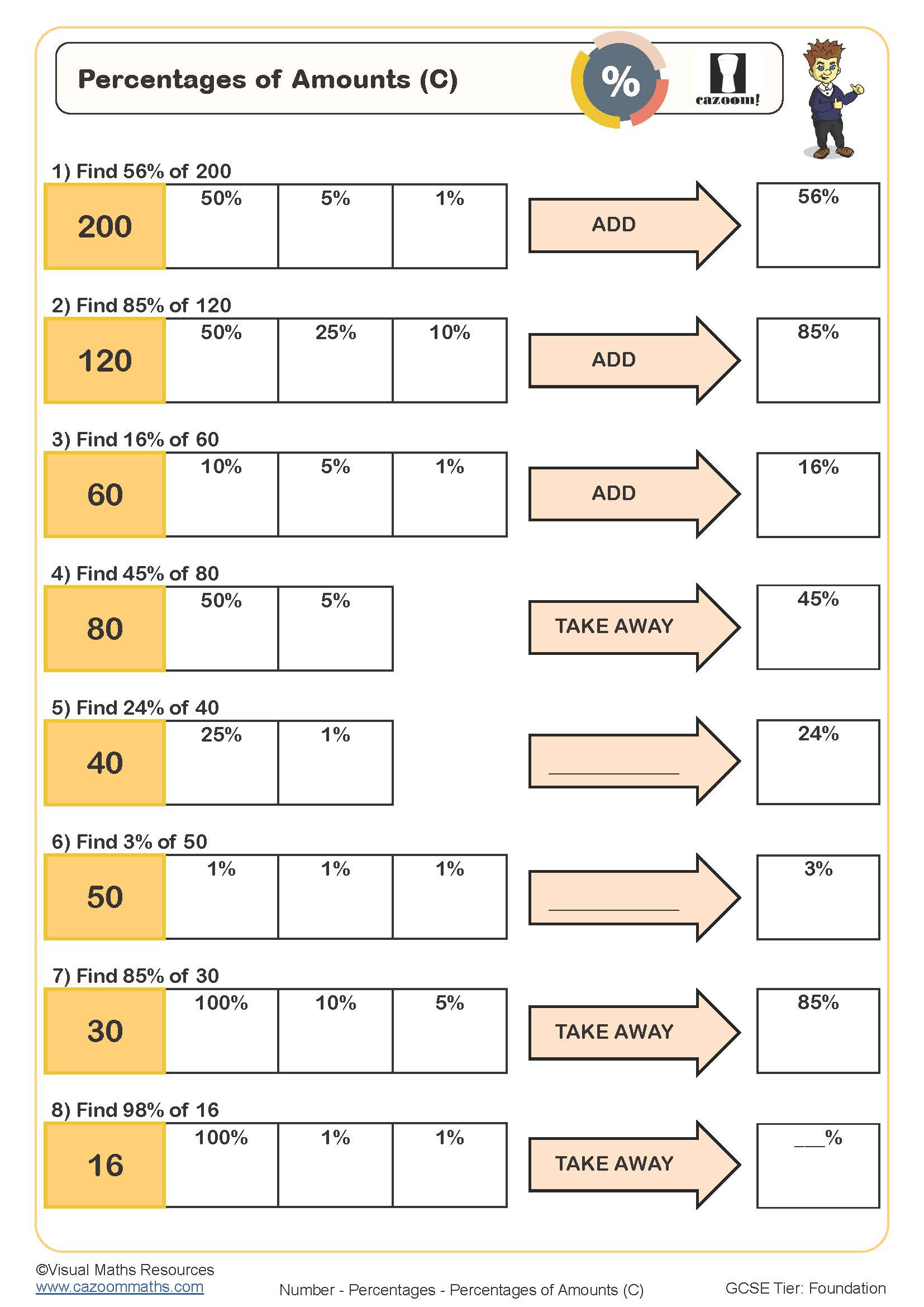
Percentages of Amounts 10 Minute Challenge
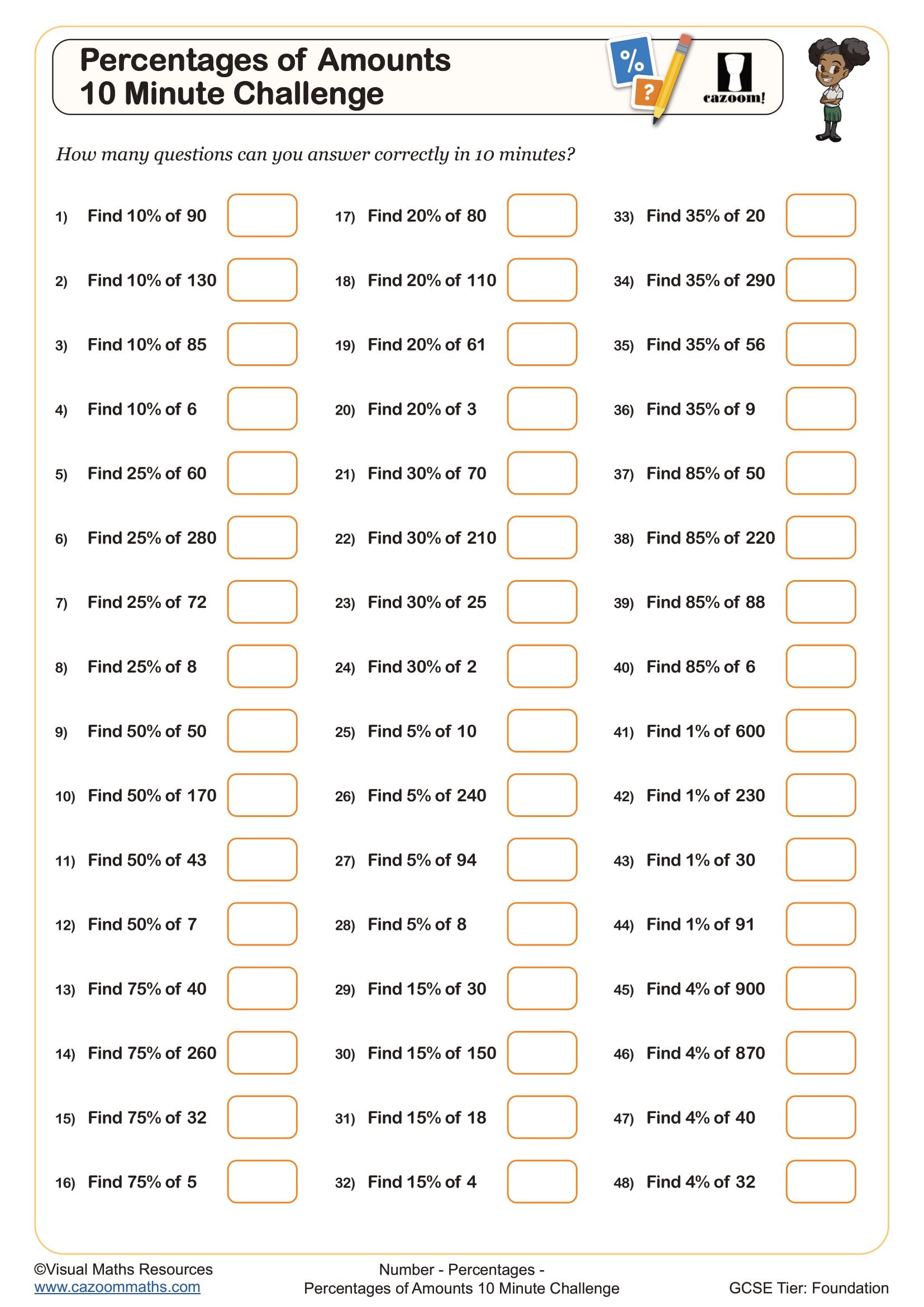
Repeated Percentage Increase and Decrease (A)
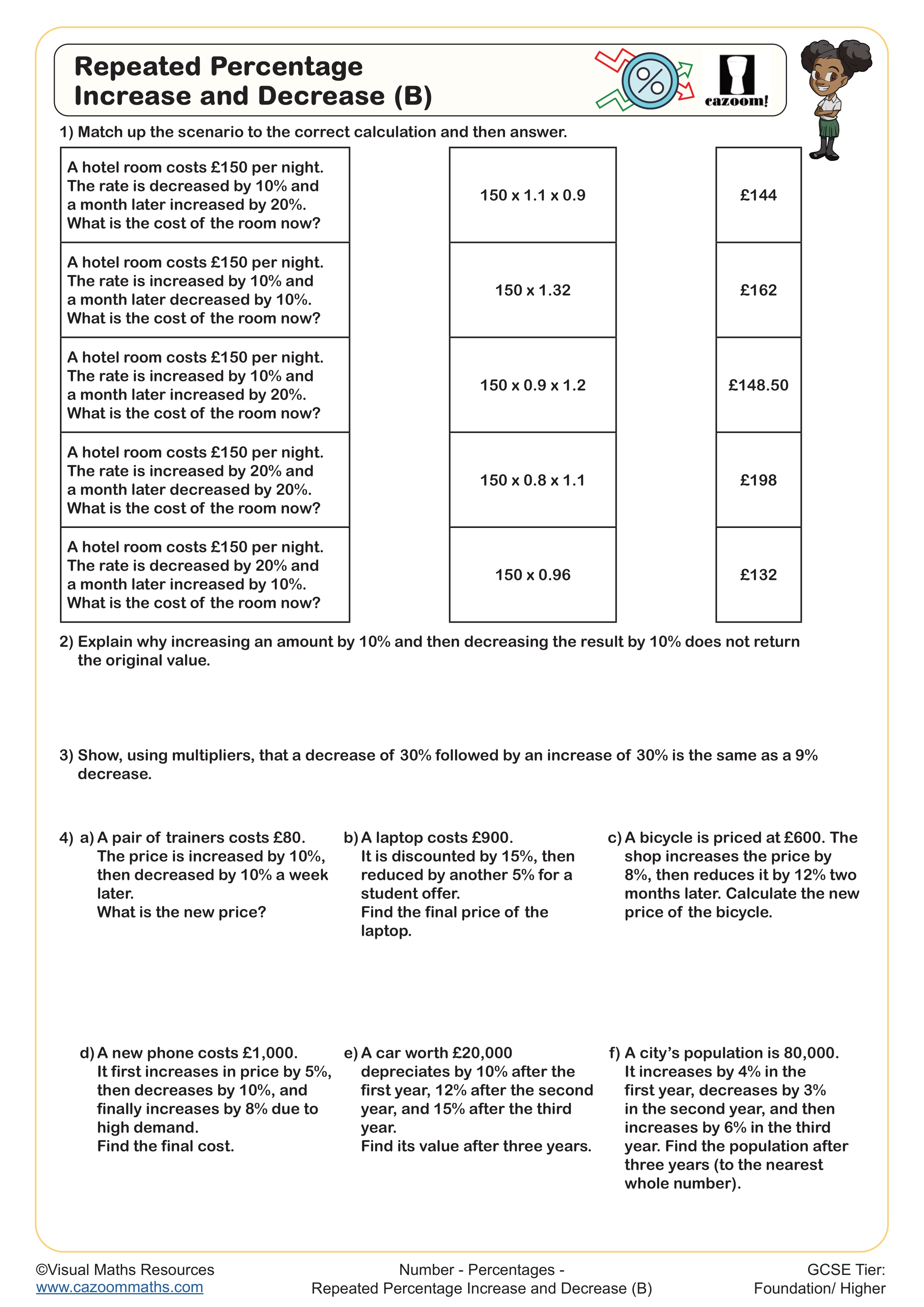
Repeated Percentage Increase and Decrease (B)
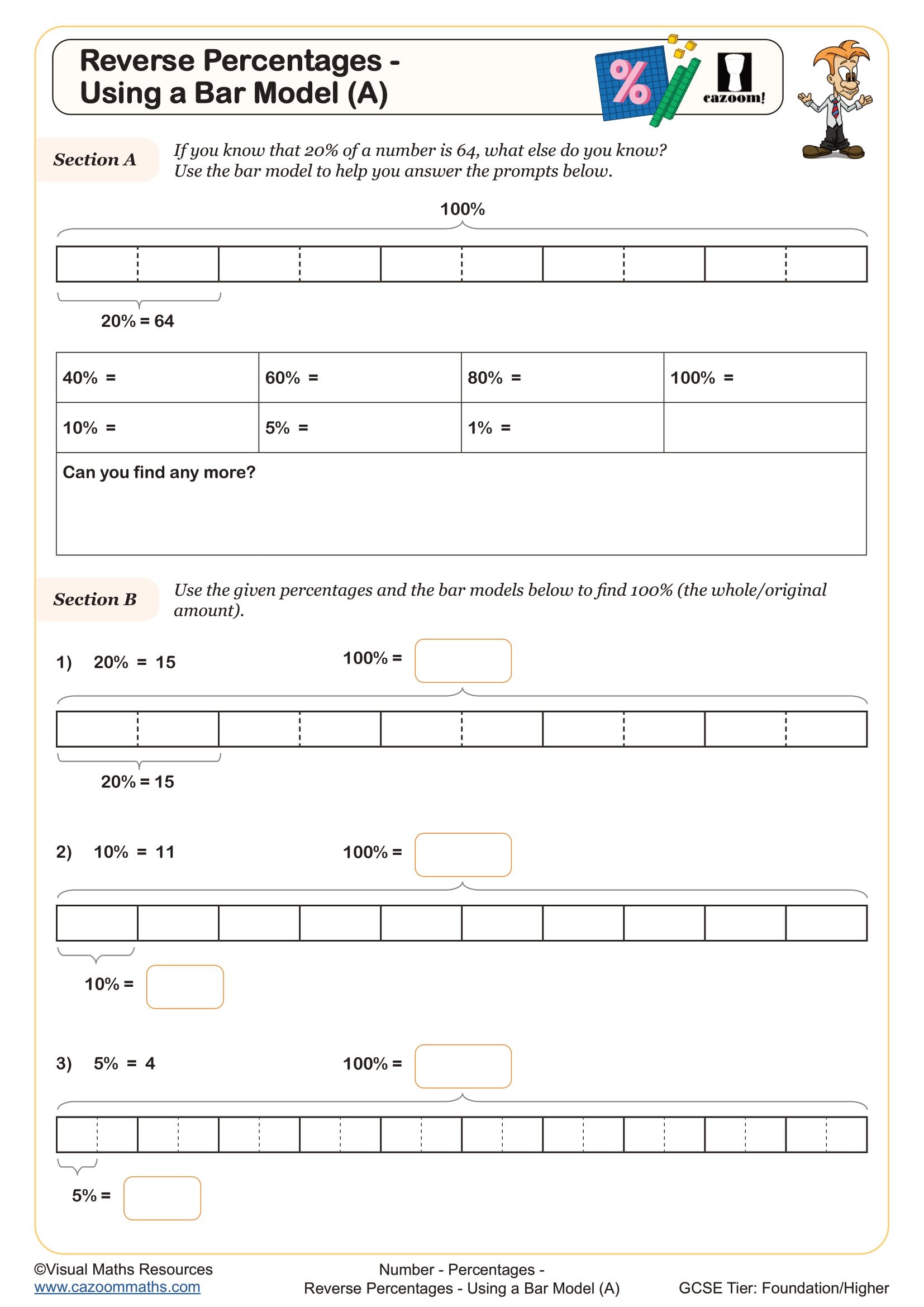
Reverse Percentages - Using a Bar Model (A)
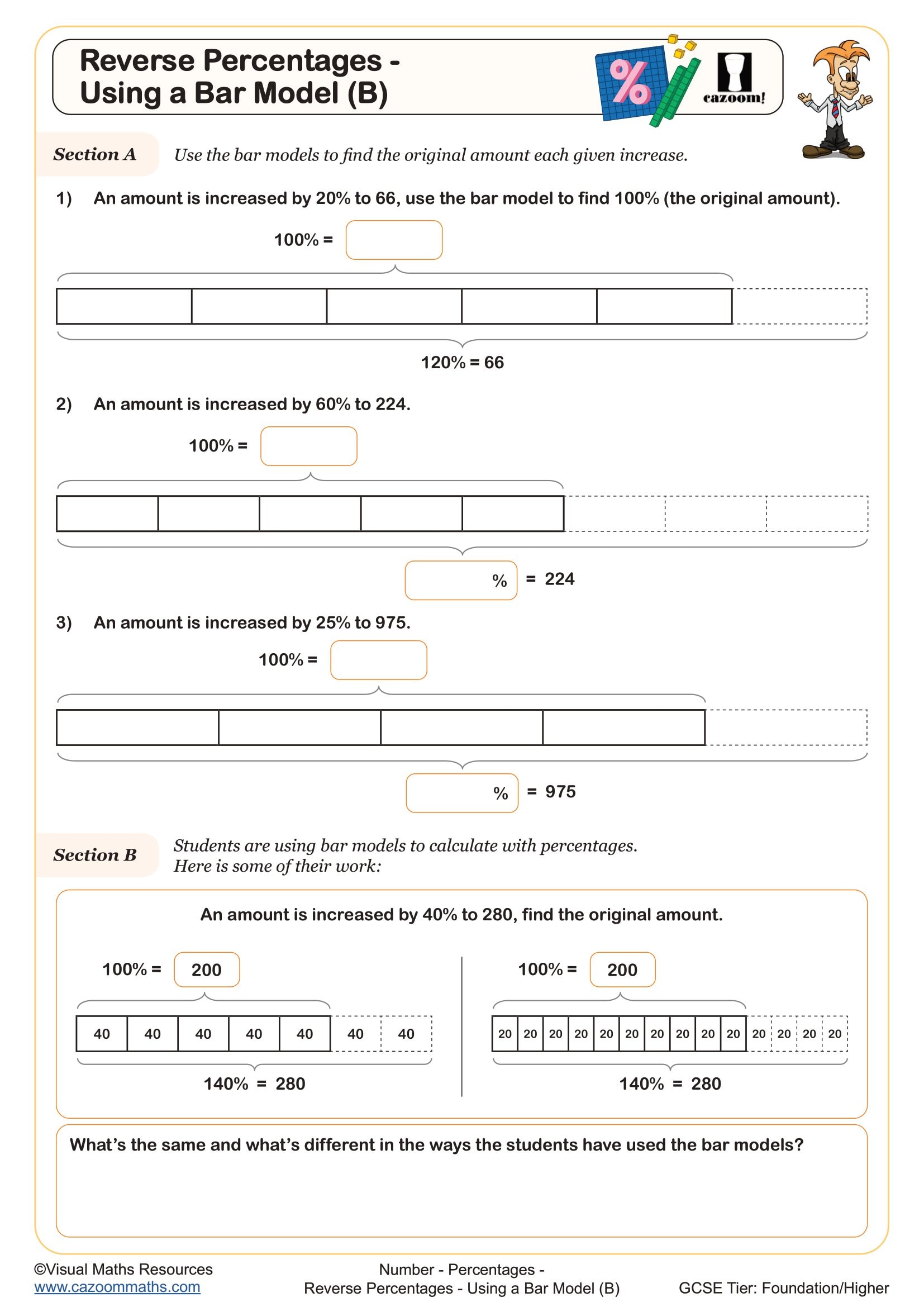
Reverse Percentages - Using a Bar Model (B)
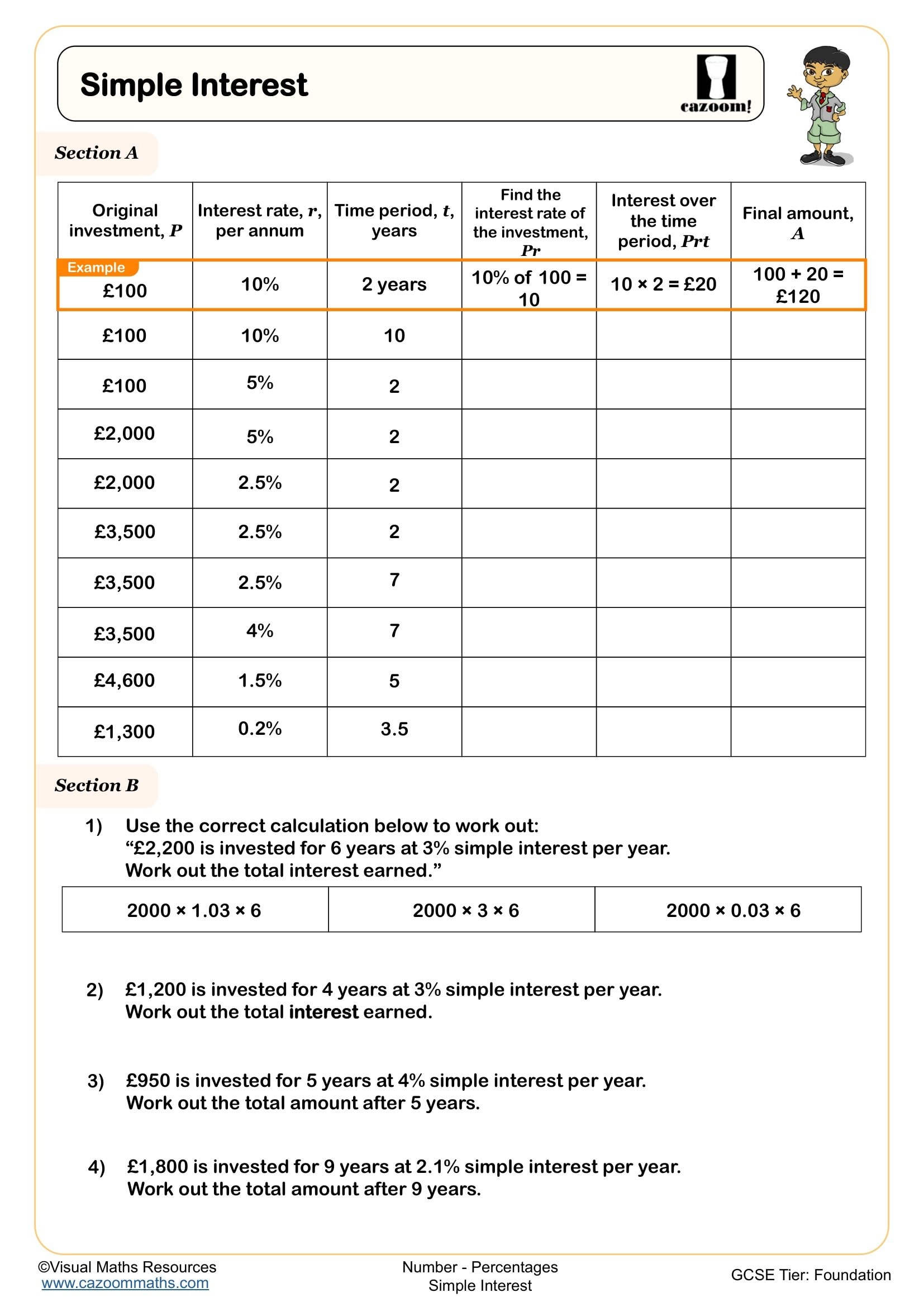
Simple Interest
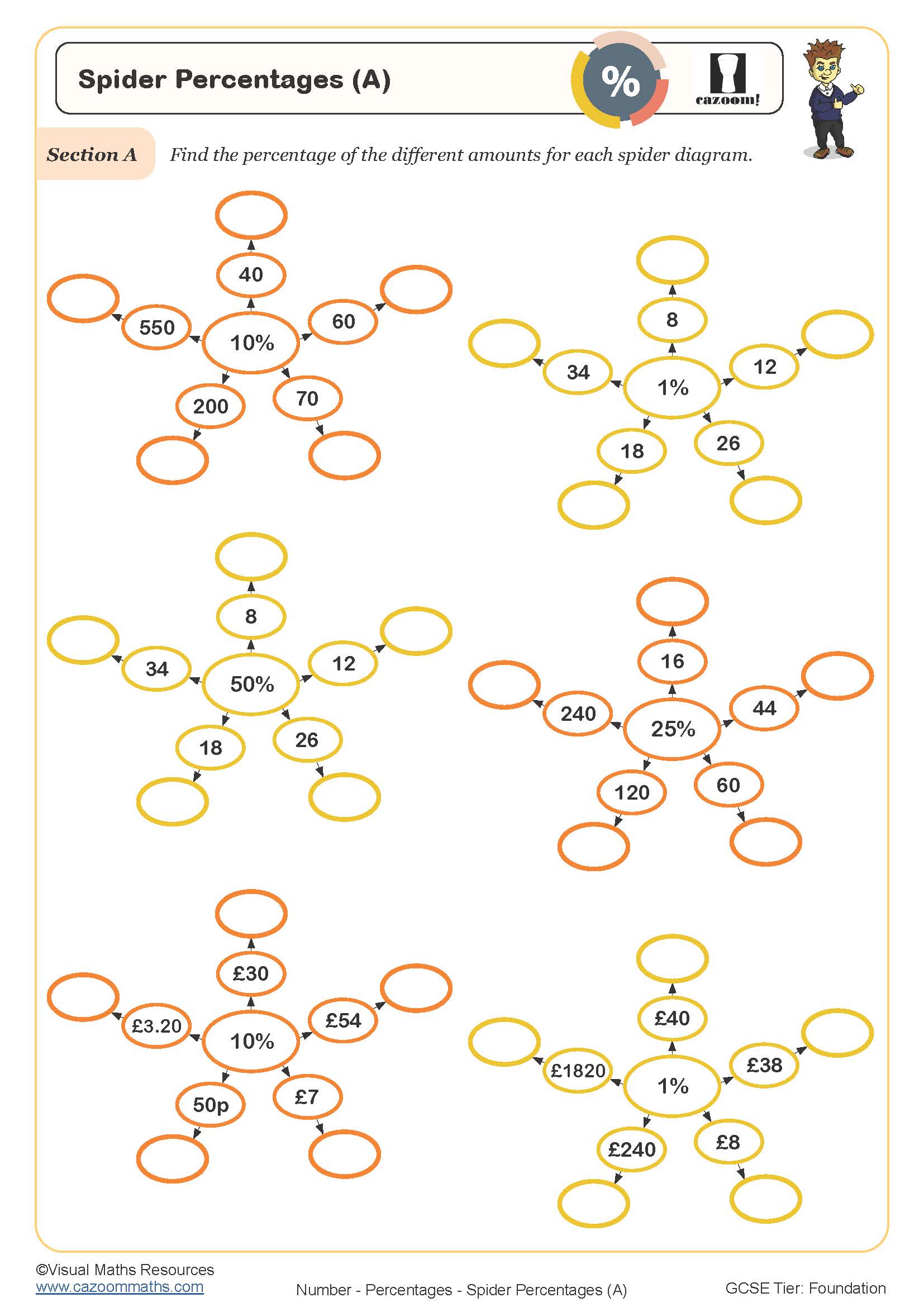
Spider Percentages (A)
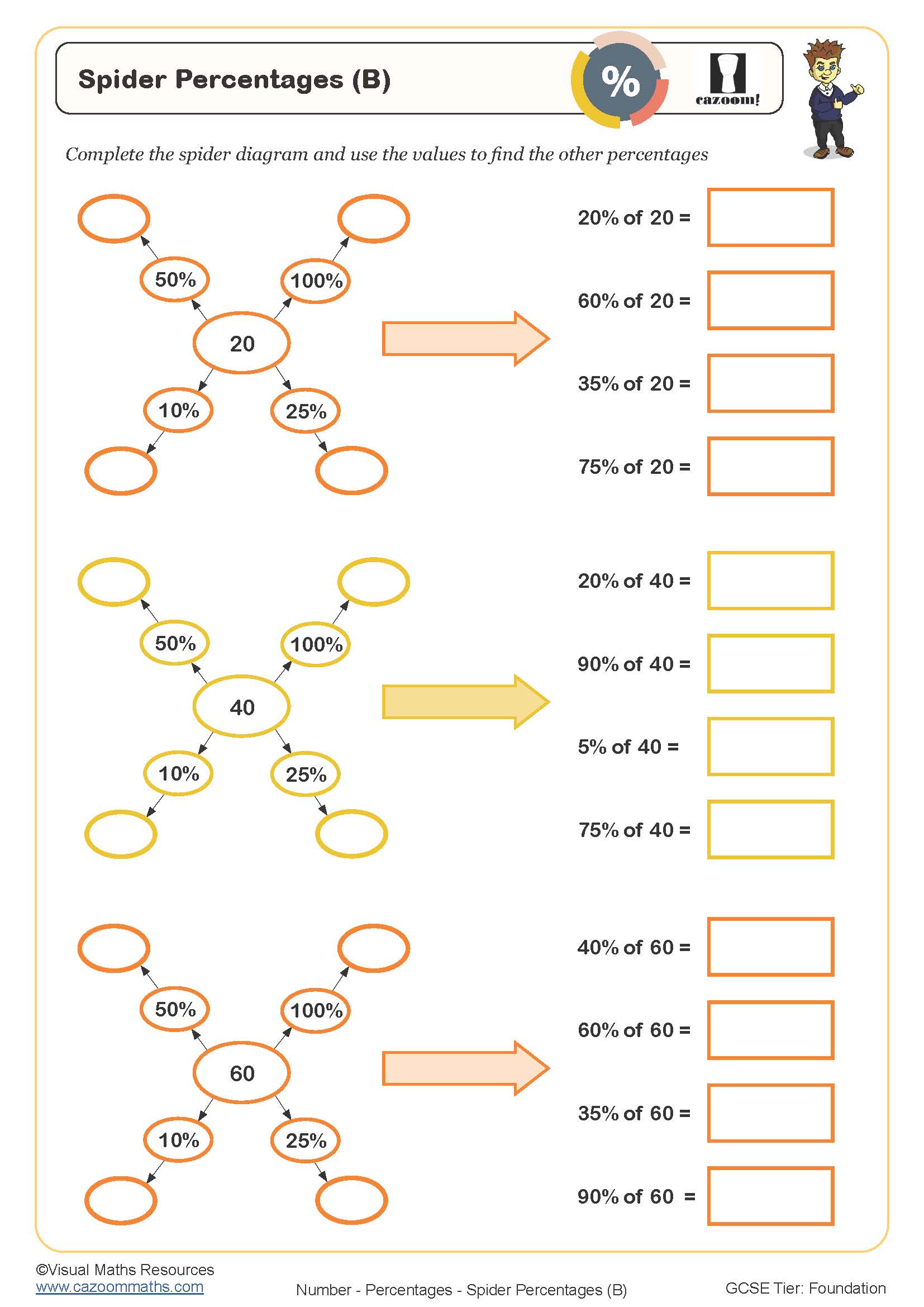
Spider Percentages (B)
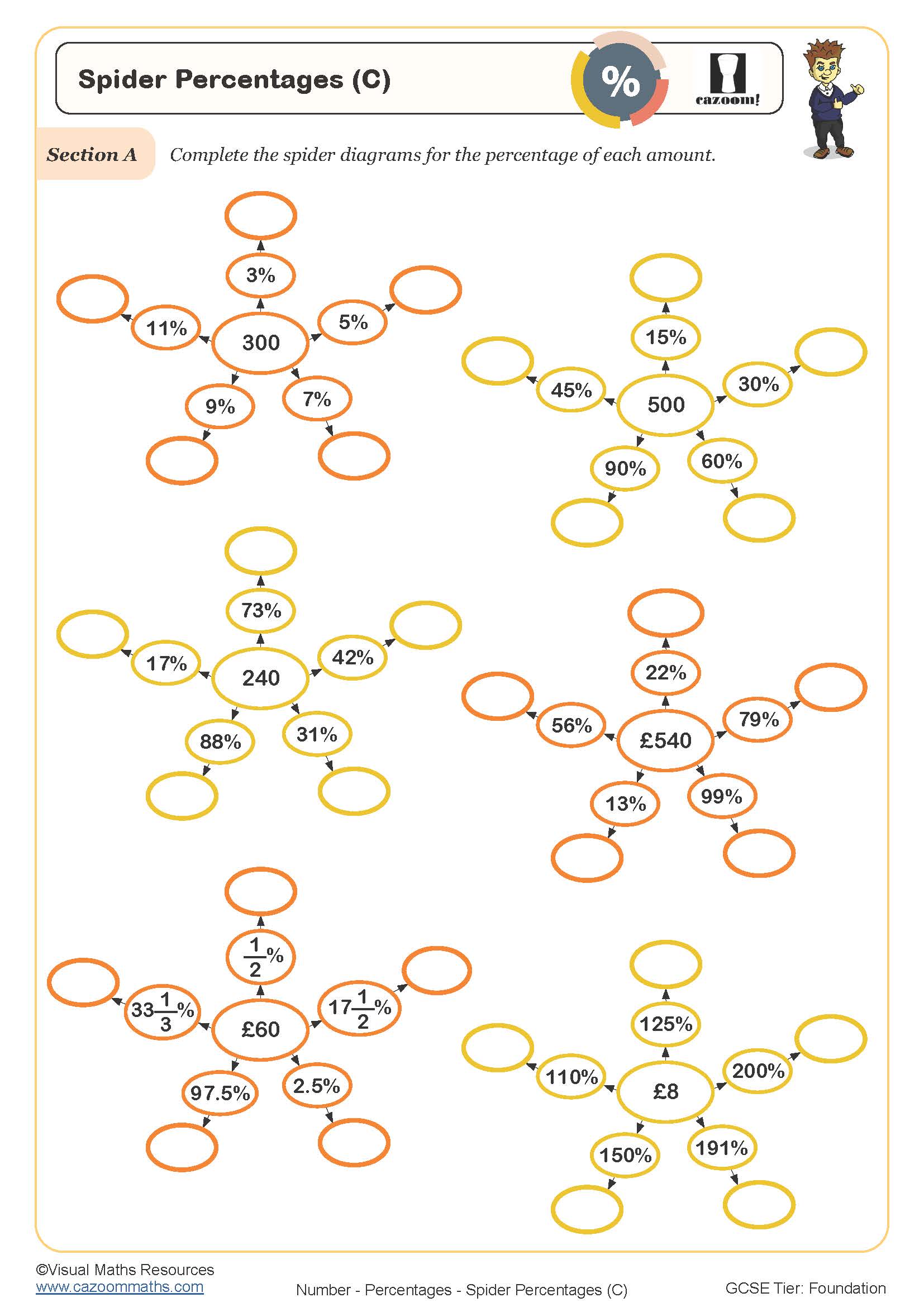
Spider Percentages (C)
All worksheets are created by the team of experienced teachers at Cazoom Maths.
What do KS3 percentages worksheets typically cover?
A percentages KS3 worksheet collection builds from finding simple percentages of amounts (using 10%, 25%, and 50% as building blocks) through to percentage increase and decrease, expressing one quantity as a percentage of another, and reverse percentage problems. This matches the National Curriculum expectation that KS3 students should fluently interpret percentages as operators and solve multi-step problems involving them.
Students often lose marks on exam questions because they round too early in multi-step percentage problems or forget to add the original amount back when calculating a percentage increase. These percentages worksheets typically progress from straightforward 'find 30% of 450' questions to more demanding problems where students must work backwards from a final amount, a skill that regularly appears in GCSE Foundation and Higher papers.
Which year groups use these percentages worksheets?
These resources cover Year 7, Year 8, and Year 9, spanning the entire KS3 phase. Year 7 students typically begin with finding percentages using the 10% or 1% method, whilst also converting between percentages, fractions, and decimals. By Year 8, most students tackle percentage change problems and begin expressing quantities as percentages of each other.
Year 9 work extends to reverse percentages and compound interest problems, where students must work systematically through multiple percentage changes. Teachers often notice that the jump to reverse percentages catches students out because it requires them to think about the problem structure differently rather than just applying a memorised procedure. This progression ensures students develop both procedural fluency and conceptual understanding before facing GCSE assessments.
Why do we focus on 25% and 50% when teaching percentages?
Using benchmark percentages like 25% and 50% helps students build mental calculation strategies and fraction-percentage connections. Finding 50% means halving, whilst 25% can be found by halving twice or dividing by four. These anchor points allow students to estimate and check their work, reducing calculator dependency and strengthening number sense across the curriculum.
This skill connects directly to financial literacy and consumer awareness. When students recognise that a '25% off' sale means they pay three-quarters of the original price, or that a 50% deposit requires half the total cost upfront, they're applying maths that matters beyond the classroom. Retail pricing, tax calculations, and statistical reporting all rely on quick percentage estimation, making these foundational skills relevant to everyday decision-making and future employment contexts.
How should teachers use these percentage worksheets in lessons?
The worksheets work well for differentiated practice because they build systematically from basic percentage calculations to more complex applications. Teachers can assign specific sections based on prior assessment, allowing students who grasp concepts quickly to move ahead whilst others consolidate fundamentals. The included answer sheets enable immediate self-checking, which helps students identify errors in their method before misconceptions become embedded.
Many teachers use these resources for retrieval practice at lesson starts, targeted intervention sessions, or as structured homework that parents can support using the answers provided. They're particularly effective for exam revision because they mirror the question styles and progression that appear in Key Stage 3 tests and early GCSE practice papers. Some teachers also find them useful for paired work, where students check each other's methods using the answer sheets, encouraging mathematical discussion about why particular approaches work.