KS3 Proportion Worksheets
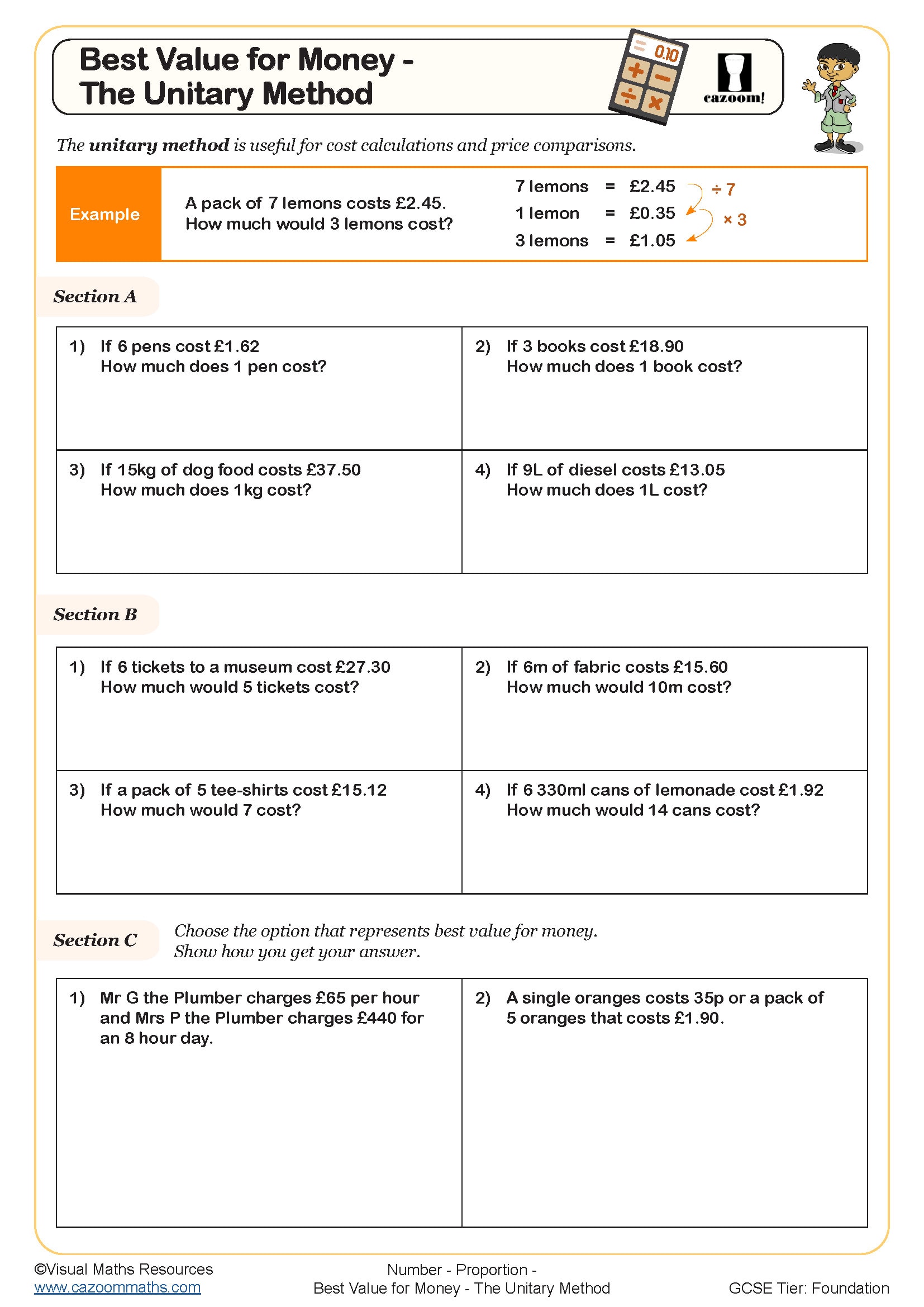
Best Value for Money - the Unitary Method
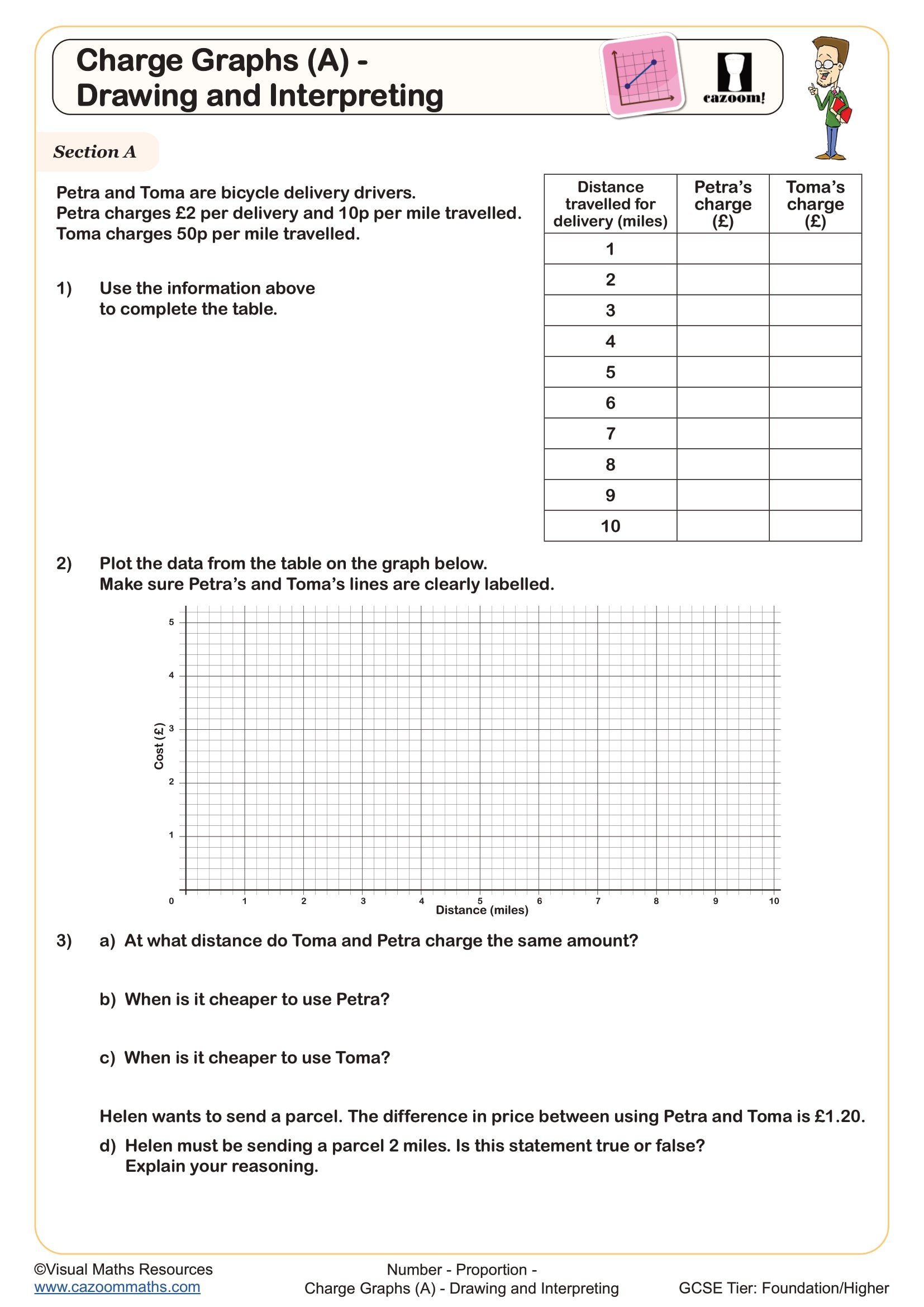
Charge Graphs (A) - Drawing and Interpreting
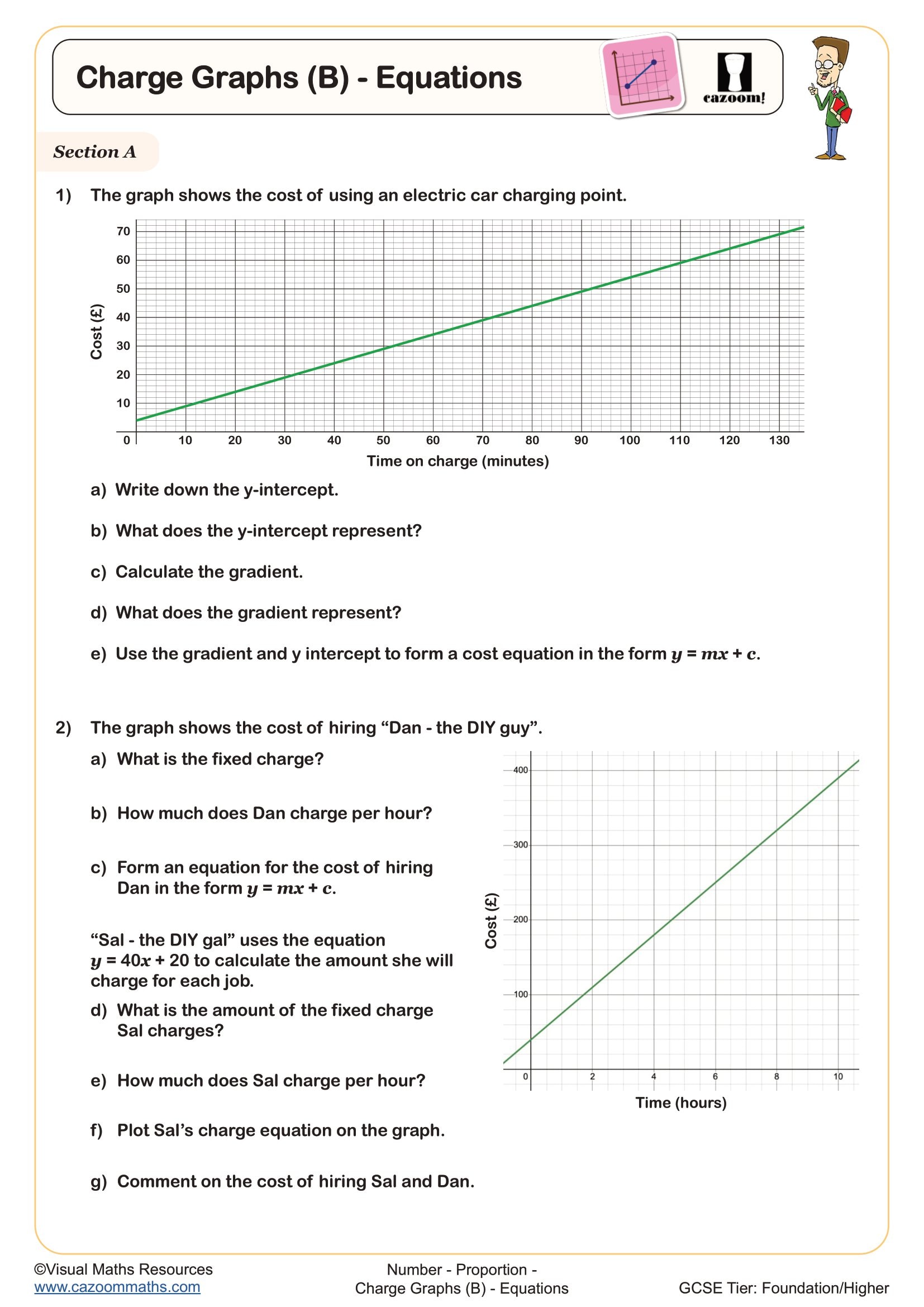
Charge Graphs (B) - Equations
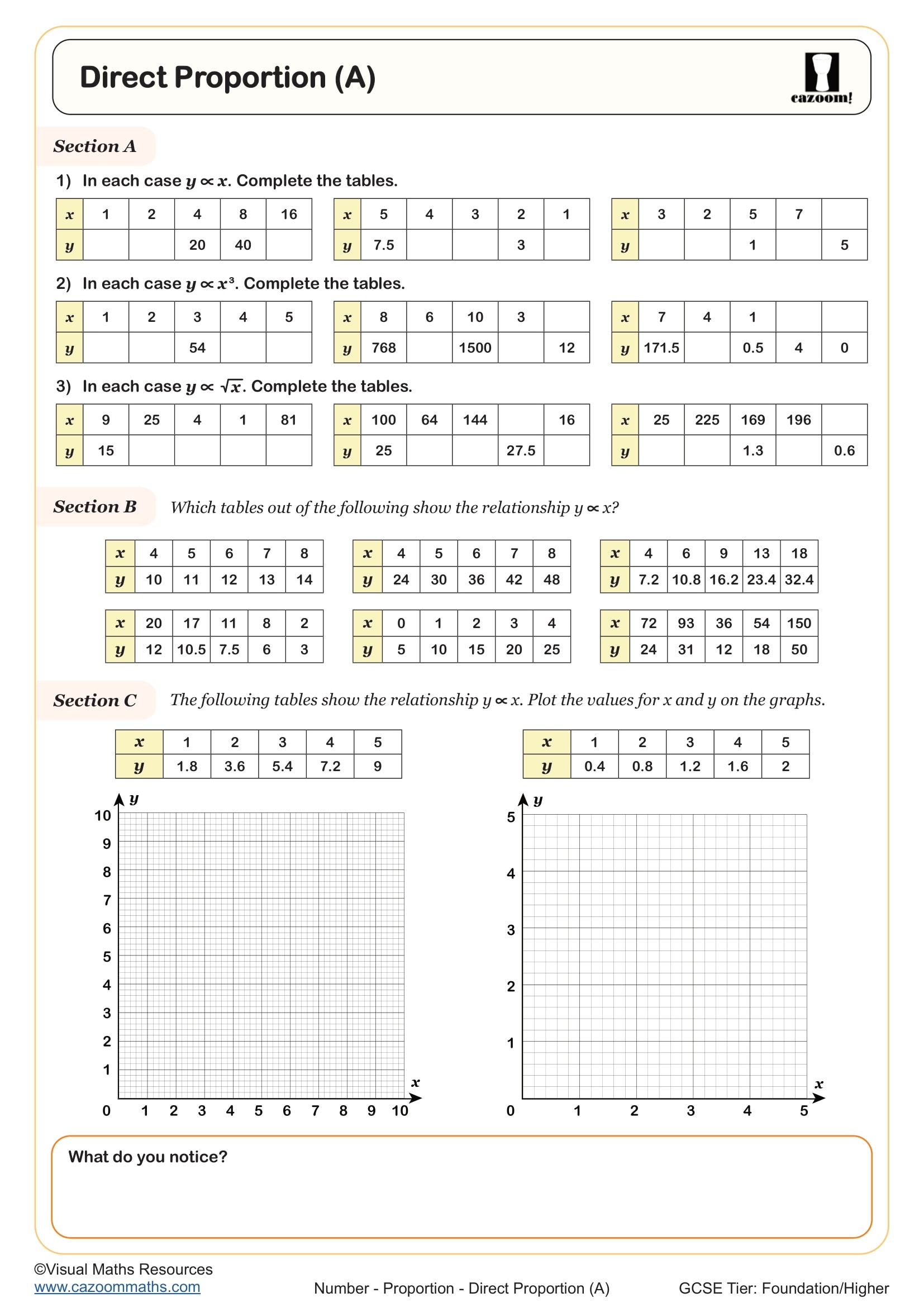
Direct Proportion A
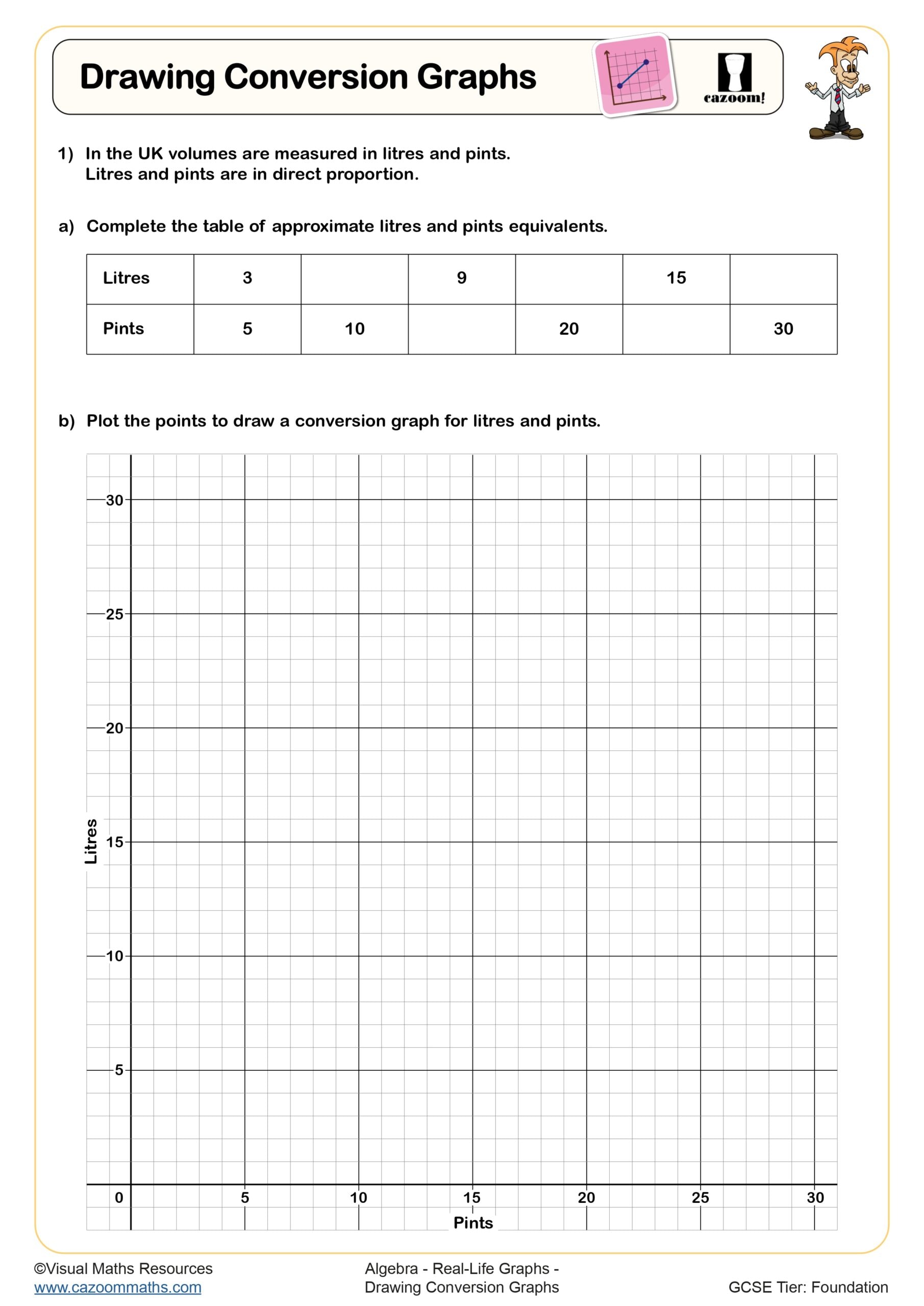
Drawing Conversion Graphs
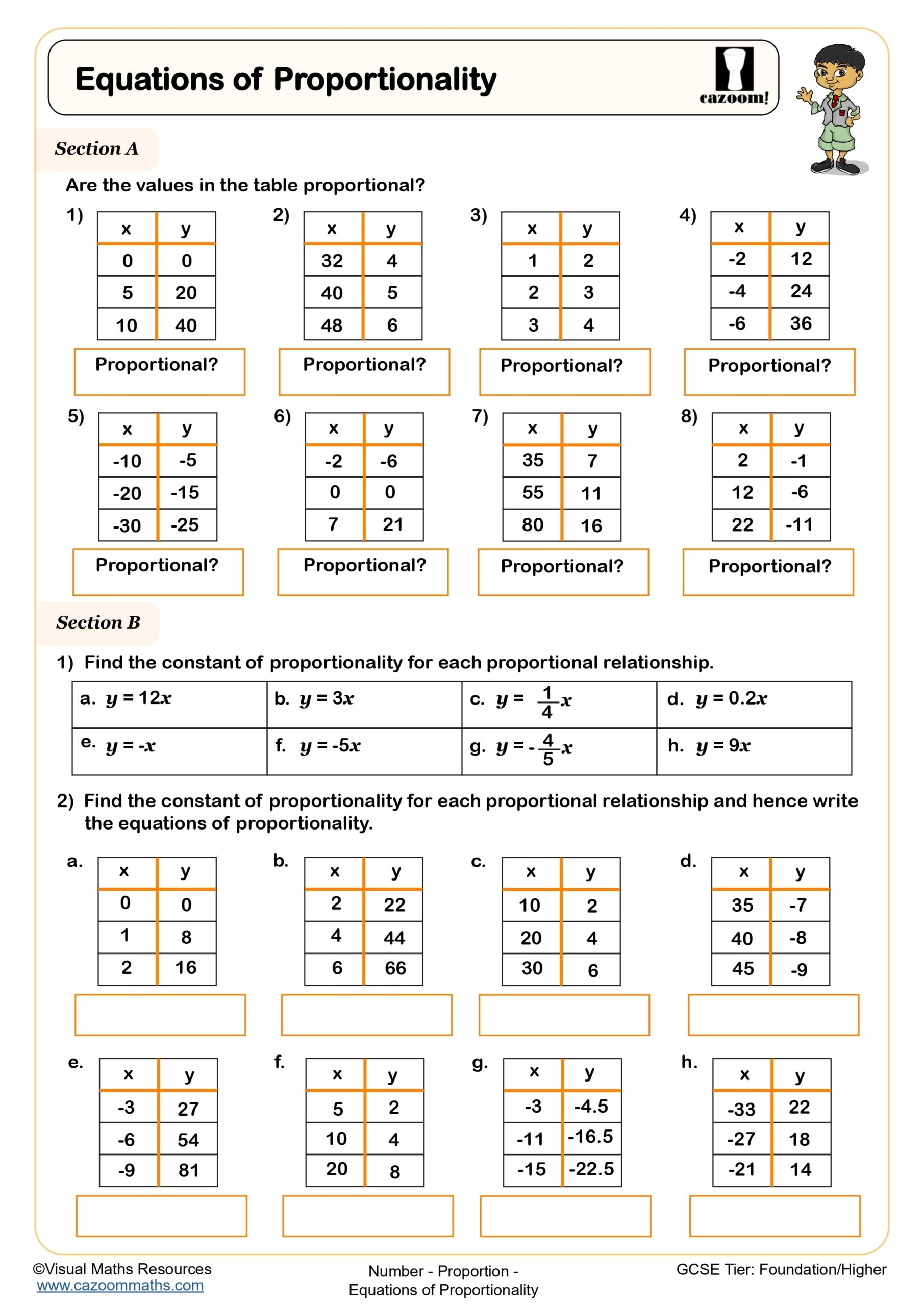
Equations of Proportionality
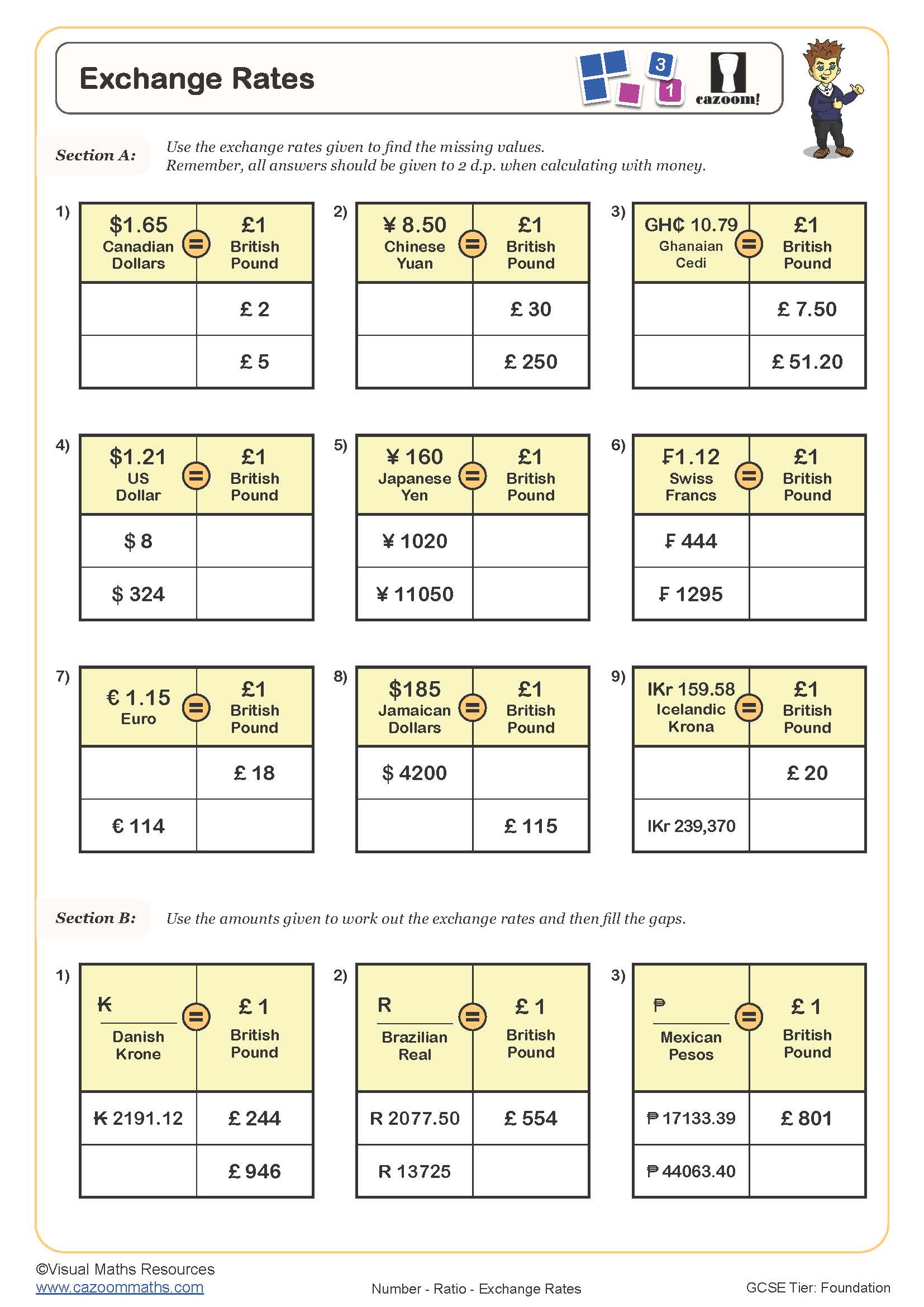
Exchange Rates
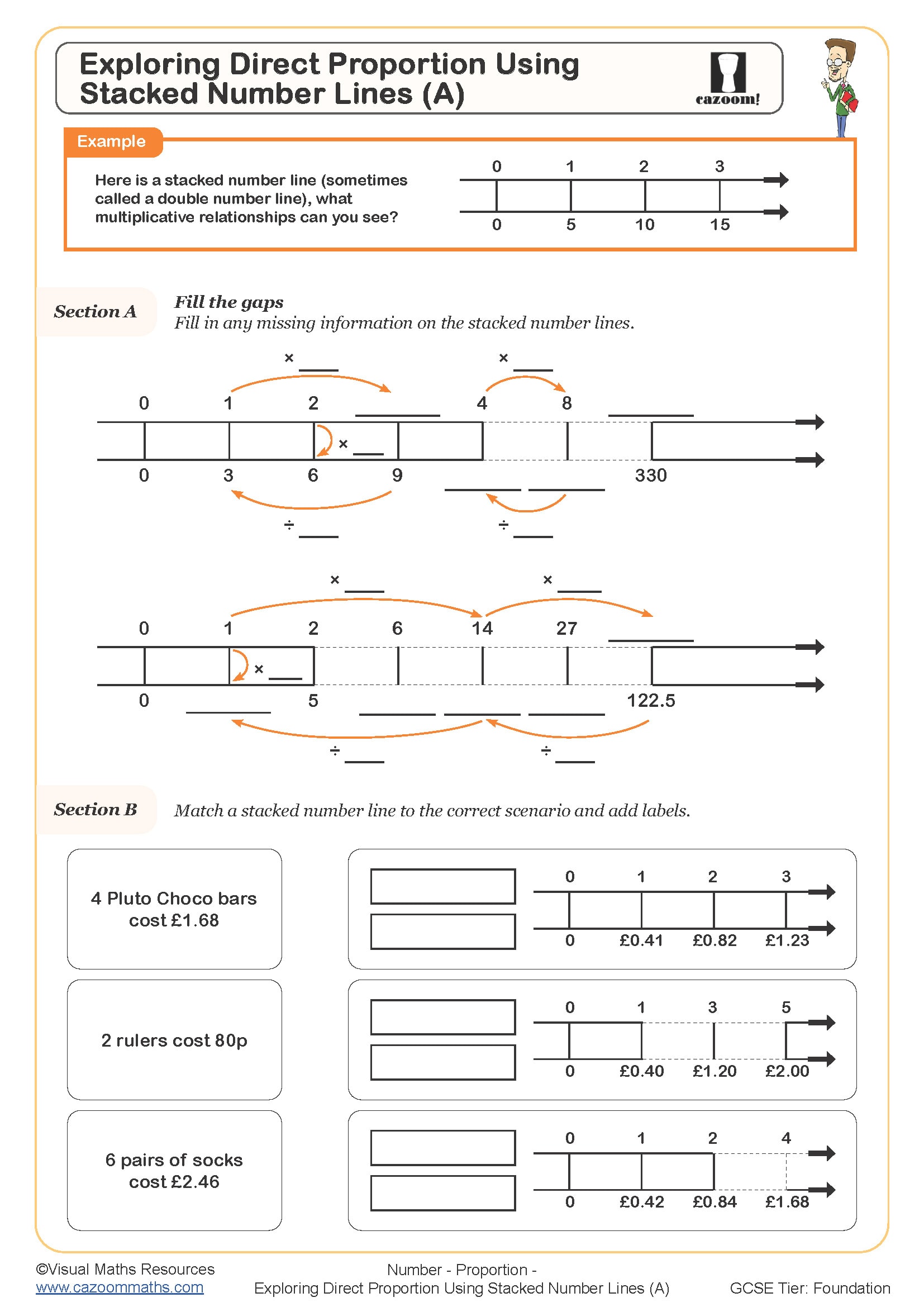
Exploring Direct Proportion Using Stacked Number Lines (A)
Exploring Direct Proportion Using Stacked Number Lines (B)
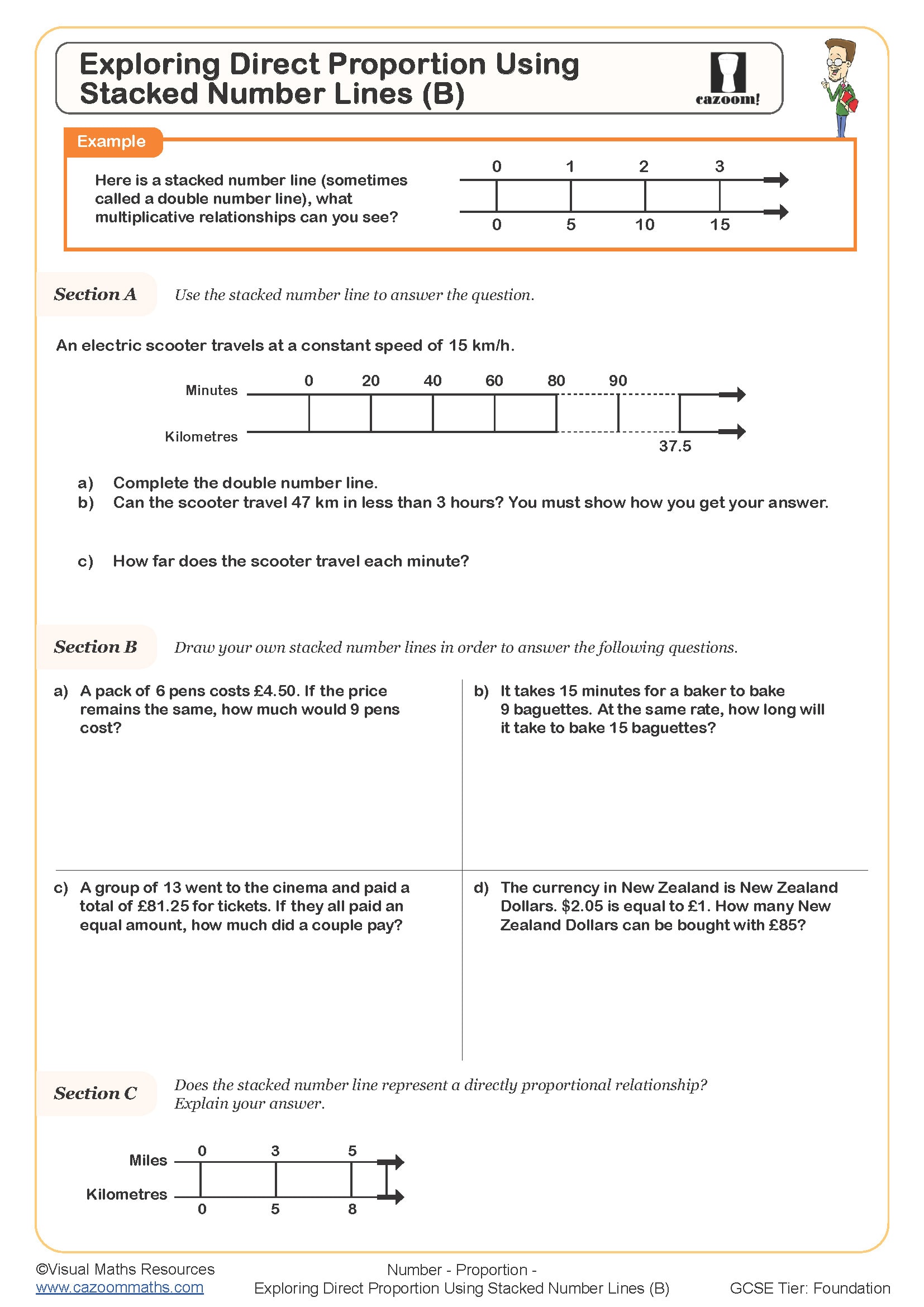
Factory and Worker Proportion Problems
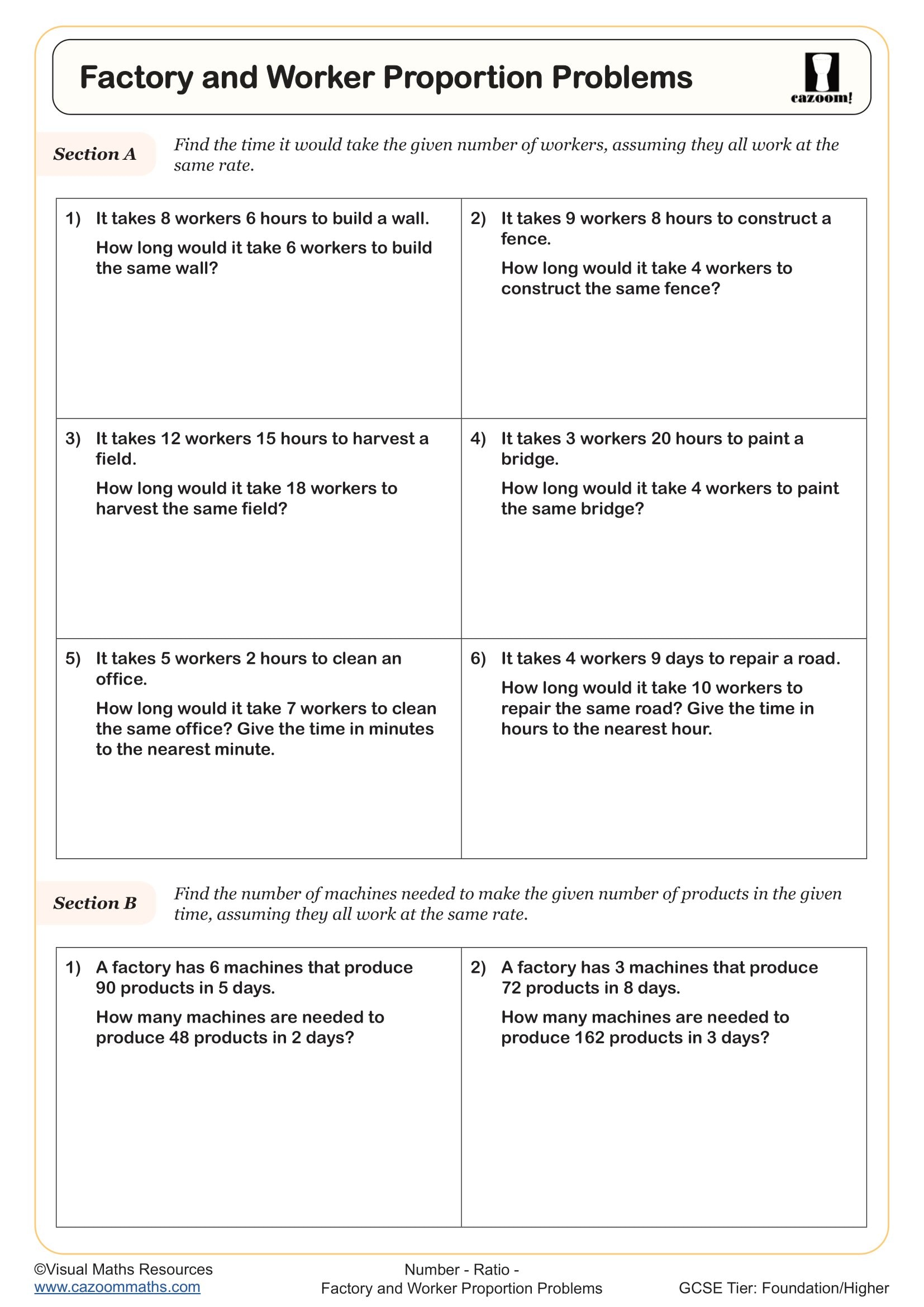
Recipes (A)
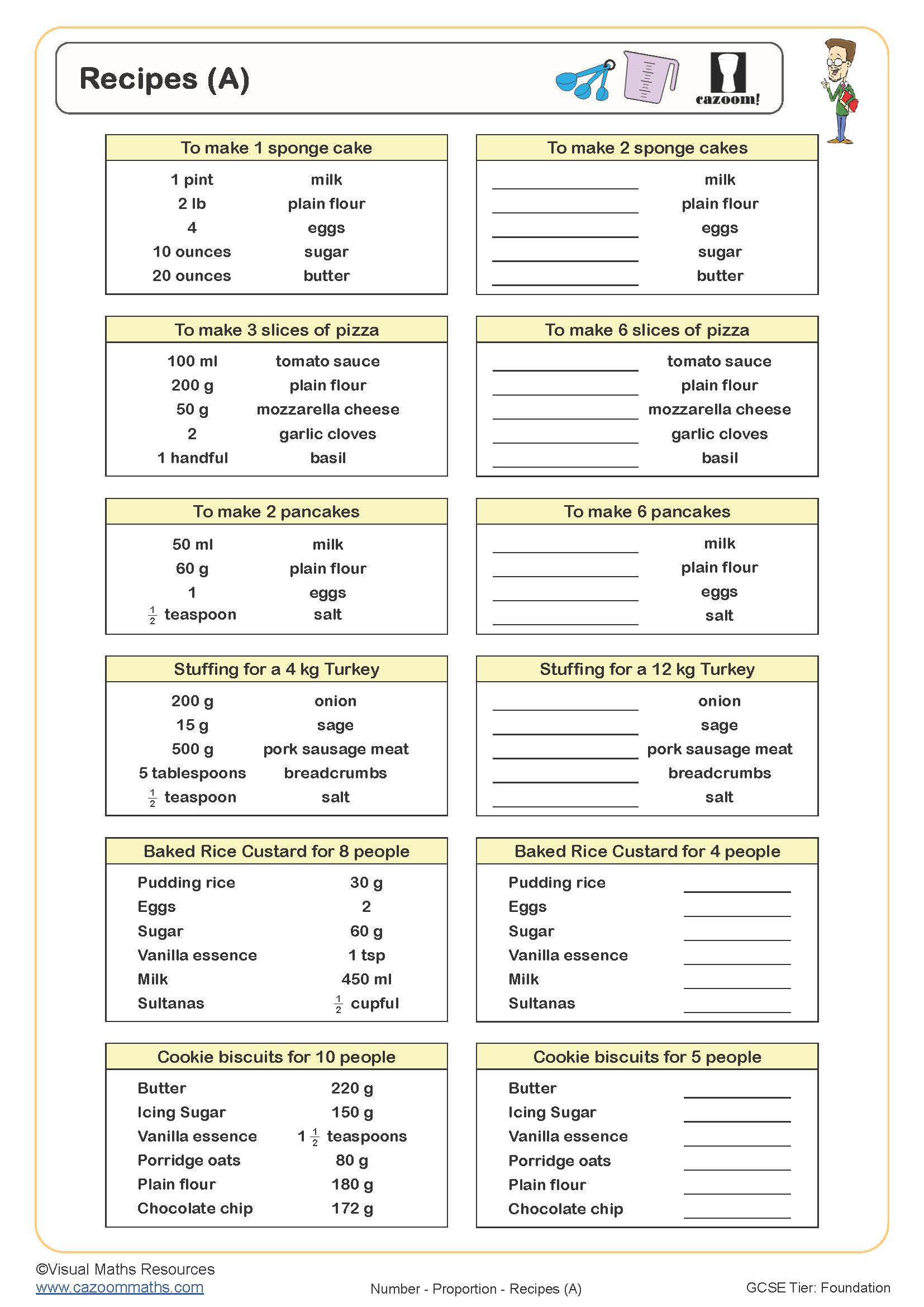
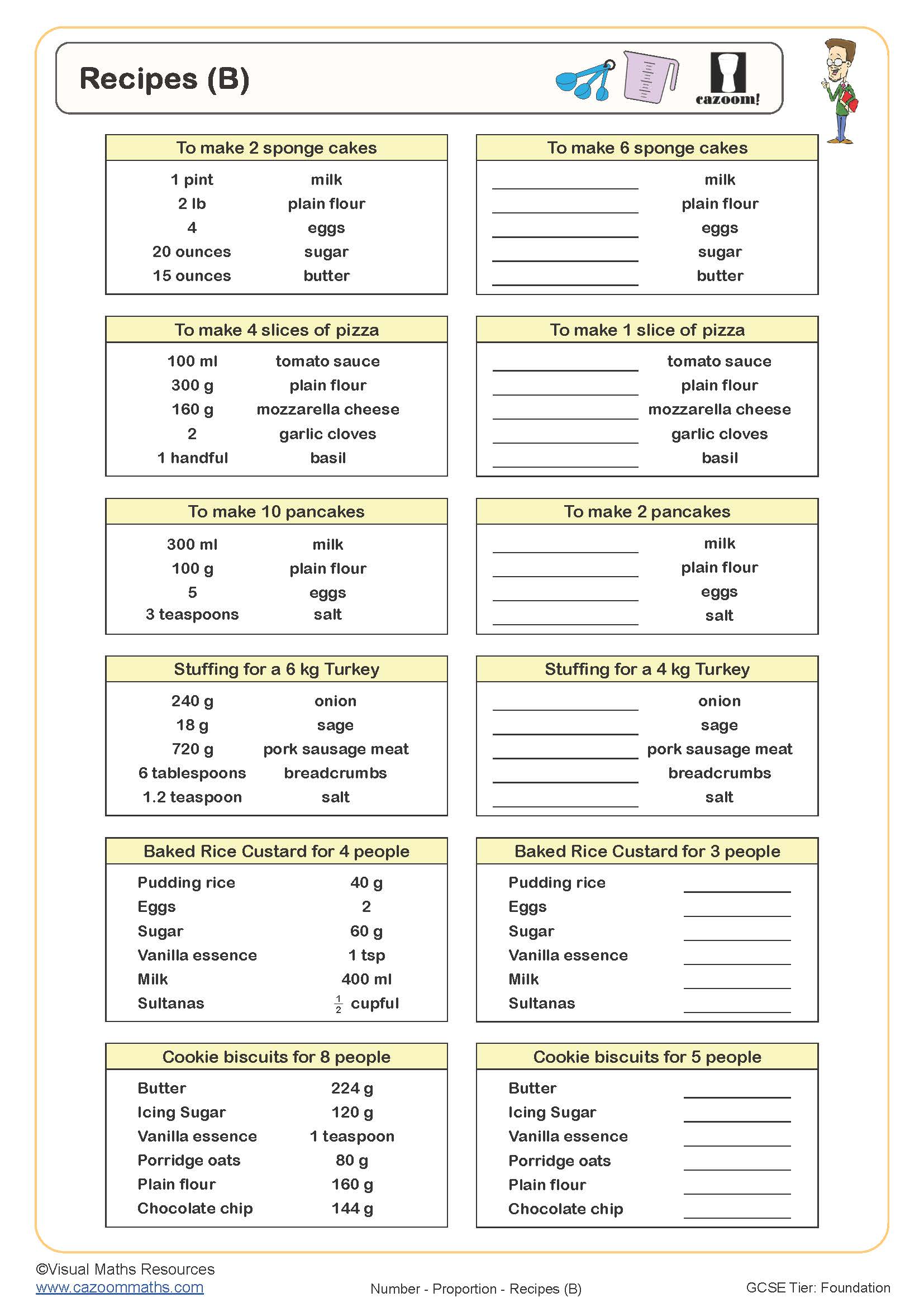
Recipes (B)
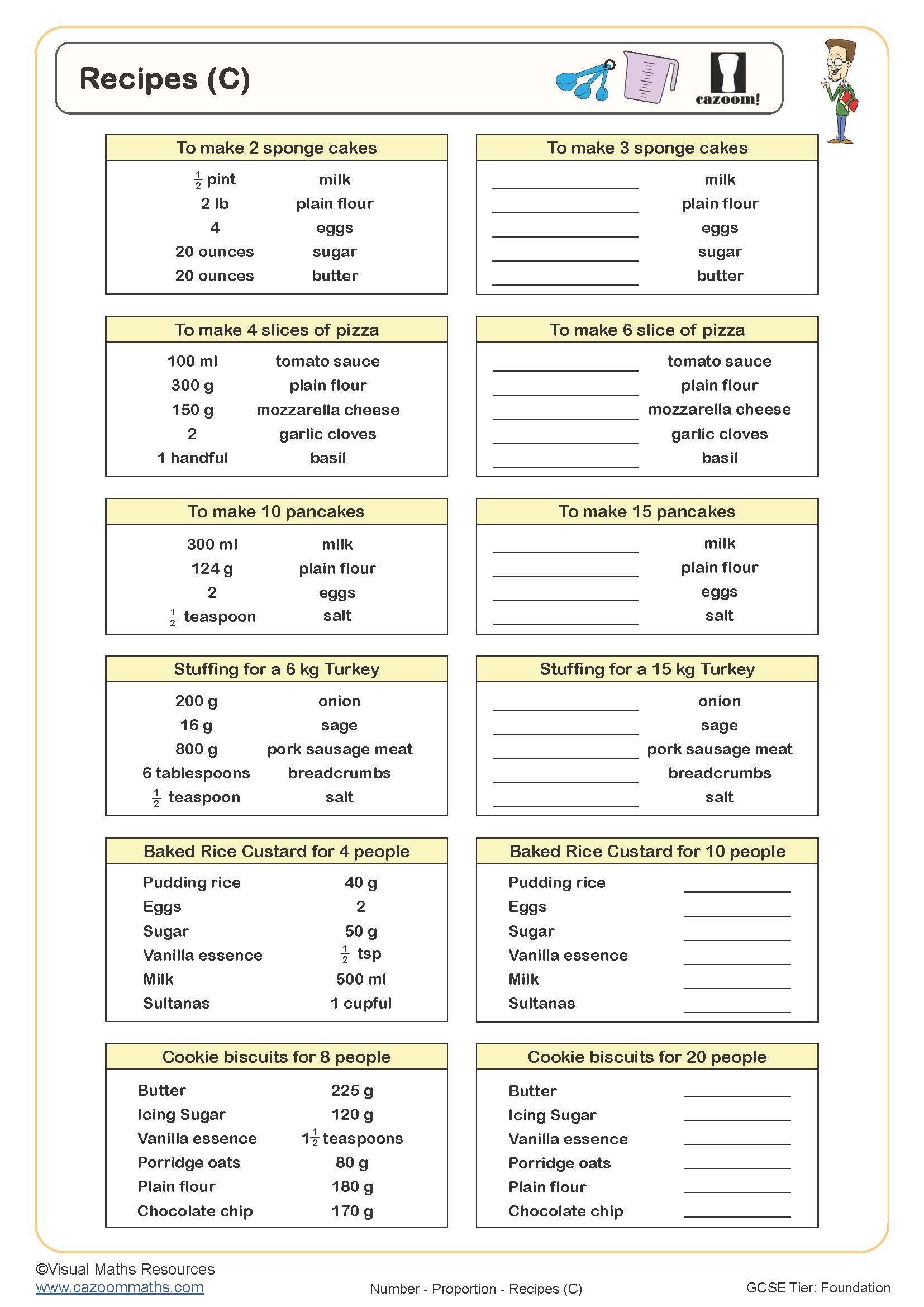
Recipes (C)
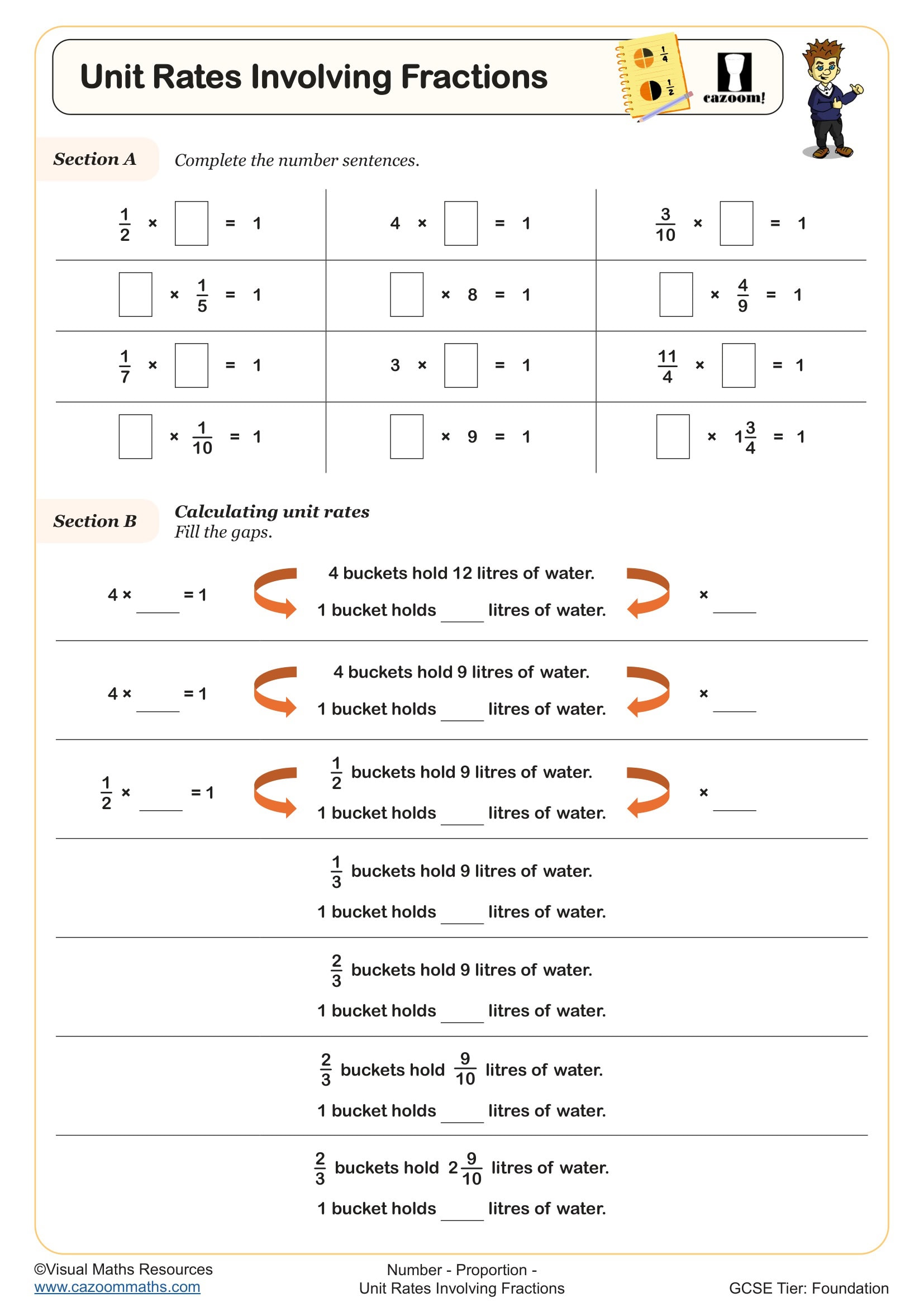
Unit Rates Involving Fractions
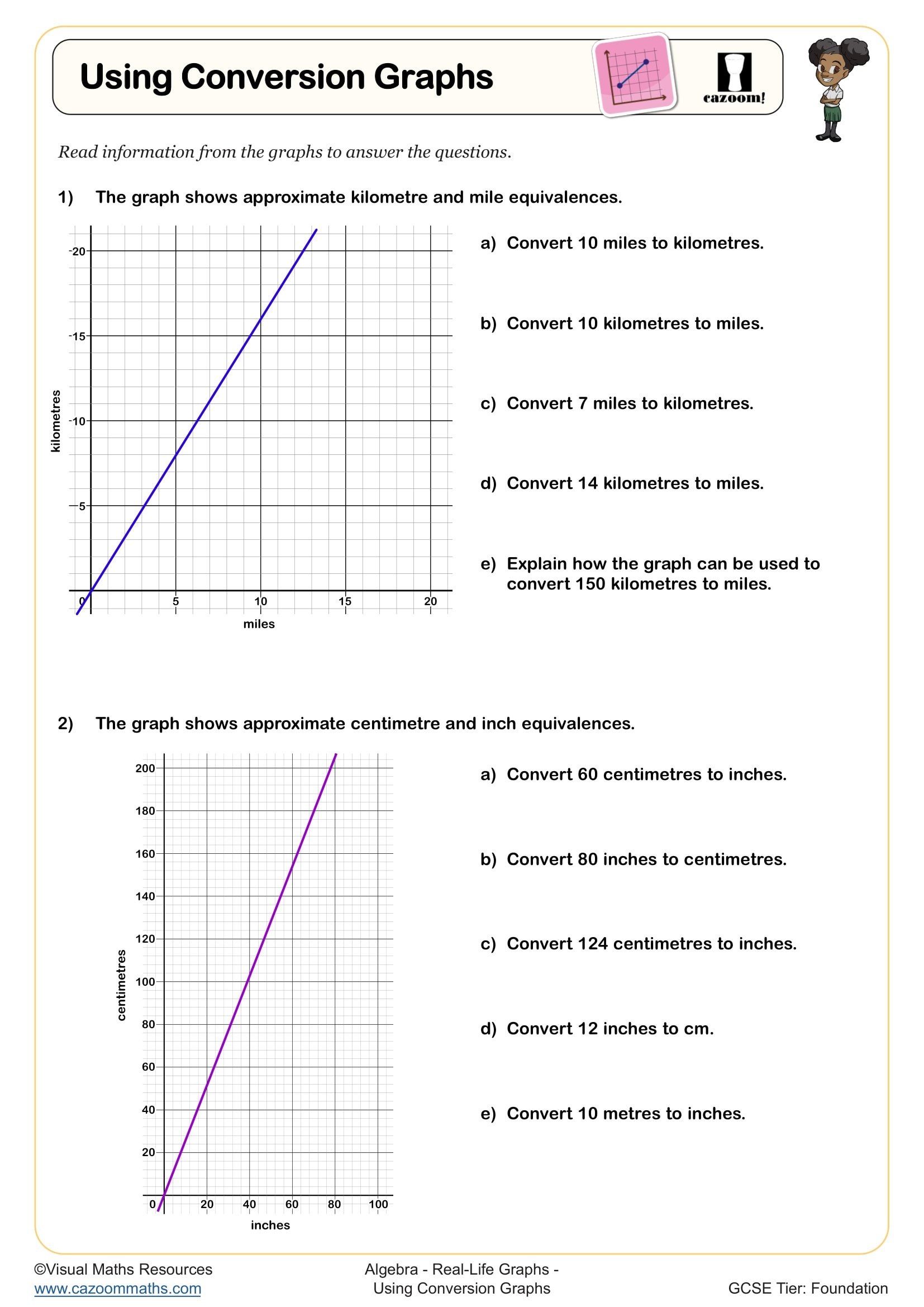
Using Conversion Graphs
All worksheets are created by the team of experienced teachers at Cazoom Maths.
What is proportion in maths KS3?
Proportion describes the multiplicative relationship between two or more quantities. In Key Stage 3, students learn that when two quantities are in direct proportion, they increase or decrease at the same rate (if one doubles, the other doubles), whilst in inverse proportion, as one quantity increases, the other decreases proportionally. This sits within the Ratio, Proportion and Rates of Change strand of the National Curriculum.
Students often lose marks by treating proportion problems as simple addition or subtraction. For example, when scaling a recipe from 4 to 6 people, they might add 2 to each ingredient amount rather than multiplying by 1.5. The shift from additive to multiplicative thinking represents one of the most significant conceptual leaps in KS3 mathematics, and exam mark schemes specifically test whether students recognise this relationship.
Which year groups study proportion?
These proportion worksheets cover Year 7, Year 8, and Year 9, reflecting how proportion develops throughout Key Stage 3. Year 7 typically focuses on direct proportion with simple contexts and whole number multipliers, establishing the foundation that if y is proportional to x, then doubling x doubles y. By Year 8, students tackle more complex direct proportion problems and begin exploring inverse proportion.
Year 9 extends this to algebraic representations (y = kx for direct proportion, y = k/x for inverse), problems involving three variables, and compound proportion situations. The progression deliberately builds towards GCSE, where students must form and solve proportion equations, interpret graphs of proportional relationships, and apply proportion to growth, decay, and compound measures. Teachers notice that students who master the multiplicative structure in Year 7 cope far better with algebraic proportion later.
How does inverse proportion work?
Inverse proportion occurs when one quantity increases whilst another decreases at a related rate, such that their product remains constant. If y is inversely proportional to x, then as x doubles, y halves. Mathematically, this means xy = k (a constant), or y = k/x. Students need to recognise contexts where this applies: more workers complete a job in less time, higher speed means shorter journey time for a fixed distance.
This concept has immediate applications in science and engineering. In physics, pressure and volume of a gas at constant temperature follow inverse proportion (Boyle's Law). Electrical resistance problems, gear ratios in engineering, and even photography (aperture and shutter speed relationships) all rely on inverse proportion. Teachers find that starting with worker-time problems helps students grasp why the relationship inverts before moving to more abstract algebraic representations or scientific contexts.
How do these proportion worksheets help students learn?
The worksheets build understanding through structured question sequences that move from identifying proportional relationships to calculating unknown values, then applying proportion to multi-step problems. Each worksheet includes varied contexts (recipes, wages, journeys, workers) so students recognise proportion as a general mathematical structure rather than memorising specific methods for different scenarios. Worked examples often appear at the start to model the reasoning process.
Many teachers use these for targeted intervention when students struggle to move beyond additive thinking, or as homework to consolidate classroom teaching before assessments. The answer sheets make them particularly useful for independent revision in Year 9, where students can attempt problems and self-correct, then bring specific difficulties to the teacher. They also work well for paired work, where students can discuss whether a situation involves direct proportion, inverse proportion, or neither before calculating, developing the reasoning skills that higher-tier GCSE questions demand.