KS3 Ratio Worksheets
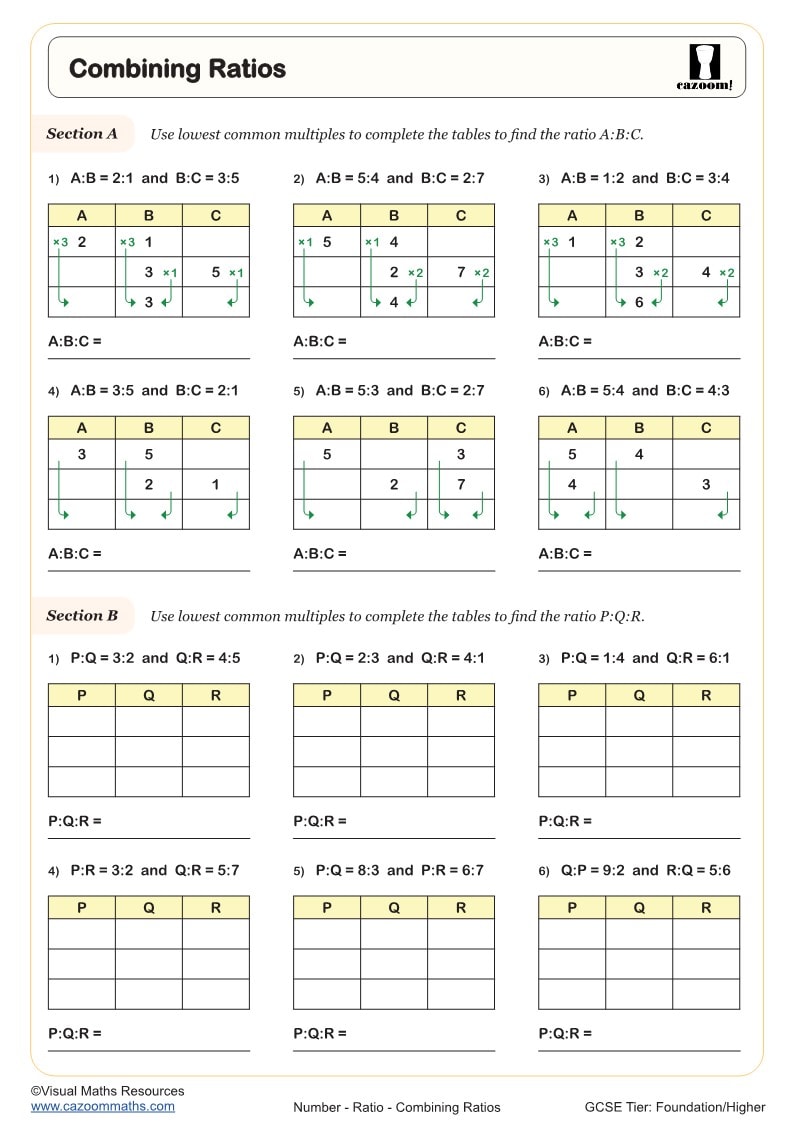
Combining Ratios
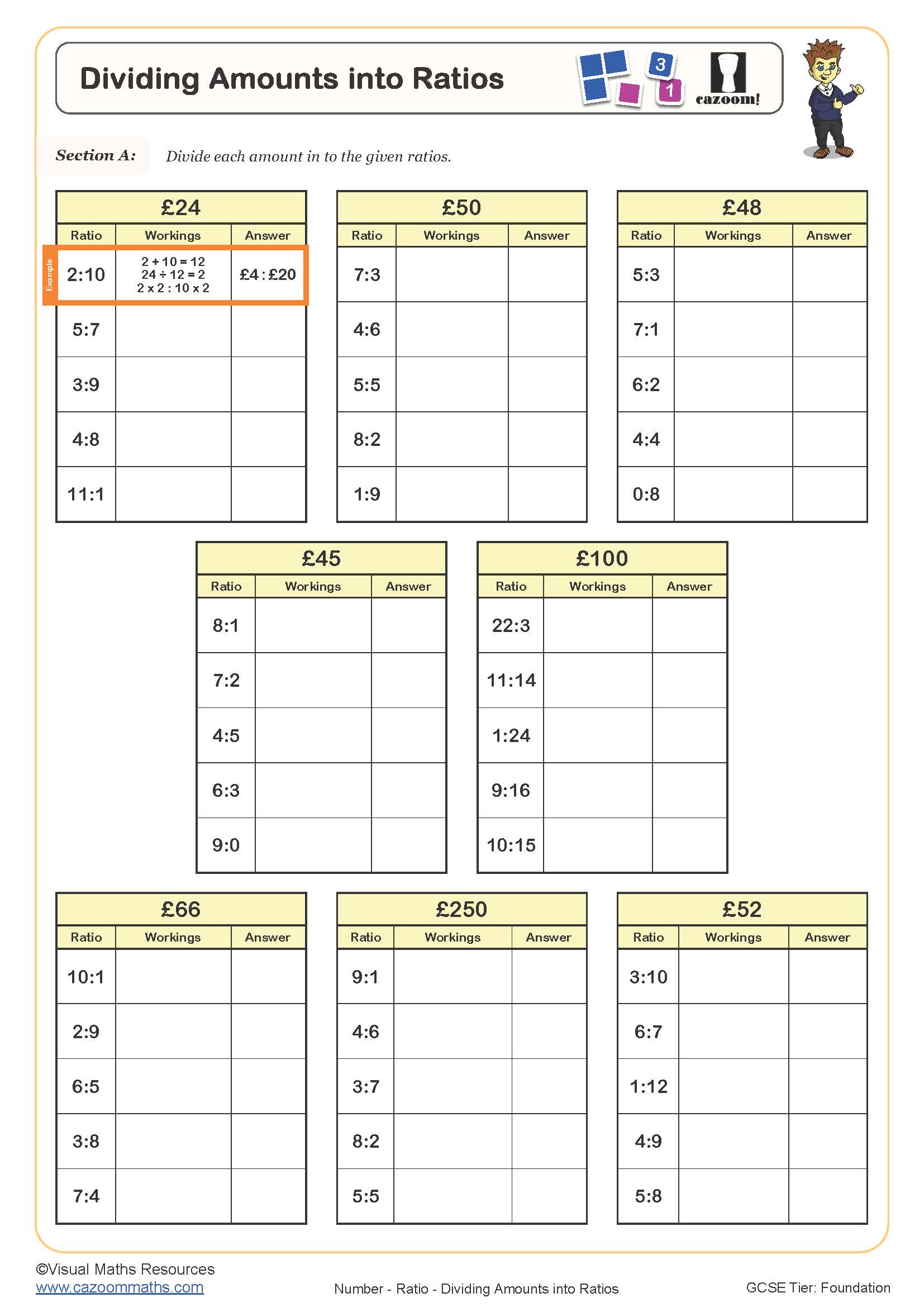
Dividing Amounts into Ratios
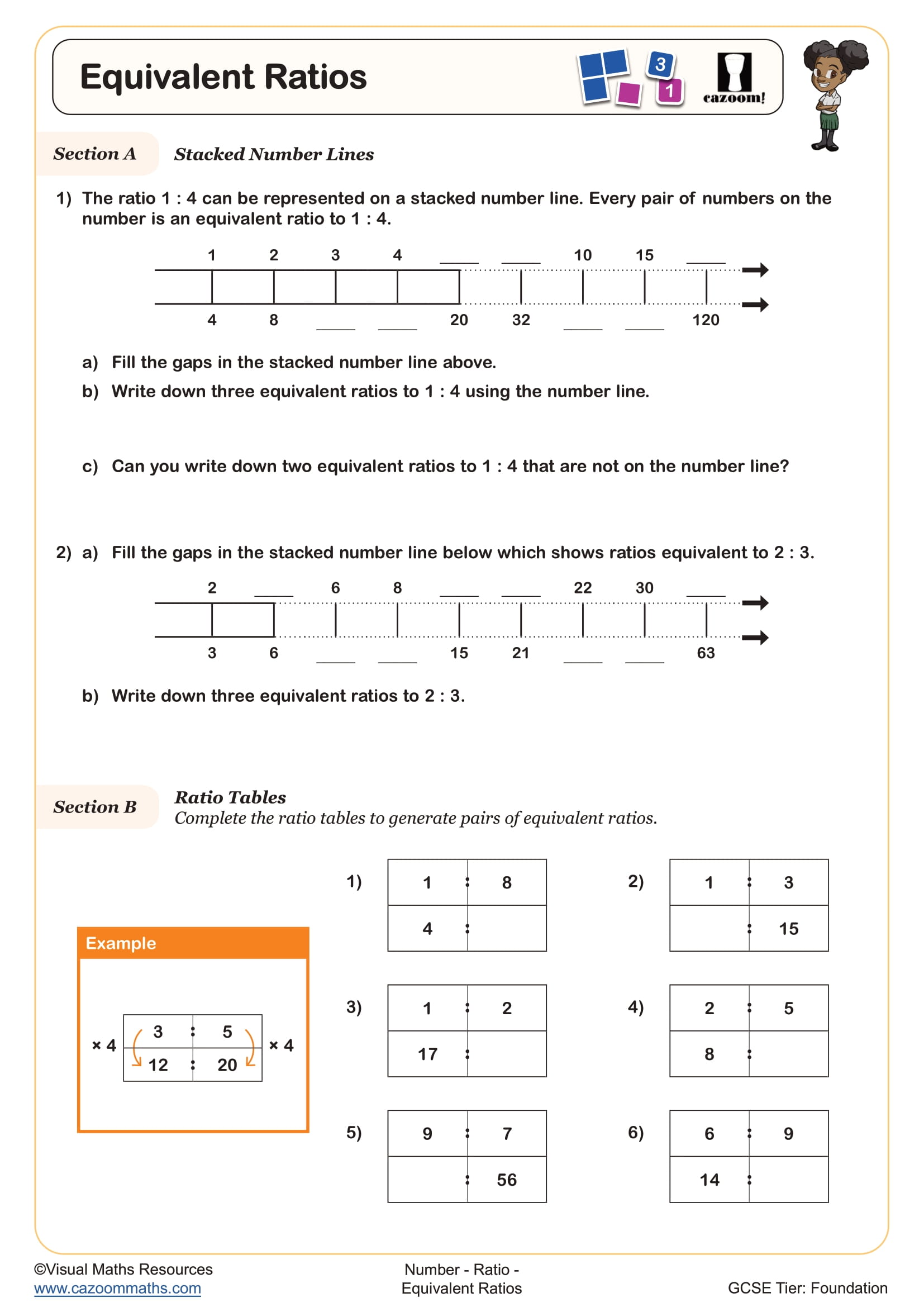
Equivalent Ratios
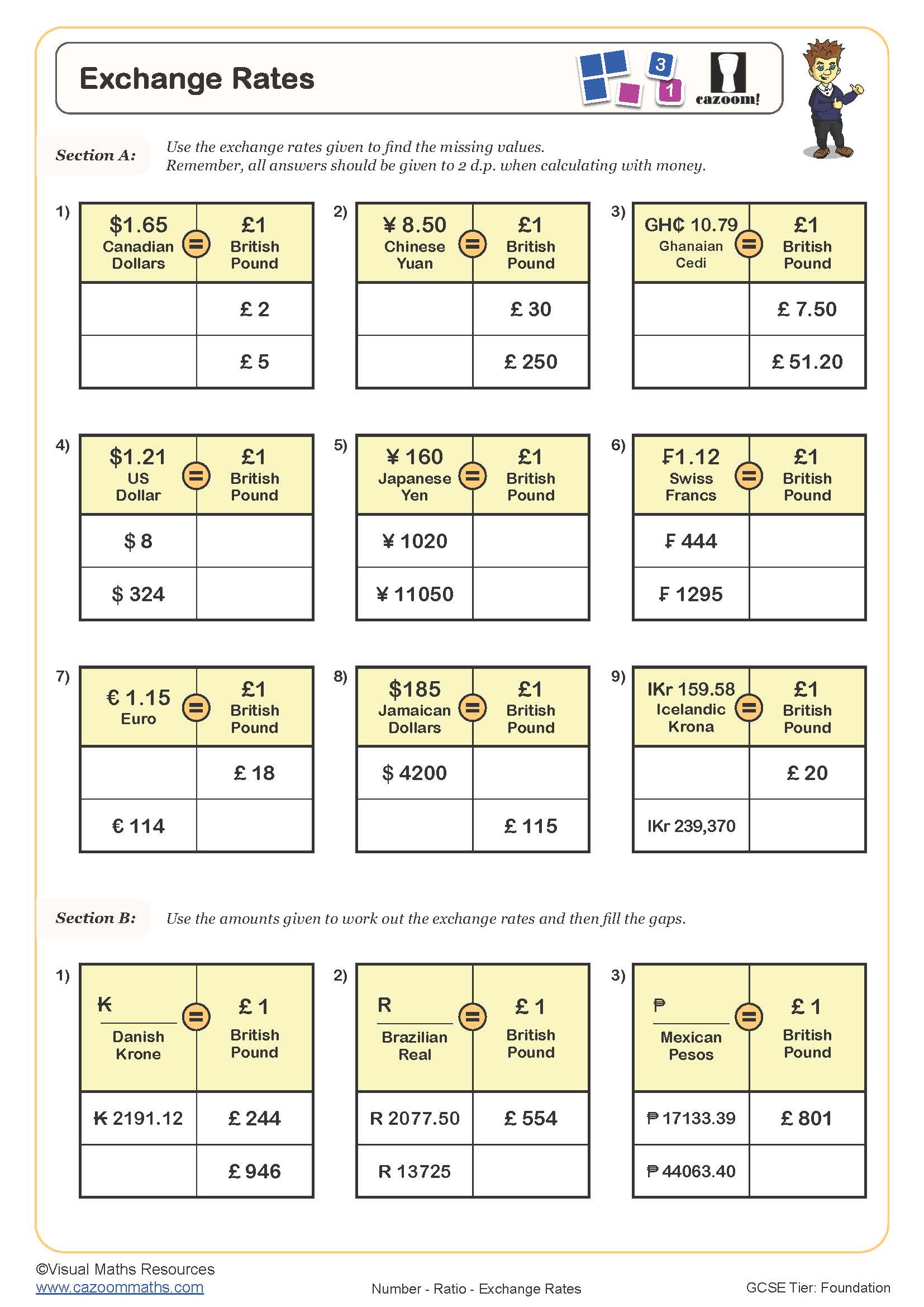
Exchange Rates
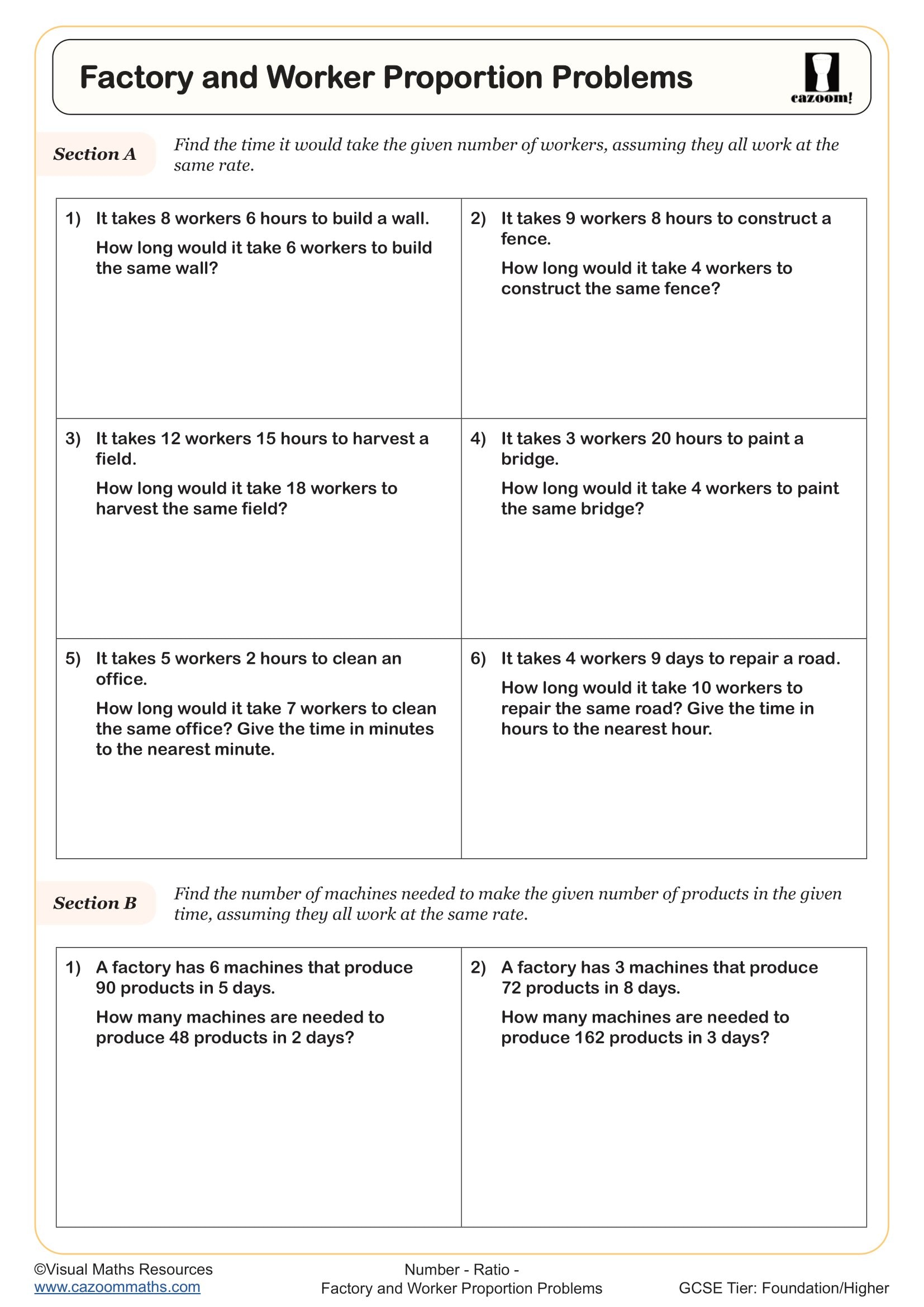
Factory and Worker Proportion Problems
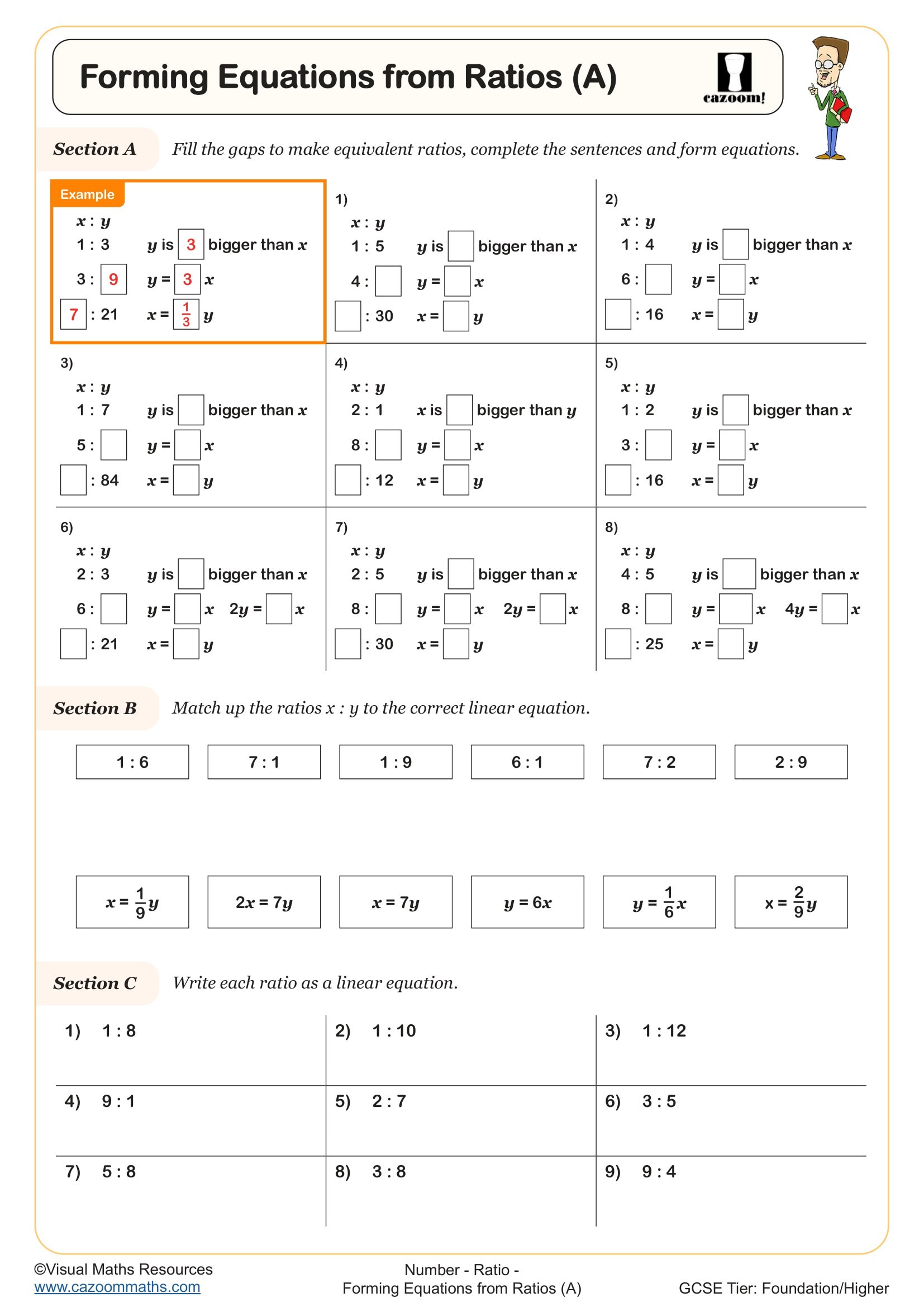
Forming Equations from Ratios (A)
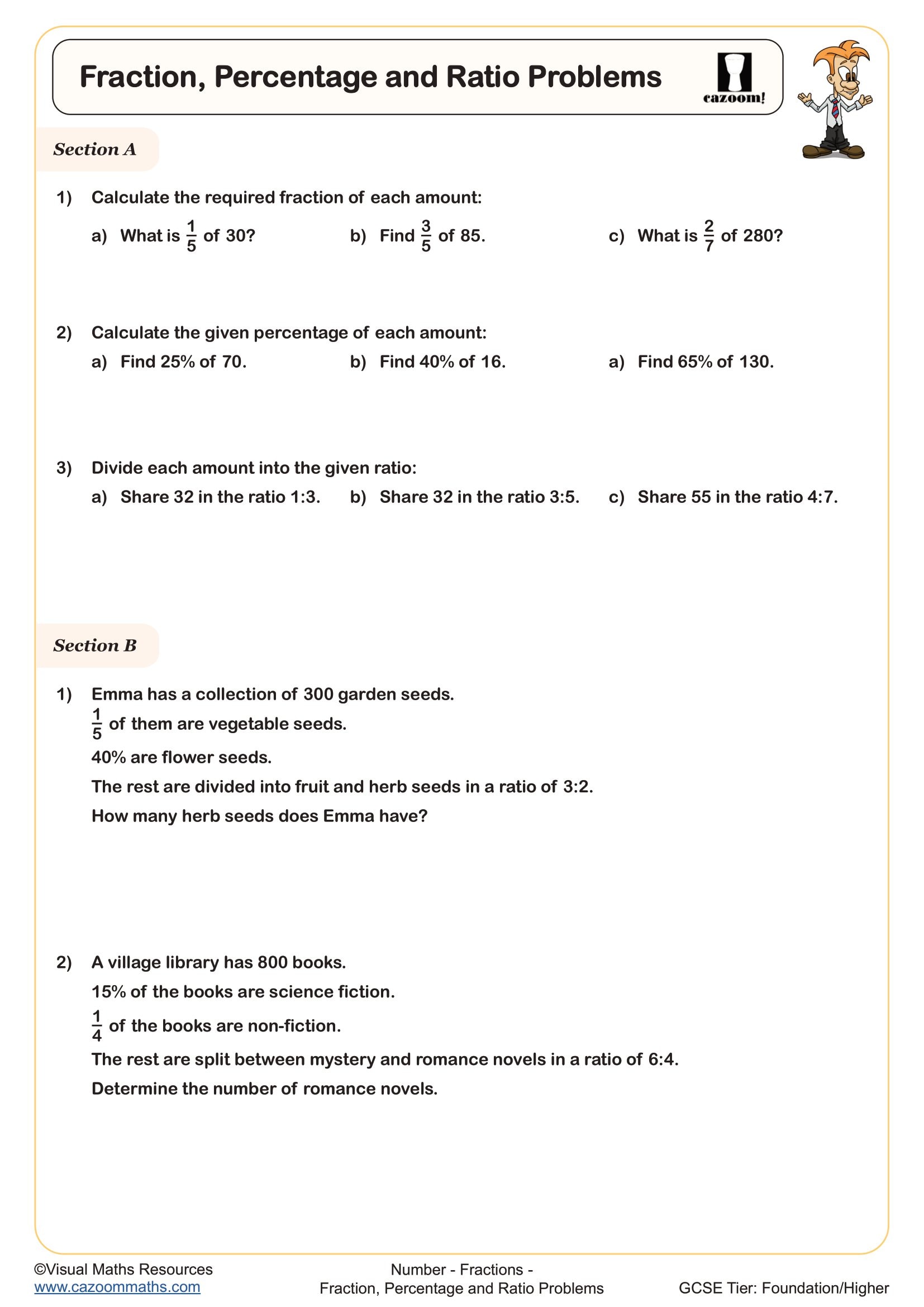
Fraction, Percentage and Ratio Problems
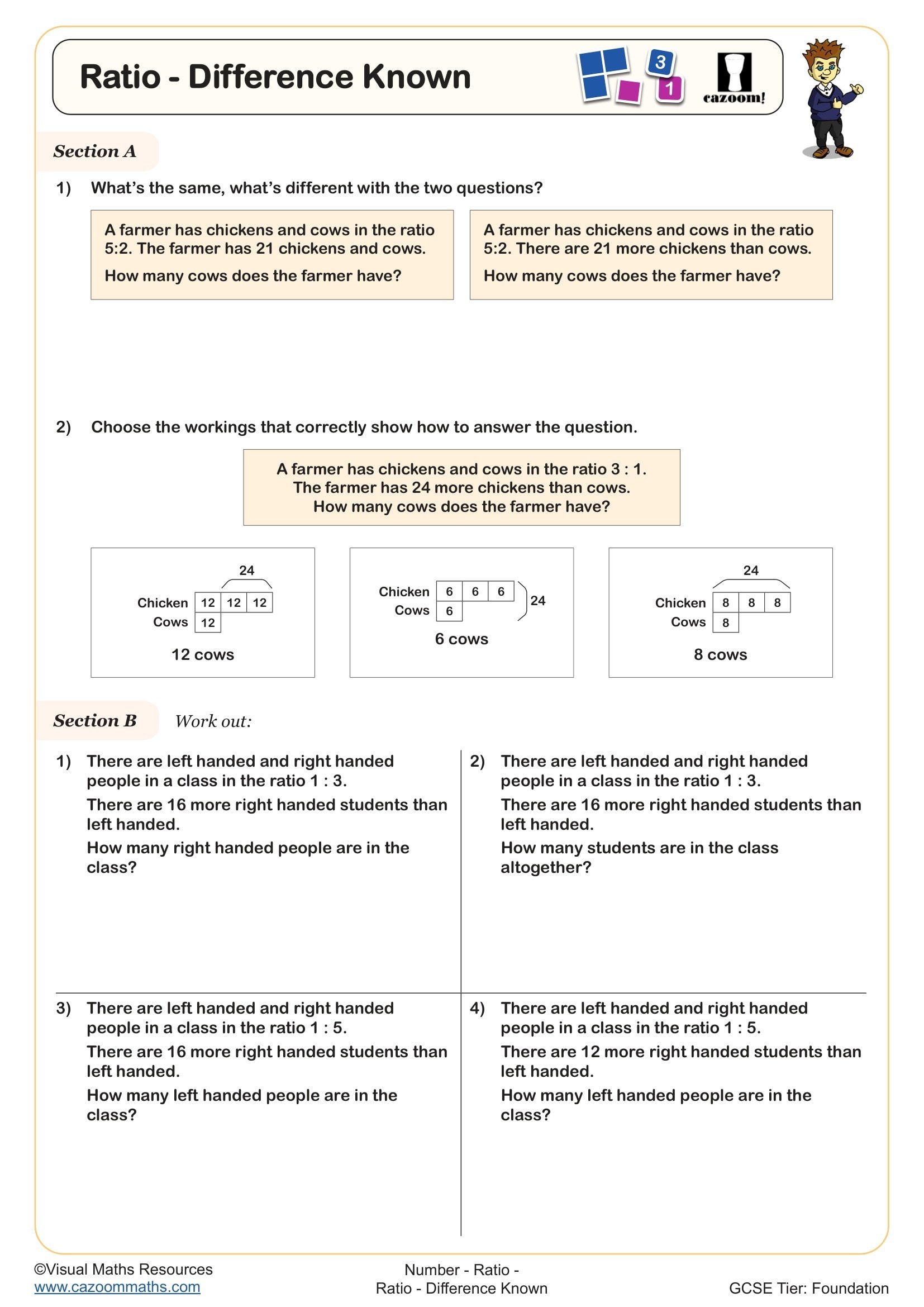
Ratio - Difference Known
Ratio - One Amount Known
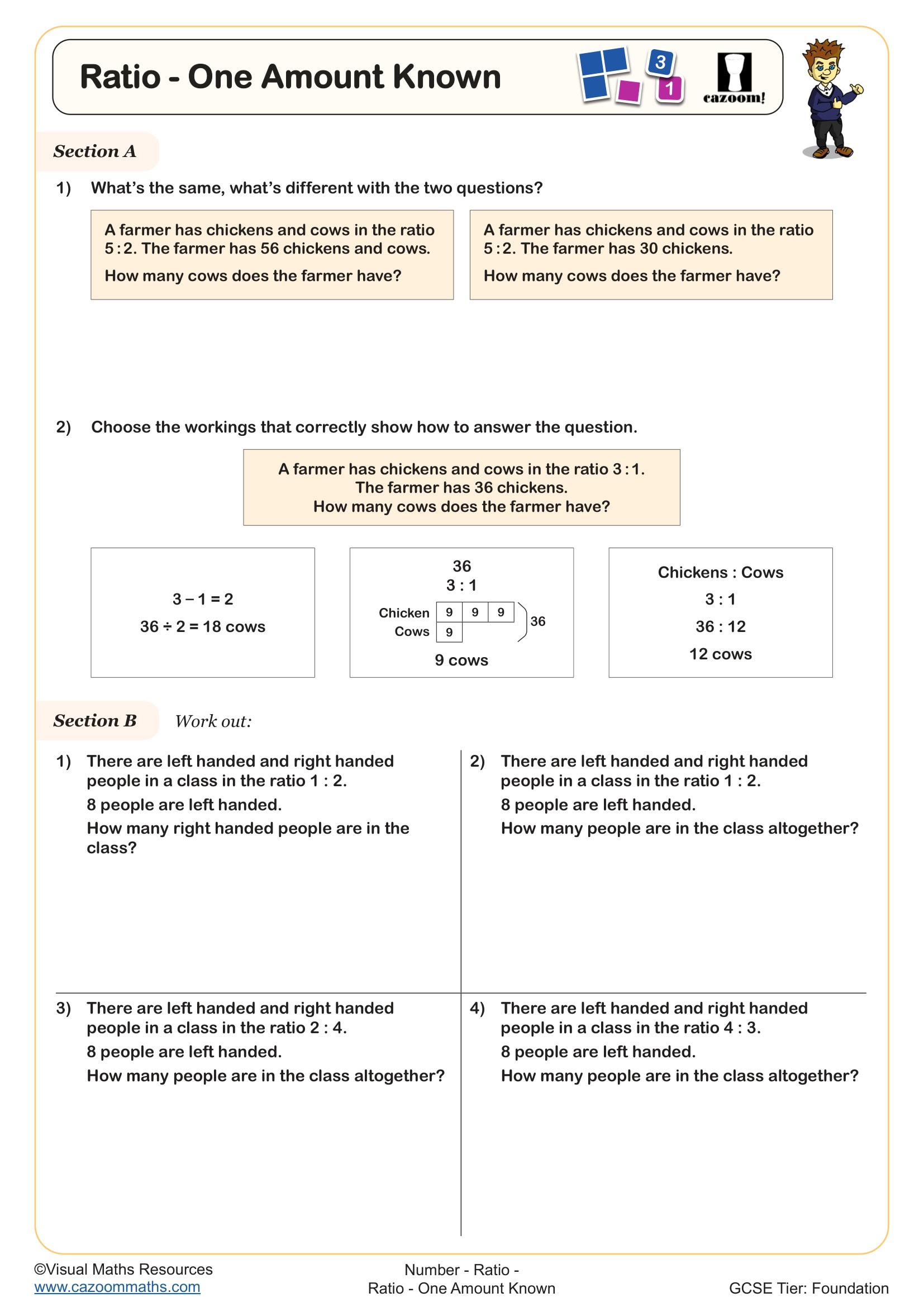
Ratio - Using Bar Models
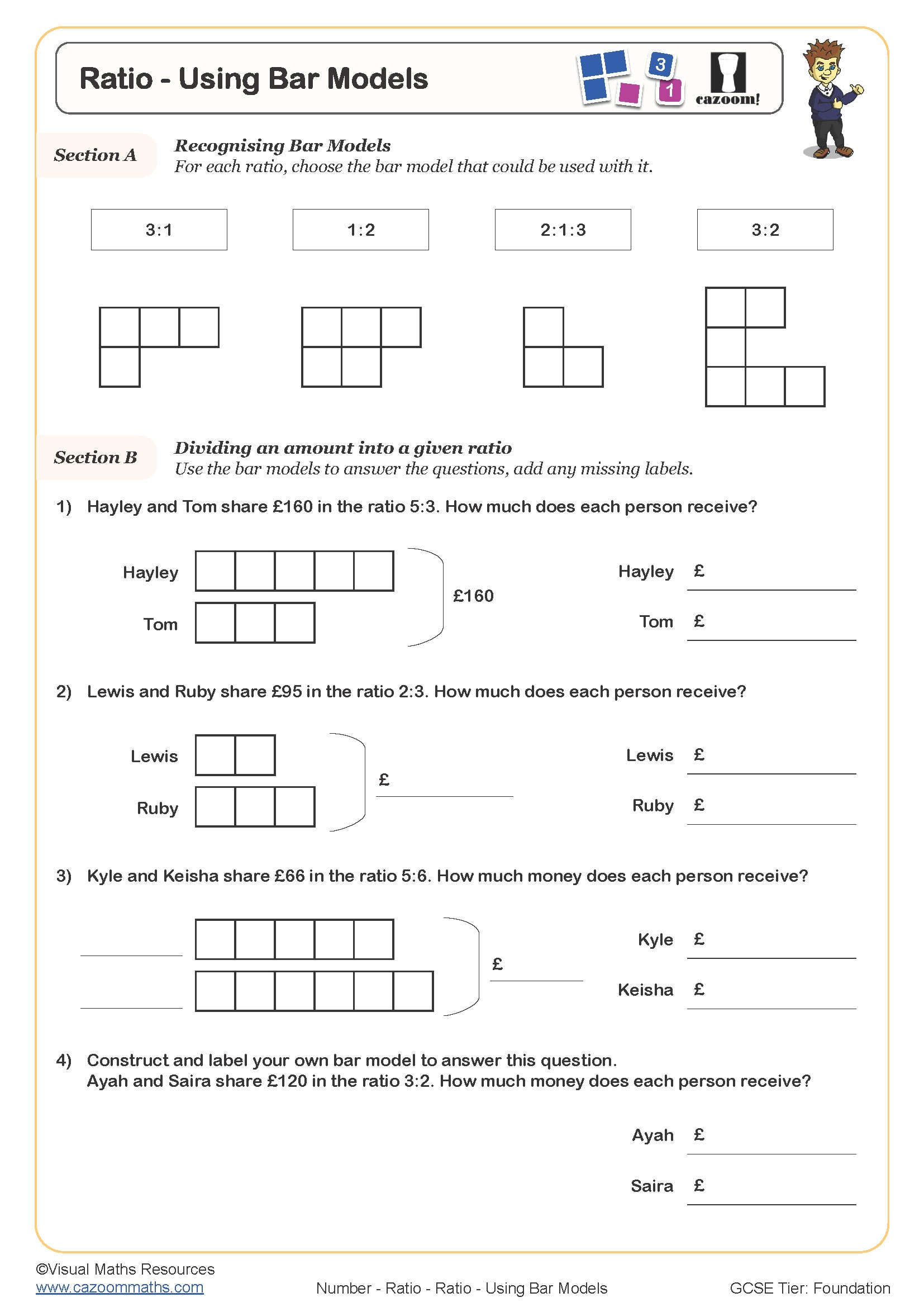
Ratio and Fractions (A)
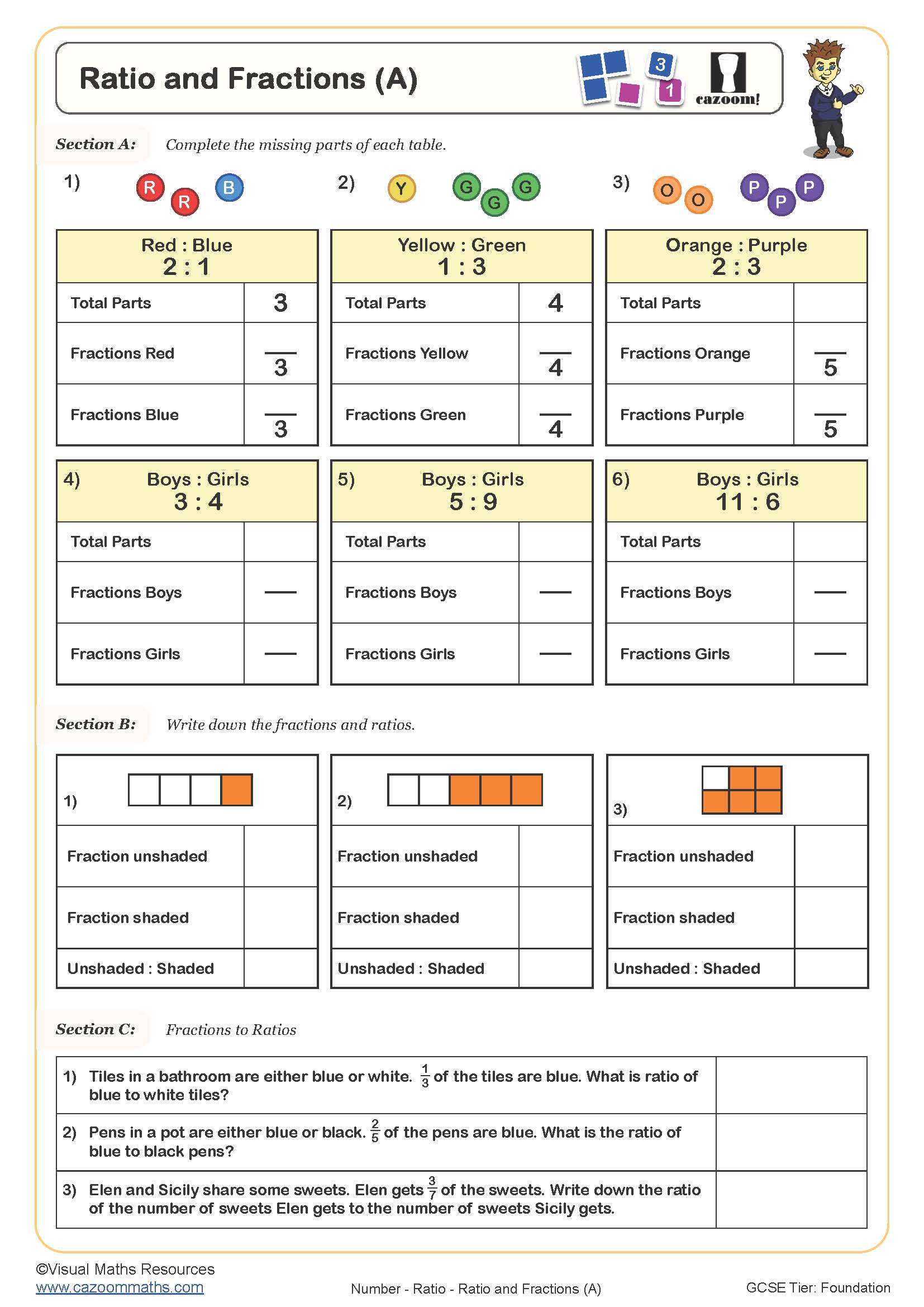
Ratio and Fractions (B)
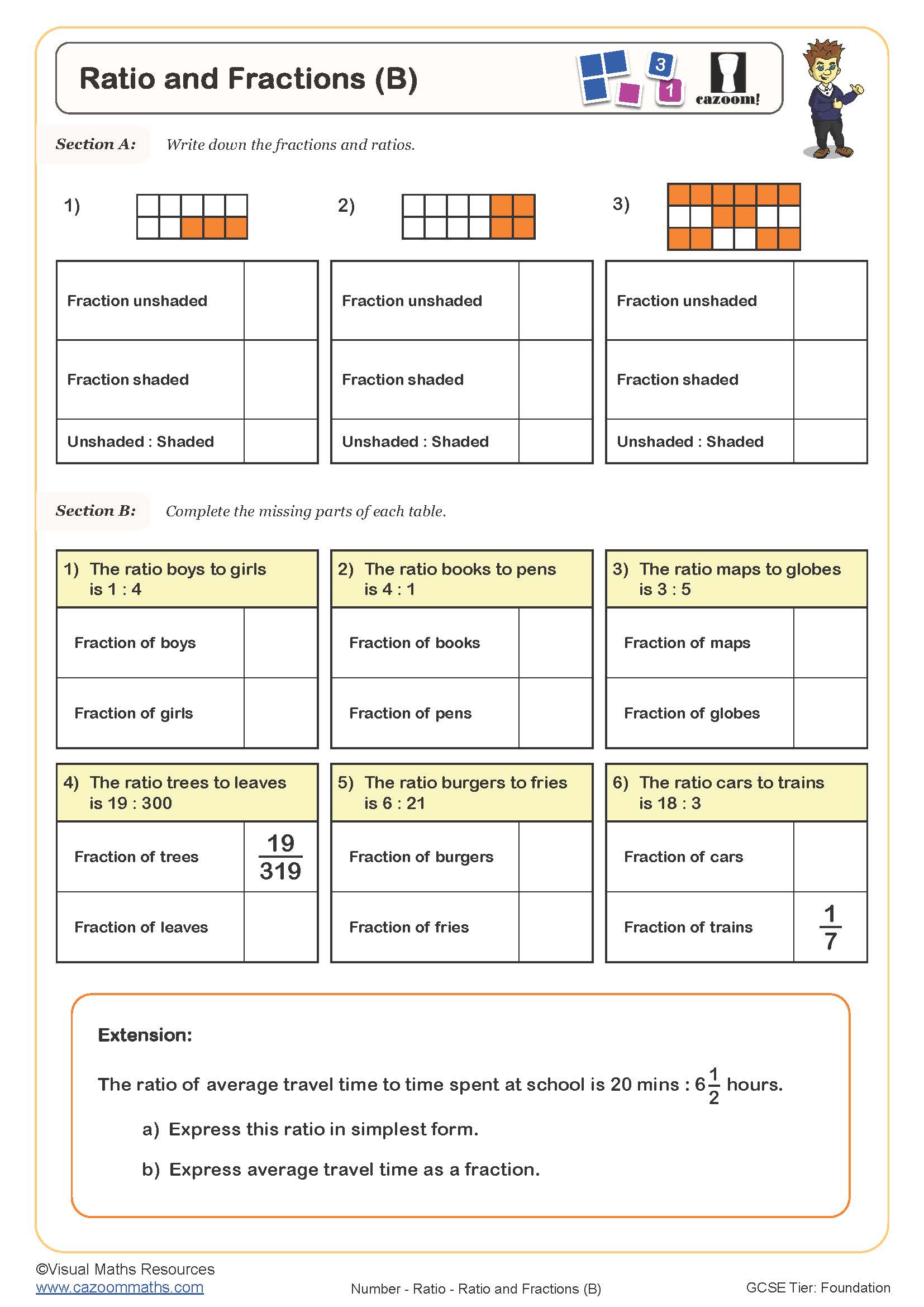
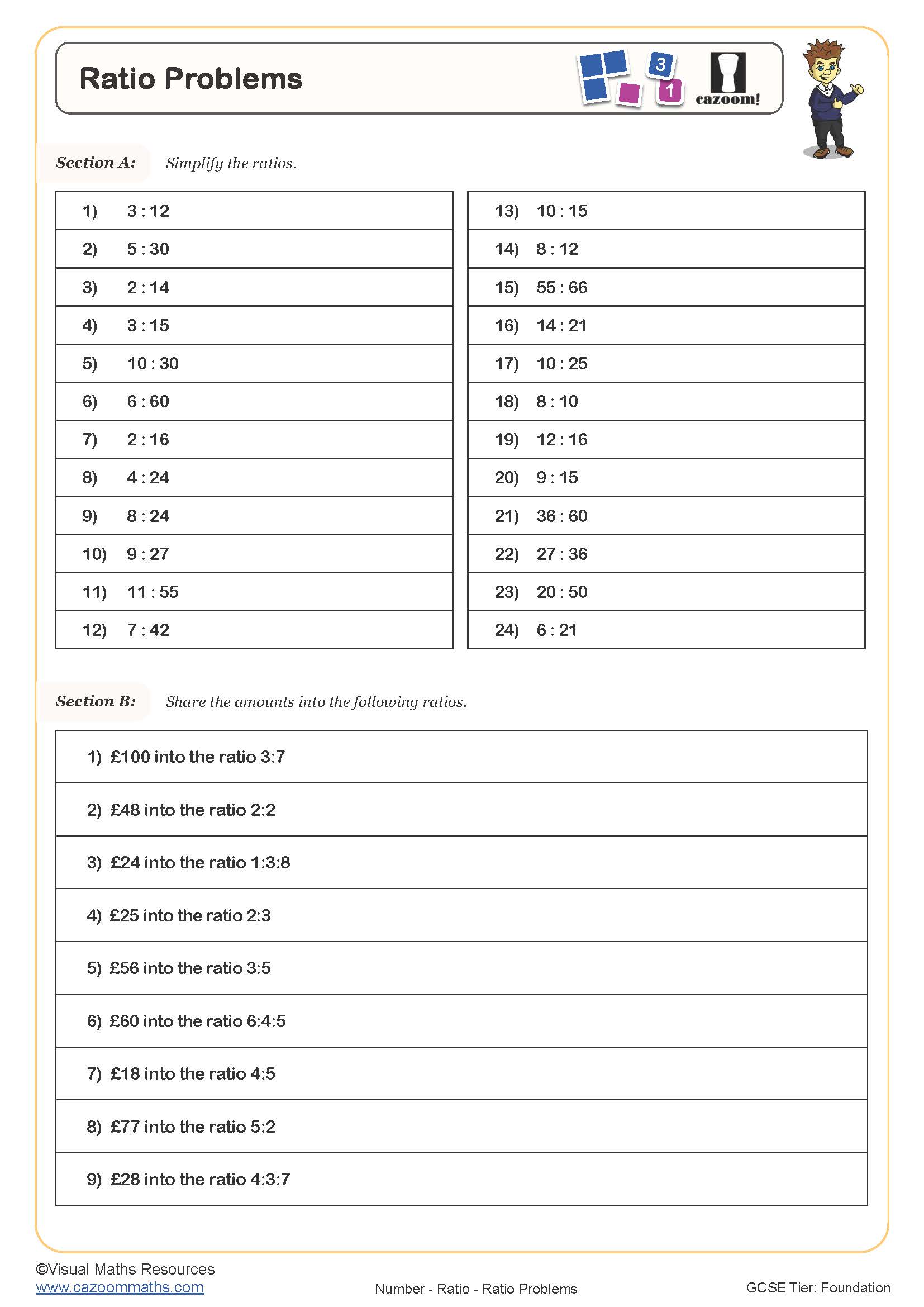
Ratio Problems
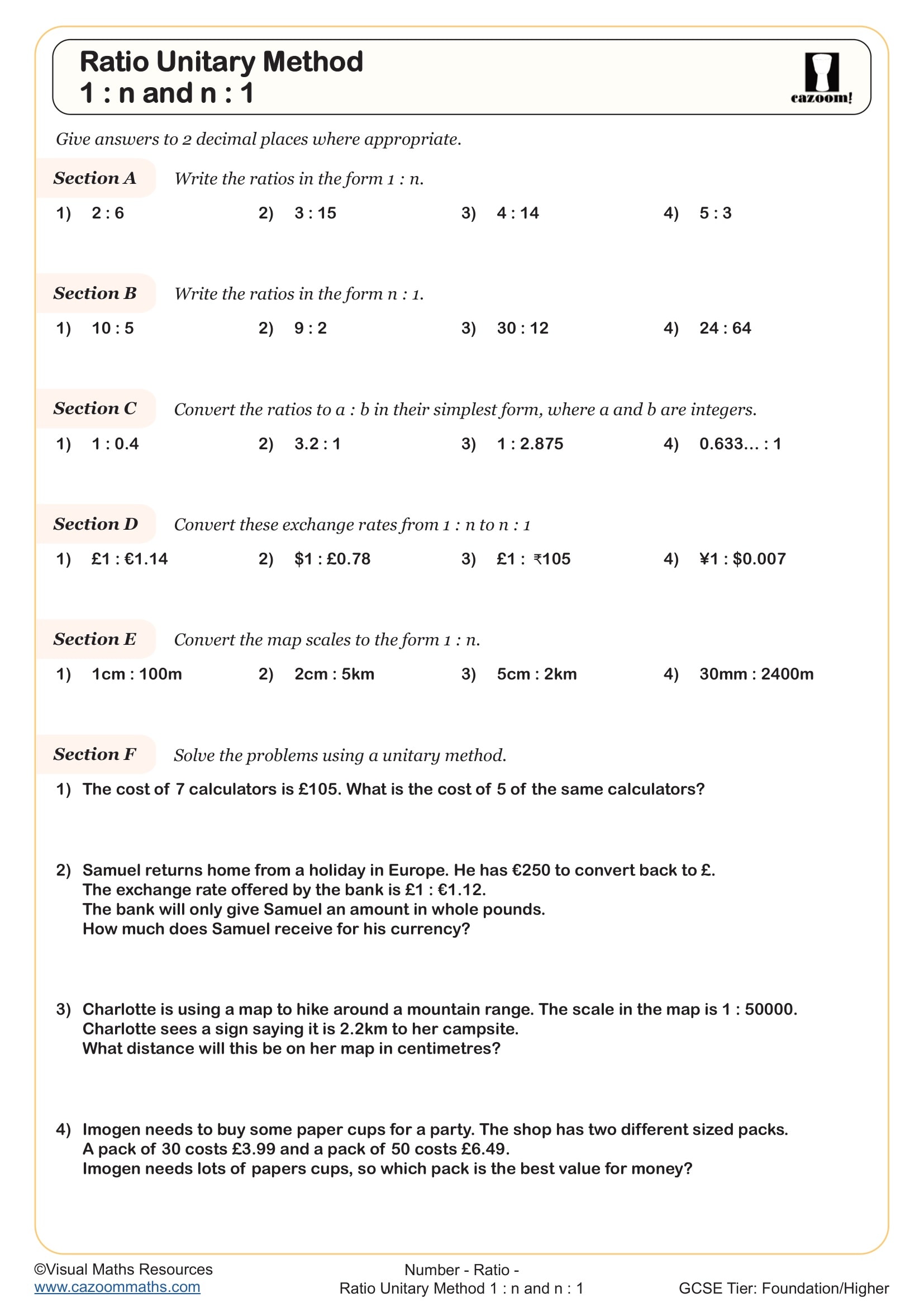
Ratio Unitary Method 1:n and n:1
Simplifying Ratios (A)
/Cazoom-Maths-Ratio-Simplifying-Ratios-(A)-Worksheet.jpg?w=3840)
Simplifying Ratios (B)
-Worksheet.jpg?w=3840)
All worksheets are created by the team of experienced teachers at Cazoom Maths.
What do KS3 ratio worksheets typically cover?
KS3 ratio worksheets progress from basic ratio notation and simplification in Year 7 through to sharing amounts in given ratios and solving problems involving combined ratios by Year 9. The National Curriculum expects students to move from concrete sharing problems to abstract ratio work that connects with fractions, percentages and algebra.
Teachers frequently notice that students lose marks when they fail to show their working clearly or when they confuse the order in a ratio. A typical error occurs when students see '3:2' and share 60 sweets by giving one person 3 and another 2, rather than recognising this means 5 parts total with shares of 36 and 24. Exam mark schemes consistently penalise students who don't demonstrate their method for finding each part.
Which year groups study ratio at KS3?
Ratio appears across all three years of Key Stage 3, with worksheets available for Year 7, Year 8 and Year 9. Year 7 typically introduces ratio notation, simplification and basic sharing problems with two parts. Year 8 extends this to three-part ratios, scaling recipes or measurements, and making stronger connections between ratios and fractions.
By Year 9, students tackle ratio questions KS3 that involve algebra, backwards problems where they're given one share and need to find the total, and contextual problems requiring multiple steps. The progression builds from concrete examples with physical objects towards abstract mathematical representations that prepare students for GCSE ratio problems involving direct and inverse proportion.
How do ratios connect to fractions in KS3 maths?
Ratio and fractions represent different ways of comparing quantities, and students need to move fluently between the two representations. A ratio of 2:3 means the first quantity is 2/5 of the total and the second is 3/5. Many teachers find that explicitly teaching this conversion strengthens both ratio and fraction work, particularly when students encounter problems asking for 'what fraction of the mixture is...' or similar wording.
This connection appears constantly in real-world STEM contexts, from mixing concrete where ratios of cement, sand and gravel must be precise, to chemistry where concentration and dilution problems require ratio thinking. Understanding that ratios can be expressed as fractions also helps when students meet compound units like speeds or densities at GCSE, where they're essentially working with ratios of distance to time or mass to volume.
How can teachers use these ratio worksheets effectively?
The worksheets provide structured practice that moves from straightforward sharing problems to more complex applications, allowing teachers to select appropriate challenge levels for different groups. The answer sheets mean students can work independently and check their own solutions, which helps develop the self-correction habits that exam success requires.
Many teachers use ratio worksheets for targeted intervention with students who missed the initial teaching or need additional practice with specific methods like the unitary method or finding one part before scaling up. They work well for homework when students need to consolidate a particular skill, and the variety of subtopics means teachers can differentiate easily within mixed-ability classes. Paired work also proves effective, with one student solving whilst another checks against the answer sheet before swapping roles.