KS3 Solving Equations Worksheets
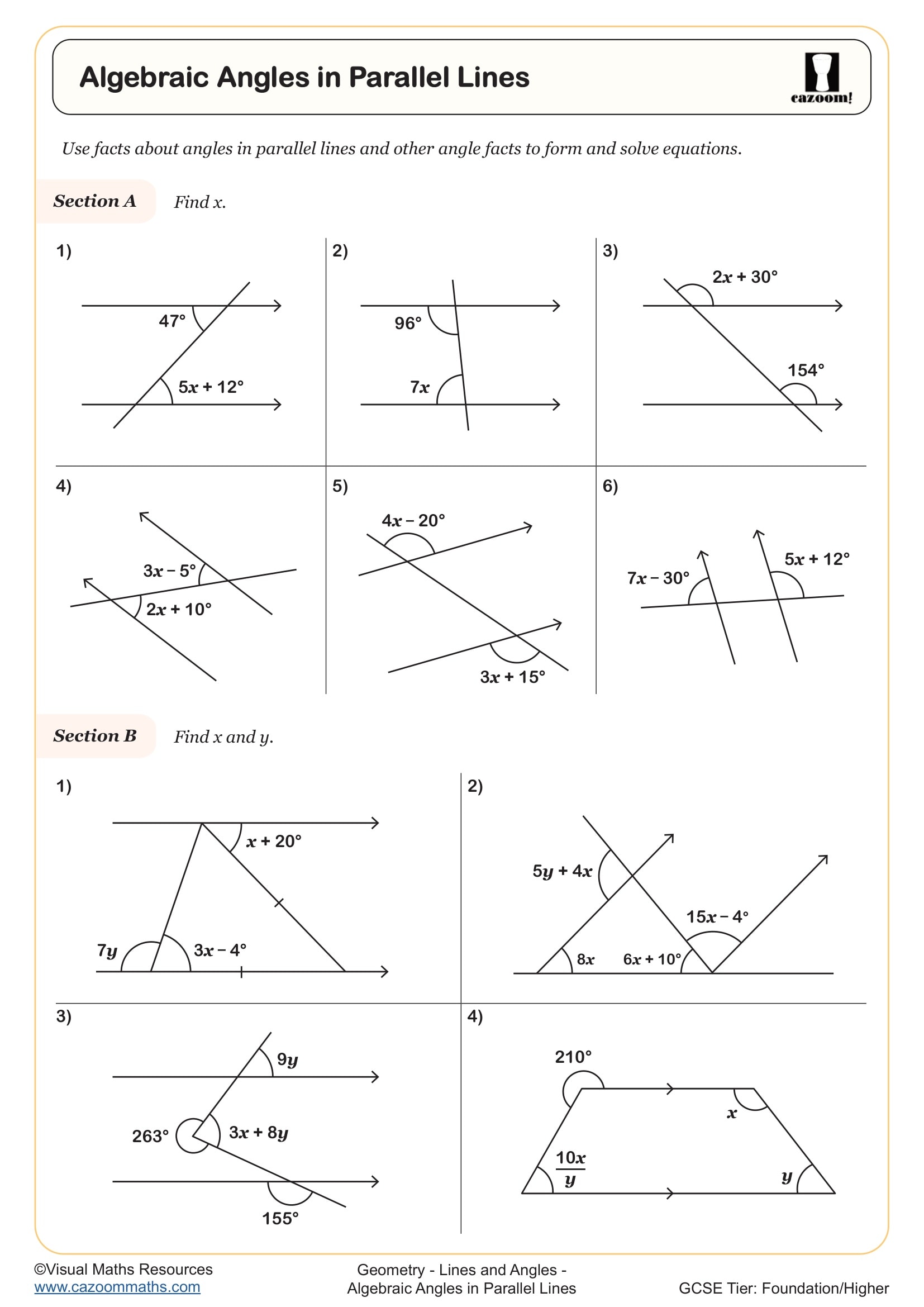
Algebraic Angles in Parallel Lines
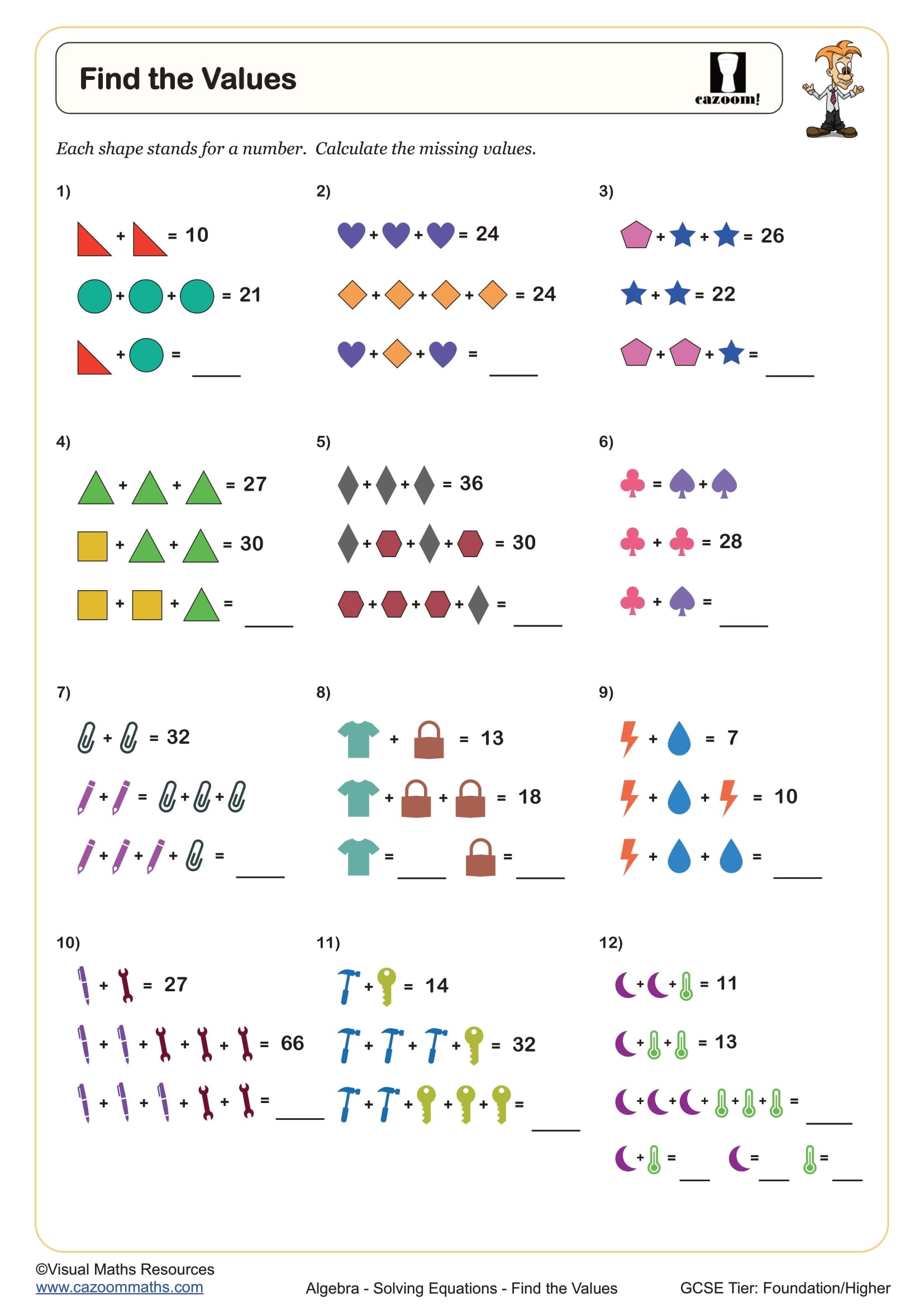
Find the Values
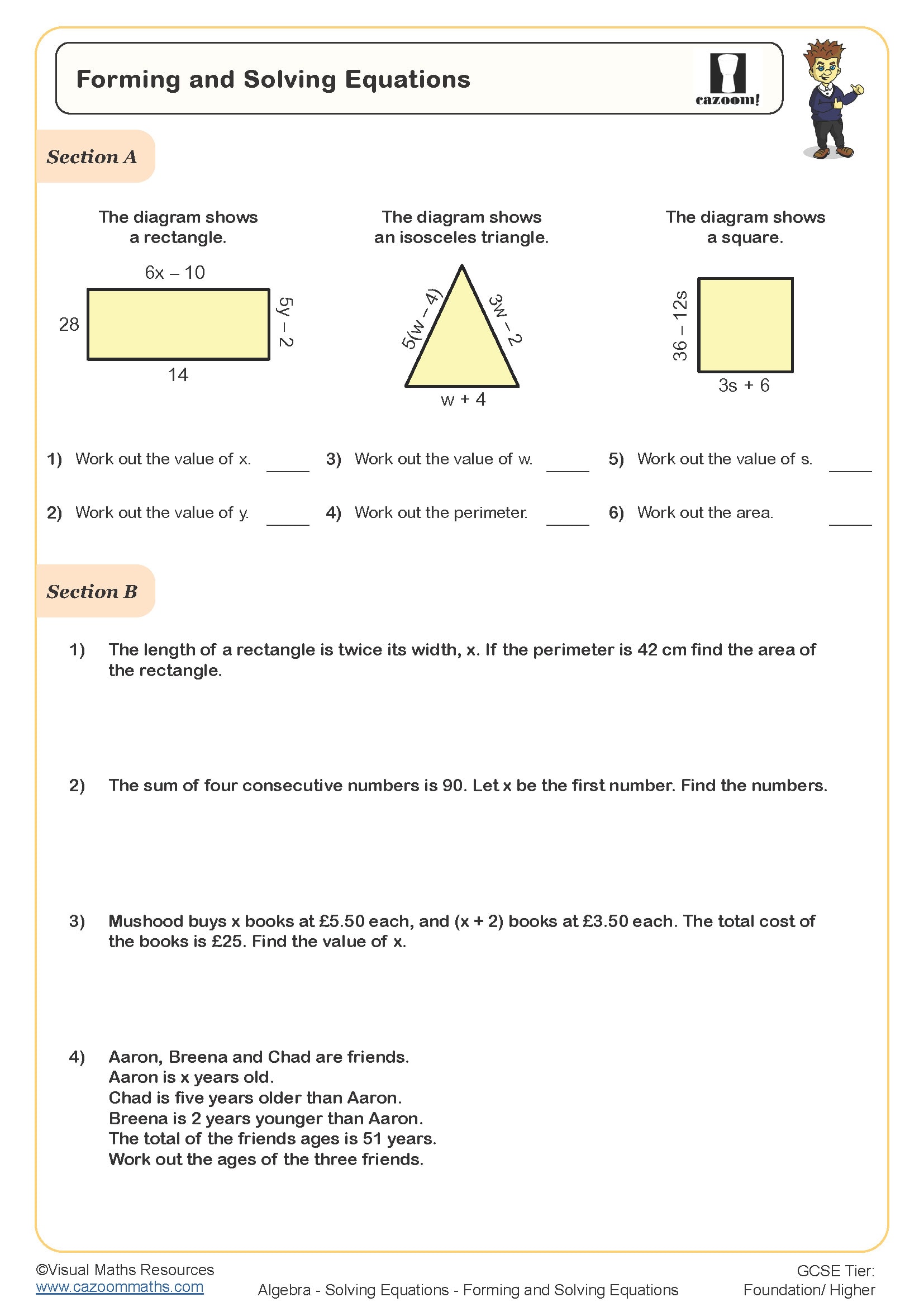
Forming and Solving Equations
Forming and Solving Equations Involving Angles (A)
-Worksheet.jpg?w=3840)
Forming and Solving Equations Involving Angles (B)
-Worksheet.jpg?w=3840)
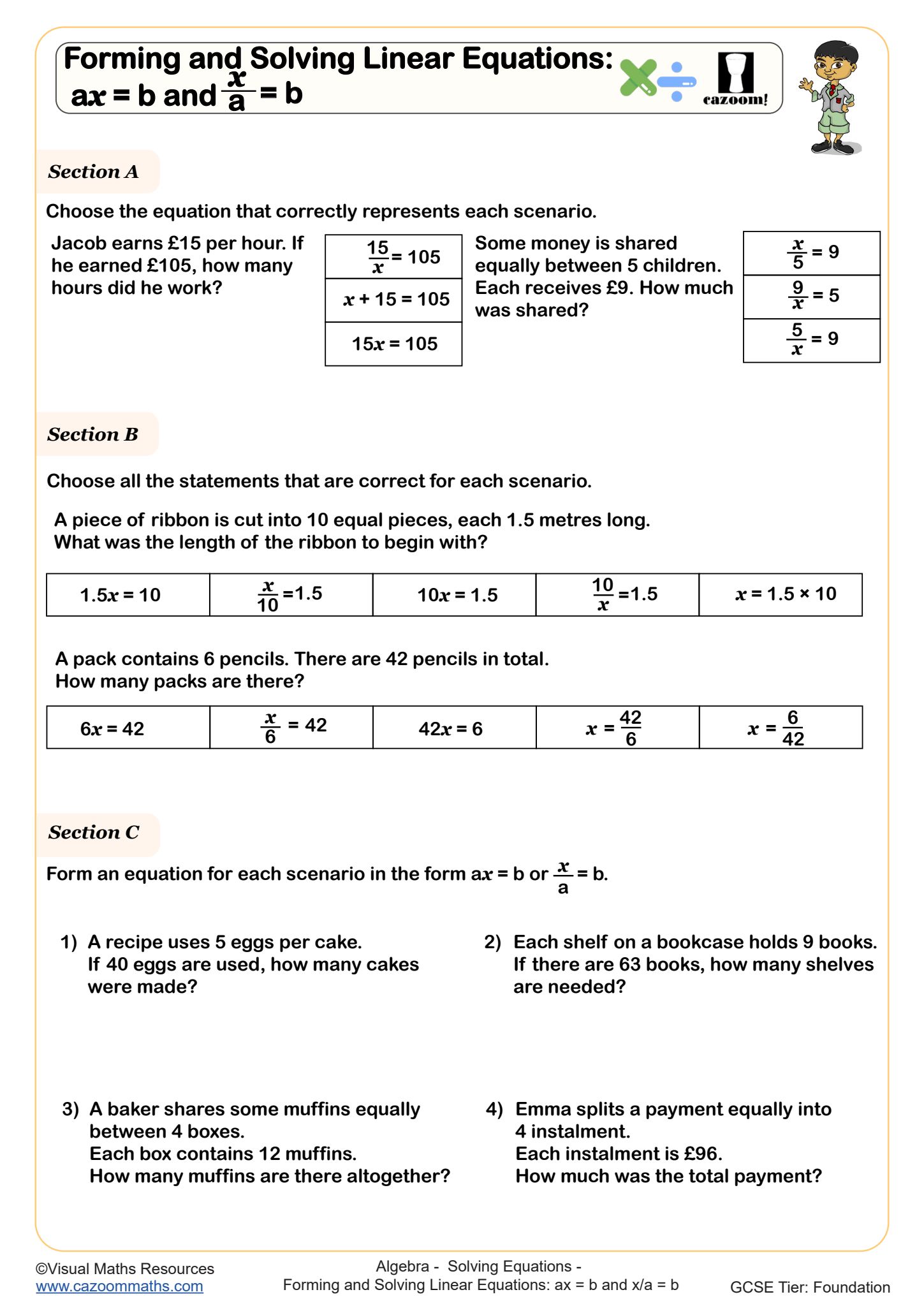
Forming and Solving Linear Equations: a𝑥 = b and 𝑥/a = b
Forming and Solving Linear Equations: x + a = b and x - a = b
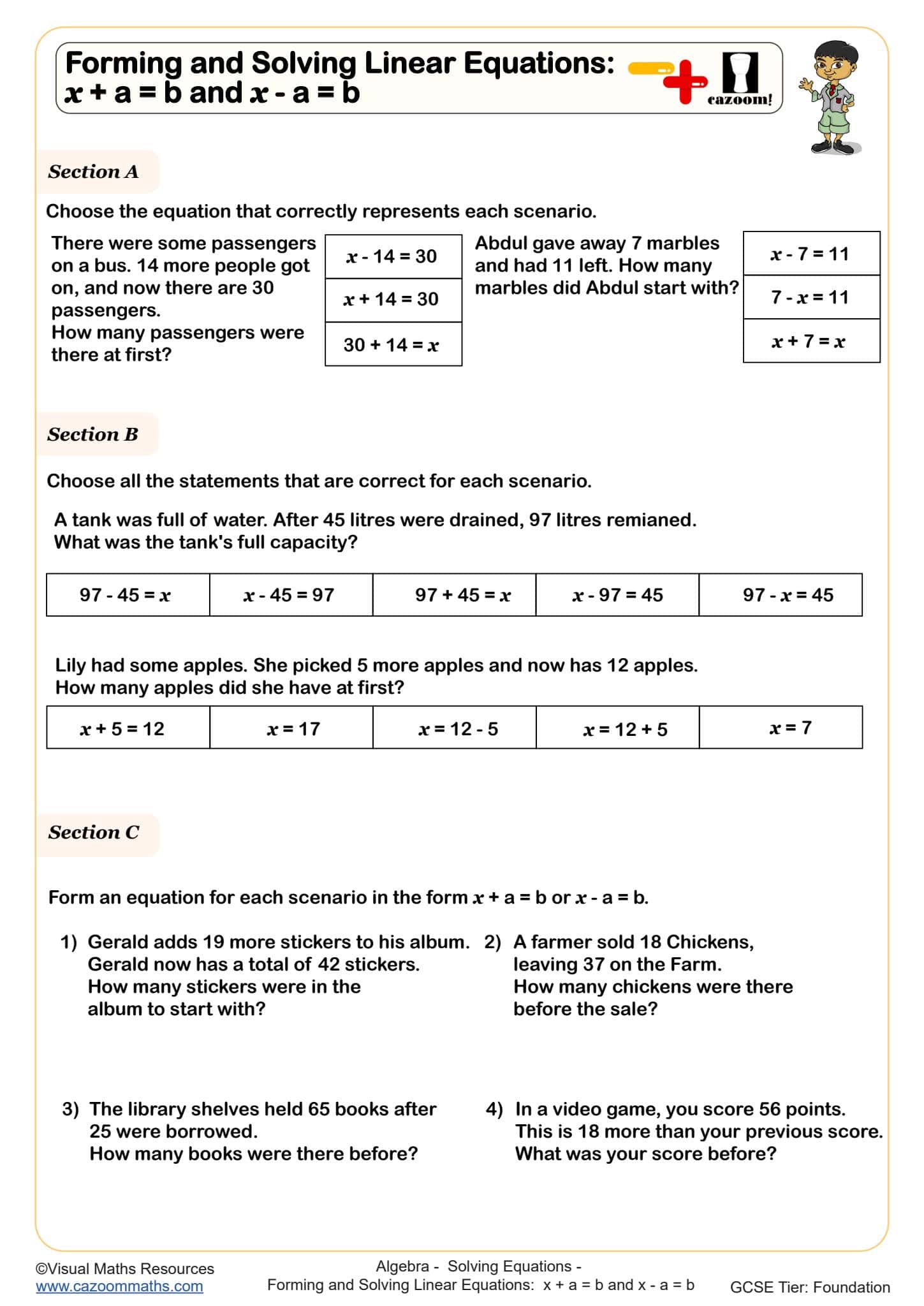
I Think of A Number Problems
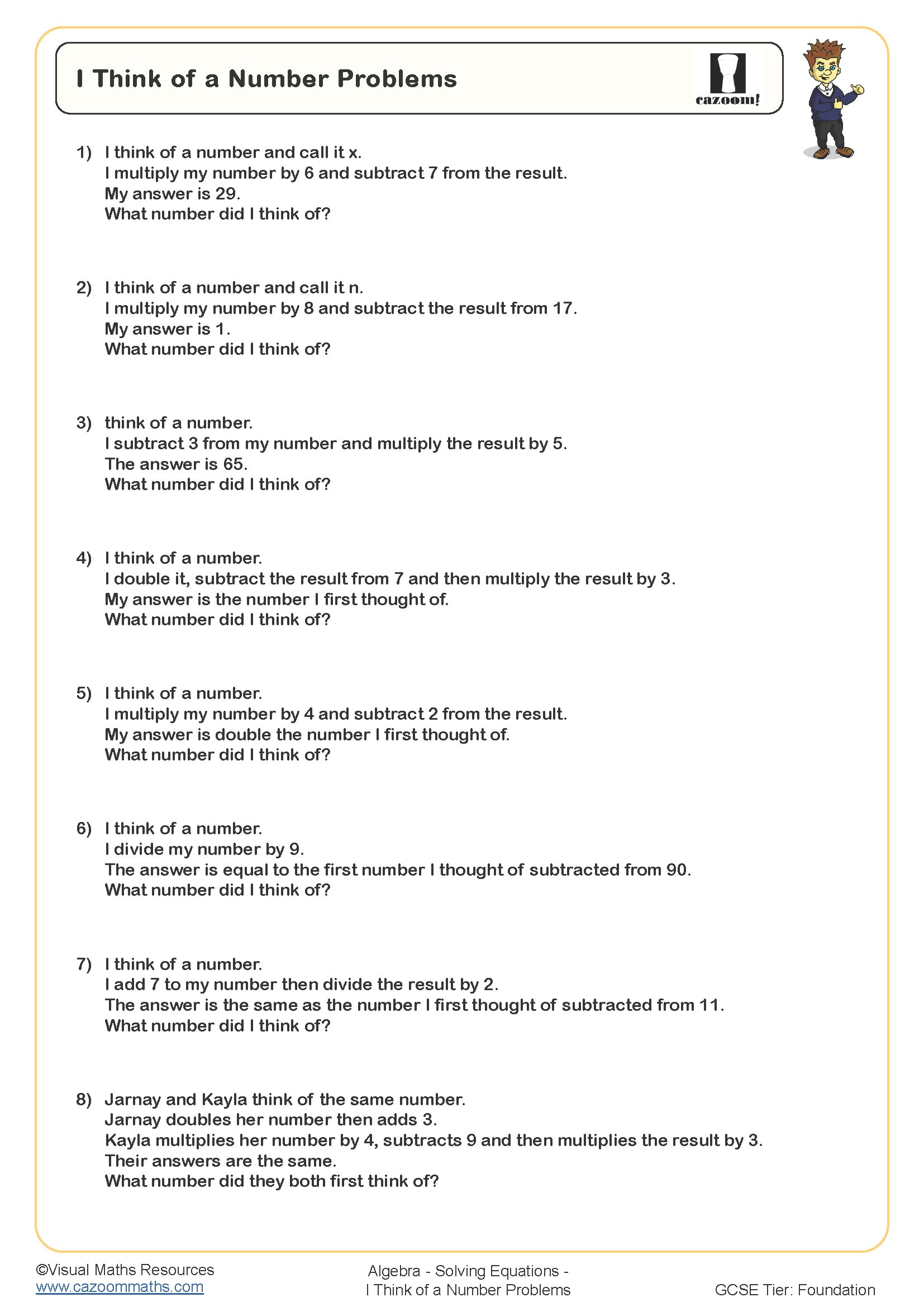
Manipulating Equations
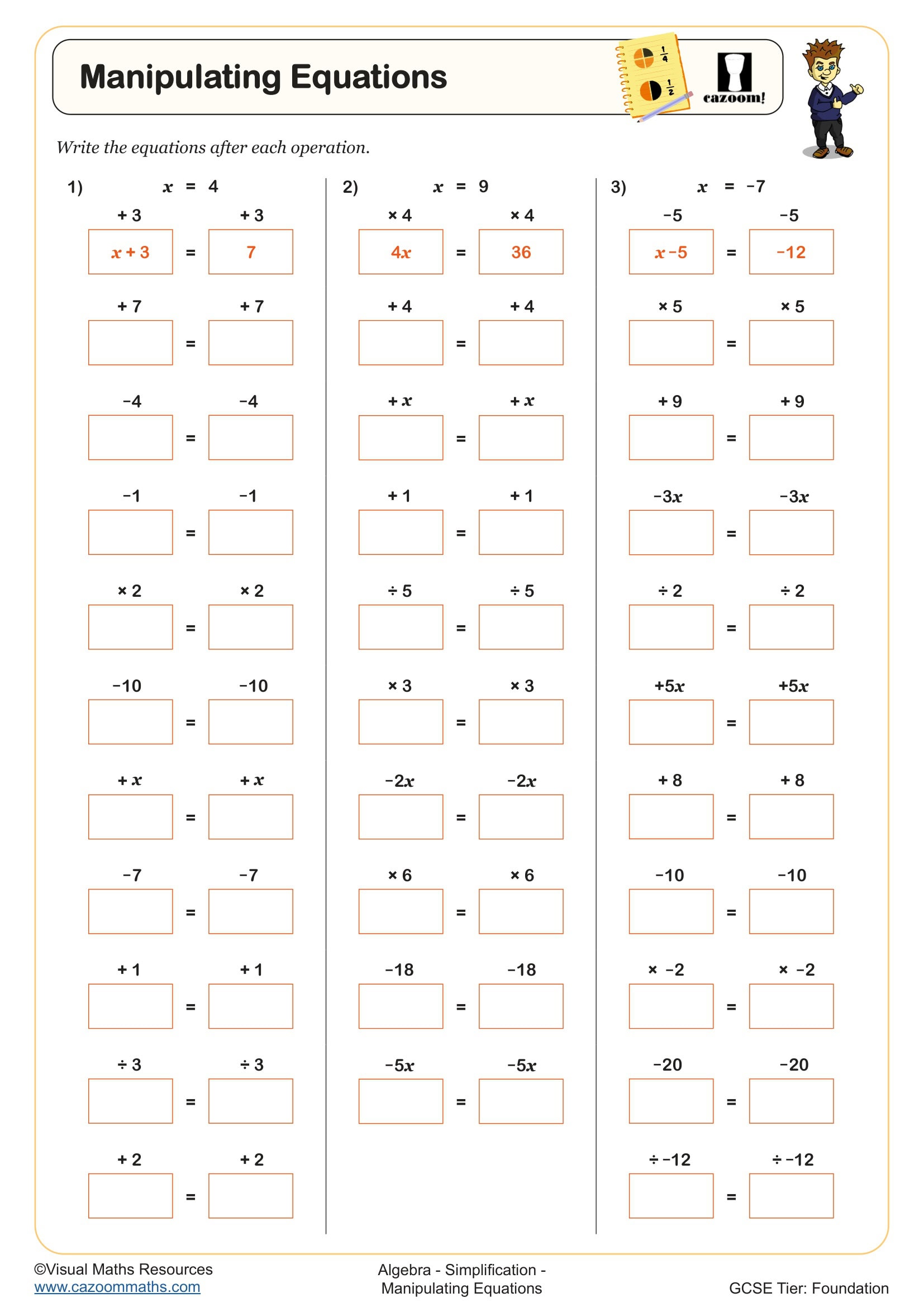
Solving Equations - Unknowns on Both Sides
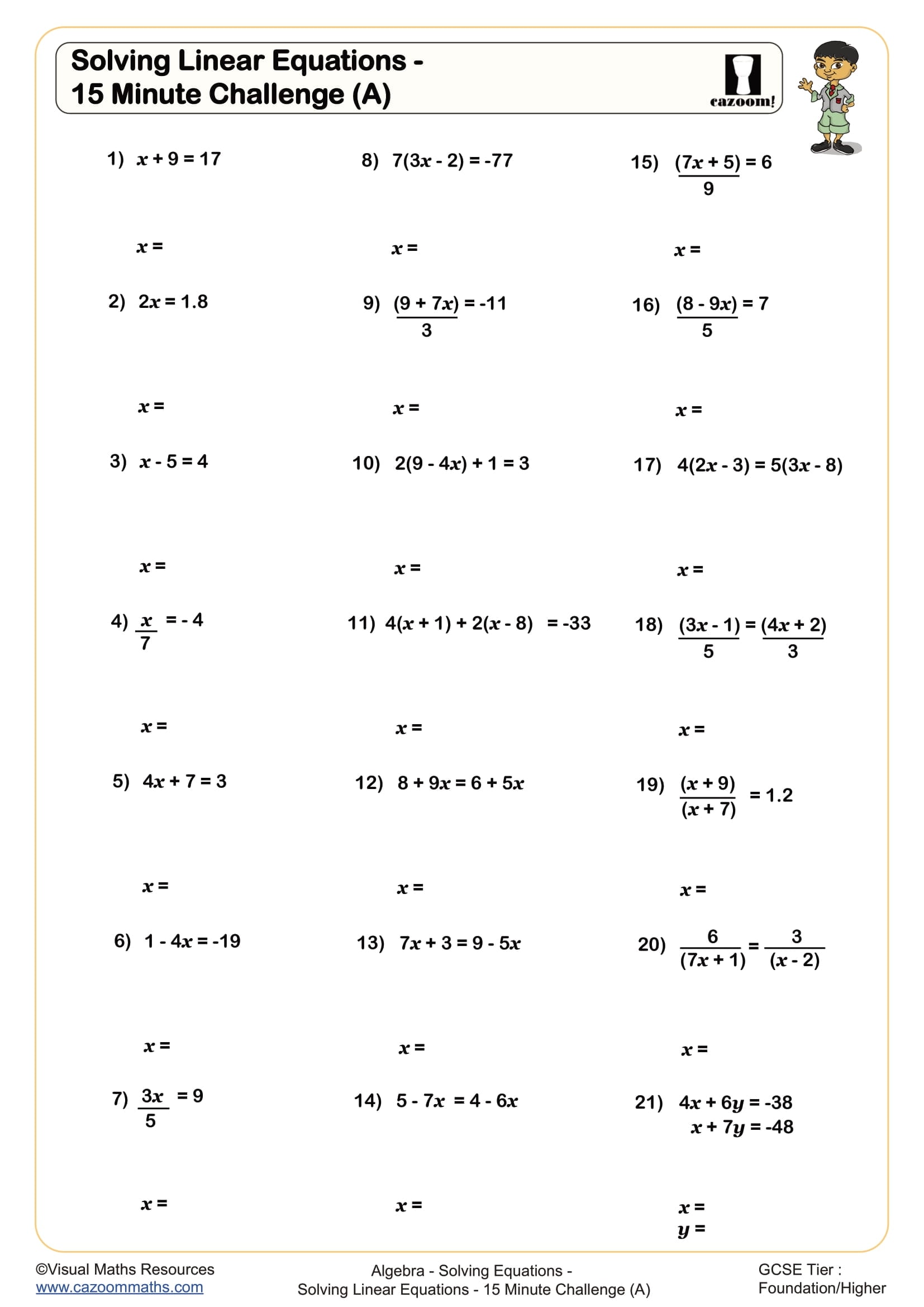
Solving Equations 15 Minute Challenge (A)
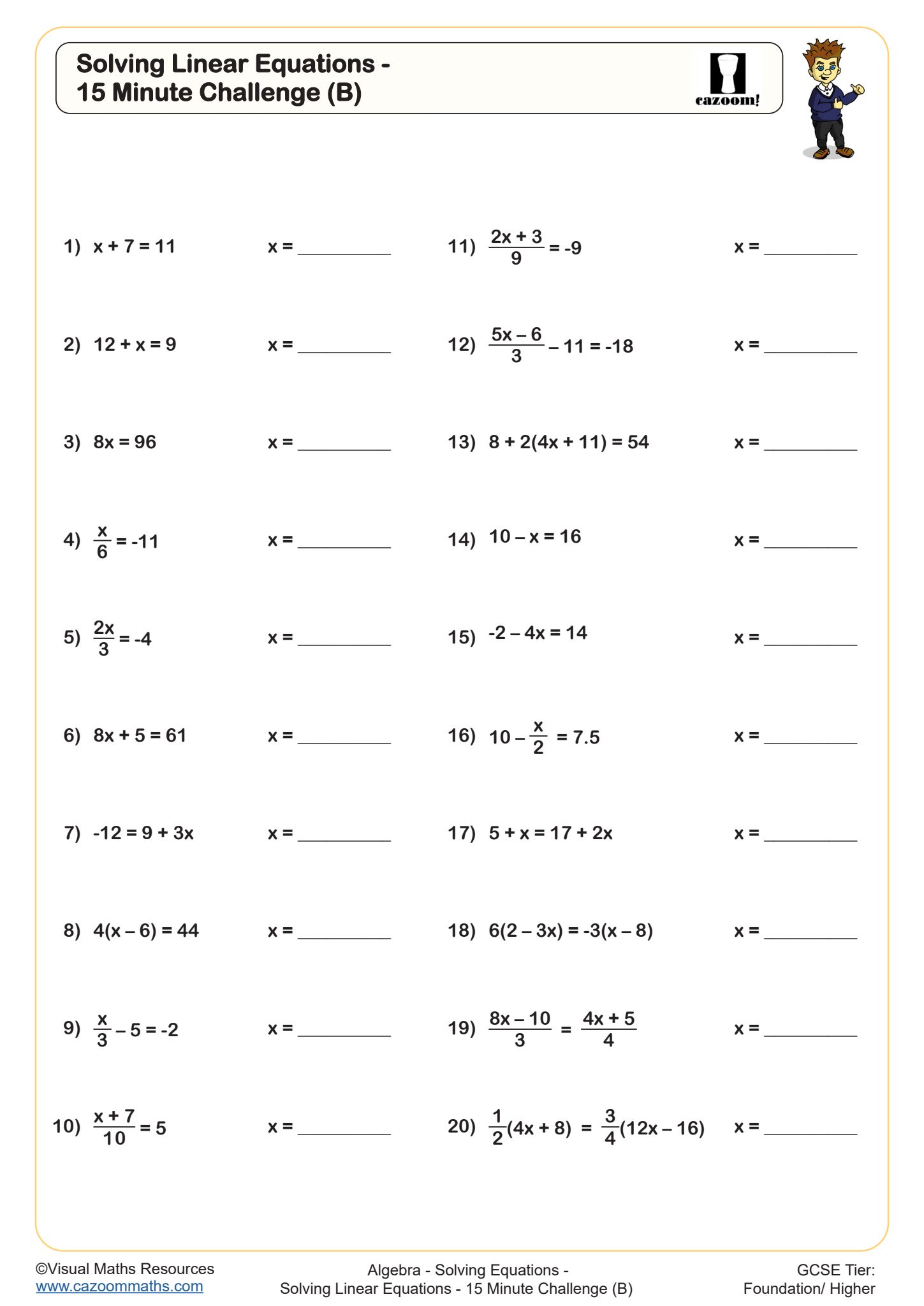
Solving Equations 15 Minute Challenge (B)
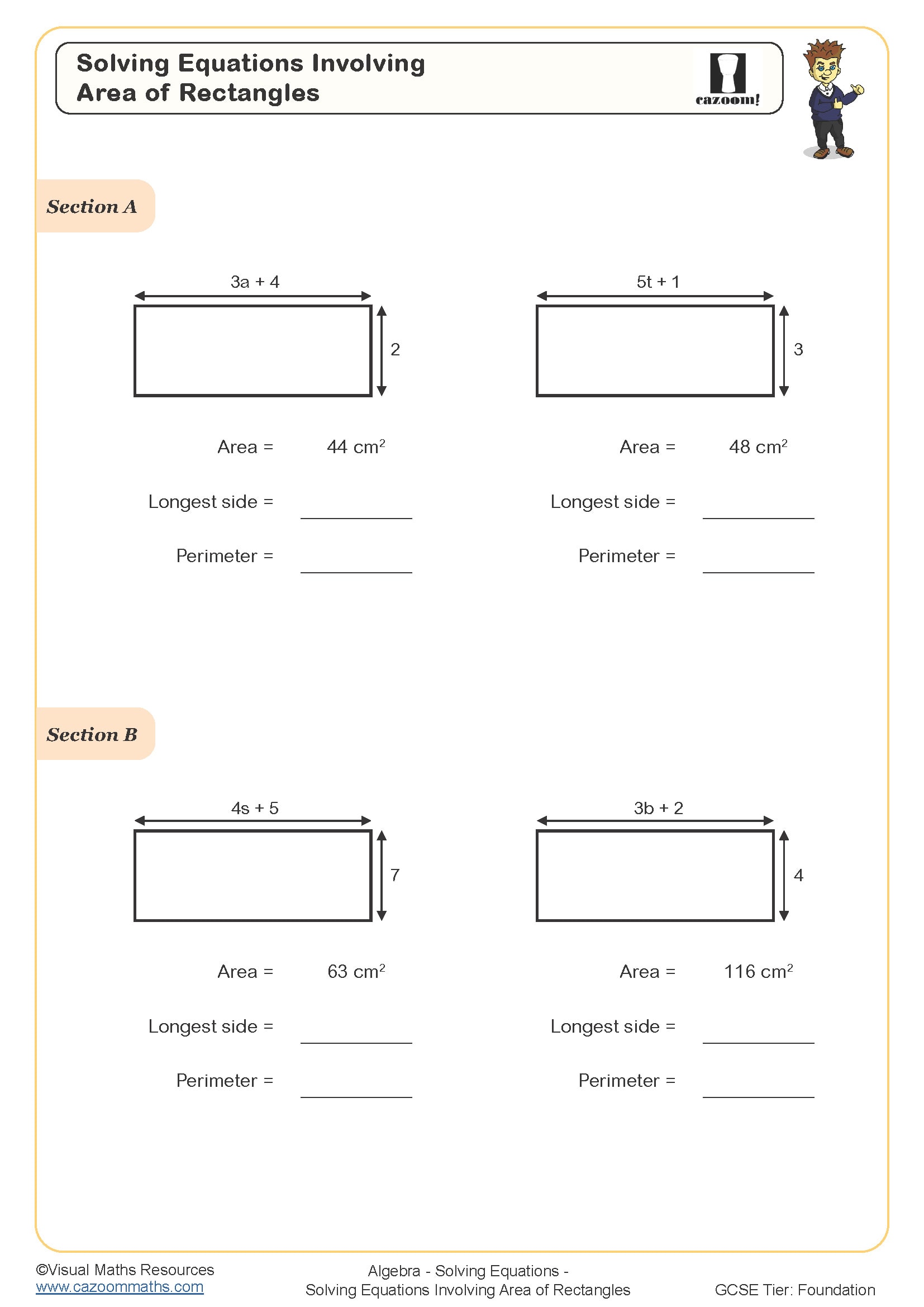
Solving Equations Involving Area of Rectangles
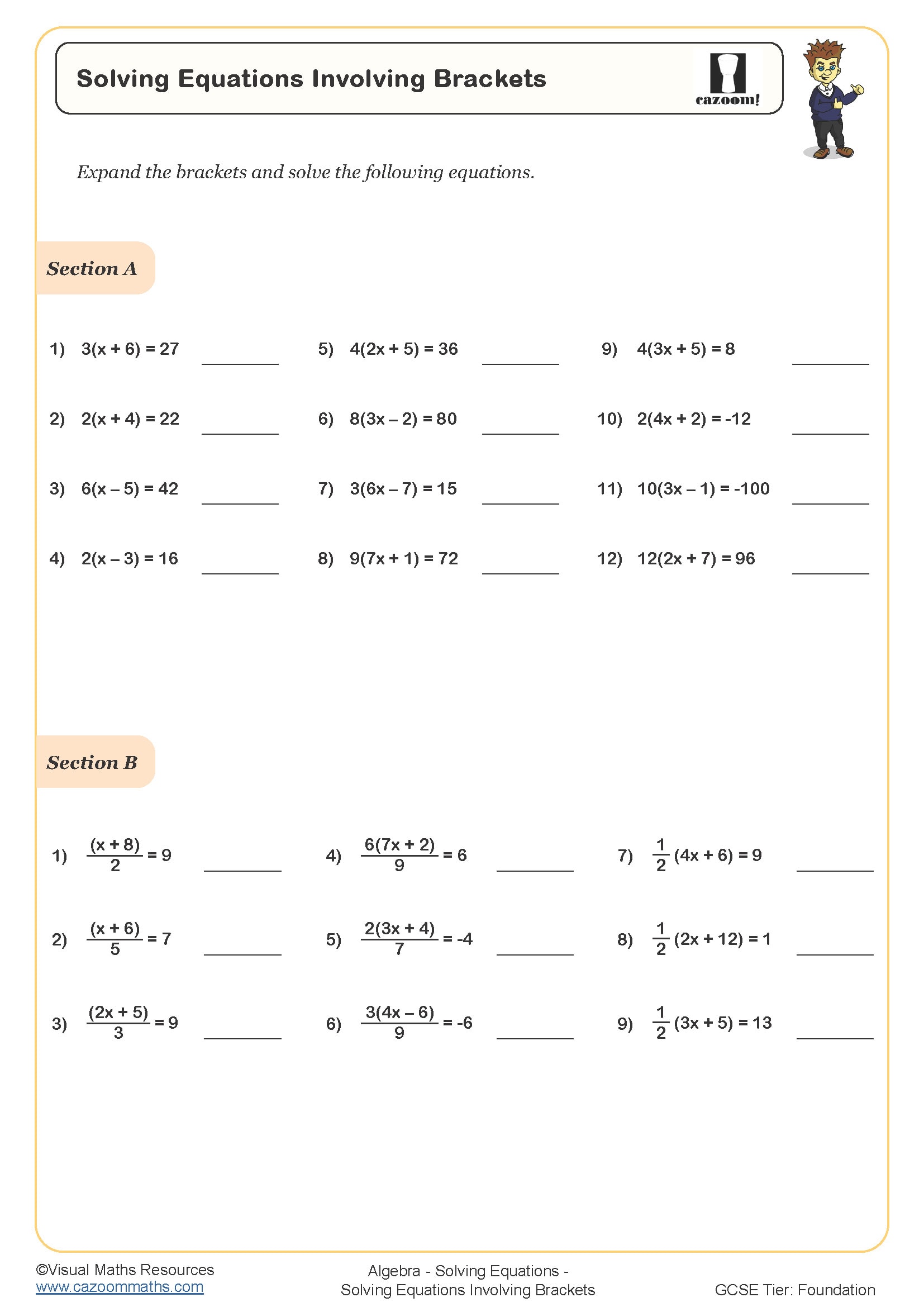
Solving Equations Involving Brackets
Solving Equations Involving Fractions
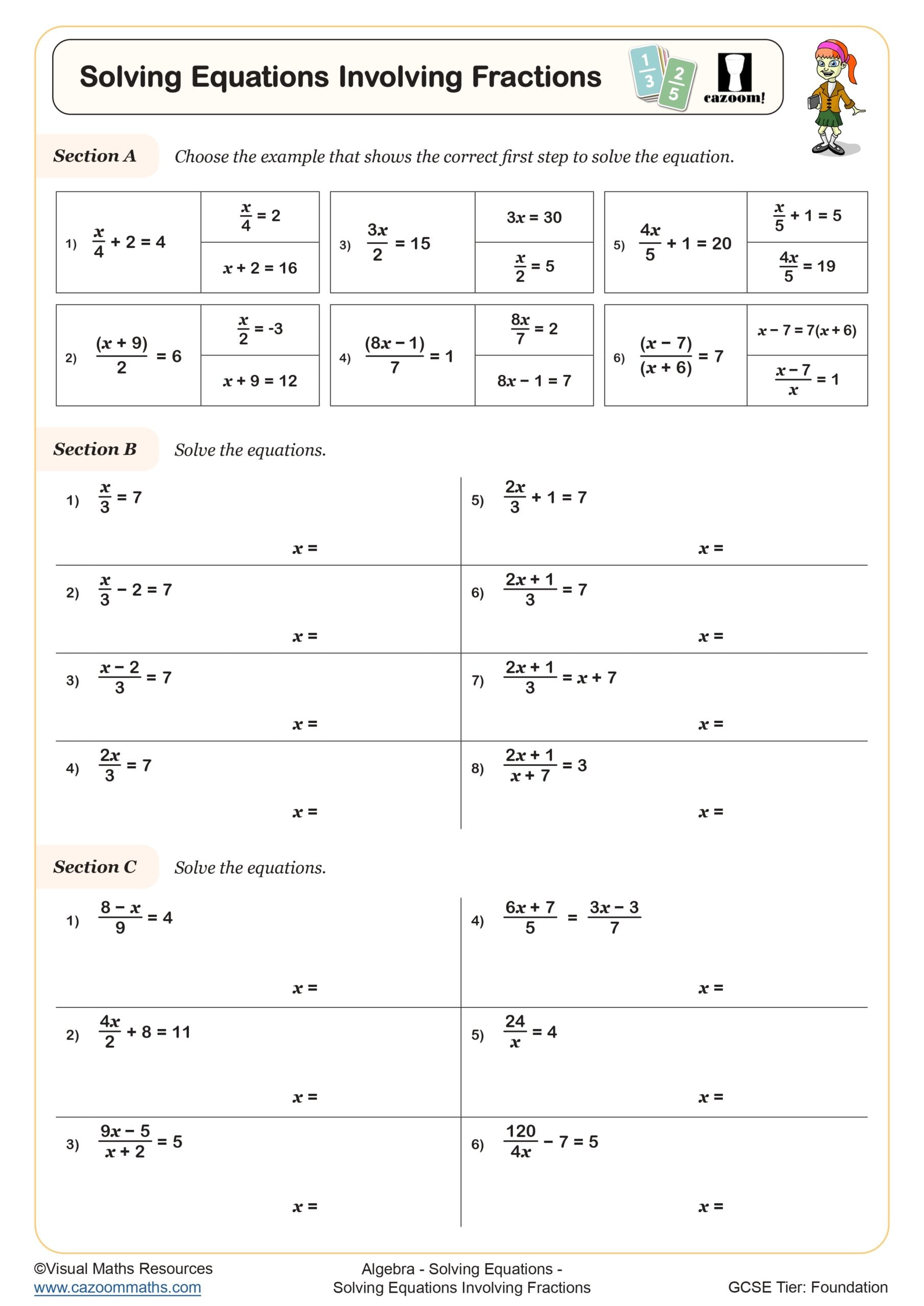
Solving Equations with Algebraic Perimeters
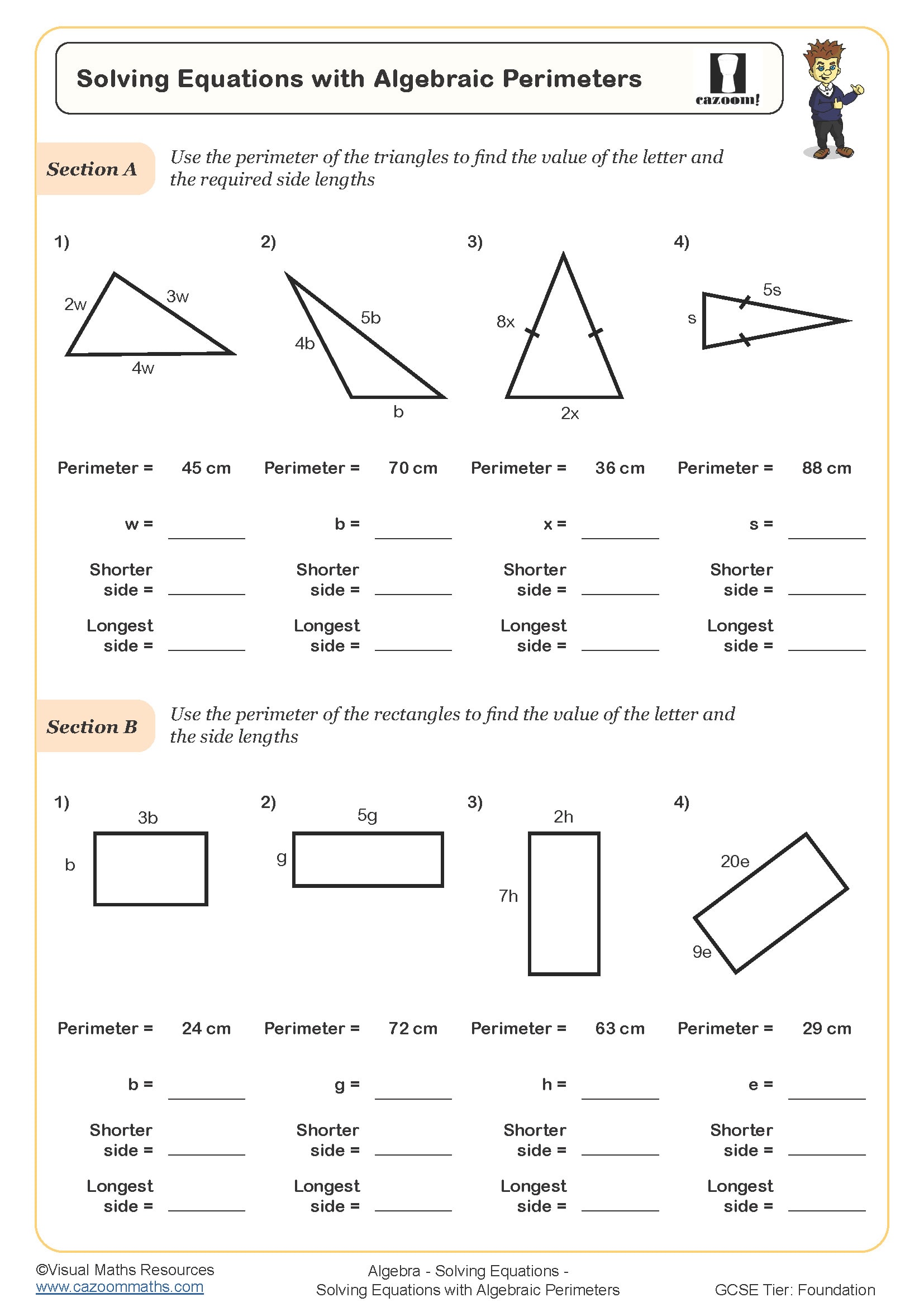
Solving Equations with Unknowns on Both Sides - Using Algebra Tiles
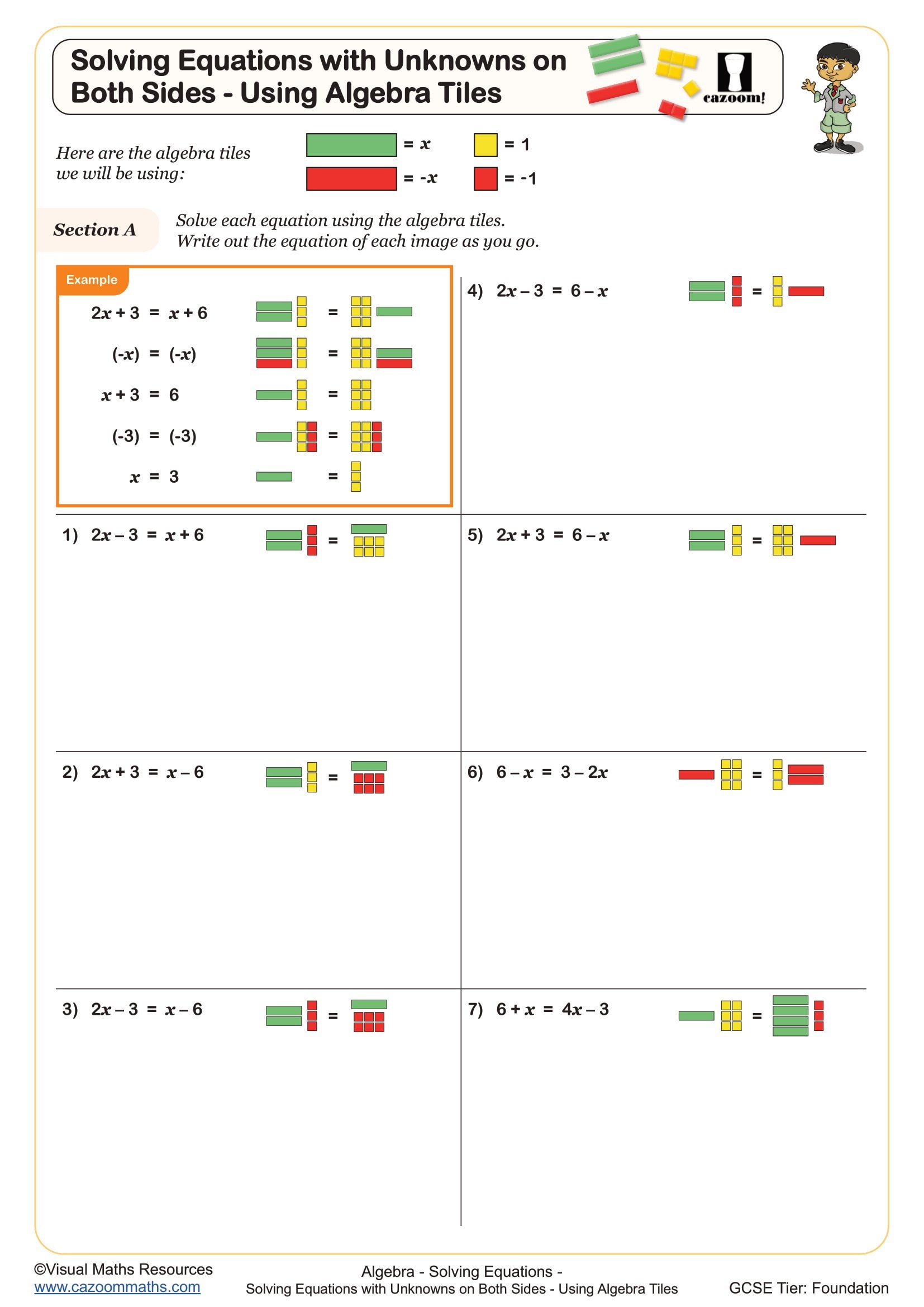
Solving Linear Equations (A)
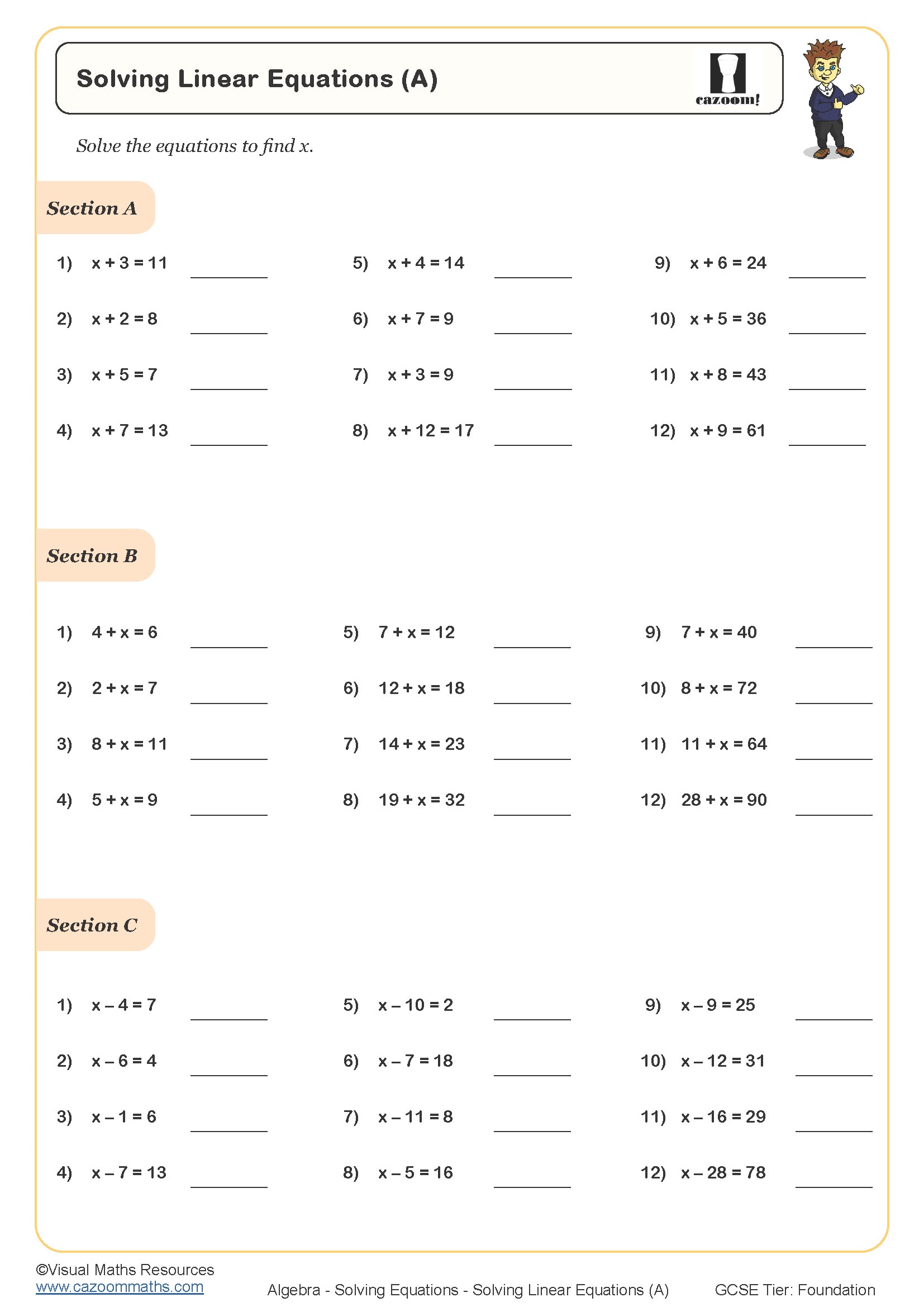
Solving Linear Equations (B)
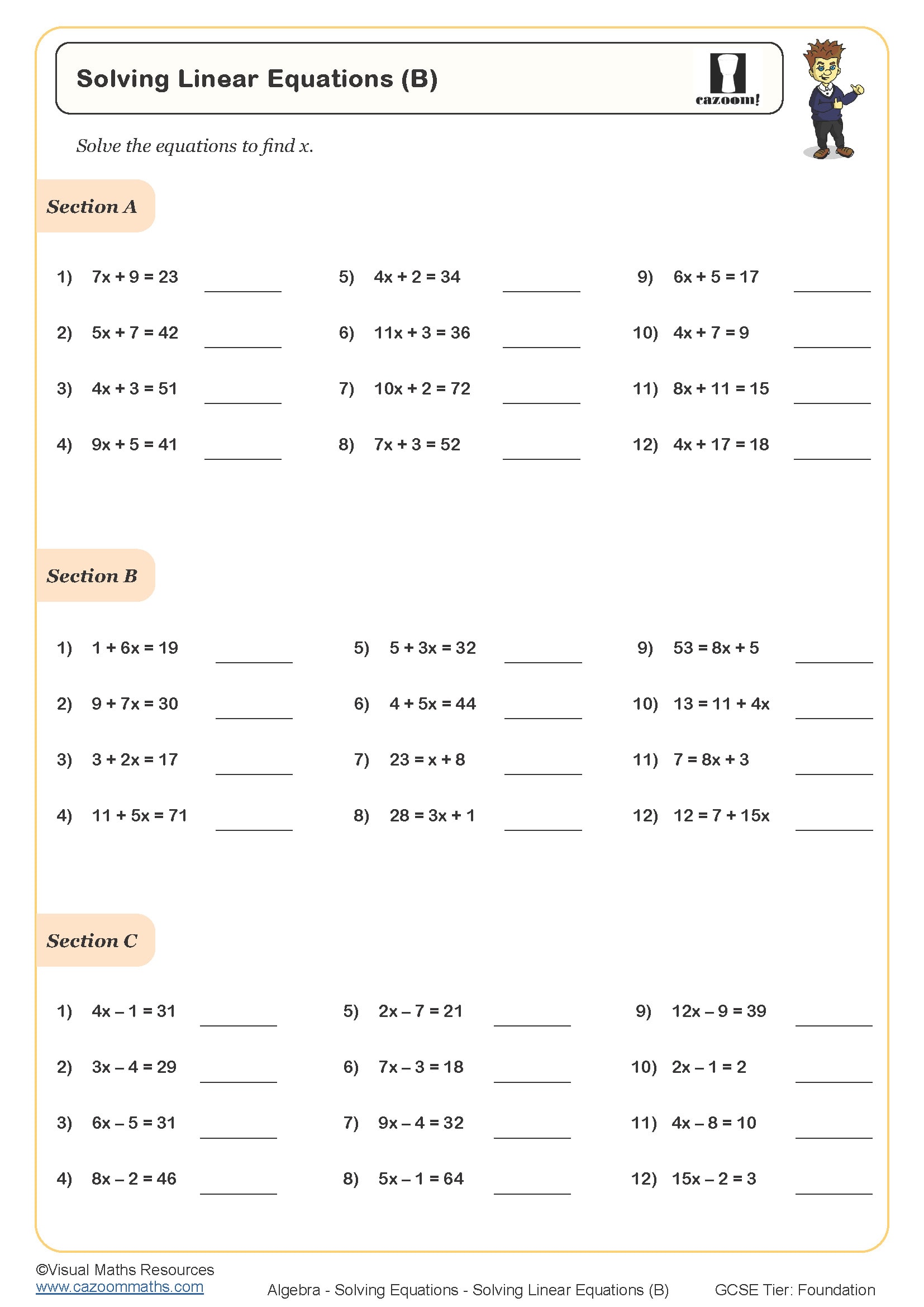
Solving Linear Equations (C)
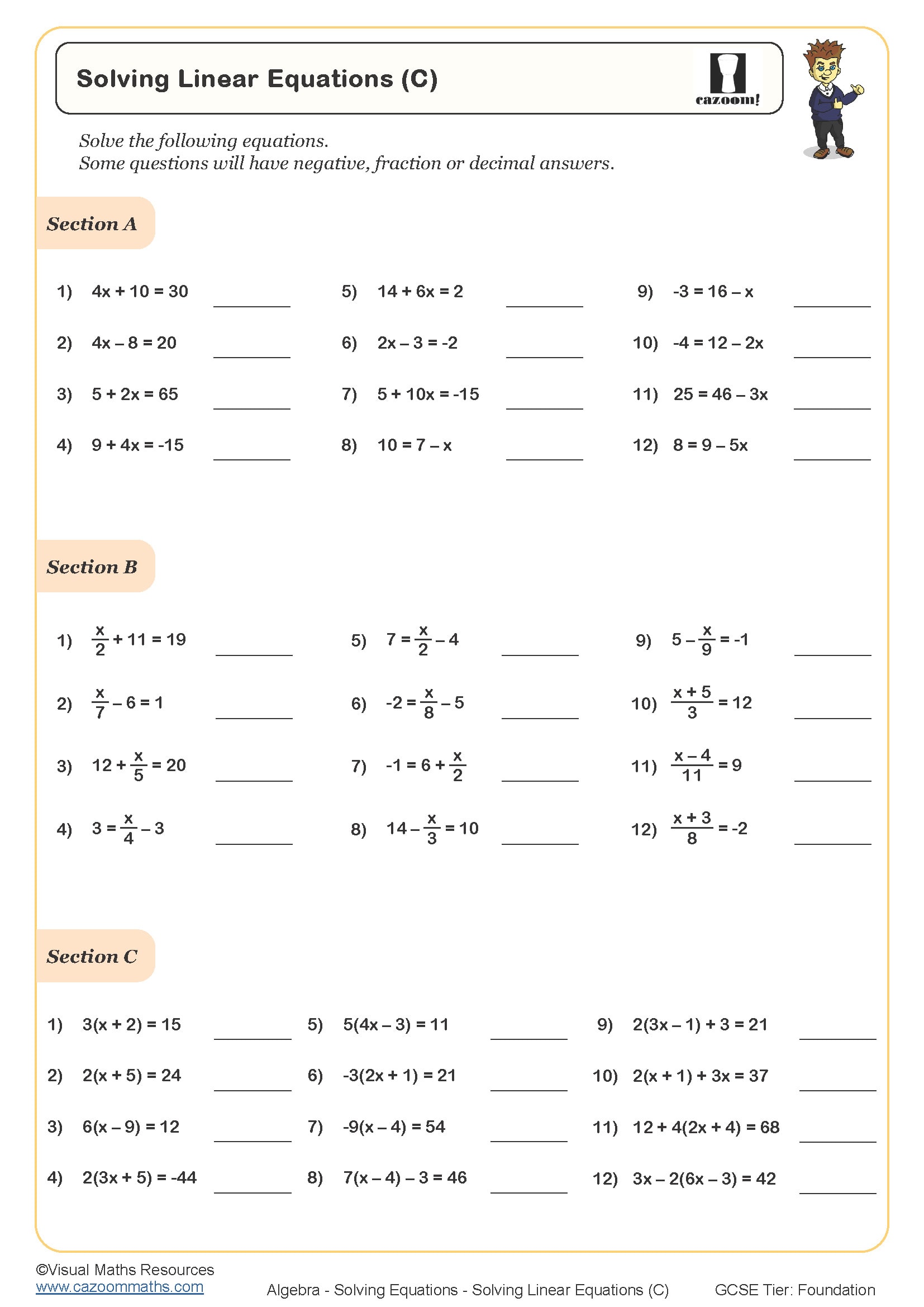
Solving Linear Equations (D)
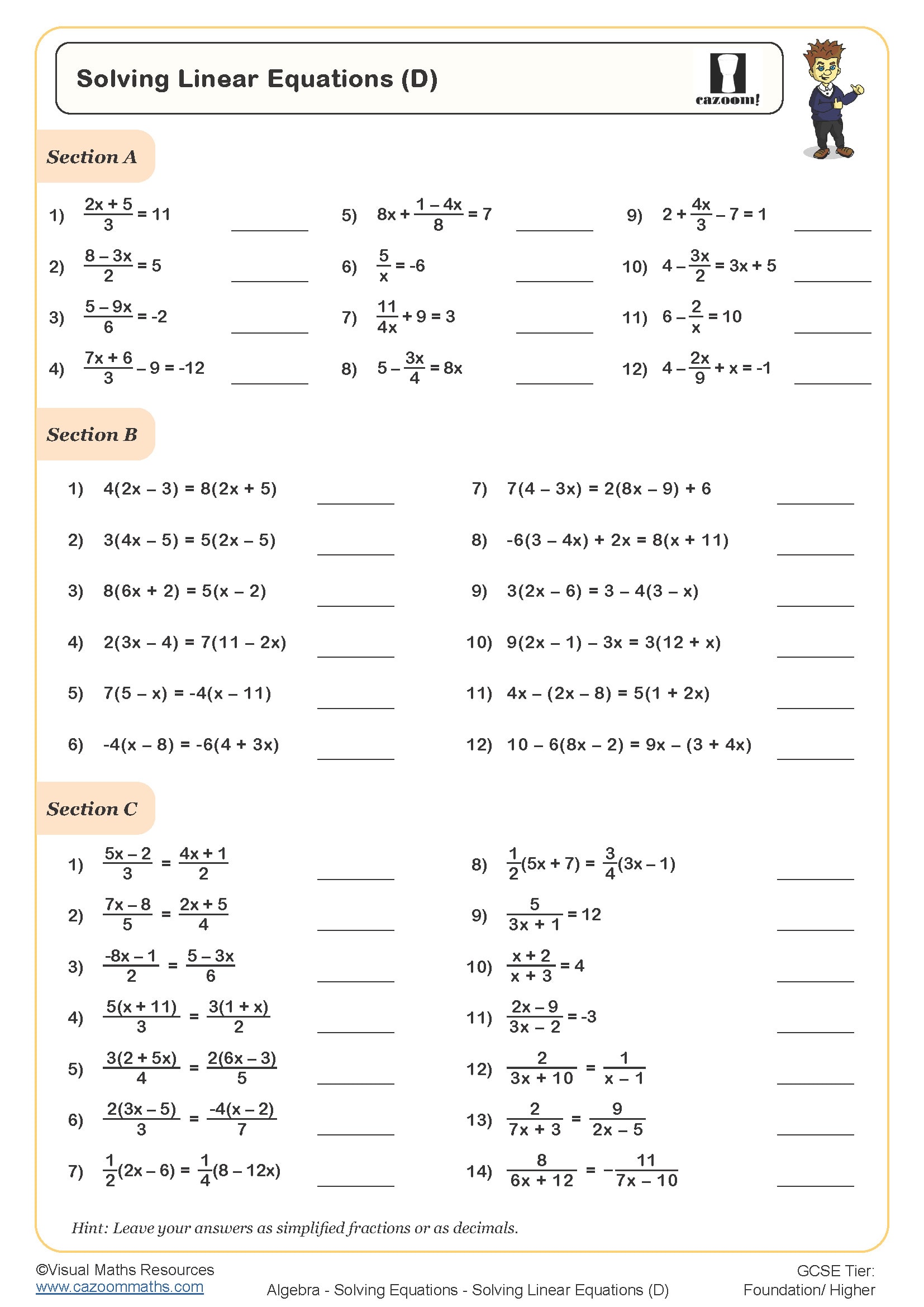
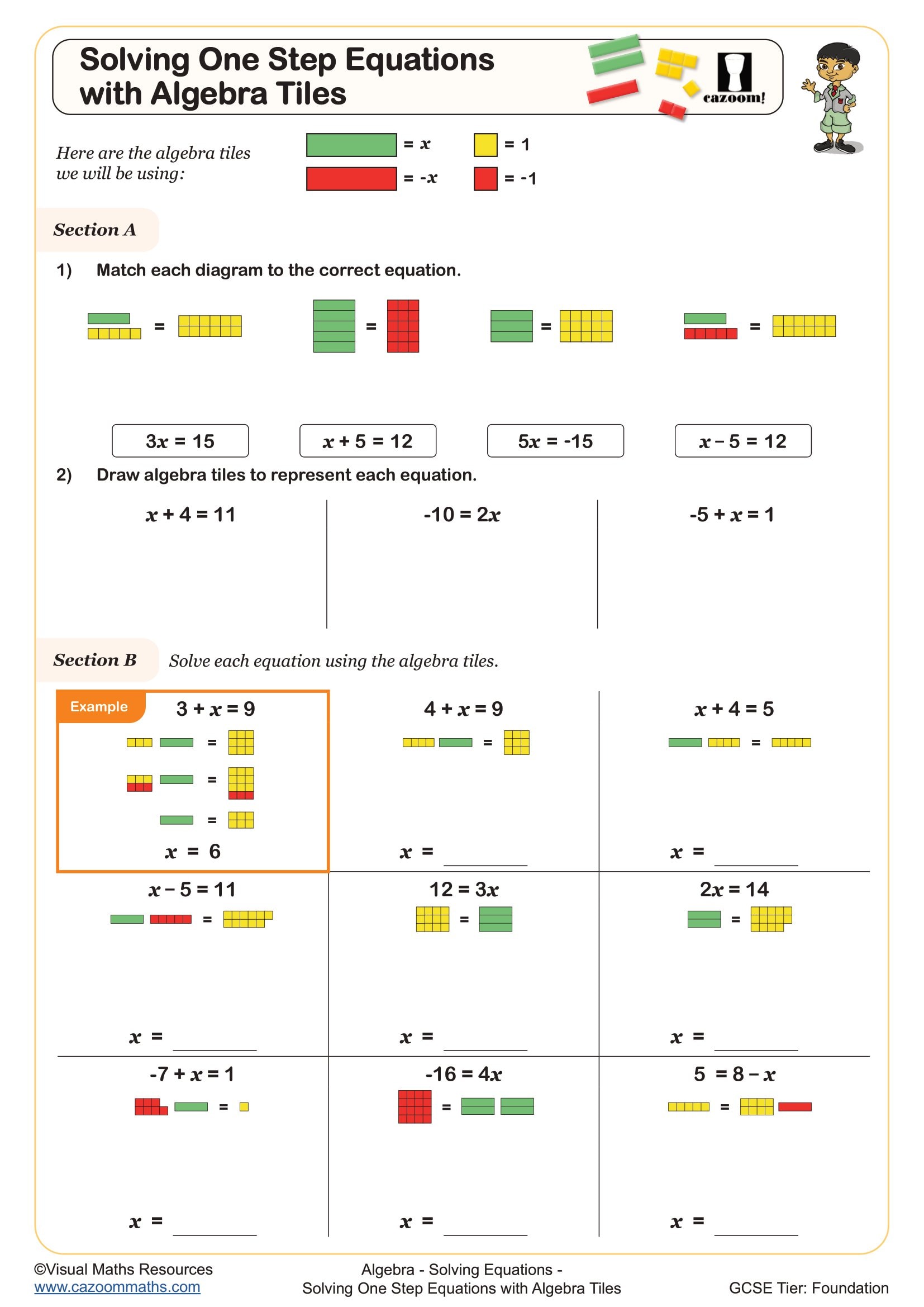
Solving One Step Equations with Algebra Tiles
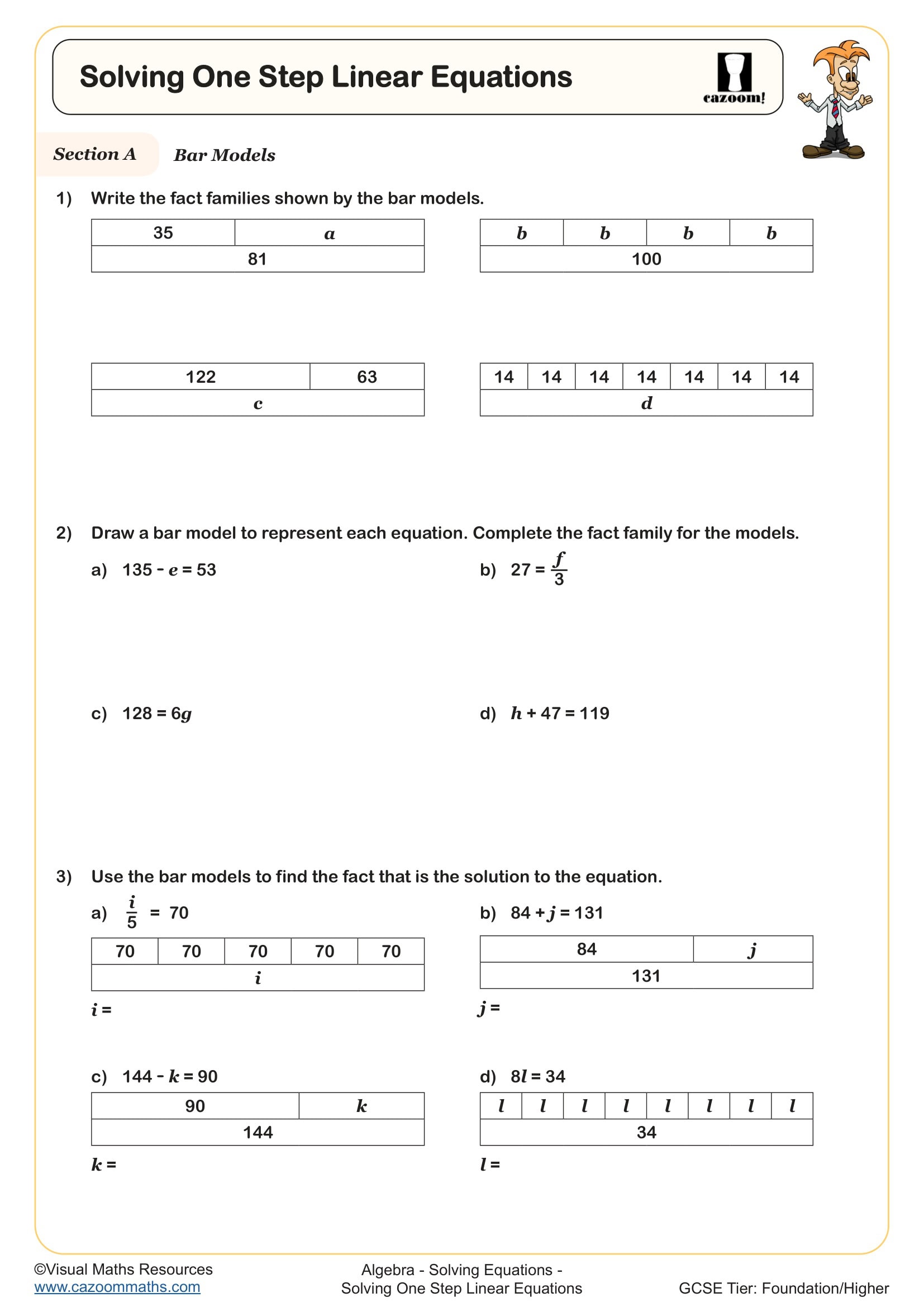
Solving One Step Linear Equations
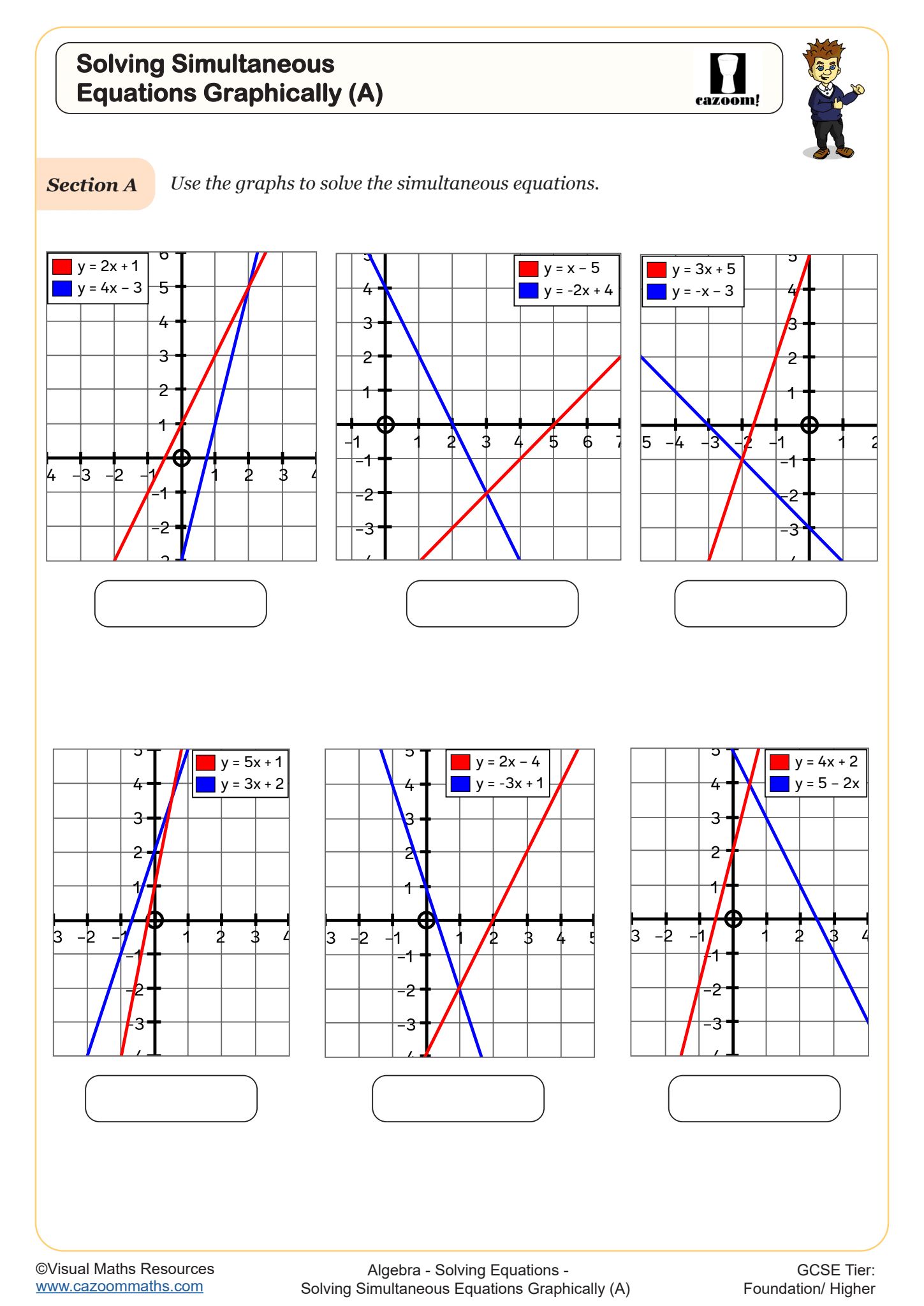
Solving Simultaneous Equations Graphically (A)
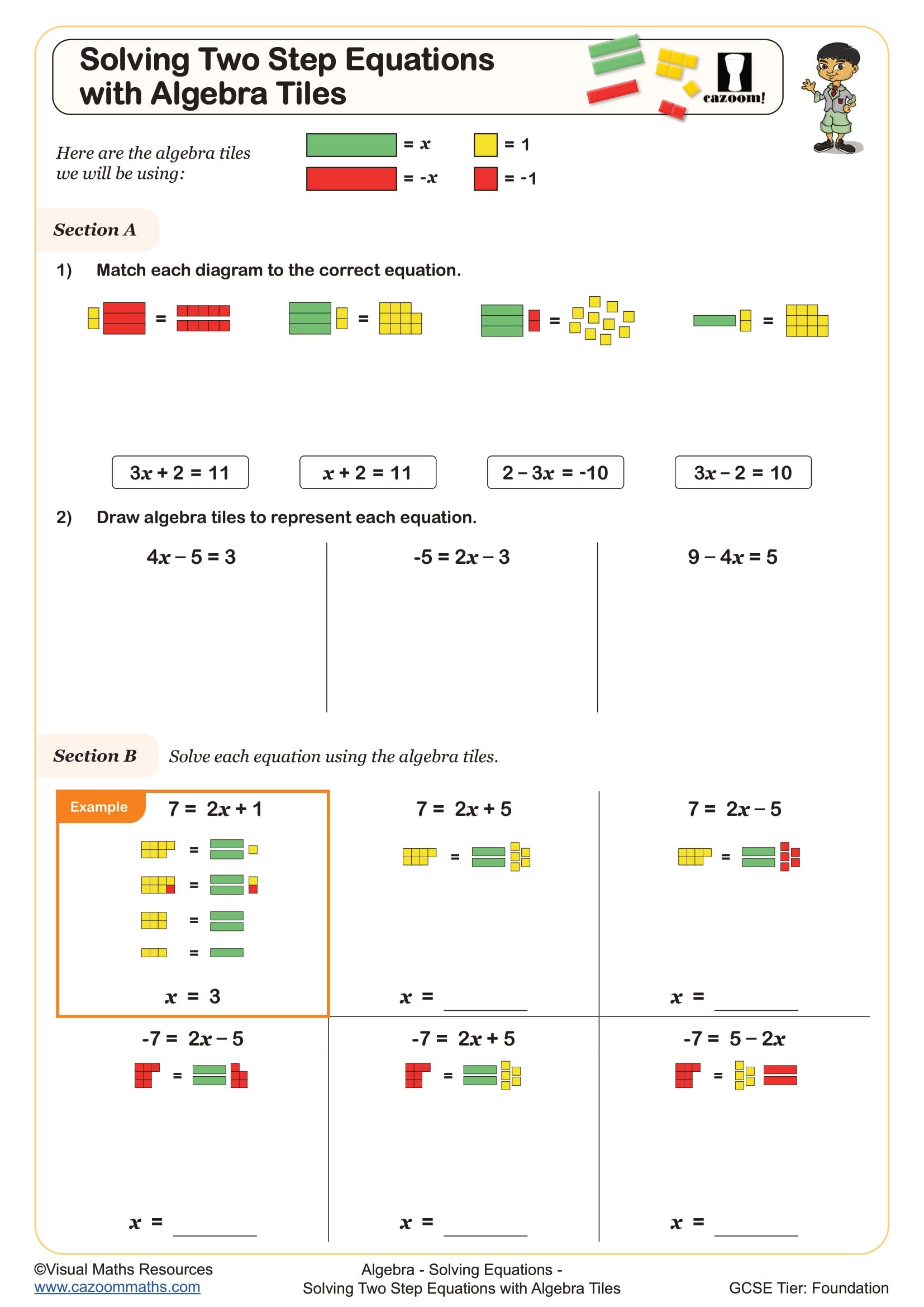
Solving Two Step Equations with Algebra Tiles
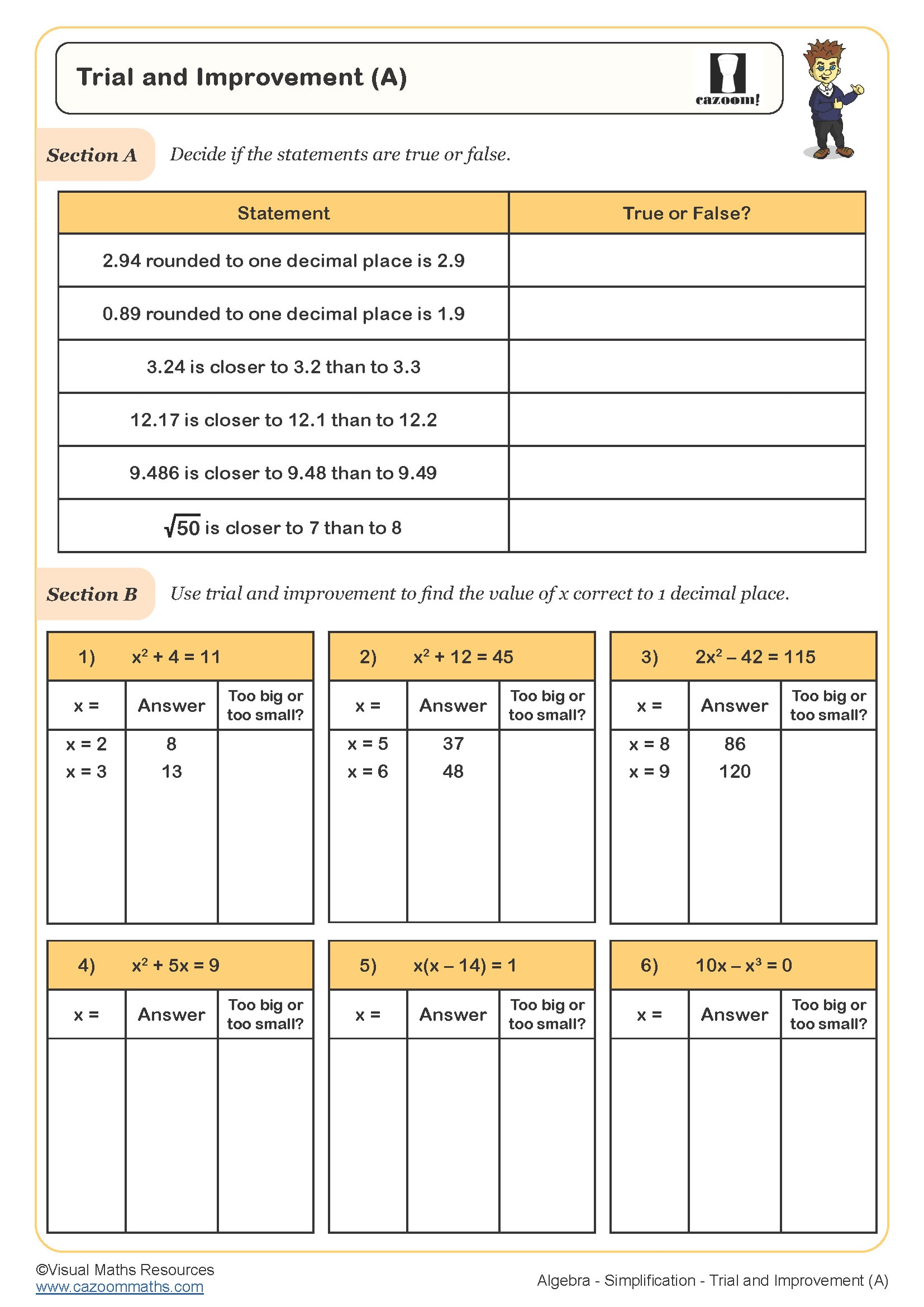
Trial and Improvement (A)
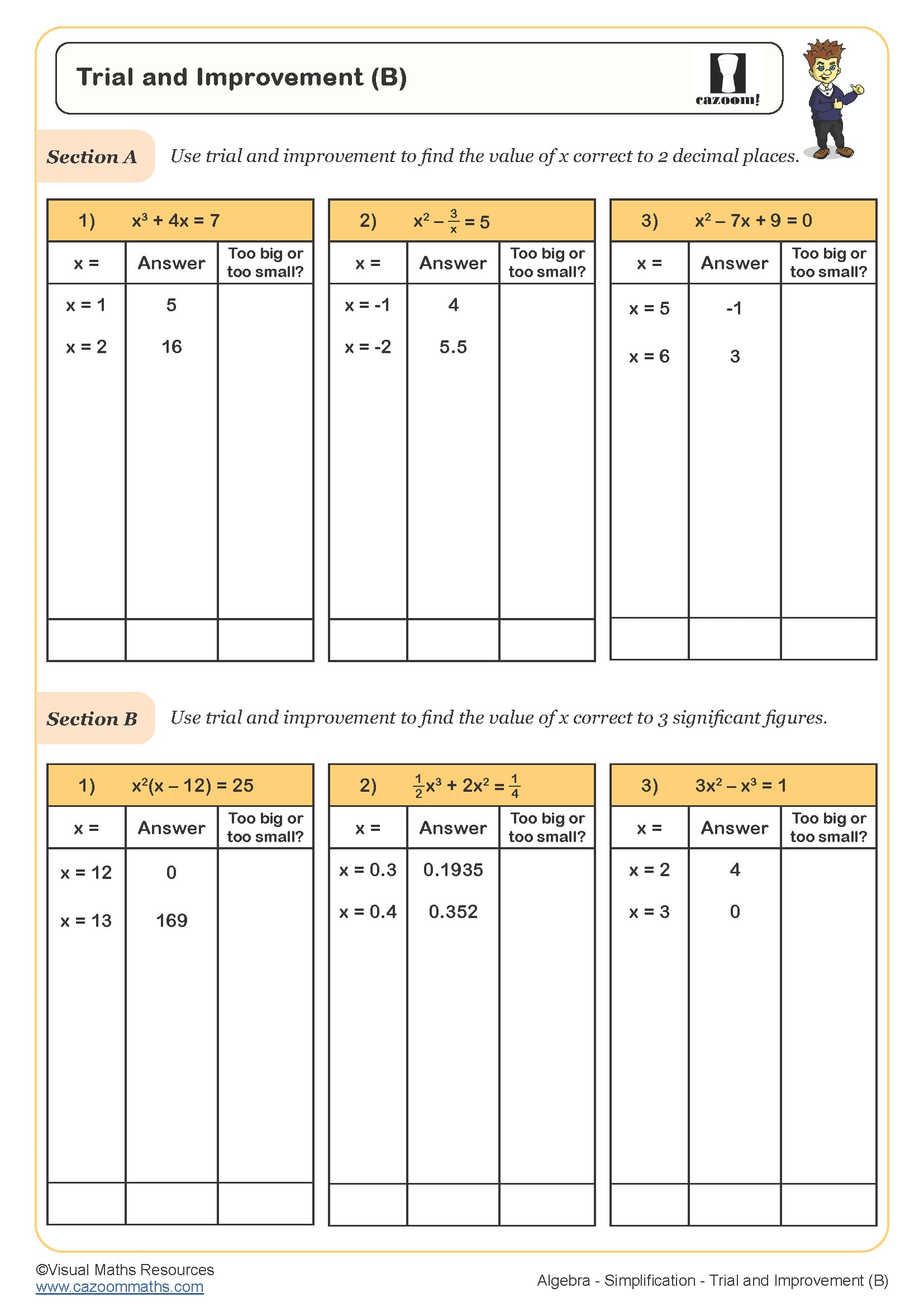
Trial and Improvement (B)
All worksheets are created by the team of experienced teachers at Cazoom Maths.
What should students know before starting KS3 algebra with solving equations?
Students need a secure understanding of inverse operations and the relationship between operations before tackling equation solving. This includes knowing that subtraction reverses addition, division reverses multiplication, and being confident with negative numbers. The National Curriculum expects students to move from simple one-step equations in Year 7 to more complex multi-step problems by Year 9, building on their primary work with finding missing numbers.
A common misconception occurs when students apply operations to only one side of the equation. Teachers often see students write something like '3x = 12, so x = 12 - 3' instead of dividing both sides by 3. This fundamental misunderstanding of balance undermines all subsequent work, which is why these worksheets emphasise the 'do the same to both sides' principle through carefully structured examples.
Which year groups use these solving equations worksheets?
These worksheets cover Years 7, 8, and 9, spanning the entire KS3 curriculum for equation solving. Year 7 typically begins with one-step and two-step equations, establishing the core principle of maintaining balance. Students then progress to equations with brackets and unknowns on both sides, which form the bulk of Year 8 work before moving into more applied contexts.
By Year 9, students tackle equations involving fractions, more complex brackets, and algebraic perimeters where they must form equations from geometric contexts before solving them. This progression mirrors the demand of GCSE Foundation tier, where equation solving appears across multiple question types. Teachers notice that students who master equations with unknowns on both sides in Year 8 find simultaneous equations significantly more accessible later on.
How do algebraic perimeters connect solving equations to real situations?
Algebraic perimeters require students to write expressions for the total distance around a shape where side lengths contain variables, then solve to find unknown values. For example, if a rectangle has sides of (2x + 3) cm and (x + 5) cm with a perimeter of 34 cm, students must form the equation 2(2x + 3) + 2(x + 5) = 34 before solving. This combines expression formation, bracket expansion, and equation solving in one problem.
This skill appears throughout construction, architecture, and engineering contexts where measurements must satisfy certain constraints. Structural engineers regularly work backwards from required specifications—knowing the total material available or the maximum perimeter allowed—to determine component dimensions. These worksheets bridge the gap between abstract algebra and applied problem-solving, preparing students for GCSE contextual questions that often combine multiple skills within a single scenario.
How can teachers use these worksheets most effectively?
The worksheets scaffold understanding through carefully sequenced questions that gradually increase in difficulty. Each set typically begins with straightforward examples before introducing complications like negative coefficients or fractional solutions. Teachers can use the complete answer sheets for whole-class marking sessions where students identify and discuss common errors, making misconceptions explicit before they become embedded.
Many teachers find these resources valuable for differentiated homework, allowing students to work at their own pace whilst ensuring everyone covers the core curriculum. They work equally well for intervention groups targeting specific gaps—students who struggle with unknowns on both sides, for instance, can focus on those particular sheets. The worksheets also suit paired work where one student solves whilst their partner checks using the answer sheet, promoting dialogue about mathematical reasoning and different solution methods.