KS3 Transformations Worksheets
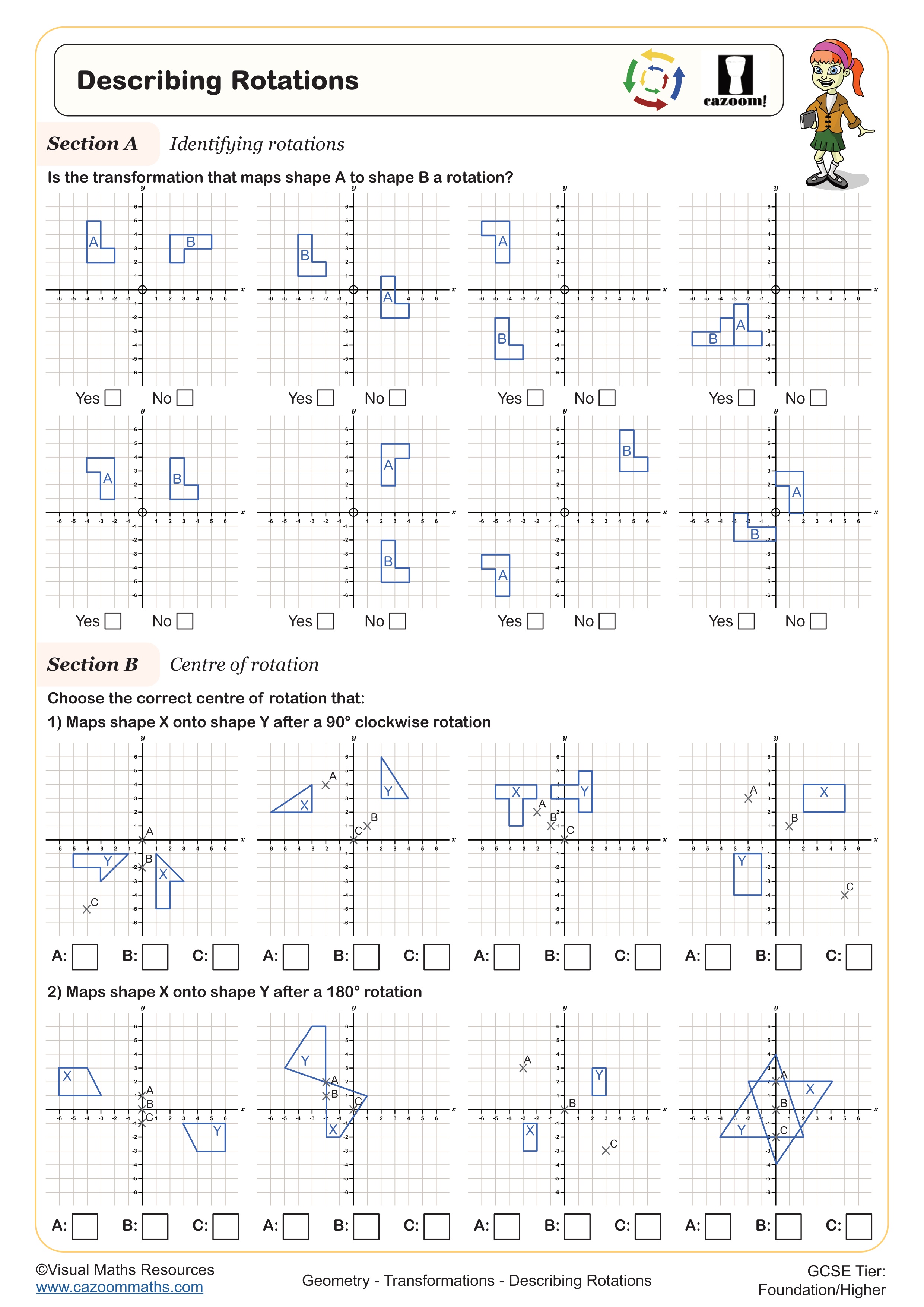
Describing Rotations
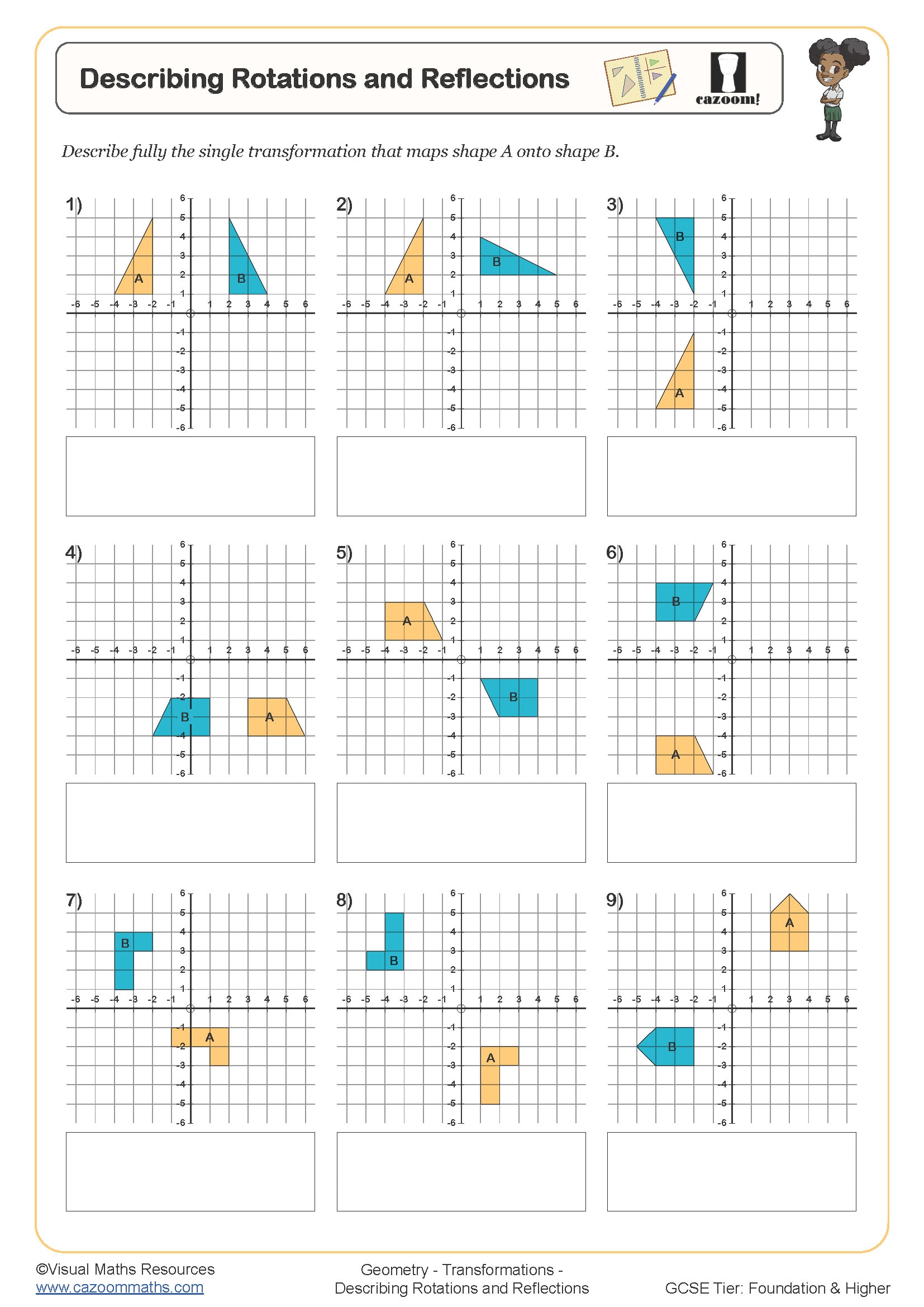
Describing Rotations and Reflections
Enlargement (A)
-Worksheet.jpg?w=3840)
Enlargement (B)
-Worksheet.jpg?w=3840)
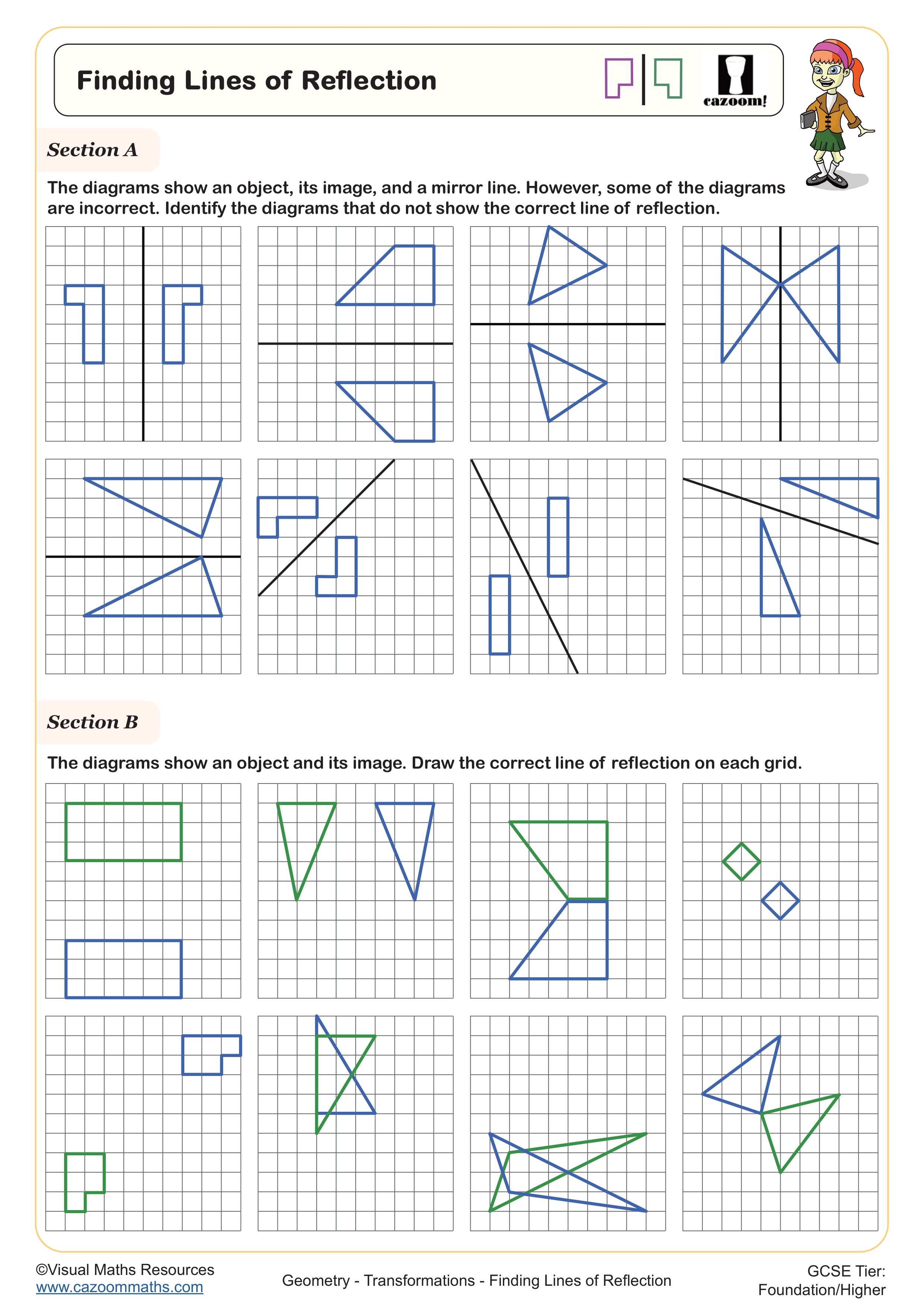
Finding Lines of Reflection
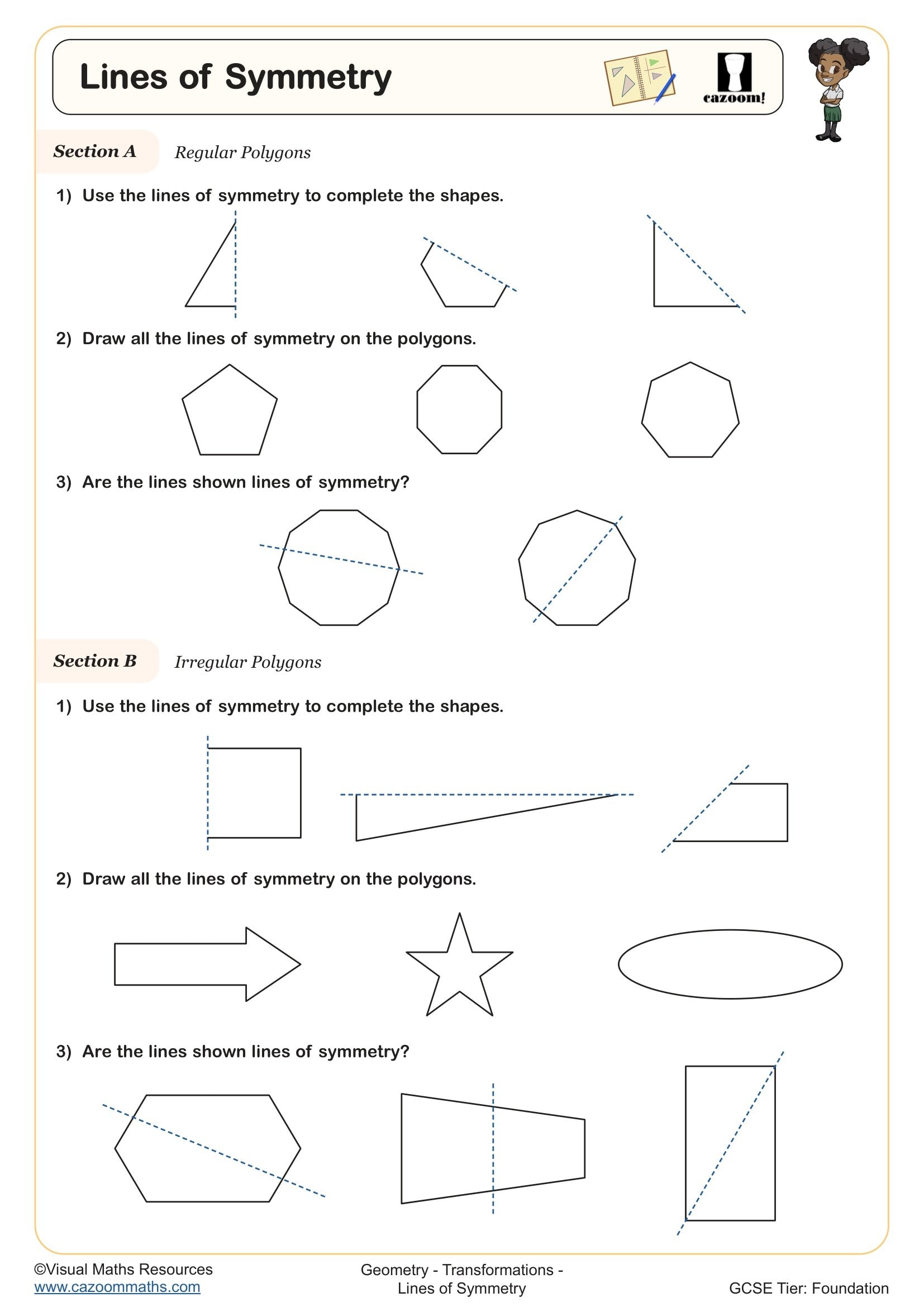
Lines of Symmetry
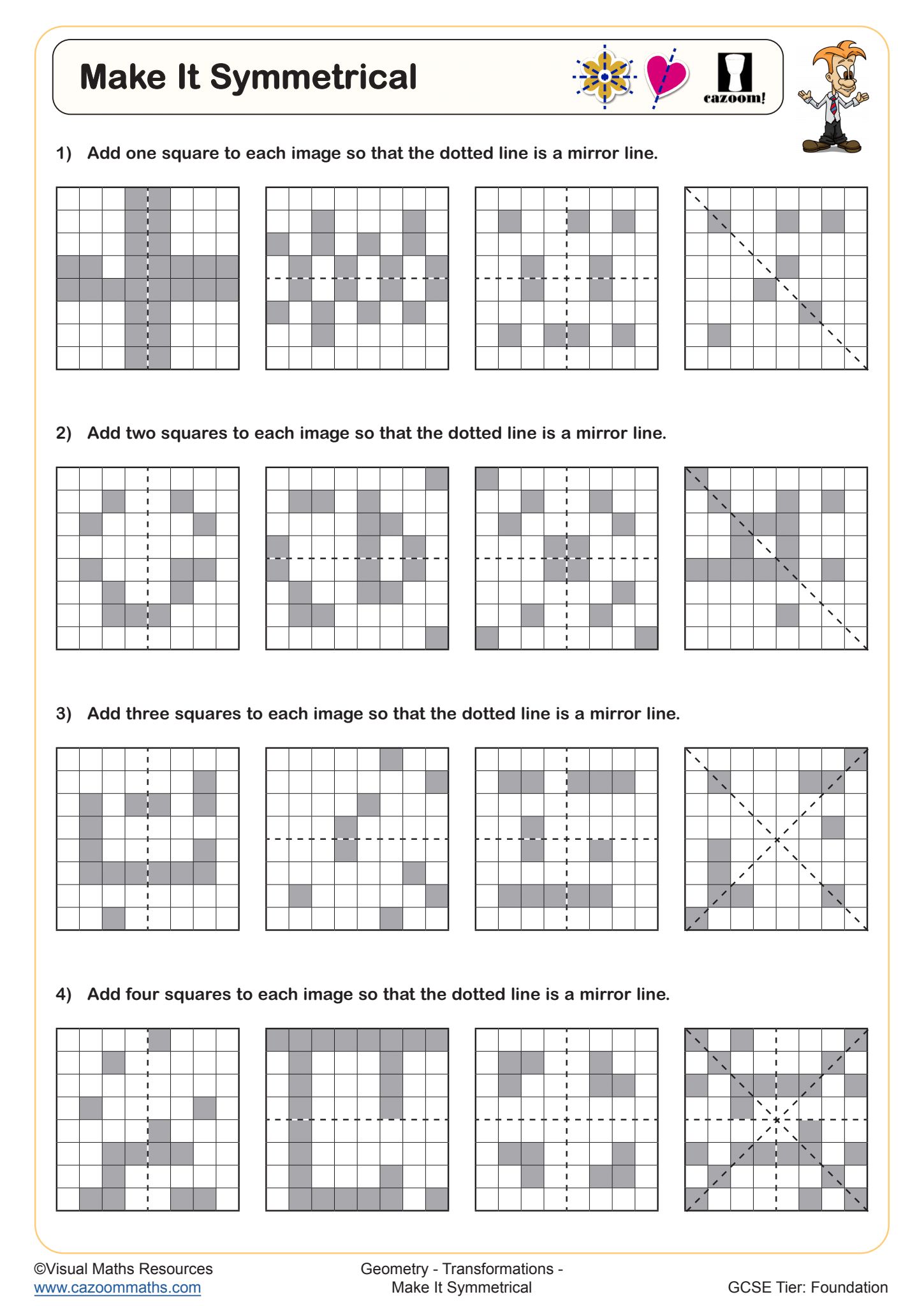
Make it Symmetrical
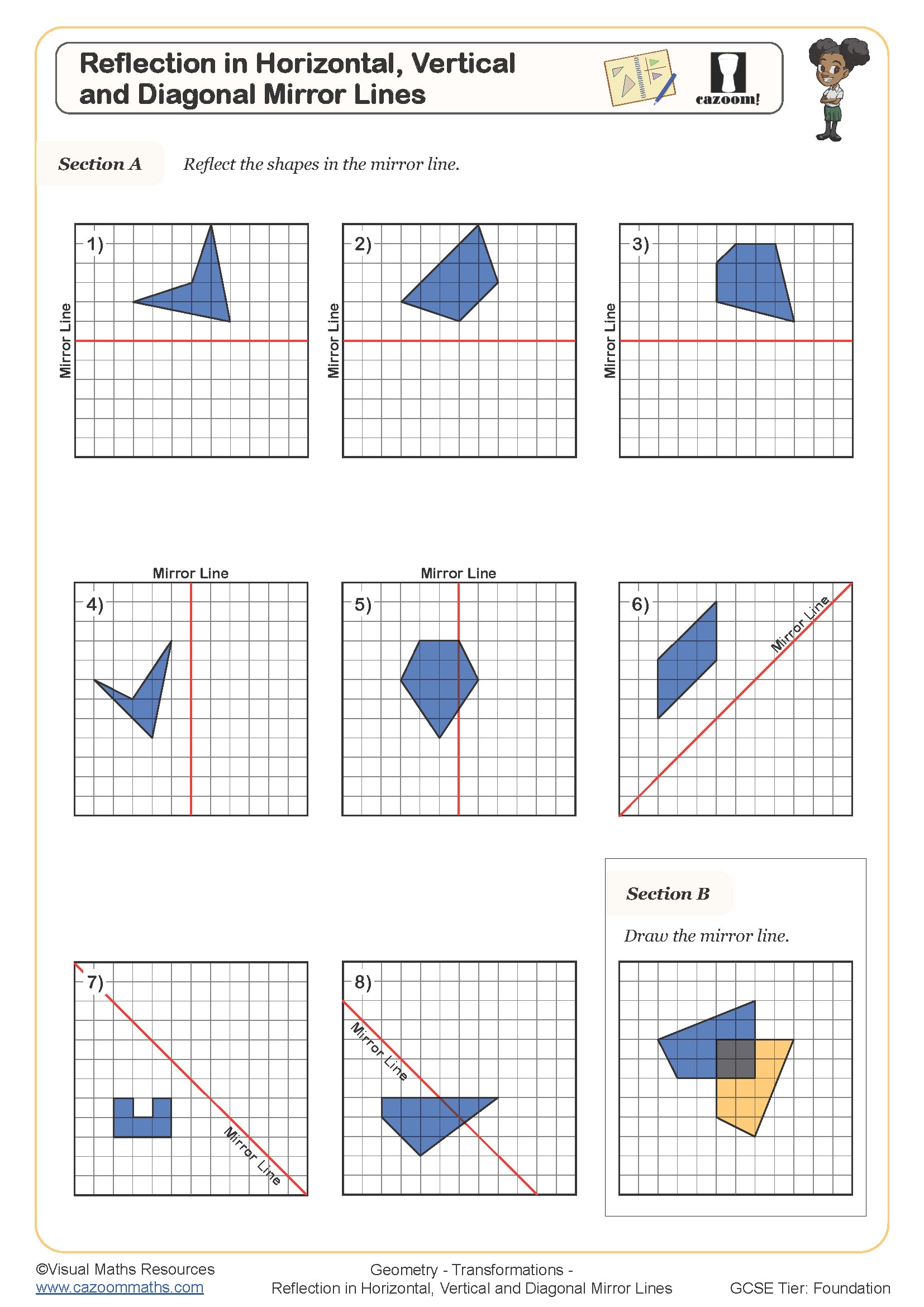
Refelction in Horizontal and Vertical Mirror Lines
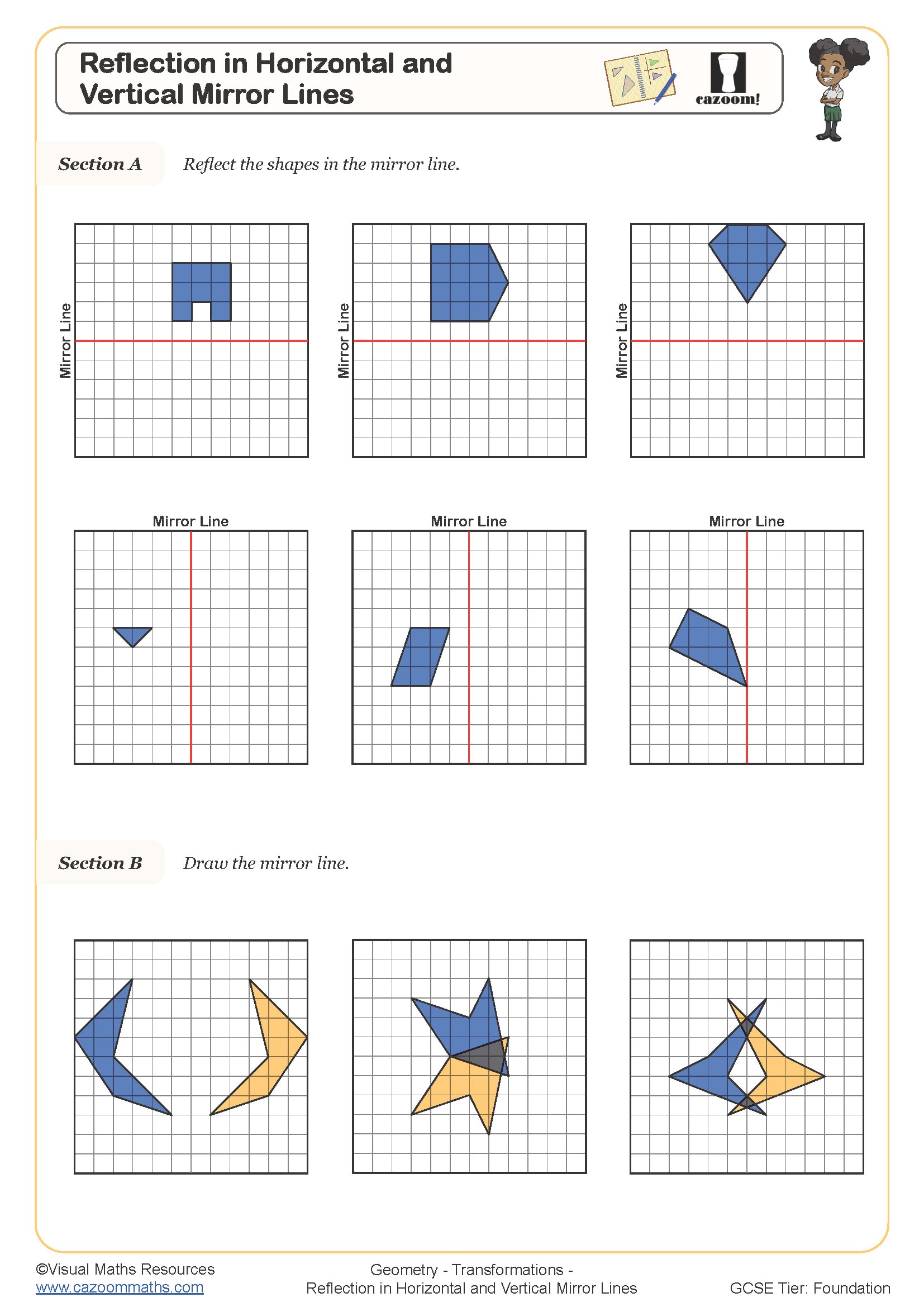
Reflecting in Lines Parallel to the Axes
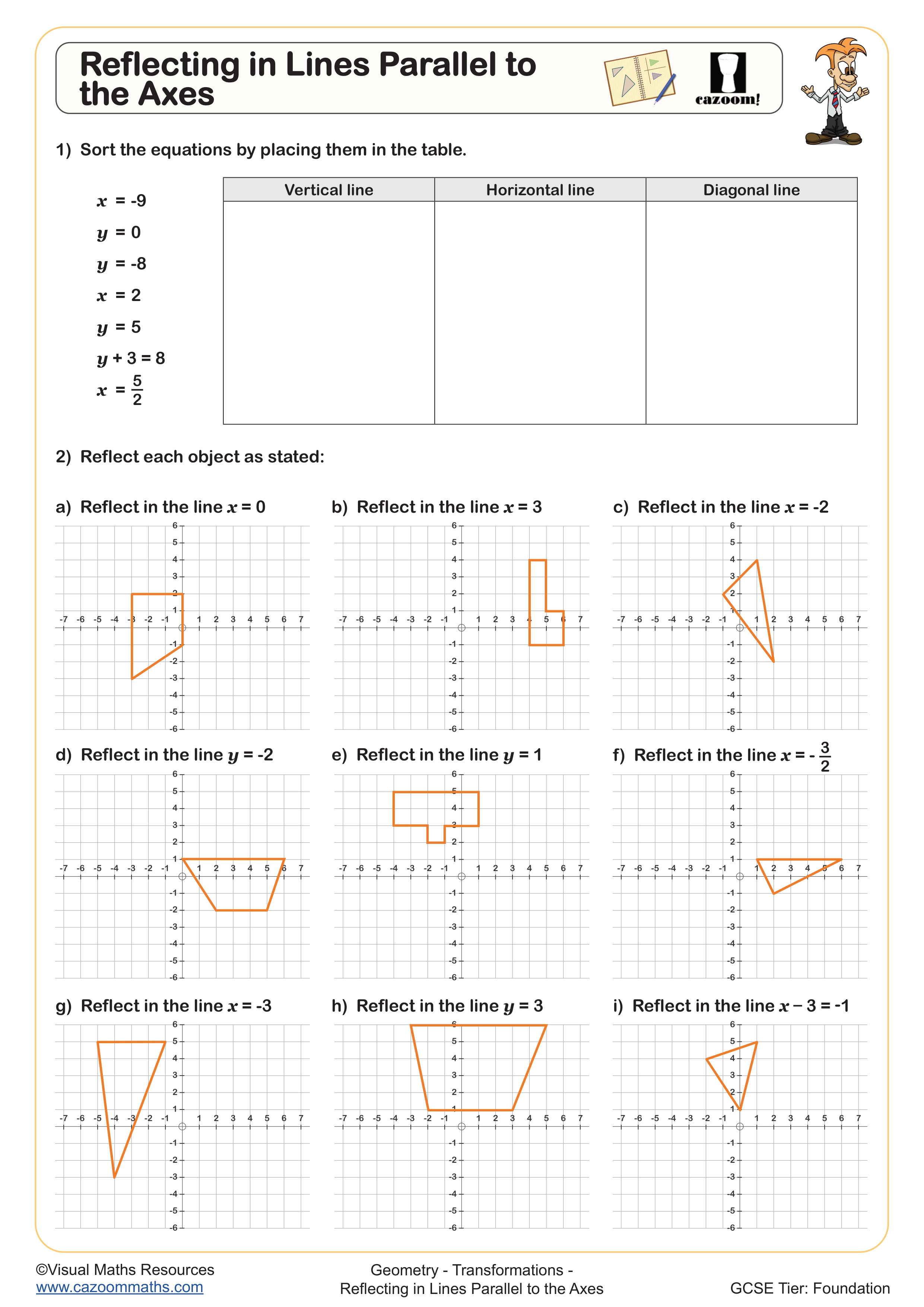
Reflection in Horizontal, Vertical and Diagonal Mirror Lines
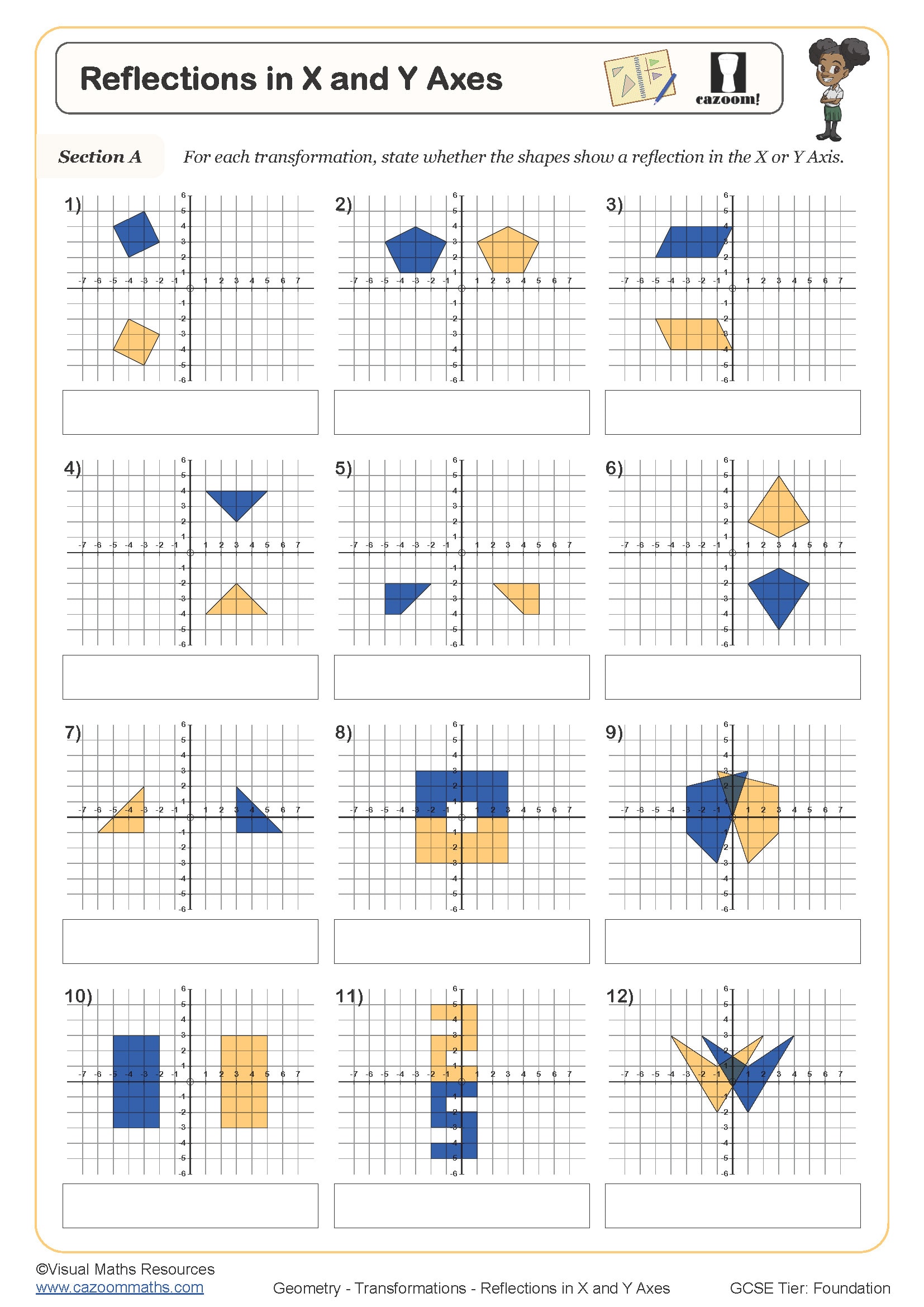
Reflections in X and Y Axes
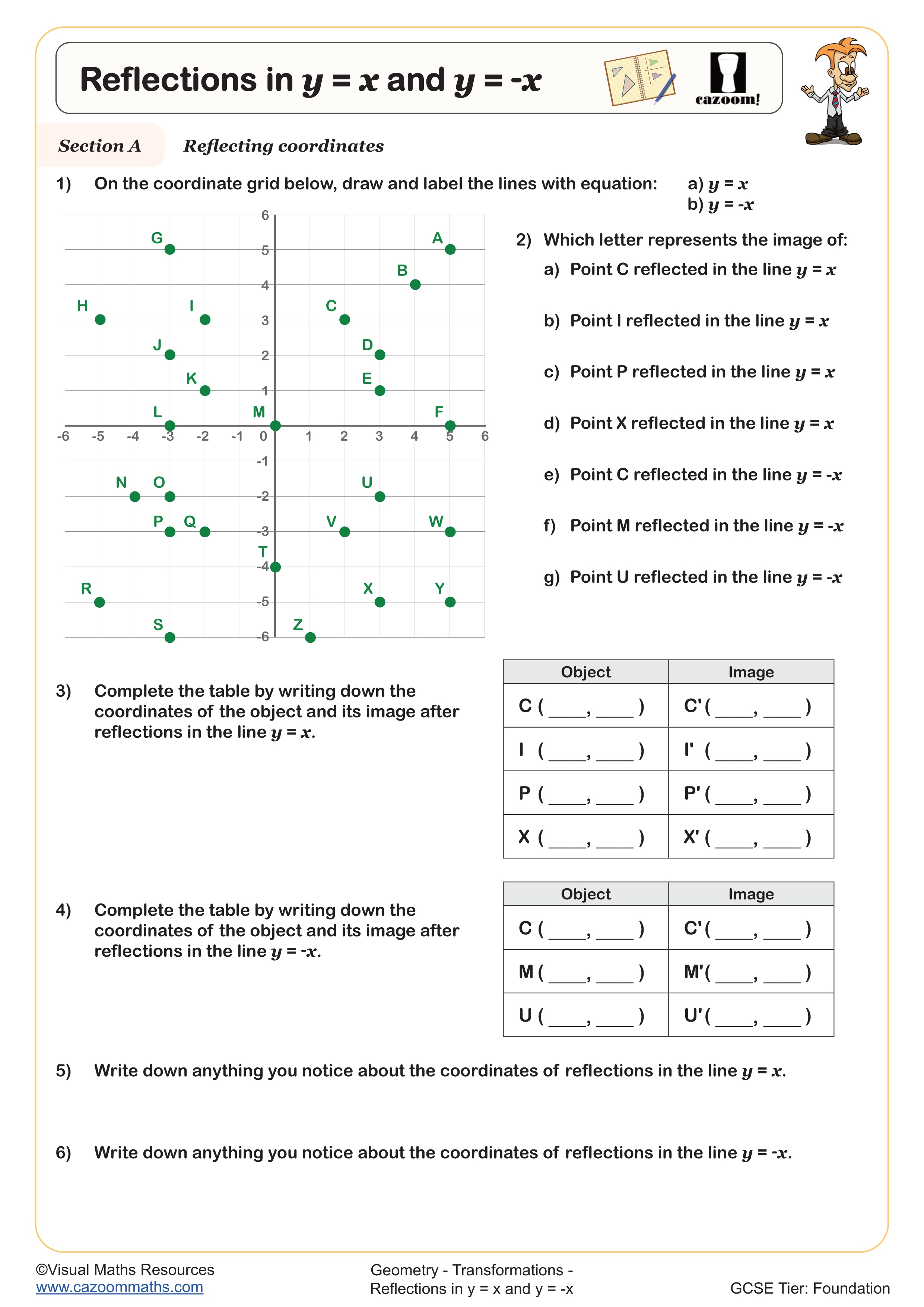
Reflections in 𝑦 = 𝑥 and 𝑦 = -𝑥
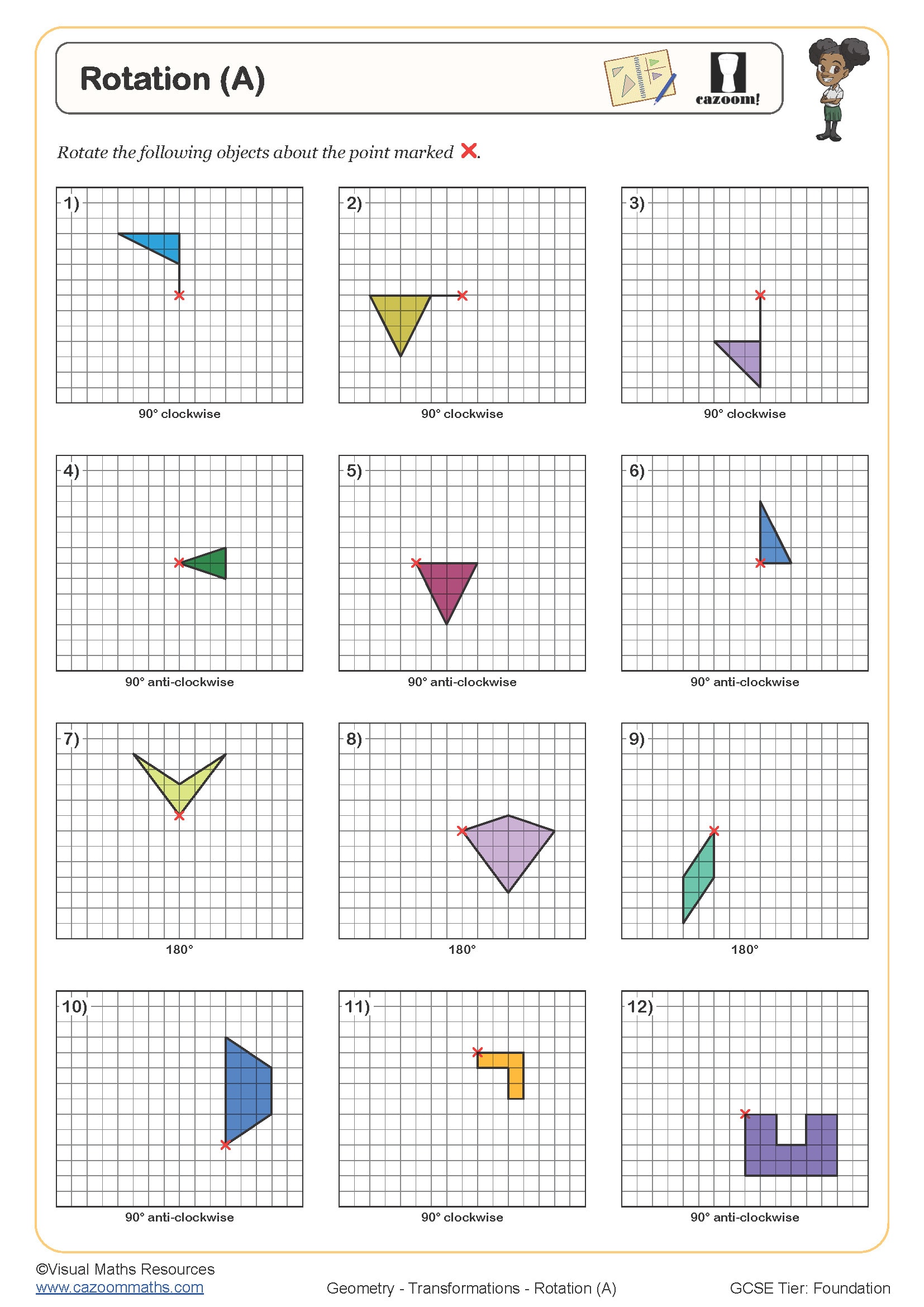
Rotation (A)
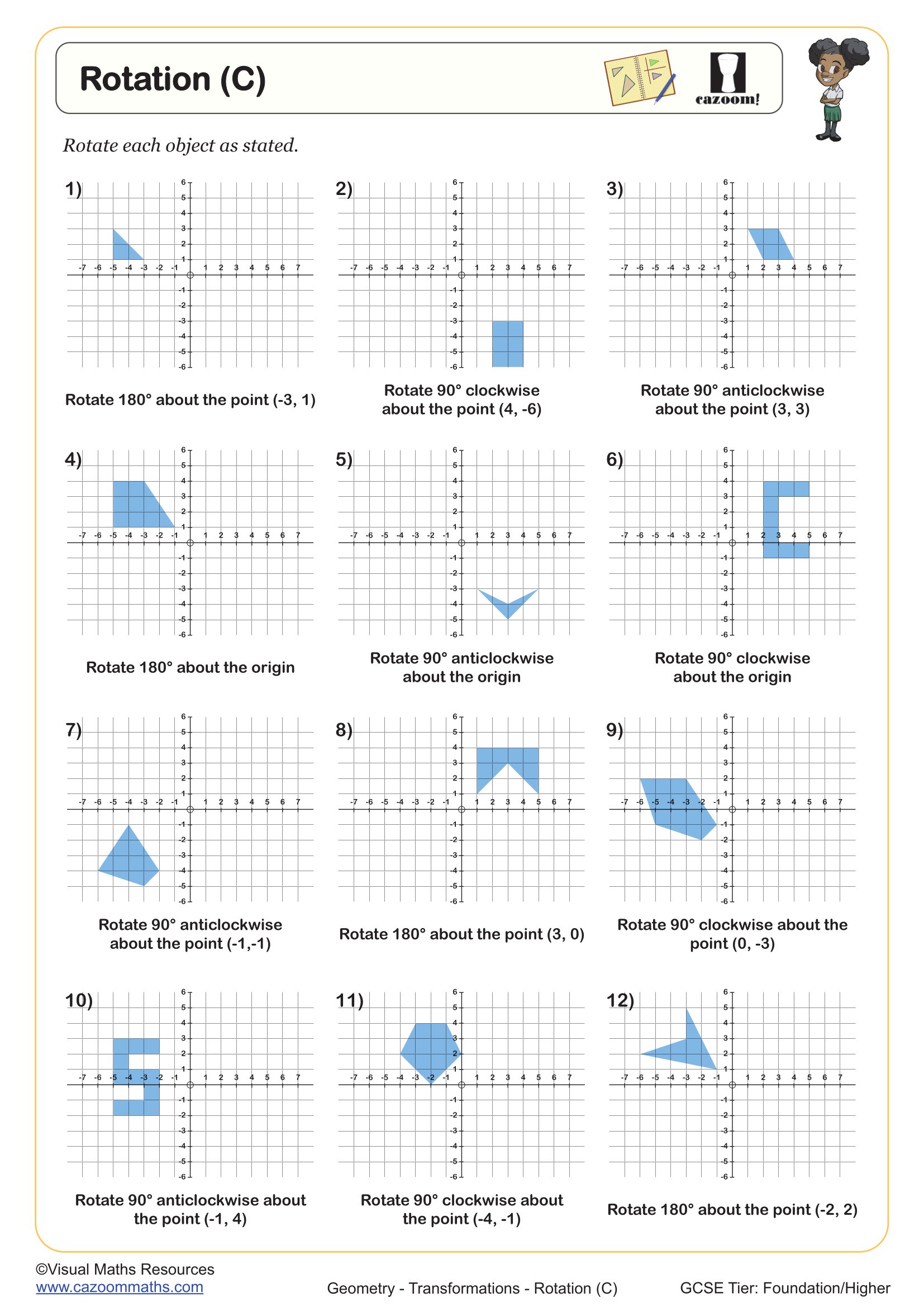
Rotation (C)
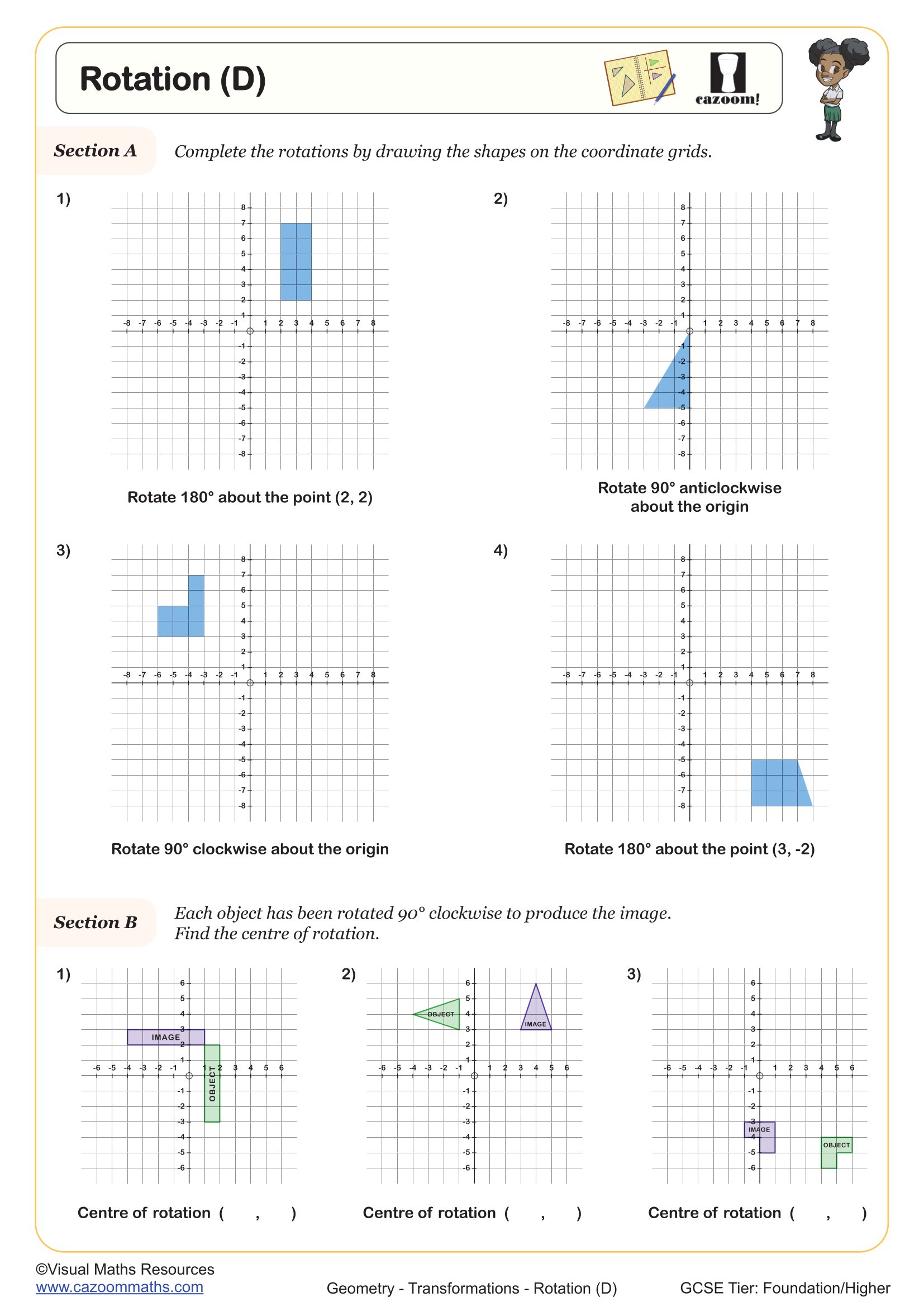
Rotation (D)
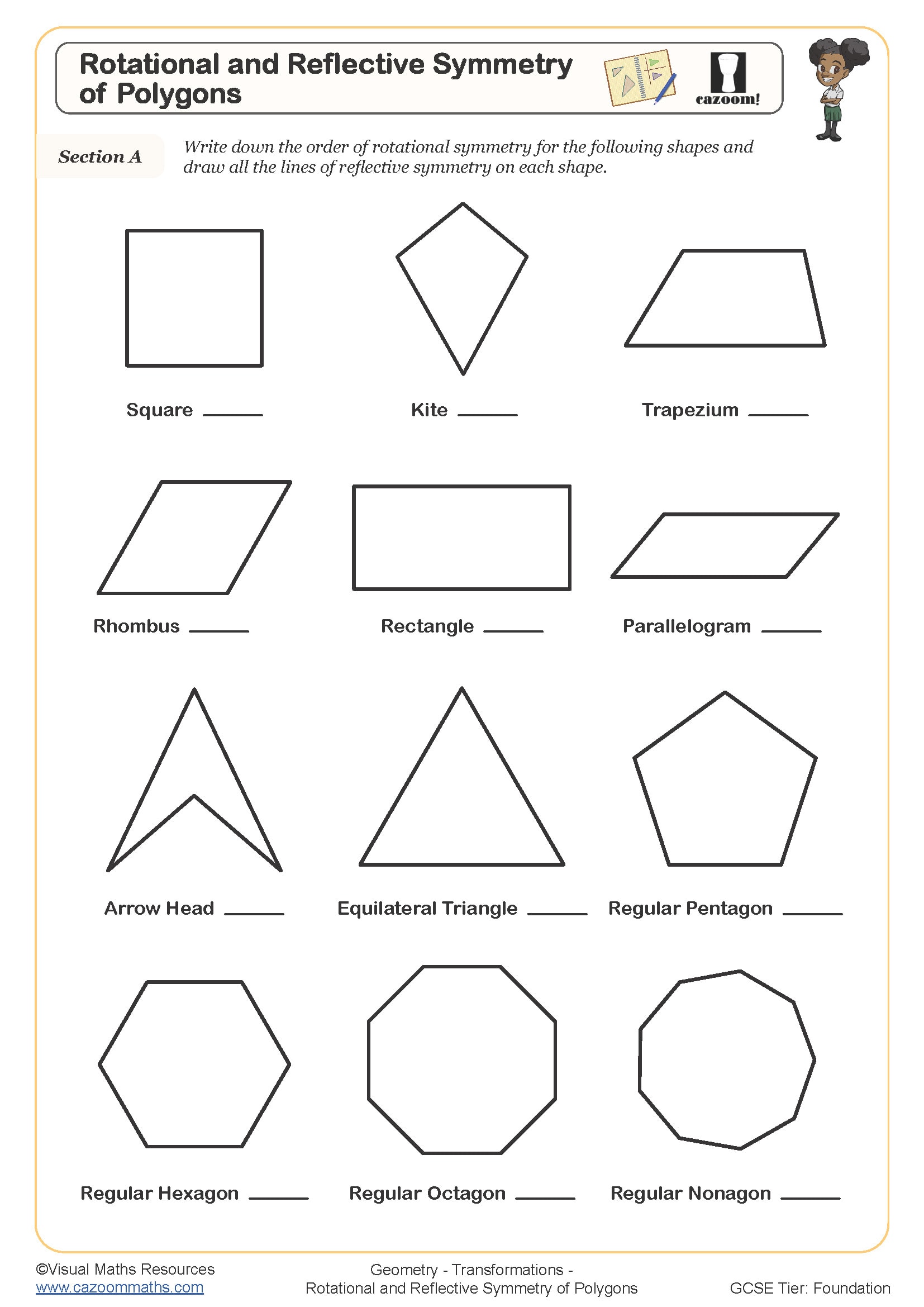
Rotational and Refelctive Symmetry of Polygons
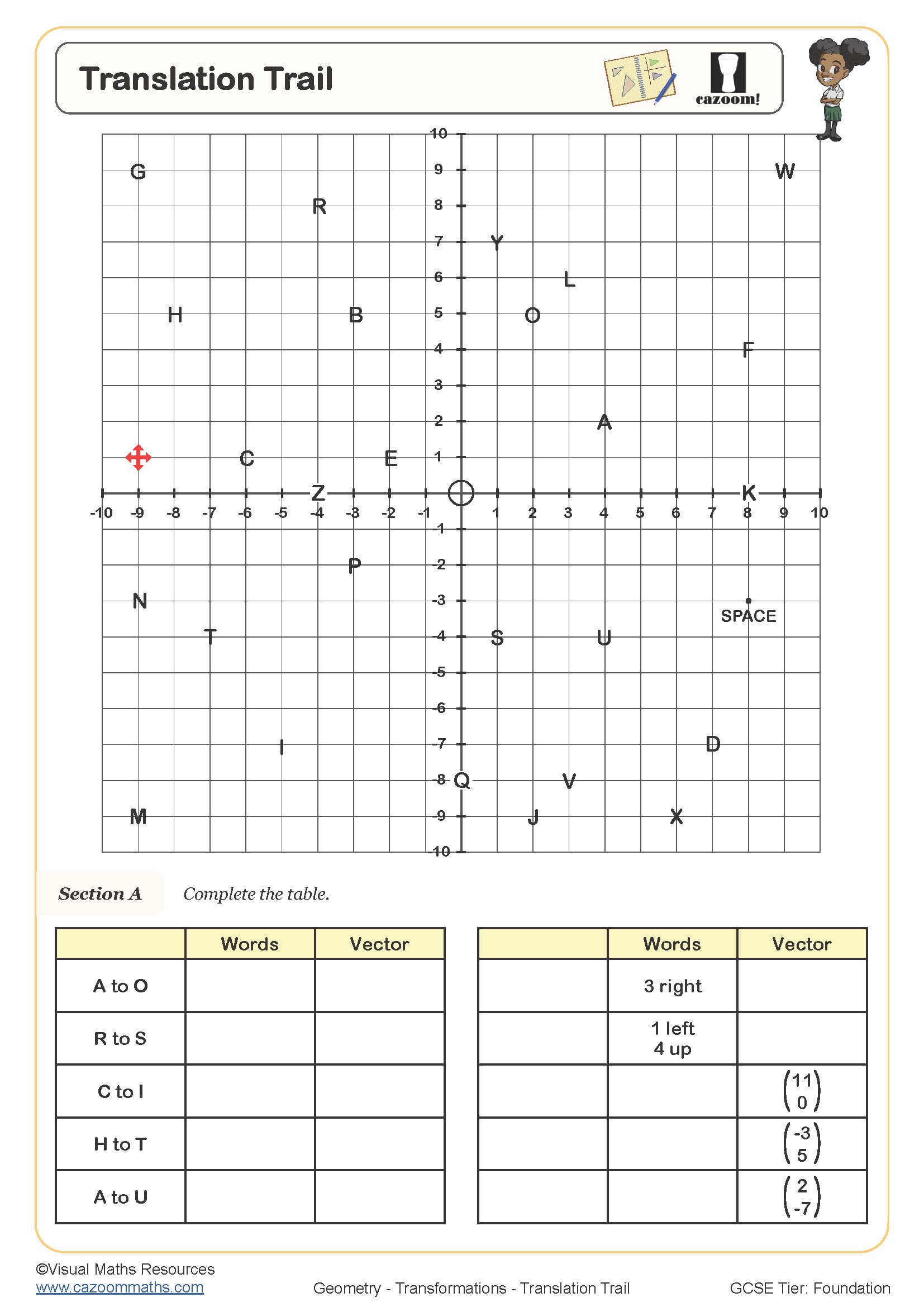
Translation Trail
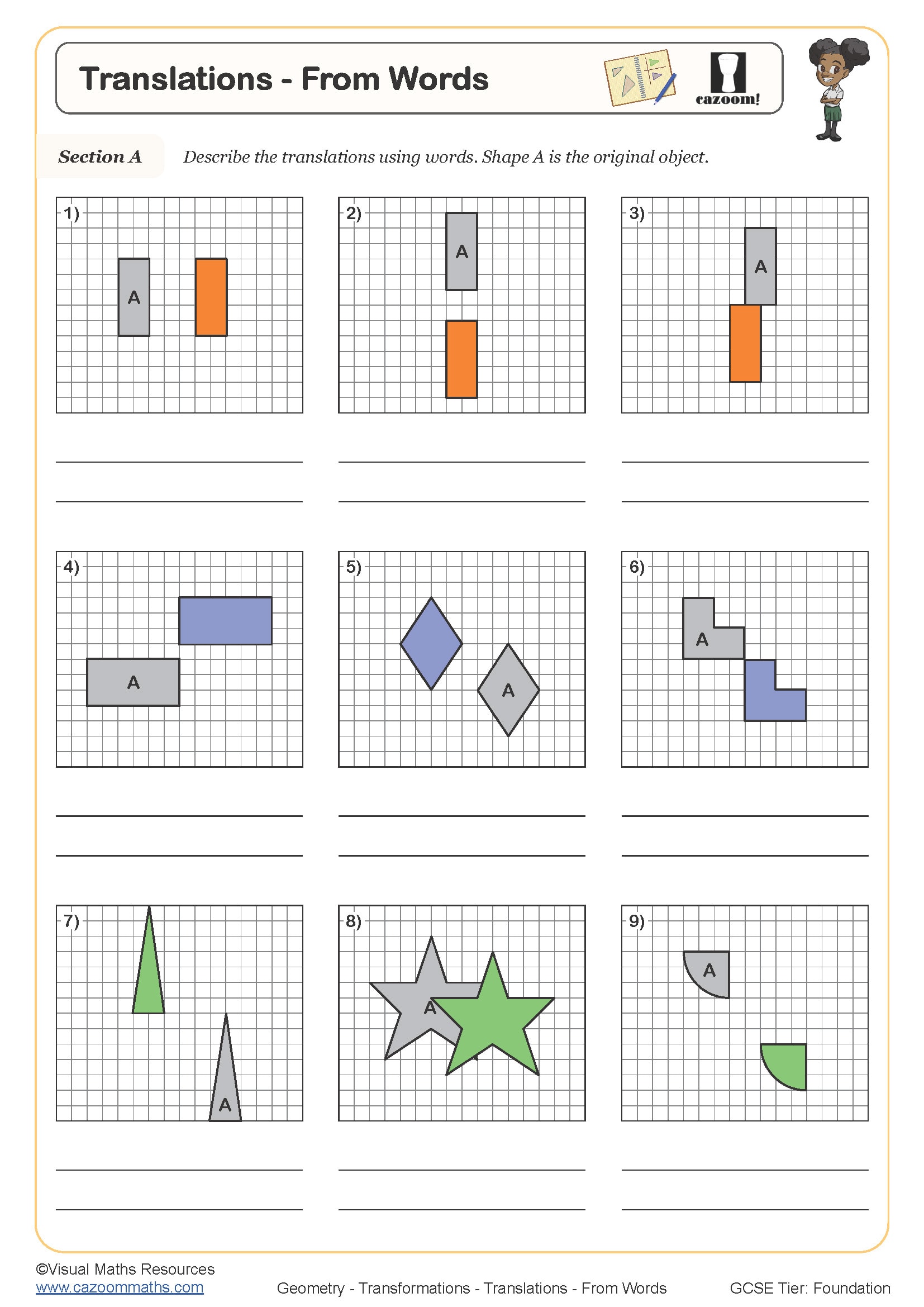
Translations - from Words
All worksheets are created by the team of experienced teachers at Cazoom Maths.
What are the four types of transformations in maths?
The four transformations taught at KS3 are translation (sliding a shape without rotating it), rotation (turning a shape around a fixed point), reflection (flipping a shape across a mirror line) and enlargement (changing the size of a shape using a scale factor from a centre of enlargement). These appear throughout the National Curriculum from Year 7 onwards and feature heavily in GCSE Foundation and Higher papers.
Students frequently confuse rotation and reflection, particularly when shapes end up in similar positions. A common error occurs when describing rotations—students forget to specify all three requirements: the angle, direction and centre of rotation. Exam mark schemes consistently penalise incomplete descriptions, even when the transformation itself is correctly identified.
Which year groups study transformations?
Transformations appear across Year 7, Year 8 and Year 9 as part of the KS3 geometry curriculum. Year 7 typically introduces translations and simple reflections in horizontal or vertical mirror lines, building on primary work with symmetry. Year 8 extends to reflections in diagonal lines, rotations around any point, and introduces enlargement with positive integer scale factors.
By Year 9, students work with fractional and negative scale factors, combining multiple transformations and exploring how similarity connects to enlargement. Teachers notice the jump in difficulty between describing a transformation and actually performing it accurately—many students can explain what a rotation is but lose marks through careless plotting when the centre isn't at the origin.
How do transformations relate to similarity?
Similarity occurs when one shape is an enlargement of another, meaning corresponding angles remain equal whilst corresponding sides are in proportion. Unlike translations, rotations and reflections (which preserve size), enlargements change dimensions but maintain the shape's proportions. Students learn to identify similar shapes, calculate scale factors and find missing lengths using ratio, skills that directly prepare them for GCSE similarity questions.
Similarity appears across STEM fields—architects use it when creating scale drawings of buildings, engineers apply it when designing components that must fit together, and medical imaging relies on similarity when enlarging X-rays or scans for analysis. Understanding that enlargement creates mathematically similar shapes helps students recognise why maps, models and technical drawings work as reliable representations of real objects.
How can these transformation worksheets be used effectively?
The worksheets build from straightforward single transformations through to more demanding multi-step problems, allowing students to consolidate basics before tackling exam-style questions. Each sheet includes coordinate grids where needed, clearly labelled shapes and space for working, helping students develop systematic approaches to describing transformations fully. The answer sheets show exact positioning and include complete descriptions, making self-marking productive.
Many teachers use these during intervention sessions with students who struggle to visualise transformations, as the structured practice helps identify specific misconceptions—whether that's confusion about centres of rotation or difficulty with negative scale factors. They work well for homework following initial teaching, as starters to recap prior learning, or during revision where students need targeted practice on weaker transformation types without reteaching the entire topic.