KS3 Volume and Surface Area Worksheets
Frustums
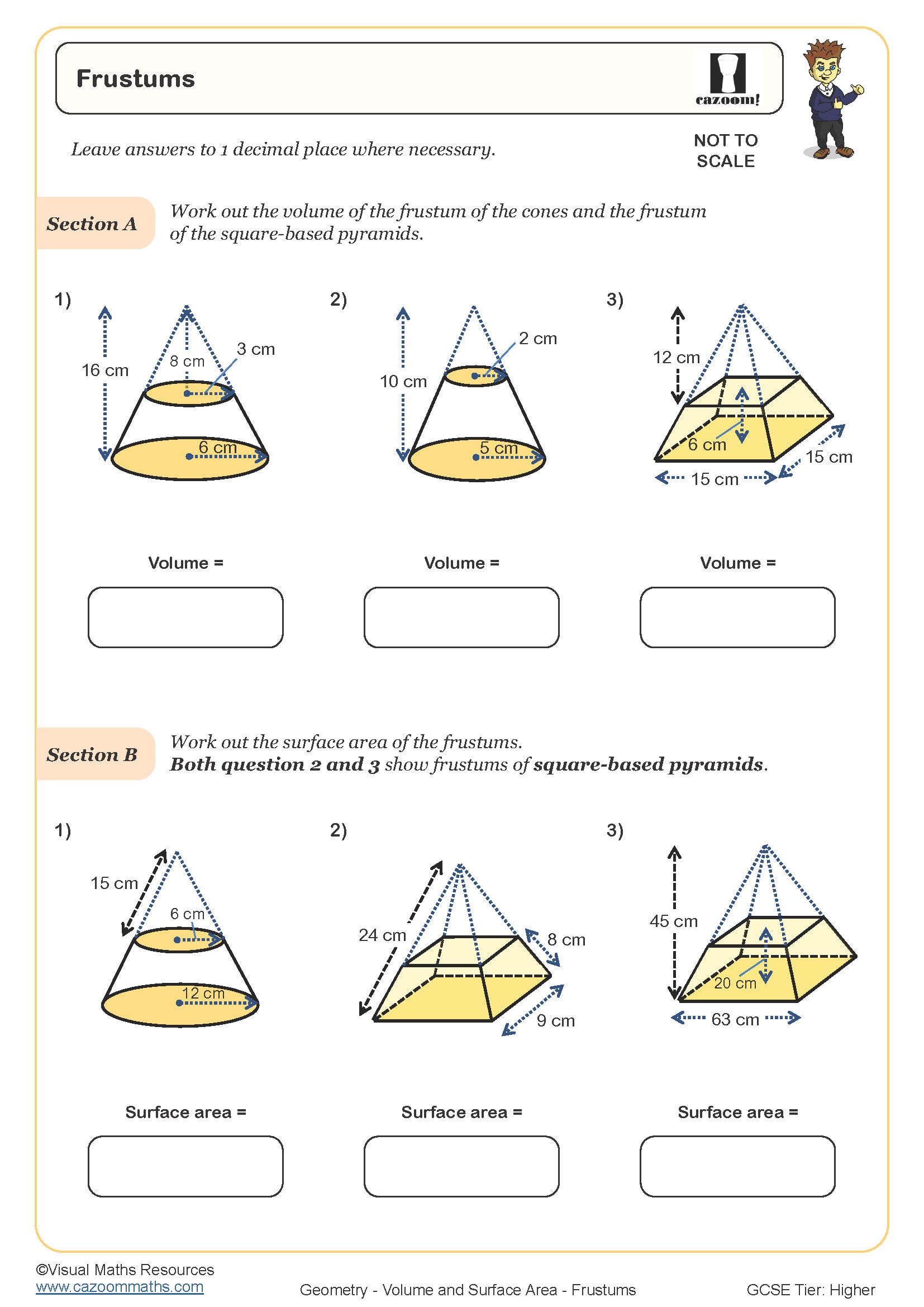
In Terms of Pi (C)
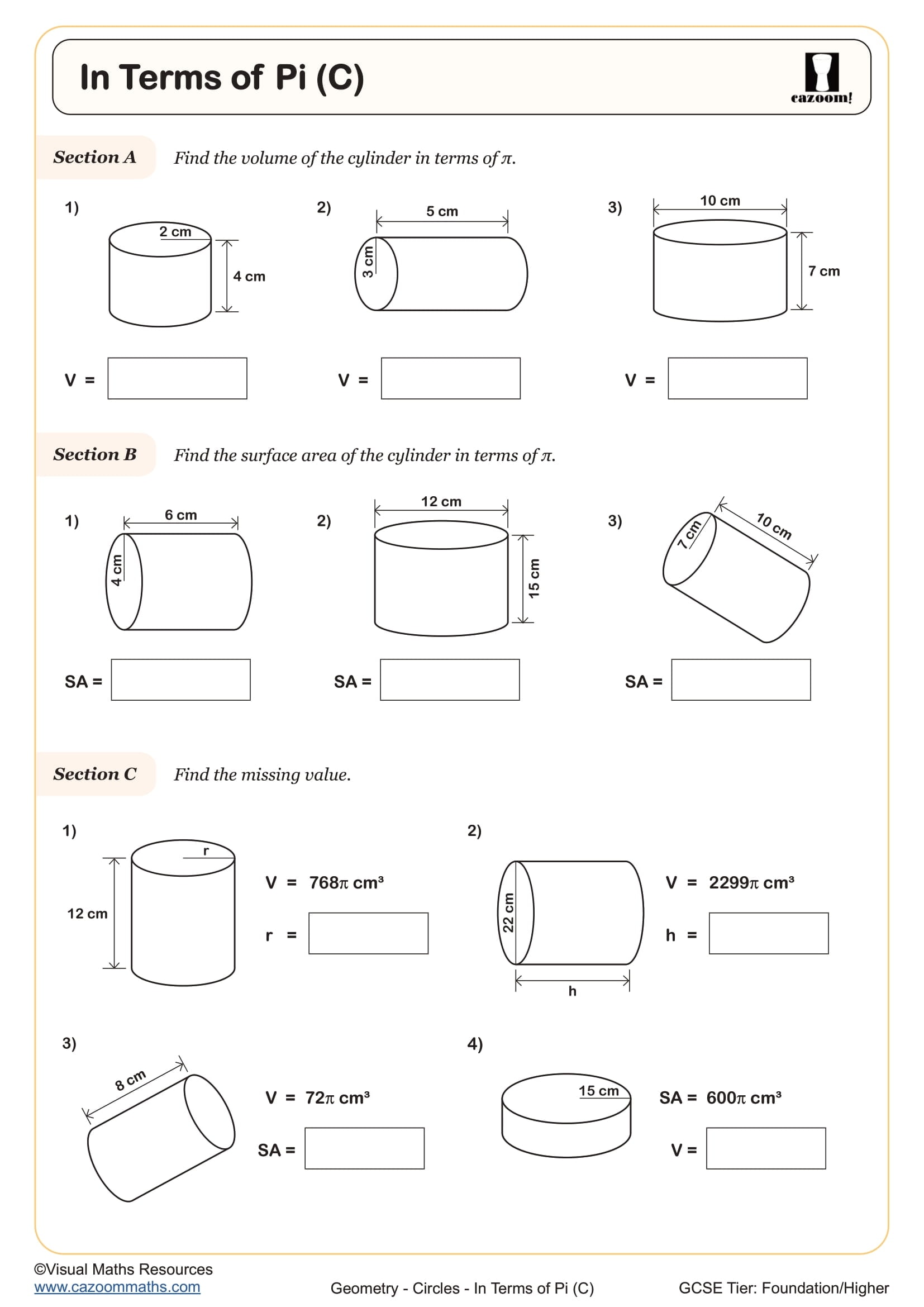
Recognising Prisms
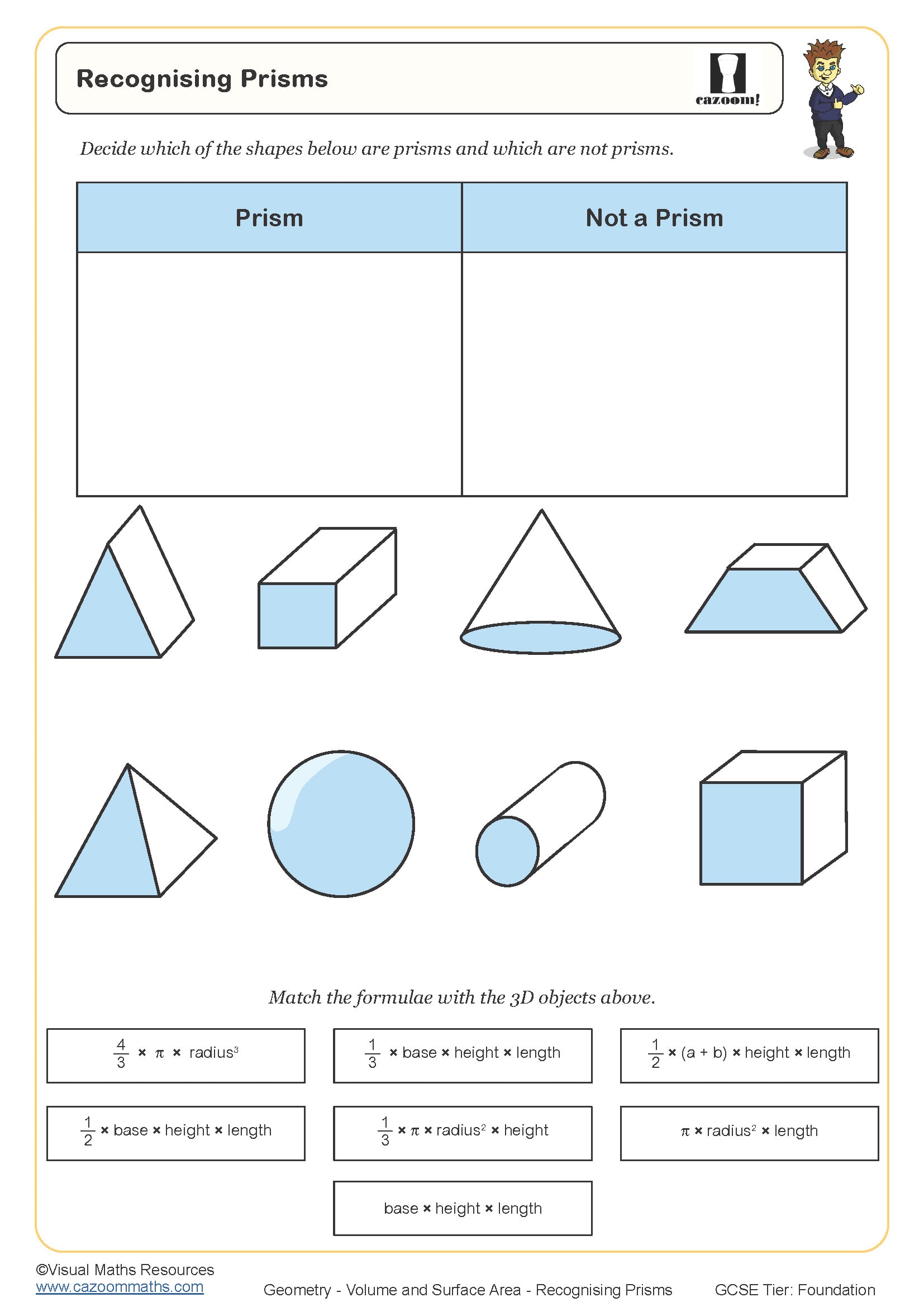
Surface Area of Cuboids
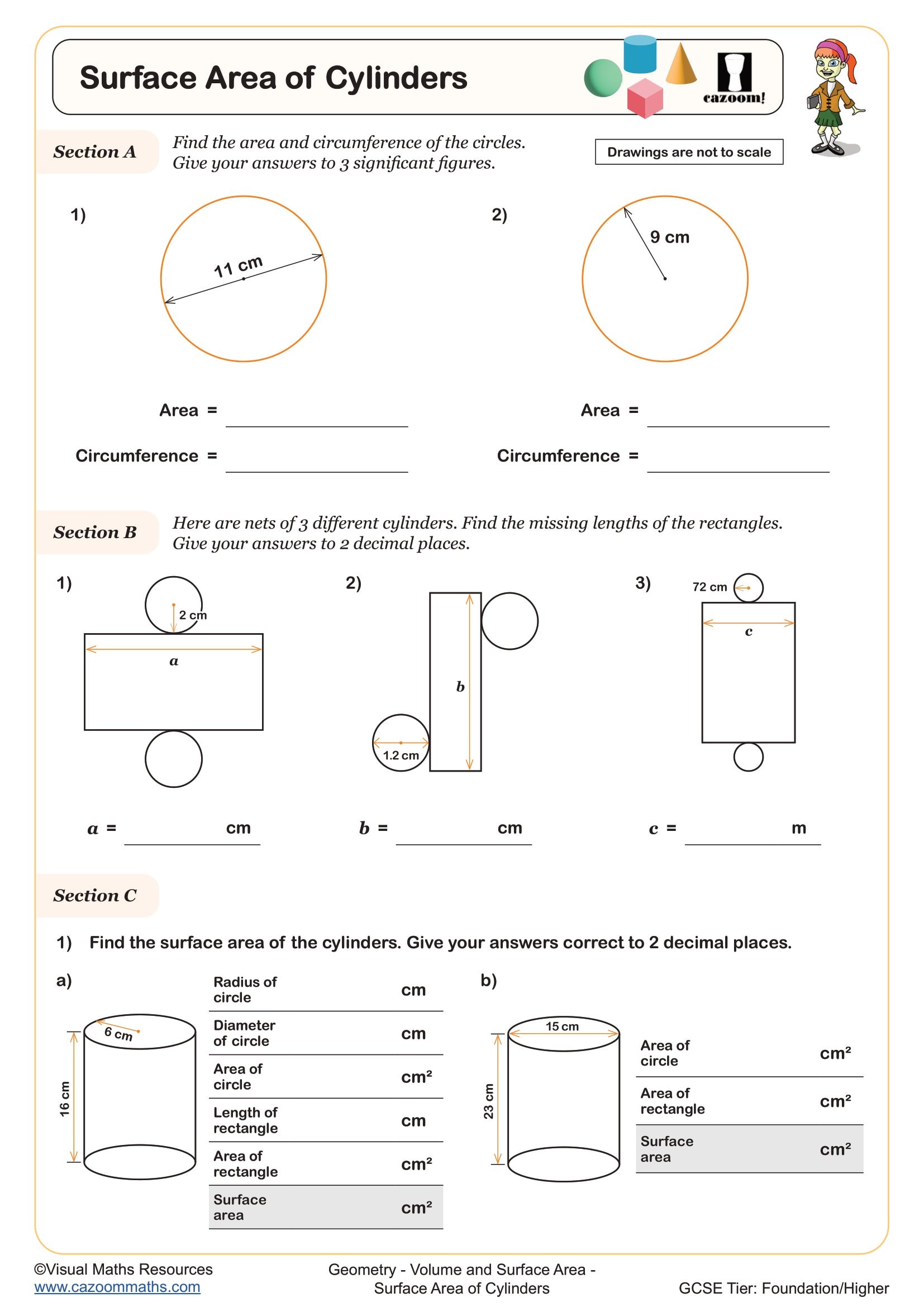
Surface Area of Cylinders
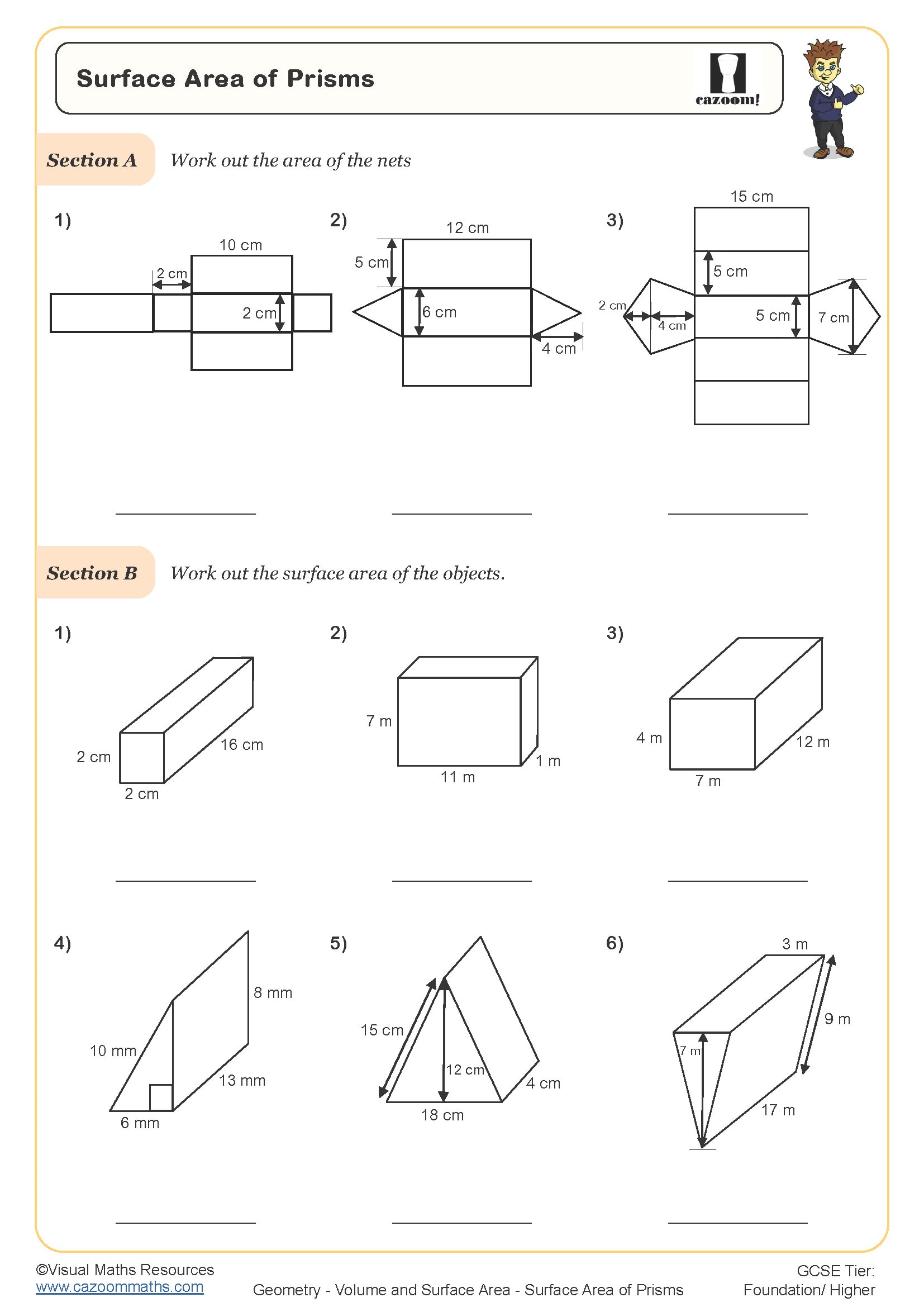
Surface Area of Prisms
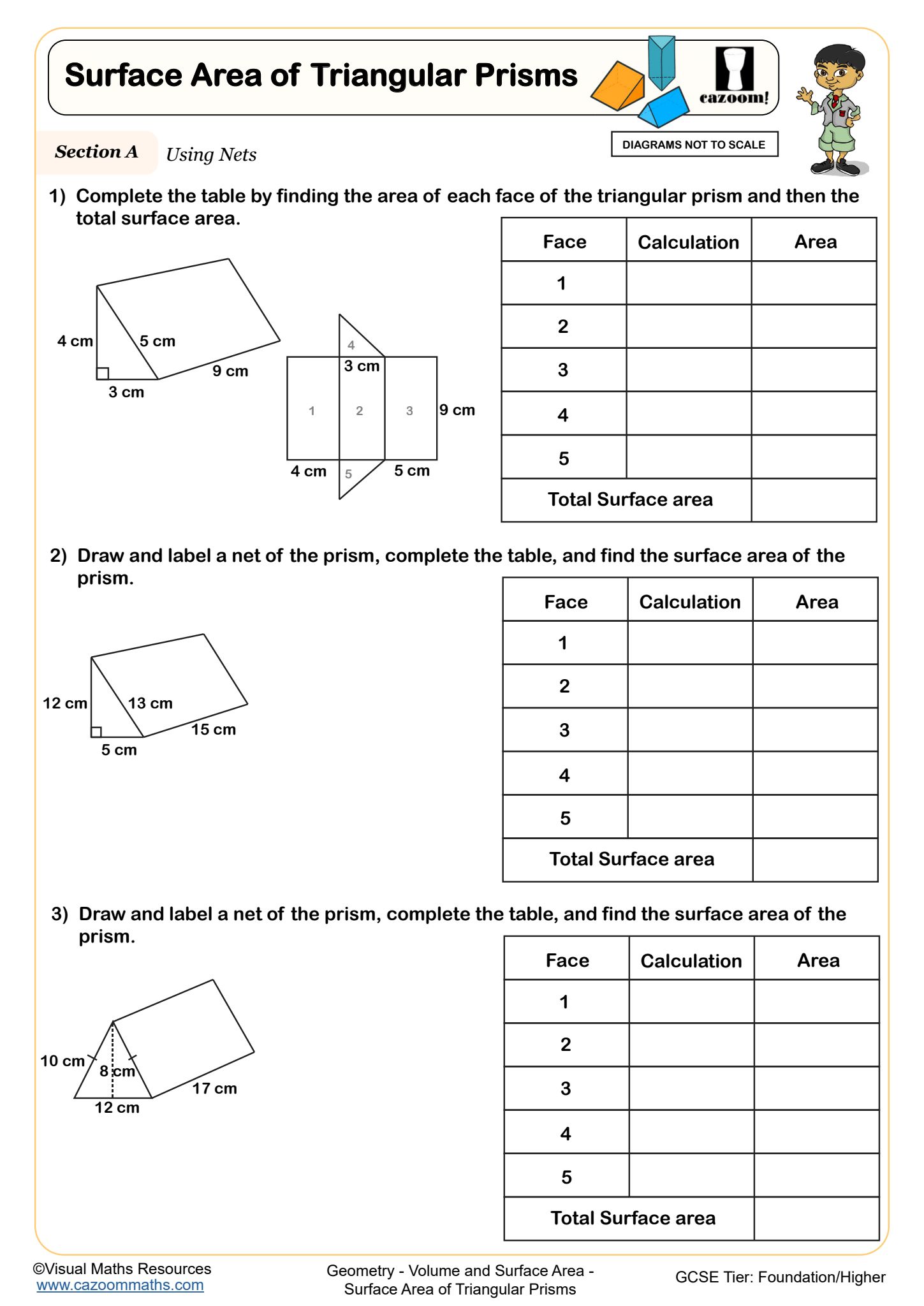
Surface Area of Triangular Prisms
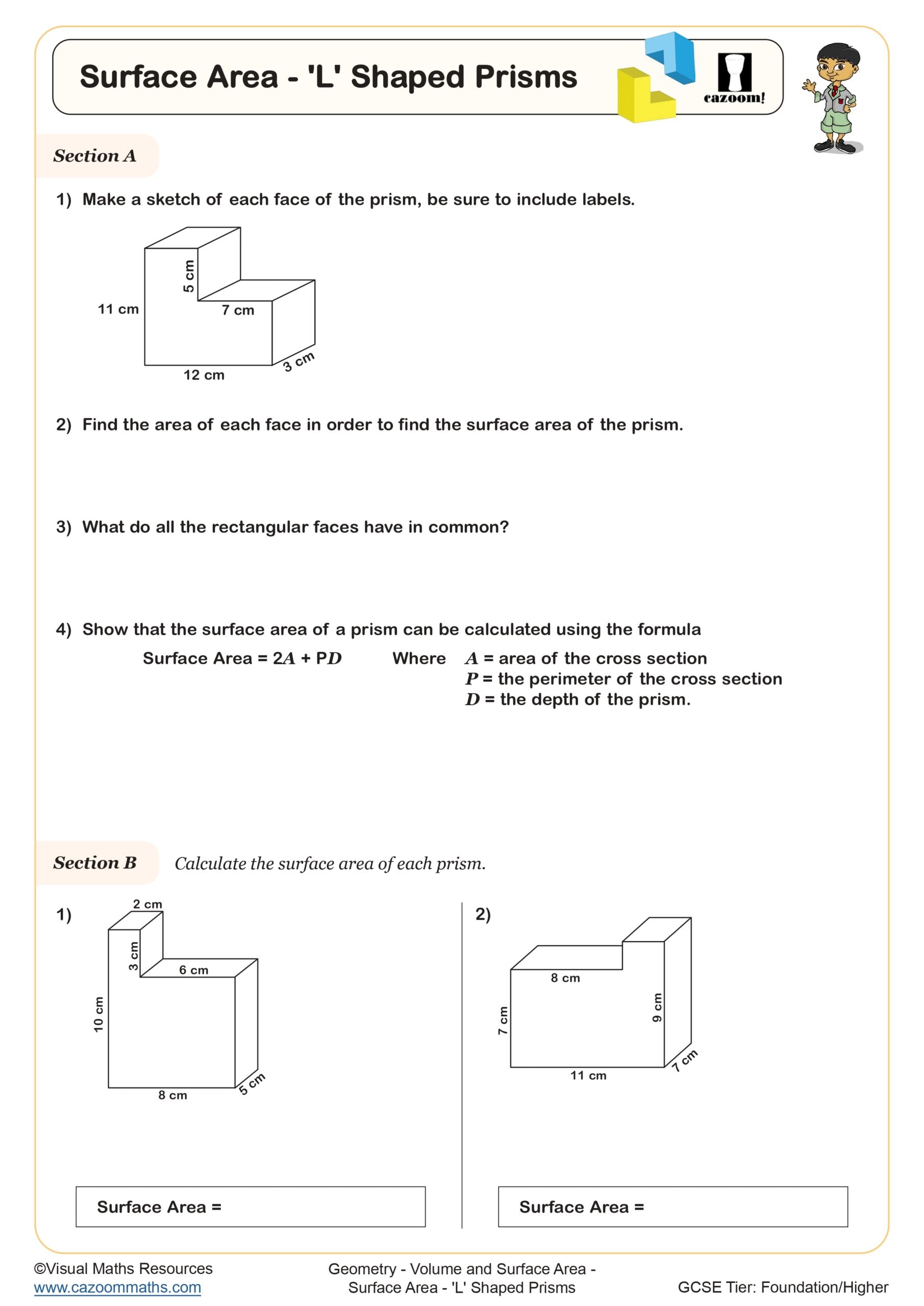
Surface Area- 'L' Shaped Prisms
Volume and Surface Area of Cuboids
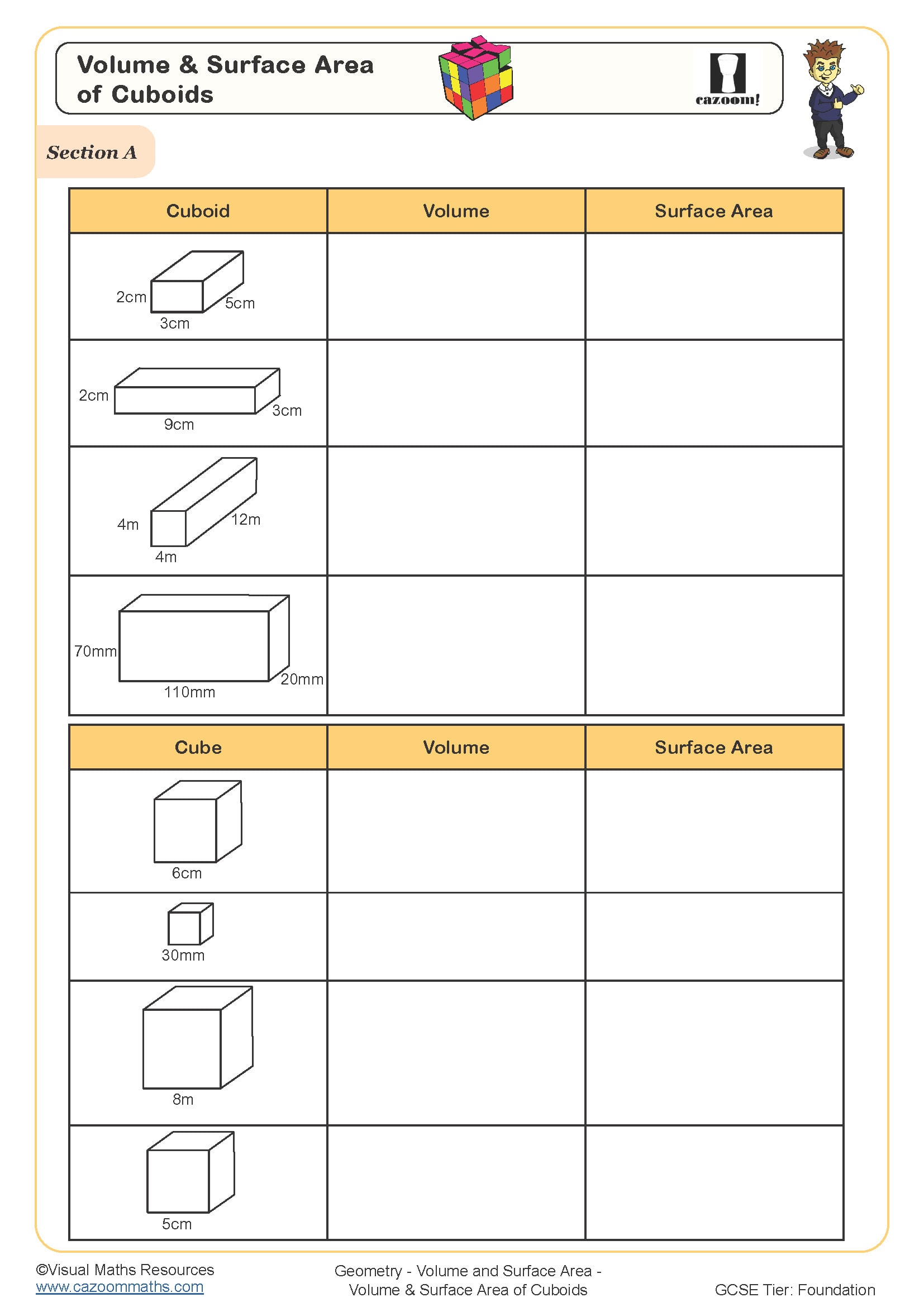
Volume of a Cylinder
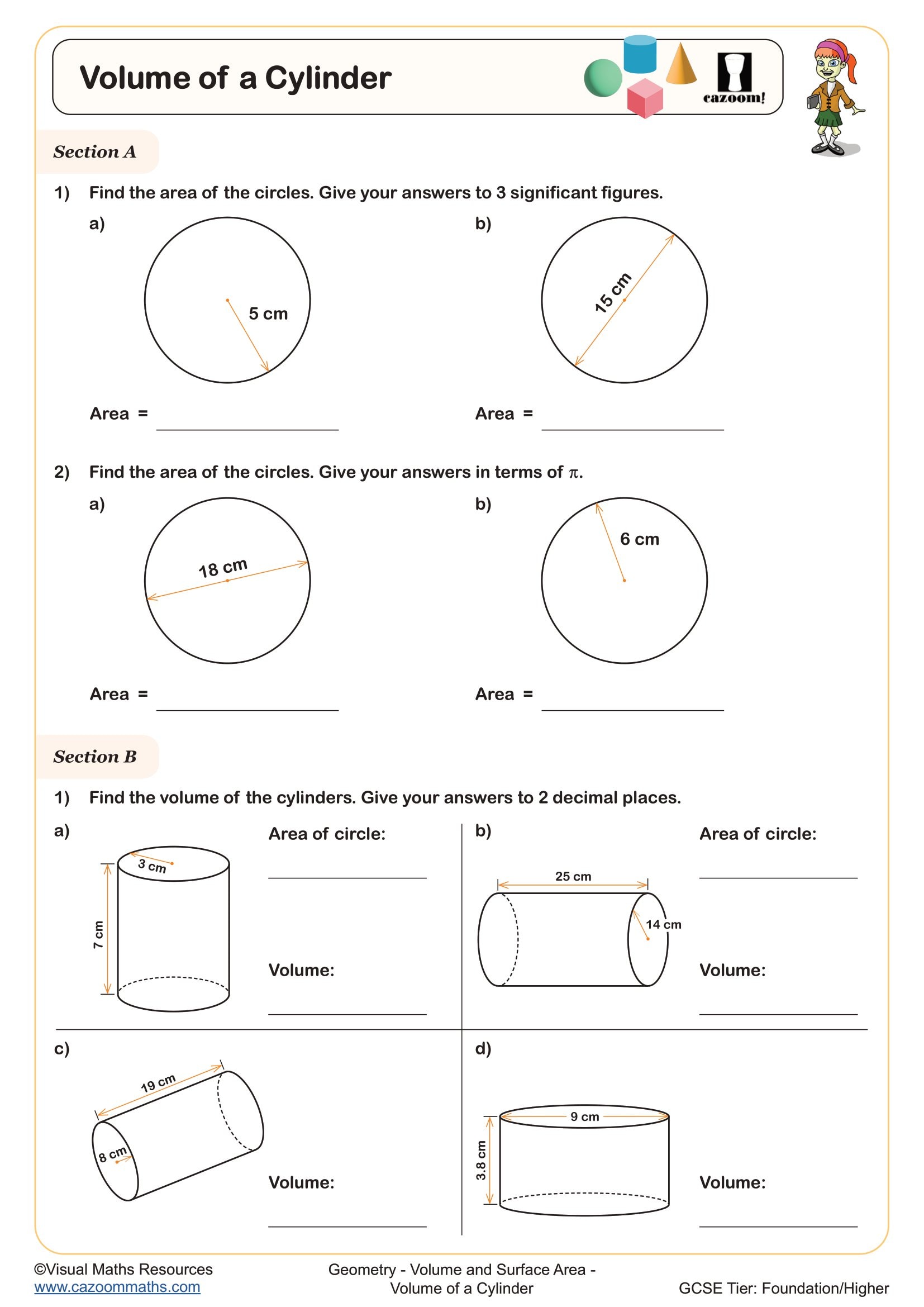
Volume of Compound 3D shapes
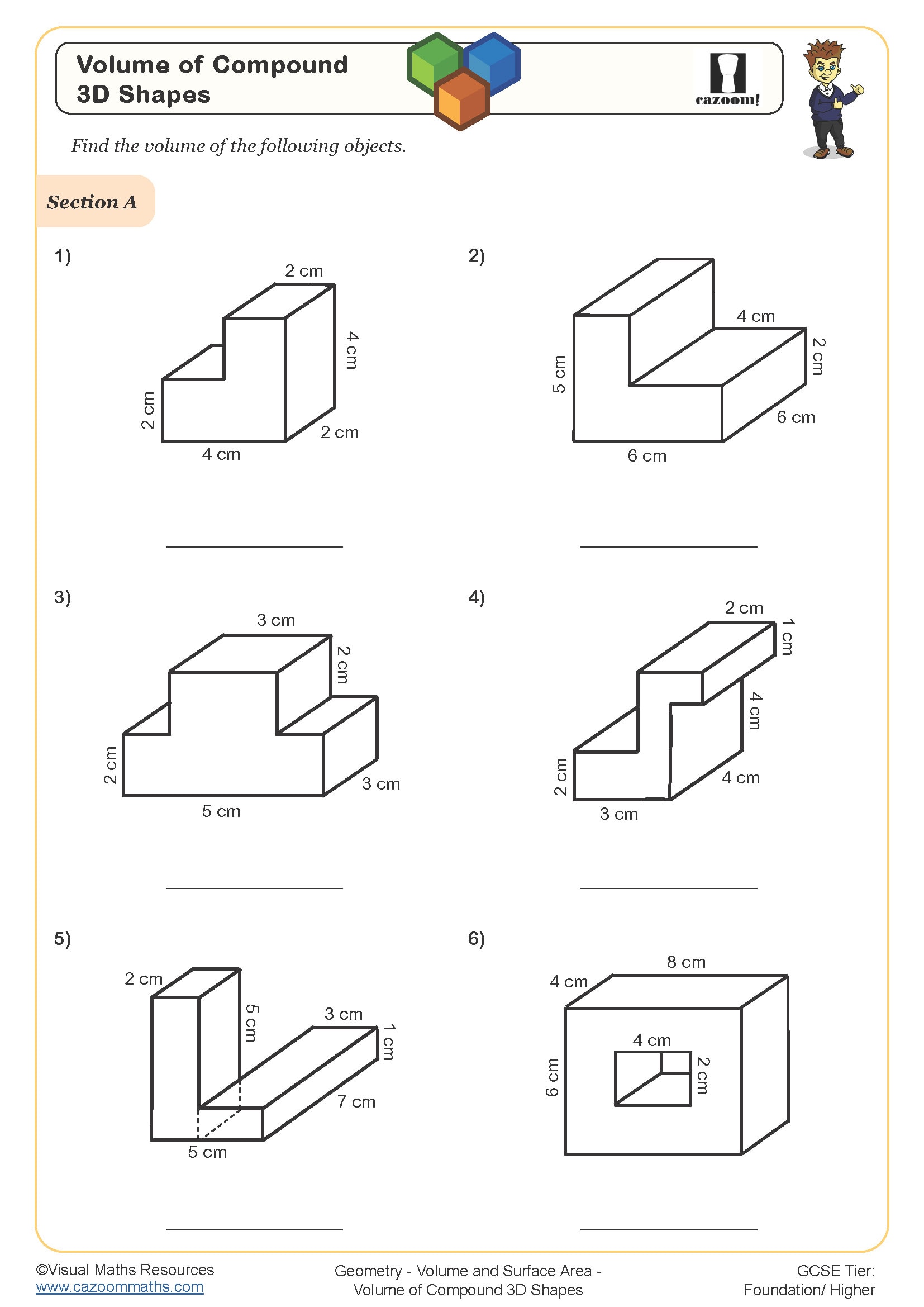
Volume of Cuboids
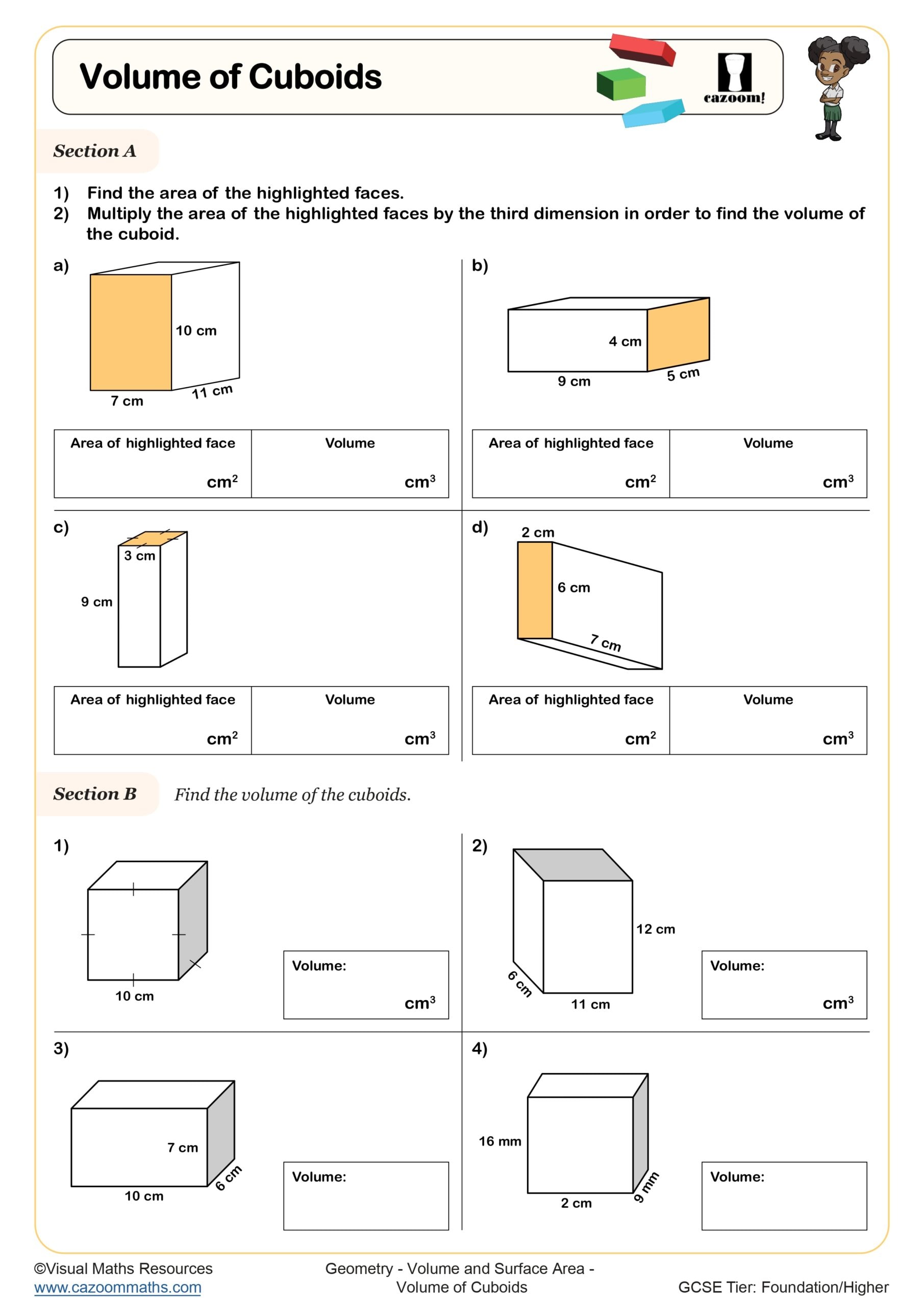
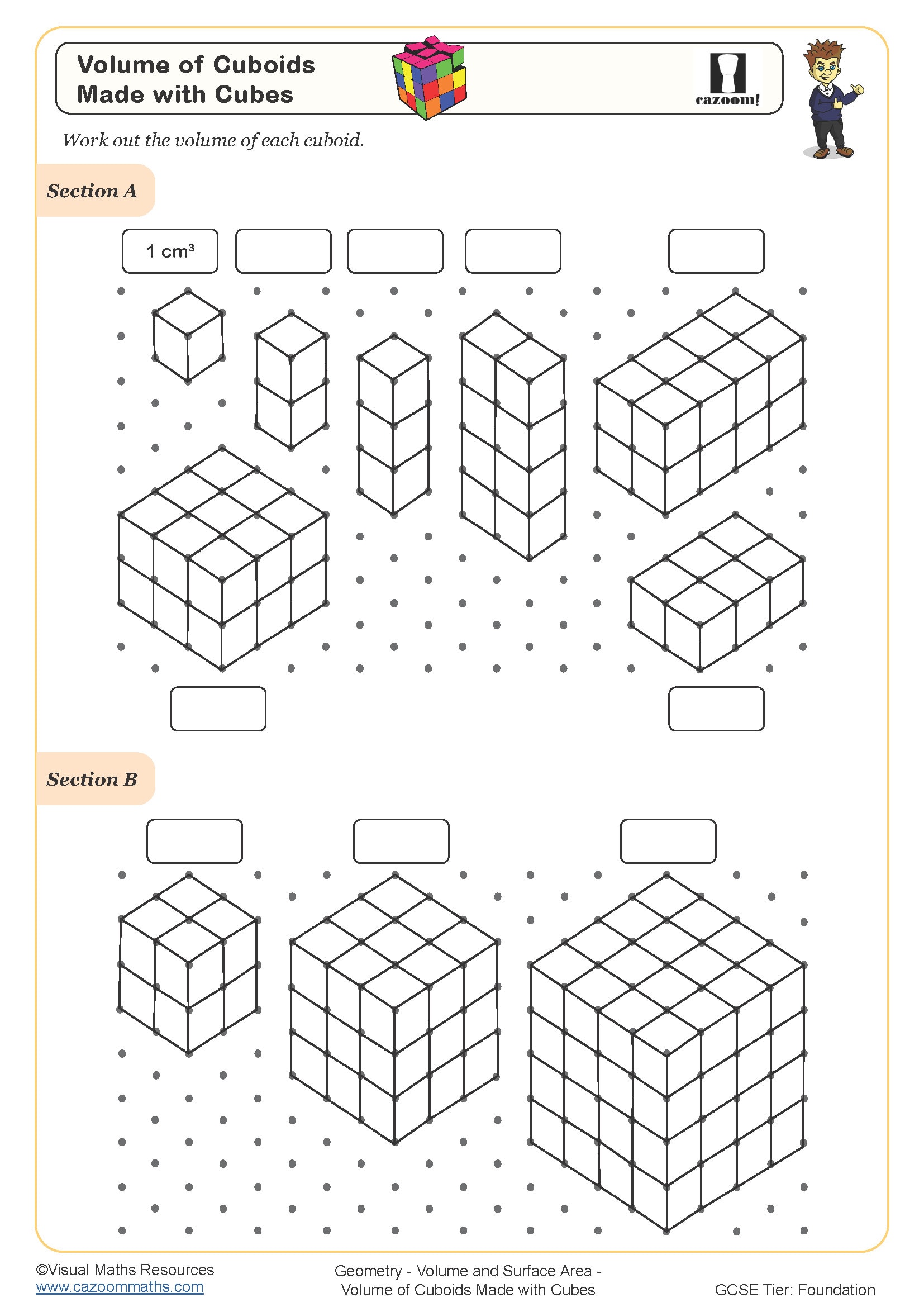
Volume of Cuboids made with Cubes
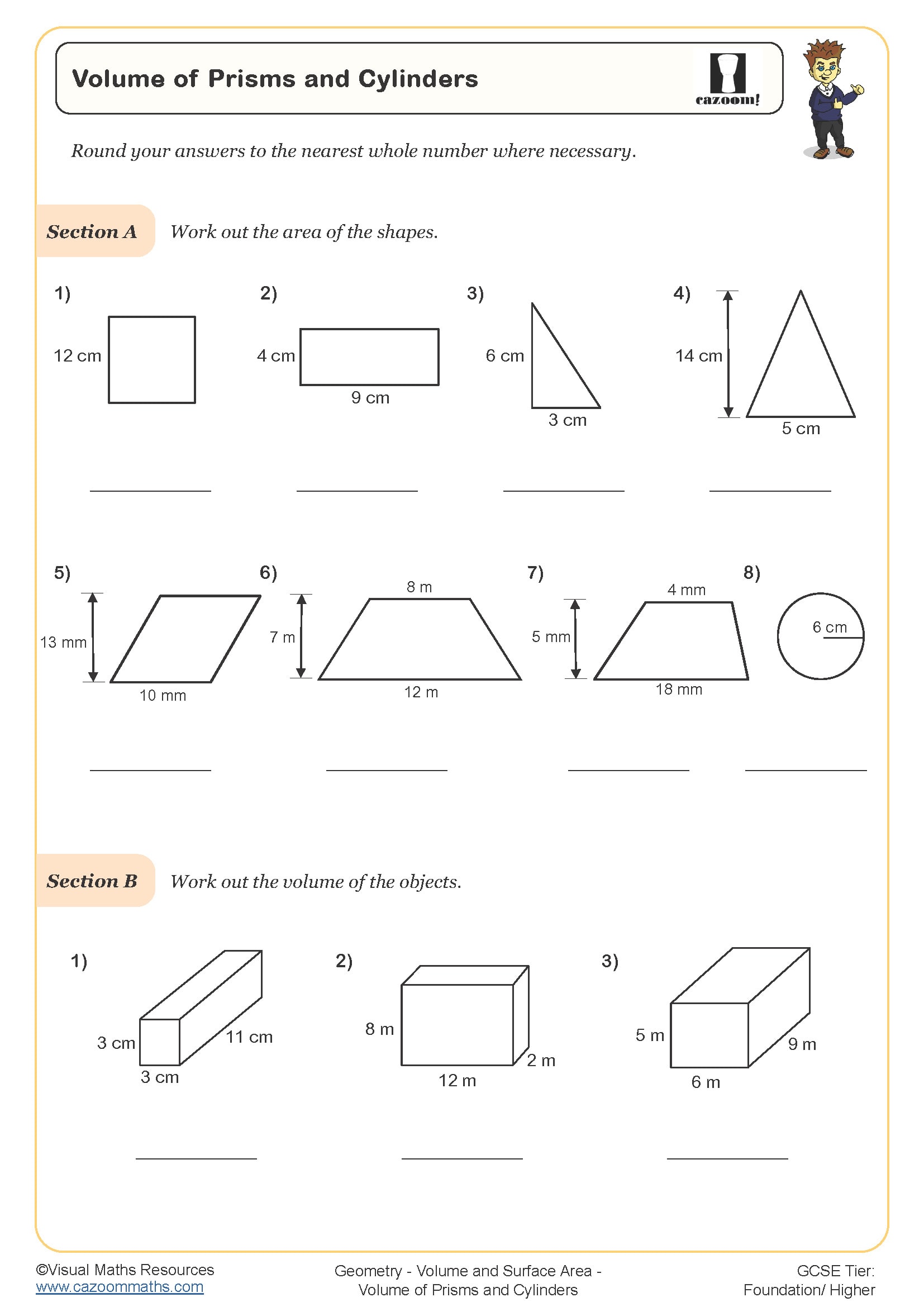
Volume of Prisms and Cylinders
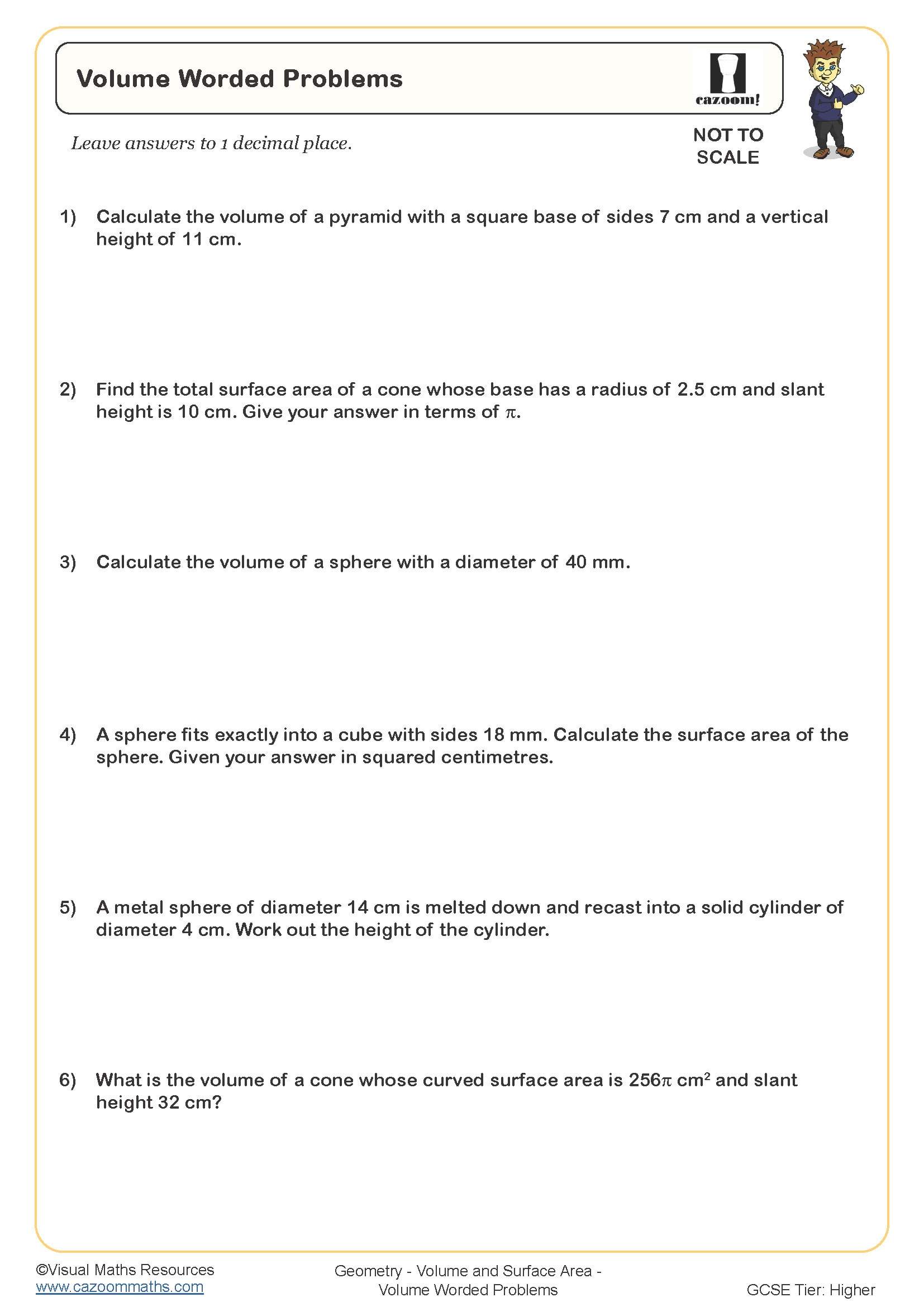
Volume Word Problems
All worksheets are created by the team of experienced teachers at Cazoom Maths.
What topics are covered in a volume worksheet for KS3 students?
A thorough volume worksheet for KS3 typically covers rectangular prisms, triangular prisms, cylinders, and compound shapes, aligning with National Curriculum requirements for 3D geometry. Students practise using formulas like V = lwh for cuboids and V = πr²h for cylinders, developing fluency with both exact and approximate answers.
Teachers frequently notice that students struggle most with units - forgetting to cube linear measurements or mixing units within calculations. The progression from simple cuboids to more complex composite shapes helps students build confidence systematically while reinforcing the connection between 2D area calculations and 3D volume work.
Which year groups benefit most from volume and surface area worksheets?
Volume and surface area worksheets serve Year 7 through Year 11 students, with the core introduction typically occurring in Year 8 as part of the KS3 curriculum. The foundational concepts establish spatial reasoning skills that become increasingly important for GCSE Mathematics, where students encounter more complex 3D problems involving composite shapes and problem-solving contexts.
Secondary teachers often find that regular practice with calculating volume worksheet exercises in Years 7-9 significantly improves students' performance on GCSE questions involving frustums, spheres, and real-world applications. The visual elements help students who struggle with abstract mathematical concepts to develop better geometric intuition.
How do students typically approach surface area and volume worksheets differently?
Students often treat volume worksheets as straightforward formula substitution exercises, whilst surface area problems require more systematic thinking about shape decomposition. Teachers observe that students frequently miss faces when calculating surface area, particularly with composite shapes where hidden surfaces must be considered carefully.
The most effective approach involves encouraging students to sketch net diagrams for surface area calculations, whilst volume work benefits from emphasising the relationship between base area and height. Volume of shapes worksheet problems typically build confidence first, as the single calculation feels more manageable than the multiple face calculations required for surface area work.
What makes these volume and surface area worksheets effective for classroom use?
These surface area and volume worksheets work particularly well because they include worked examples alongside progressive difficulty levels, allowing teachers to differentiate easily within mixed-ability classes. The inclusion of both metric and imperial units reflects real-world applications whilst maintaining curriculum relevance for UK students.
Classroom teachers appreciate that answer sheets enable efficient marking and peer assessment opportunities. The variety of question types - from direct calculation to problem-solving contexts - helps students prepare for GCSE-style applications whilst building fundamental skills. Regular use supports retention of key formulas and develops the spatial awareness valuable for higher-level mathematics.