KS4 Algebraic Fractions Worksheets
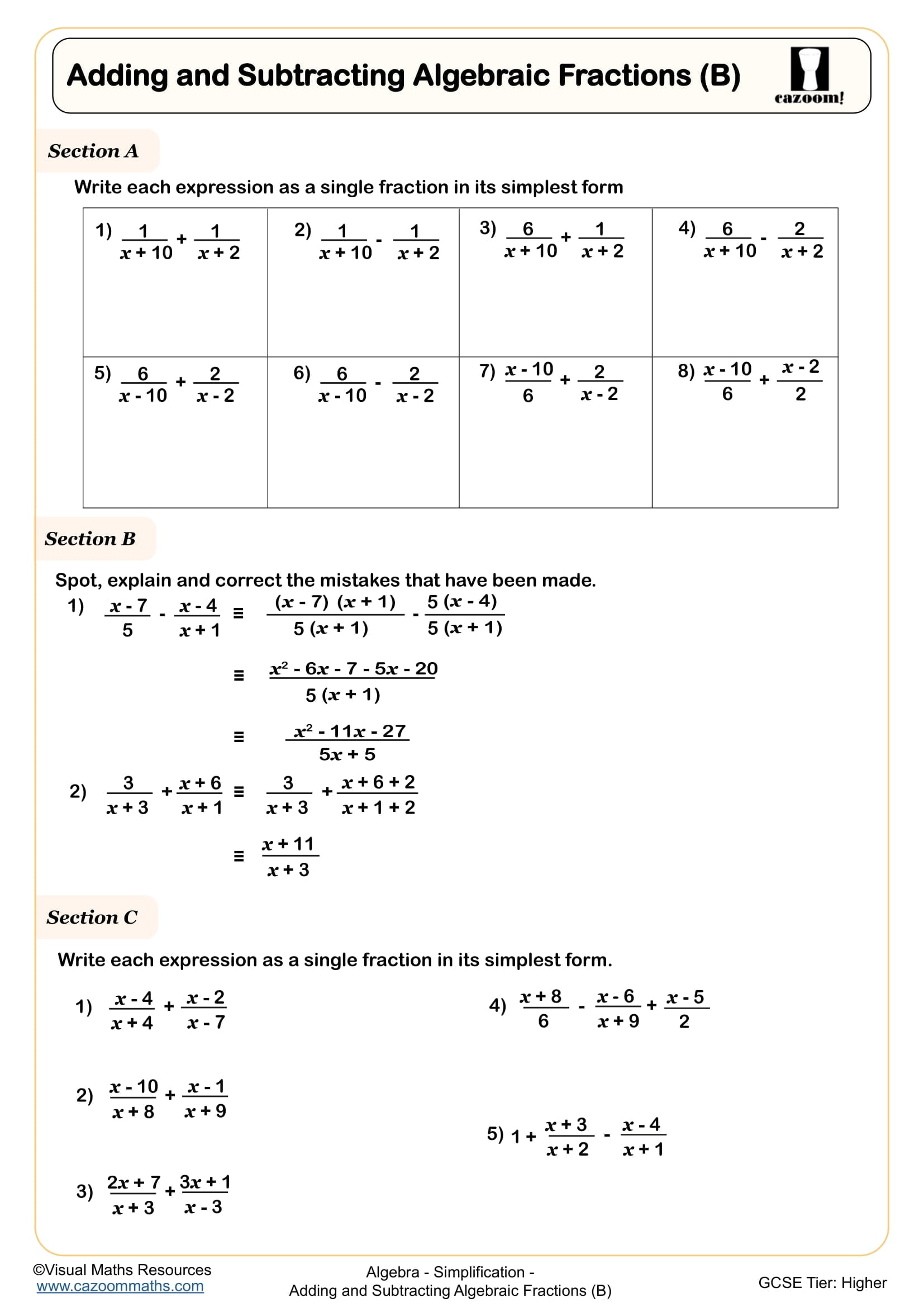
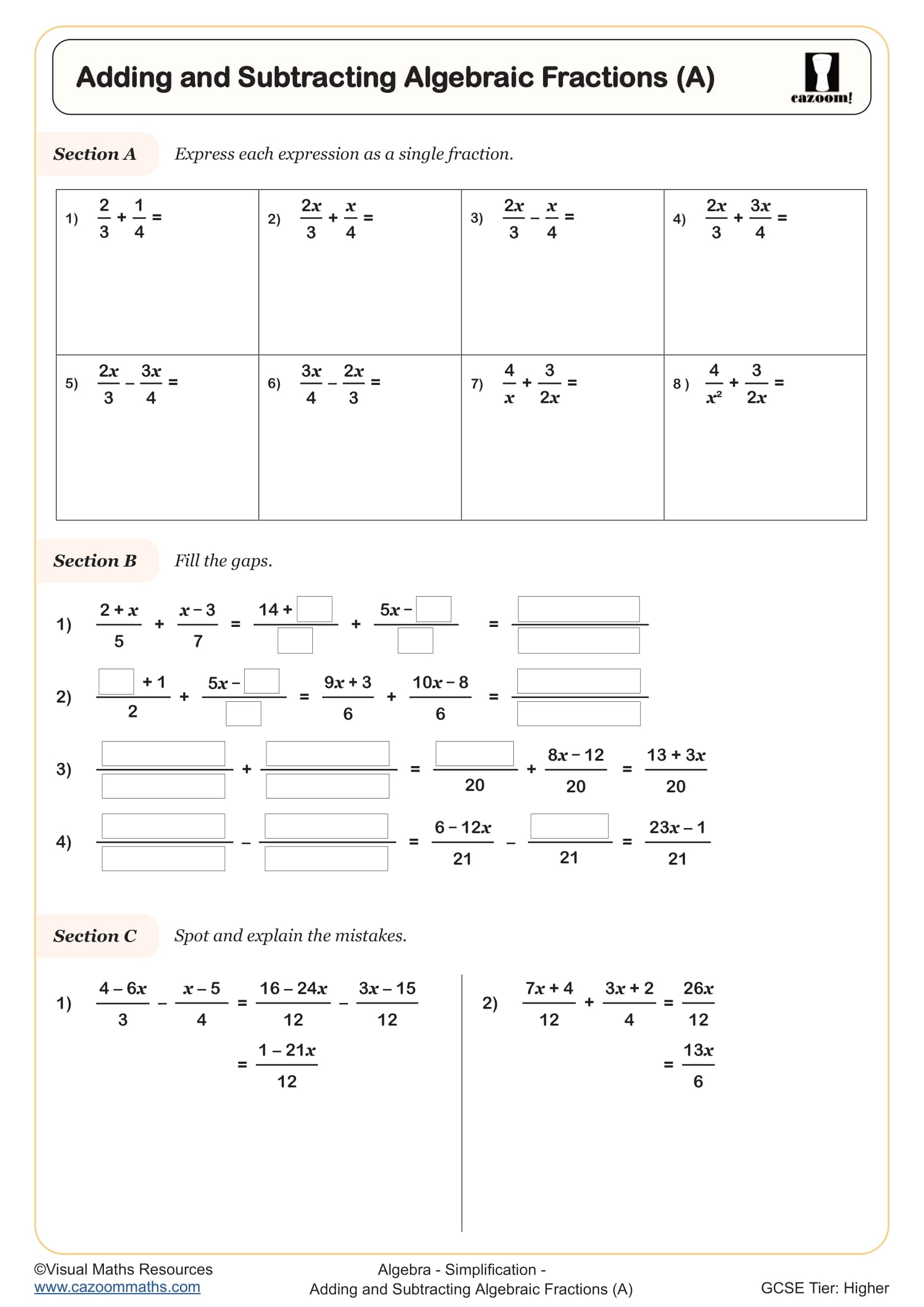
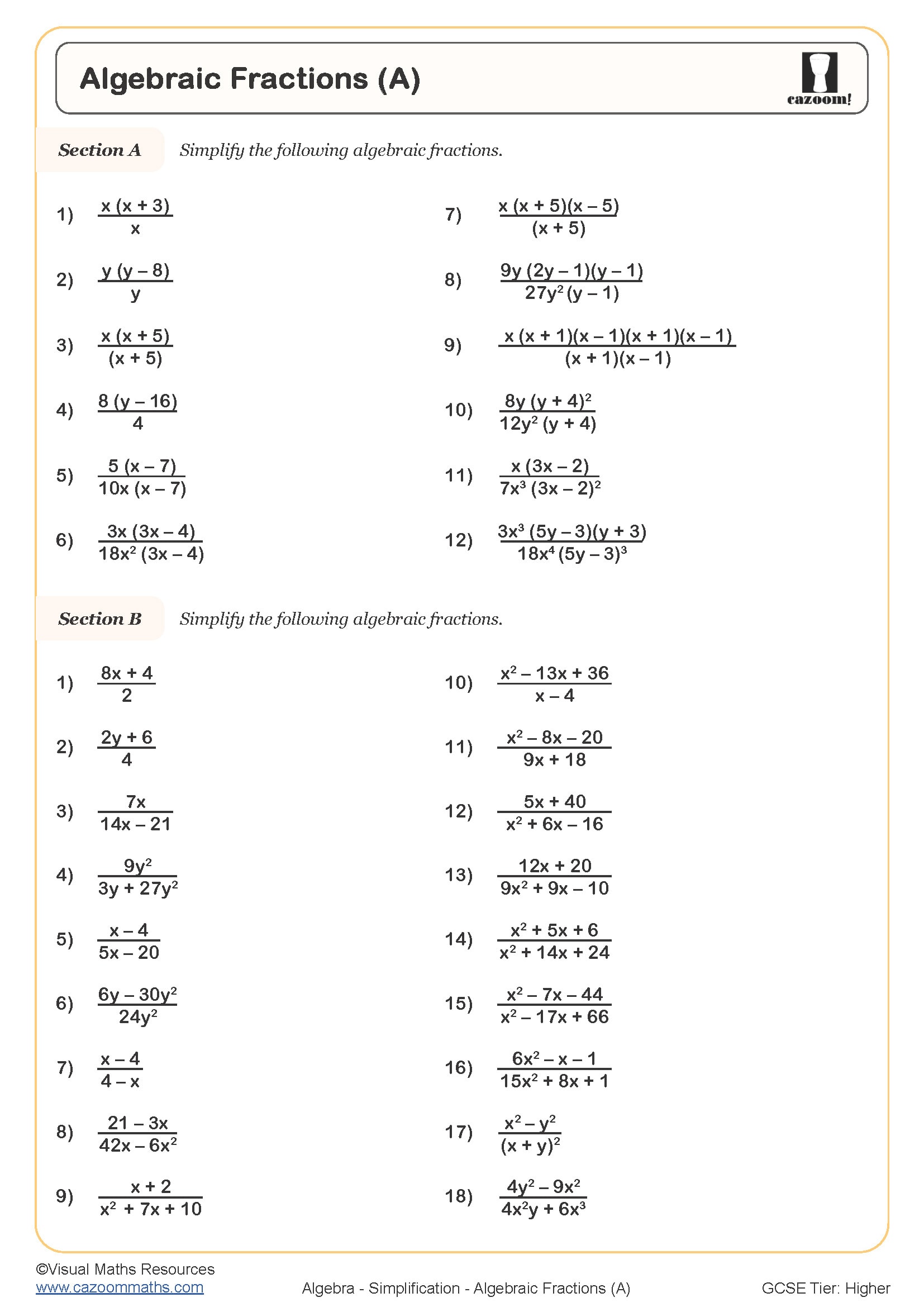
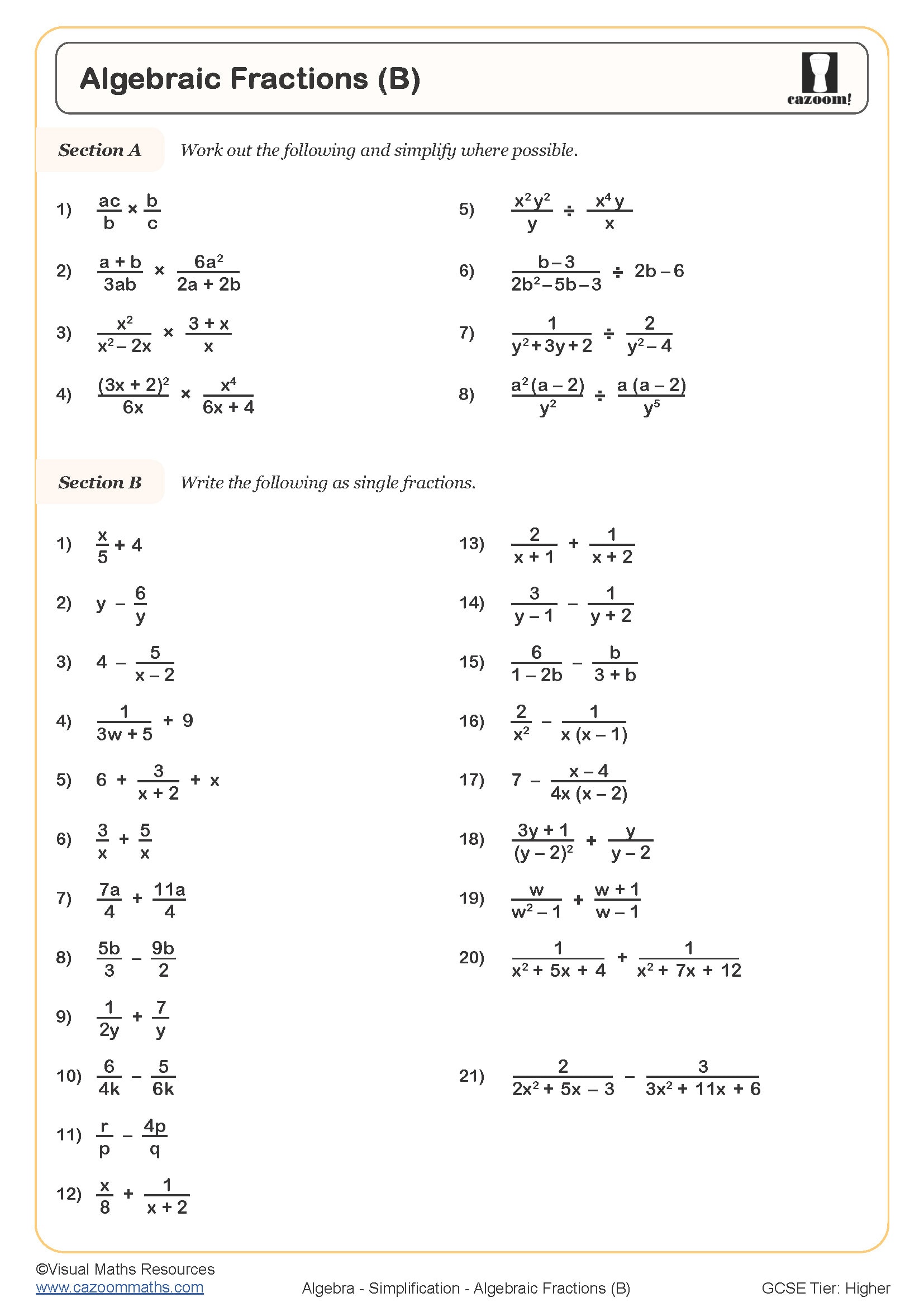
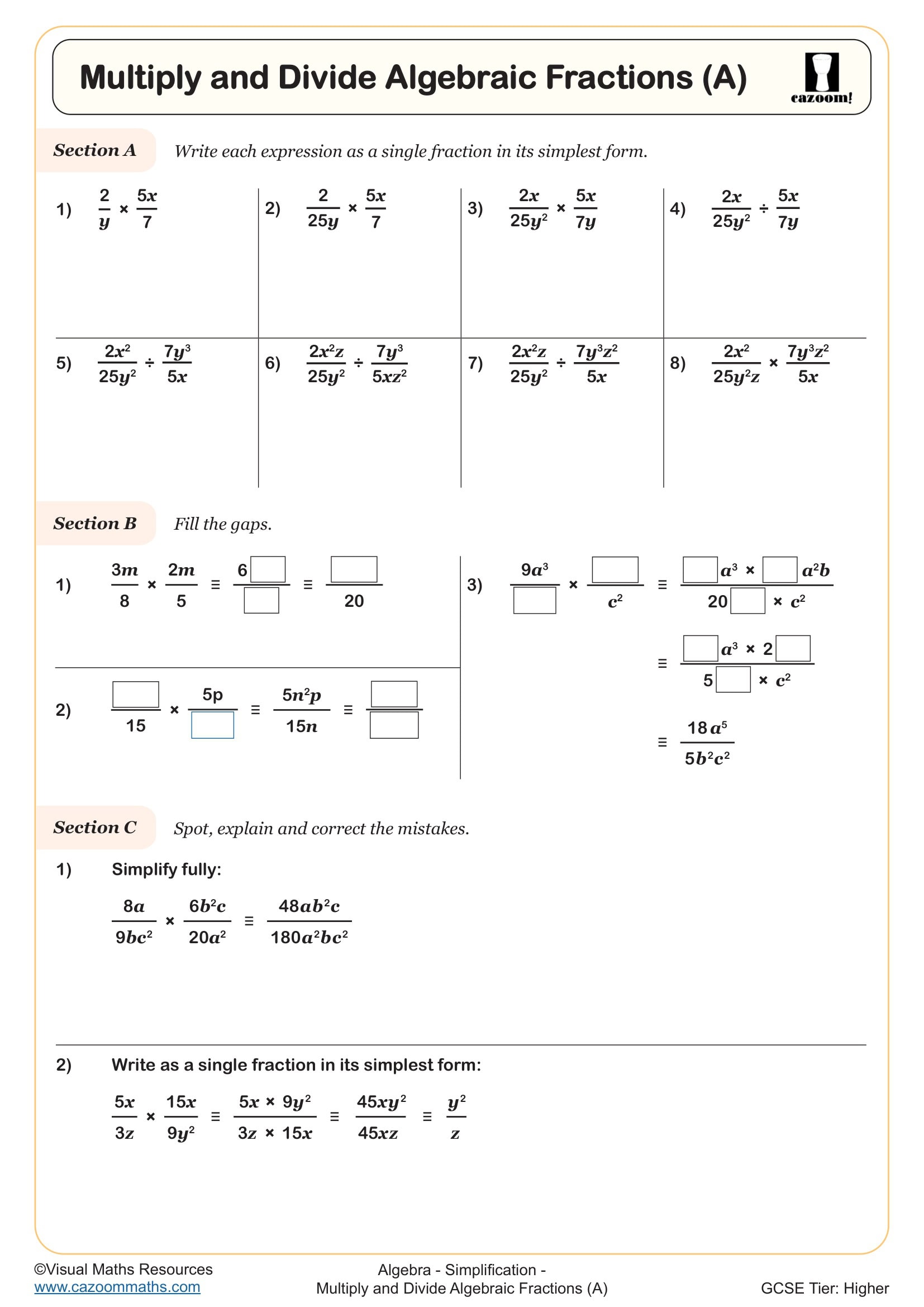
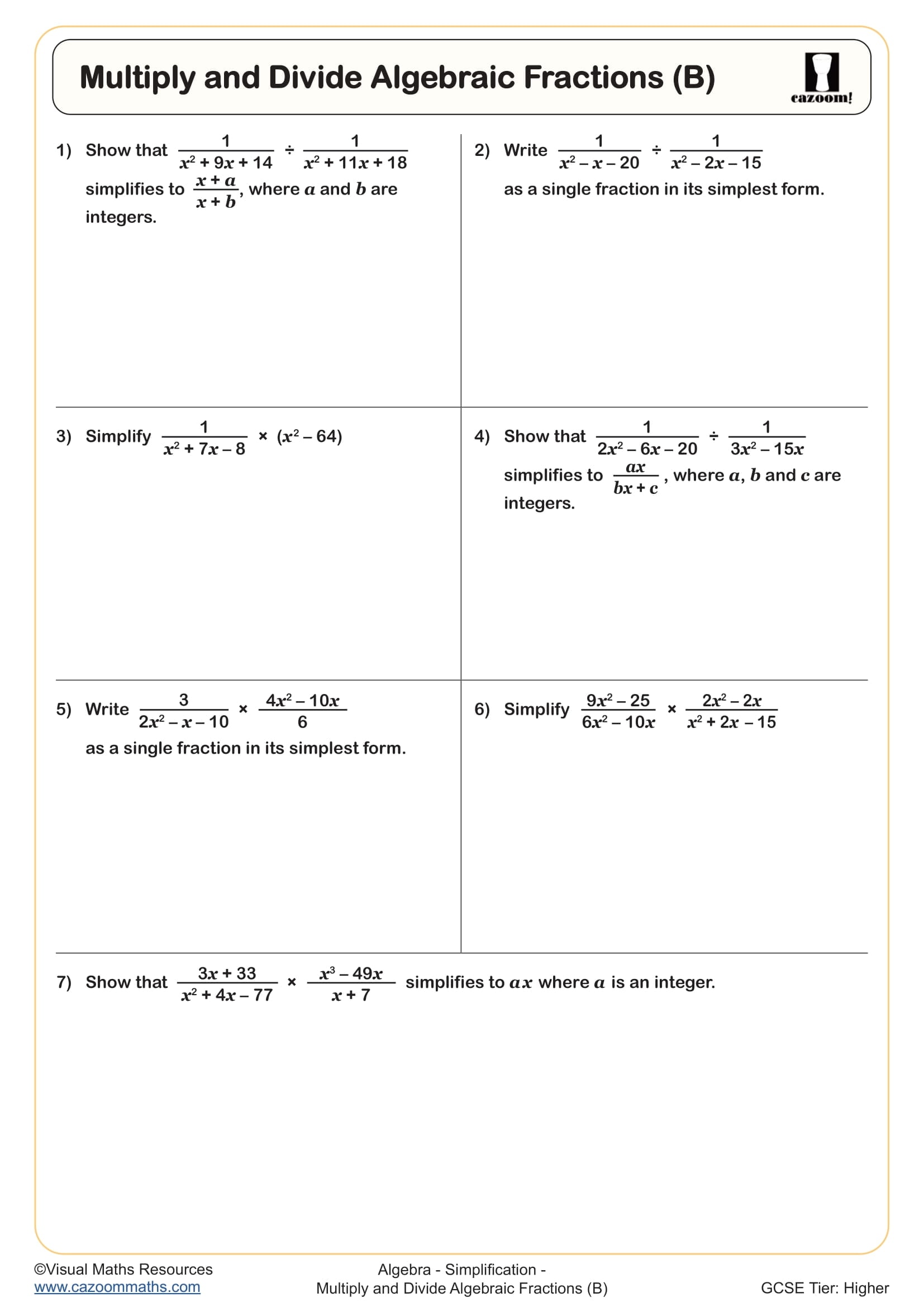
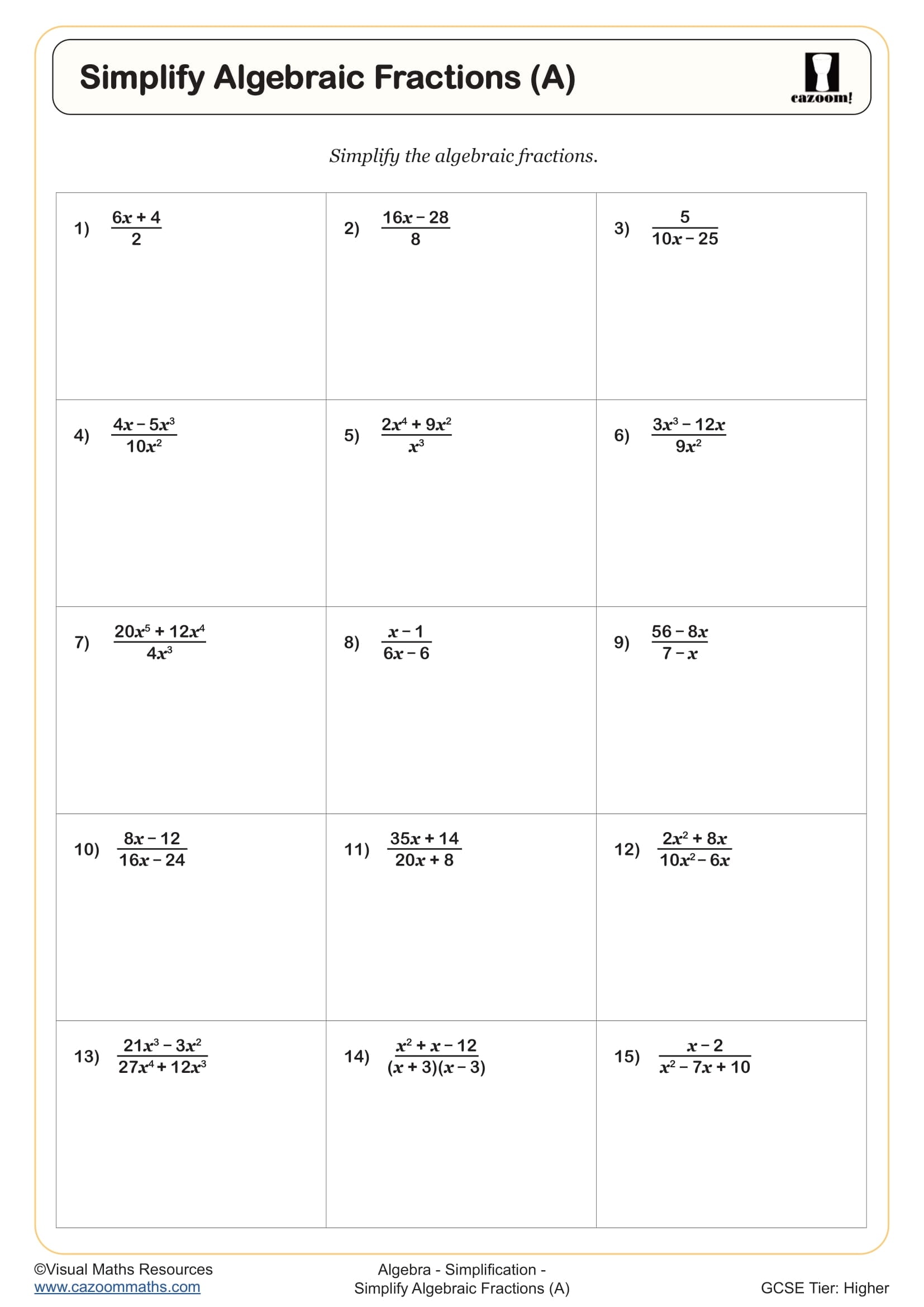
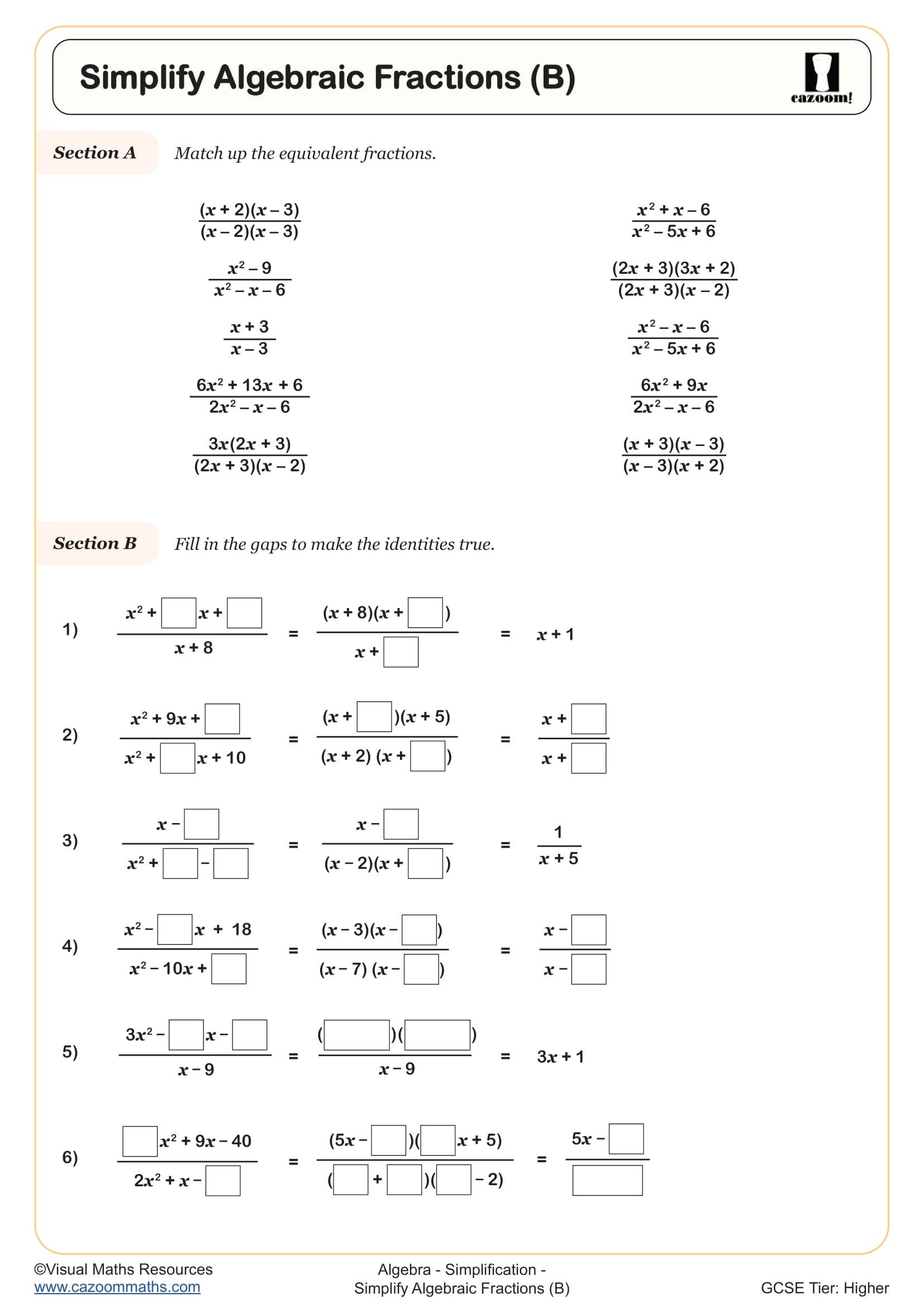
All worksheets are created by the team of experienced teachers at Cazoom Maths.
What are algebraic fractions and why do students find them challenging?
Algebraic fractions are fractions where the numerator, denominator, or both contain algebraic expressions rather than just numbers. They follow the same rules as numerical fractions but require additional algebraic manipulation, particularly factorisation and simplification. This topic typically appears in Year 10 and features regularly in GCSE Higher tier papers, often combined with solving equations or simplifying complex expressions.
Students lose marks when they treat algebraic fractions like numerical ones without considering factorisation first. A typical error occurs when simplifying (x² + 3x) / (x + 3), where students incorrectly cancel the x terms or the 3s separately rather than recognising that only the numerator factorises to x(x + 3), leaving x as the simplified form. Exam mark schemes expect clear factorisation shown as a distinct step before any cancelling takes place.
Which year groups study algebraic fractions?
Algebraic fractions appear in the KS4 curriculum, specifically for Year 10 and Year 11 students following the Higher tier pathway. The National Curriculum expects students to simplify, add, subtract, multiply and divide algebraic fractions, linking this work to prior knowledge of numerical fractions from KS3 and factorisation skills developed earlier in Year 10. This content doesn't typically feature in Foundation tier papers but forms essential groundwork for A-level mathematics.
Progression across Year 10 and 11 moves from simplifying single algebraic fractions through factorisation and cancelling, to operations with two or more fractions requiring common denominators, and finally to complex fractions appearing in equations or inequalities. By Year 11, exam questions often embed algebraic fractions within problem-solving contexts, expecting students to manipulate expressions confidently as part of multi-step solutions rather than as isolated exercises.
How do you subtract algebraic fractions with different denominators?
Subtracting algebraic fractions follows the same principle as numerical fractions: find a common denominator, rewrite each fraction equivalently, then subtract the numerators whilst keeping the denominator unchanged. For algebraic fractions, the common denominator often requires factorising each denominator first to identify common factors, then multiplying the distinct factors together. After subtraction, the result usually needs simplifying by factorising the numerator and cancelling common factors with the denominator.
This skill connects directly to rational functions in A-level mathematics and engineering contexts where rates, electrical circuits and control systems involve adding or subtracting expressions with algebraic denominators. Engineers simplifying transfer functions or physicists combining resistance values in parallel circuits both rely on manipulating algebraic fractions accurately. The underlying structure remains identical whether working with abstract algebra or modelling real physical systems with variable parameters.
How can these worksheets support students learning algebraic fractions?
The worksheets build skills systematically, starting with simplifying single fractions through factorisation and cancelling, before progressing to operations between fractions. Each sheet typically includes worked examples showing the factorisation step explicitly, which helps students internalise the process of looking for common factors before attempting to simplify. Answer sheets allow students to check their working independently, particularly useful for identifying where errors occur in multi-step solutions.
Many teachers use these resources for targeted intervention with students who struggle during whole-class teaching of this topic, as the structured progression allows learners to build confidence with simpler examples before tackling examination-style questions. The sheets work well for homework following initial teaching, for revision during Year 11 when consolidating algebra skills, or as starter activities to maintain fluency. Paired work often proves effective, with students comparing methods and identifying where factorisations differ, particularly when multiple correct approaches exist.