KS4 Area and Perimeter Worksheets
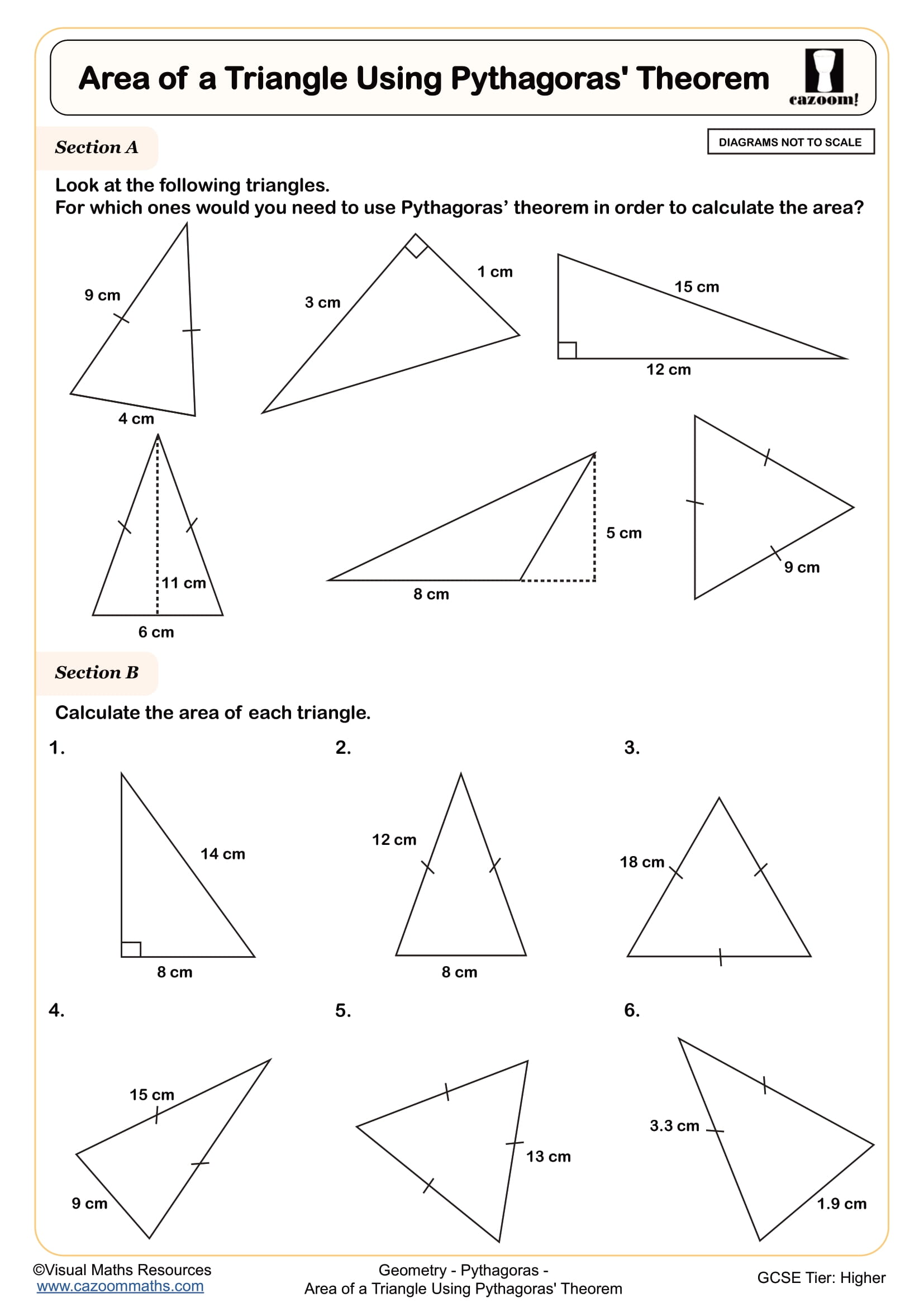
Area of a Triangle Using Pythagoras' Theorem
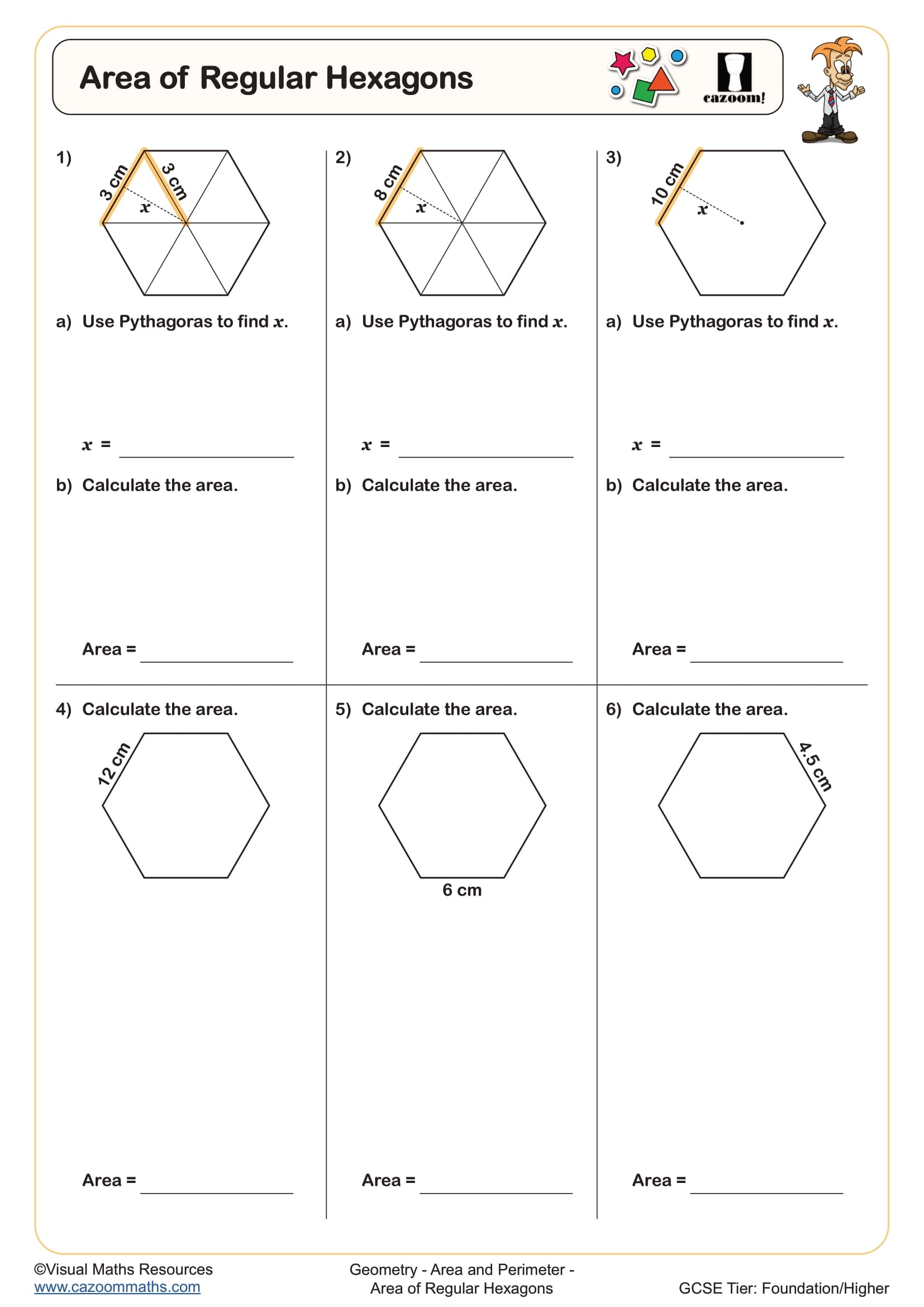
Area of Regular Hexagons
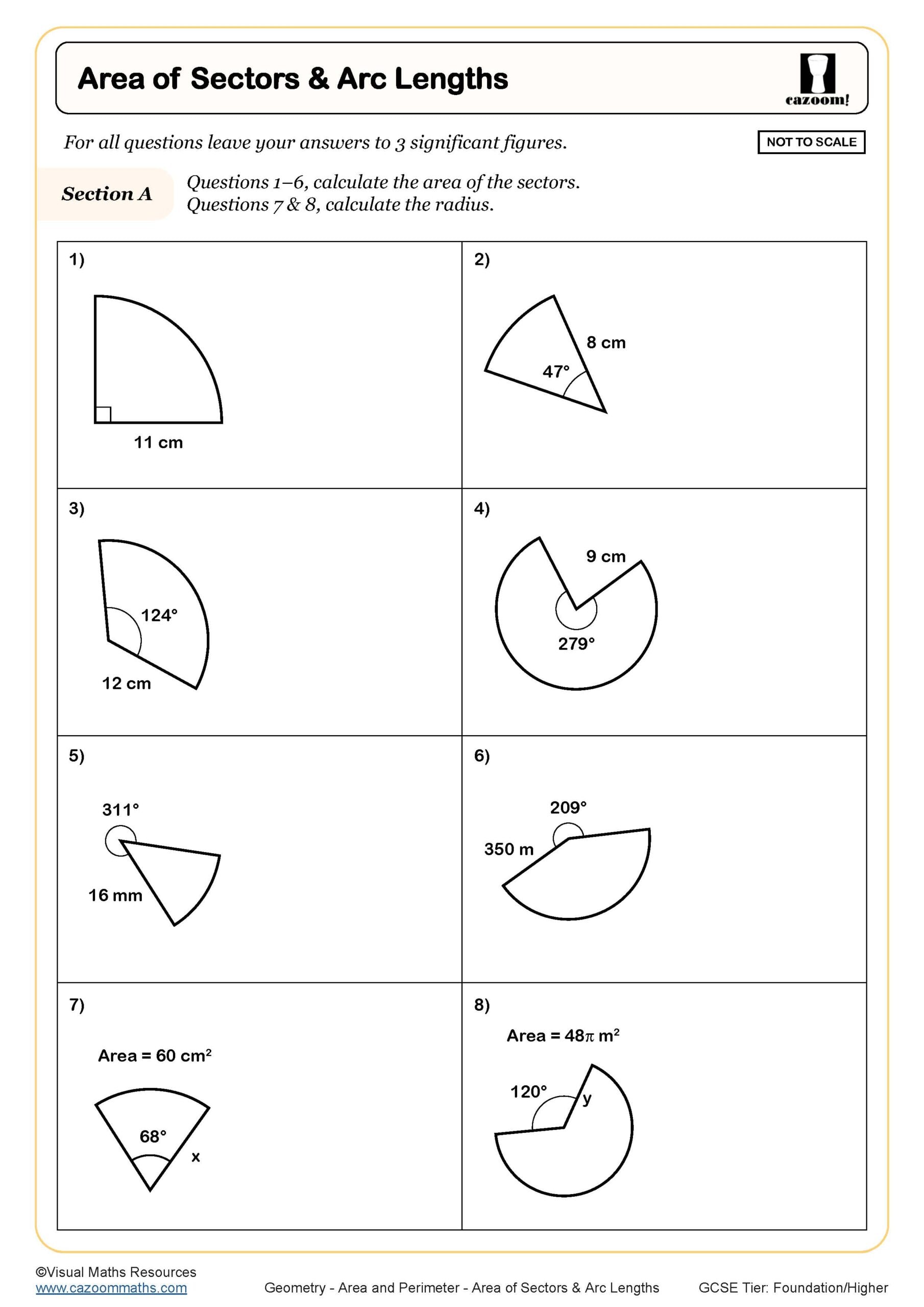
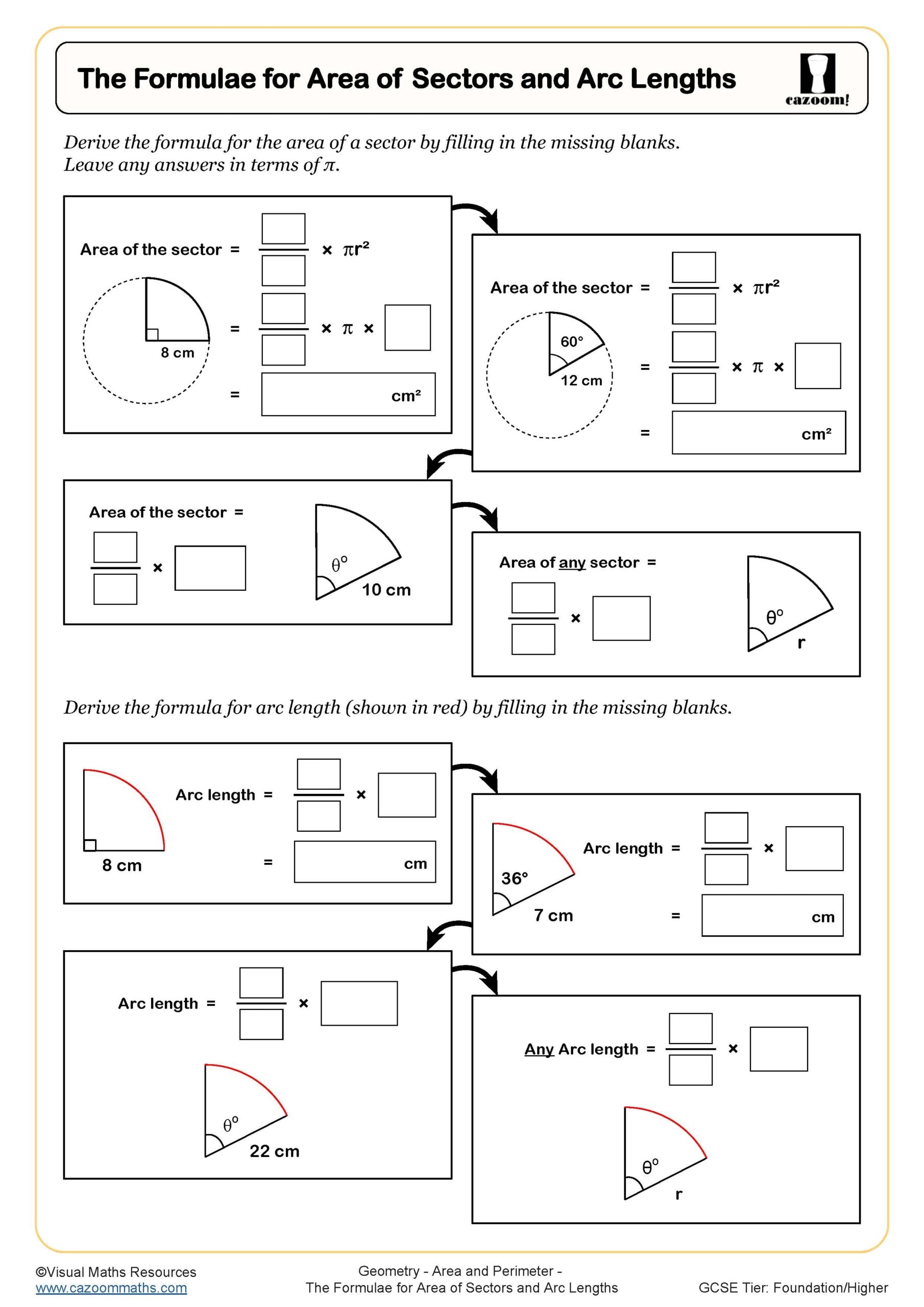
Area of Sectors and Arc Lengths
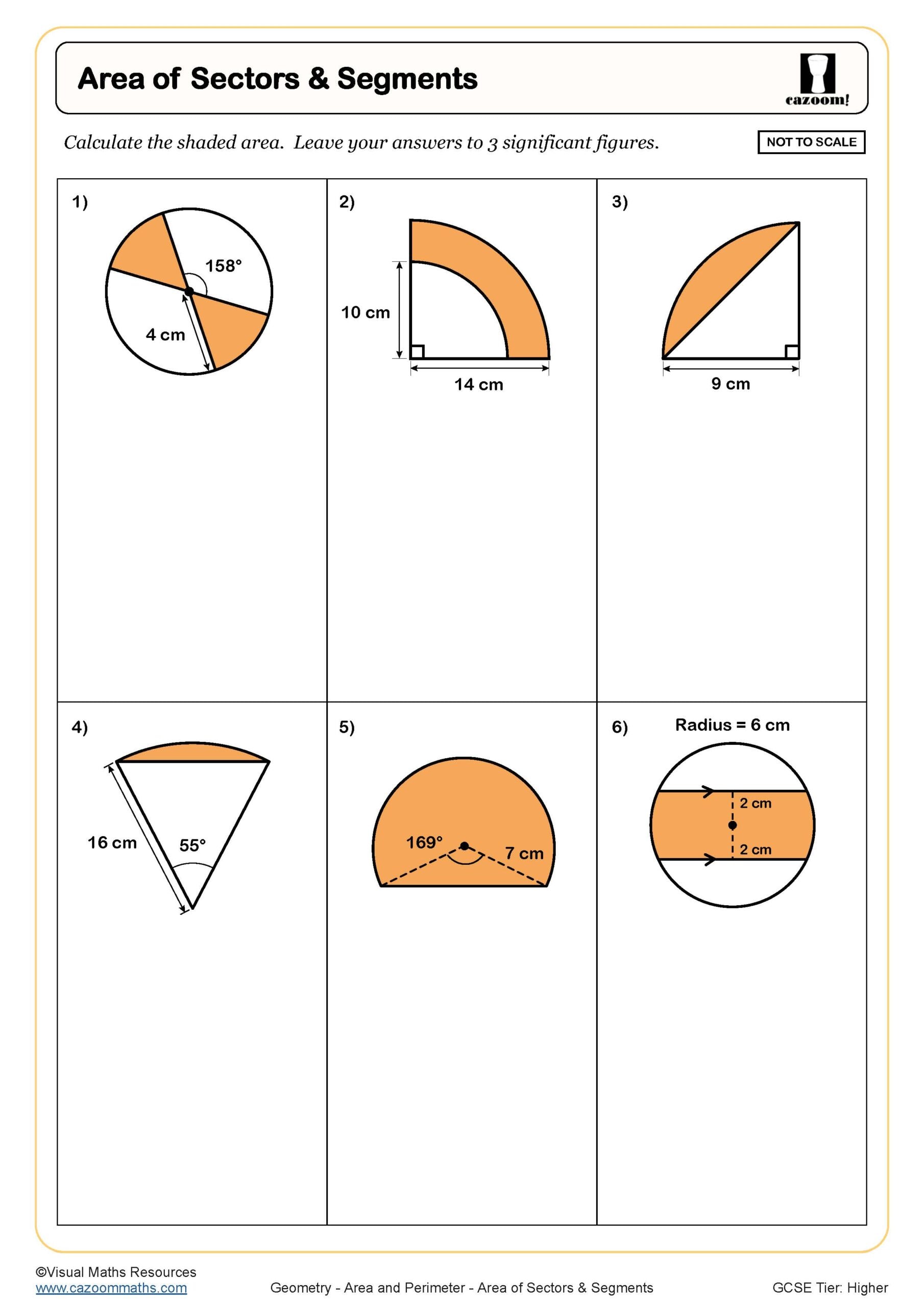
Area of Sectors and Segments
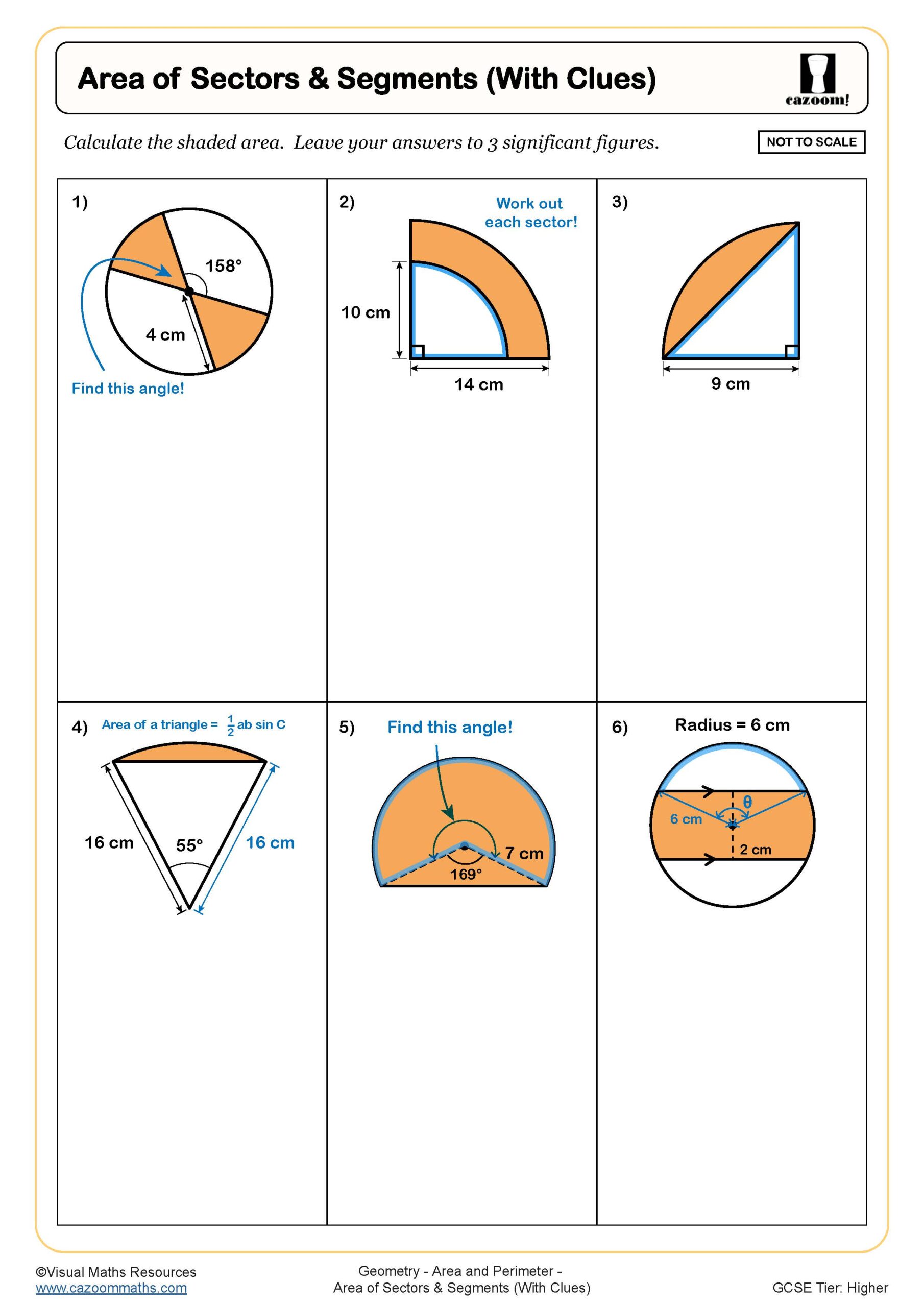
Area of Sectors and Segments (With Clues)
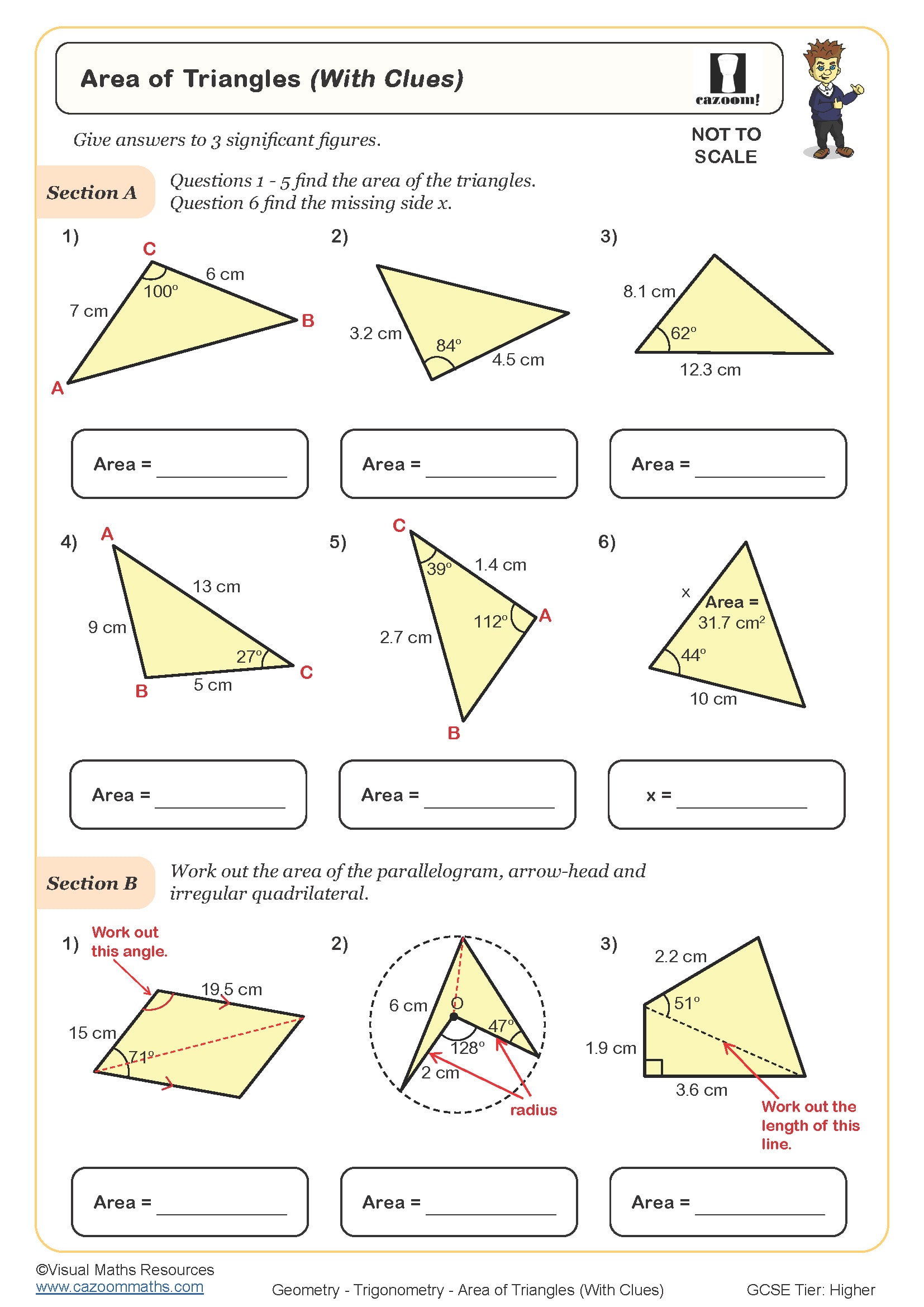
Area of Triangles (With Clues)
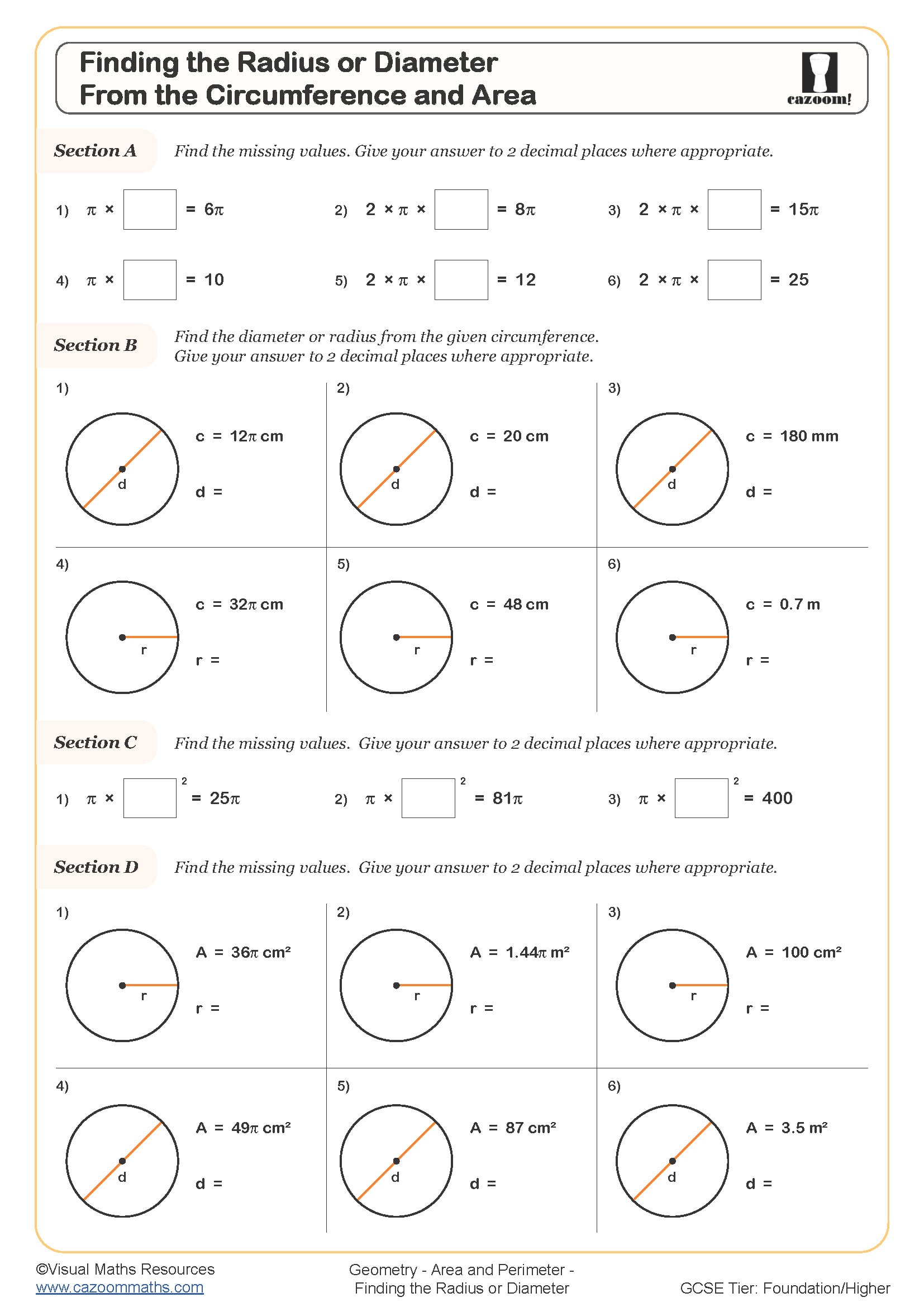
Finding the Radius or Diameter from the Circumference and Area
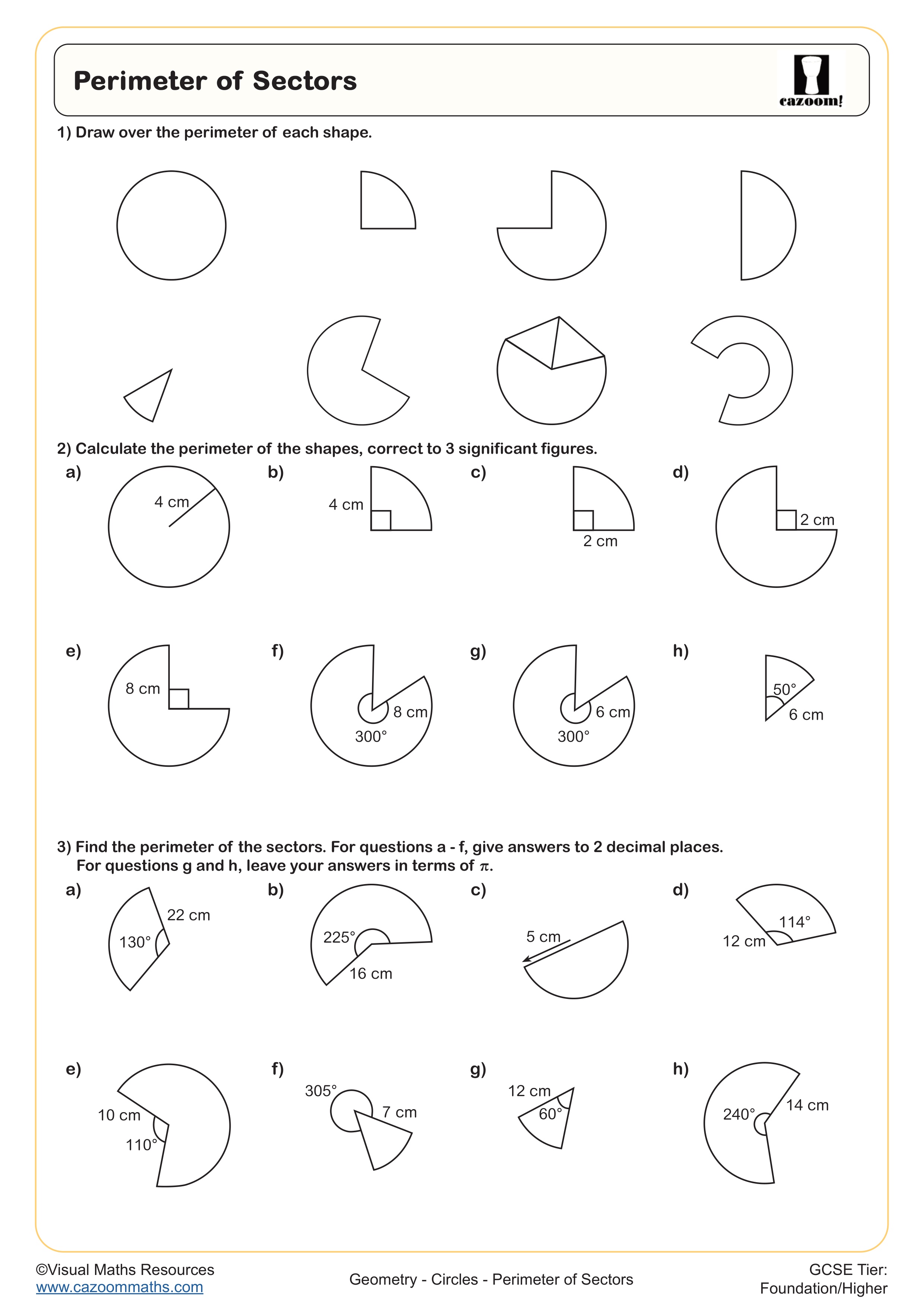
Perimeter of Sectors
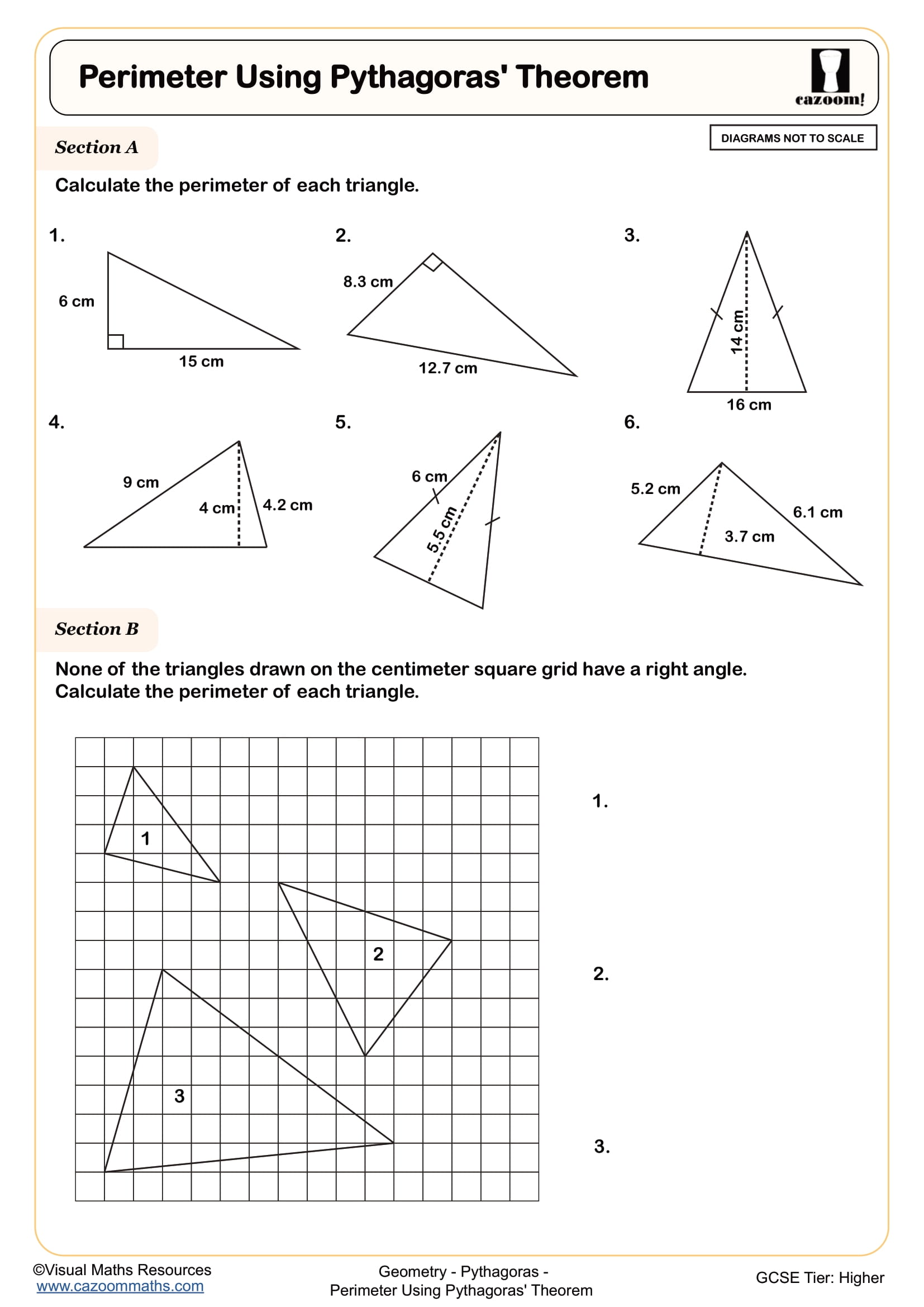
Perimeter Using Pythagoras' Theorem
The Formulae for Area of Sectors and Arc Lengths
All worksheets are created by the team of experienced teachers at Cazoom Maths.
What topics are covered in KS4 area and perimeter work?
At KS4, students move beyond basic rectangles and triangles to tackle compound shapes, circles, sectors, segments, and problems involving algebra. The curriculum expects students to apply formulae for perimeter and area to increasingly complex shapes, including those requiring multiple steps or rearrangement of standard formulae. Foundation tier typically focuses on compound rectilinear shapes and circles, while Higher tier includes sectors, segments, and problems where dimensions must be calculated algebraically.
Exam mark schemes consistently penalise students who forget to add all exterior edges when calculating perimeter of compound shapes, particularly L-shapes where the two missing lengths aren't explicitly shown. Students also lose marks when they fail to convert between units mid-calculation, such as finding perimeter in centimetres but area in square metres within the same question. These worksheets address both issues through varied question styles that mirror actual GCSE demands.
Which year groups study area and perimeter at KS4?
These worksheets support Year 10 and Year 11 students working through the GCSE specification, where area and perimeter appears as a core strand worth approximately 15% of marks across both Foundation and Higher papers. The topic builds on KS3 foundations but introduces trigonometric approaches to finding missing dimensions, arc lengths in circles, and algebraic representations of shapes where students must form and solve equations before calculating perimeter or area.
Progression across KS4 moves from consolidating basic formulae in Year 10 to applying them in unfamiliar contexts by Year 11, including reverse problems where the area is given and students must work backwards to find a dimension. Higher tier students encounter more complex scenarios involving sectors of circles, where they calculate both arc length and area of the sector, often within problem-solving contexts that require them to interpret diagrams and decide which formulae to apply without explicit instruction.
How do you calculate the perimeter of compound shapes?
Calculating perimeter of compound shapes requires students to identify all exterior edges, including those not explicitly labelled, by using the dimensions provided. The key skill is recognising that in rectilinear shapes, opposite sides or combinations of sides must sum to give the overall dimensions. For shapes involving curves, students need to recognise which sections are straight lines and which are arcs, then apply the appropriate formula for each section before summing all parts to find the total perimeter.
This skill connects directly to real-world applications in construction, landscaping, and manufacturing. Fencing a garden with an irregular boundary, calculating the edging needed for a curved patio, or determining the weatherproofing strip required for a complex window frame all require accurate perimeter calculations of compound shapes. Many STEM careers, from architecture to engineering design, rely on these skills when specifying materials for projects where wastage must be minimised and costs accurately estimated from perimeter measurements.
How can teachers use these area and perimeter worksheets effectively?
The worksheets build calculation accuracy through carefully structured questions that progress from standard formula application to multi-step problems requiring students to find missing dimensions before calculating area or perimeter. Answer sheets allow students to check their working independently, making these resources particularly effective for revision sessions where students self-identify gaps in their understanding. Teachers can use earlier questions as worked examples before setting later problems for independent practice, or select specific questions that target common errors seen in recent assessments.
Many teachers use these worksheets for focused intervention with students who score poorly on geometry questions in mock exams, working through examples in small groups before setting similar problems for homework consolidation. The worksheets also work well as starter activities to reactivate prior knowledge before introducing related topics like surface area or volume, or as timed practice to build the fluency and speed needed for GCSE exams where students must complete perimeter and area questions within two to three minutes to maintain exam pace.