KS4 Bearings Scale and Loci Worksheets
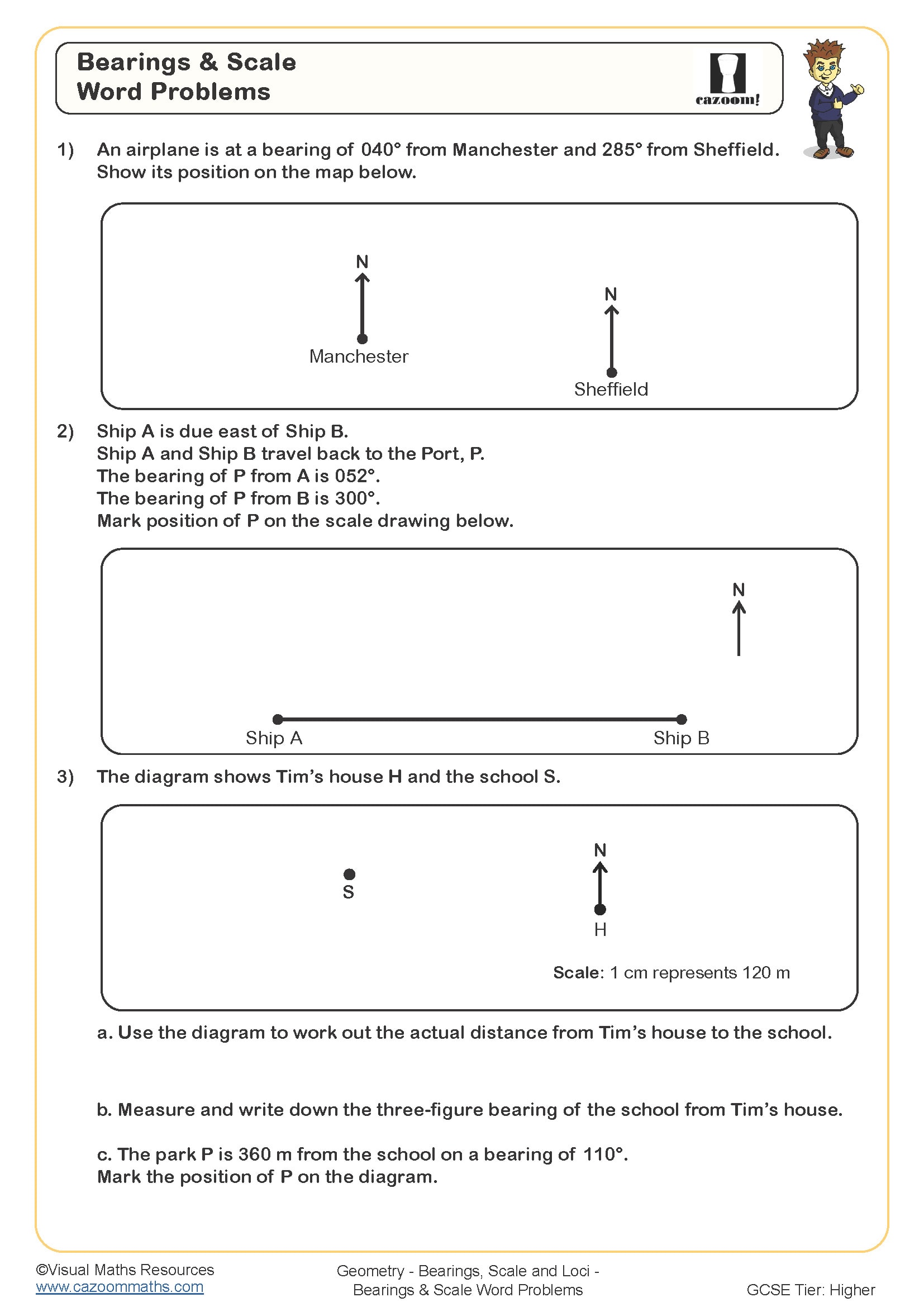
Bearings and Scale Word Problems
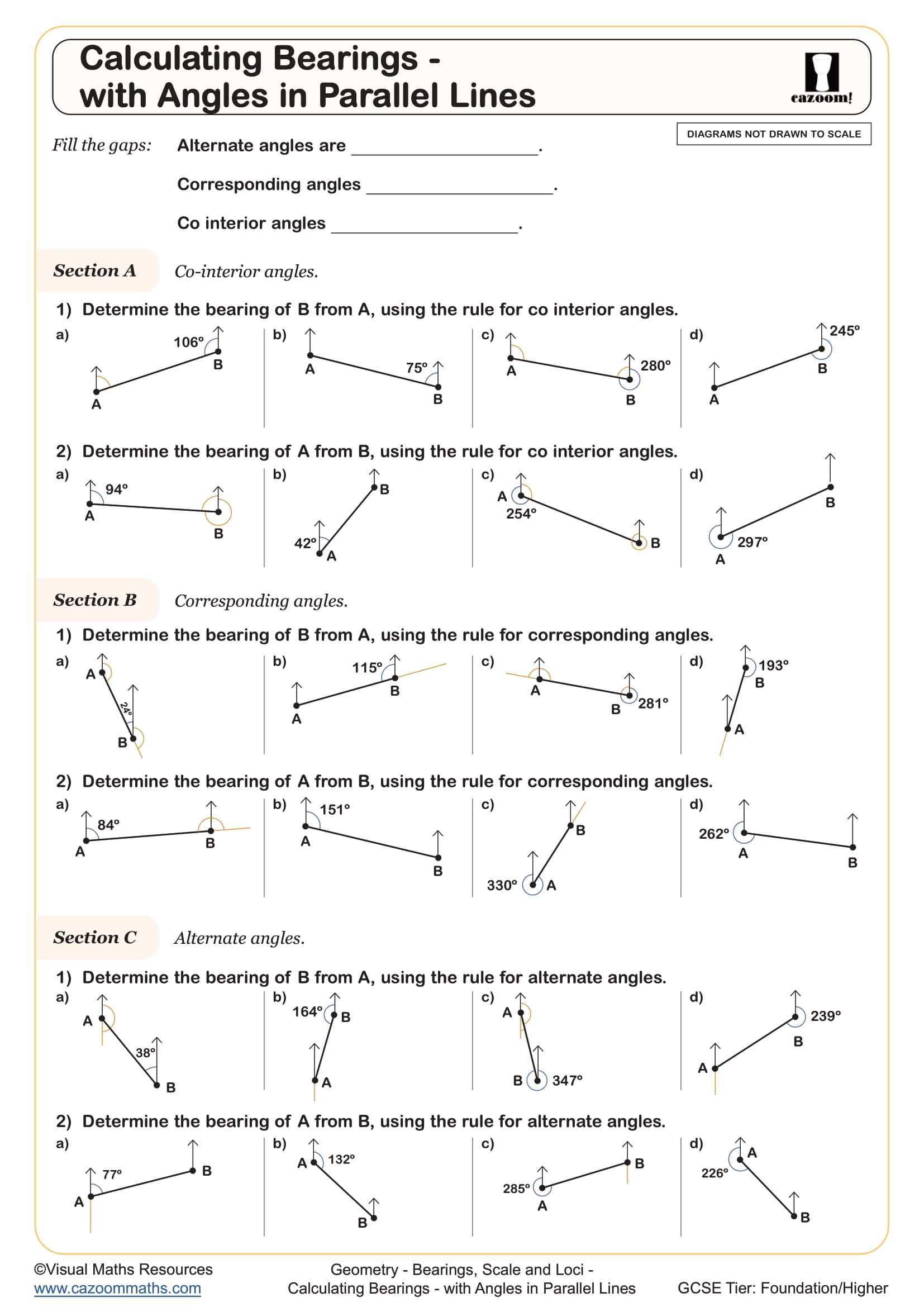
Calculating Bearings - with Angles in Parallel Lines
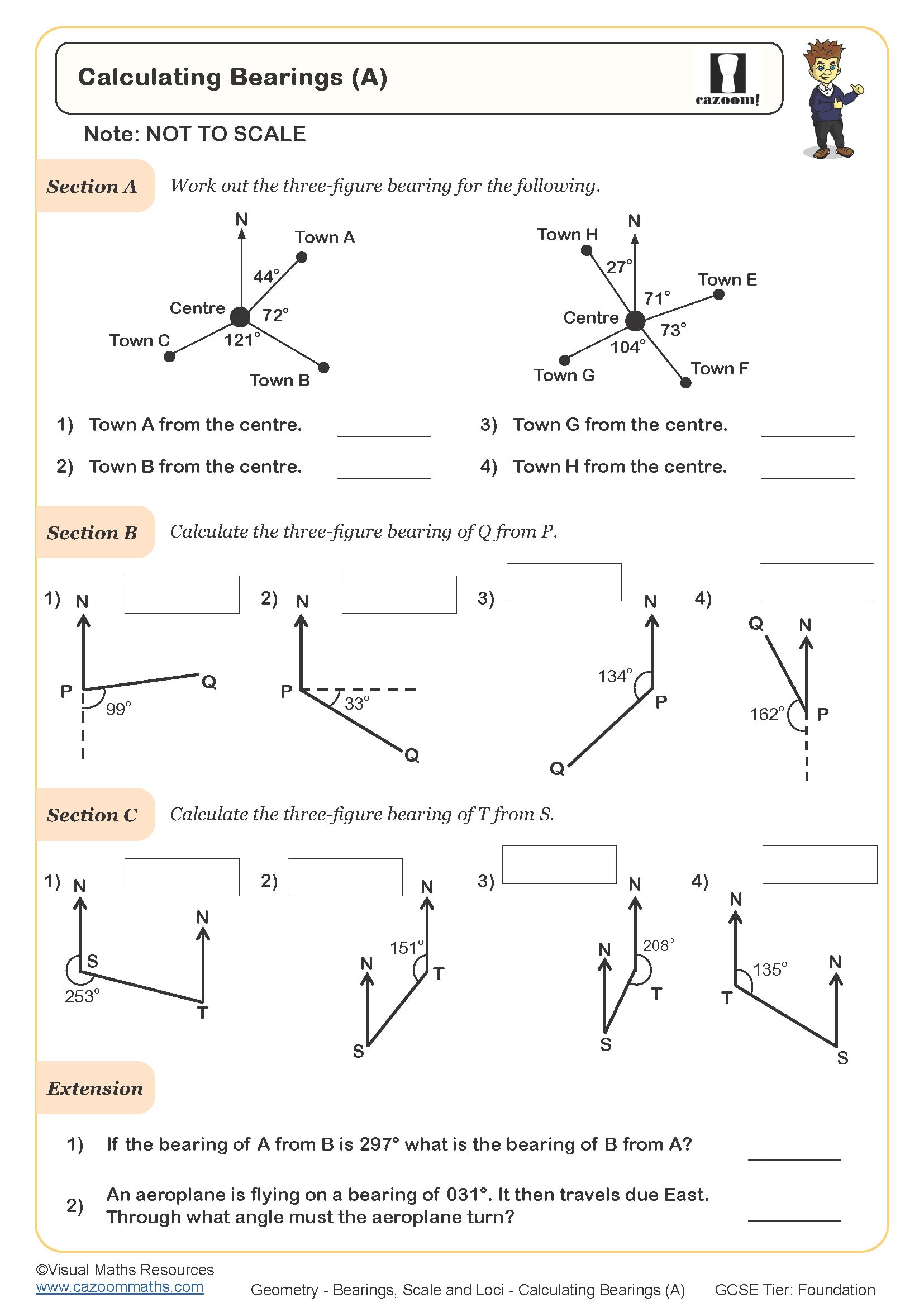
Calculating Bearings (A)
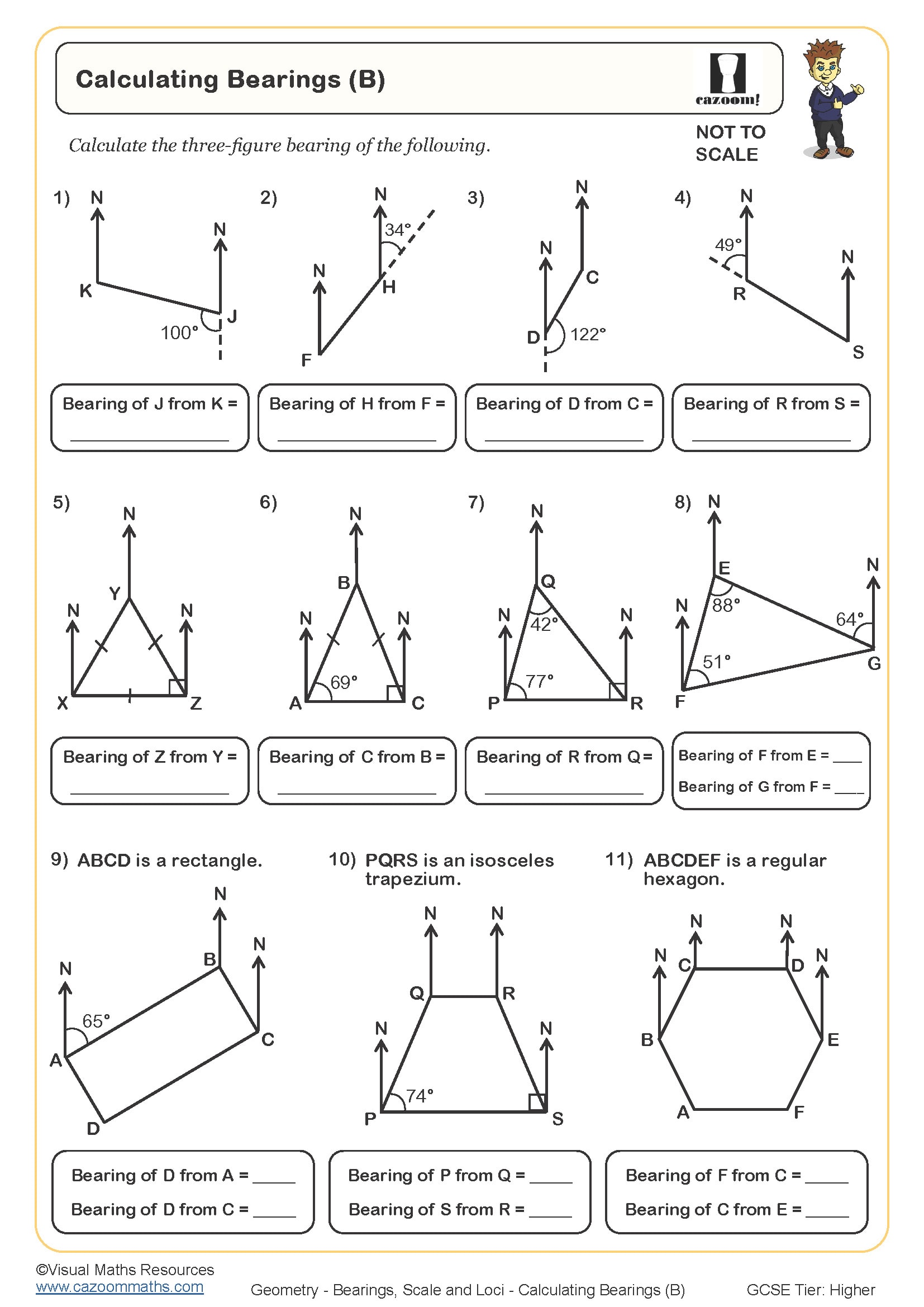
Calculating Bearings (B)
Calculating Bearings (B) (With Clues)
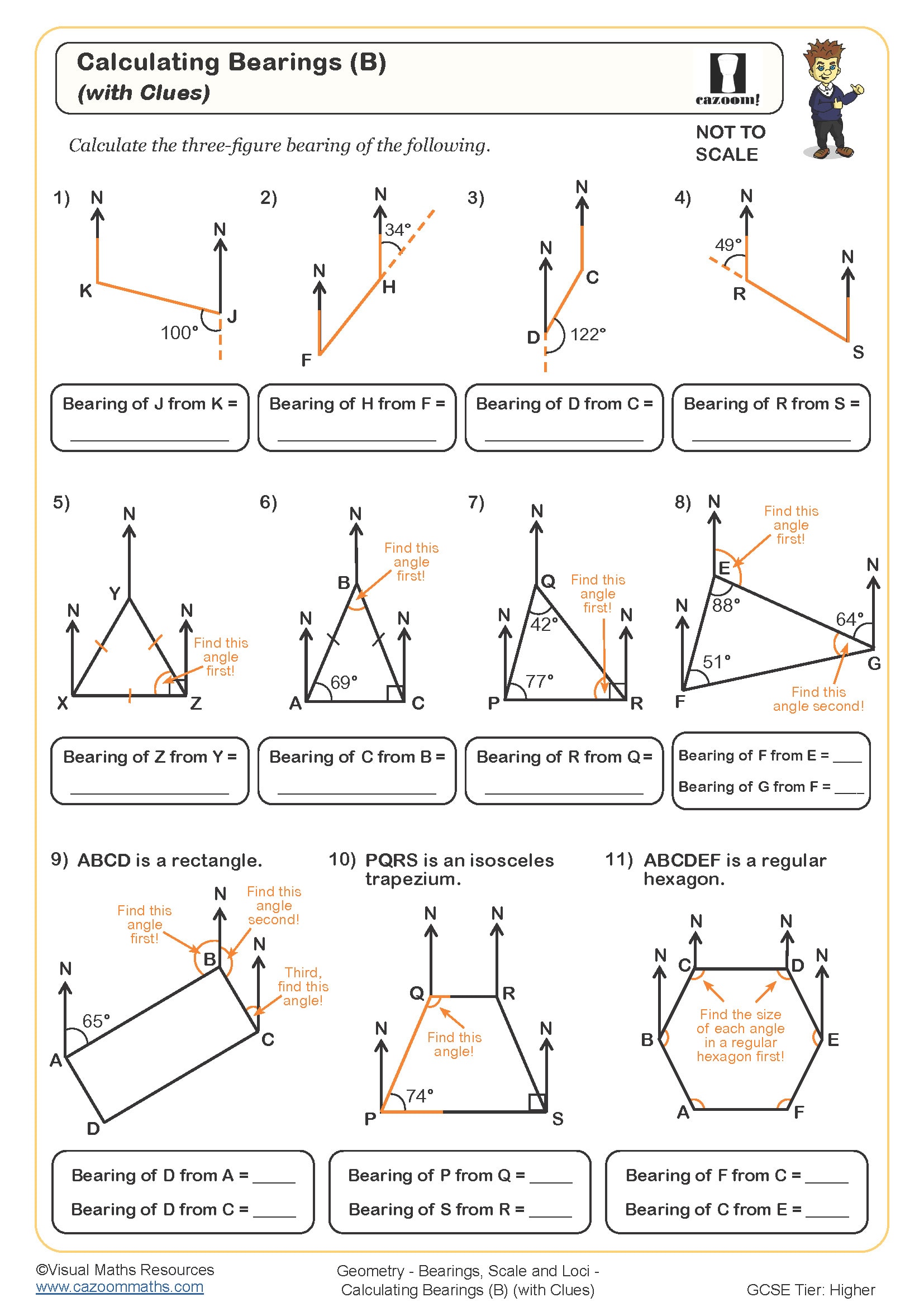
Constructing Loci
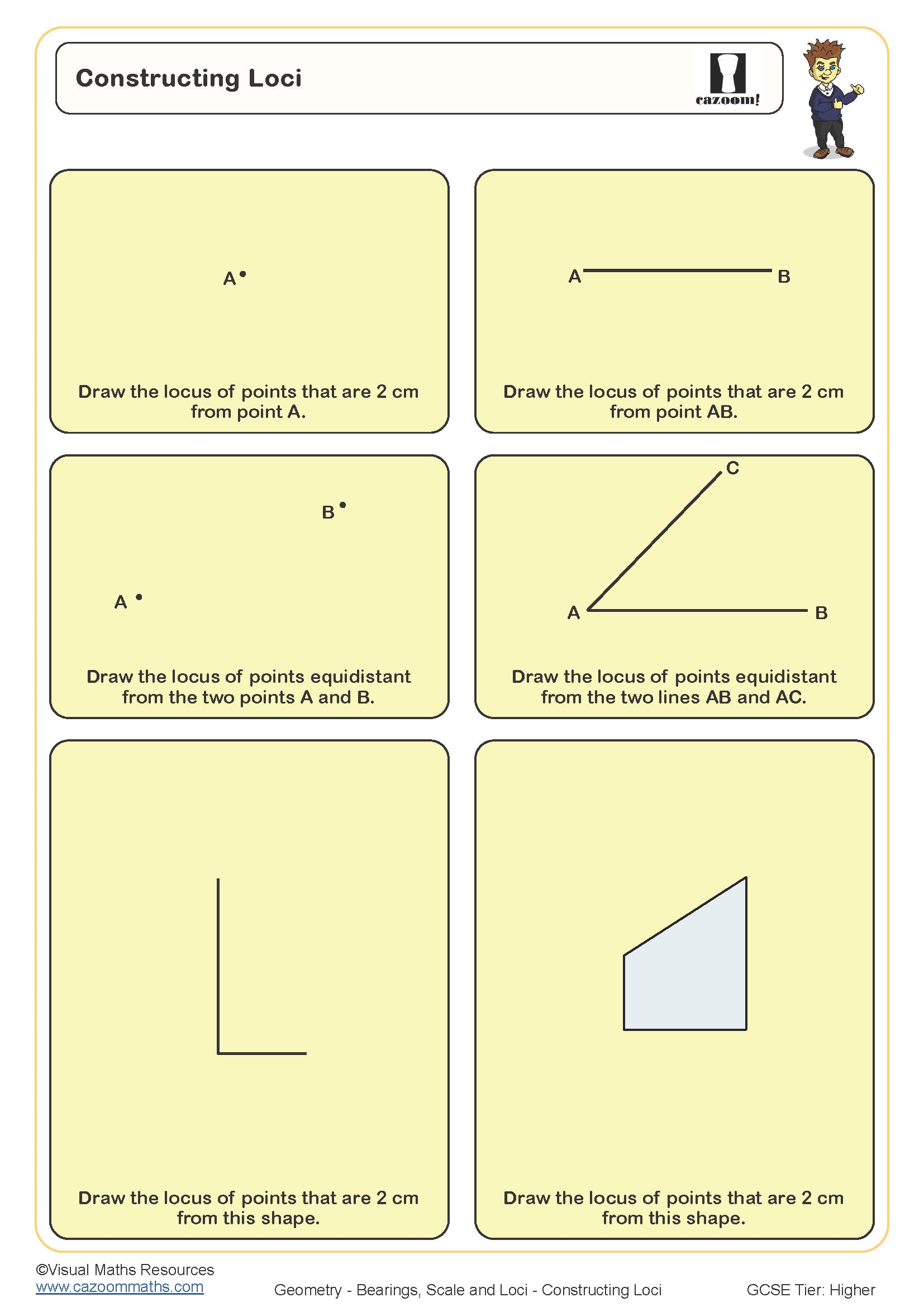
Drawing Bearings
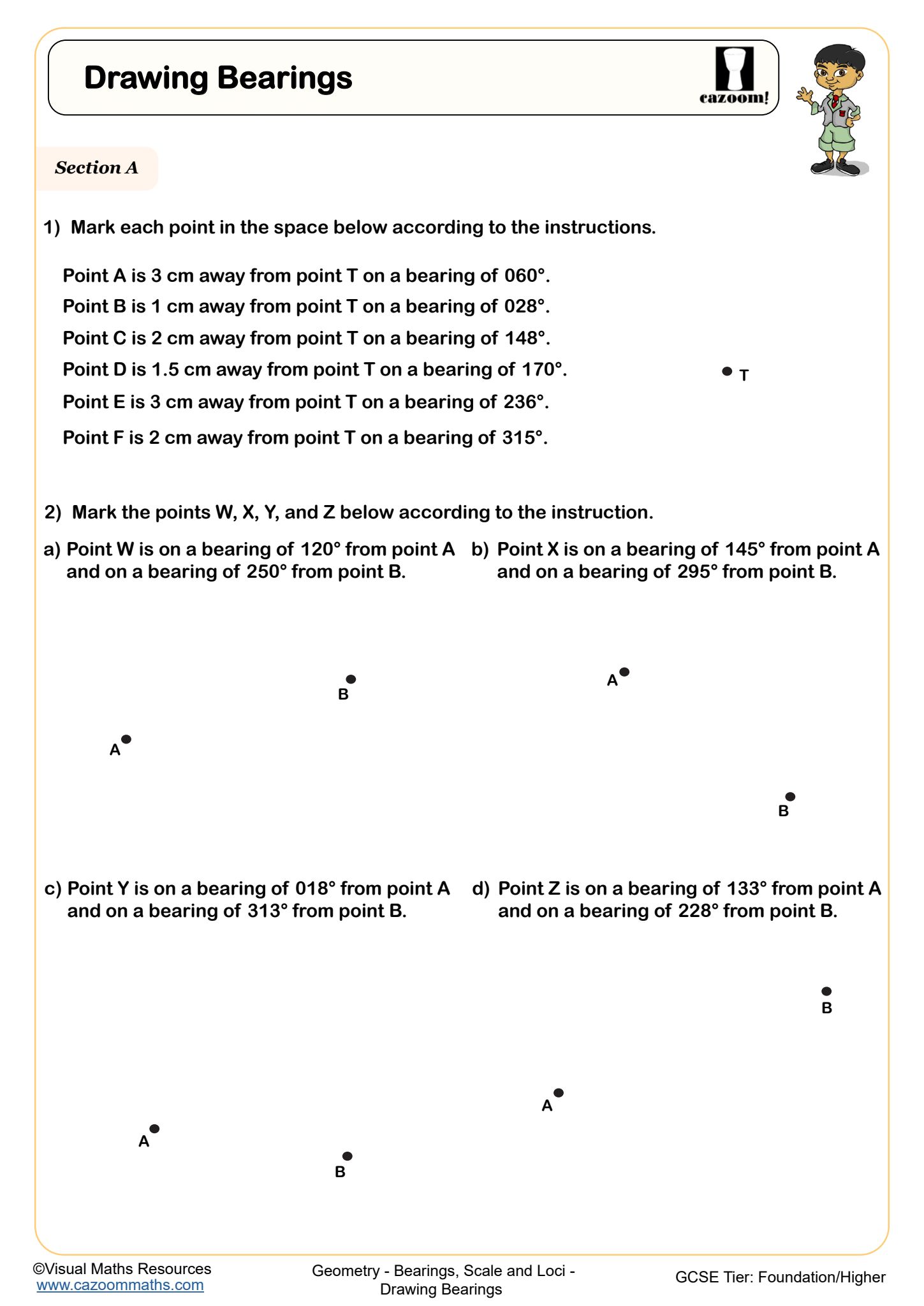
Loci Problems
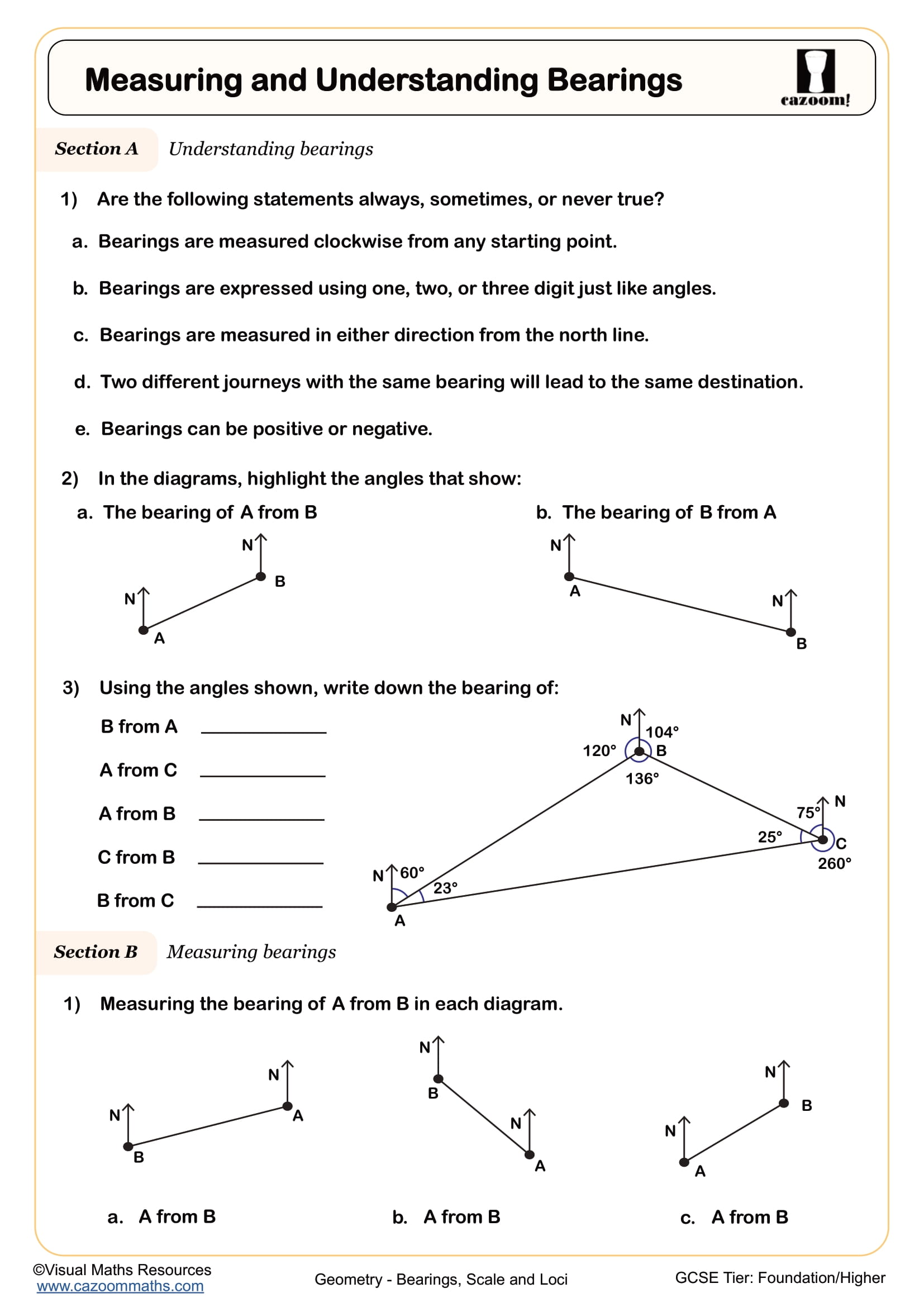
Measuring and Understanding Bearings
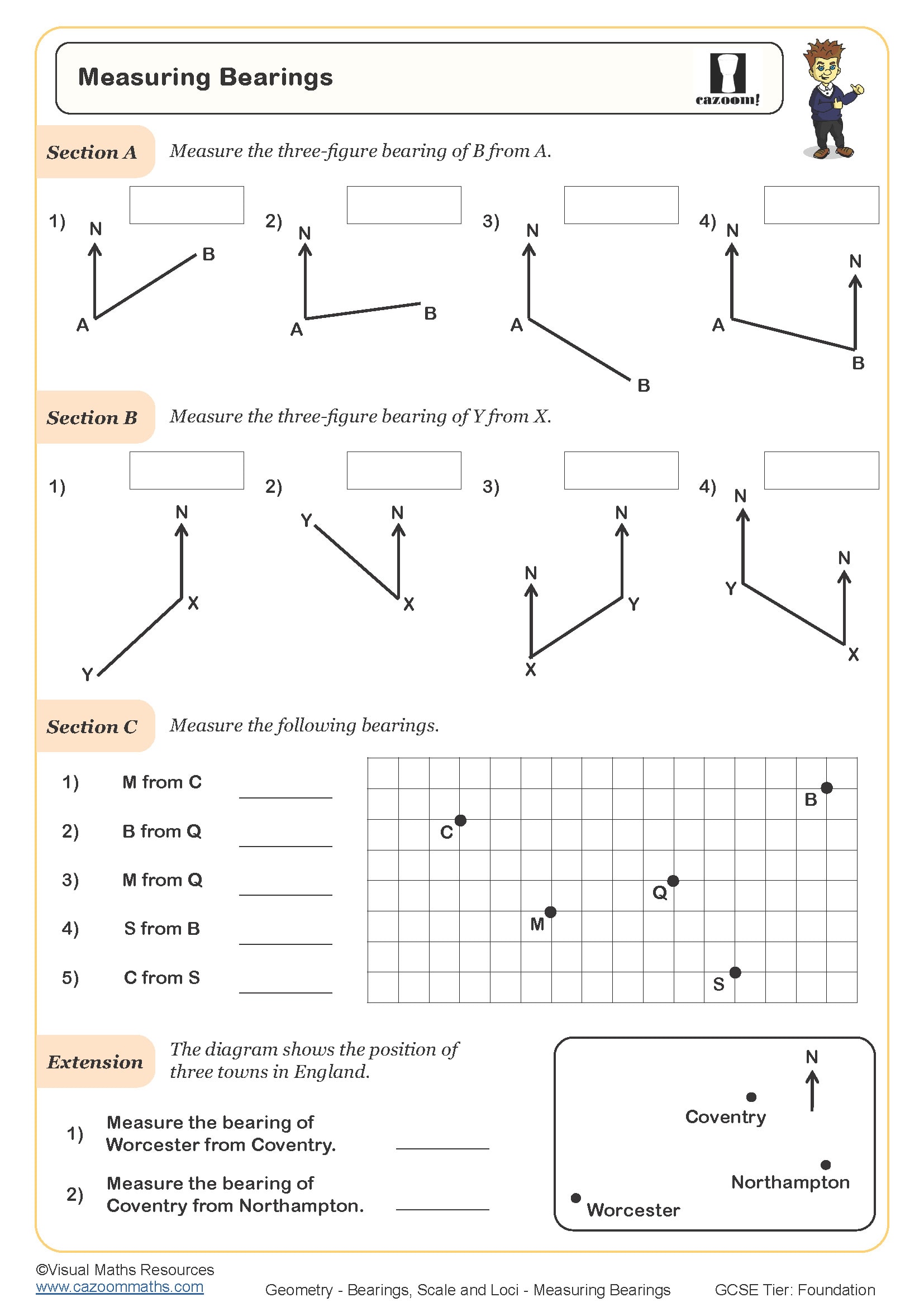
Measuring Bearings
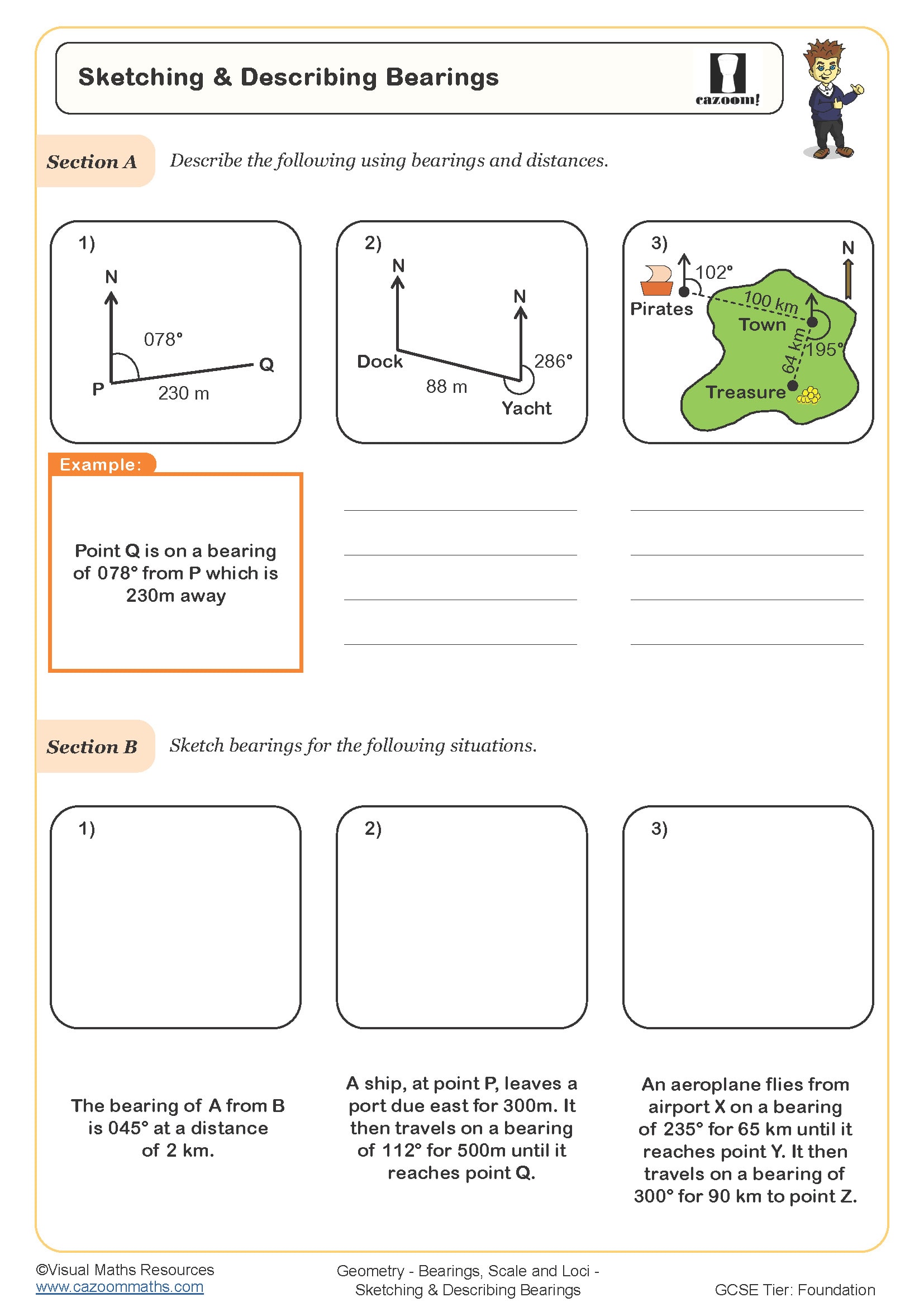
Sketching and Describing Bearings
All worksheets are created by the team of experienced teachers at Cazoom Maths.
What are bearings scale and loci in GCSE maths?
Bearings are three-figure angles measured clockwise from north to describe direction, whilst loci (plural of locus) are sets of points following specific rules or conditions. Scale involves creating accurate diagrams where distances are proportionally reduced using ratios. Together, these topics form part of the GCSE geometry curriculum where students must combine measurement skills, compass constructions, and mathematical reasoning to solve real-world navigation and design problems.
A common misconception involves measuring bearings anticlockwise or from the wrong reference point—students often measure the angle they can see rather than thinking about the clockwise direction from north. Teachers also notice that students struggle to maintain accuracy when constructing loci, particularly when drawing arcs with compasses or using a ruler for perpendicular bisectors, which leads to lost marks even when the method is understood.
Which year groups study bearings, scale and loci?
These worksheets cover Year 10 and Year 11 content within Key Stage 4, where bearings, scale drawings, and loci appear as distinct but interconnected topics in the GCSE specification. Students encounter basic bearings and scale in earlier years, but the formal three-figure bearing notation and complex loci constructions are introduced at KS4 as part of the geometry and measures strand.
The progression across Year 10 and Year 11 typically moves from straightforward bearings between two points towards combined problems involving scale diagrams with multiple bearings, then onto loci constructions that require precise use of mathematical instruments. Higher tier students face problems combining loci with Pythagoras, trigonometry, or compound shapes, whilst Foundation tier focuses on accurate construction techniques and interpreting diagrams where the geometry is clearly defined.
How do you construct the locus of points equidistant from two points?
The locus of points equidistant from two fixed points is the perpendicular bisector of the line segment joining them. Students construct this by drawing arcs from each point with compasses set to a radius greater than half the distance between the points, creating intersection points above and below the line. Joining these intersections with a ruler produces the perpendicular bisector—every point on this line is exactly the same distance from both original points.
This construction appears in telecommunications and urban planning where engineers determine optimal locations for mobile phone masts or emergency services stations that need to serve multiple areas equally. Teachers often link this to sports pitch design, where referees position themselves equidistant from key areas, helping students recognise that geometric principles underpin practical decision-making in infrastructure, technology networks, and spatial planning across STEM industries.
How can teachers use these bearings and loci worksheets effectively?
The worksheets provide structured practice that builds from basic bearing notation and simple scale conversions towards multi-step problems requiring accurate constructions and measurements. Each sheet typically includes diagrams where students must apply compass and ruler techniques, with answer sheets showing the expected accuracy levels for constructions—particularly valuable since loci work requires visual checking rather than purely numerical answers.
Many teachers use these resources for homework after introducing constructions practically in lessons, allowing students to refine their technique independently before attempting exam-style questions. The worksheets also work well for intervention sessions where students can focus on one specific skill like constructing angle bisectors or measuring back bearings without the pressure of timed conditions. Paired work proves effective here, with one student constructing whilst another checks measurements against the answer sheet, developing both accuracy and the mathematical language needed to describe geometric properties.