KS4 Compound Measures Worksheets
All worksheets are created by the team of experienced teachers at Cazoom Maths.
What are compound measures in maths?
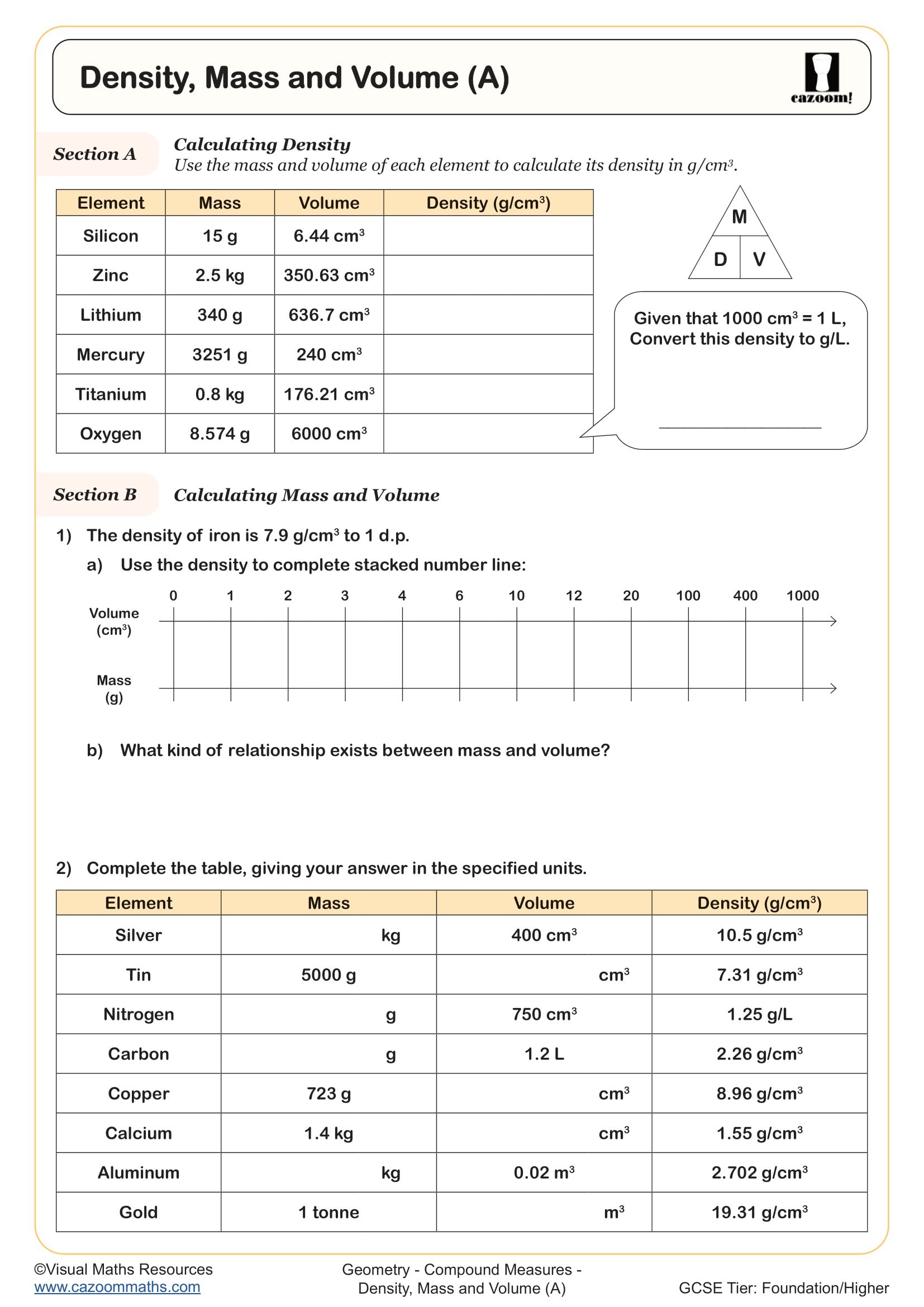
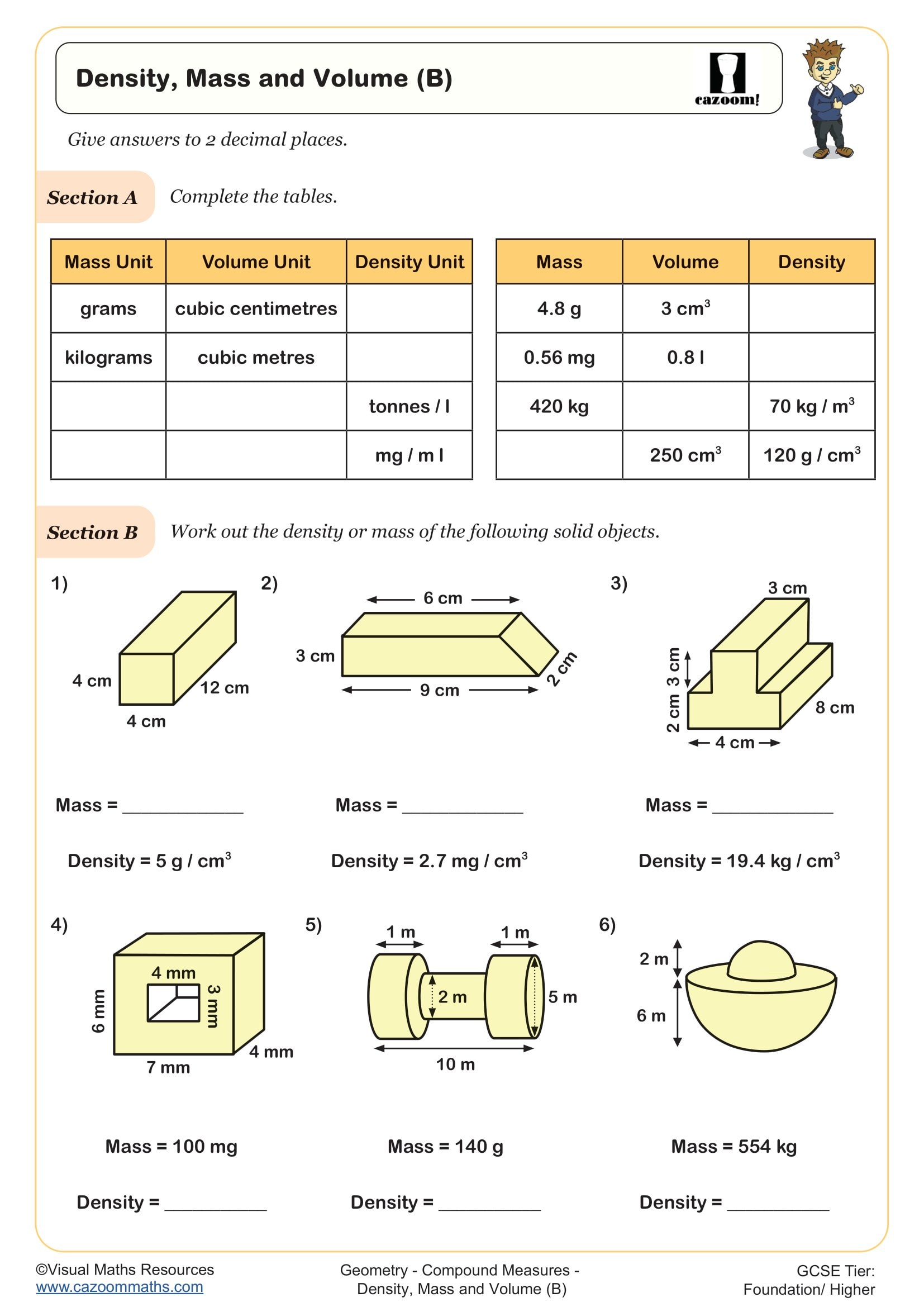
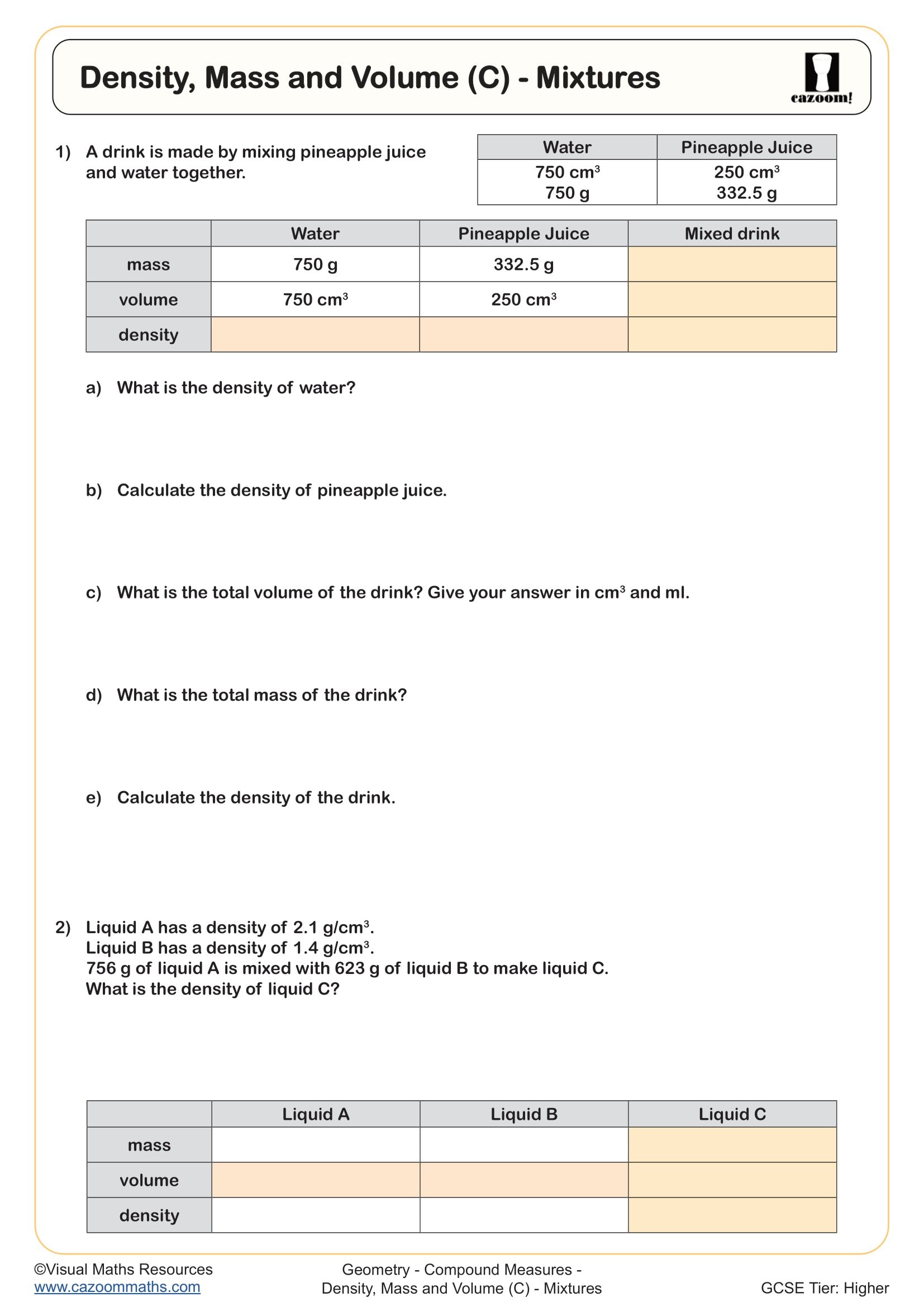
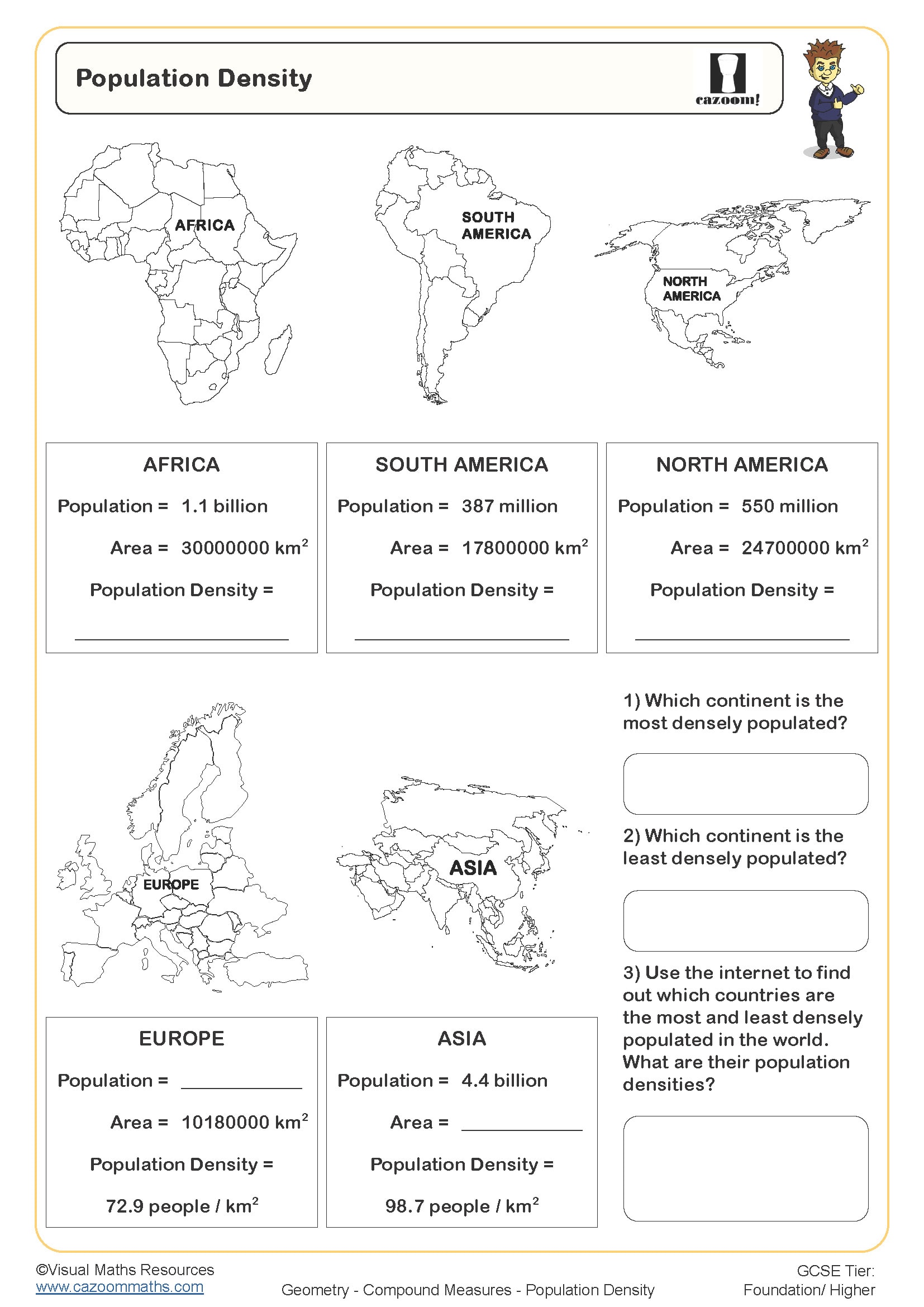
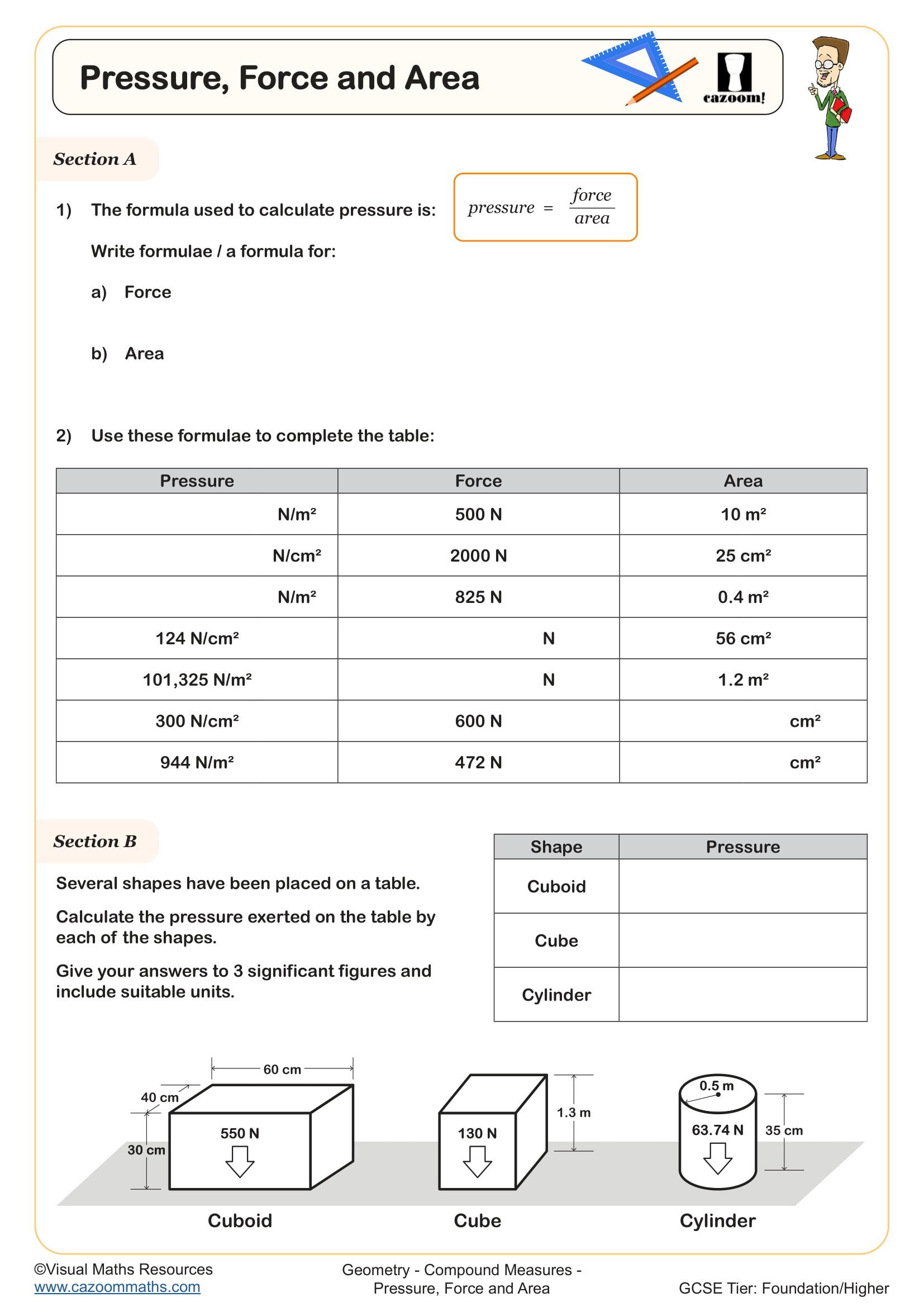
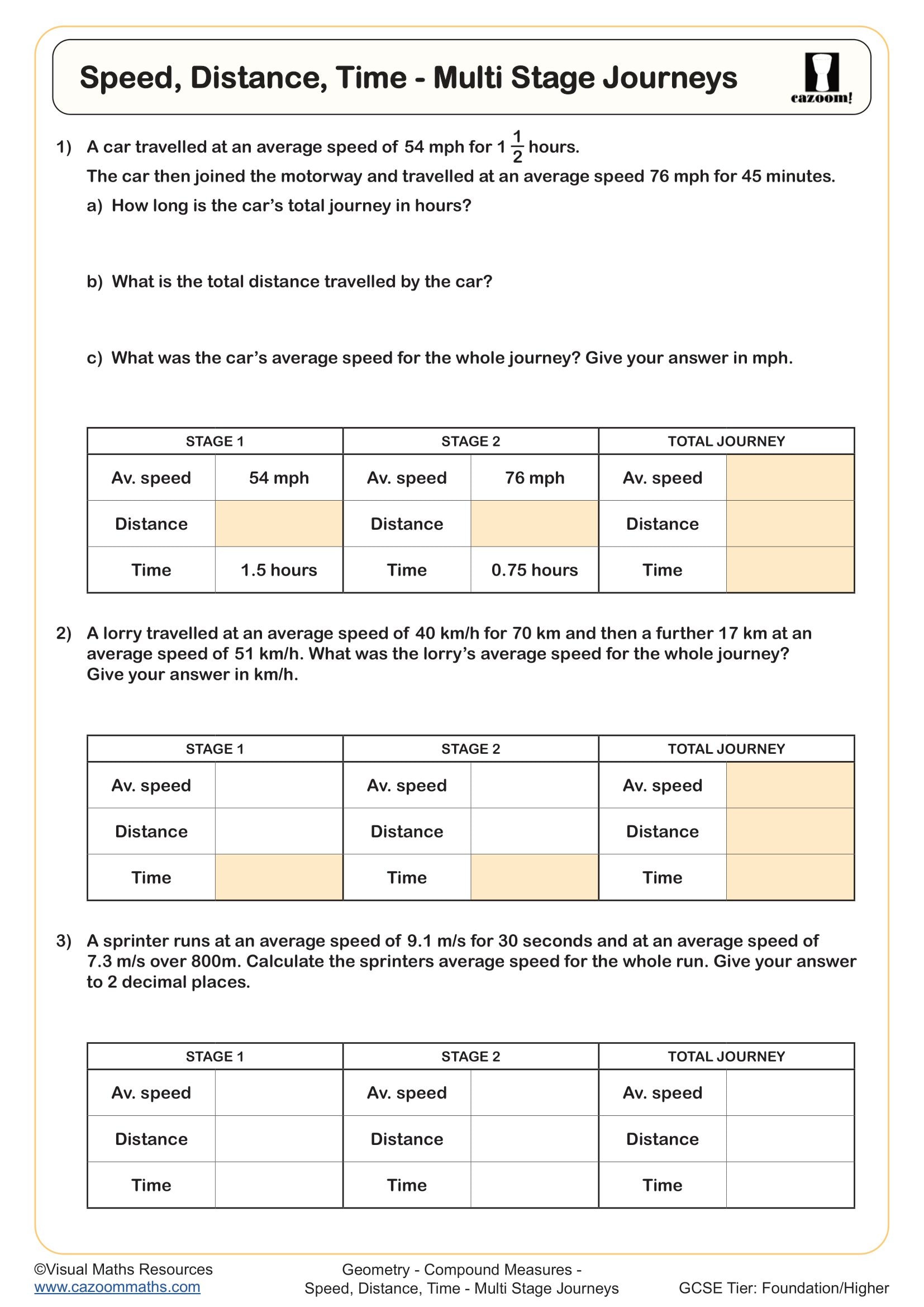
Compound measures combine two or more basic measurements to create a new quantity, such as speed (distance per unit time), density (mass per unit volume) or pressure (force per unit area). At KS4, students work primarily with speed, density and pressure, learning to calculate each measure, rearrange the formulae to find missing values, and convert between different units such as km/h to m/s or g/cm³ to kg/m³.
A common error occurs when students write density as v/m instead of m/v, often because they've memorised the formula triangle without understanding that density describes how much mass fits into a given volume. Exam mark schemes regularly penalise this reversal, even when subsequent working is correct, making it essential that students grasp the physical meaning behind each formula rather than relying solely on memorisation techniques.
Which year groups study compound measures?
These worksheets cover compound measures across Year 10 and Year 11 as part of the KS4 National Curriculum for mathematics. Students typically encounter speed calculations first, building on ratio work from KS3, before progressing to density and pressure which require more sophisticated algebraic manipulation and often involve standard form or more complex unit conversions.
The progression becomes more demanding as students move through KS4, with early worksheets focusing on direct calculation using given formulae, whilst later problems require multi-step reasoning, such as finding volume from density and mass before using that volume in a pressure calculation. By Year 11, exam questions frequently embed compound measures within worded contexts that require students to extract information, select the appropriate formula and justify their unit conversions.
How do you convert between different speed units?
Converting speed units requires systematic conversion of both the distance and time components separately. To convert km/h to m/s, students multiply by 1000 to change kilometres to metres, then divide by 3600 to change hours to seconds, giving an overall conversion factor of 5/18. Teachers frequently notice students attempting to convert only one part of the compound unit, producing answers that are out by factors of 60 or 1000.
These conversions have direct applications in transport engineering and road safety analysis. Traffic engineers must convert between units when designing speed limits (posted in mph in the UK) and stopping distances (often calculated in metres per second for precision). Understanding that 30 mph equals approximately 13.4 m/s helps students appreciate why stopping distances increase dramatically with speed, as kinetic energy depends on velocity squared, making this mathematical skill essential for real-world safety calculations.
How can these worksheets support compound measures teaching?
The worksheets provide structured practice that builds from straightforward substitution into formulae through to multi-step problems requiring rearrangement and unit conversion. Questions are sequenced to develop confidence with each compound measure individually before combining them in more complex scenarios, and the inclusion of worded problems helps students practise extracting relevant information from context, a skill that exam mark schemes specifically assess.
Many teachers use these resources for intervention sessions with students who struggle to connect the abstract formulae to physical quantities, working through examples collaboratively before students attempt similar problems independently. The answer sheets make them particularly effective for homework or independent revision, whilst paired work sessions allow students to explain their reasoning to each other, which often reveals misunderstandings about which quantity represents the numerator or denominator in each formula that might otherwise go unnoticed until an assessment.