KS4 Linear Functions Worksheets
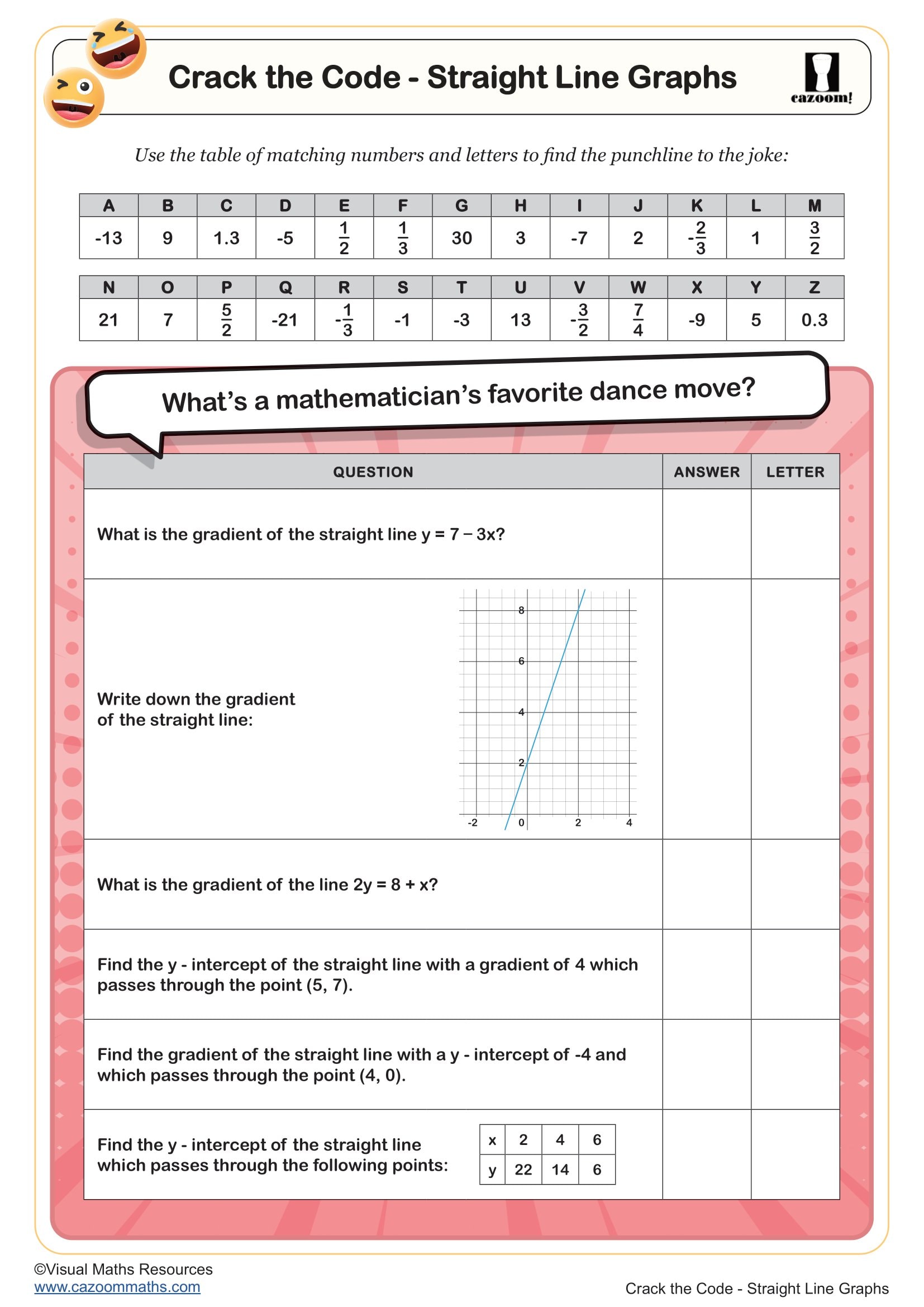
Crack the Code - Straight Line Graphs
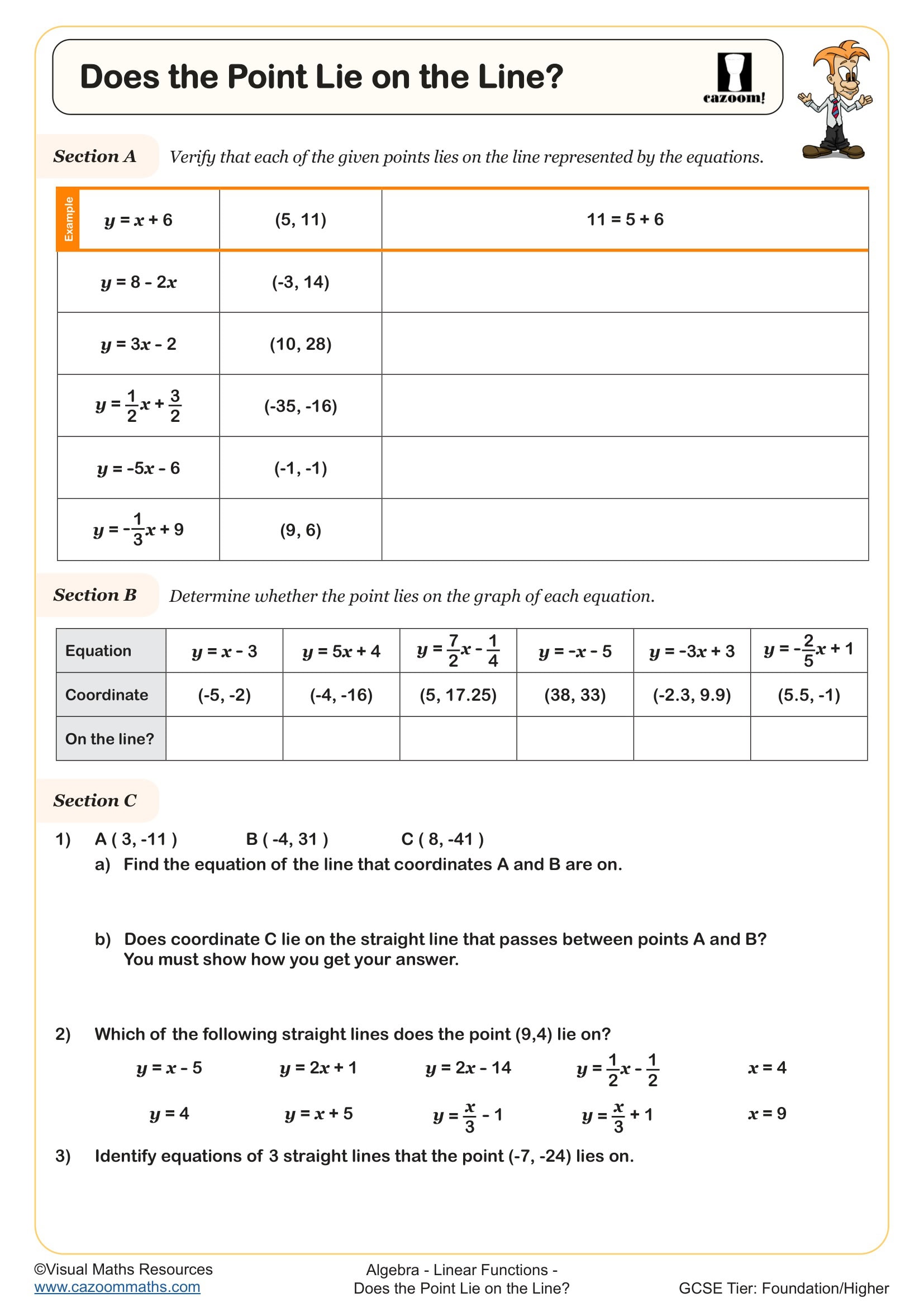
Does the Point Lie on the Line?
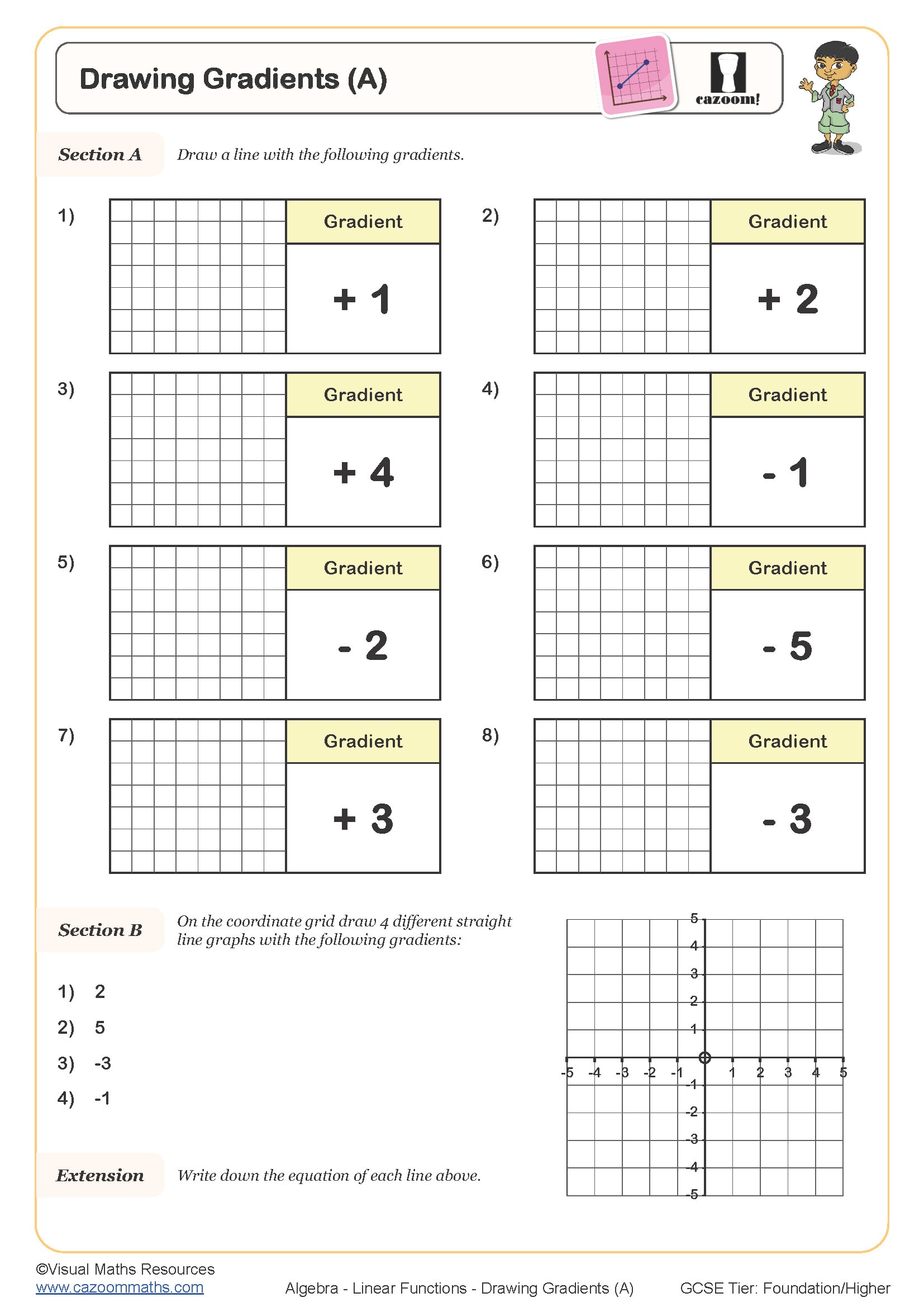
Drawing Gradients (A)
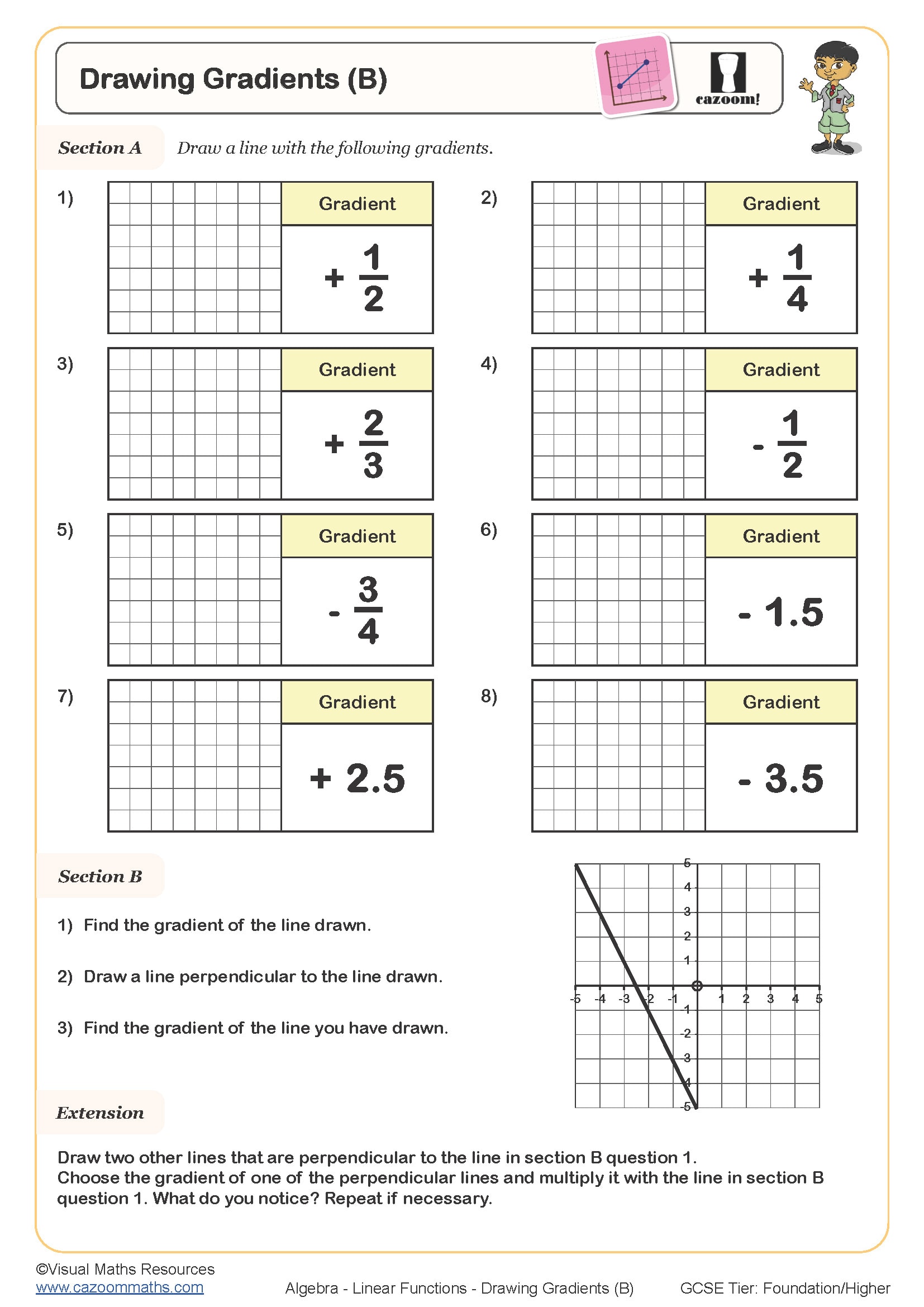
Drawing Gradients (B)
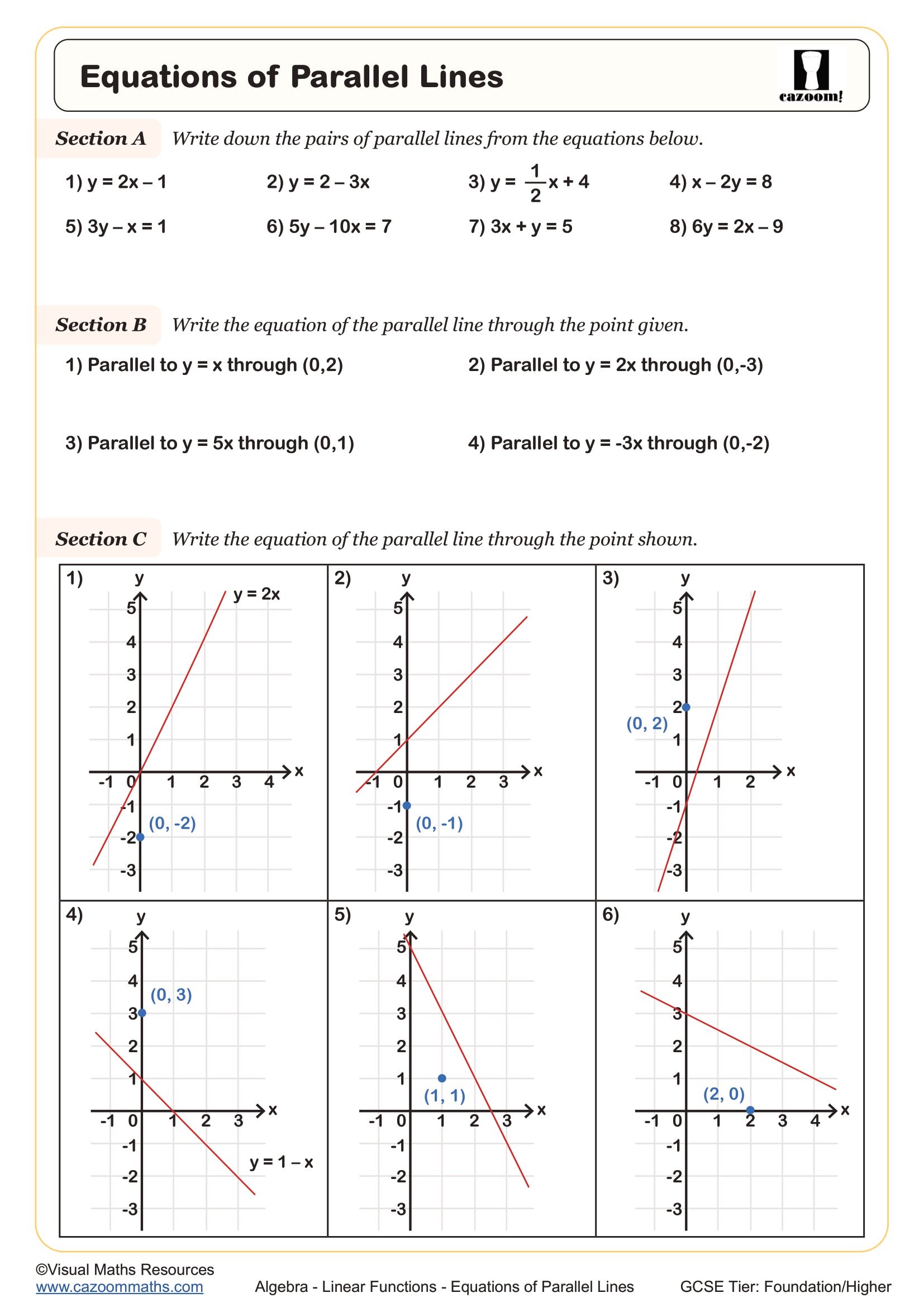
Equations of Parallel Lines
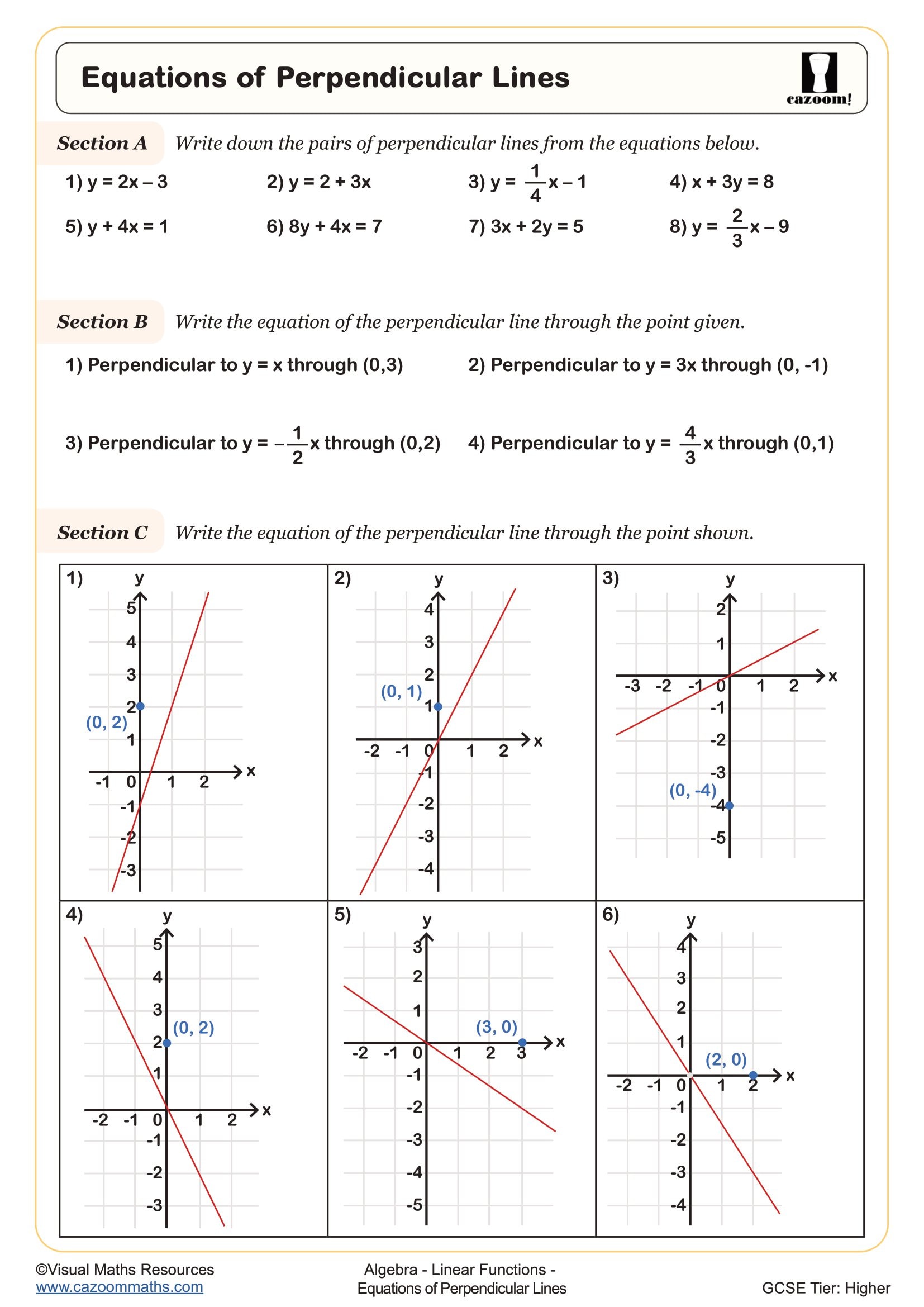
Equations of Perpendicular Lines
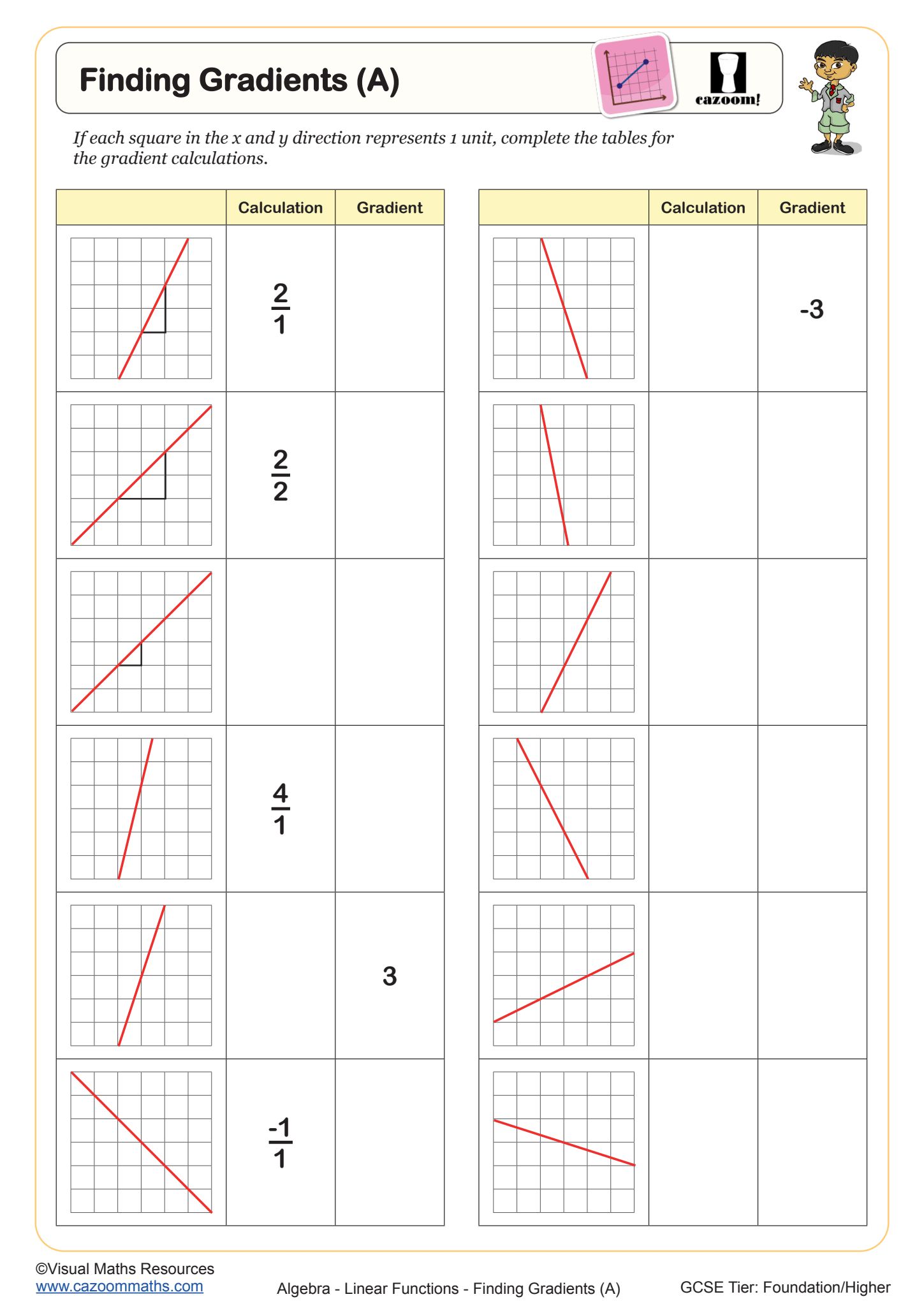
Finding Gradients (A)
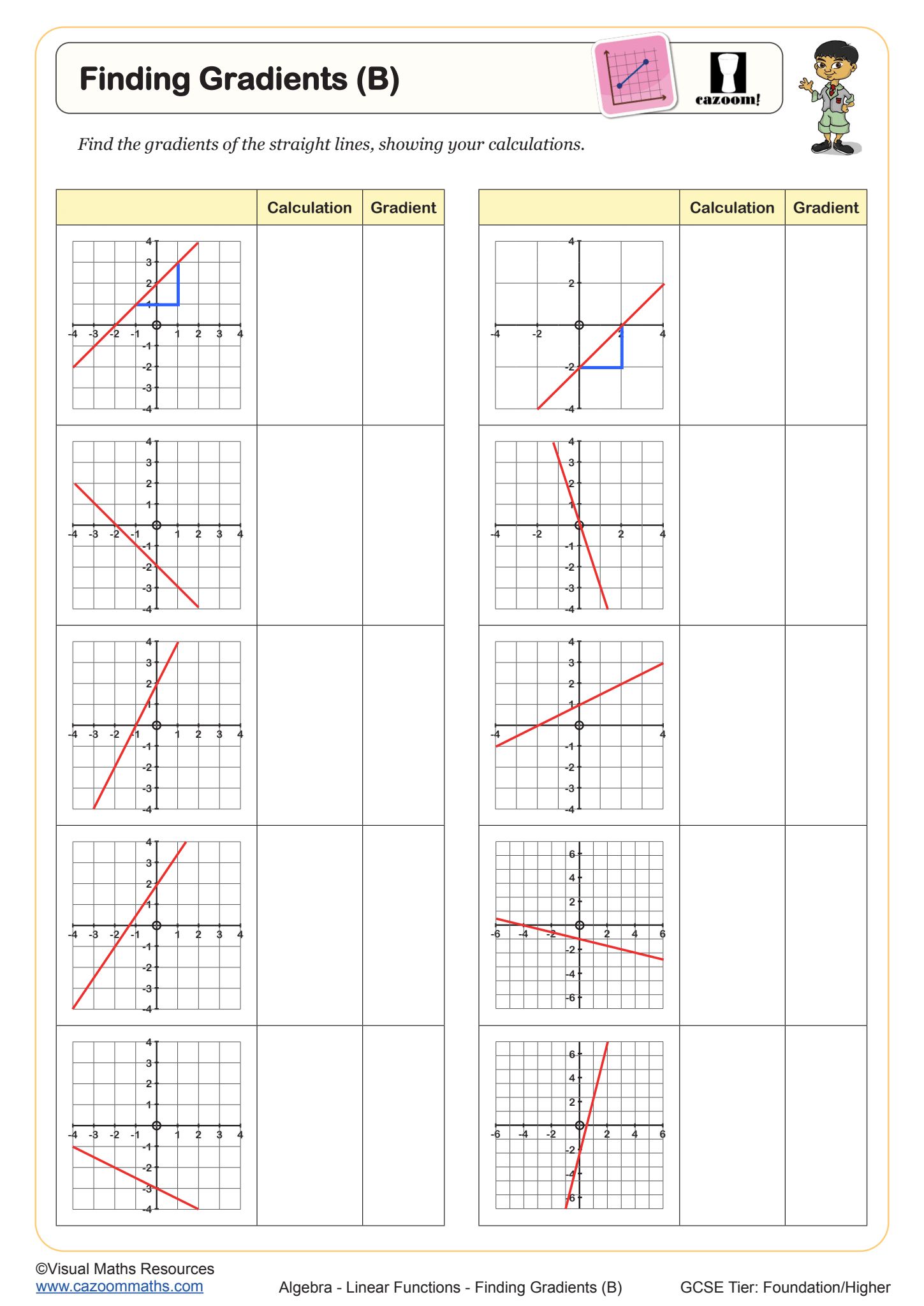
Finding Gradients (B)
Finding Gradients (C)
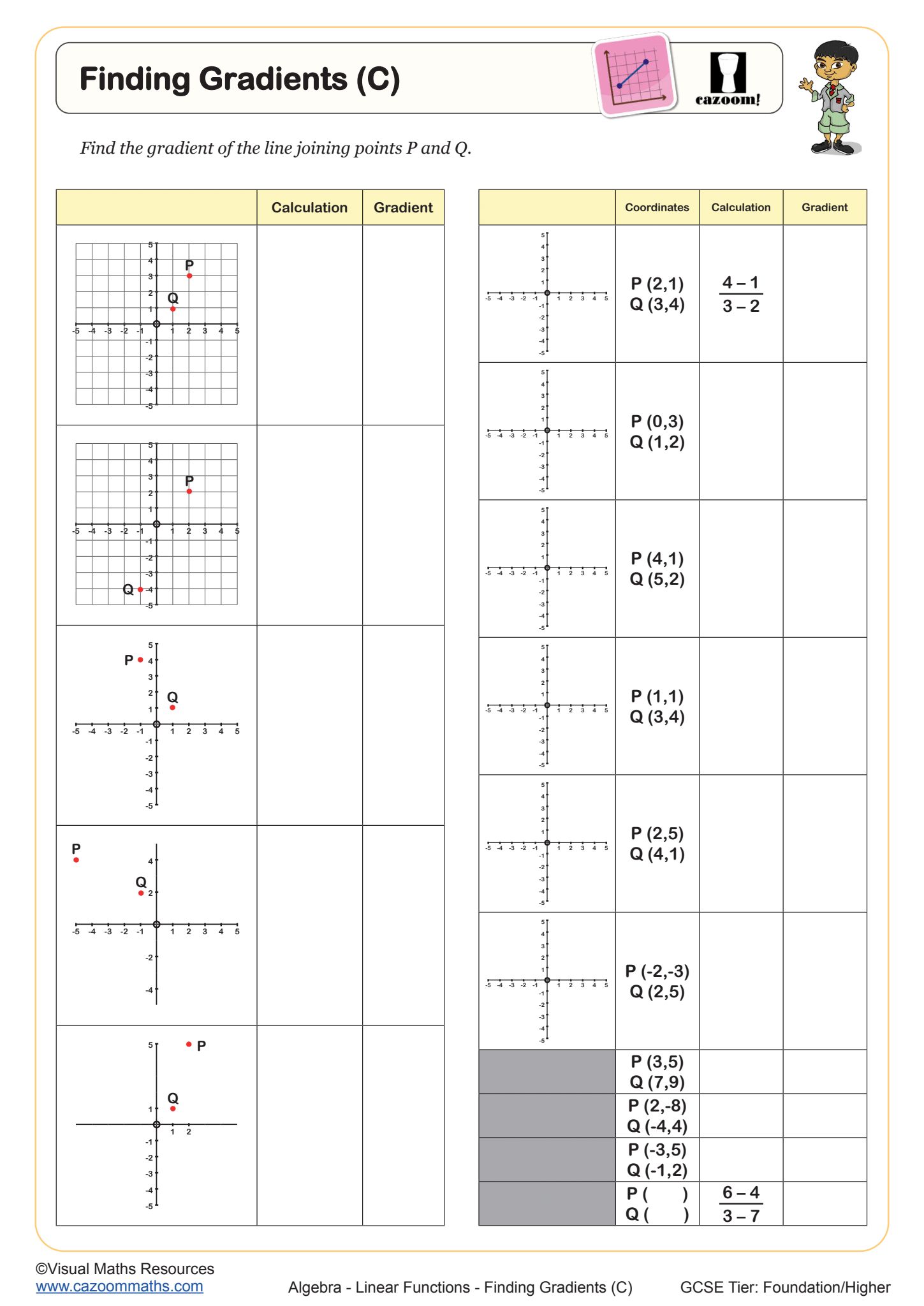
Finding the Equation of the Line (A)
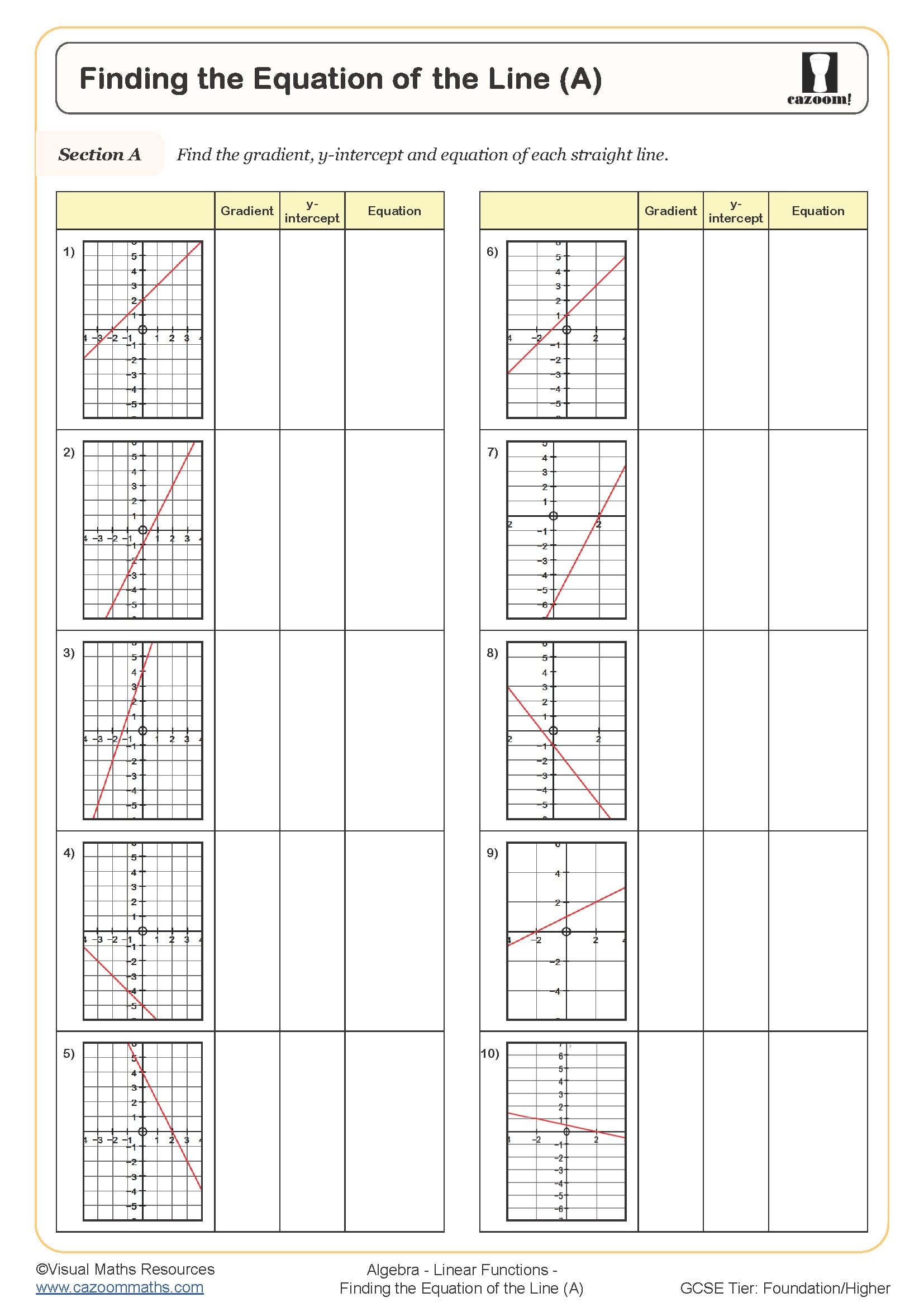
Finding the Equation of the Line (B)
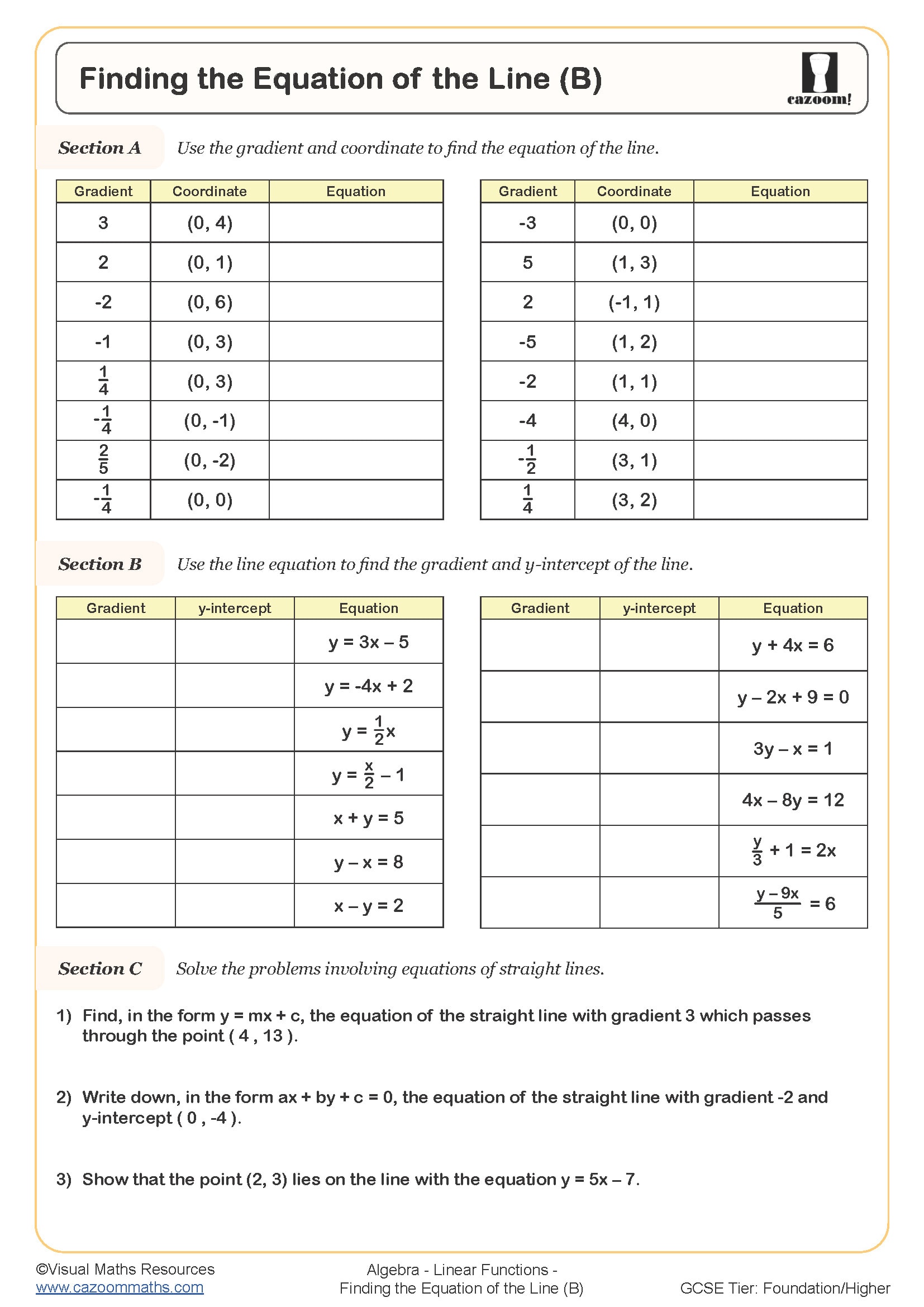
Finding the Equation of the Line (C)
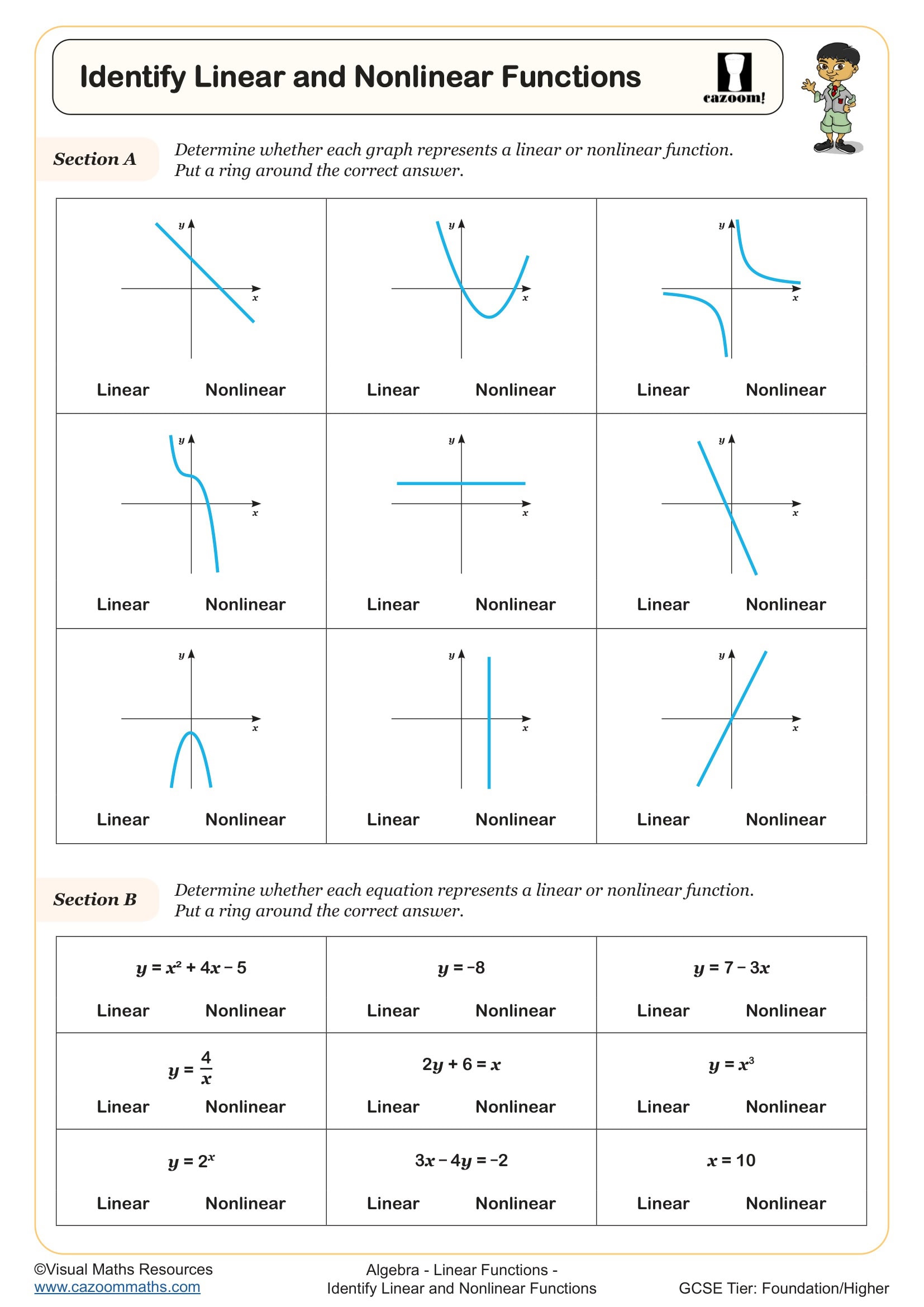
Identify Linear and Non Linear Functions
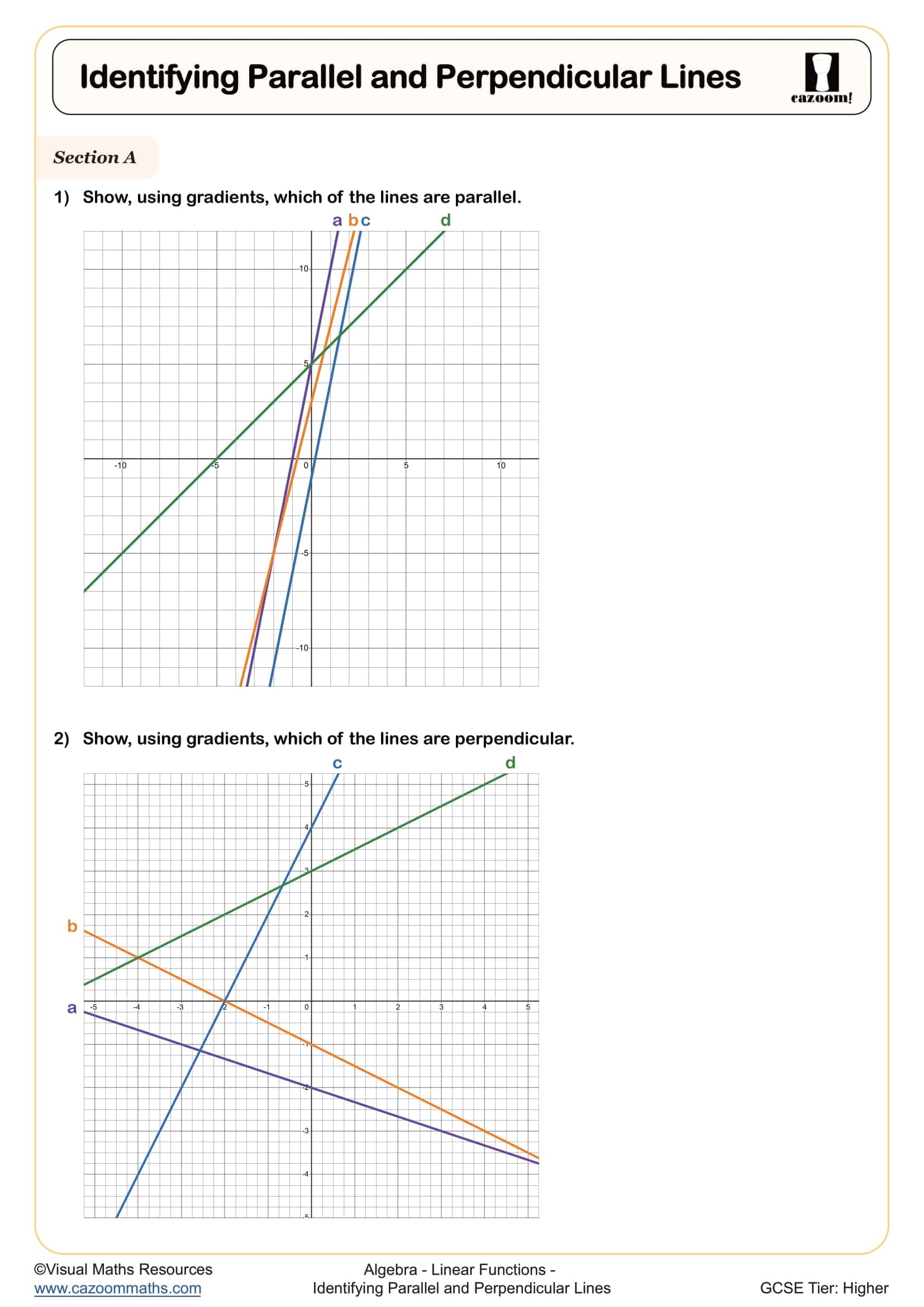
Identifying Parallel and Perpendicular Lines
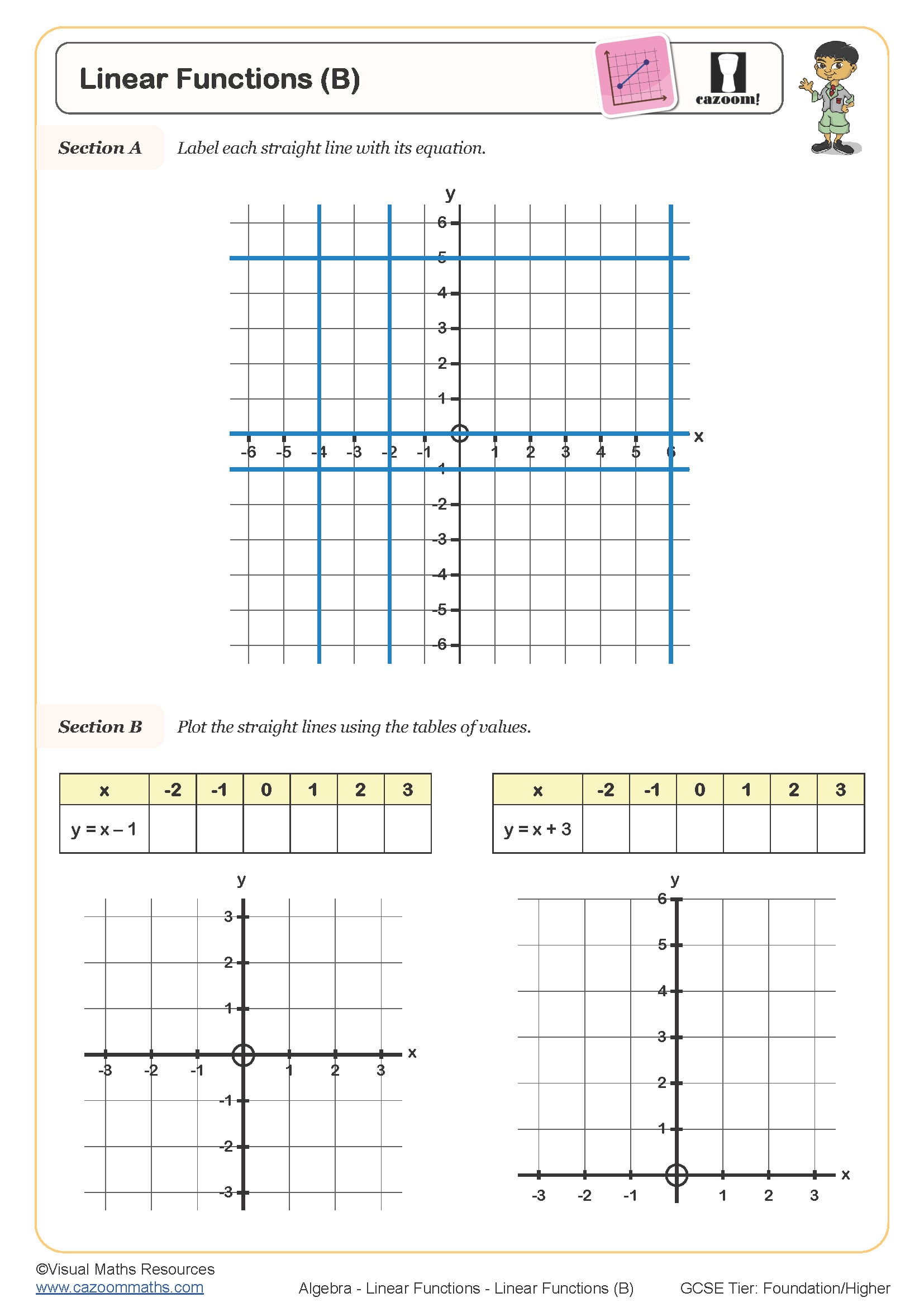
Linear Functions (B)
All worksheets are created by the team of experienced teachers at Cazoom Maths.
What are linear functions and why do they matter at GCSE?
Linear functions are mathematical relationships where the rate of change between two variables remains constant, producing straight-line graphs when plotted. At GCSE, students need to recognise these functions in multiple forms including y = mx + c, tables of values, and graphs, moving fluently between representations. This forms the basis for solving simultaneous equations, understanding direct proportion, and tackling more complex algebraic topics in both Foundation and Higher tier examinations.
Exam mark schemes expect students to demonstrate clear understanding of gradient as a rate of change and the y-intercept as a starting value. Students commonly lose marks when they calculate gradient correctly but then substitute coordinates incorrectly to find c, or when they misread scales on graphs and plot points inaccurately. Practising conversion between different representations helps students develop the flexibility needed to tackle multi-step GCSE questions where linear functions appear as part of problem-solving contexts.
Which year groups study linear functions?
Linear functions appear in the KS4 curriculum for Year 10 and Year 11 students, building on coordinate work and basic graphing from KS3. Students encounter linear functions early in Year 10 when establishing algebraic techniques, then revisit them throughout both years as the concept underpins numerous GCSE topics including inequalities, kinematics, and algebraic proof. The topic forms part of the Algebra strand in the National Curriculum and appears across both Foundation and Higher tier papers.
Progression across these year groups involves increasing sophistication in application rather than fundamentally new content. Year 10 students typically focus on identifying linear functions, finding gradients and intercepts, and sketching basic graphs. By Year 11, students apply these skills in unfamiliar contexts, work with perpendicular and parallel lines, and tackle questions that embed linear functions within problem-solving scenarios requiring multiple steps and connections to other mathematical areas.
How do card sort activities help students understand linear and non-linear functions?
Card sort activities require students to categorise equations, graphs, and tables into linear and non-linear groups, developing their ability to recognise defining characteristics of linear relationships. Students examine whether functions maintain a constant rate of change, whether graphs produce straight lines, and whether equations contain only first-degree terms. This classification skill helps students distinguish between linear functions, quadratics, reciprocals, and exponentials, preventing common errors where students attempt to apply linear methods to unsuitable situations.
In engineering and data science, distinguishing between linear and non-linear relationships determines which modelling techniques professionals can apply. Linear models are computationally simpler and allow for straightforward prediction, making them the first choice when analysing trends in everything from manufacturing costs to climate data. Students who confidently identify linear patterns develop analytical thinking that transfers directly to STEM fields where choosing appropriate mathematical models determines the success of real-world problem-solving.
How can teachers use these worksheets effectively in lessons?
These worksheets provide structured practice that allows students to develop procedural fluency alongside conceptual understanding. The answer sheets enable students to self-assess during independent work, helping them identify specific areas where their method breaks down before errors become embedded. Teachers can use earlier questions as worked examples, then gradually reduce scaffolding as students move through each sheet, building confidence through successful attempts at progressively challenging problems.
Many teachers find these resources particularly valuable for intervention sessions where small groups need targeted support on specific aspects of linear functions. The worksheets work well as homework tasks that consolidate classroom learning, allowing lesson time for discussion and problem-solving rather than routine practice. During revision periods, students can use the collection diagnostically to identify which representations of linear functions they find most challenging, then focus their efforts accordingly before GCSE examinations.