KS4 Surds Worksheets
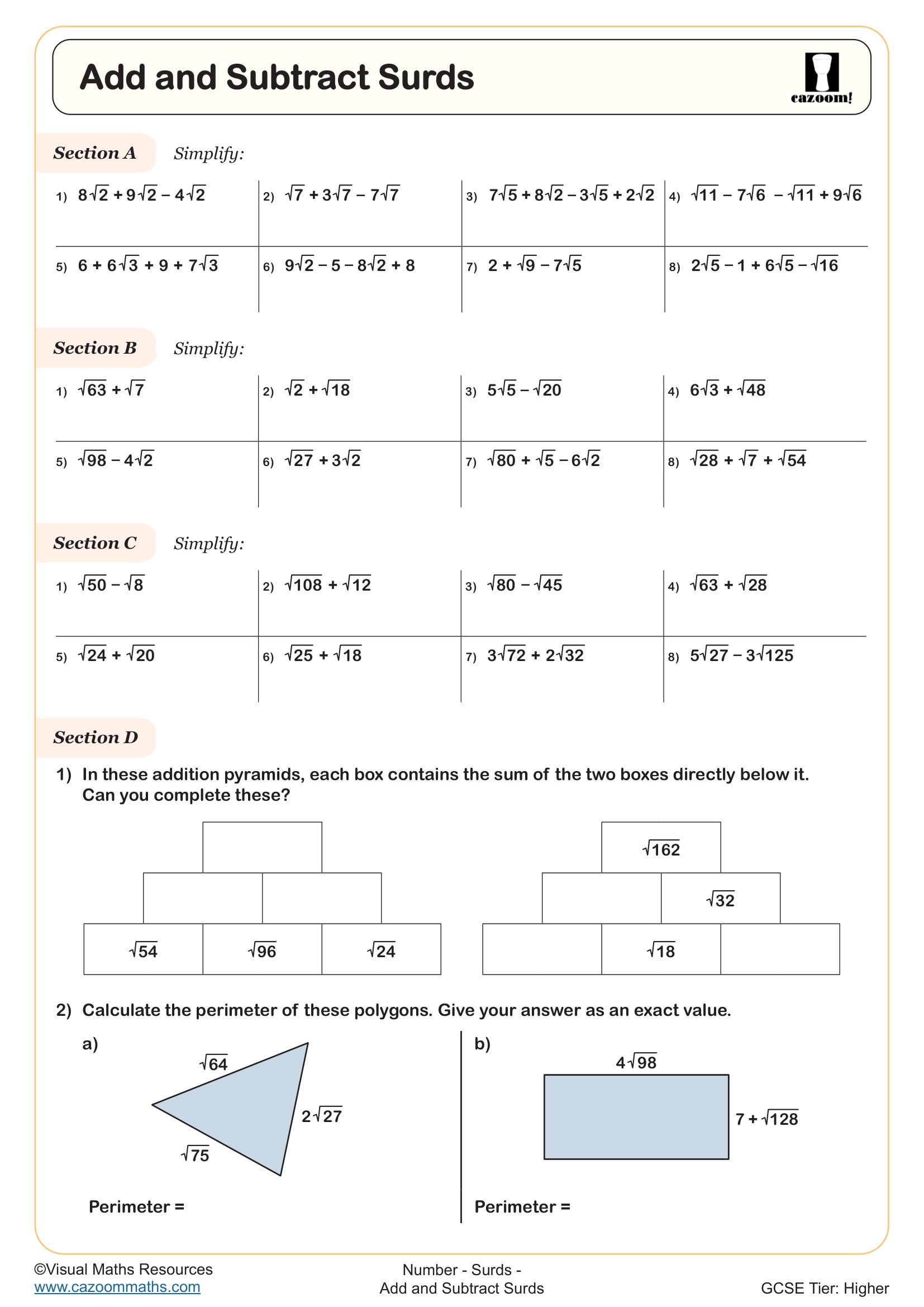
Add and Subtract Surds
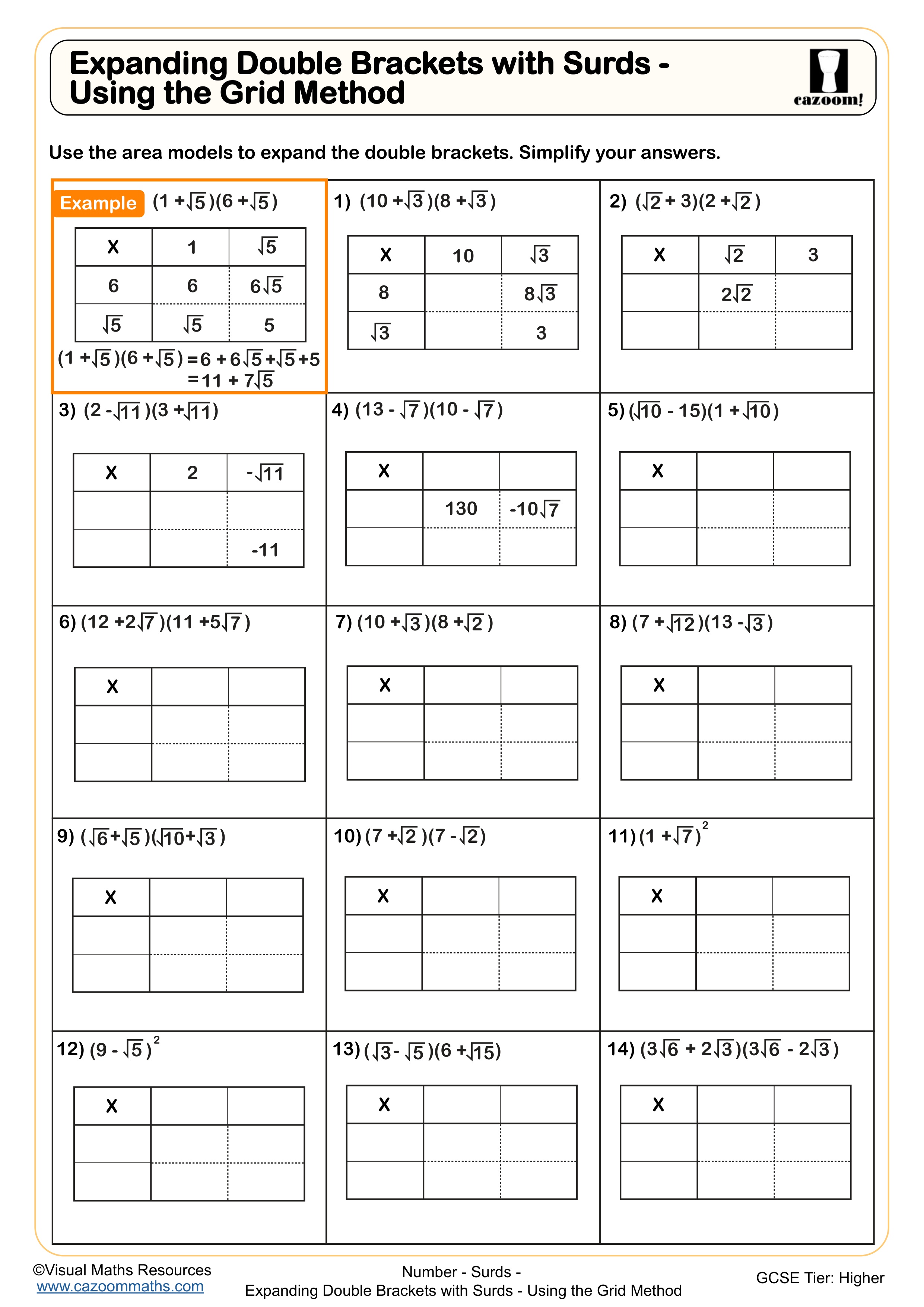
Expanding Double Brackets with Surds - Using the Grid Method
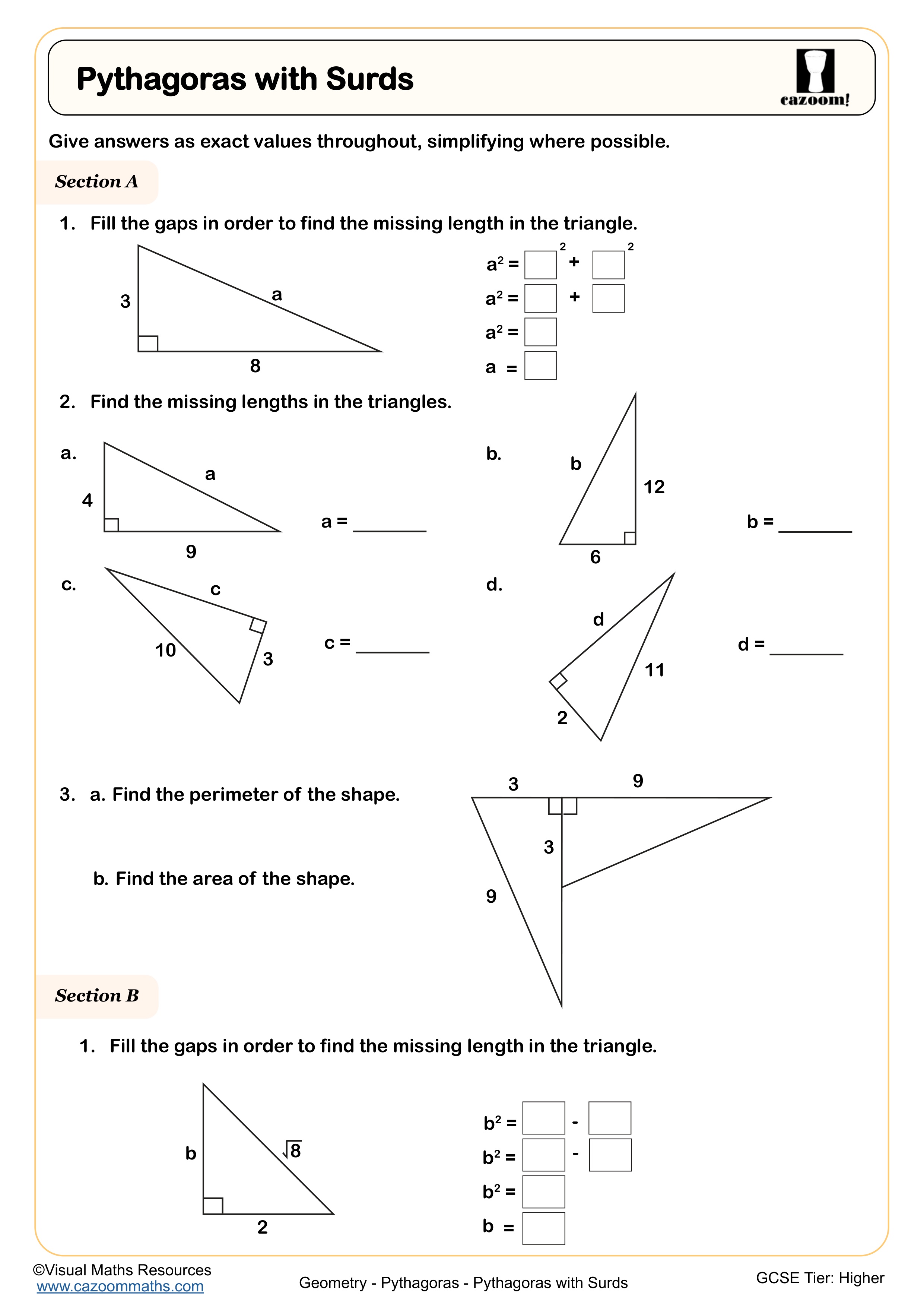
Pythagoras with Surds
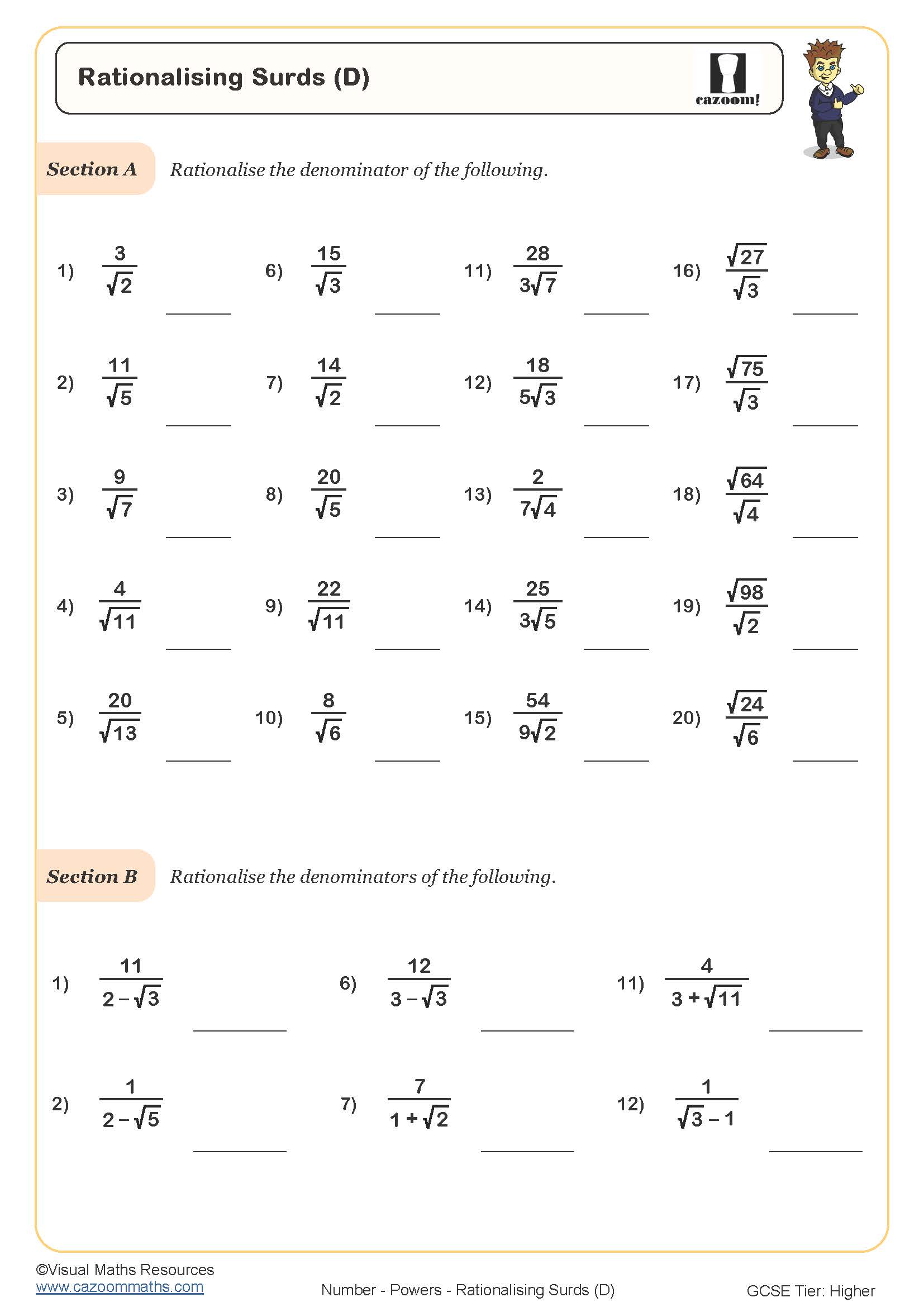
Rationalising Surds (D)
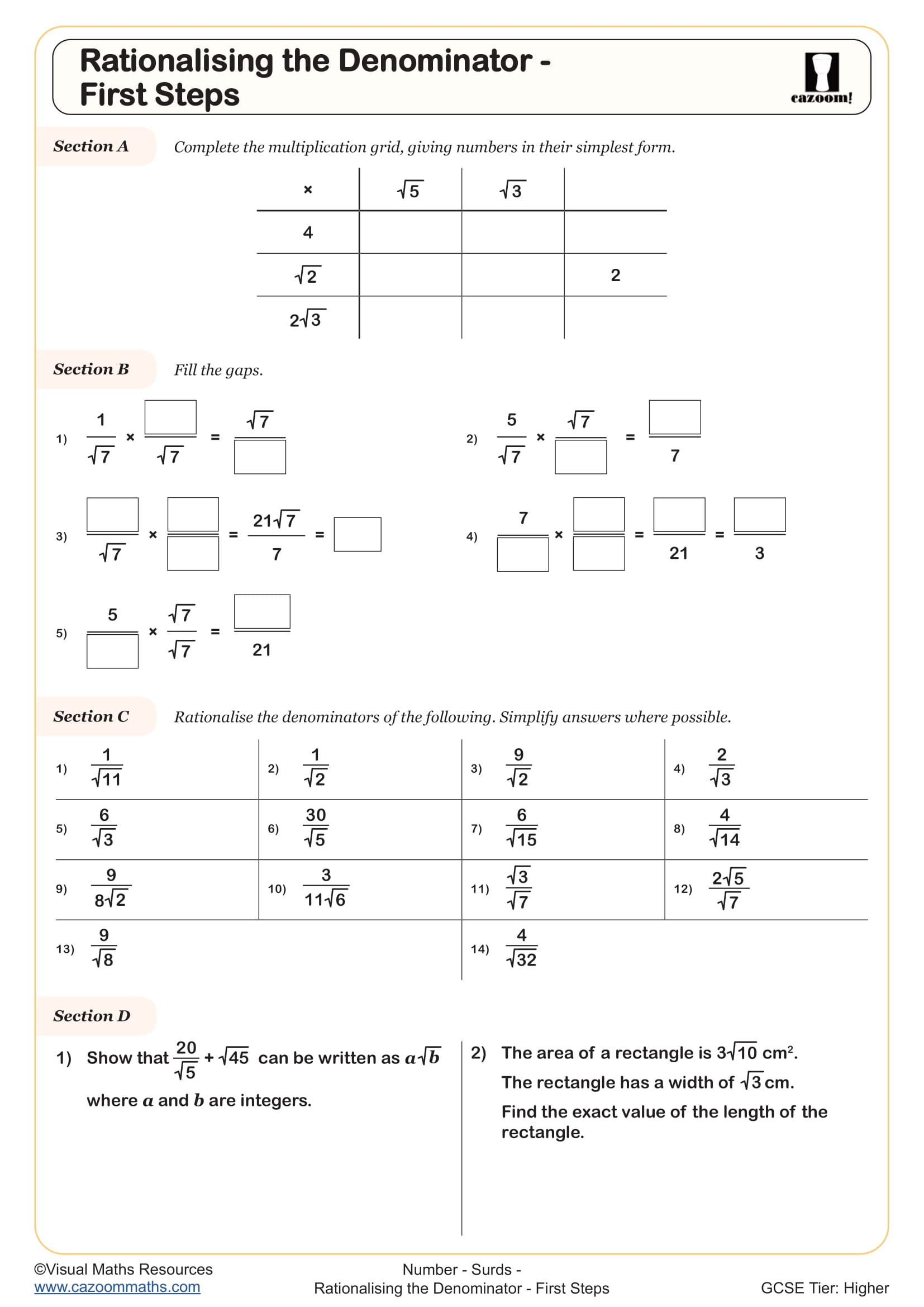
Rationalising the Denominator - First Steps
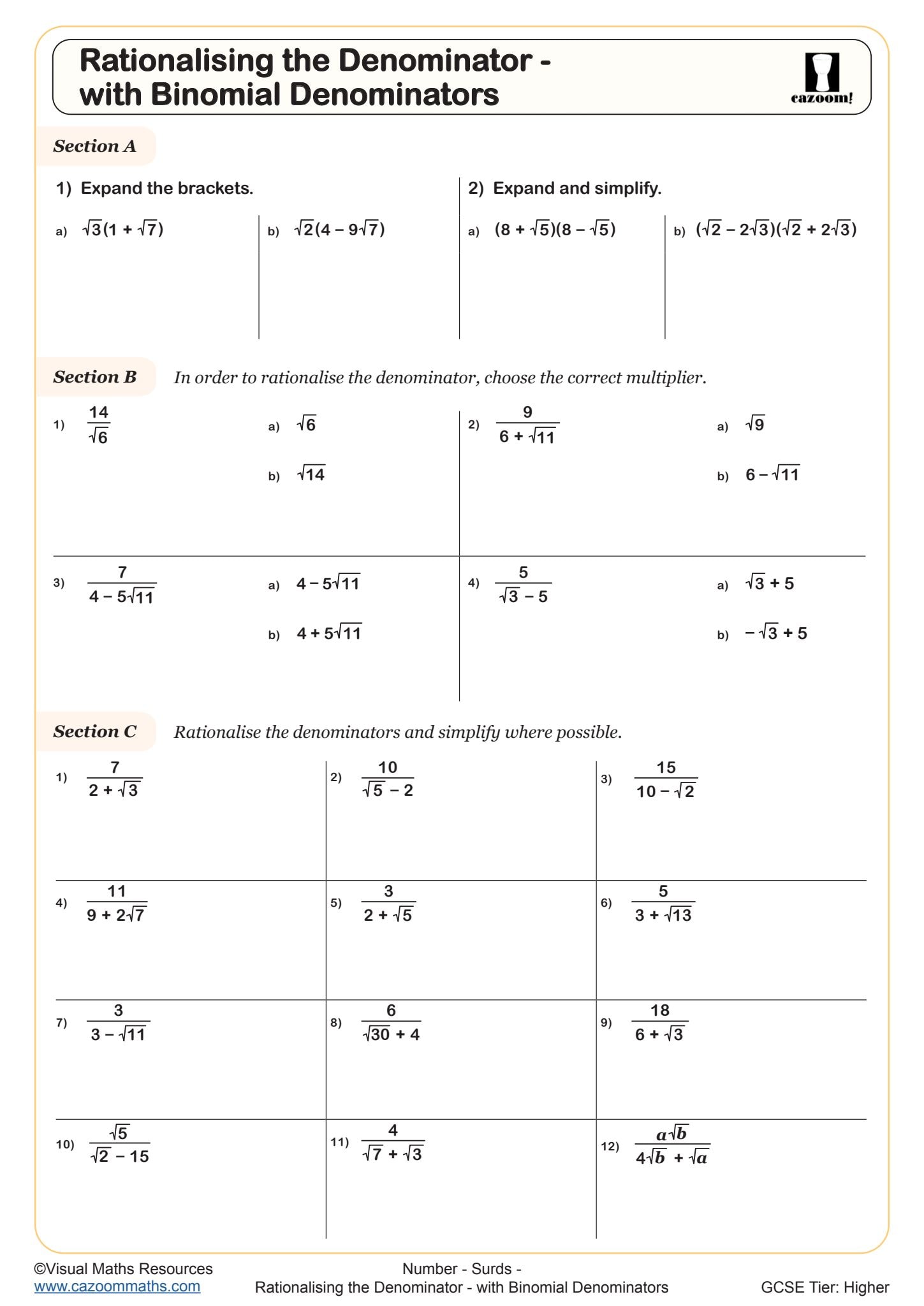
Rationalising the Denominator - with Binomial Denominators
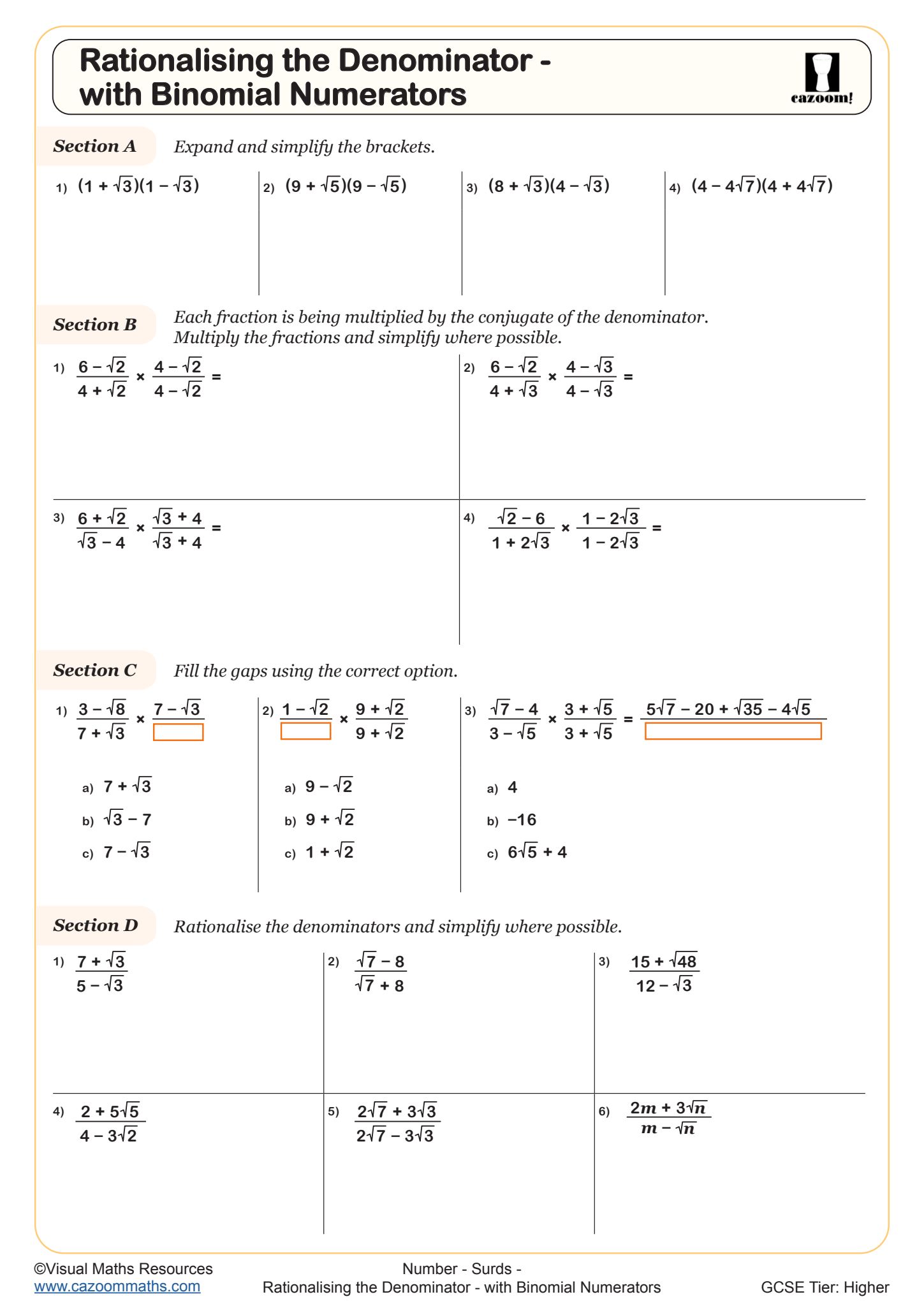
Rationalising the Denominator - with Binomial Numerators
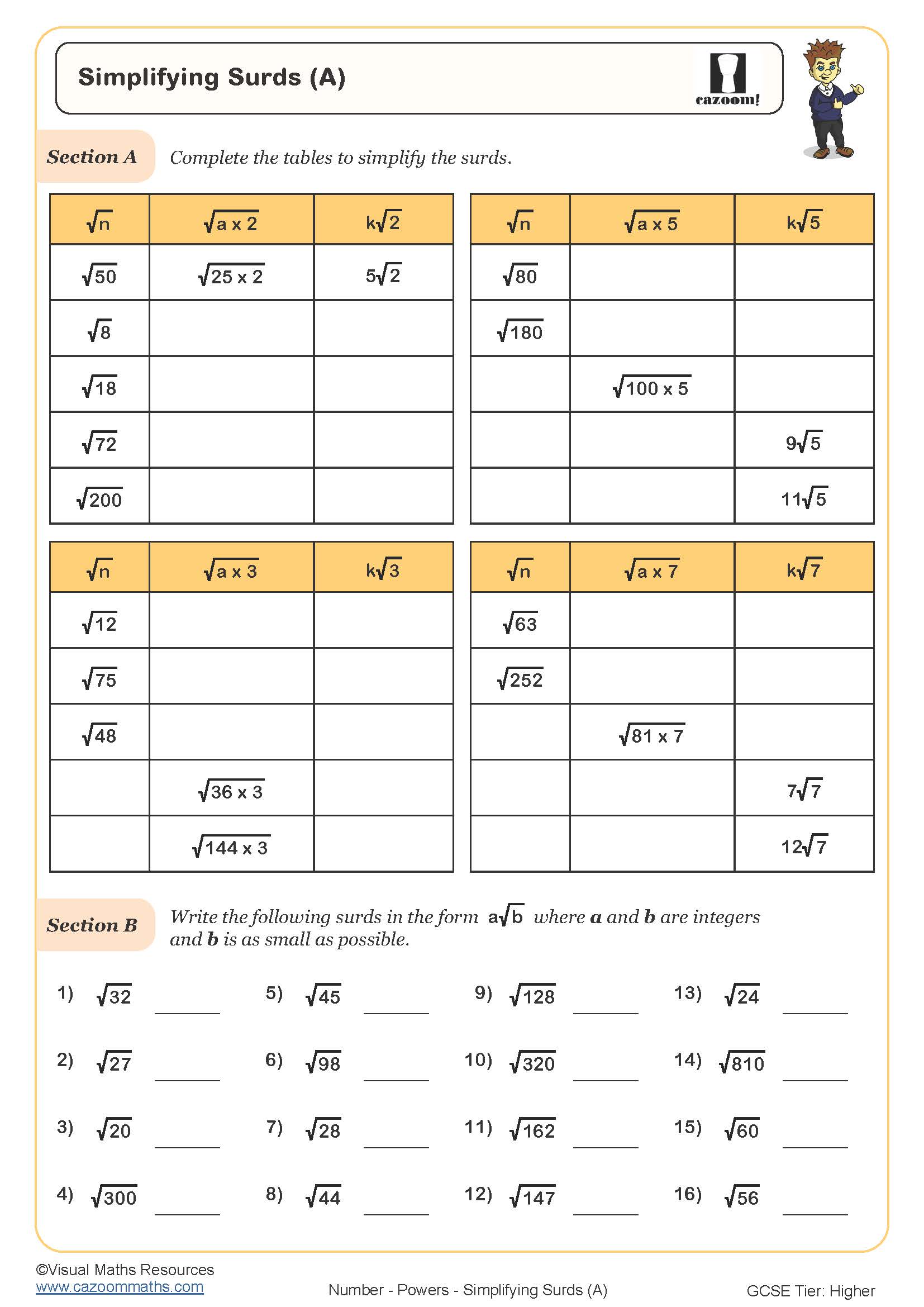
Simplifying Surds (A)
Simplifying Surds (B)
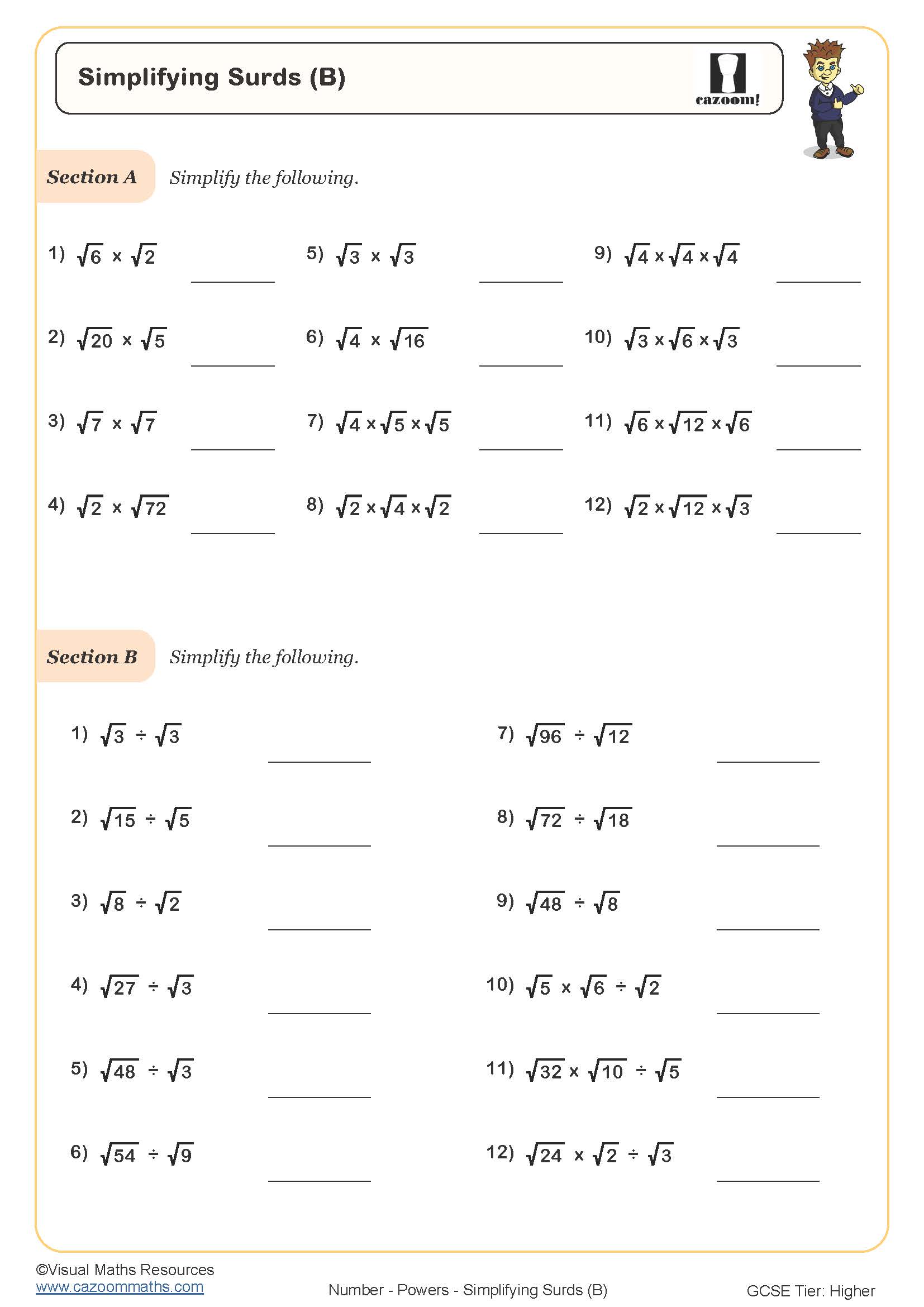
Simplifying Surds with Brackets (C)
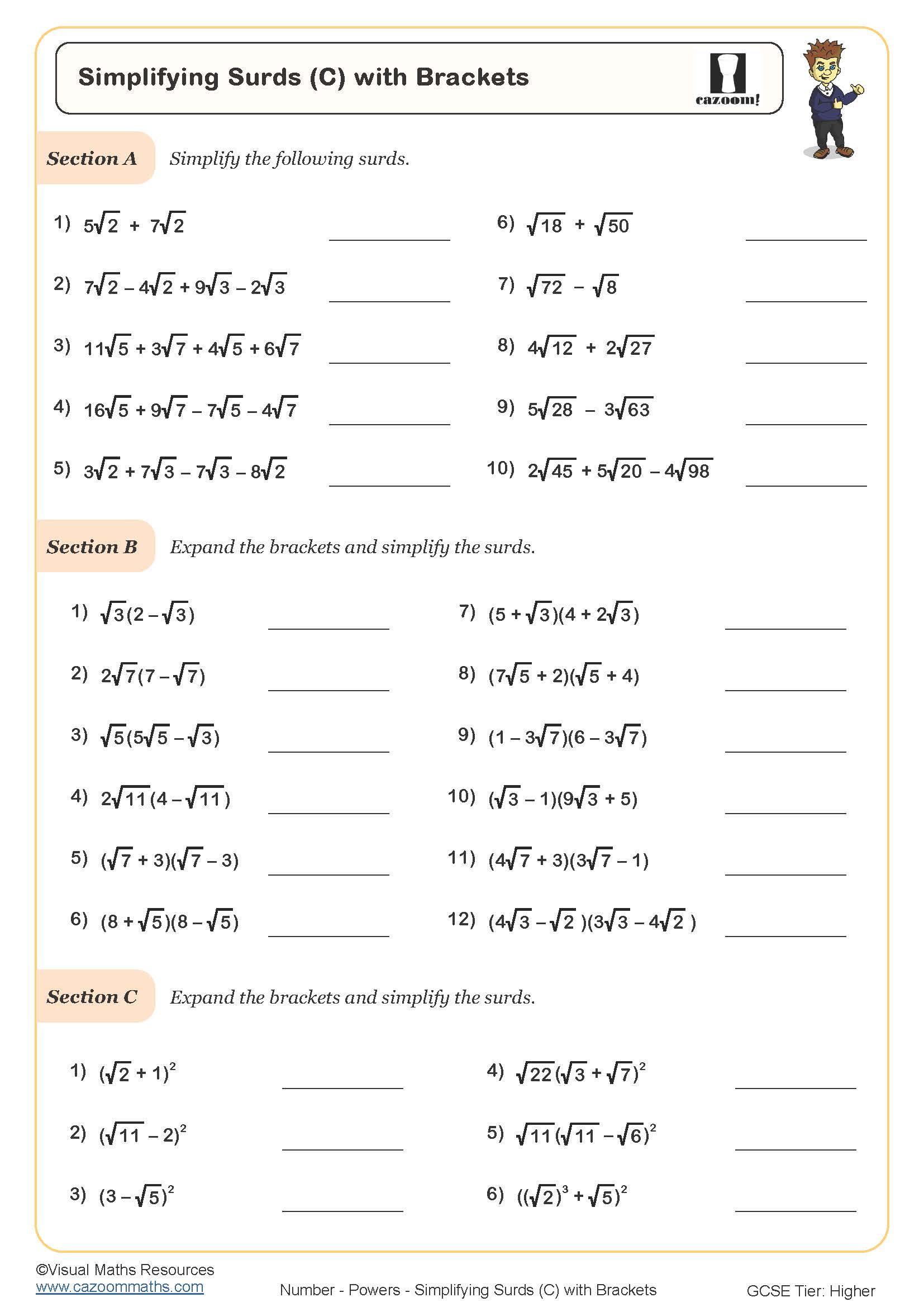
Writing Exact Answers Using Surds
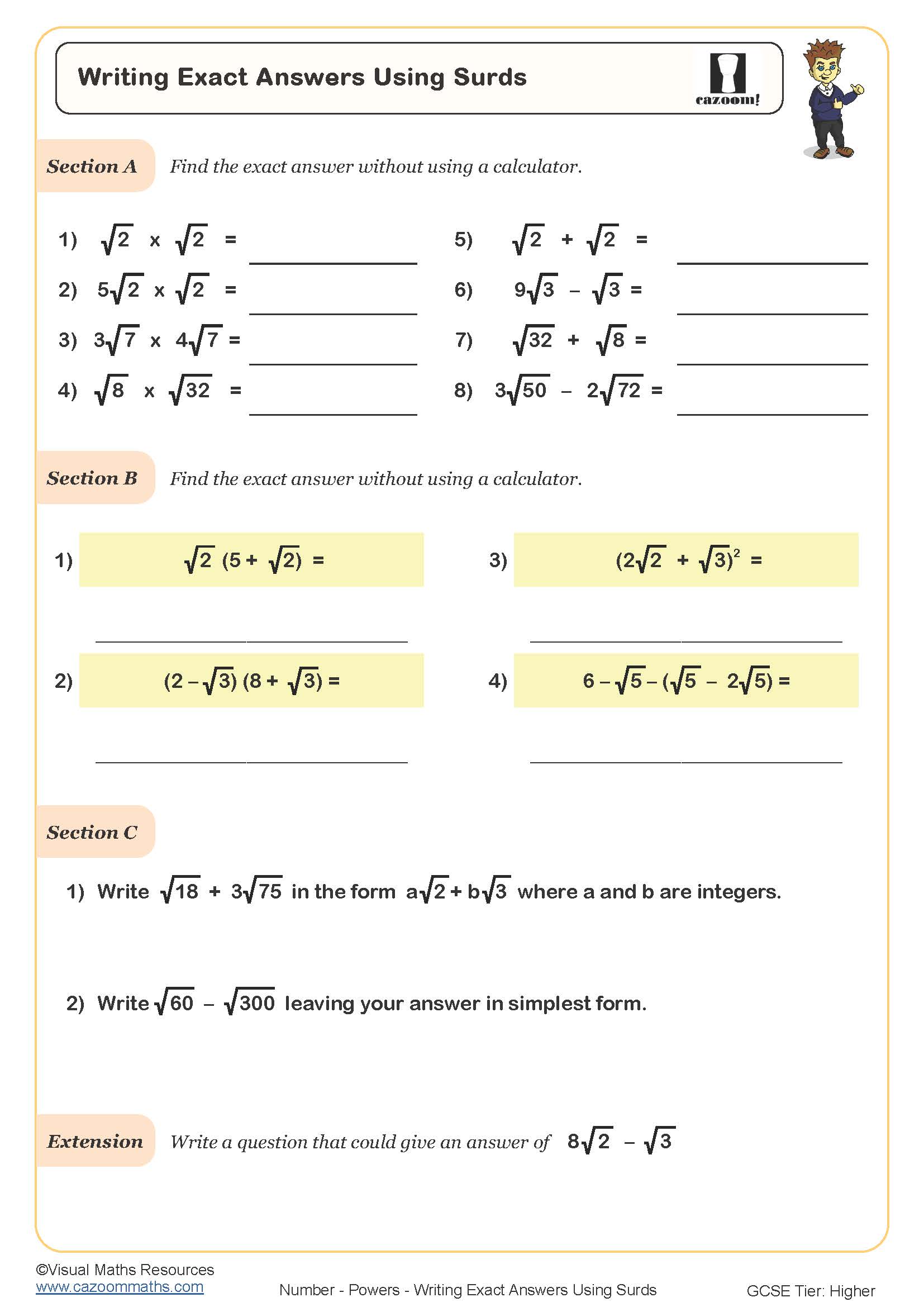
All worksheets are created by the team of experienced teachers at Cazoom Maths.
Where can I find a surds worksheet PDF with answers?
This resource provides 11 dedicated surds worksheet PDFs, each with full answer sheets included. The worksheets cover the complete GCSE surds curriculum, from basic simplification and operations through to rationalising denominators with binomial expressions. All materials are available as downloadable PDFs, allowing teachers to print them for classroom use or share them digitally with students.
The answer sheets prove particularly useful during intervention sessions, as students can check their working step-by-step rather than just verifying final answers. Teachers frequently use these for homework because parents often struggle to support with surds, and the detailed answers allow students to identify exactly where their method breaks down. The PDF format also works well for display under visualisers when reviewing common errors with the whole class.
What year group learns about surds?
Surds appear in the KS4 curriculum, typically introduced in Year 10 and developed further in Year 11. The topic sits within the Number strand of the GCSE specification and connects directly to work on indices and powers. Students must be confident with square roots and basic index laws before tackling surds, which is why the introduction usually follows the completion of core algebra topics in Year 10.
The progression across these year groups moves from recognising and simplifying surds like √50 = 5√2, through to operations (adding, subtracting, multiplying) and then the more demanding skill of rationalising denominators. Year 11 students encounter harder problems involving brackets such as (√3 + 2)(√3 - 5), and exam questions often combine surds with algebraic fractions or geometric applications. Higher-tier GCSE papers regularly include multi-step problems where surds appear in area calculations or exact trigonometric values.
How do you rationalise the denominator of a surd?
Rationalising the denominator means removing surds from the bottom of a fraction by multiplying both numerator and denominator by an appropriate expression. For simple cases like 1/√5, students multiply by √5/√5 to get √5/5. For harder rationalising involving binomials like 2/(3 + √7), students must multiply by the conjugate (3 - √7)/(3 - √7), using the difference of two squares to eliminate the surd: the denominator becomes 9 - 7 = 2.
This technique appears extensively in physics and engineering, particularly when working with impedance in electrical circuits or when expressing exact values in wave mechanics. Rationalised forms are preferred in technical work because they're easier to use in subsequent calculations and avoid rounding errors. Students also encounter rationalising when finding exact coordinates where circles and lines intersect, a common A-level maths problem that requires precise surd manipulation to reach the correct form.
How should teachers use surds worksheets in lessons?
The worksheets work well as staged practice following direct instruction on each technique. Teachers often start with subtracting surds and adding like terms (√5 + 3√5 = 4√5), ensuring students grasp that surds behave like algebraic terms before moving to multiplication and division. The progression through subtopics allows teachers to identify exactly where students need additional support, whether that's simplifying surds initially or tackling brackets later.
Many teachers use these resources for differentiated homework, assigning different worksheets based on student confidence from lesson observations. They're particularly effective for intervention groups preparing for GCSE retakes, where students need focused practice on rationalising after struggling with this in examinations. The complete answer sheets also support paired work, where students can check each other's methods and discuss errors, which teachers notice significantly improves retention compared to teacher-marked work returned days later.