Lines and Angles Worksheets
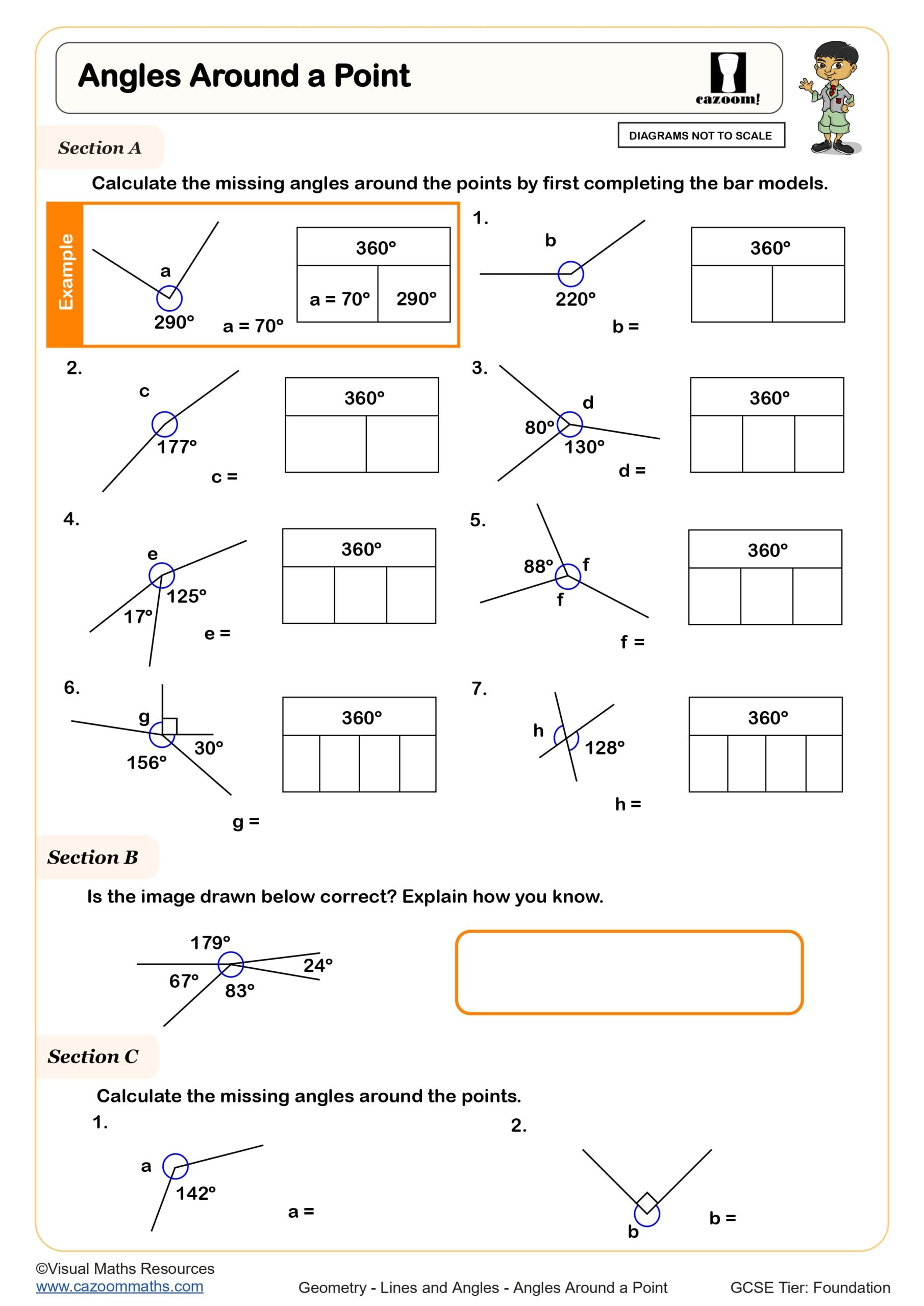
Angles Around a Point
Year groups: 7, 8
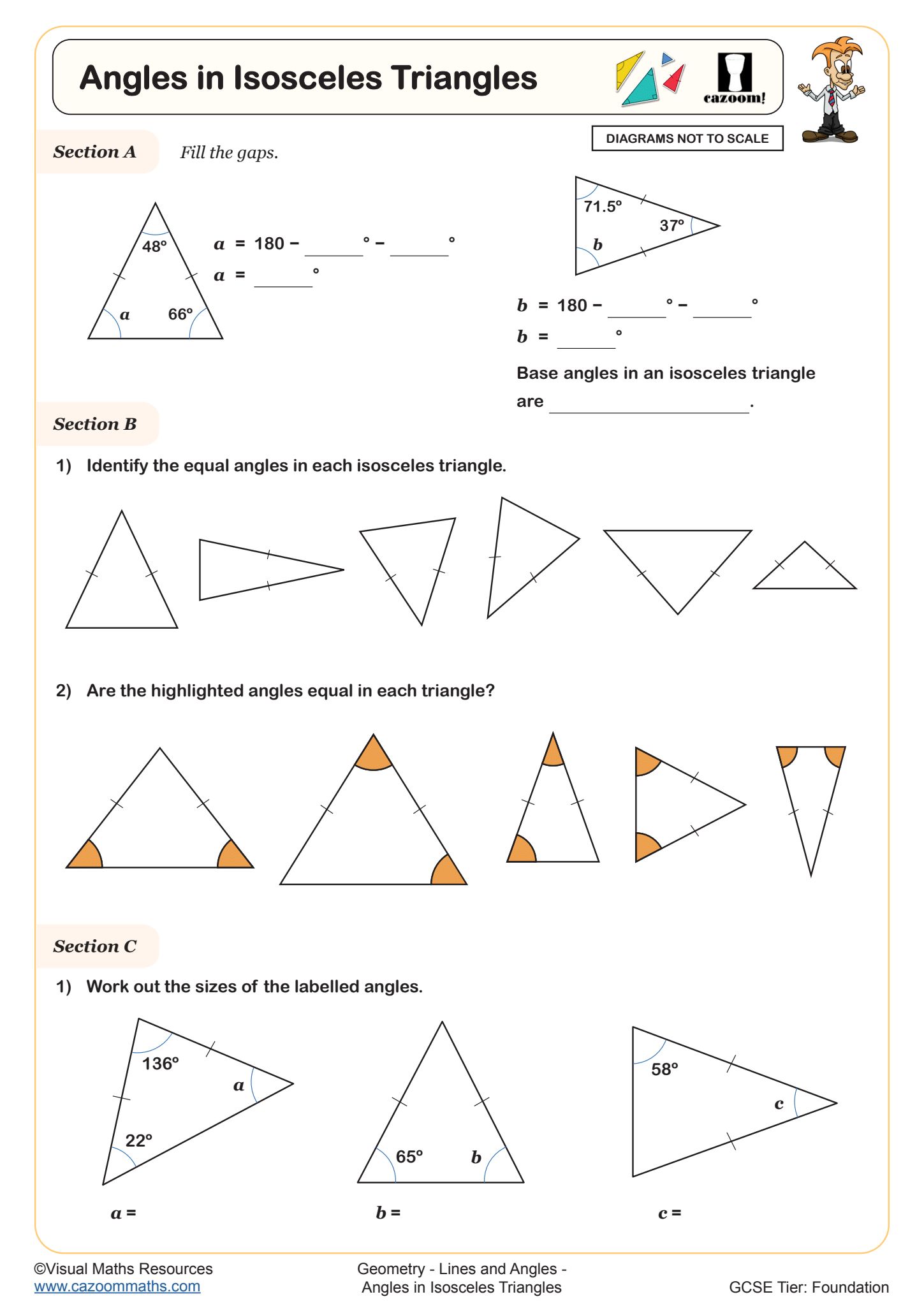
Angles in Isosceles Triangles
Year groups: 7, 8
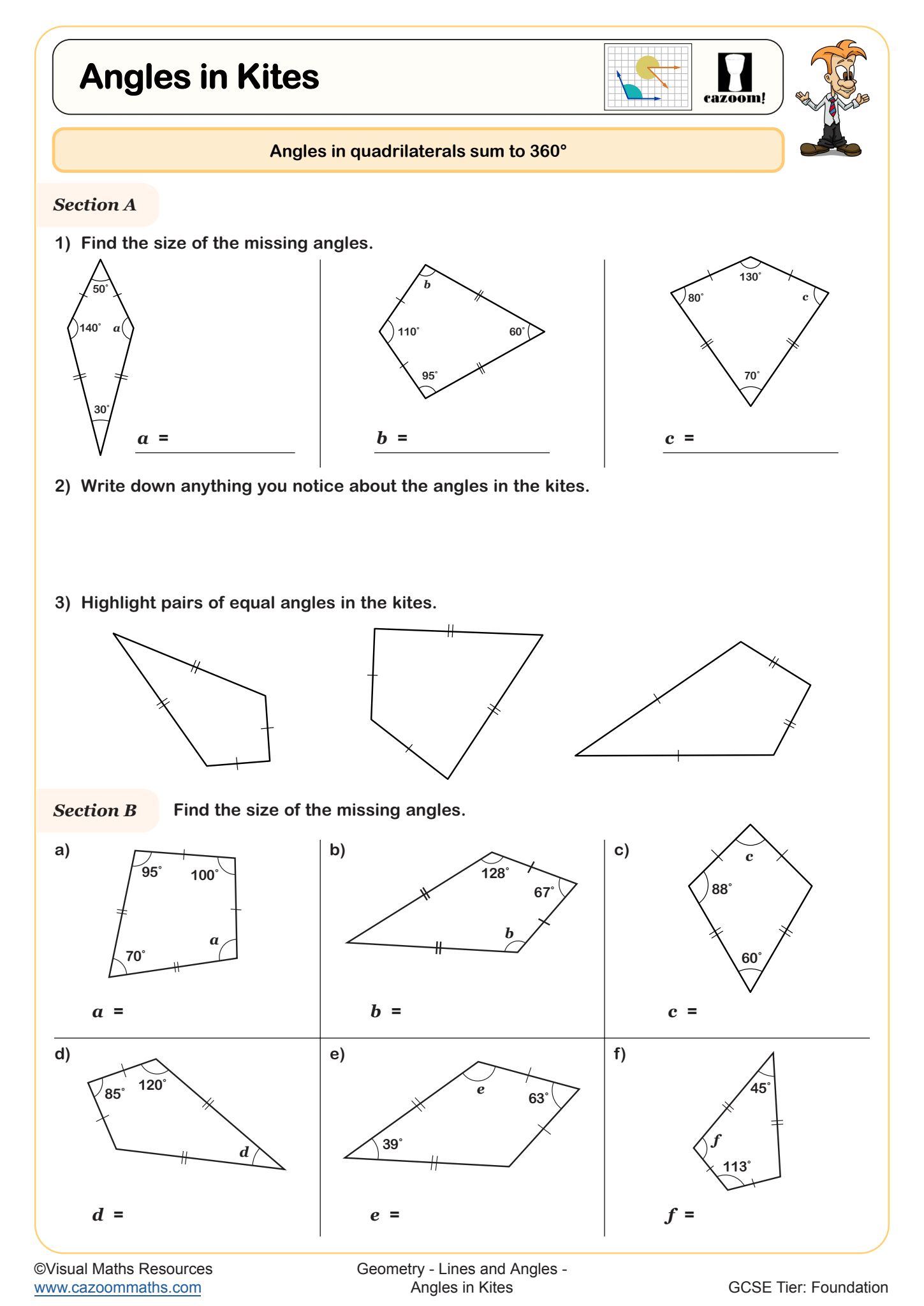
Angles in Kites
Year groups: 7, 8
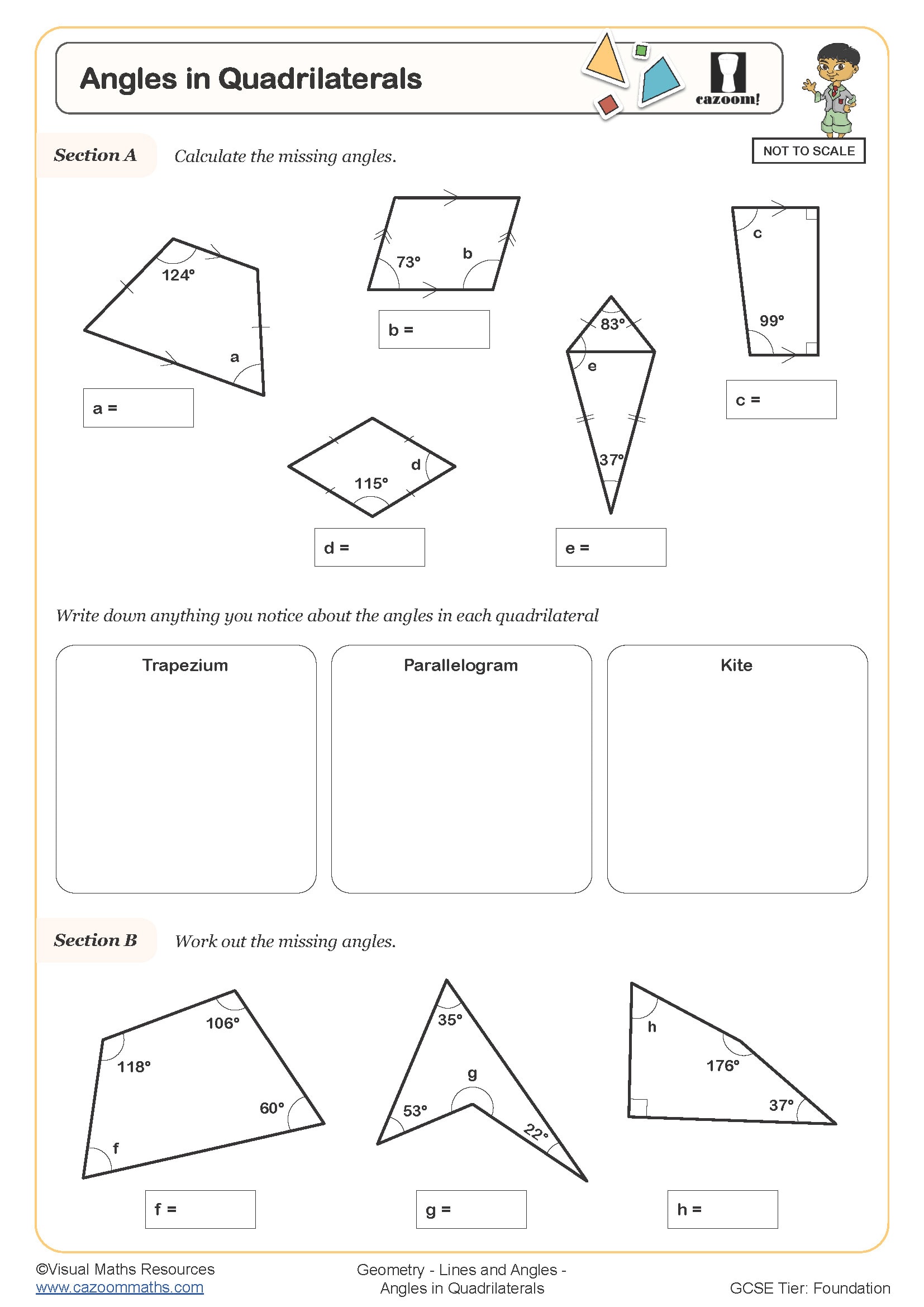
Angles in Quadrilaterals
Year groups: 7, 8
Angles in Triangles (A)
Year groups: 7, 8
-Worksheet.jpg?w=3840)
Angles in Triangles (B)
Year groups: 7, 8, 9
/Cazoom-Maths-Lines-and-Angles-Angles-in-Triangles-(B-Worksheet.jpg?w=3840)
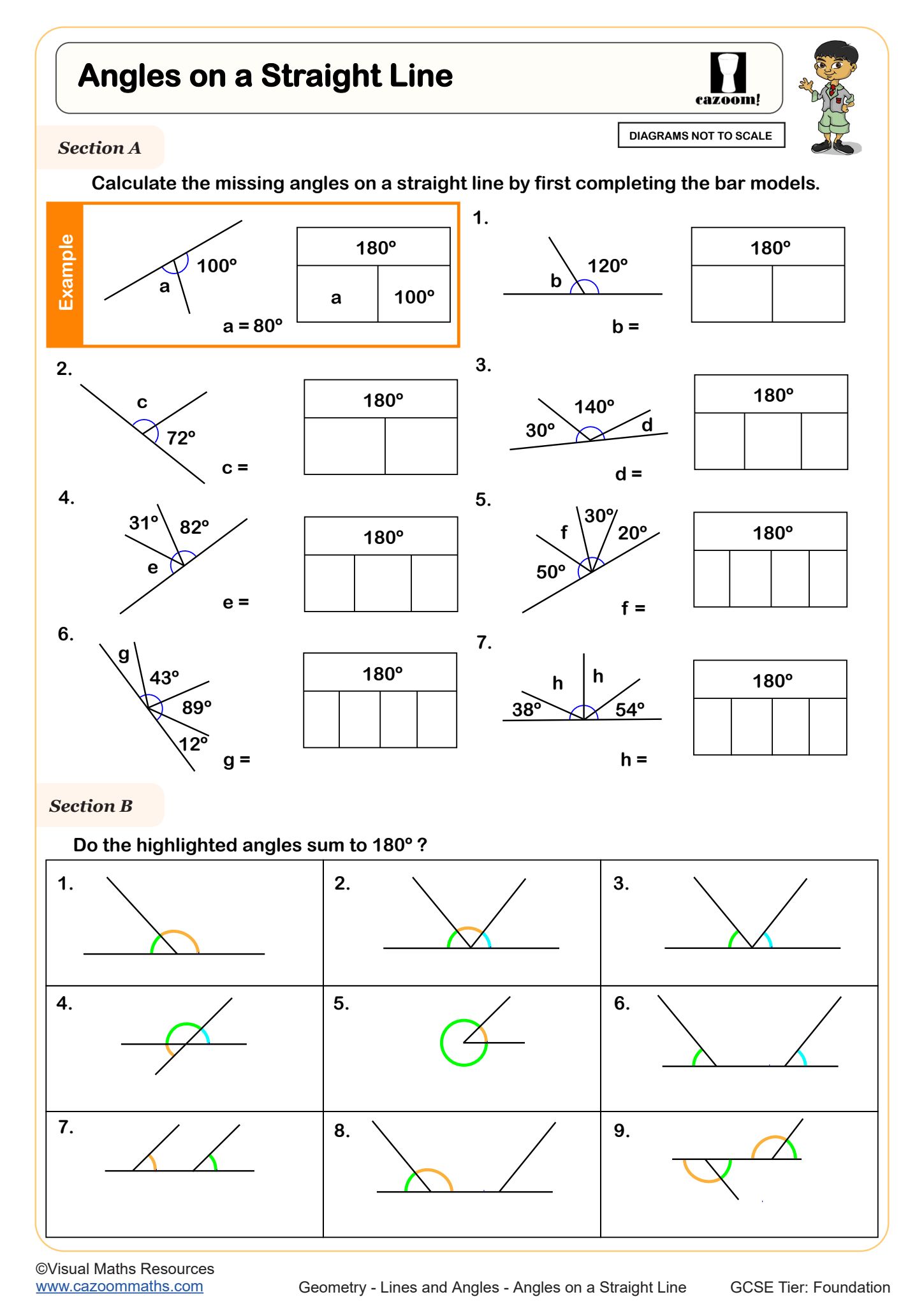
Angles on a Straight Line
Year groups: 7, 8
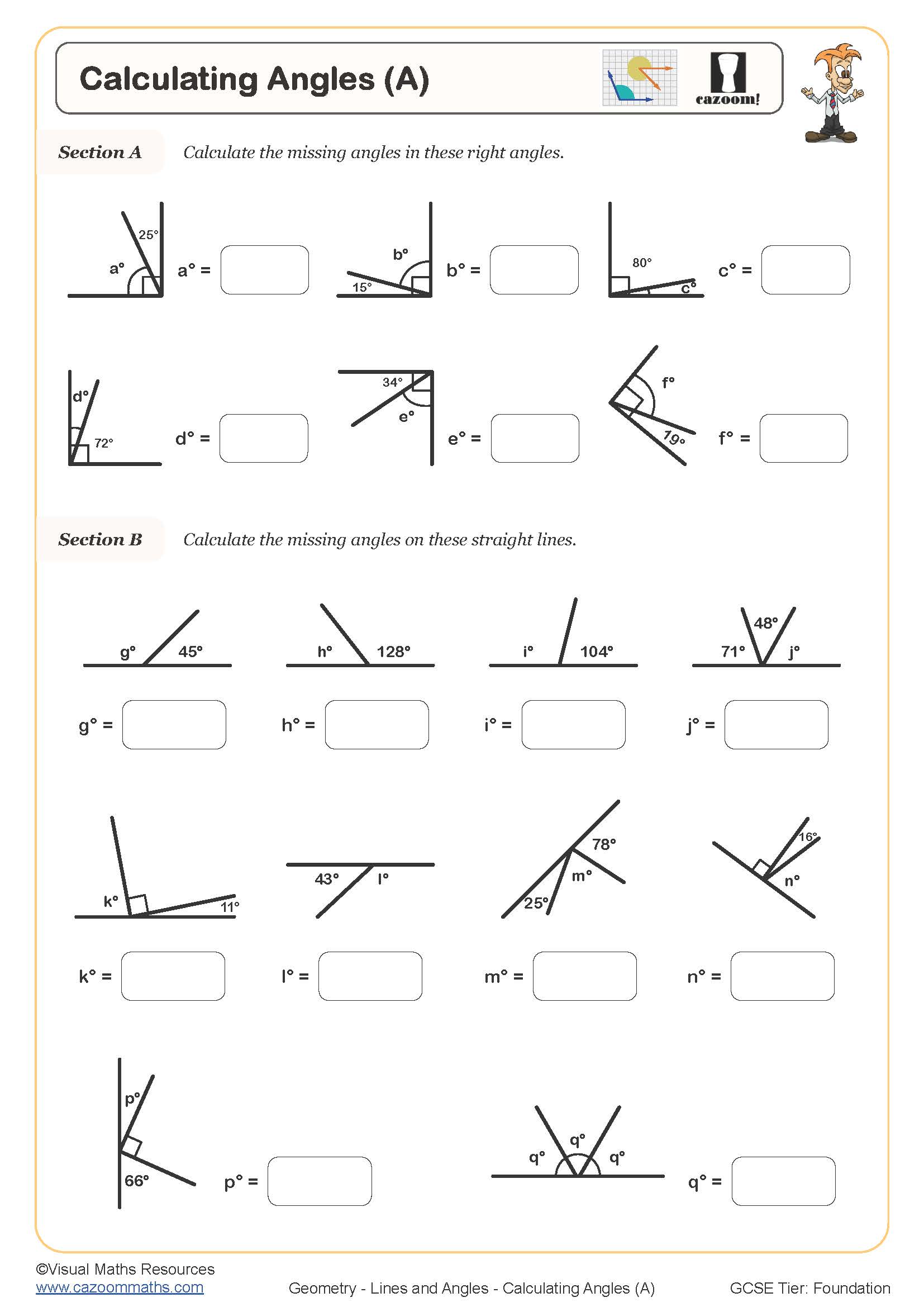
Calculating Angles (A)
Year groups: 7, 8, 9
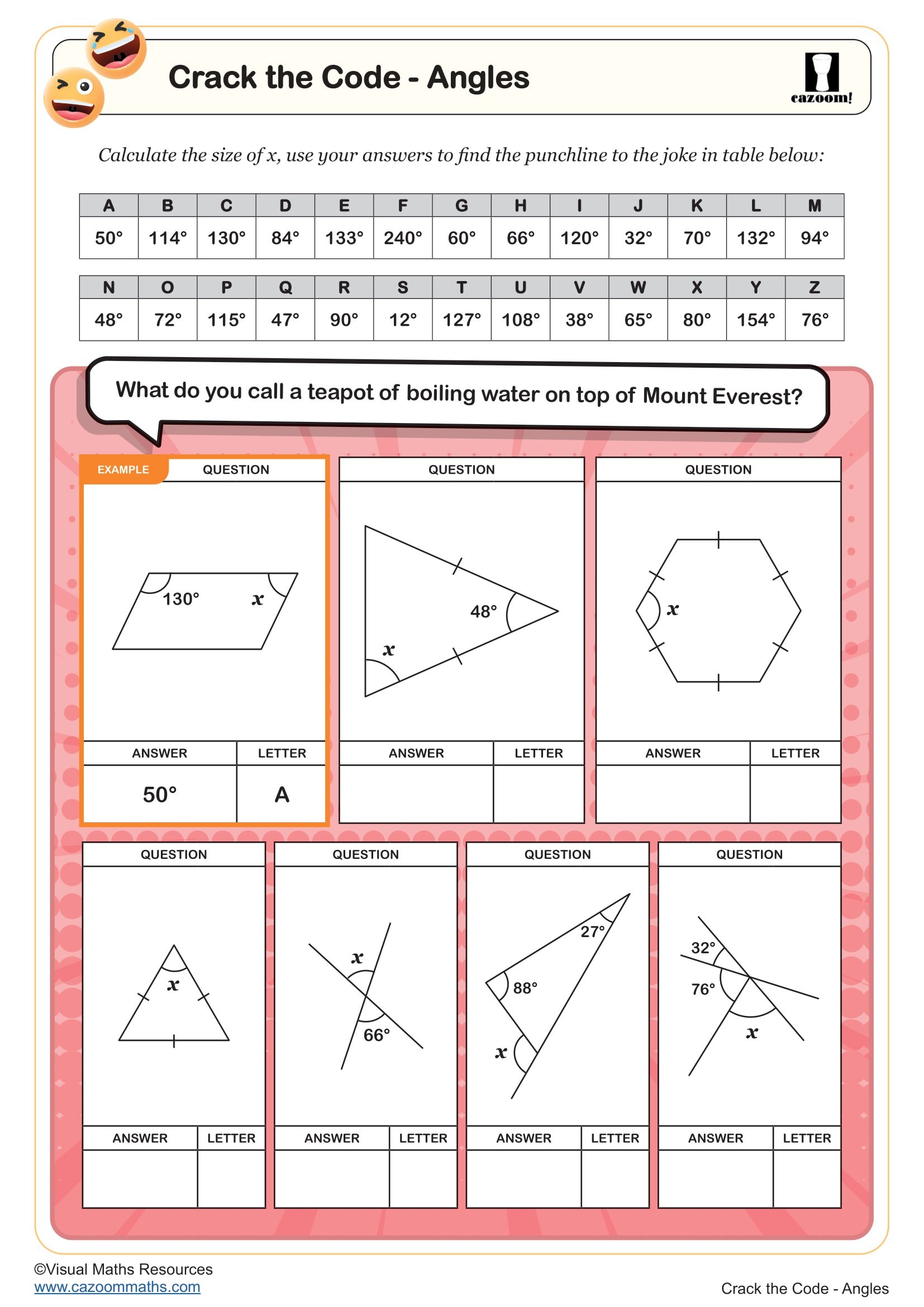
Crack the Code - Angles
Year groups: 7, 8
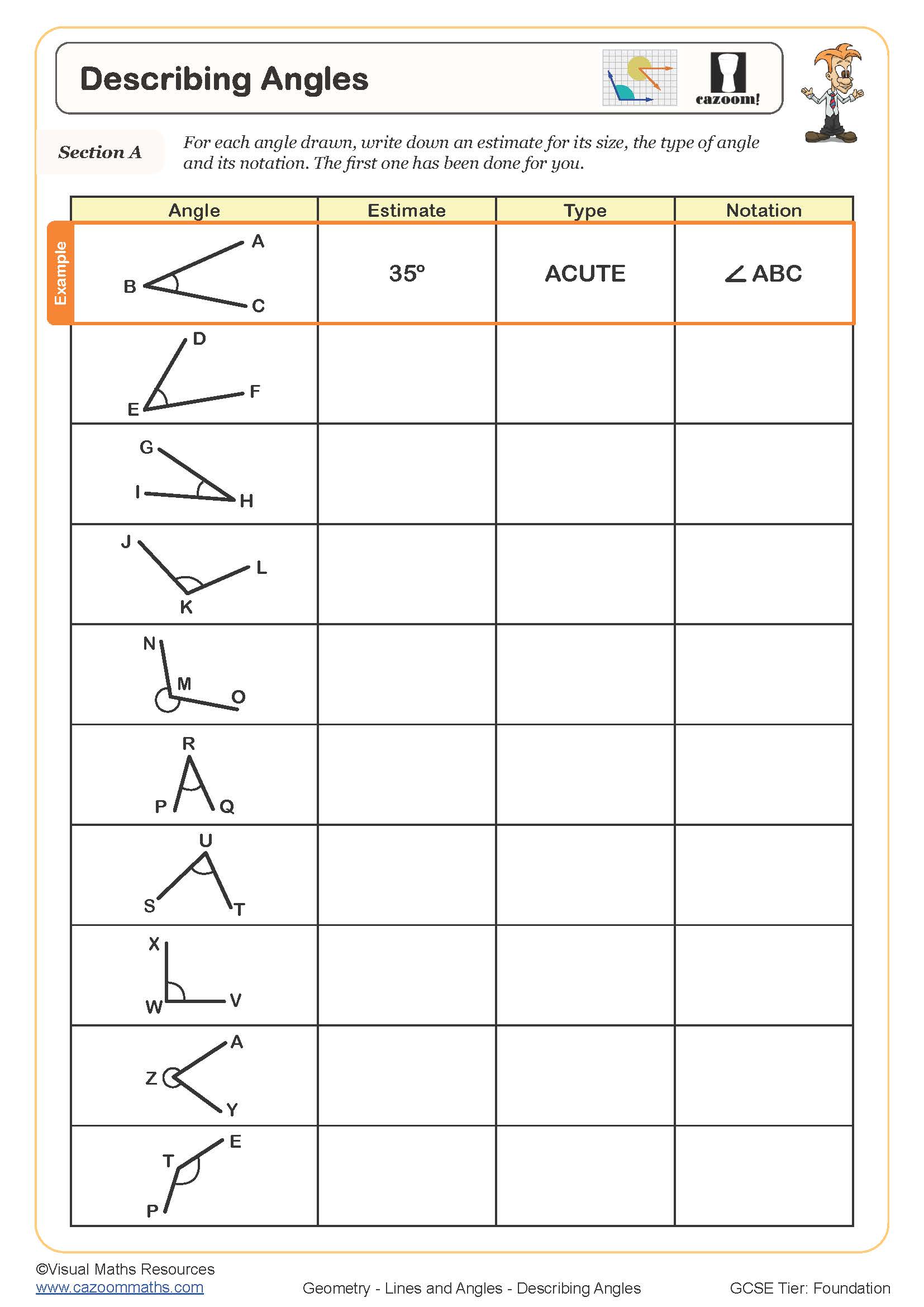
Describing Angles
Year groups: 7, 8
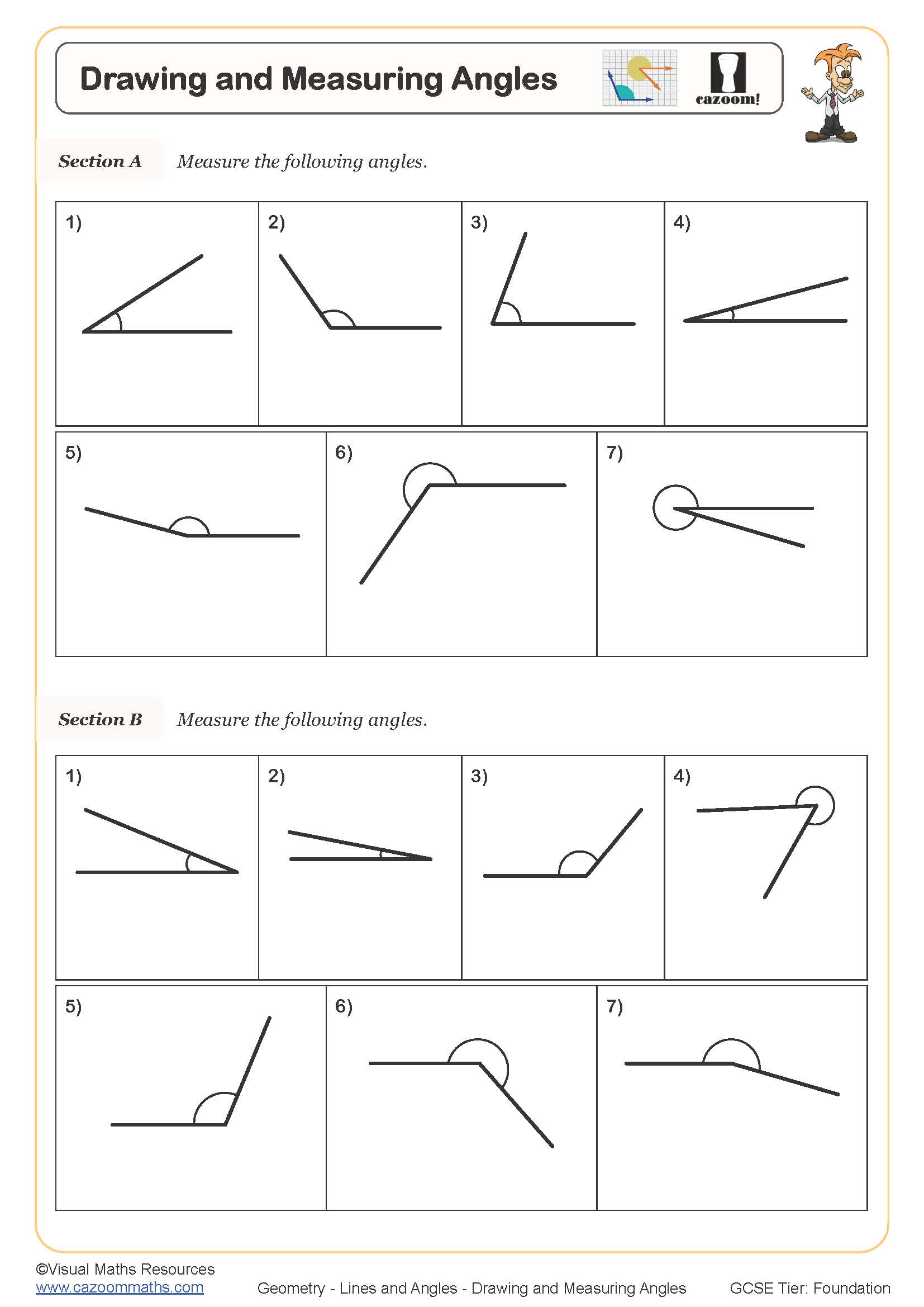
Drawing and Measuring Angles
Year groups: 7, 8
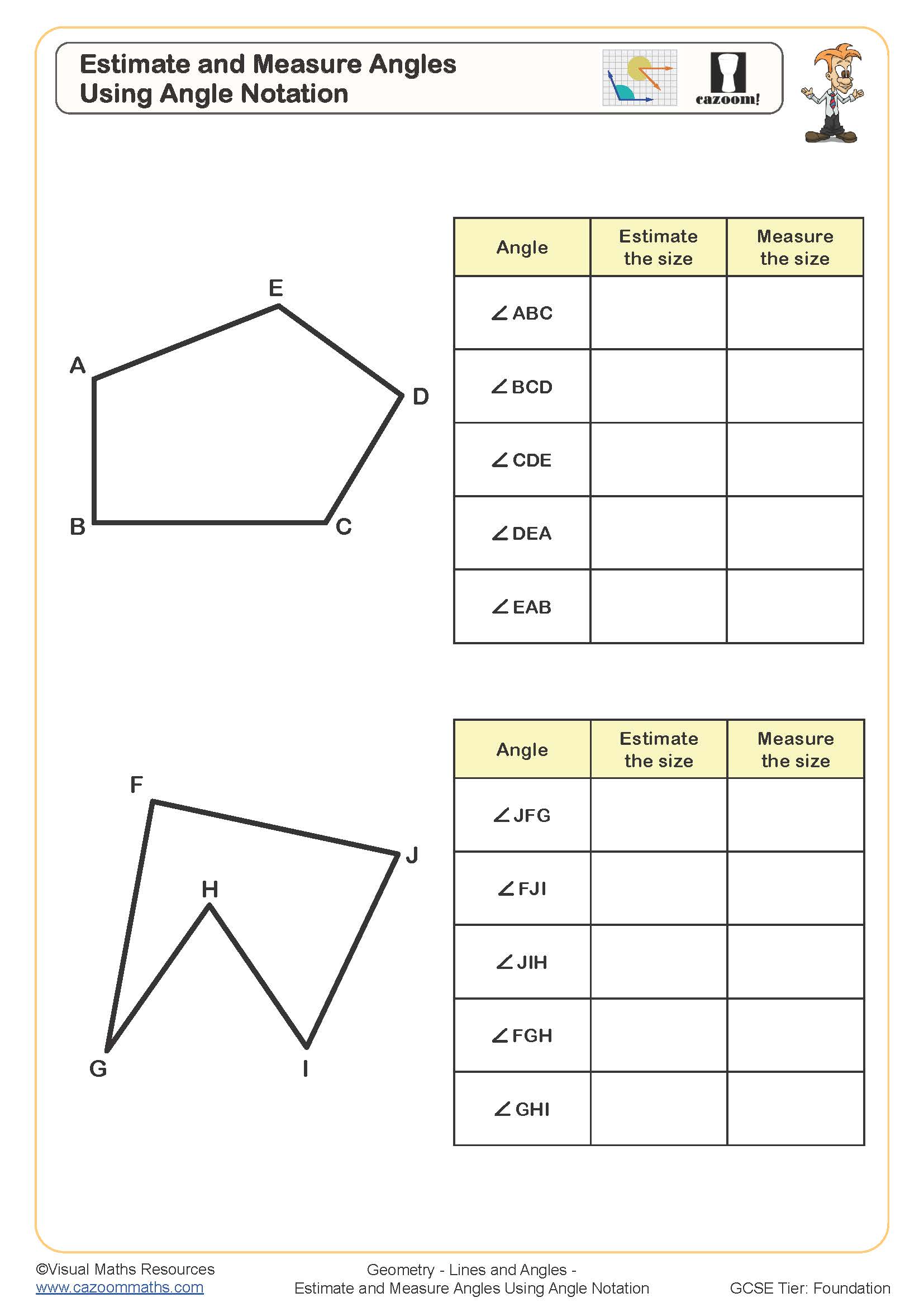
Estimate and Meaure Angles using Angle Notation
Year groups: 7, 8
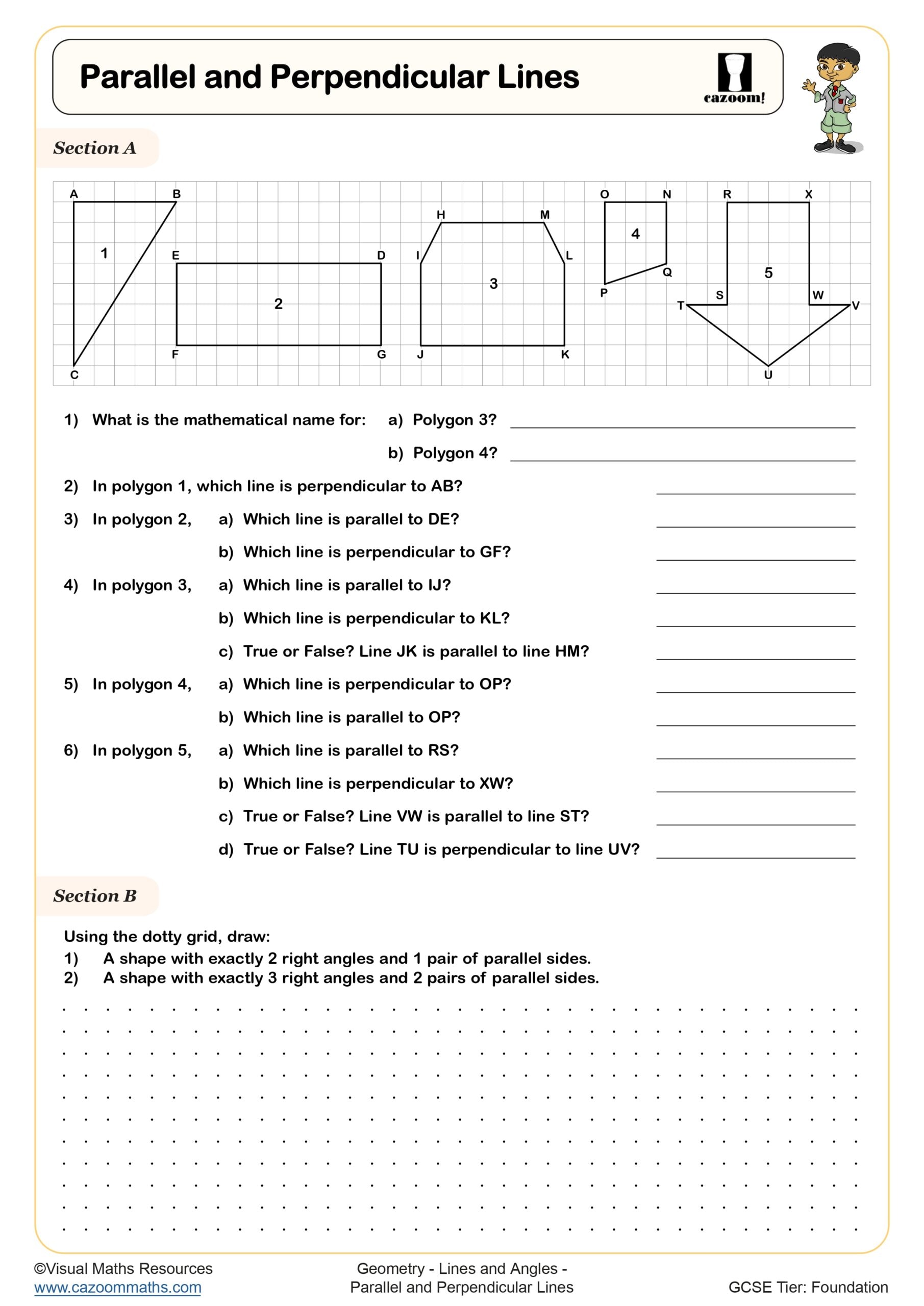
Parallel and Perpendicular Lines
Year groups: 7, 8
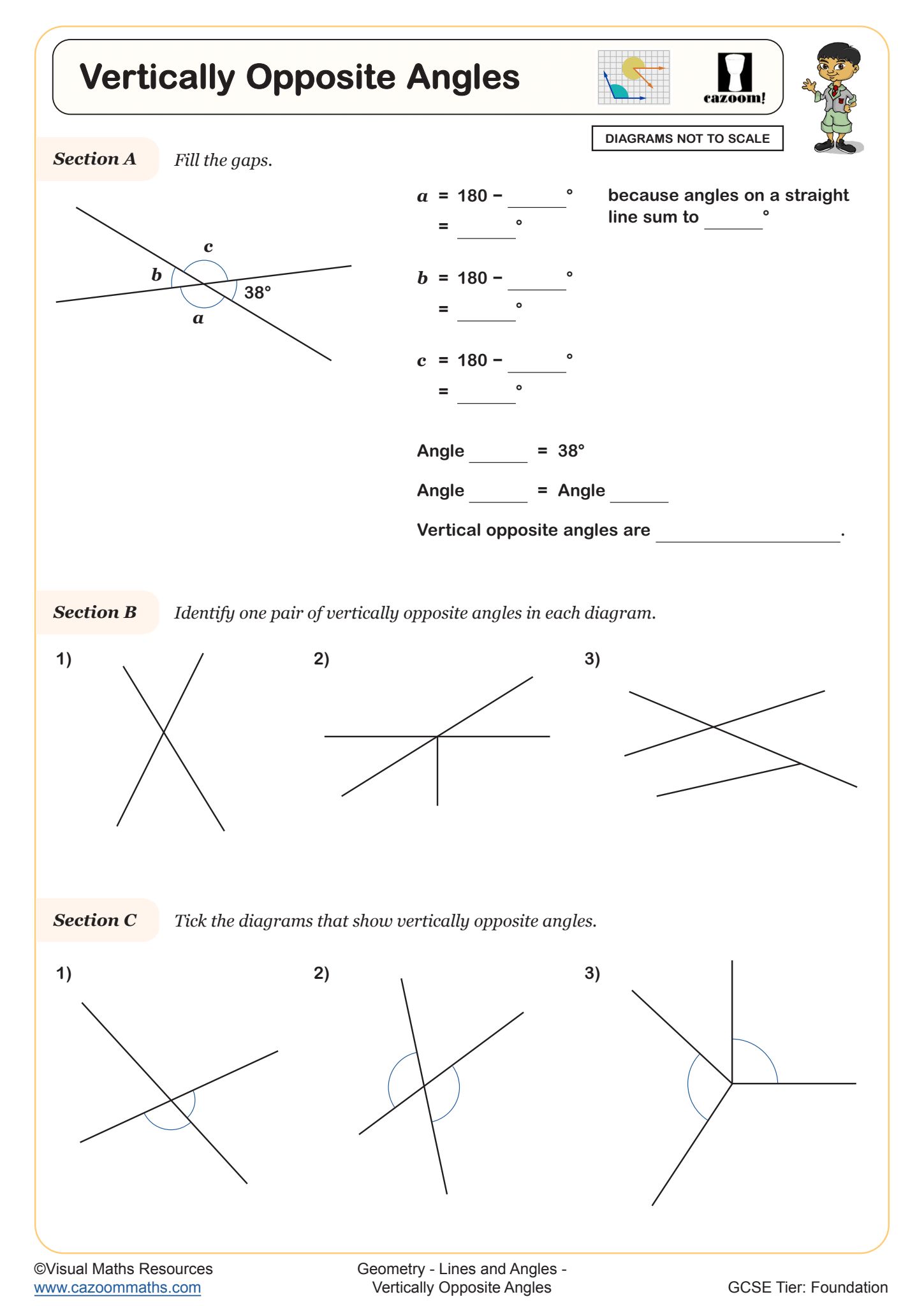
Vertically Opposite Angles
Year groups: 7, 8
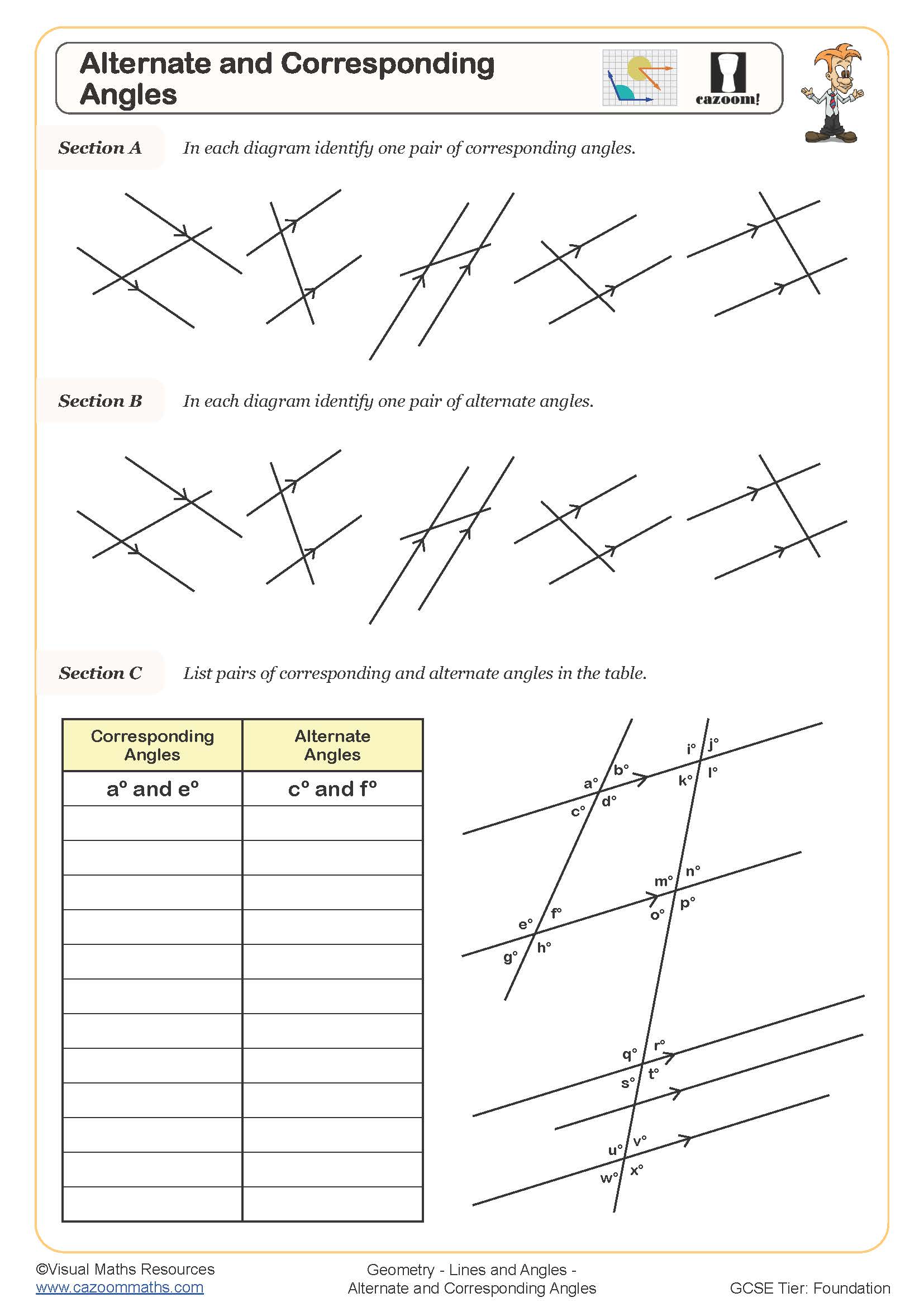
Alternate and Corresponding Angles (A)
Year groups: 8, 9
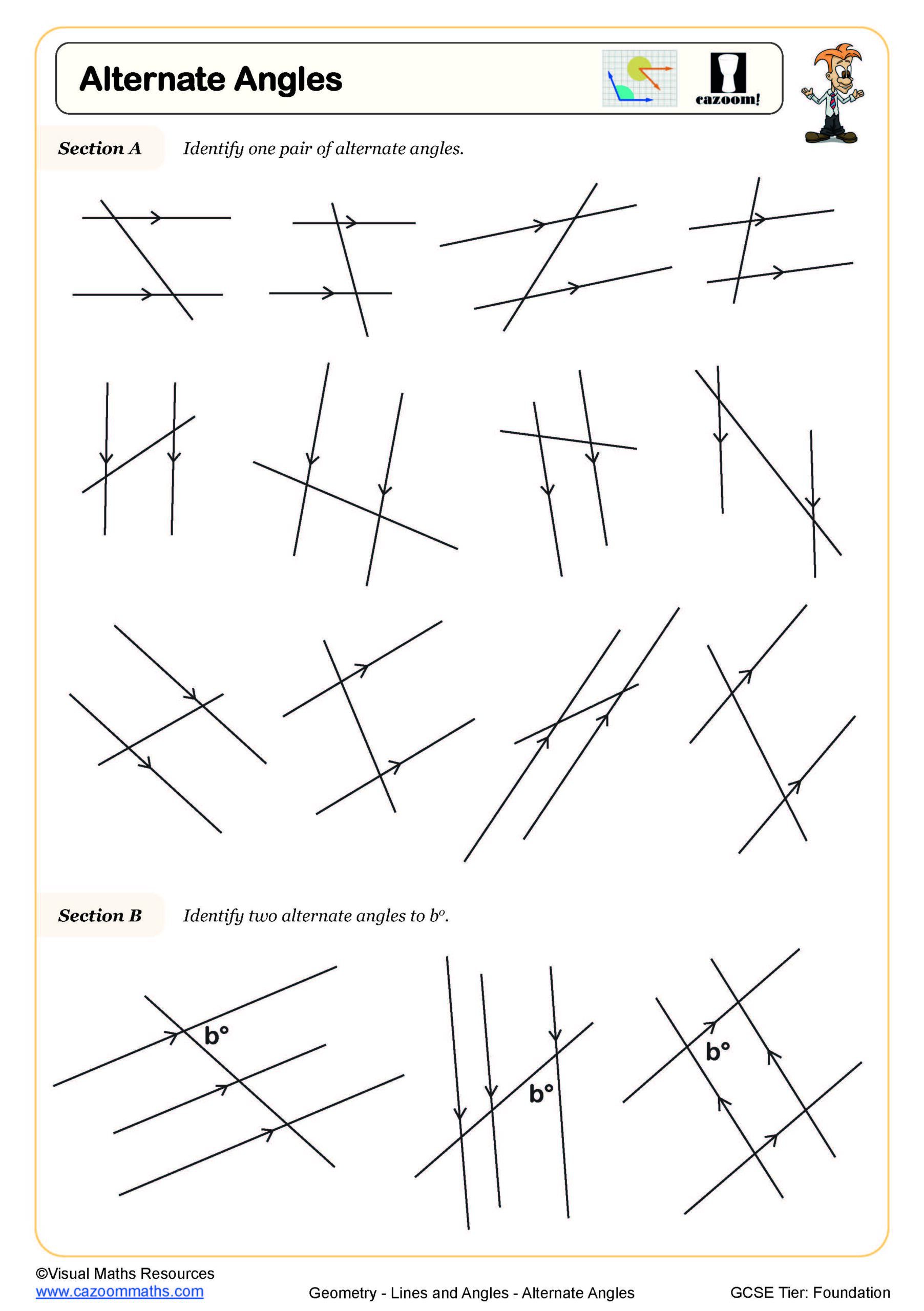
Alternate Angles
Year groups: 8, 9
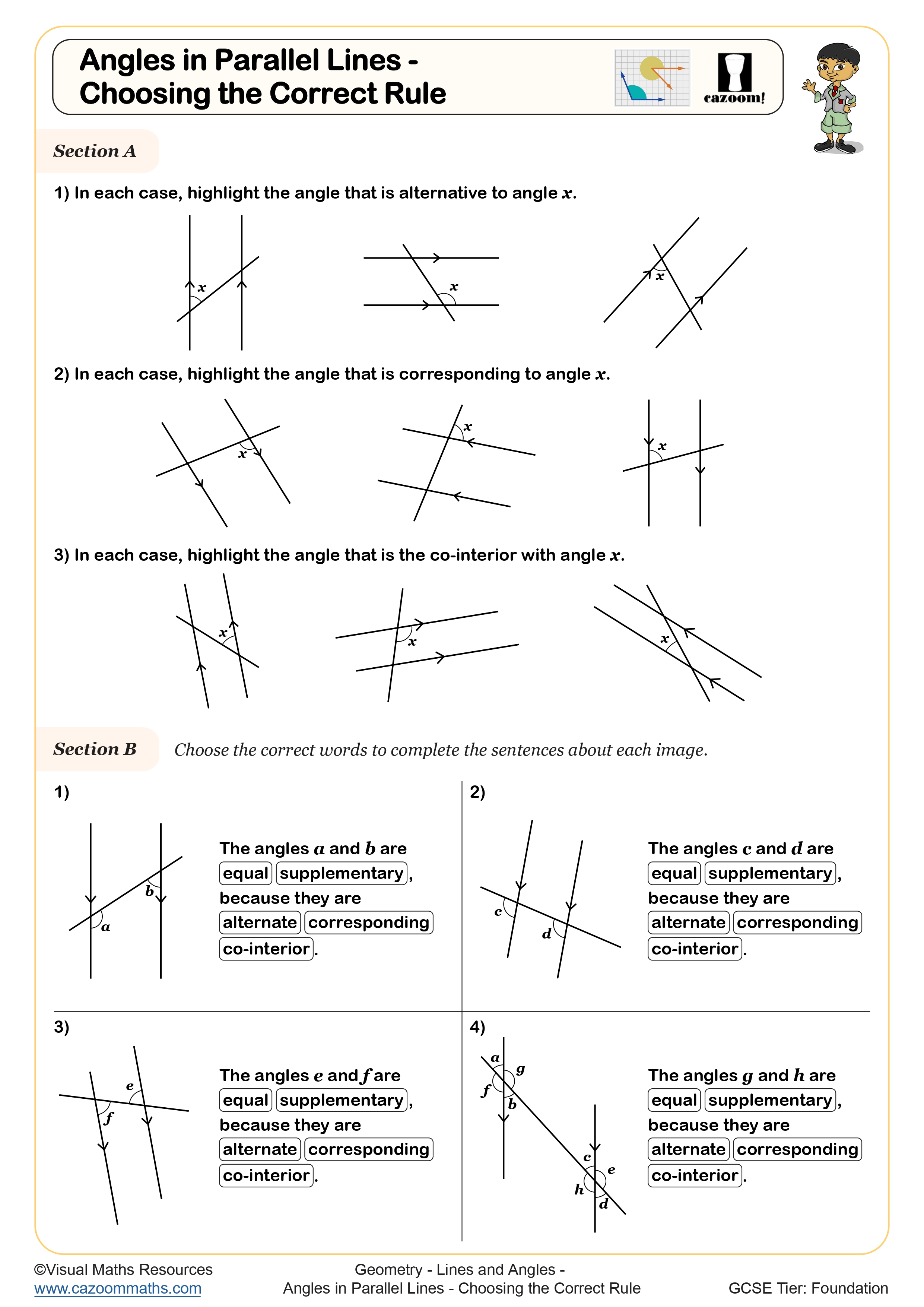
Angles in Parallel Lines - Choosing the Correct Rule
Year groups: 8, 9
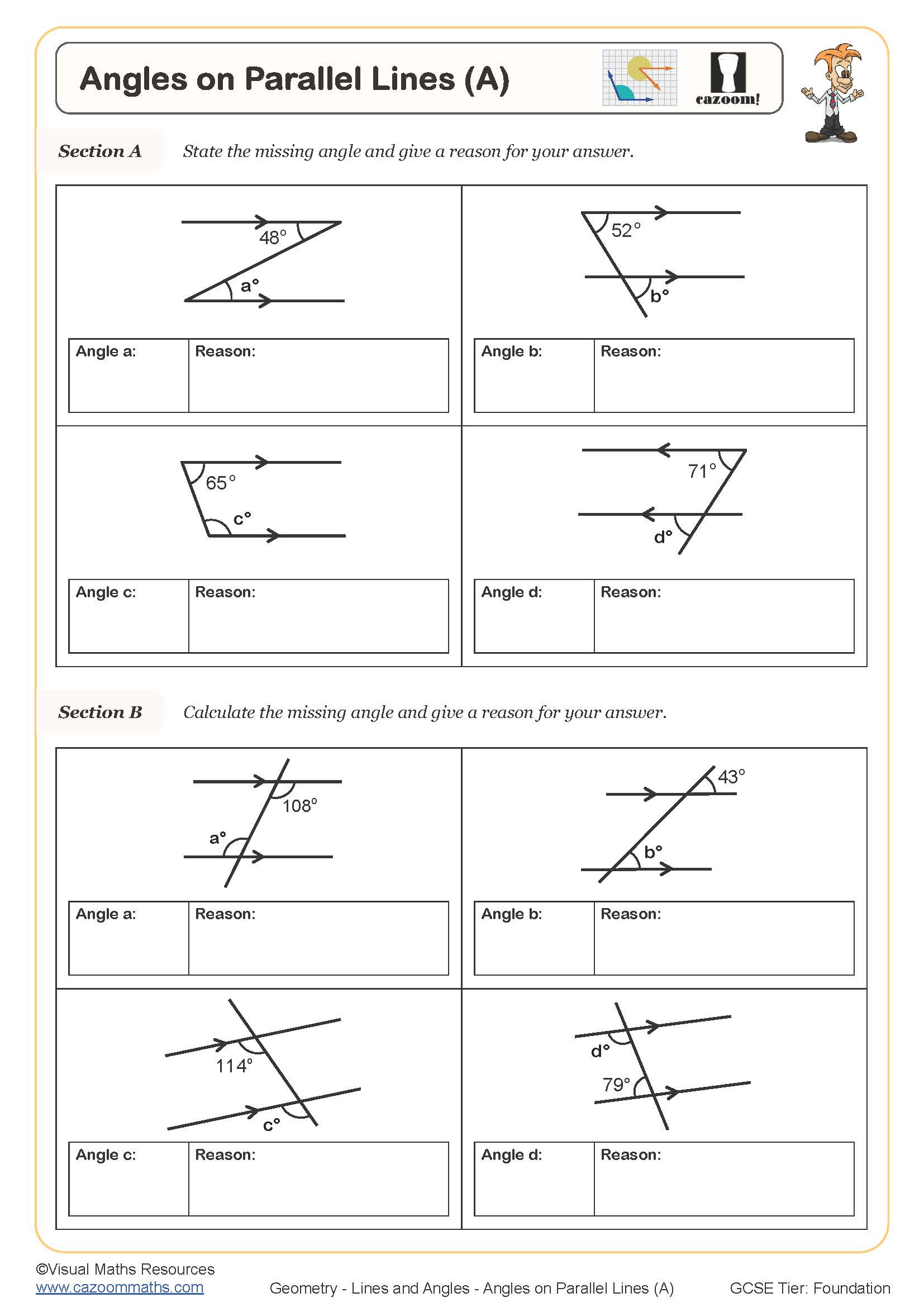
Angles on Parallel Lines (A)
Year groups: 8, 9
Angles on Parallel Lines (A) (With Clues)
Year groups: 8, 9
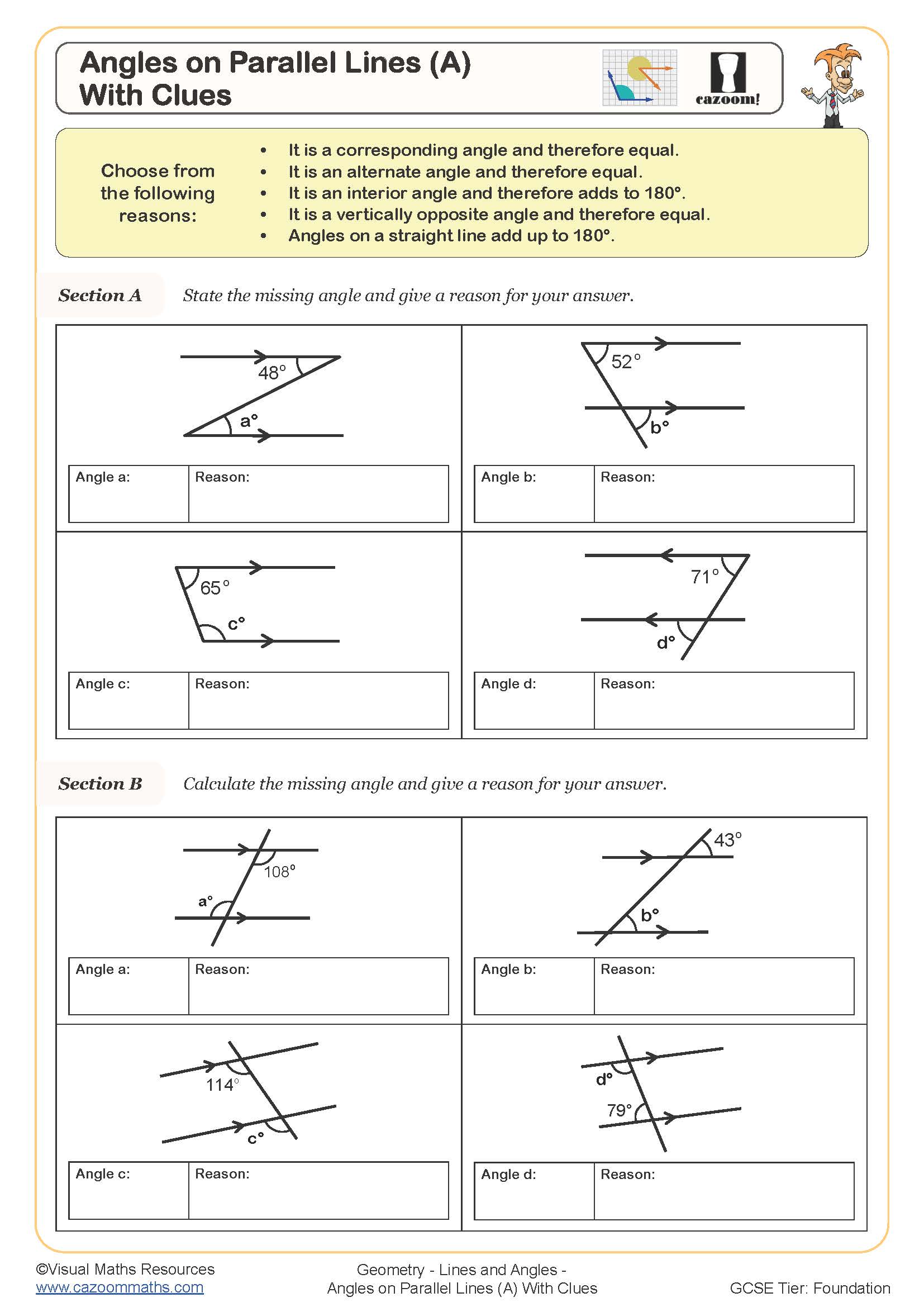
Angles on Parallel Lines (B)
Year groups: 8, 9
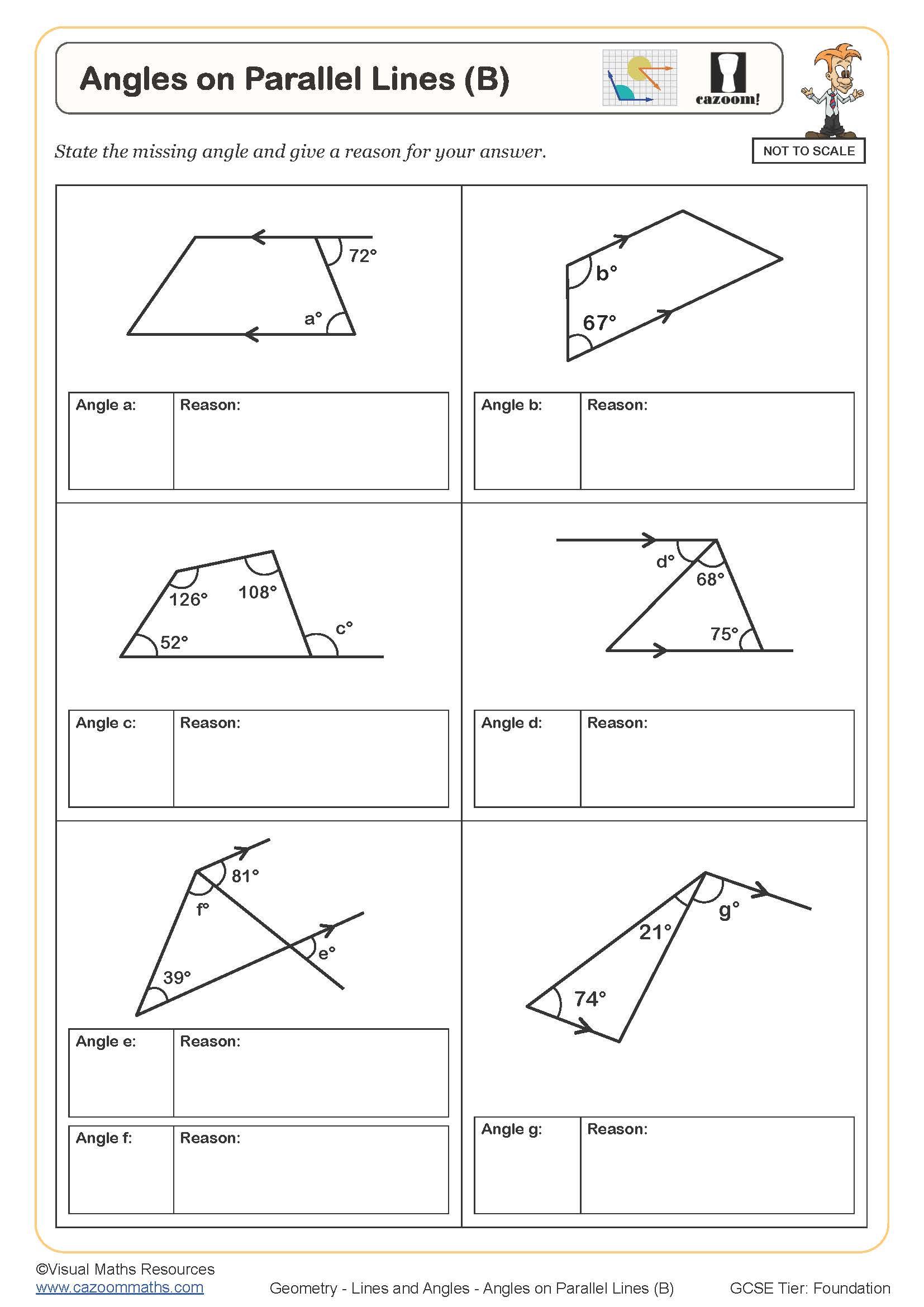
Angles on Parallel Lines (B) (With Clues)
Year groups: 8, 9
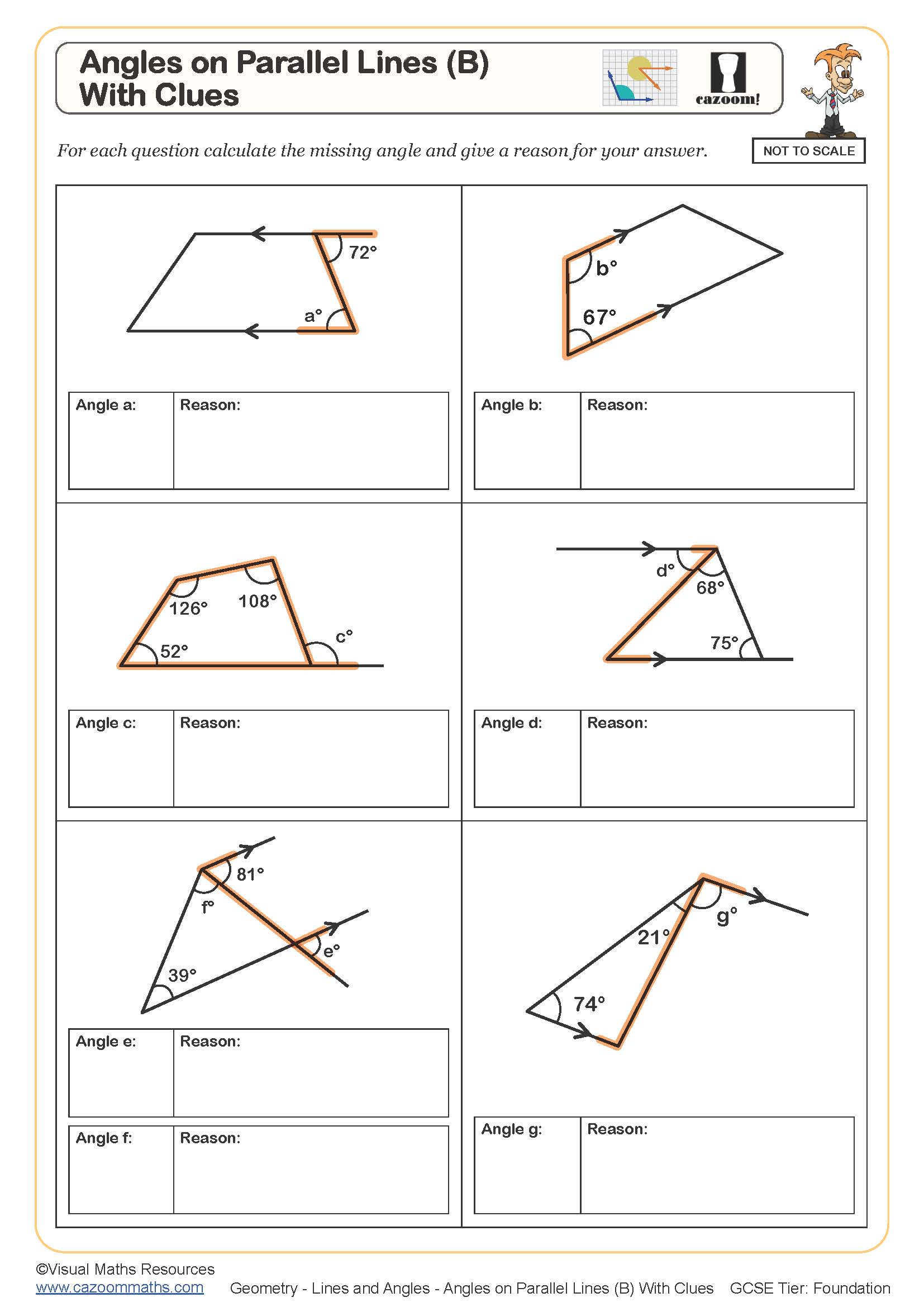
Calculating Angles (B)
Year groups: 8, 9, 10
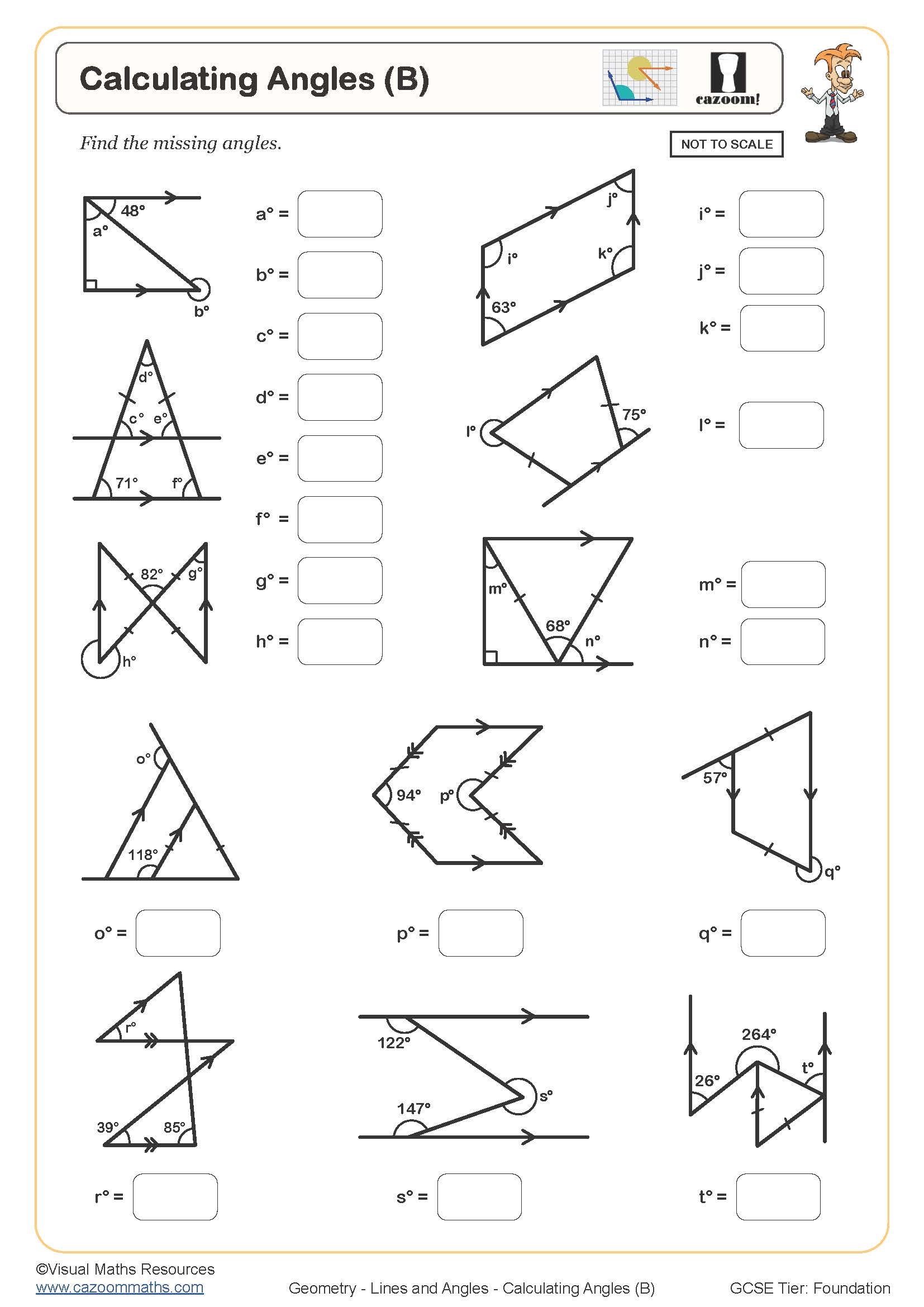
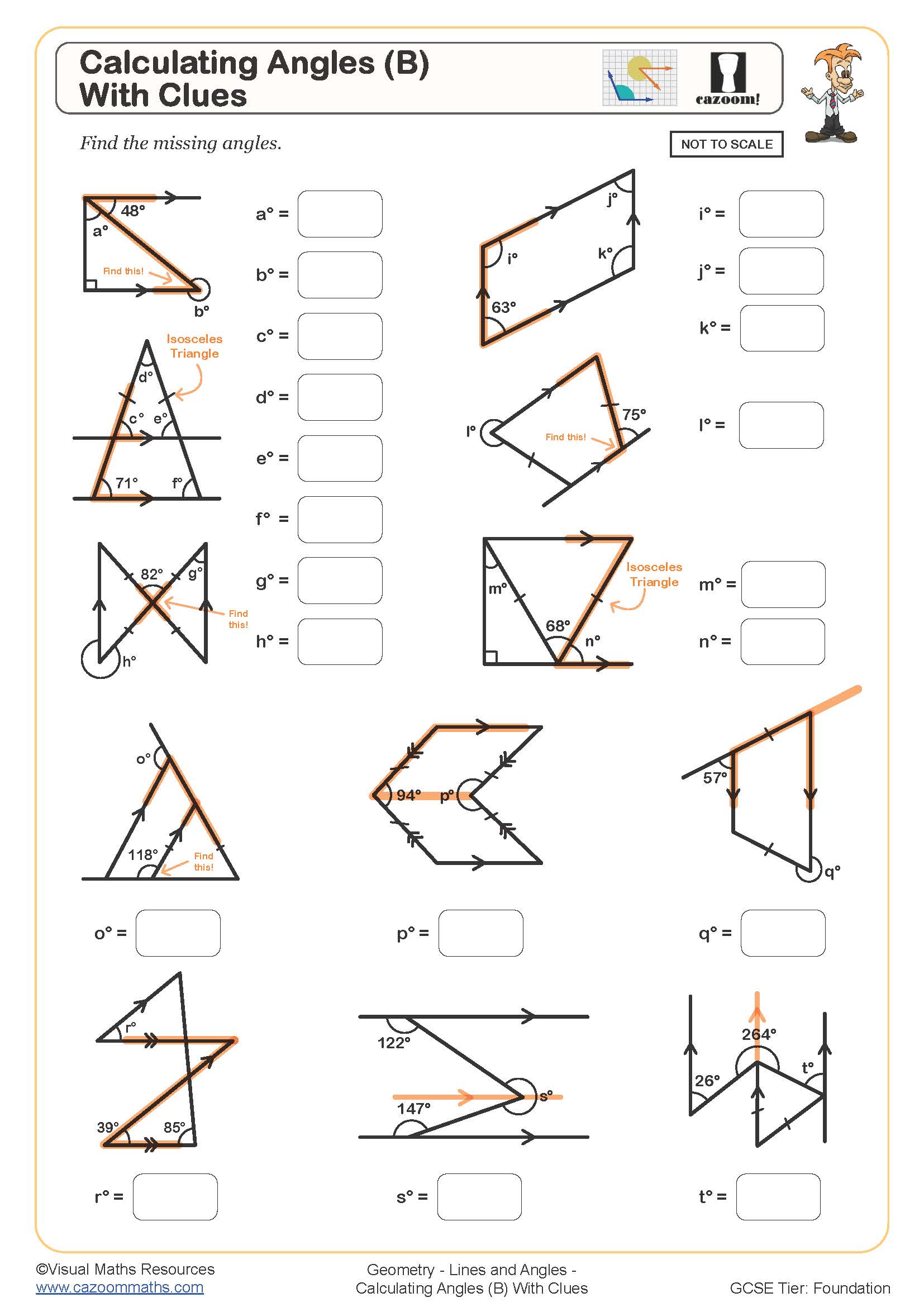
Calculating Angles (B) (With Clues)
Year groups: 8, 9, 10
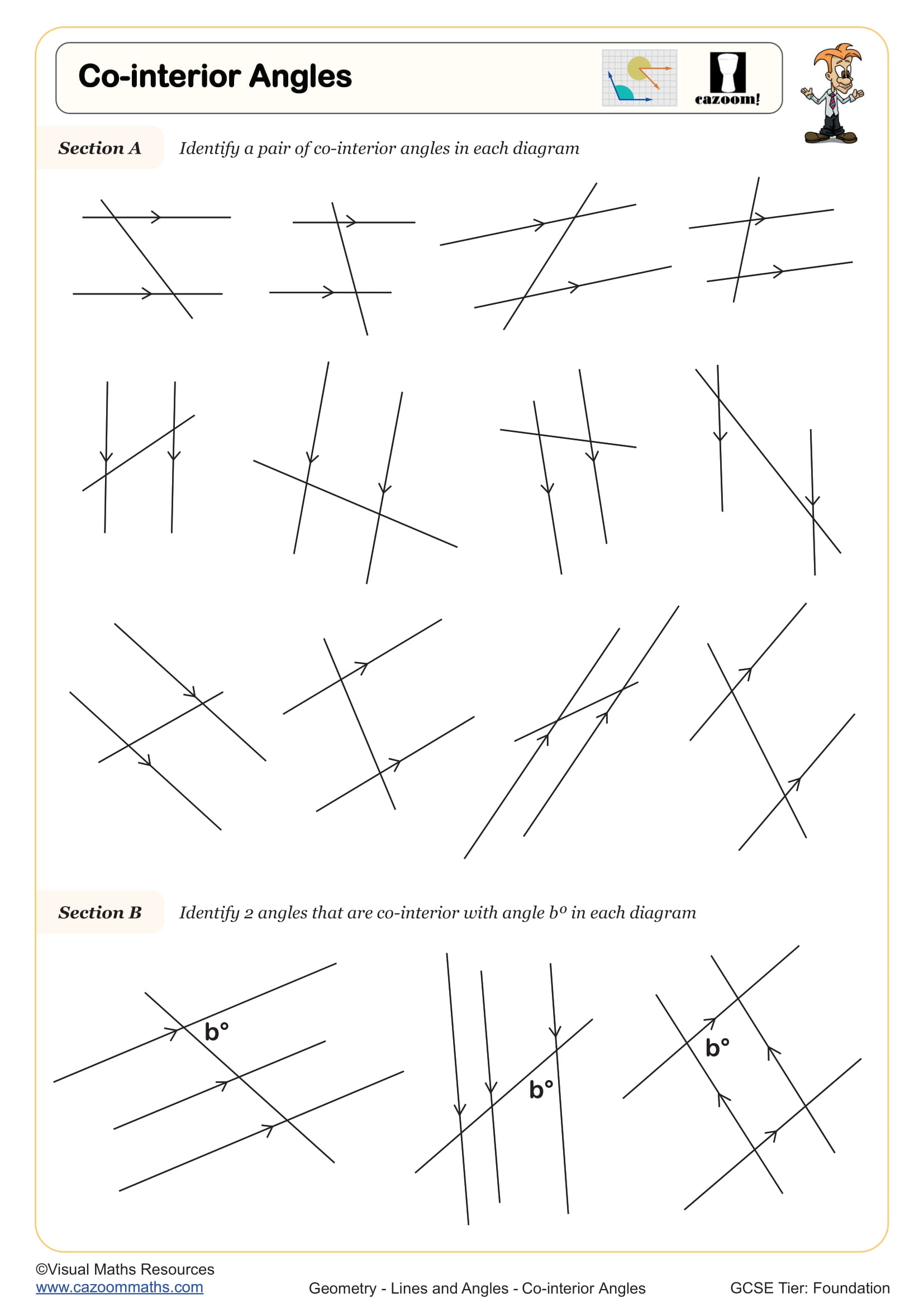
Co-interior Angles
Year groups: 8, 9
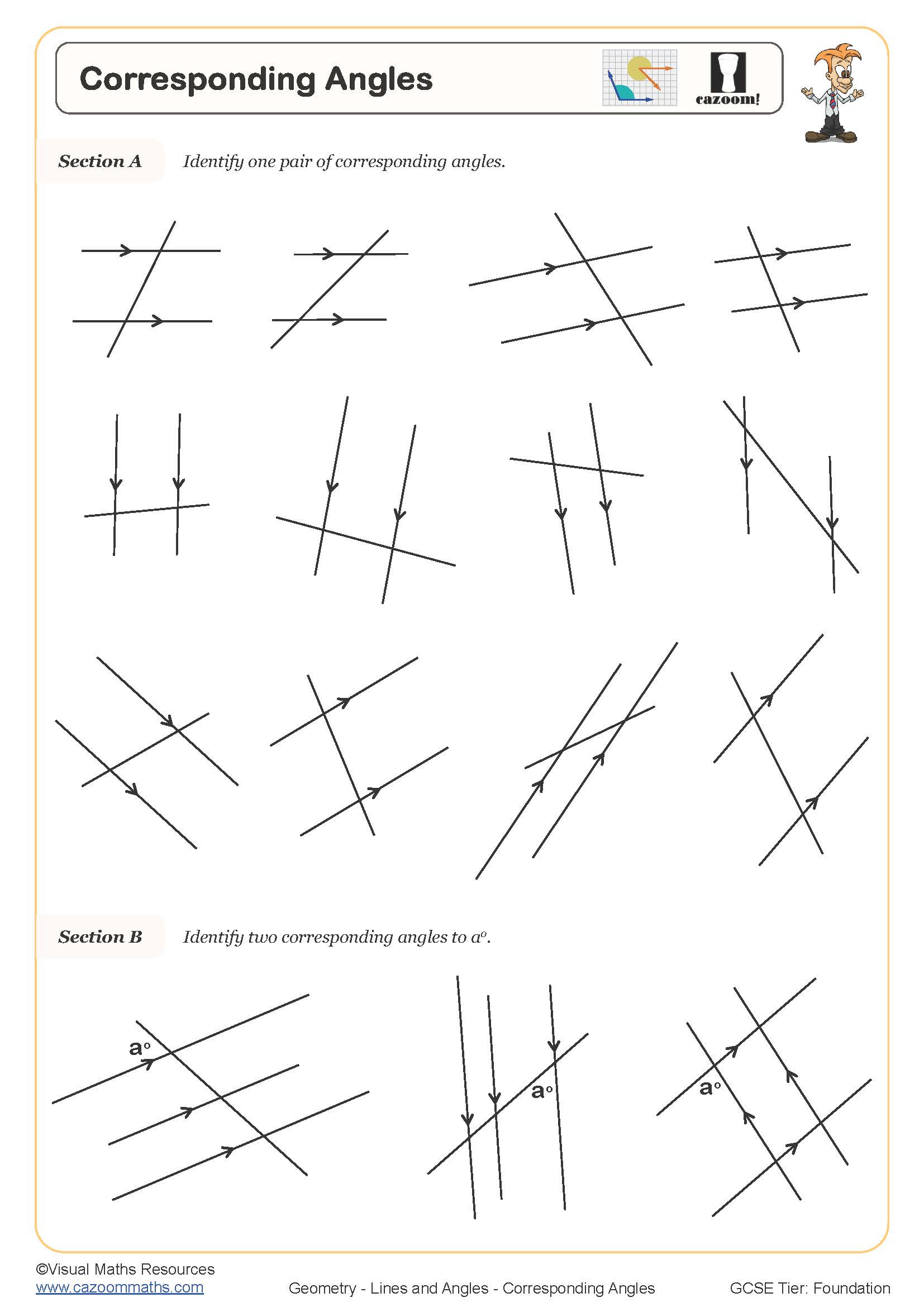
Corresponding Angles
Year groups: 8, 9
Forming and Solving Equations Involving Angles (A)
Year groups: 8, 9
-Worksheet.jpg?w=3840)
Forming and Solving Equations Involving Angles (B)
Year groups: 8, 9
-Worksheet.jpg?w=3840)
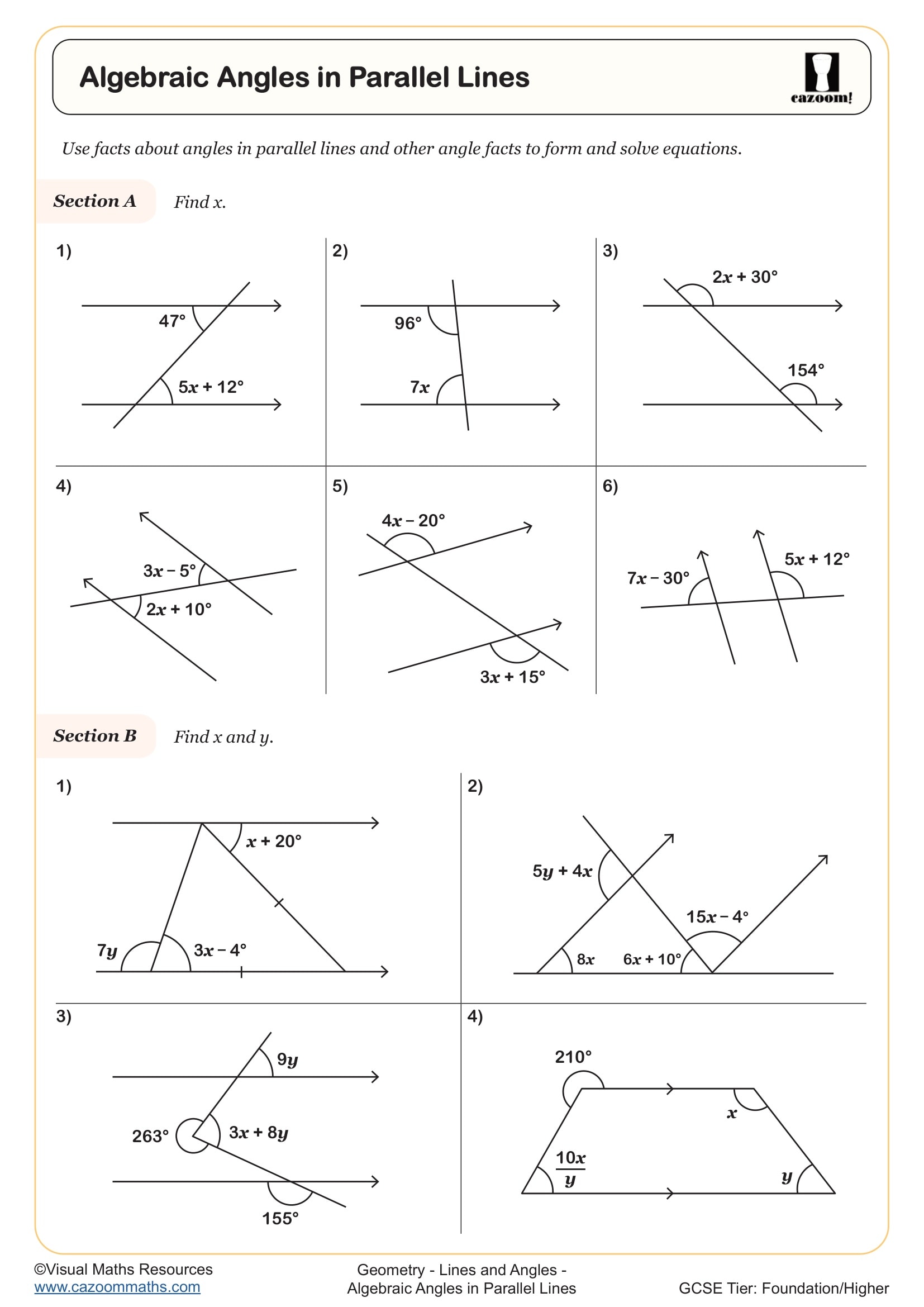
Algebraic Angles in Parallel Lines
Year groups: 9
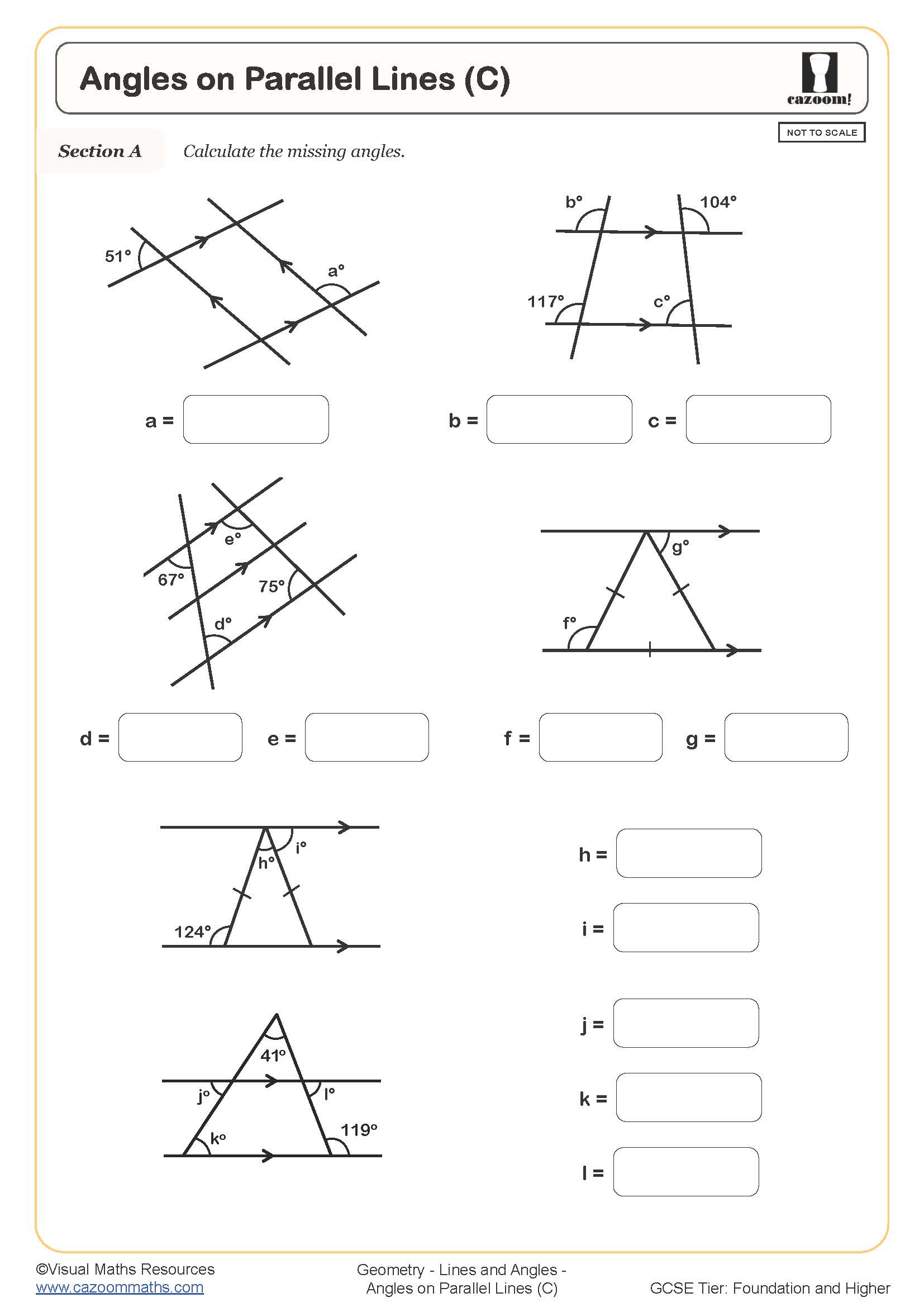
Angles on Parallel Lines (C)
Year groups: 9, 10, 11
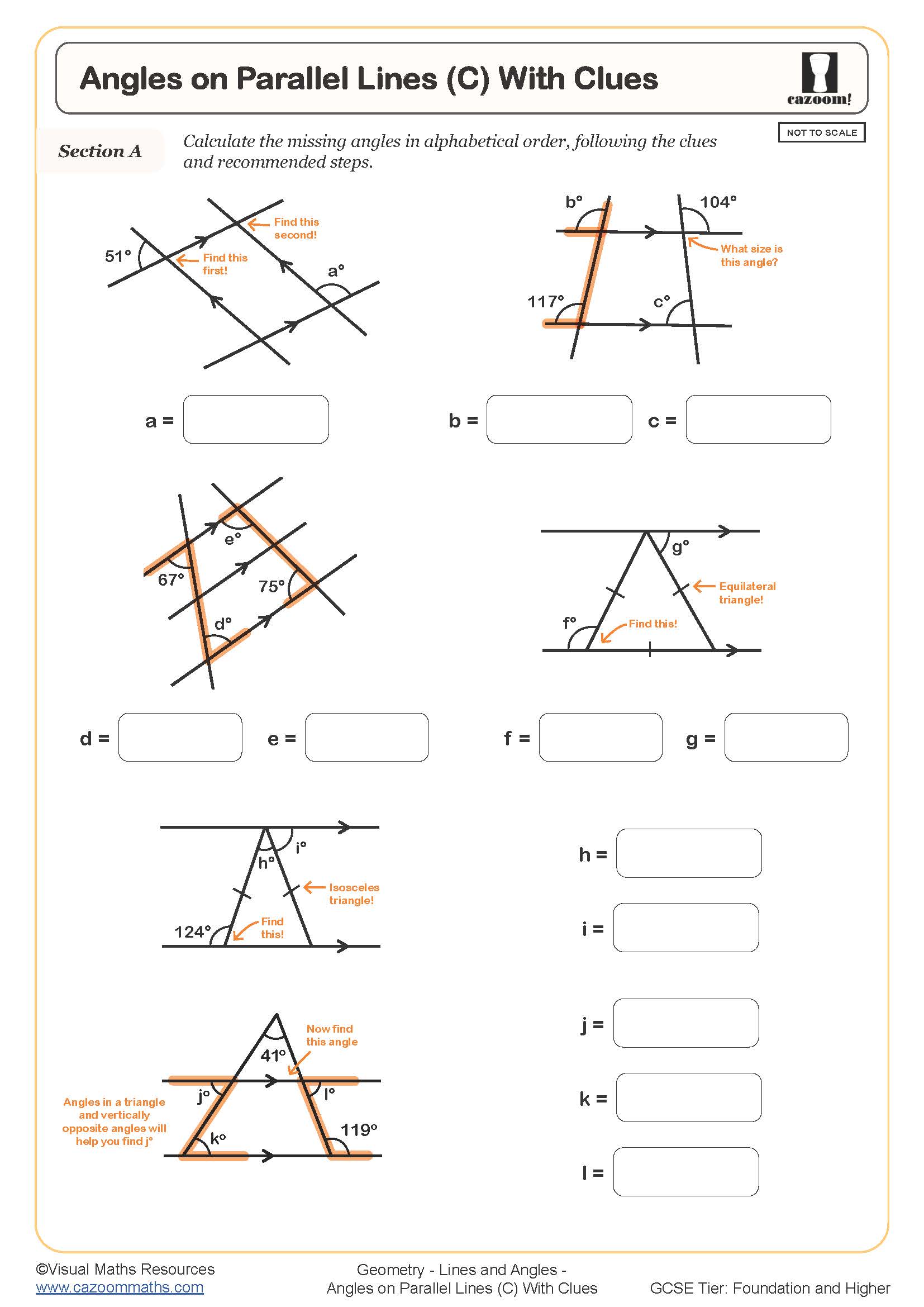
Angles on Parallel Lines (C) (With Clues)
Year groups: 9, 10, 11
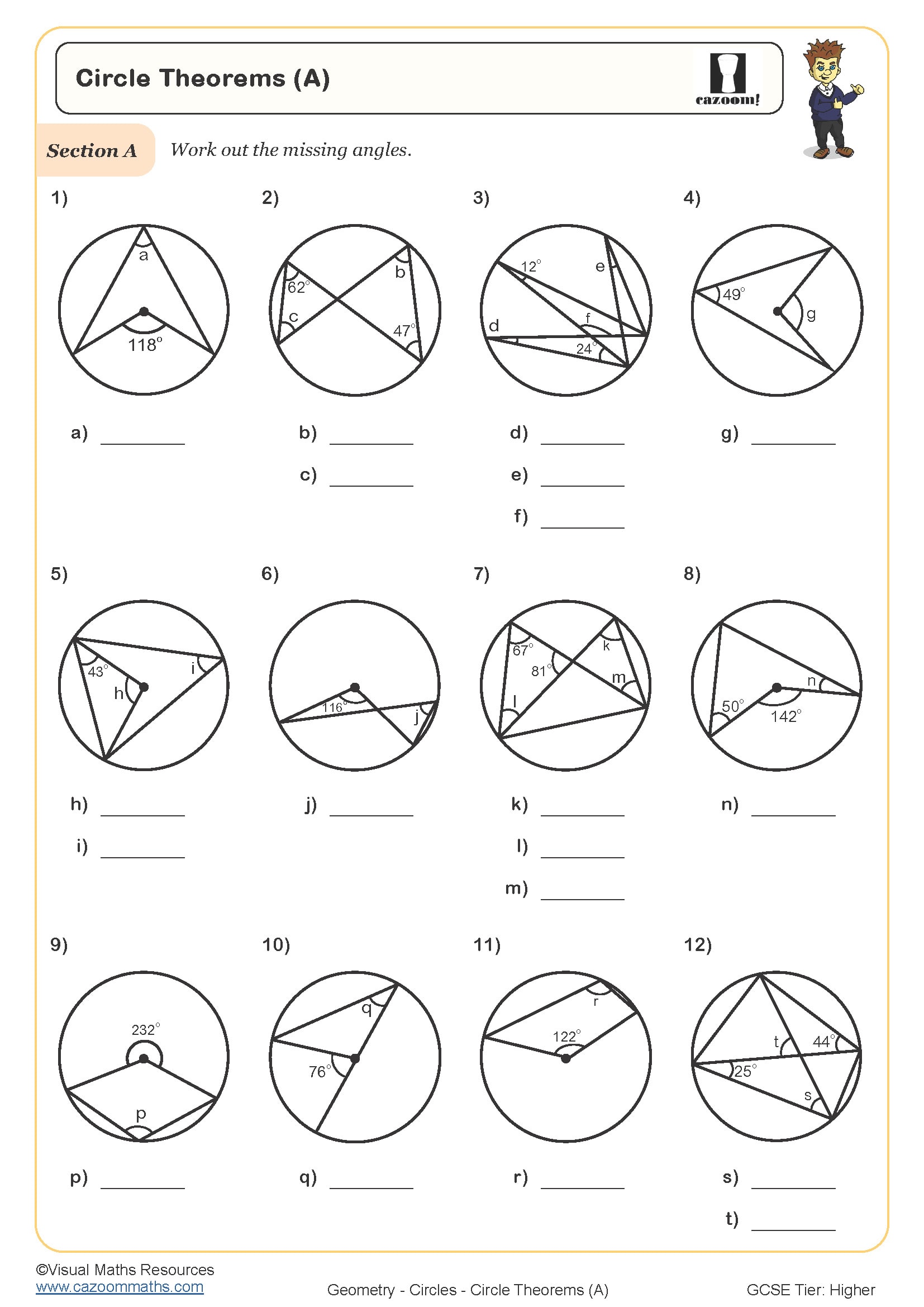
Circle Theorems (A)
Year groups: 10, 11
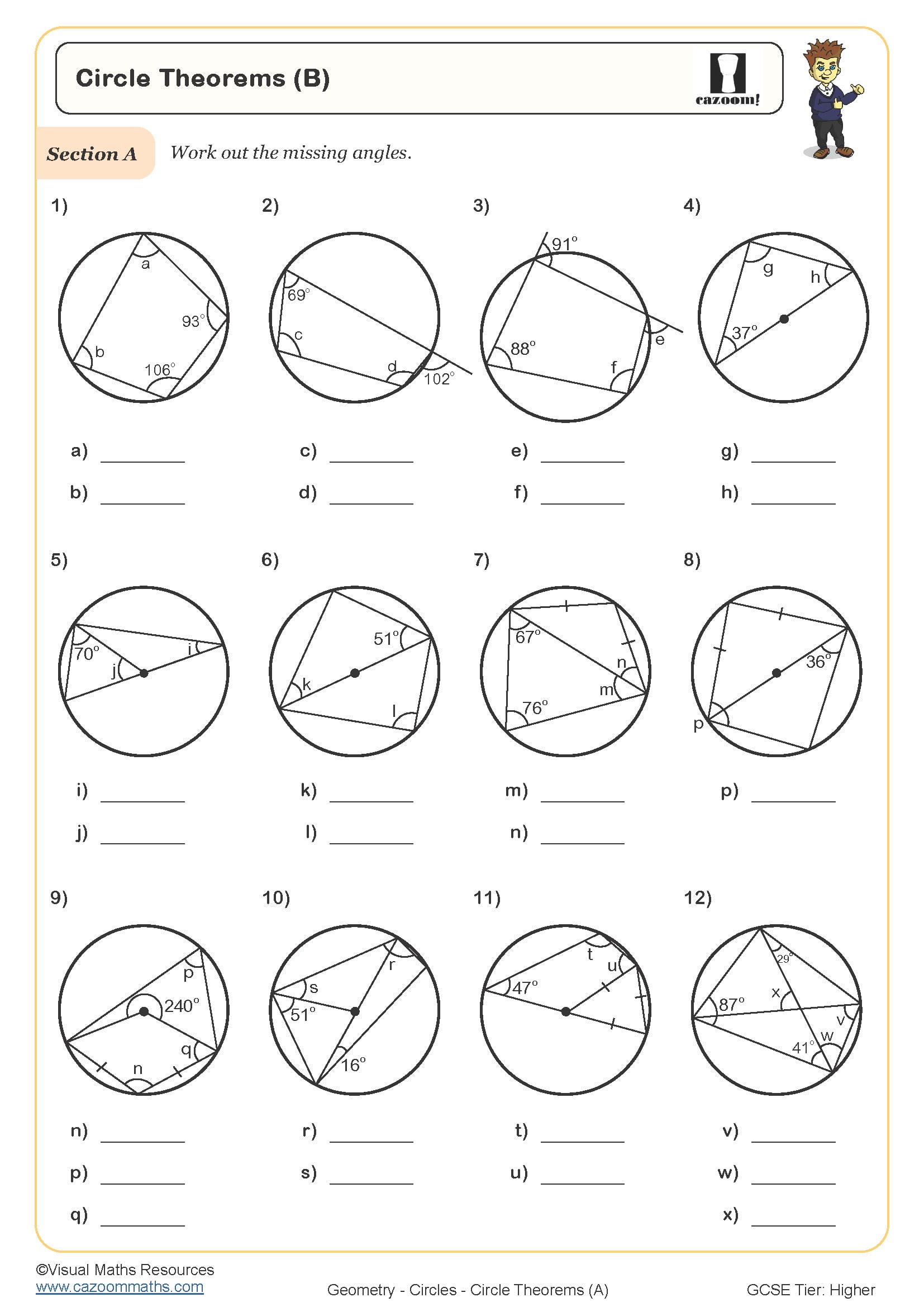
Circle Theorems (B)
Year groups: 10, 11
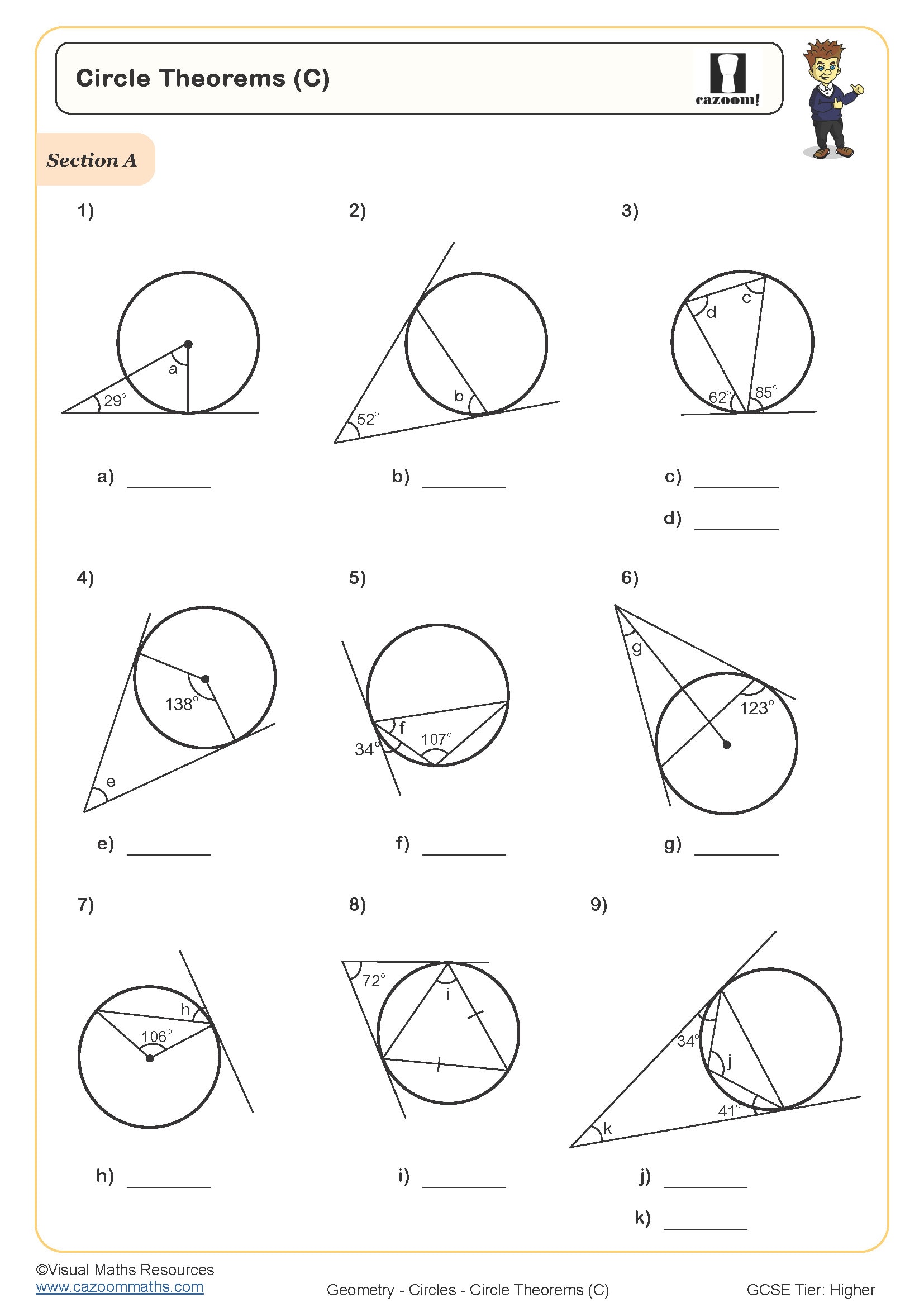
Circle Theorems (C)
Year groups: 10, 11
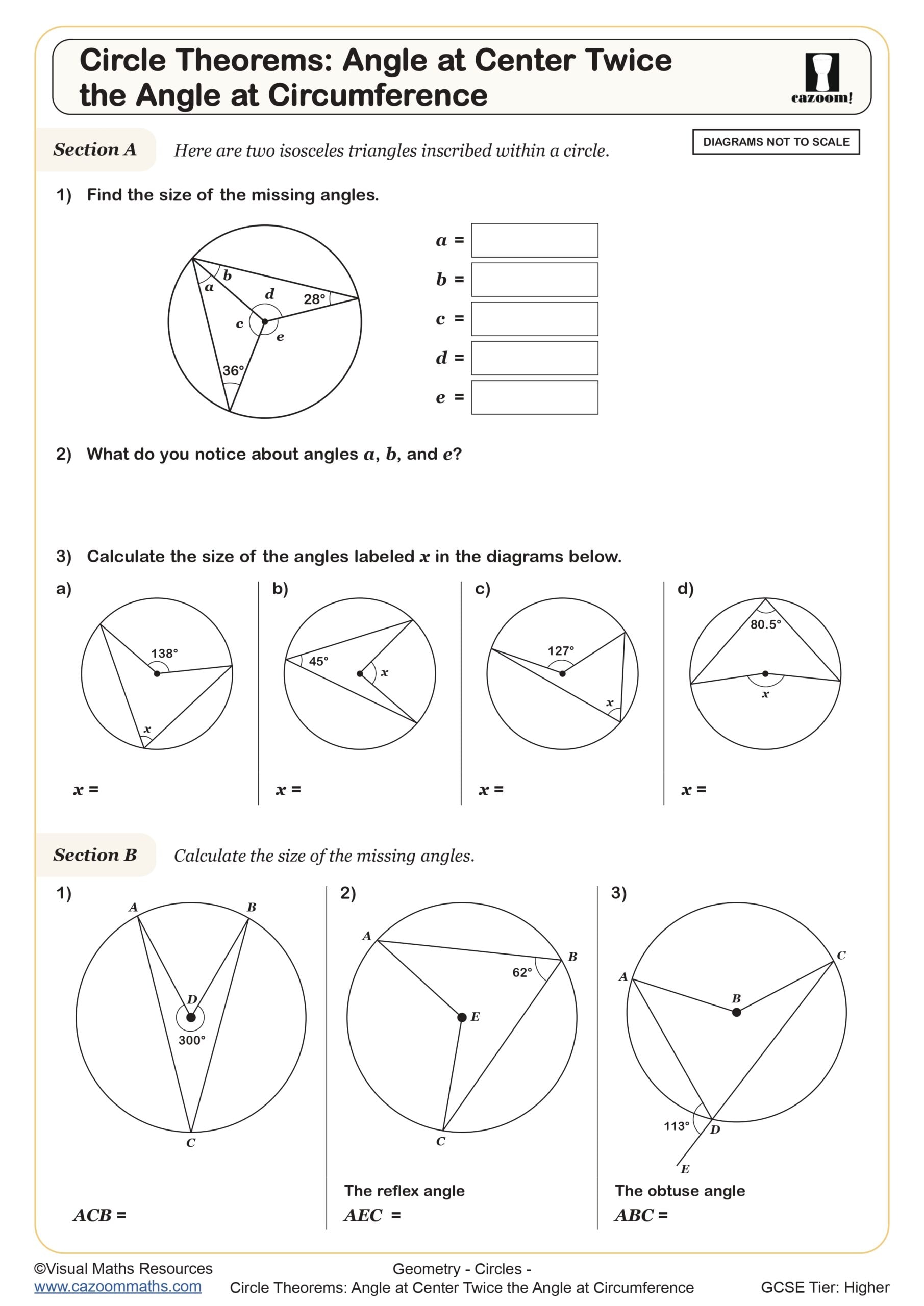
Circle Theorems: Angle at Center Twice the Angle at Circumference
Year groups: 10, 11
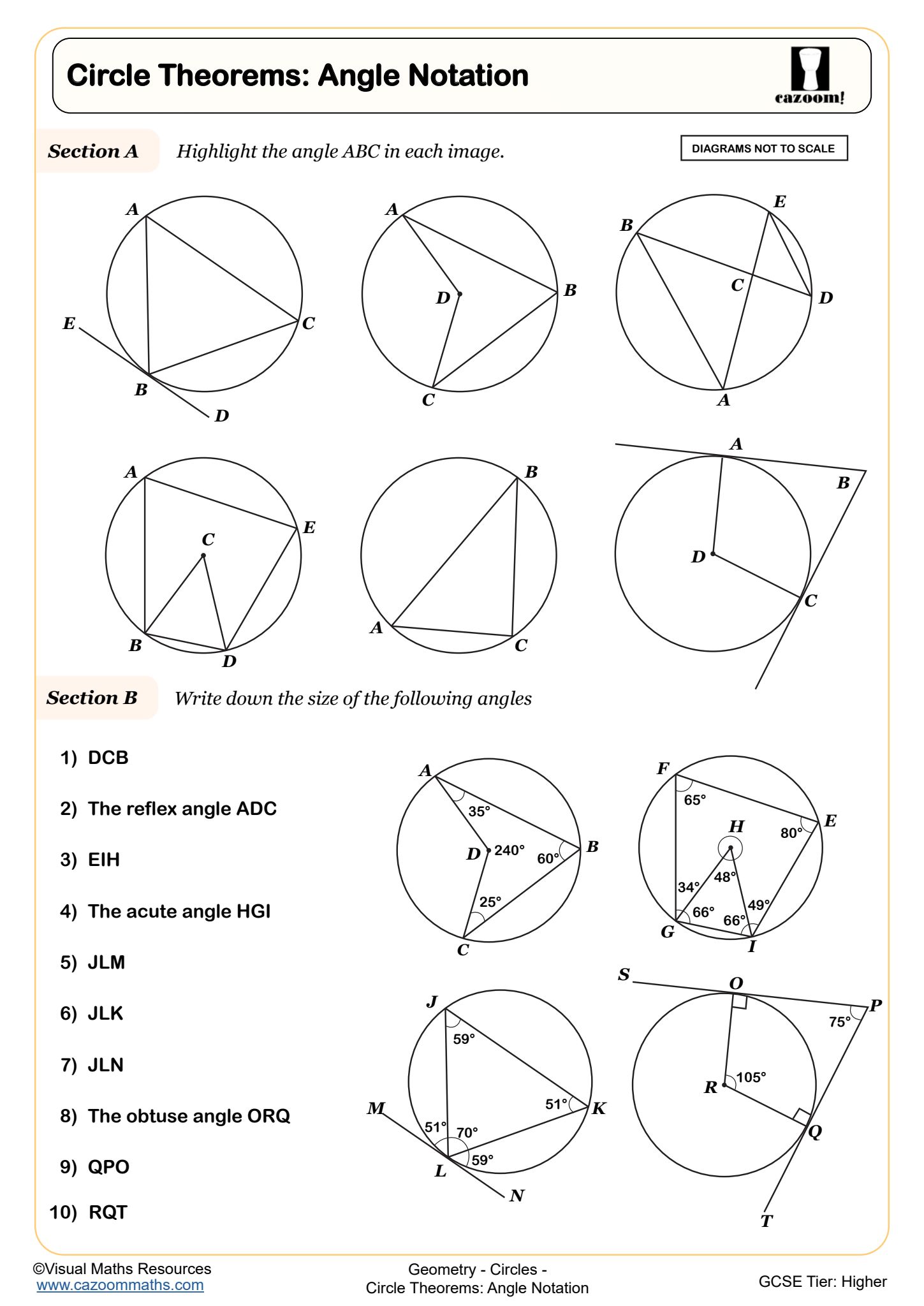
Circle Theorems: Angle Notation
Year groups: 10, 11
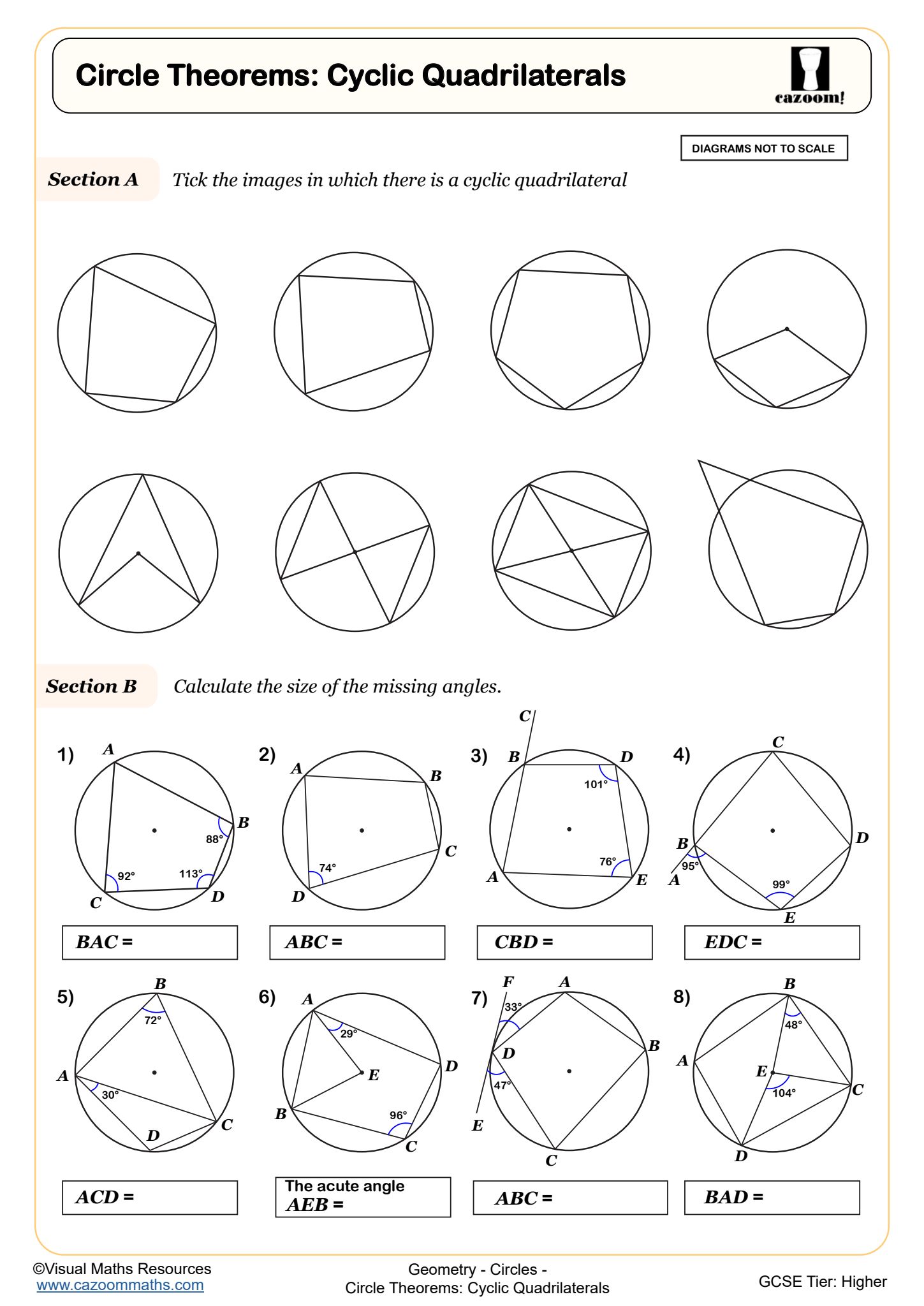
Circle Theorems: Cyclic Quadrilaterals
Year groups: 10, 11
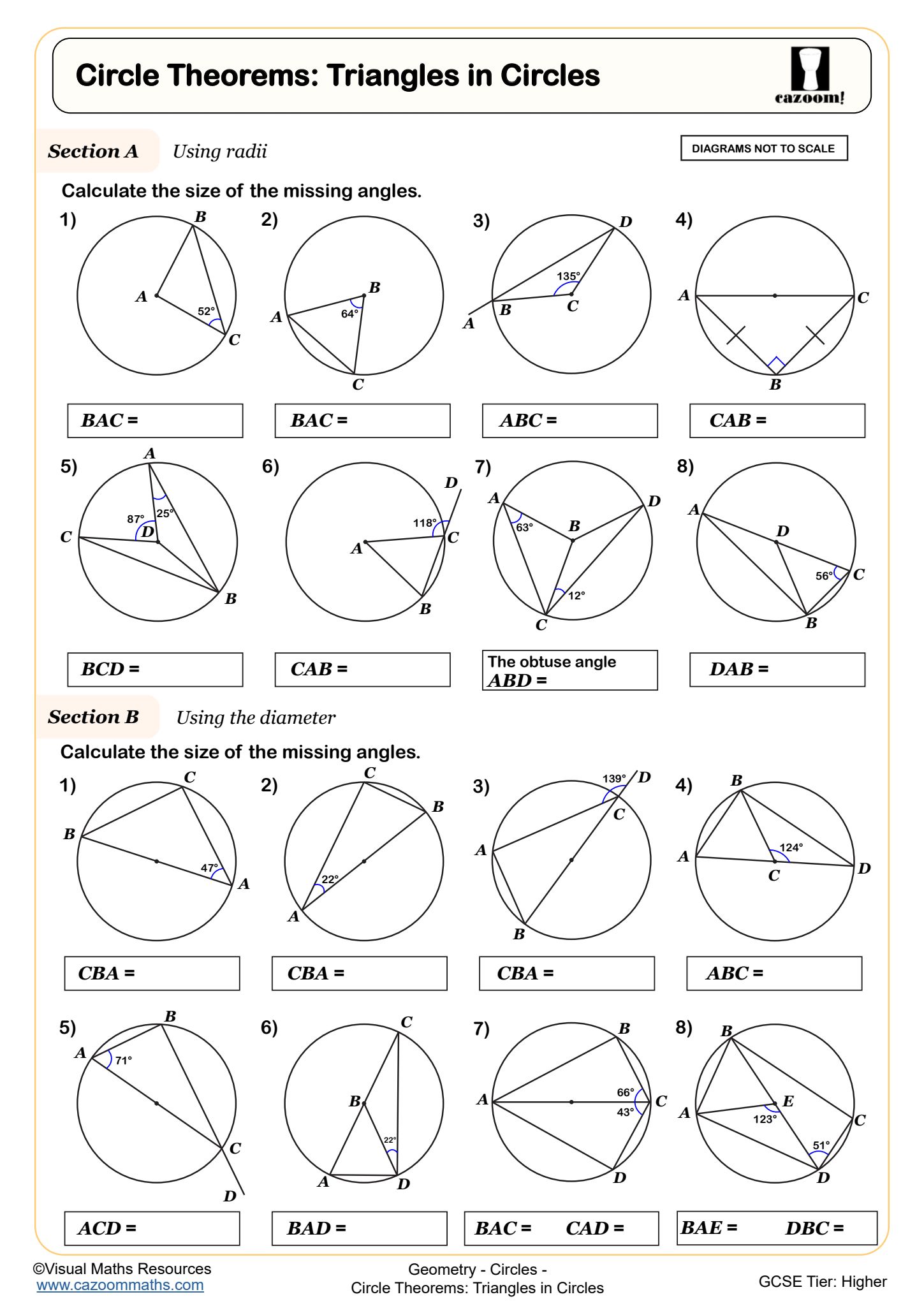
Circle Theorems: Triangles in Circles
Year groups: 10, 11
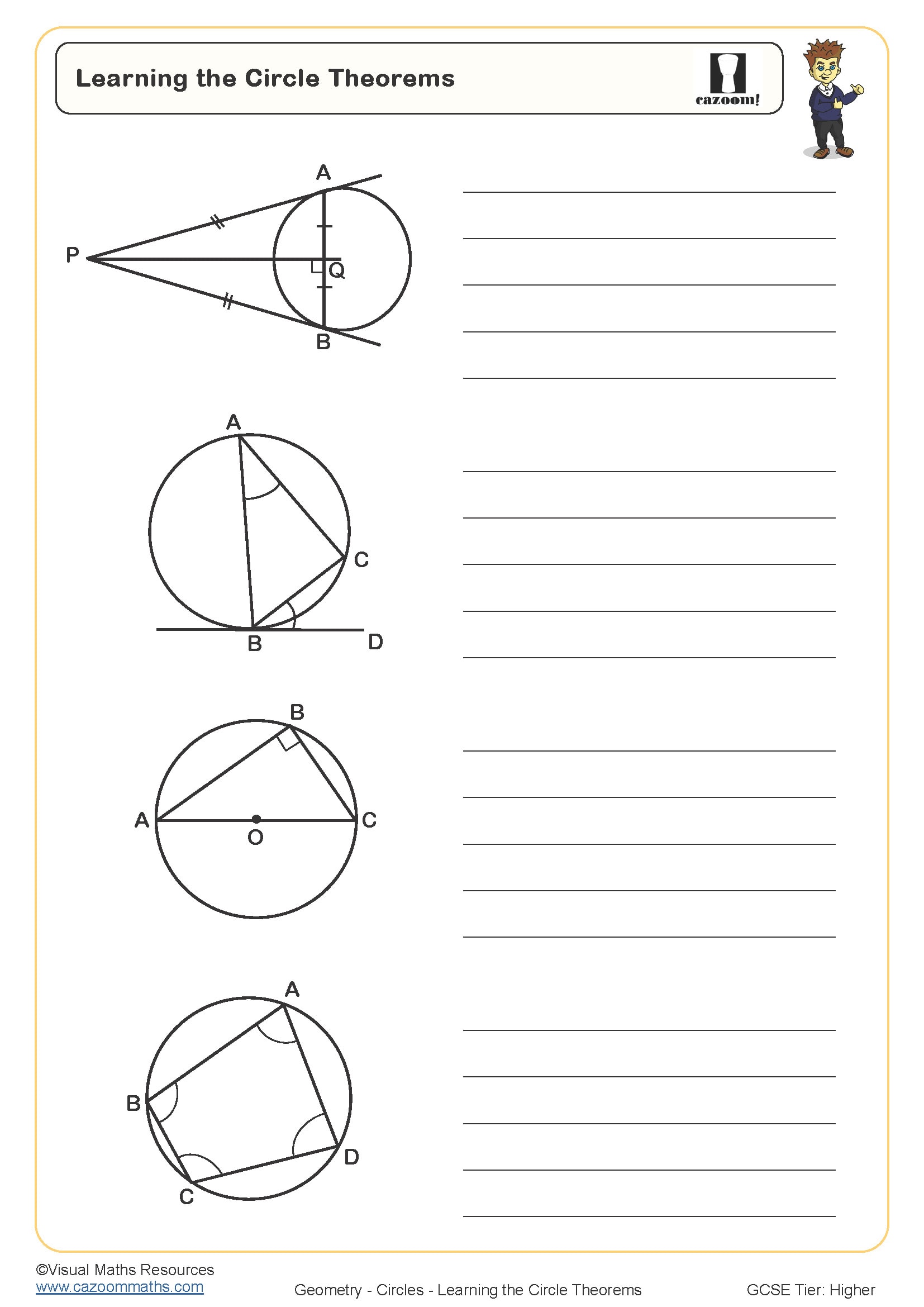
Learning the Circle Theorems
Year groups: 10, 11
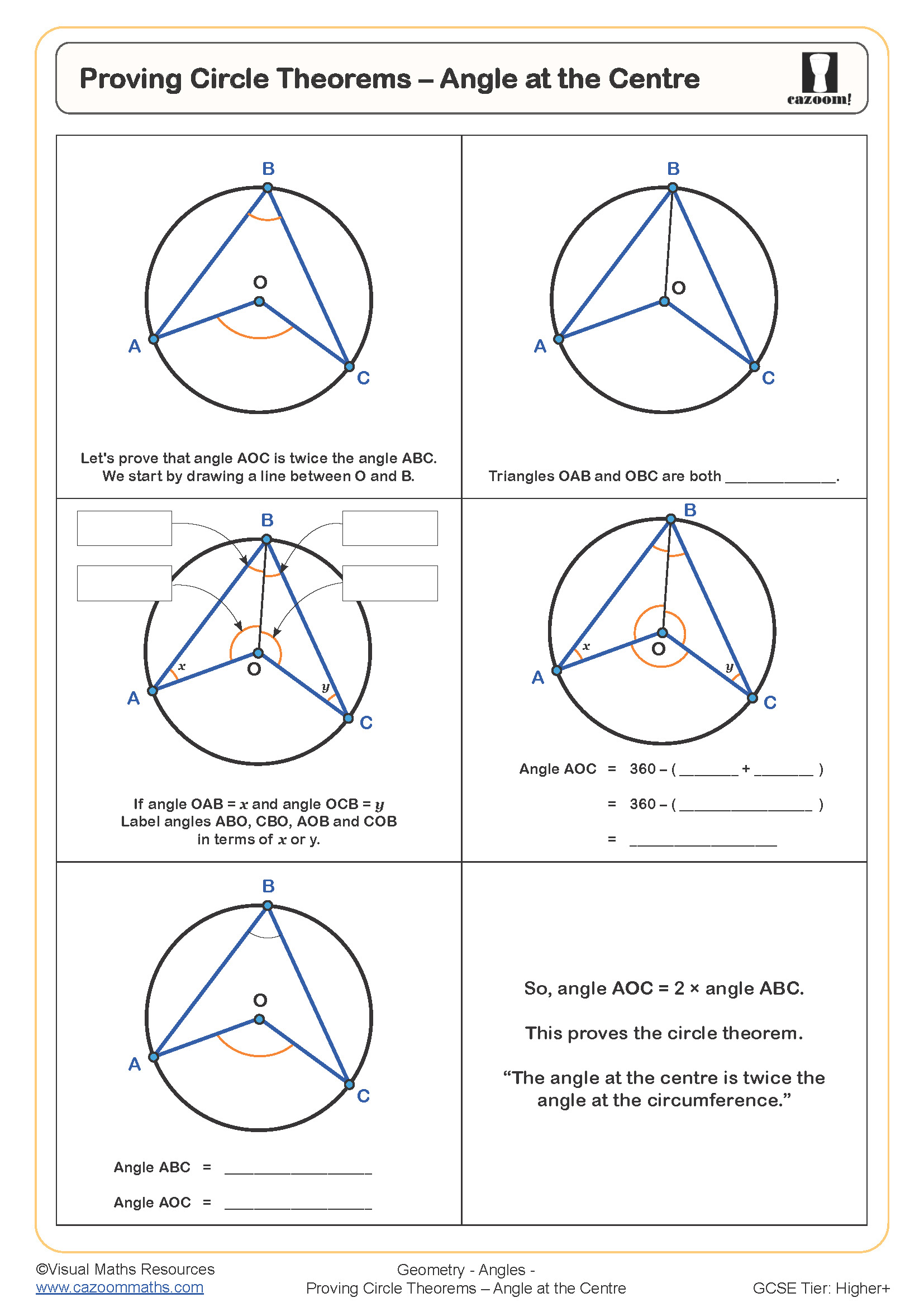
Proving Circle Theorems - Angle at the Centre
Year groups: 10, 11
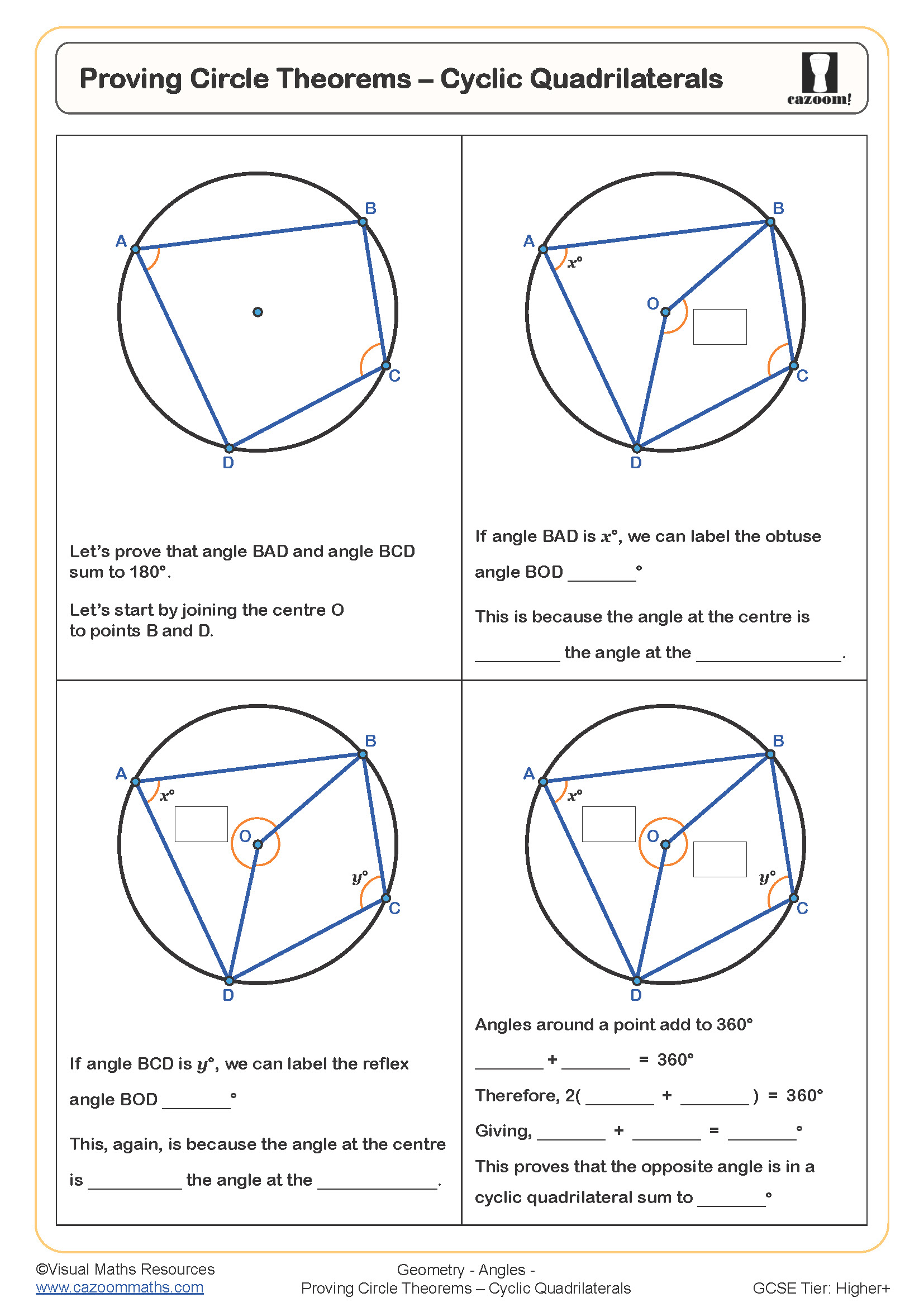
Proving Circle Theorems - Cyclic Quadrilaterals
Year groups: 10, 11
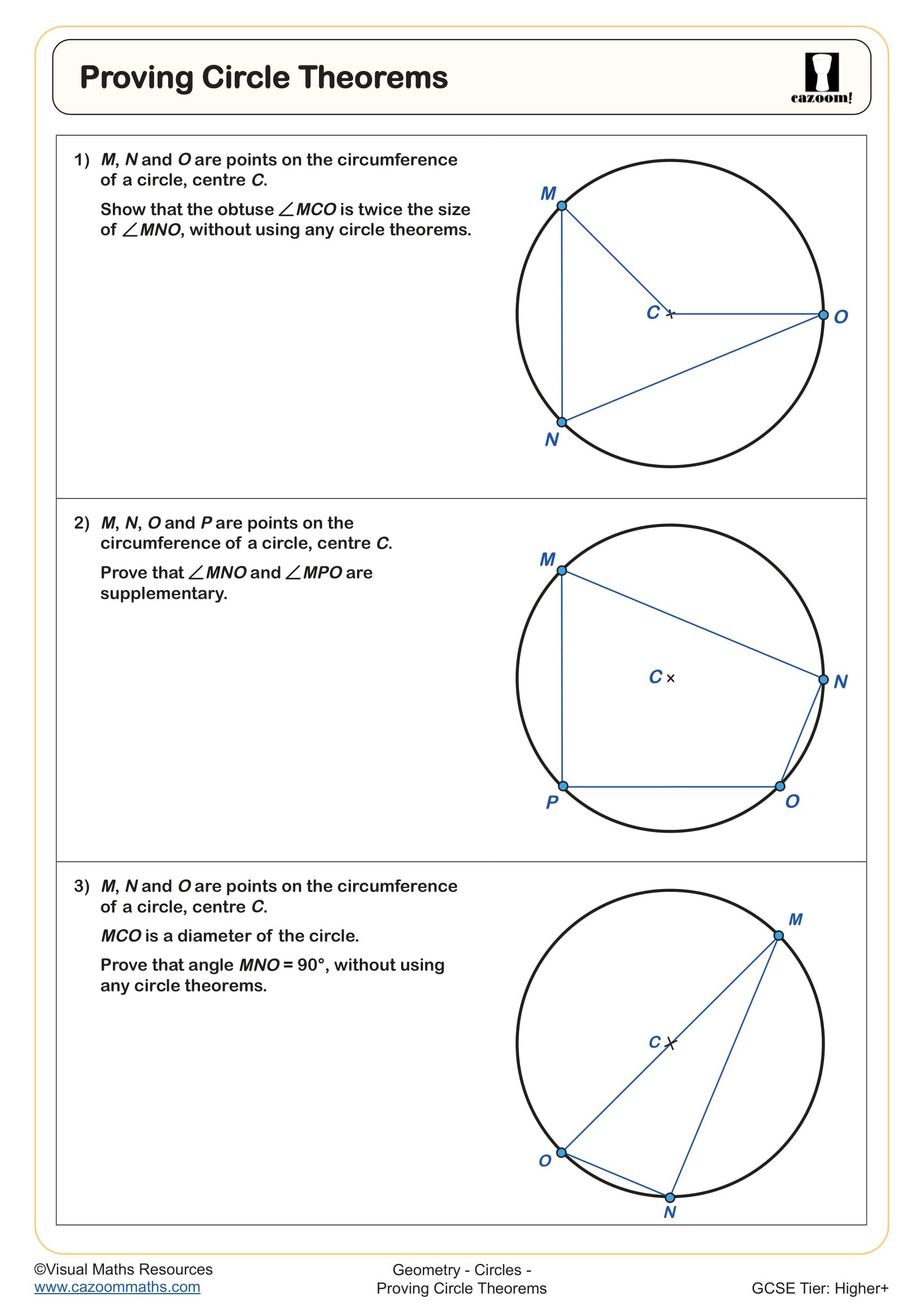
Proving Circle Theorems
Year groups: 11
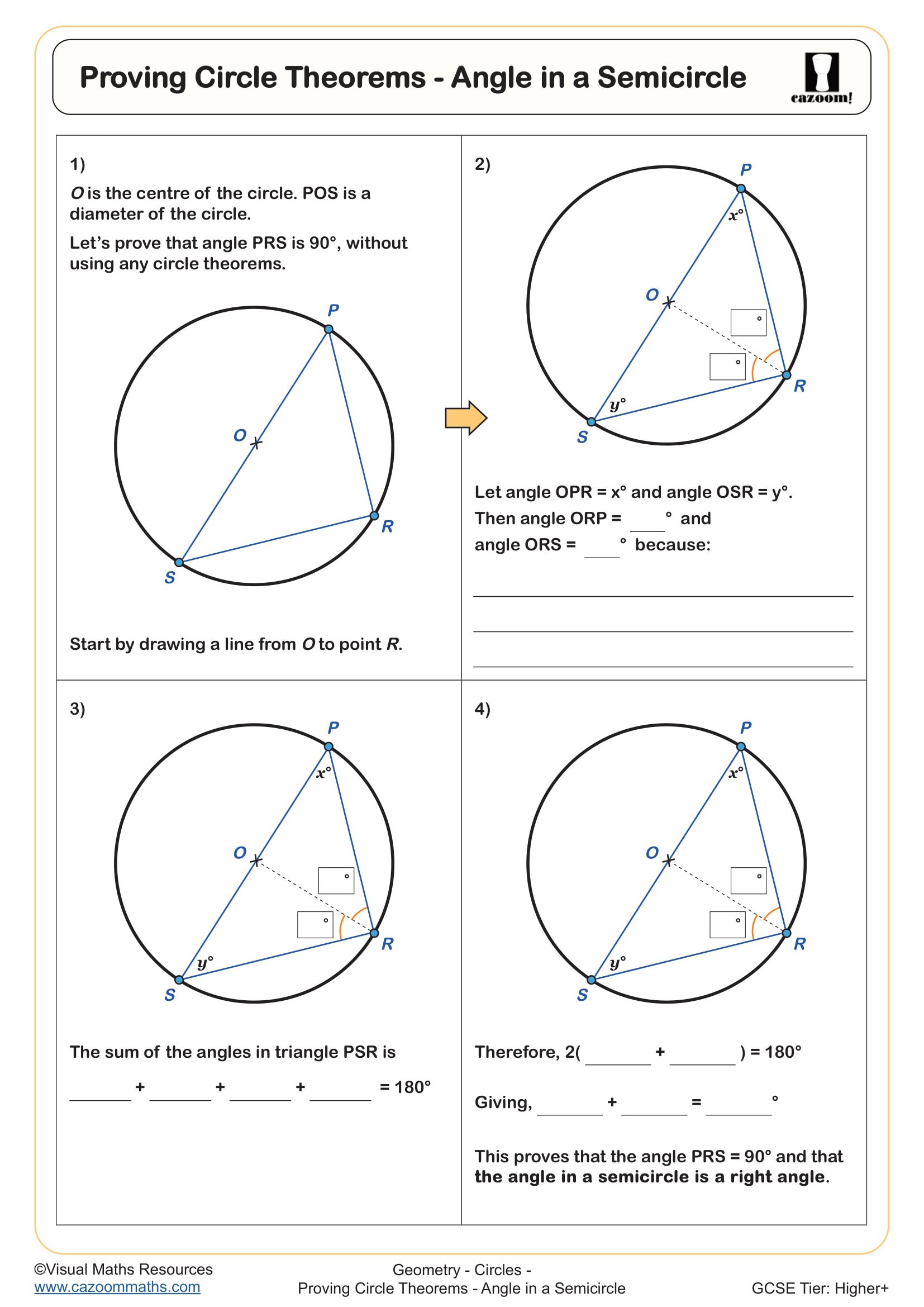
Proving Circle Theorems - Angle in a Semicircle
Year groups: 11
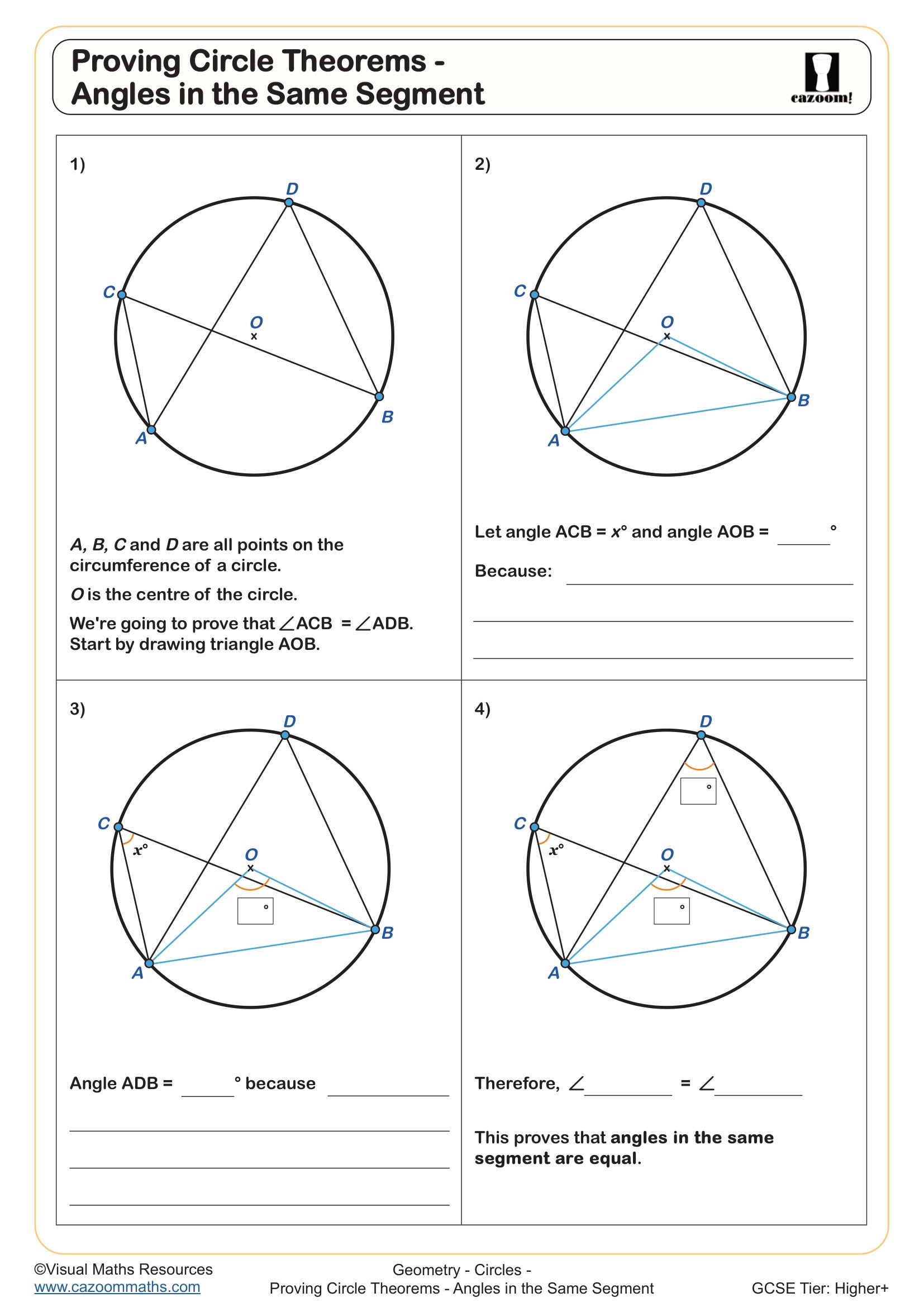
Proving Circle Theorems - Angles in the Same Segment
Year groups: 11
All worksheets are created by the team of experienced teachers at Cazoom Maths.
What topics are covered in a KS3 angles worksheet?
KS3 angles worksheets typically cover angles on straight lines, vertically opposite angles, angles in parallel lines with transversals, and angles in triangles and quadrilaterals. These align with National Curriculum requirements for reasoning about geometric relationships and using angle properties to solve problems.
Students often lose marks on angles in parallel lines questions because they confuse corresponding, alternate and co-interior angles. Teachers frequently notice that the breakthrough happens when students learn to identify the angle pair first, then apply the correct relationship rather than guessing which angles are equal.
Which year groups use lines and angles worksheets?
Lines and angles worksheets span from Year 5 through to Year 11, with each key stage building complexity. KS2 focuses on measuring, drawing and identifying angle types, whilst KS3 introduces angle calculations and parallel line theorems. KS4 extends to circle theorems and advanced geometric reasoning.
The progression moves from concrete angle measurement in Year 5-6 to abstract algebraic angle problems by Year 10-11. Year 7-8 students typically master basic angle facts before tackling the parallel lines work that challenges many Year 9 students, particularly when multiple angle relationships appear in one diagram.
How do angles in parallel lines connect to real-world applications?
Angles in parallel lines appear throughout engineering, architecture and design where parallel structures create predictable angle relationships. Understanding corresponding, alternate and co-interior angles helps students analyse roof trusses, railway tracks, and architectural frameworks where parallel supports create stable geometric patterns.
In STEM contexts, parallel line geometry underpins computer graphics, where parallel projection creates realistic 3D visualisation. Students making these connections often show increased engagement with abstract angle calculations when they recognise the practical applications in construction, manufacturing and digital design industries.
How can teachers use these angle worksheets effectively in lessons?
These worksheets work best when students have mastered basic angle facts before attempting multi-step problems. Teachers can use simpler worksheets for intervention groups whilst challenging students tackle parallel lines or circle theorem questions. The answer sheets enable quick marking and immediate feedback during lessons.
Many teachers use finding angles worksheets for starter activities, homework consolidation, or revision sessions before assessments. The variety of question types means teachers can differentiate easily - some students work on measuring angles whilst others solve complex algebraic angle problems using the same resource bank.