National Numeracy Day Worksheets
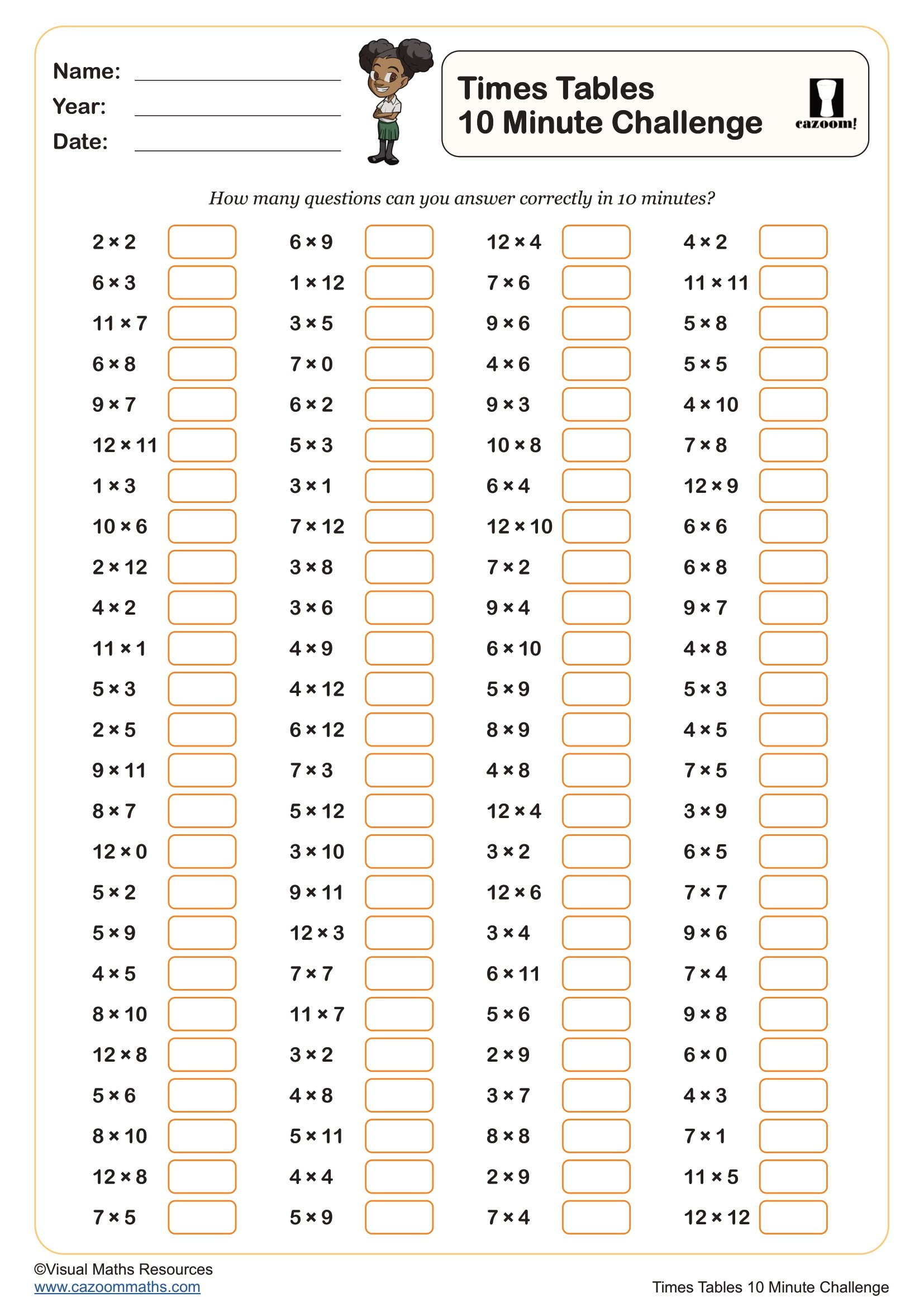
Times Tables 10 minute Challenge
Year groups: 4
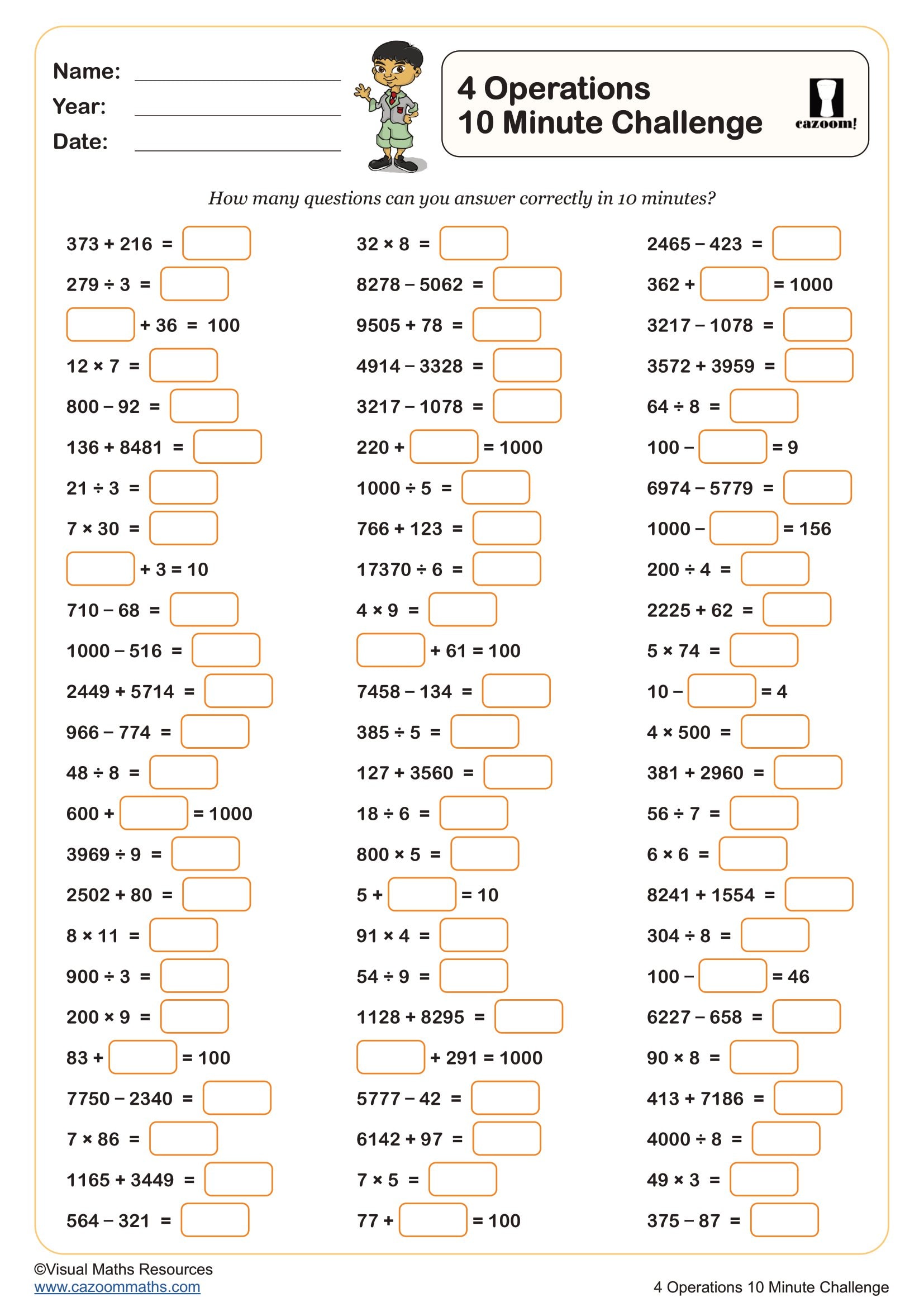
4 Operations 10 Minute Challenge
Year groups: 6
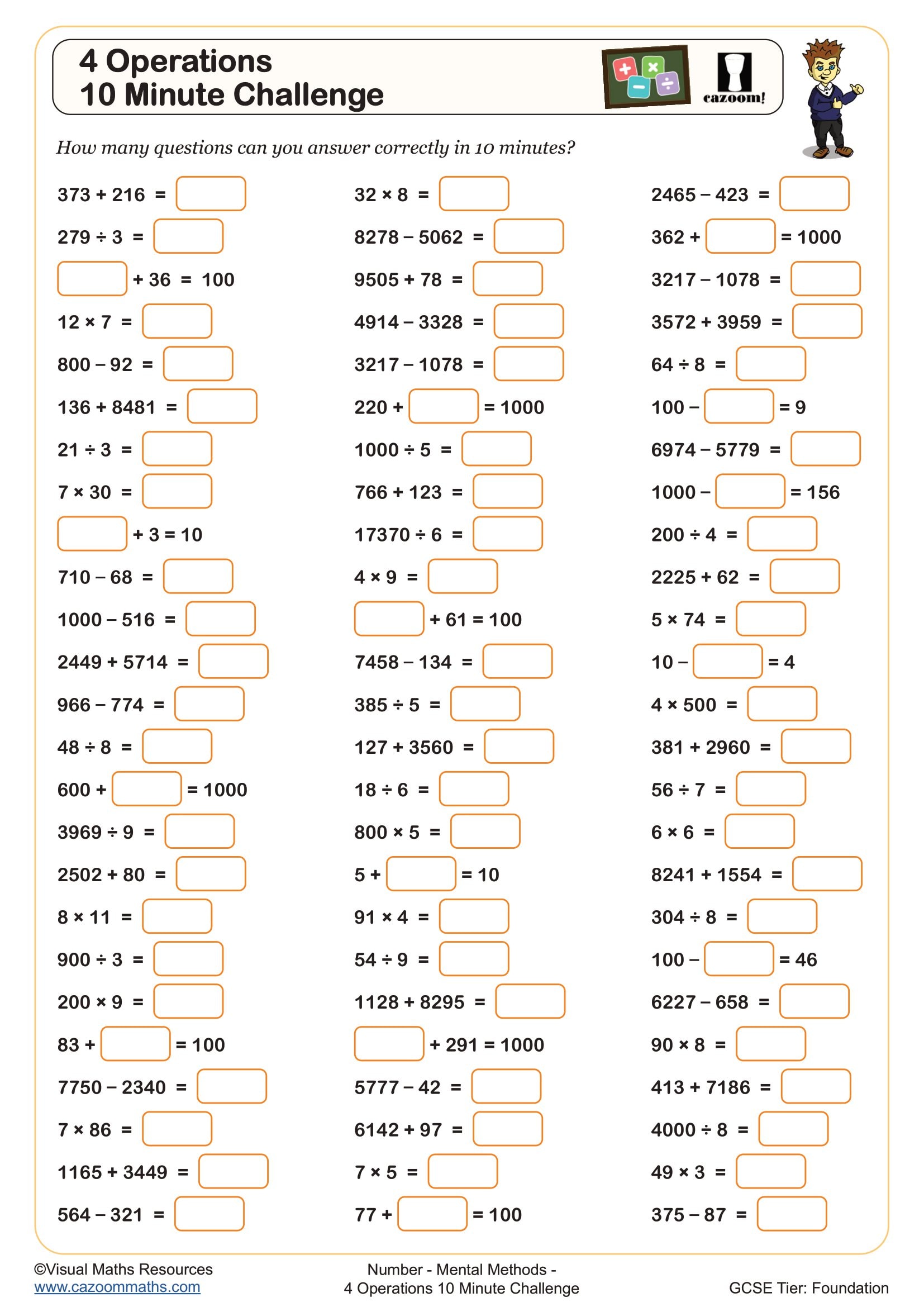
4 Operations 10 Minute Challenge
Year groups: 7
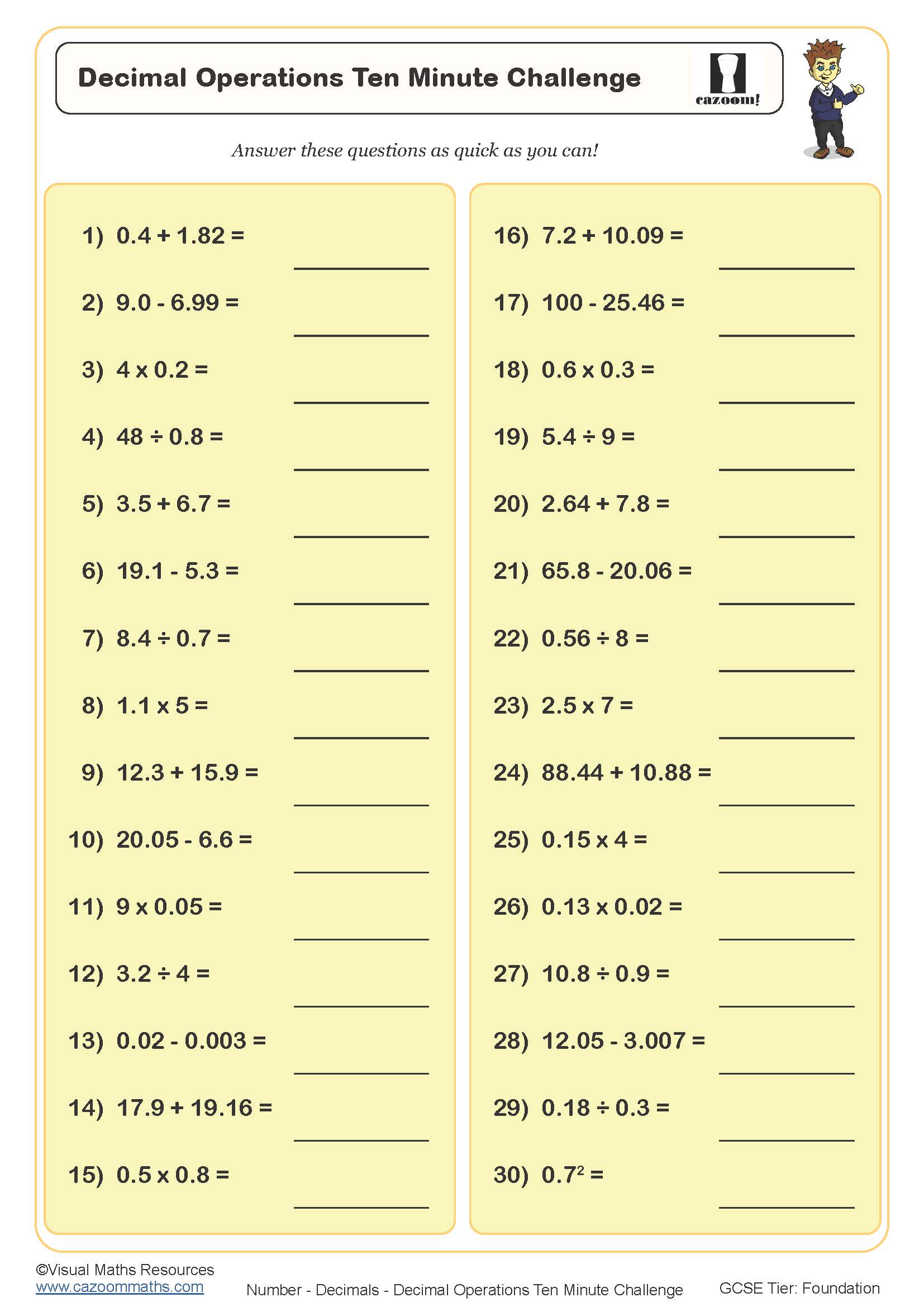
Decimal Operations Ten Minute Challenge
Year groups: 7, 8
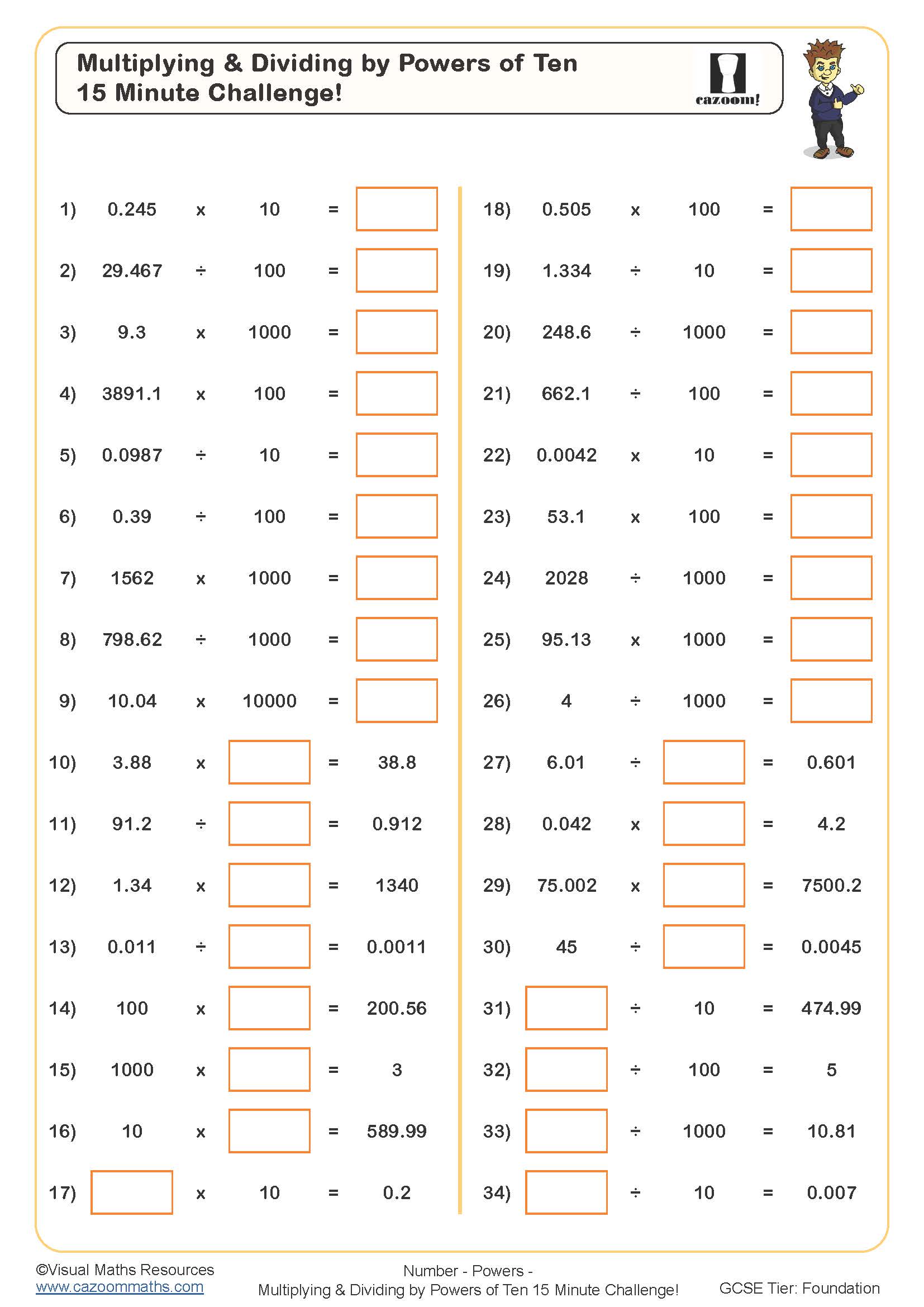
Multiplying and Dividing by Powers of Ten 15 Minute Challenge
Year groups: 7, 8
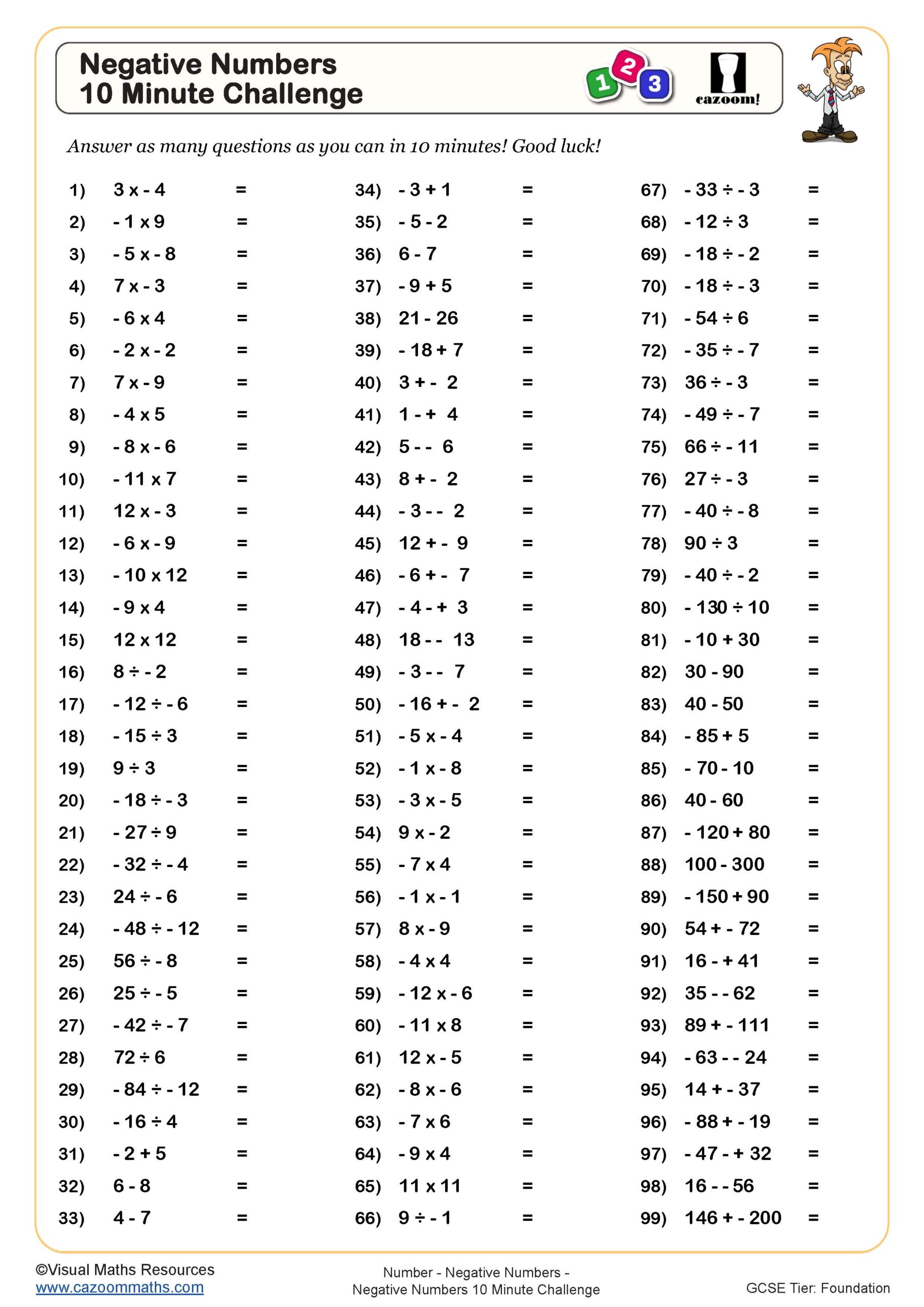
Negative Numbers 10 Minute Challenge
Year groups: 7, 8, 9
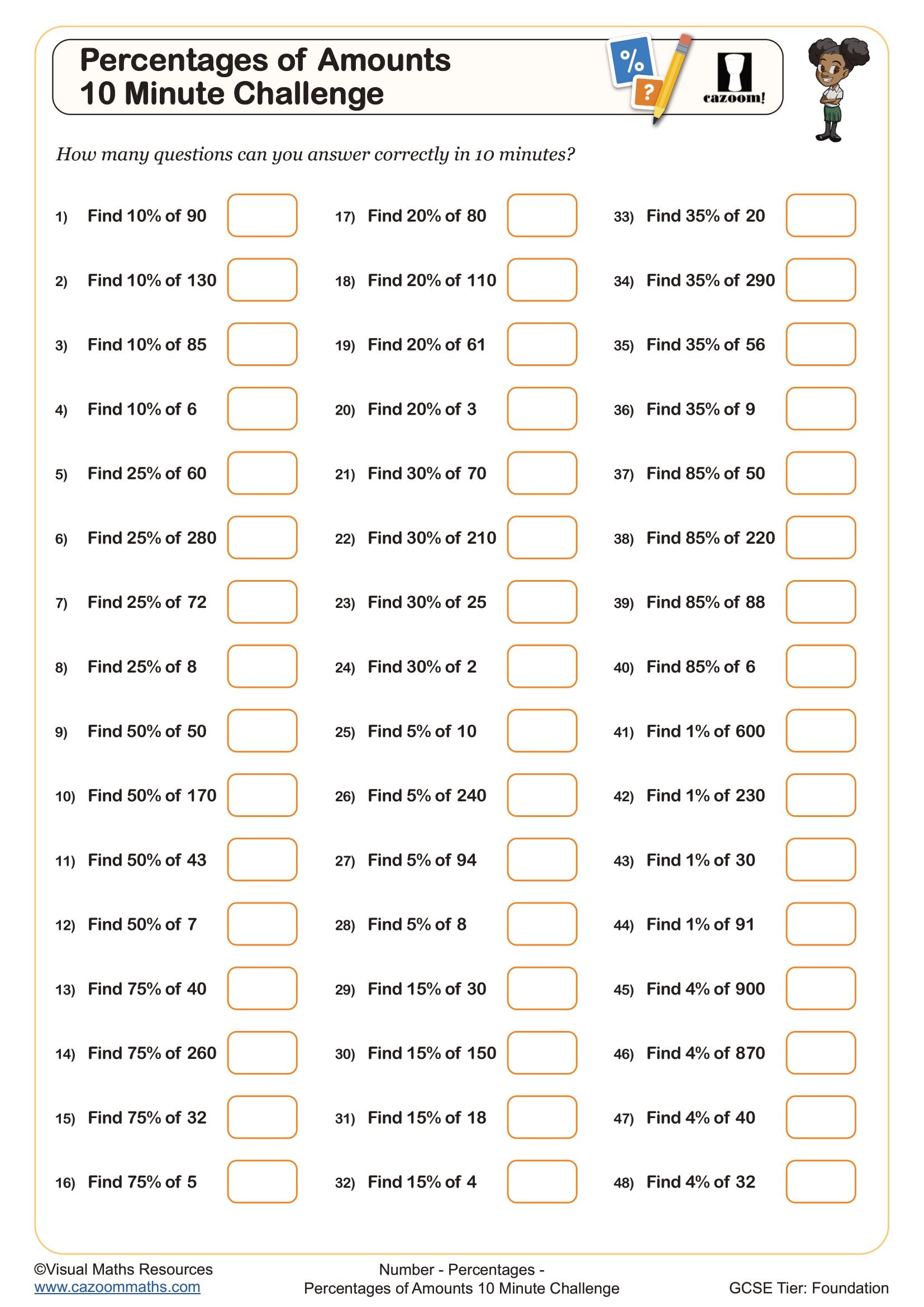
Percentages of Amounts 10 Minute Challenge
Year groups: 7, 8
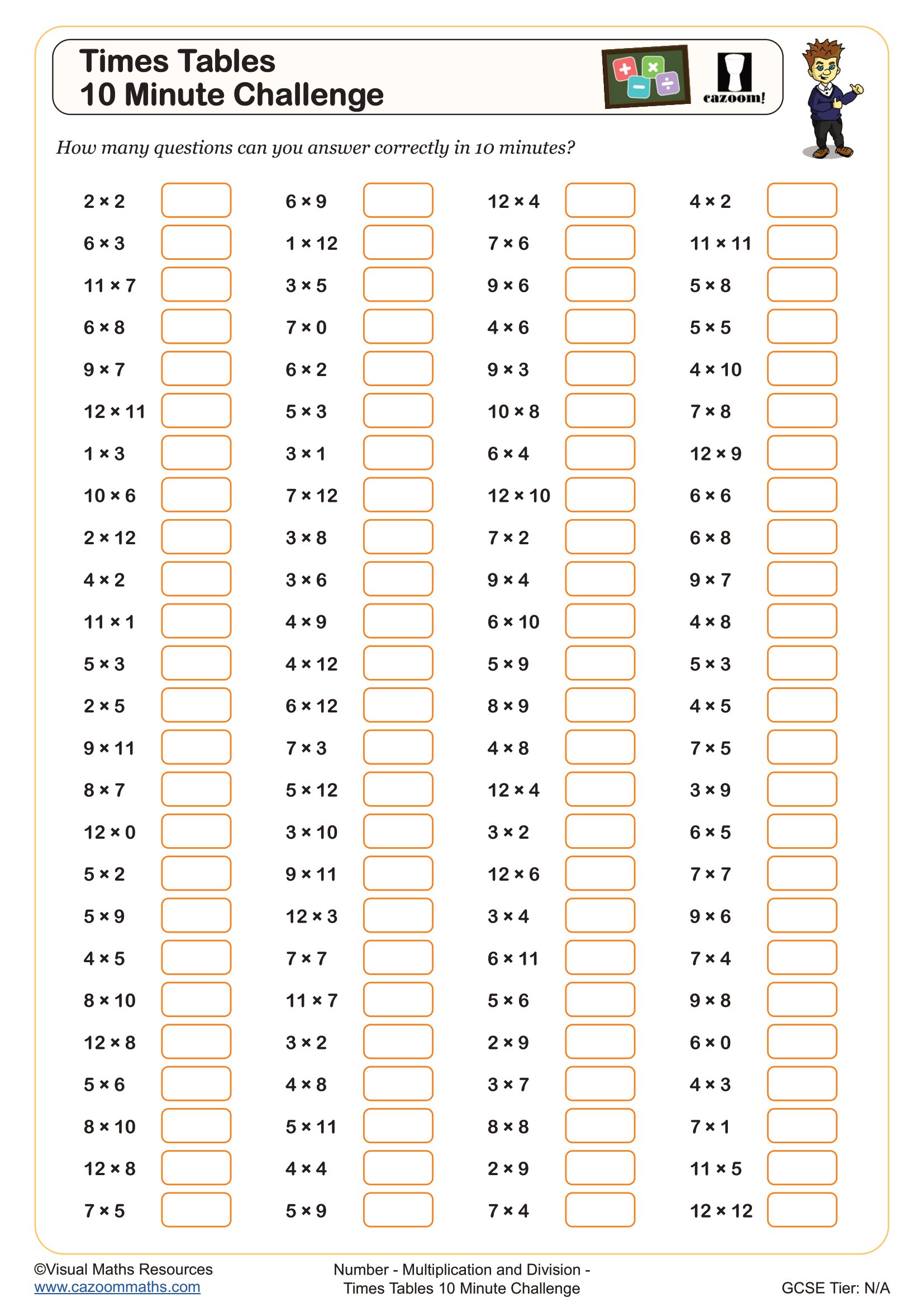
Times Tables 10 minute Challenge
Year groups: 7
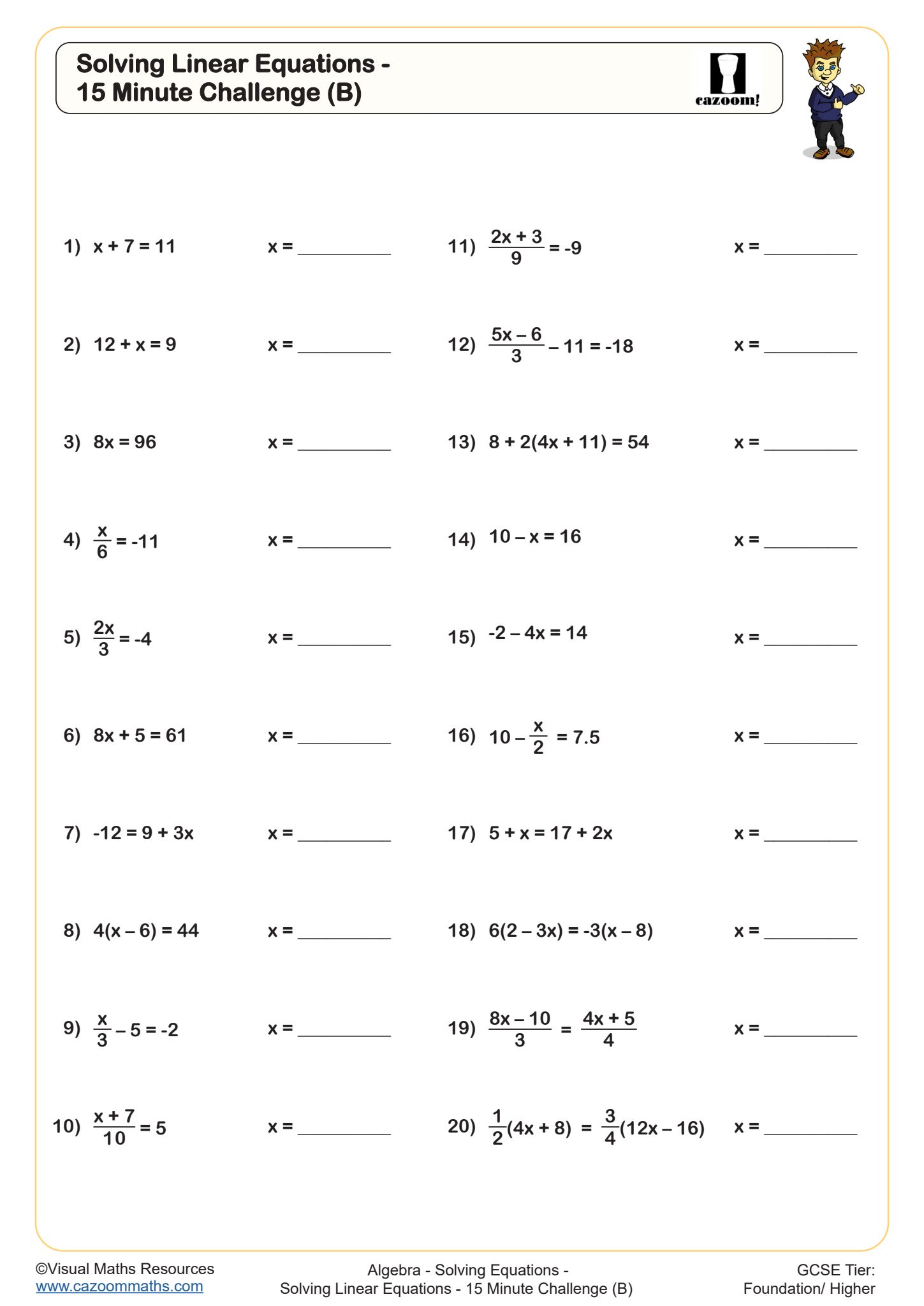
Solving Equations 15 Minute Challenge (B)
Year groups: 8, 9
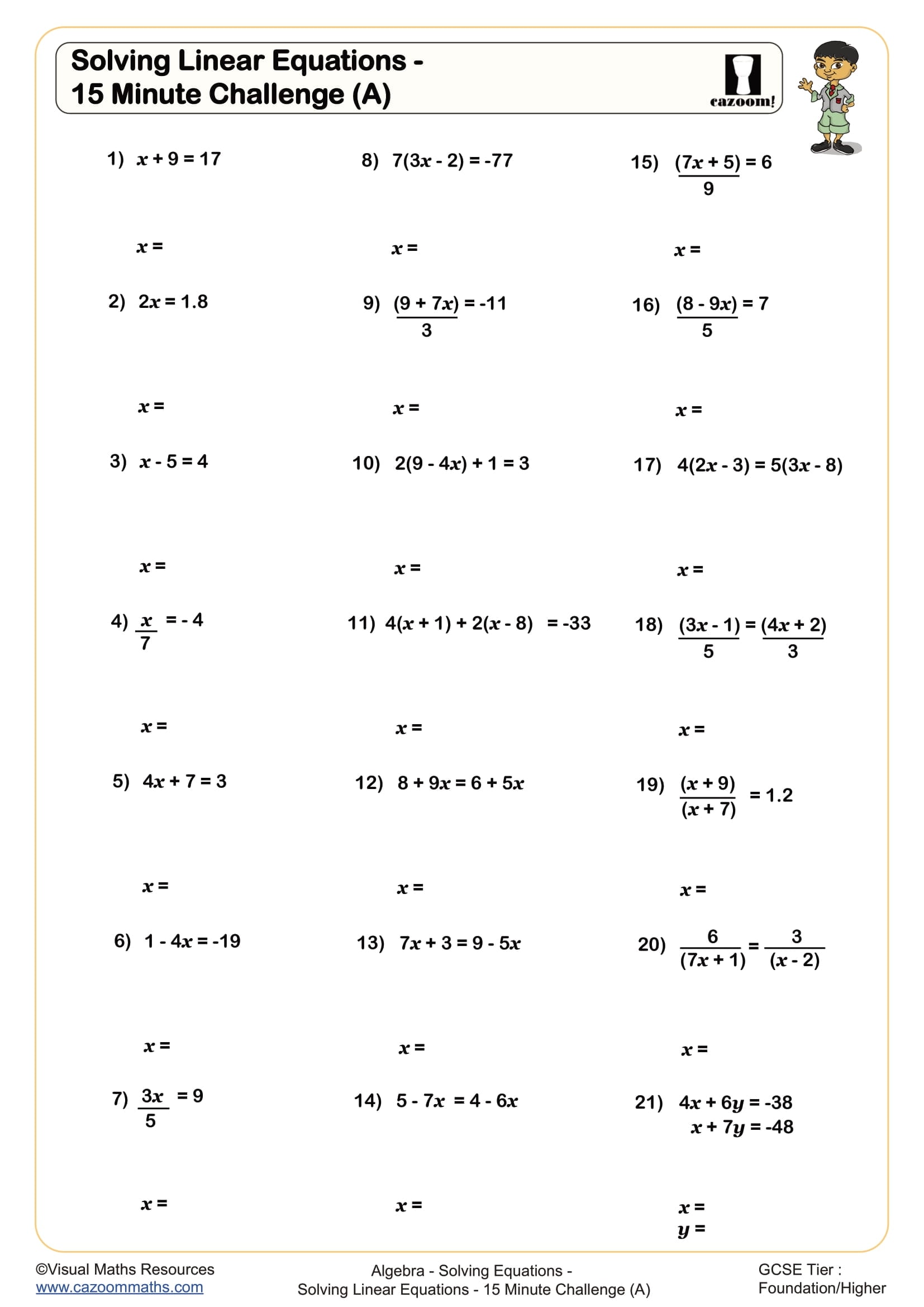
Solving Equations 15 Minute Challenge (A)
Year groups: 9, 10
All worksheets are created by the team of experienced teachers at Cazoom Maths.
What makes effective 15 minute maths activities KS2 teachers can use regularly?
Effective 15 minute maths activities KS2 teachers rely on typically focus on one clear learning objective while incorporating multiple skills practise. These short sessions work particularly well for mental arithmetic, number bonds, and times tables reinforcement, fitting perfectly into morning routines or lesson starters that help students settle into mathematical thinking.
Teachers consistently observe that students respond better to these shorter, focused activities than longer problem-solving sessions early in lessons. The key lies in choosing tasks that require minimal setup time but maximum mathematical thinking, such as number puzzles that connect to current curriculum topics while building fluency through repetition and variation.
How do numeracy worksheets adapt across different Key Stages?
Numeracy worksheets for KS2 typically emphasise building fluency with the four operations, fractions, and place value concepts through concrete examples and visual representations. Students at this stage benefit from activities that connect abstract numbers to real contexts, helping them understand why mathematical procedures work rather than simply memorising methods.
By KS4, these same numeracy principles extend into more complex applications including percentages in financial contexts, ratio problems, and algebraic thinking. Teachers find that students who struggled with basic numeracy in earlier years often experience breakthrough moments when concepts are revisited through age-appropriate, practical applications that demonstrate mathematics relevance to their daily experiences.
What simple number games work best for building mathematical confidence?
Simple number games that require strategic thinking rather than just speed tend to build lasting mathematical confidence. Games involving pattern recognition, logical reasoning, and number relationships help students develop mathematical intuition whilst practising computational skills in contexts that feel less formal than traditional exercises.
Teachers notice that students who typically avoid mathematics often engage more readily with number-based puzzles and games that have clear rules and immediate feedback. The most effective activities combine familiar game structures with mathematical challenges, allowing students to focus on problem-solving strategies rather than worrying about whether they're 'doing maths correctly'.
How can teachers maximise the impact of numeracy day activities in their classrooms?
Teachers achieve the greatest impact when they connect numeracy day activities to ongoing classroom learning rather than treating them as isolated events. This means selecting activities that reinforce current curriculum topics whilst introducing mathematical thinking in fresh contexts, helping students see numeracy as integral to their overall education rather than a separate subject.
Successful implementation often involves using these activities as assessment opportunities, observing which students demonstrate confidence with different concepts and where misconceptions persist. Teachers find that the variety within these collections allows for natural differentiation, with some students accessing basic numeracy practise while others tackle more complex problem-solving variations of the same core activities.