Negative Numbers Worksheets
Calculations Crossing Zero (A)
Year groups: 7, 8
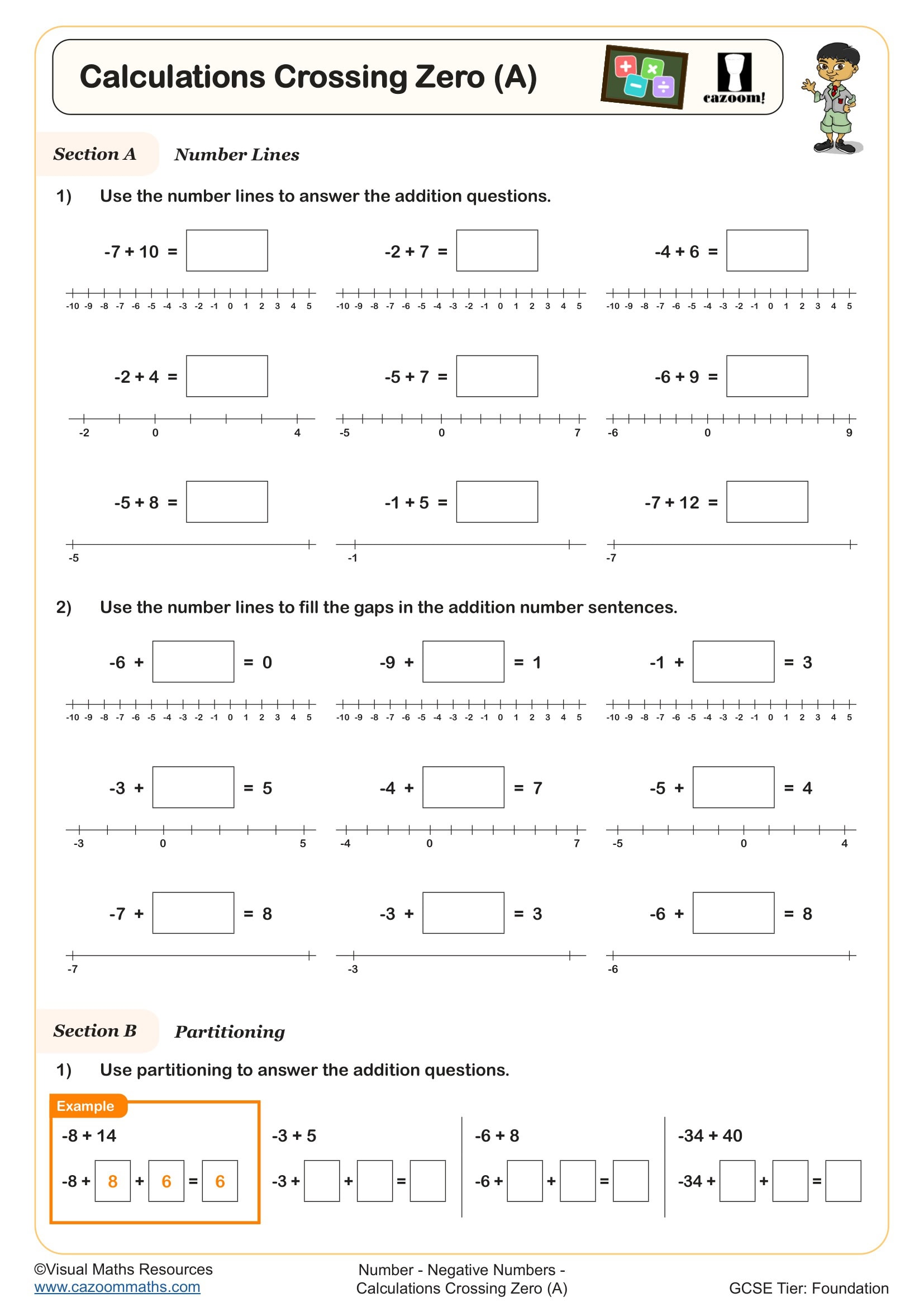
Calculations Crossing Zero (B)
Year groups: 7, 8
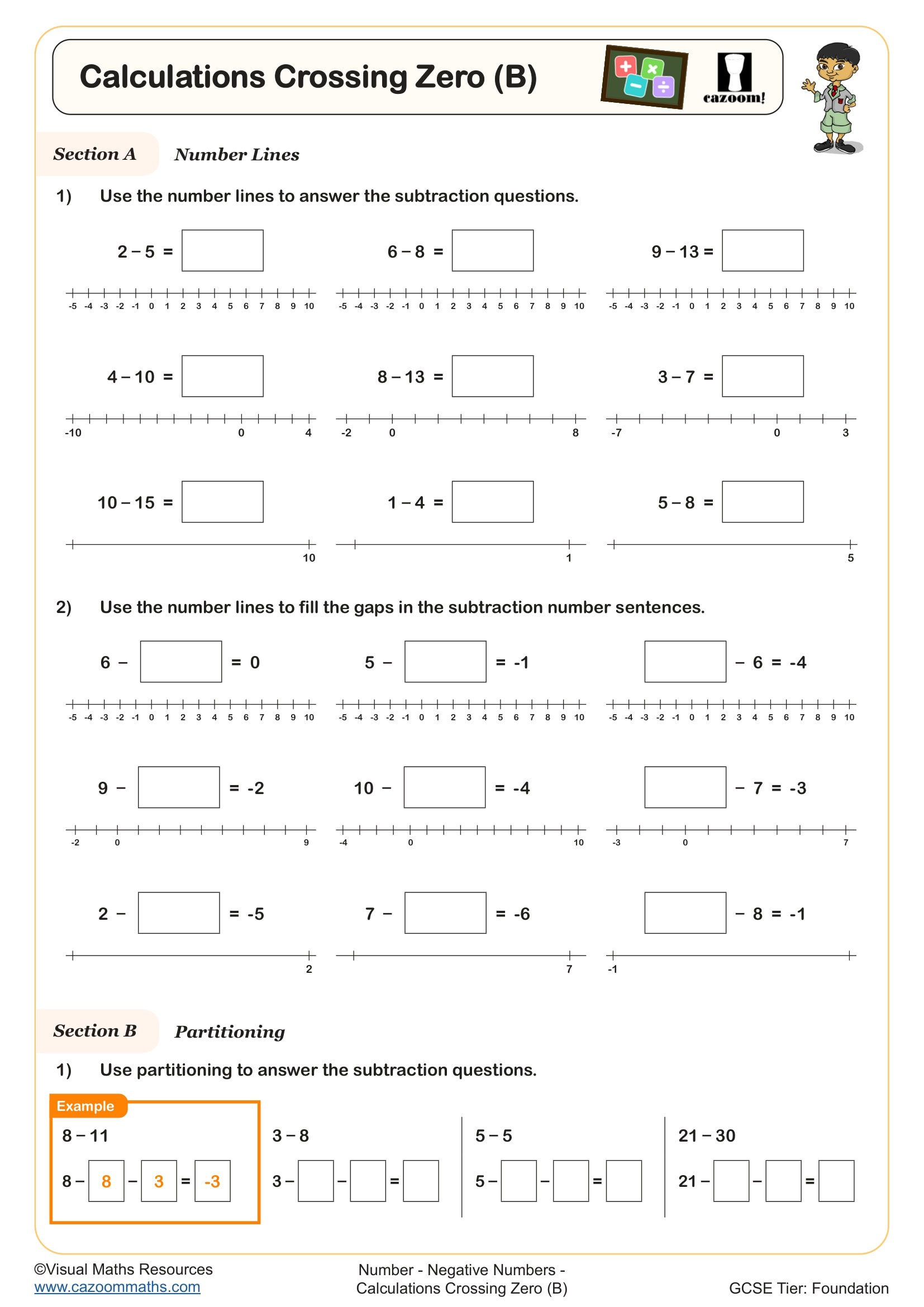
Calculations Crossing Zero (C)
Year groups: 7, 8
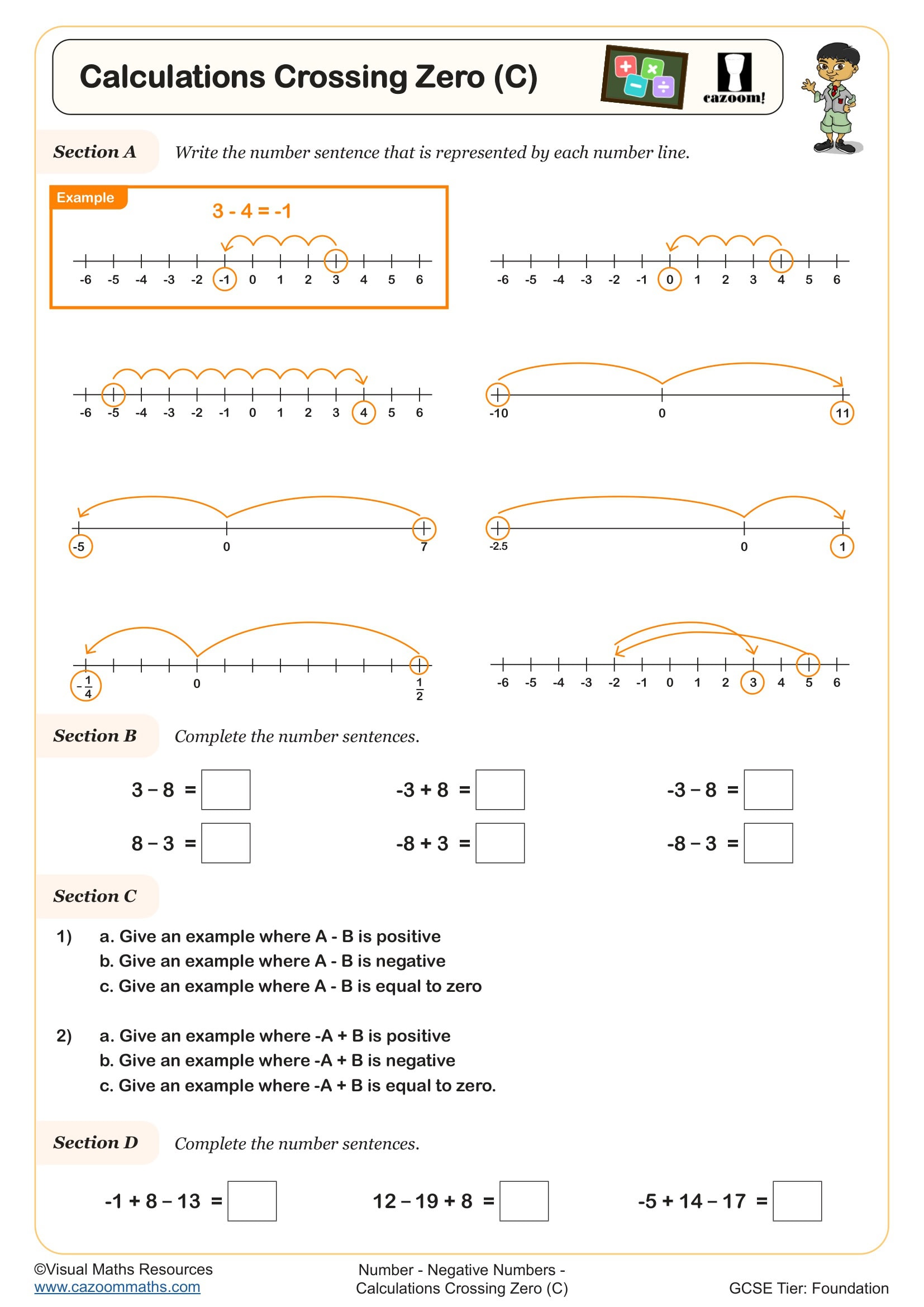
Comparing Negative Numbers
Year groups: 7
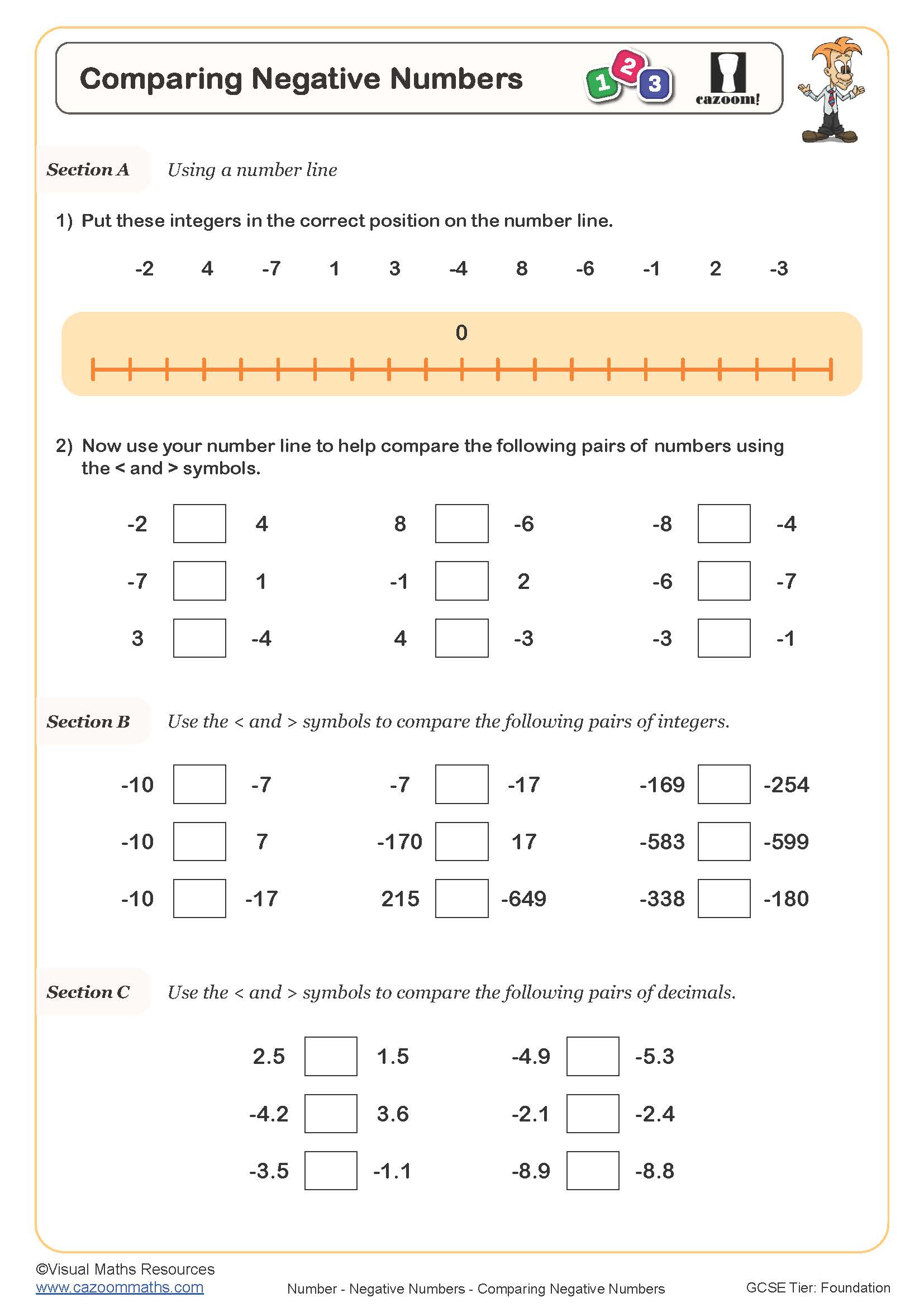
Comparing Temperatures
Year groups: 7
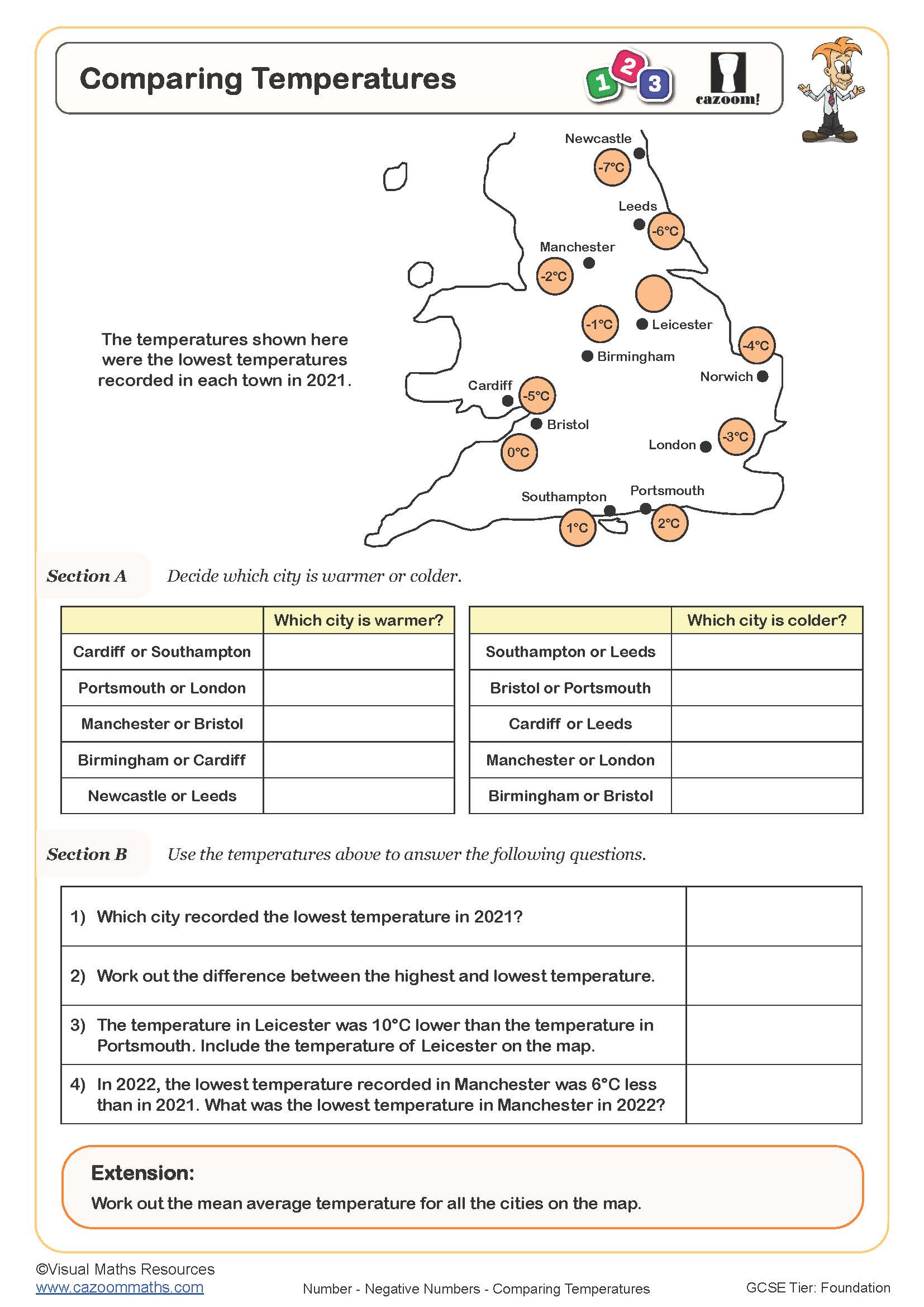
Directed Number - Addition Using Directed Counters
Year groups: 7, 8
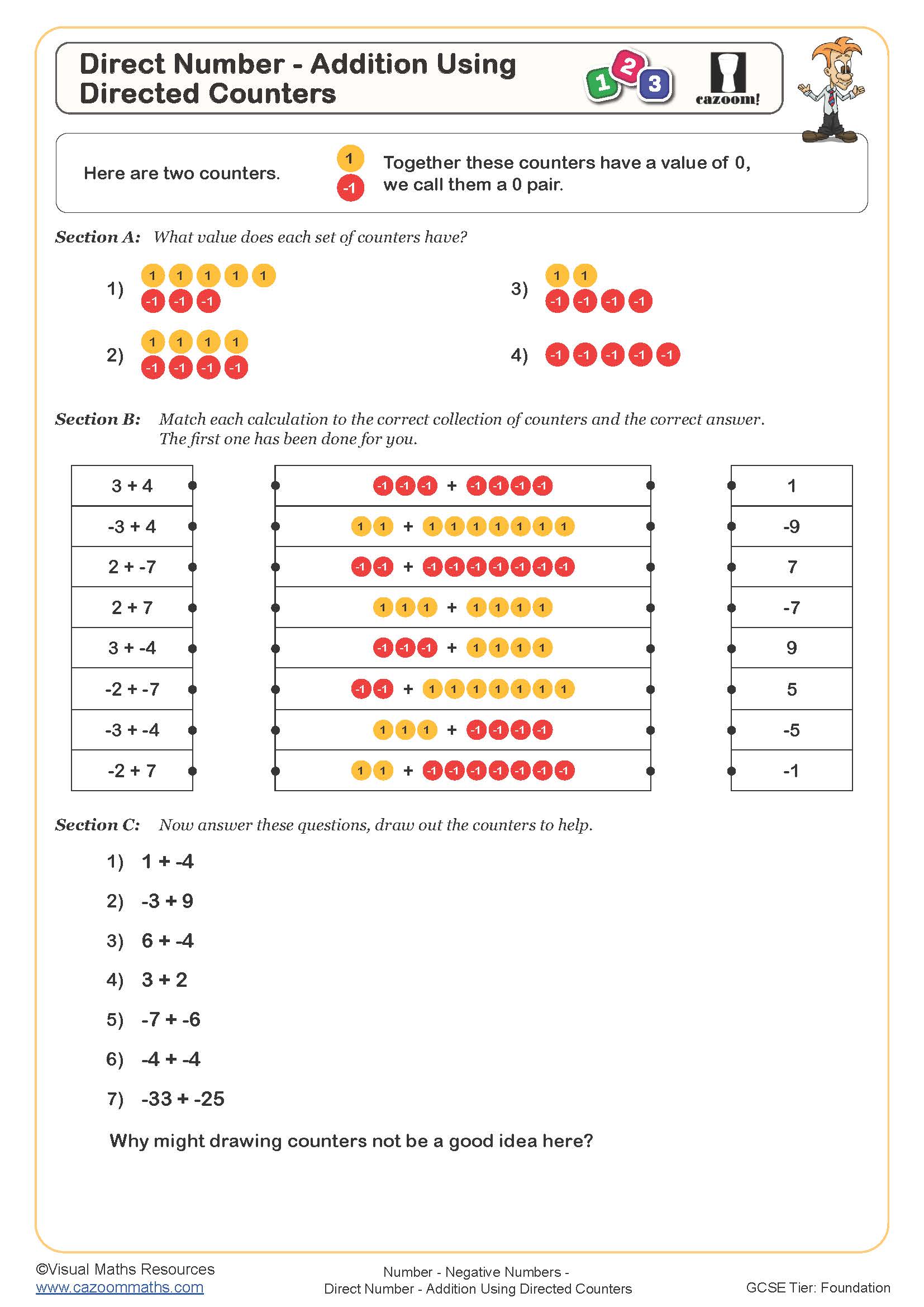
Directed Number - Multiplication Using Directed Number Counters
Year groups: 7, 8
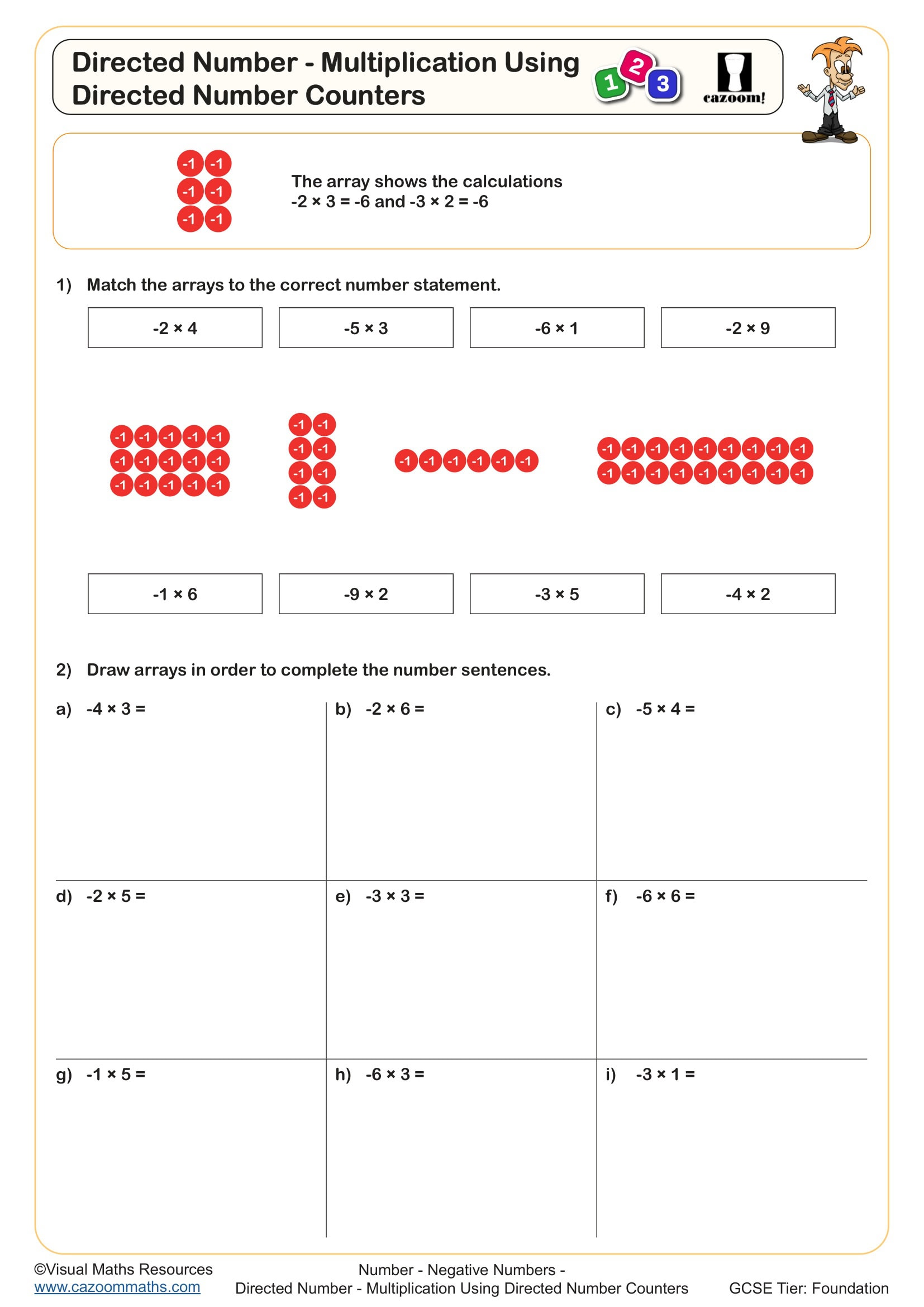
Directed Number - Subtraction Using Directed Counters
Year groups: 7, 8
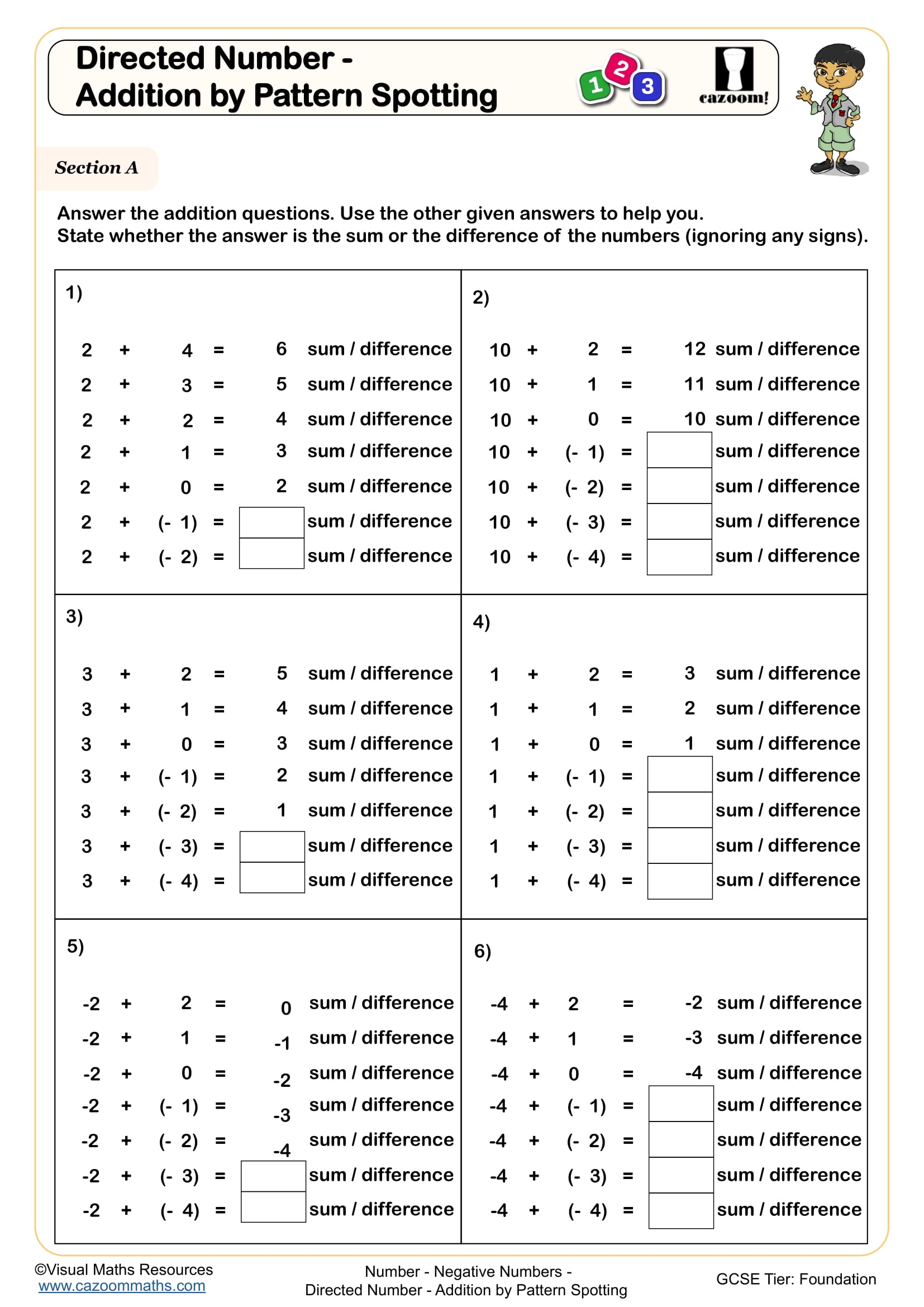
Directed Number – Addition by Pattern Spotting
Year groups: 7, 8
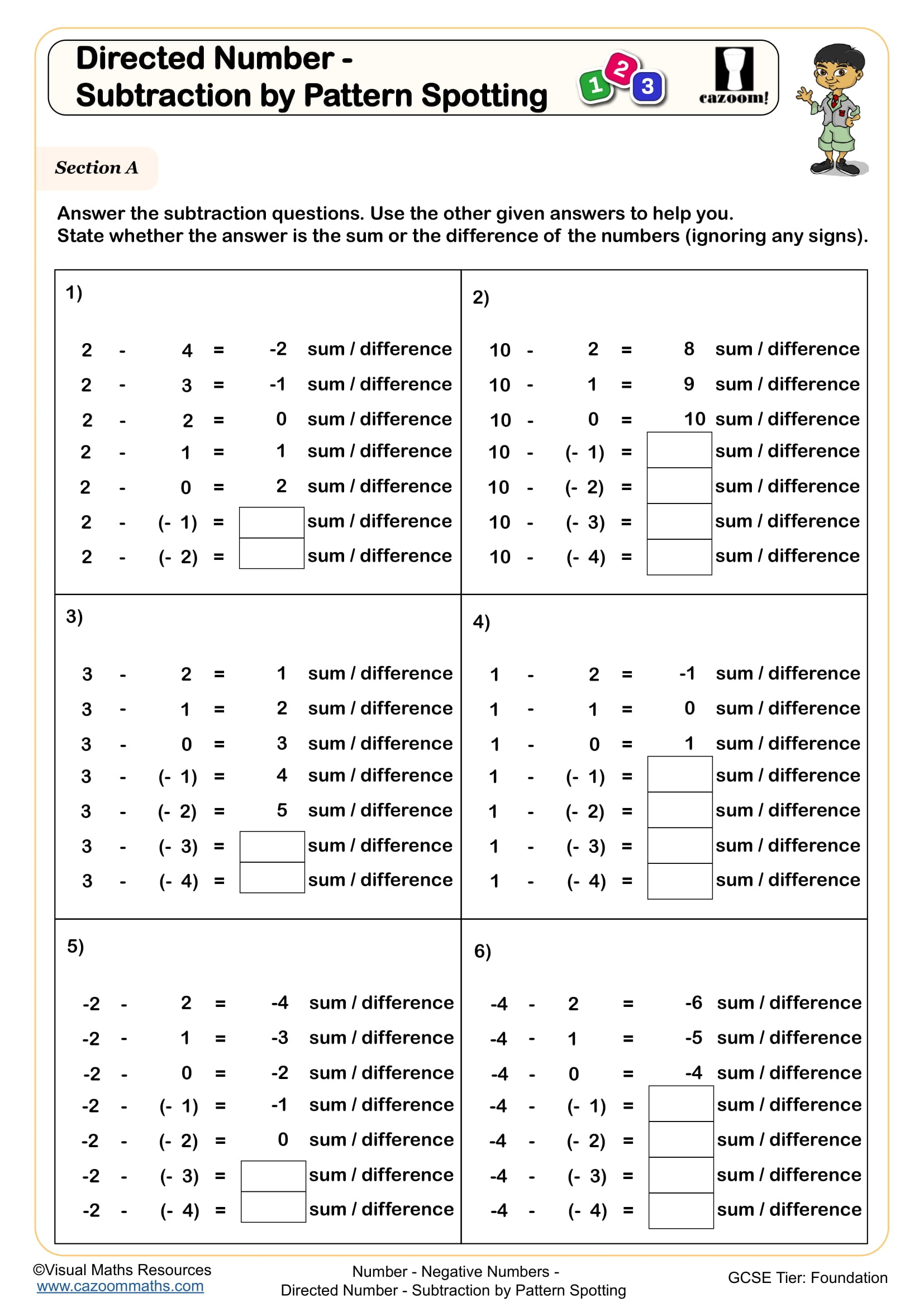
Directed Number – Subtraction by Pattern Spotting
Year groups: 7, 8
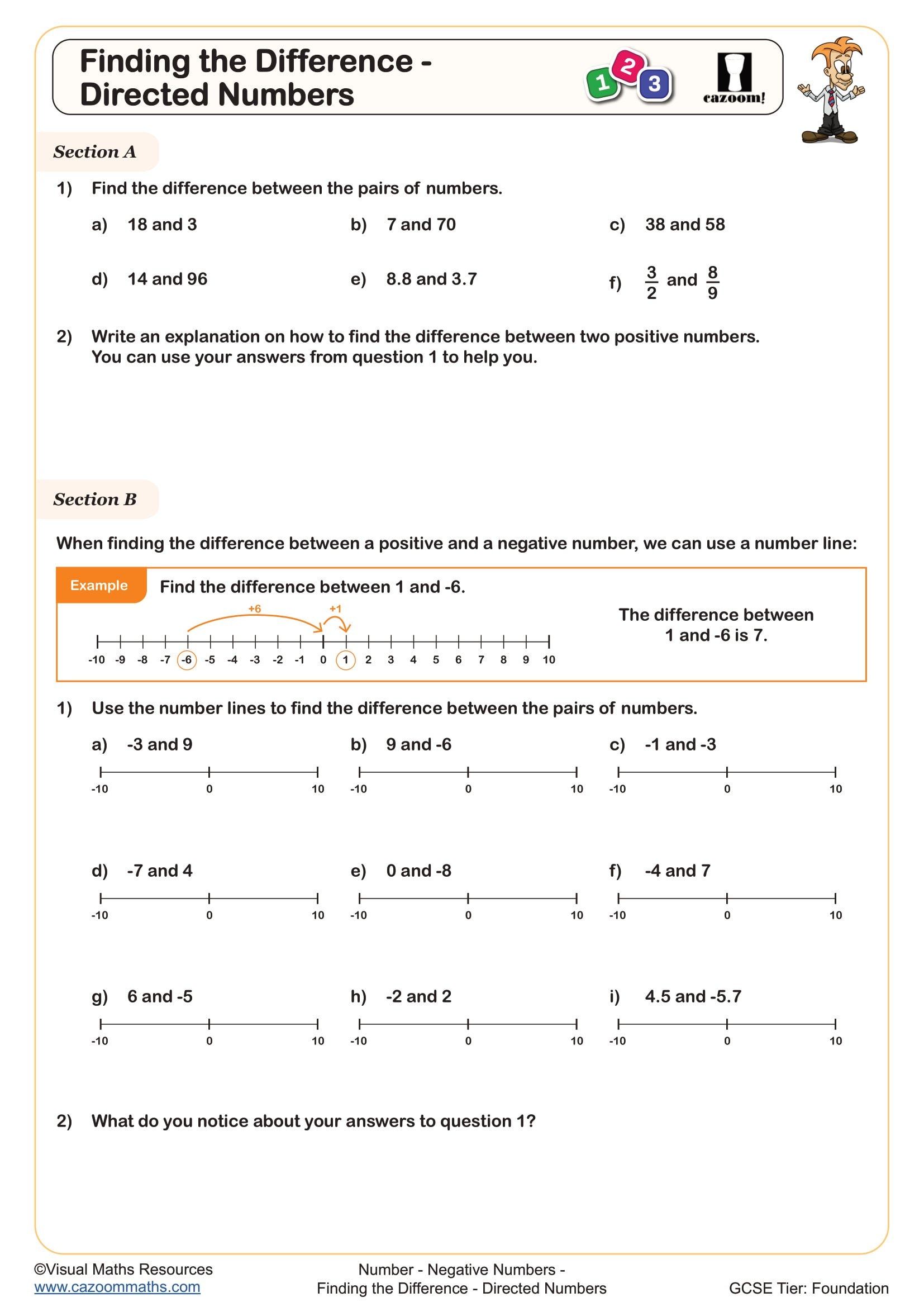
Finding the Difference - Directed Numbers
Year groups: 7, 8
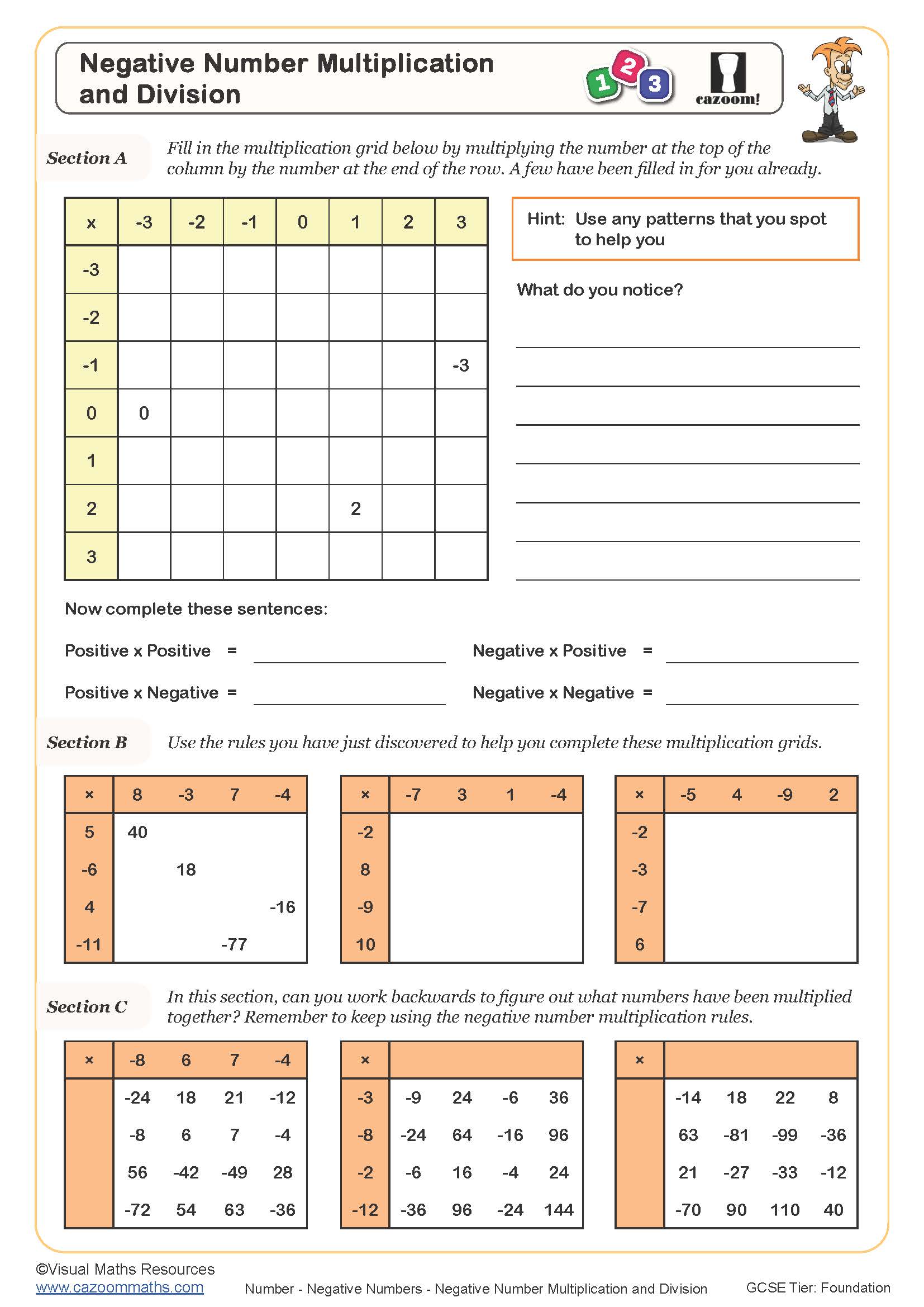
Negative Number Multiplication and Division
Year groups: 7, 8
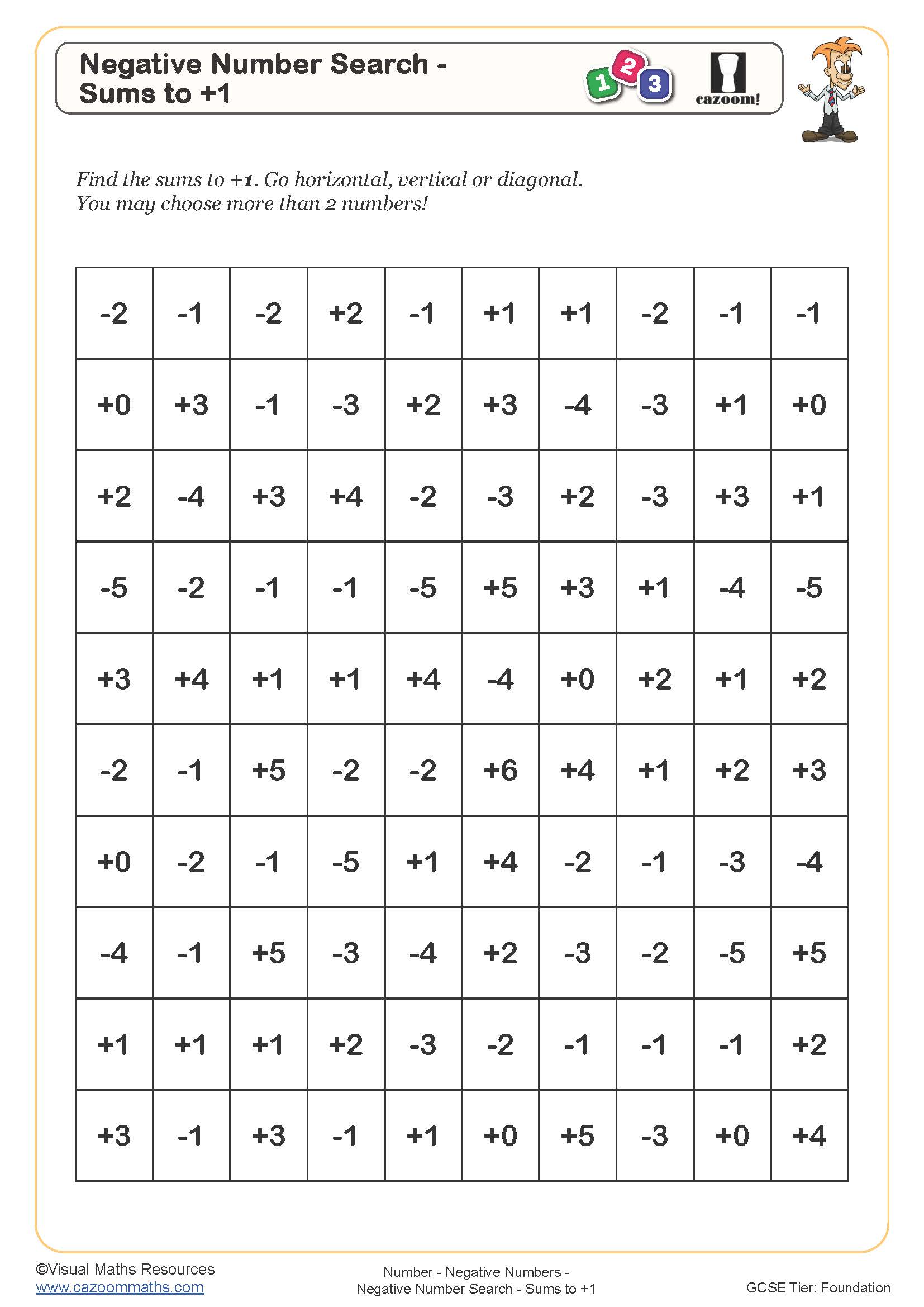
Negative number search - sums to +1
Year groups: 7, 8
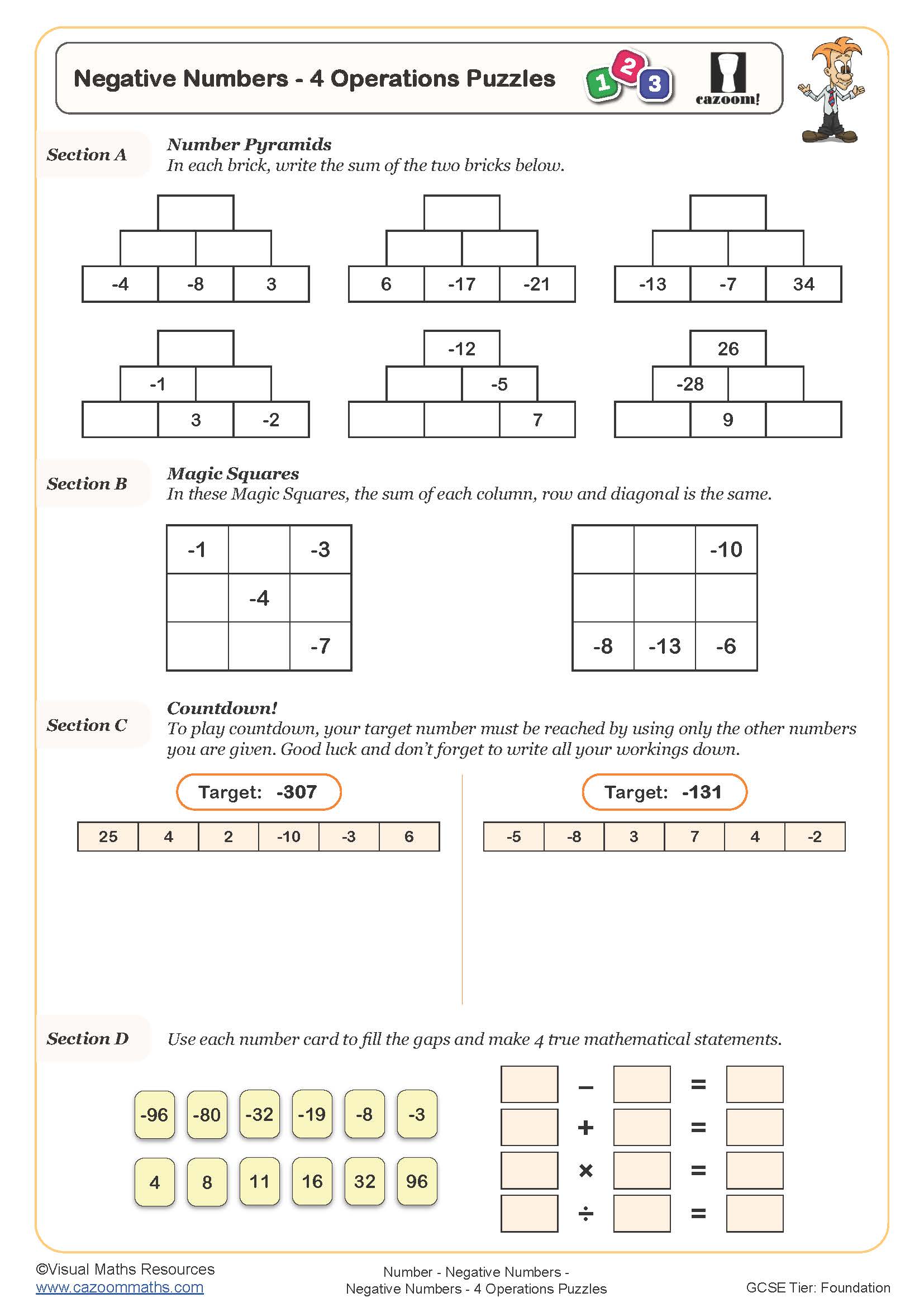
Negative Numbers - 4 Operations Puzzles
Year groups: 7, 8
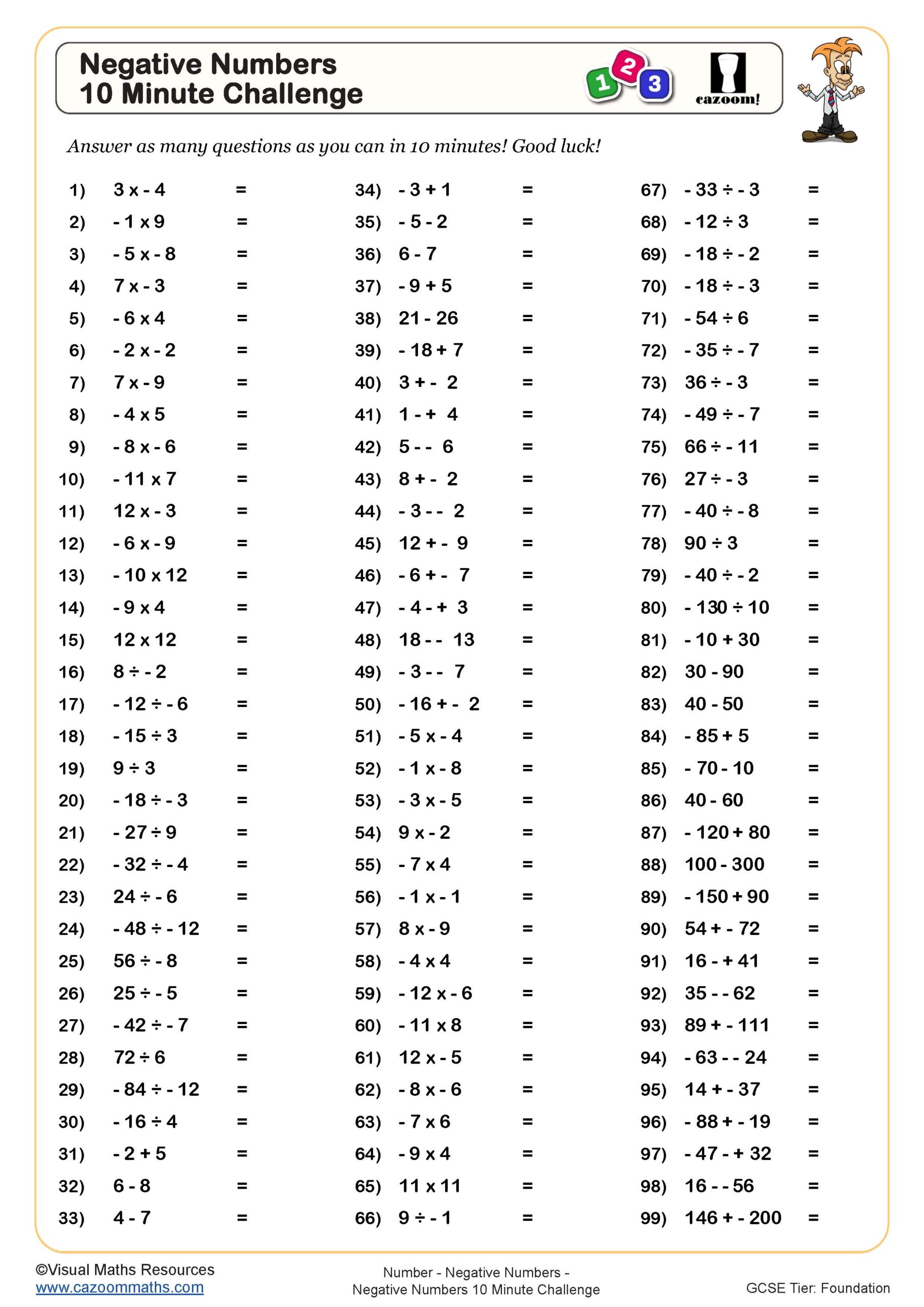
Negative Numbers 10 Minute Challenge
Year groups: 7, 8, 9
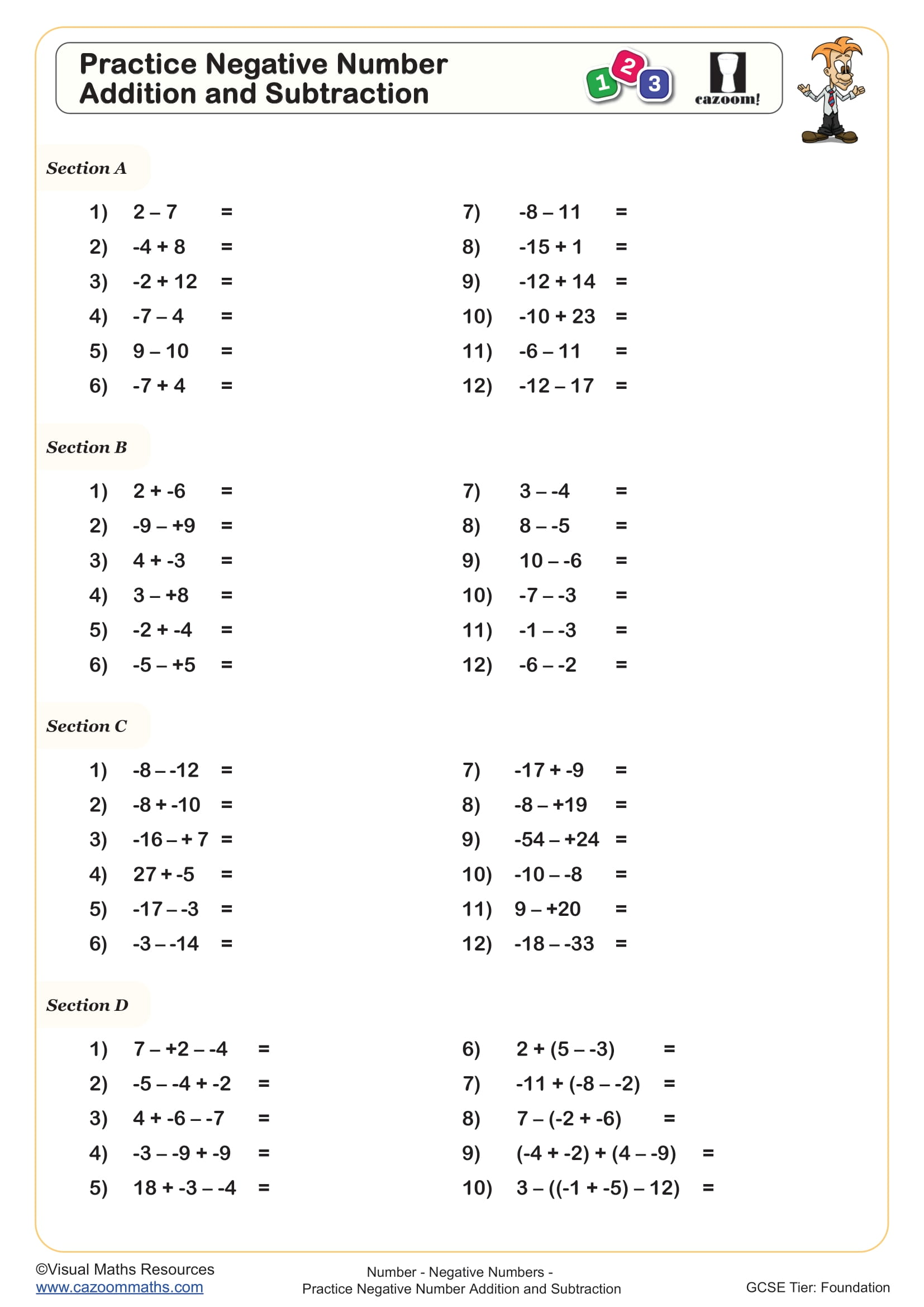
Practice Negative Number Addition and Subtraction
Year groups: 7, 8, 9
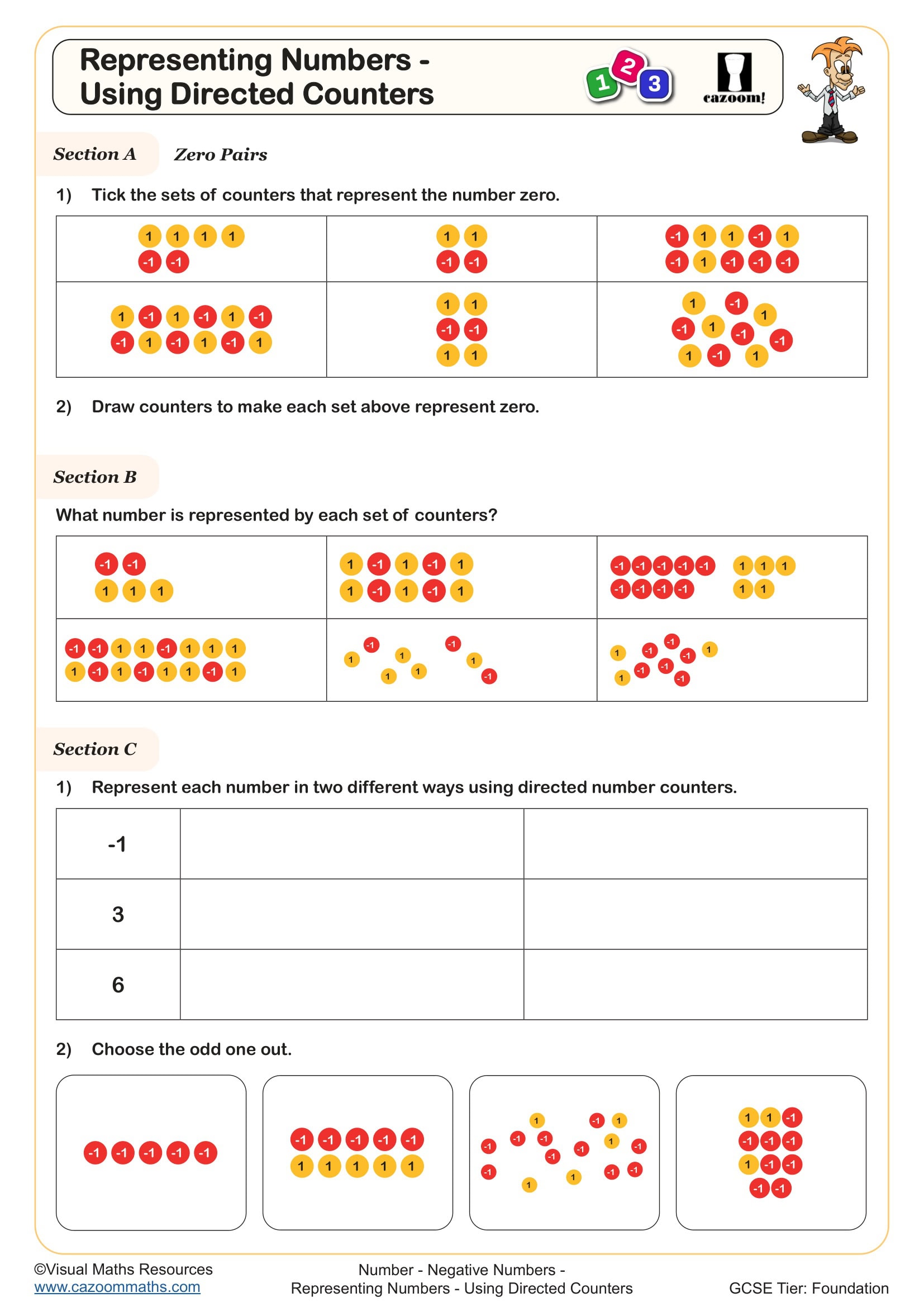
Representing Numbers - Using Directed Counters
Year groups: 7, 8
All worksheets are created by the team of experienced teachers at Cazoom Maths.
What are directed numbers and how do they fit into the curriculum?
Directed numbers is the mathematical term for positive and negative integers, emphasising their direction on a number line rather than just their sign. The National Curriculum introduces negative numbers at Key Stage 2, where students learn to count backwards through zero and order negative integers. This foundation supports Key Stage 3 work with all four operations.
Teachers notice that using the term 'directed numbers' helps students visualise movement along a number line more effectively than simply calling them 'negative numbers'. When students understand that -3 represents a position three units to the left of zero, rather than just 'minus three', they grasp addition and subtraction of negative numbers more intuitively. This conceptual understanding proves vital for algebraic thinking in later years.
Which year groups should use these negative numbers worksheets?
These worksheets span from Year 4 through Year 8, reflecting the spiral nature of negative number learning in UK schools. Key Stage 2 students typically begin with ordering negative numbers and simple addition involving negative integers, often through temperature contexts they can relate to daily weather reports.
Key Stage 3 students progress to all four operations with directed numbers, building towards algebraic manipulation required for GCSE mathematics. Teachers find that revisiting negative numbers at the start of Year 7 reveals surprising gaps, particularly in subtraction. Many students who appeared confident in Year 6 struggle when complexity increases, making regular practice with varied question types essential for securing understanding before formal algebra begins.
How do temperature problems help students understand negative numbers?
Temperature problems provide the most accessible real-world context for negative numbers, connecting abstract mathematical concepts to students' daily experiences. These problems typically involve calculating temperature changes, finding differences between readings, or working out temperatures after increases and decreases from negative starting points.
Teachers report that temperature contexts help students visualise negative number operations more successfully than abstract number line work alone. When students calculate that a temperature rising 8°C from -5°C reaches 3°C, they develop intuitive understanding of adding positive numbers to negative ones. This concrete foundation supports more complex directed number work and helps students remember that operations with negatives follow logical patterns rather than arbitrary rules.
How can teachers use these worksheets most effectively in lessons?
These worksheets work best when teachers address common misconceptions explicitly before independent practice begins. Starting each session by reviewing the difference between the negative sign and the subtraction operation prevents confusion that often persists throughout the topic. Teachers should model several examples using number lines before students attempt written calculations.
The answer sheets enable immediate feedback, allowing teachers to spot recurring errors quickly and address them with the whole class. Many teachers find success in pairing stronger students with those who struggle, using the worksheets as discussion prompts rather than silent individual work. This approach helps students articulate their thinking and identify where their understanding breaks down, particularly with the challenging concept of subtracting negative numbers.