Addition and Subtraction Using the Column Method Worksheets
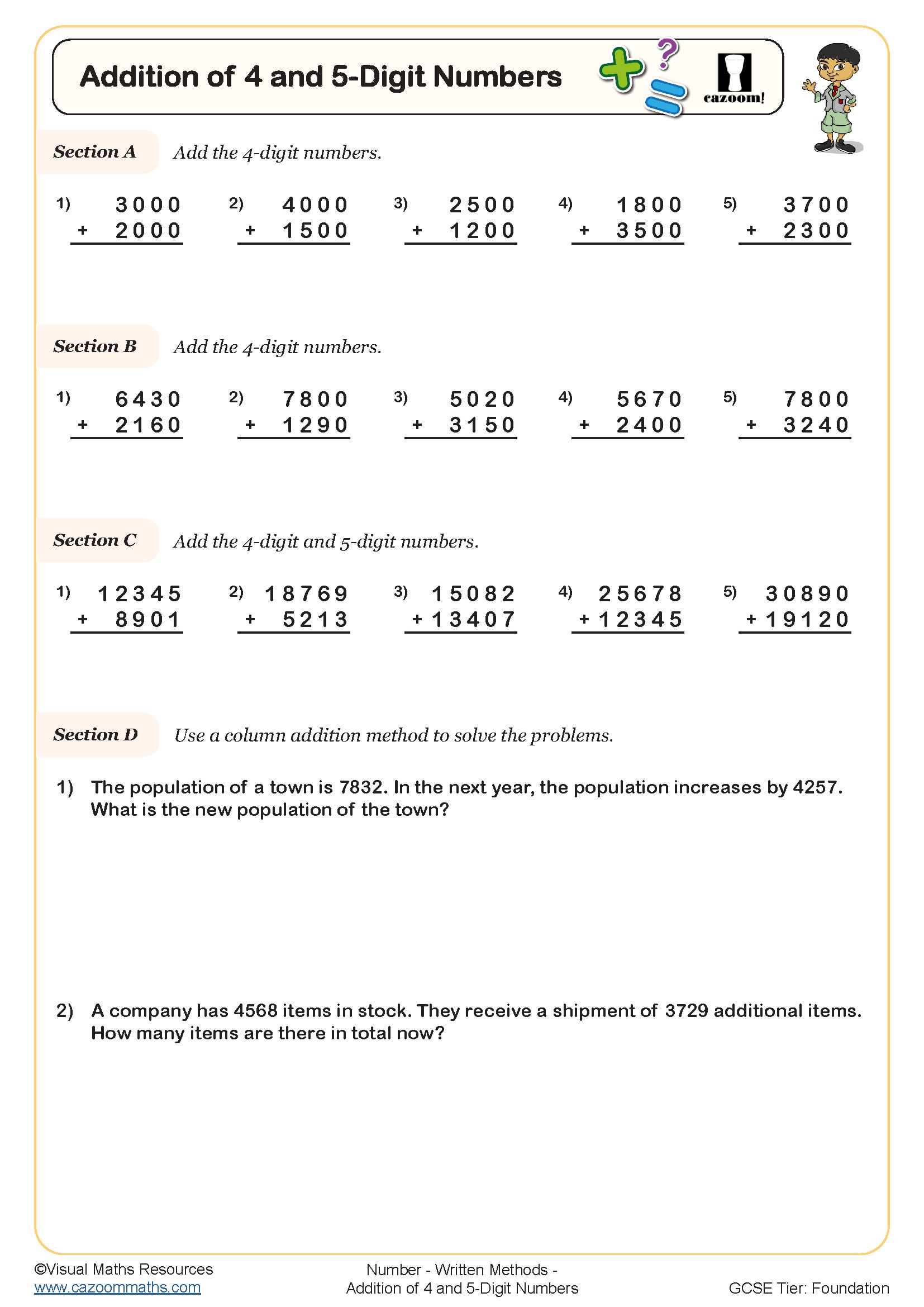
Addition of 4 and 5-digit Numbers
Year groups: 7, 8
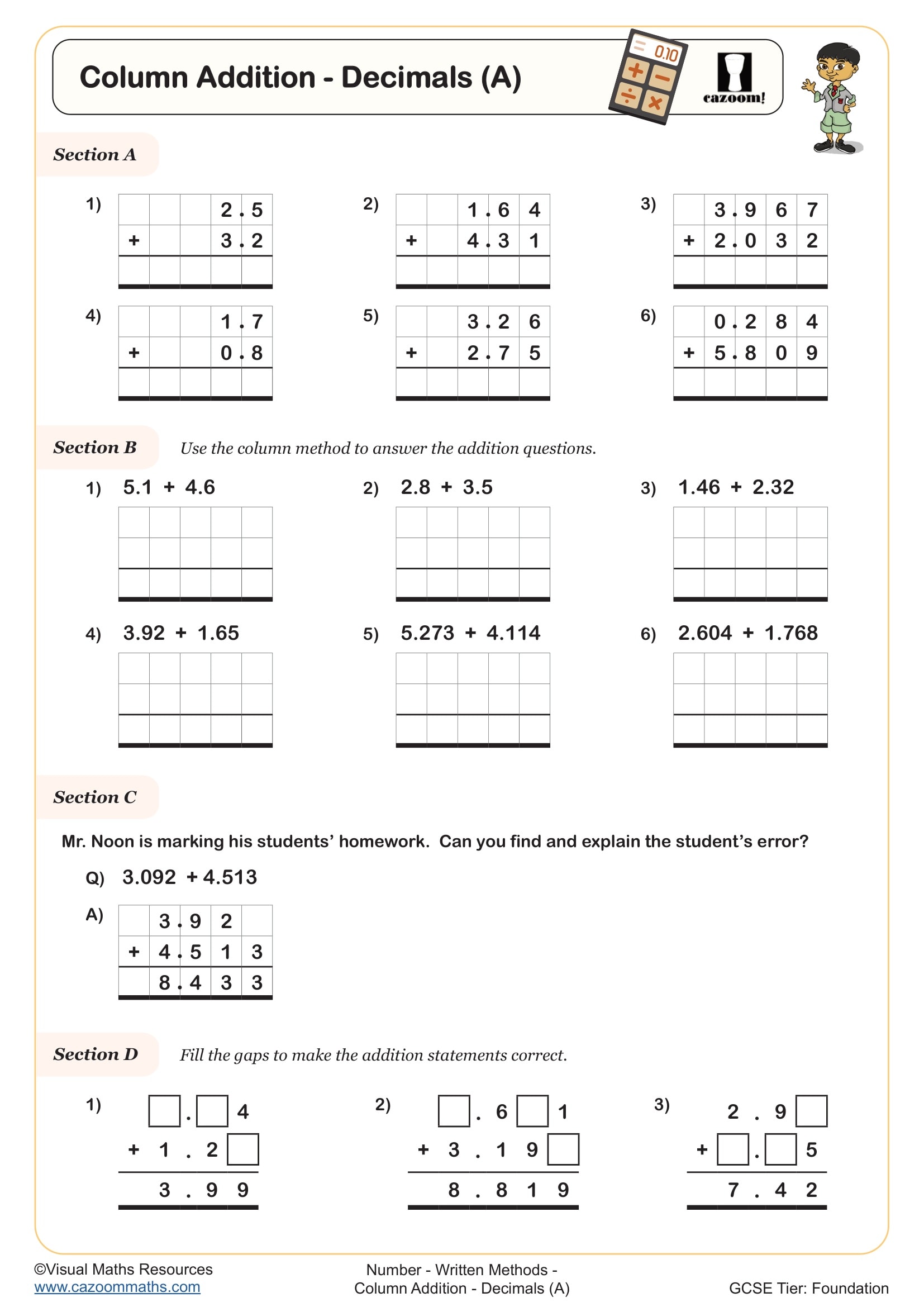
Column Addition - Decimals (A)
Year groups: 7, 8
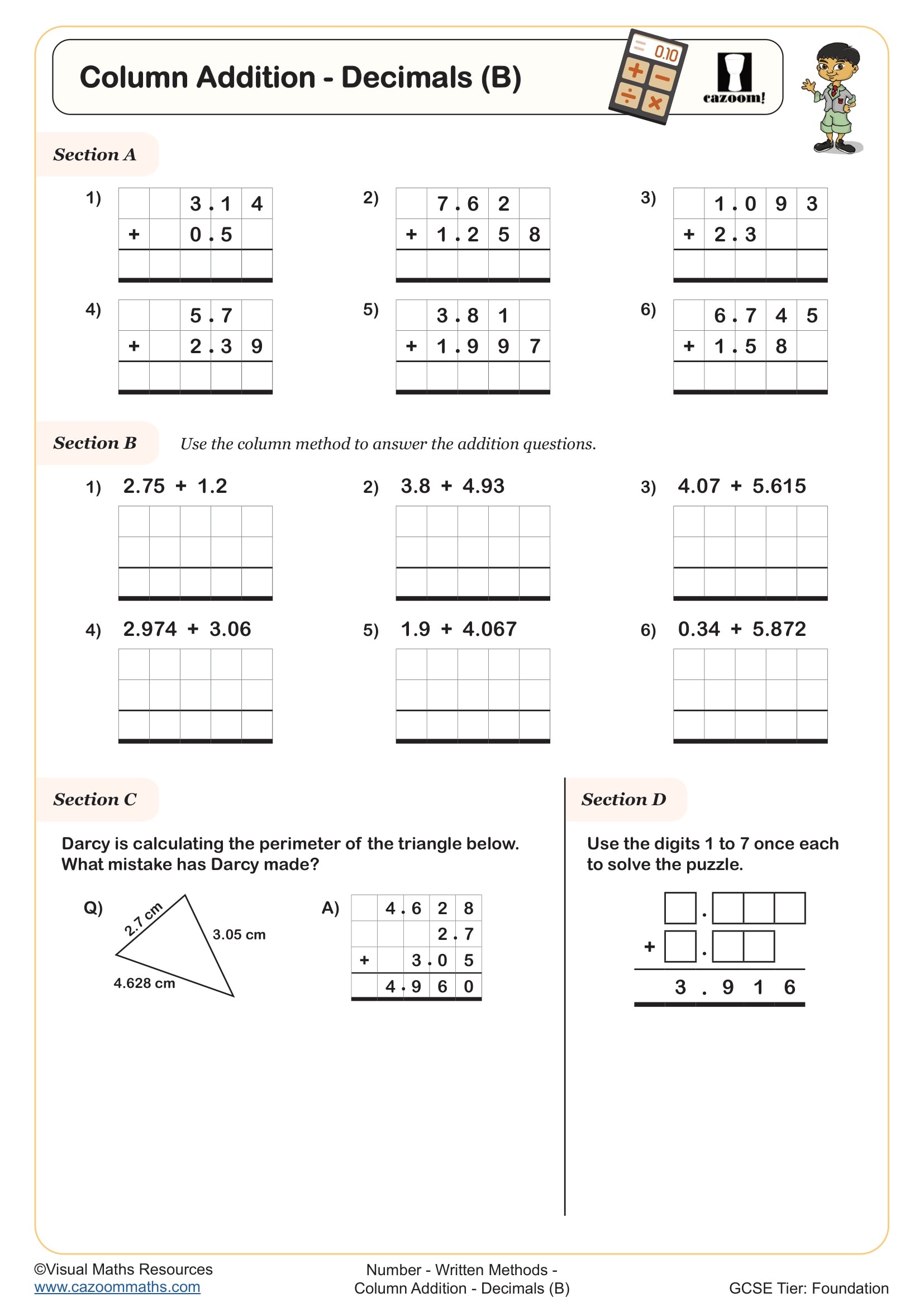
Column Addition - Decimals (B)
Year groups: 7, 8
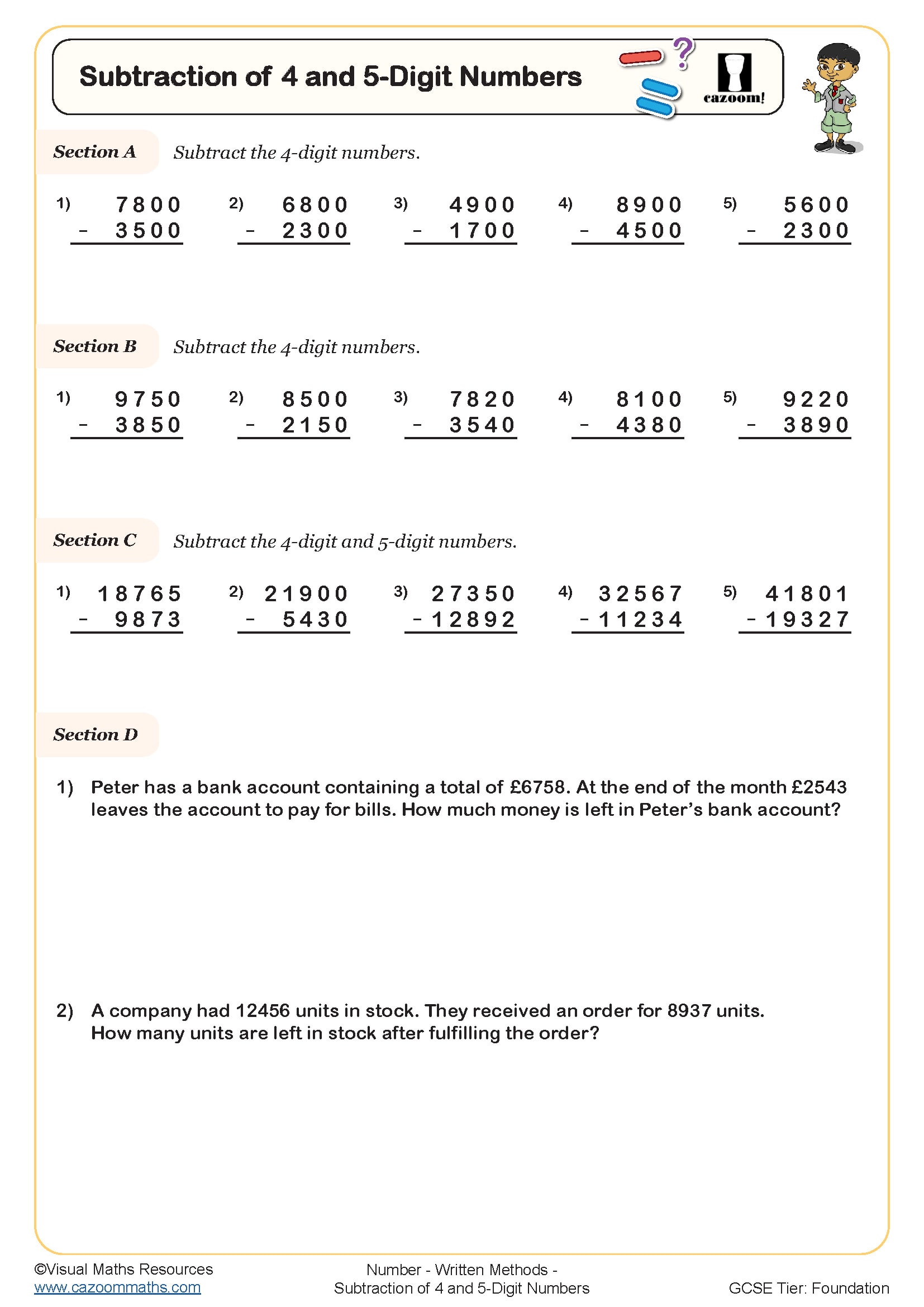
Subtraction of 4 and 5-digit Numbers
Year groups: 7, 8
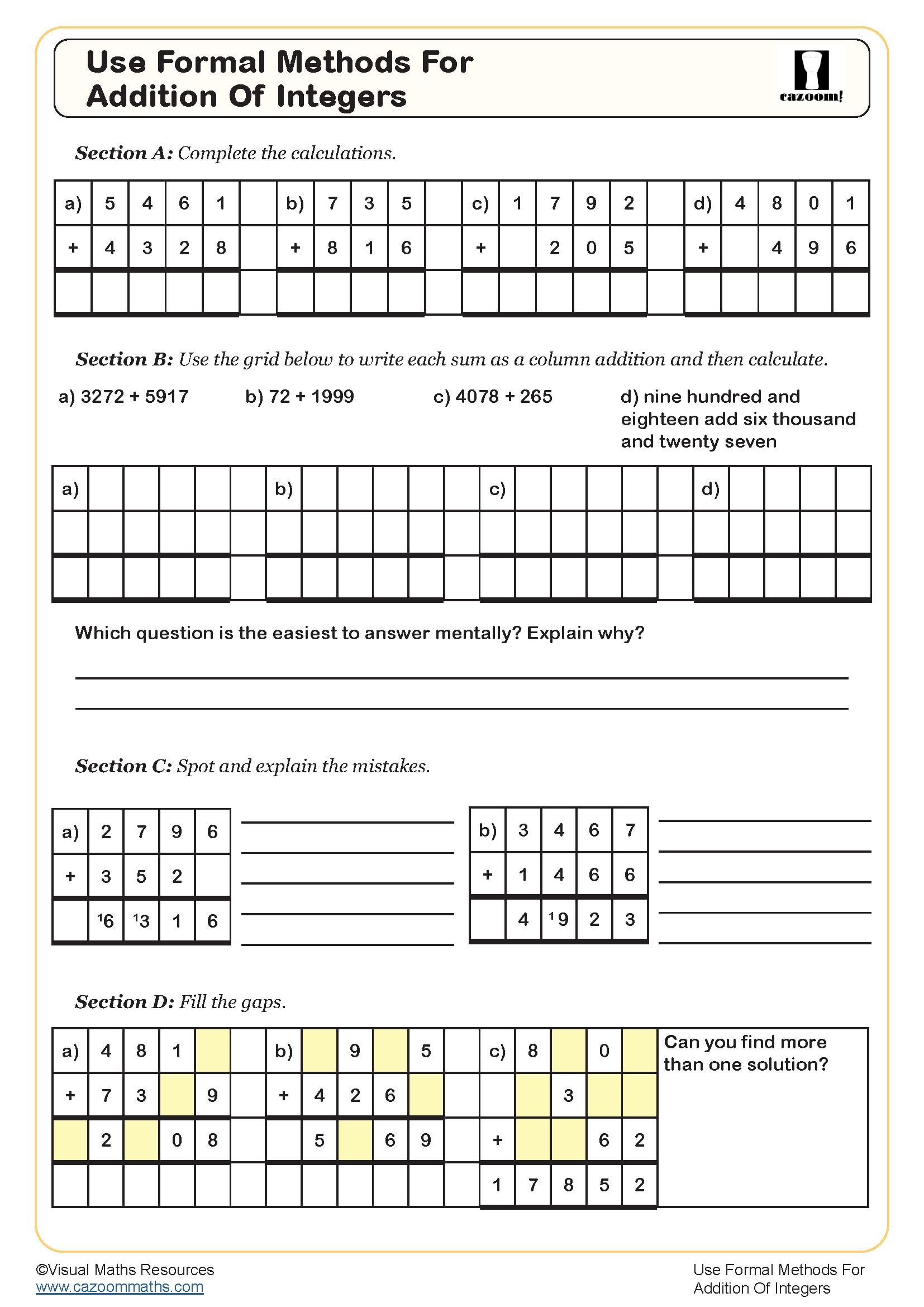
Use Formal Methods For Addition of Integers
Year groups: 7, 8
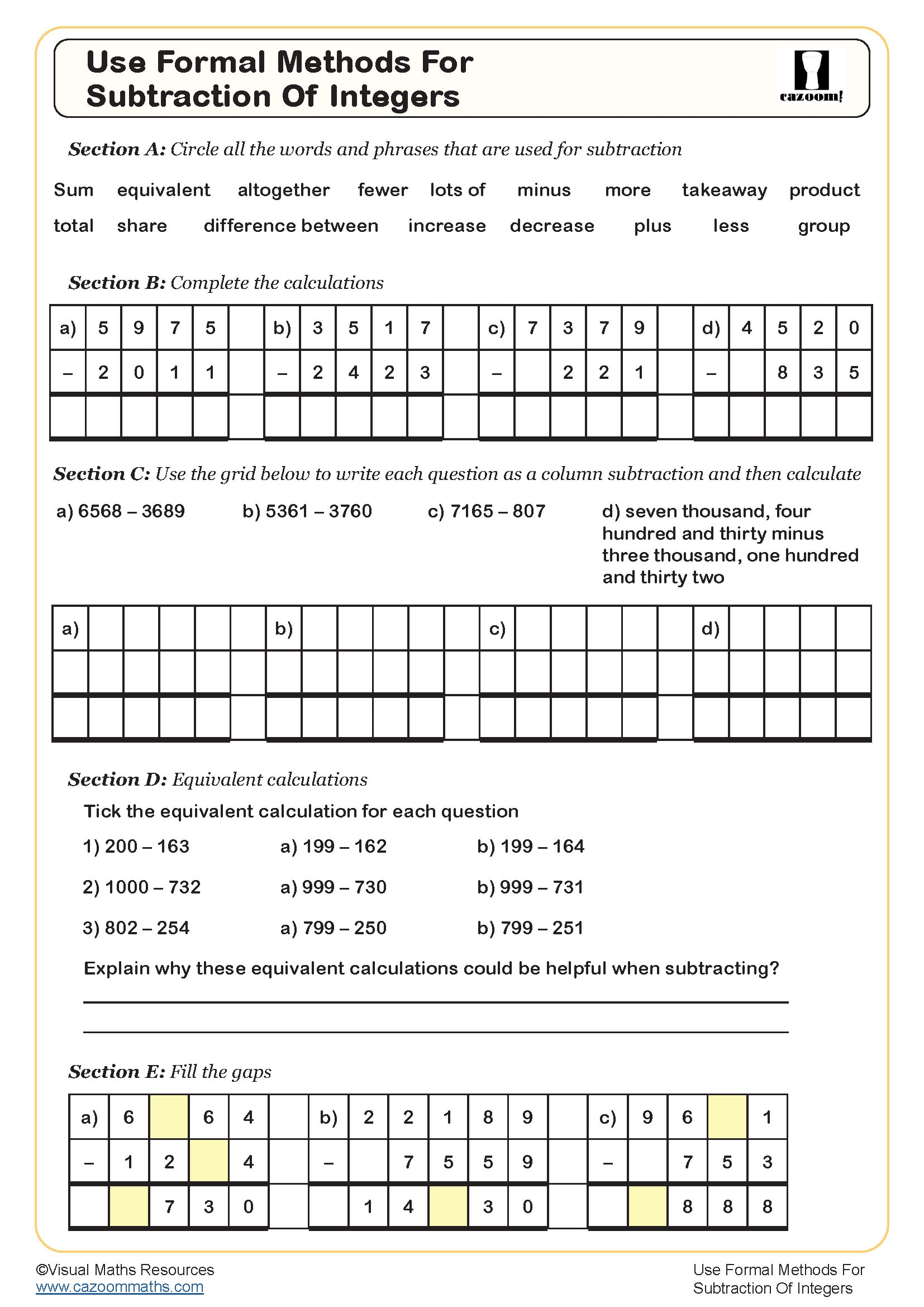
Use Formal Methods For Subtraction of Integers
Year groups: 7, 8
All worksheets are created by the team of experienced teachers at Cazoom Maths.
What is column addition and subtraction?
Column addition and subtraction is a formal written method where numbers are arranged vertically with digits aligned by place value, allowing systematic calculation from right to left. This technique becomes essential when mental strategies prove inefficient, particularly for calculations involving large numbers, decimals, or multiple operations. The National Curriculum introduces column methods in Key Stage 2, with expectations that students apply them fluently throughout secondary mathematics.
Students often struggle with the transition from horizontal to vertical notation, particularly when rewriting word problems into column format. A common error involves misaligning decimal points or place values, leading to answers that are out by factors of ten. Teachers notice this particularly when students rush the setup phase, focusing on the calculation steps before ensuring digits sit in correct columns. Encouraging students to draw place value columns before writing numbers significantly reduces these alignment errors.
Which year groups use column method addition and subtraction?
These worksheets target Year 7 and Year 8 students at Key Stage 3, focusing on consolidating and extending column methods beyond primary expectations. At this stage, calculations involve larger numbers, negative integers, and decimal values requiring greater precision. Students also encounter column methods within algebraic contexts and when verifying calculator outputs, making fluency important for broader mathematical success.
Progression across these year groups shifts from straightforward positive integer calculations to more complex scenarios. Year 7 work typically reinforces four-digit additions and subtractions, including those with multiple exchanges and decimal alignment. Year 8 introduces complications such as calculations with negative numbers, missing digit problems, and algebraic representations of column addition. Students who struggle at this level often lack automaticity with number bonds to ten and multiples of ten, which slows their ability to manage exchanges efficiently.
How does the column method help with borrowing and carrying?
The column method makes borrowing and carrying visible and systematic, reducing the cognitive load of tracking exchanges mentally. When adding, students carry values to the next column when a total exceeds nine; when subtracting, they borrow from the next column when the top digit is smaller than the bottom digit. This procedural clarity helps students who find mental arithmetic overwhelming, providing a reliable algorithm that works regardless of number size.
This skill connects directly to financial calculations where accuracy matters for budgets, invoices, and currency exchanges. Accountants and finance professionals use similar columnar layouts when reconciling accounts or calculating profit margins, where even single-digit errors create significant problems. Understanding why the method works—that carrying represents regrouping ten units into one ten, for example—also builds place value understanding essential for scientific notation in STEM subjects, where calculations involve very large or very small numbers requiring precise manipulation across multiple place values.
How do these column method worksheets support student learning?
The worksheets provide graduated practice, beginning with calculations requiring single exchanges and progressing to multi-step problems involving several carries or borrows. This scaffolded approach allows students to build confidence with the procedure before tackling more demanding questions. Answer sheets enable immediate self-checking, helping students identify whether errors occur during the exchange process or through calculation mistakes within individual columns.
Many teachers use these resources for intervention groups where students need targeted practice away from the main lesson pace. The worksheets work well for paired activities where one student completes a calculation whilst their partner checks the working using the answer sheet, promoting discussion about where errors occur. They are also effective as low-stakes homework, allowing students to consolidate methods taught in class without requiring parental support. Teachers report that regular, short practice sessions prove more effective than occasional lengthy exercises, particularly for students rebuilding procedural fluency after gaps in their primary education.