Application of Proportion Worksheets
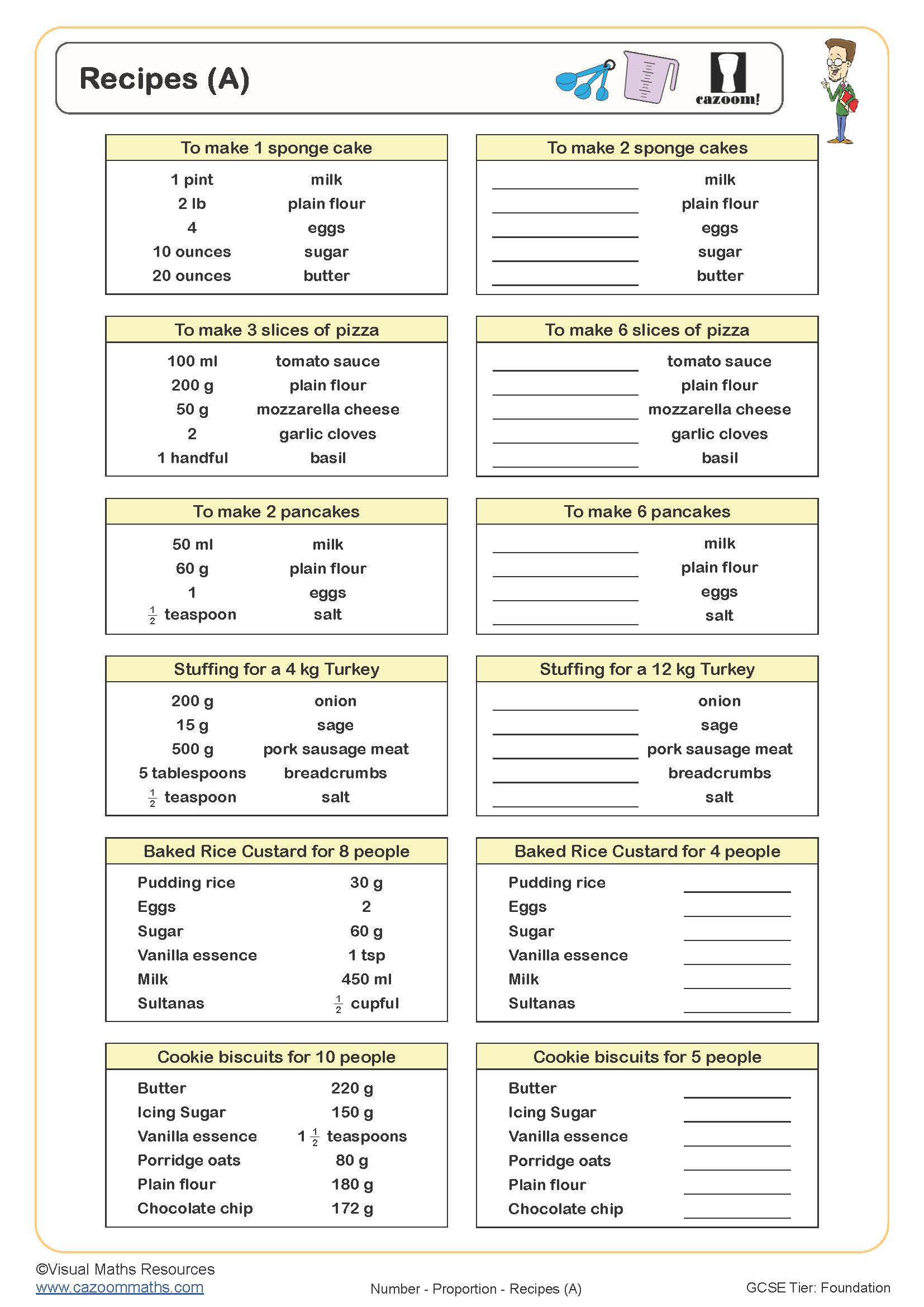
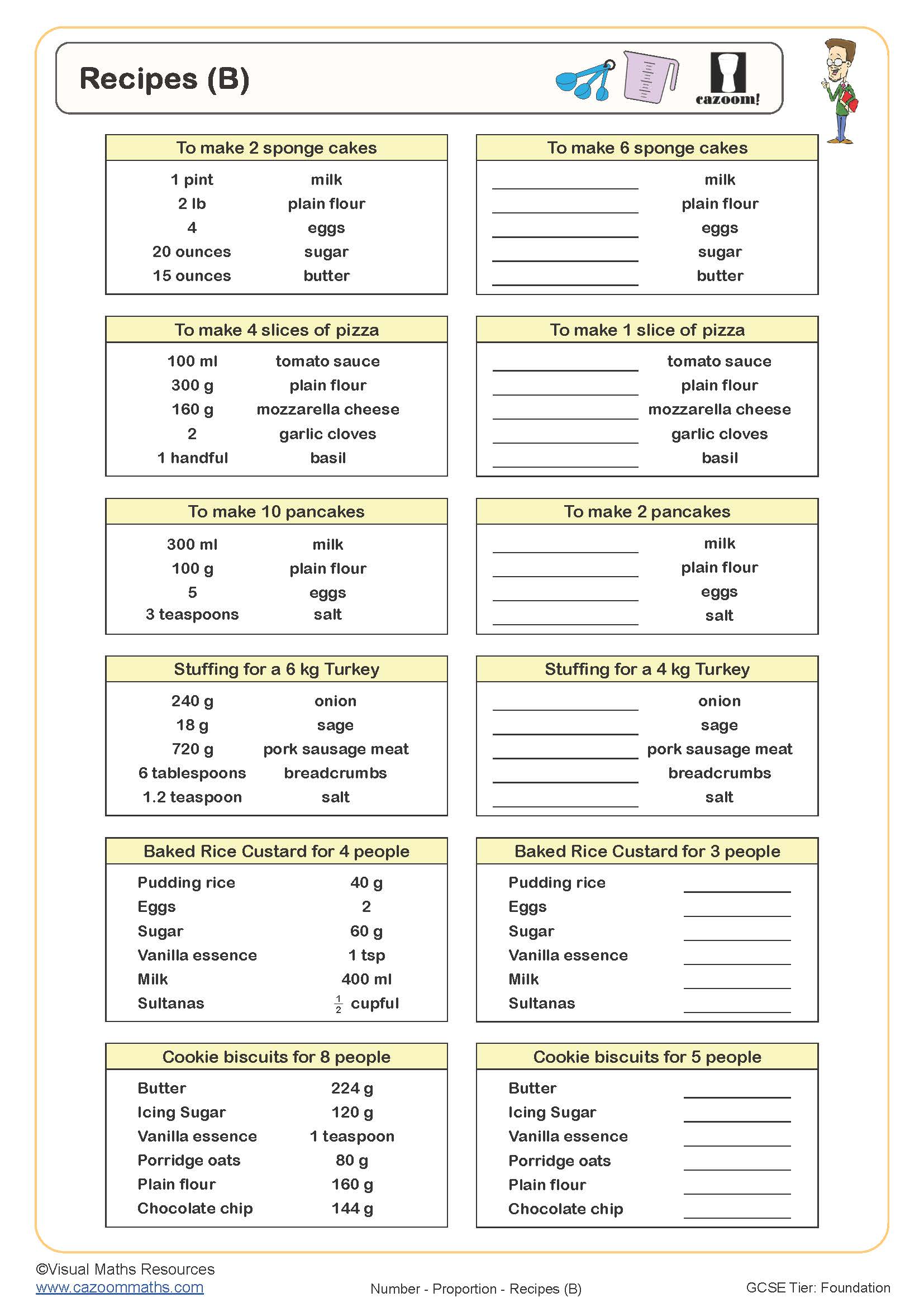
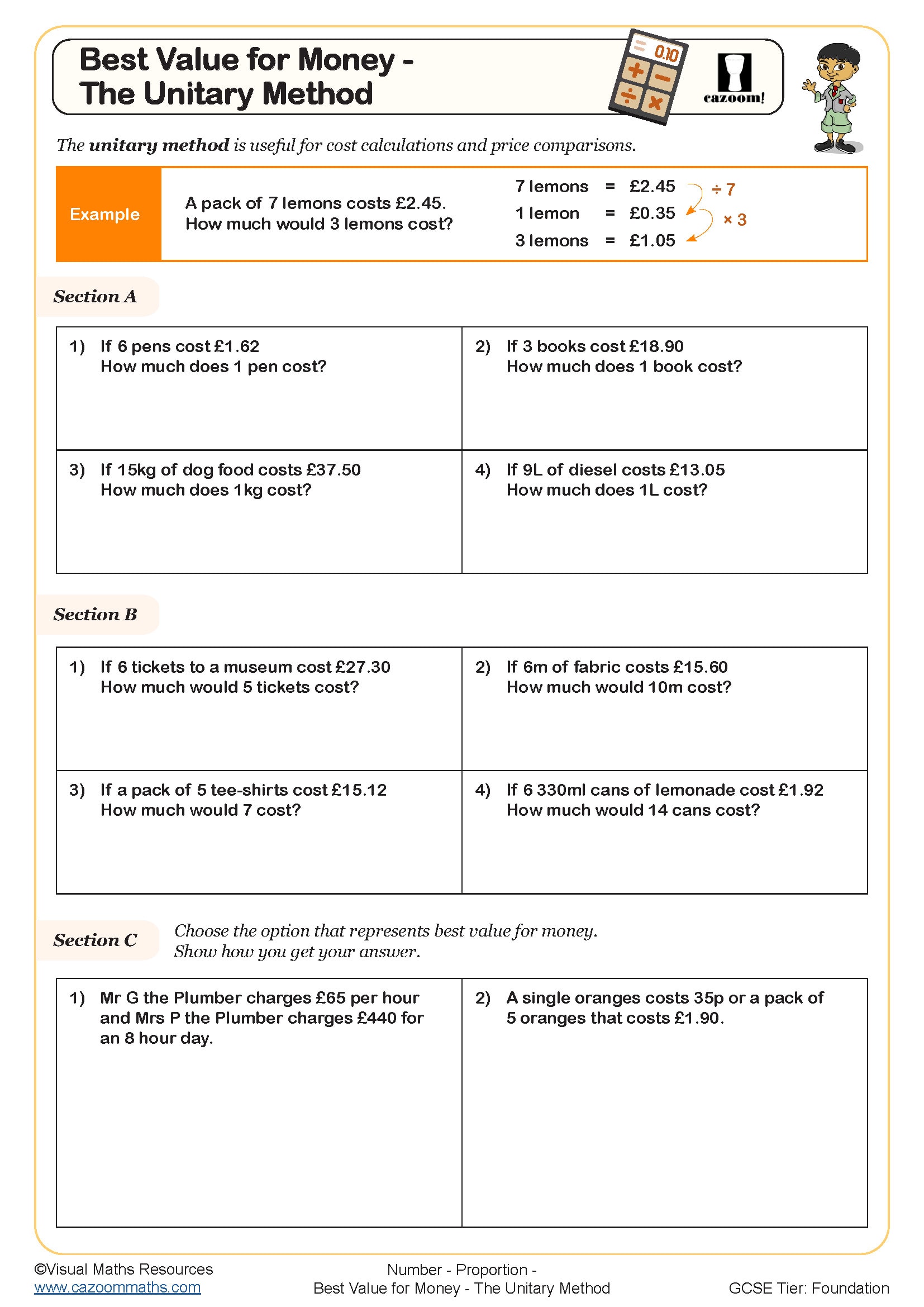
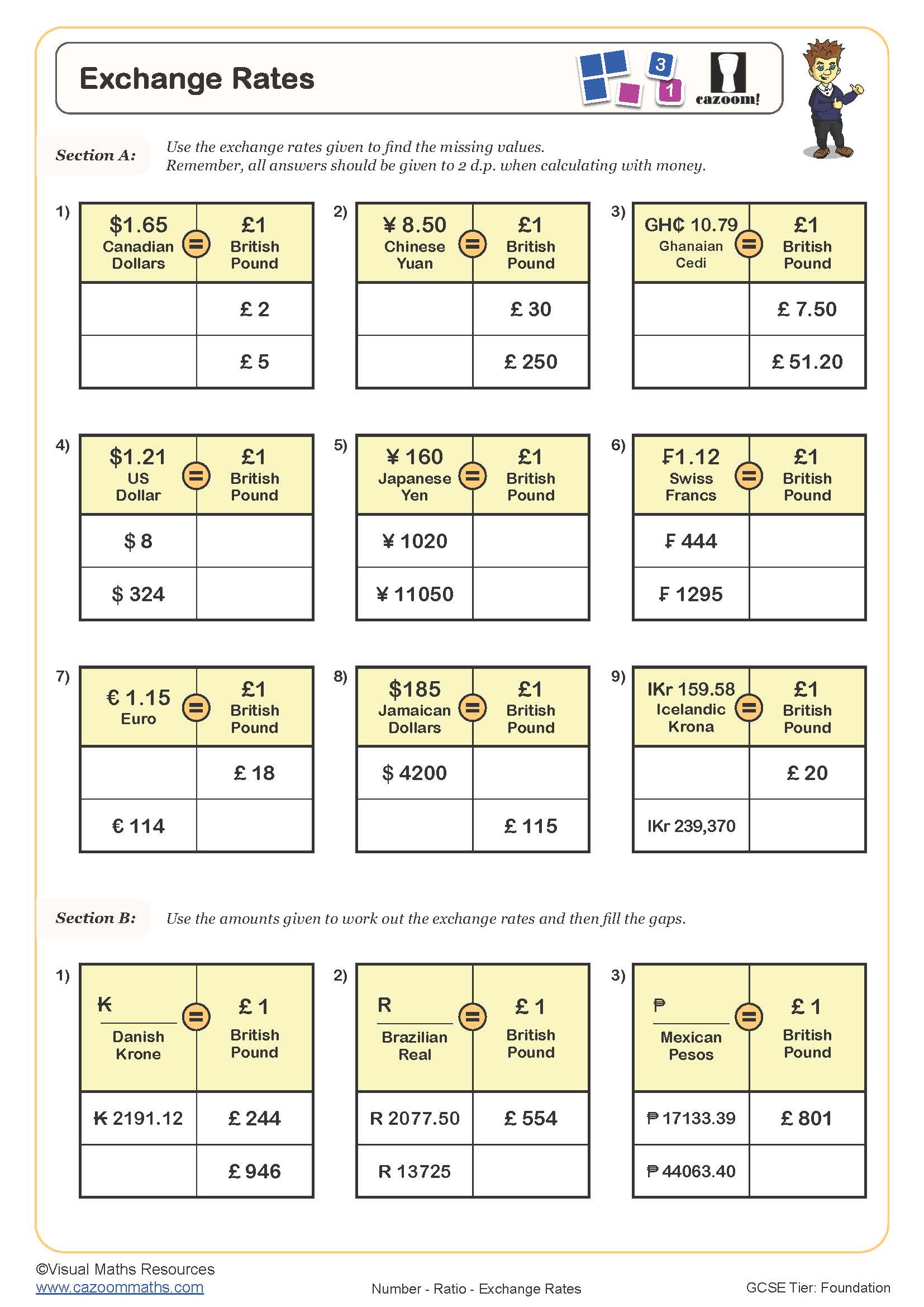
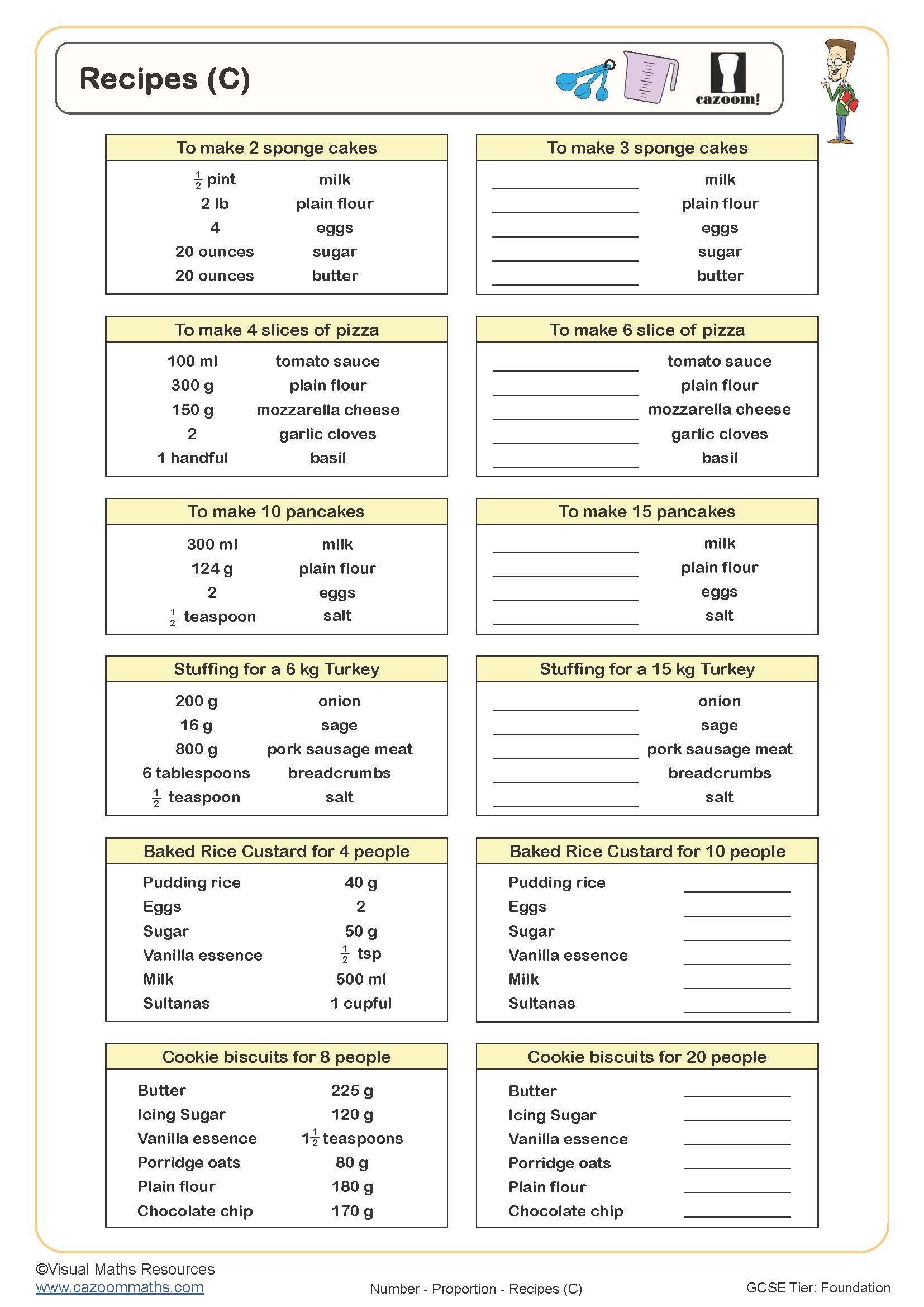
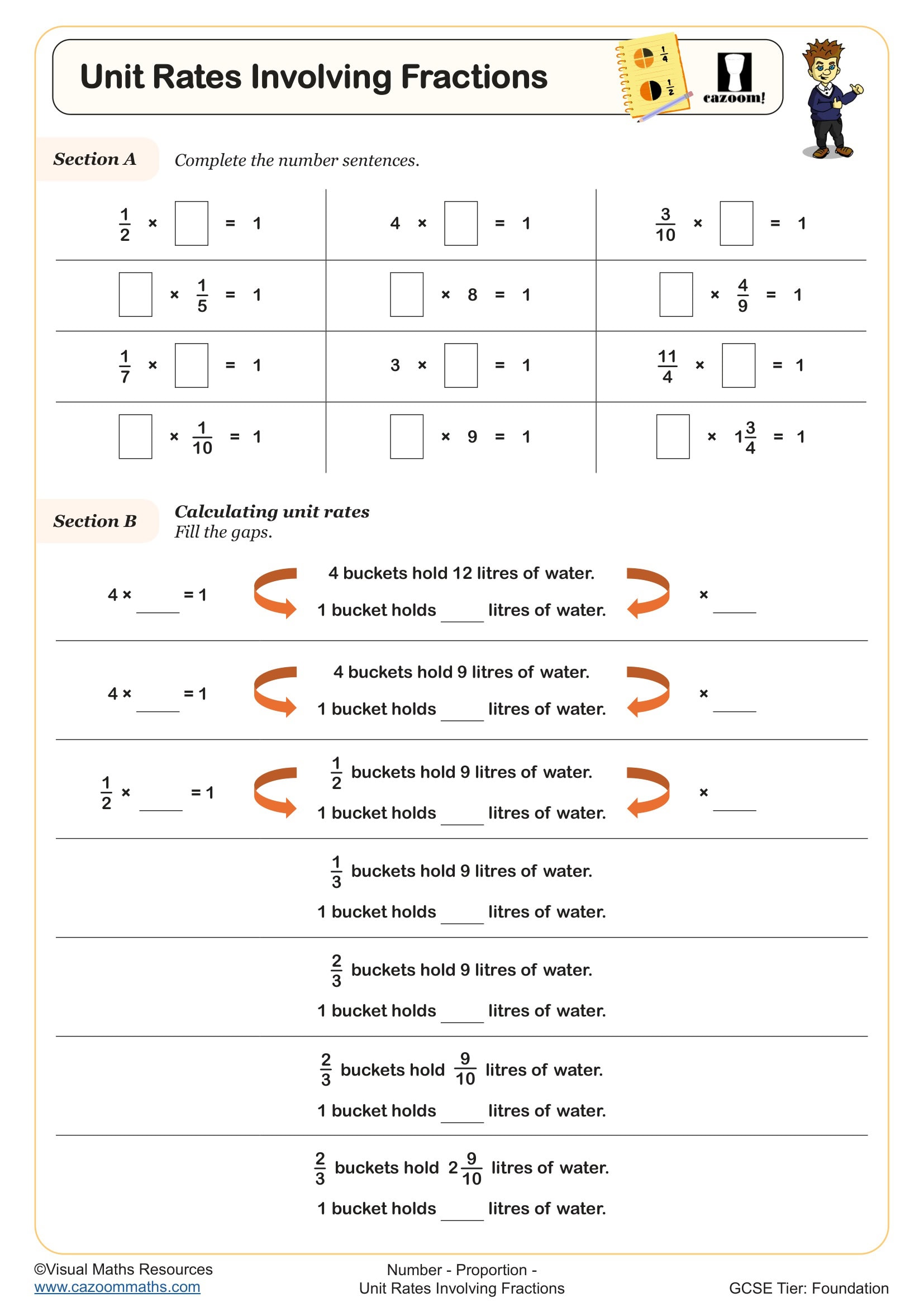
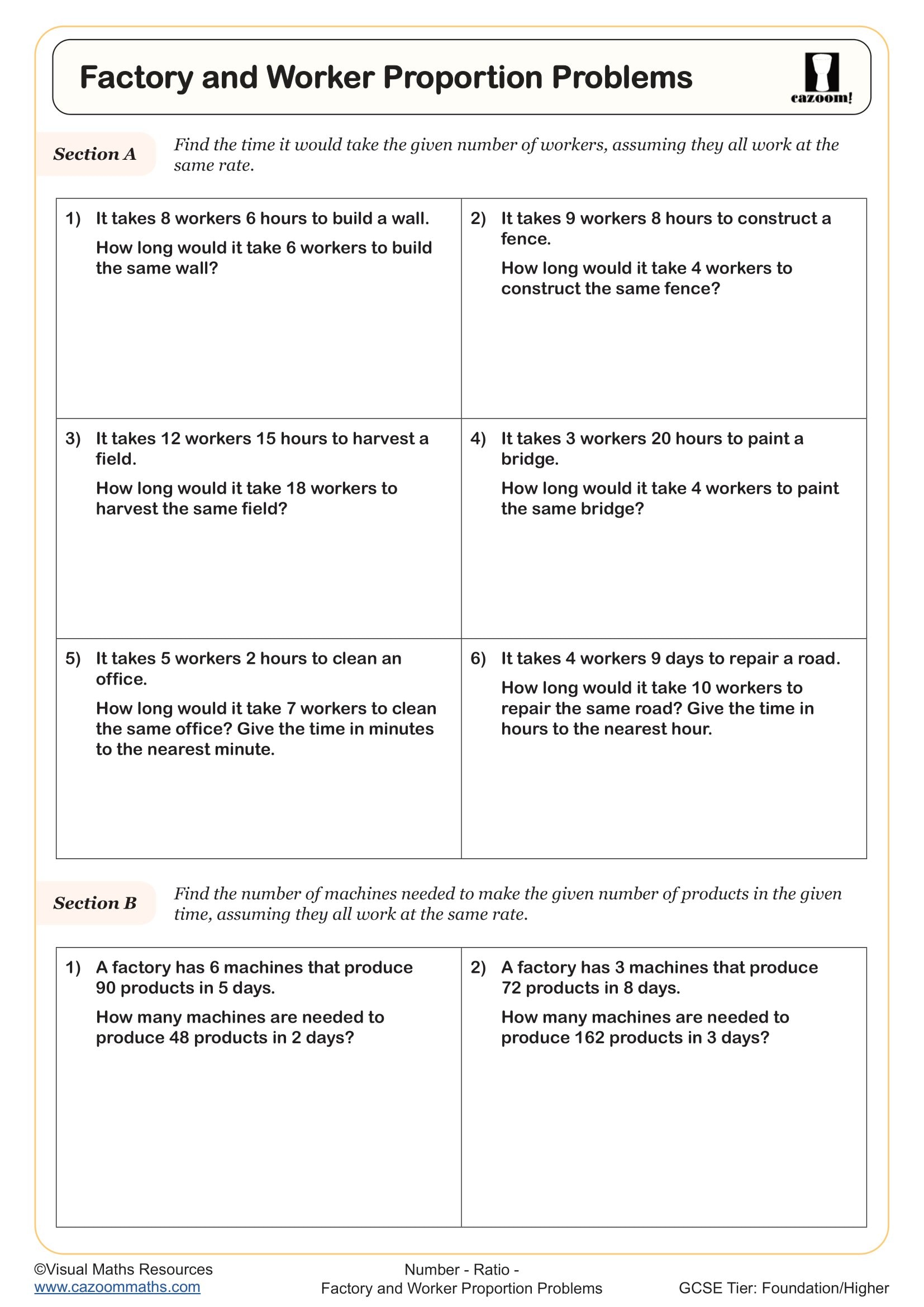
All worksheets are created by the team of experienced teachers at Cazoom Maths.
What is the application of proportion in maths?
Application of proportion involves using direct and inverse proportional relationships to solve real-world problems. Students learn to recognise situations where one quantity increases proportionally with another (direct proportion, such as distance travelled at constant speed) or where one quantity decreases as another increases (inverse proportion, such as time taken when speed increases). This builds on foundational work with ratio and introduces the algebraic representations y = kx for direct proportion and xy = k for inverse proportion.
A common misconception emerges when students attempt to solve all proportion problems using the same method, typically applying direct proportion even when the relationship is inverse. Teachers observe that students often fail to check whether their answer makes logical sense in context—for instance, calculating that fewer workers would complete a job faster. Encouraging students to sketch graphs or write the relationship in words before calculating helps combat this error.
Which year groups study application of proportion?
These worksheets cover Years 7 through 10, spanning both Key Stage 3 and Key Stage 4. At KS3, students encounter direct proportion problems in real-world contexts, learning to set up and solve simple proportional relationships. By Year 9, many students begin exploring inverse proportion alongside more complex direct proportion scenarios involving compound measures like speed, density, and pressure.
At GCSE level in Years 10 and 11, proportion applications become more sophisticated, requiring students to interpret graphs, work with proportional relationships in algebraic form, and solve multi-step problems. Exam questions often embed proportion within other topics—calculating areas of similar shapes, working with compound interest, or solving kinematics problems. Higher tier students must demonstrate fluency with both the unitary method and algebraic approaches, selecting the most efficient strategy for each context.
How do you solve best value proportion problems?
Best value problems require students to compare unit prices or rates to determine which option offers better value for money. The key skill involves calculating the cost per unit (or quantity per pound) for each option, then comparing these rates. Students must handle different package sizes, such as comparing a 250g jar at £1.80 with a 400g jar at £2.60, by dividing to find pence per gram for each.
This skill connects directly to financial literacy and consumer mathematics, preparing students for real-world decision-making. Supermarkets often display unit prices on shelf labels precisely because this comparison matters for informed purchasing. In STEM contexts, similar calculations appear when scientists compare reaction rates, engineers assess fuel efficiency across different engines, or economists analyse productivity per worker. Teachers report that students who practise these comparisons develop stronger number sense and become more critical consumers of numerical claims in advertising.
How can these proportion worksheets be used in lessons?
The worksheets provide structured practice that builds from straightforward direct proportion calculations through to complex problem-solving involving both direct and inverse relationships. Many worksheets include contextual scenarios that require students to first identify the type of proportion before solving, mirroring the demand of exam questions where the relationship isn't explicitly stated. The answer sheets allow students to self-check during independent work, helping them identify whether errors stem from setting up the relationship incorrectly or from calculation mistakes.
Teachers use these resources across different settings: as starter activities to revisit prior learning before introducing inverse proportion, for differentiated group work where different year groups tackle problems at appropriate complexity levels, or as homework to consolidate classroom learning. The worksheets work particularly well for intervention groups, where students who struggled with initial teaching benefit from additional structured practice with immediate feedback. Paired work encourages mathematical discussion as students justify which proportional relationship applies to each scenario.