Calculating with Time Worksheets
All worksheets are created by the team of experienced teachers at Cazoom Maths.
What do students learn when calculating with time?
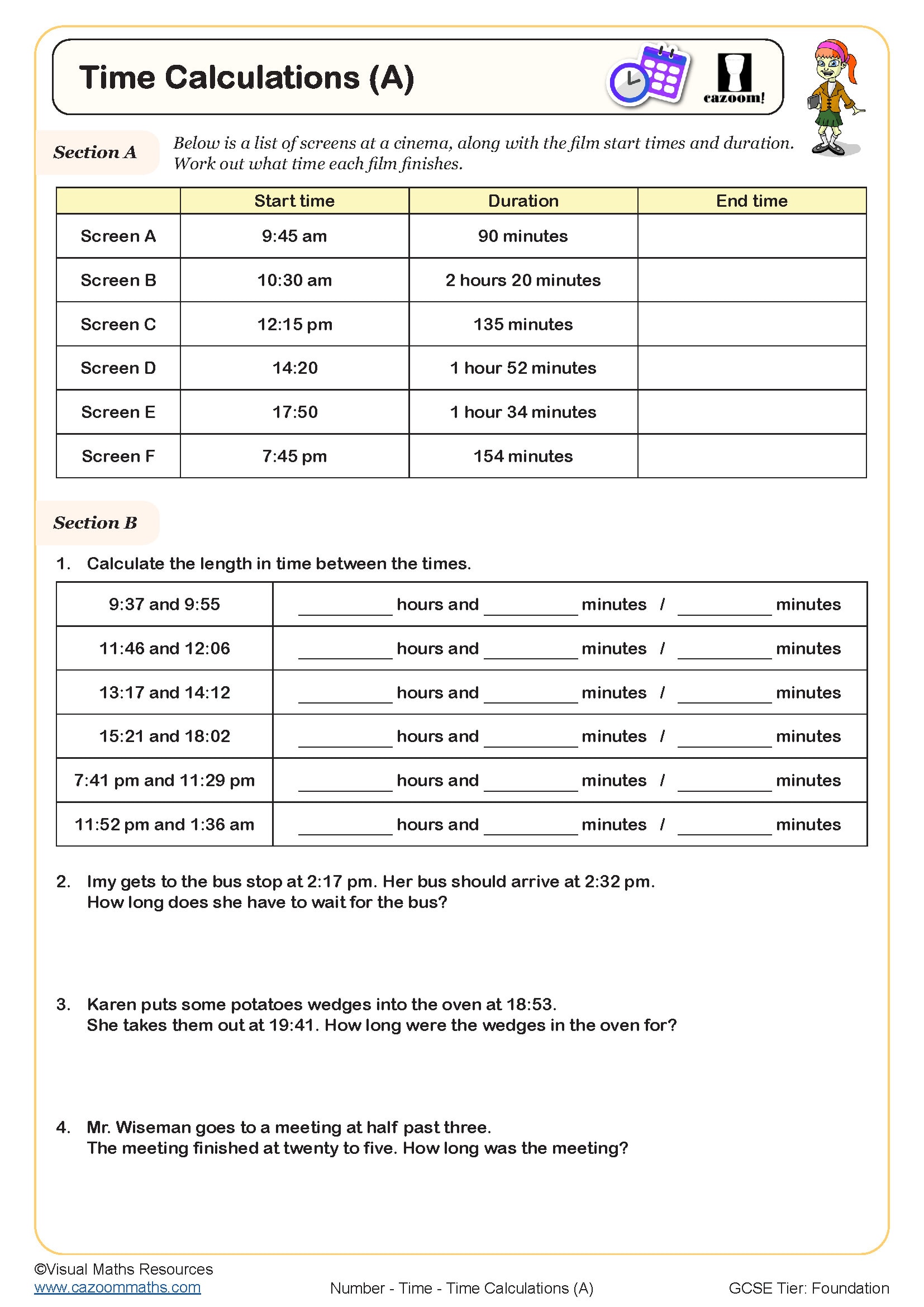
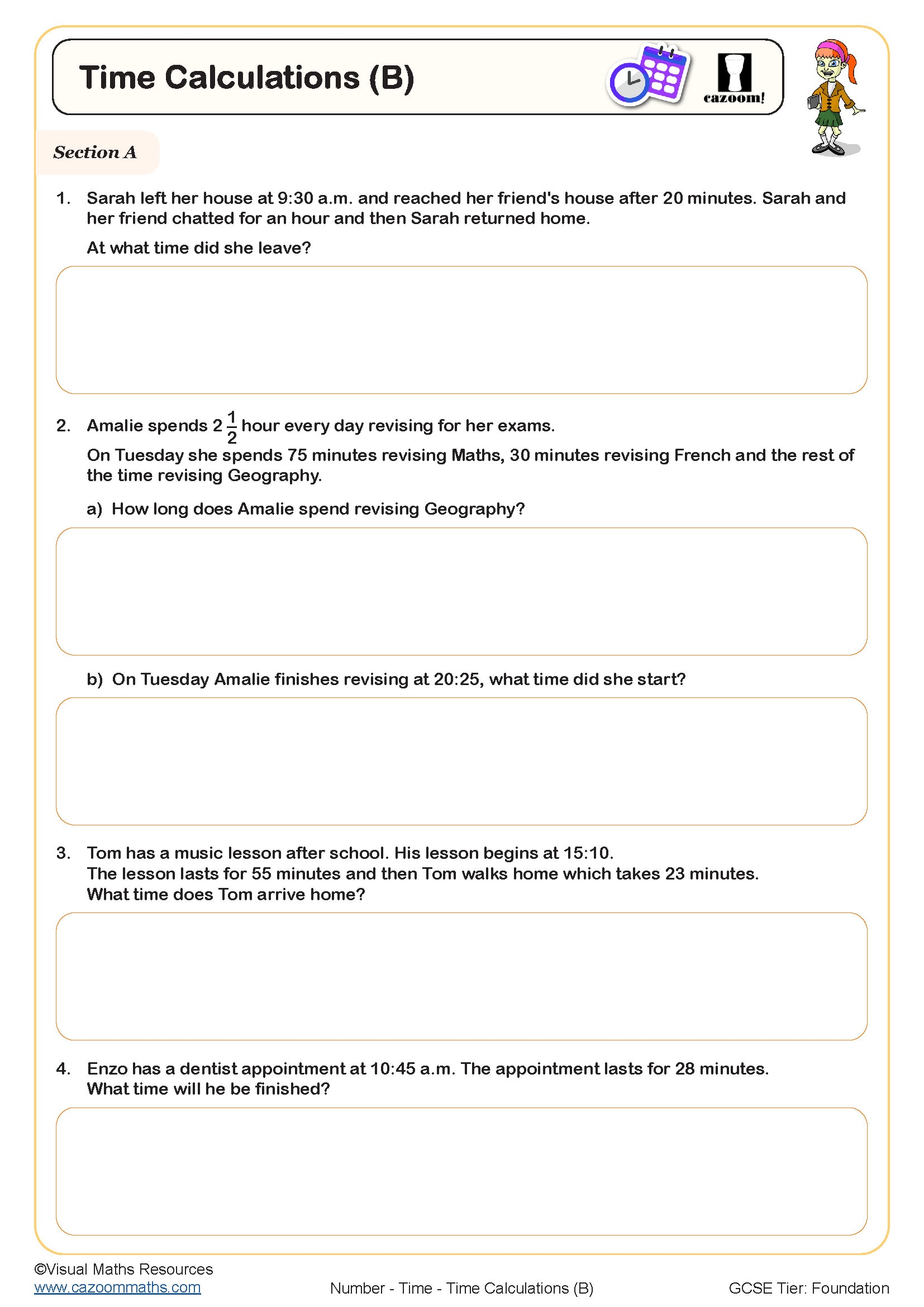
Calculating with time develops students' ability to convert between hours, minutes, and seconds, find time intervals, and solve problems involving timetables and schedules. At KS3, this builds on primary foundations by introducing more complex multi-step problems and working with the 24-hour clock in practical contexts that mirror GCSE requirements.
Students often lose marks on exam questions because they treat time as a base-10 system rather than base-60. A classic error is calculating 2 hours 45 minutes plus 1 hour 30 minutes as 3 hours 75 minutes instead of converting to 4 hours 15 minutes. Teachers notice this mistake persists even when students understand the concept, particularly under time pressure in assessments.
Which year groups study calculating with time?
These worksheets support Year 7 and Year 8 students working within the KS3 National Curriculum. Time calculations form part of the Number strand, where students consolidate understanding developed in upper Key Stage 2 and apply it to increasingly complex, multi-step problems that prepare them for GCSE functional questions.
Progression across these year groups typically moves from straightforward duration calculations and timetable reading in Year 7 to more demanding problems in Year 8 involving multiple conversions, working with time zones, or calculating average speeds where time is one component. Year 8 questions often embed time calculations within broader problem-solving contexts rather than presenting them in isolation.
How do you calculate time differences across midnight?
Calculating time differences that cross midnight requires students to split the calculation into two parts: the time remaining until midnight, then the time from midnight to the end point. For example, finding the duration from 22:45 to 01:15 involves calculating 1 hour 15 minutes to midnight, then adding 1 hour 15 minutes after midnight, giving 2 hours 30 minutes total.
This skill appears regularly in transport and shift-work contexts. Nurses calculating medication intervals across night shifts, pilots working with flight times crossing time zones, and logistics managers scheduling overnight deliveries all rely on accurate time calculations that span midnight. Understanding this method helps students see why the 24-hour clock provides clarity in professional settings where ambiguity could have serious consequences.
How can teachers use these calculating with time worksheets?
The worksheets provide structured practice that moves from basic conversions through to multi-step problems, allowing teachers to identify exactly where students' understanding breaks down. Answer sheets enable students to self-assess during independent work or help teaching assistants support intervention groups without requiring detailed subject knowledge of every calculation method.
Many teachers use these resources for homework after introducing time calculations in lessons, giving students deliberate practice before attempting exam-style questions. They work well for paired activities where students compare methods for the same problem, revealing different approaches to handling conversions. The worksheets also serve as quick diagnostic tools at the start of Year 8 to identify students who need recap sessions before tackling more complex ratio and proportion work where time calculations often appear.