Compare and Order Fractions Worksheets
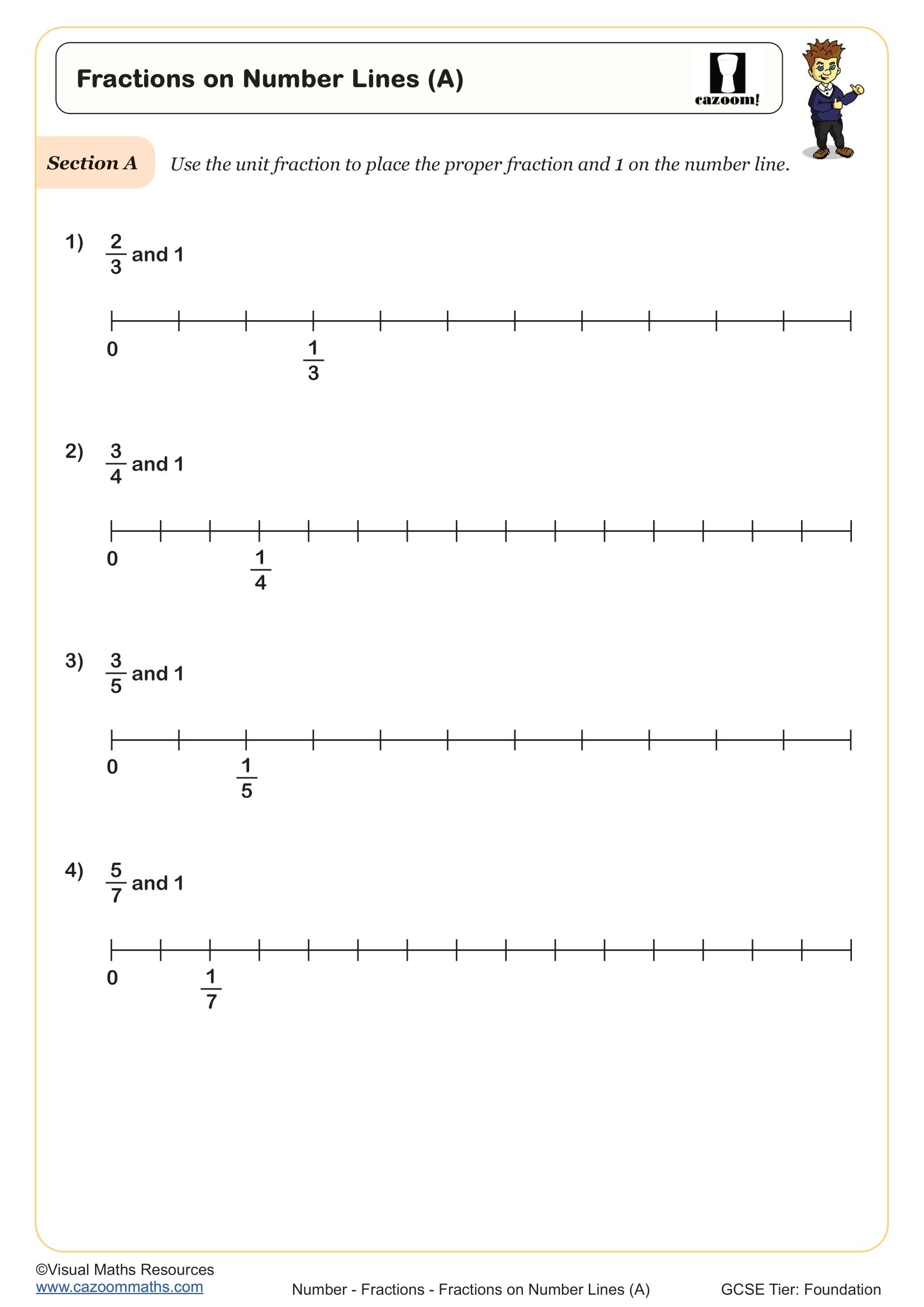
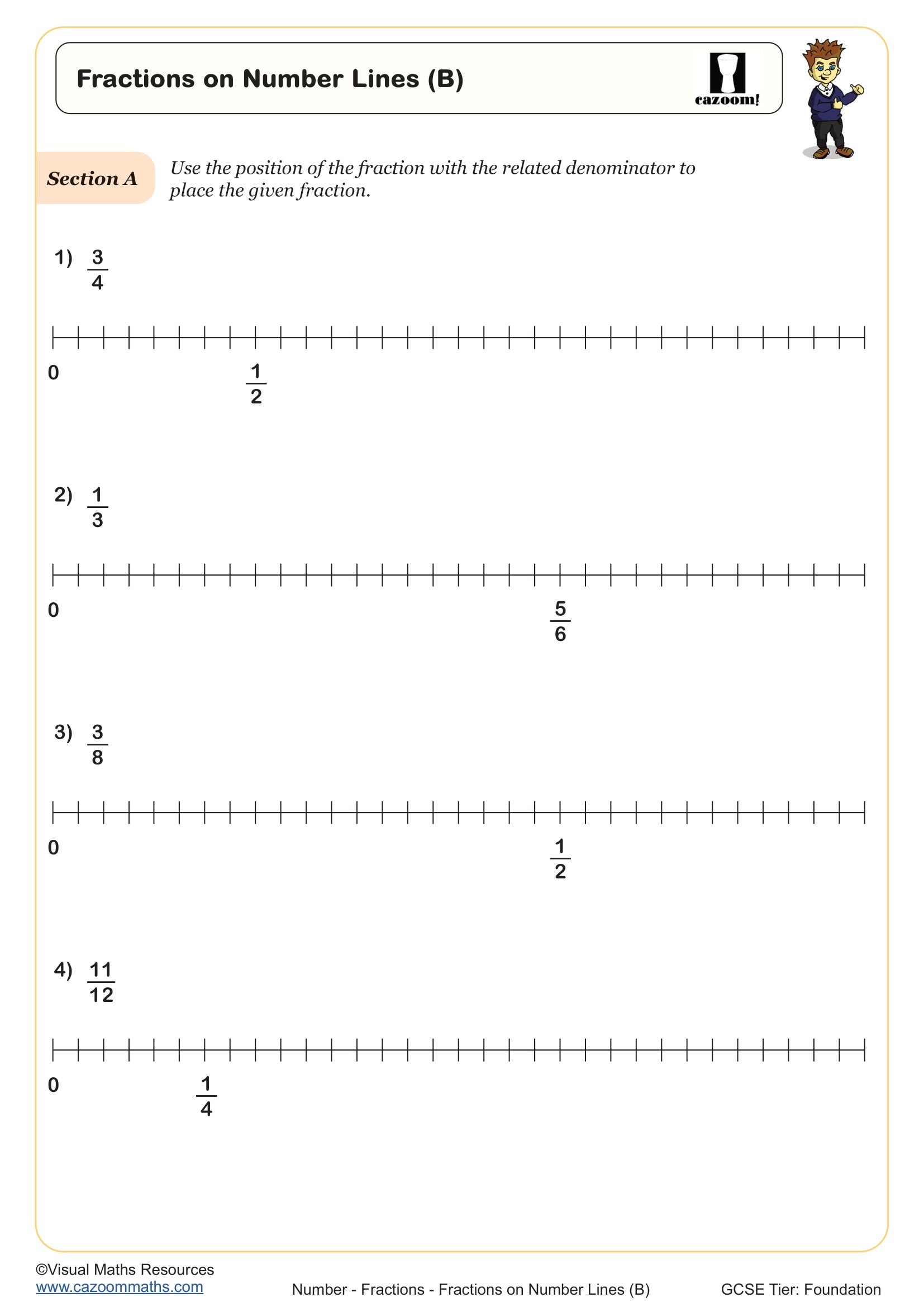
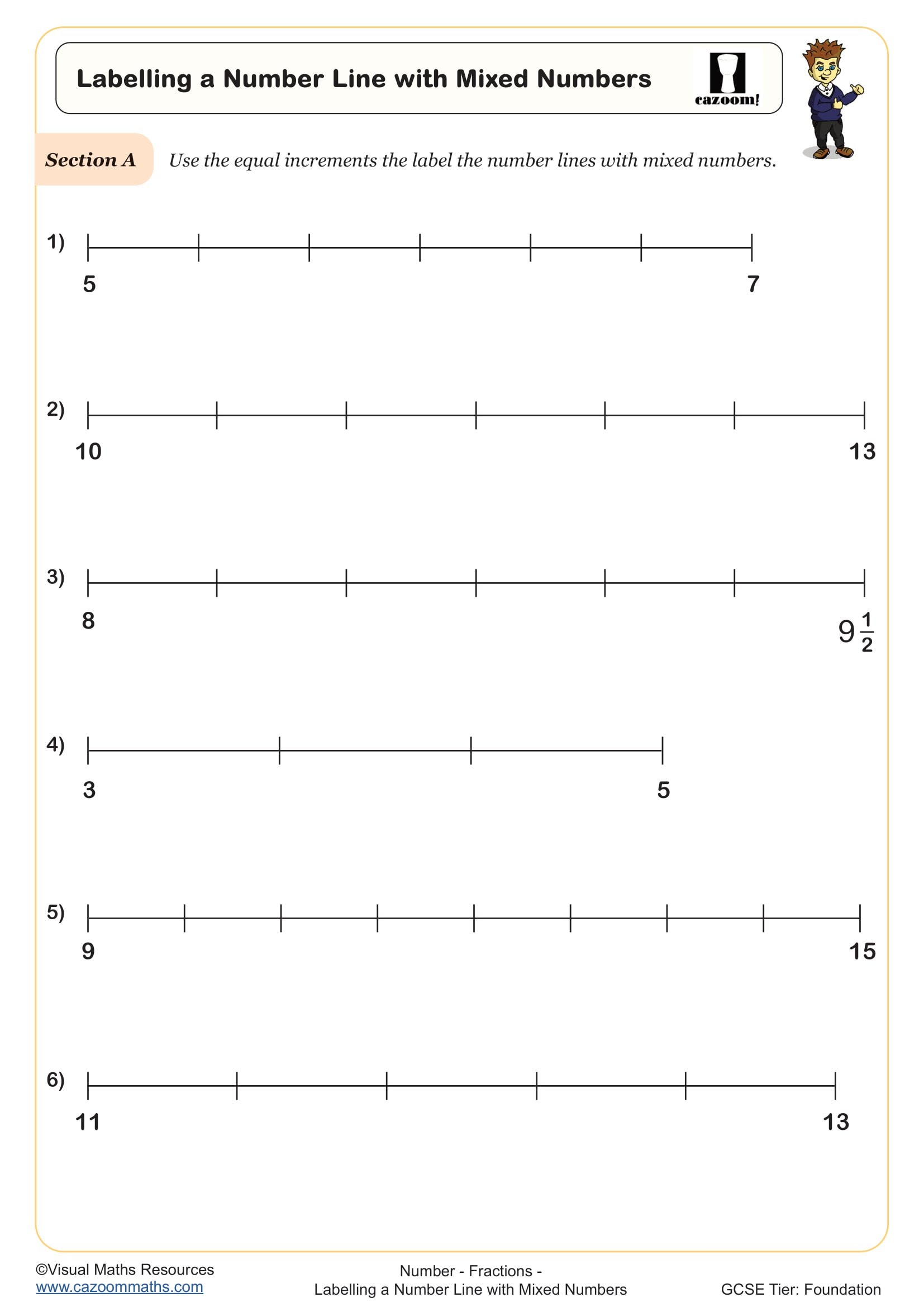
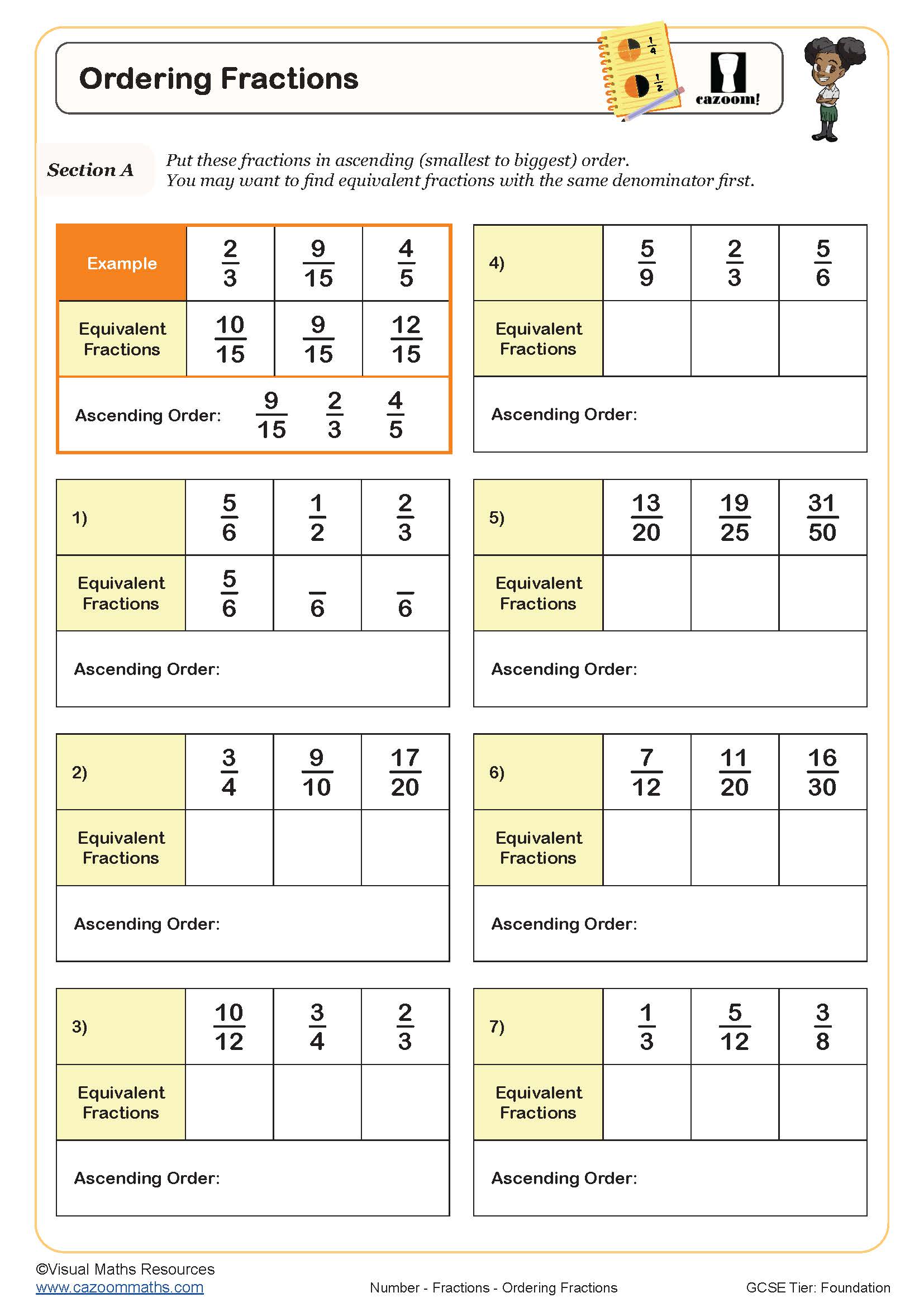
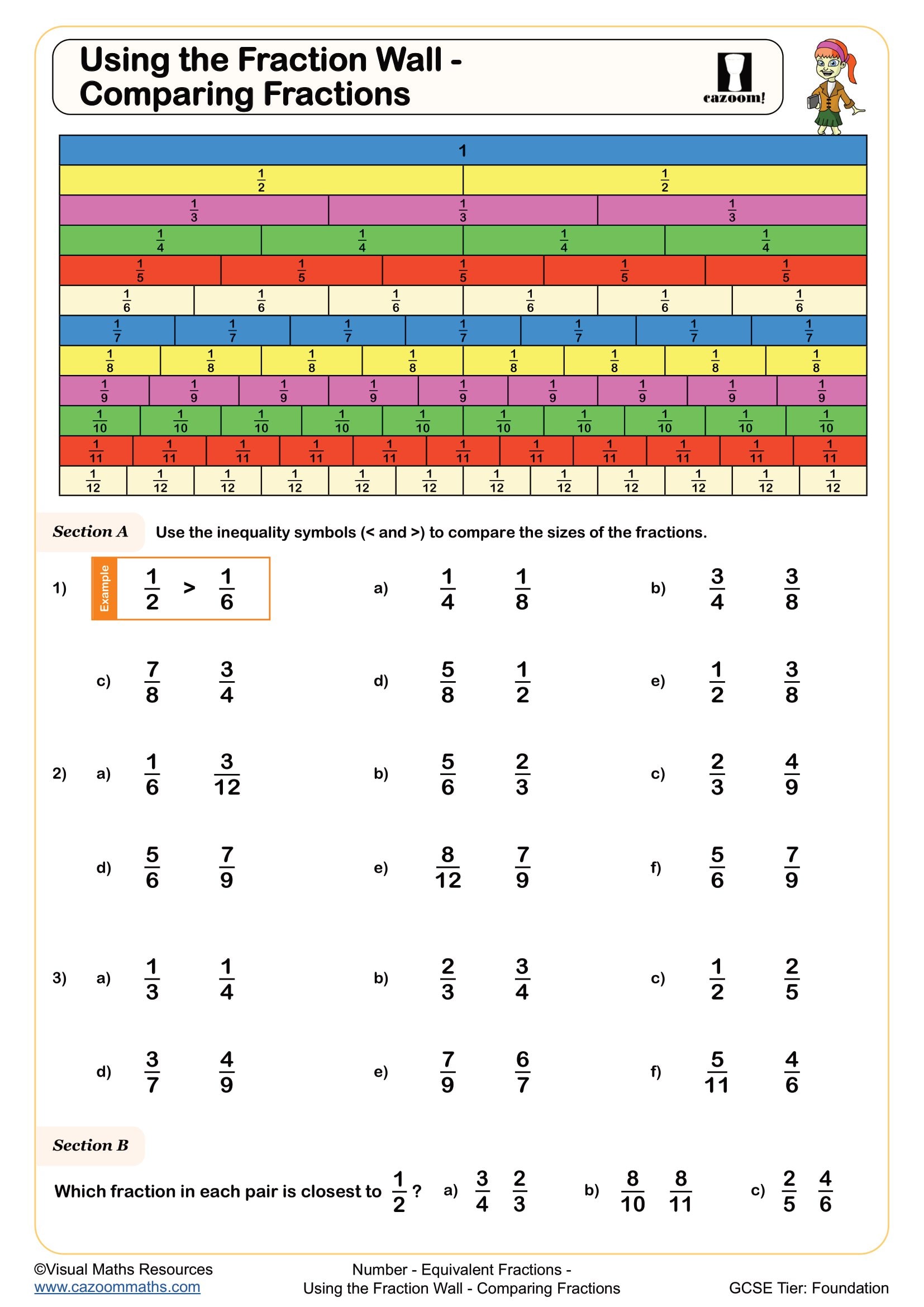
All worksheets are created by the team of experienced teachers at Cazoom Maths.
How do you compare and order fractions effectively?
Comparing and ordering fractions requires converting to a common denominator or using benchmark fractions like ½ and 1 to estimate size. The National Curriculum expects KS3 students to move beyond visual models and apply systematic methods, particularly finding the lowest common multiple of denominators to create equivalent fractions that can be directly compared. Cross-multiplication provides an alternative technique when comparing just two fractions, though this becomes unwieldy with larger sets.
A common error occurs when students multiply both fractions by both denominators rather than using the LCM, creating unnecessarily large numbers that increase calculation mistakes. Teachers also notice students forgetting to convert back to the original fractions after ordering, particularly in exam questions that specify 'give your answer in the form given in the question'. Mark schemes deduct points when the final answer shows equivalent fractions instead of the original forms.
Which year groups learn to compare and order fractions?
These worksheets cover Year 7, Year 8, and Year 9 within Key Stage 3, where the National Curriculum requires students to extend primary fraction knowledge to more complex comparisons. Year 7 typically focuses on comparing fractions with related denominators and using visual representations to support understanding, whilst later years introduce algebraic fractions and comparisons involving negative values alongside the core skills.
Progression across KS3 increases the number of fractions to compare simultaneously and reduces scaffolding around finding common denominators. Year 7 questions might compare three fractions with denominators that share obvious factors, whilst Year 9 extends to five or six fractions requiring prime factorisation to identify the LCM efficiently. Students also encounter mixed numbers and improper fractions together, requiring conversion skills before comparison becomes possible.
What does it mean when fractions are the same?
Understanding when fractions are the same involves recognising equivalent fractions—different numerical representations of identical values, such as ²⁄₄ and ½. Students identify equivalence by multiplying or dividing both numerator and denominator by the same value, maintaining the fraction's position on a number line whilst changing its appearance. This concept connects directly to simplifying fractions, where students reduce fractions to their simplest form by dividing by common factors.
This skill appears constantly in scientific contexts, particularly when interpreting data and scale drawings. Engineers comparing component ratios need to recognise that ⁶⁄₈ of a mixture contains the same proportion as ³⁄₄, ensuring consistent formulations. In chemistry, students calculate molar ratios where recognising that ⁴⁄₆ equals ²⁄₃ prevents errors when determining reactant quantities. The ability to spot equivalent fractions quickly also supports probability calculations, where different denominators represent the same likelihood.
How can these worksheets support classroom teaching?
The worksheets provide structured practice that builds from basic comparisons to complex multi-fraction ordering, with answer sheets allowing students to self-assess and identify specific errors in their method. Questions typically progress through difficulty levels on each sheet, enabling teachers to observe exactly where individual students' understanding breaks down—whether at finding common denominators, converting between forms, or maintaining accuracy with larger numbers.
Many teachers use these resources for targeted intervention with students who've missed this foundational content or need additional consolidation before tackling algebraic fractions. The worksheets work well for paired practice where stronger students explain their reasoning to partners, reinforcing conceptual understanding through articulation. They're equally effective as low-stakes homework that reinforces classroom teaching or as retrieval practice at lesson starts, helping students maintain fluency with fraction skills that GCSE questions assume as prerequisite knowledge.