Dividing into a Ratio Worksheets
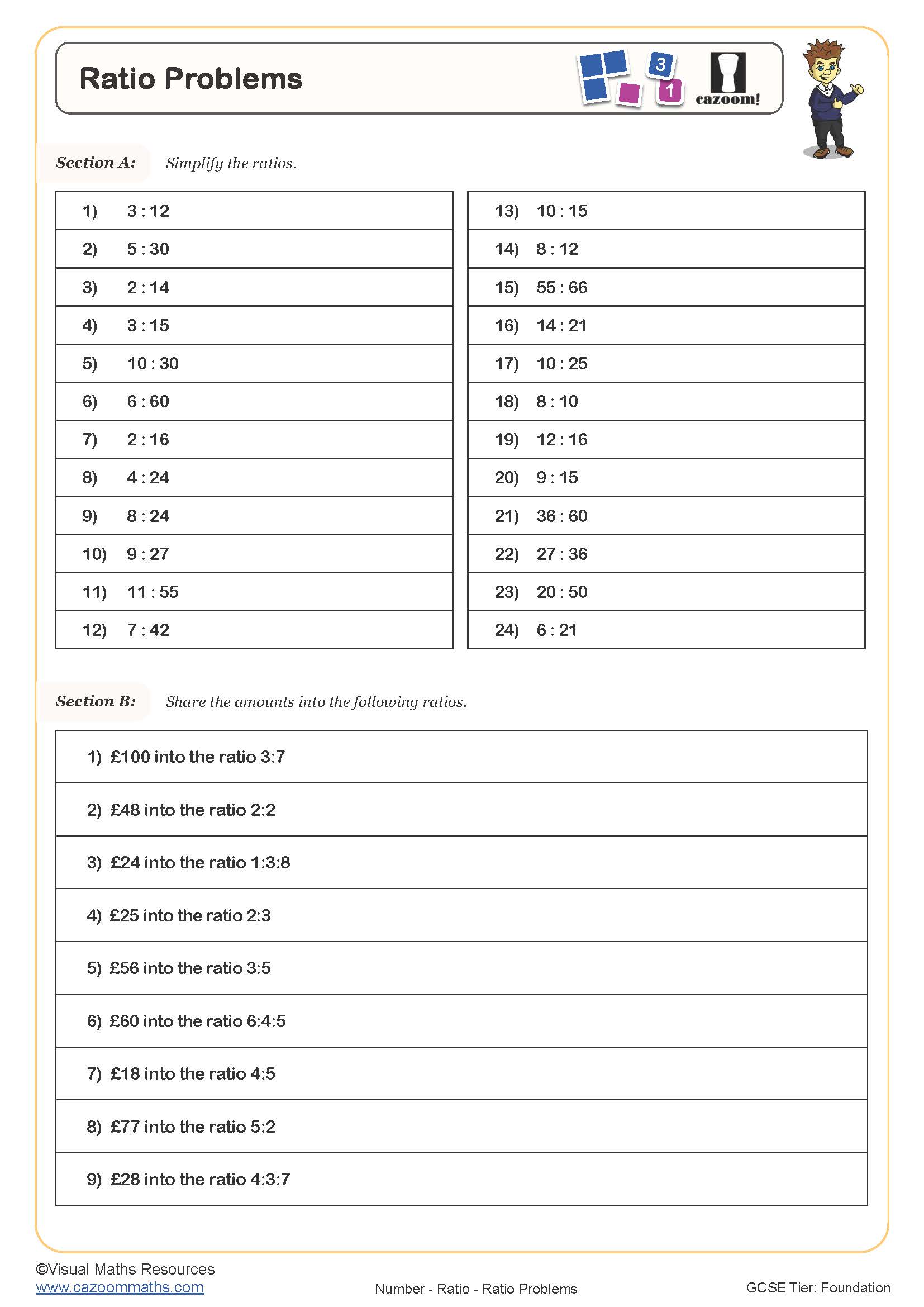
All worksheets are created by the team of experienced teachers at Cazoom Maths.
What are the key steps for dividing into a ratio?
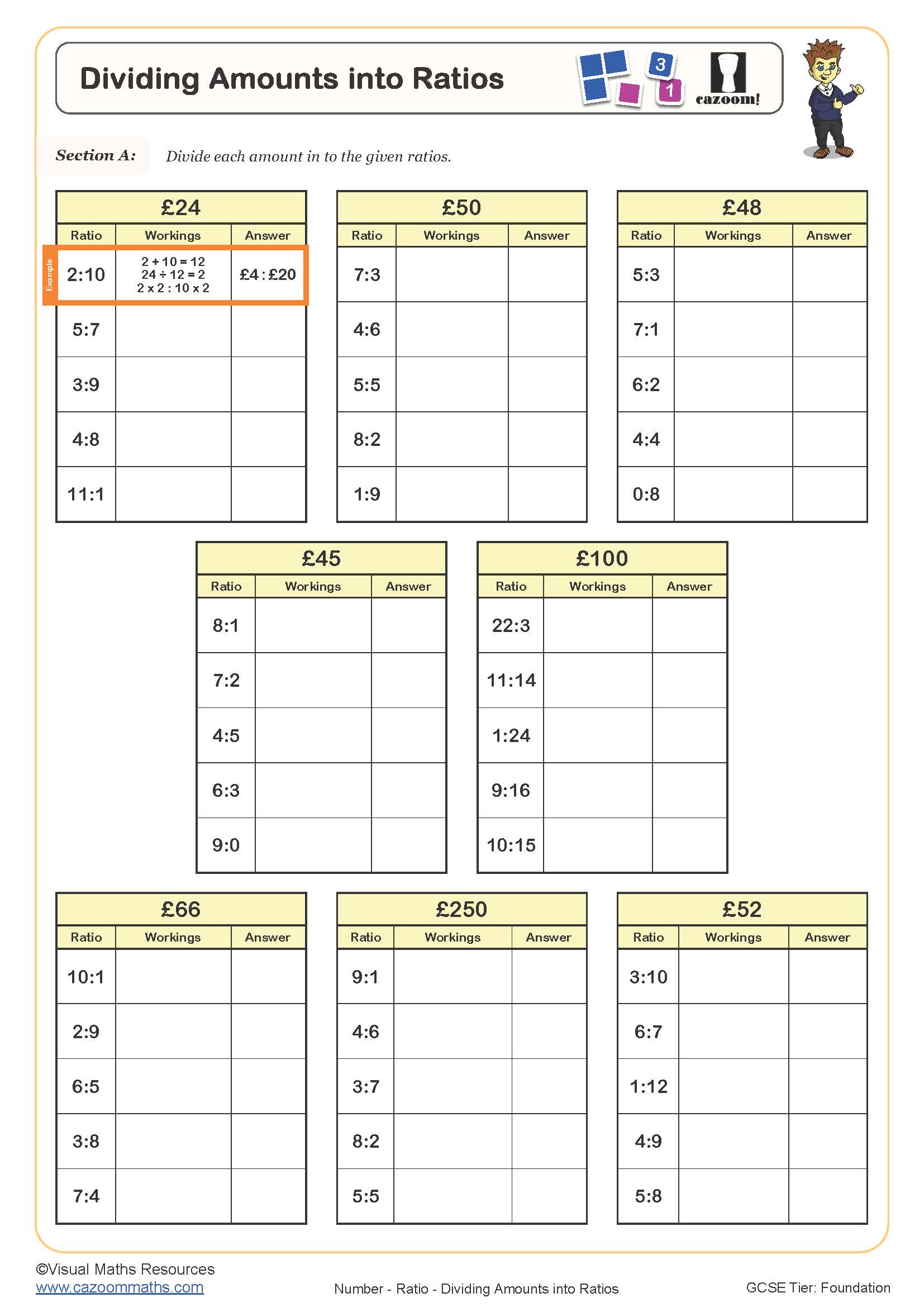
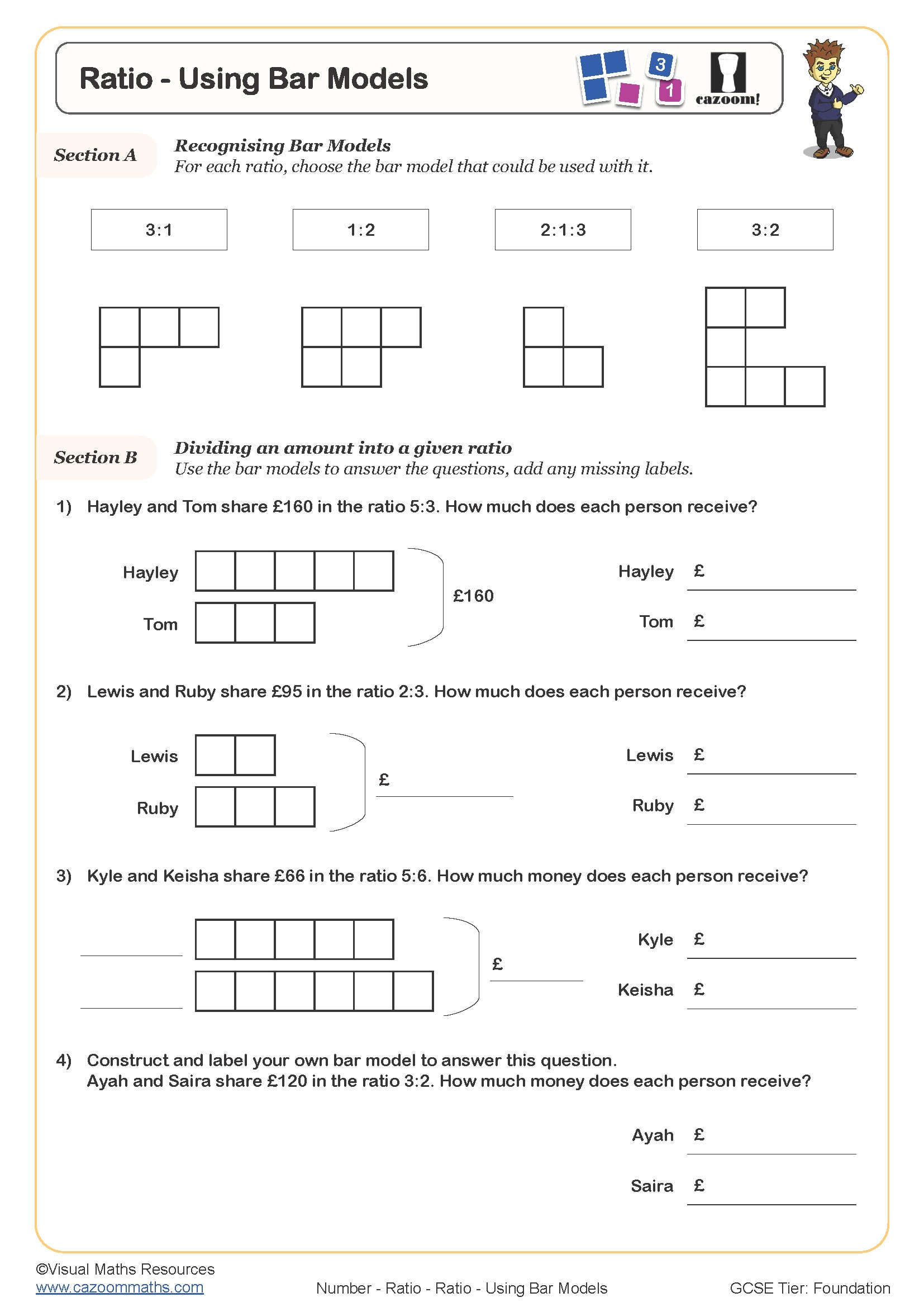
The process begins by adding all parts of the ratio together to find the total number of shares, then dividing the given quantity by this total to determine the value of one share. Students multiply this value by each part of the ratio to calculate the individual amounts. This method works consistently whether sharing £60 in the ratio 2:3 or dividing 250g in the ratio 3:2:5.
A common error occurs when students divide the total amount by the number of ratio parts rather than the sum of the ratio values. For example, with 100 sweets shared 3:7, students might incorrectly divide by 2 (the number of parts) instead of 10 (the sum 3+7). Mark schemes specifically penalise this foundational mistake, so emphasising that ratios represent shares of different sizes proves crucial for accuracy.
Which year groups study dividing into a ratio?
Dividing into a ratio appears across Year 7, Year 8, and Year 9 within the KS3 National Curriculum, forming part of the ratio and proportion strand. Year 7 typically introduces the concept using straightforward two-part ratios with friendly numbers, allowing students to build confidence with the underlying method before tackling more demanding problems.
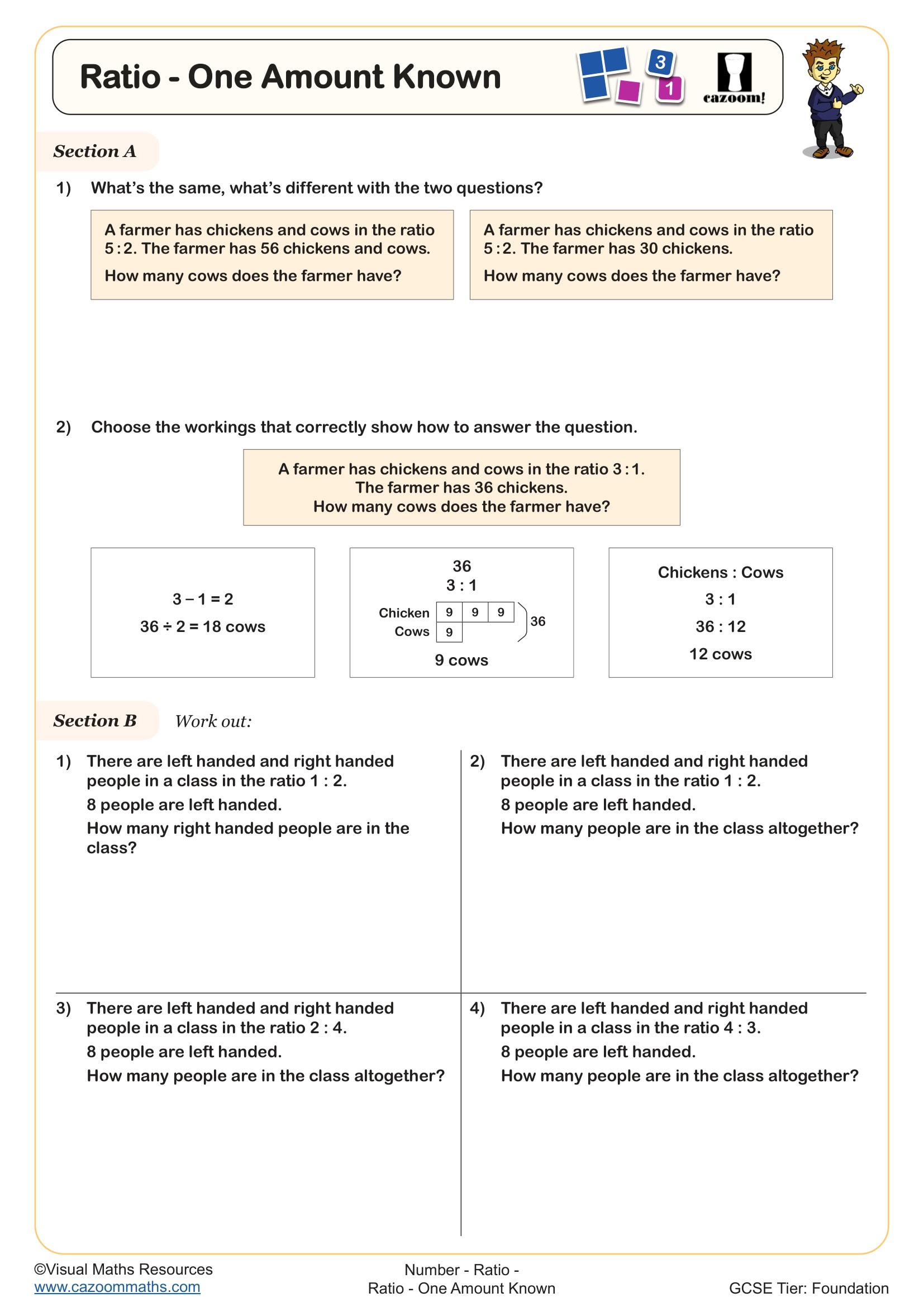
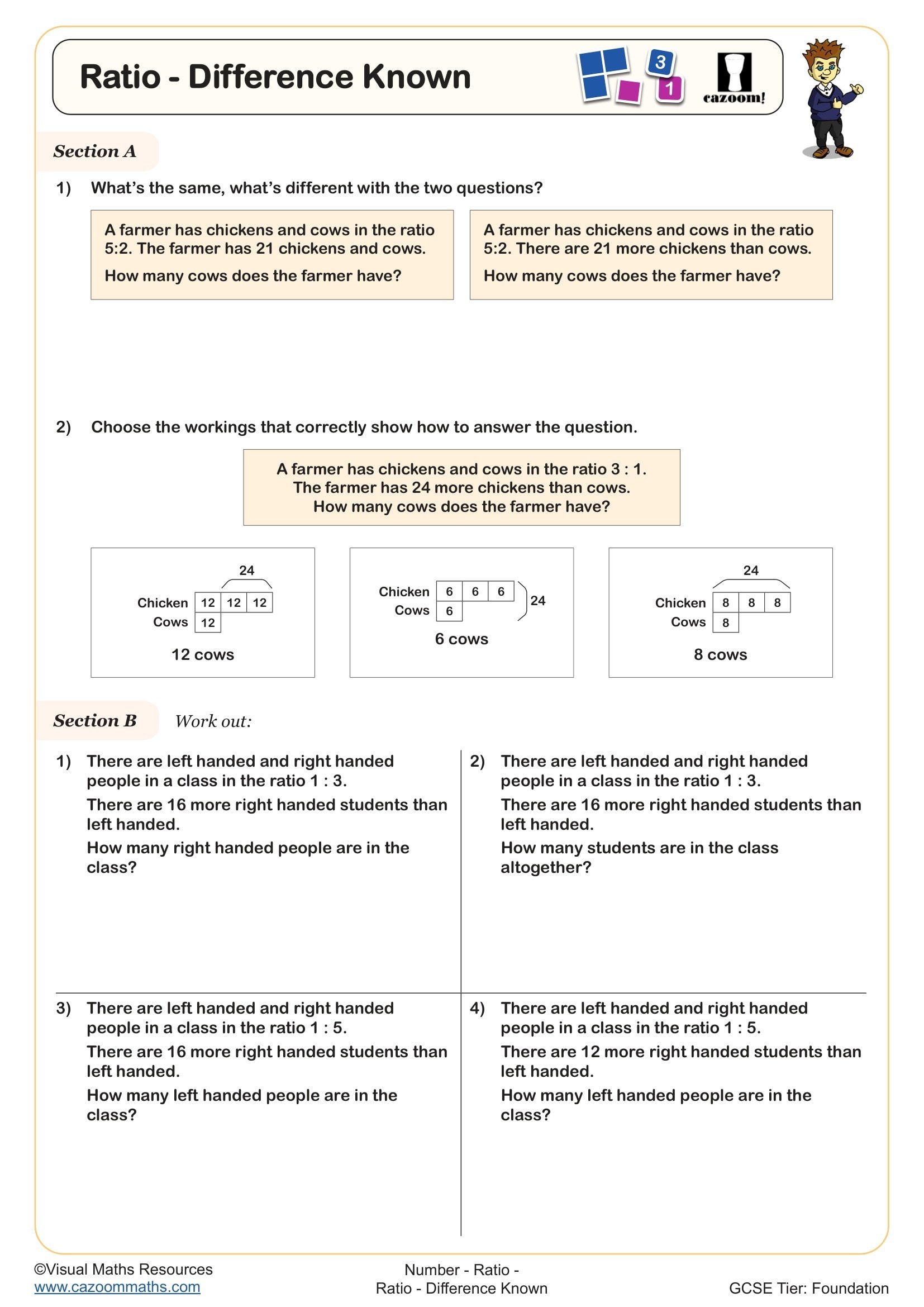
Progression through Year 8 and Year 9 involves three-part ratios, algebraic representations where one part is given, and problem-solving contexts requiring students to work backwards from a known share to find the total. Students also encounter ratio division combined with other mathematical concepts such as percentages and fractions, developing the fluency needed for GCSE questions where ratio problems often appear within multi-step calculations.
How does dividing into a ratio apply to real-world situations?
Ratio division provides the mathematical foundation for sharing resources fairly but unequally, based on predetermined proportions. Students learn to work systematically through problems, understanding that ratios represent relative rather than absolute values, which proves essential when scaling recipes, mixing solutions, or distributing investments according to stake percentages.
This skill connects directly to STEM applications, particularly in chemistry where solutions are prepared using specific concentration ratios, and in engineering where materials are combined in precise proportions. Financial contexts such as profit sharing among business partners with different investment levels, or inheritance distribution according to specified shares, demonstrate why accurate ratio calculations matter beyond the classroom. These applications help students recognise ratio work as practical mathematics rather than abstract manipulation of numbers.
How do these worksheets support effective learning?
The worksheets build understanding through carefully sequenced questions that begin with straightforward calculations before progressing to more challenging multi-step problems. Students encounter varied contexts that prevent them from simply memorising procedures without understanding, whilst answer sheets allow for immediate self-assessment or enable teachers to identify specific misconceptions quickly during marking.
Many teachers use these resources for differentiated intervention groups, where students struggling with ratio concepts benefit from focused practice without the distraction of mixed-topic exercises. The worksheets work effectively as homework to consolidate classroom teaching, or as starter activities to refresh prior knowledge before introducing related topics such as direct proportion. Paired work encourages mathematical discussion, with students explaining their methods to each other, which often reveals misunderstandings that silent individual practice might miss.