Four Operations with Decimals Worksheets
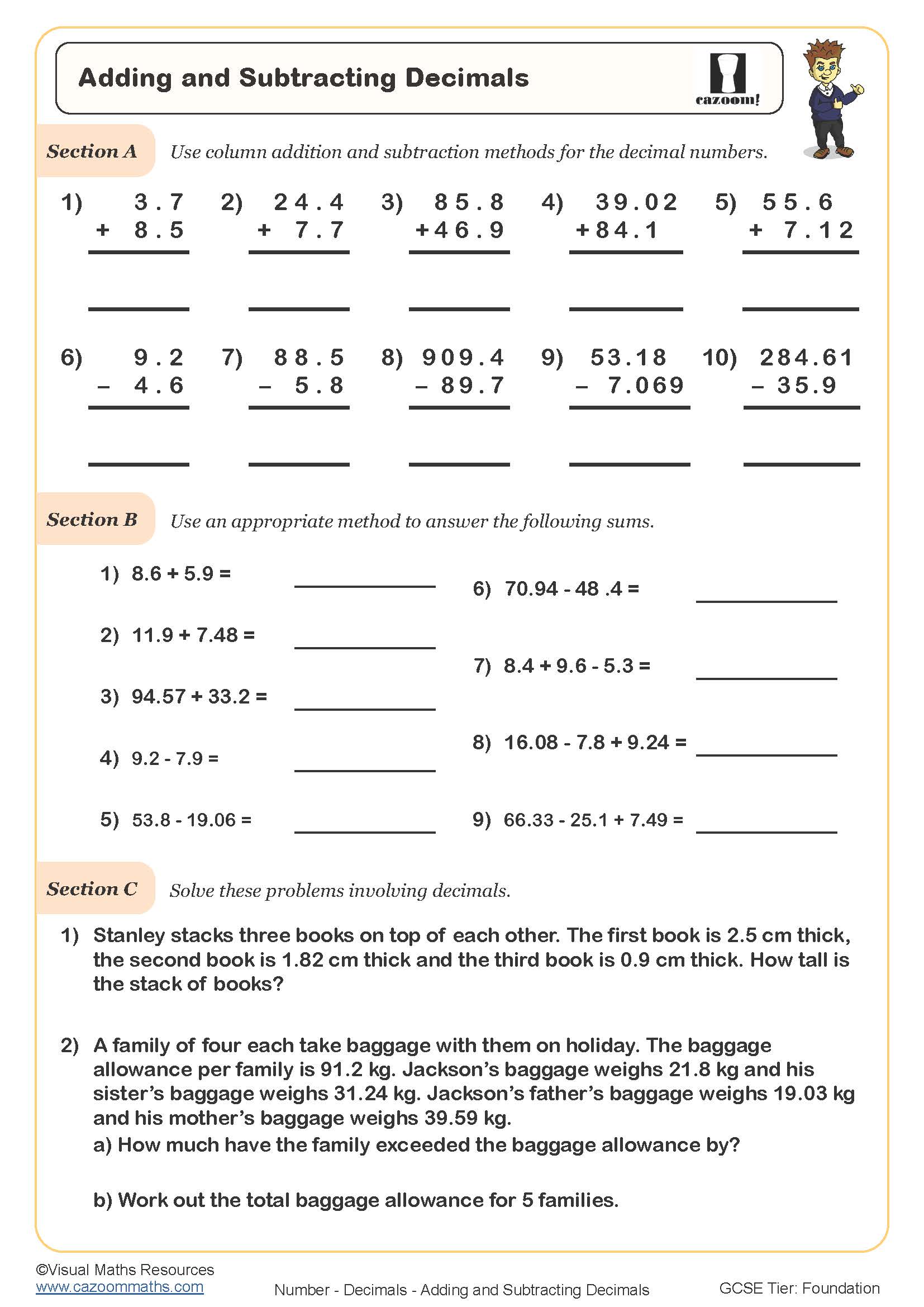
Adding and Subtracting Decimals
Year groups: 7, 8
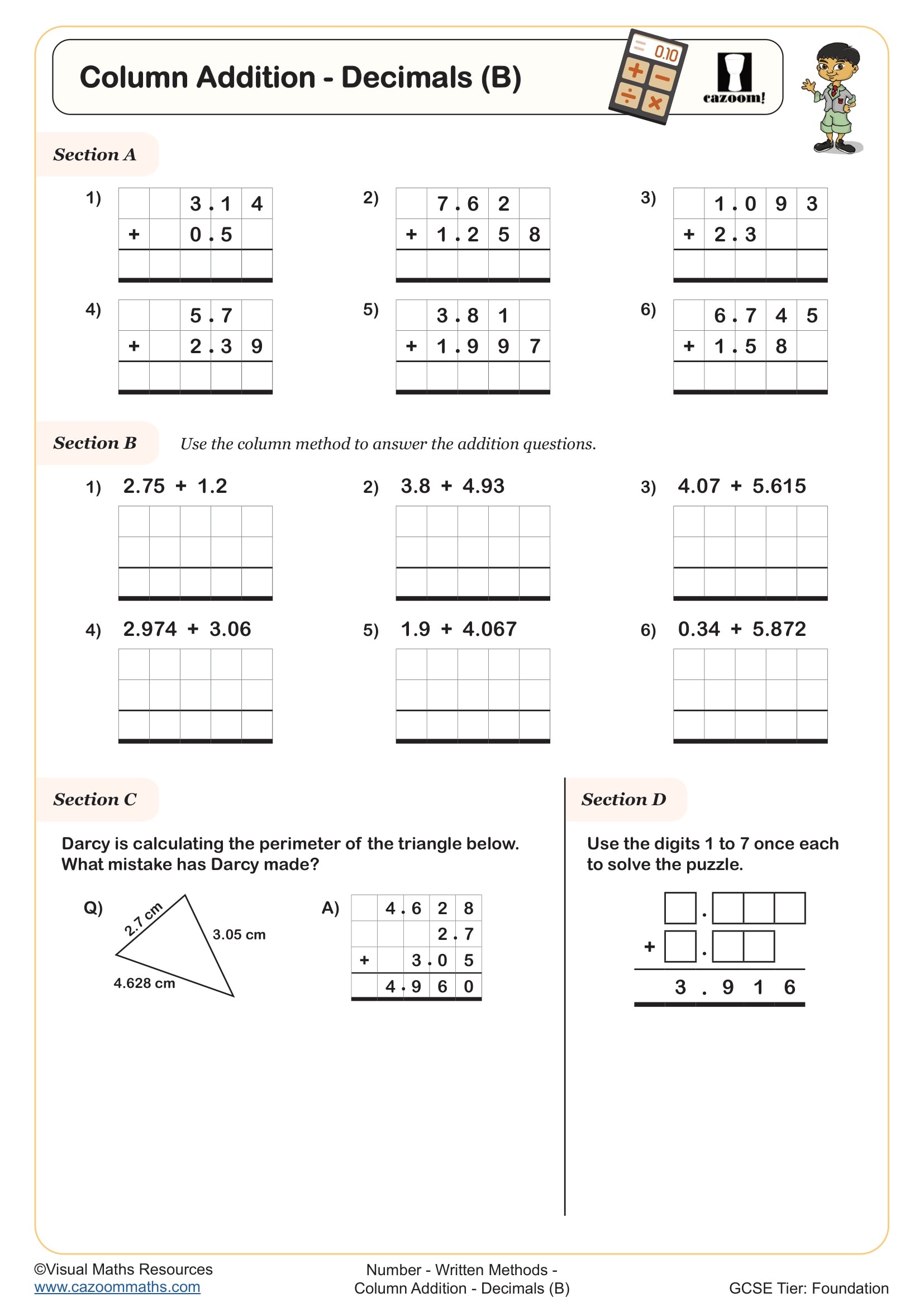
Column Addition - Decimals (B)
Year groups: 7, 8
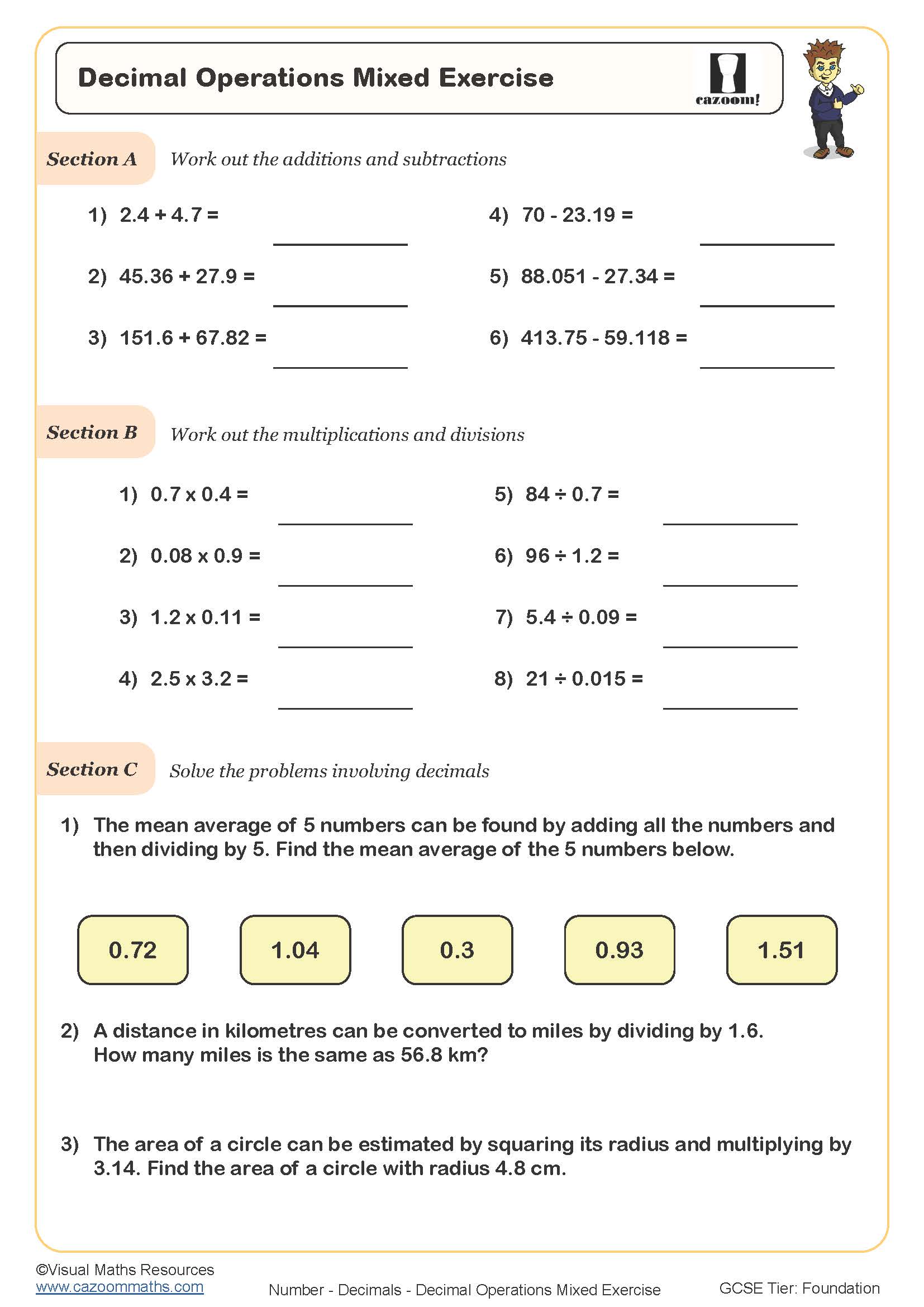
Decimal Operations Mixed Exercise
Year groups: 7, 8
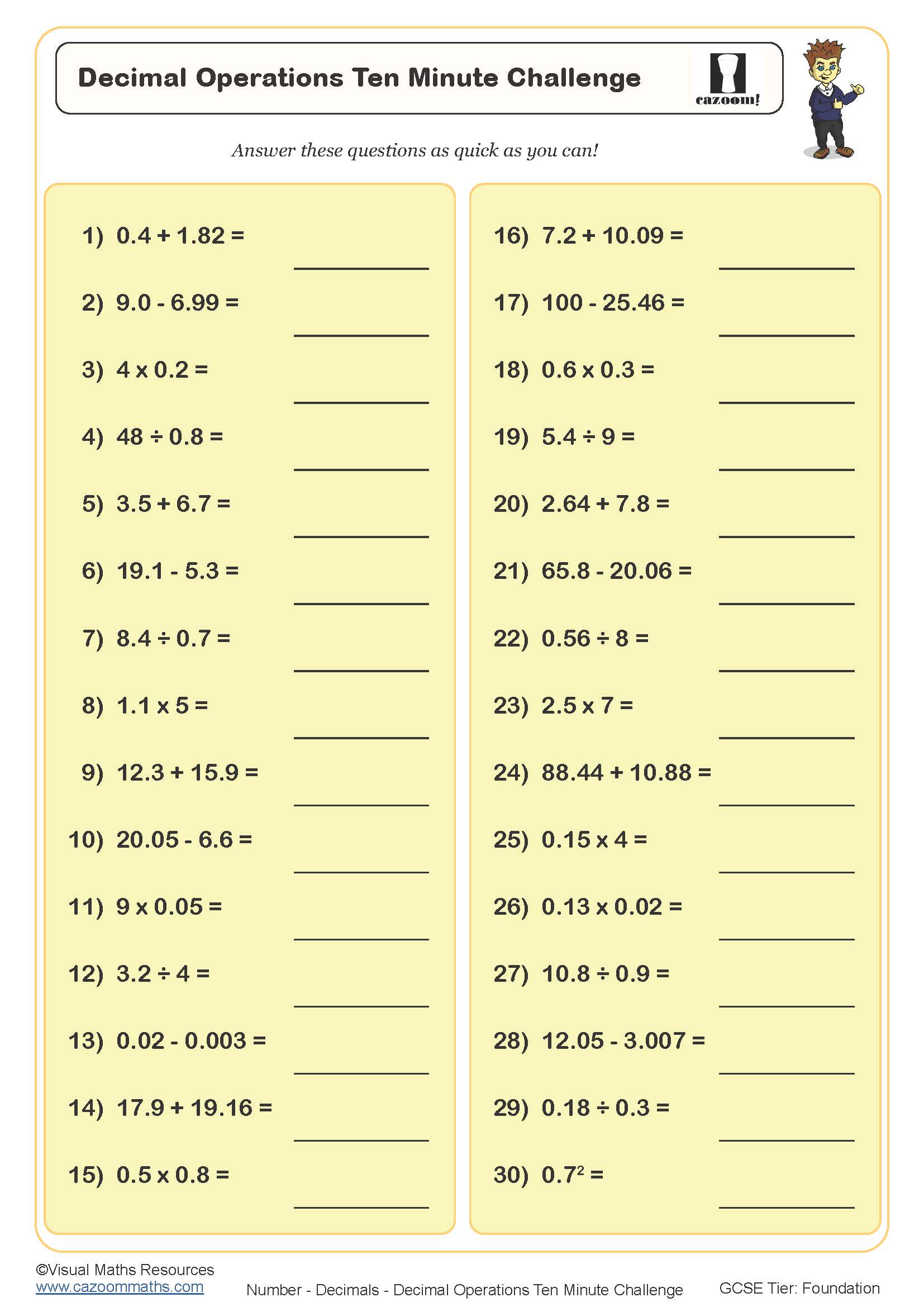
Decimal Operations Ten Minute Challenge
Year groups: 7, 8
Decimal Sums to 1
Year groups: 7
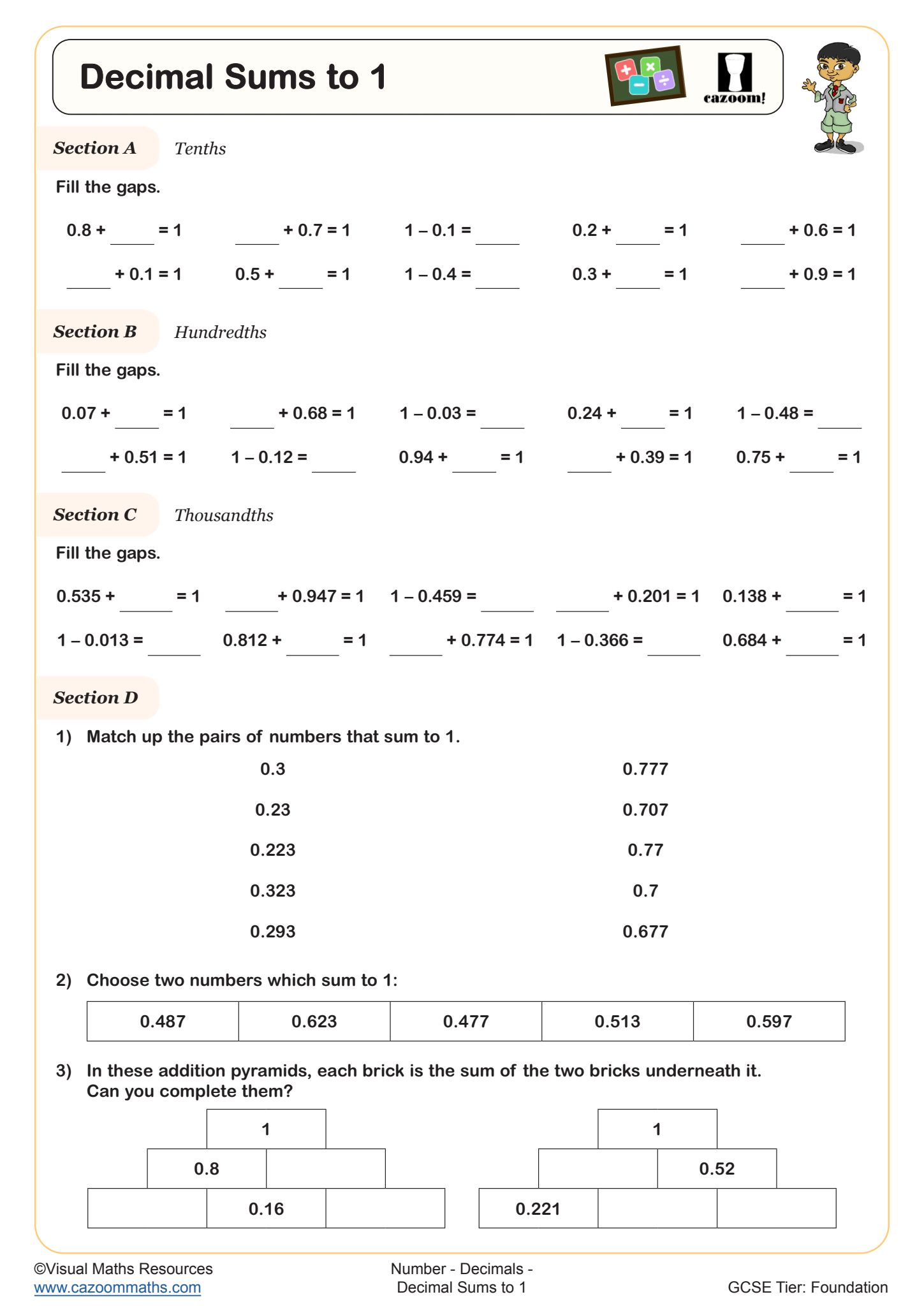
Dividing by Decimals
Year groups: 7, 8
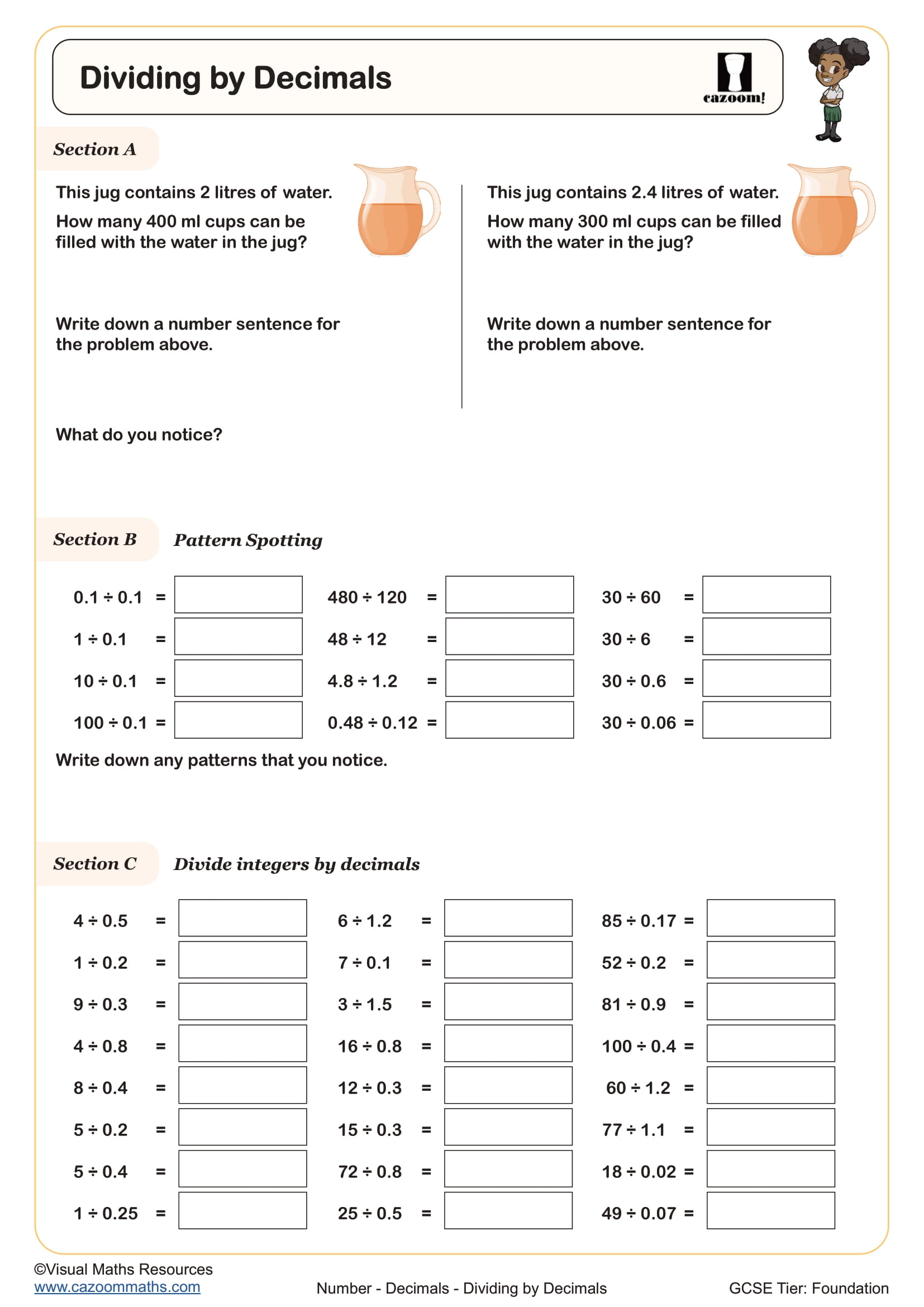
Dividing Decimals (A)
Year groups: 7, 8
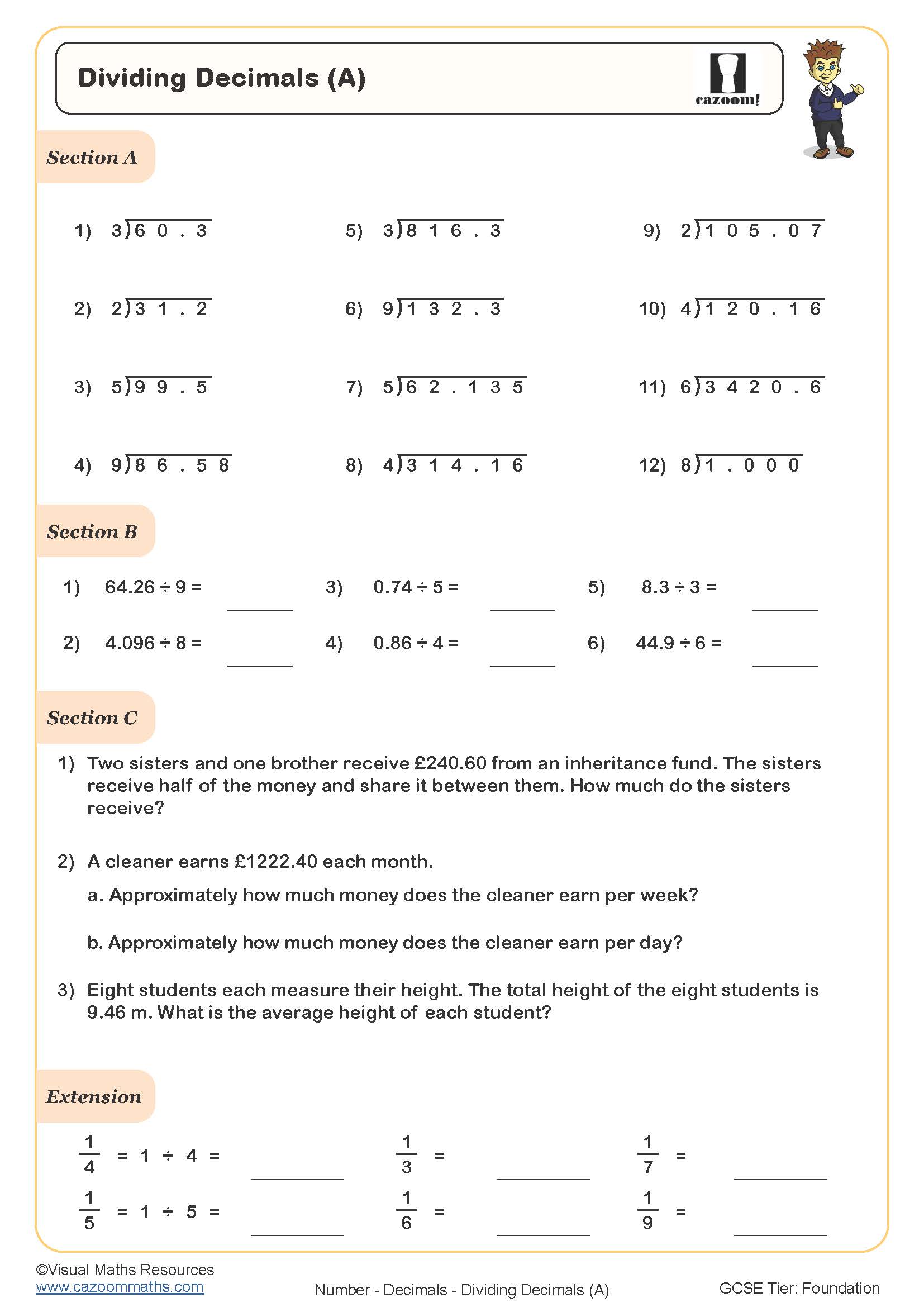
Dividing Decimals (B)
Year groups: 7, 8
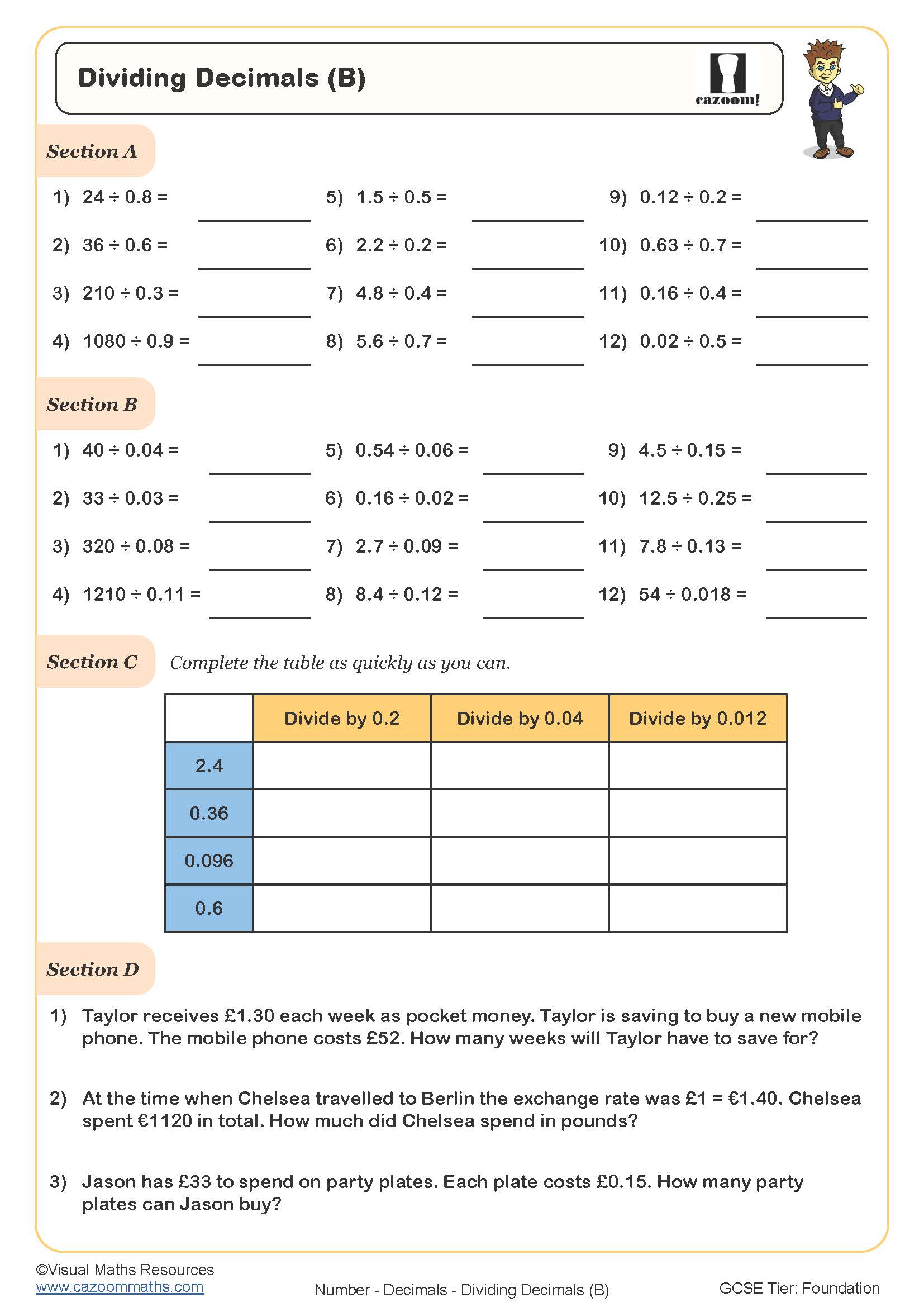
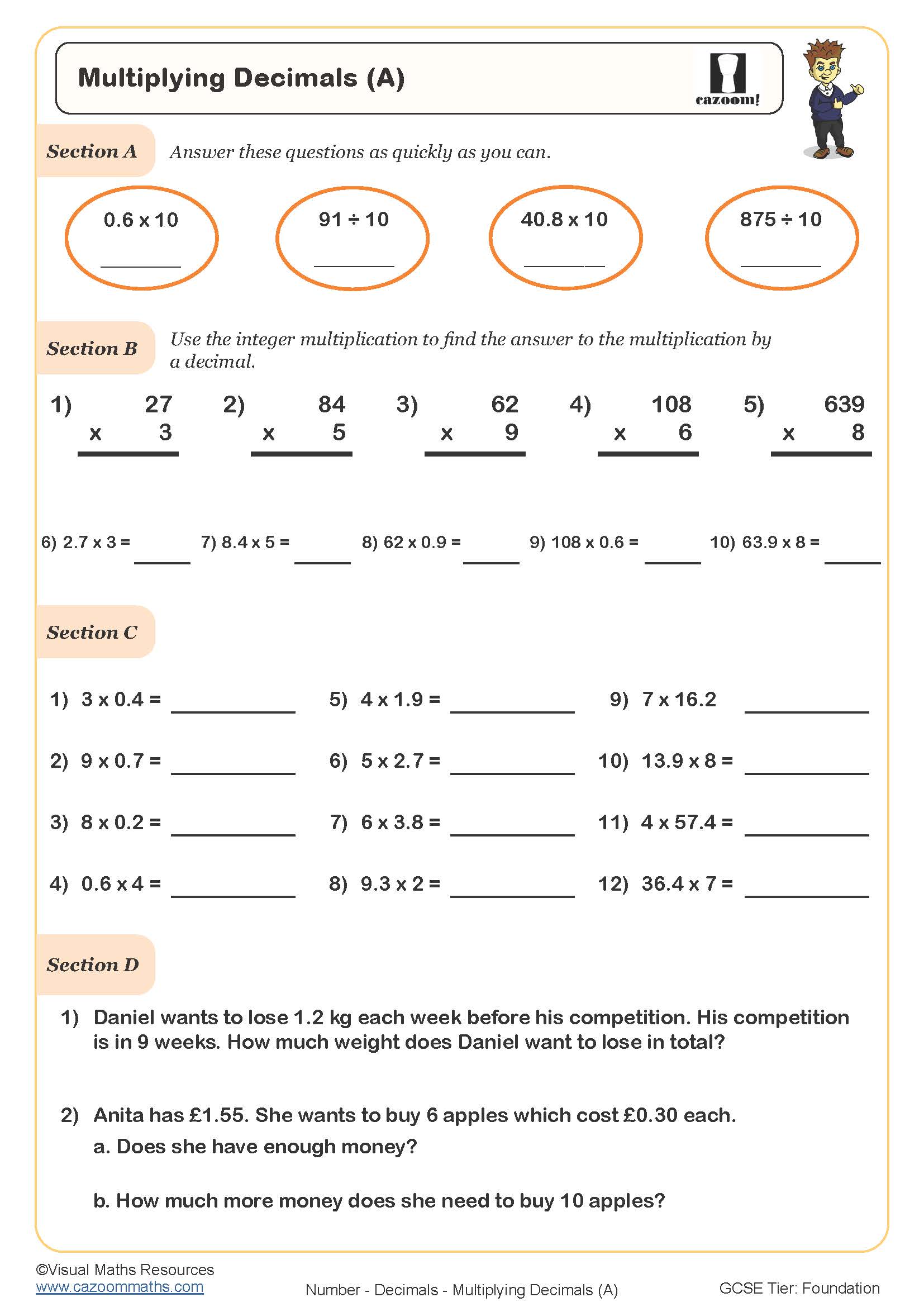
Multiply Decimals by Integers
Year groups: 7
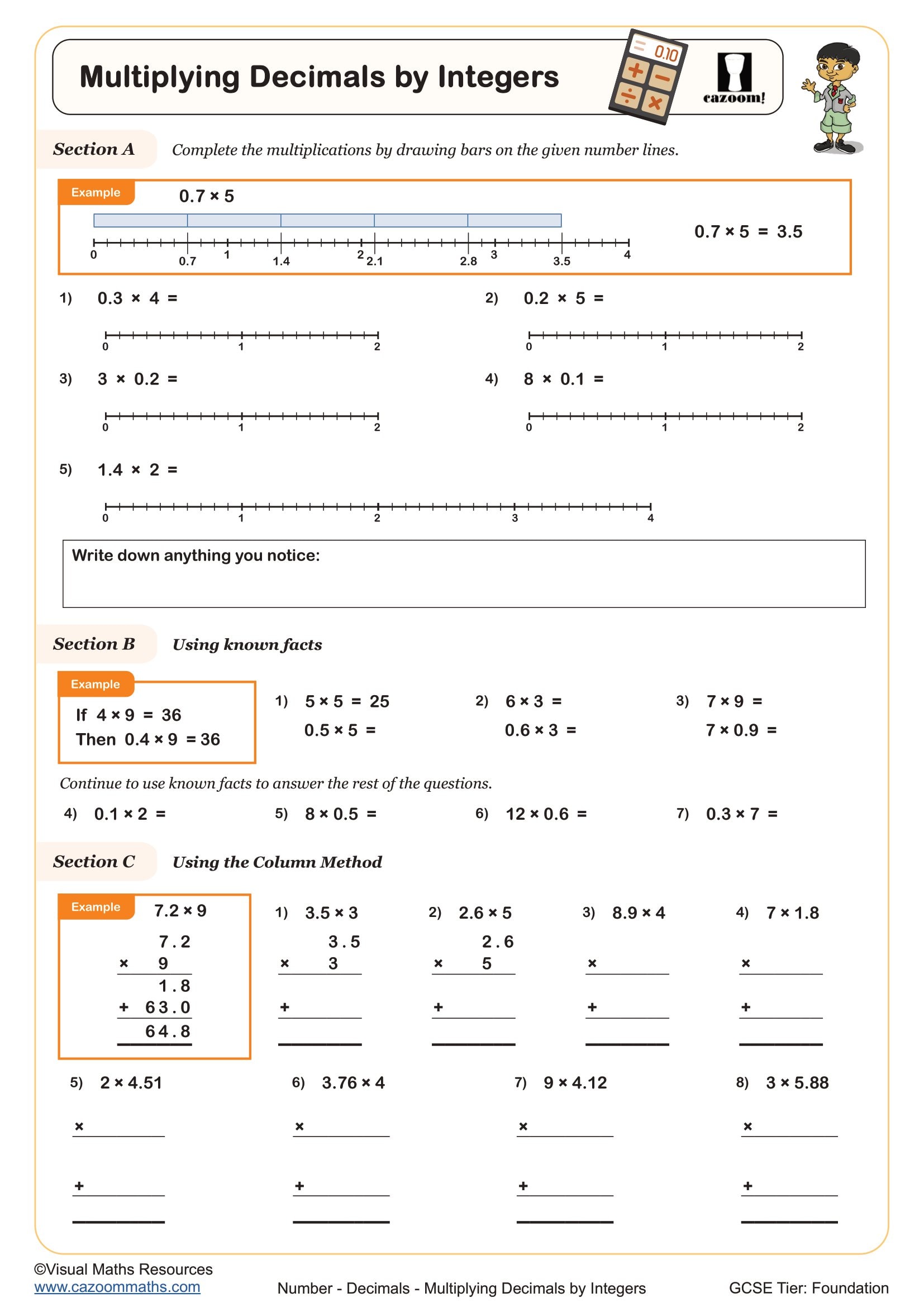
Multiplying and Dividing Decimals
Year groups: 7, 8
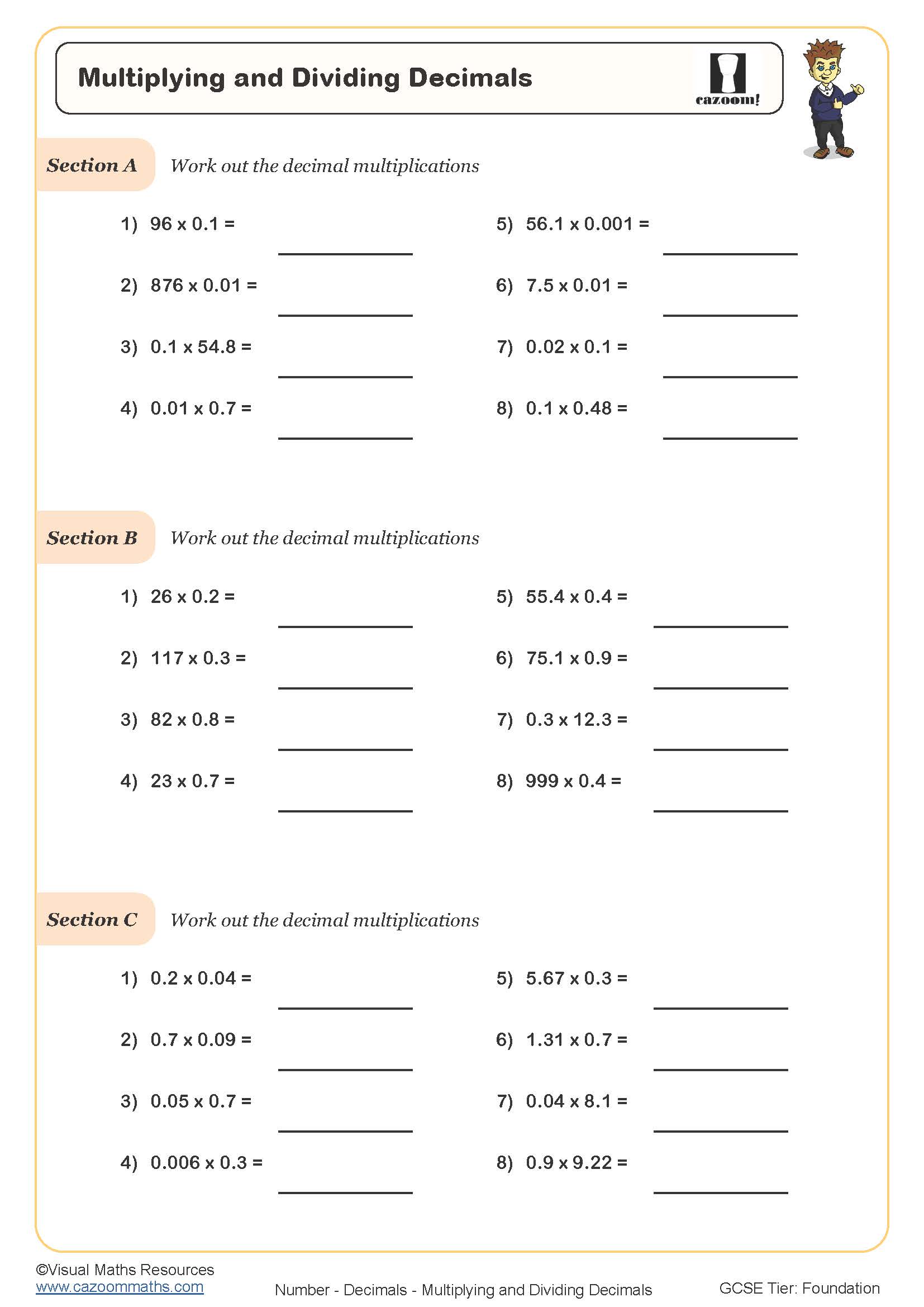
Multiplying Decimals - Using Known Facts
Year groups: 7, 8
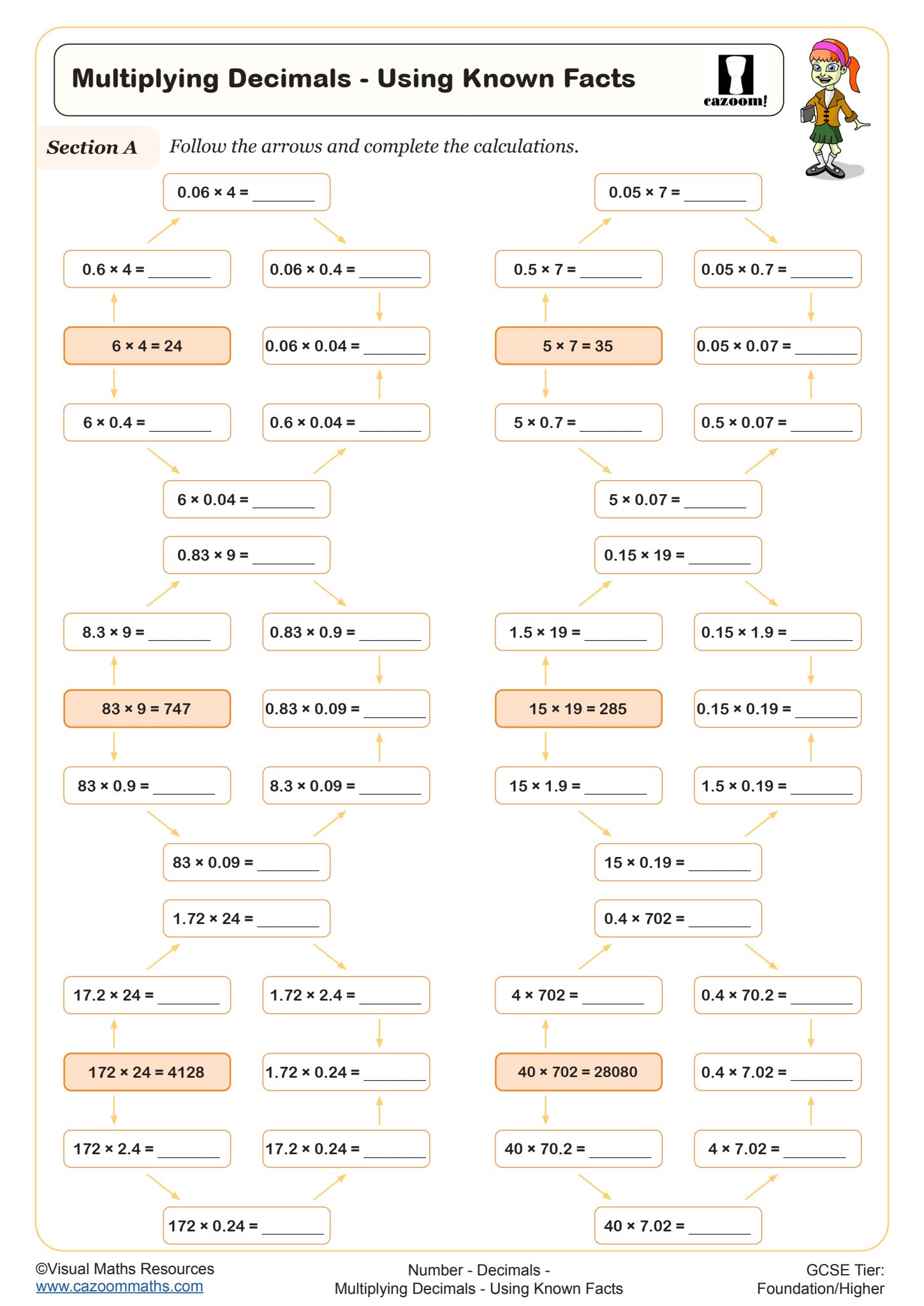
Multiplying Decimals (A)
Year groups: 7, 8
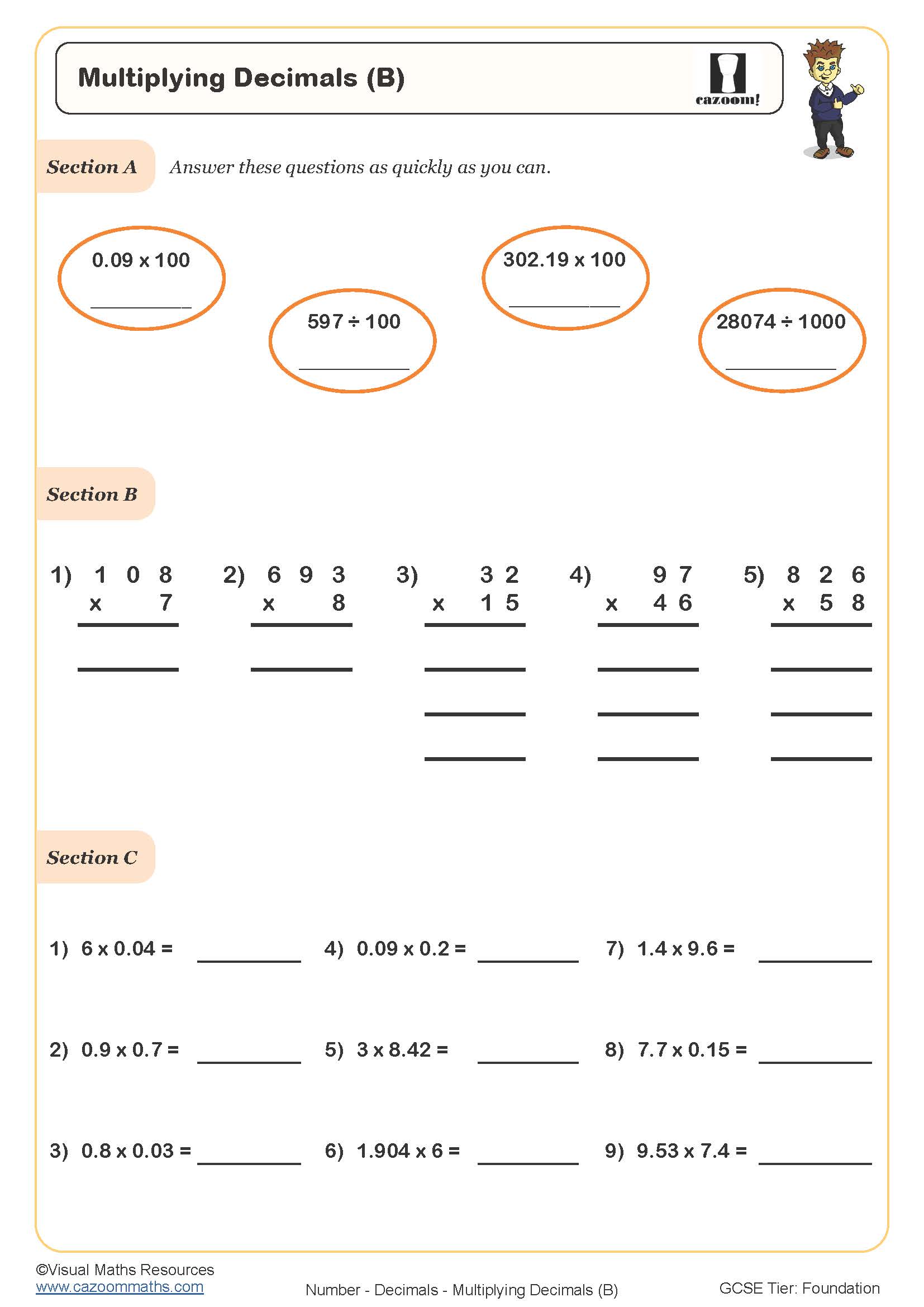
Multiplying Decimals (B)
Year groups: 7, 8
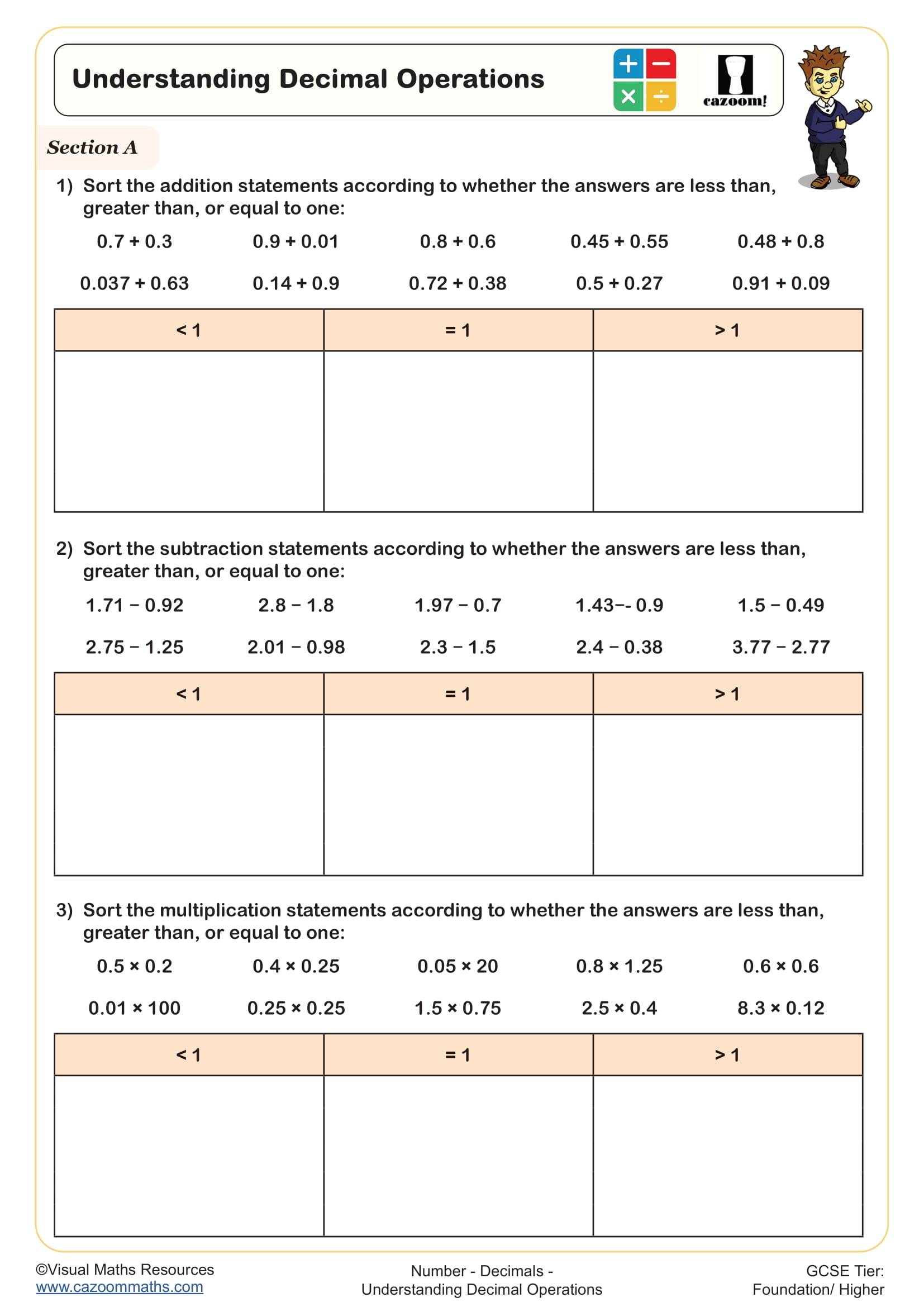
Understanding Decimal Operations
Year groups: 7, 8
All worksheets are created by the team of experienced teachers at Cazoom Maths.
What are the four operations with decimals?
The four operations with decimals involve applying addition, subtraction, multiplication and division to numbers that include decimal places. At Key Stage 3, students extend their understanding from whole numbers to work confidently with tenths, hundredths and thousandths, maintaining place value accuracy throughout calculations. The National Curriculum expects students to use formal written methods and mental strategies with decimal numbers by the end of Year 7.
A common error occurs when multiplying decimals, where students count total decimal places incorrectly. For example, when calculating 0.4 × 0.3, students sometimes write 0.012 rather than 0.12, adding three decimal places instead of two. Teachers often address this by having students estimate first (0.4 × 0.3 is roughly half of a third, so approximately 0.1), helping them recognise when answers are unreasonable before checking the formal calculation.
Which year groups study four operations with decimals?
These worksheets target Year 7 and Year 8 students in Key Stage 3, where the curriculum requires students to perform all four operations with increasingly complex decimal numbers. Year 6 introduces the foundations, but KS3 deepens this work through multi-step problems, larger numbers with more decimal places, and contexts requiring decisions about rounding and accuracy.
Progression across Year 7 and Year 8 moves from calculations with one or two decimal places to numbers with three or more decimal places, and from isolated operations to combined problems. Year 7 typically consolidates column addition and subtraction whilst developing multiplication and division methods, whereas Year 8 focuses on efficiency, choosing appropriate mental or written methods, and applying these skills to algebraic expressions, standard form and real-world problems involving measures and money.
How do you divide decimals using the formal written method?
When dividing by a decimal using the formal written method, students multiply both the divisor and dividend by the same power of ten to create an equivalent calculation with a whole number divisor. For instance, 6.3 ÷ 0.7 becomes 63 ÷ 7 after multiplying both by 10, which gives 9. This maintains the relationship between the numbers whilst simplifying the division process, though students often forget to adjust both numbers, leading to incorrect answers.
This skill connects directly to dosage calculations in healthcare and concentration problems in chemistry, where dividing decimal measurements accurately matters considerably. Pharmacists calculate drug doses per kilogram of body weight (such as 0.15 mg per kg for a patient weighing 68.5 kg), requiring precise decimal division to ensure patient safety. Understanding that 0.15 × 68.5 and its inverse operation underpin these real-world applications helps students appreciate why decimal fluency extends beyond classroom exercises.
How can these worksheets support learning of decimal operations?
The worksheets provide structured practice that builds from simpler calculations to more complex multi-step problems, allowing students to consolidate each operation before combining them. Questions progress from calculations with one decimal place to those requiring careful alignment of several decimal places, with answer sheets enabling students to identify where errors occur in their method rather than simply marking answers right or wrong.
Teachers use these resources flexibly across different classroom contexts. They work well for targeted intervention with small groups who need additional practice on specific operations, as starters to maintain fluency across the year, or as homework tasks that parents can support using the provided answers. Paired work proves particularly effective, with one student solving whilst their partner checks the working against the answer sheet, then swapping roles, encouraging mathematical discussion about why particular methods work.