Four Operations with Fractions Worksheets
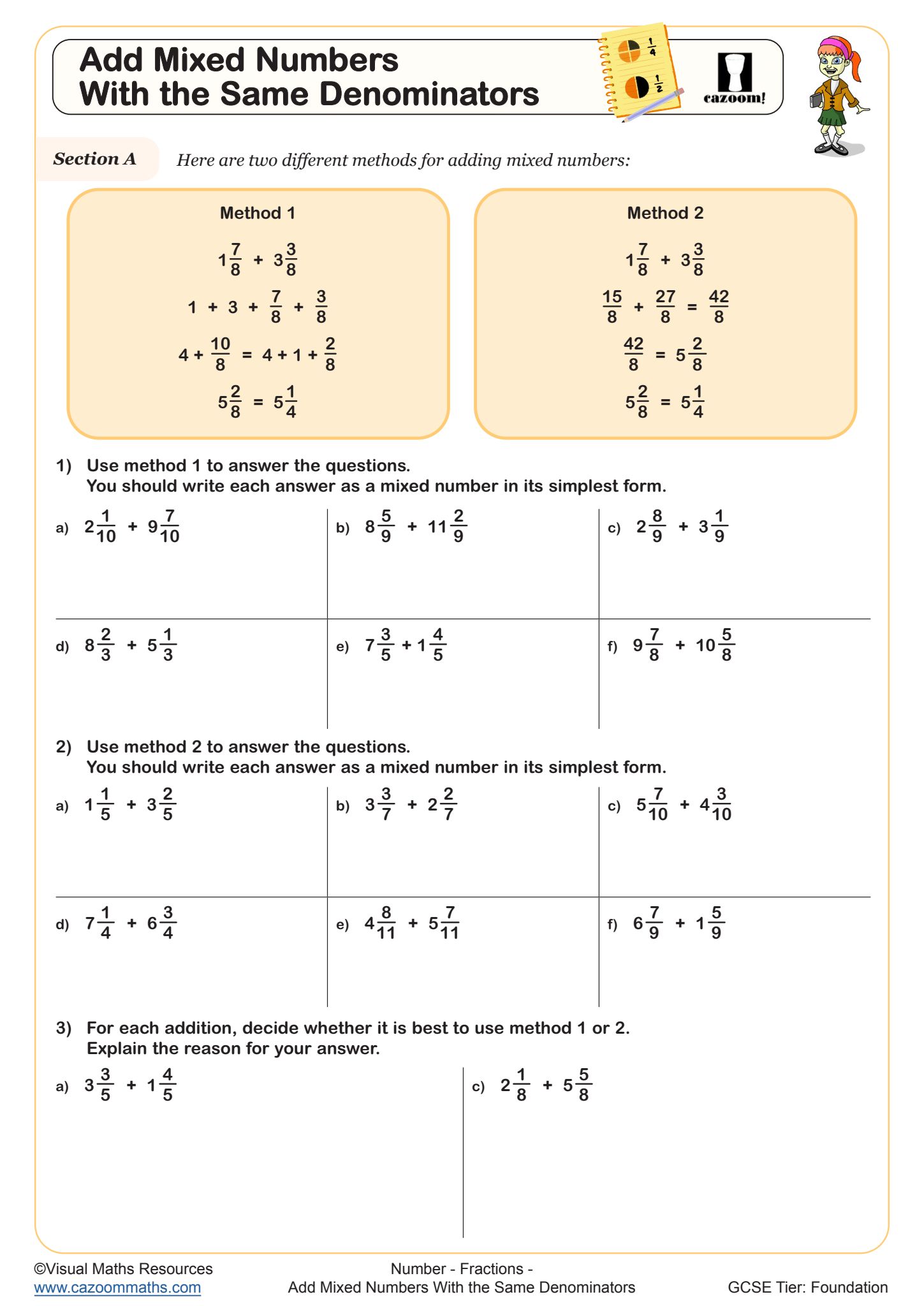
Add Mixed Numbers with the Same Denominator
Year groups: 7, 8
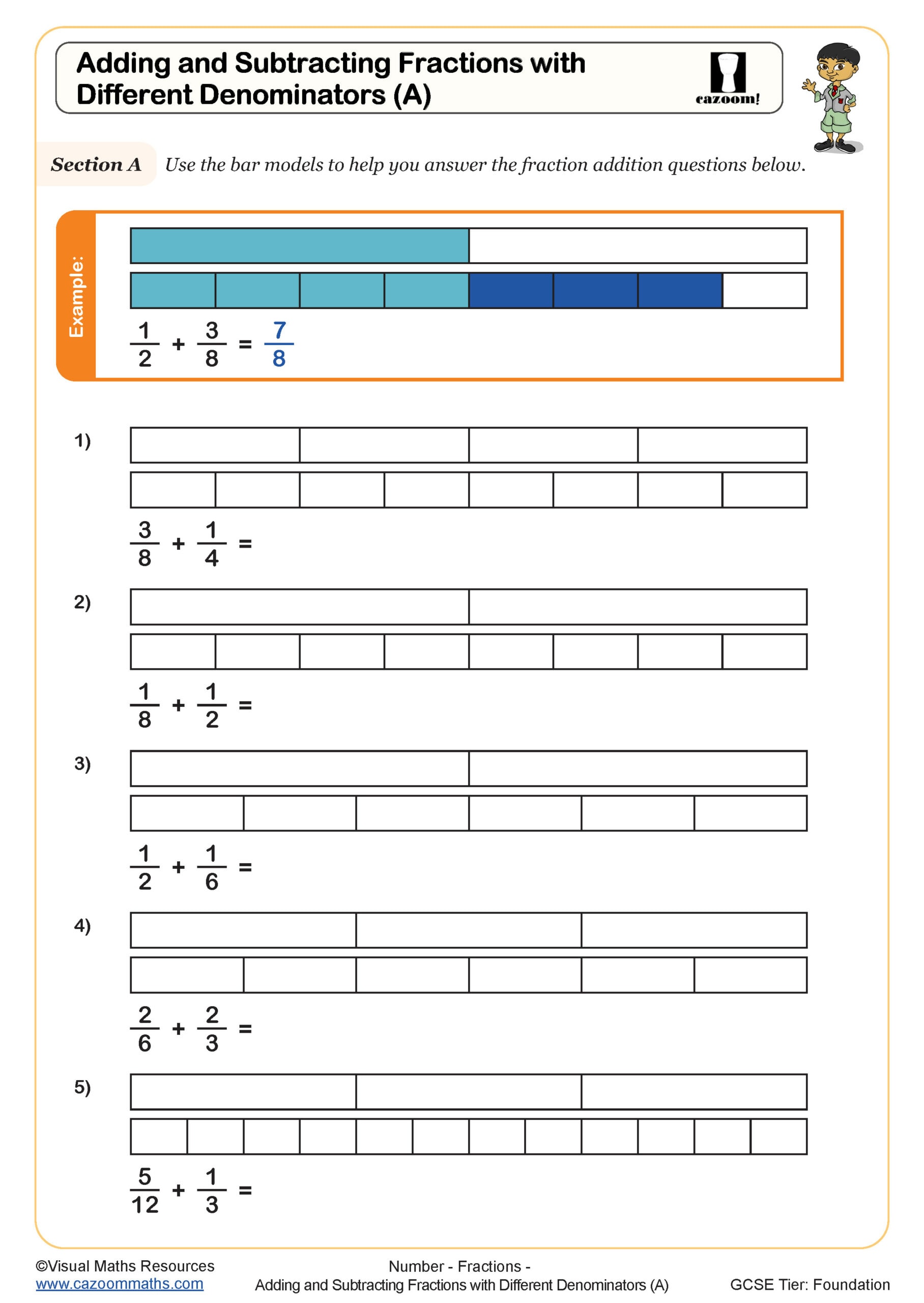
Adding and subtracting fractions with different denominators (A)
Year groups: 7, 8
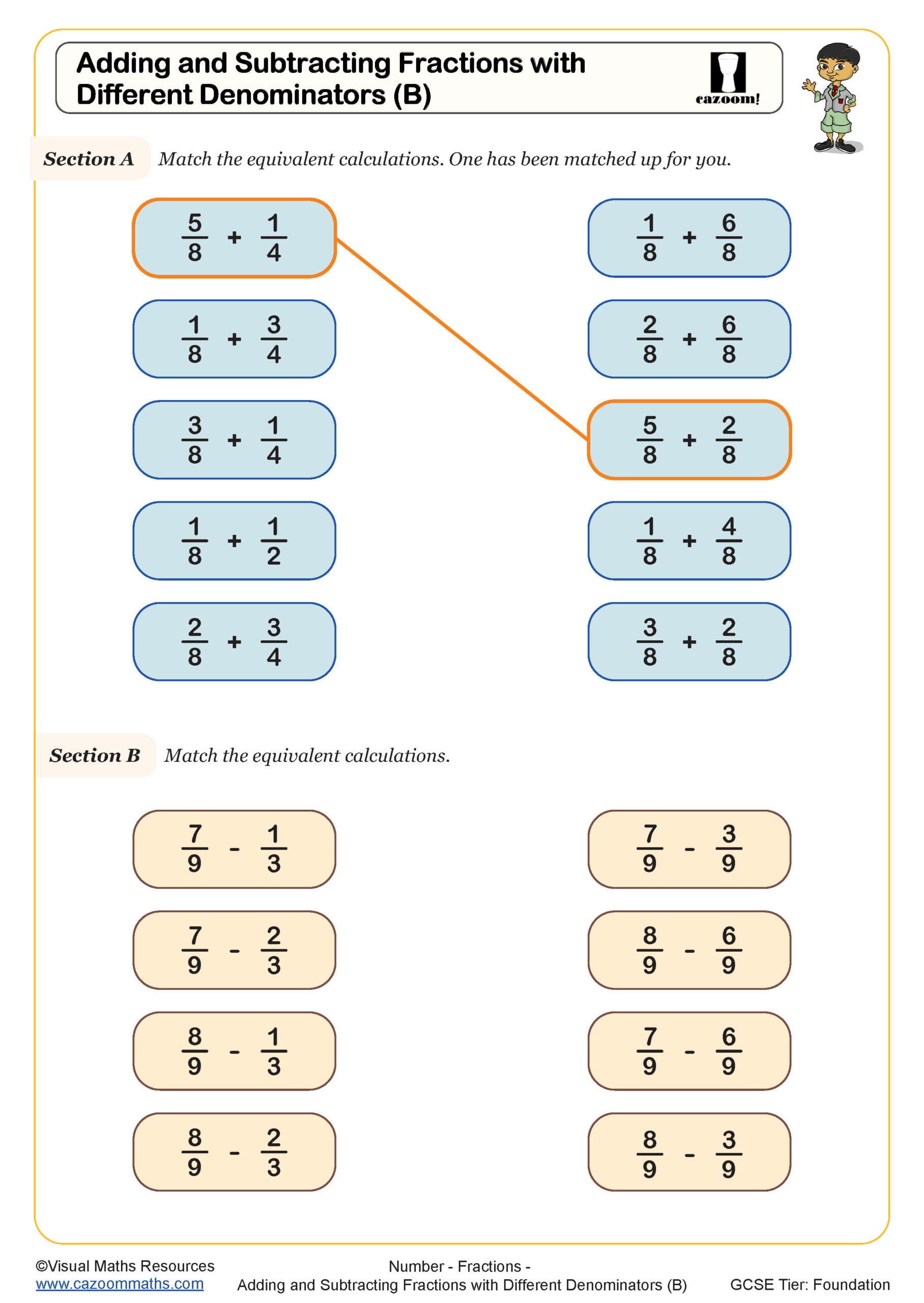
Adding and subtracting fractions with different denominators (B)
Year groups: 7, 8
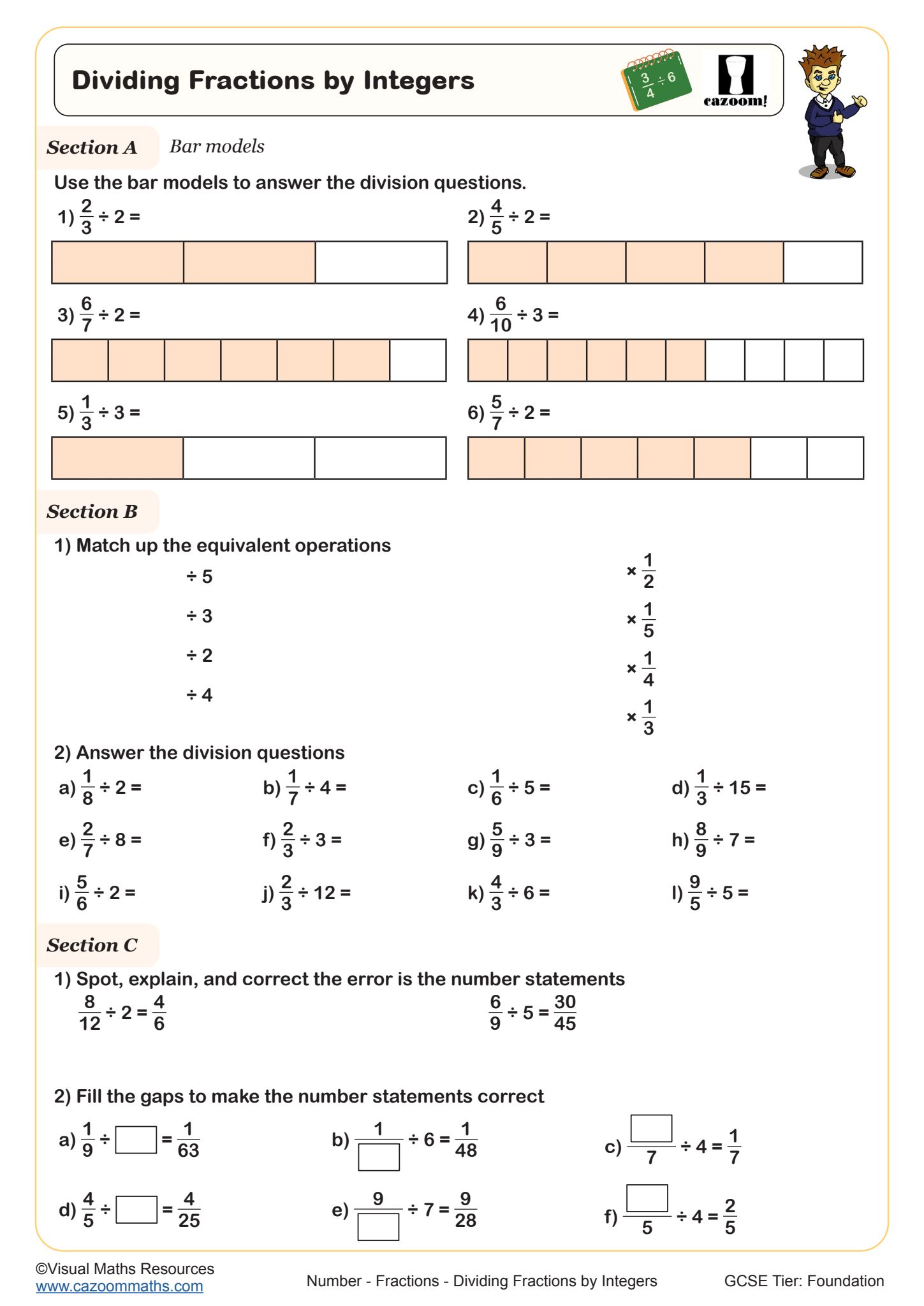
Dividing Fractions by Integers
Year groups: 7, 8
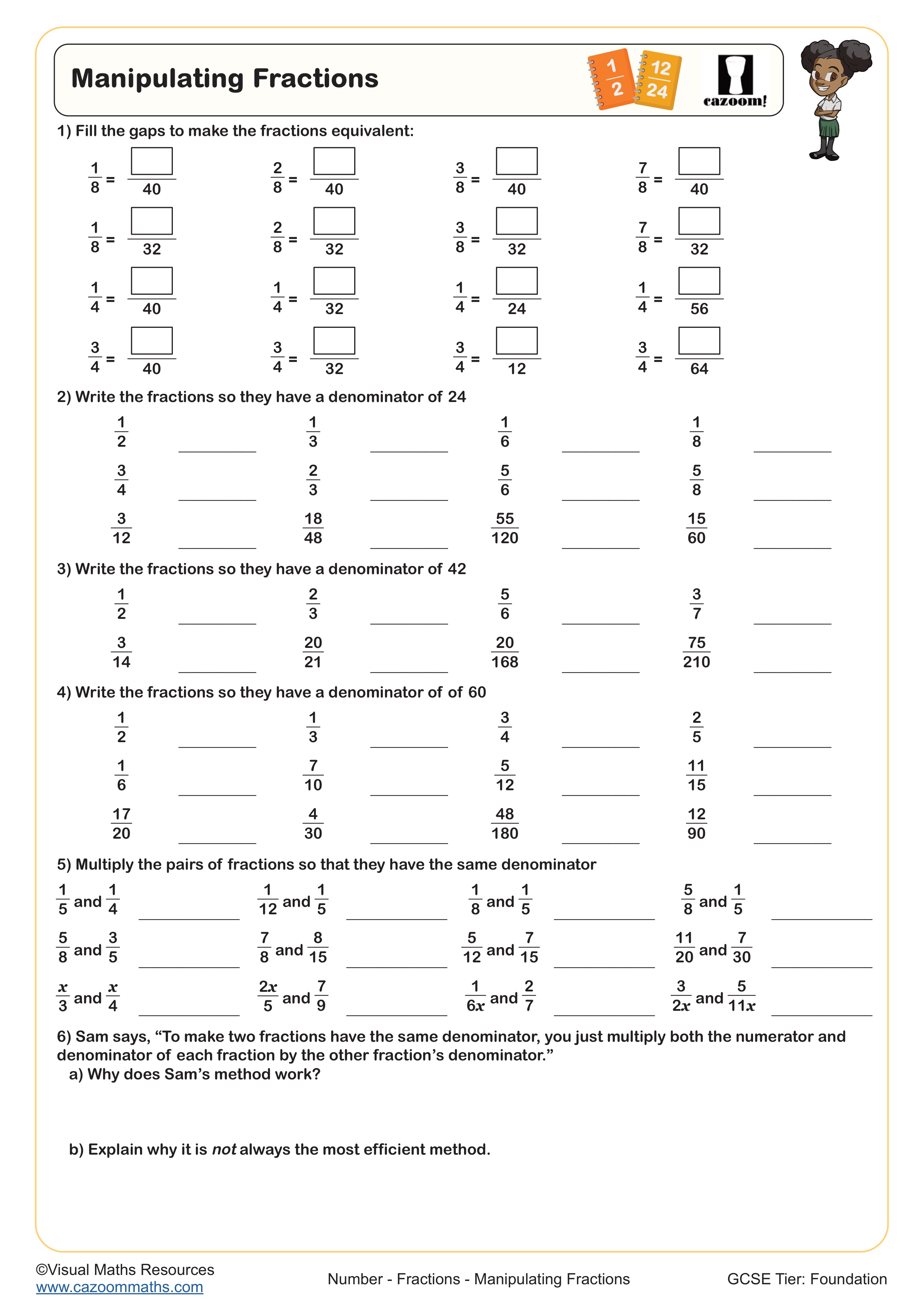
Manipulating Fractions
Year groups: 7, 8
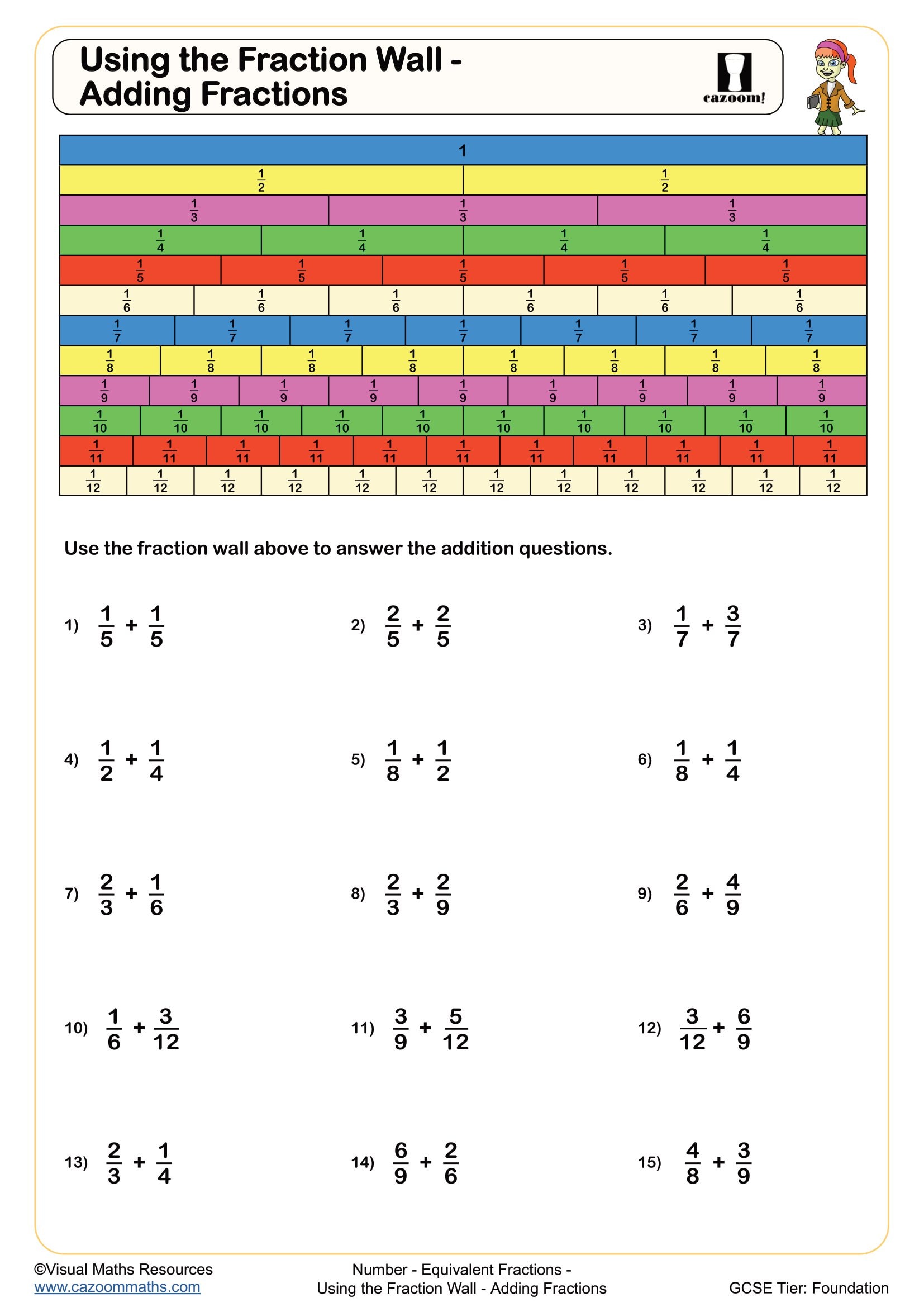
Using The Fraction Wall - Adding Fractions
Year groups: 7, 8
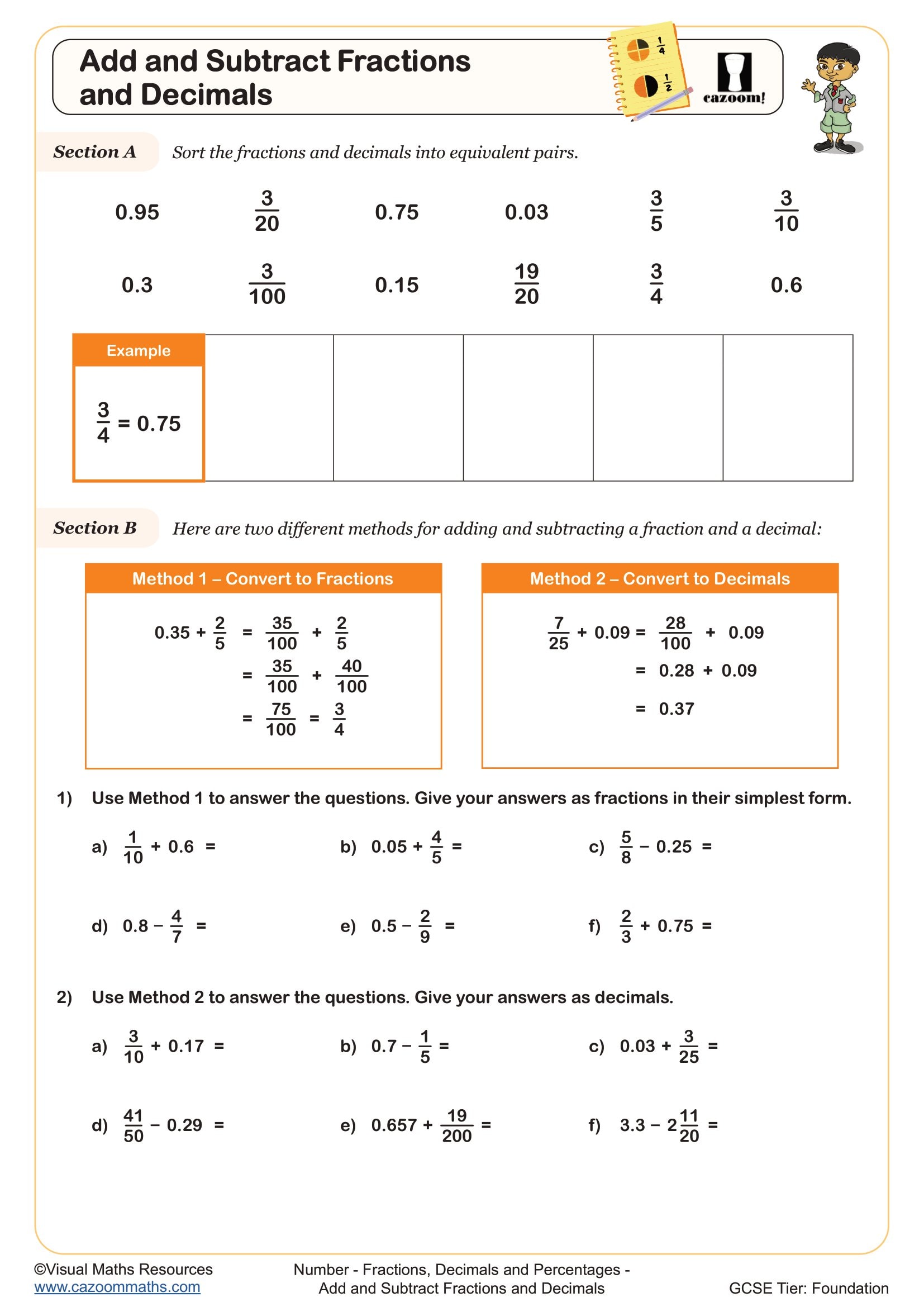
Add and Subtract Fractions and Decimals
Year groups: 8, 9
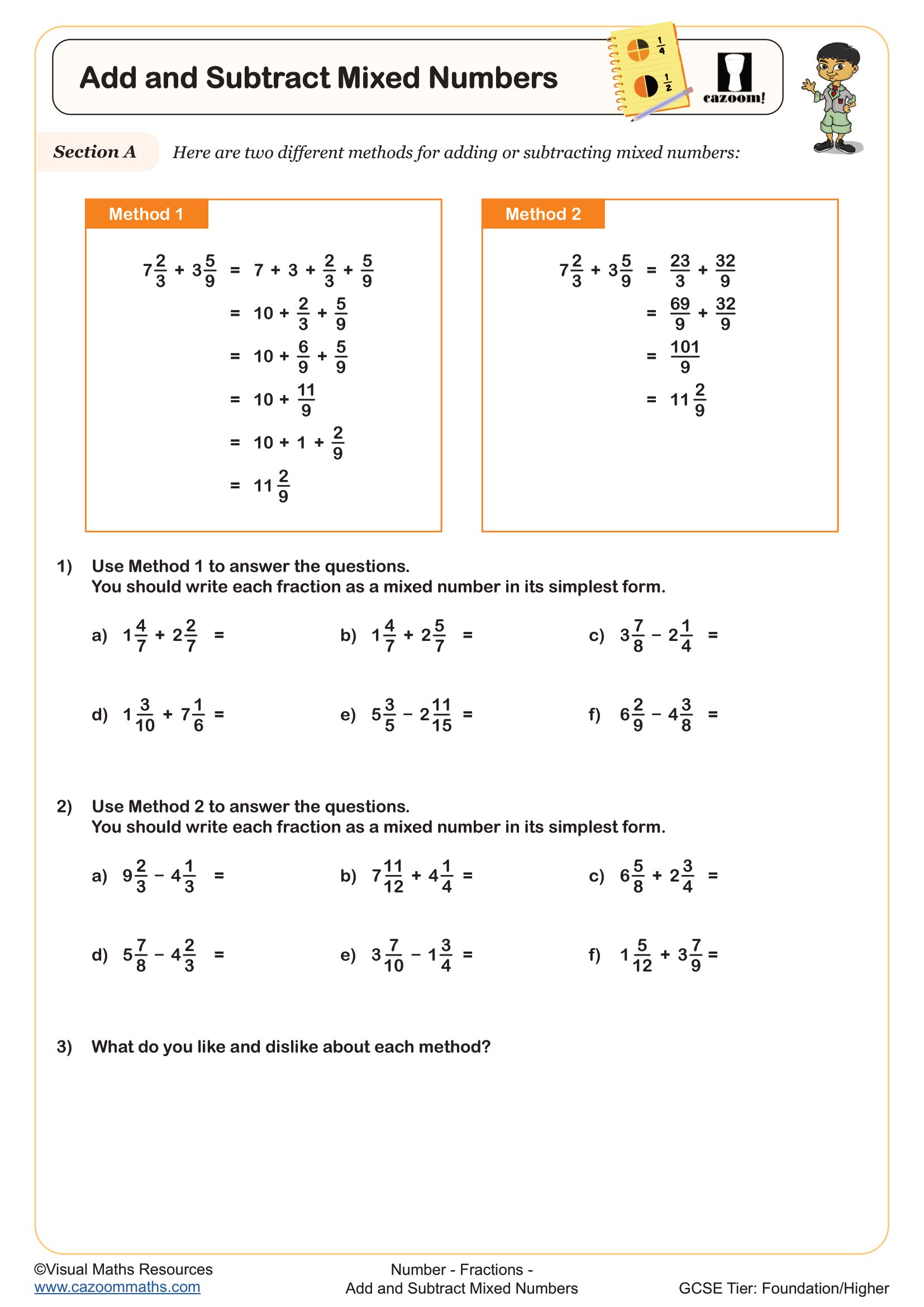
Add and Subtract Mixed Numbers
Year groups: 8, 9, 10
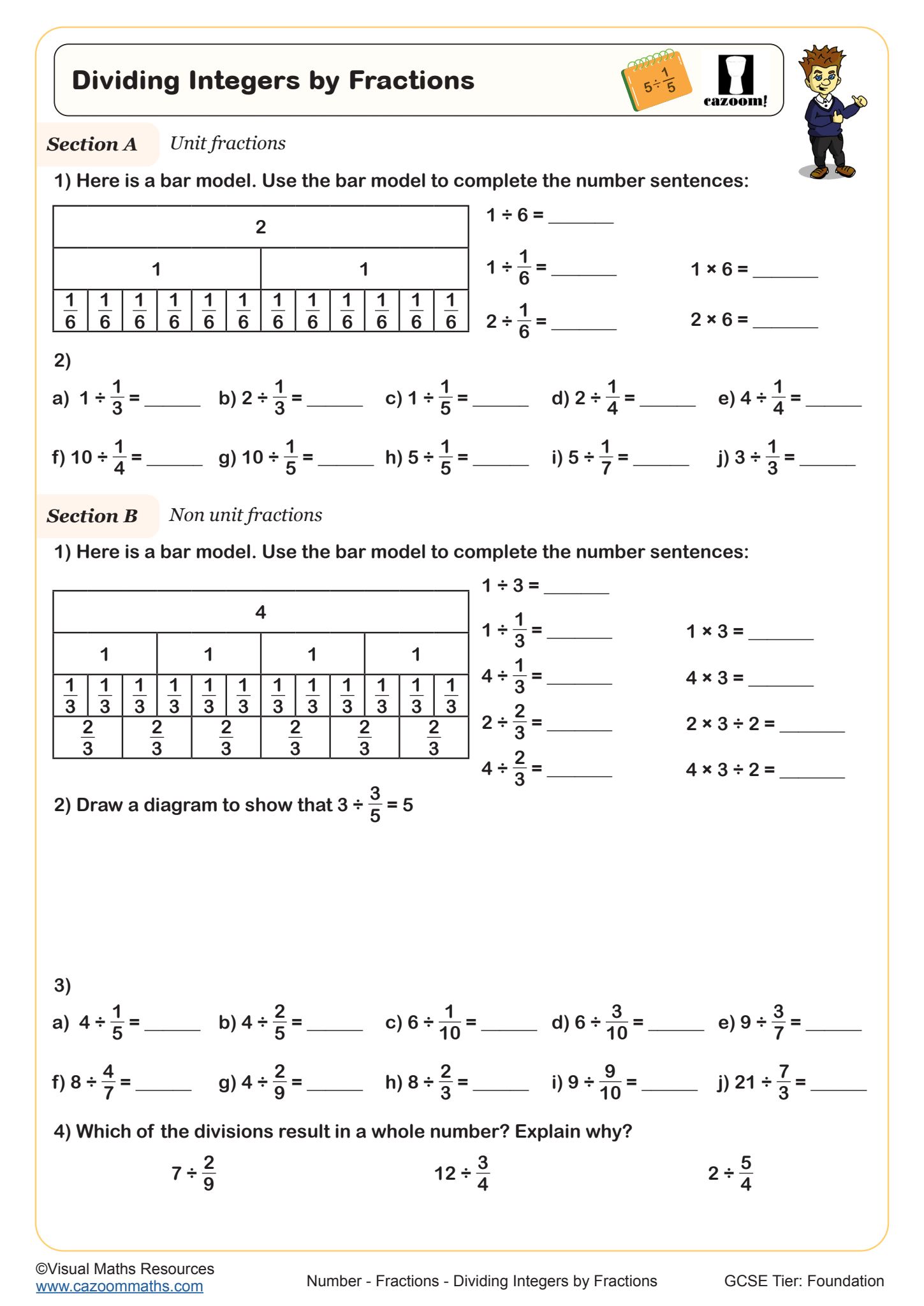
Adding and Subtracting Fractions
Year groups: 8, 9
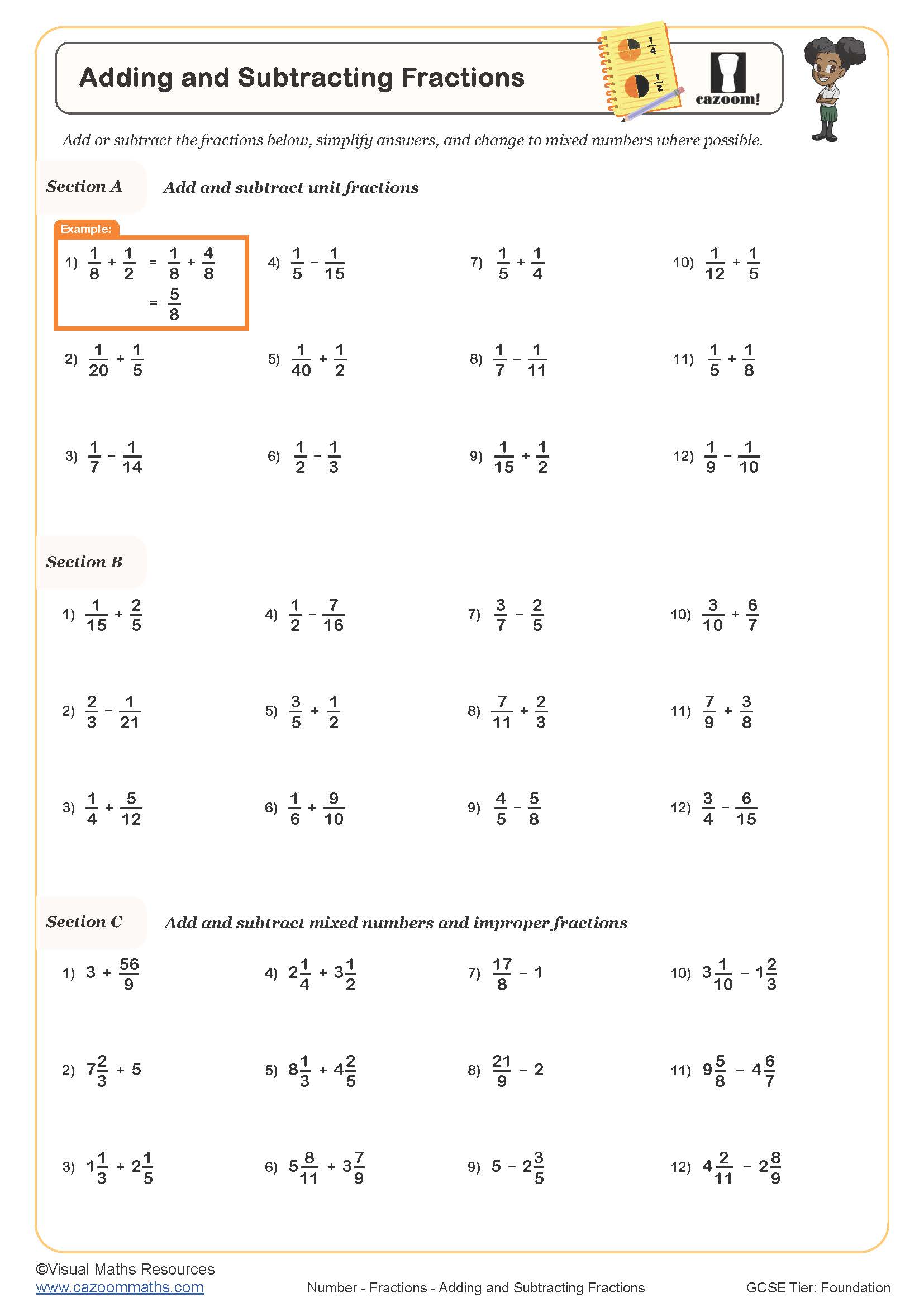
Dividing Fractions
Year groups: 8, 9
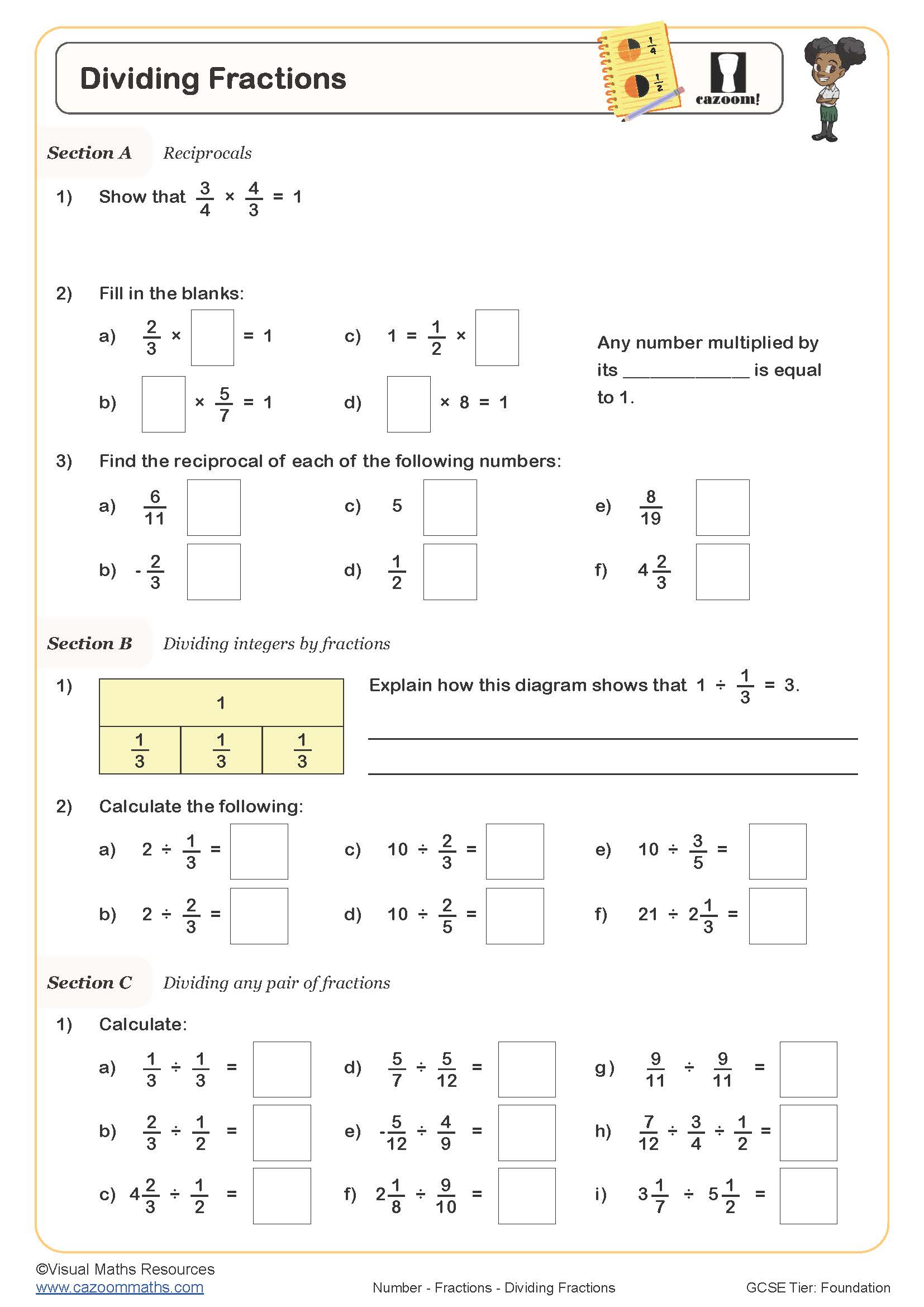
Dividing Fractions by Fractions - Using the Area Model
Year groups: 8, 9
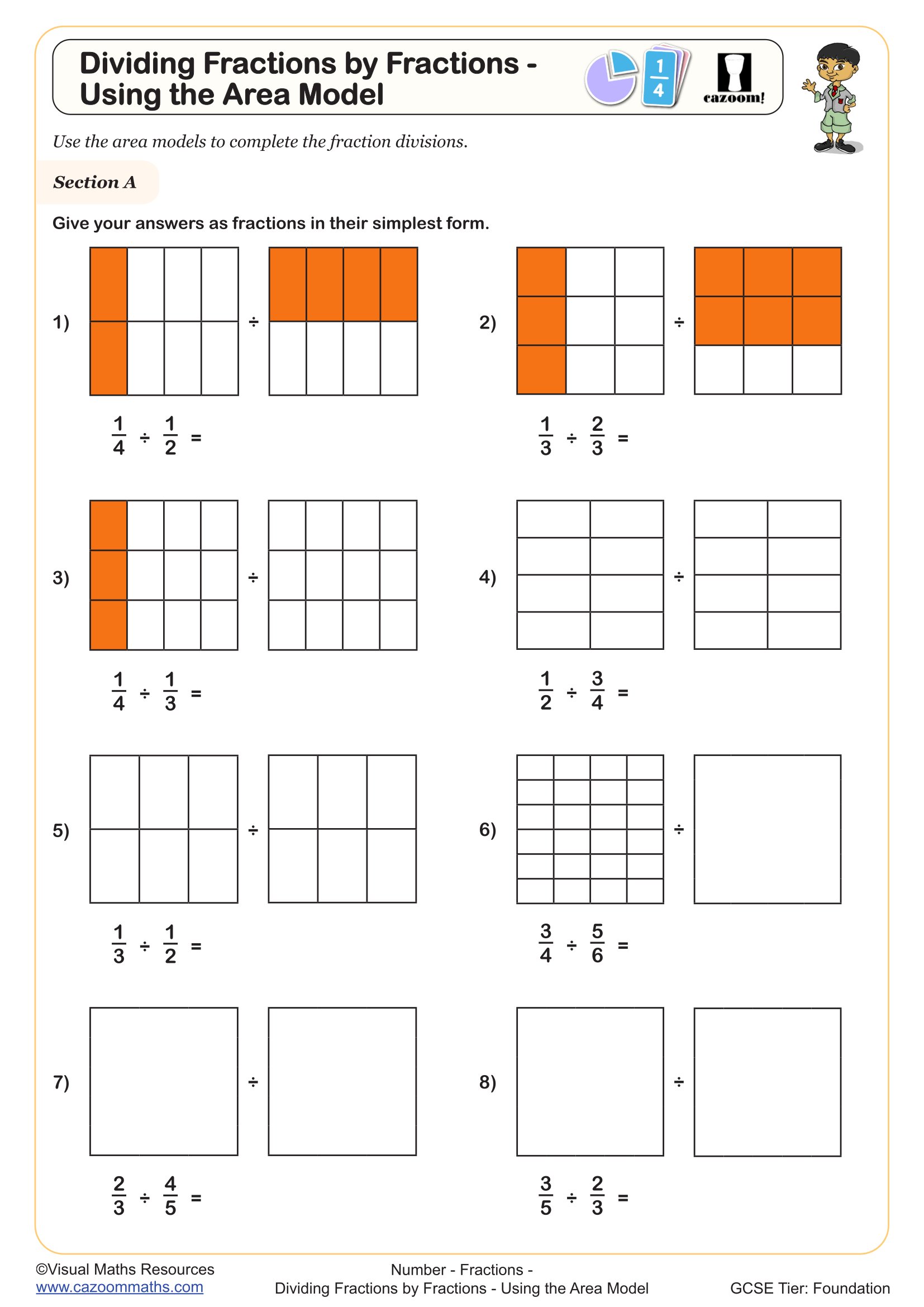
Dividing Integers by Fractions
Year groups: 8, 9
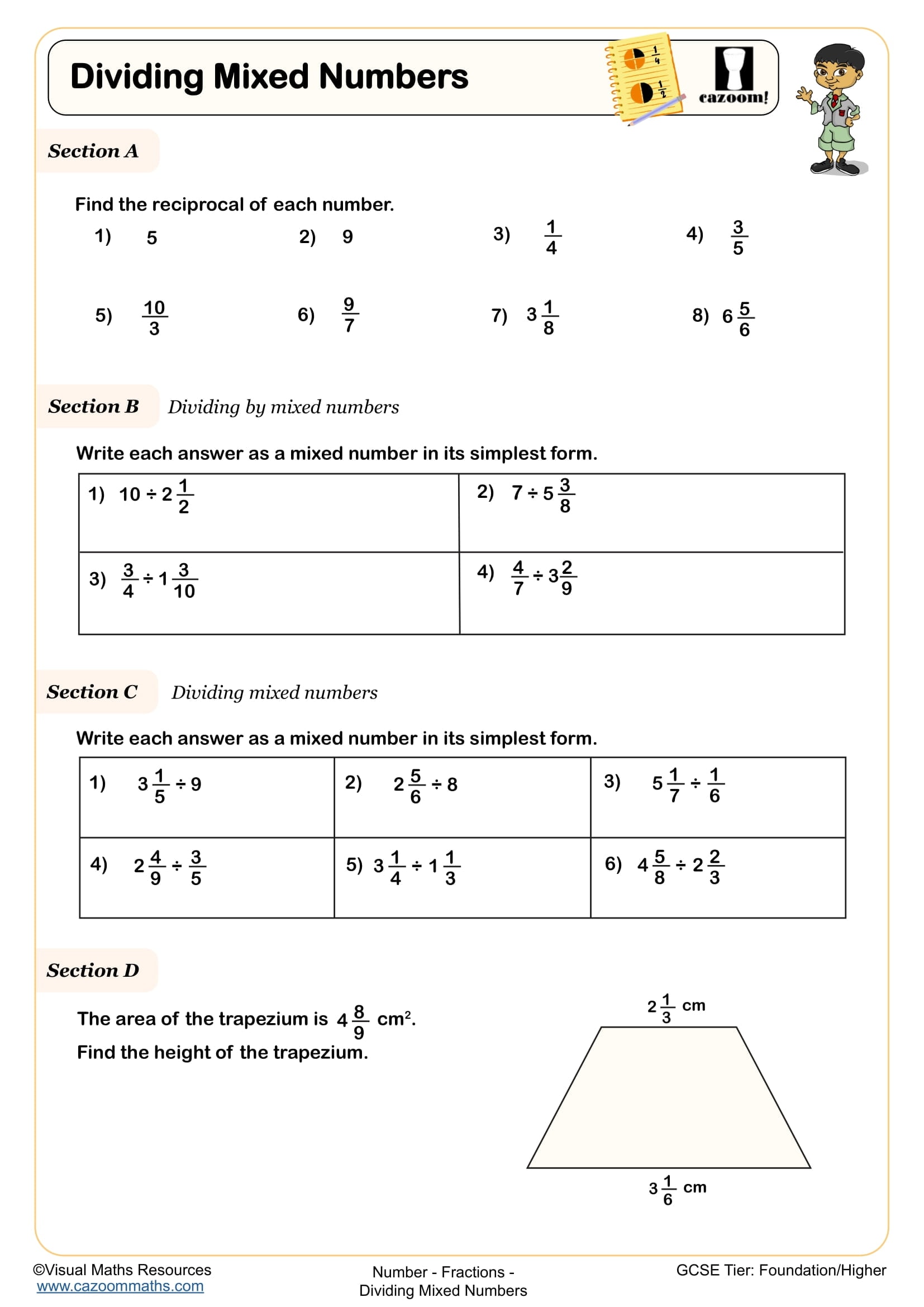
Dividing Mixed Numbers
Year groups: 8, 9, 10
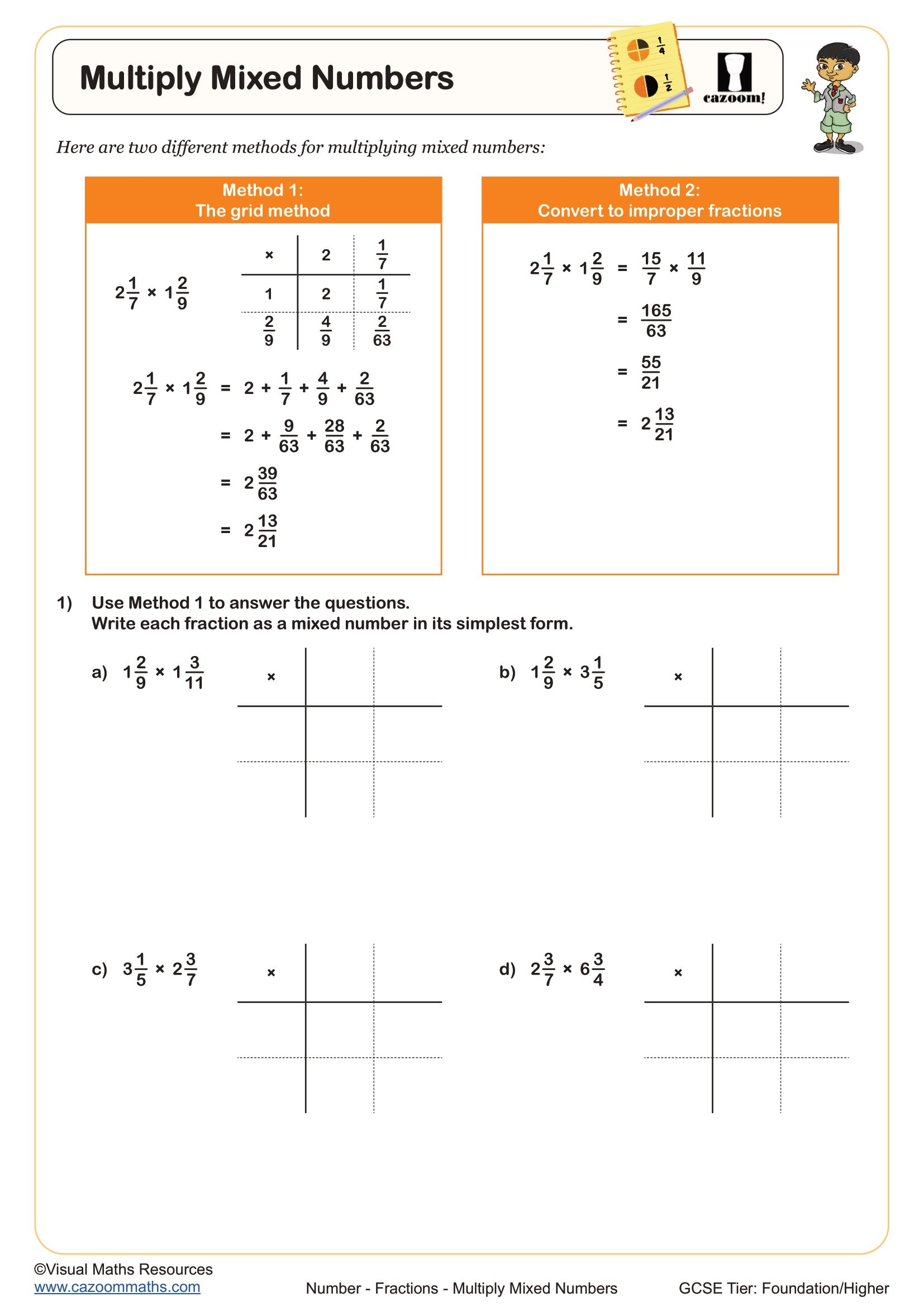
Multiply Mixed Numbers
Year groups: 8, 9, 10
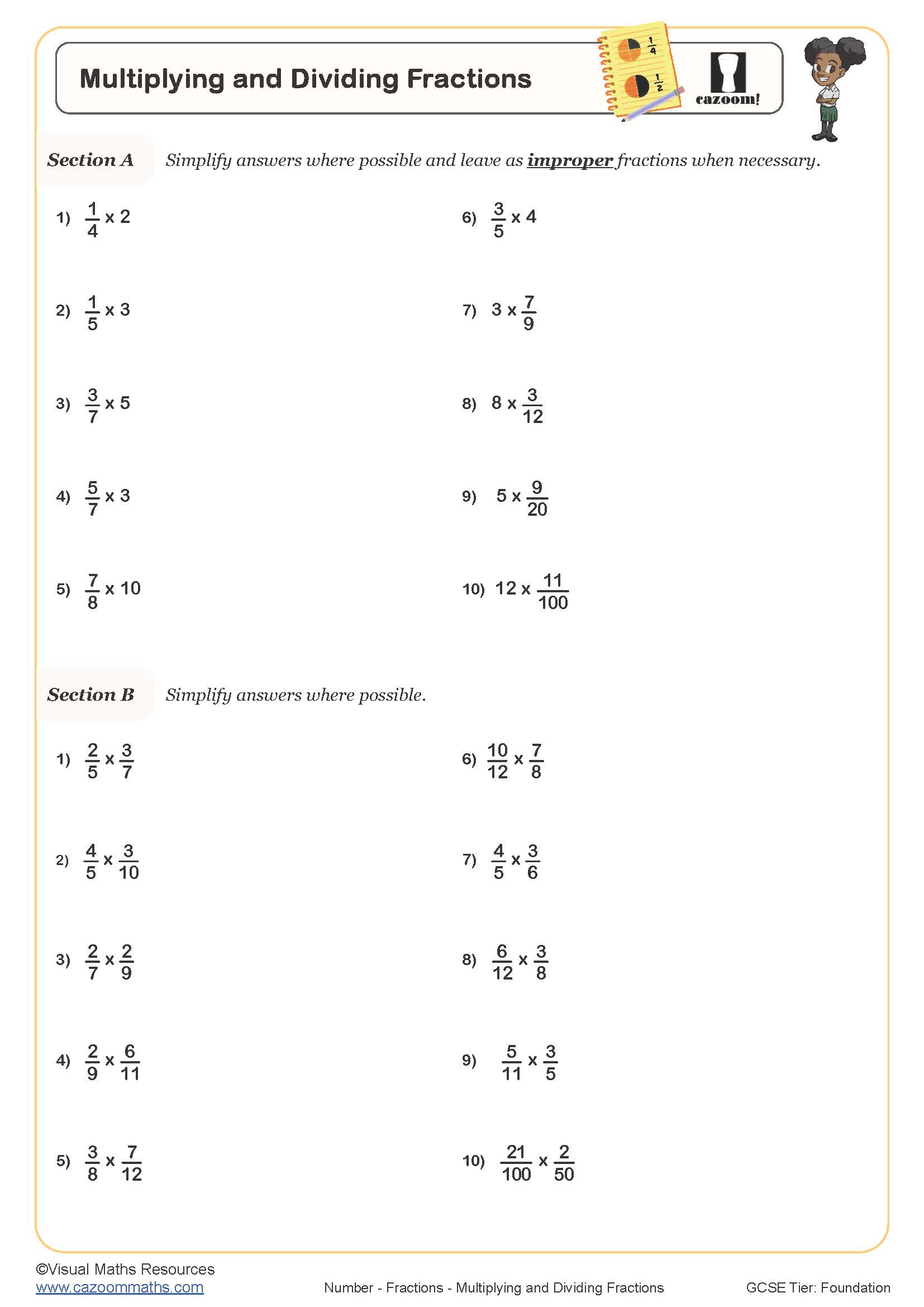
Multiplying and Dividing Fractions
Year groups: 8, 9
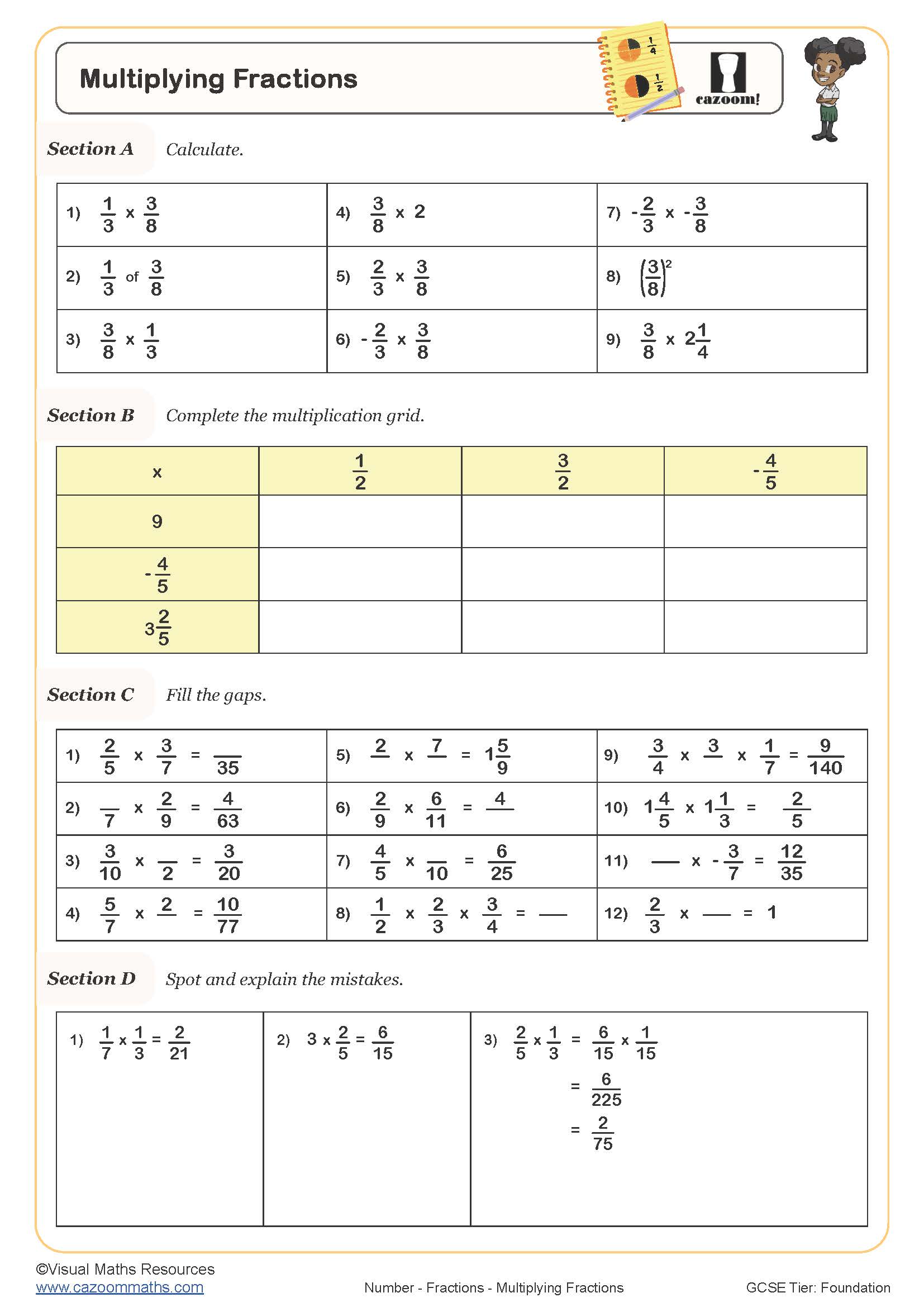
Multiplying Fractions
Year groups: 8, 9
Multiplying Fractions - Using the Area Model
Year groups: 8, 9
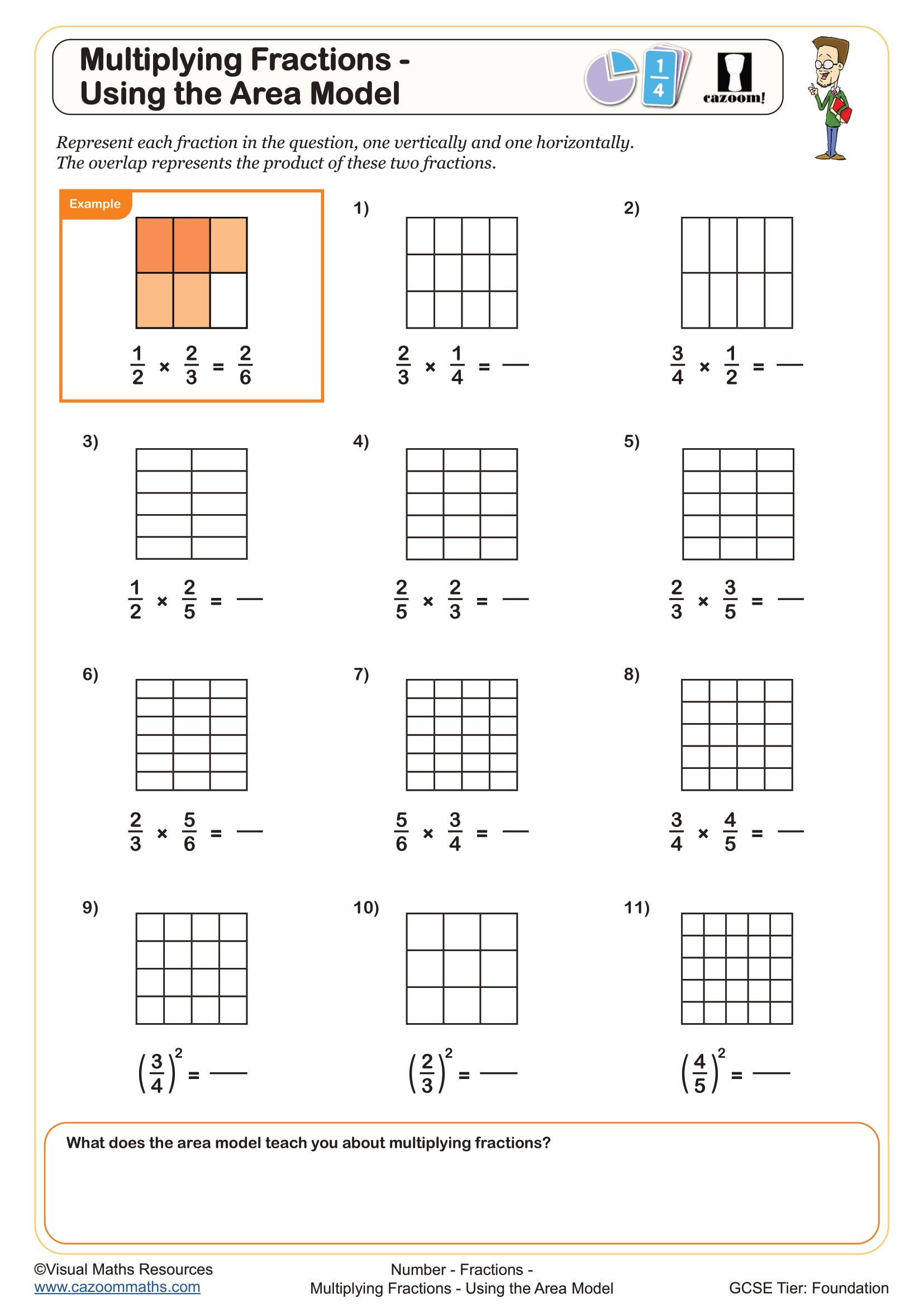
Multiplying Unit Fractions - Using the Area Model
Year groups: 8, 9
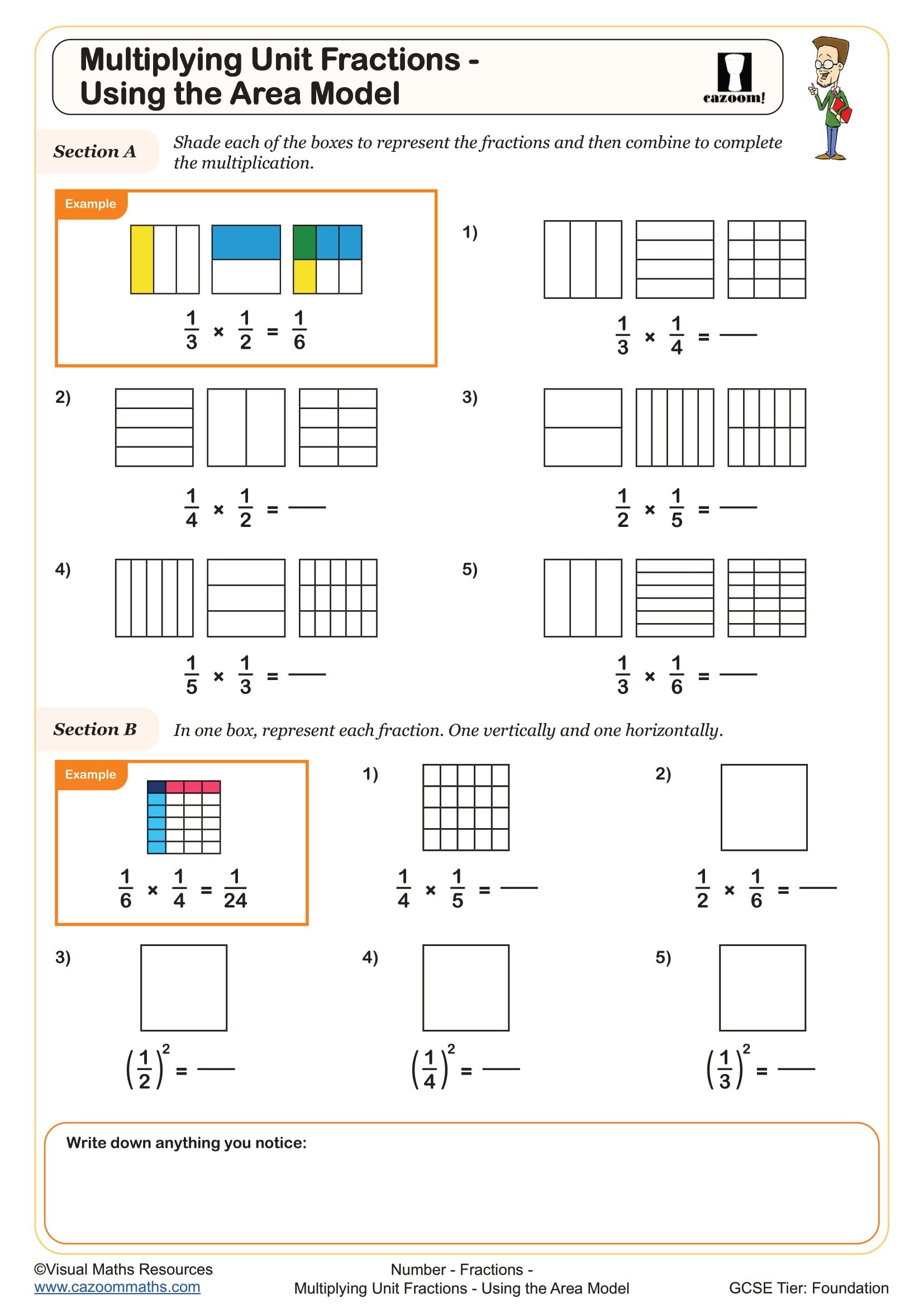
Operating Fractions (A)
Year groups: 8, 9
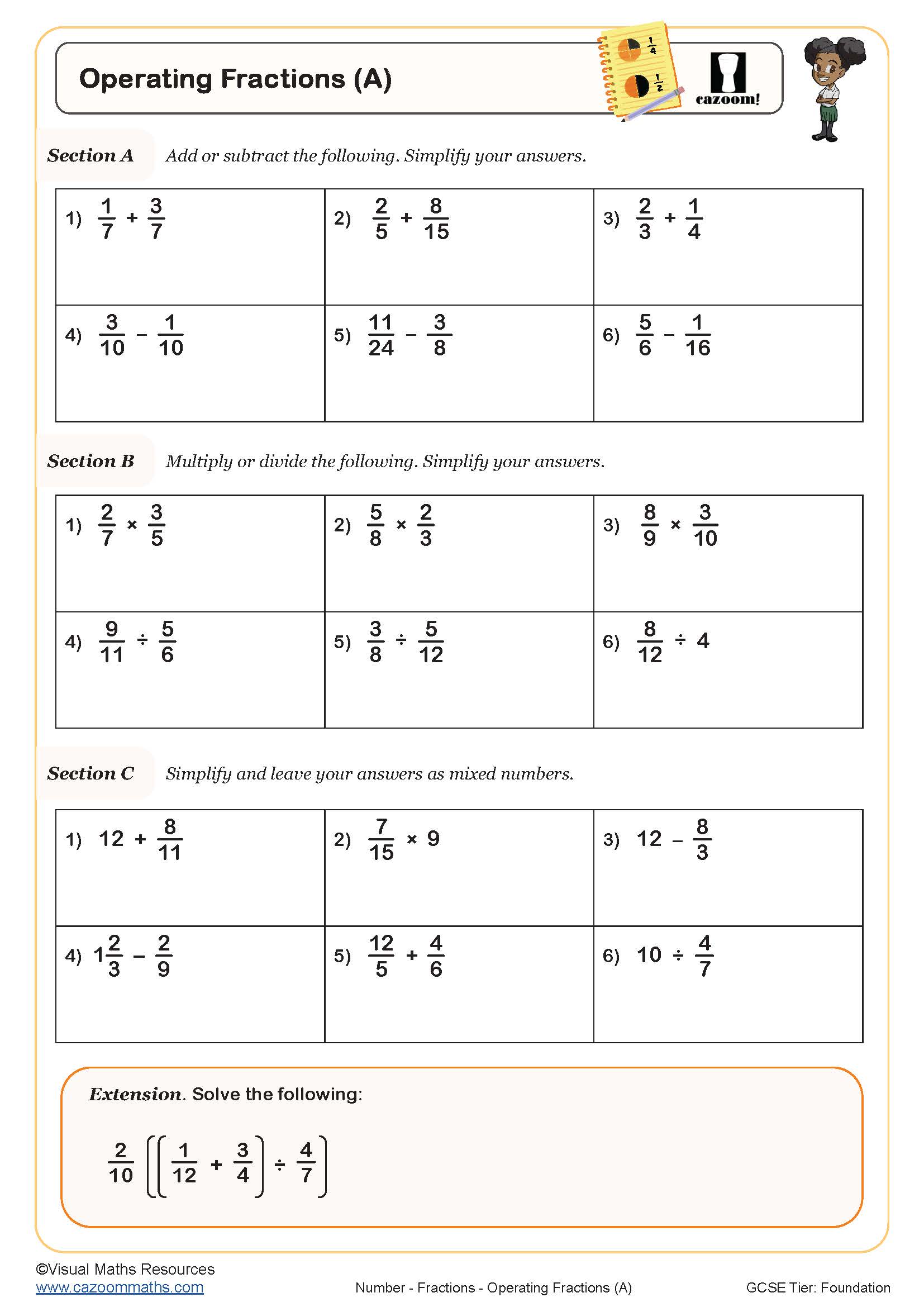
Operating with Fractions (C)
Year groups: 8, 9
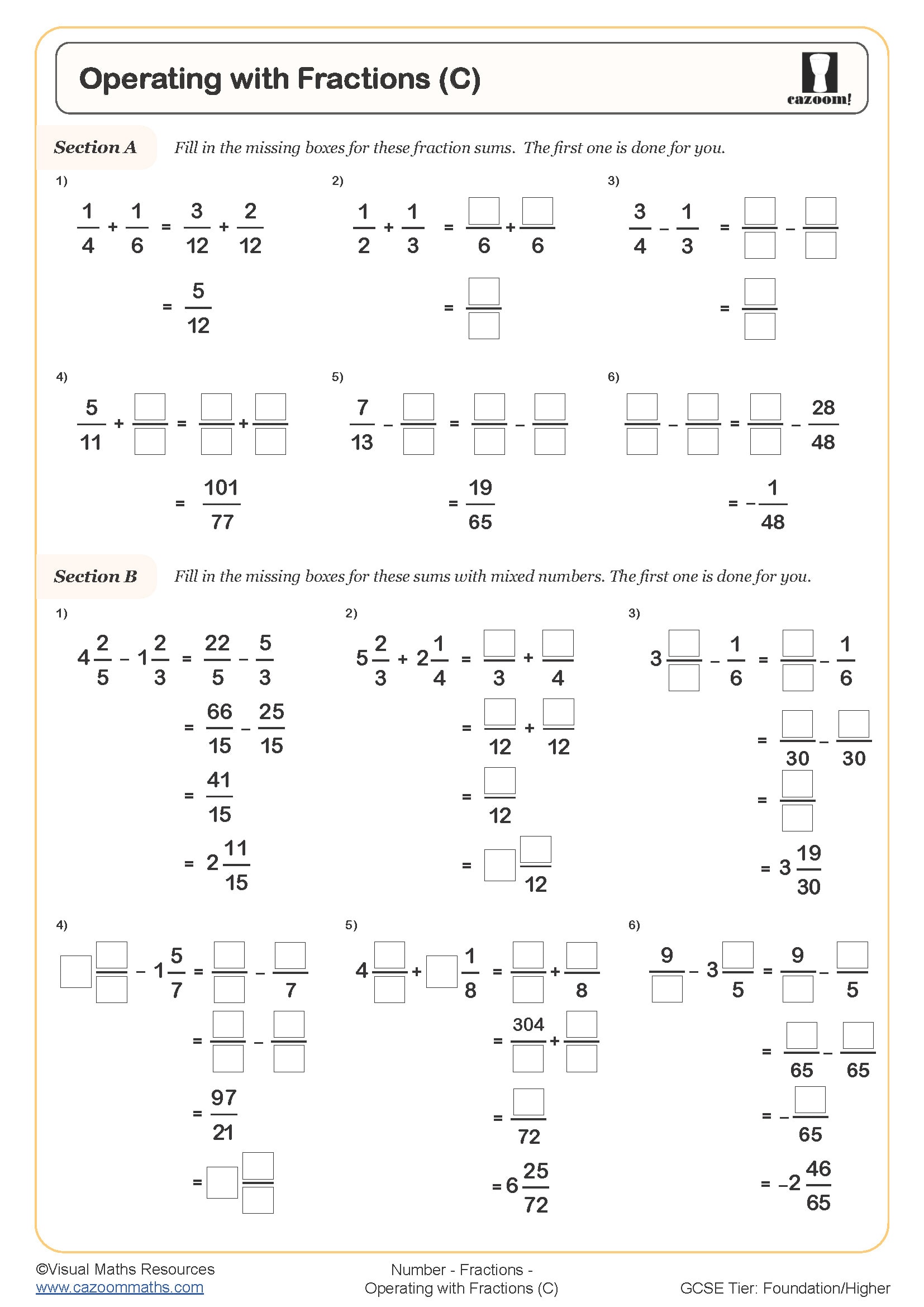
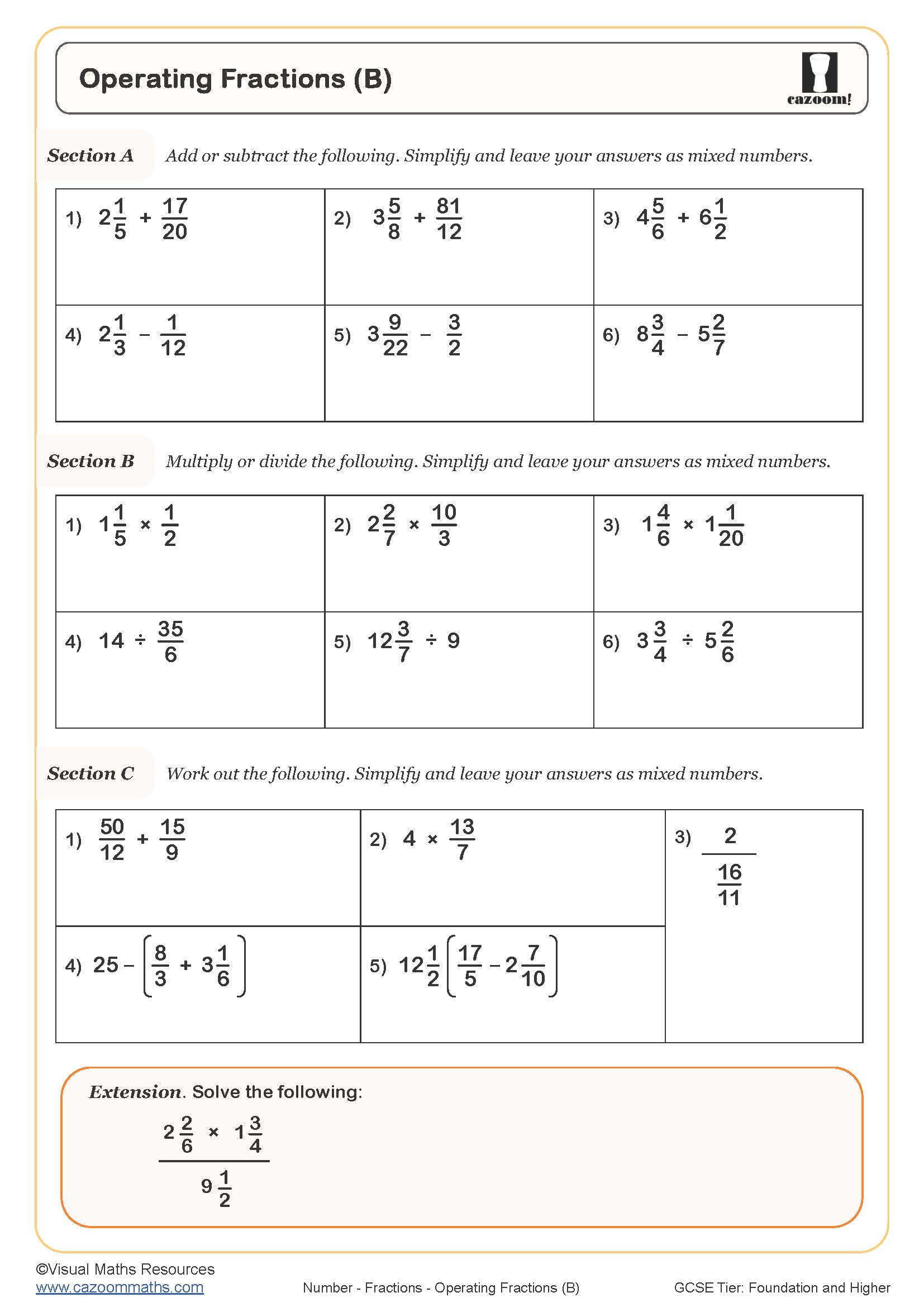
Operating Fractions (B)
Year groups: 10, 11
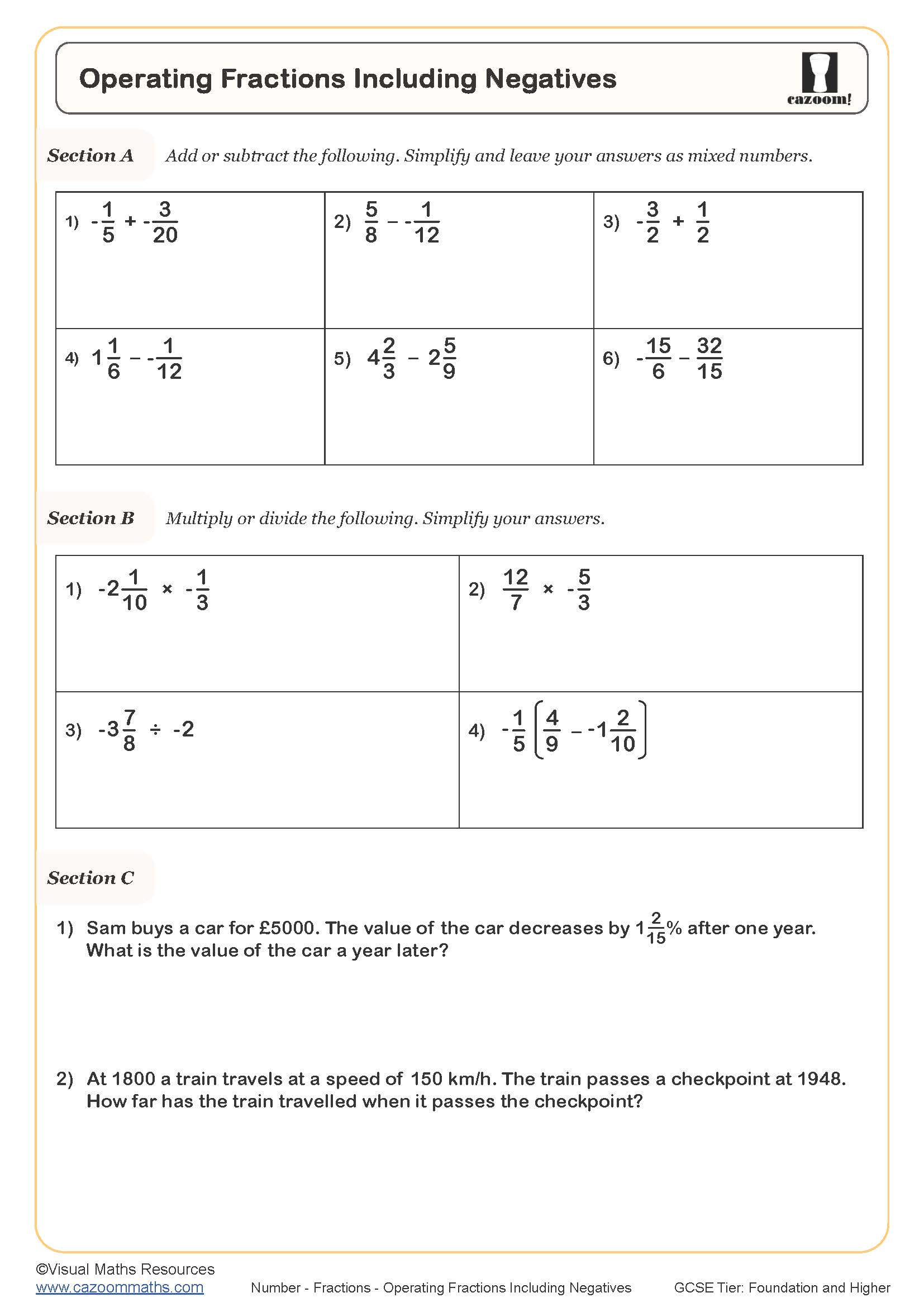
Operating Fractions Including Negatives
Year groups: 10, 11
All worksheets are created by the team of experienced teachers at Cazoom Maths.
What are the four operations with fractions?
The four operations with fractions refer to addition, subtraction, multiplication and division applied to fractional numbers. In the National Curriculum, students first encounter fraction operations at upper Key Stage 2, but develop full competence across Key Stage 3 where they work with proper fractions, improper fractions, mixed numbers and increasingly complex denominators. Each operation requires different approaches: addition and subtraction need common denominators, whilst multiplication involves multiplying numerators and denominators directly, and division requires the 'keep, change, flip' method.
Students often struggle with knowing which operation requires which method, particularly confusing the rules for multiplication and addition. Exam mark schemes regularly penalise students who try to add fractions by adding numerators and denominators separately (treating 1/4 + 1/2 as 2/6, for instance). Teachers observe that students who verbalise each step of their method make fewer procedural errors, especially when distinguishing between operations that do and don't require common denominators.
Which year groups study four operations with fractions?
These worksheets cover Year 7, Year 8, Year 9, Year 10 and Year 11, spanning both Key Stage 3 and Key Stage 4. The National Curriculum expects students to consolidate all four fraction operations during Key Stage 3, building on the foundational work from primary school. By Year 9, students should handle mixed numbers and improper fractions confidently across all operations, whilst Year 10 and Year 11 resources focus on applying these skills within GCSE contexts including problem-solving and algebraic fractions.
The progression across year groups moves from straightforward calculations with unit and simple fractions in Year 7 towards increasingly complex multi-step problems by Year 11. Year 7 students typically work with halves, quarters and thirds, whilst Year 9 onwards includes fractions with larger denominators, negative fractions and word problems requiring students to identify which operation to apply. Teachers find that regular retrieval practice across all four operations prevents students from forgetting the distinct procedures, particularly the division method which receives less curriculum time than the others.
Why do students multiply by the reciprocal when dividing fractions?
Dividing by a fraction means finding how many groups of that fraction fit into another number, which is mathematically equivalent to multiplying by its reciprocal (the fraction flipped upside down). Students learn this as the 'keep, change, flip' method: keep the first fraction, change division to multiplication, flip the second fraction. For example, 3/4 ÷ 1/2 becomes 3/4 × 2/1, which equals 6/4 or 3/2. This procedure works because dividing by 1/2 is the same as asking 'how many halves are in this amount?', which is twice the original value.
This concept connects directly to ratio and proportion work essential in science and technology. When pharmacists calculate dosages, they frequently divide quantities by fractional amounts to determine how many doses a medication provides. Similarly, engineers dividing materials into fractional sections rely on this operation. Students who understand the underlying concept rather than just memorising the rule can apply it more reliably under exam conditions and recognise when division by a fraction is required in real-world contexts.
How do these worksheets help students master fraction operations?
The worksheets provide structured practice that builds procedural fluency whilst reinforcing the distinct methods for each operation. Many include scaffolded examples showing worked solutions that students can reference when tackling similar problems, particularly valuable for visual learners who benefit from seeing the step-by-step process. The progression within each worksheet typically moves from straightforward calculations to problems requiring multiple steps or strategic thinking about which operation to apply, matching the demand of GCSE exam questions.
Teachers use these resources across various classroom contexts: as starter activities for retrieval practice, during intervention sessions targeting specific operation weaknesses, or for homework following direct instruction. The complete answer sheets enable students to self-assess and identify exactly where errors occur in their working, which is particularly effective for paired work where students mark each other's calculations and discuss mistakes. Many teachers find that regular, short bursts of practice using these worksheets (ten minutes, three times weekly) produce better retention than occasional longer sessions.