Fractions of Amounts Worksheets
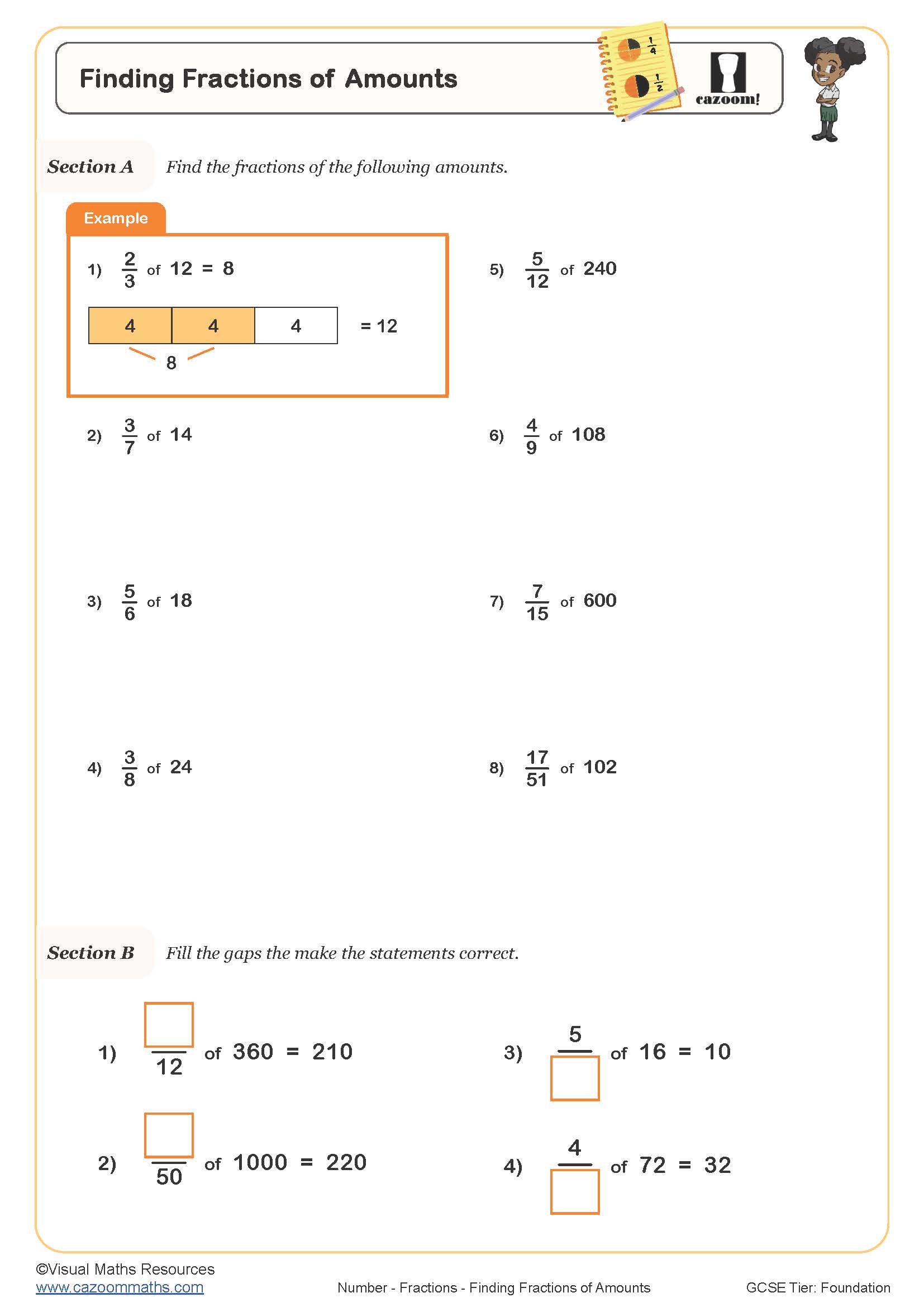
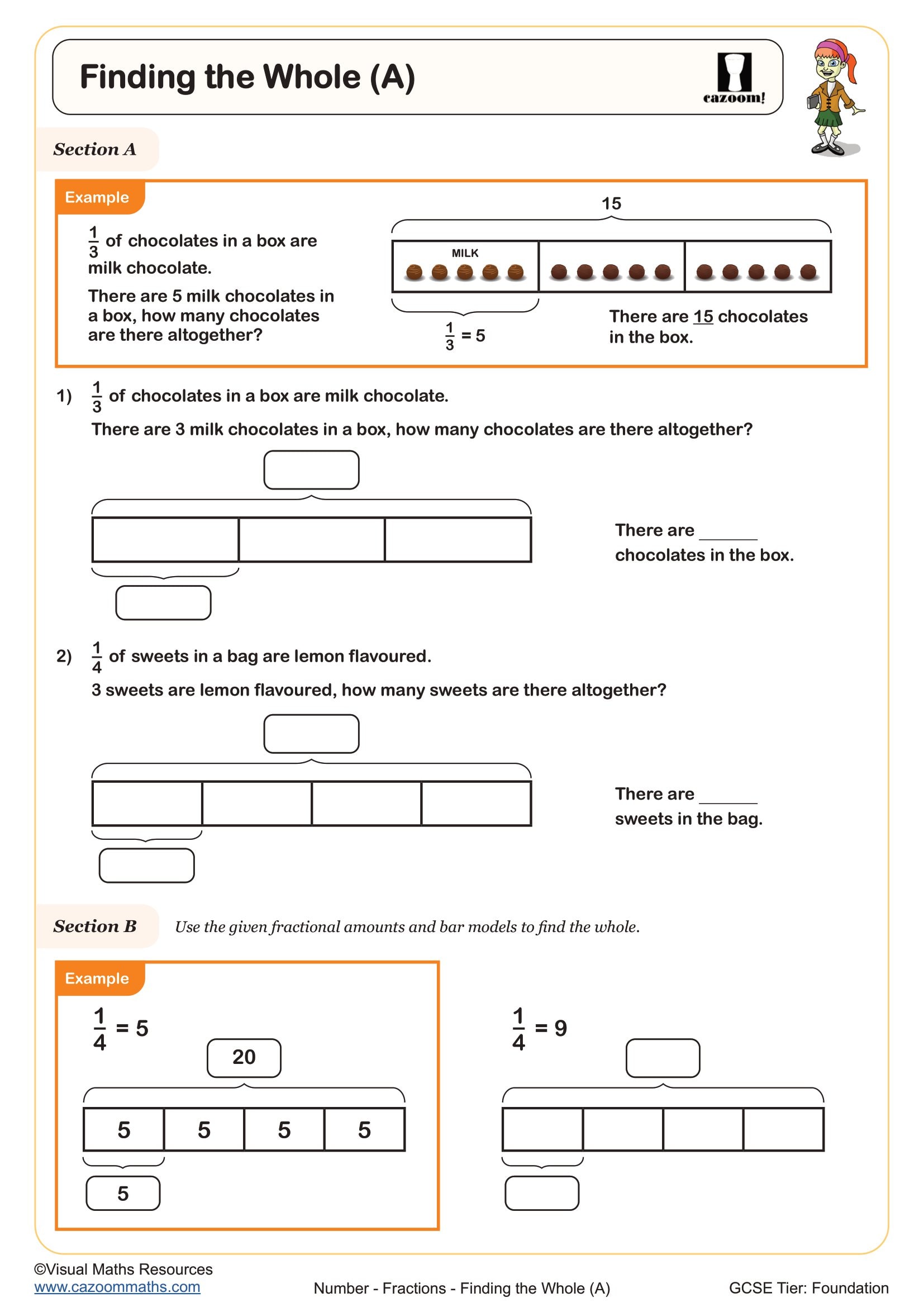
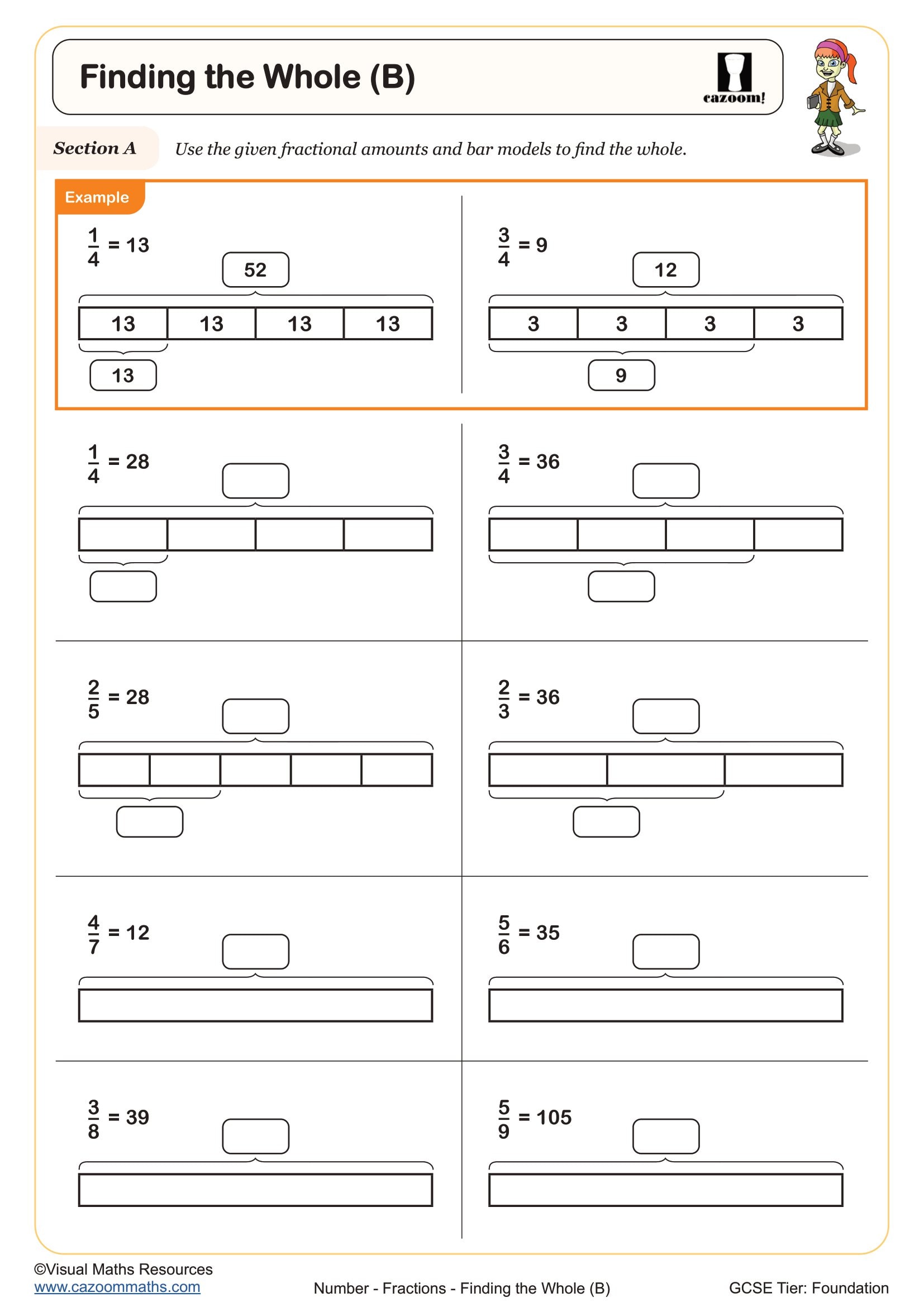
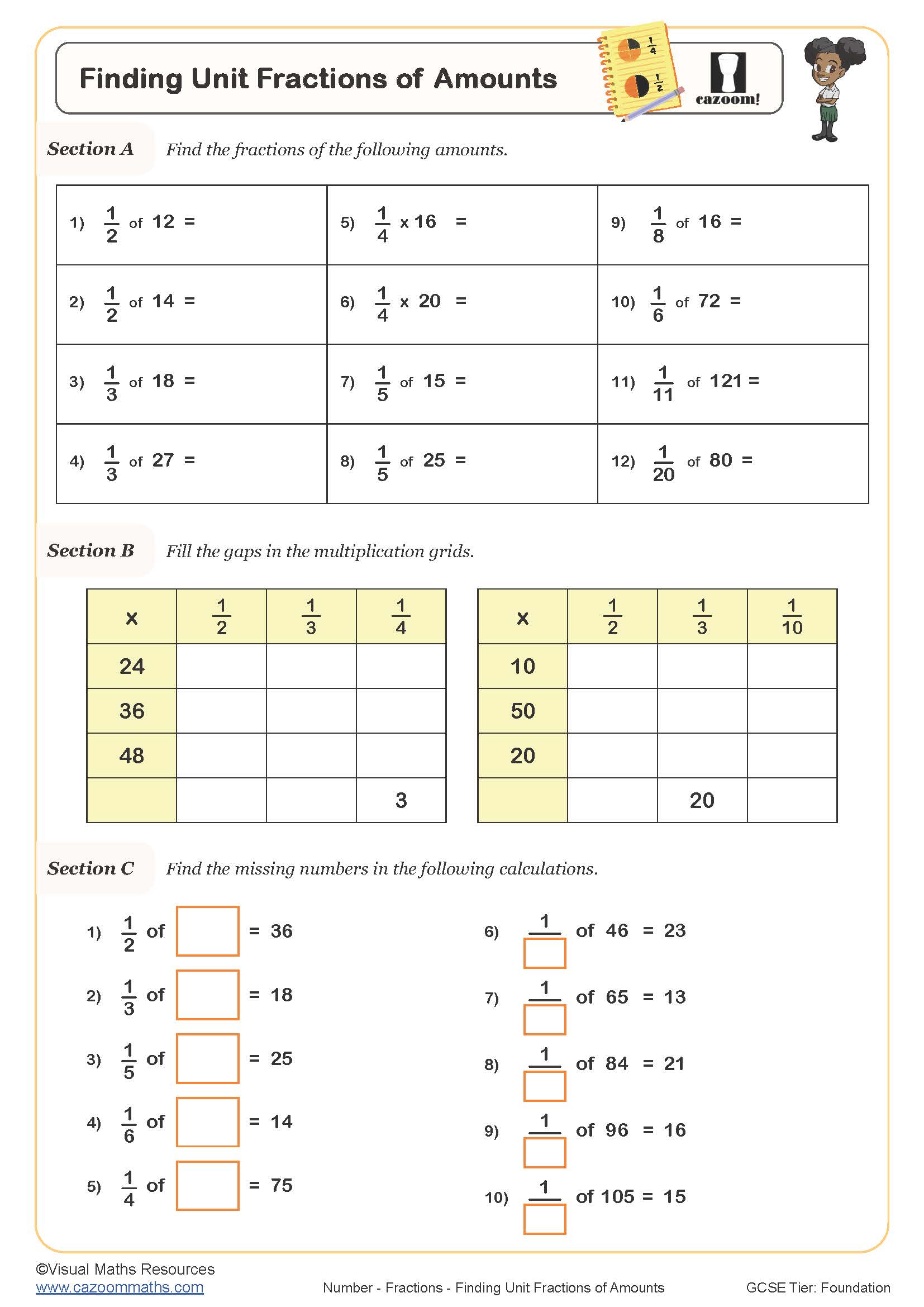
All worksheets are created by the team of experienced teachers at Cazoom Maths.
What makes a good fractions of amounts worksheet?
A well-designed fractions of amounts worksheet should progress systematically from simple unit fractions like 1/2 and 1/4 through to more complex fractions and mixed numbers. The problems need to use realistic contexts and amounts that allow students to check their answers make sense, whilst covering both mental calculation strategies and formal written methods required by the National Curriculum.
Teachers consistently observe that students perform better when worksheets include a mixture of word problems and numerical calculations. The most effective fractions of quantities worksheet will scaffold learning by starting with amounts that divide easily, then gradually introducing numbers that require students to work with remainders or convert to decimals for accuracy.
Which year groups should use fractions of amounts worksheets?
Fractions of amounts appears prominently in the Year 7 curriculum as students transition from primary fraction work to more sophisticated calculations. The topic builds on Year 6 foundations whilst preparing students for algebraic manipulation and ratio work in Years 8 and 9. Most teachers introduce these concepts early in Year 7 to establish strong numerical fluency before moving to more abstract applications.
Year 8 students revisit the topic when working with percentages and ratio, where finding fractions of amounts becomes a crucial prerequisite skill. Teachers often use these worksheets for revision sessions before GCSE preparation, as fraction calculations appear throughout Foundation and Higher tier papers in various contexts including probability, geometry, and data handling.
How do you teach finding fractions of mixed numbers effectively?
Teaching fractions of mixed numbers requires students to first convert to improper fractions before multiplying, though many attempt to work with the mixed number directly and make errors. The most successful approach involves explicit modelling of the conversion process, showing why 2 3/4 of 120 requires converting to 11/4 first. Students need plenty of practice recognising when this conversion step is necessary.
Teachers report that visual representations help significantly, particularly bar models that show how mixed numbers relate to the quantities being calculated. Common errors include forgetting to convert back to mixed numbers in the final answer, or attempting to multiply the whole number and fraction parts separately without proper consideration of the mathematical structure involved.
How can teachers use these worksheets most effectively in lessons?
These worksheets work best when used as part of a structured sequence rather than isolated practice. Teachers often begin lessons with mental warm-ups using the simpler problems, then use the more challenging questions for guided practice or independent work. The answer sheets allow for immediate self-marking, which helps students identify misconceptions quickly and seek clarification before errors become embedded.
Many teachers use these resources for differentiated homework tasks, assigning different sections to students based on their current understanding. The variety of contexts helps students see connections to real-world applications, from cooking measurements to financial calculations, supporting the National Curriculum emphasis on mathematical reasoning and problem-solving across different situations.