Increasing and Decreasing by Percentages Worksheets
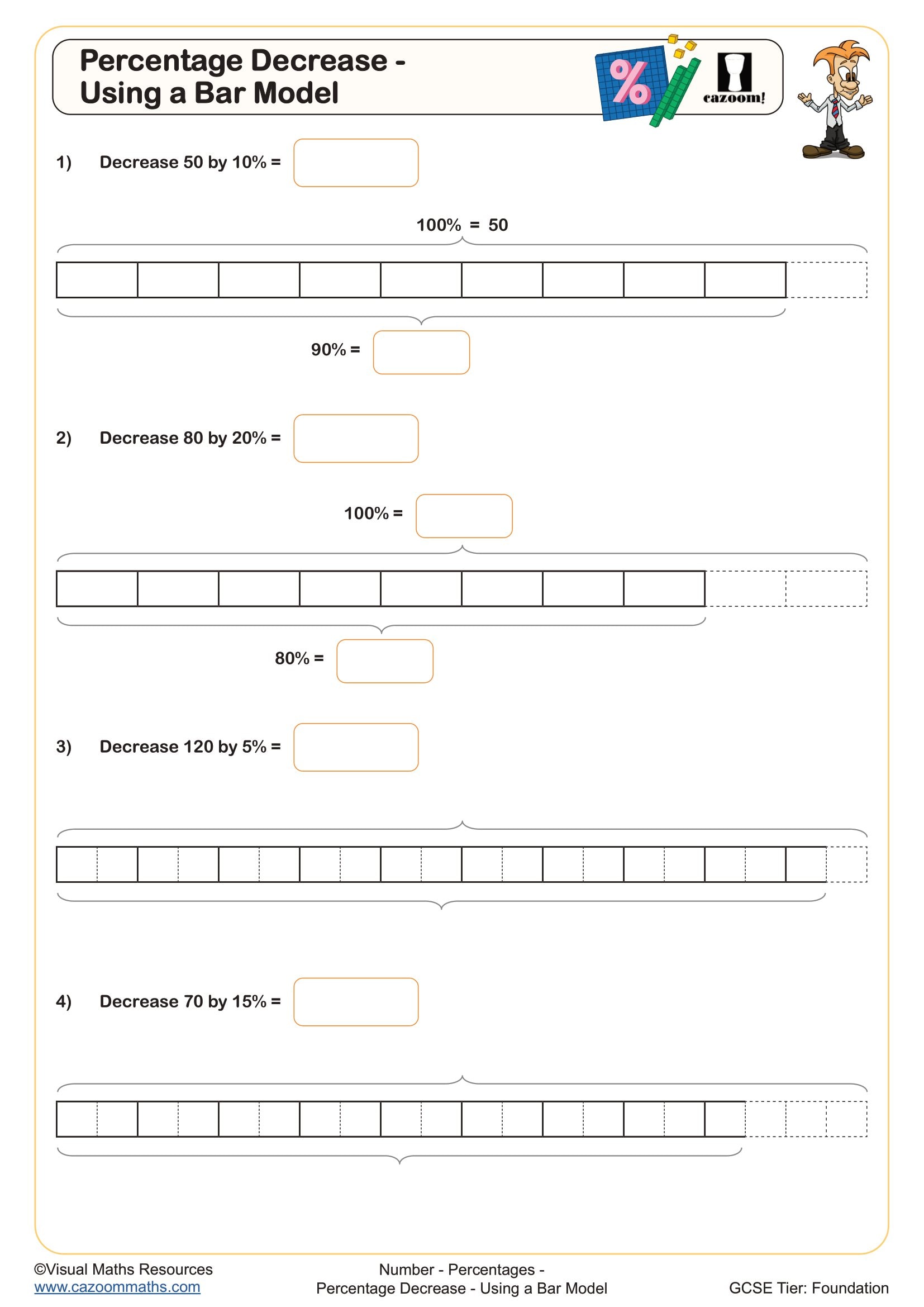
Percentage Decrease - Using a Bar Model
Year groups: 8, 9
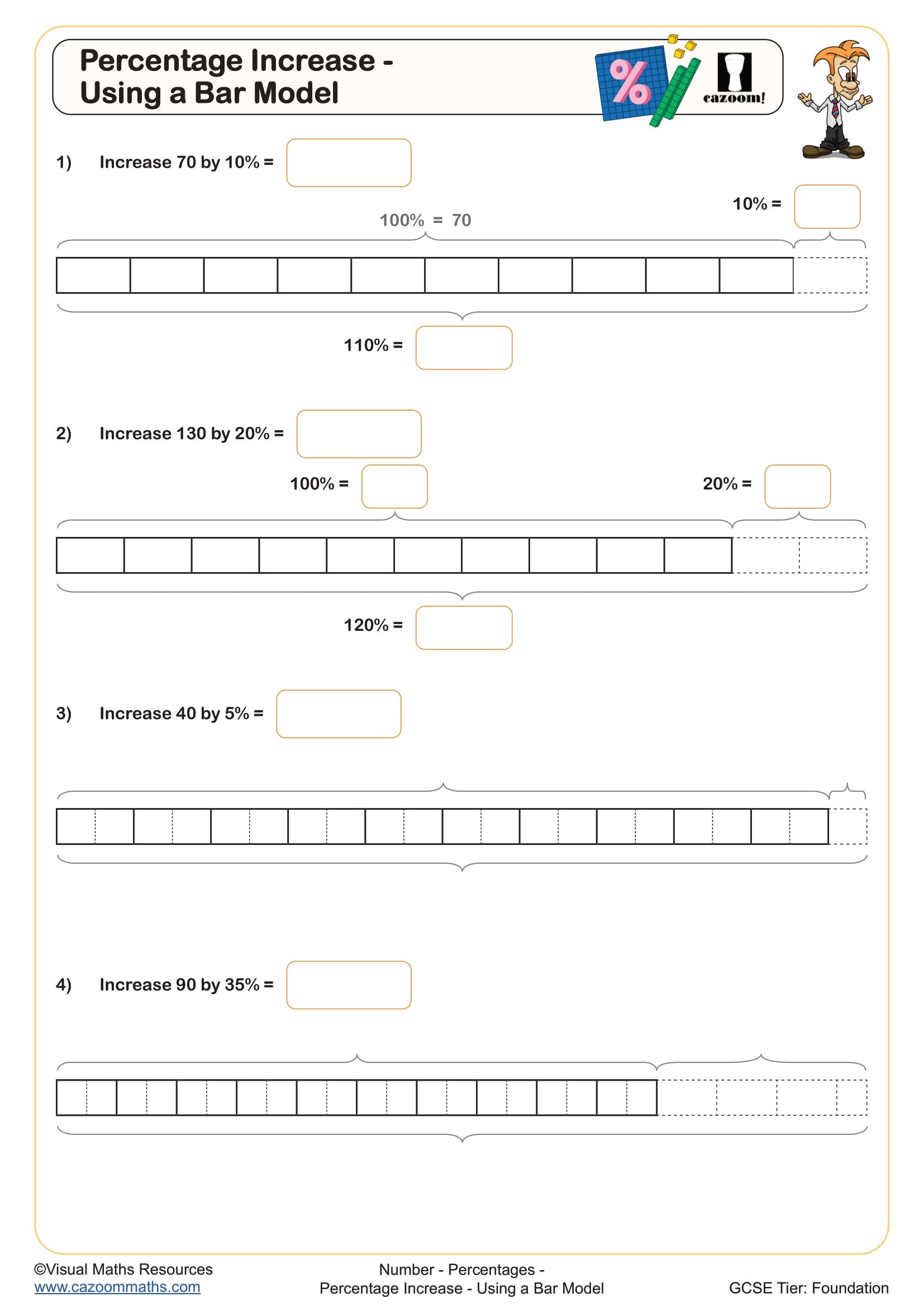
Percentage Increase - Using a Bar Model
Year groups: 8, 9
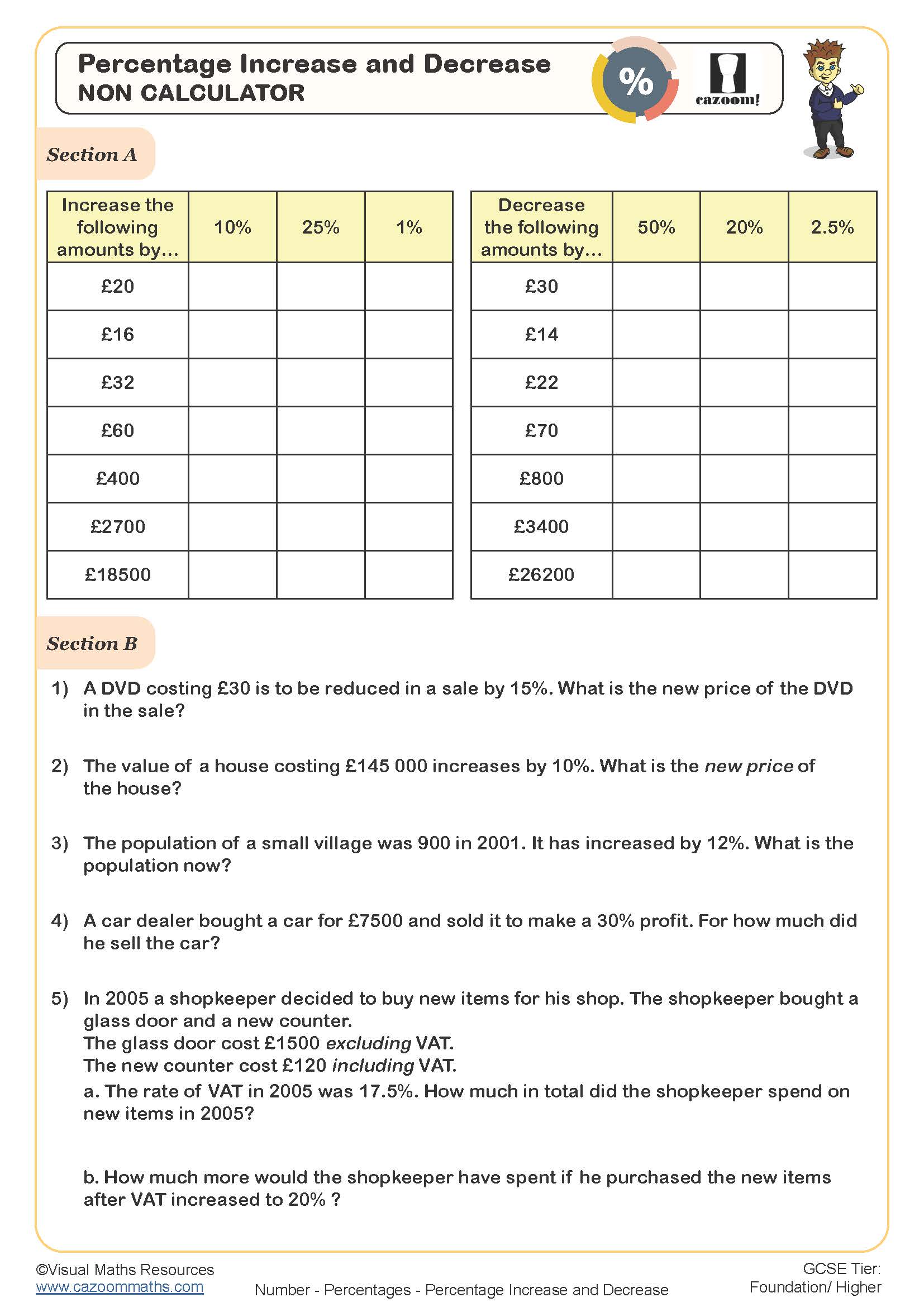
Percentage Increase and Decrease
Year groups: 8, 9
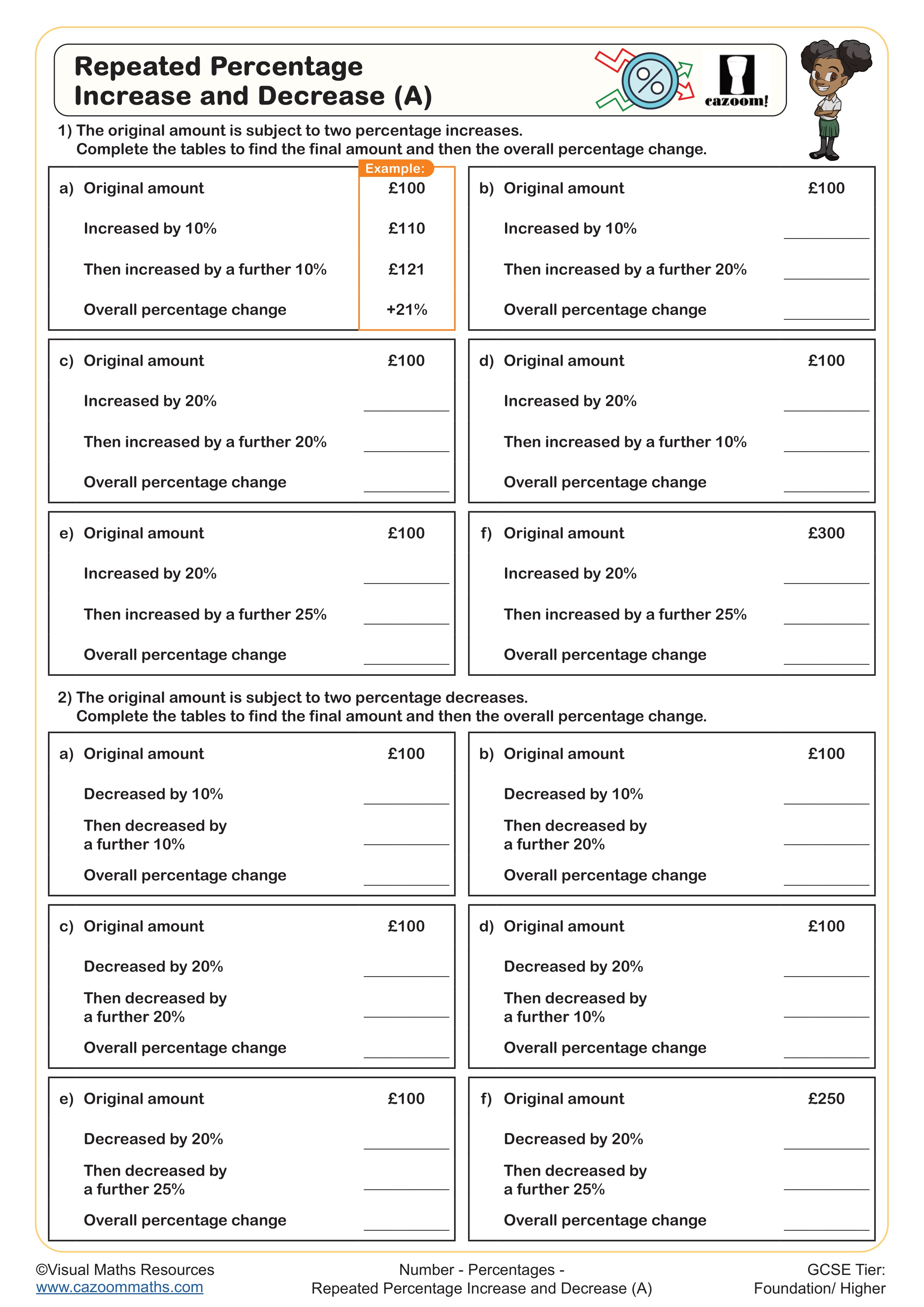
Repeated Percentage Increase and Decrease (A)
Year groups: 8, 9
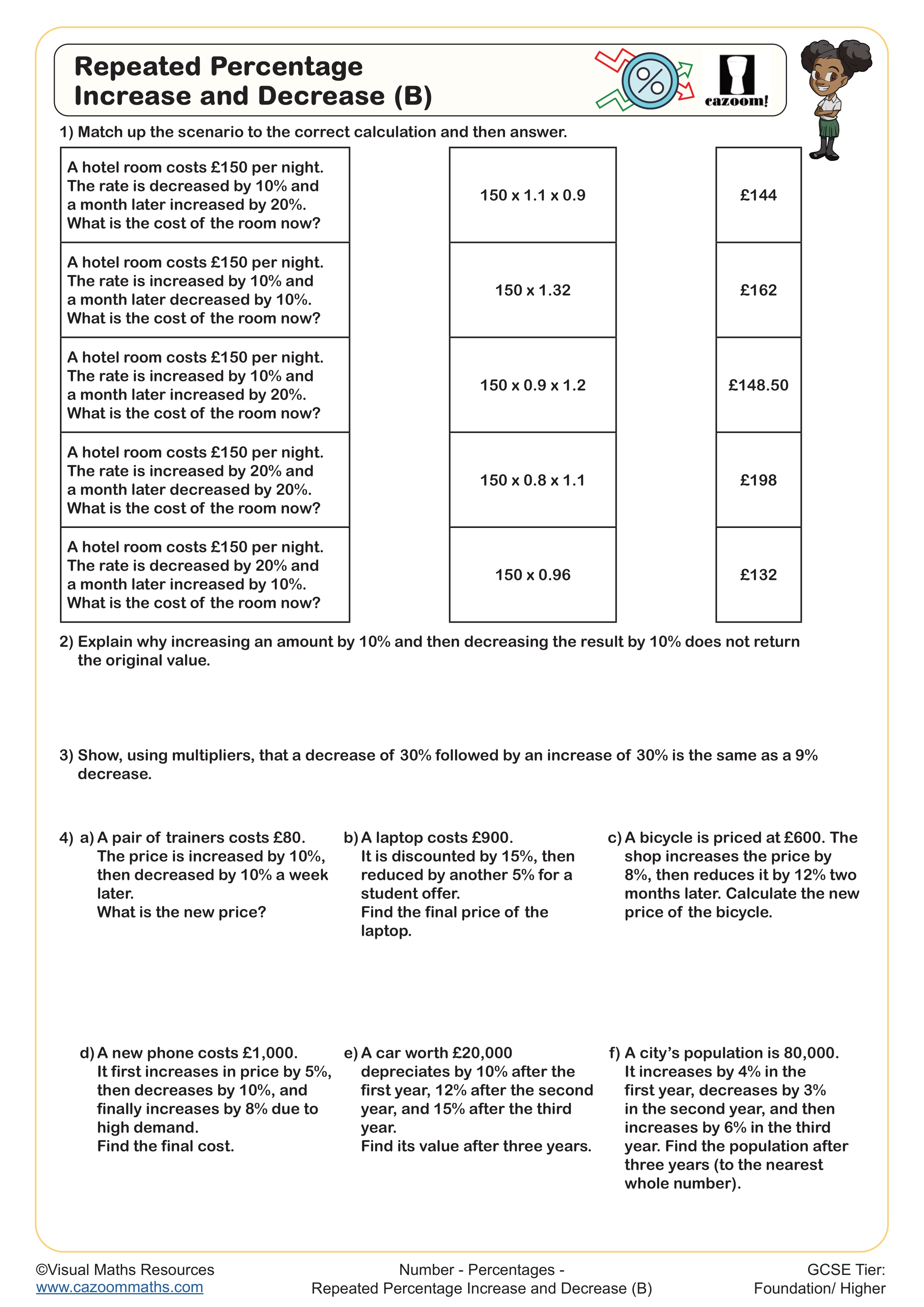
Repeated Percentage Increase and Decrease (B)
Year groups: 8, 9
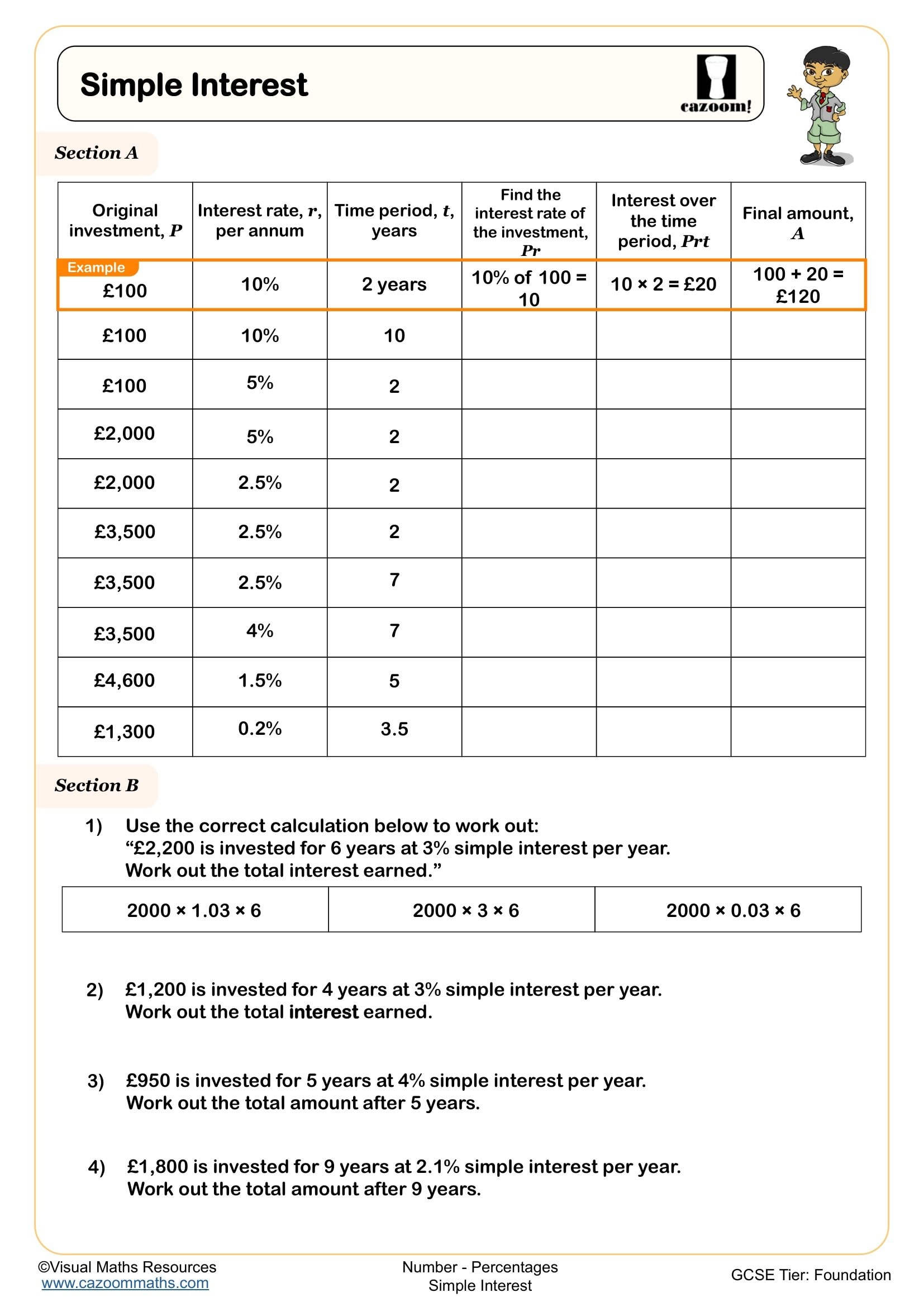
Simple Interest
Year groups: 8, 9
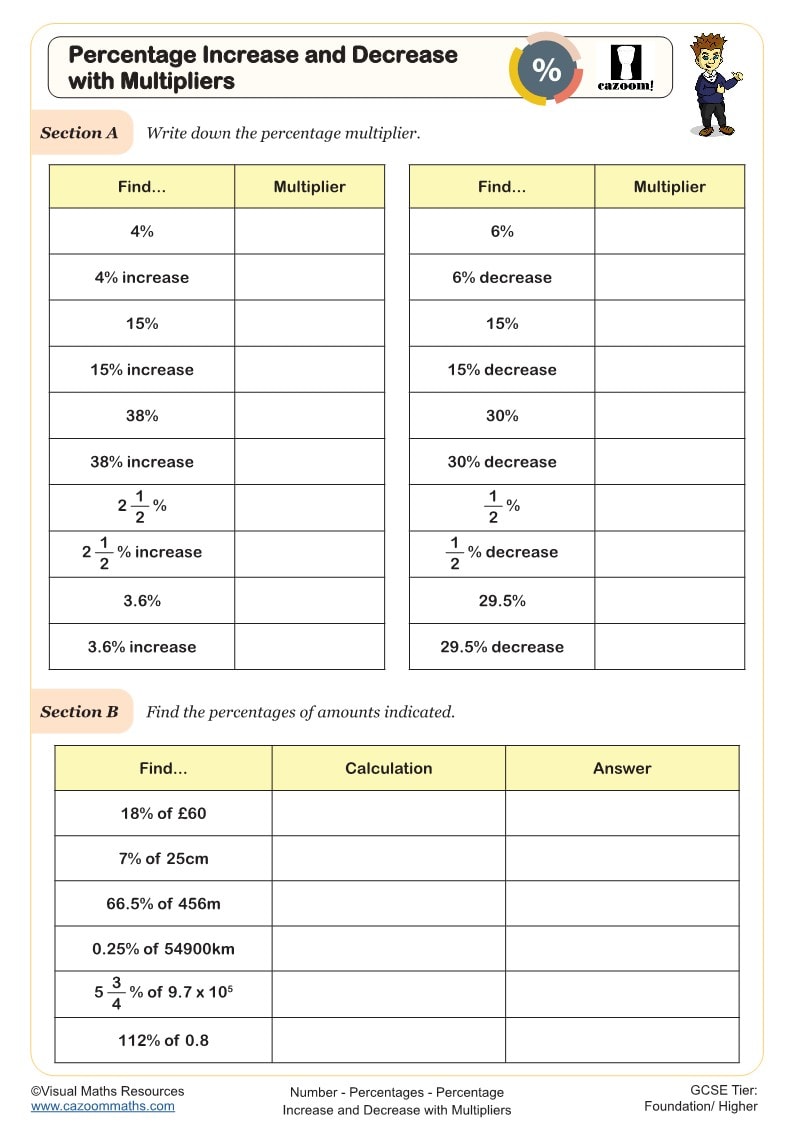
Percentage Increase and Decrease with Multipliers
Year groups: 9, 10
All worksheets are created by the team of experienced teachers at Cazoom Maths.
What makes a good percentage increase and decrease worksheet for KS3 and KS4 students?
Effective increase and decrease percentages worksheets should progress from basic single-step problems to more complex scenarios involving reverse calculations and compound changes. The National Curriculum requires students to understand percentage change in real-world contexts, so quality resources include applications like VAT calculations, salary increases, and compound interest alongside abstract numerical problems.
Teachers notice that students often confuse adding the percentage (incorrect) with multiplying by the decimal multiplier (correct). A well-structured worksheet addresses this by explicitly showing both methods initially, then focusing on the more efficient multiplier approach that prevents calculation errors in time-pressured exam conditions.
Which year groups should use these percentage change worksheets?
Percentage increase and decrease typically begins in Year 7 as part of the KS3 Number curriculum, building on students' understanding of basic percentage calculations. The topic develops through Years 8 and 9, with increasing complexity in problem-solving contexts and the introduction of reverse percentage calculations that feature prominently in GCSE Foundation and Higher tier papers.
By Year 10, students should confidently handle repeated percentage change worksheet problems involving compound scenarios. Teachers often find that even Higher tier students benefit from revisiting the fundamentals when tackling complex word problems, as the arithmetic becomes secondary to interpreting what the question actually requires them to calculate.
How do students approach reverse percentage calculations effectively?
Reverse percentage problems, where students find the original value before a percentage change, consistently challenge students across all ability levels. The key insight teachers emphasise is recognising that if something increases by 15%, the new value represents 115% of the original, making division by 1.15 the solution rather than subtracting 15%.
Many students attempt to work backwards by subtracting the percentage increase, which leads to incorrect answers. Successful teaching approaches involve showing students how to identify what percentage the final value represents, then using this to find 1% and subsequently 100% of the original amount through systematic steps.
How can teachers use these worksheets to build confidence with percentage calculations?
Teachers find that starting each lesson with a quick review of converting percentages to decimals prevents computational errors later in complex problems. The worksheets work best when teachers model the multiplier method first, showing how 'increase by 23%' means 'multiply by 1.23', before students attempt independent practice with varied question types.
Regular assessment through these structured exercises helps teachers identify students who revert to inefficient methods under pressure. Many teachers pair stronger students with those who struggle, as peer explanation often clarifies the conceptual understanding that makes percentage change problems accessible rather than mysterious.