Mixed Numbers and Improper Fractions Worksheets
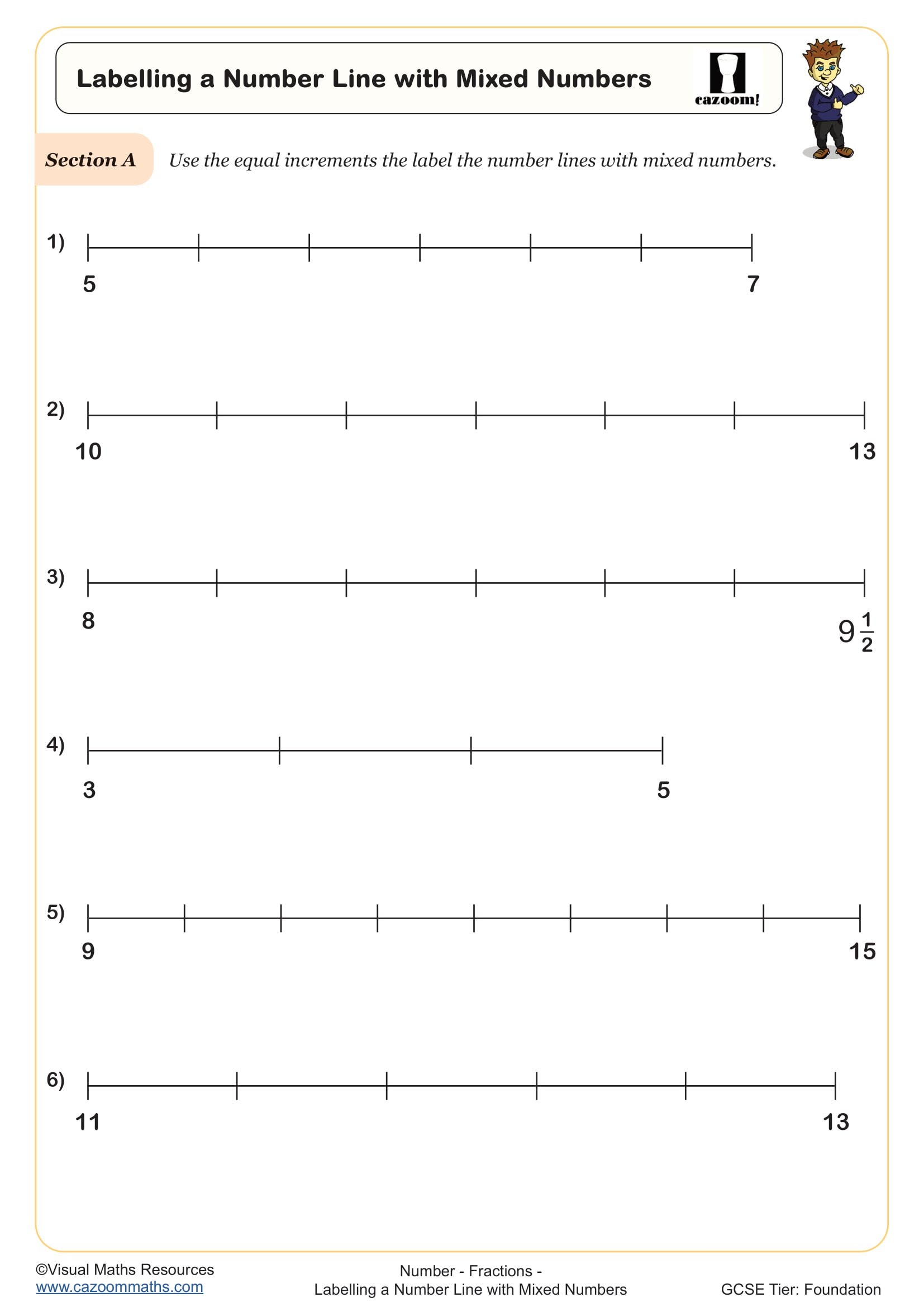
Labelling a Number Line with Mixed Numbers
Year groups: 7, 8
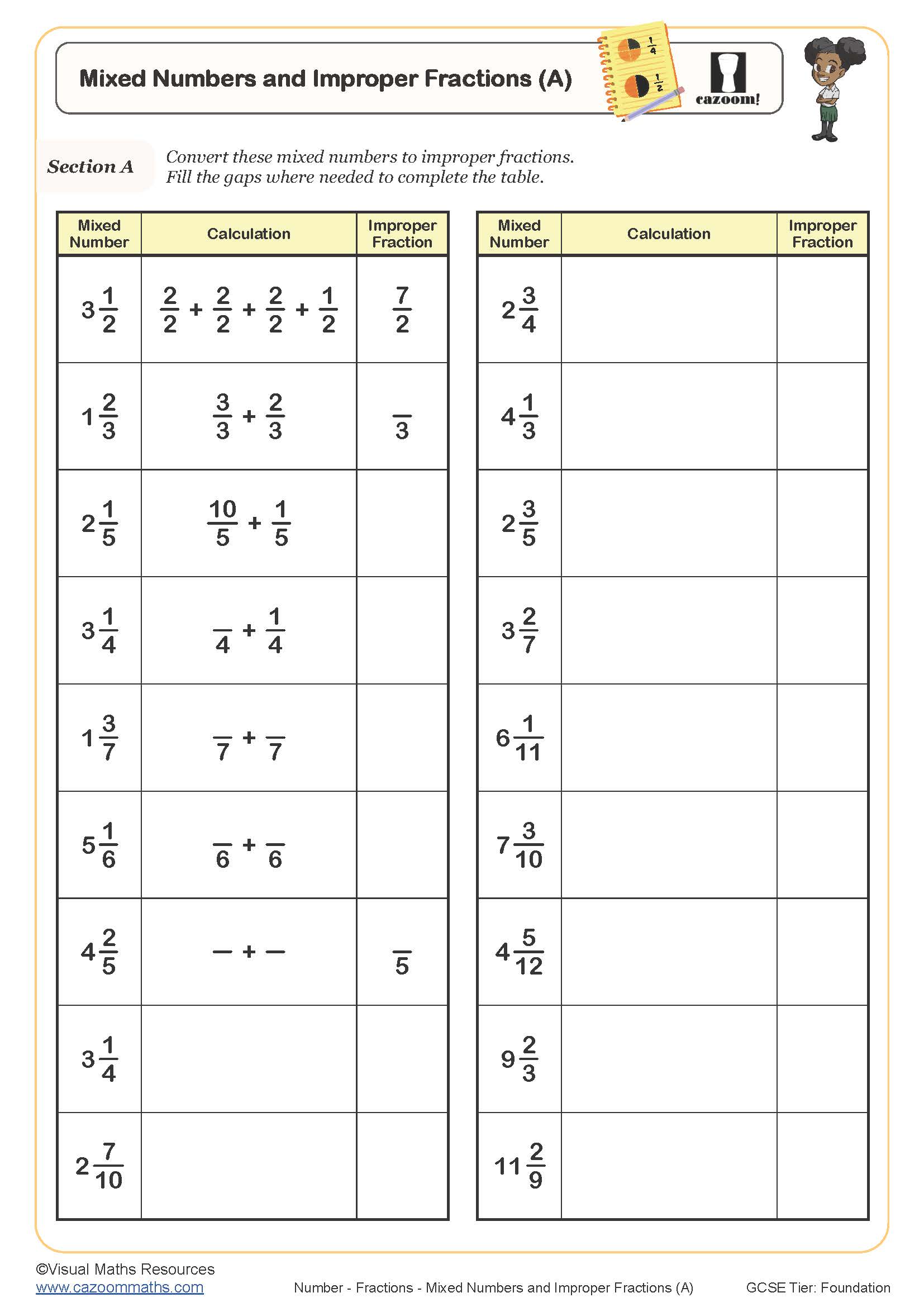
Mixed Numbers and Improper Fractions (A)
Year groups: 7, 8
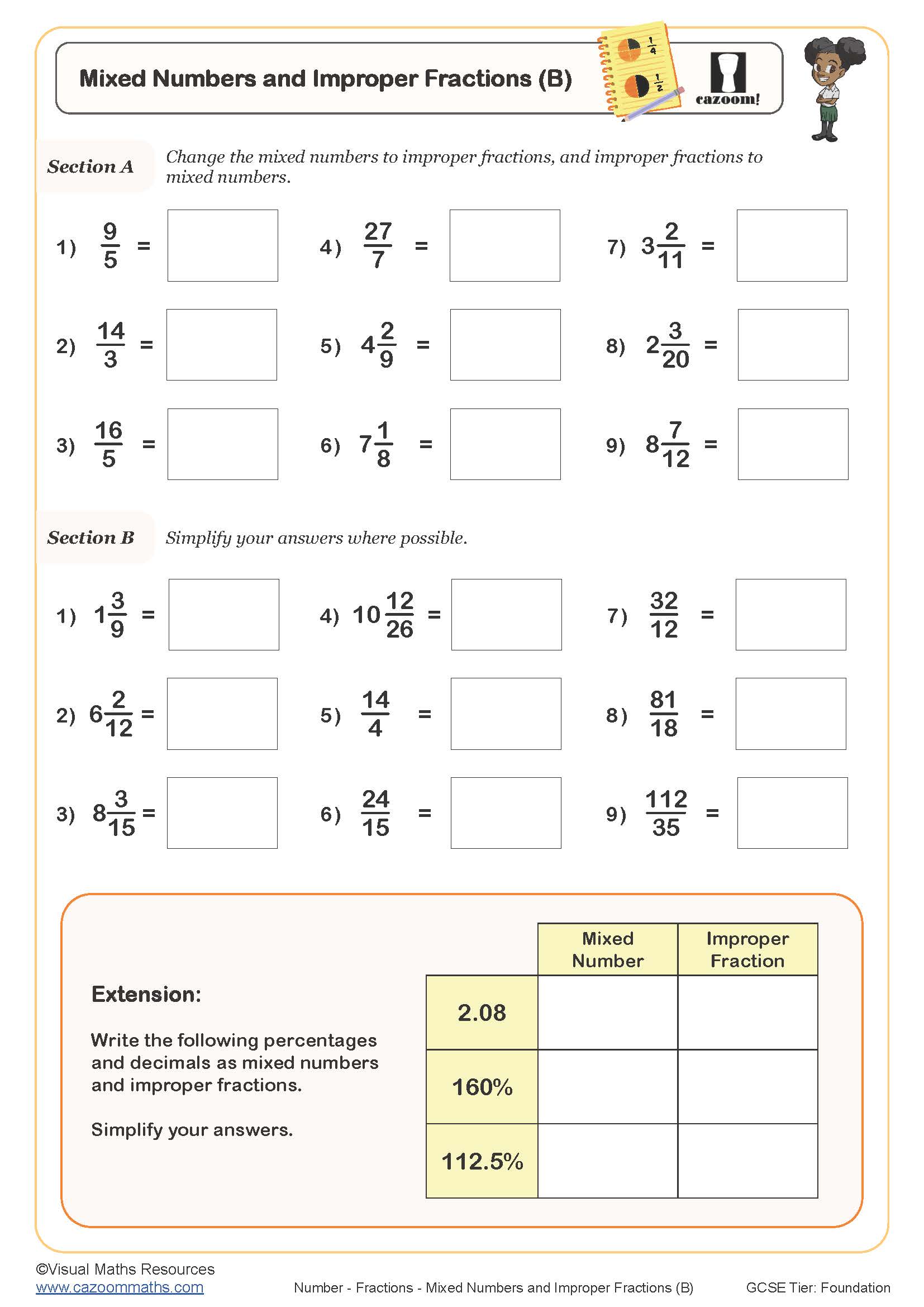
Mixed Numbers and Improper Fractions (B)
Year groups: 7, 8
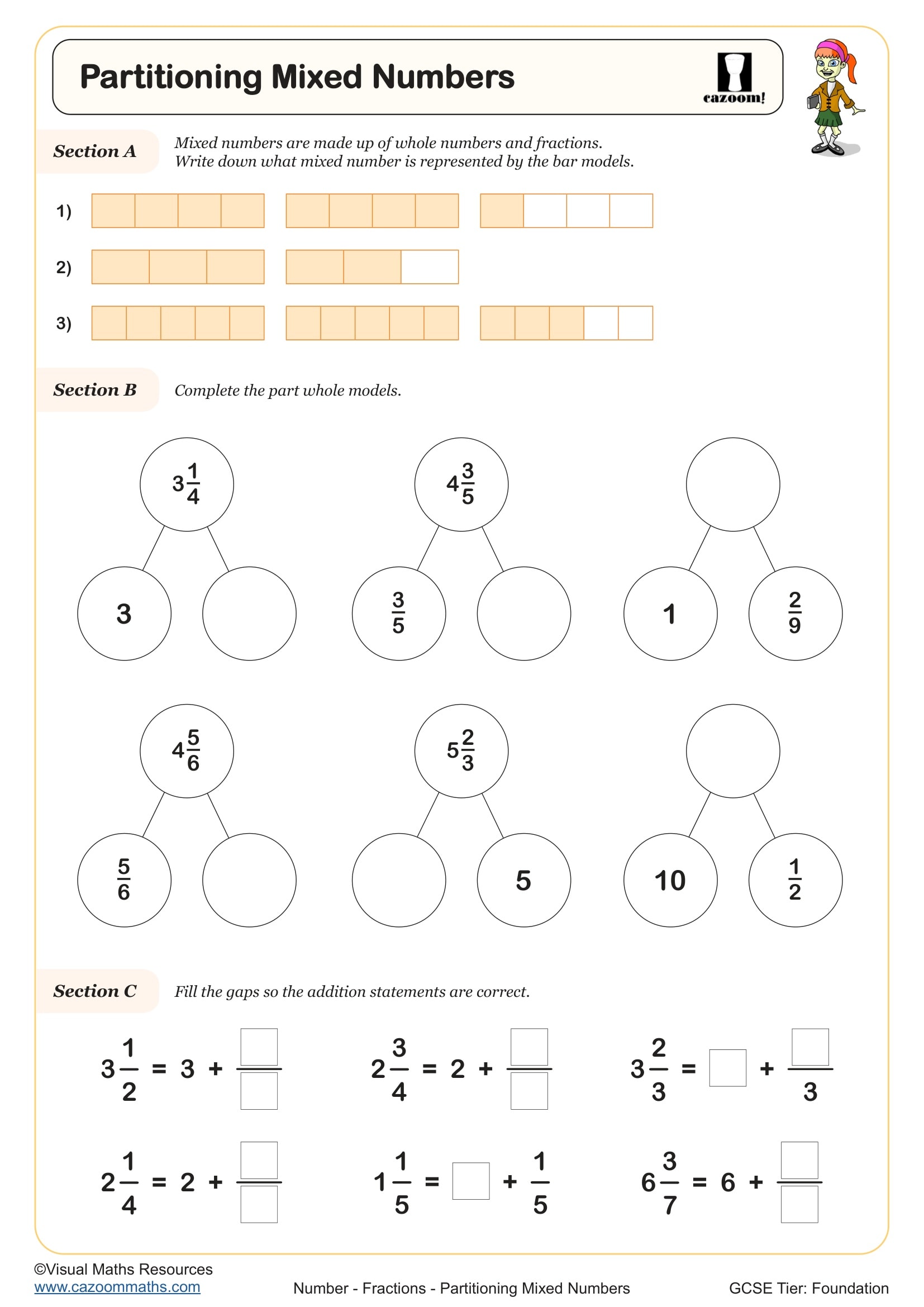
Partitioning Mixed Numbers
Year groups: 7, 8
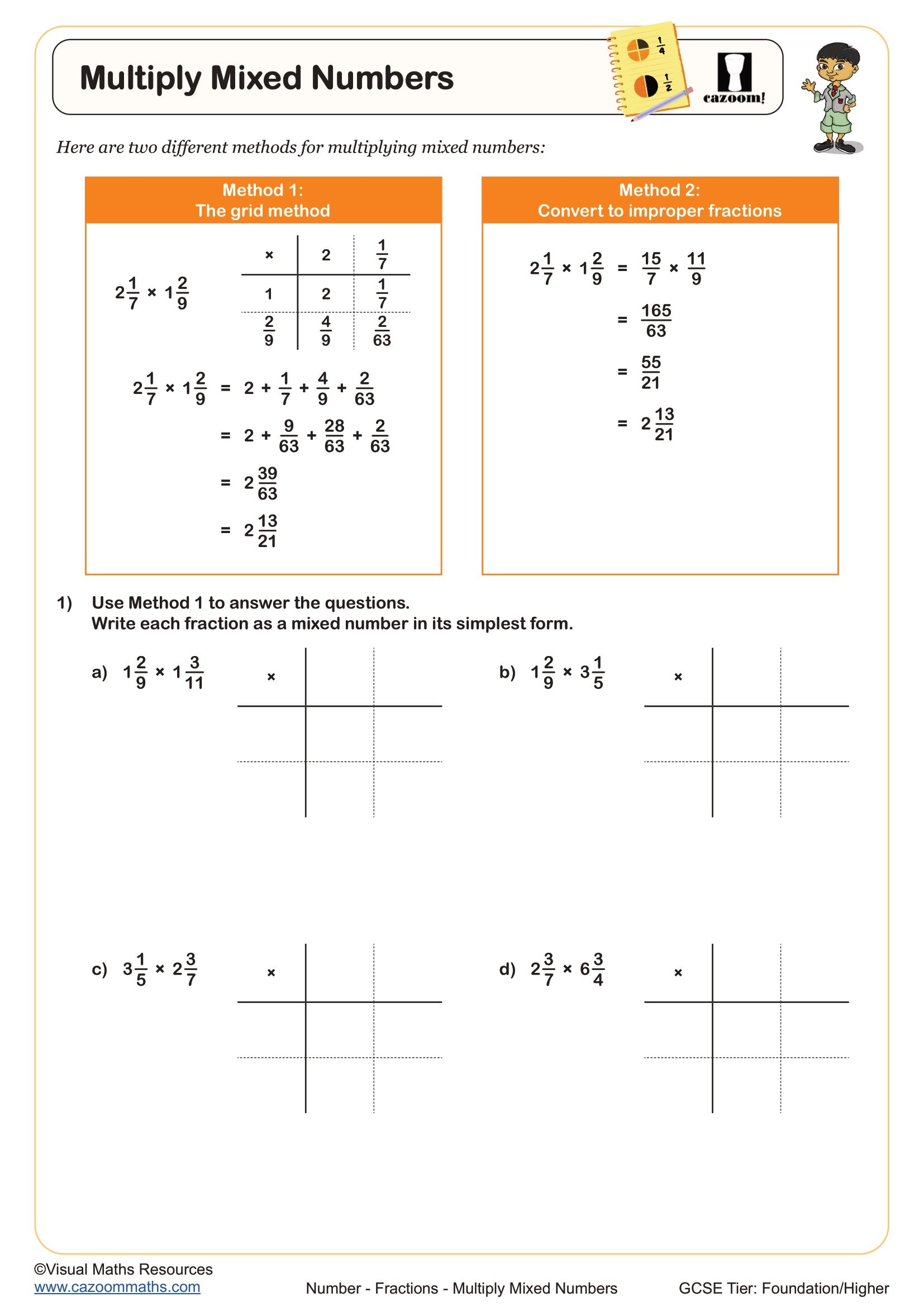
Add and Subtract Mixed Numbers
Year groups: 8, 9, 10
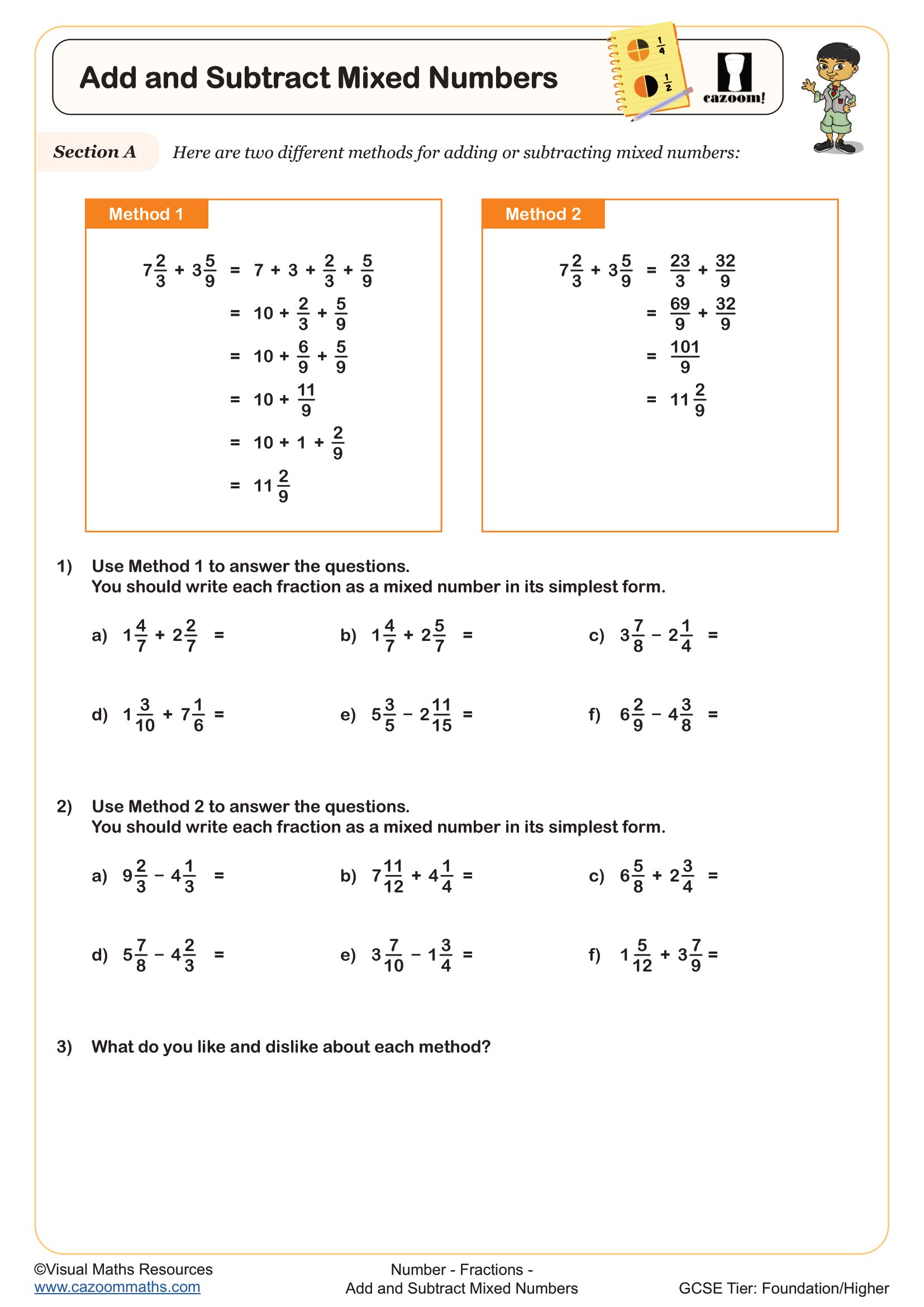
Dividing Mixed Numbers
Year groups: 8, 9, 10
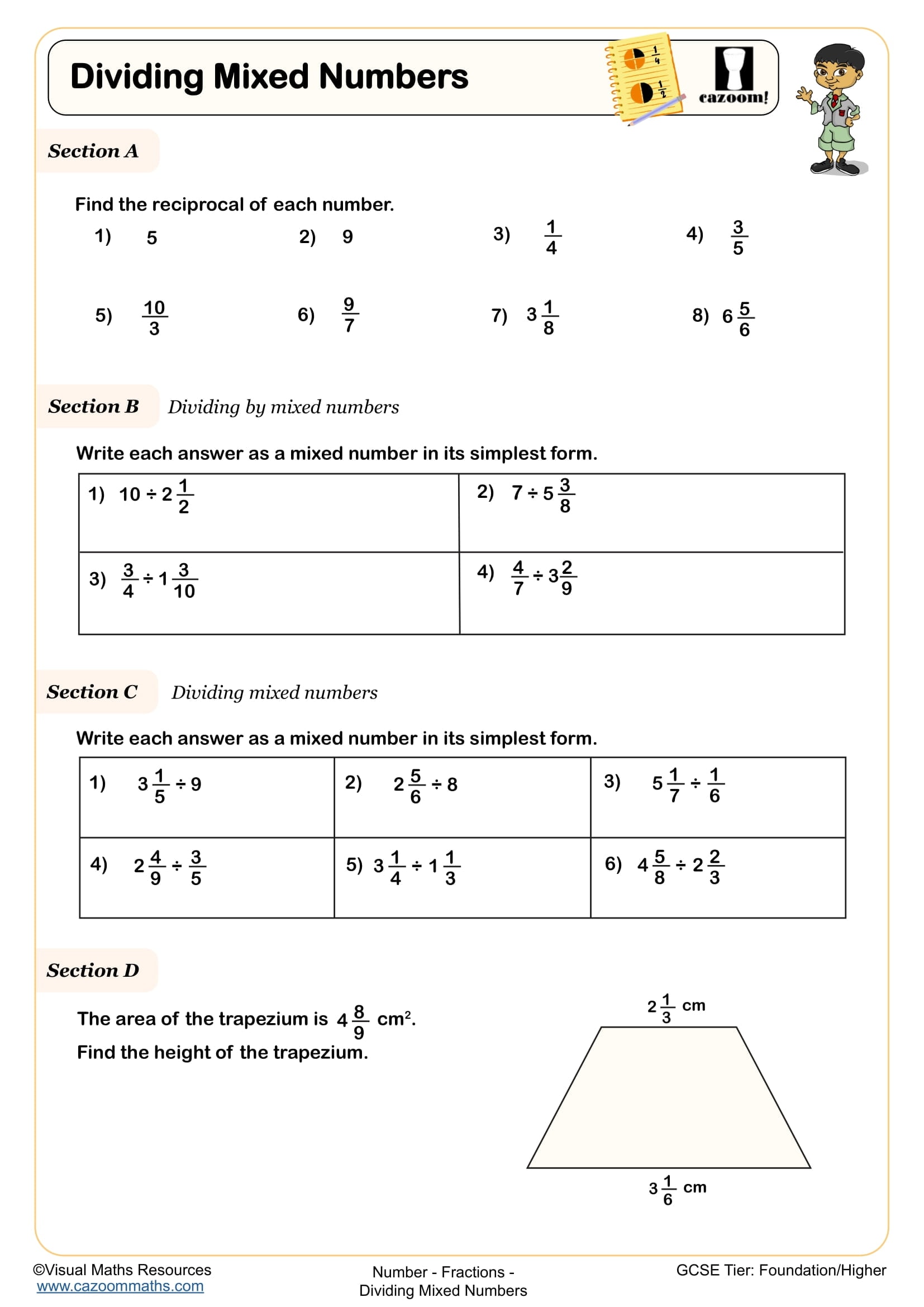
Multiply Mixed Numbers
Year groups: 8, 9, 10
All worksheets are created by the team of experienced teachers at Cazoom Maths.
What is the difference between mixed numbers and improper fractions?
A mixed number combines a whole number and a proper fraction, such as 3¼, whilst an improper fraction has a numerator larger than its denominator, like 13/4. Both represent exactly the same value, just written differently. Students encounter mixed numbers first in primary school because they're easier to visualise (3¼ pizzas is clearer than 13/4 pizzas), but improper fractions become essential for calculations at secondary level.
The most frequent error teachers notice occurs when students try to add or multiply using mixed numbers directly, forgetting they must convert to improper fractions first. Exam mark schemes at GCSE regularly penalise students who attempt 2⅓ × 1½ without converting, because the algorithm only works reliably with improper fractions. Understanding that these are two representations of the same quantity prevents costly mistakes in calculations and builds the flexibility needed for more complex fraction work.
Which year groups study mixed numbers and improper fractions?
These worksheets cover Year 7, Year 8, Year 9 and Year 10, spanning both Key Stage 3 and Key Stage 4. Students first encounter formal conversion between the two forms in Year 7 as part of the National Curriculum's emphasis on fraction fluency, though many will have met mixed numbers informally in upper primary. The skill becomes increasingly important through KS3 as students tackle more demanding fraction operations and begin algebraic fraction work.
Progression across the year groups shifts from straightforward conversions with familiar denominators in Year 7 to more complex scenarios involving larger numbers and subsequent calculations in Years 9 and 10. By KS4, students need automatic recall of conversion methods because GCSE questions embed this skill within multi-step problems. Teachers working with foundation tier groups often find that revisiting these basics in Year 10 significantly improves performance on fraction-heavy questions where conversion is just the first step.
How do you convert an improper fraction to a mixed number?
To convert an improper fraction to a mixed number, divide the numerator by the denominator. The quotient becomes the whole number, the remainder becomes the new numerator, and the denominator stays the same. For example, with 17/5, dividing 17 by 5 gives 3 remainder 2, so the answer is 3⅖. Many students attempt to do this mentally but make errors with larger numbers, which is why showing the division working prevents mistakes.
This skill has direct applications in measurement and data handling. When students calculate that a recipe requiring 250ml portions can be made 17 times from a 5-litre container, converting 17/5 to 3⅖ litres helps them understand they'll have material for 3 full batches plus two-fifths of another. Engineers and technicians regularly convert between these forms when working with fractional measurements, making this a practical skill beyond the classroom that supports dimensional analysis and unit conversion in STEM subjects.
How can these worksheets help students master conversions?
The worksheets build confidence through systematic practice, starting with conversions in isolation before progressing to questions where conversion is embedded within calculations. Answer sheets allow students to self-check immediately, which research shows improves retention compared to delayed feedback. The structured approach means students encounter enough variety to spot patterns (such as recognising that the denominator never changes) whilst building the procedural fluency needed for exam success.
Teachers typically use these worksheets for targeted intervention when assessment reveals gaps, or as starter activities to maintain fluency throughout the year. They work well for homework because the answer sheets support independent learning, and many teachers set them as paired work where one student converts to improper fractions whilst their partner works backwards to mixed numbers, then they check each other. The worksheets also serve as focused revision in Year 11 when foundation tier students need to consolidate fraction skills before tackling GCSE papers where these conversions appear in context.