Percentage Change Worksheets
All worksheets are created by the team of experienced teachers at Cazoom Maths.
What should a percentage change worksheet include?
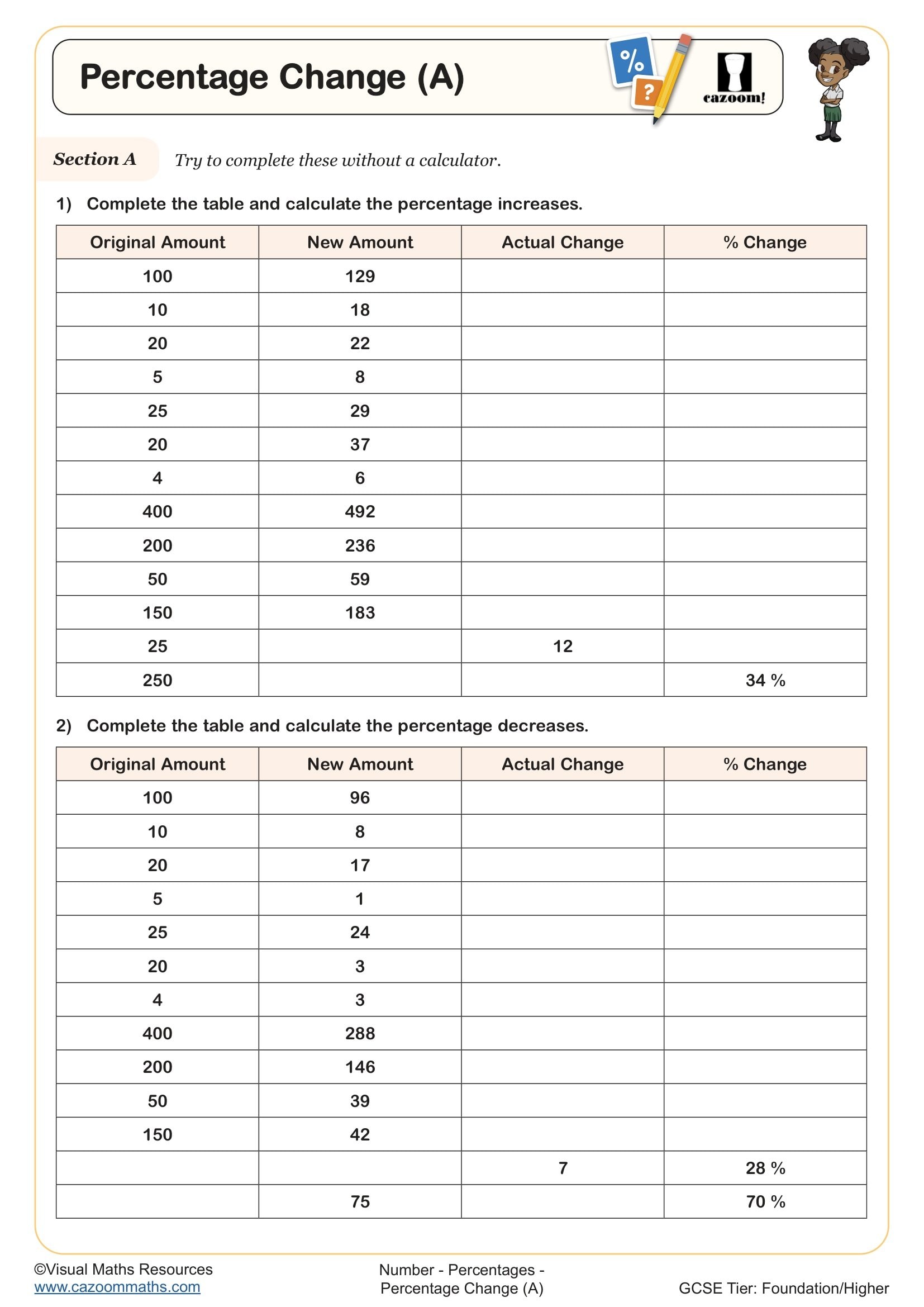
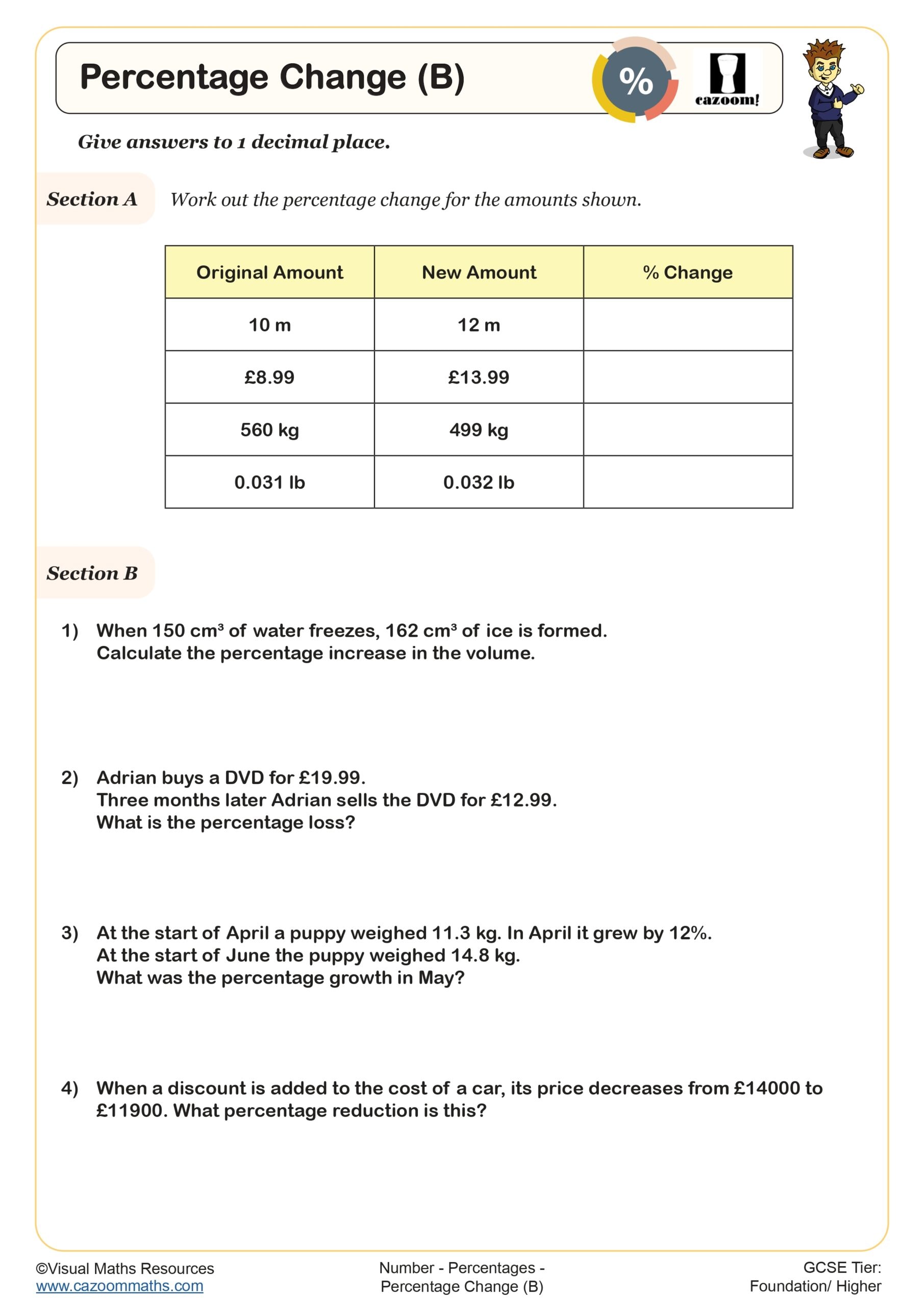
A percentage change worksheet should build from finding simple percentage increases and decreases through to reverse percentage problems and compound interest calculations. Students need practice identifying whether they're working with an increase or decrease, calculating the change amount, and then applying it to find the new value. The worksheets progress from straightforward retail contexts like sale prices through to more complex financial scenarios.
Teachers often observe that students rush through the 'add or subtract' step, particularly when questions mix increases and decreases. A common error in Year 9 occurs when calculating sale prices, where students find 25% but forget to subtract it from the original price. The percentage change worksheet pdf format allows teachers to project worked examples whilst students follow along, then complete similar problems independently with answer sheets for immediate feedback.
Which year groups study percentage change?
Percentage change appears in Year 8, Year 9, and Year 10 across KS3 and KS4. Year 8 students typically begin with straightforward percentage increases and decreases in familiar contexts like price rises or sale reductions. The National Curriculum expects students at this stage to confidently move between fractions, decimals, and percentages whilst solving real-world problems.
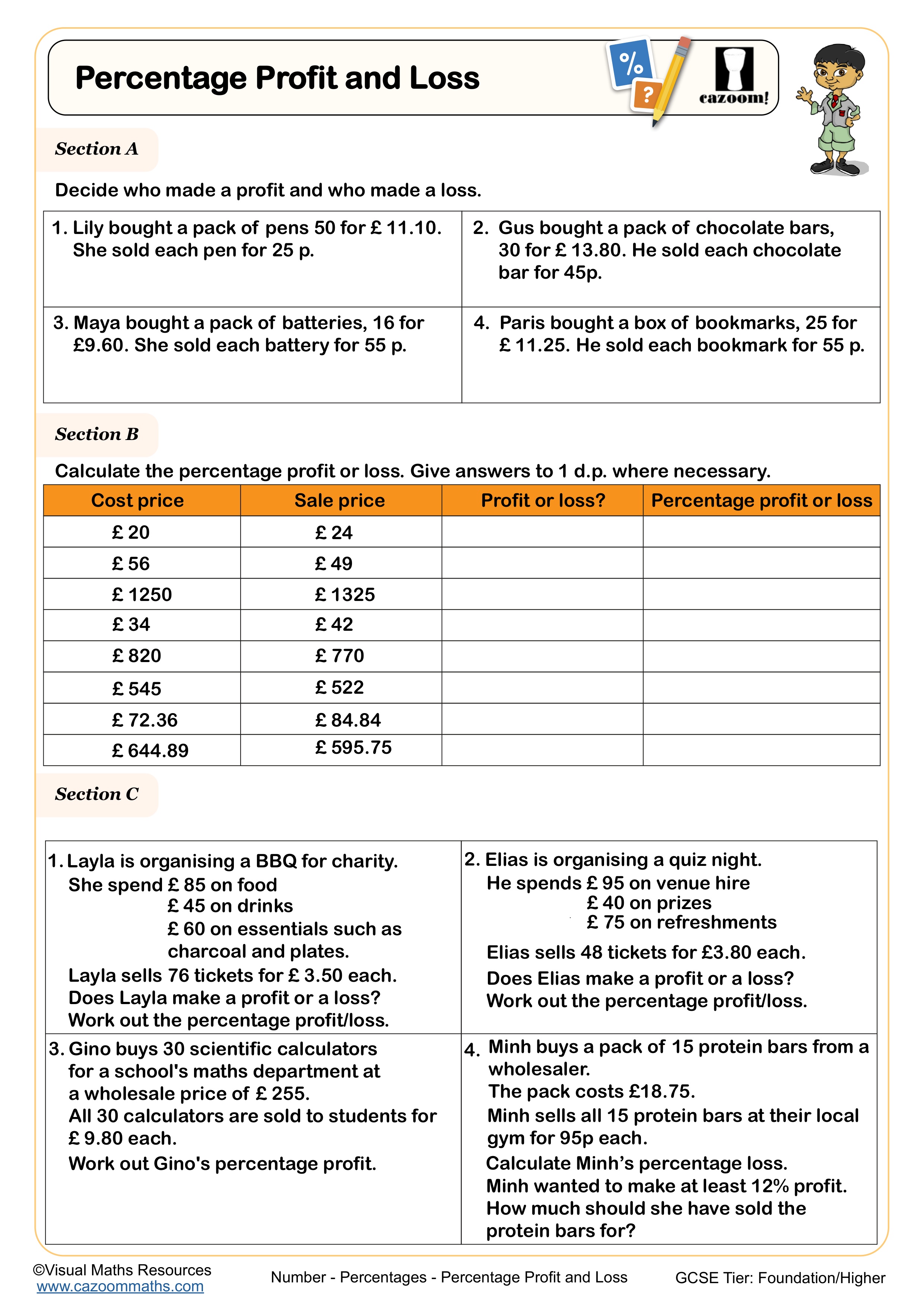
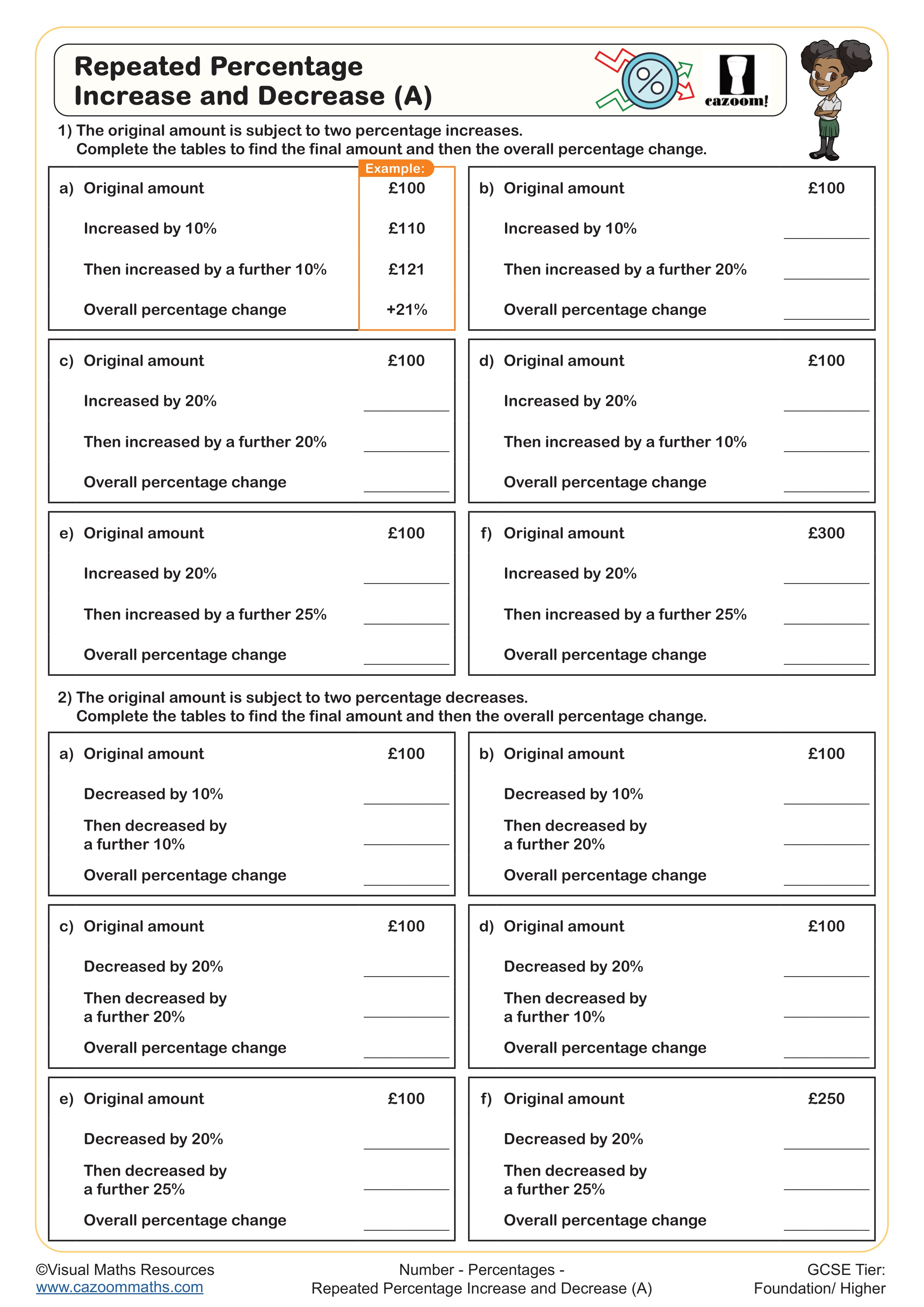
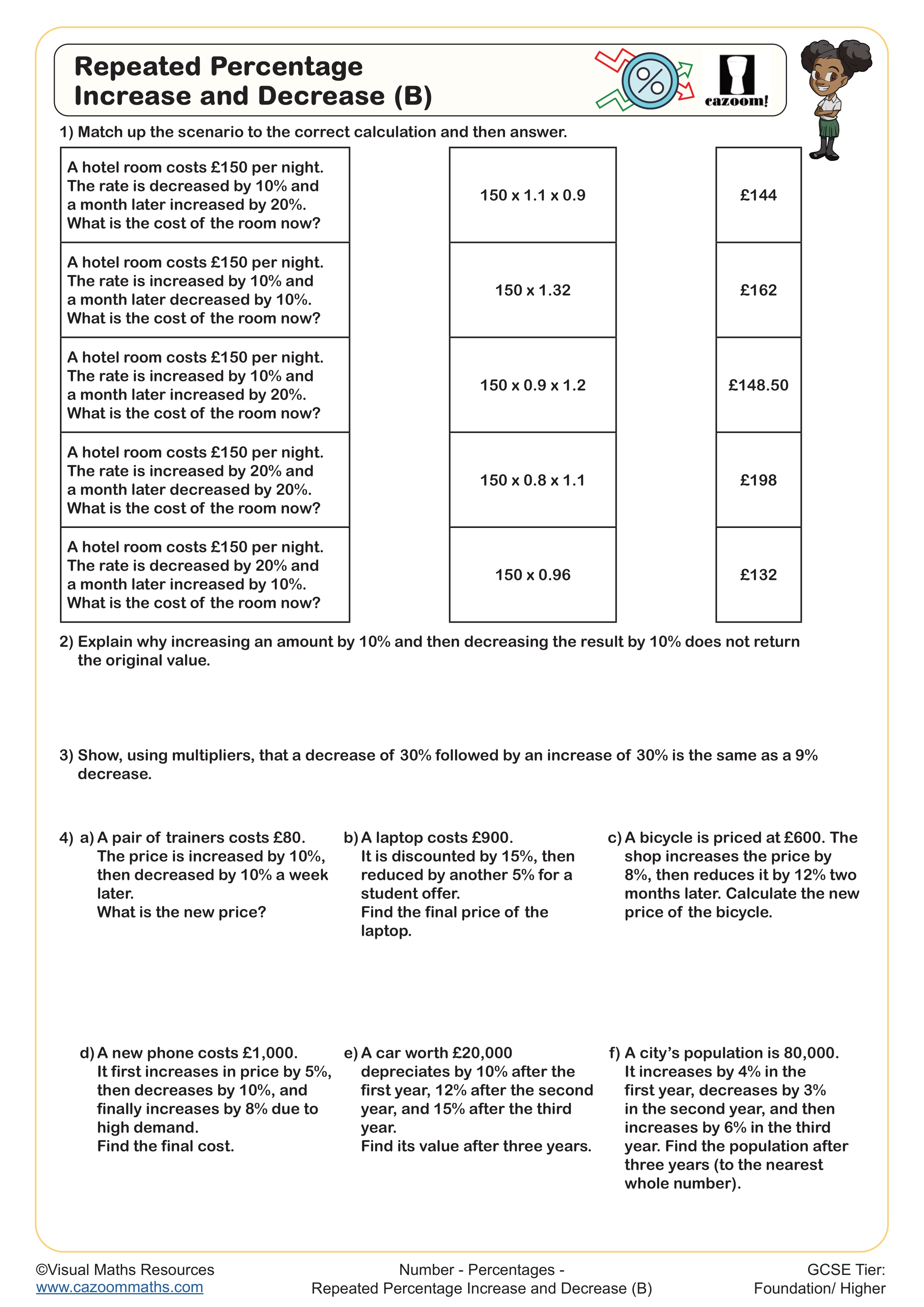
By Year 9, students tackle percentage profit and loss problems, working backwards from a final amount to find the original value. Year 10 students at KS4 extend this to compound interest and repeated percentage change, which appears regularly on GCSE Foundation and Higher papers. The progression requires increasingly sophisticated understanding of multiplicative relationships, moving from simple 'find and apply' methods to using multipliers like 1.15 for a 15% increase.
How does percentage change apply to interest calculations?
Interest calculations demonstrate percentage change in a financial context that students will encounter throughout their lives. Simple interest applies the same percentage increase each year to the original amount, whilst compound interest applies the percentage to the growing total. Students must recognise these as repeated percentage changes and use multipliers efficiently rather than calculating year by year.
Understanding interest connects directly to making informed financial decisions about savings accounts, loans, and mortgages. In STEM careers, similar calculations apply to population growth in biology, radioactive decay in physics, and depreciation in engineering and business. Exam questions increasingly present interest in real-world scenarios, expecting students to interpret terms like APR and make comparisons between different rates. Students lose marks when they calculate simple interest for compound interest questions or fail to show the year-by-year working that mark schemes require.
How can teachers use these percentage change worksheets effectively?
The worksheets provide structured practice moving from guided examples through to independent problem-solving. Teachers find them most effective when students first work through one or two examples together, discussing whether each scenario requires an increase or decrease before attempting the calculation. The answer sheets allow students to self-mark and identify specific steps where errors occur, whether in finding the percentage amount or applying it correctly.
Many teachers use these resources for targeted intervention with small groups who need additional support before assessments. They work well as homework following initial teaching, giving students time to process the method without pressure. In mixed-ability classes, the progression across worksheets allows differentiation, with some students consolidating basic percentage change whilst others tackle reverse percentages or compound interest. Paired work encourages students to explain their reasoning, which helps identify misconceptions about when to multiply versus add their percentage calculation.