Prime Numbers Worksheets
All worksheets are created by the team of experienced teachers at Cazoom Maths.
What makes a prime number and why do students find them tricky?
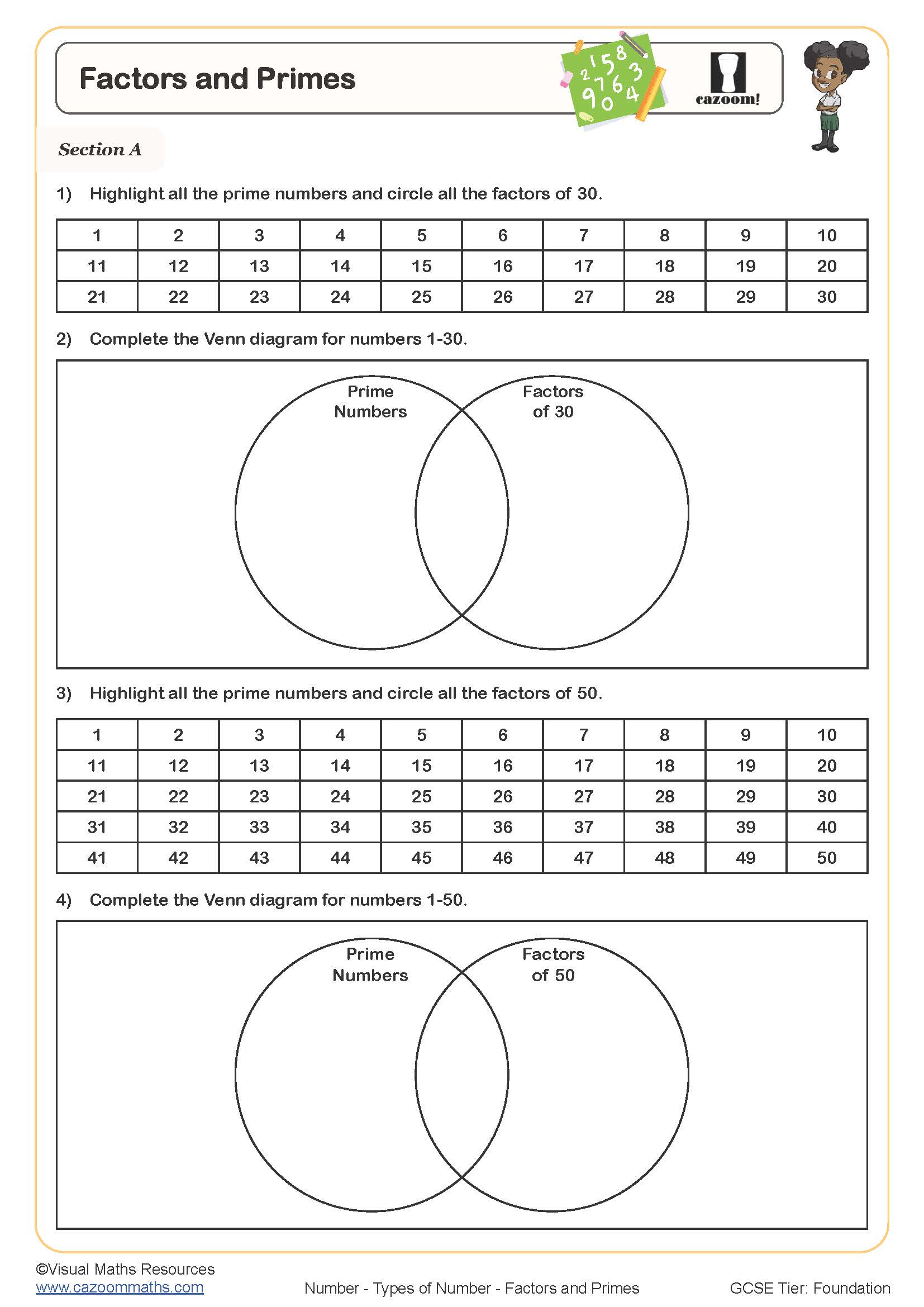
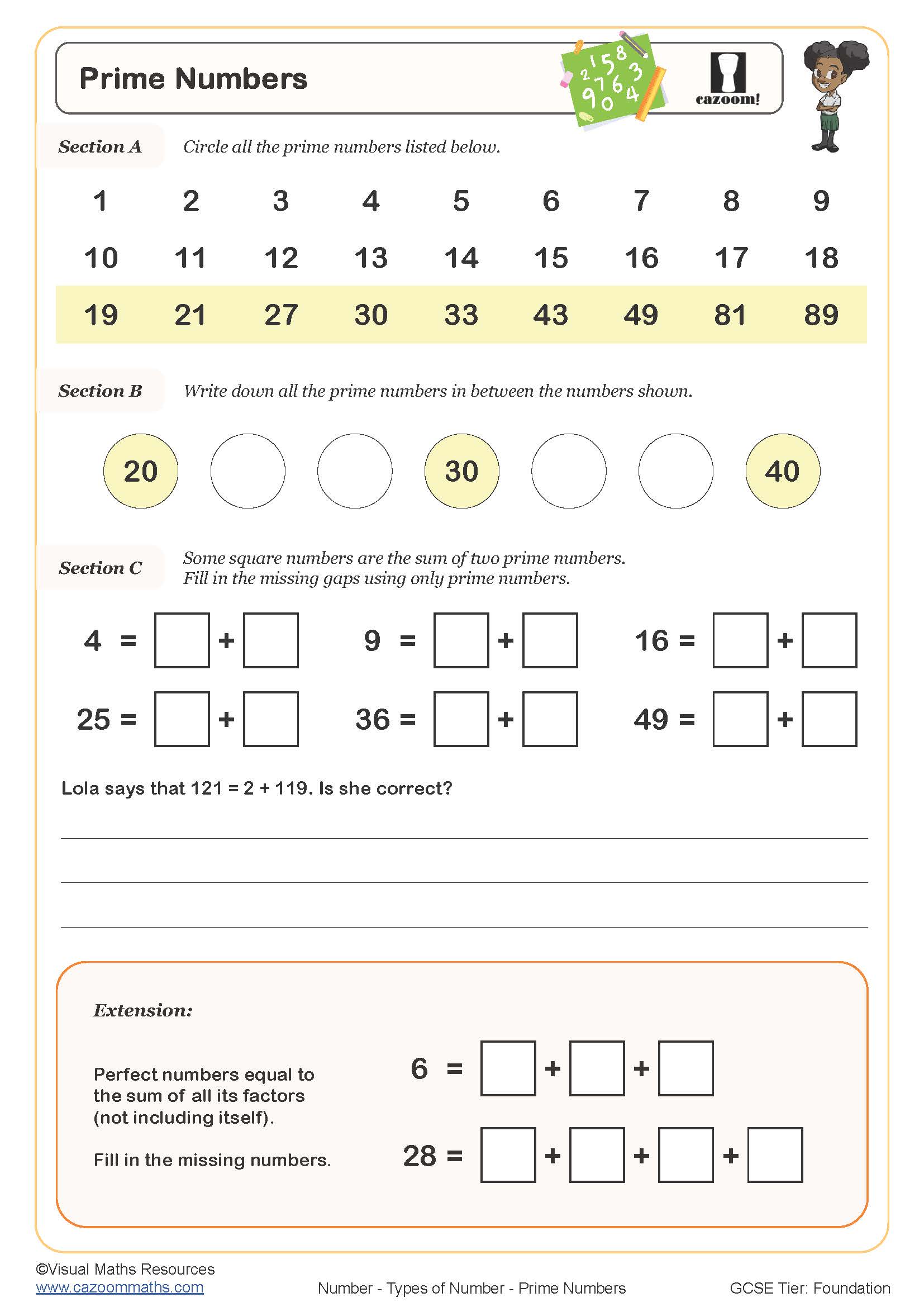
A prime number has exactly two factors: 1 and itself. This means numbers like 2, 3, 5, 7, 11, and 13 are prime, whilst 1 is not prime (it only has one factor) and 4, 6, 8, 9 are composite. Students learning from a prime numbers worksheet often need to check divisibility systematically rather than guessing, particularly for numbers like 51 (divisible by 3) or when determining whether 37 is a prime number (it is, as it has no factors other than 1 and 37).
Teachers often notice students lose marks by forgetting that 2 is prime, assuming all primes must be odd. Another common error appears when students don't test all possible factors up to the square root, leading them to incorrectly classify numbers like 91 (7 × 13) as prime. The prime number sheet approach works best when students show their factor checking, building habits that prevent careless mistakes in exams.
Which year groups study prime numbers in the UK curriculum?
These prime numbers worksheets target Year 7 and Year 8 students at Key Stage 3, where the National Curriculum expects pupils to identify prime numbers, prime factors, and understand their role in number structure. Students typically encounter primes first in upper KS2, but the KS3 phase develops deeper understanding needed for algebraic manipulation and problem-solving with highest common factors and lowest common multiples.
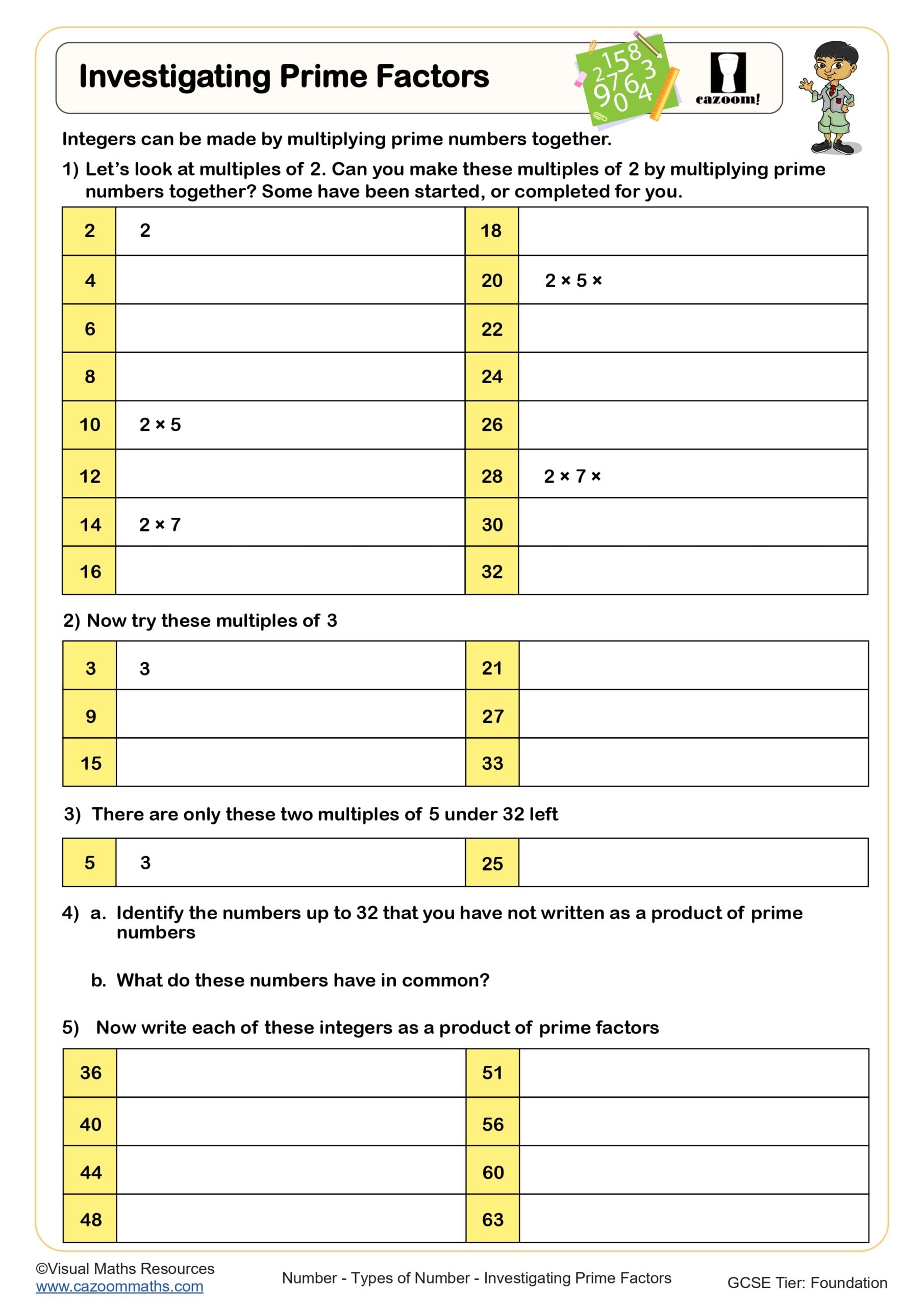
Progression between year groups shows Year 7 focusing on recognising primes within smaller ranges and understanding the definition, whilst Year 8 applies this knowledge to prime factorisation using factor trees or division methods. By Year 8, students should confidently identify prime numbers from 1 to 100 and explain why numbers like 1 aren't prime, preparing them for GCSE topics including index laws and algebraic fractions where prime factor knowledge becomes essential.
How do prime numbers connect to real-world mathematics and technology?
Prime numbers form the foundation of modern encryption and internet security. RSA encryption, which protects online banking and secure communications, relies on the mathematical difficulty of factorising very large numbers into their prime components. When students work through a worksheet on prime numbers, they're developing the same factorisation thinking that cybersecurity depends on, just with smaller numbers like finding that 77 = 7 × 11 rather than 300-digit products.
This connection to cryptography provides genuine STEM context beyond abstract number theory. Computer scientists and mathematicians continue searching for larger prime numbers using distributed computing networks, with the largest known prime having over 24 million digits. Understanding why primes can't be divided further helps students grasp why they're uniquely valuable for creating secure digital 'locks' that are easy to create but extremely difficult to break without the key.
How should teachers use these prime number worksheets effectively?
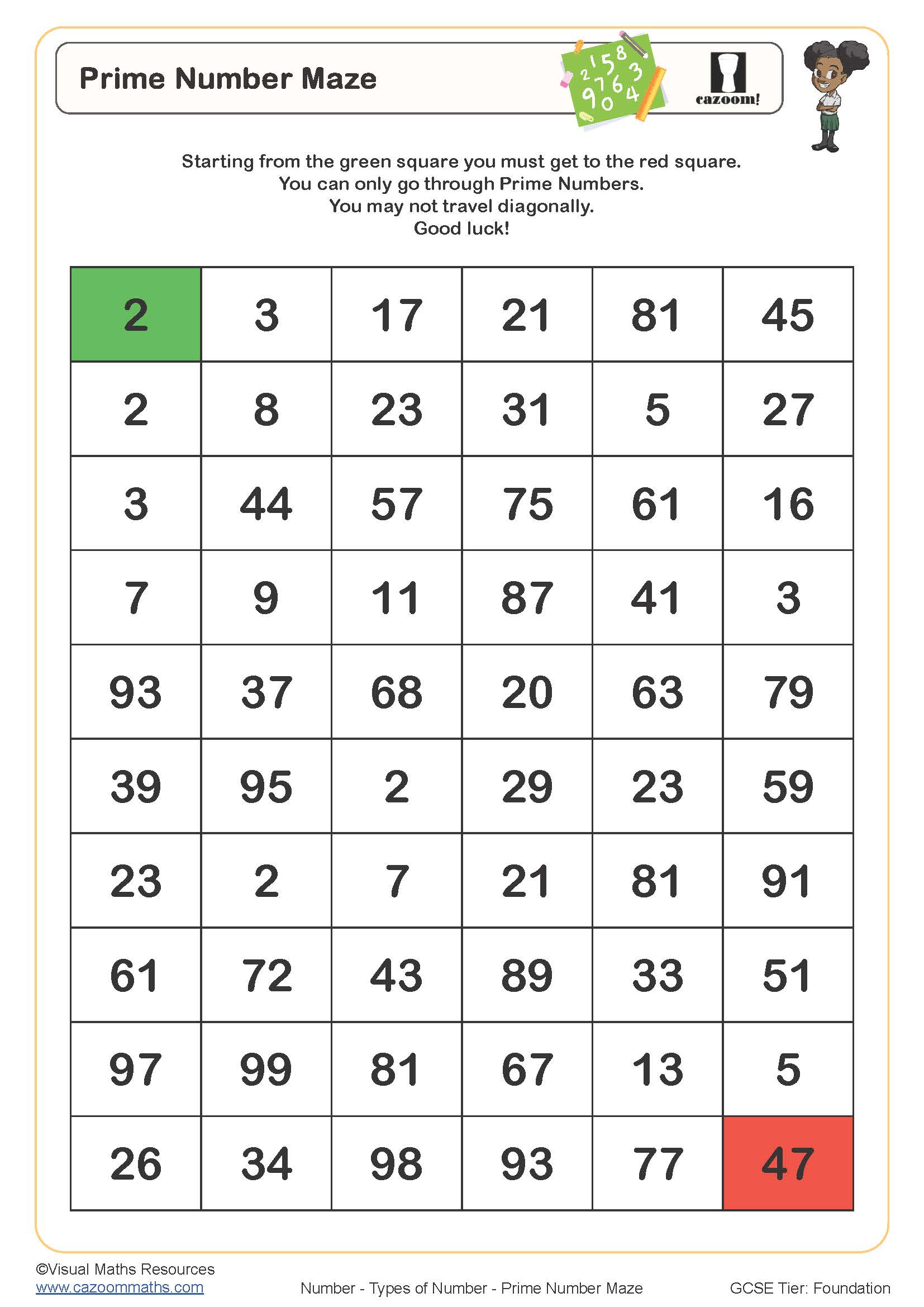
The worksheets build from identifying primes within given ranges to applying prime number knowledge in increasingly complex problems. Each prime number sheet includes varied question types, moving students from recognition exercises to explaining reasoning and spotting patterns, which addresses different levels of understanding within mixed-ability groups. The answer sheets allow students to self-assess or work through solutions independently during revision sessions.
Many teachers find these worksheets valuable for targeted intervention with students who struggle with factor work or for extending confident learners into prime factorisation challenges. They work well as starter activities to refresh knowledge before HCF/LCM lessons, or as homework to consolidate classroom teaching. Paired work often proves effective, with students justifying whether numbers are prime by showing all factor checks, developing both mathematical reasoning and communication skills that examiners reward in problem-solving questions.