Rounding Decimals Worksheets
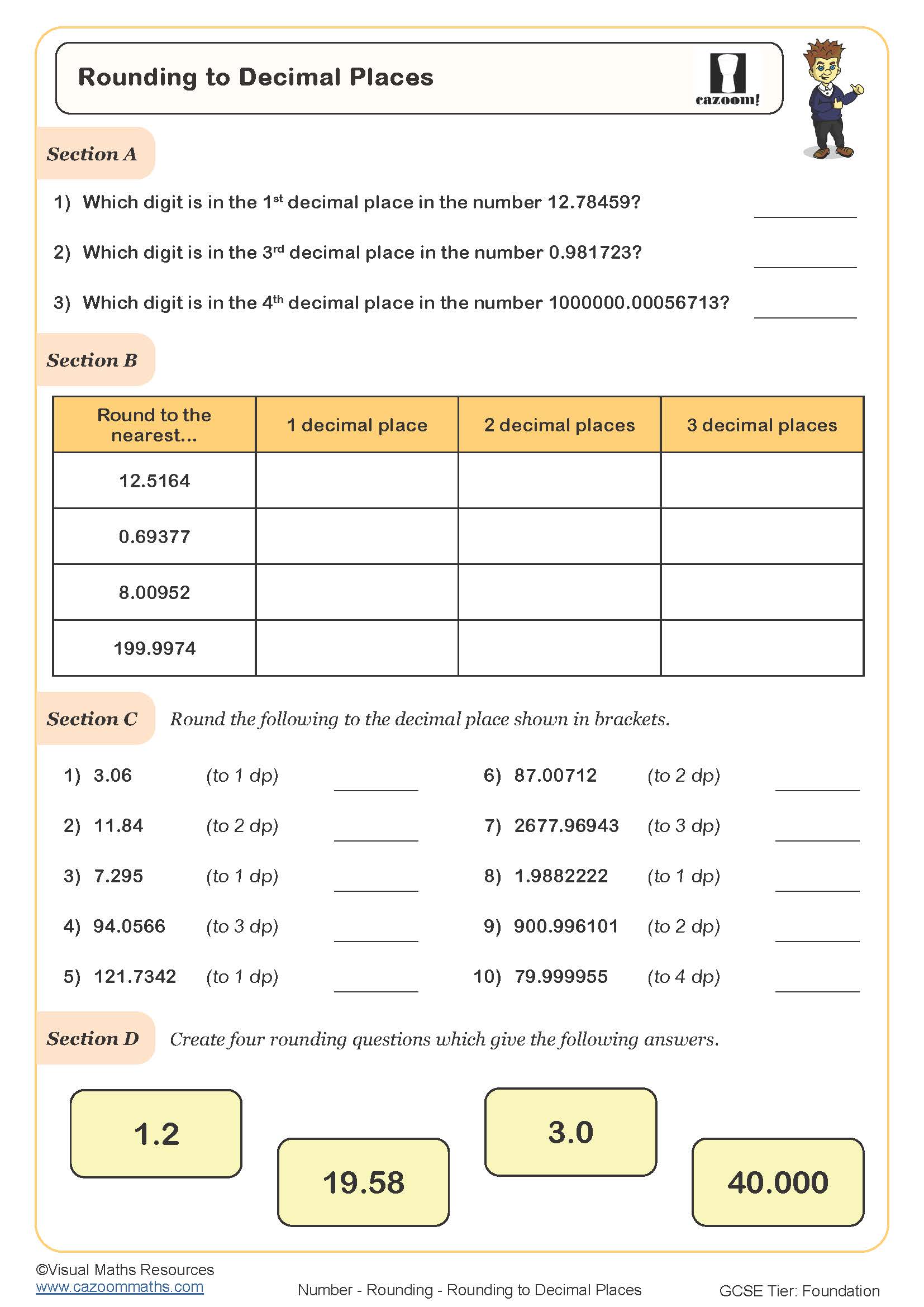
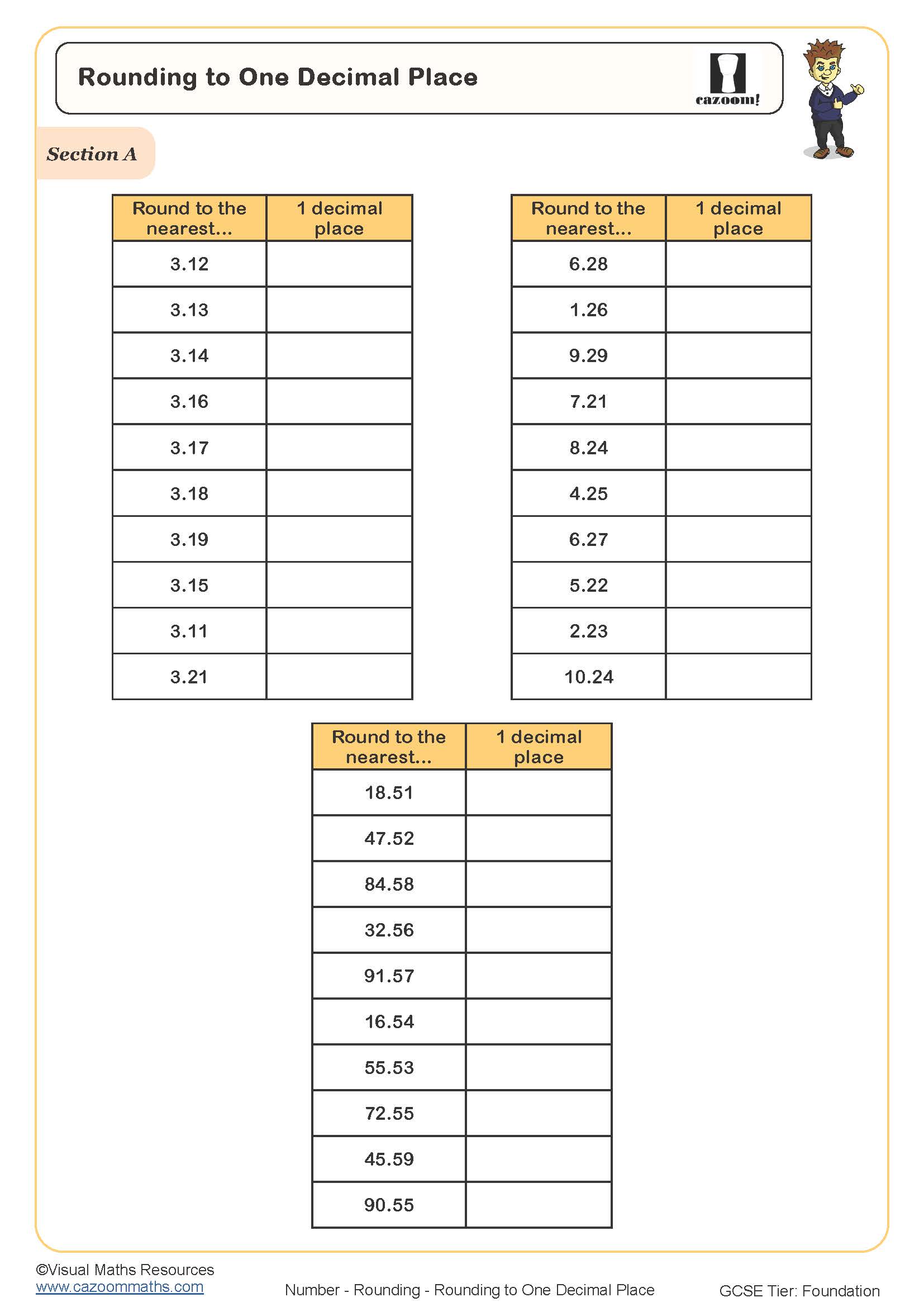
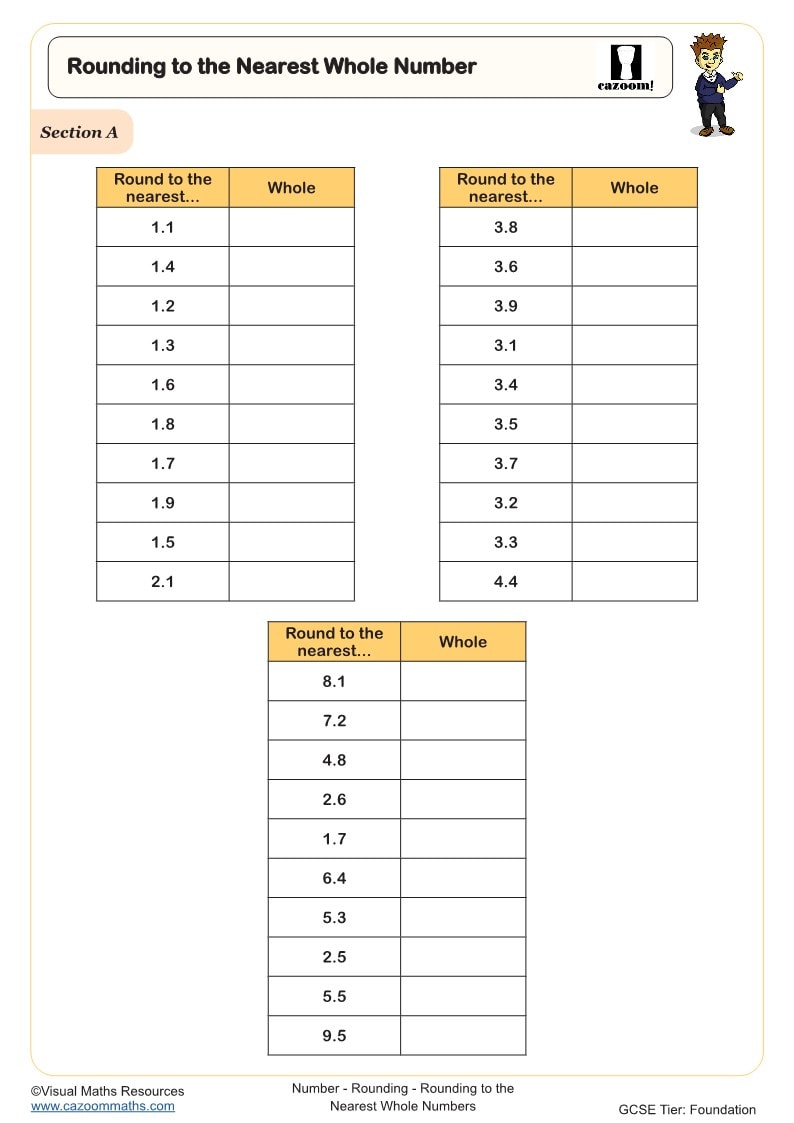
All worksheets are created by the team of experienced teachers at Cazoom Maths.
What are the rules for rounding decimals?
When rounding decimals, students identify the place value they're rounding to, then look at the digit immediately to its right. If this digit is 5 or greater, round up by adding one to the place value digit. If it's 4 or less, keep the place value digit the same. All digits to the right are then dropped or replaced with zeros where necessary to maintain place value.
A common error occurs when students round 2.45 to one decimal place, incorrectly writing 2.4 instead of 2.5. They sometimes focus only on the '4' without understanding they must look at the next digit along. Mark schemes regularly penalise this mistake, particularly in GCSE questions where students must round answers from calculator work to an appropriate degree of accuracy.
Which year groups learn rounding decimals?
These worksheets cover rounding decimals at Key Stage 3, specifically for Year 7 and Year 8 students. The National Curriculum expects students to round decimals to any number of decimal places by the end of KS3, building on their primary school experience of rounding whole numbers and simple decimals. This work establishes the foundation for understanding significant figures in Year 9.
Year 7 worksheets typically focus on rounding to one or two decimal places with straightforward numbers, whilst Year 8 materials introduce rounding to three decimal places and include numbers where students must make multiple decisions. The progression ensures students encounter more complex decimals and develop fluency in deciding which place value to examine before applying the rounding rule.
Why do we round to decimal places in real life?
Rounding to decimal places allows us to express numbers with appropriate precision for different contexts. Money calculations round to two decimal places because we work in pounds and pence. Scientific measurements round according to the accuracy of measuring instruments, with laboratory thermometers reading to one decimal place whilst digital scales might display three. Presenting data sensibly requires understanding when exact values are unnecessary.
Engineers and architects use rounding when converting between metric and imperial units, as exact conversions often produce unwieldy decimals. A measurement of 3.658 metres becomes 3.66 metres when rounded to two decimal places, which is sufficiently accurate for most construction purposes whilst remaining practical to work with. Students who understand this context recognise why exam questions specify the degree of accuracy required rather than expecting every digit from a calculator display.
How do these worksheets help students master rounding?
The worksheets present questions in increasing difficulty, starting with clear examples where the deciding digit makes rounding obvious, then progressing to numbers requiring more careful analysis. Students encounter decimals with varying lengths and practise identifying the correct place value before applying the rule. This structured approach helps them develop a systematic method rather than guessing.
Teachers use these worksheets for targeted intervention when students make errors in science practicals or mathematics assessments. The answer sheets allow students to work independently during homework or catch-up sessions, identifying their mistakes without waiting for teacher marking. Many teachers find paired work effective, where students explain their rounding decisions to each other, as verbalising the process helps consolidate understanding of which digit controls the rounding decision.