Using Written Methods to Solve Problems Worksheets
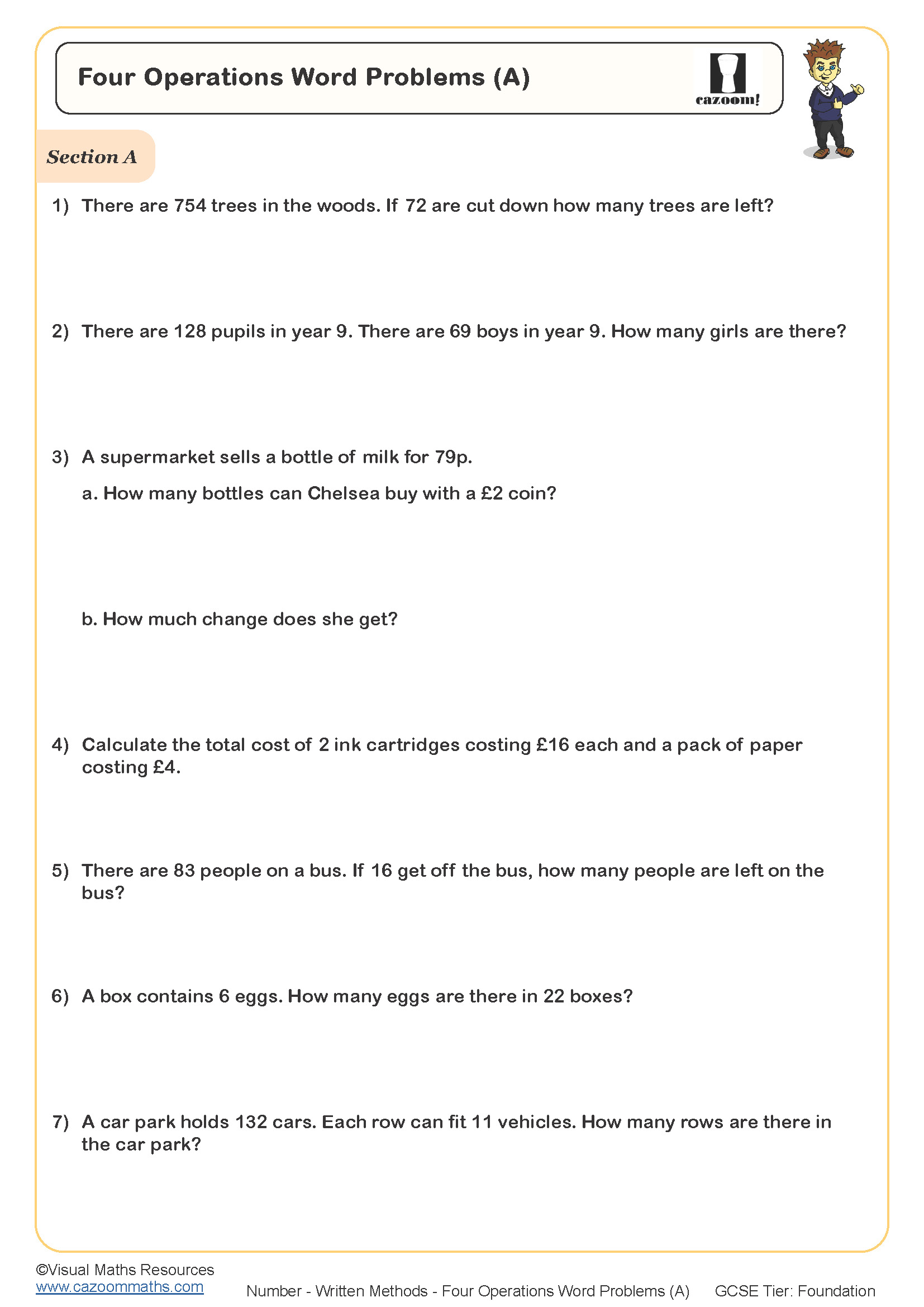
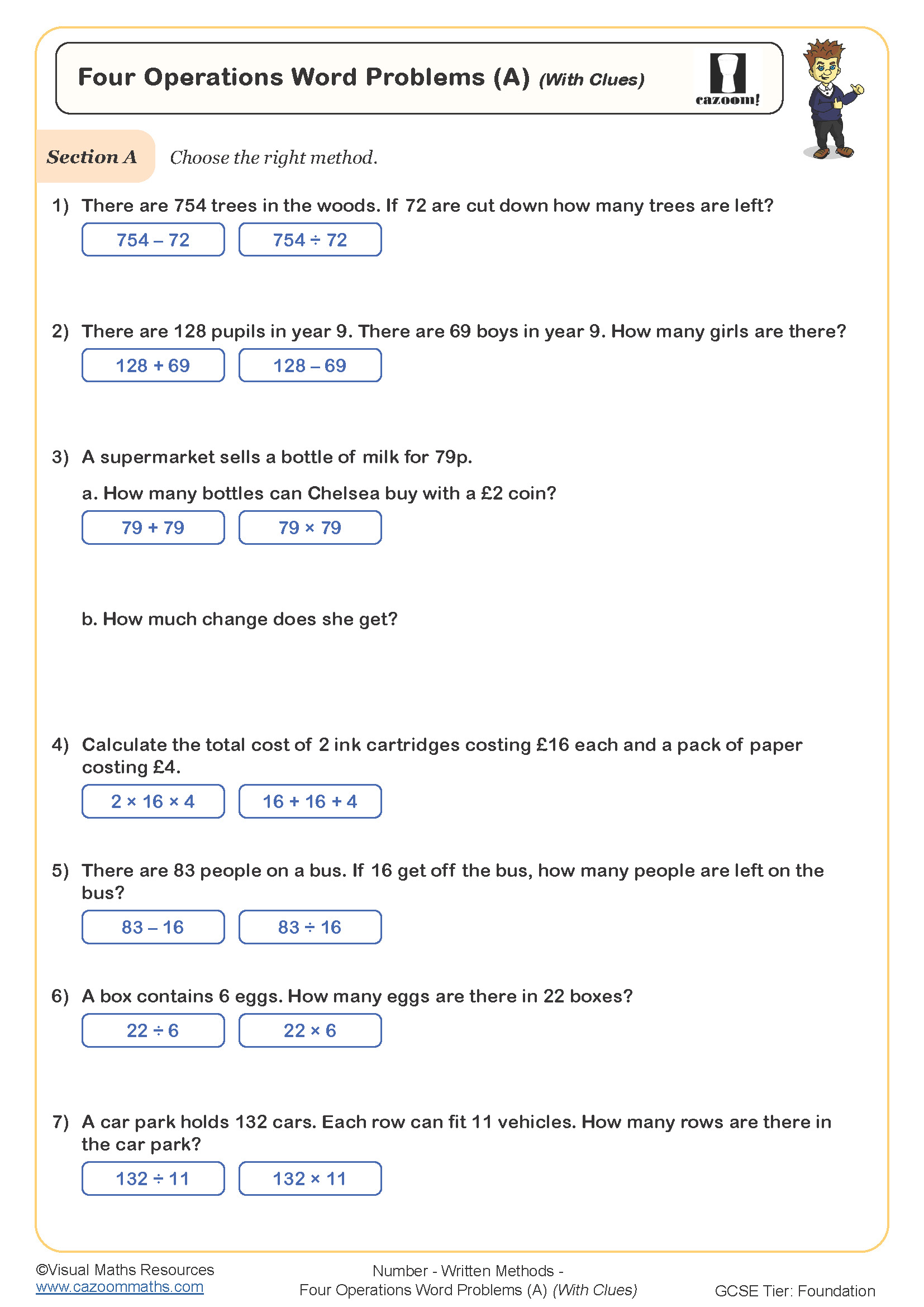
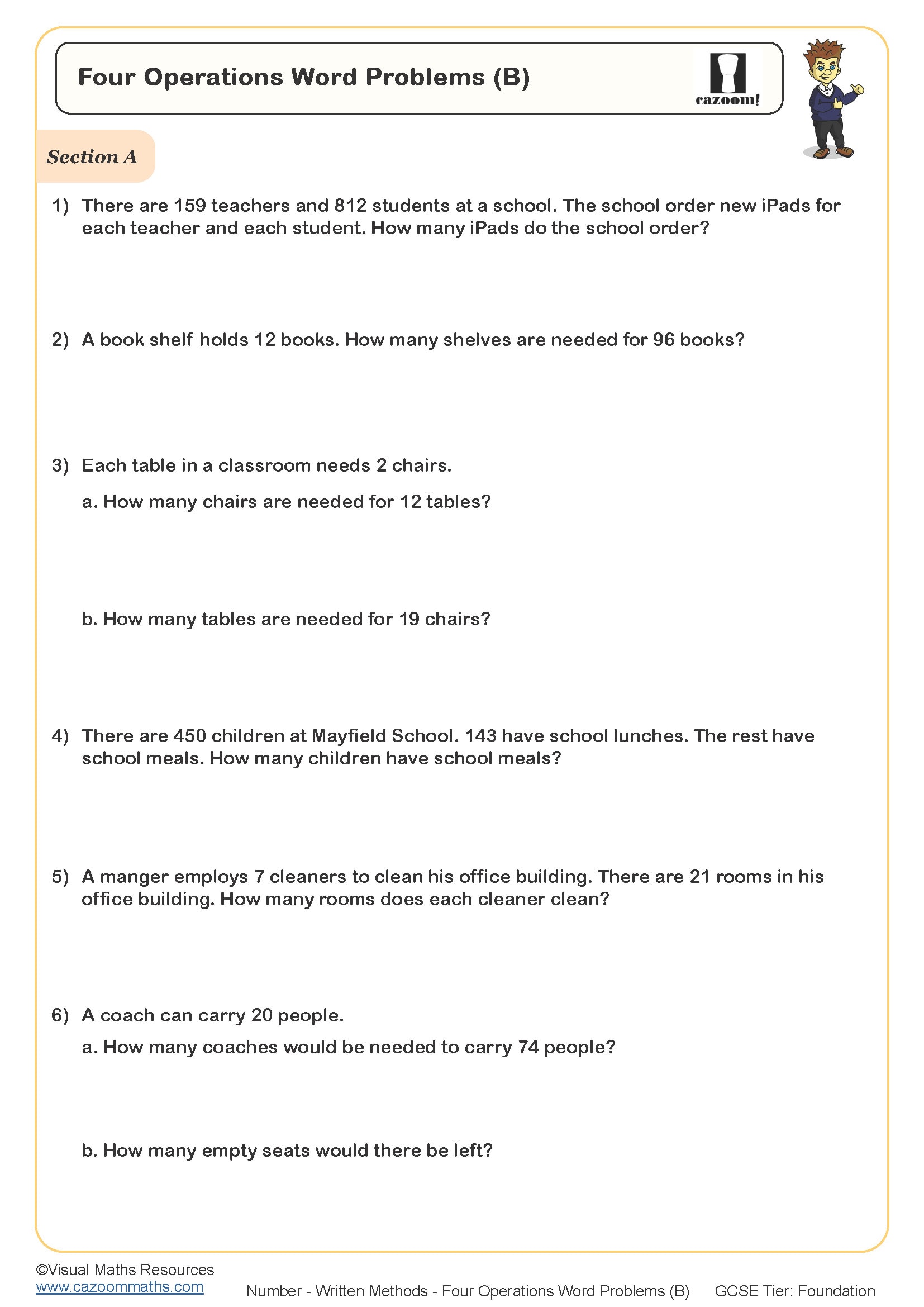
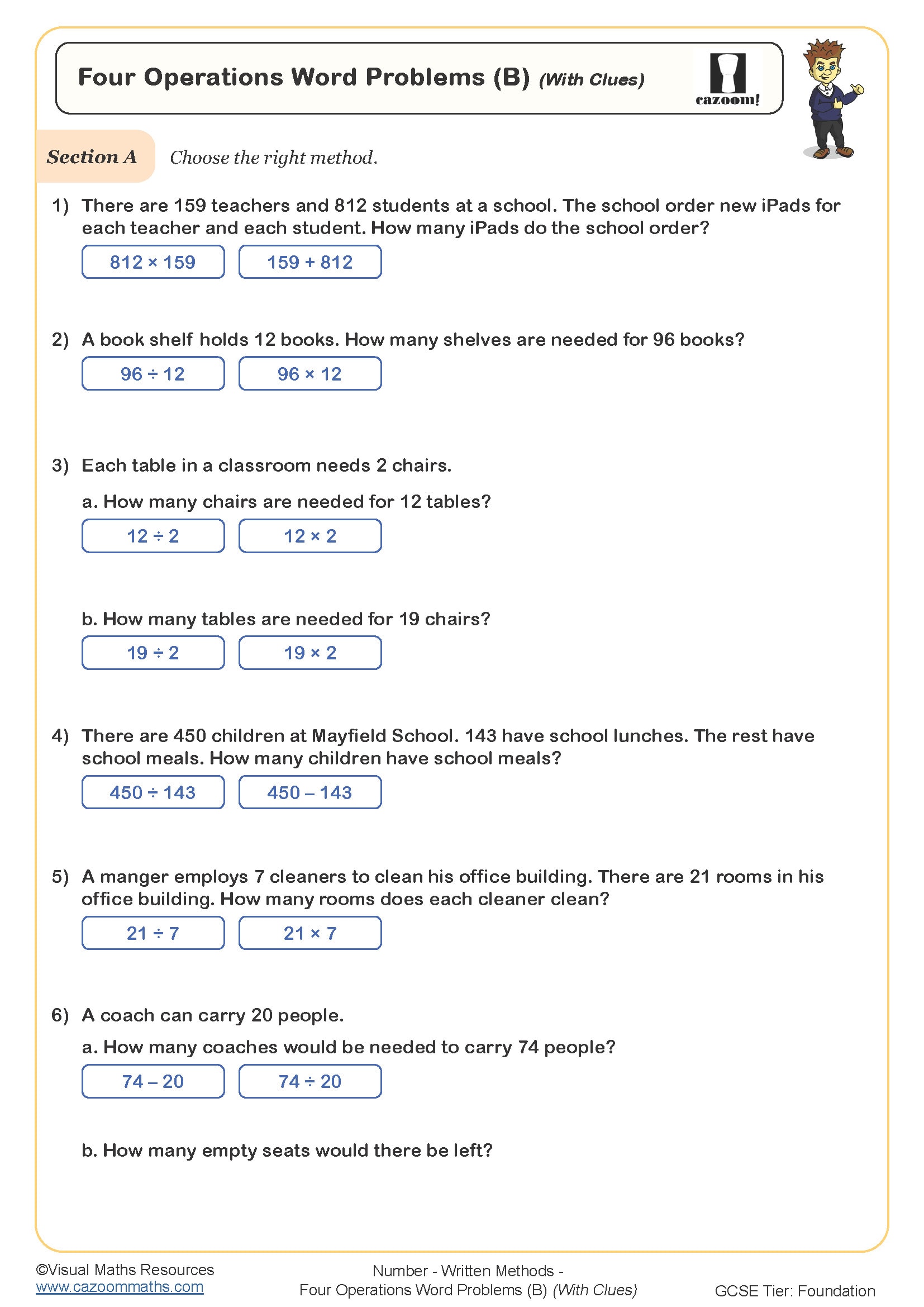
All worksheets are created by the team of experienced teachers at Cazoom Maths.
What are written methods for solving problems?
Written methods refer to formal algorithms students use to calculate with multi-digit numbers, including column addition and subtraction, short and long multiplication, and short and long division. In the context of problem-solving, students must read contextual questions, extract numerical information, select the appropriate written method, and apply it accurately to reach a solution. This sits within the Number strand of the KS3 National Curriculum, where students are expected to use formal written methods fluently.
Many students make errors during the transition from selecting the method to executing it. A typical mistake occurs when students correctly identify they need to multiply but then misalign columns in the written method, particularly when dealing with decimals or money problems. Exam mark schemes frequently penalise students who show the correct method but make place value errors in their working.
Which year groups use written methods to solve problems?
These worksheets are designed for Year 7 and Year 8 students at KS3, where the emphasis shifts from consolidating written methods to applying them within problem-solving contexts. By this stage, students should have secure knowledge of formal algorithms from primary school and now focus on deciding when and how to use them in unfamiliar situations. The National Curriculum expects KS3 students to solve increasingly complex problems involving multiple operations and real-world scenarios.
Progression across these year groups involves moving from straightforward single-step problems to multi-step challenges that require selecting between different written methods. Year 7 worksheets typically focus on problems with clearer structures and explicit numerical information, while Year 8 questions introduce more complexity, such as problems requiring unit conversions first or those with information presented in tables and diagrams.
How do written methods apply to real-world problems?
Real-world problem-solving using written methods requires students to interpret contexts and translate them into mathematical operations. Questions might involve calculating total costs when buying multiple items at different prices, working out distances travelled over several stages of a journey, or determining how many people can be seated at tables of different capacities. Students learn to extract relevant information, ignore distractors, and organise their working systematically using formal algorithms.
This skill directly connects to STEM applications where engineers and scientists must process measurement data using precise calculations. Pharmaceutical researchers, for example, use written methods to scale ingredient quantities when manufacturing different batch sizes of medicines, where accuracy is critical. Similarly, architects calculate material quantities for construction projects by applying multiplication and division methods to scale measurements, demonstrating how these foundational skills underpin professional practice.
How do these worksheets support student learning?
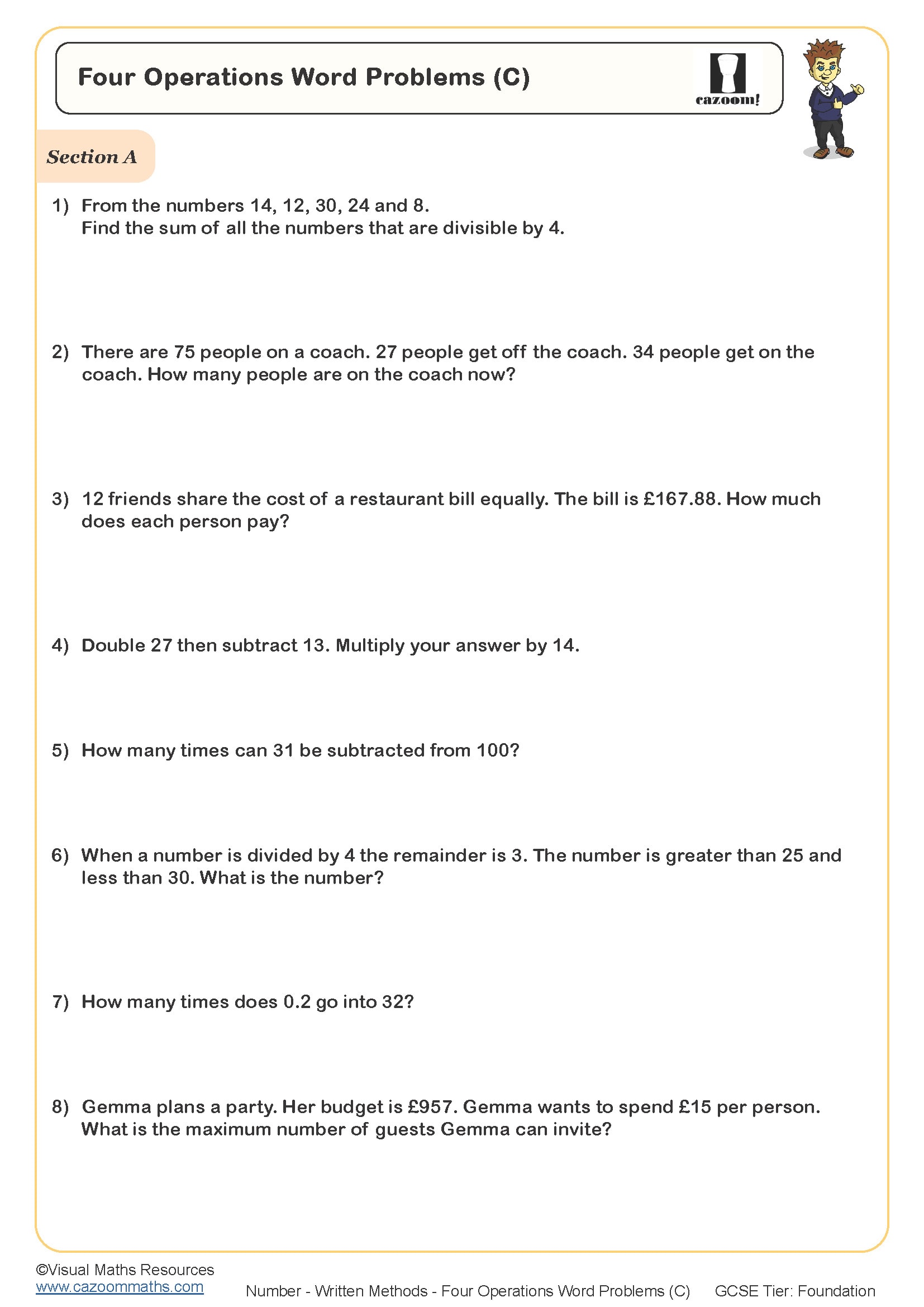
The worksheets provide structured progression through problem types, starting with questions that make the required operation more explicit before moving to scenarios where students must interpret the context independently. Each worksheet includes clear working space that encourages students to show their formal written methods, helping teachers identify whether errors occur in method selection or calculation accuracy. The included answer sheets show full working, allowing students to compare their approach and identify where their reasoning or execution went wrong.
These resources work effectively as homework to reinforce lessons on problem-solving strategies, or as intervention materials for students who can perform calculations but struggle with application. Teachers find them useful for paired work where students discuss which method to use before calculating, developing mathematical reasoning alongside computational fluency. They also provide targeted revision before assessments, helping students practise the problem-solving element that differentiates higher-level questions from basic procedural tasks.