Written Methods for Multiplication Worksheets
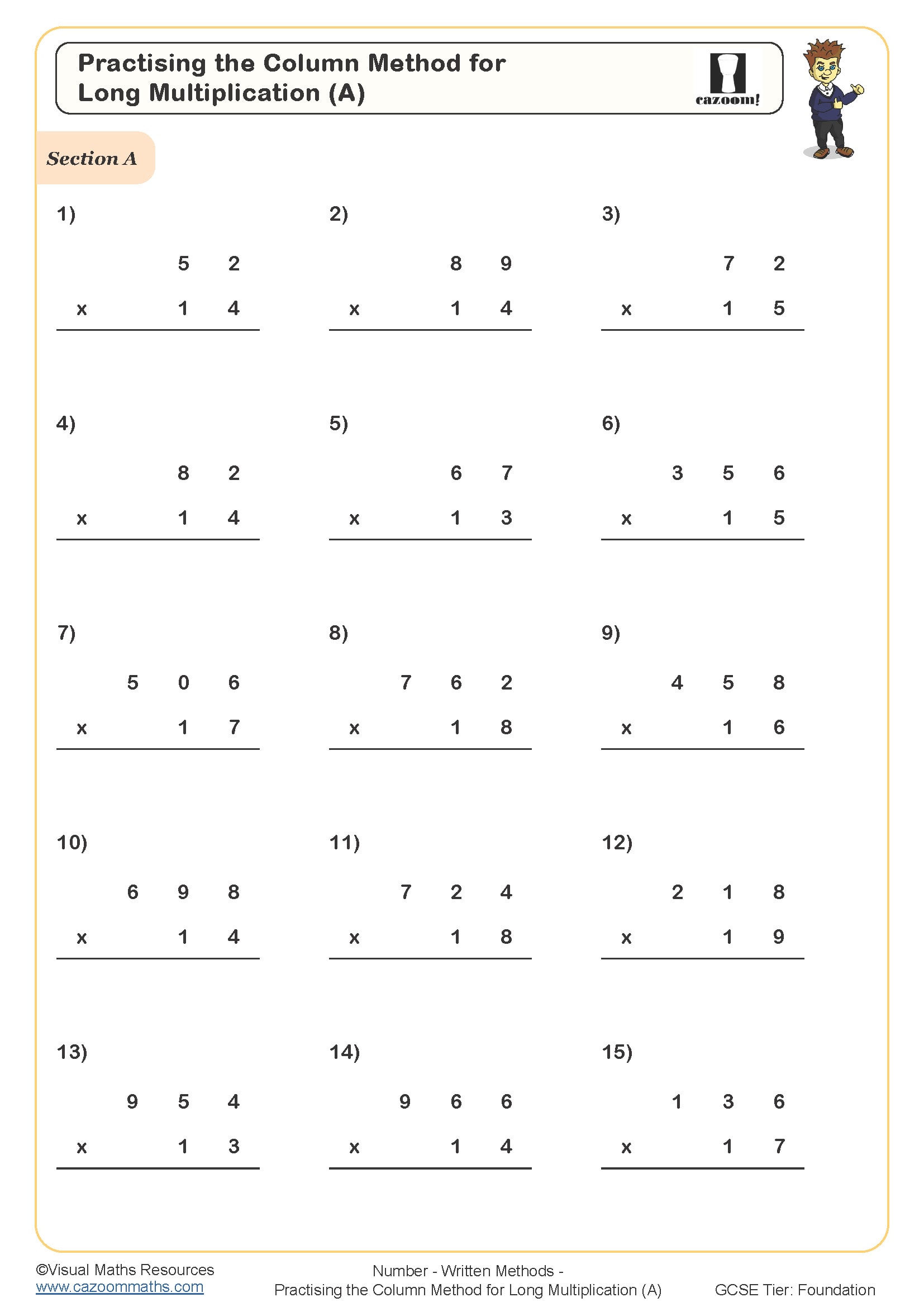
Practising the Column Method for Long Multiplication (A)
Year groups: 7, 8
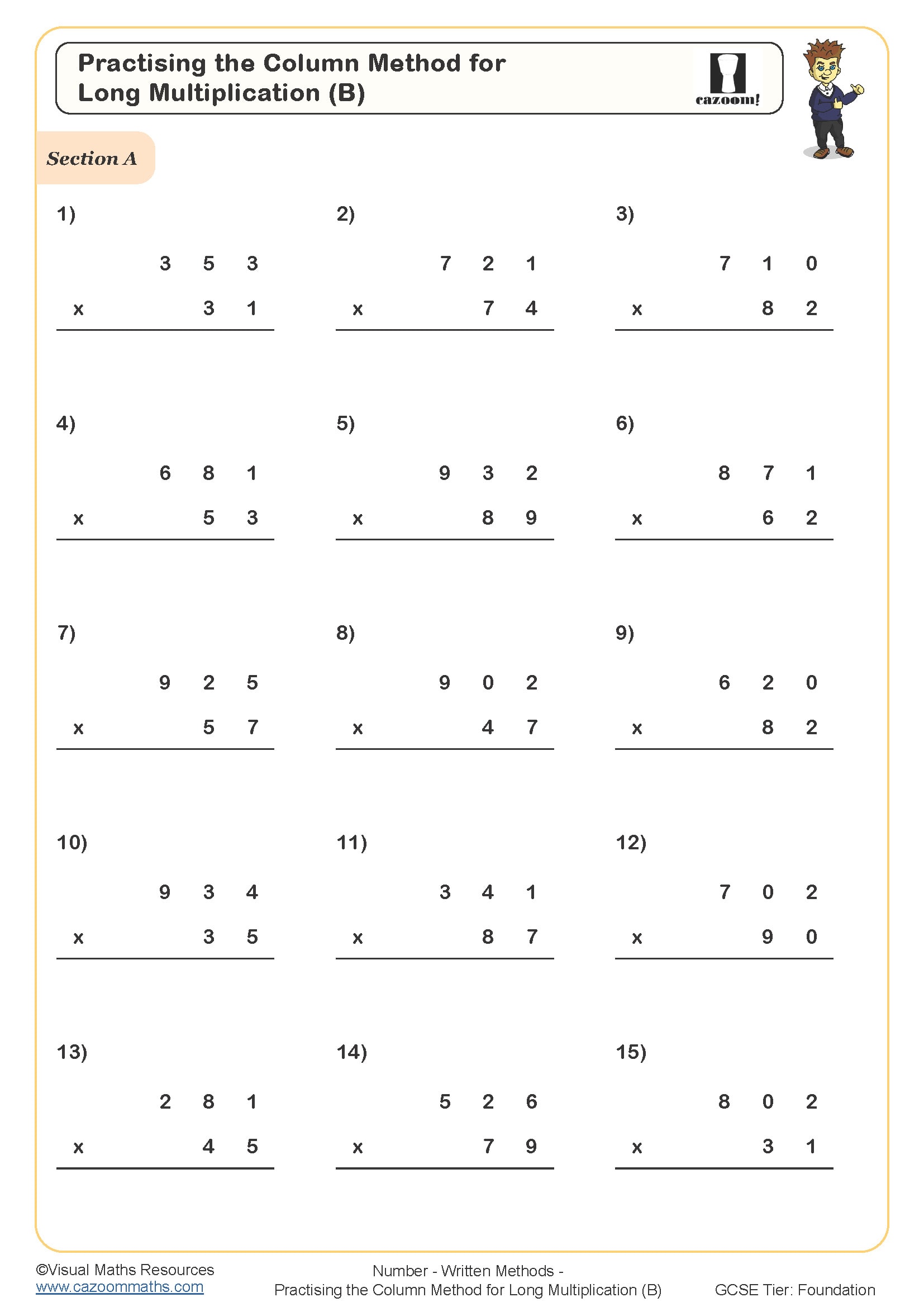
Practising the Column Method for Long Multiplication (B)
Year groups: 7, 8
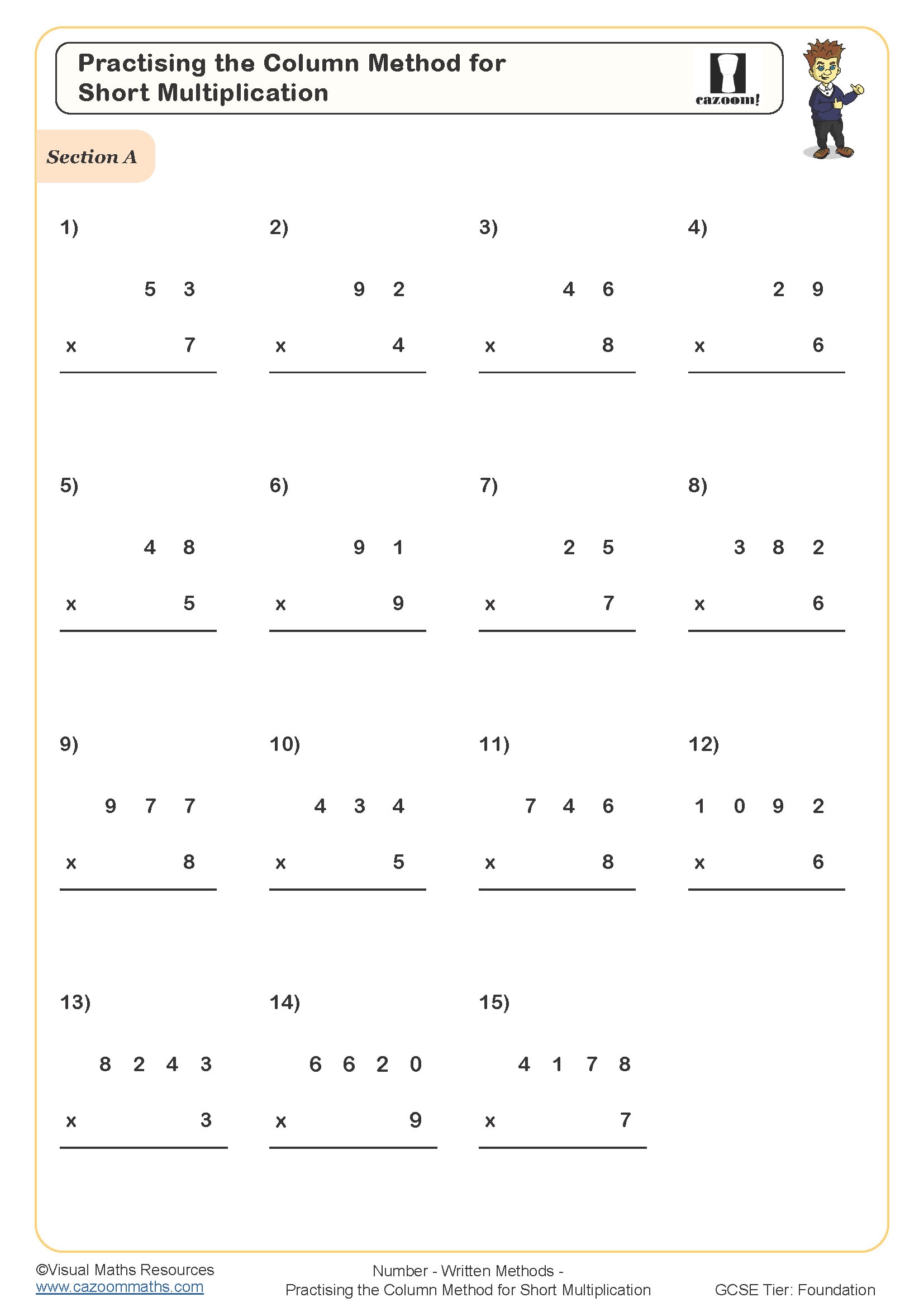
Practising the Column Method for Short Multiplication
Year groups: 7, 8
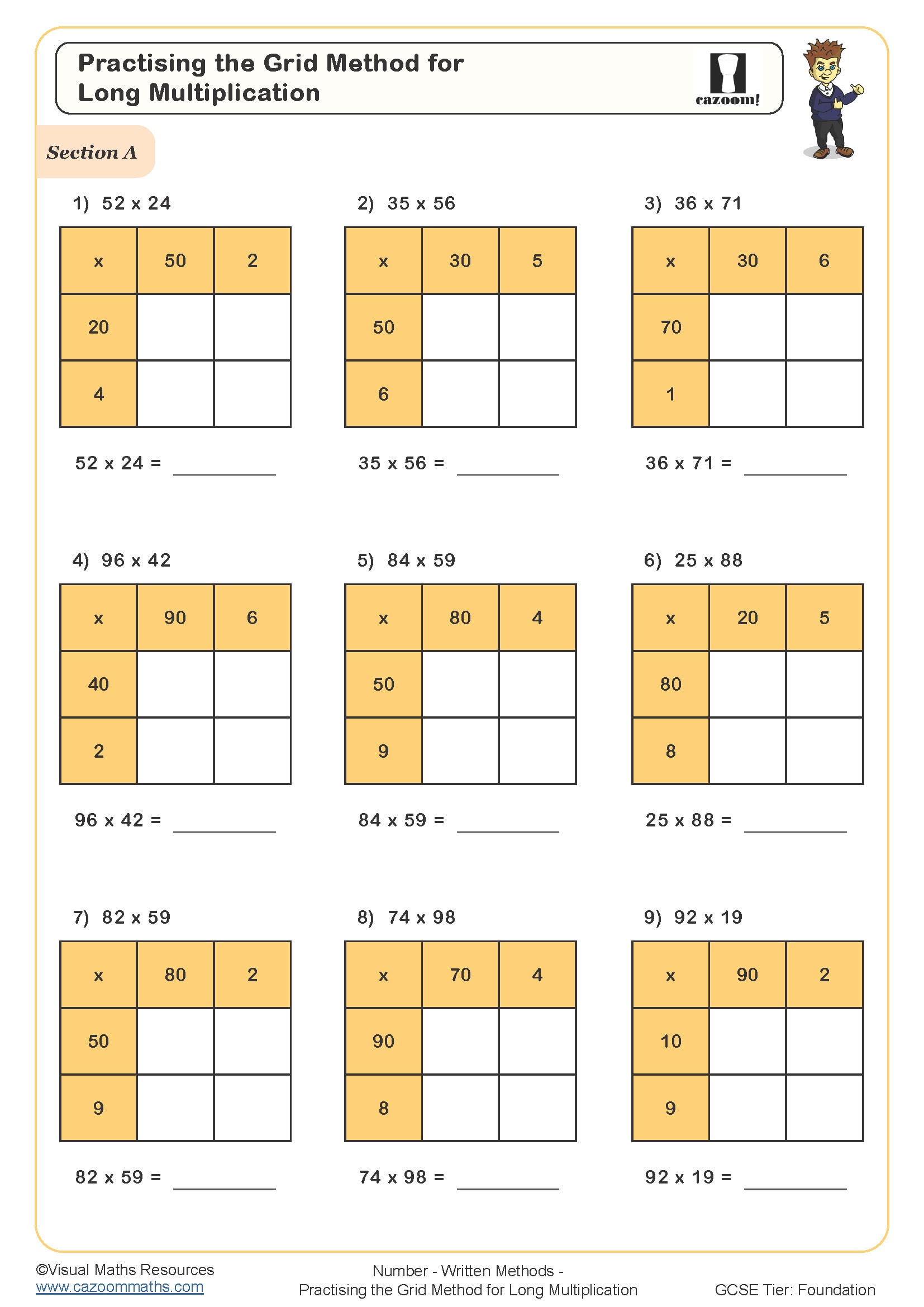
Practising the Grid Method for Long Multiplication
Year groups: 7, 8
Practising the Grid Method for Short Multiplication (A)
Year groups: 7, 8
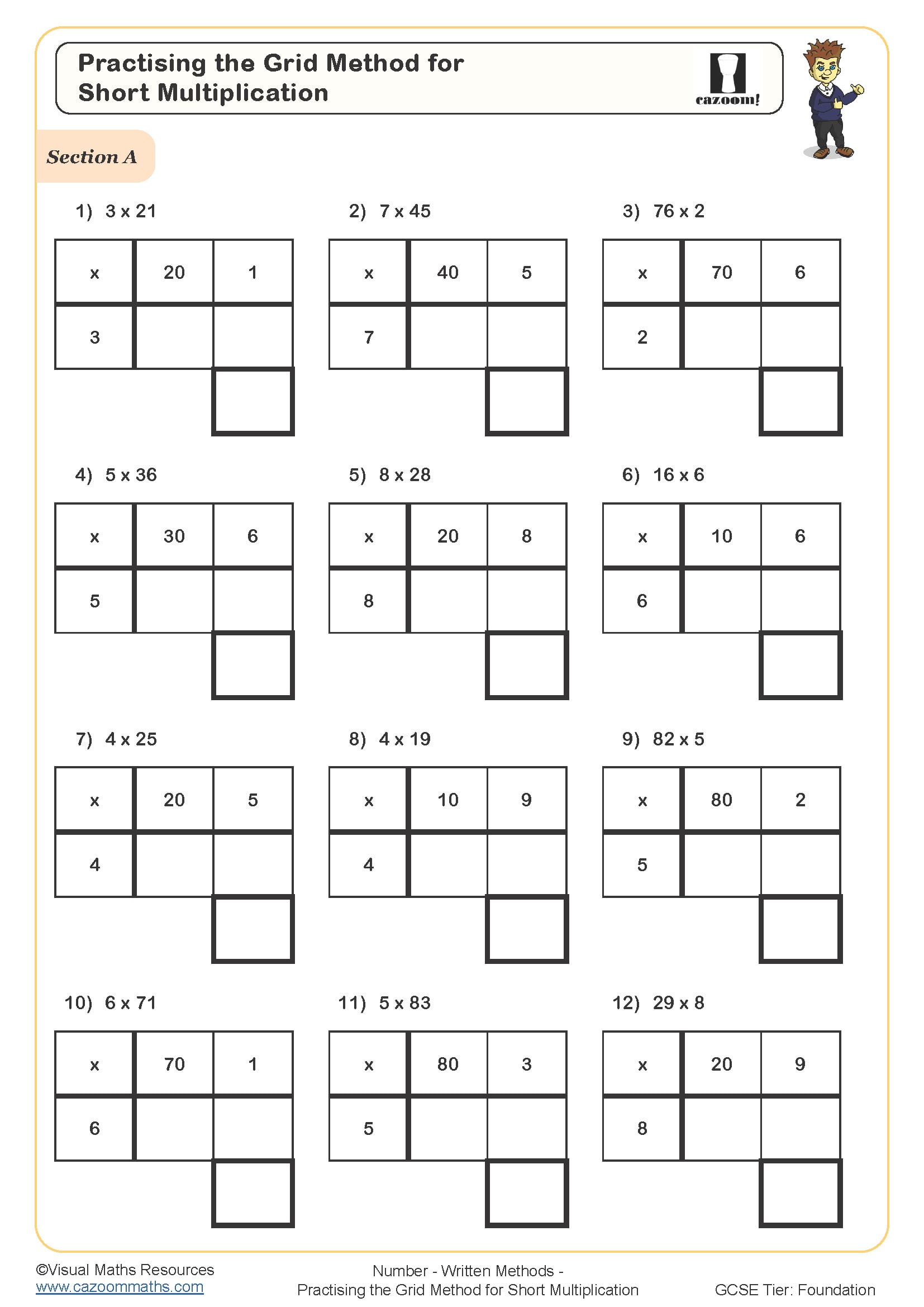
All worksheets are created by the team of experienced teachers at Cazoom Maths.
What are the different written methods for multiplication?
The main written methods taught in UK secondary schools are the grid method (also called the box method), column multiplication, and long multiplication. The grid method partitions numbers by place value and multiplies in sections before adding, making the process transparent and visual. Column multiplication and long multiplication follow similar structures, working right to left whilst managing place value and carrying systematically.
Students often struggle when transitioning from grid method to column multiplication because the grid method shows all partial products explicitly, whereas column multiplication combines steps. A common error occurs when students misalign digits in column multiplication, particularly when multiplying by numbers containing zeros in the tens place. Exam mark schemes frequently penalise these place value errors even when the multiplication facts themselves are correct.
Which year groups learn written methods for multiplication?
These worksheets cover written methods for multiplication at Key Stage 3, specifically for Year 7 and Year 8 students. In the National Curriculum, formal written methods are consolidated during this stage as students apply them to increasingly complex calculations involving larger numbers, decimals, and problem-solving contexts. By Year 7, students should be confident with multiplying multi-digit whole numbers using their preferred method.
The progression across these year groups typically moves from multiplying three-digit by two-digit whole numbers in Year 7 to more demanding calculations including decimals and applying written methods within worded problems by Year 8. Teachers notice that revisiting these methods at the start of Year 7 is essential, as students arrive with varying levels of fluency from primary school and benefit from consolidated practice before tackling algebraic multiplication later in KS3.
Why is column multiplication important for GCSE maths?
Column multiplication forms the foundation for non-calculator GCSE papers where students must perform calculations without electronic aids. This formal method allows students to multiply large numbers accurately and systematically, following a repeatable procedure that minimises errors. Mastery of column multiplication also underpins algebraic multiplication, particularly when expanding brackets and working with polynomials, making it a gateway skill for higher-tier content.
Beyond examinations, column multiplication connects directly to real-world applications in construction, engineering, and finance where precise calculations are non-negotiable. Architects calculating material quantities for large projects, engineers determining load capacities across multiple components, and financial analysts computing compound interest all rely on accurate multiplication of multi-digit numbers. Understanding the procedural steps builds mathematical confidence and numerical literacy essential for STEM careers where estimation alone is insufficient.
How can teachers use these multiplication worksheets effectively?
The worksheets provide scaffolded practice that allows students to build procedural fluency systematically, starting with manageable calculations before progressing to more challenging multi-digit problems. Teachers can use the answer sheets for quick formative assessment, identifying where students make errors in the carrying process or misalign place value columns. This immediate feedback helps address misconceptions before they become embedded habits.
Many teachers find these worksheets valuable for intervention sessions with students who struggle on non-calculator papers, for homework that reinforces classroom teaching, or for retrieval practice at the start of lessons. They work well in paired activities where students check each other's working, promoting mathematical discussion about method efficiency and error-spotting. The worksheets also support differentiation, allowing confident students to work independently whilst the teacher targets support at those still developing fluency with the algorithm.