KS3 and KS4 Percentages Worksheets
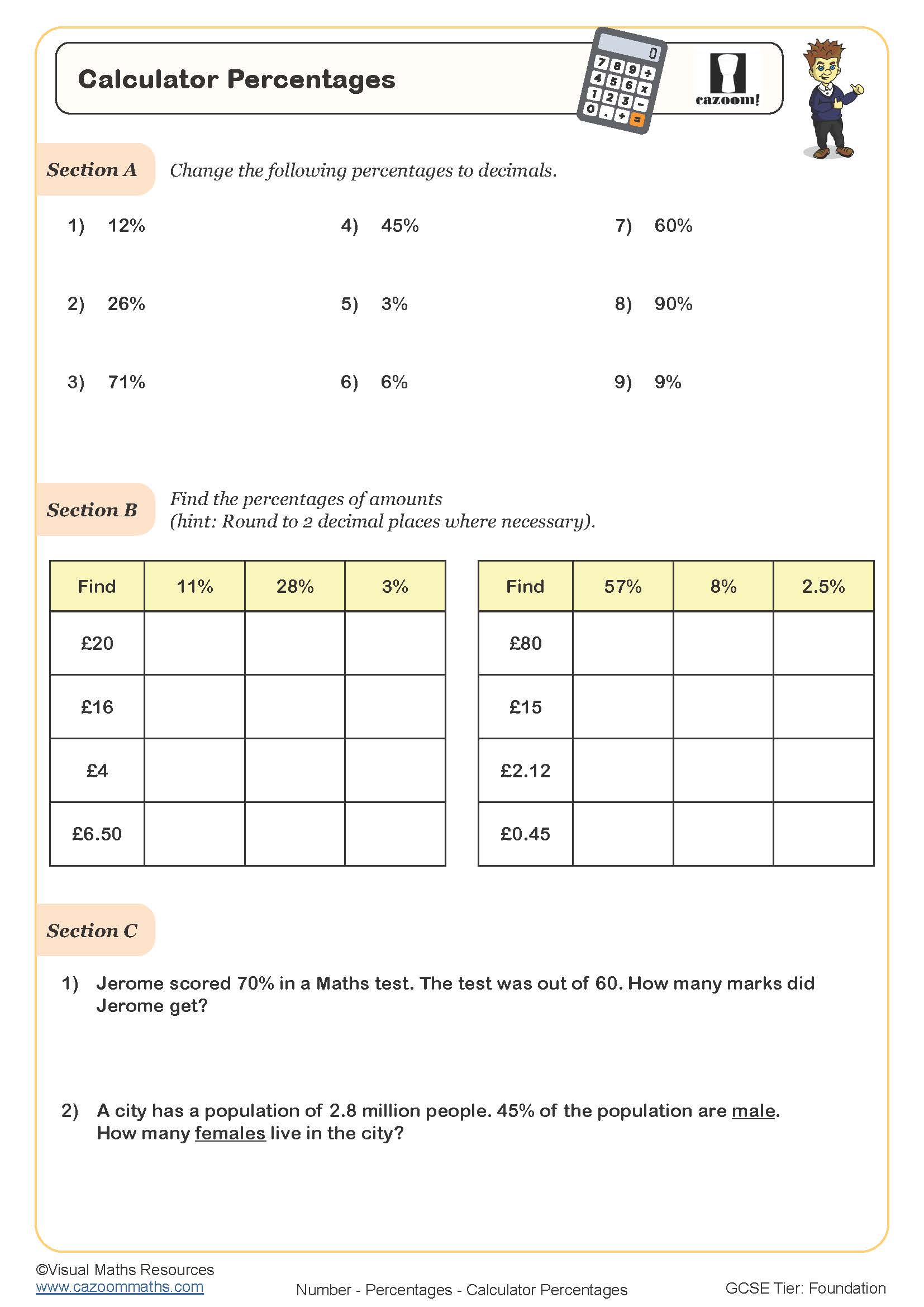
Calculator Percentages
Year groups: 7, 8
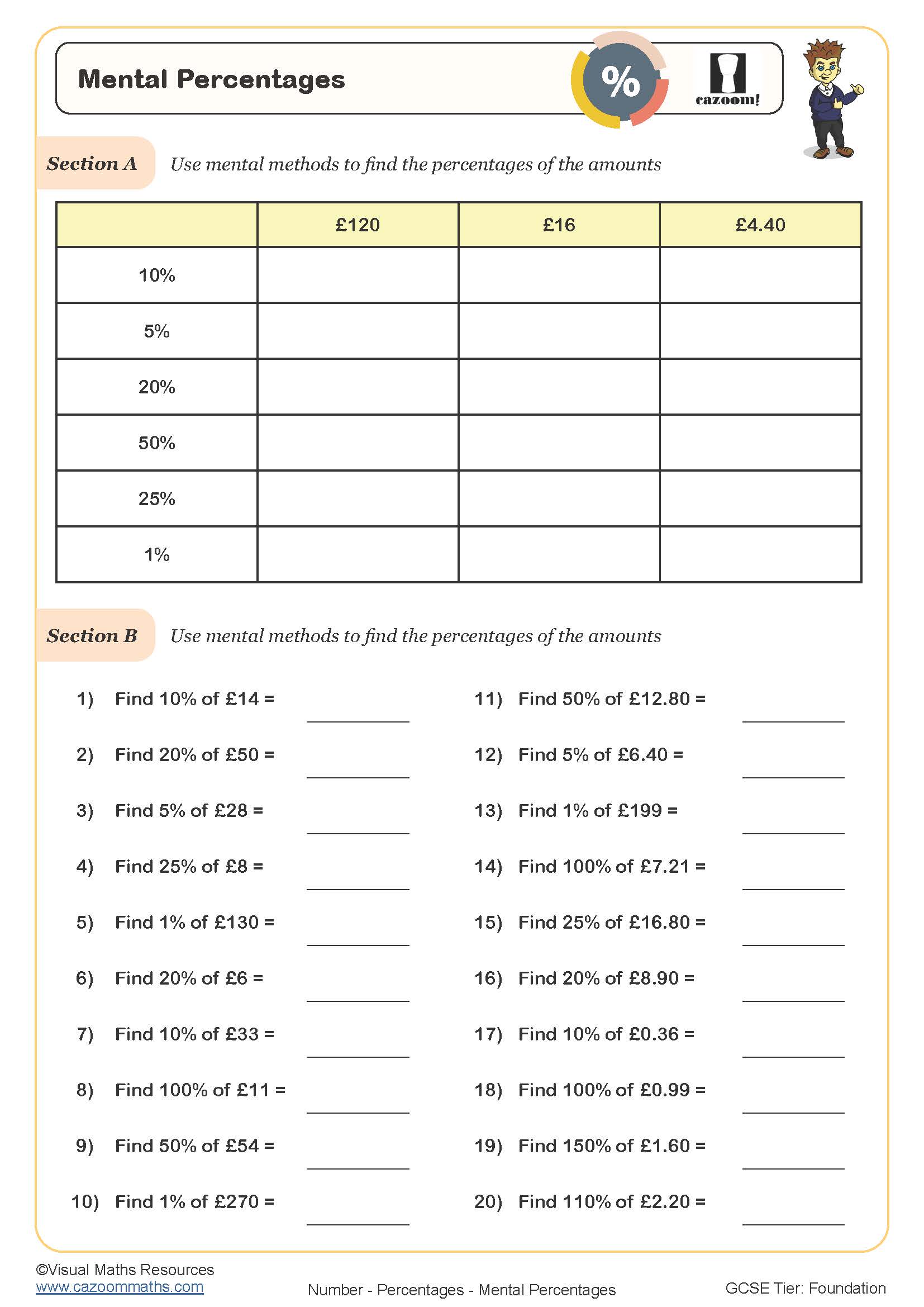
Mental Percentages
Year groups: 7, 8
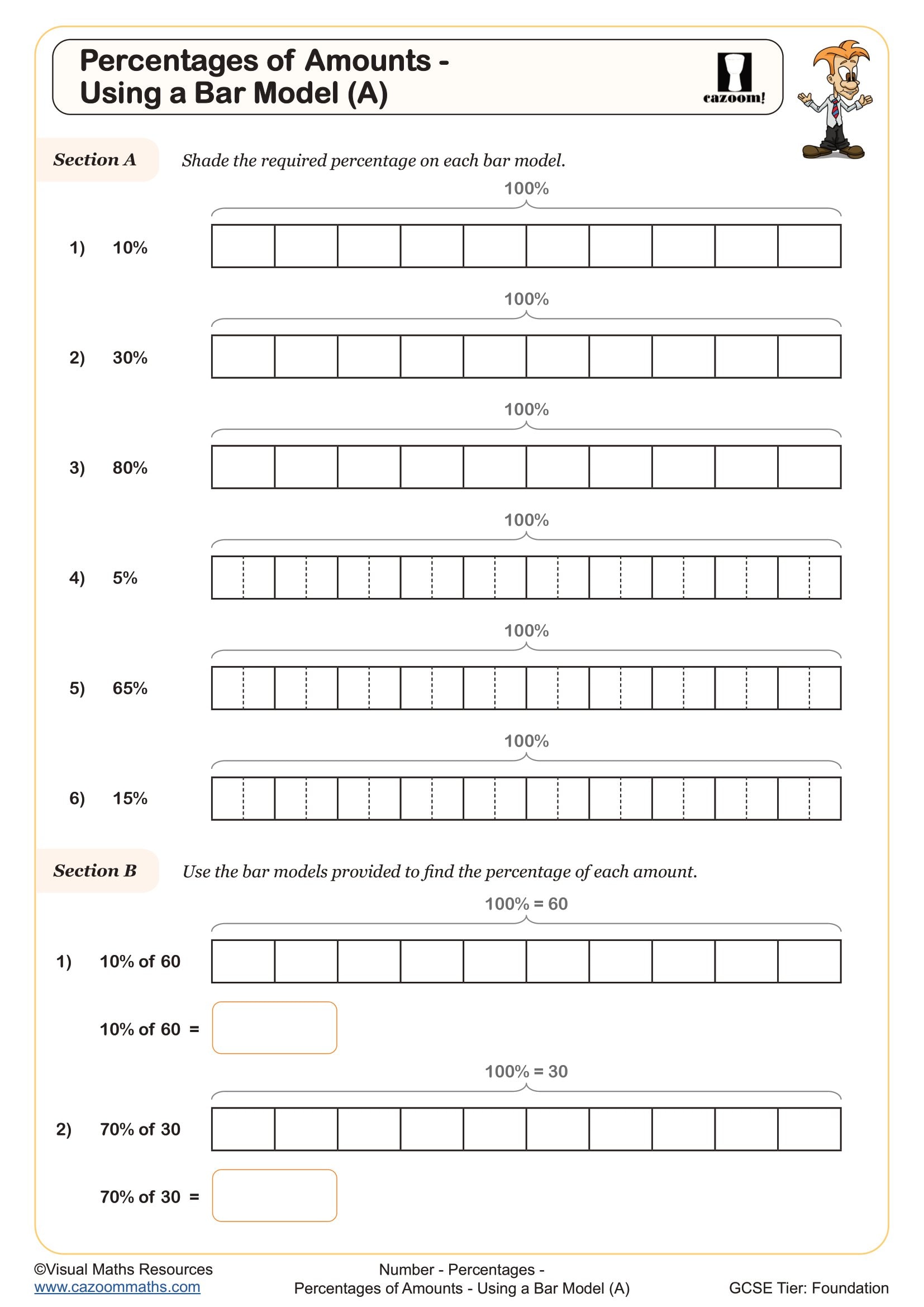
Percentages of Amounts - Using a Bar Model (A)
Year groups: 7, 8
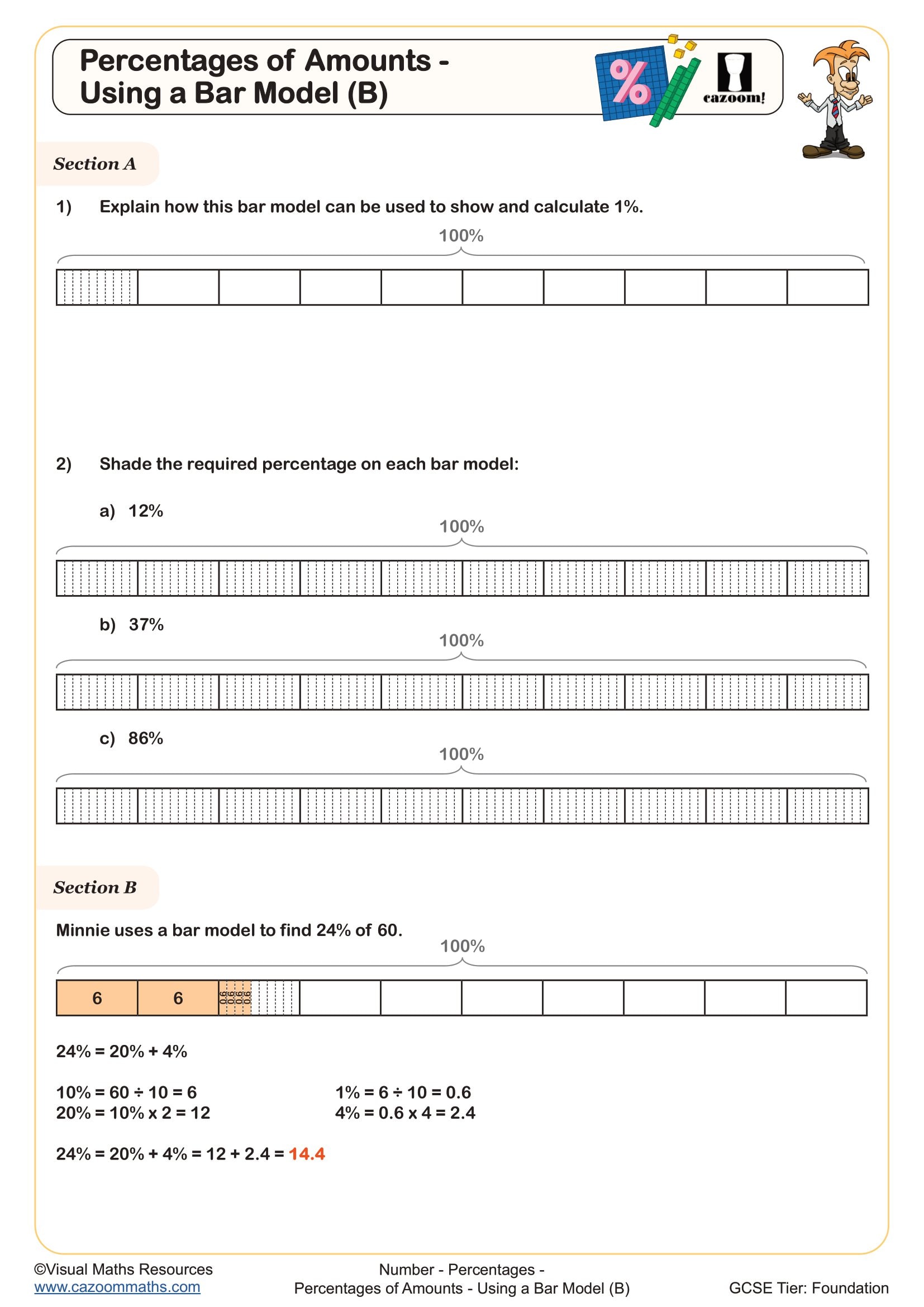
Percentages of Amounts - Using a Bar Model (B)
Year groups: 7, 8, 9
Percentages of Amounts (A)
Year groups: 7, 8
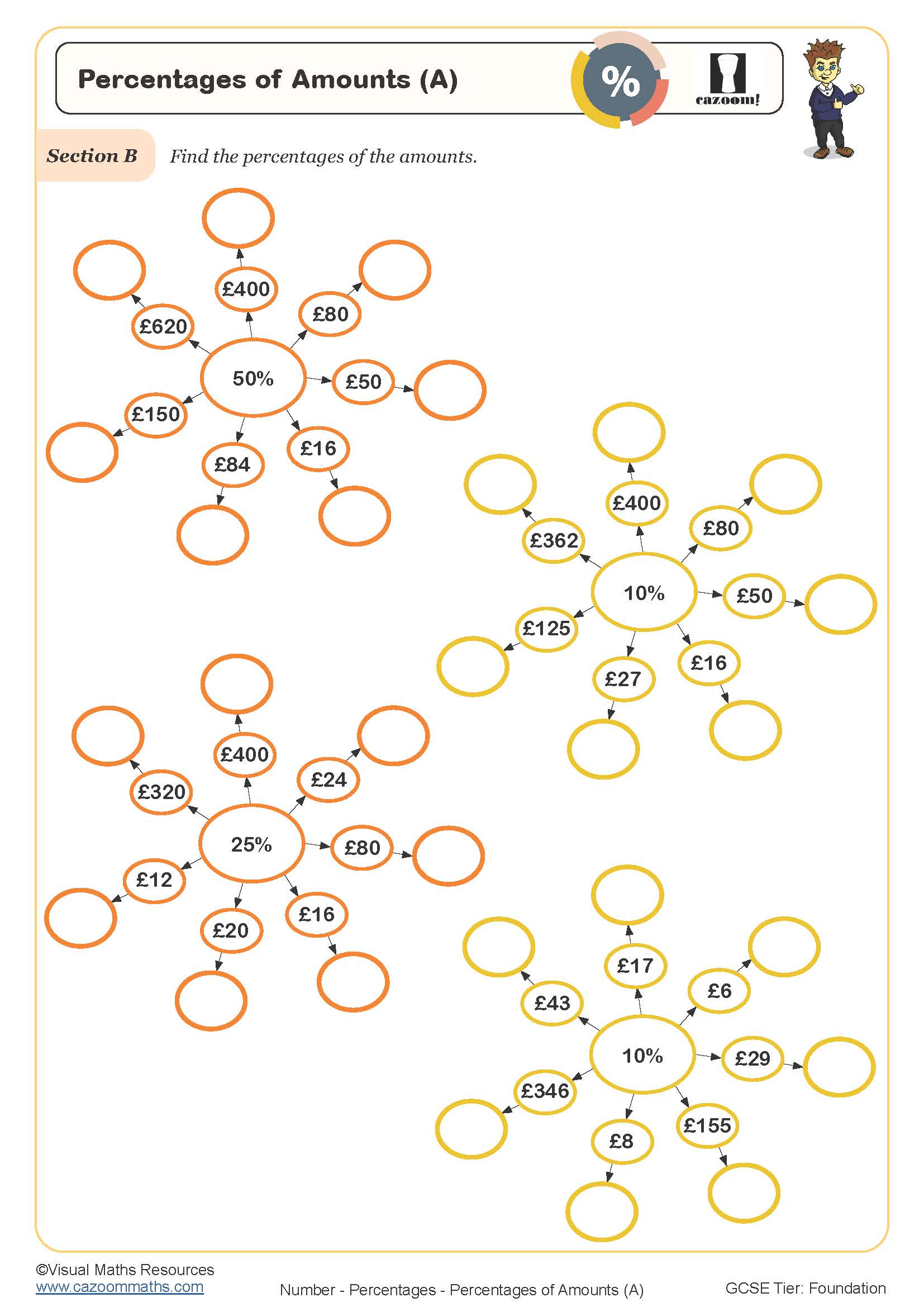
Percentages of Amounts (B)
Year groups: 7, 8
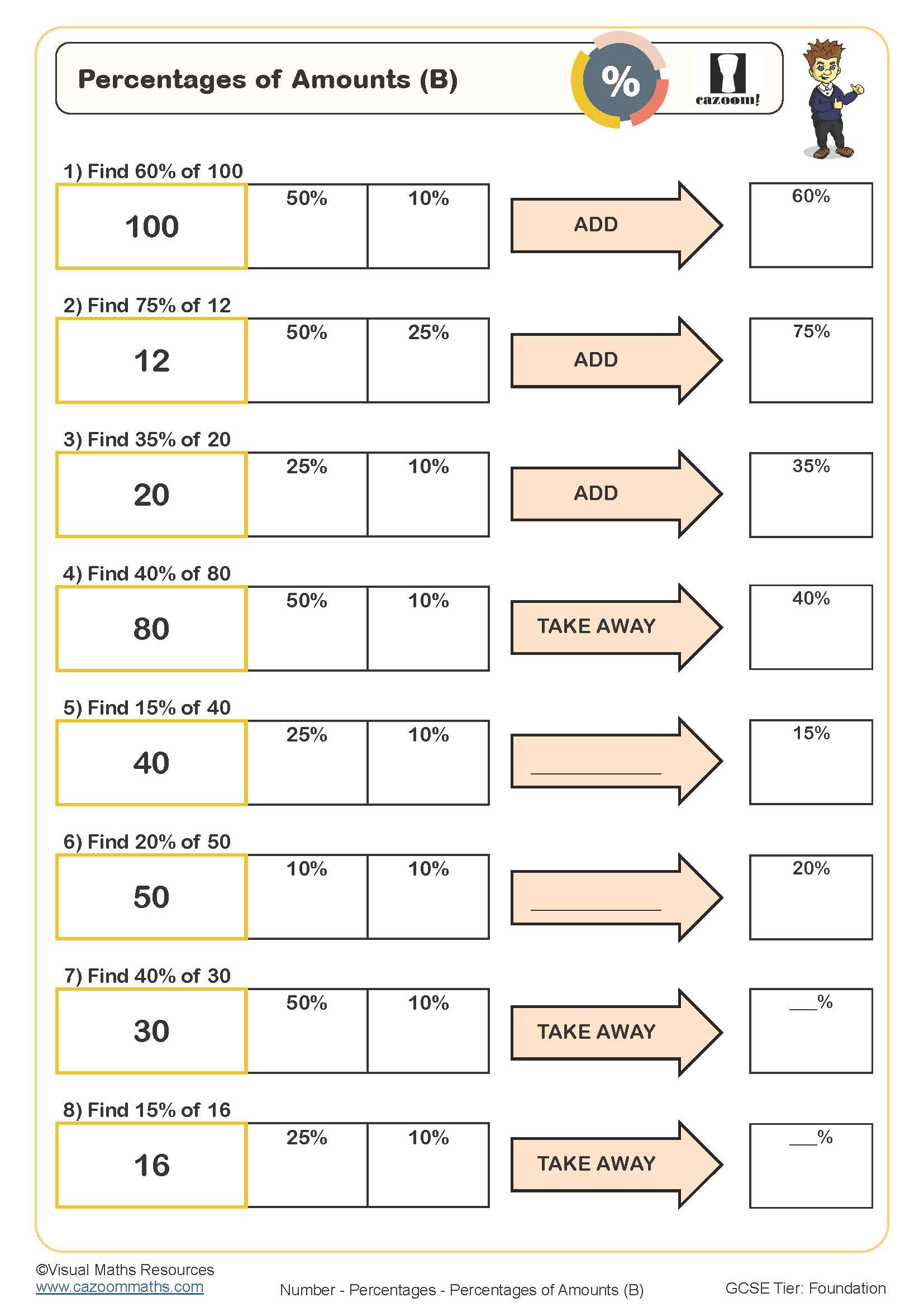
Percentages of Amounts (C)
Year groups: 7, 8
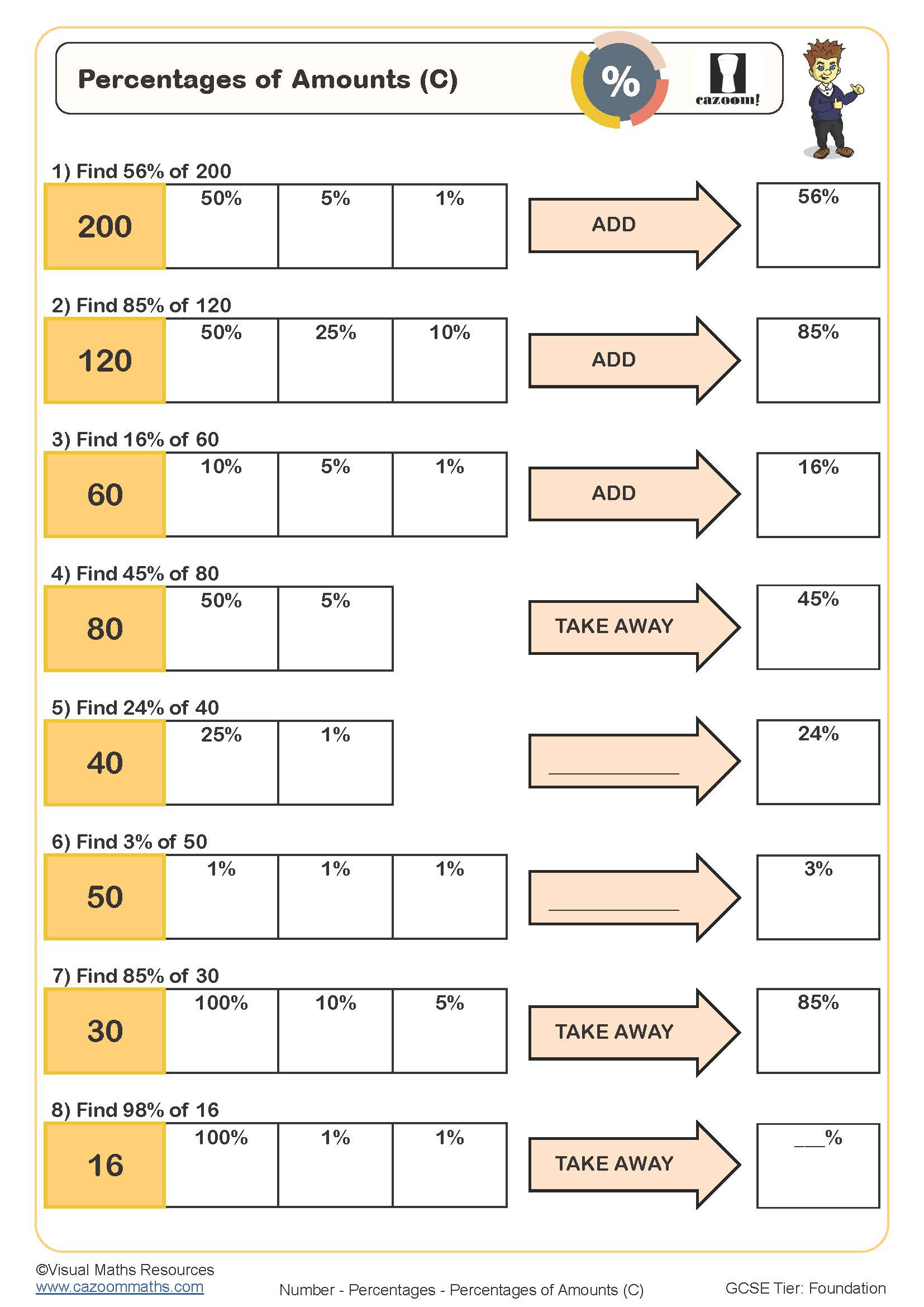
Percentages of Amounts 10 Minute Challenge
Year groups: 7, 8
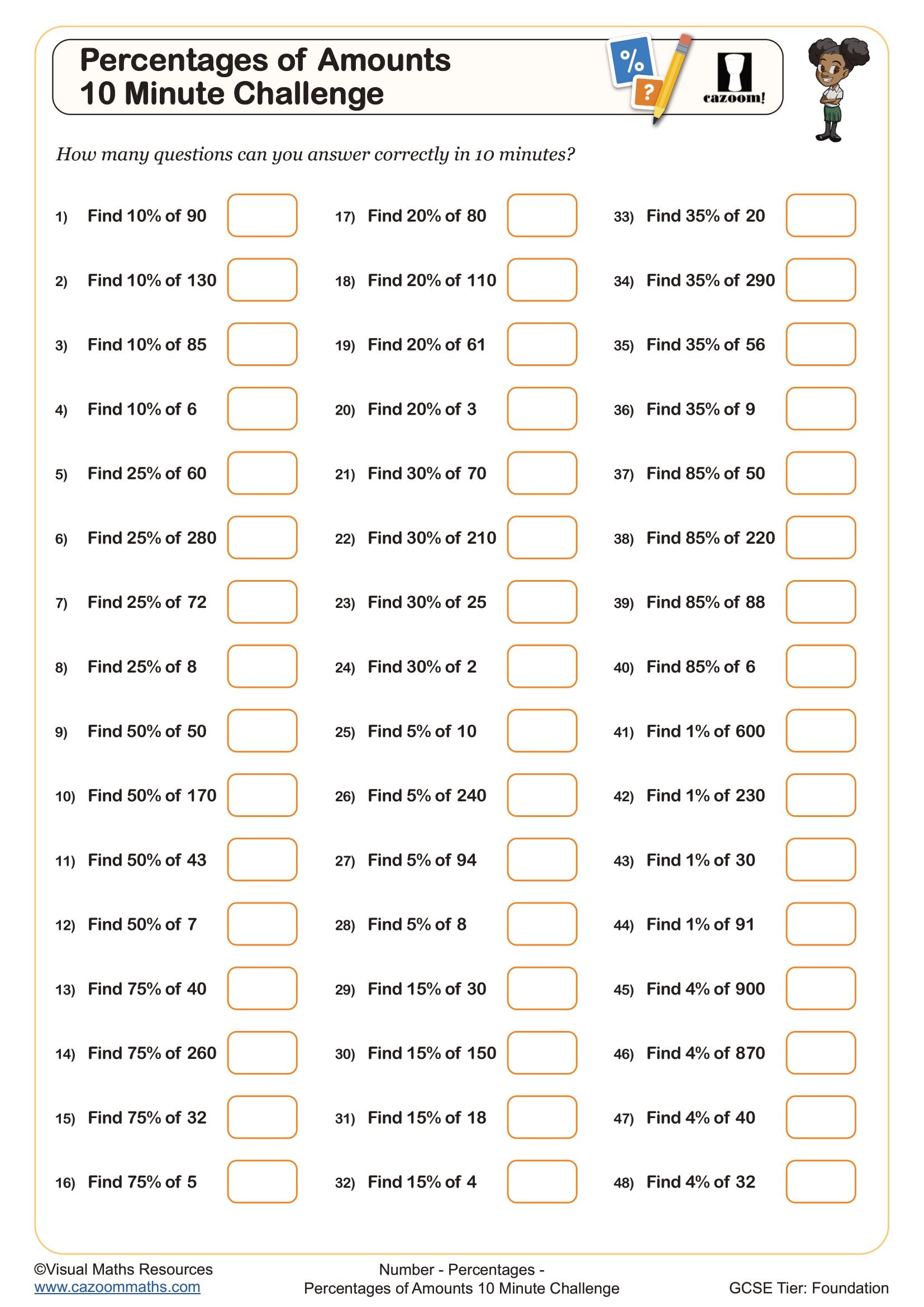
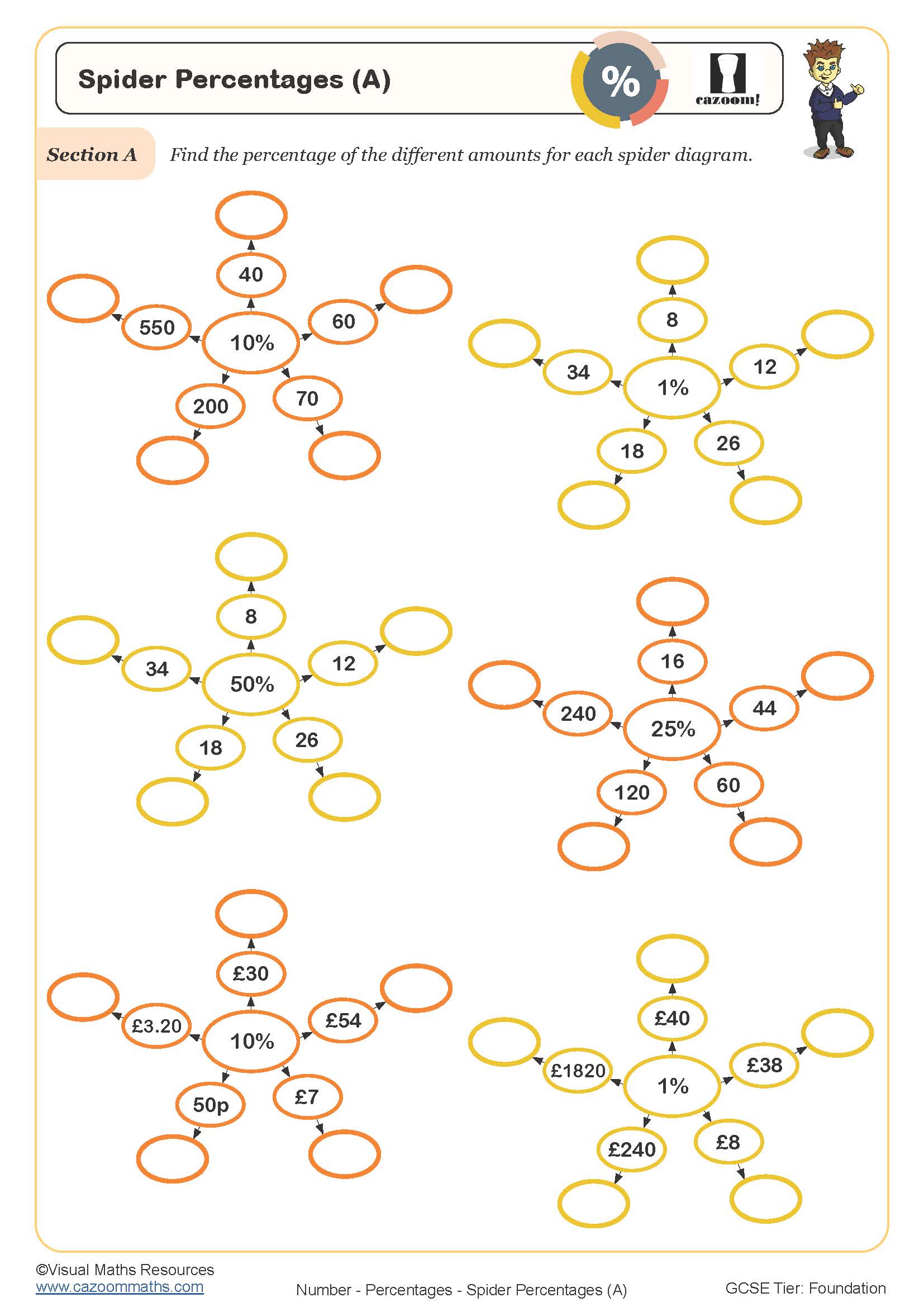
Spider Percentages (A)
Year groups: 7, 8
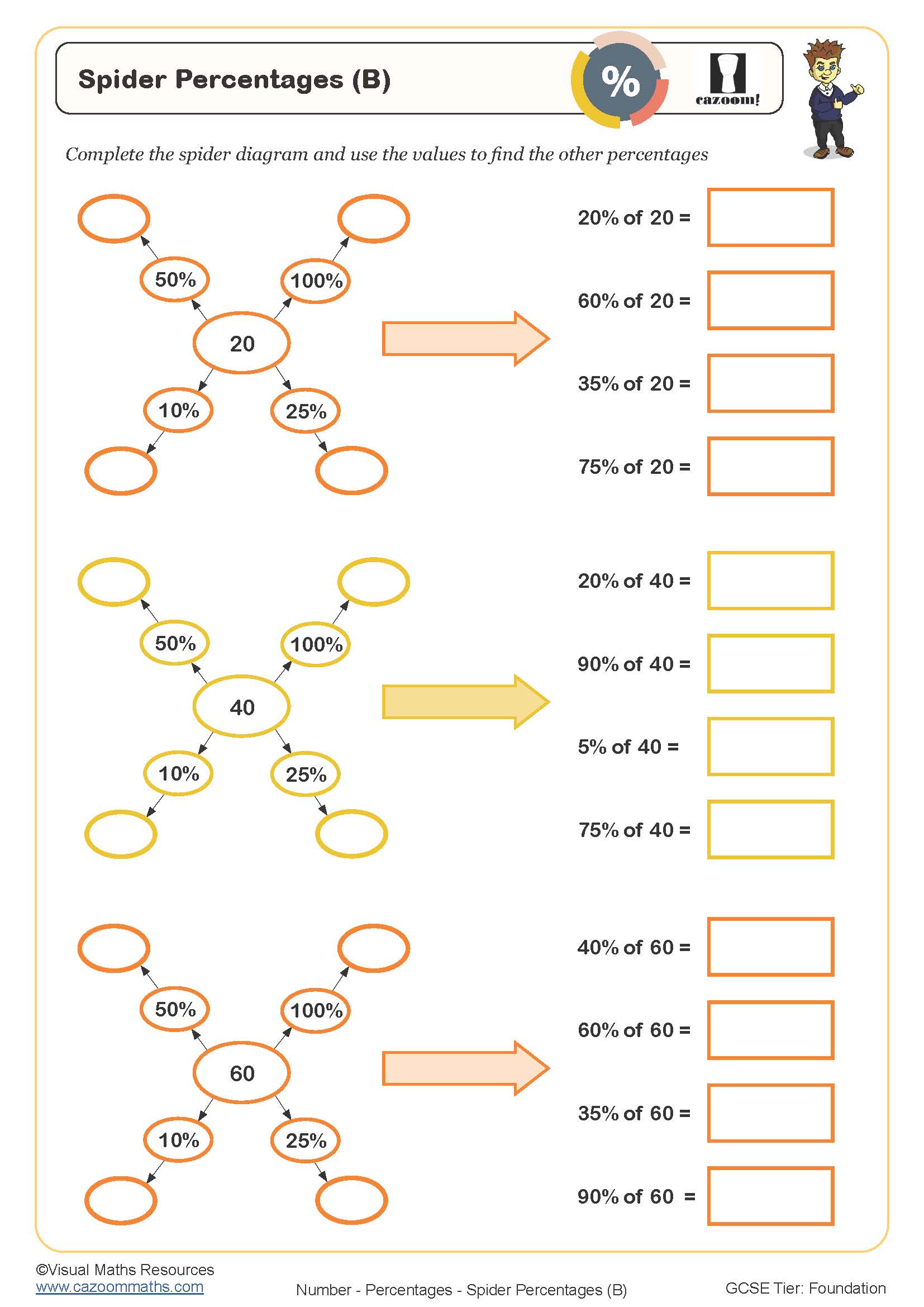
Spider Percentages (B)
Year groups: 7, 8
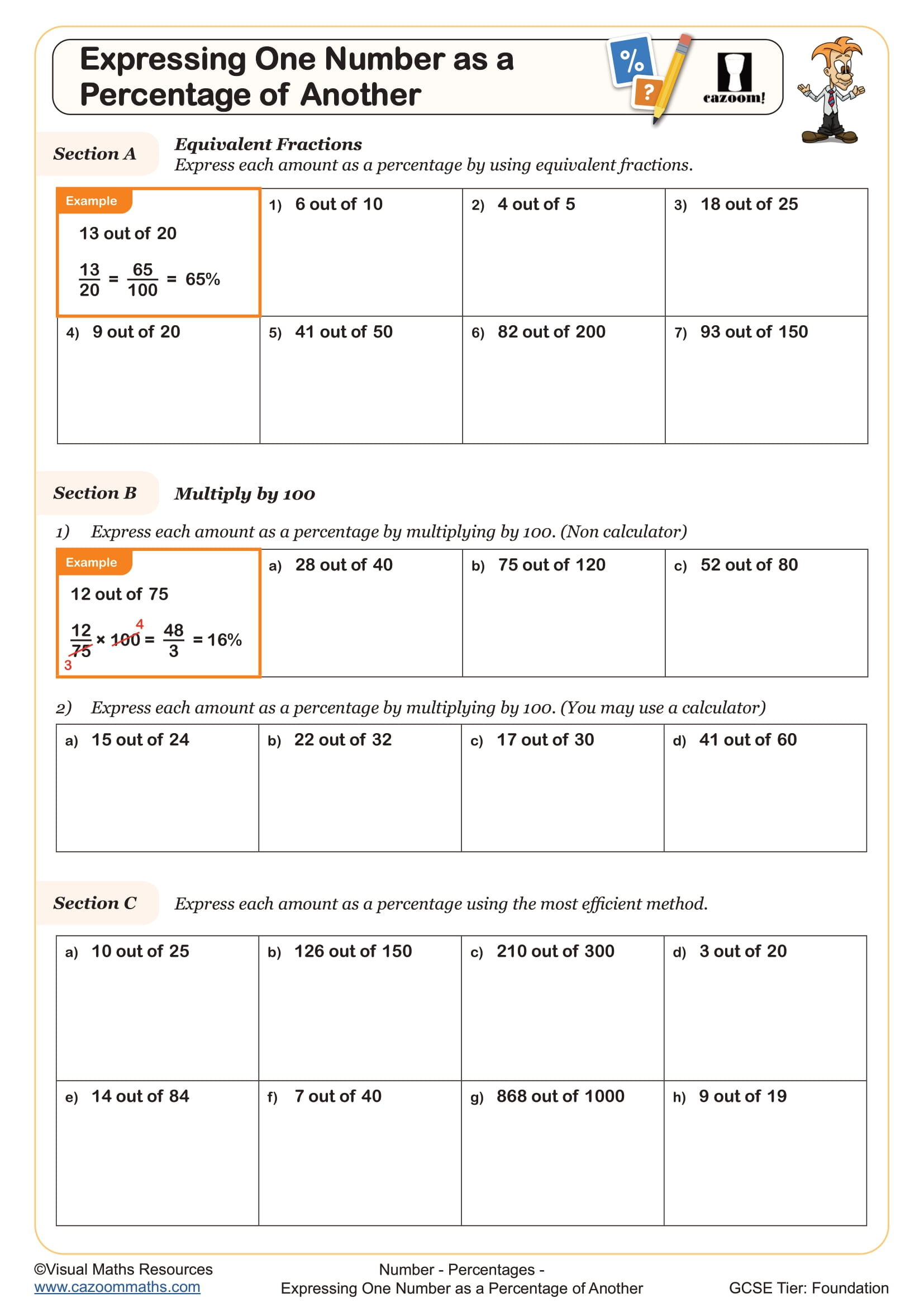
Express One Number as a Percentage of Another.
Year groups: 8, 9
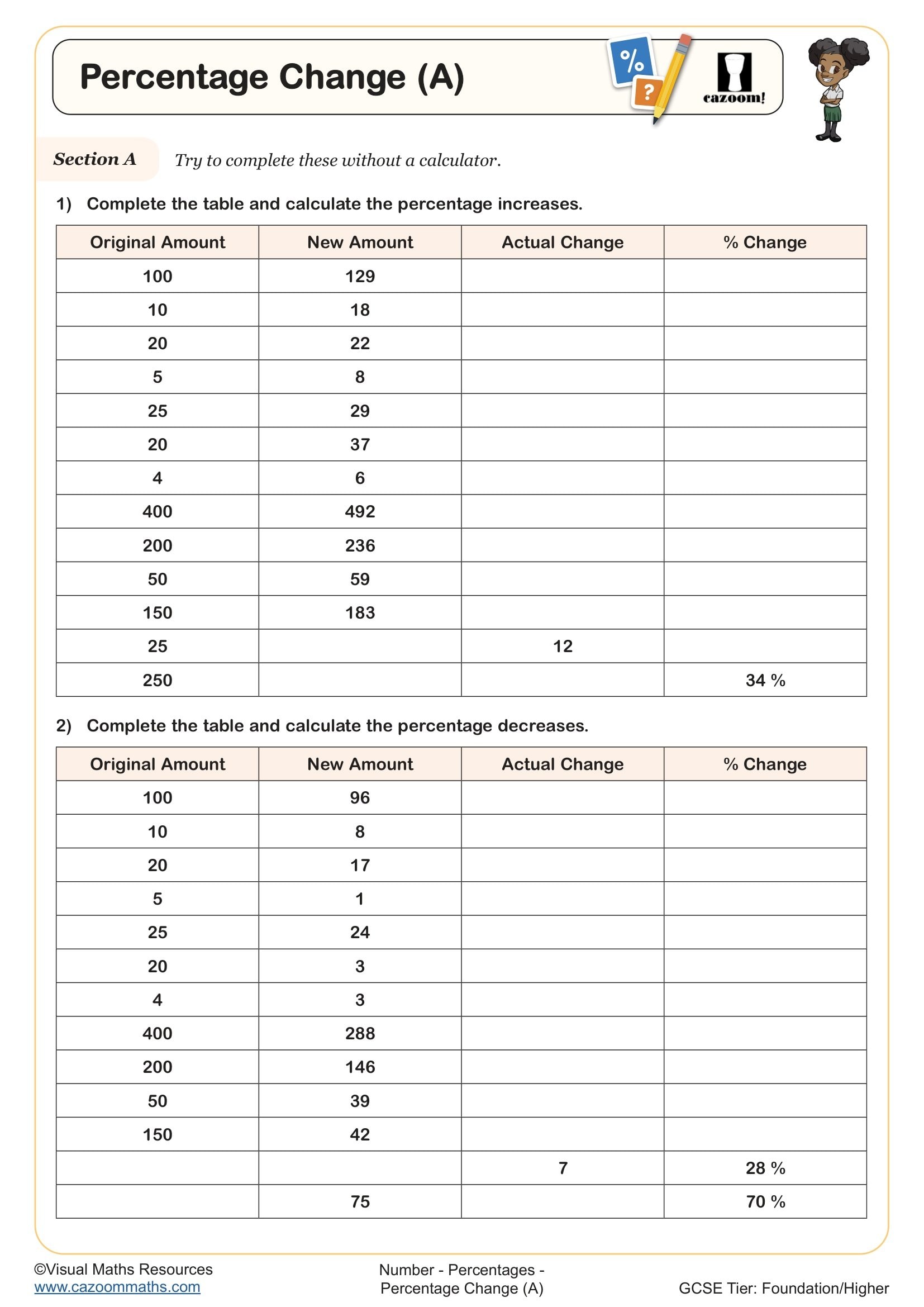
Percentage Change (A)
Year groups: 8, 9
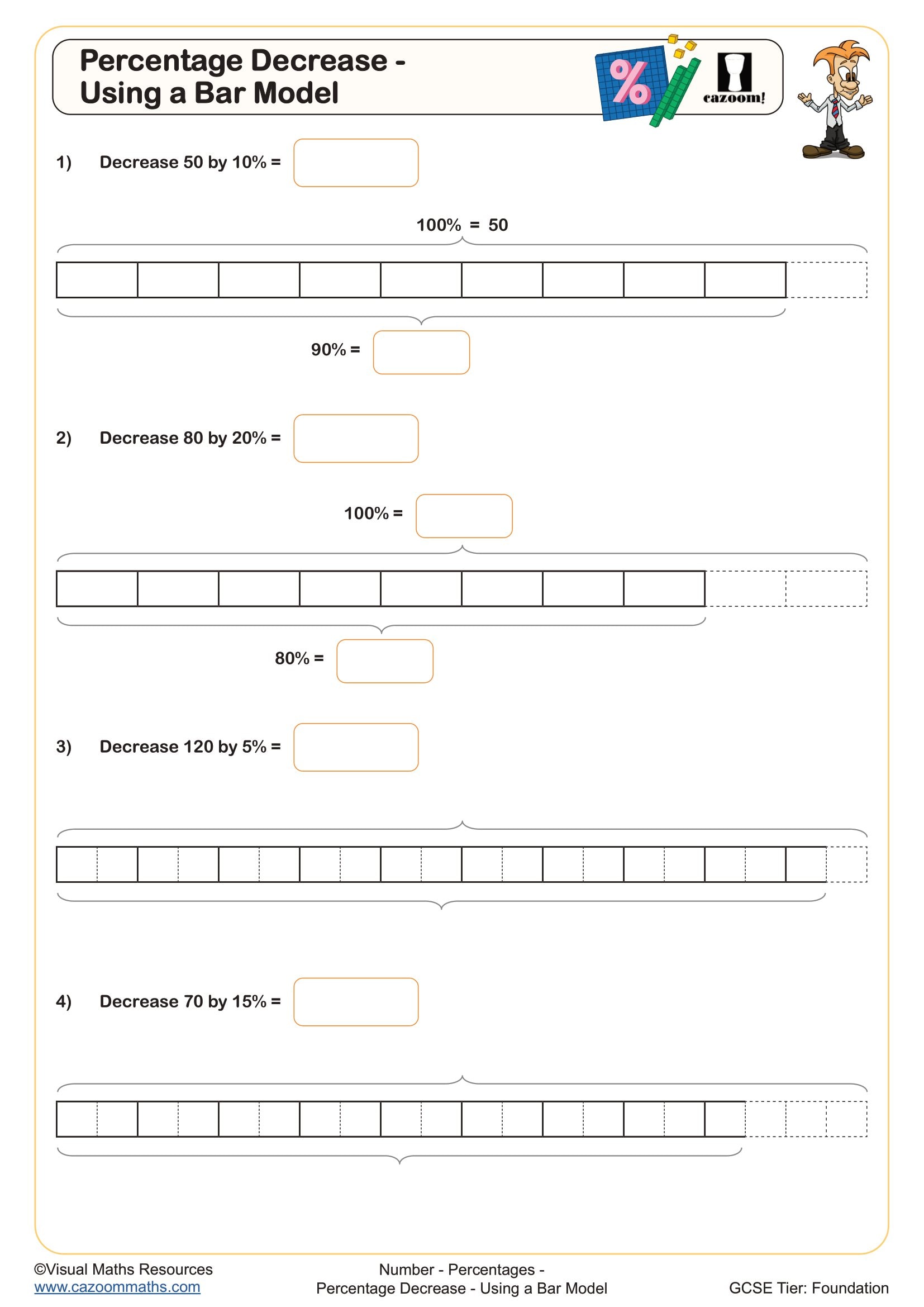
Percentage Decrease - Using a Bar Model
Year groups: 8, 9
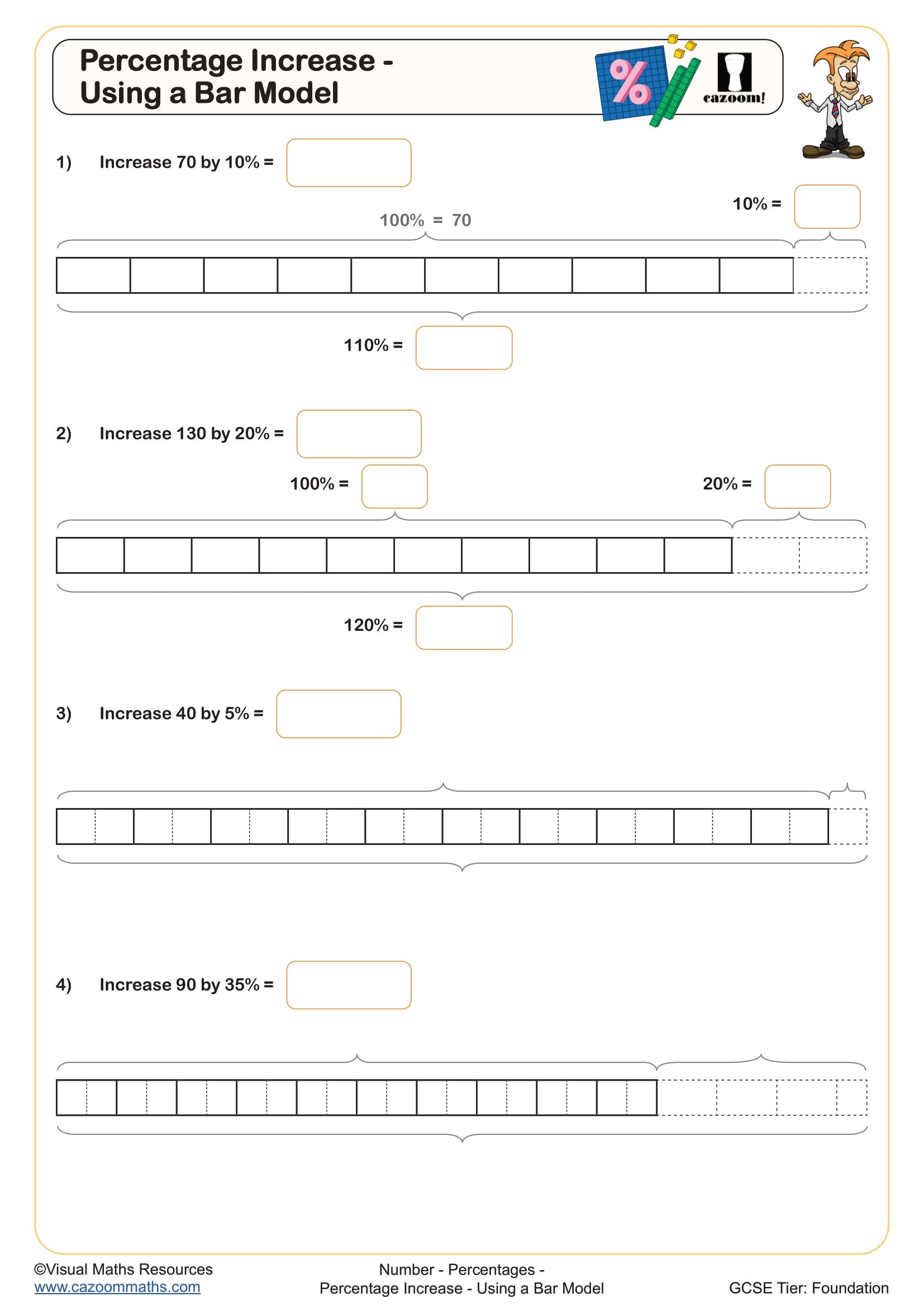
Percentage Increase - Using a Bar Model
Year groups: 8, 9
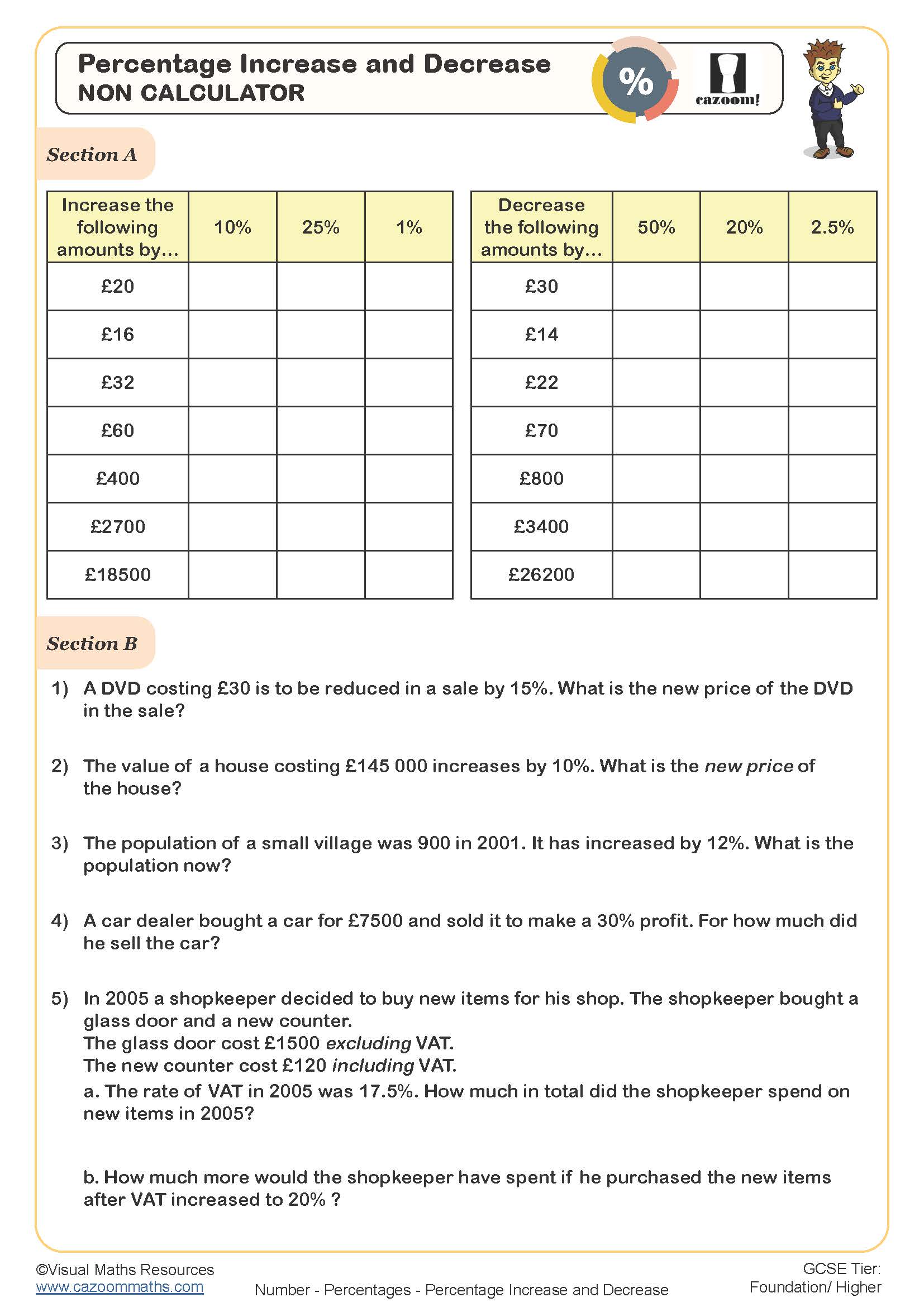
Percentage Increase and Decrease
Year groups: 8, 9
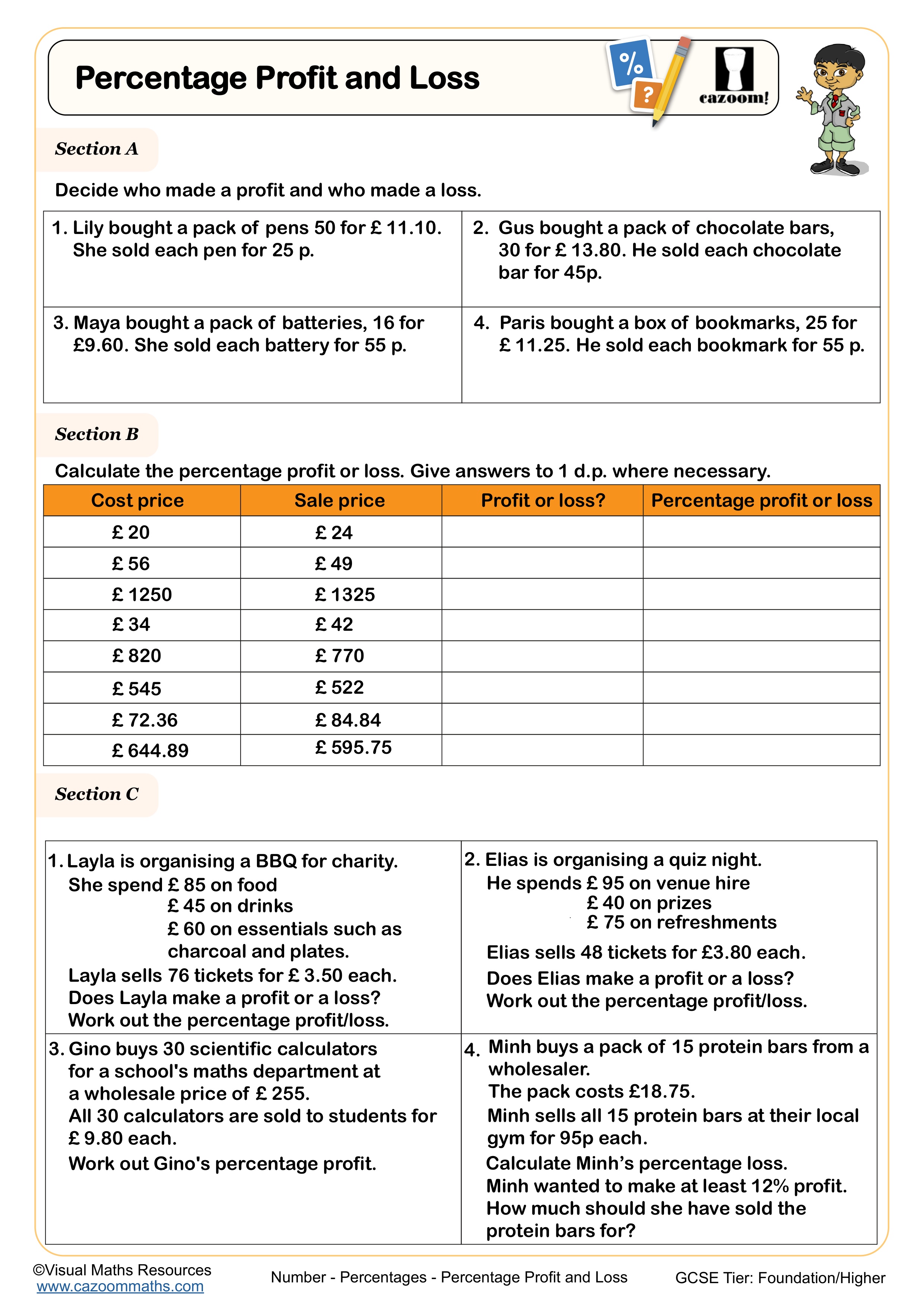
Percentage Profit and Loss
Year groups: 8, 9
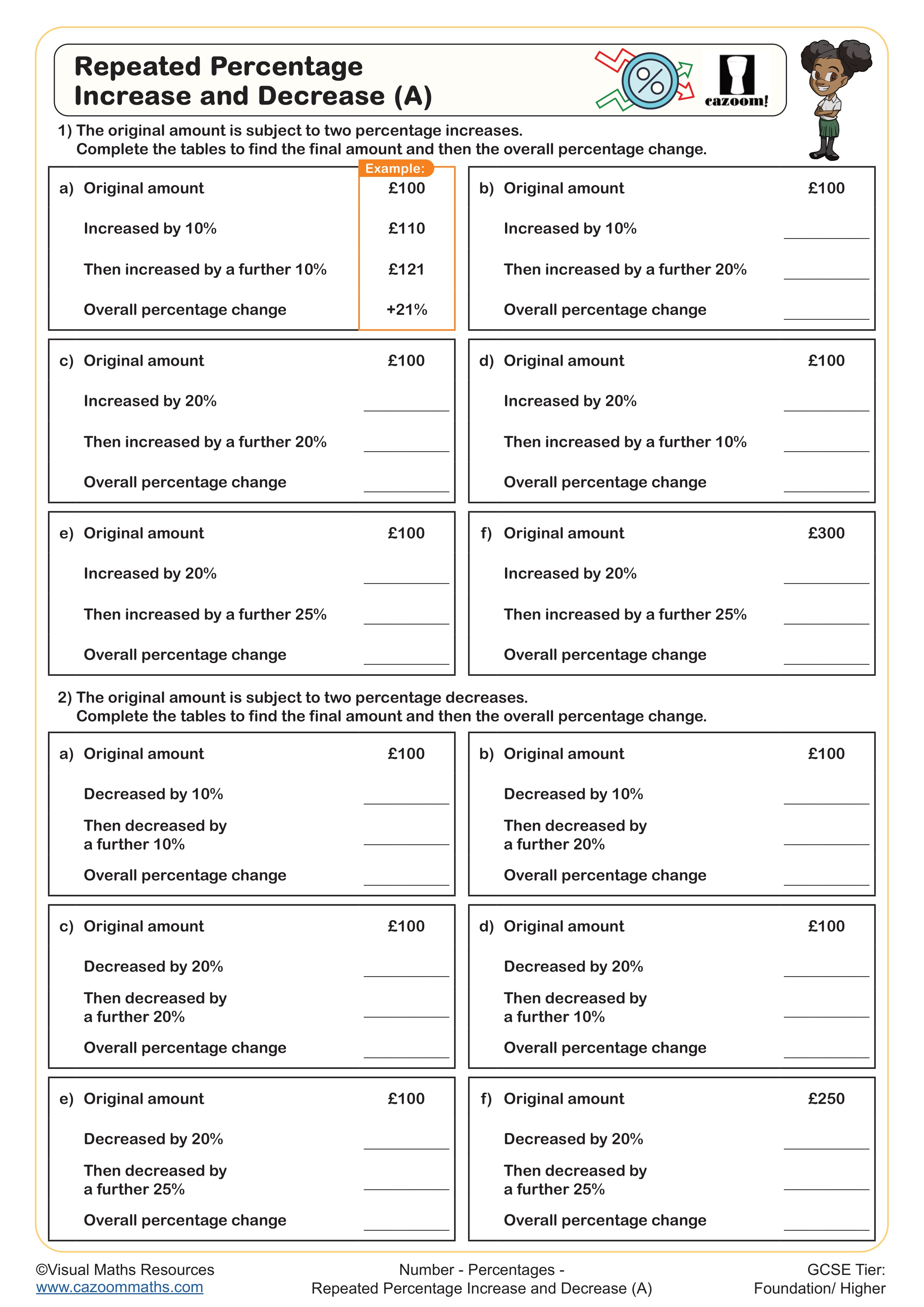
Repeated Percentage Increase and Decrease (A)
Year groups: 8, 9
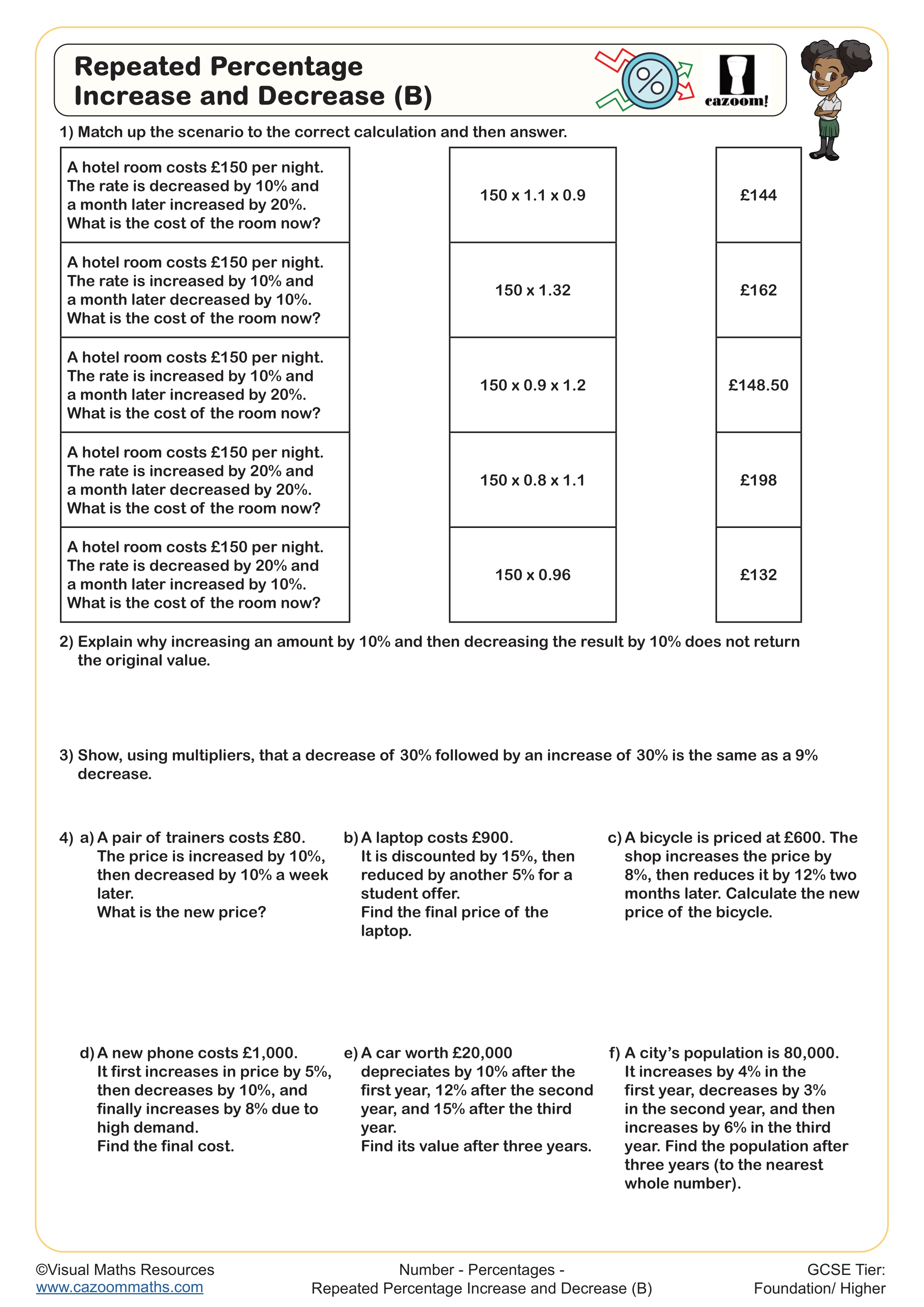
Repeated Percentage Increase and Decrease (B)
Year groups: 8, 9
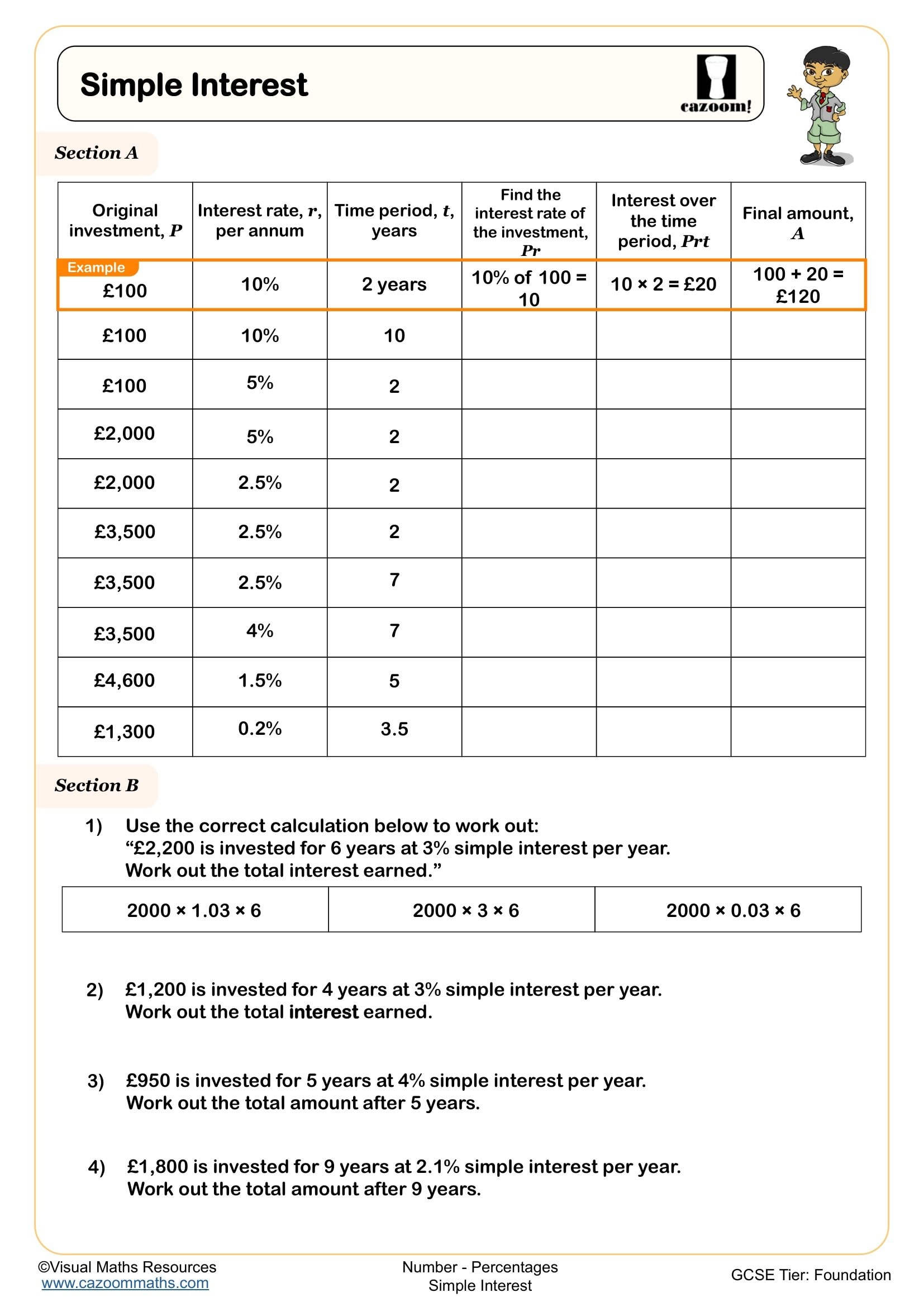
Simple Interest
Year groups: 8, 9
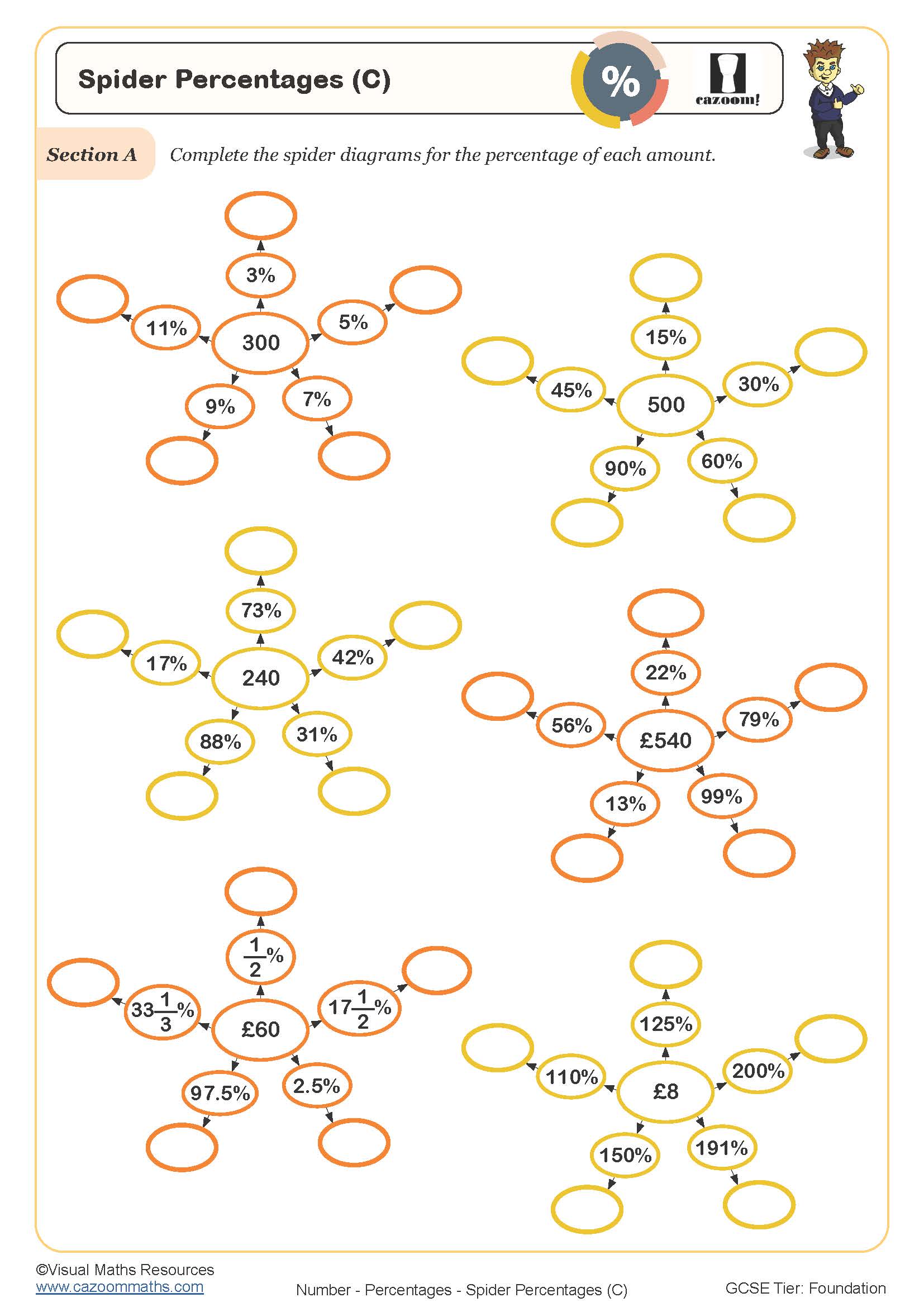
Spider Percentages (C)
Year groups: 8, 9
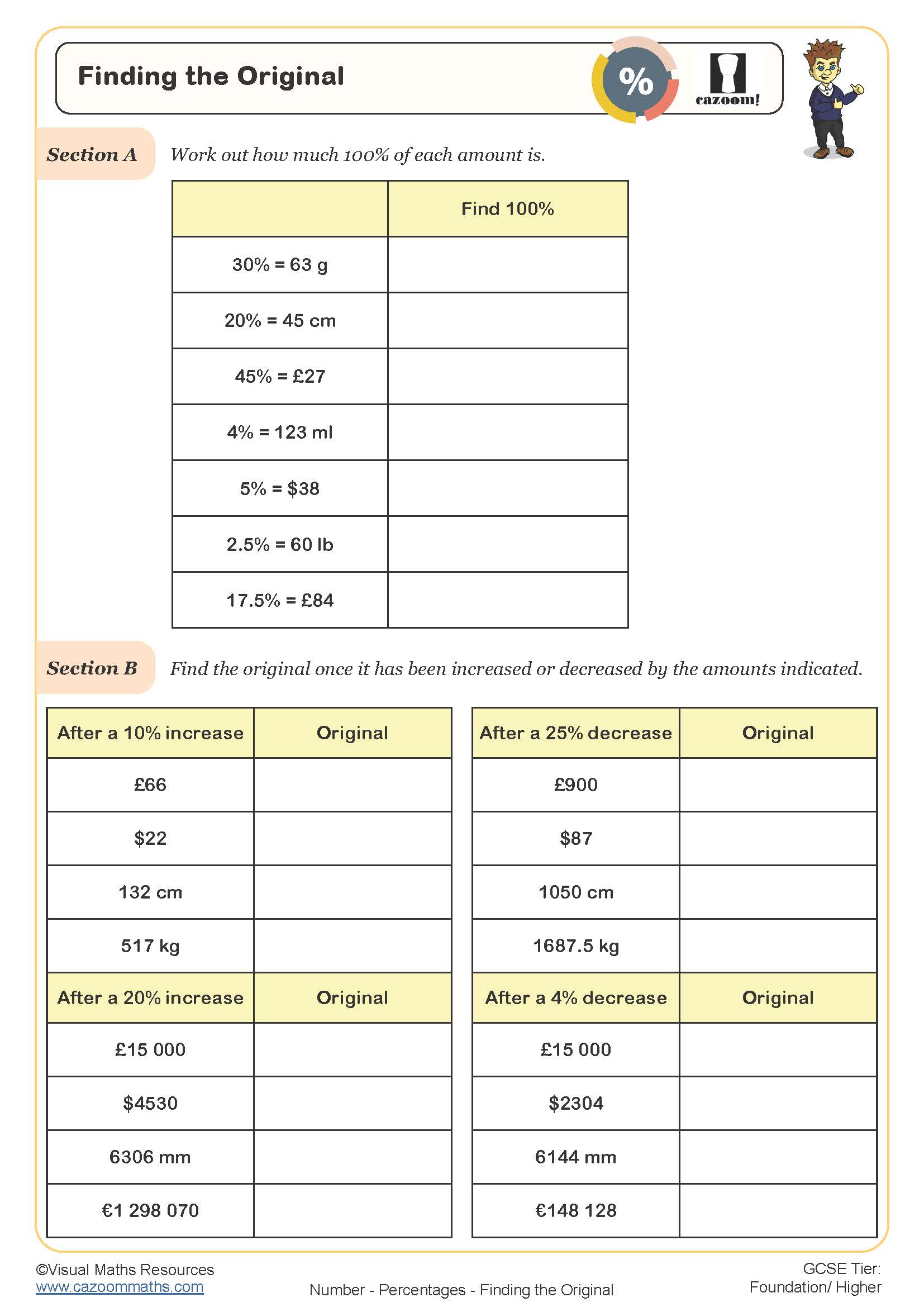
Finding the Original
Year groups: 9, 10
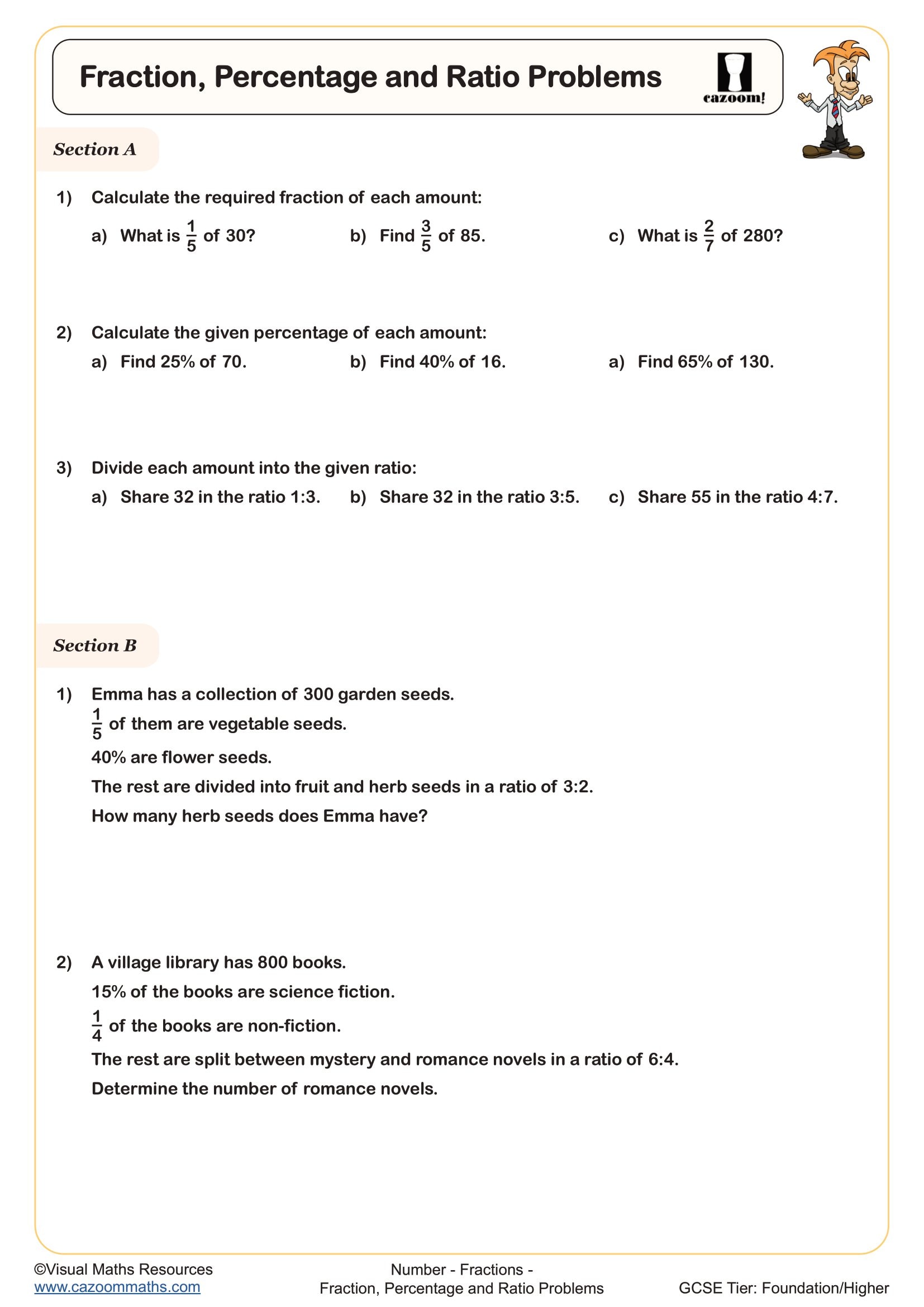
Fraction, Percentage and Ratio Problems
Year groups: 9, 10, 11
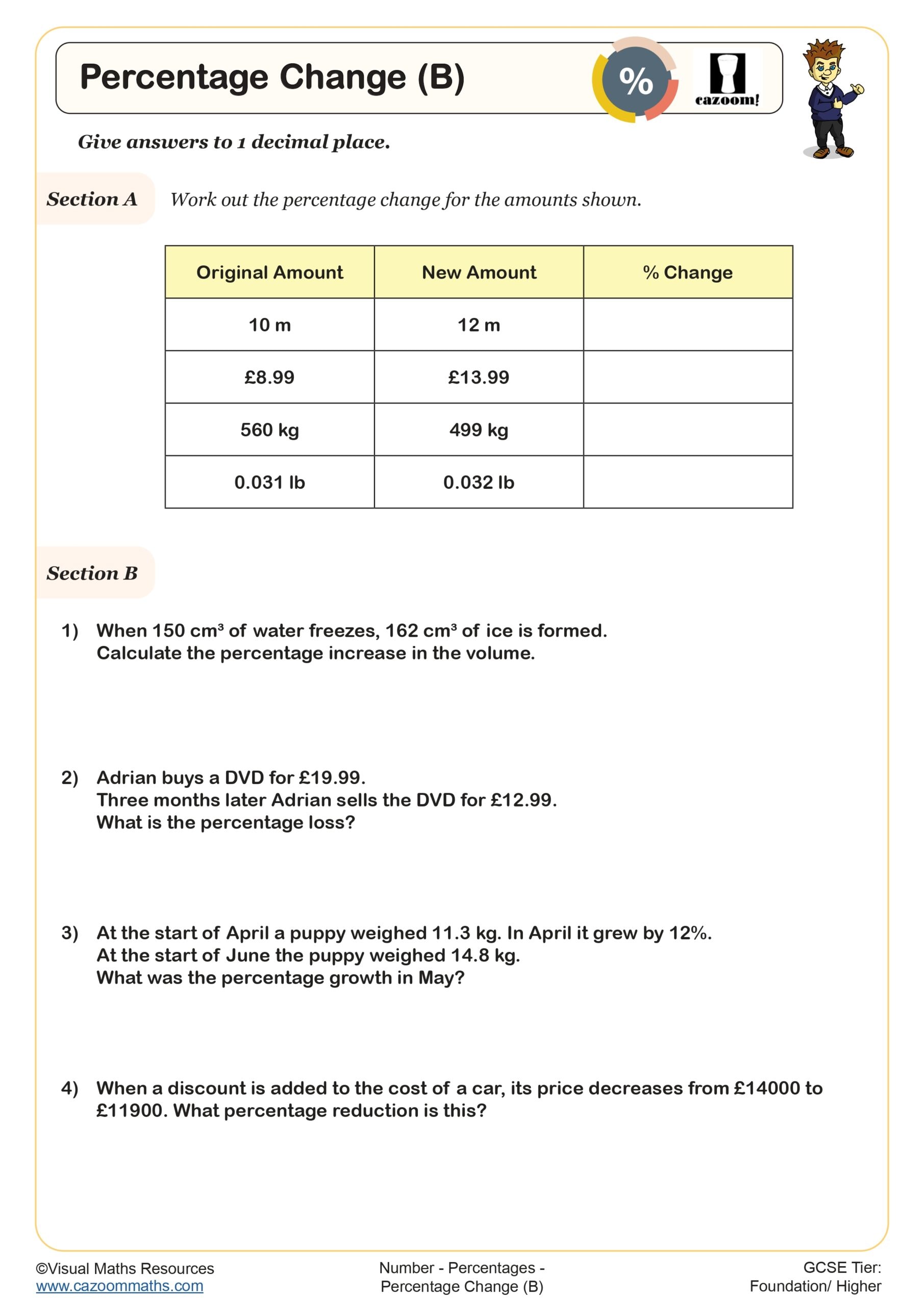
Percentage Change (B)
Year groups: 9, 10
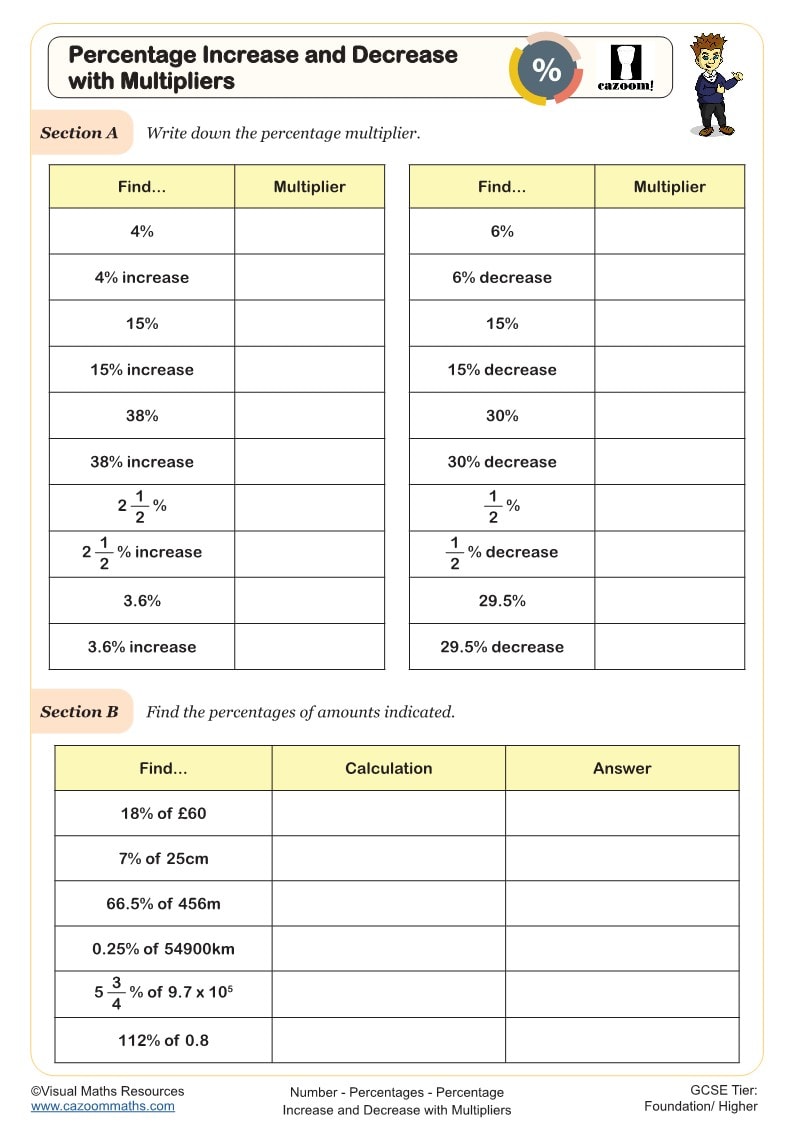
Percentage Increase and Decrease with Multipliers
Year groups: 9, 10
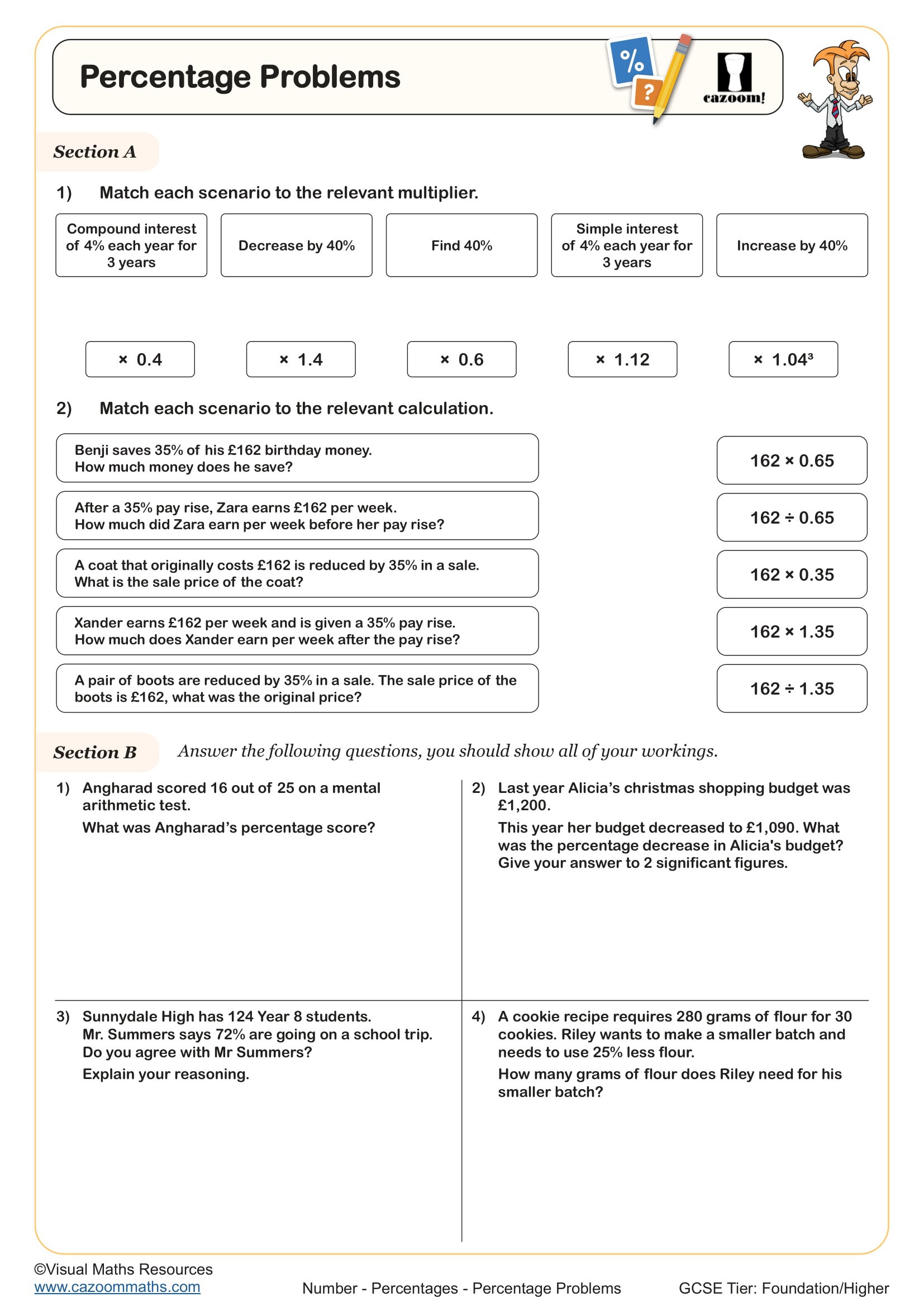
Percentage Problems
Year groups: 9, 10
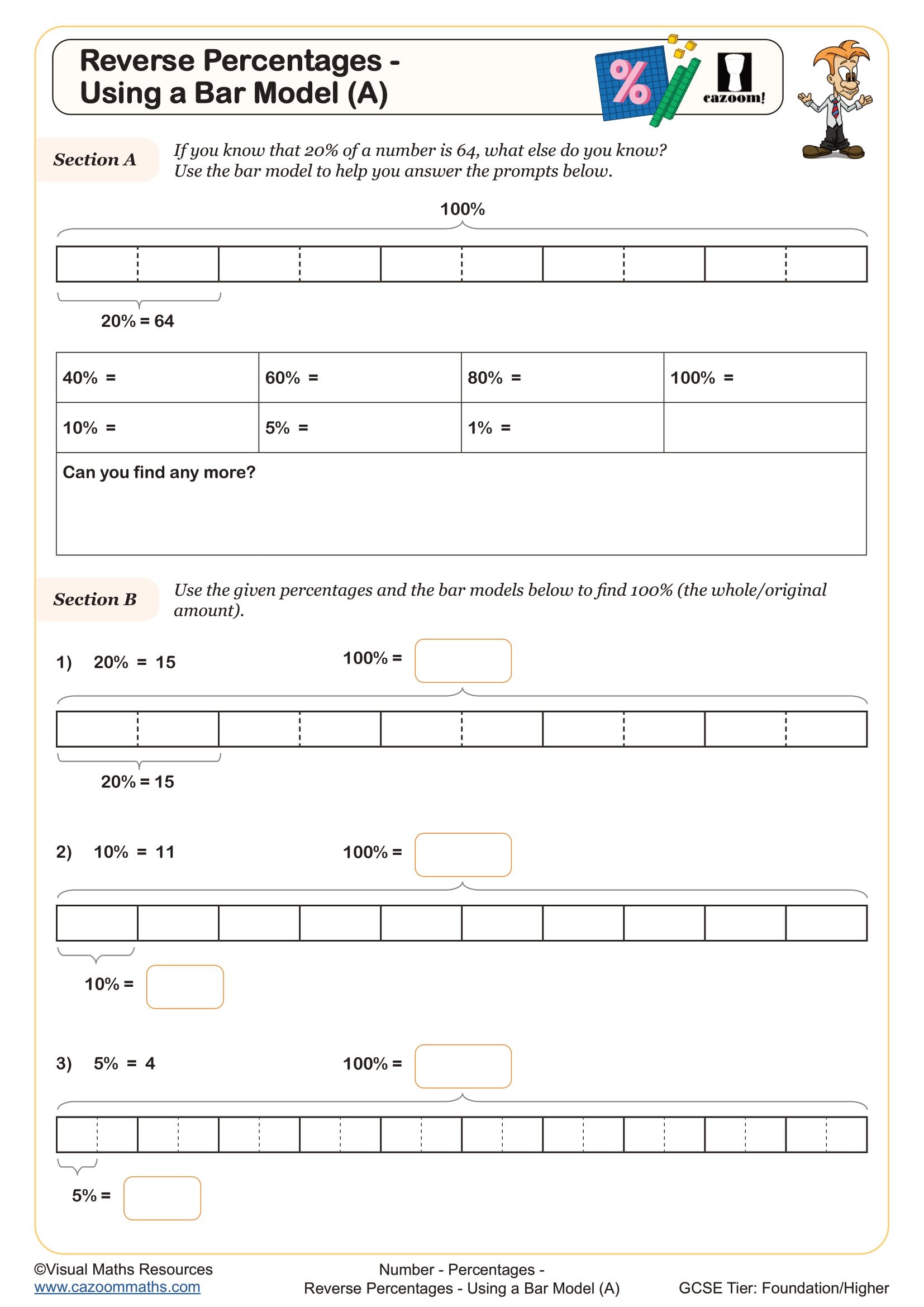
Reverse Percentages - Using a Bar Model (A)
Year groups: 9, 10
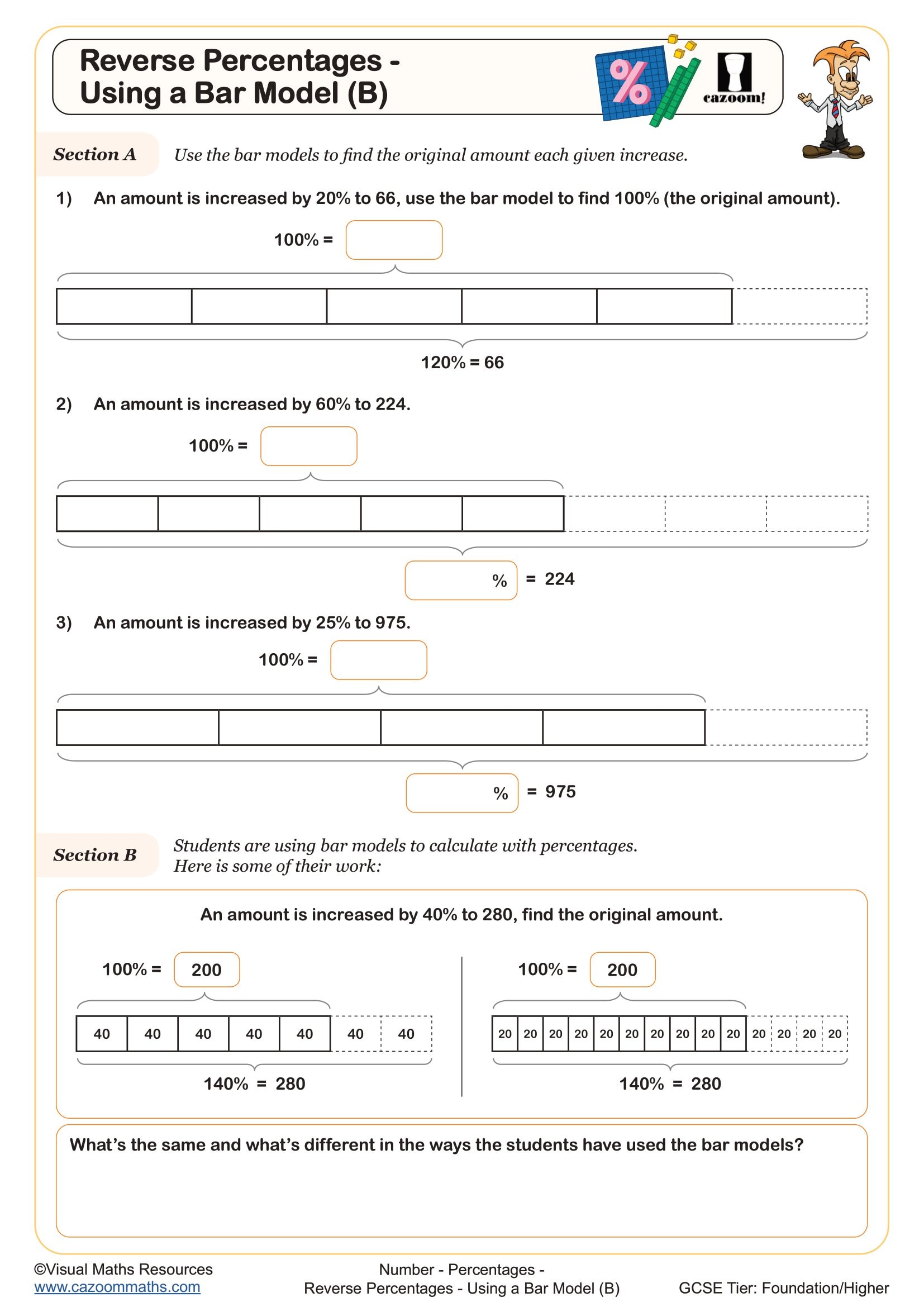
Reverse Percentages - Using a Bar Model (B)
Year groups: 9, 10
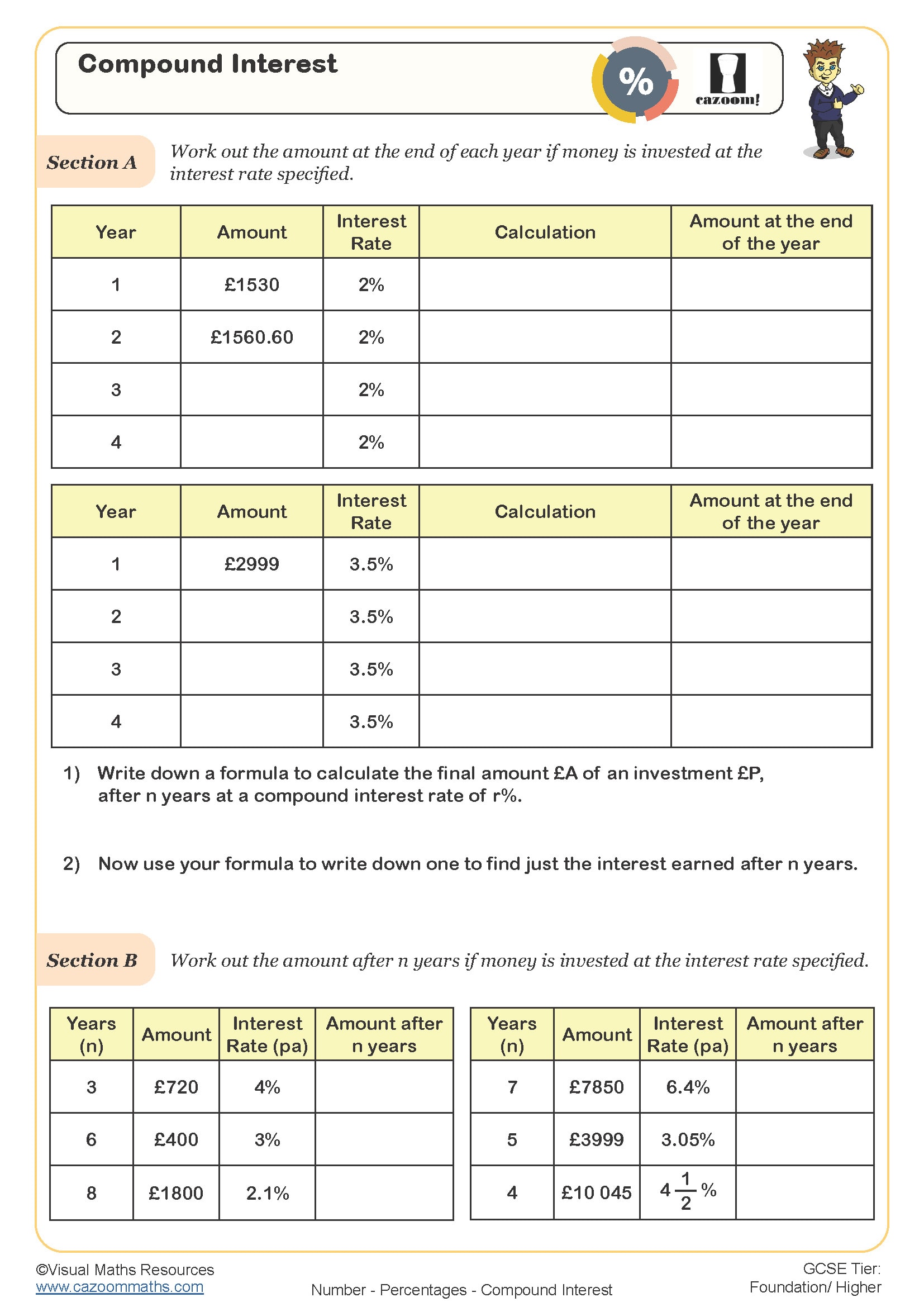
Compound Interest
Year groups: 10, 11
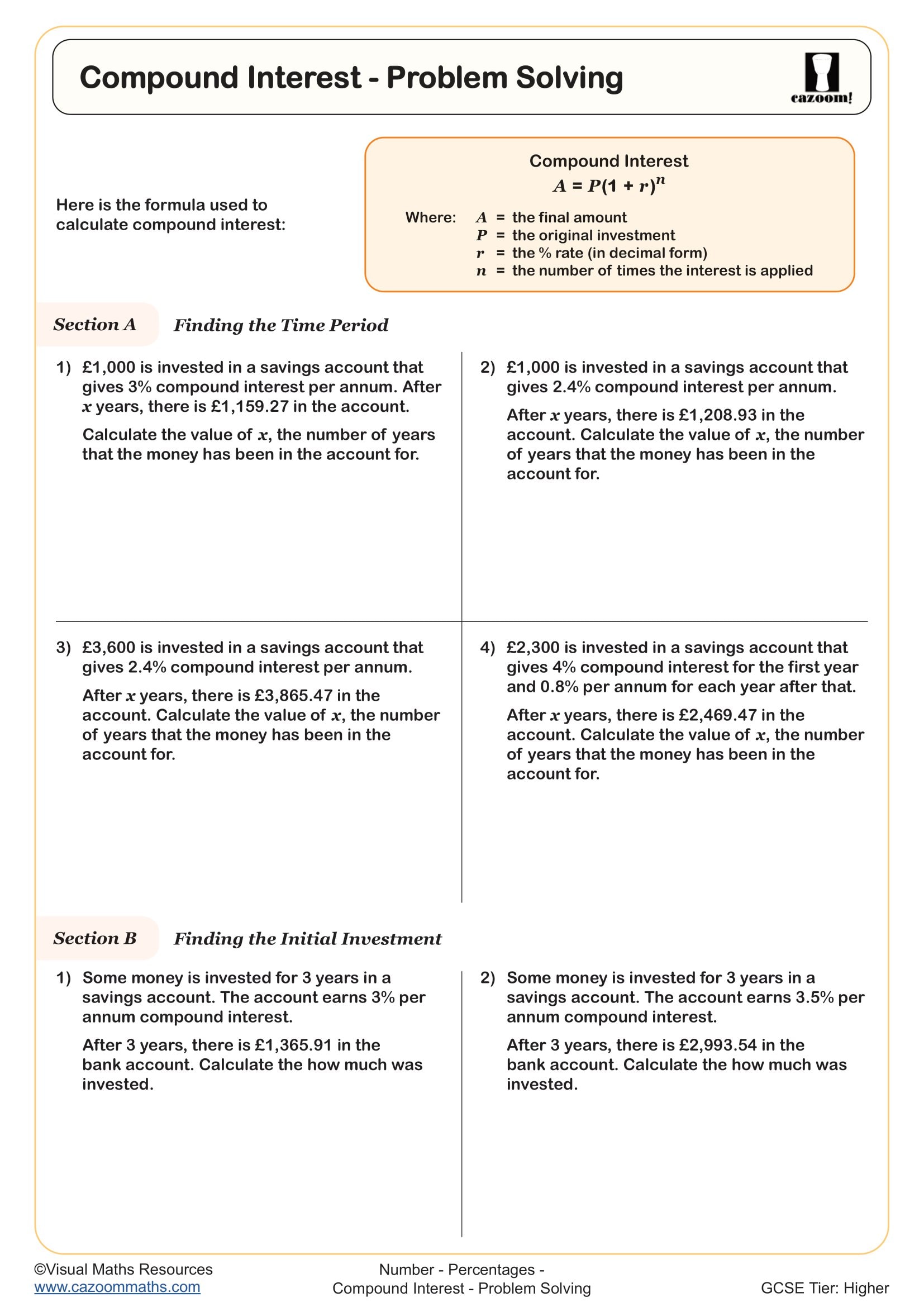
Compound Interest - Problem Solving
Year groups: 10, 11
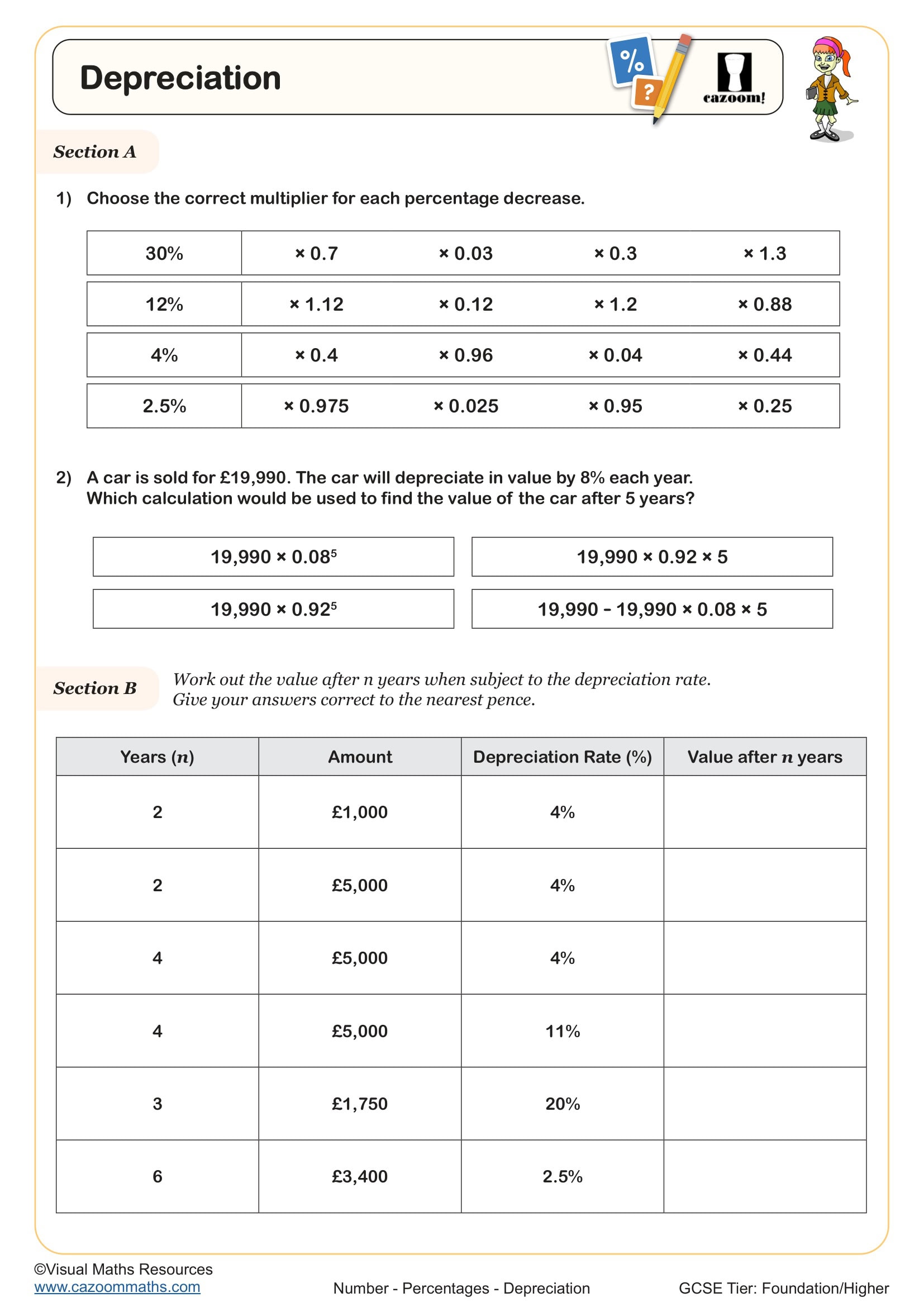
Depreciation
Year groups: 10, 11
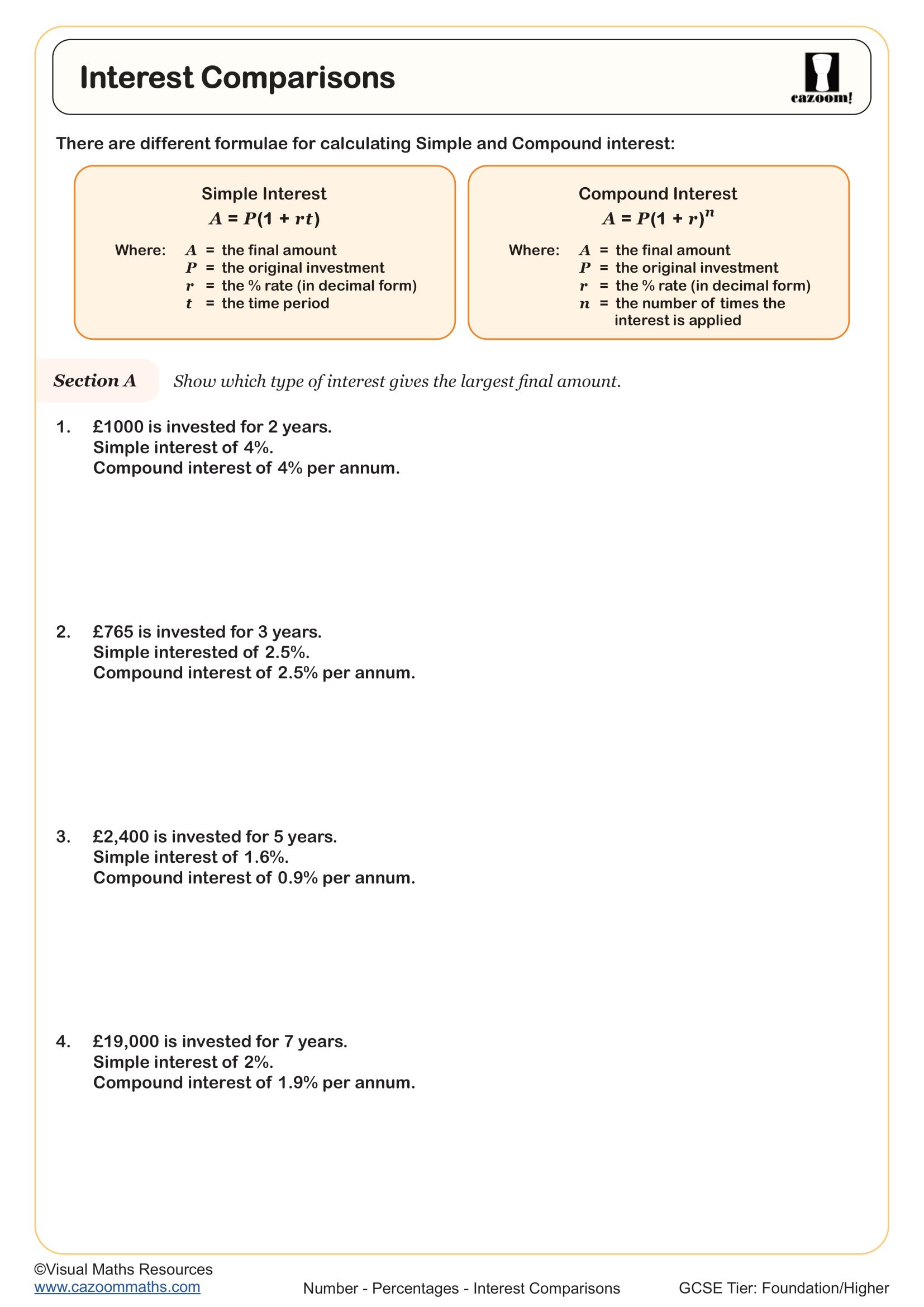
Interest Comparisons
Year groups: 10, 11
All worksheets are created by the team of experienced teachers at Cazoom Maths.
What makes these percentage worksheets effective for classroom use?
These percentage worksheet resources align with National Curriculum requirements for both Key Stage 3 and GCSE mathematics, providing systematic coverage from foundational concepts through to advanced applications. The questions progress logically, starting with straightforward percentage calculations before introducing real-world contexts like sales, VAT, and population changes.
Teachers report that the structured approach helps students recognise patterns in percentage problems, particularly when distinguishing between finding a percentage of an amount versus calculating percentage change. The inclusion of reverse percentage problems prepares students for the more challenging questions they encounter in GCSE examinations, where working backwards from a final amount is frequently tested.
Which year groups benefit most from these percentage resources?
Year 7 and 8 students typically begin with percentage of amounts and simple increase/decrease problems, building on their fraction and decimal knowledge from Key Stage 2. The worksheets provide scaffolded practice that helps students transition from using informal methods to more efficient calculation strategies.
Year 9 through 11 students tackle the full range of percentage applications, including compound interest and complex percentage change problems that appear regularly in GCSE examinations. Teachers find that regular practice with these varied question types prevents students from becoming over-reliant on calculator methods, ensuring they can handle both calculator and non-calculator paper requirements confidently.
How do these worksheets address reverse percentage problems?
Reverse percentage questions require students to work backwards from a final amount to find the original value, a skill that many find challenging initially. The worksheets introduce this concept gradually, starting with simple scenarios like finding the original price before a discount was applied.
Teachers observe that students often attempt to simply subtract the percentage rather than using the correct inverse operation. The structured practice helps students understand that if something increases by 20%, they must divide by 1.2 to find the original amount, not subtract 20%. This understanding proves crucial for GCSE success, where reverse percentage problems carry significant mark allocations.
What strategies work best when using these percentage worksheets?
Teachers find that starting each lesson with a quick review of equivalent fractions, decimals, and percentages helps students make connections between different representations. Working through the first few questions together allows teachers to model the thinking process and address common misconceptions before independent practice begins.
Regular mini-plenaries during worksheet sessions help identify students who are struggling with specific concepts. Teachers report that encouraging students to estimate their answers first, particularly for percentage of amounts, helps catch calculation errors and builds number sense that proves valuable across all areas of mathematics.