Pi Day Worksheets
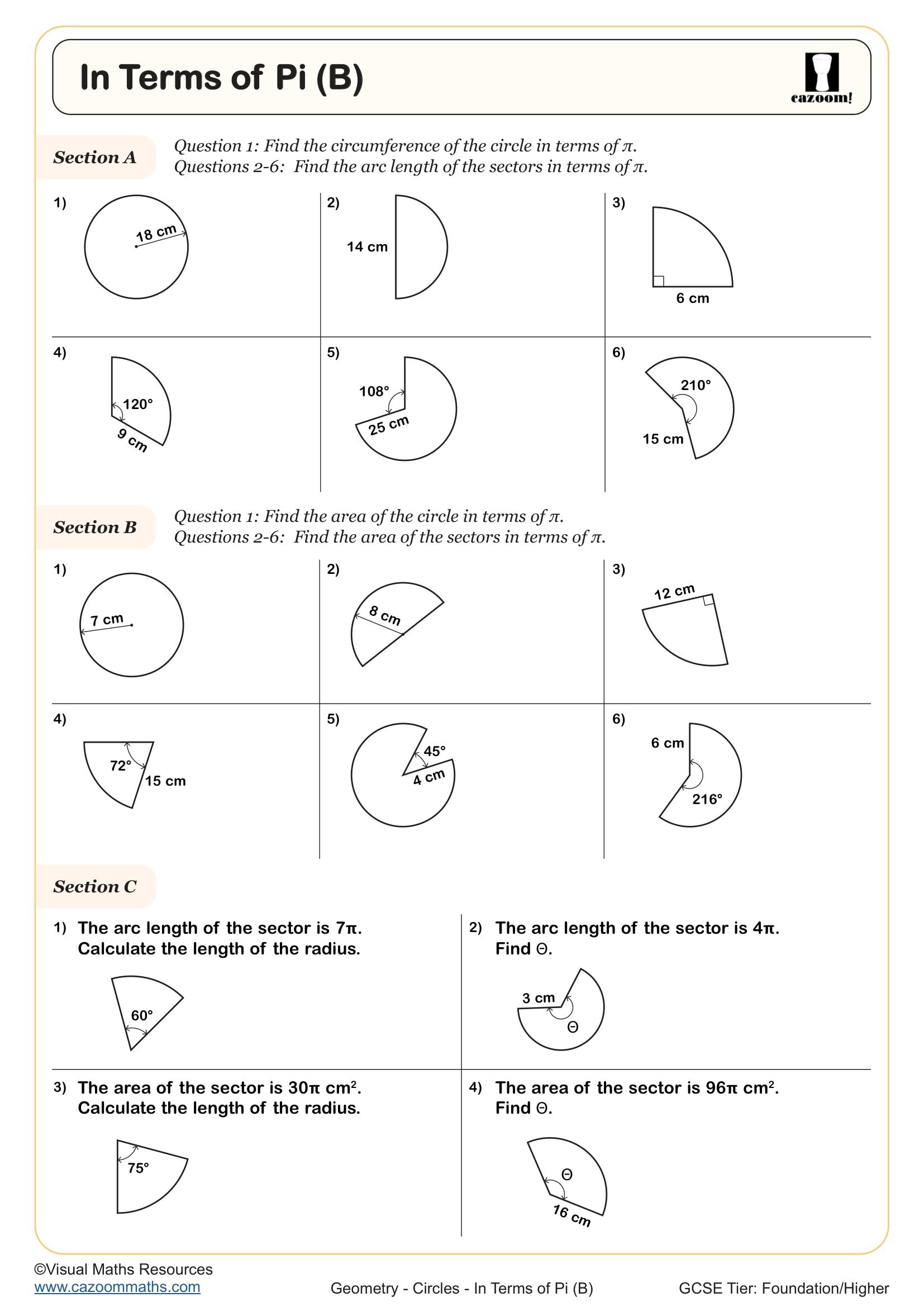
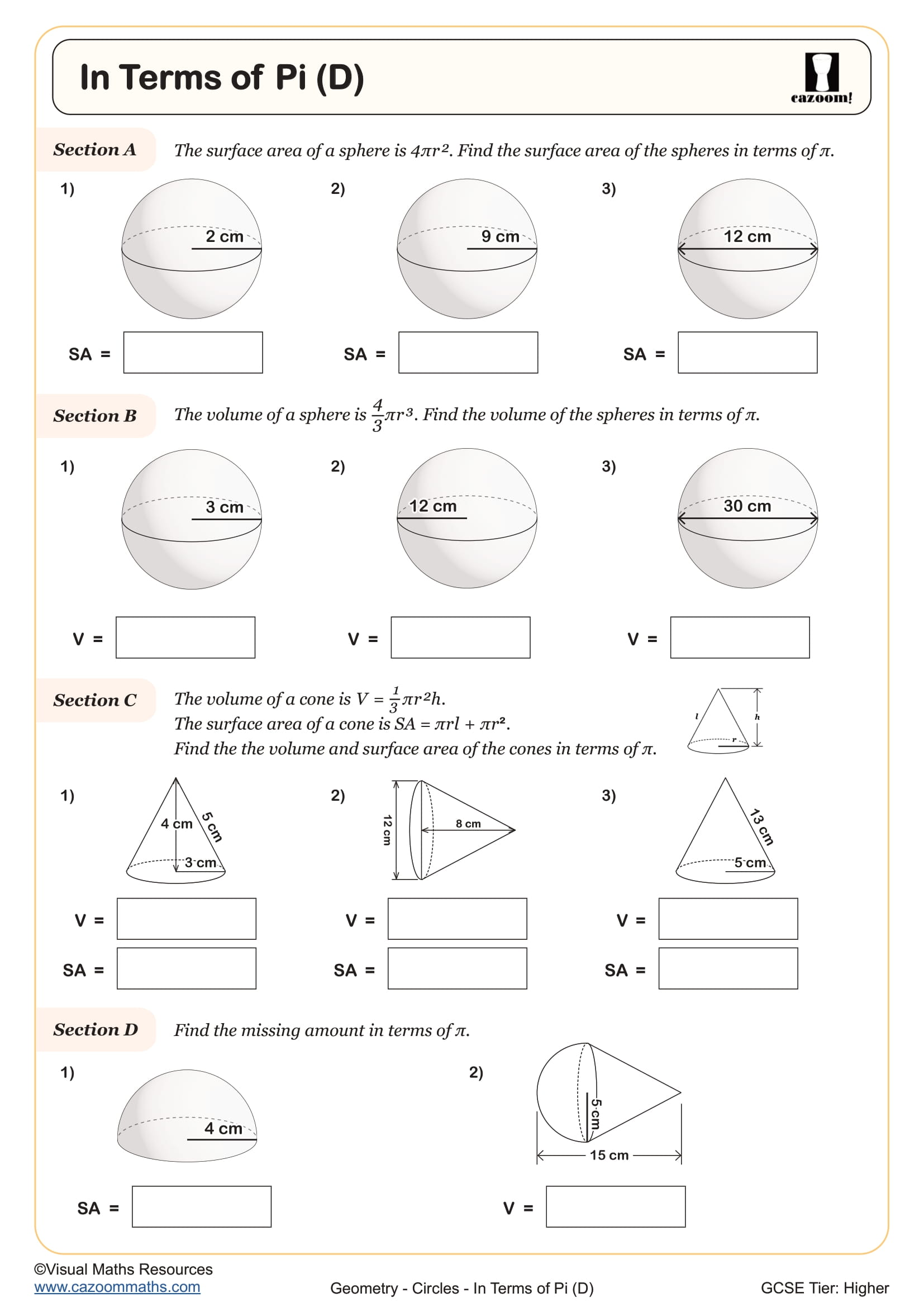
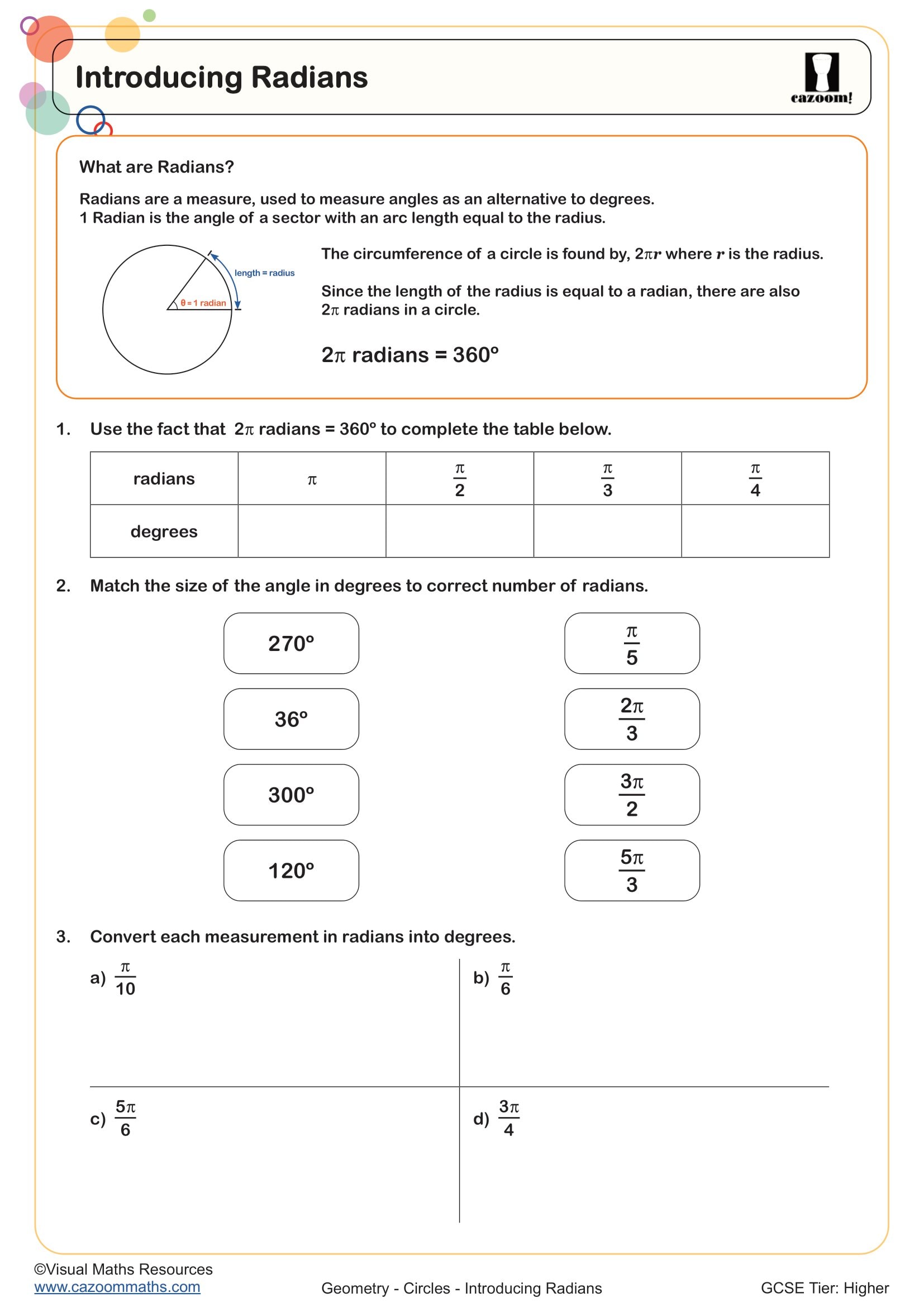
All worksheets are created by the team of experienced teachers at Cazoom Maths.
What types of activities are included in pi worksheets?
Pi worksheets typically feature a range of activities including circle calculations, historical exploration of π's discovery, memory challenges for π's decimal places, and real-world applications in architecture and engineering. These resources align with Key Stage 3 and 4 objectives for geometry and number work, supporting pupils' understanding of irrational numbers and their practical applications.
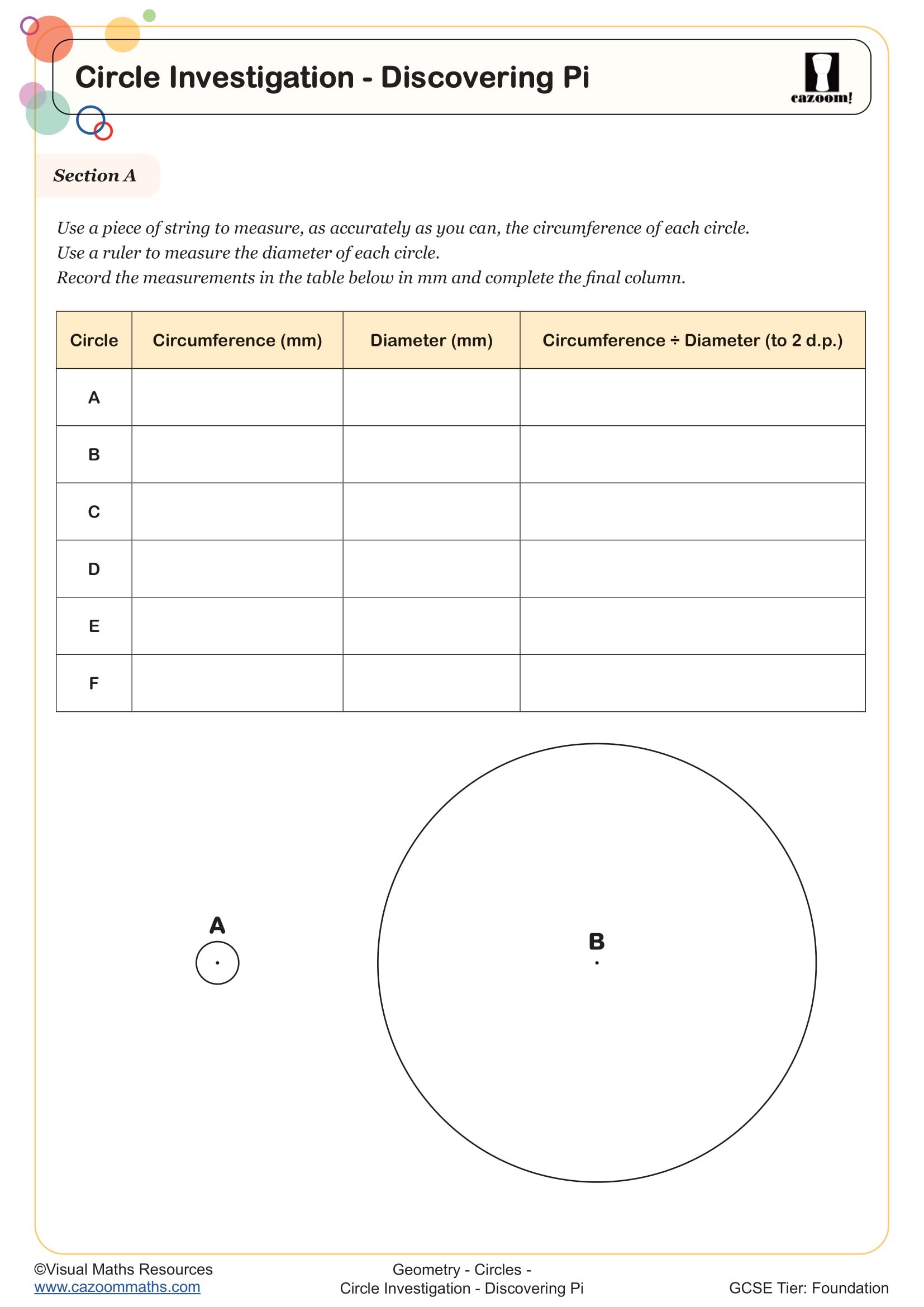
Teachers find that students often memorise the approximation 3.14 without understanding why π represents the ratio of circumference to diameter. Effective pi activity worksheets address this by including visual demonstrations and practical measurement tasks that help pupils discover this relationship independently, leading to deeper conceptual understanding.
Which year groups benefit most from Pi Day worksheet activities?
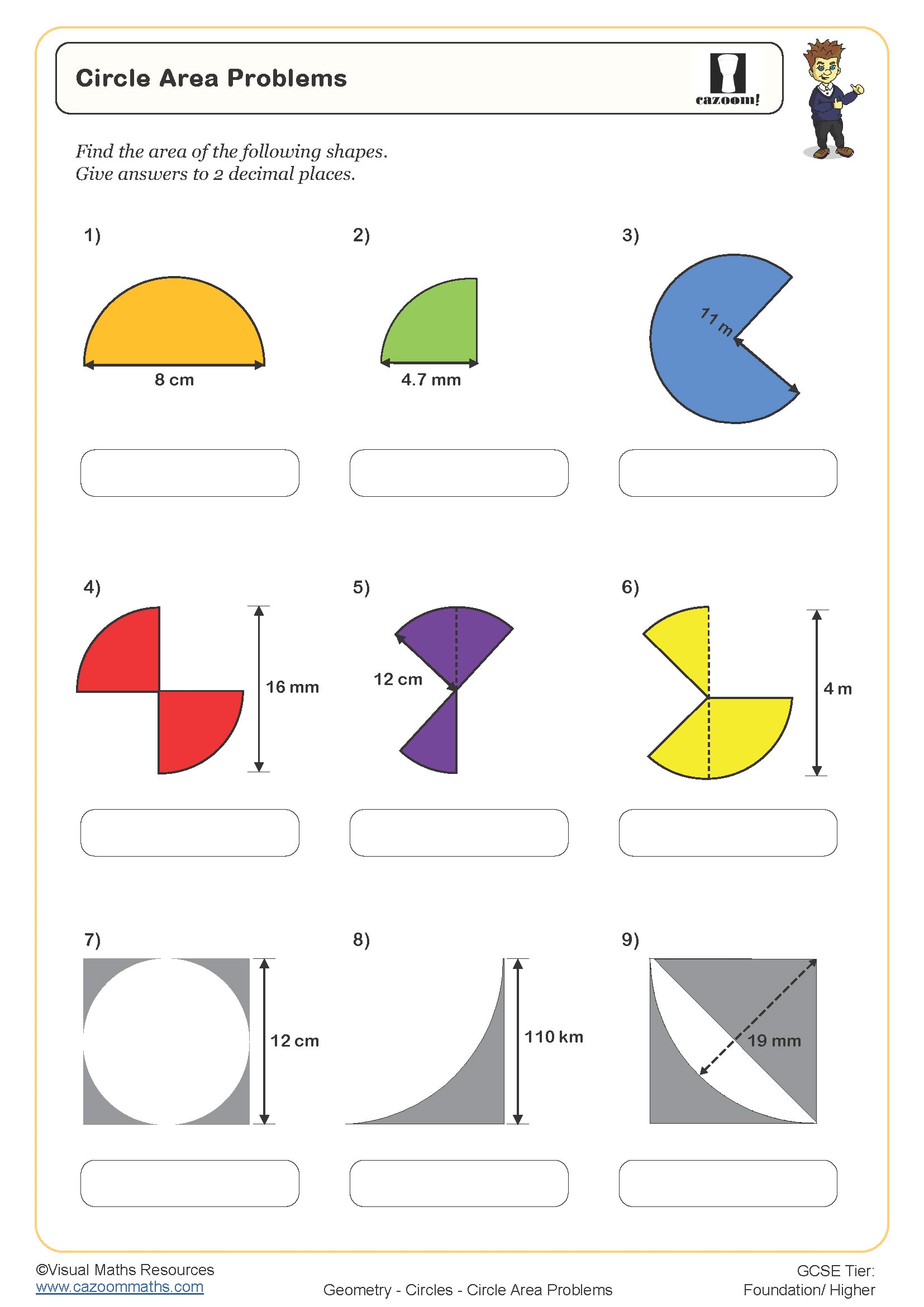
Pi Day worksheets work particularly well with Years 7-11, though the complexity varies significantly across key stages. Year 7 pupils typically focus on basic circle properties and simple circumference calculations, while GCSE students tackle more sophisticated problems involving composite shapes, arc lengths, and sector areas that require confident manipulation of π in algebraic expressions.
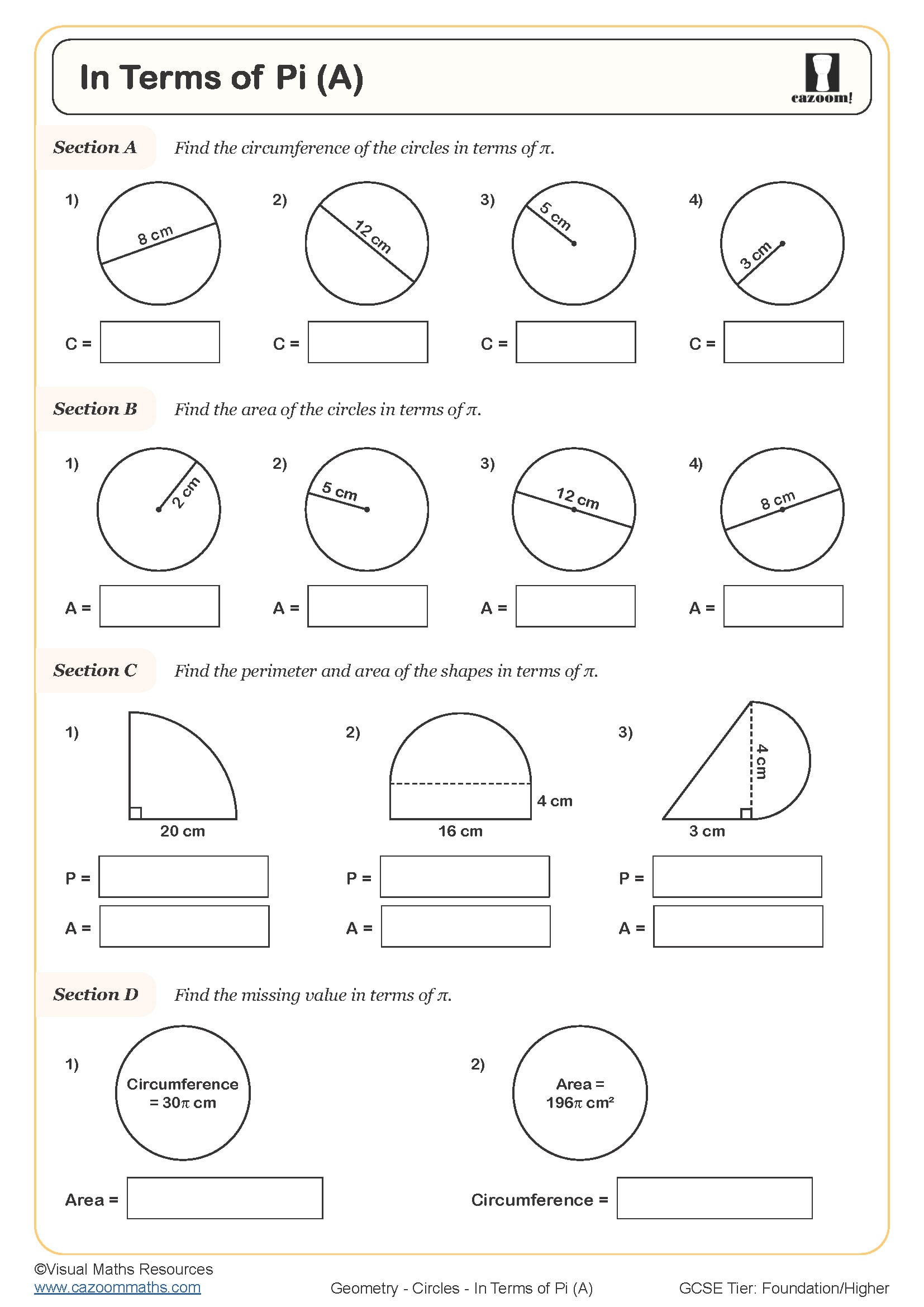
Secondary teachers notice that Year 9 represents a crucial transition point where students must move beyond treating π as simply 3.14 to understanding it as an exact value. Worksheets targeting this year group often include activities comparing exact and approximate answers, helping pupils develop the precision required for higher-level mathematics.
How do Pi Day worksheets help students understand the practical applications of π?
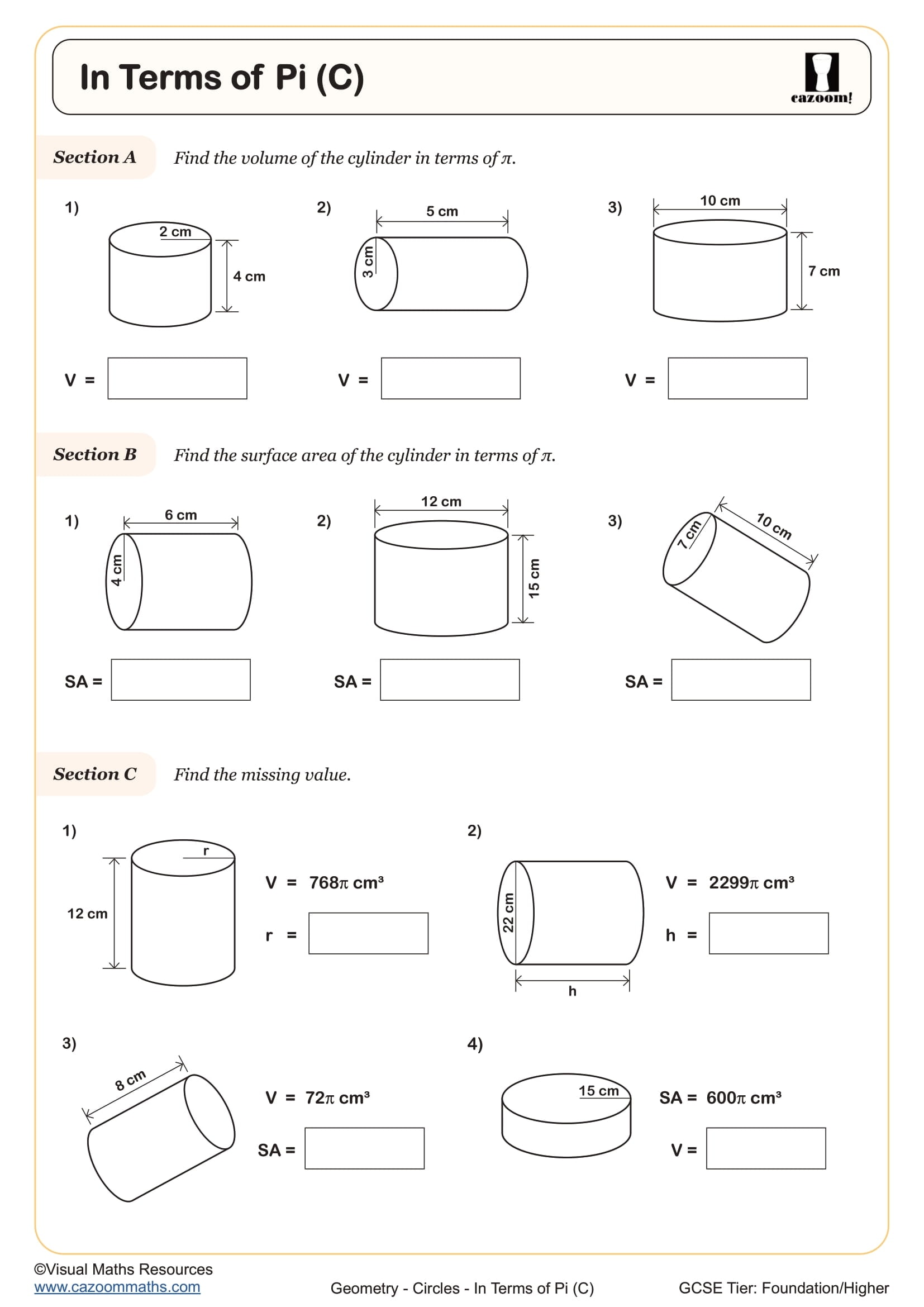
Modern pi day maths worksheets incorporate real-world contexts such as calculating wheel rotations, designing circular gardens, and determining material requirements for cylindrical containers. These applications help students recognise π's importance in STEM fields, from aerospace engineering to manufacturing processes where precise circular measurements are critical.
Teachers report that students initially treat π calculations as abstract exercises until they encounter practical problems like determining how much fencing is needed for a circular plot or calculating the volume of cylindrical storage tanks. These contextual applications transform π from a mysterious number into a useful mathematical tool with clear practical value.
What teaching strategies work best when using Pi Day worksheets in lessons?
Effective implementation involves starting with hands-on measurement activities where pupils physically measure circular objects to discover the π relationship before moving to worksheet calculations. Teachers find success in pairing collaborative investigation tasks with individual practice, allowing students to discuss their methods and check reasoning with peers before attempting more complex problems.
Maths teachers observe that students benefit from explicit connections between different representations of π, including its decimal approximation, fractional estimates, and exact symbolic form. Worksheets that require students to choose appropriate forms of π for different contexts help develop mathematical reasoning and prepare pupils for the precision required in GCSE examinations.