Powers and Roots Worksheets
Calculating Using Standard Form
Year groups: 7, 8
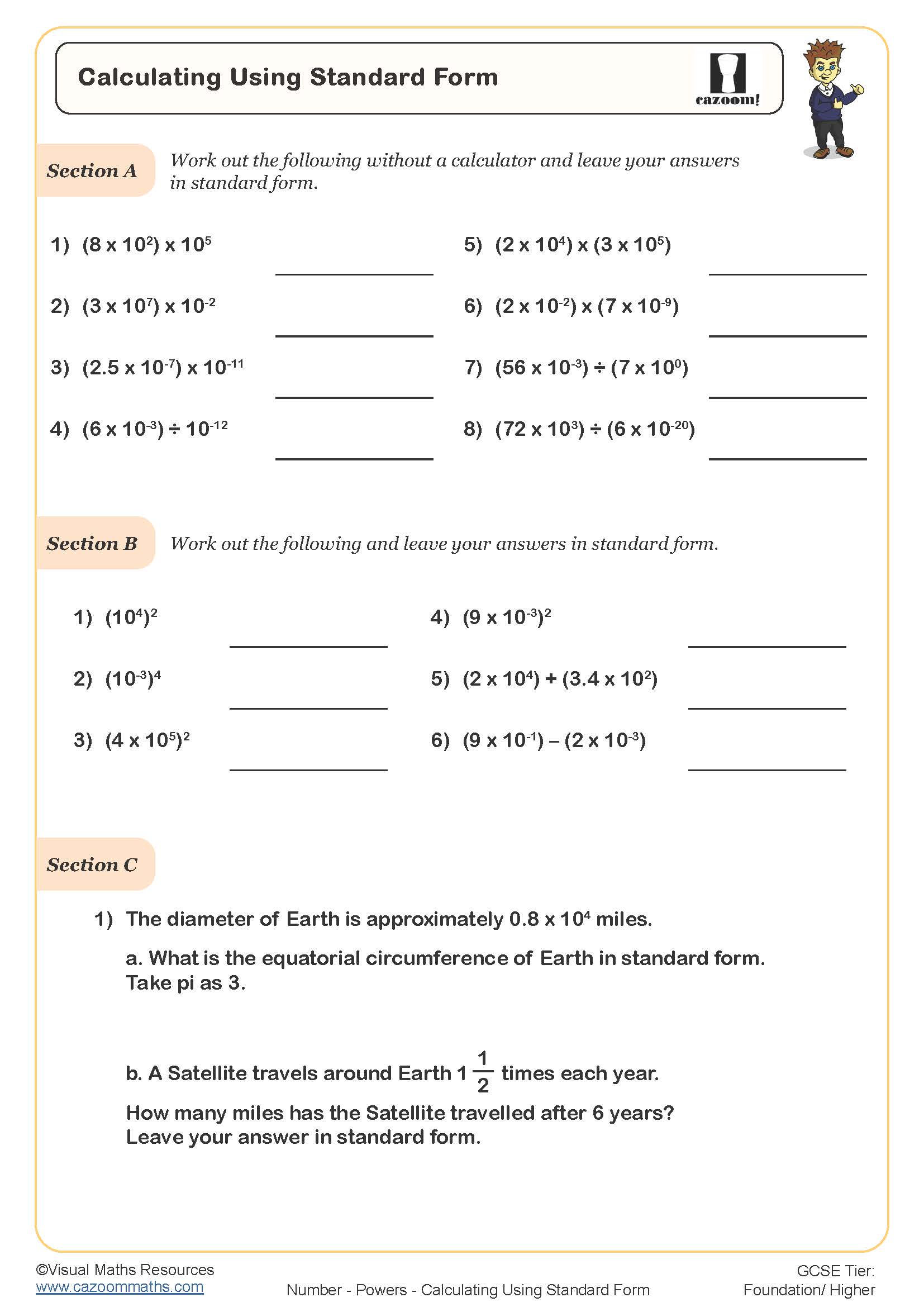
Calculations Using Indices (A)
Year groups: 7, 8
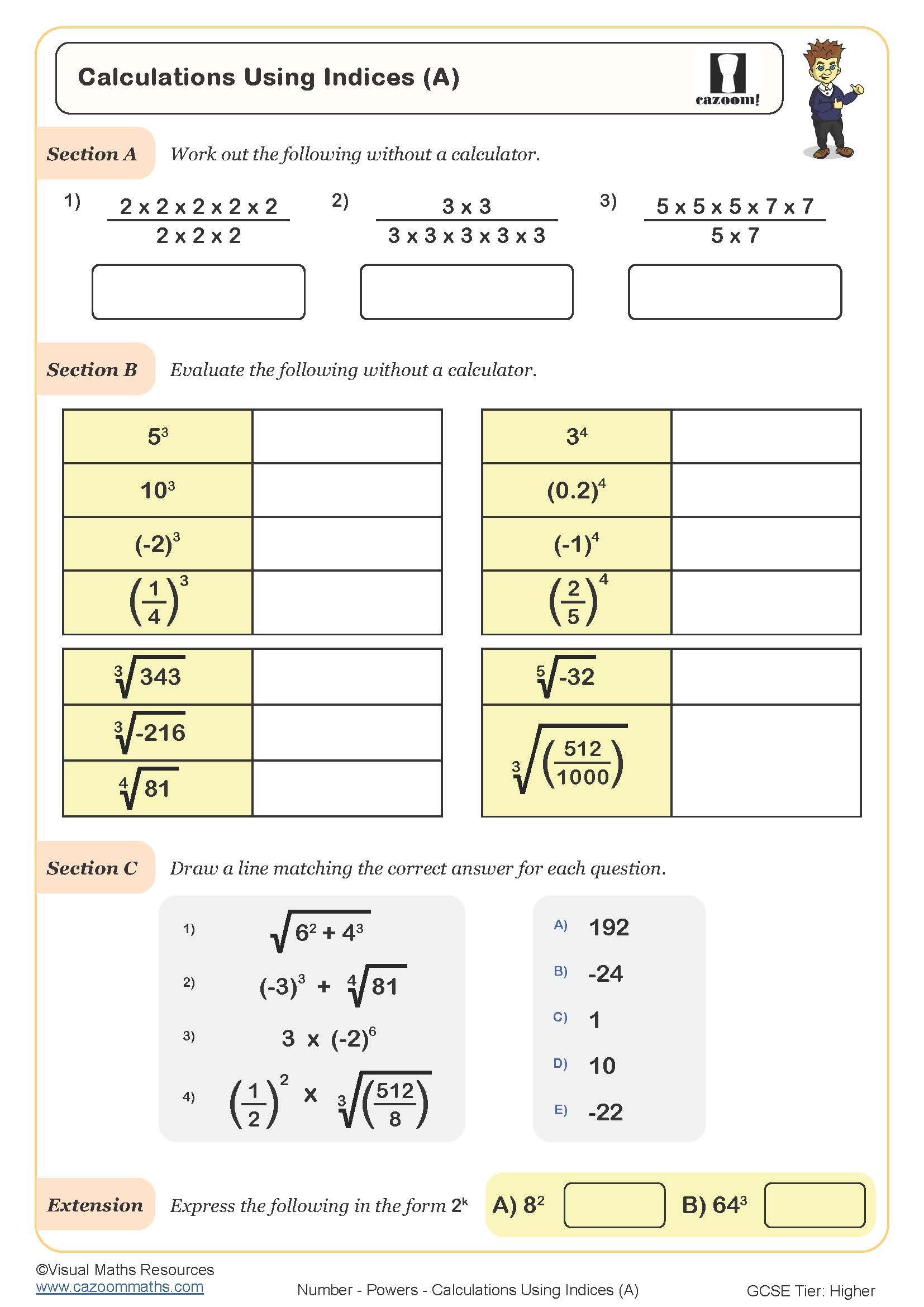
Converting from Standard Form
Year groups: 7, 8
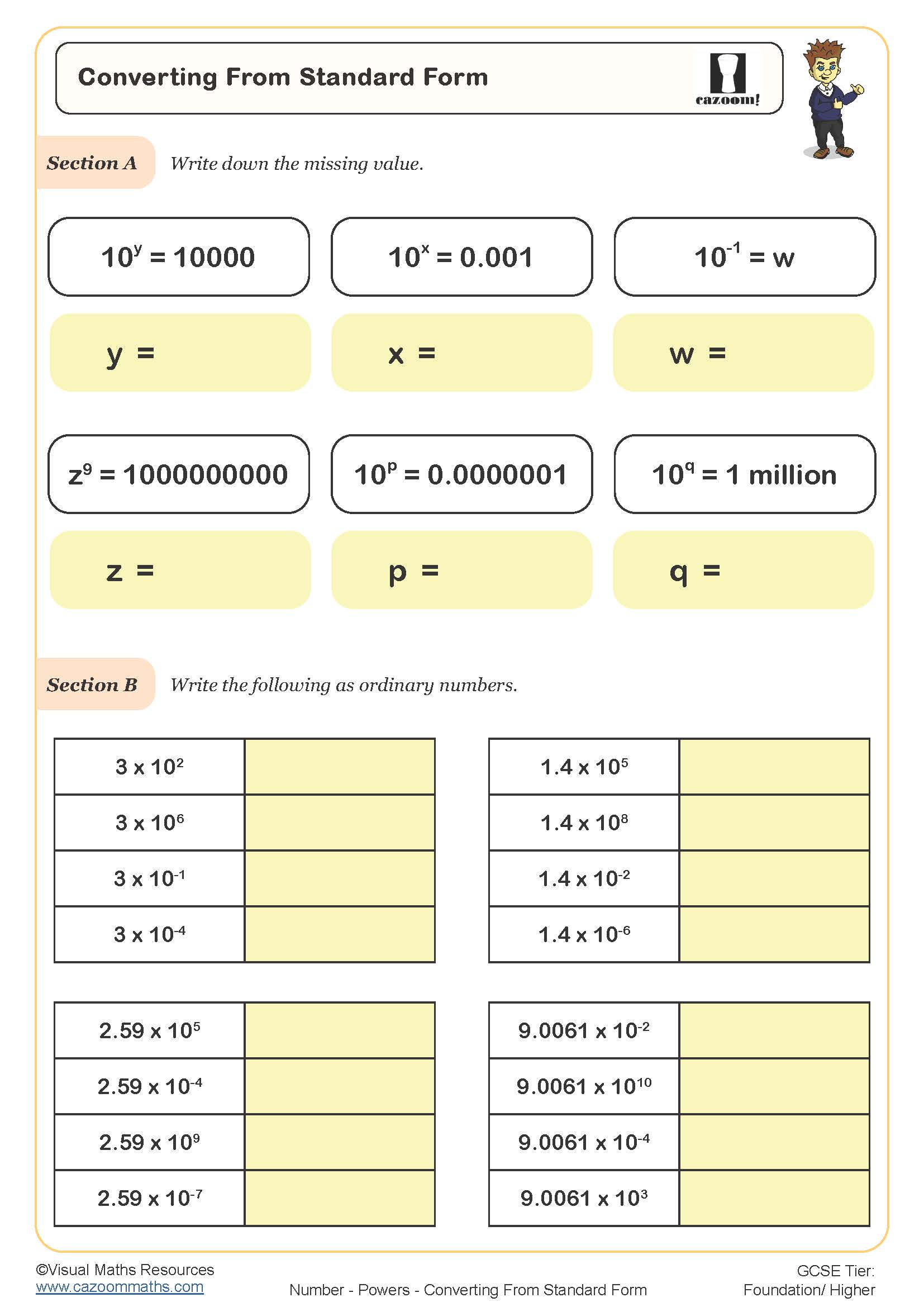
Cube Numbers
Year groups: 7, 8
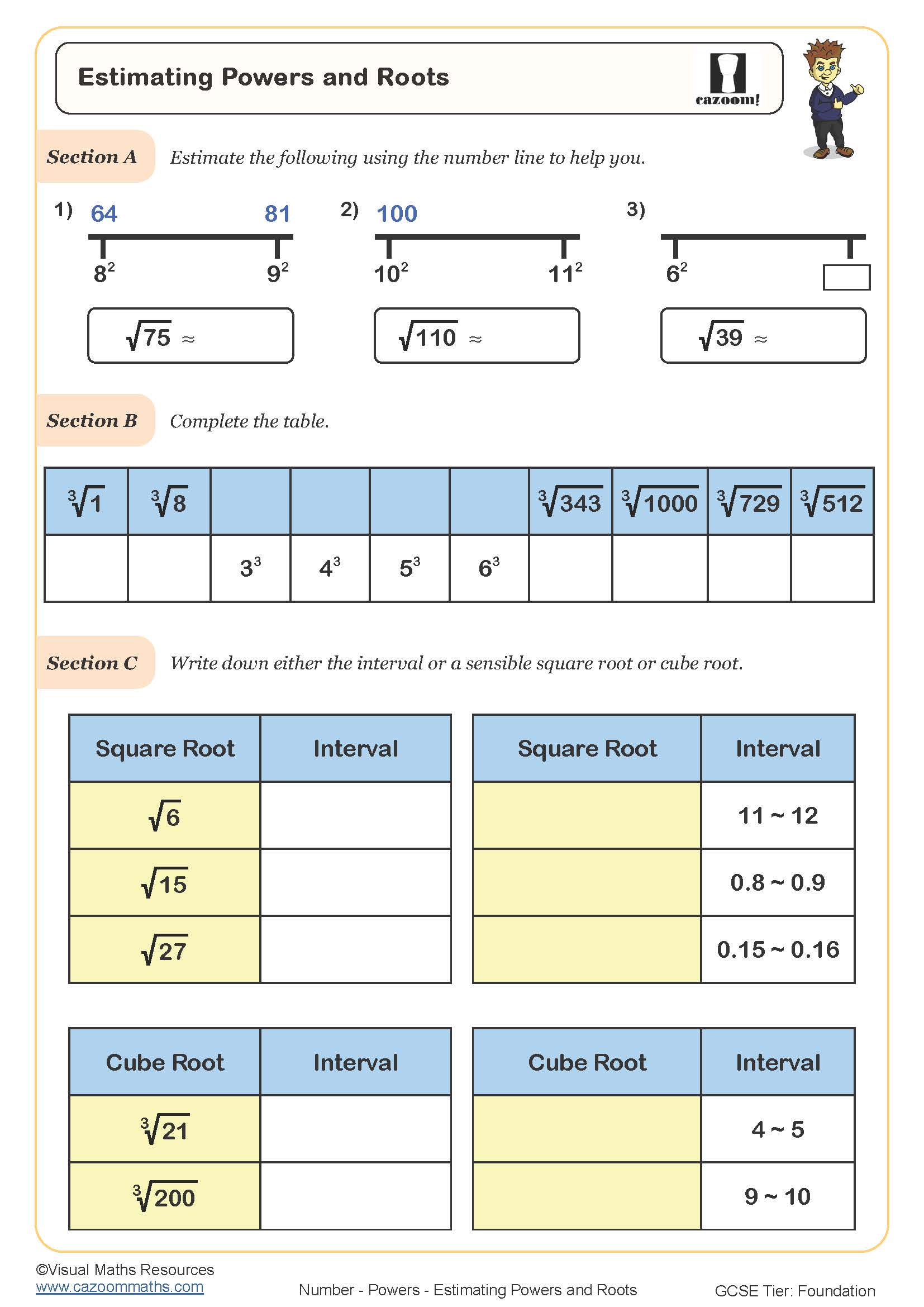
Estimating Powers and Roots
Year groups: 7, 8
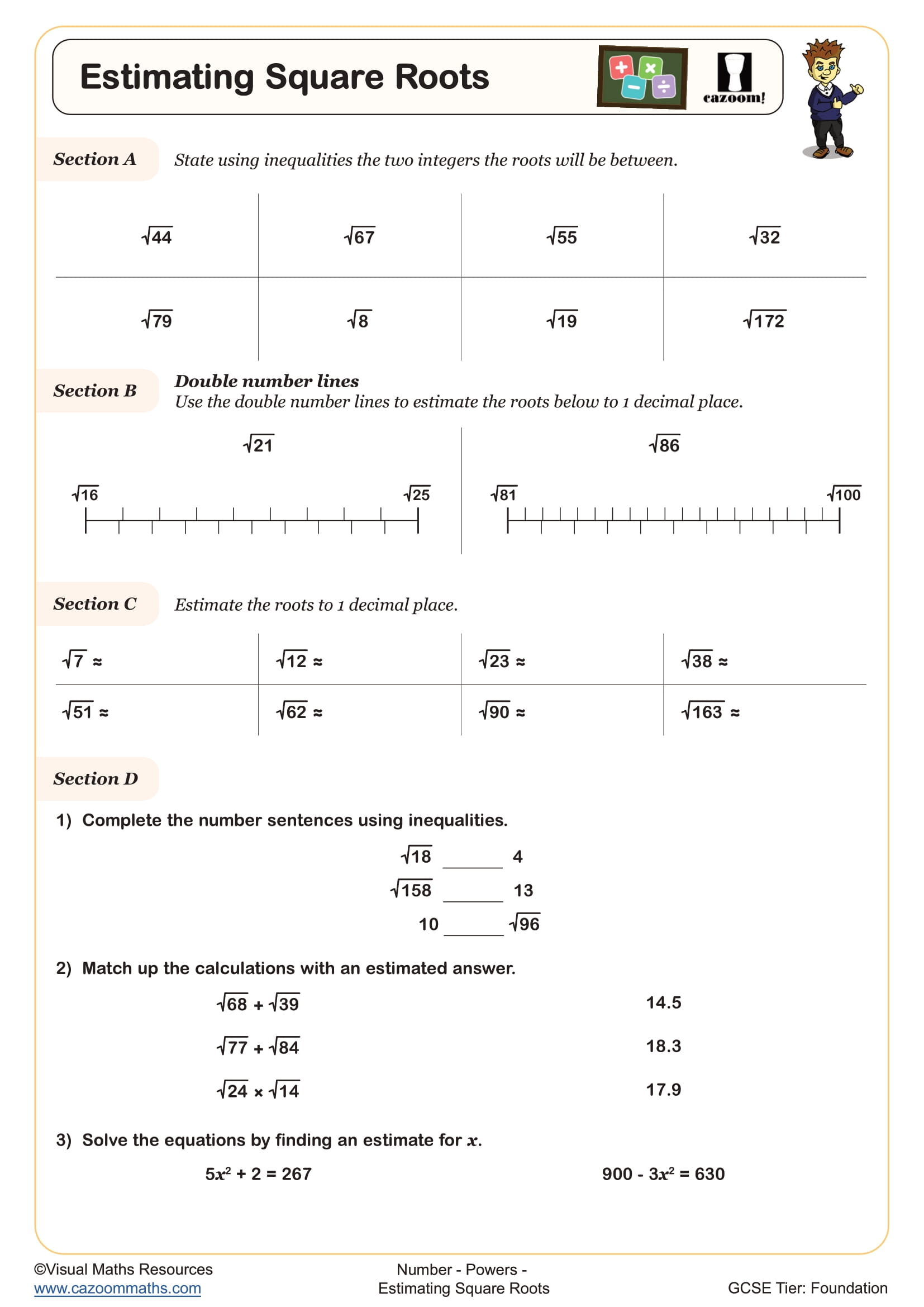
Estimating Square Roots
Year groups: 7, 8
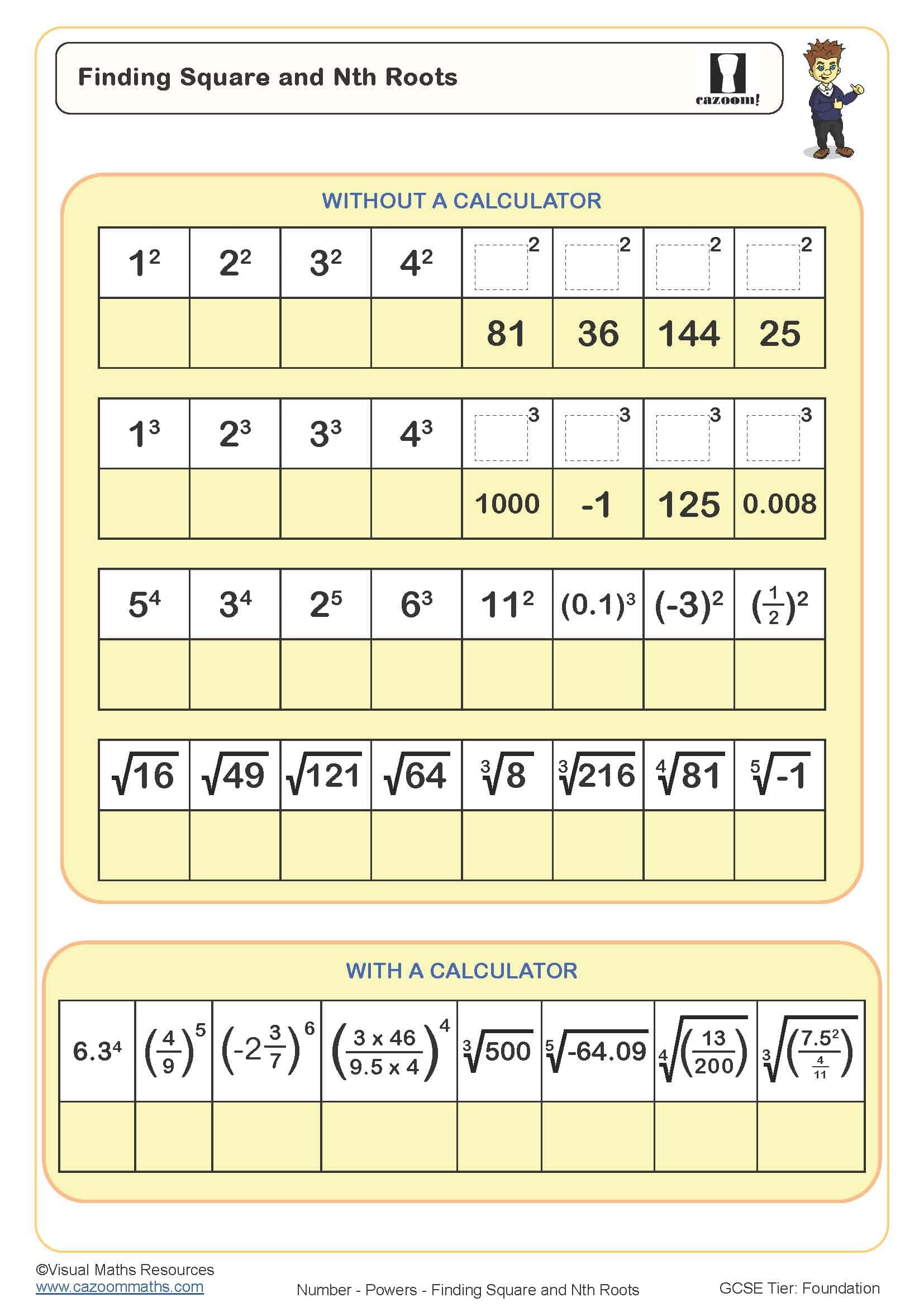
Finding Square and Nth Roots
Year groups: 7, 8
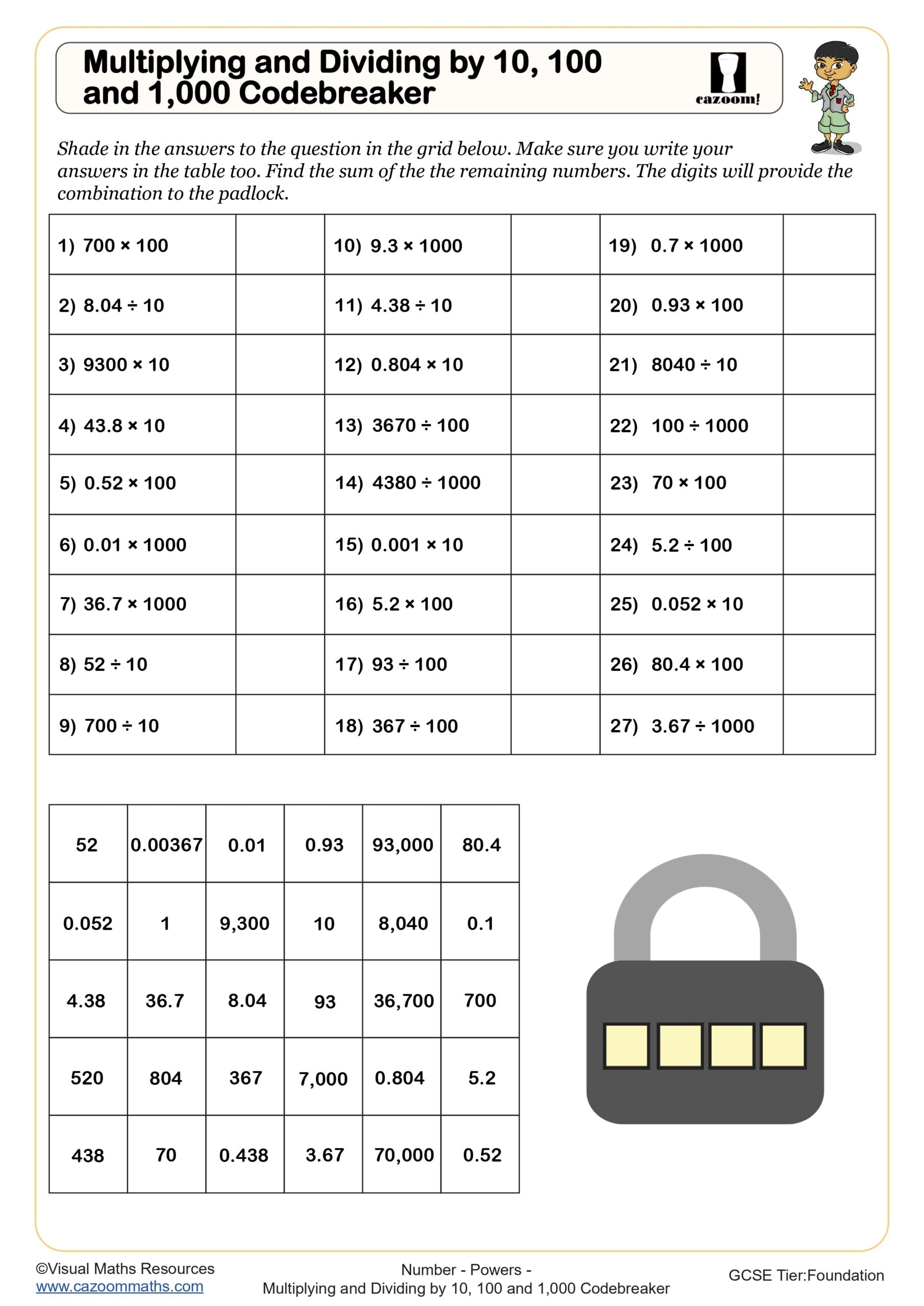
Multiplying and Dividing by 10, 100 and 1,000 Codebreaker
Year groups: 7, 8
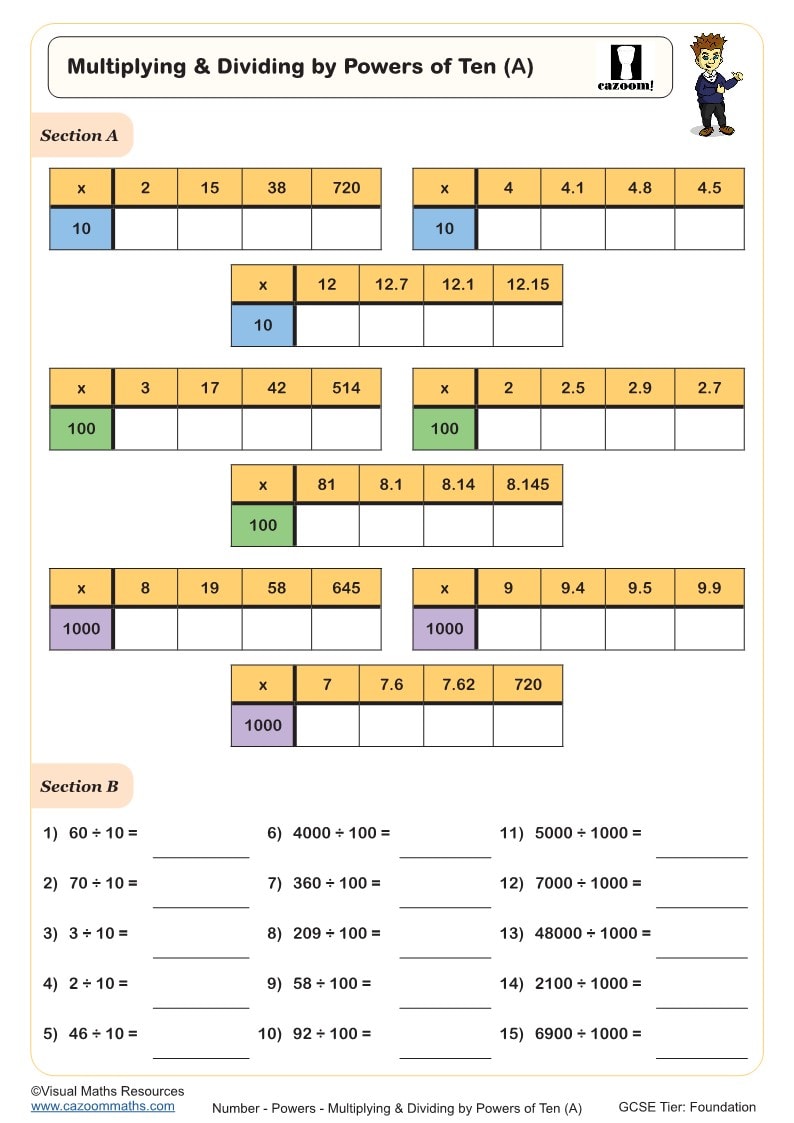
Multiplying and Dividing by Powers of Ten (A)
Year groups: 7, 8
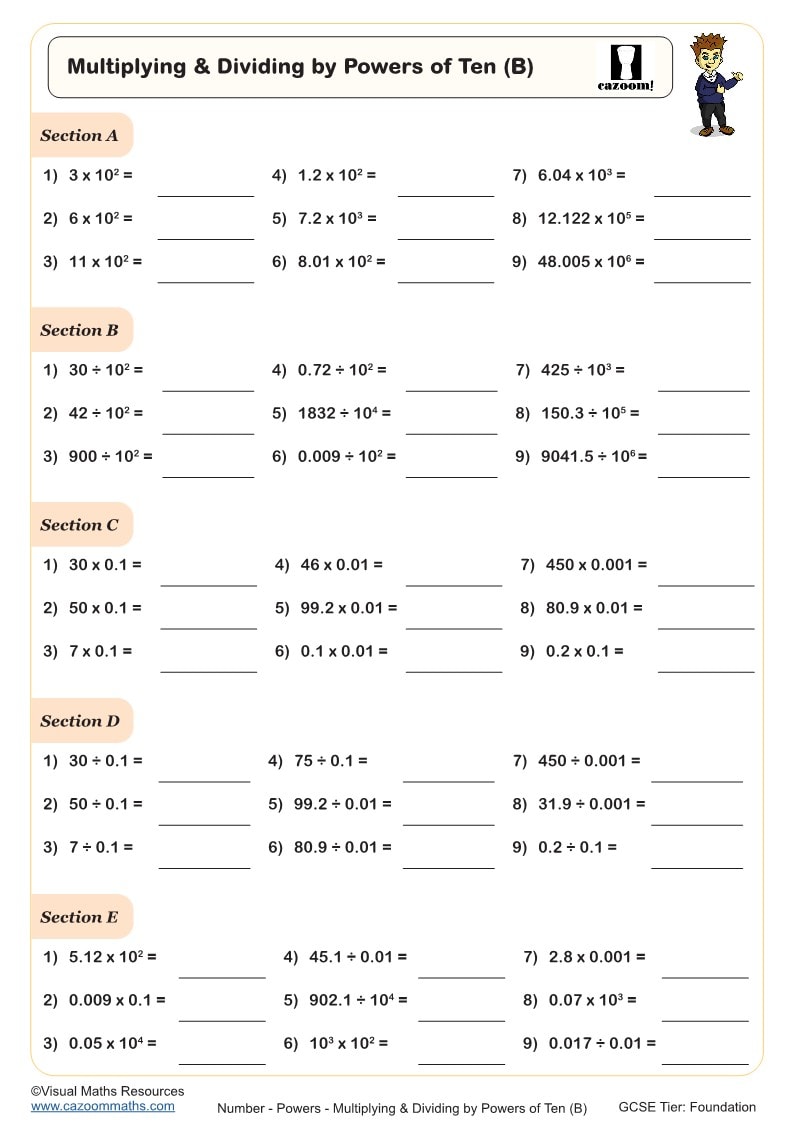
Multiplying and Dividing by Powers of Ten (B)
Year groups: 7, 8
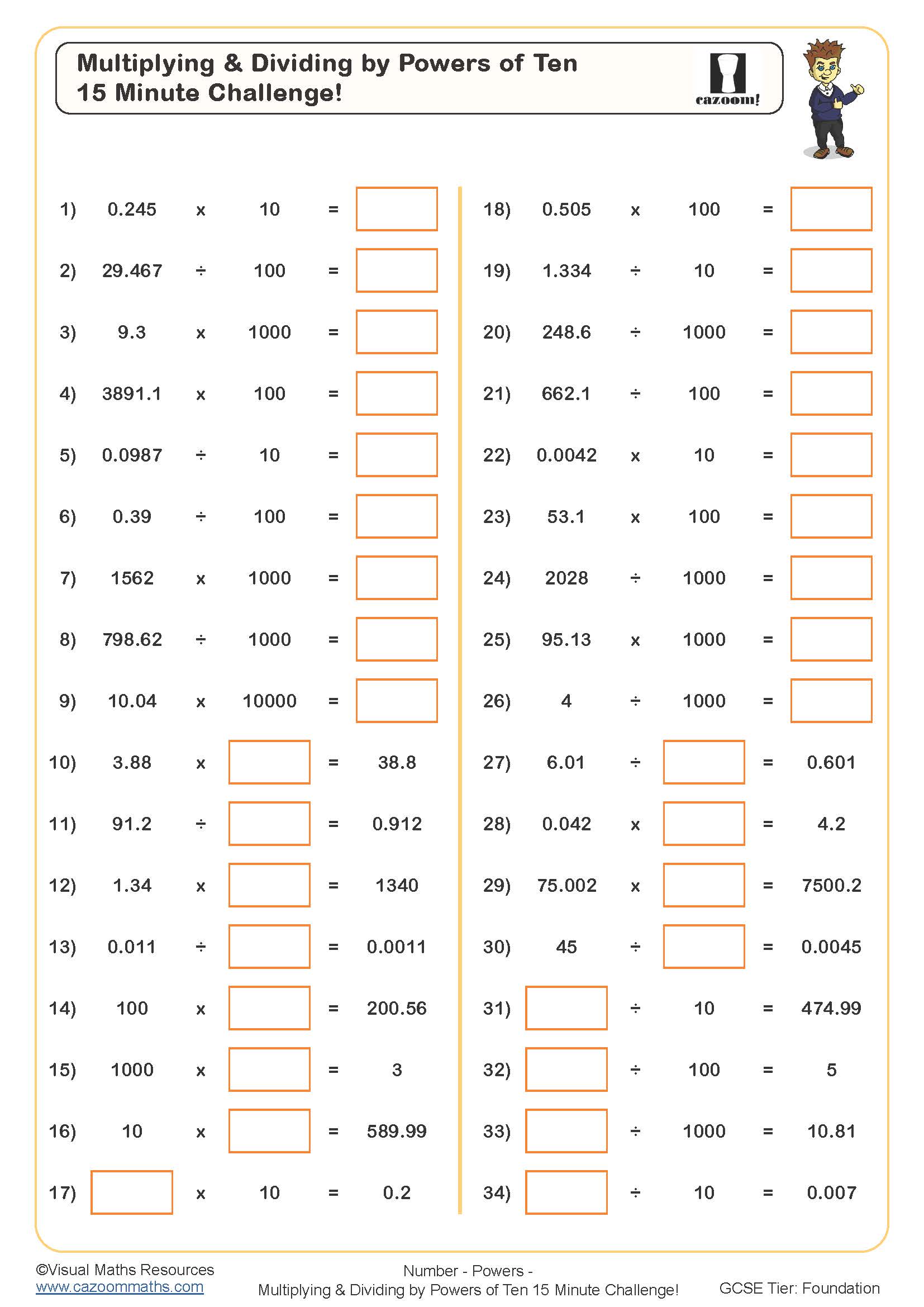
Multiplying and Dividing by Powers of Ten 15 Minute Challenge
Year groups: 7, 8
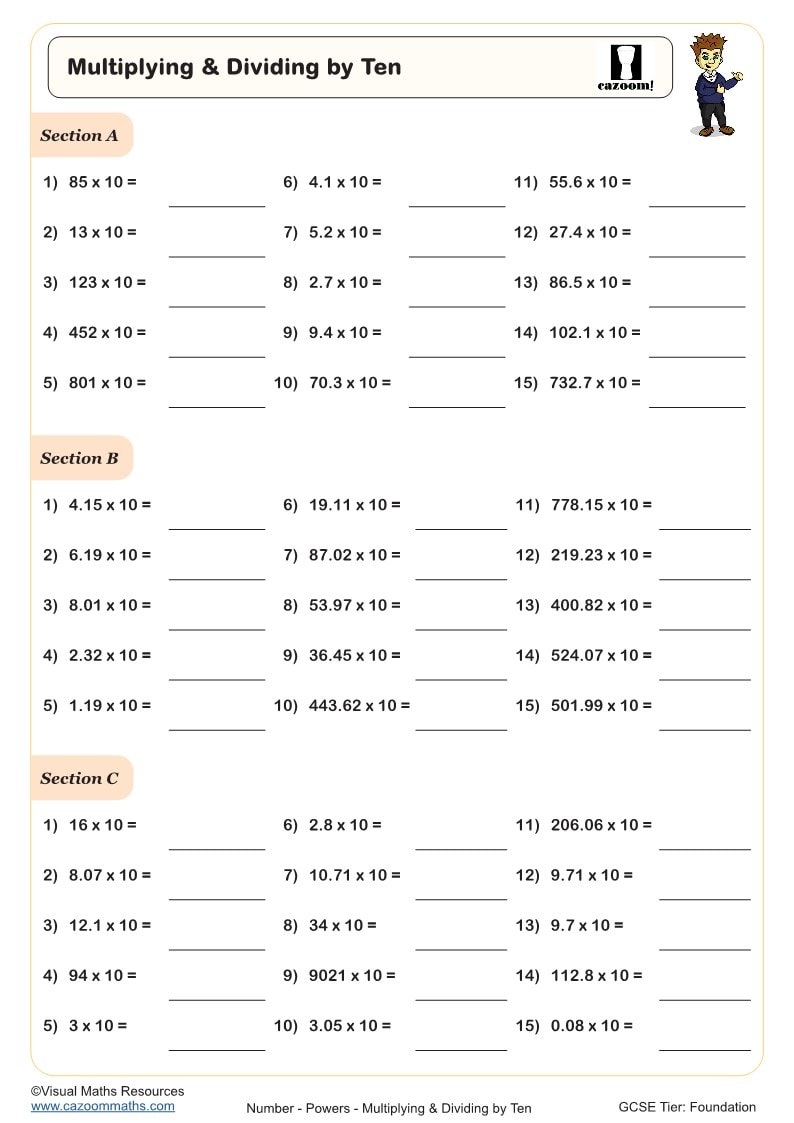
Multiplying and Dividing by Ten
Year groups: 7, 8
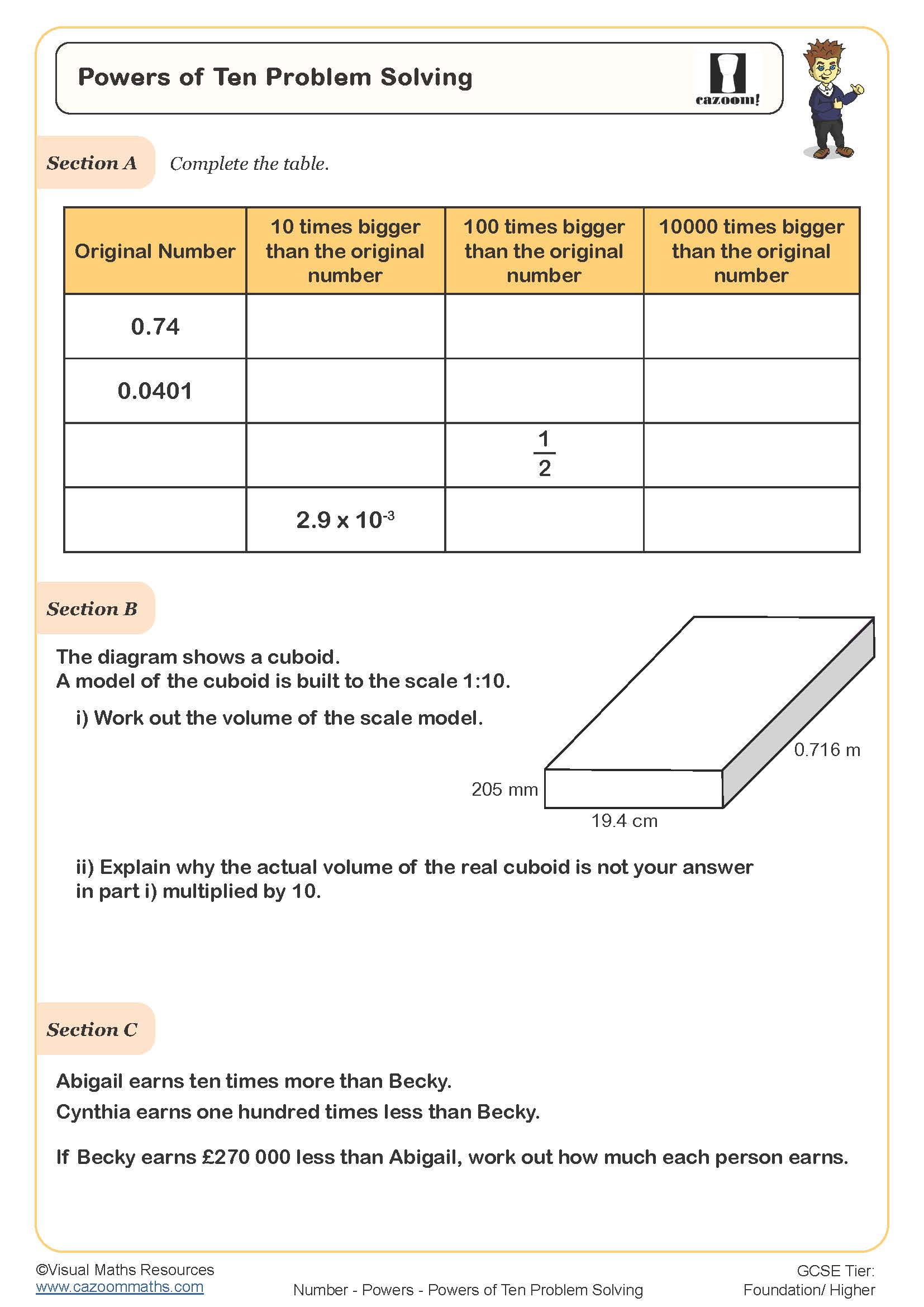
Powers of Ten Problem Solving
Year groups: 7, 8
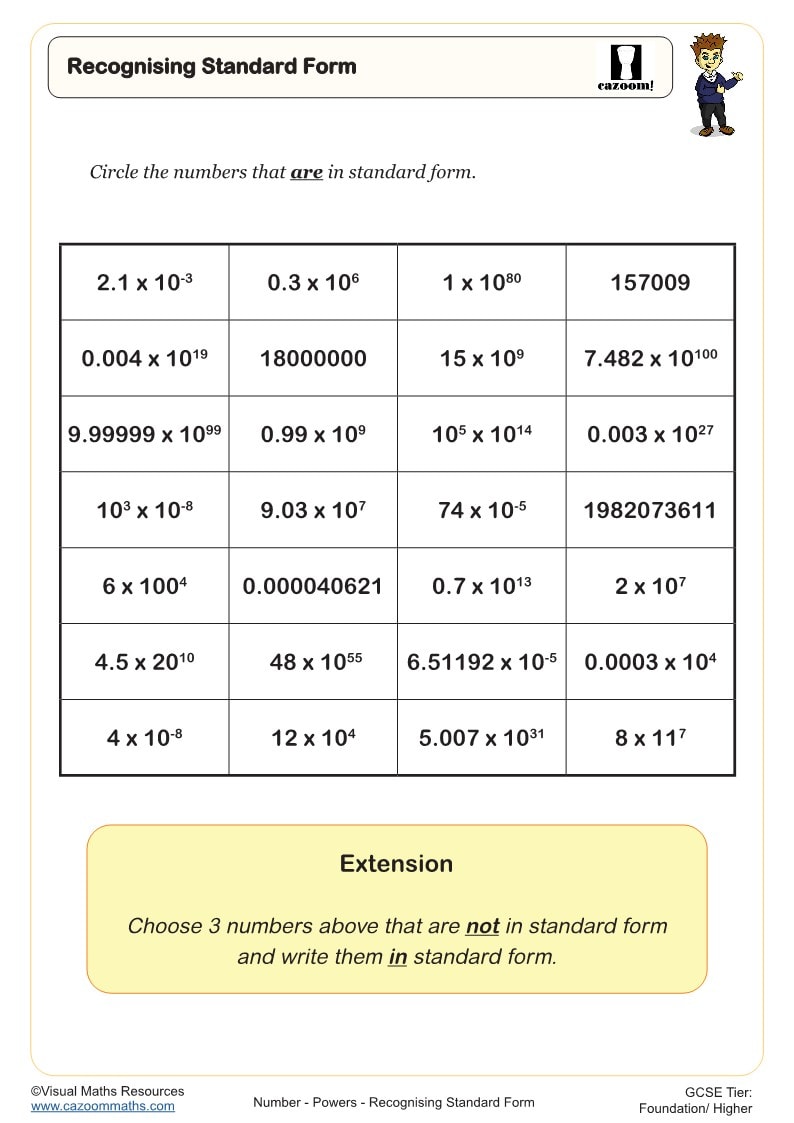
Recognising Standard Form
Year groups: 7, 8
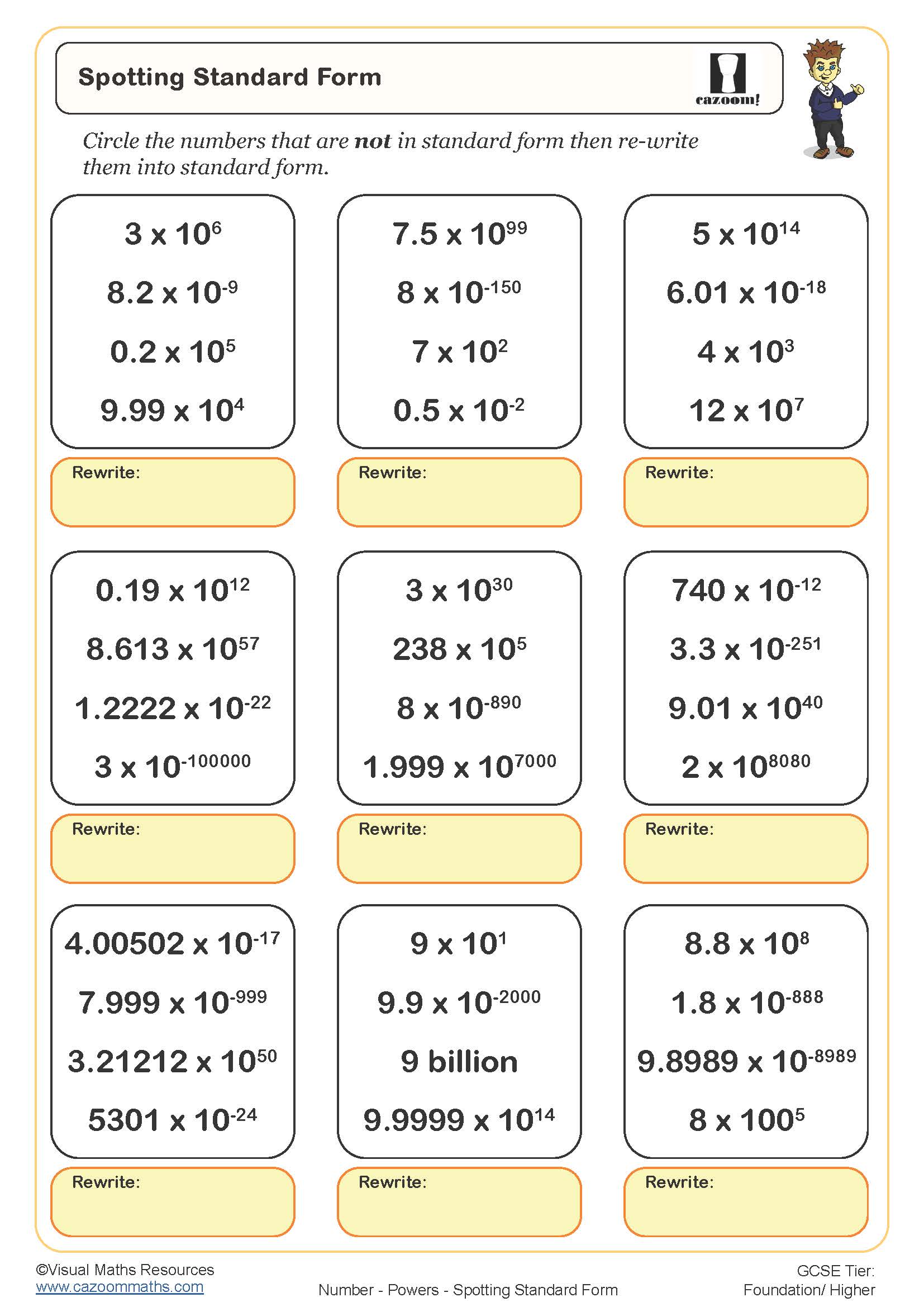
Spotting Standard Form
Year groups: 7, 8
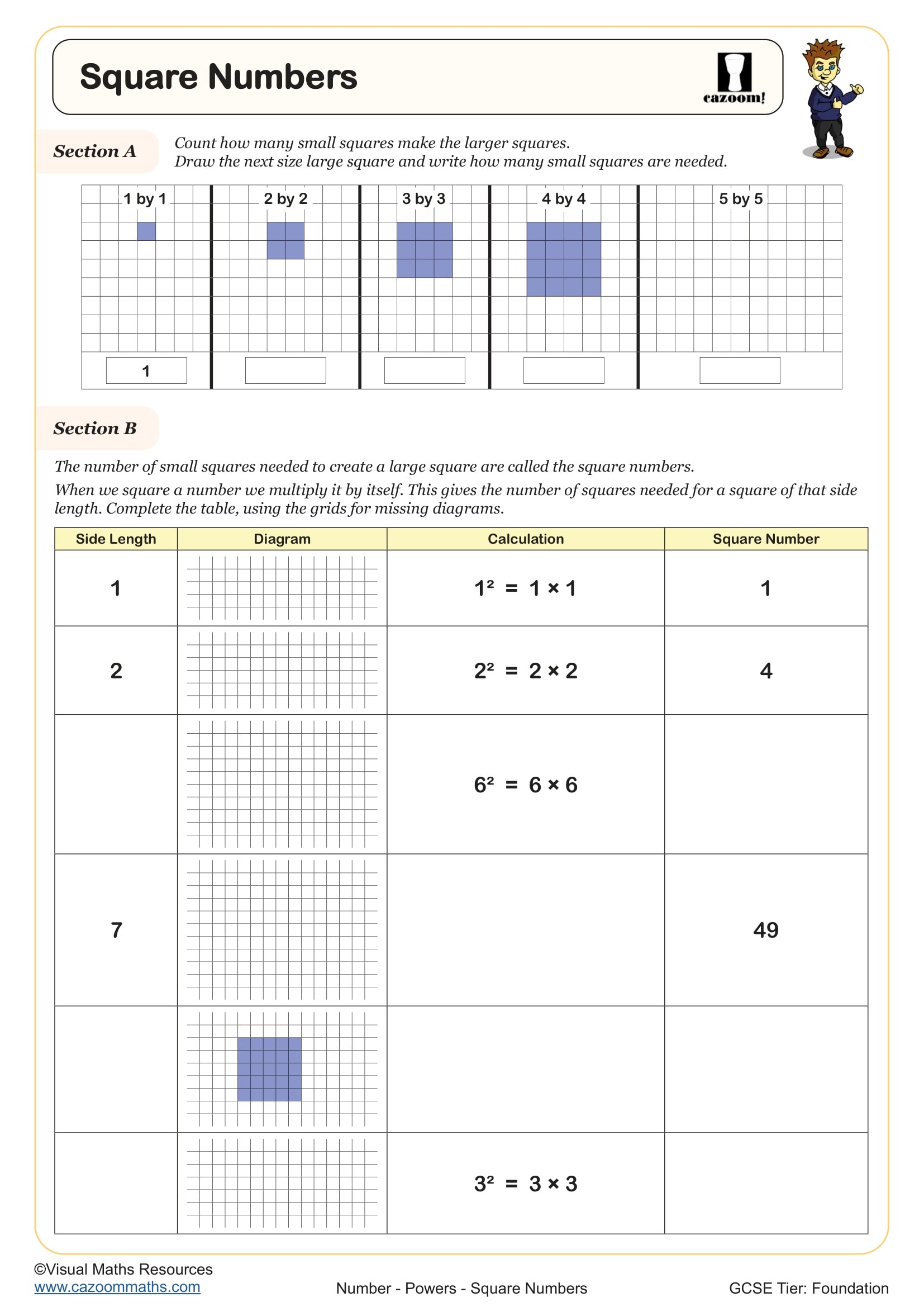
Square Numbers
Year groups: 7, 8
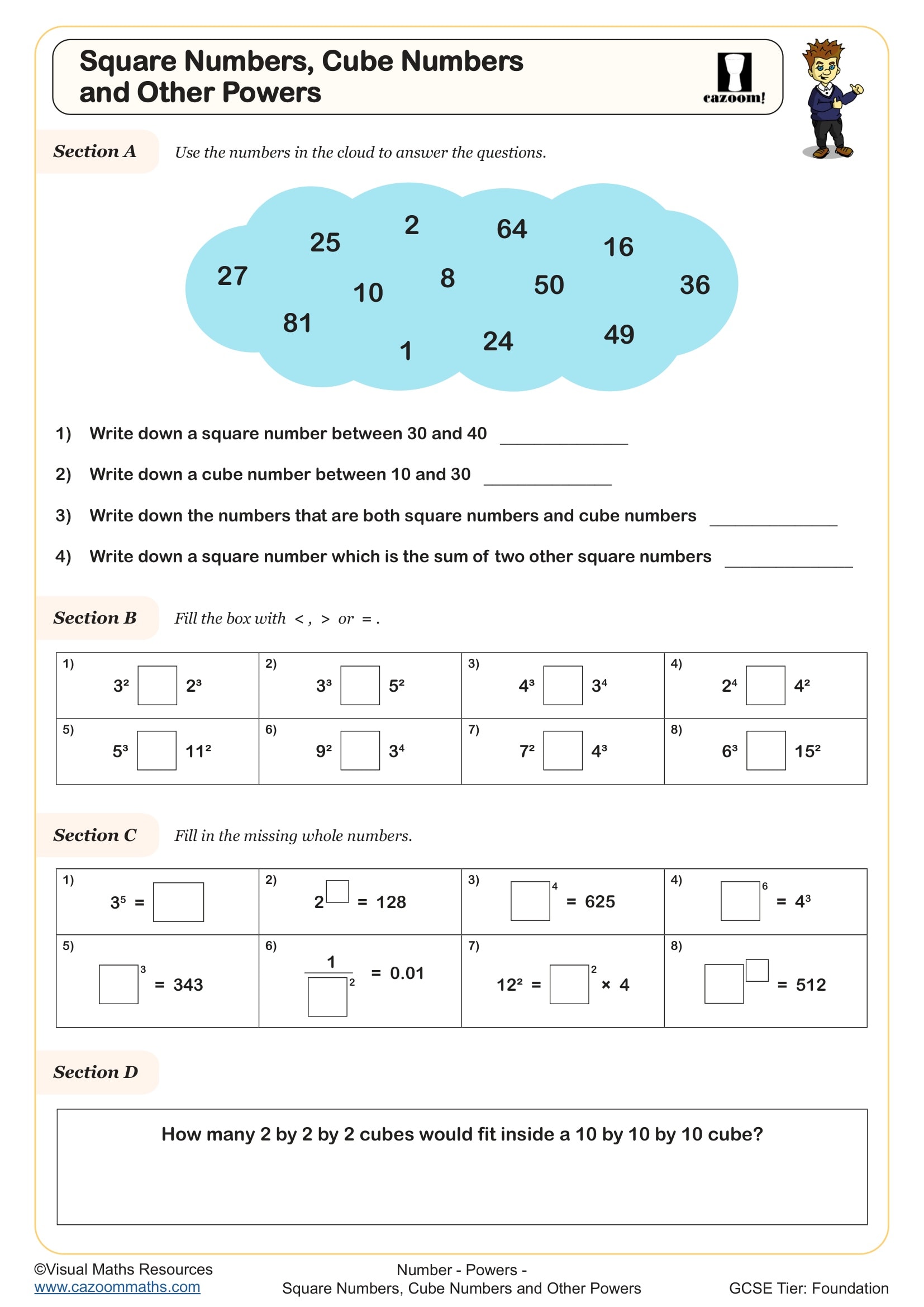
Square Numbers, Cube Numbers and Other Powers
Year groups: 7, 8
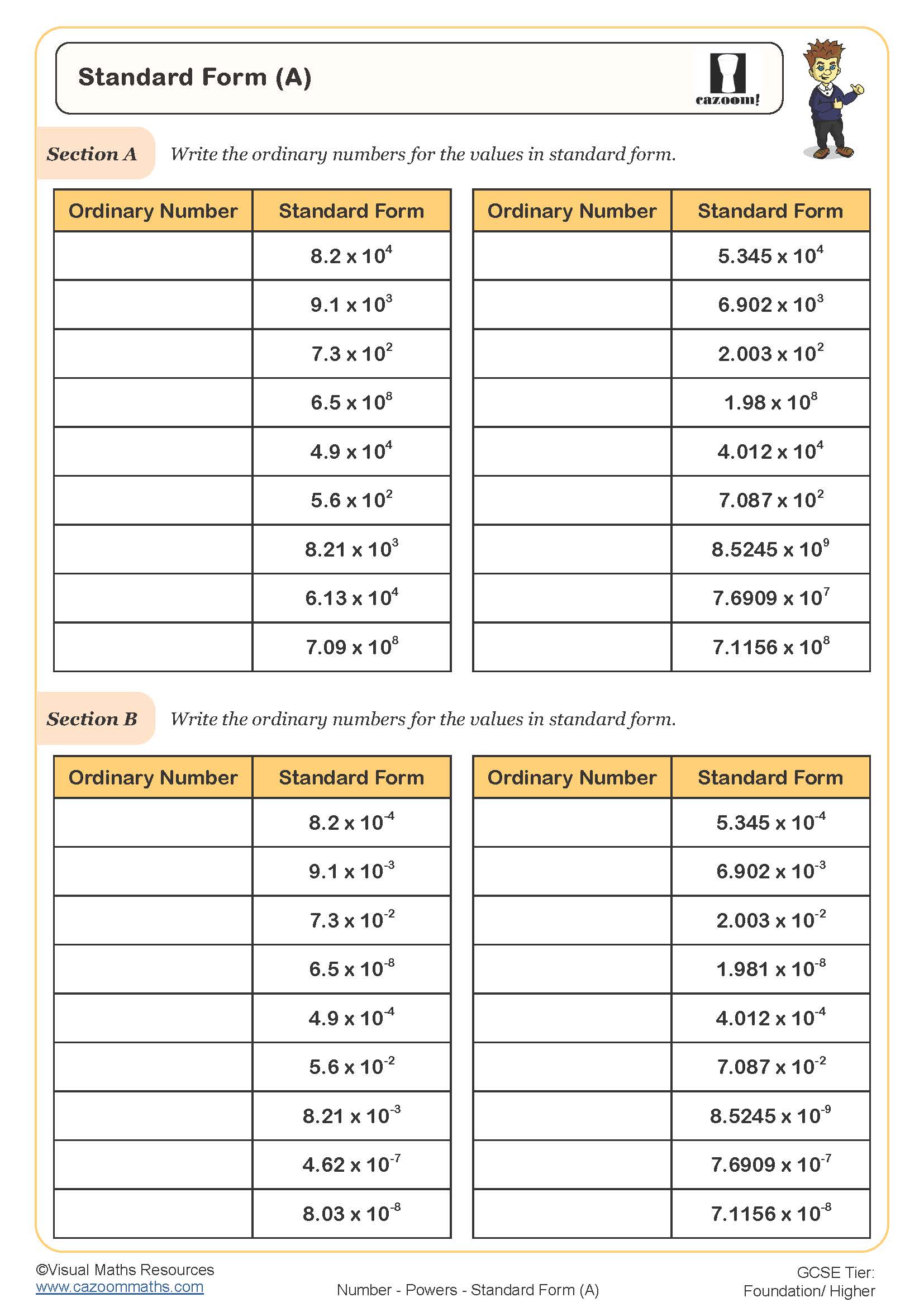
Standard Form (A)
Year groups: 7, 8
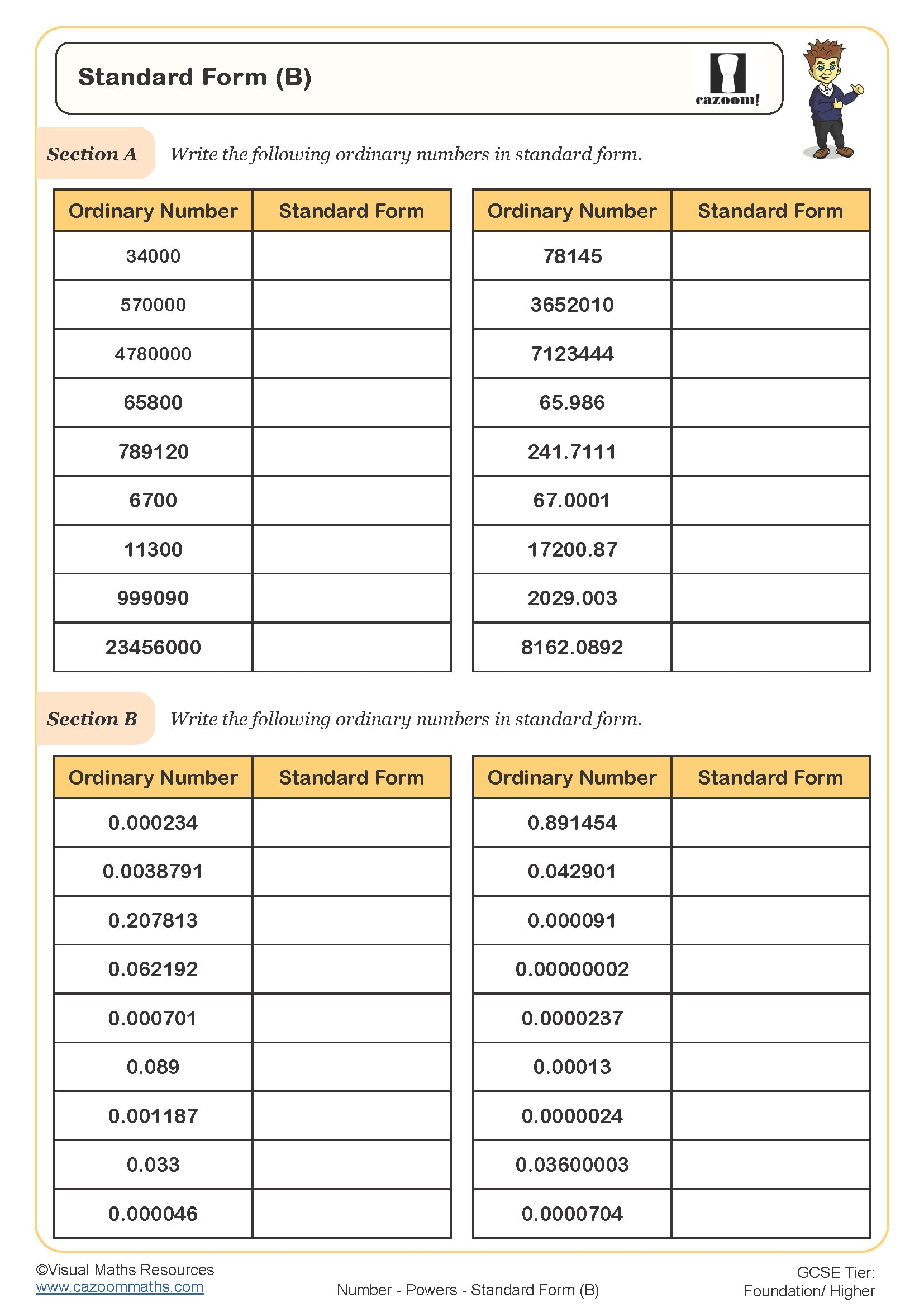
Standard Form (B)
Year groups: 7, 8
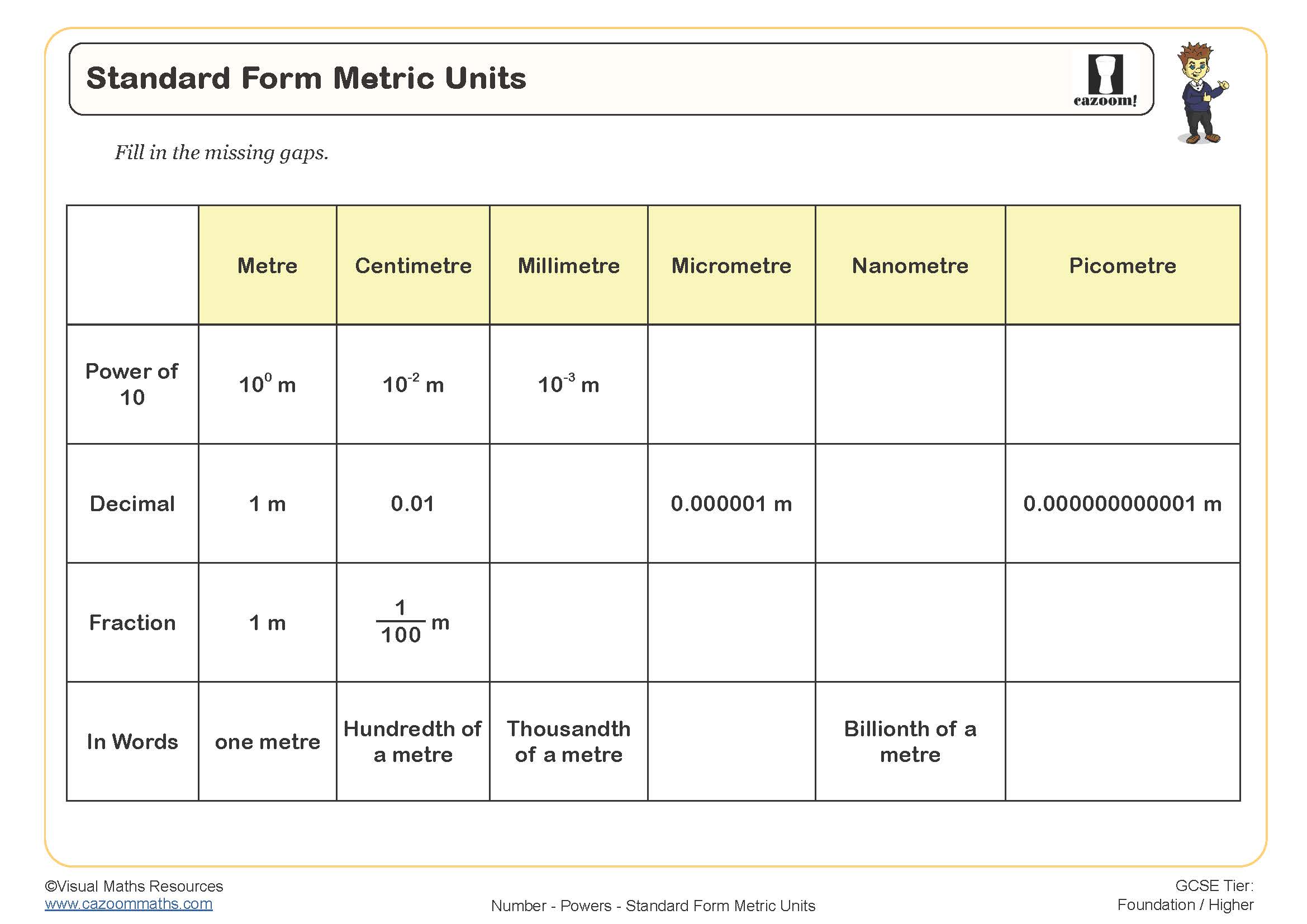
Standard Form Metric Units
Year groups: 7, 8
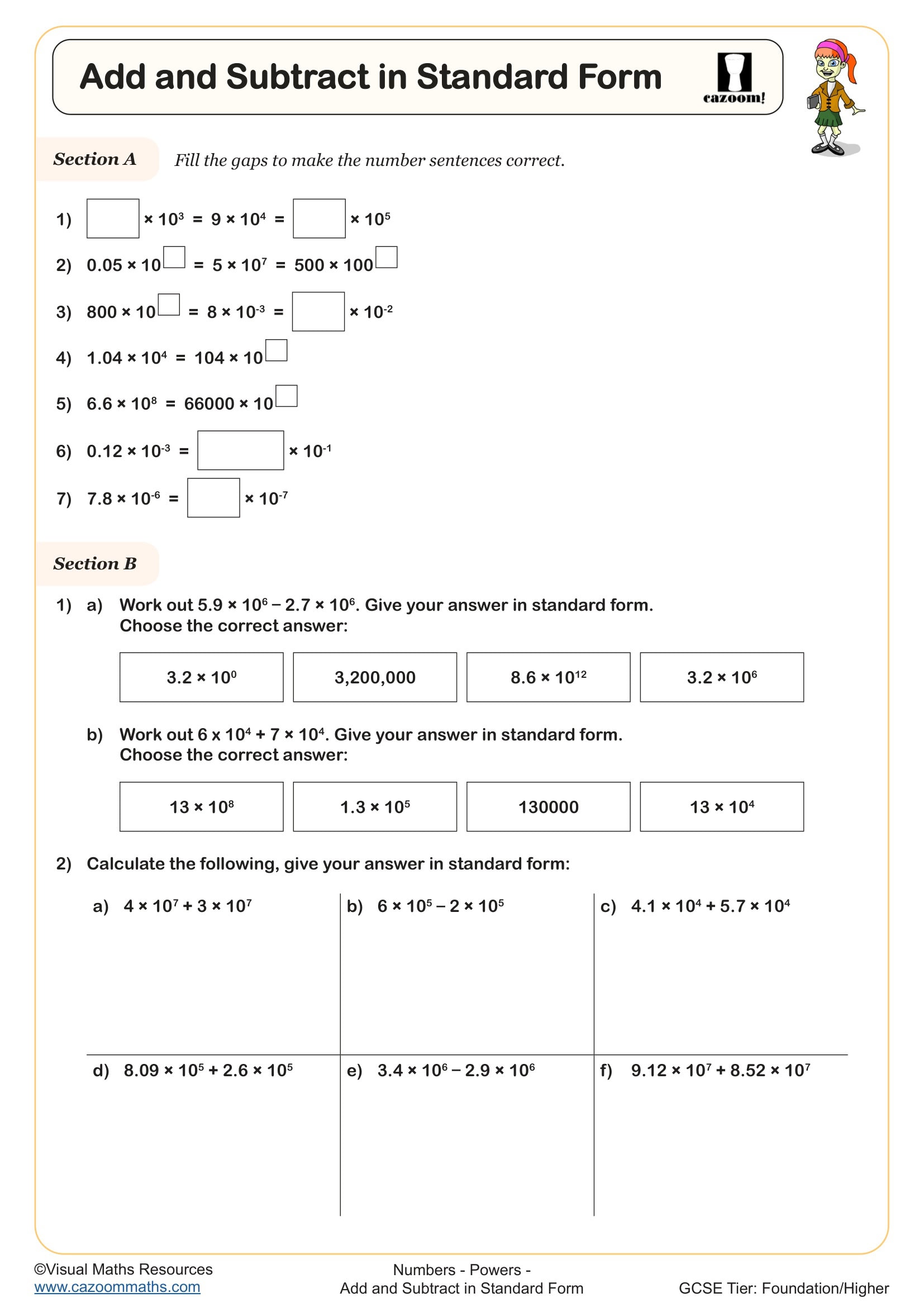
Add and Subtract in Standard Form
Year groups: 8, 9
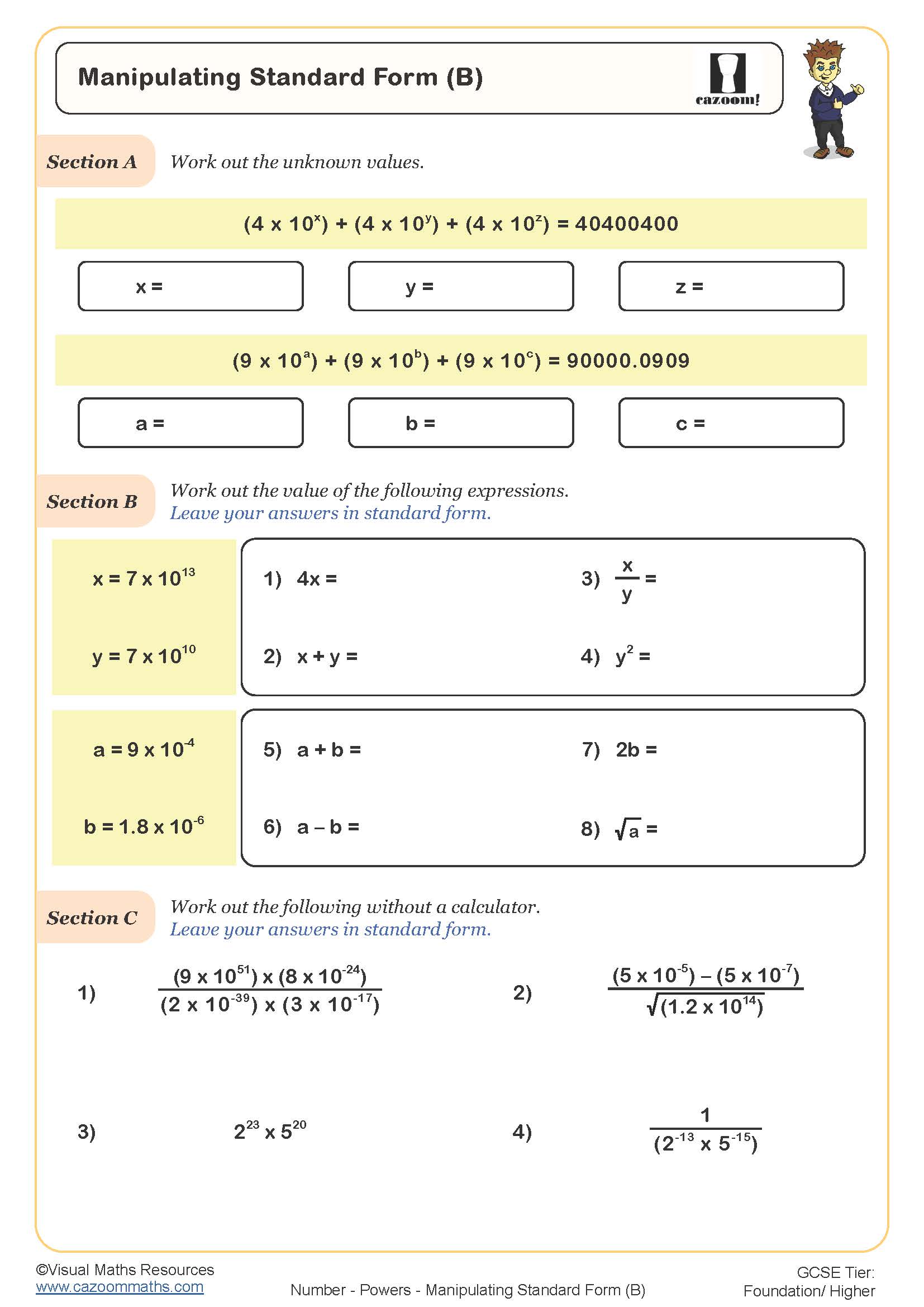
Manipulating Standard Form (B)
Year groups: 8, 9
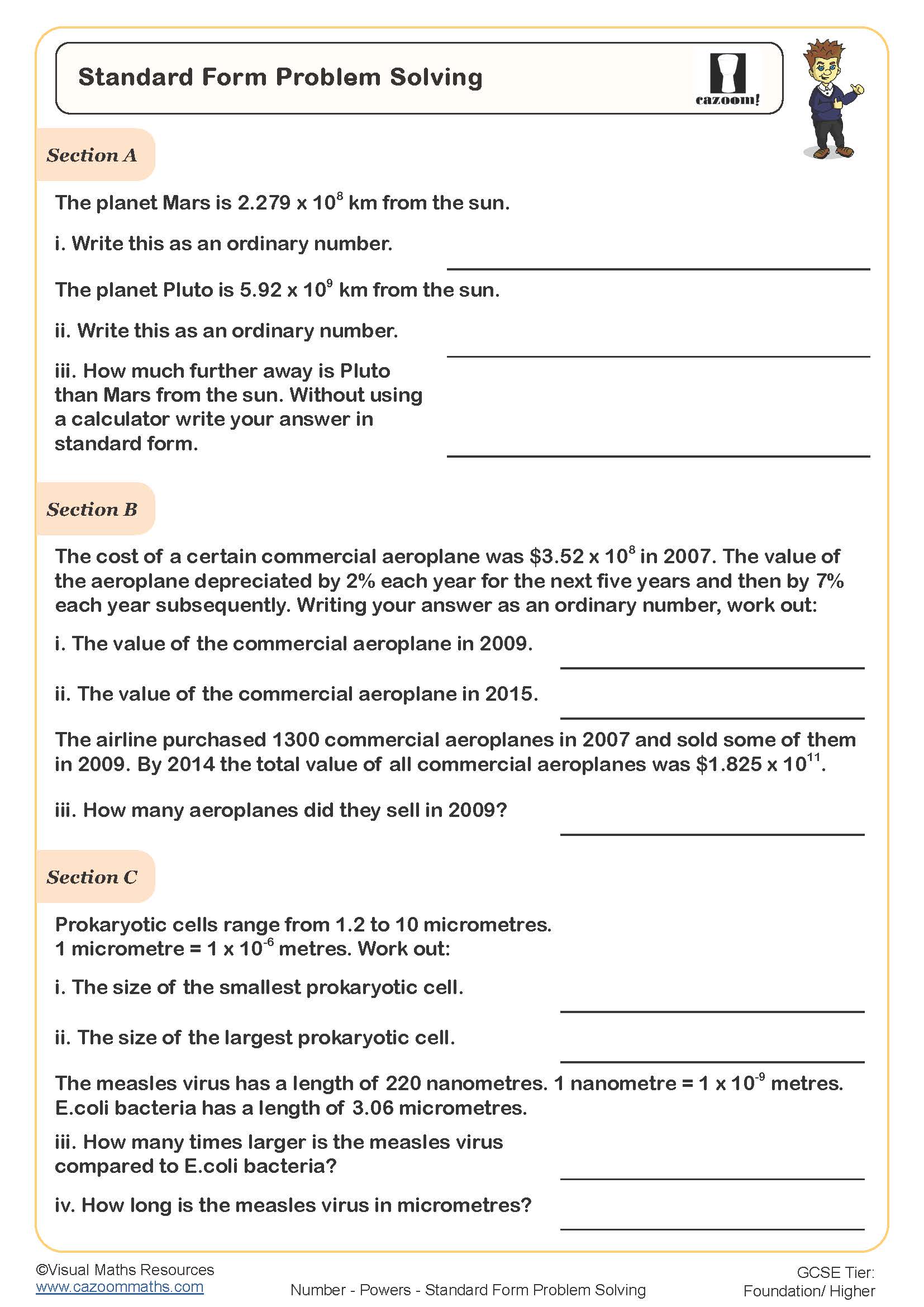
Standard Form Problem Solving
Year groups: 8, 9
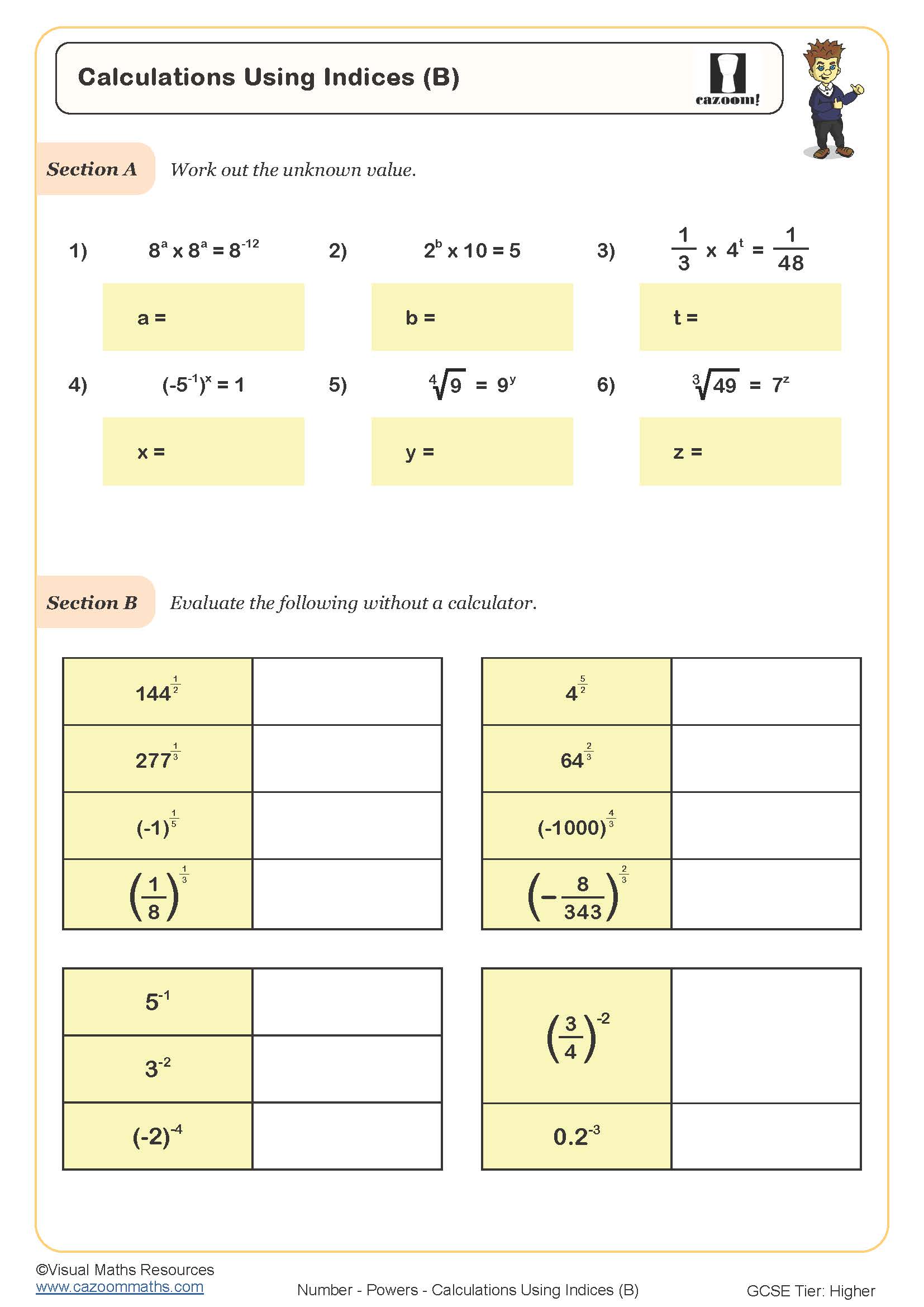
Calculations Using Indices (B)
Year groups: 9, 10
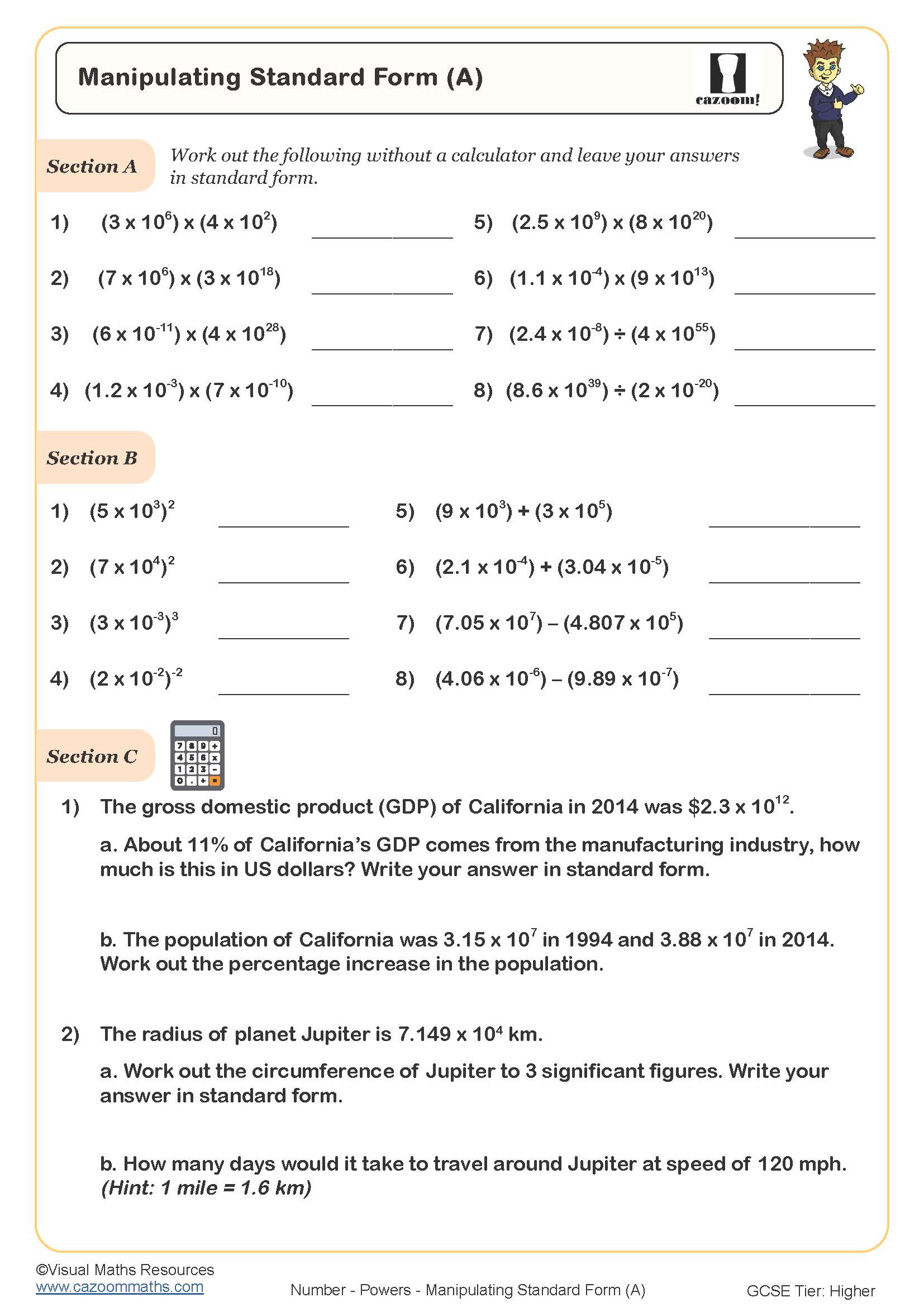
Manipulating Standard Form (A)
Year groups: 9, 10
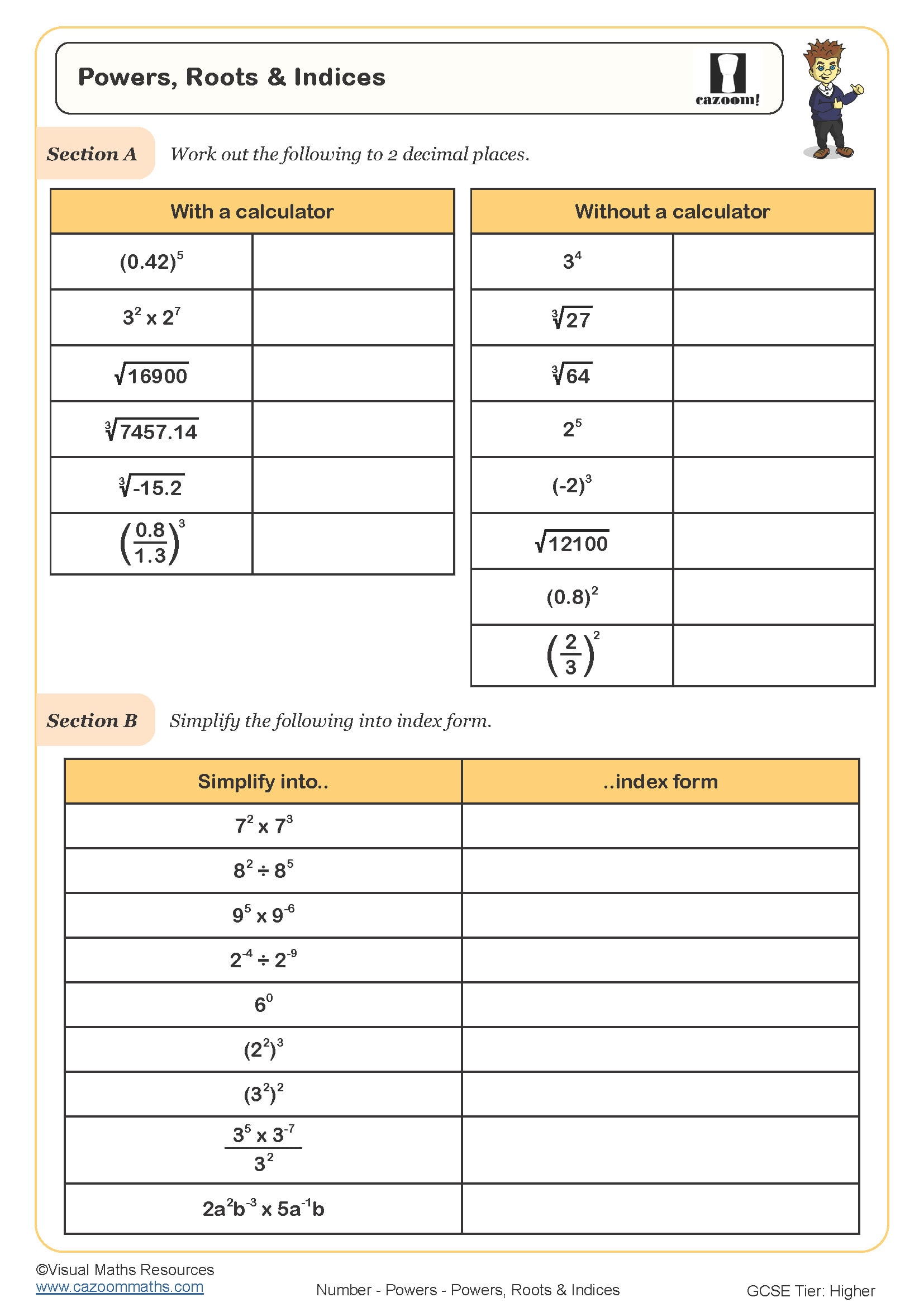
Powers, Roots and Indices
Year groups: 9, 10
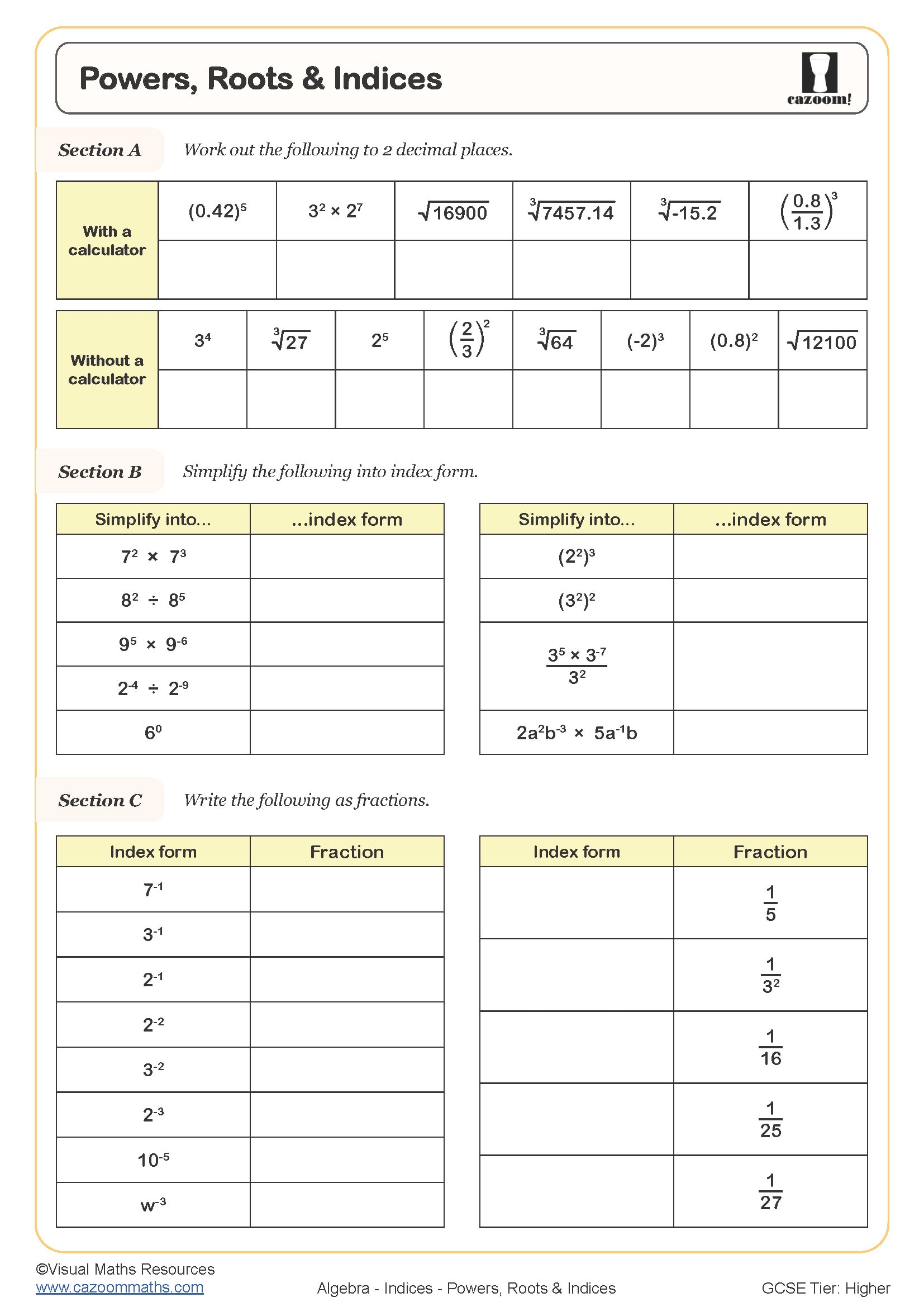
Powers, Roots and Indices
Year groups: 10, 11
All worksheets are created by the team of experienced teachers at Cazoom Maths.
What makes a good powers and roots worksheet for KS3 and KS4 students?
A quality powers worksheet balances computational practice with conceptual understanding, starting with familiar square and cube numbers before introducing index notation systematically. The best resources include varied question types that progress from evaluating simple expressions to applying index laws in algebraic contexts, matching the demands of both KS3 National Curriculum objectives and GCSE specifications.
Teachers notice that students often confuse the operations when working with roots, particularly writing √16 = 4² instead of √16 = 4. Effective worksheets address this by including clear visual representations and requiring students to verify their answers using inverse operations, helping them recognise the relationship between powers and their corresponding roots.
Which year groups should use powers and roots worksheets?
Powers and roots work typically begins in Year 7 with square numbers and basic index notation, then develops through Year 8 and Year 9 to include cube roots, fractional indices, and negative powers. By Year 10 and Year 11, students apply these concepts to solve equations and manipulate algebraic expressions involving indices, particularly in preparation for GCSE examinations.
The progression requires careful scaffolding, as teachers observe that students who rush through basic square and cube work often struggle with more advanced index laws later. Year 7 pupils benefit from concrete examples and practical contexts, whilst older students need practice connecting index notation to scientific notation and exponential growth models used across STEM subjects.
How do students typically struggle with negative and fractional indices?
Students frequently treat negative indices as negative answers rather than reciprocals, writing 2⁻³ = -8 instead of 2⁻³ = 1/8. Similarly, fractional indices often confuse pupils who haven't grasped that the denominator indicates the type of root and the numerator represents the power being applied to the result of that root operation.
Classroom experience shows that visual methods work well here, particularly using factor trees to demonstrate why 8^(1/3) equals 2, or using area models to show how 9^(1/2) relates to square roots. Students need extensive practice converting between radical notation and index form before attempting more complex calculations involving these concepts in algebraic manipulation.
How can teachers use these worksheets most effectively in lessons?
Many teachers find that starting each lesson with a few mental calculations involving perfect squares and cubes helps students build confidence before tackling worksheet questions. The answer sheets prove invaluable for peer marking activities, allowing students to identify their errors immediately and discuss common misconceptions as a class rather than waiting for teacher feedback.
Using worksheets as homework tasks works particularly well when students can access the answers for self-checking, though teachers often notice that setting specific questions for different ability groups prevents students from becoming overwhelmed by unfamiliar notation. Regular low-stakes testing using worksheet questions helps identify which students need additional support before moving on to applications involving surds or exponential functions.