KS3 and KS4 Proportion Worksheets
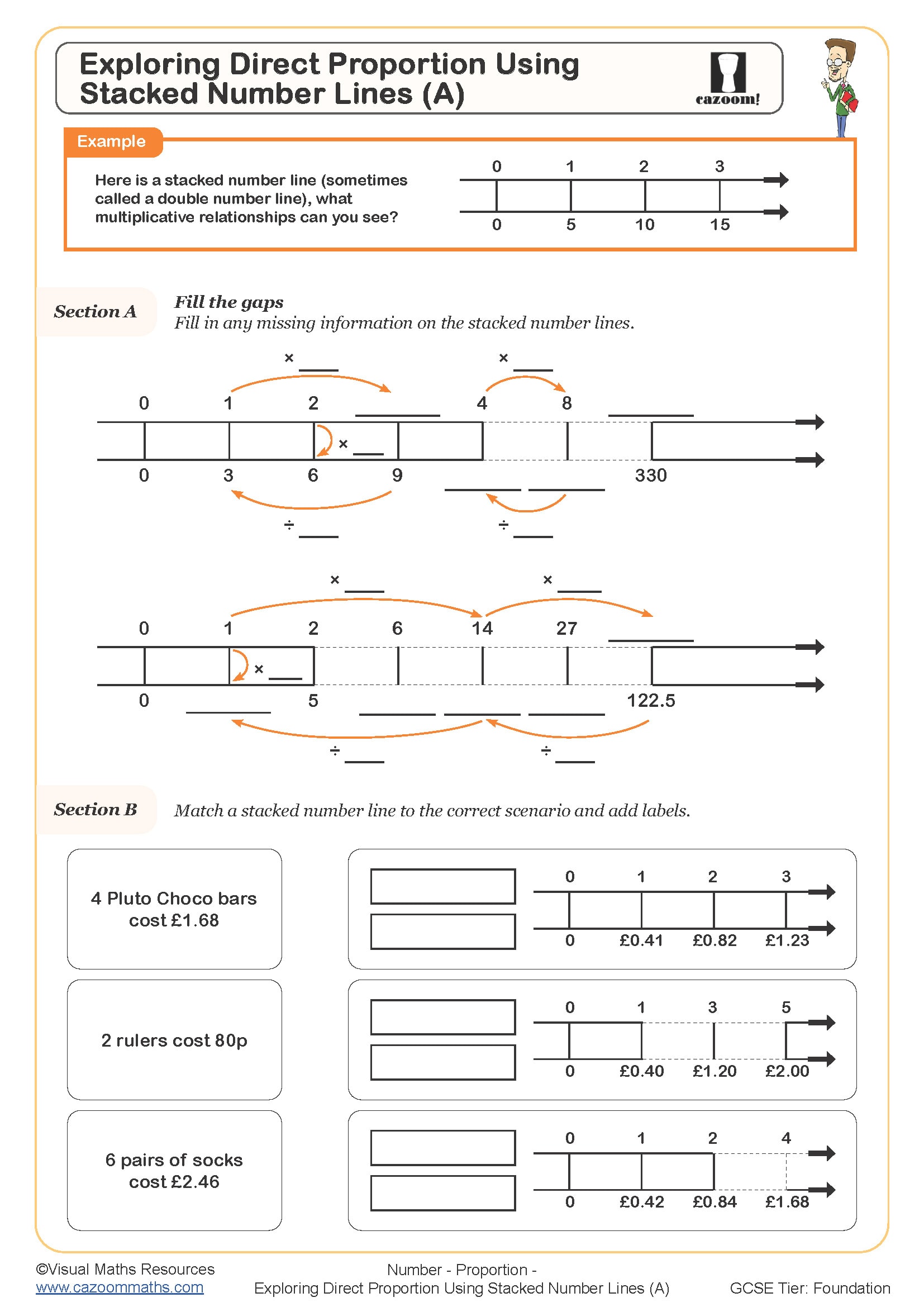
Exploring Direct Proportion Using Stacked Number Lines (A)
Year groups: 7, 8
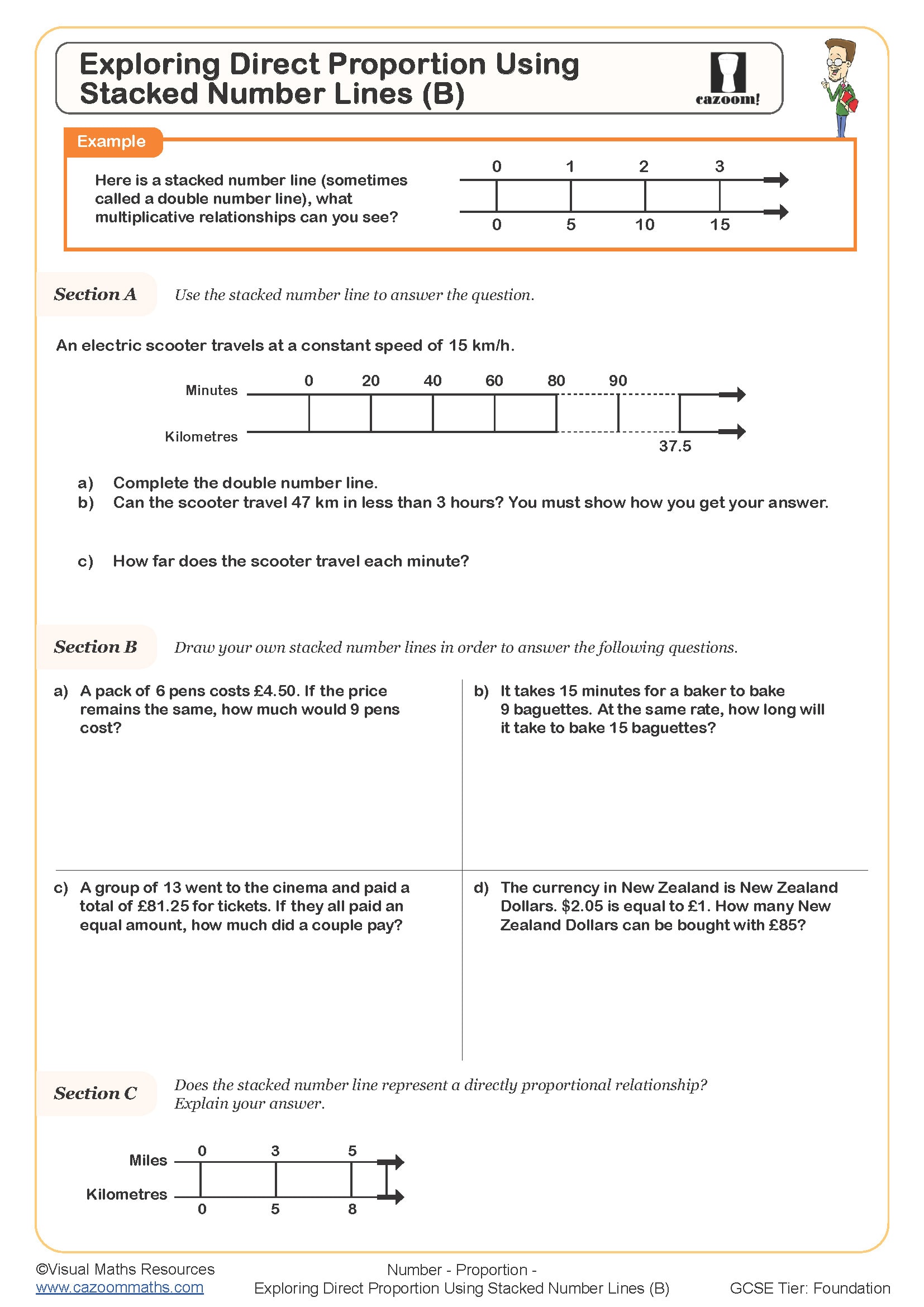
Exploring Direct Proportion Using Stacked Number Lines (B)
Year groups: 7, 8
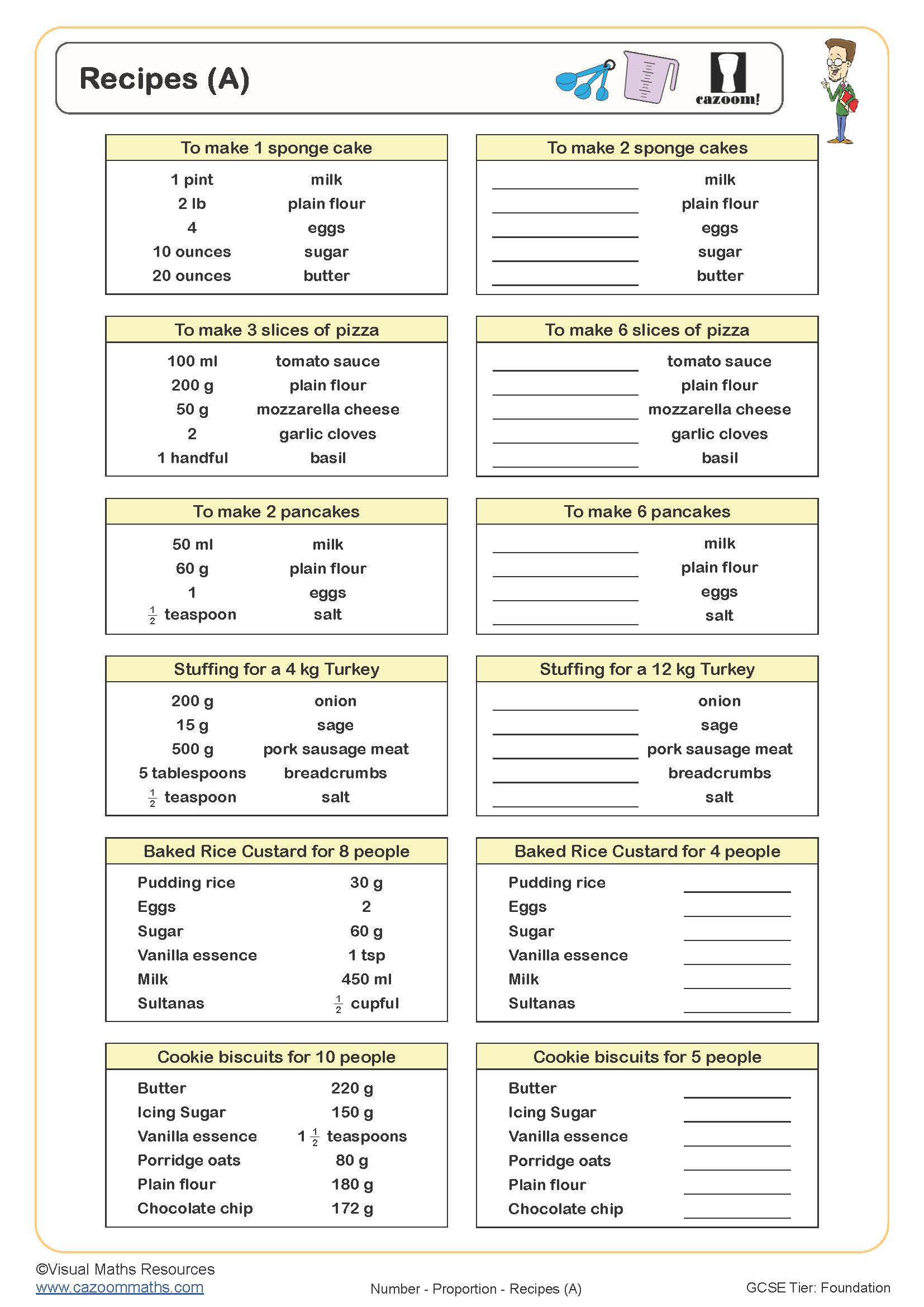
Recipes (A)
Year groups: 7, 8
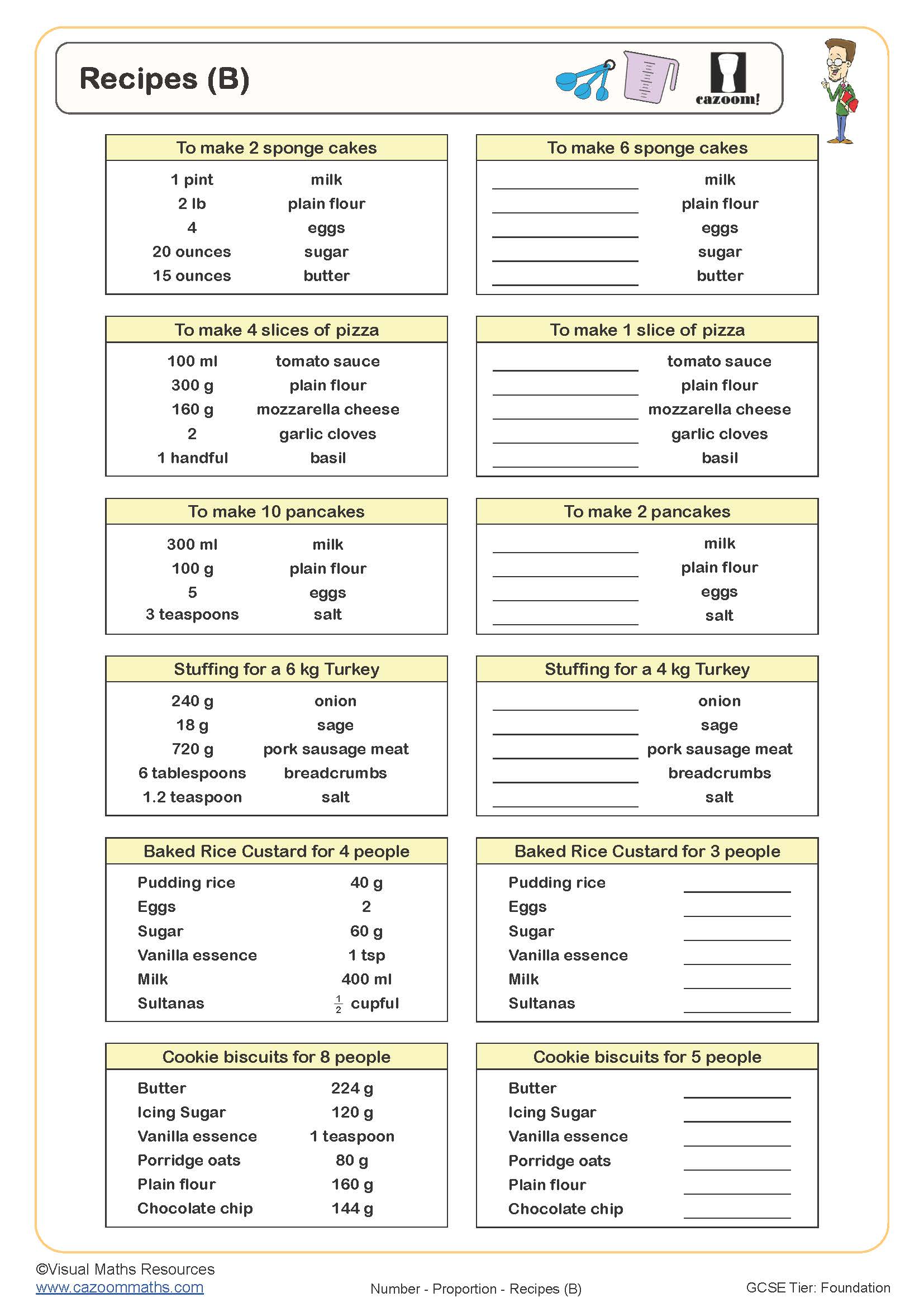
Recipes (B)
Year groups: 7, 8
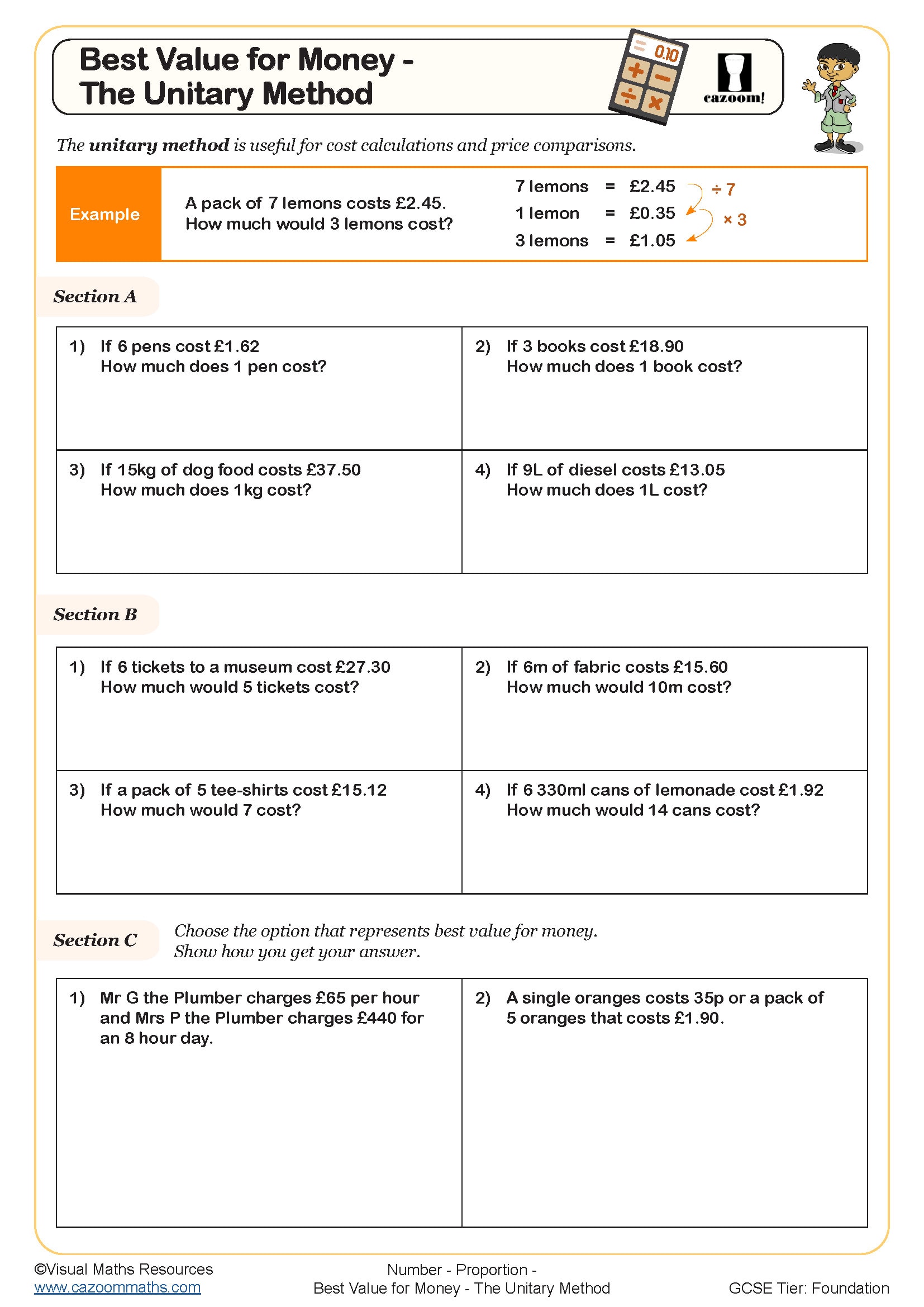
Best Value for Money - the Unitary Method
Year groups: 8, 9
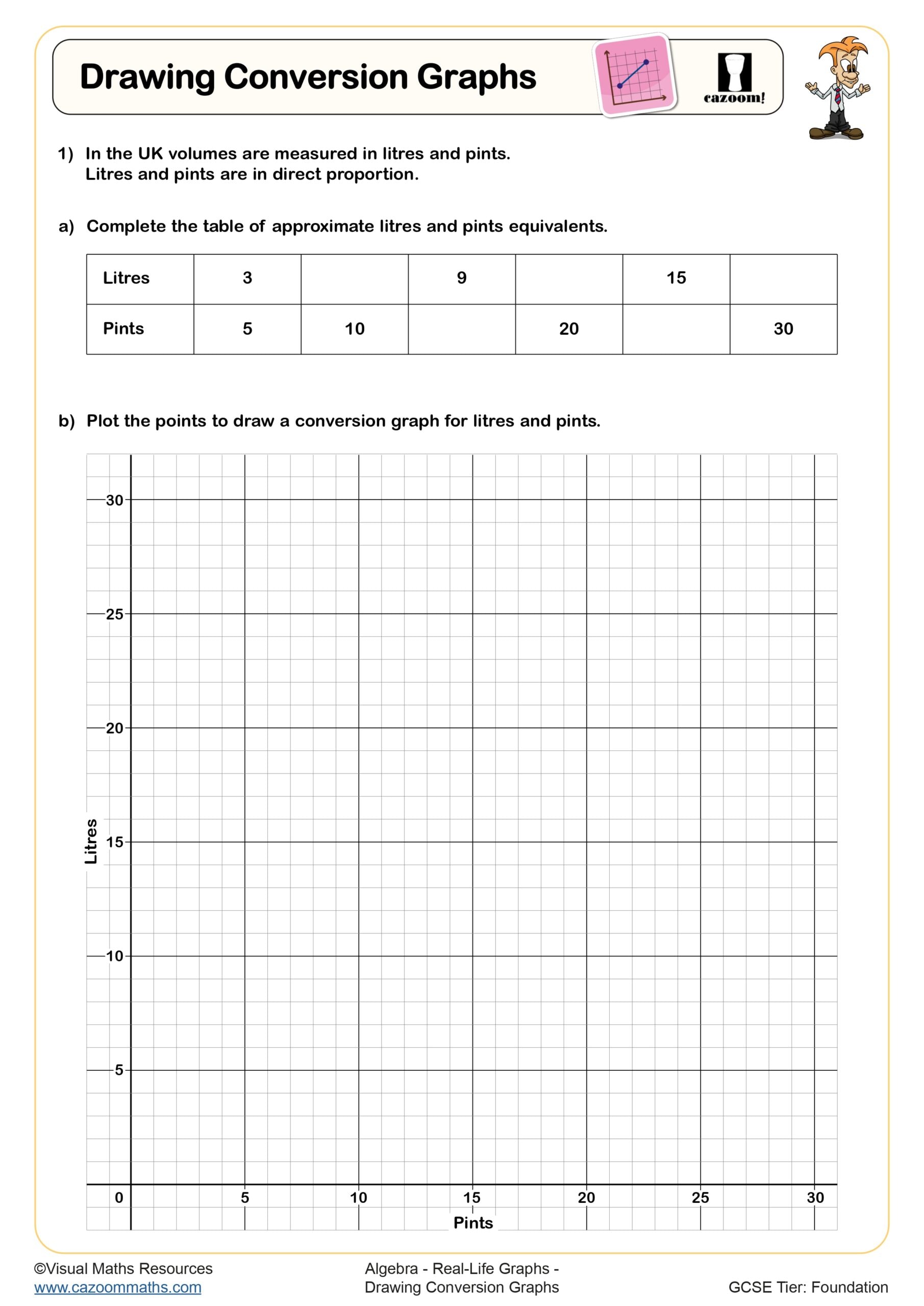
Drawing Conversion Graphs
Year groups: 8, 9
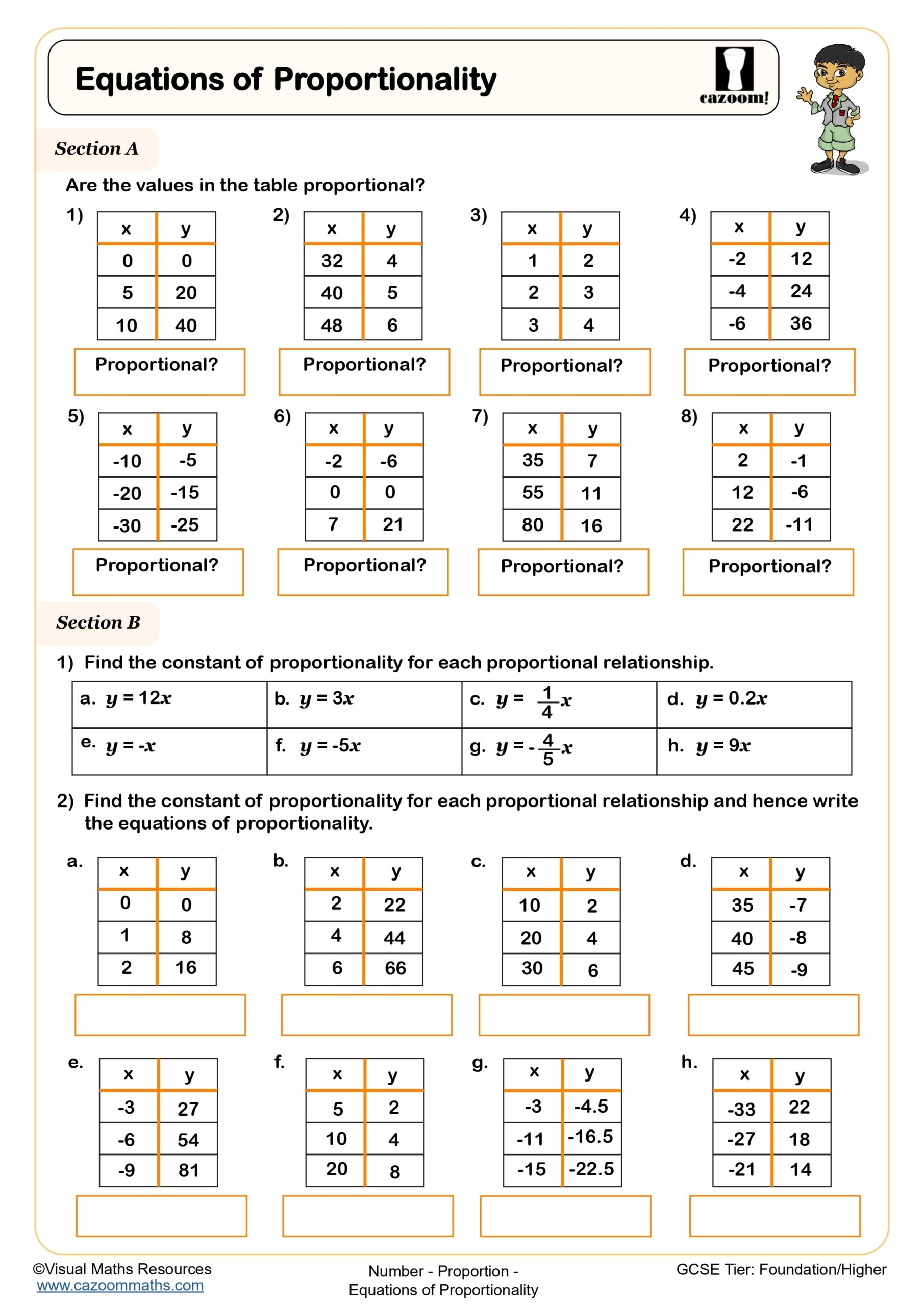
Equations of Proportionality
Year groups: 8, 9
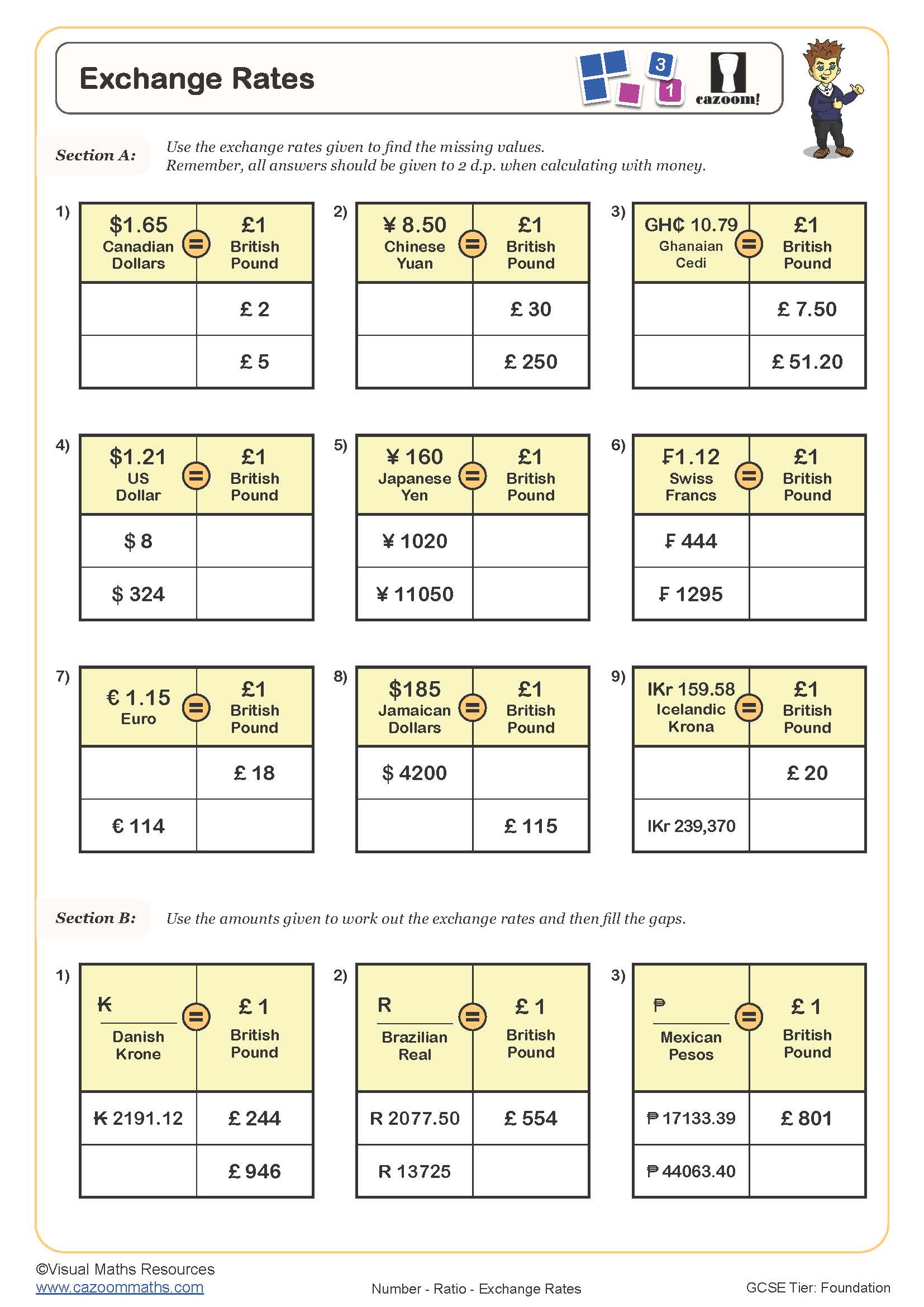
Exchange Rates
Year groups: 8, 9
Recipes (C)
Year groups: 8, 9
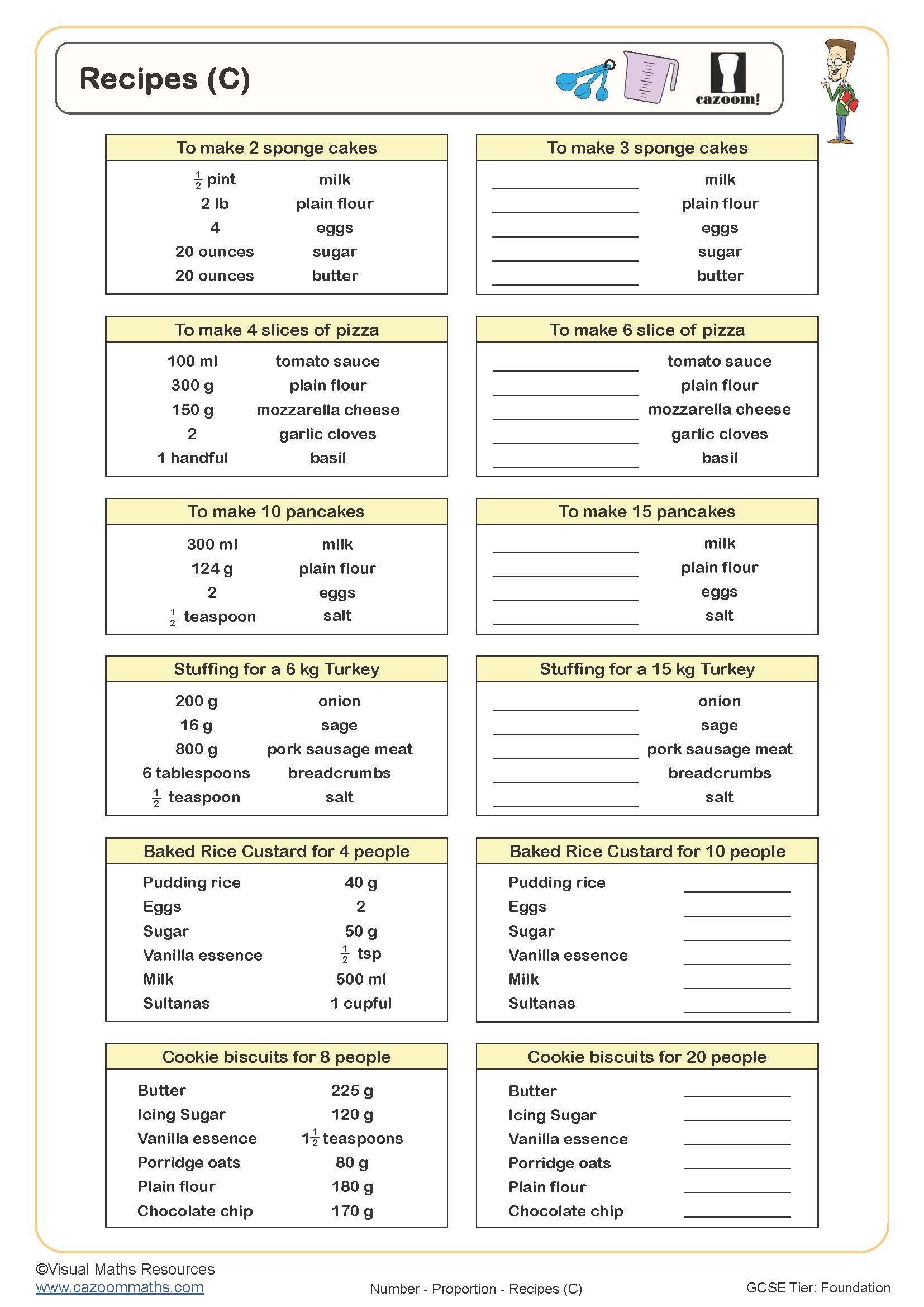
Unit Rates Involving Fractions
Year groups: 8, 9
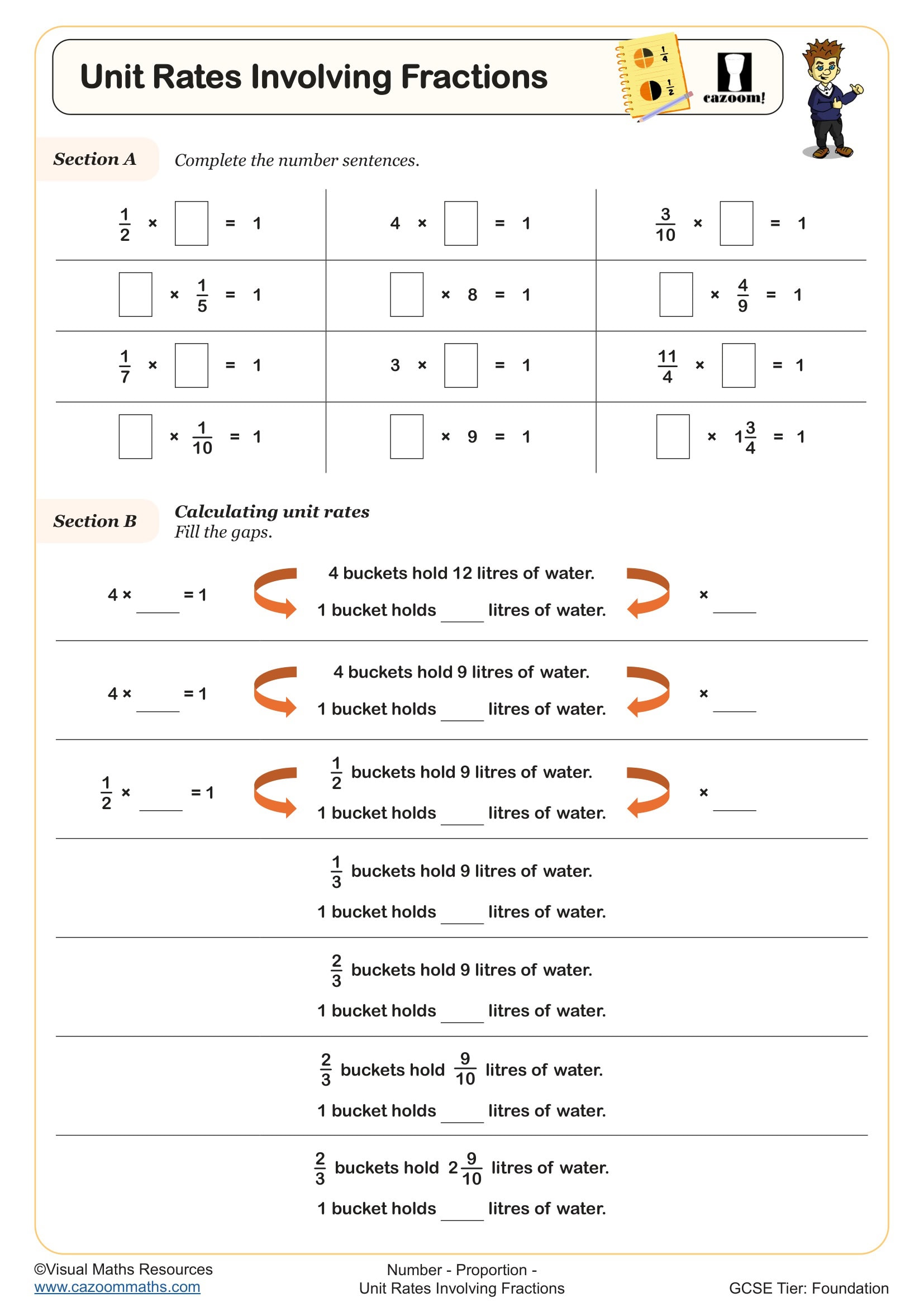
Using Conversion Graphs
Year groups: 8, 9
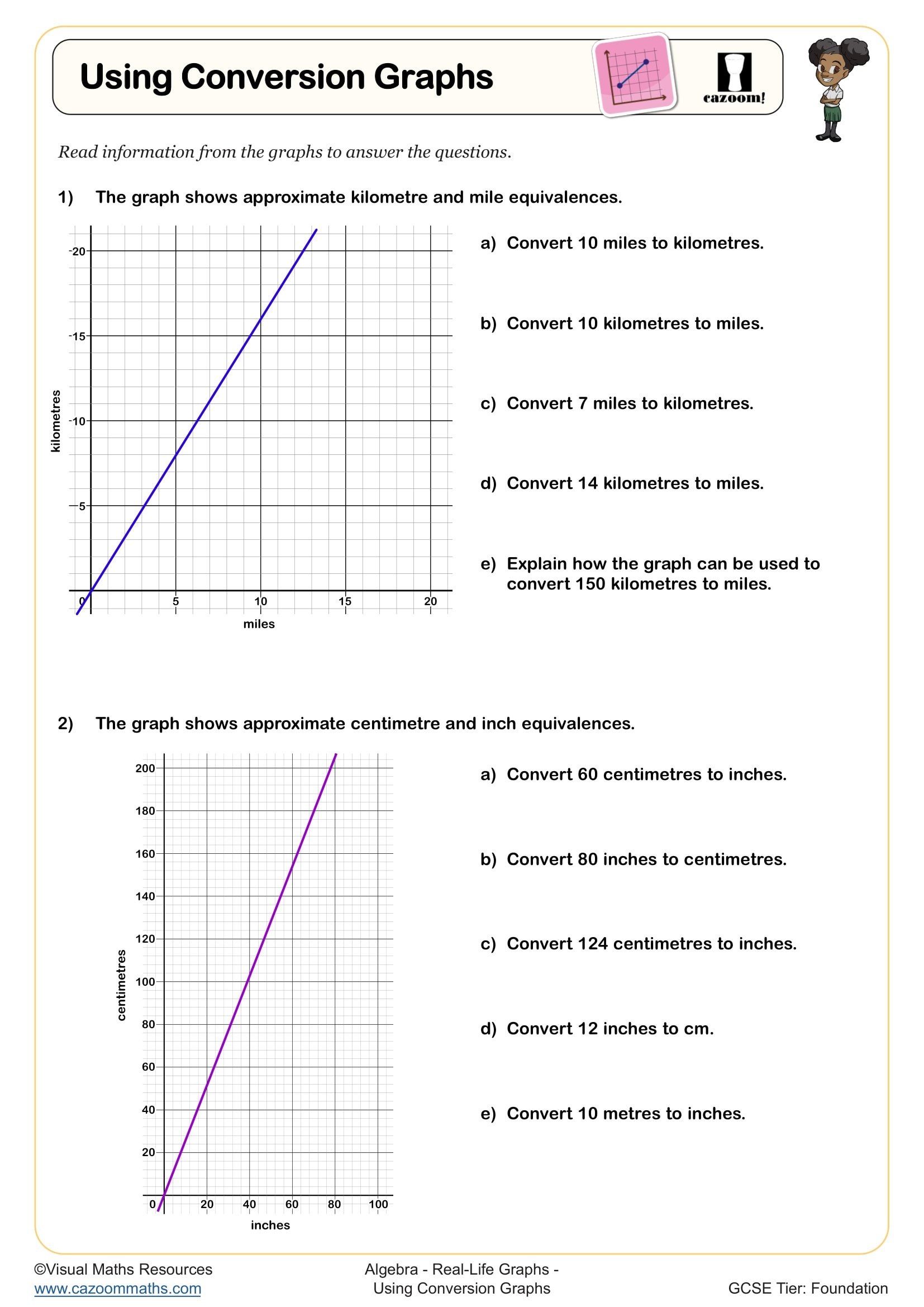
Charge Graphs (A) - Drawing and Interpreting
Year groups: 9, 10
Charge Graphs (B) - Equations
Year groups: 9, 10
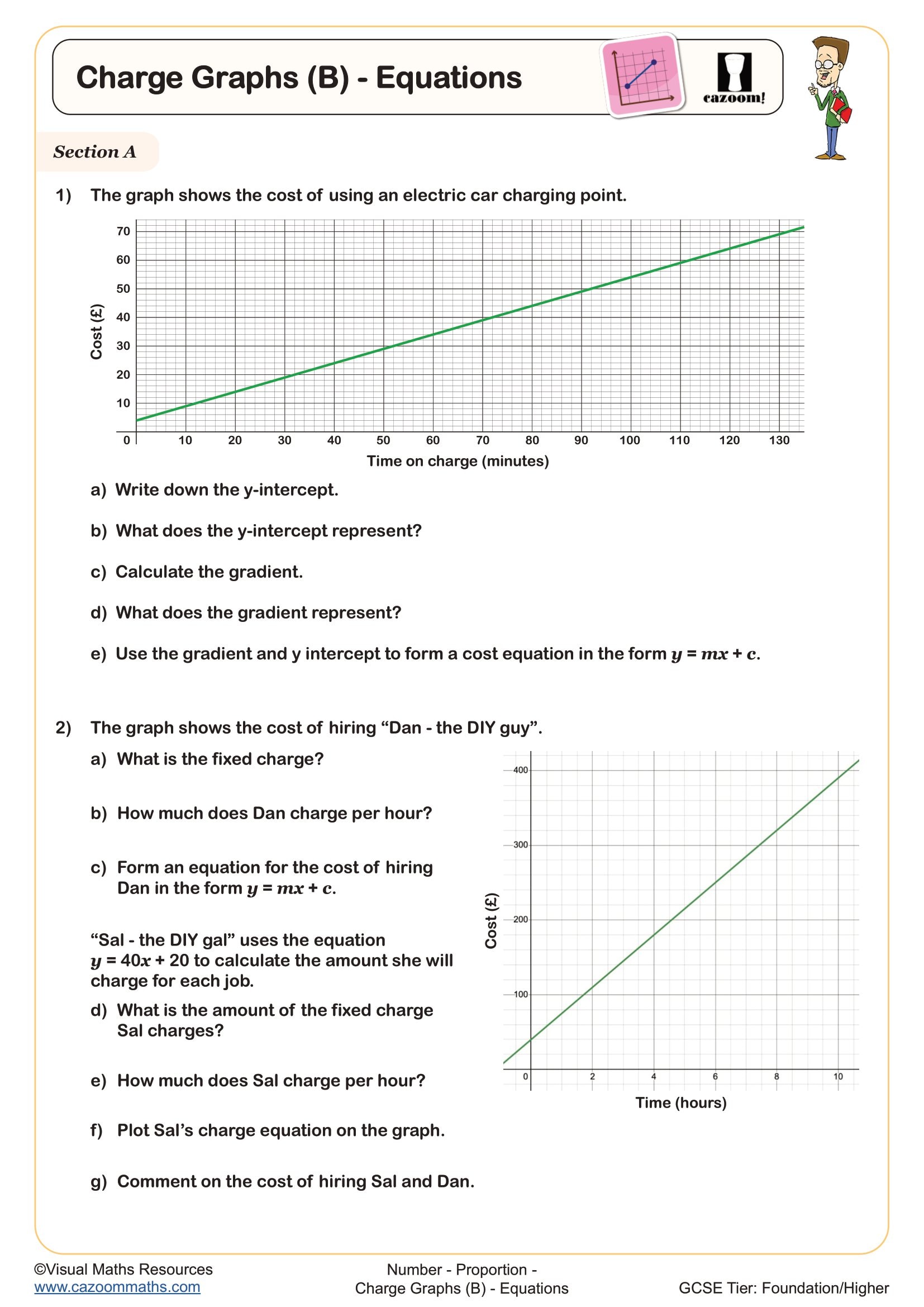
Direct Proportion A
Year groups: 9, 10, 11
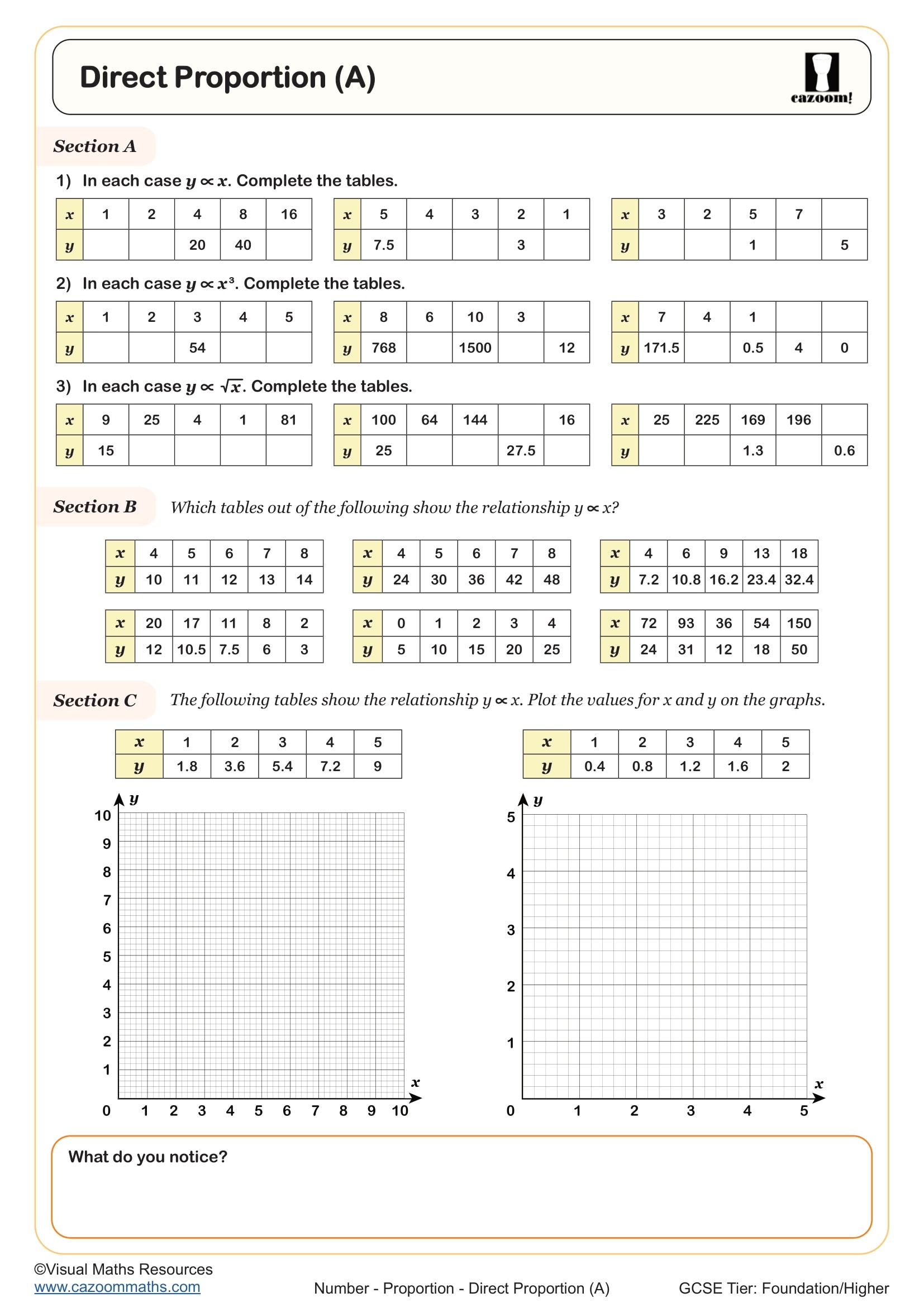
Factory and Worker Proportion Problems
Year groups: 9, 10
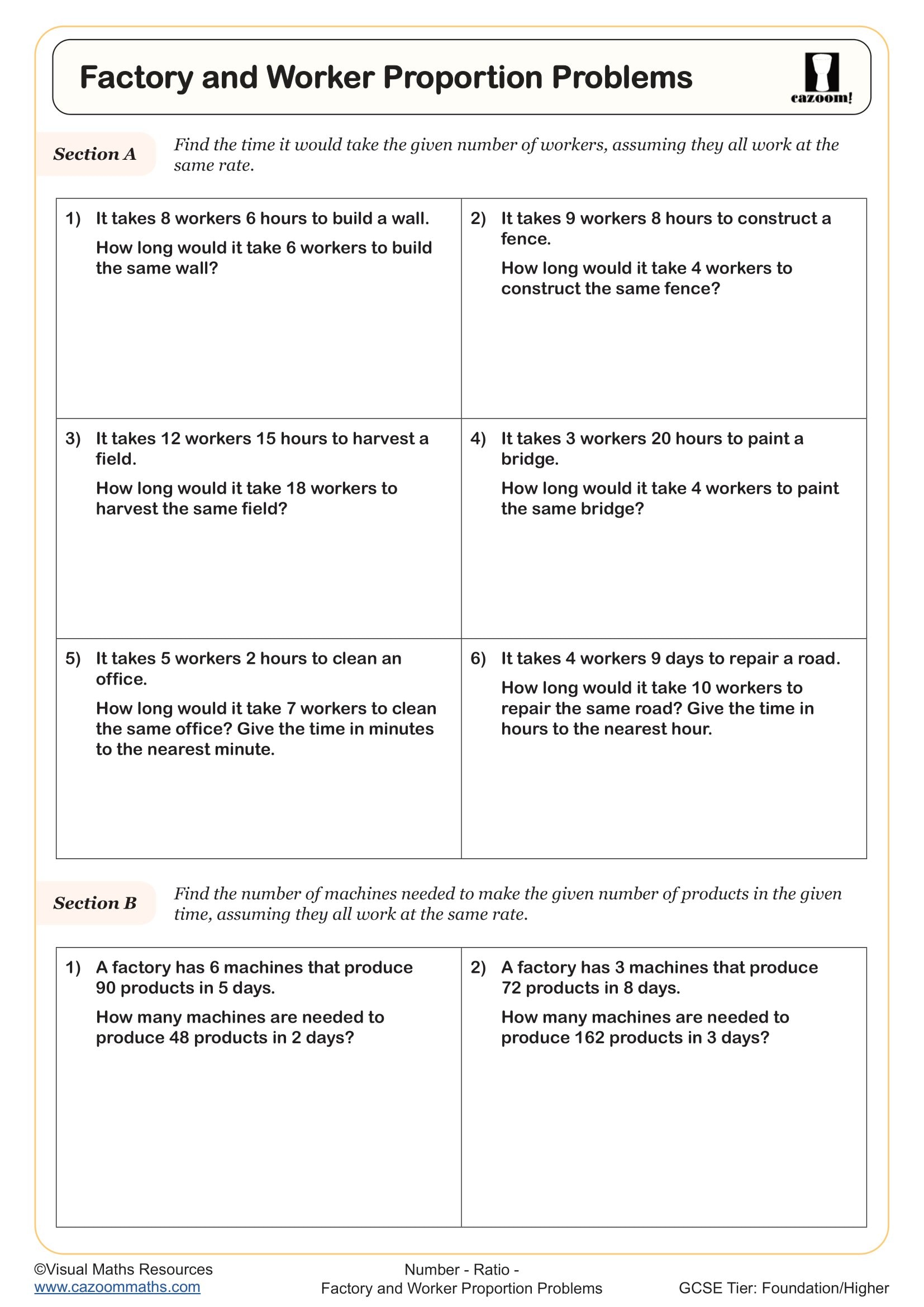
Direct Proportion B
Year groups: 10, 11
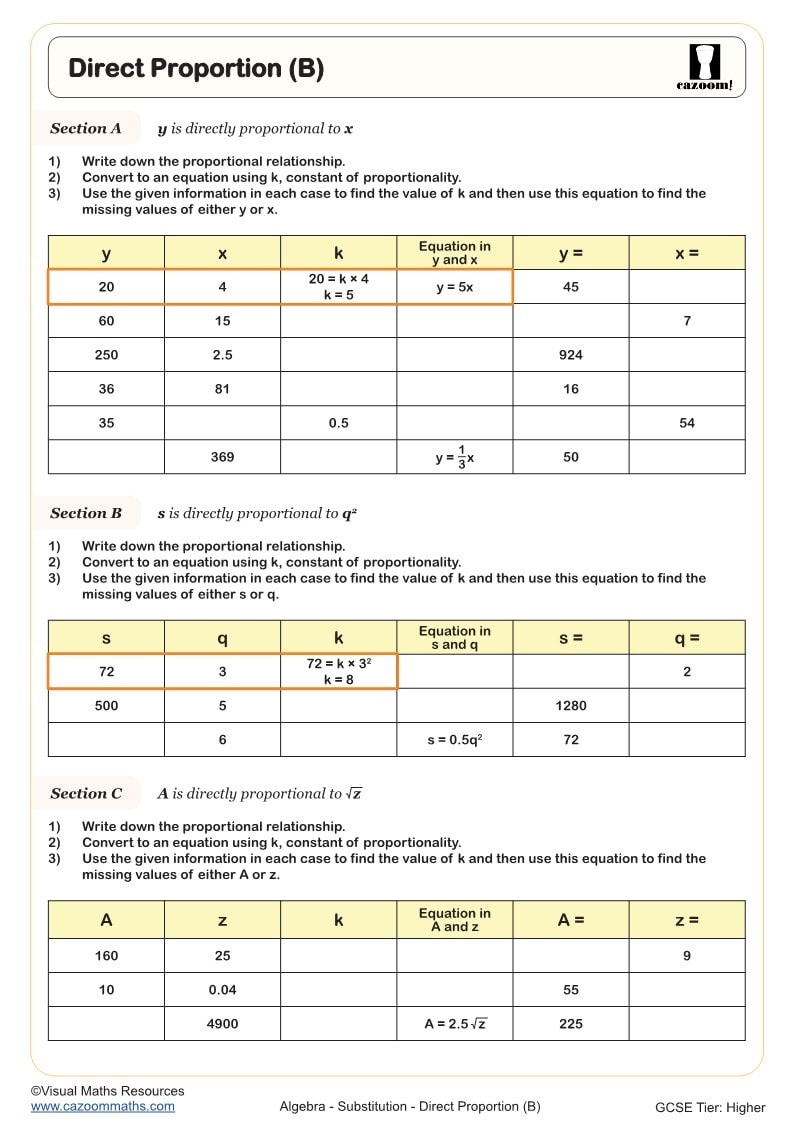
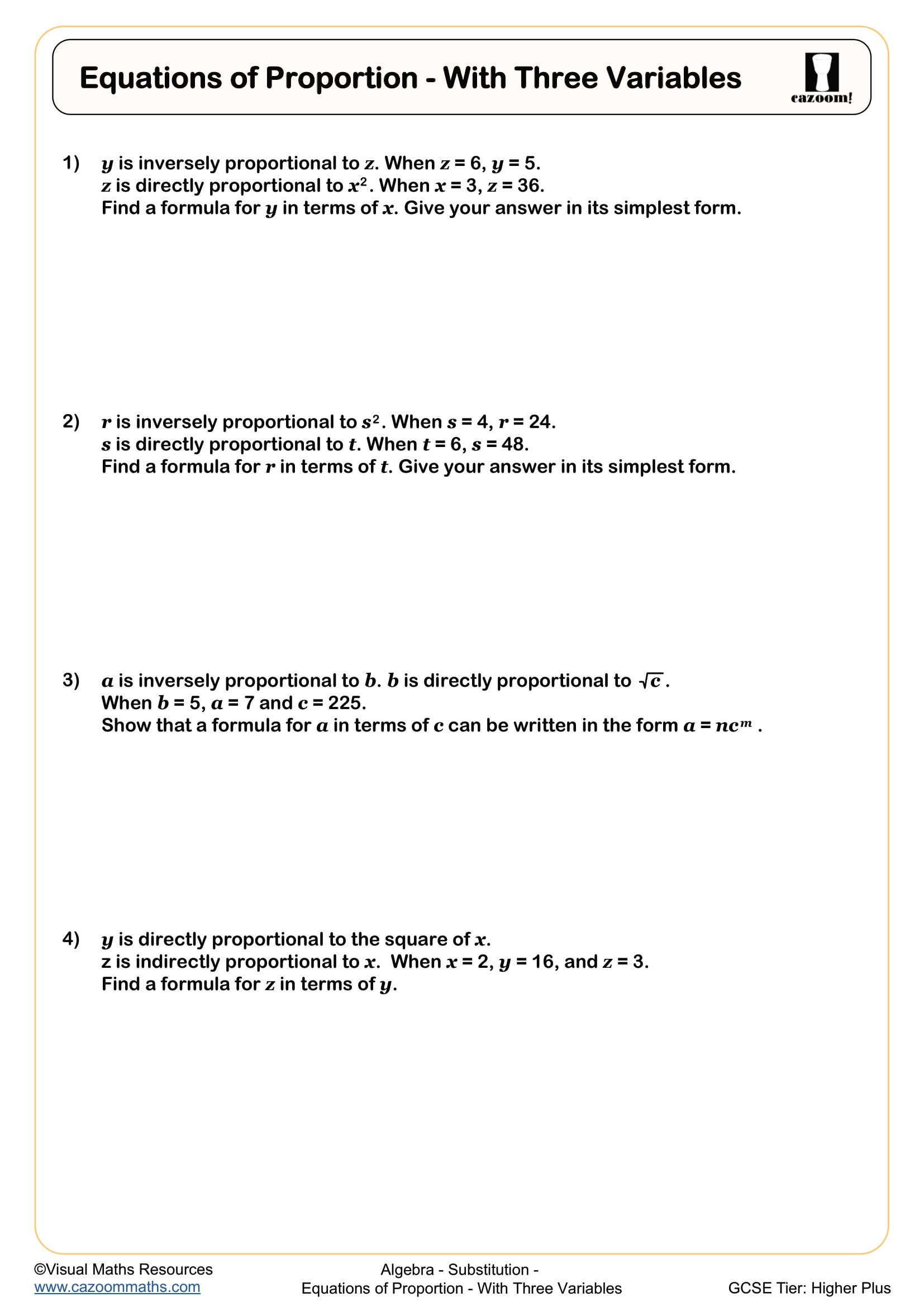
Equations of Proportion - with Three Variables
Year groups: 10, 11
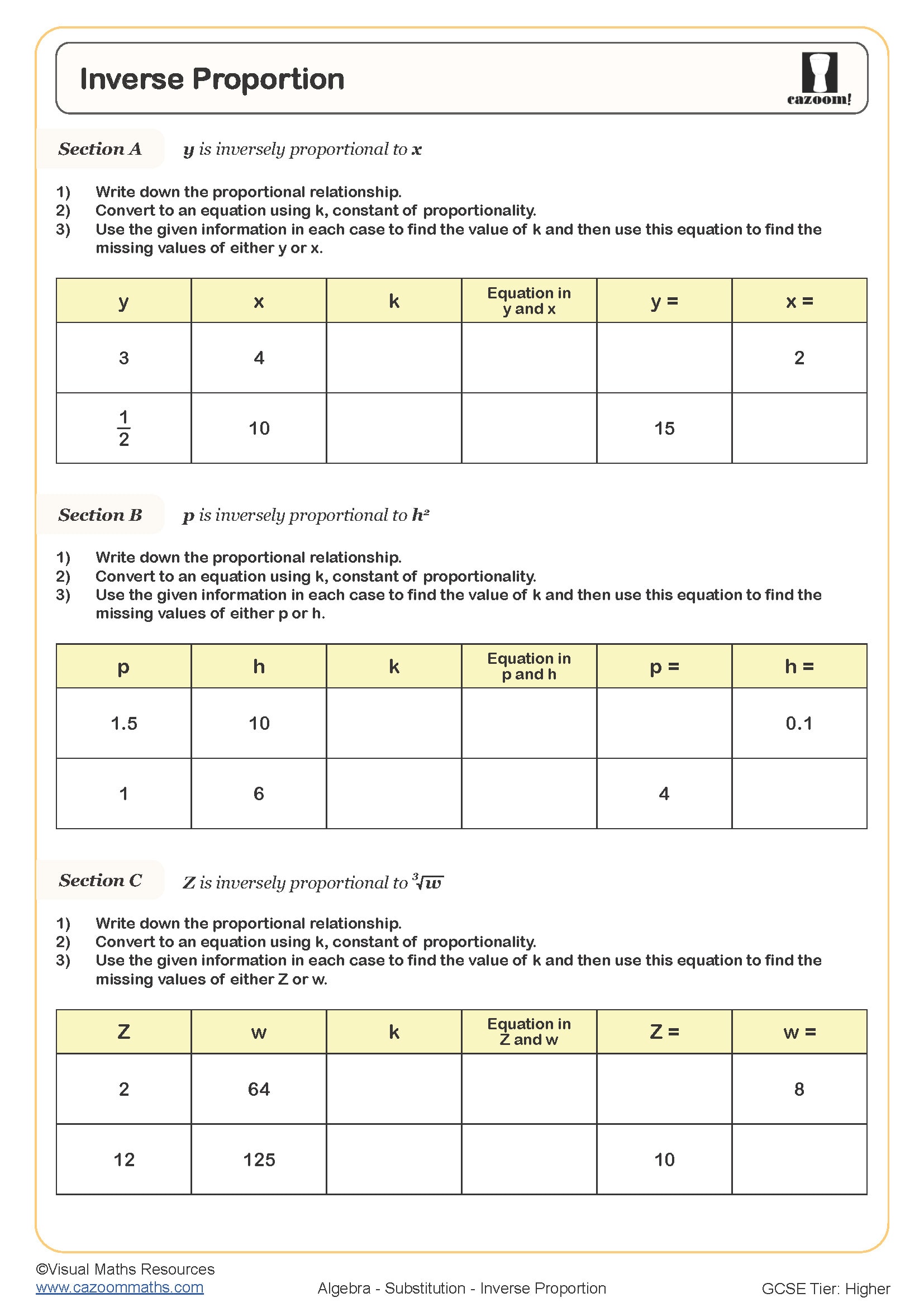
Inverse Proportion
Year groups: 10, 11
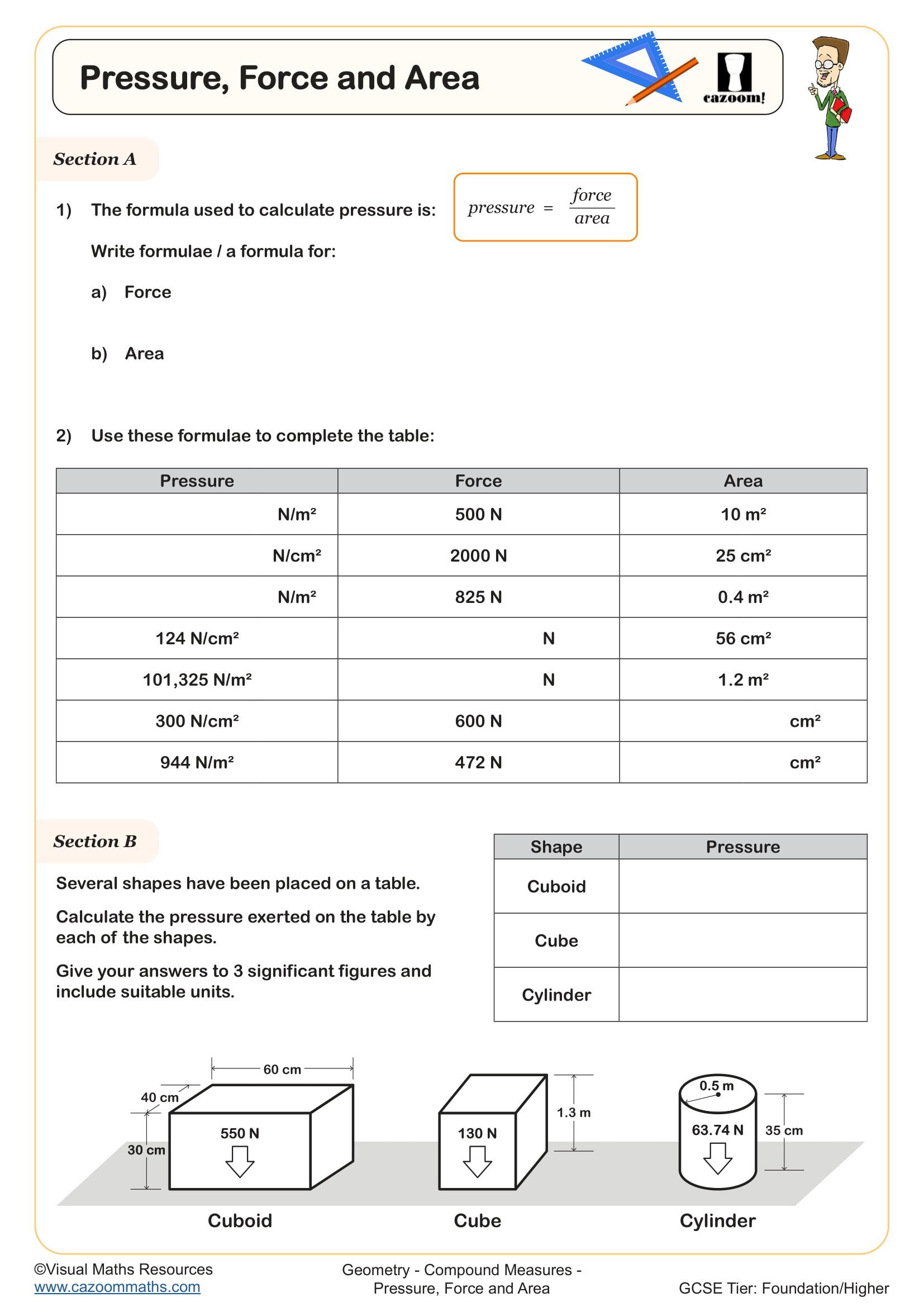
Pressure, Force and Area
Year groups: 10, 11
All worksheets are created by the team of experienced teachers at Cazoom Maths.
What makes an effective direct proportion worksheet?
An effective direct proportion worksheet pdf should present clear scenarios where two quantities increase or decrease at the same rate. The National Curriculum expects KS3 students to recognise proportional relationships in tables, graphs and algebraic expressions, while GCSE students must solve complex proportion problems across different contexts including best buys and currency conversion.
Teachers find that students often confuse direct proportion with simple multiplication, missing the constant ratio relationship. Quality worksheets include visual representations like graphs showing straight lines through the origin, helping students recognise the y = kx structure that underpins all direct proportion calculations.
Which year groups should use proportion worksheets?
Proportion work typically begins in Year 7 with simple ratio problems, progressing through Year 8 and 9 to more complex applications. By Year 10 and 11, students tackle GCSE-level proportion questions involving compound measures, percentage changes, and scientific contexts where understanding proportional relationships becomes crucial for physics and chemistry calculations.
The progression moves from basic 1:2 ratios to algebraic proportion where students must find unknown values using cross-multiplication or unitary method. Teachers notice that students who miss the foundational work in Years 7-8 often struggle with the more abstract algebraic approaches required at GCSE level.
How do inverse proportion questions differ from direct proportion?
Inverse proportion occurs when one quantity increases as another decreases, following the relationship xy = k where k remains constant. Unlike direct proportion's straight-line graphs, inverse proportion creates hyperbolic curves that never touch the axes. Students encounter these relationships in speed-time problems, where doubling speed halves journey time.
Mathematics teachers observe that students often apply direct proportion methods to inverse situations, leading to incorrect solutions. Effective worksheets clearly distinguish between the two types, using real contexts like worker productivity or gear ratios to help students identify when quantities move in opposite directions rather than together.
How can teachers use these proportion questions most effectively?
Teachers achieve better results when they begin each lesson with a quick recap of ratio fundamentals before introducing proportion worksheet problems. Starting with concrete examples like recipe scaling helps students grasp the underlying mathematical relationships before moving to abstract algebraic representations that appear in GCSE examinations.
Classroom experience shows that peer discussion works particularly well with proportion problems, as students can explain their reasoning process to each other. Teachers often pair stronger students with those who struggle, using the answer sheets to facilitate meaningful mathematical conversations about different solution methods and checking strategies.