KS3 and KS4 Pythagoras Worksheets
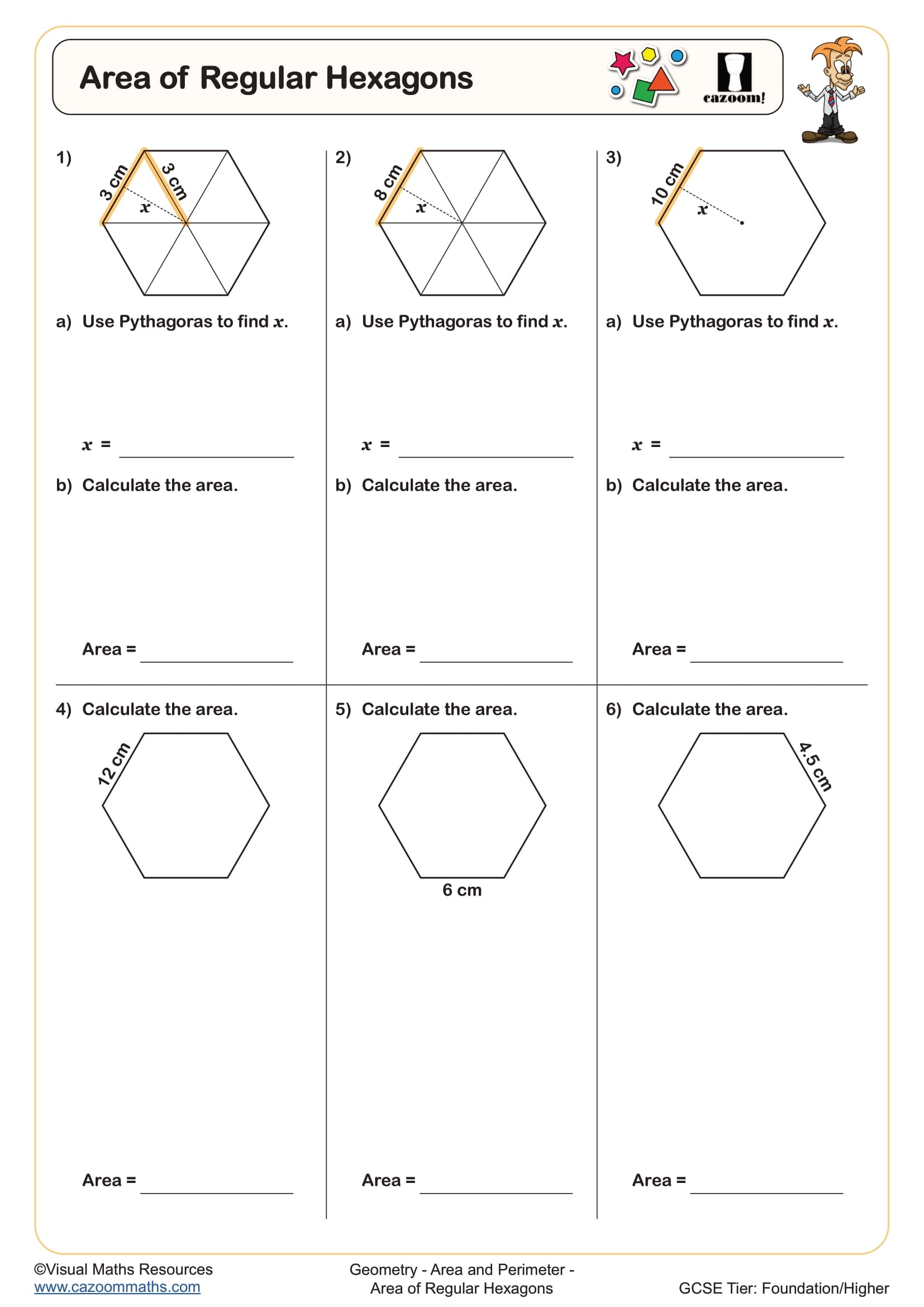
Area of Regular Hexagons
Year groups: 9, 10, 11
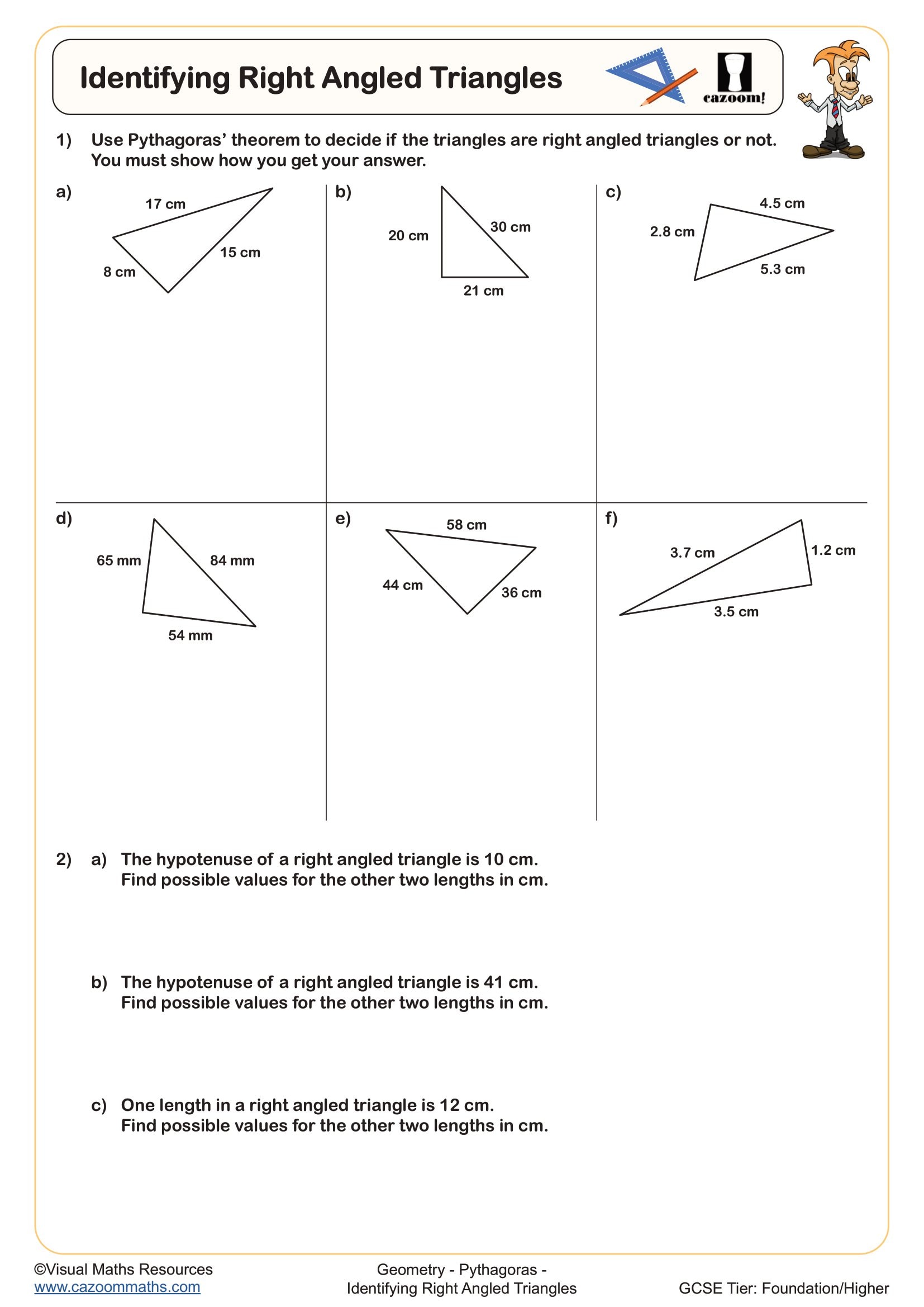
Identifying Right Angled Triangles
Year groups: 9, 10
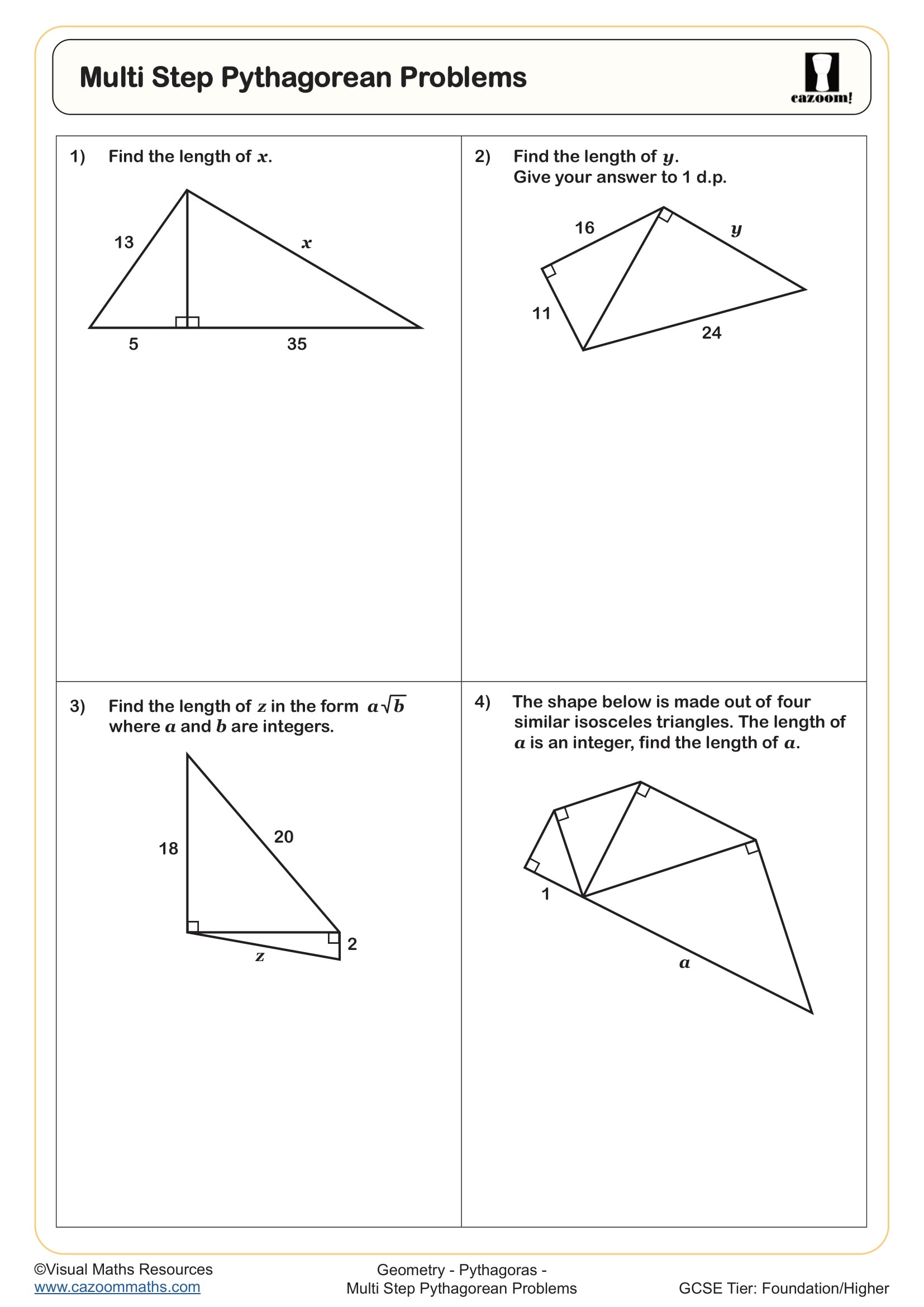
Multi Step Pythagorean Problems
Year groups: 9, 10, 11
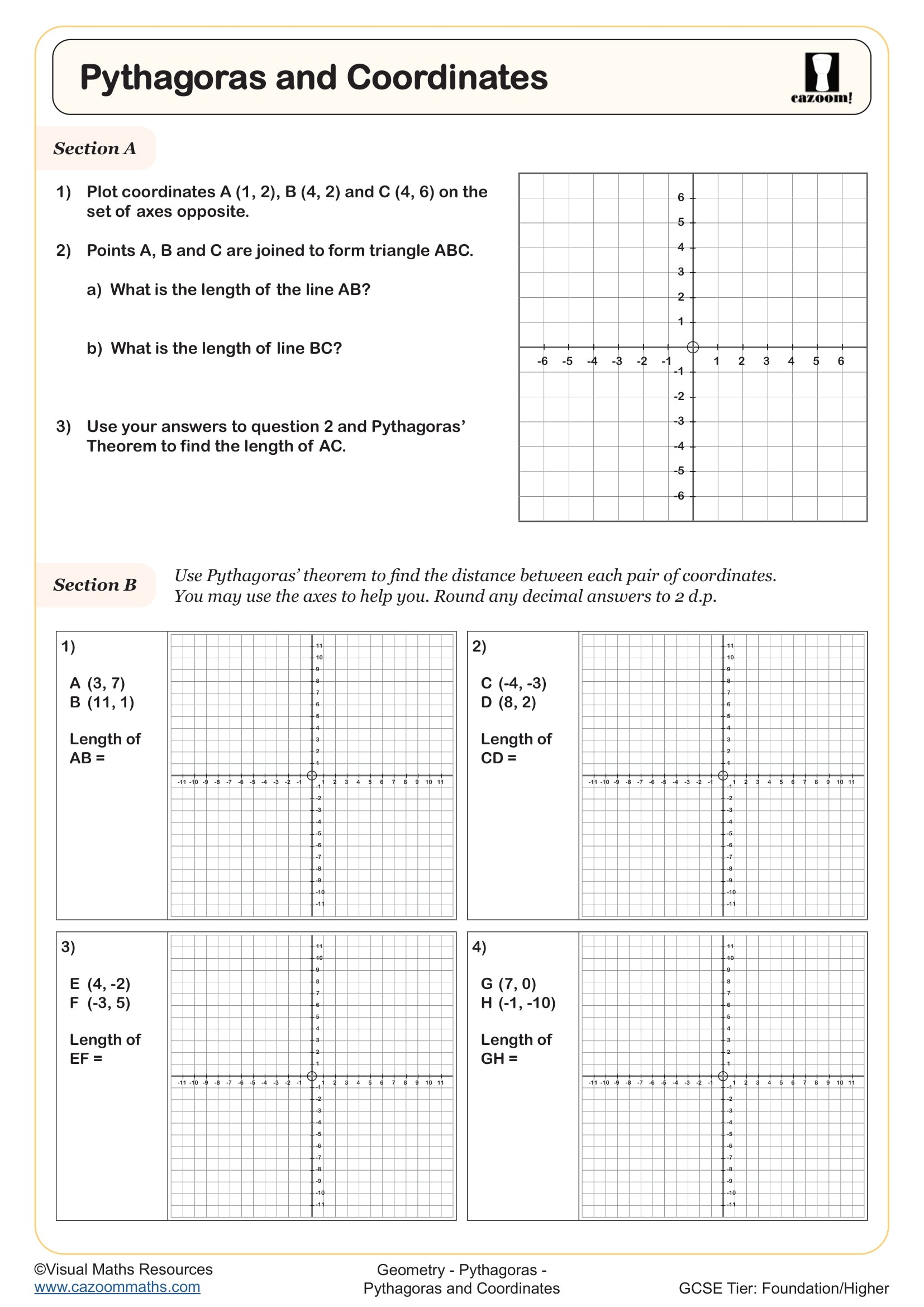
Pythagoras and Coordinates
Year groups: 9, 10
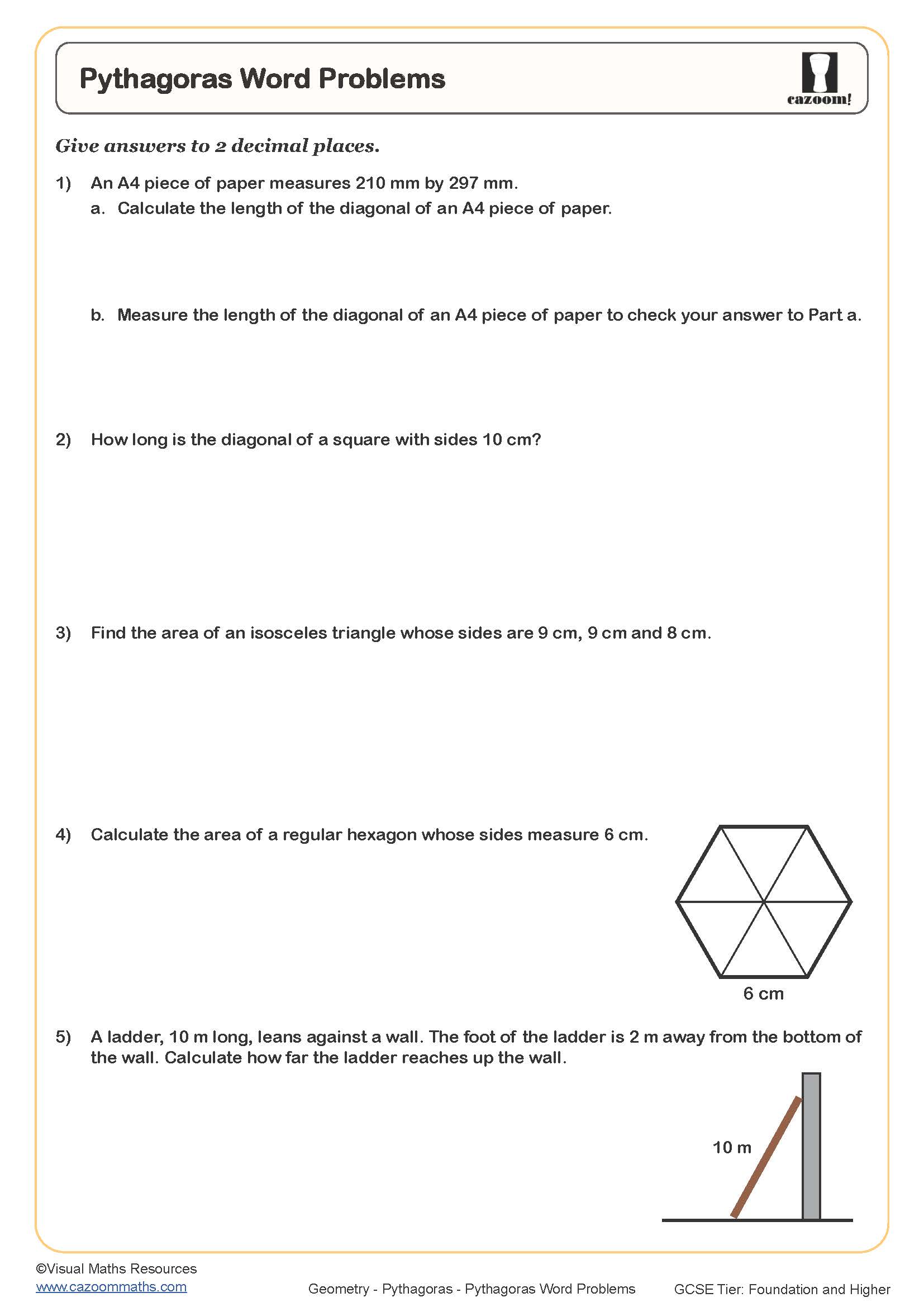
Pythagoras Word Problems
Year groups: 9, 10, 11
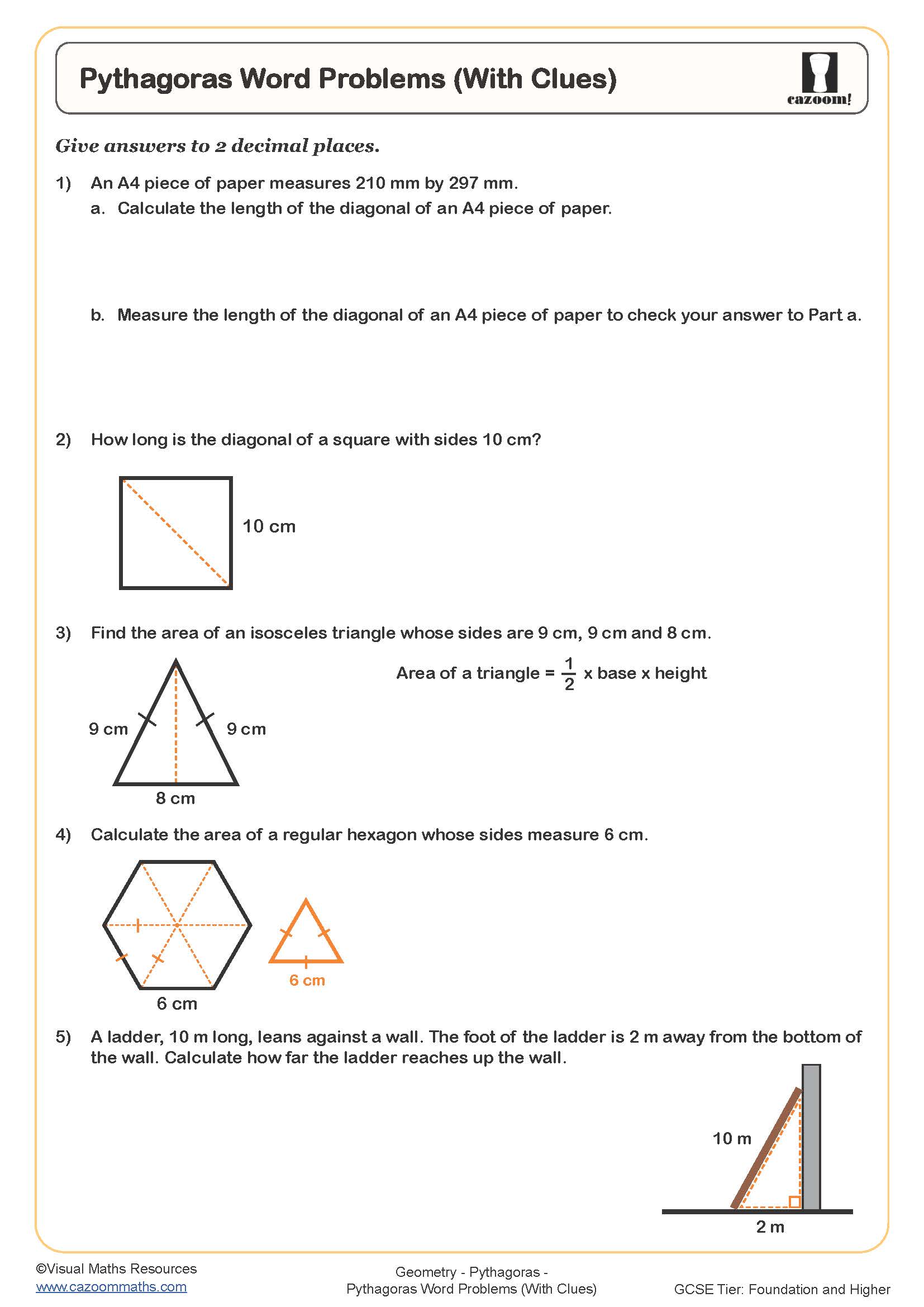
Pythagoras Word Problems (With Clues)
Year groups: 9, 10, 11
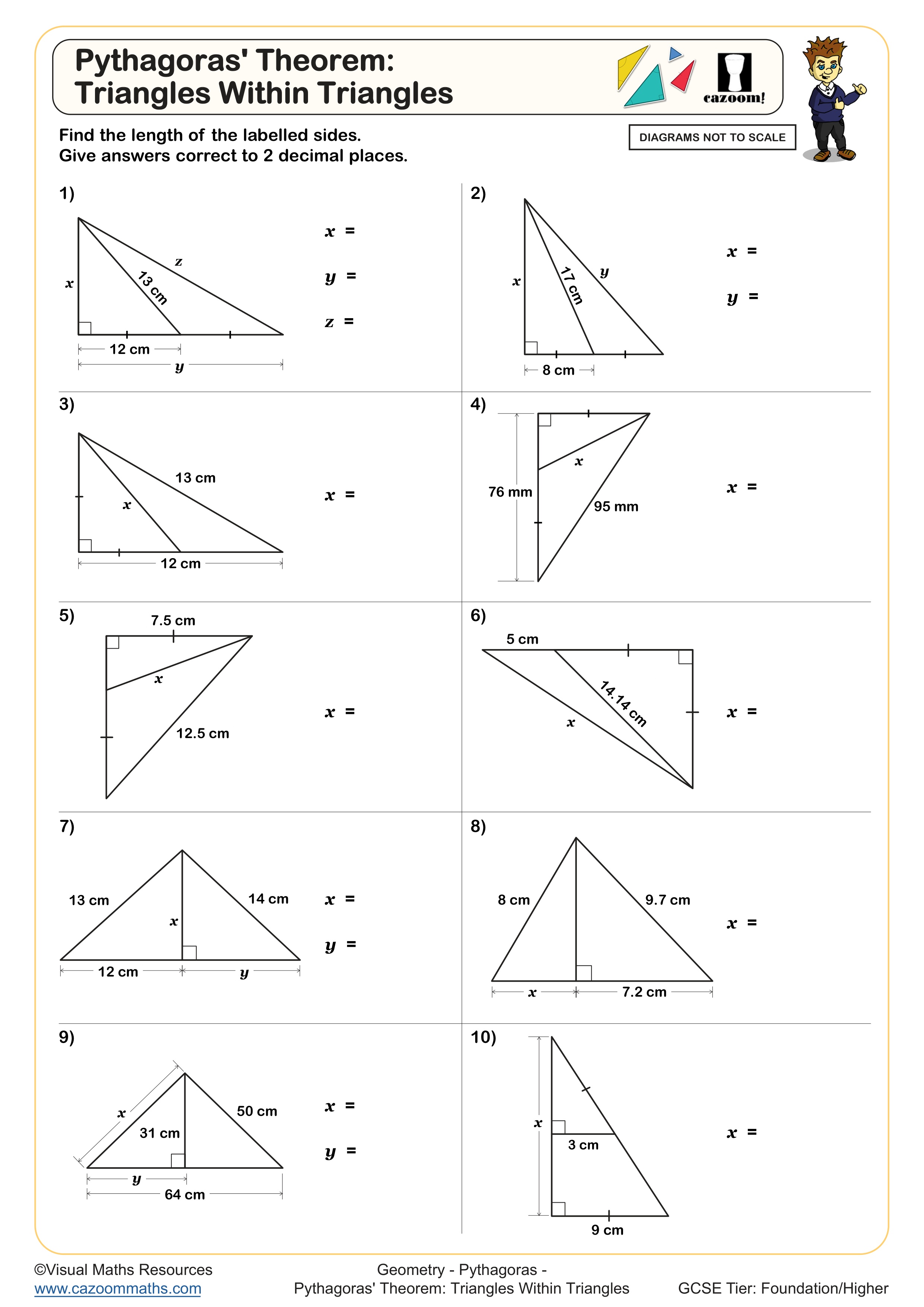
Pythagoras' Theorem: Triangles Within Triangles
Year groups: 9, 10
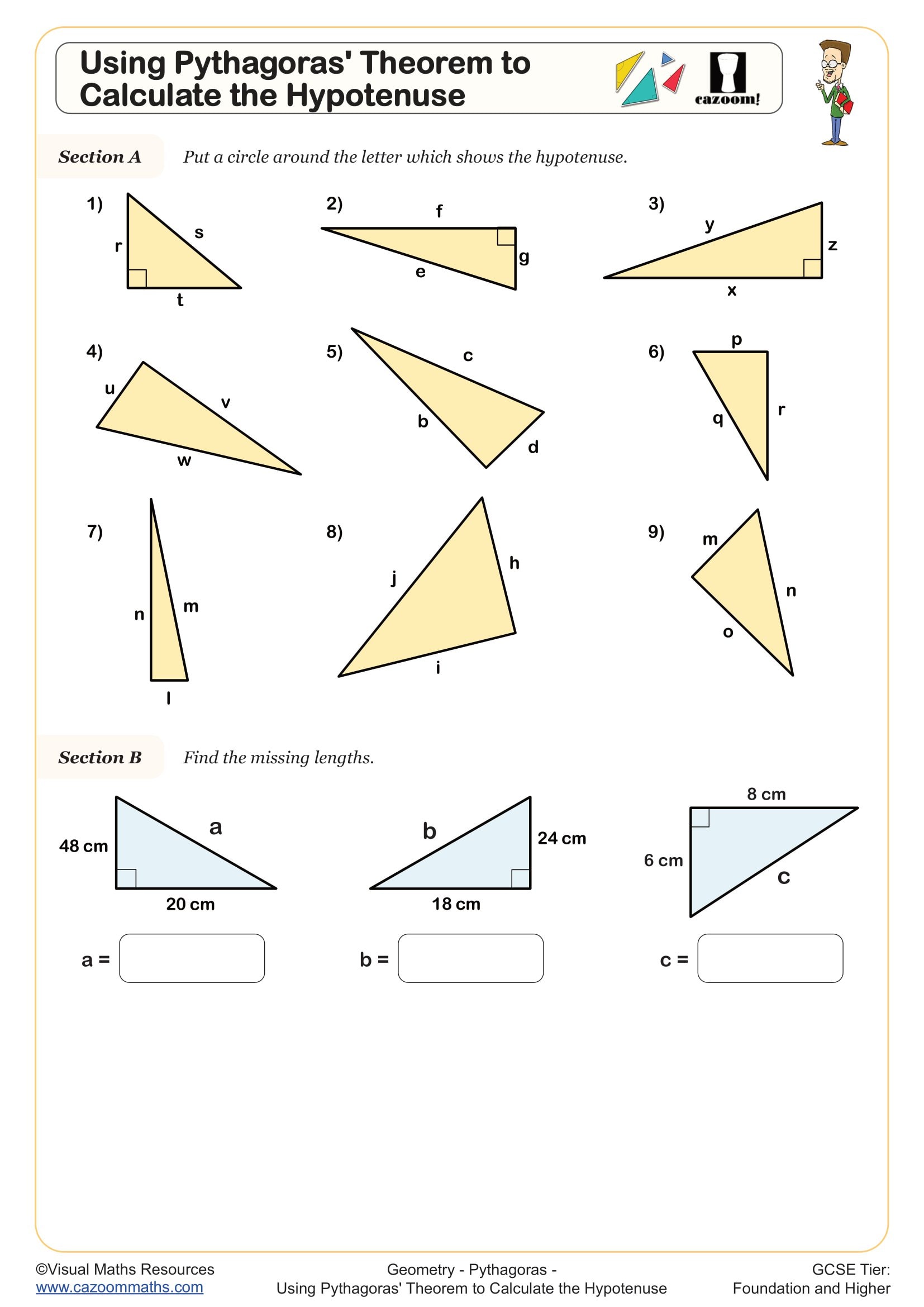
Using Pythagoras Theorem to Calculate the Hypotenuse
Year groups: 9, 10, 11
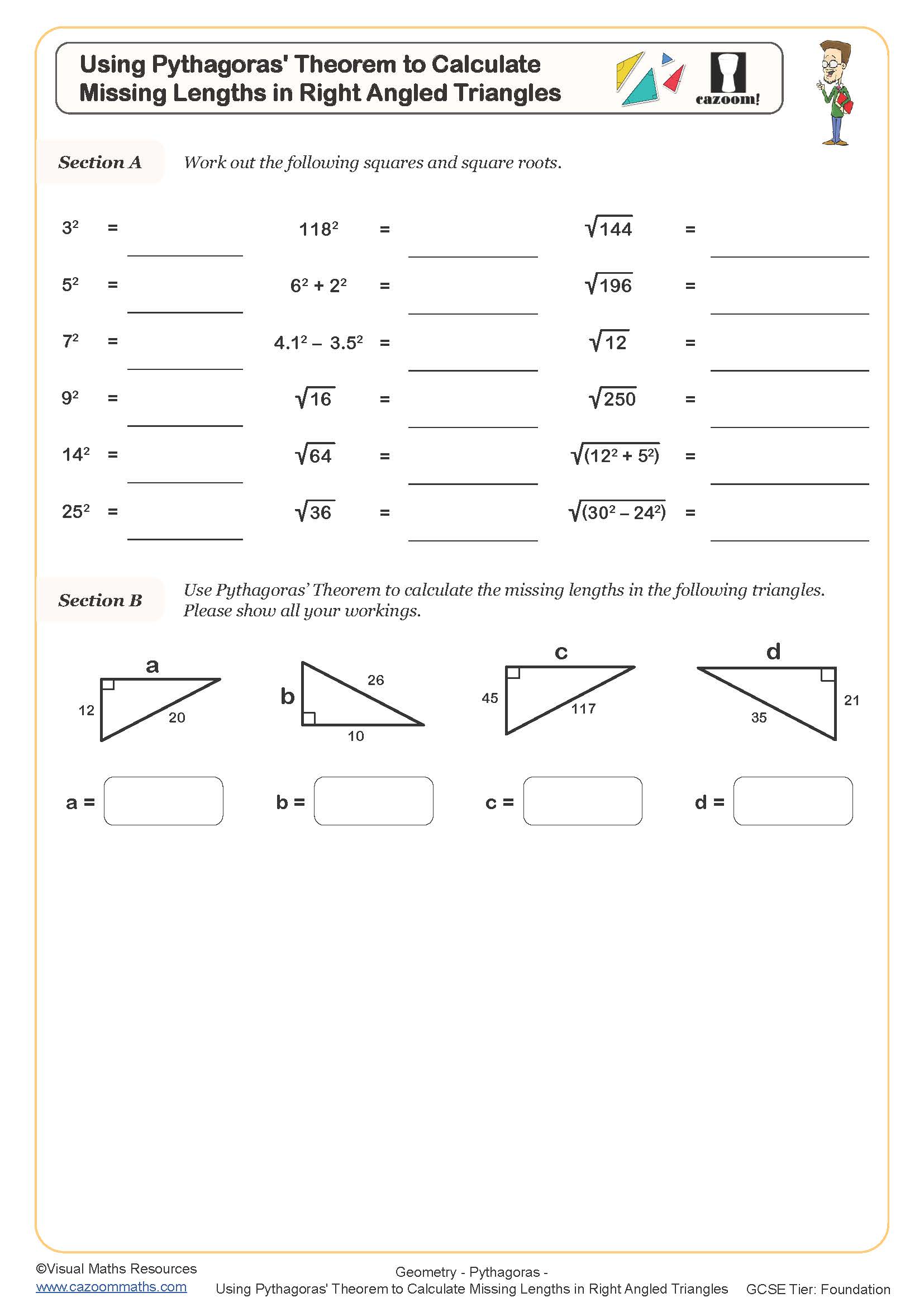
Using Pythagoras' Theorem to Calculate Missing Lengths in Right Angled Triangles
Year groups: 9, 10, 11
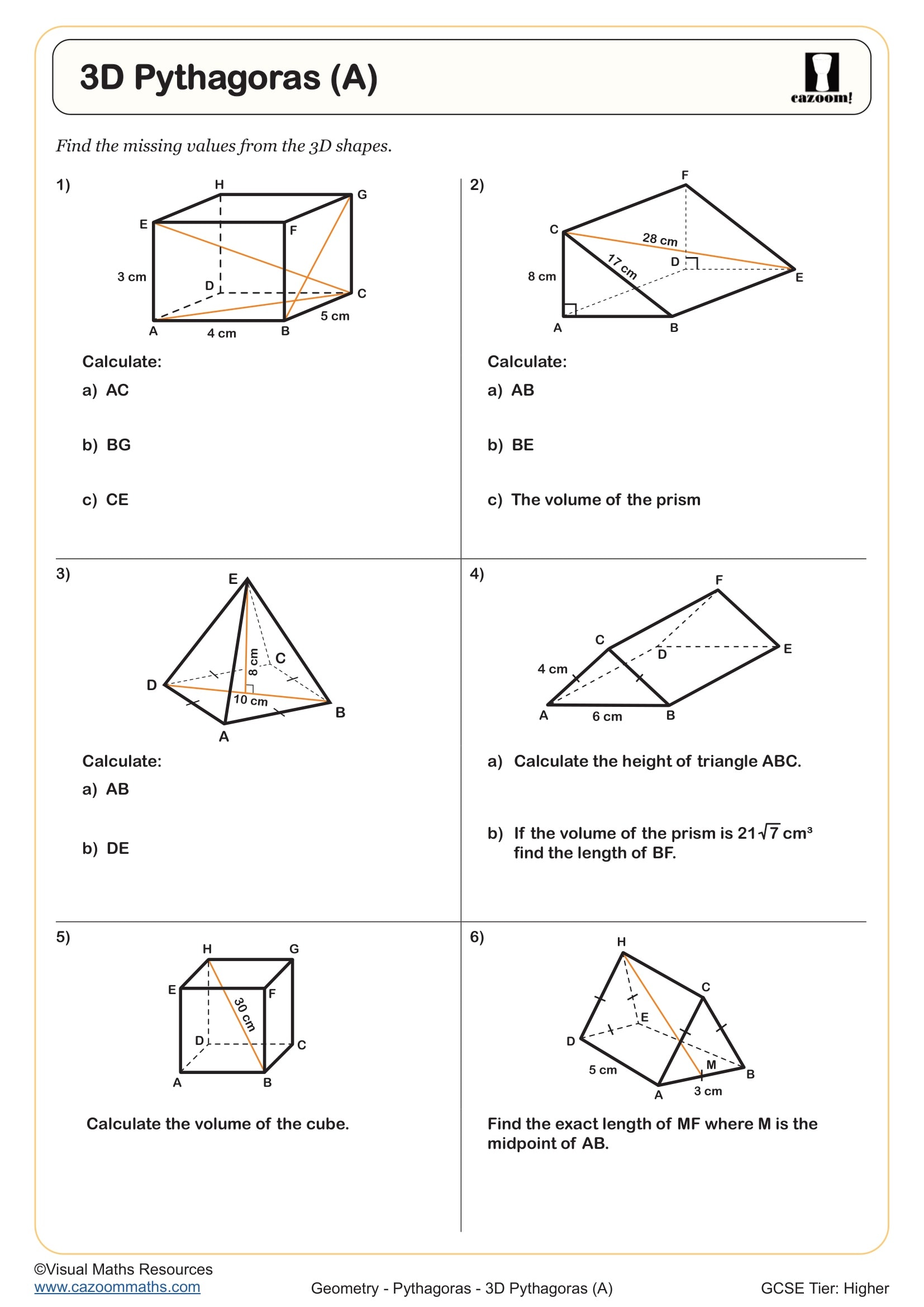
3D Pythagoras (A)
Year groups: 10, 11
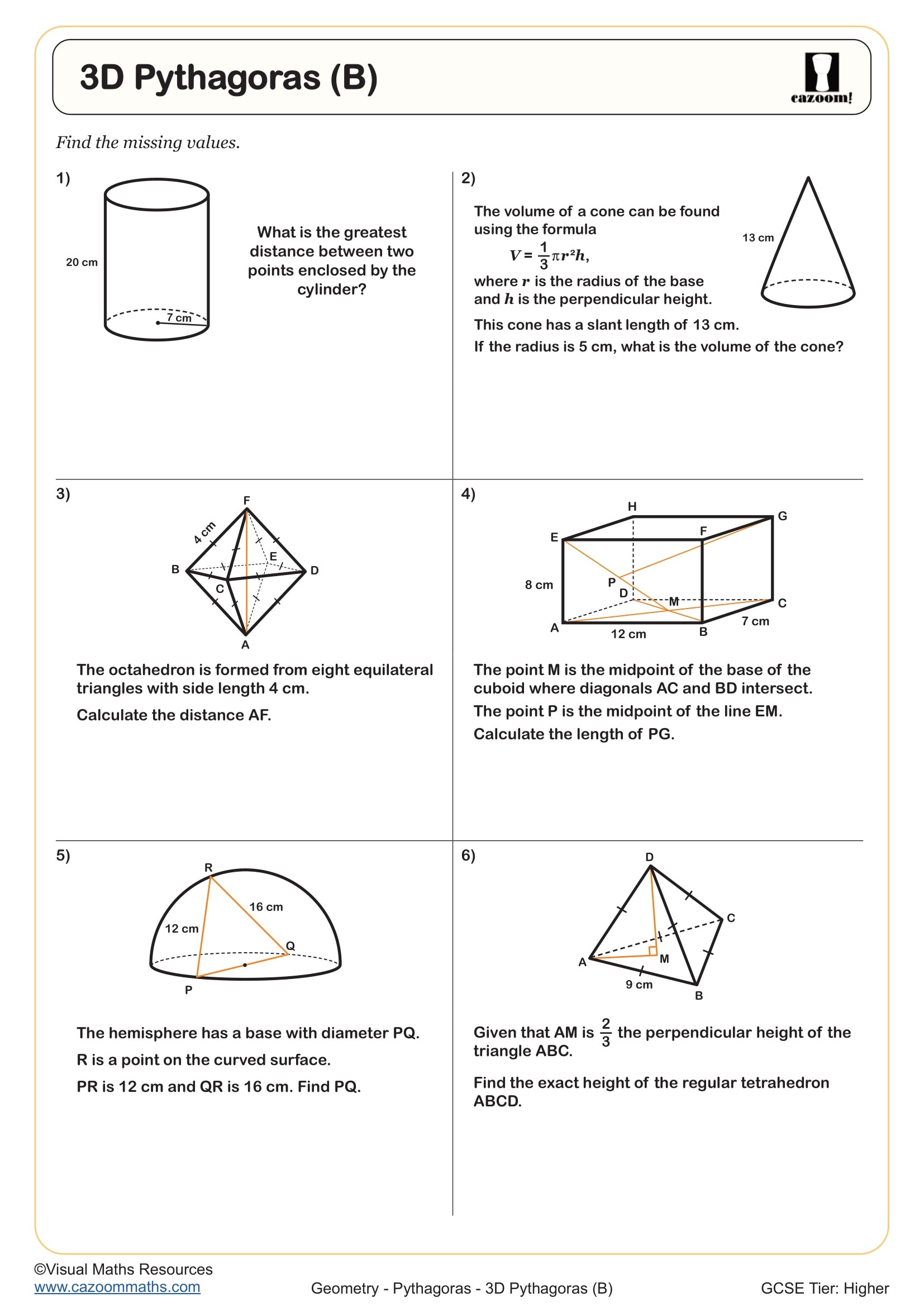
3D Pythagoras (B)
Year groups: 10, 11
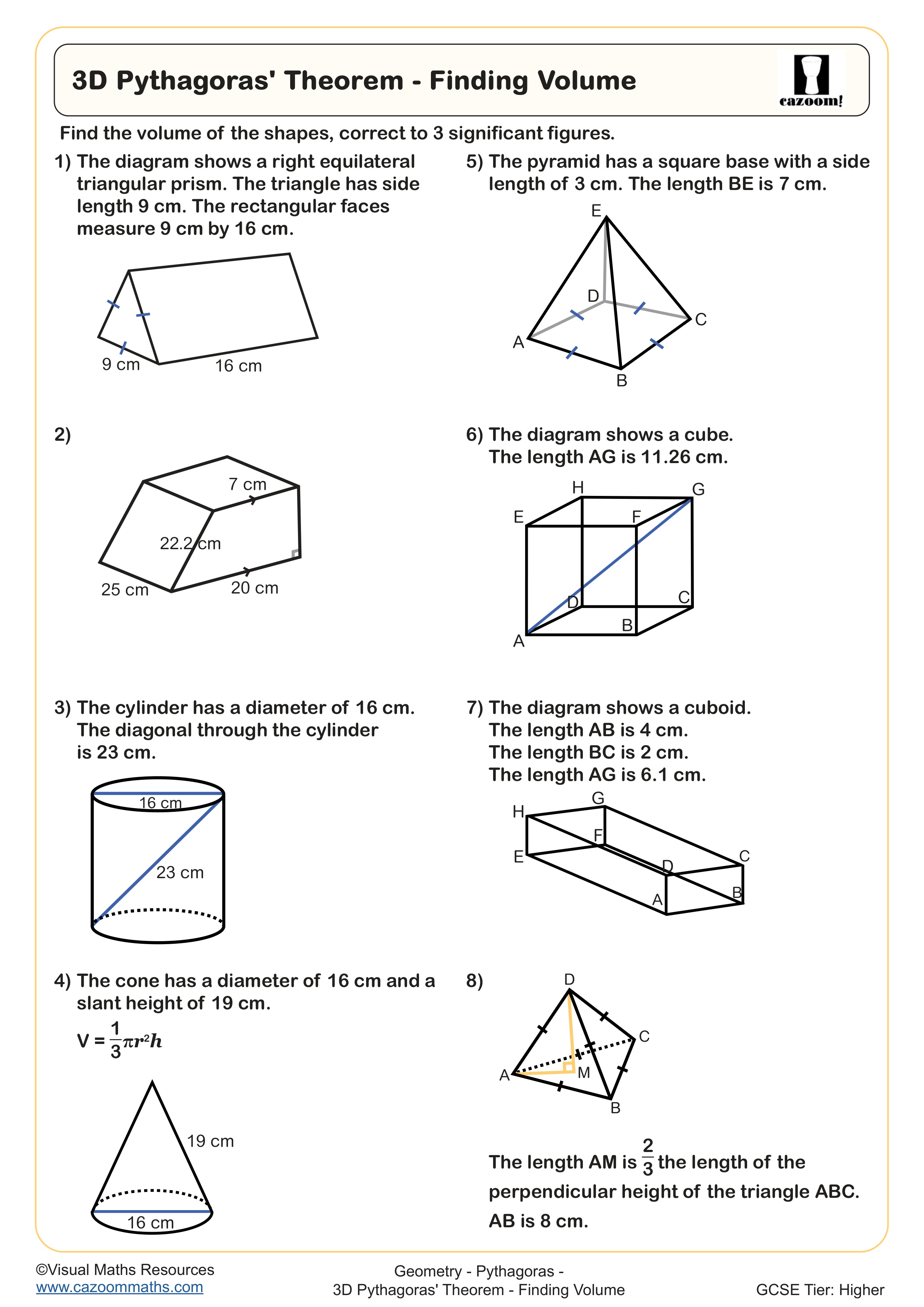
3D Pythagoras' Theorem - Finding Volume
Year groups: 10, 11
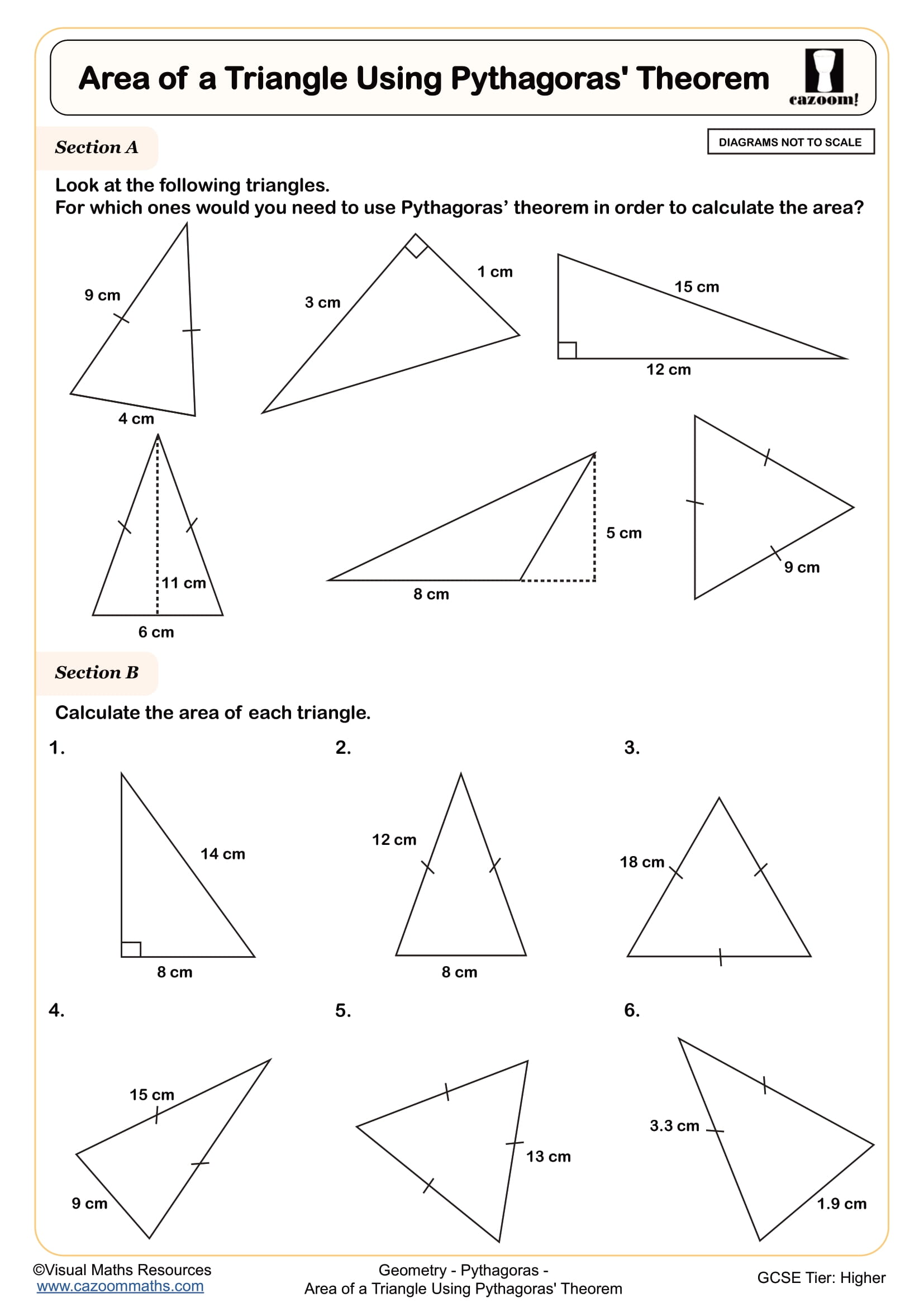
Area of a Triangle Using Pythagoras' Theorem
Year groups: 10, 11
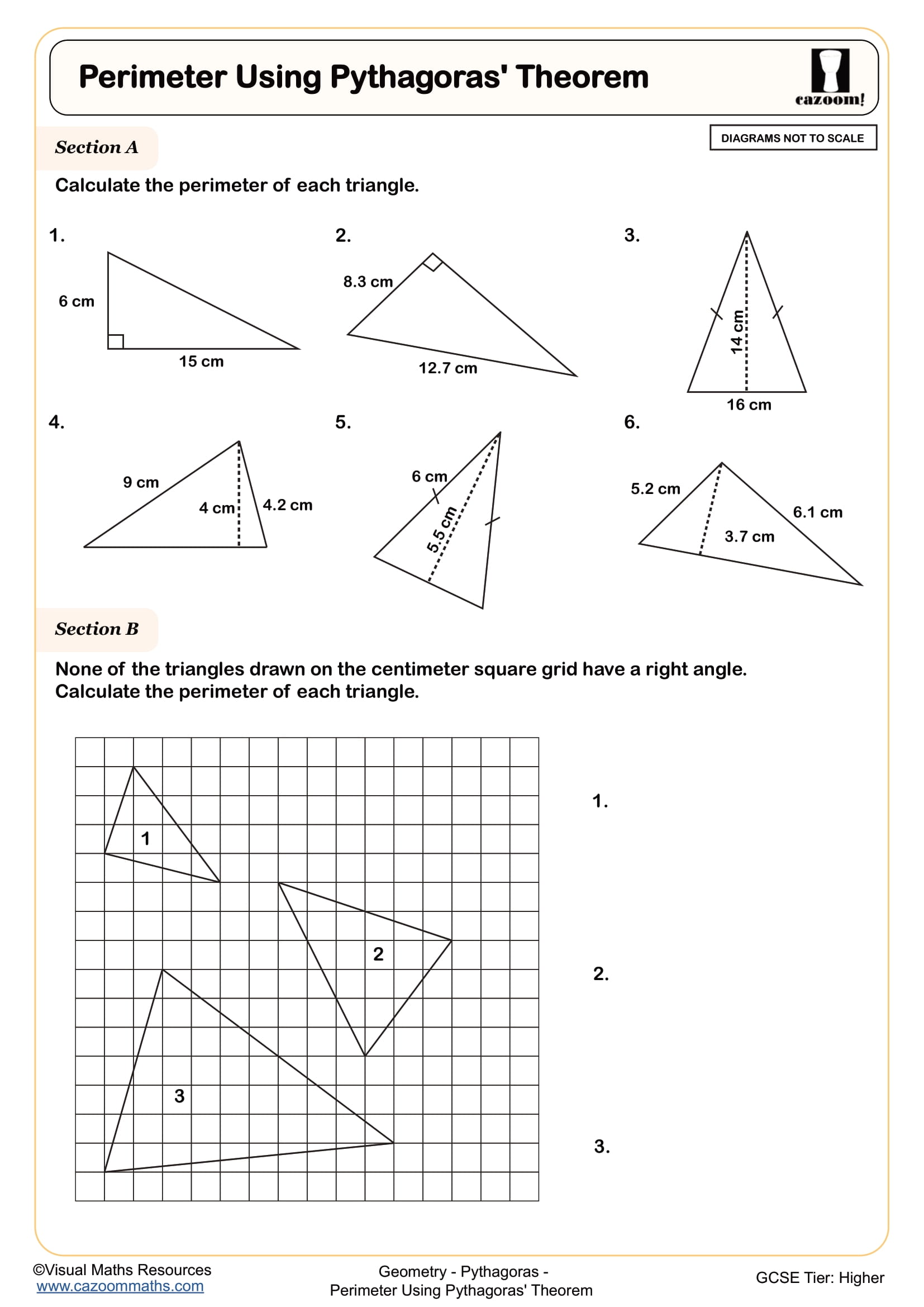
Perimeter Using Pythagoras' Theorem
Year groups: 10, 11
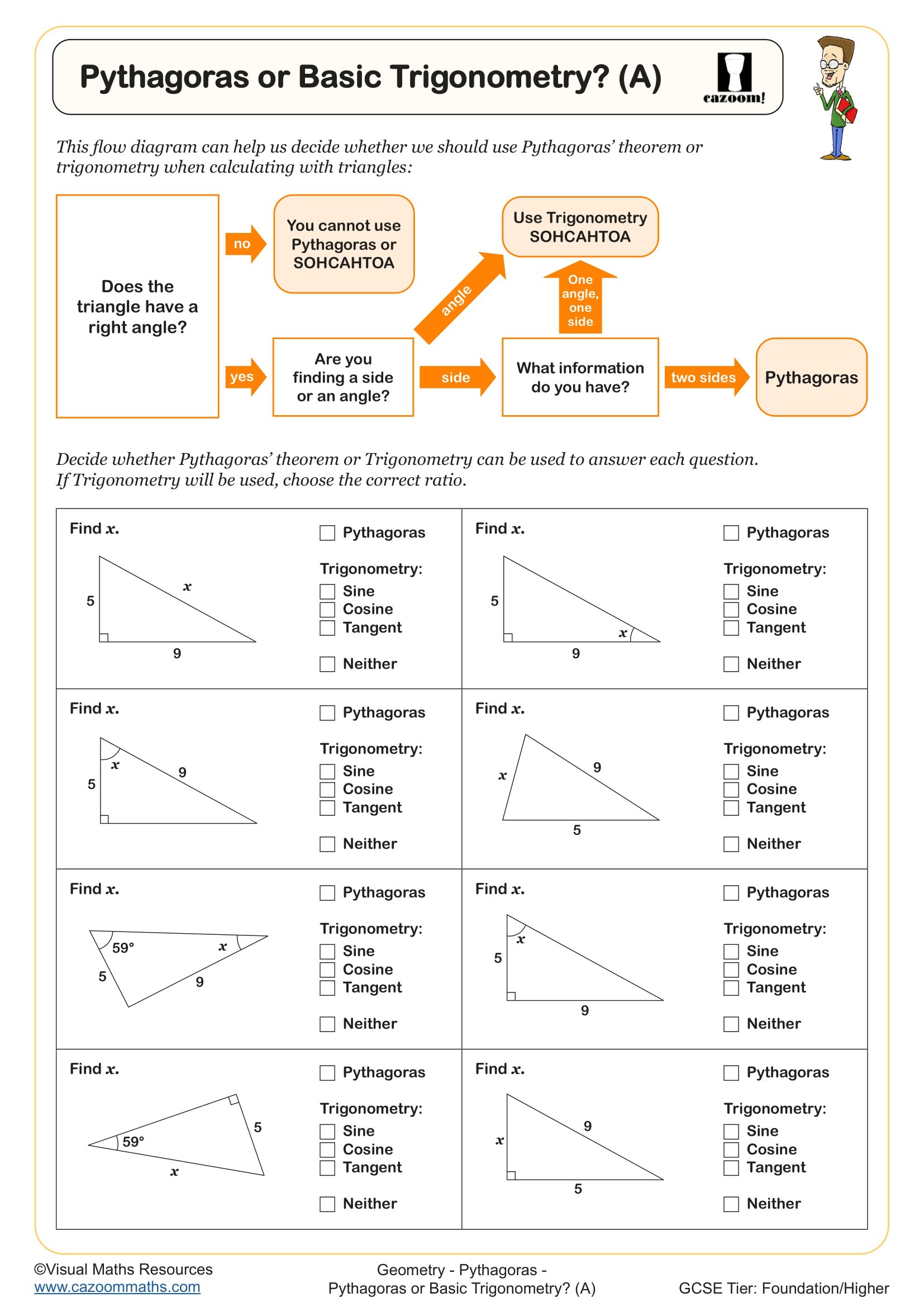
Pythagoras or Trigonometry? (A)
Year groups: 10, 11
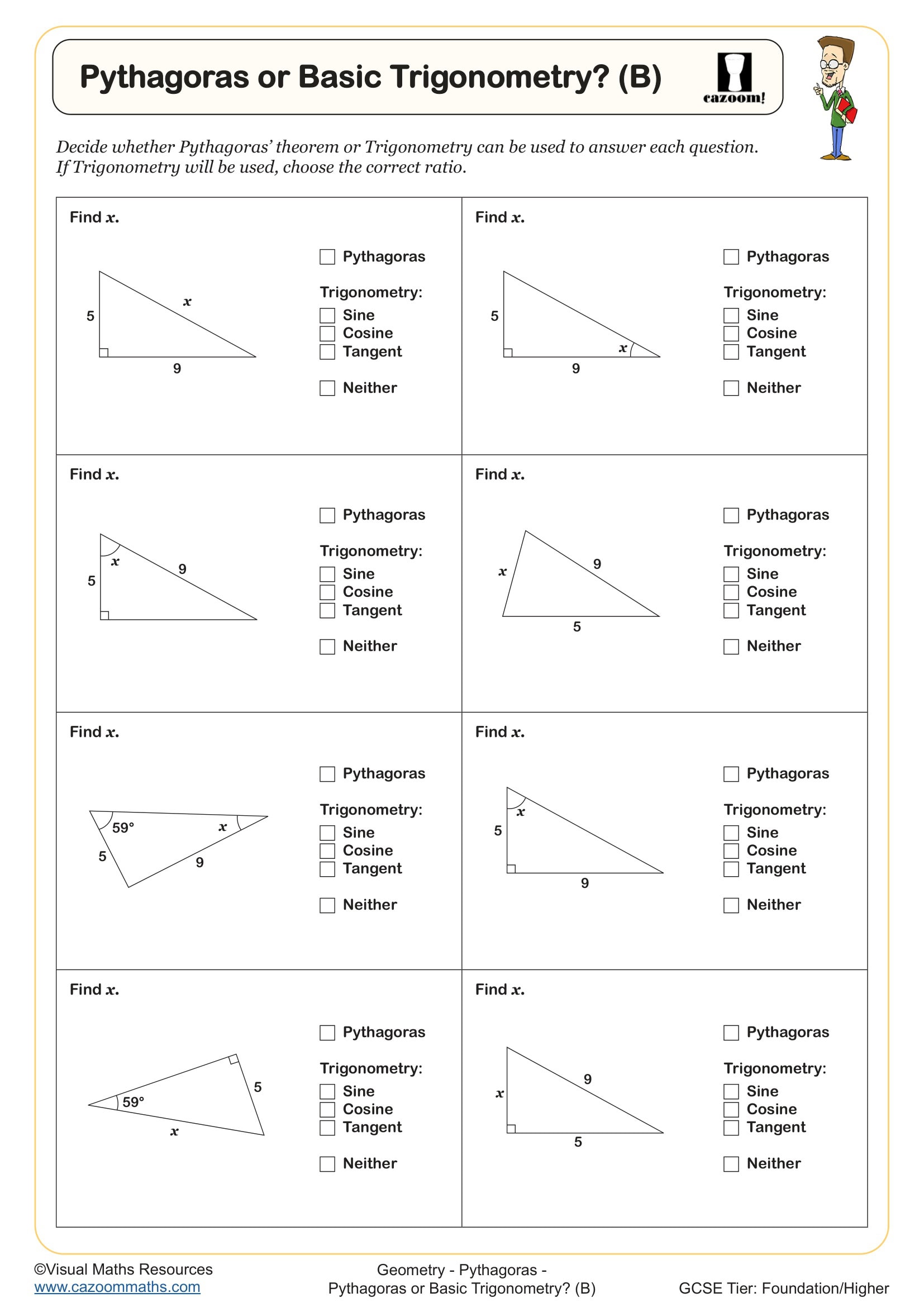
Pythagoras or Trigonometry? (B)
Year groups: 10, 11
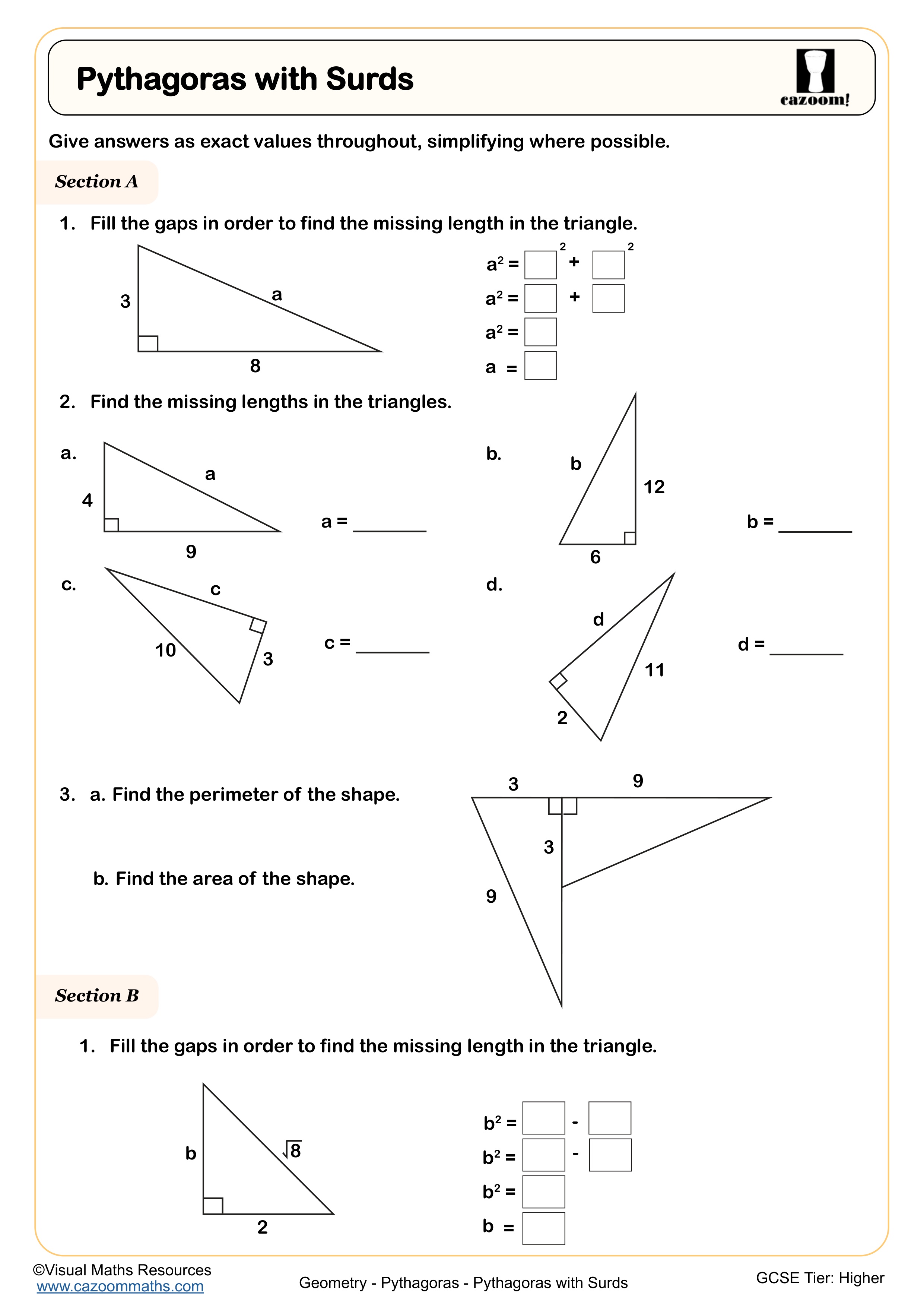
Pythagoras with Surds
Year groups: 10, 11
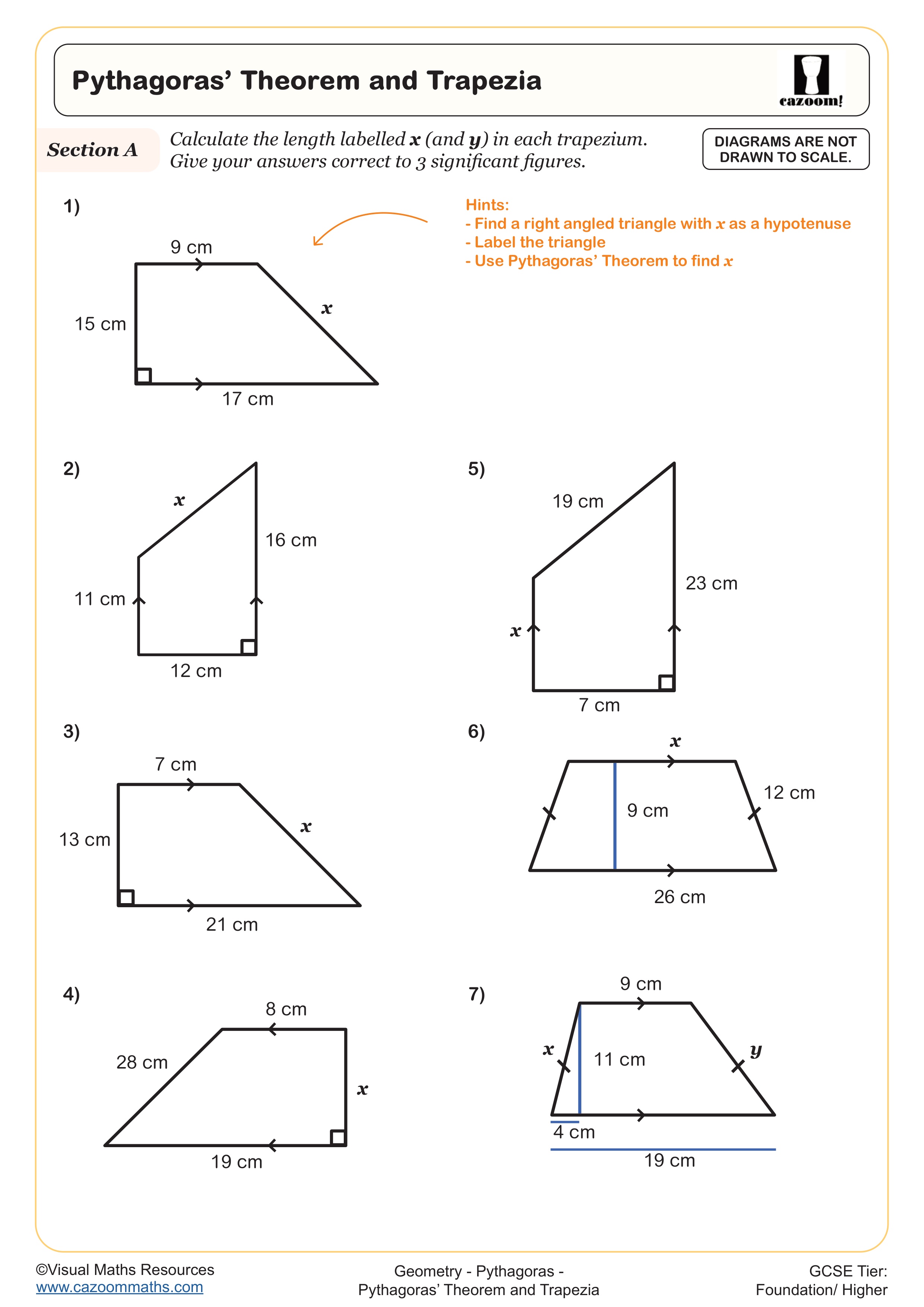
Pythagoras’ Theorem and Trapezia
Year groups: 10, 11
All worksheets are created by the team of experienced teachers at Cazoom Maths.
What makes an effective pythagoras worksheet for secondary students?
An effective pythagoras worksheet should progress systematically from basic calculations to complex problem-solving scenarios. Students need practice identifying right-angled triangles, determining which measurement represents the hypotenuse, and applying a² + b² = c² correctly across various contexts.
Teachers notice that worksheets work best when they include visual cues and labelled diagrams early on. Students often make algebraic errors when rearranging the formula, particularly when finding shorter sides rather than the hypotenuse. Quality worksheets address this by providing examples of both c² = a² + b² and a² = c² - b² applications.
Which year groups should use Pythagoras theorem worksheets?
Pythagoras theorem typically appears in Year 8 or 9 as part of the KS3 programme of study, then develops further complexity at GCSE level. Year 8 students usually start with integer solutions and simple decimal answers, while Year 9 students tackle surds and more challenging problem-solving contexts.
At KS4, students encounter 3D applications, compound shapes, and exam-style questions requiring multiple steps. Teachers find that revisiting the basics with Year 10 and 11 students helps consolidate understanding before tackling advanced trigonometry, as Pythagoras forms the foundation for sine, cosine, and tangent ratios.
How do 3D Pythagoras problems challenge students differently?
3D Pythagoras problems require students to visualise space diagonals in cuboids and apply the theorem twice within the same question. Students must first find a face diagonal, then use this measurement alongside a third dimension to calculate the space diagonal using the extended formula √(a² + b² + c²).
Teachers observe that students often struggle to identify which measurements they need and in what order. Breaking down 3D problems into stages helps students recognise patterns. The connection to real-world applications like construction and engineering becomes particularly relevant here, as space diagonals appear in structural calculations and 3D modelling scenarios.
How can teachers use these worksheets to address common misconceptions?
Teachers can use these worksheets diagnostically by observing student work patterns and error types. Common misconceptions include applying Pythagoras to any triangle, confusing which side is longest, and making sign errors when rearranging the formula. Structured worksheet progression helps identify these issues early.
Effective implementation involves using the answer sheets to facilitate peer checking and self-assessment. Students can mark their own work and identify specific error patterns. Teachers report success when students explain their working to partners, as verbalising the process helps consolidate understanding and reveals conceptual gaps that need addressing.