Ratio Worksheets
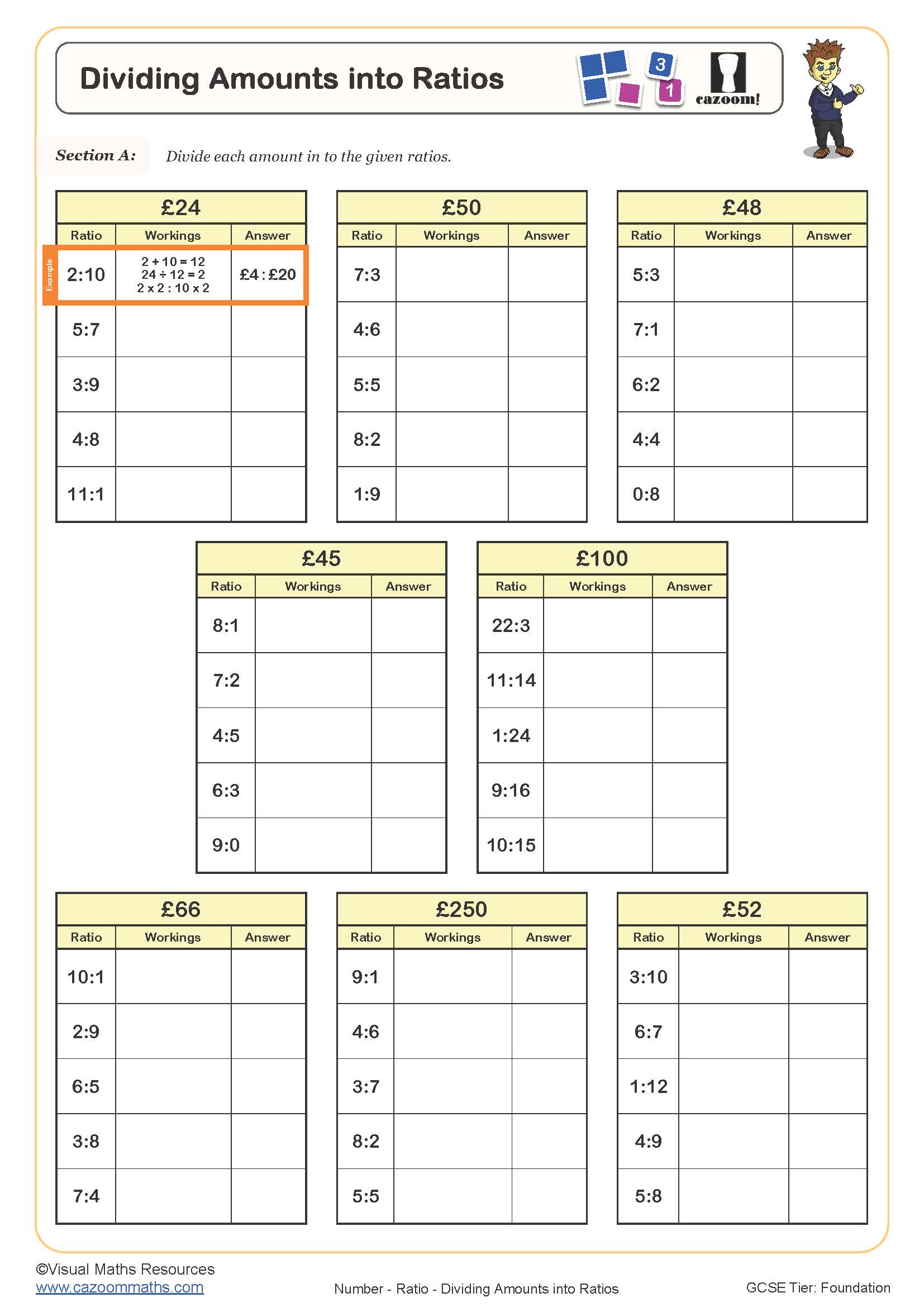
Dividing Amounts into Ratios
Year groups: 7, 8, 9
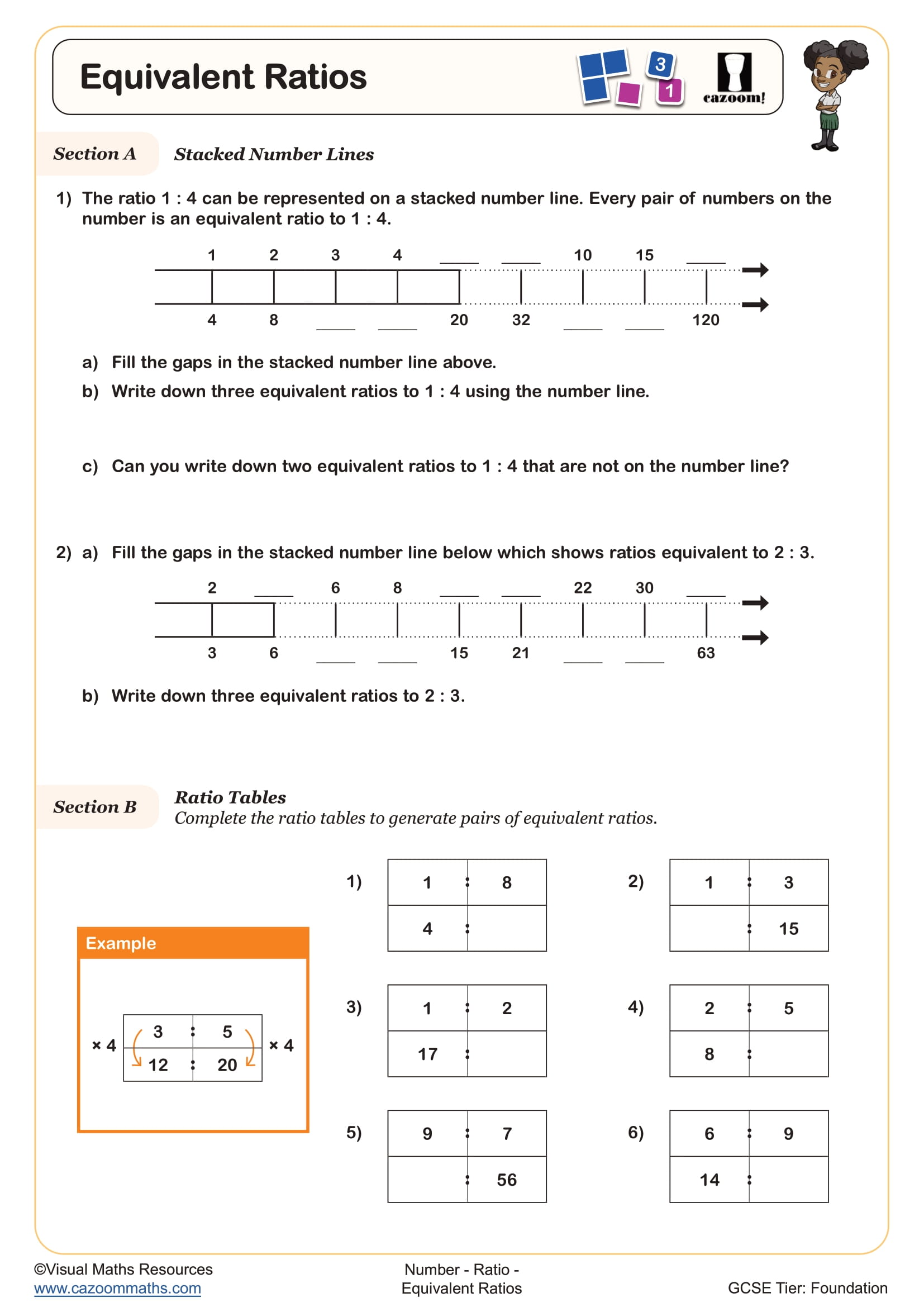
Equivalent Ratios
Year groups: 7, 8
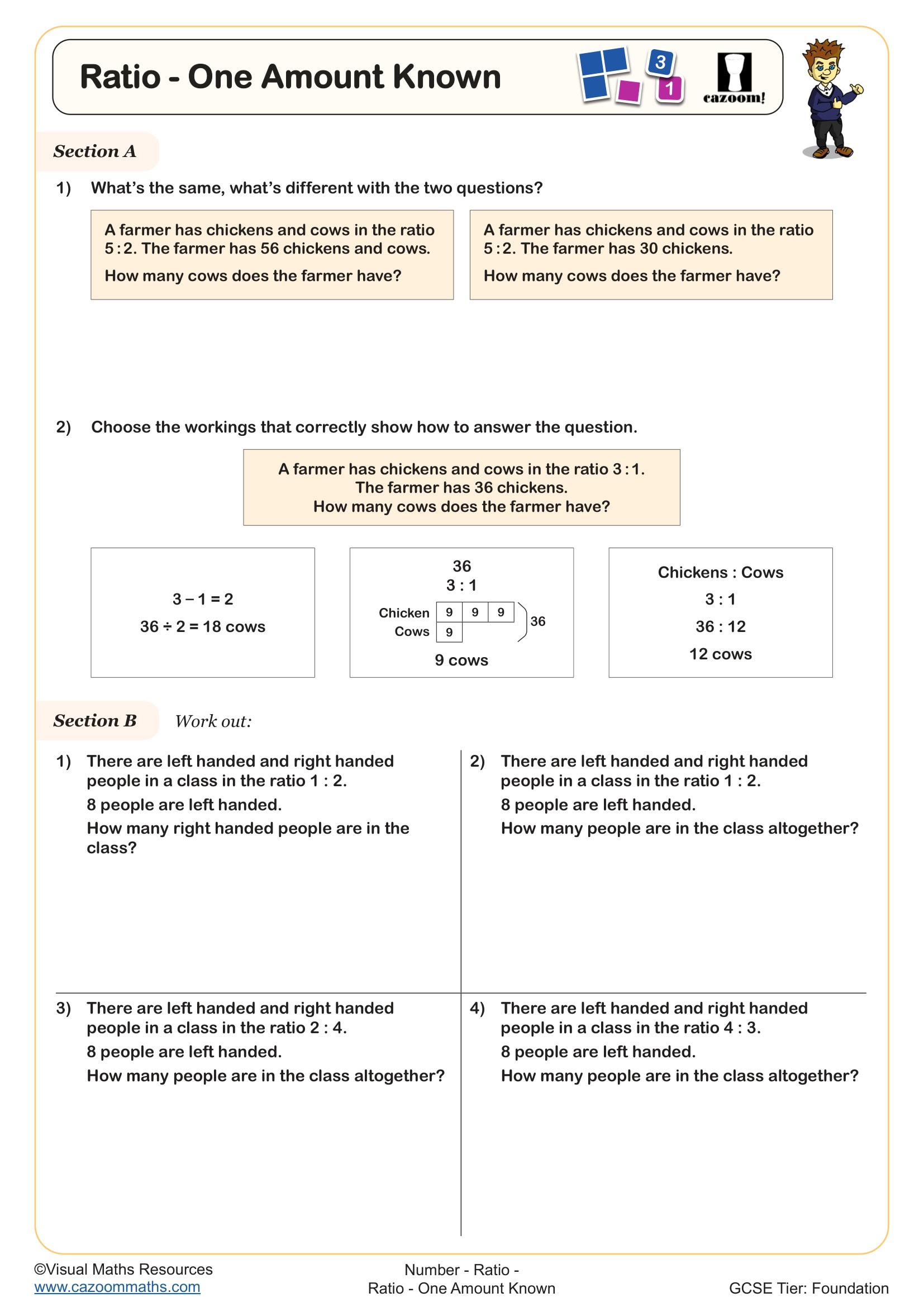
Ratio - One Amount Known
Year groups: 7, 8
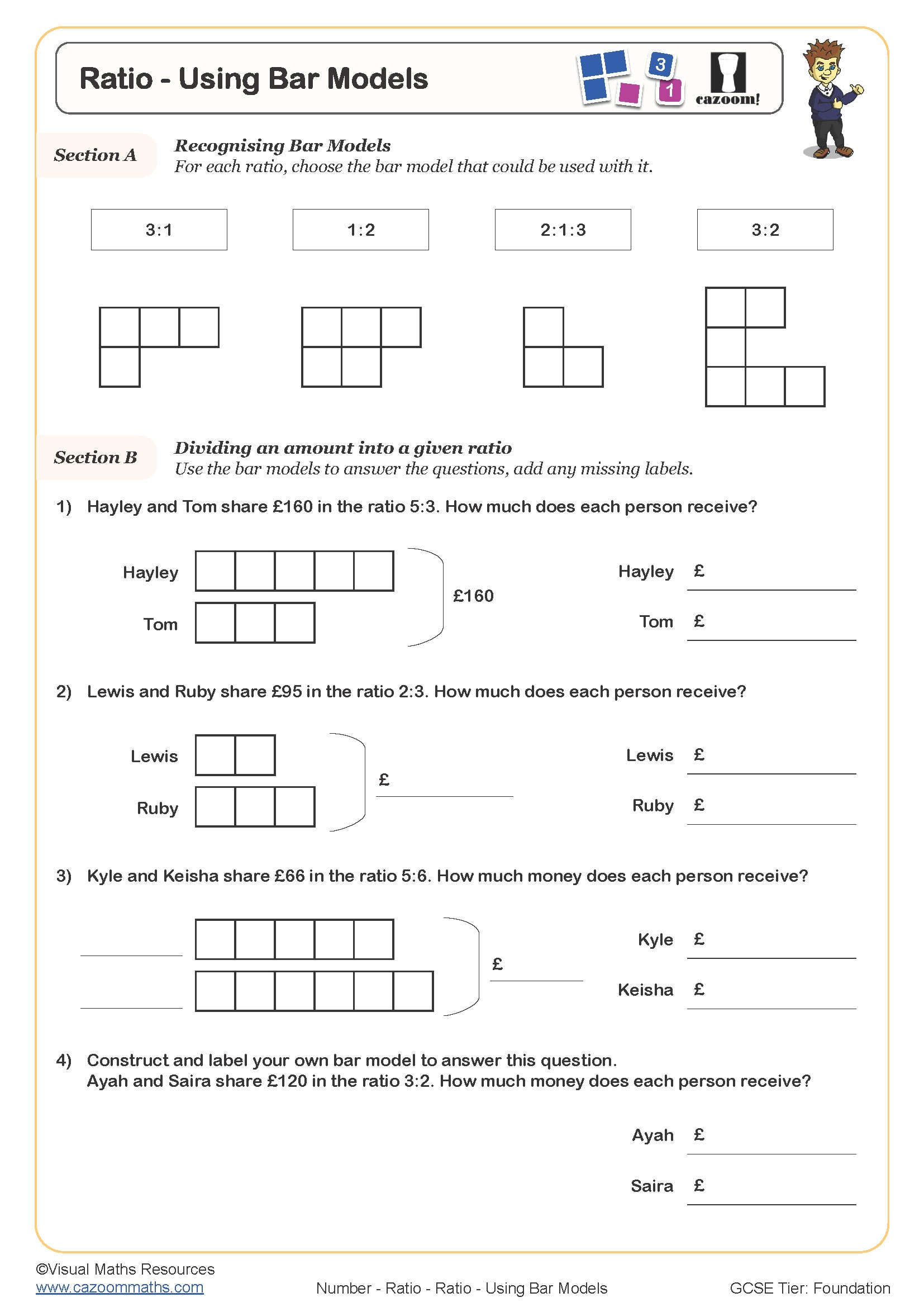
Ratio - Using Bar Models
Year groups: 7, 8
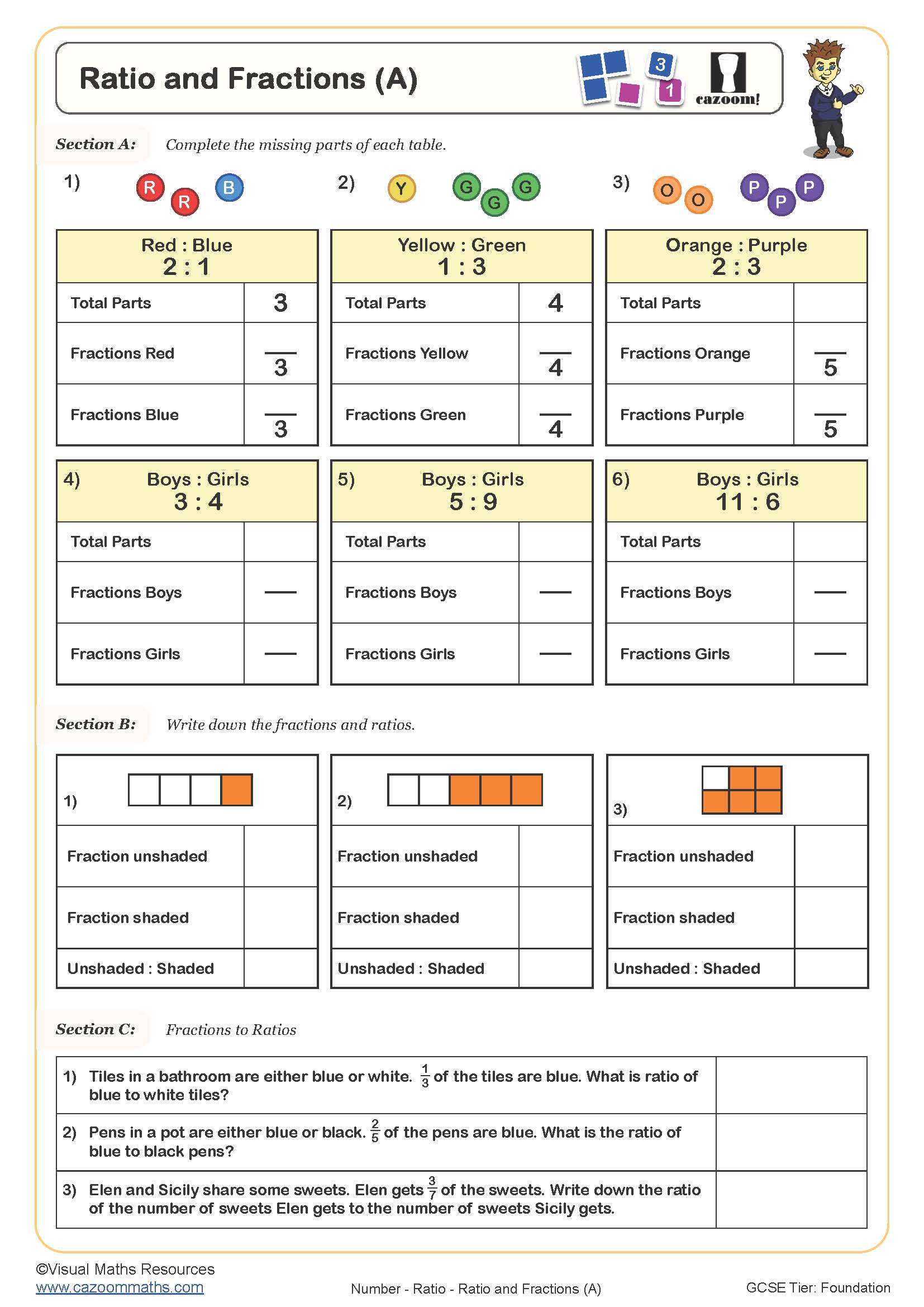
Ratio and Fractions (A)
Year groups: 7, 8
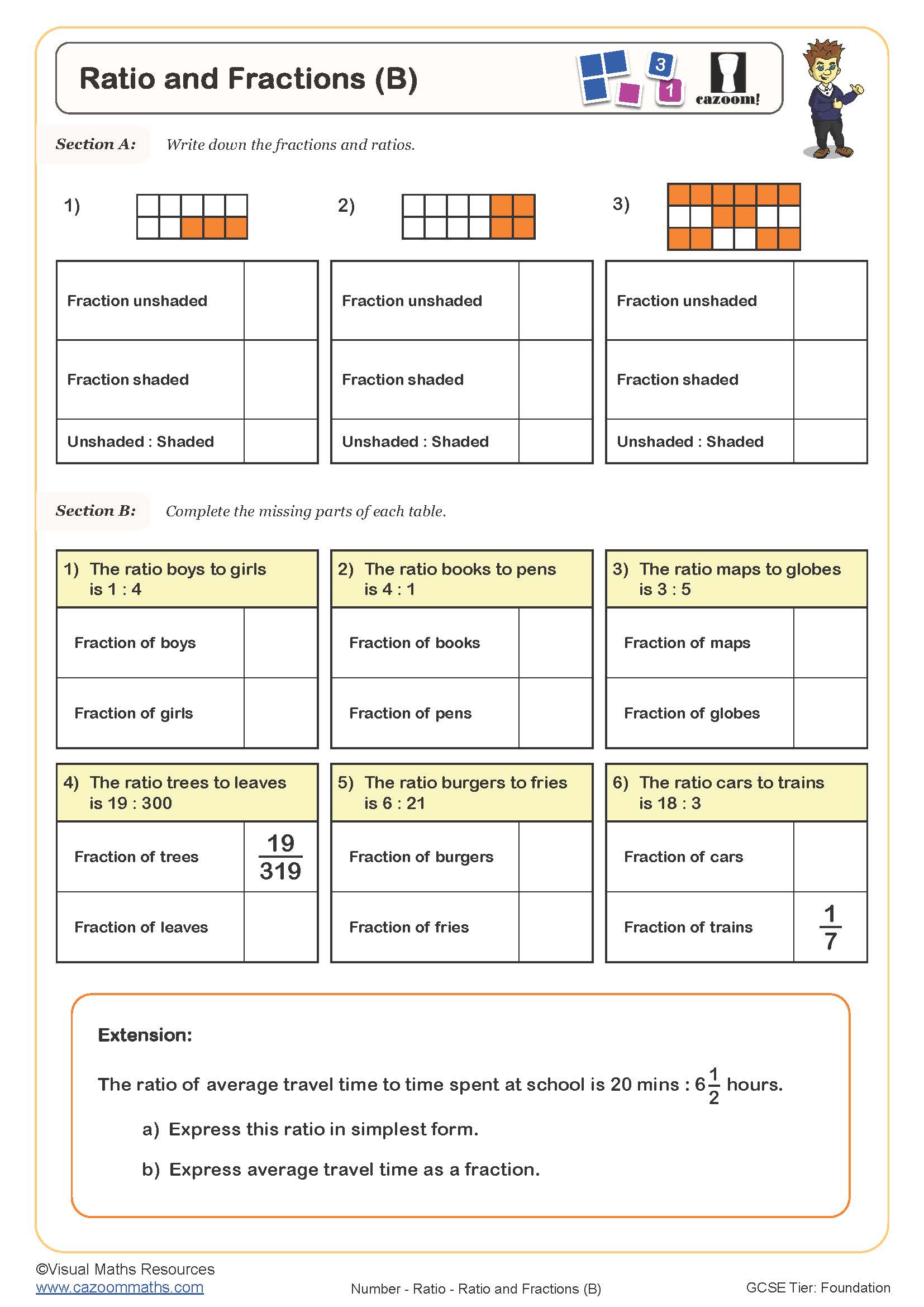
Ratio and Fractions (B)
Year groups: 7, 8
Simplifying Ratios (A)
Year groups: 7, 8
/Cazoom-Maths-Ratio-Simplifying-Ratios-(A)-Worksheet.jpg?w=3840)
Simplifying Ratios (B)
Year groups: 7, 8
-Worksheet.jpg?w=3840)
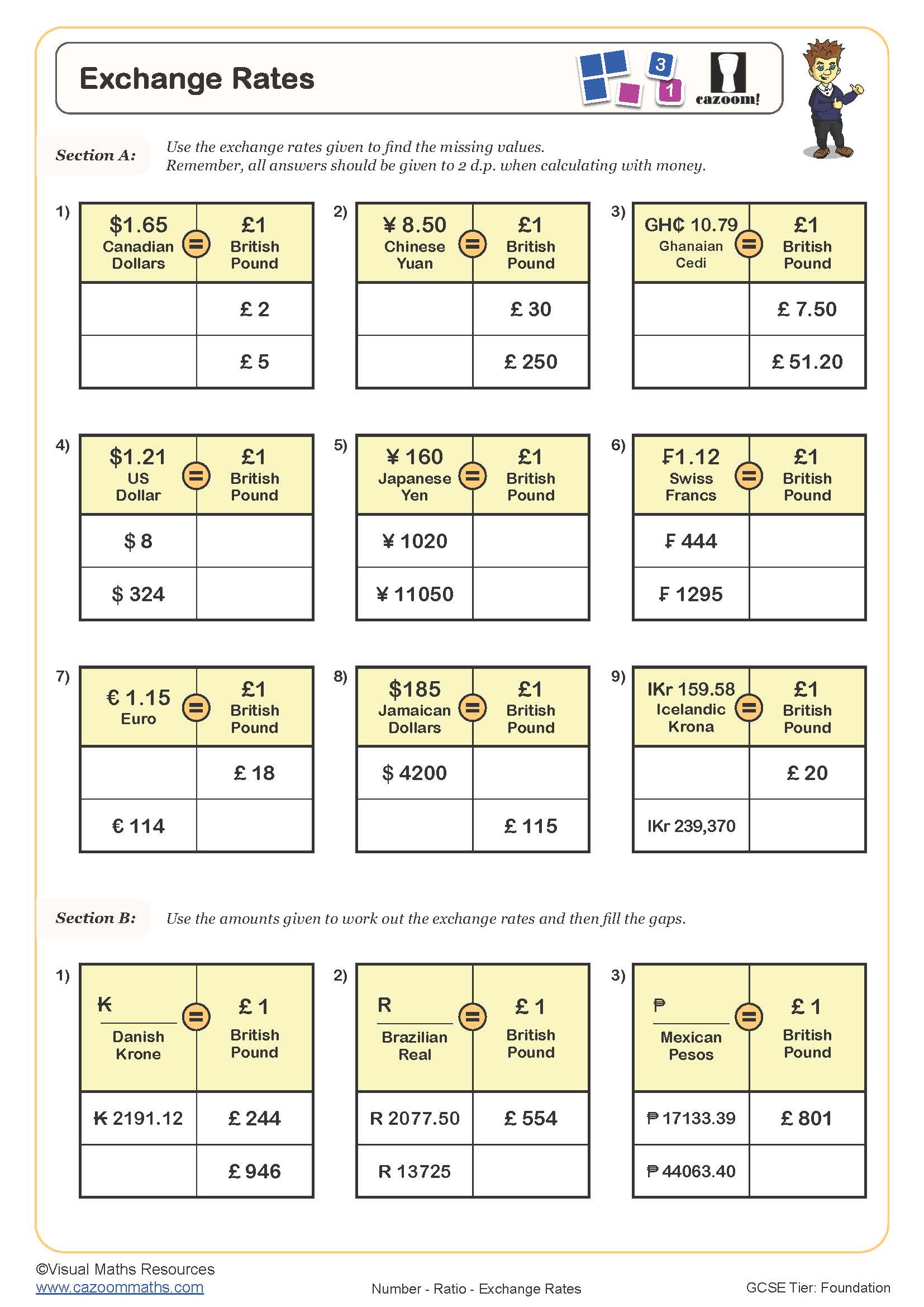
Exchange Rates
Year groups: 8, 9
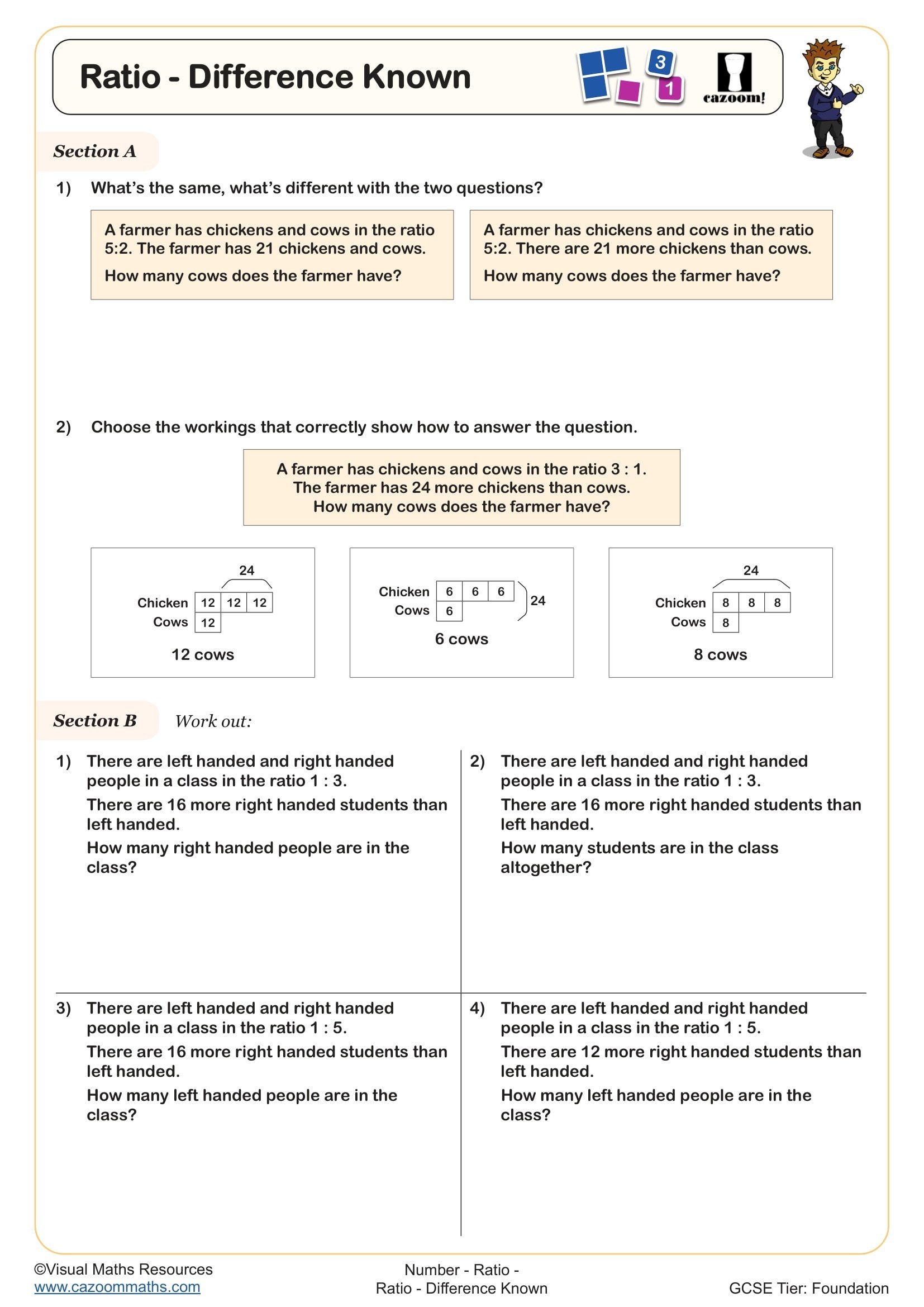
Ratio - Difference Known
Year groups: 8, 9
Ratio Problems
Year groups: 8, 9
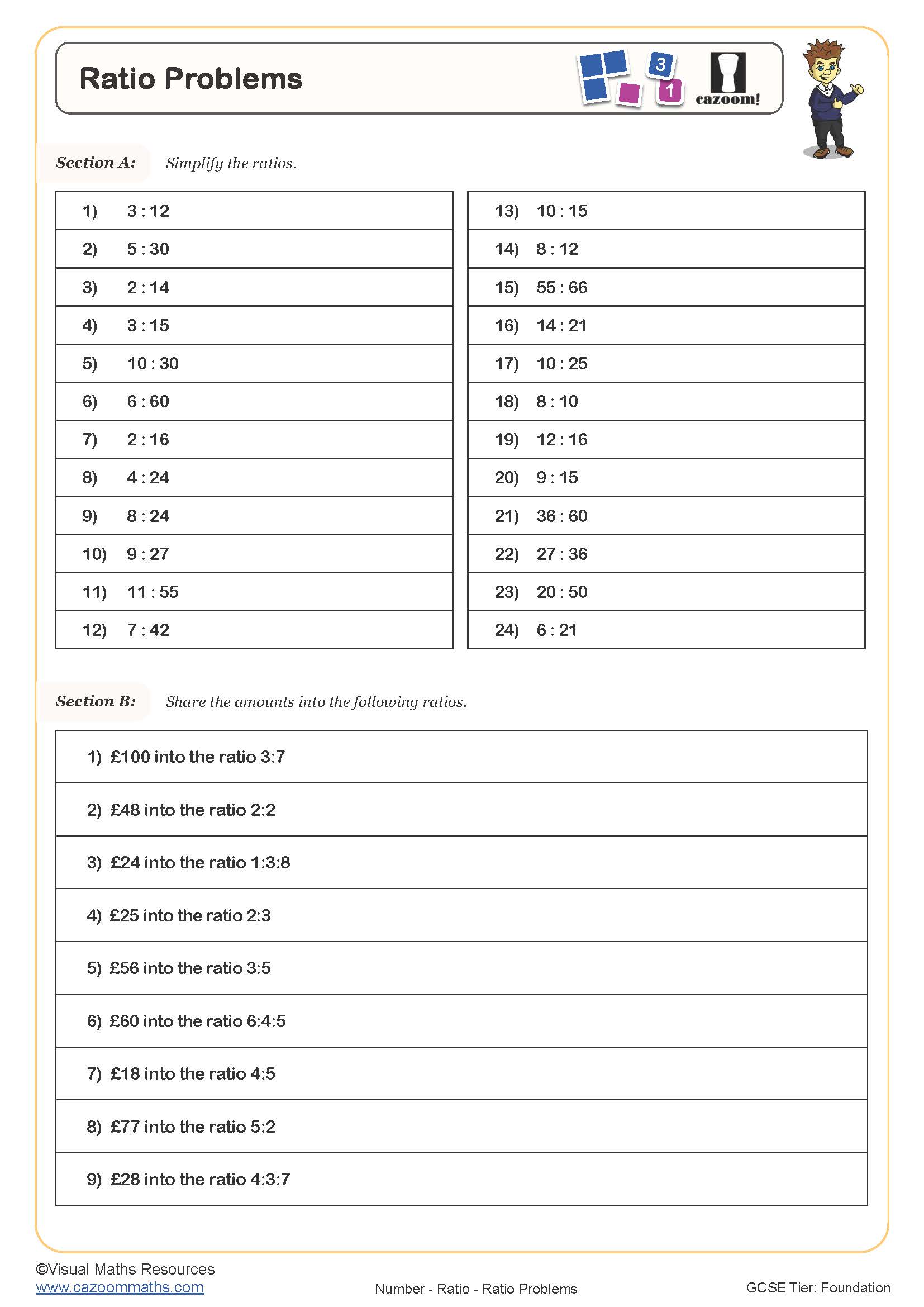
Ratio Unitary Method 1:n and n:1
Year groups: 8, 9, 10
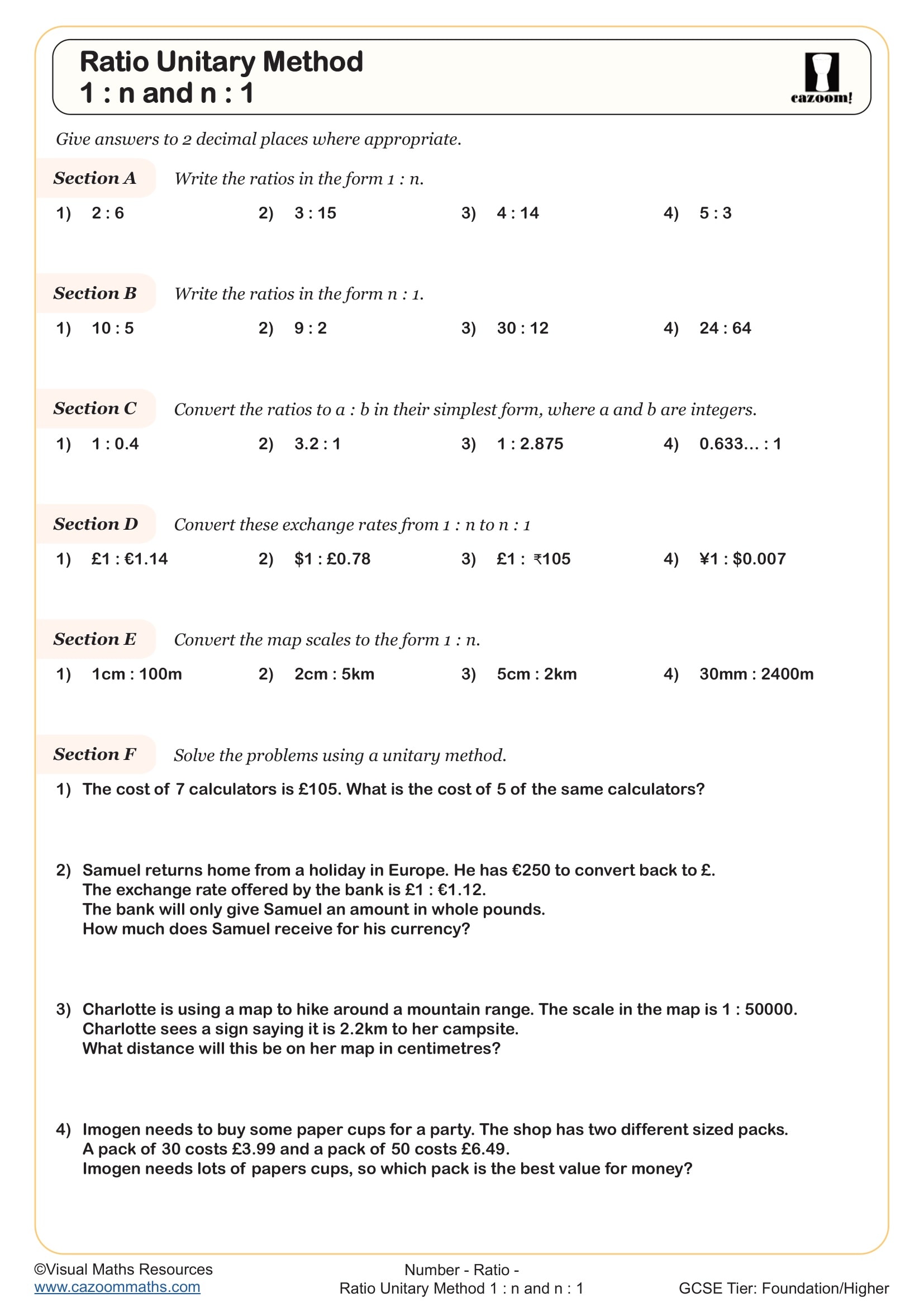
Combining Ratios
Year groups: 9, 10
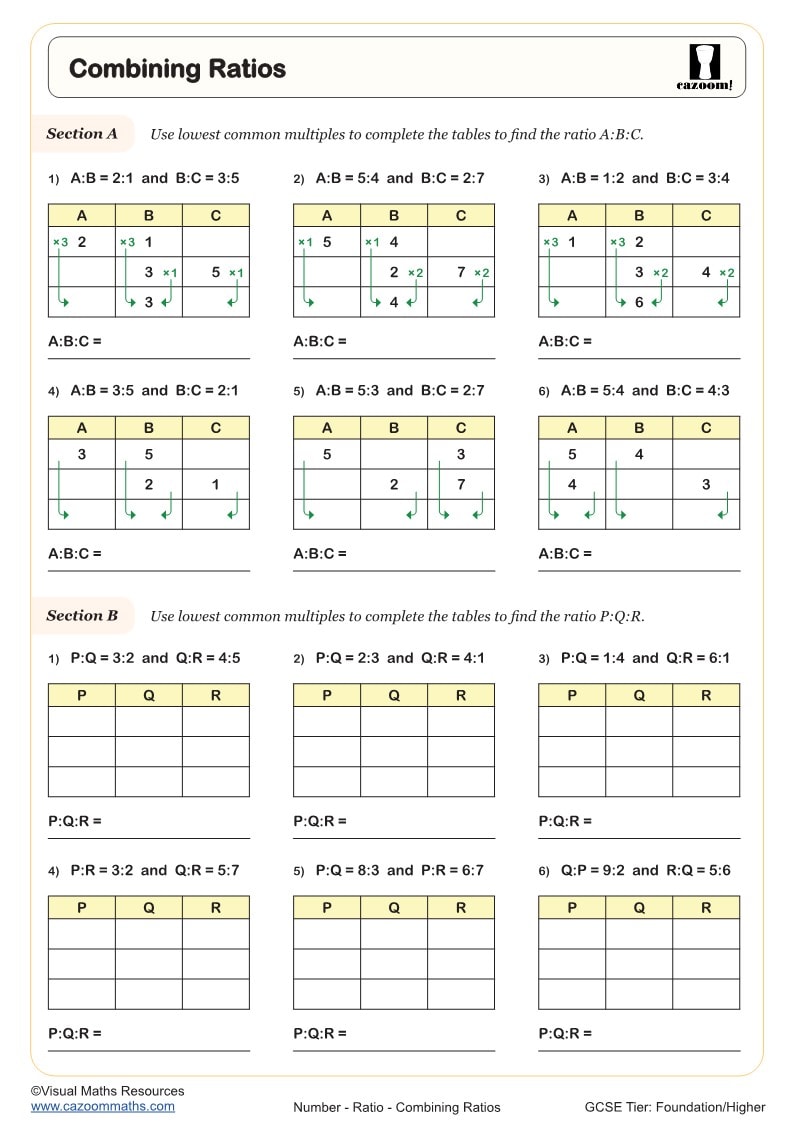
Factory and Worker Proportion Problems
Year groups: 9, 10
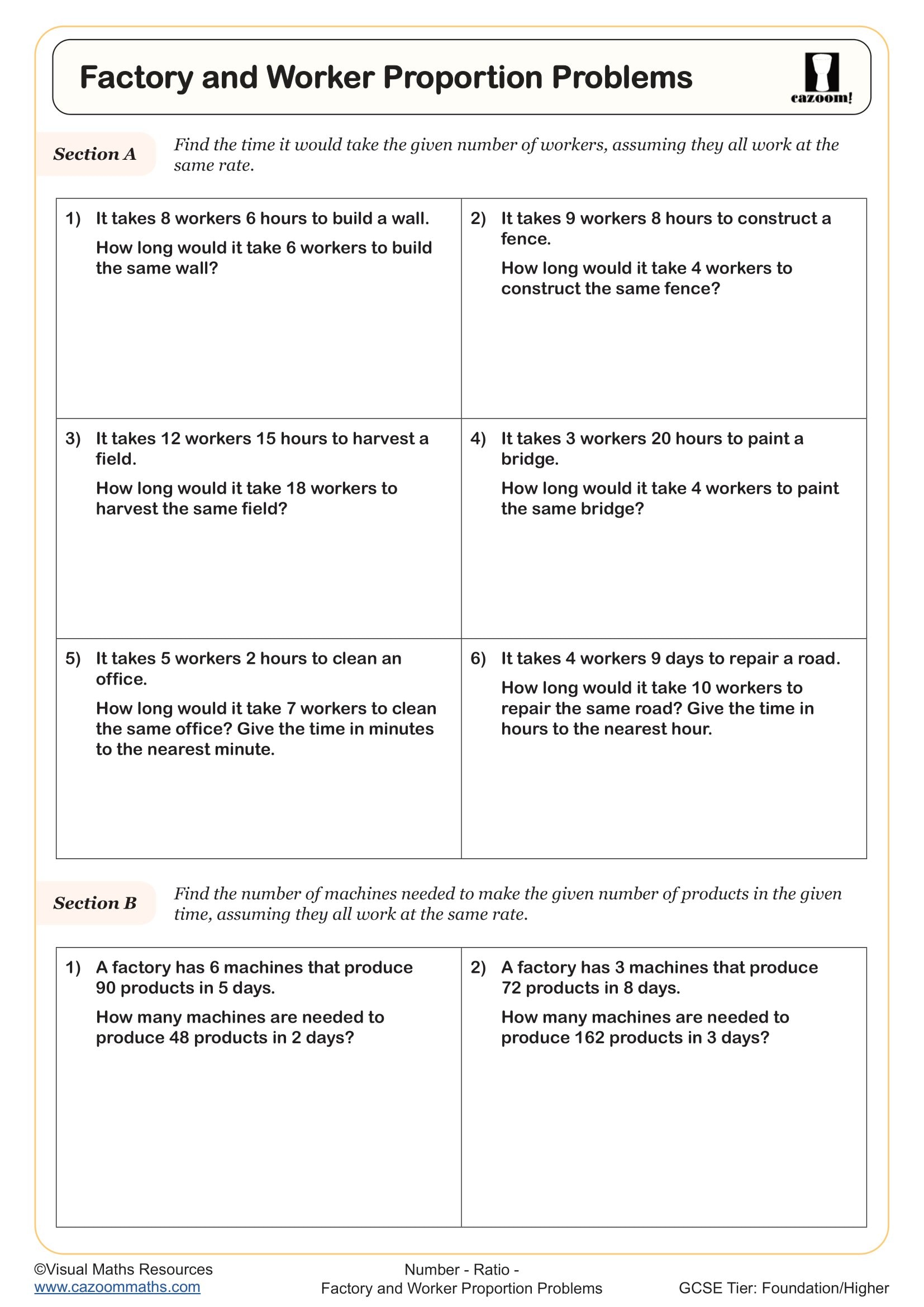
Forming Equations from Ratios (A)
Year groups: 9, 10
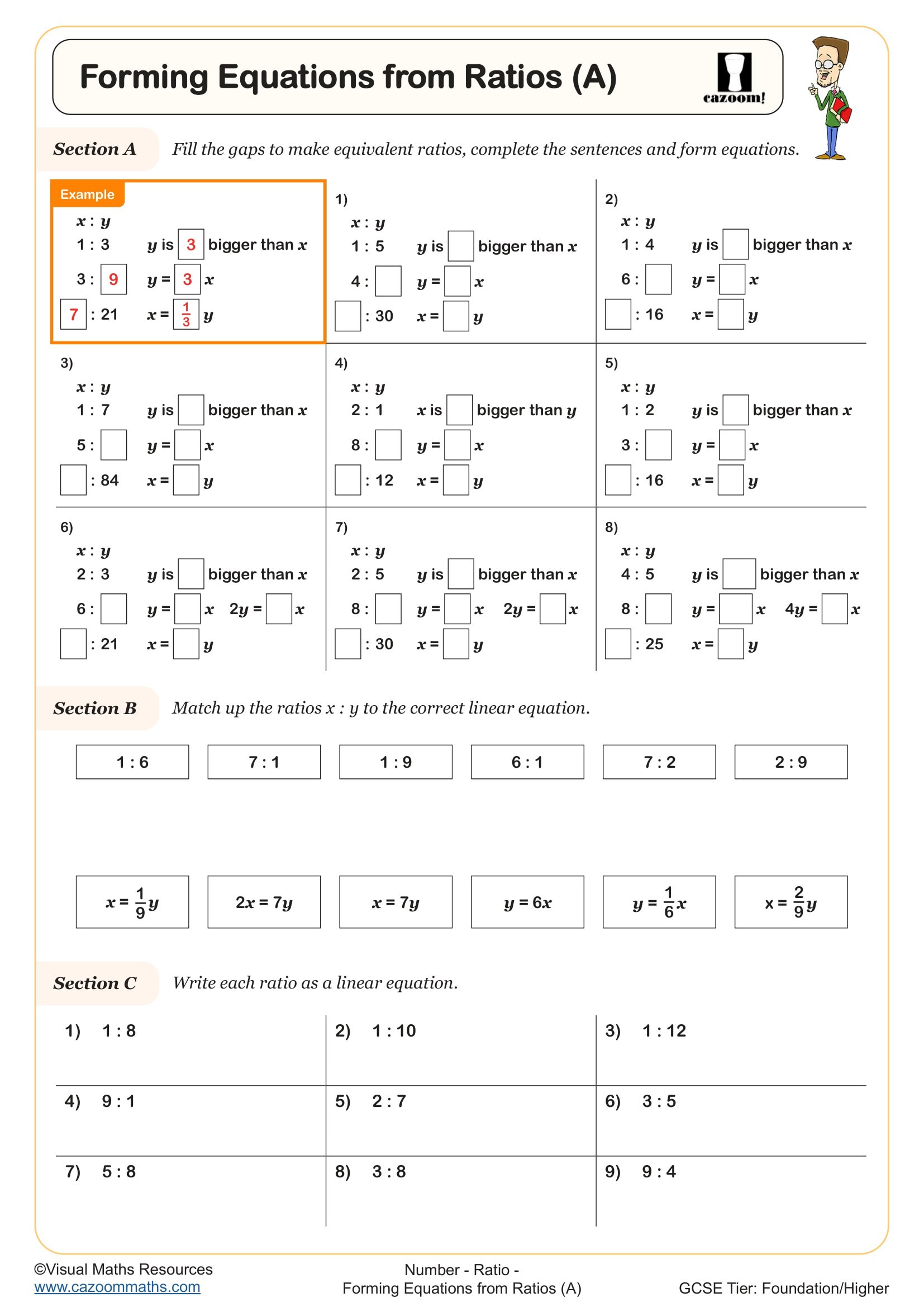
Fraction, Percentage and Ratio Problems
Year groups: 9, 10, 11
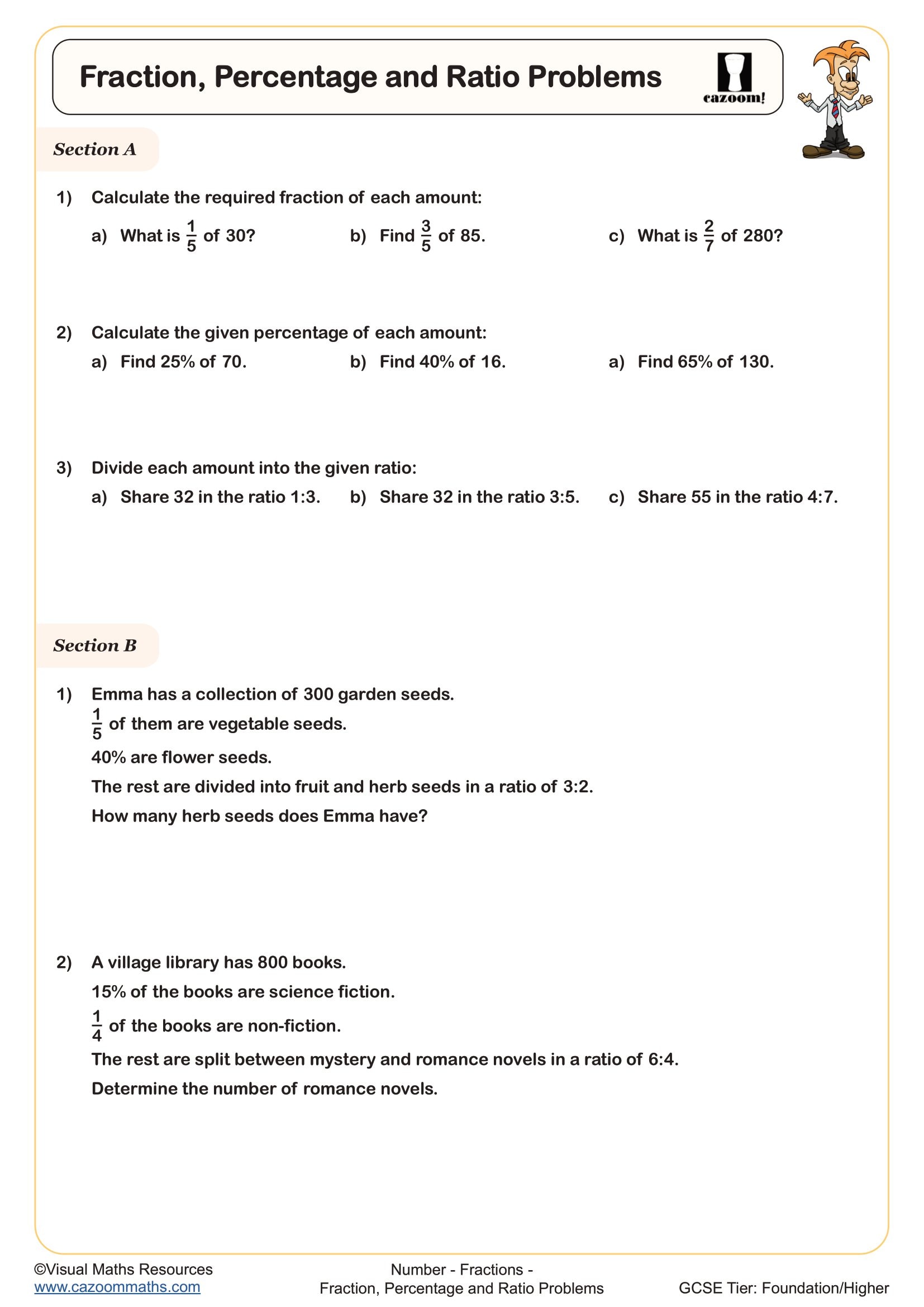
Changing Ratios
Year groups: 10, 11
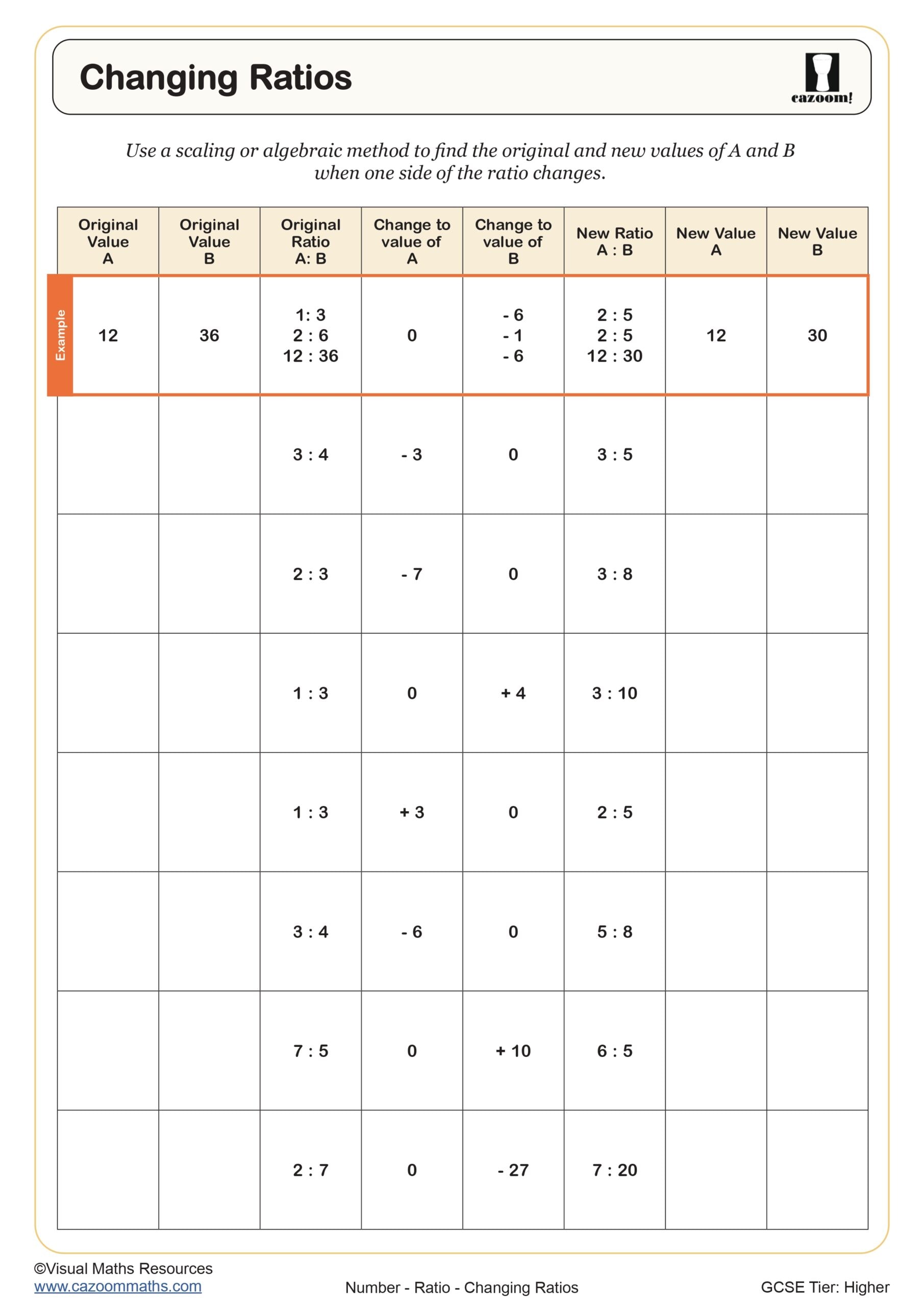
Forming Equations from Ratios (B)
Year groups: 10, 11
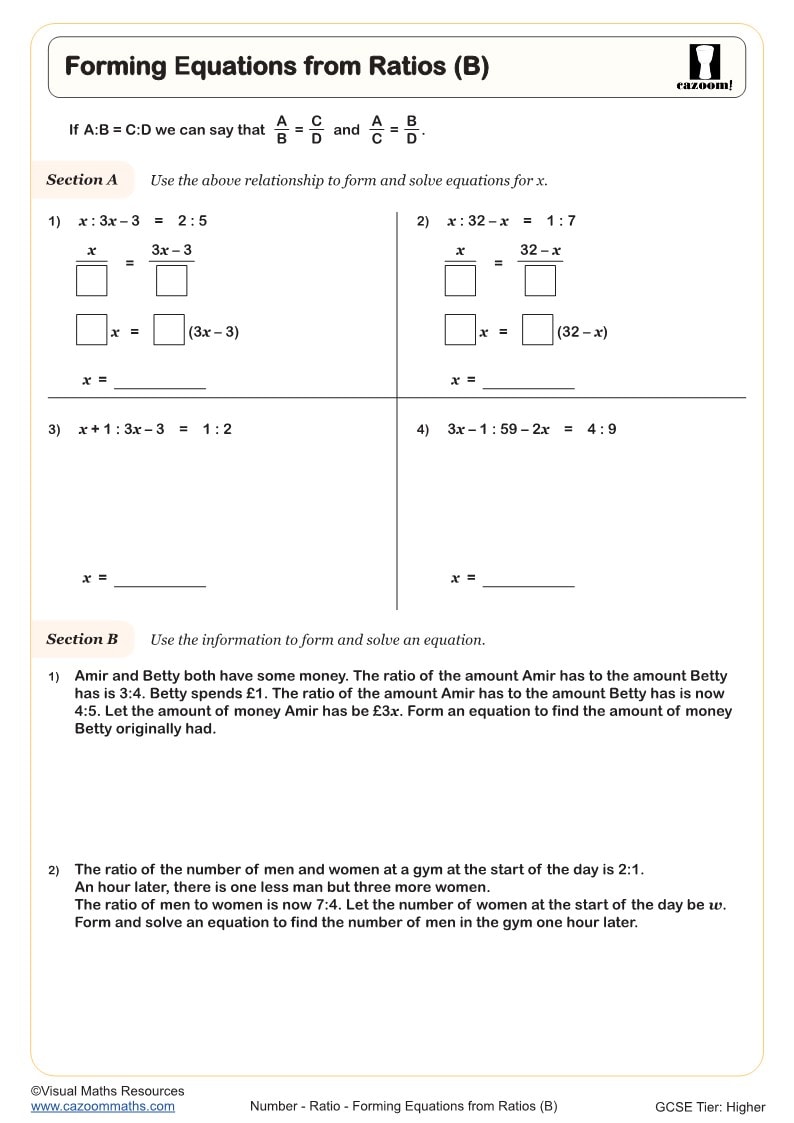
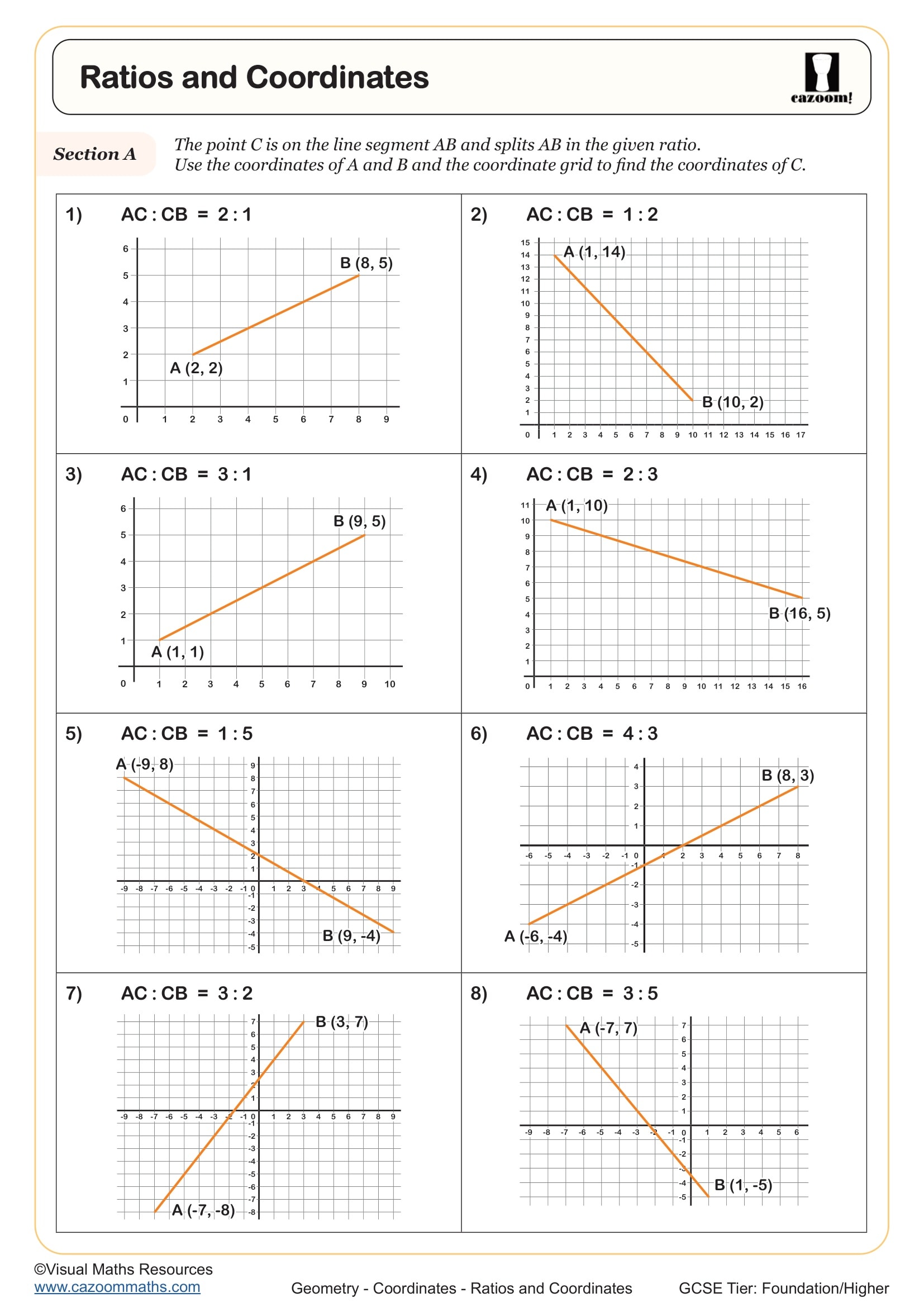
Ratios and Coordinates
Year groups: 10, 11
All worksheets are created by the team of experienced teachers at Cazoom Maths.
What makes effective ratio worksheets for secondary students?
Effective ratio worksheets build systematically from concrete sharing situations to abstract algebraic manipulation, aligning with National Curriculum expectations for proportional reasoning. They include varied question types covering simplification, equivalent ratios, and multi-step problems that mirror GCSE assessment objectives.
Teachers notice students often confuse ratio notation with fraction operations, particularly when simplifying ratios containing decimals. Quality worksheets address this by presenting ratios in multiple formats and requiring students to express answers in lowest terms, reinforcing the fundamental difference between ratio relationships and fractional parts.
Which year groups should use ratio worksheets and how does complexity progress?
Ratio concepts begin in Year 7 with simple sharing problems and progress through to complex proportion calculations in Years 10 and 11. The progression moves from whole number ratios like 2:3 to mixed number and decimal ratios, then to algebraic ratio problems involving unknowns.
Key Stage 3 students typically work with ratios in familiar contexts like mixing paints or sharing sweets, whilst Key Stage 4 students tackle abstract problems involving inverse proportion and compound ratios. Teachers report that the transition from arithmetic to algebraic thinking around ratios often occurs during Year 9, making this a critical point for targeted practice.
How do students develop skills in sharing quantities using ratios?
Sharing in a ratio requires students to understand that ratios represent relative quantities rather than absolute amounts, a concept many find challenging initially. Worksheets typically progress from two-part ratios with small whole numbers to three-part ratios involving larger quantities and mixed numbers.
Teachers observe that students frequently add ratio parts incorrectly or confuse the total with individual shares. Effective practice includes problems where students must first find the total number of parts before calculating individual amounts, such as dividing £120 in the ratio 2:3:5, where students must recognise that 2+3+5=10 parts total.
How can teachers use ratio worksheets to address common misconceptions?
Teachers find that structured worksheet practice helps identify and correct persistent ratio misconceptions, particularly the tendency to treat ratios as fractions or to add rather than multiply when scaling. Regular diagnostic use reveals whether students understand ratio as a multiplicative relationship.
Classroom experience shows that mixing procedural practice with contextual problems improves retention significantly. Teachers often use worksheets diagnostically at lesson starts, then return to specific question types where errors clustered, ensuring misconceptions don't become embedded before GCSE preparation begins.