Rounding Worksheets
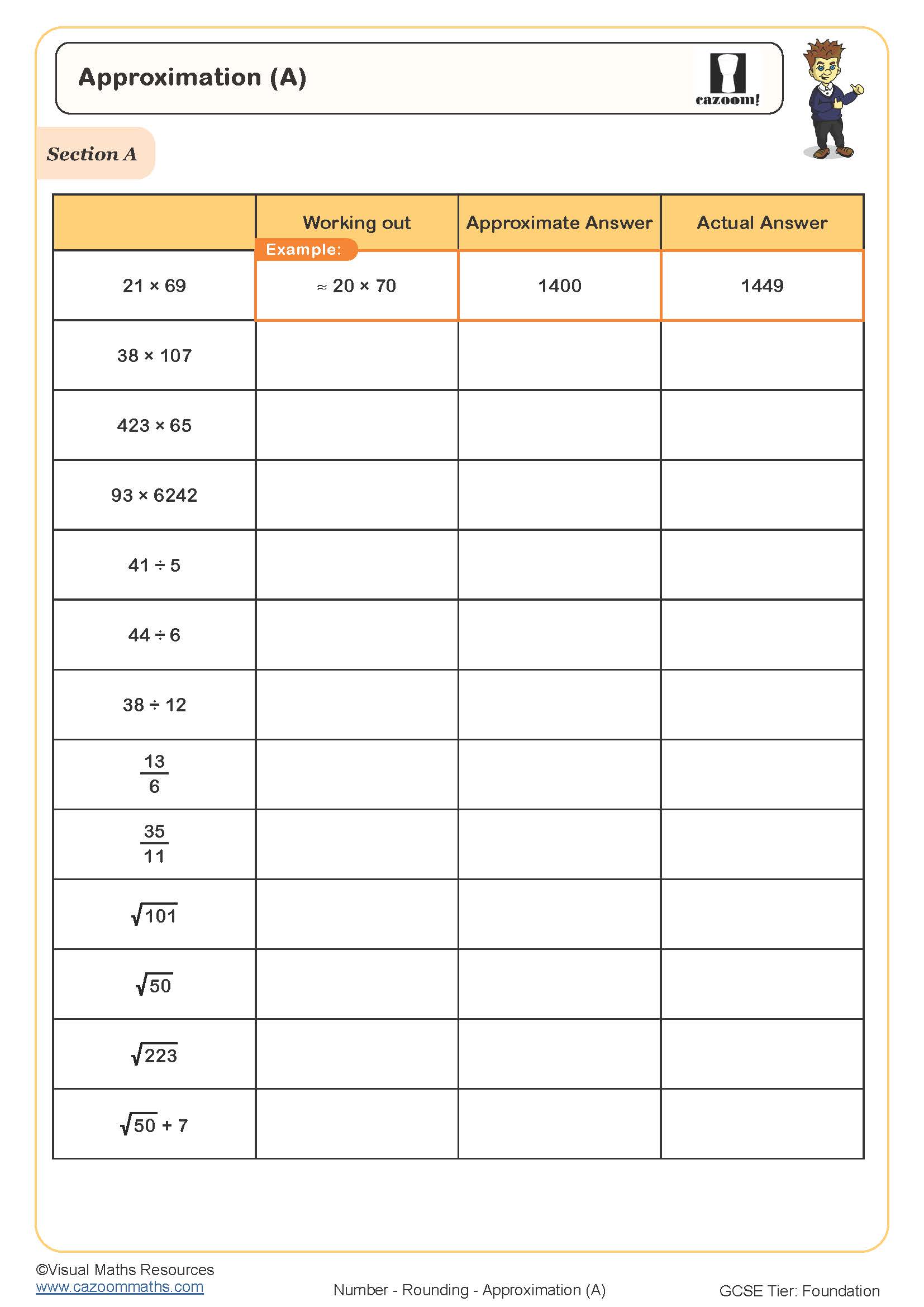
Approximation (A)
Year groups: 7, 8
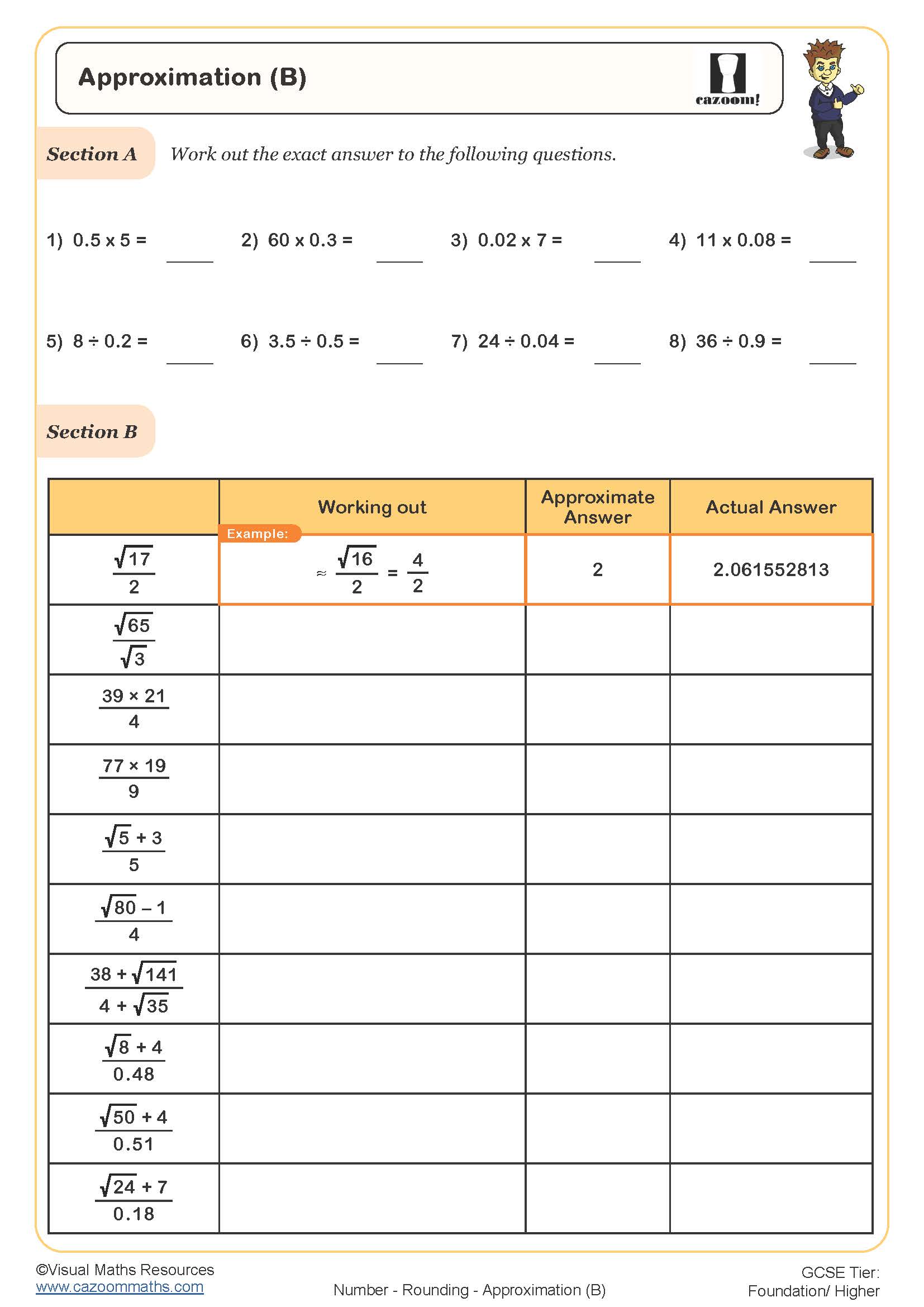
Approximation (B)
Year groups: 7, 8
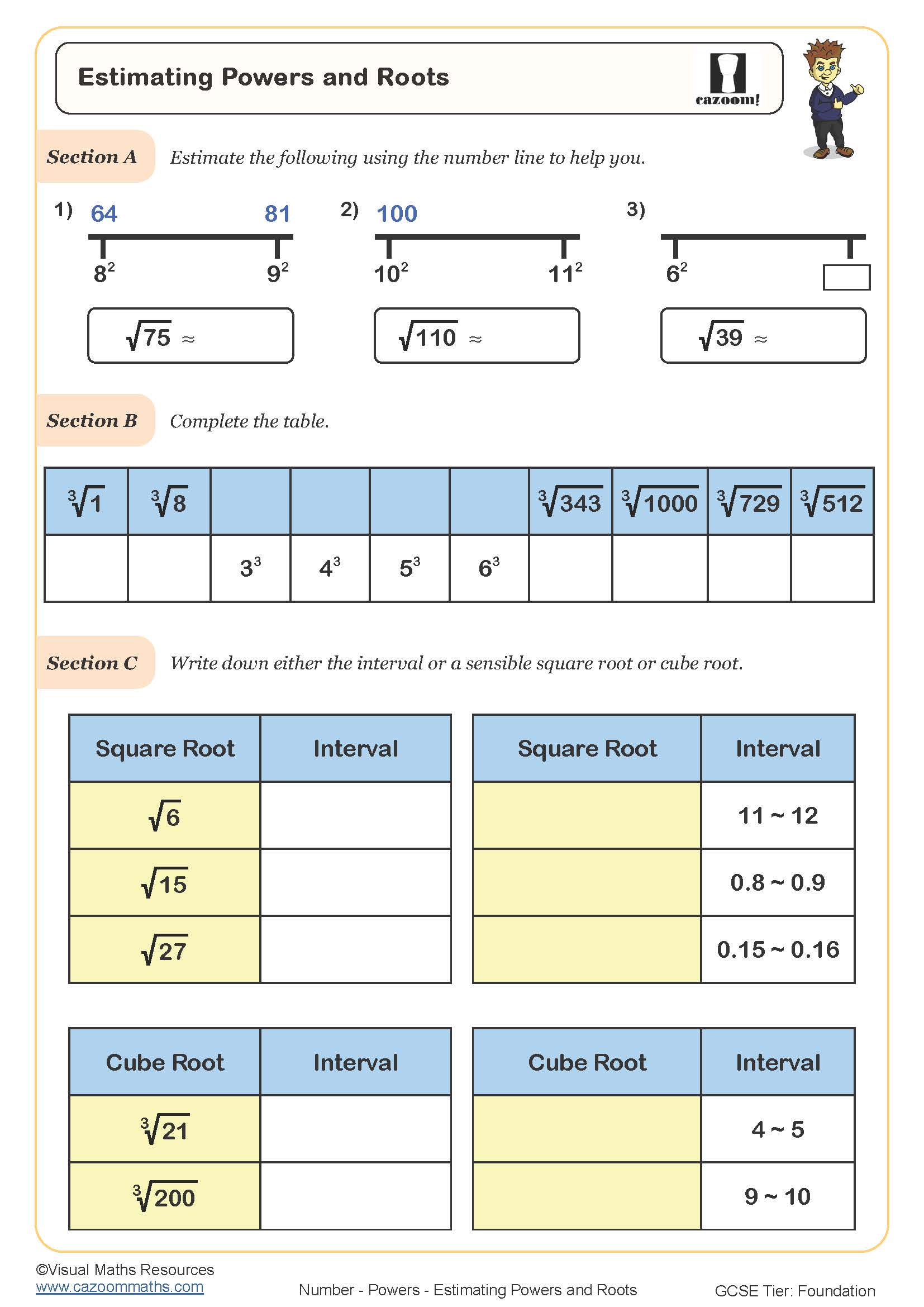
Estimating Powers and Roots
Year groups: 7, 8
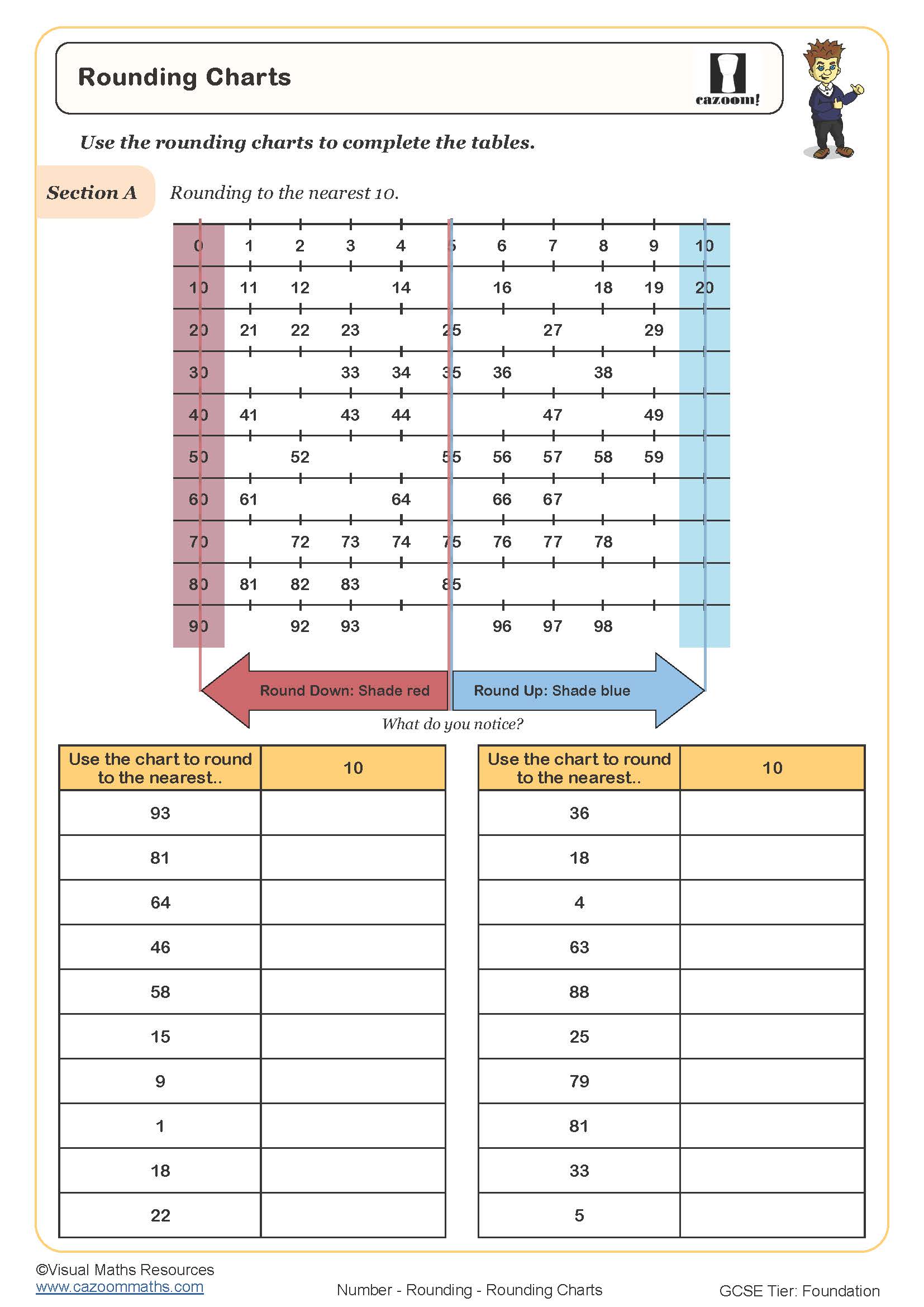
Rounding Charts
Year groups: 7, 8
Rounding Mixed Exercise
Year groups: 7, 8
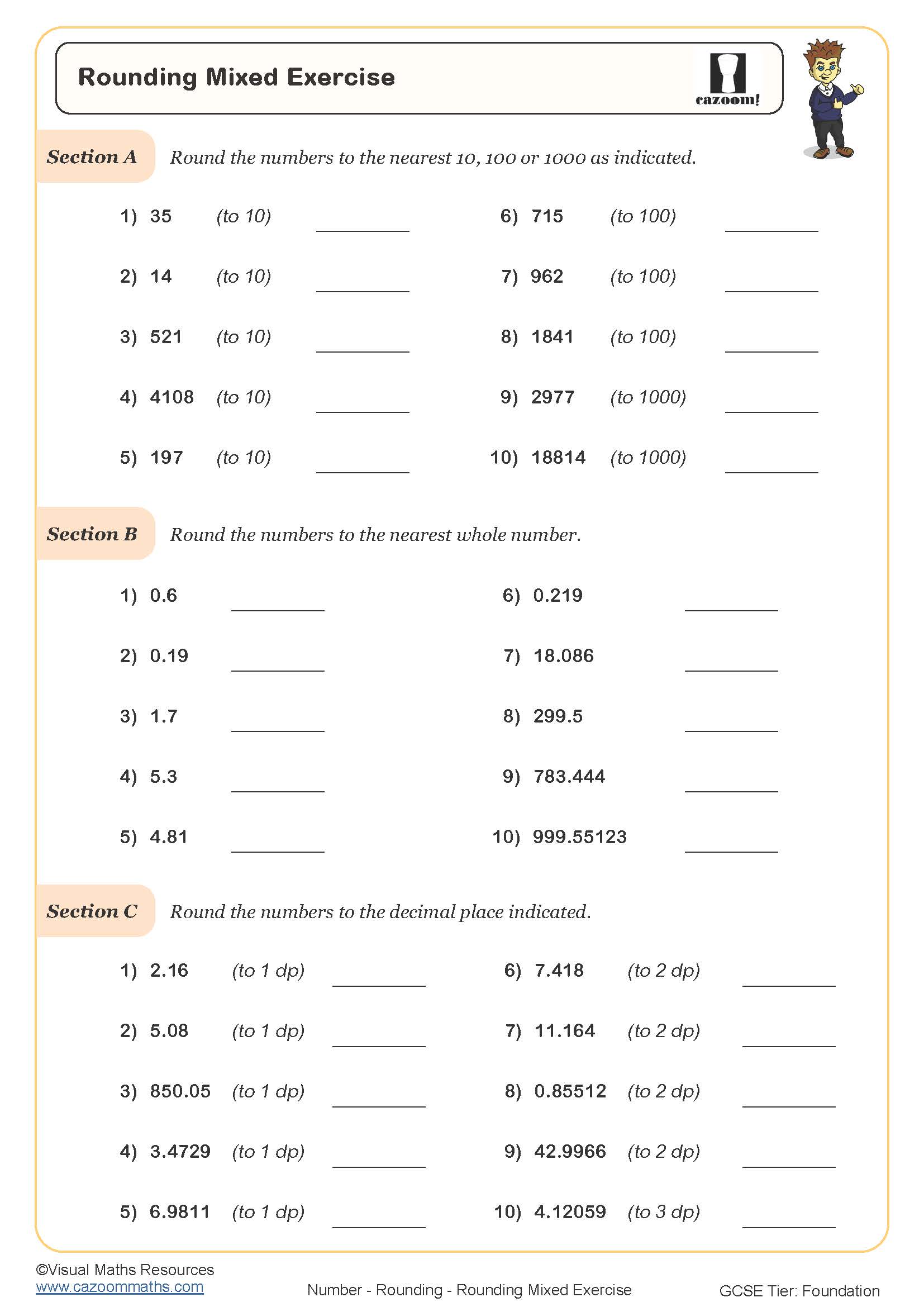
Rounding to Decimal Places
Year groups: 7, 8
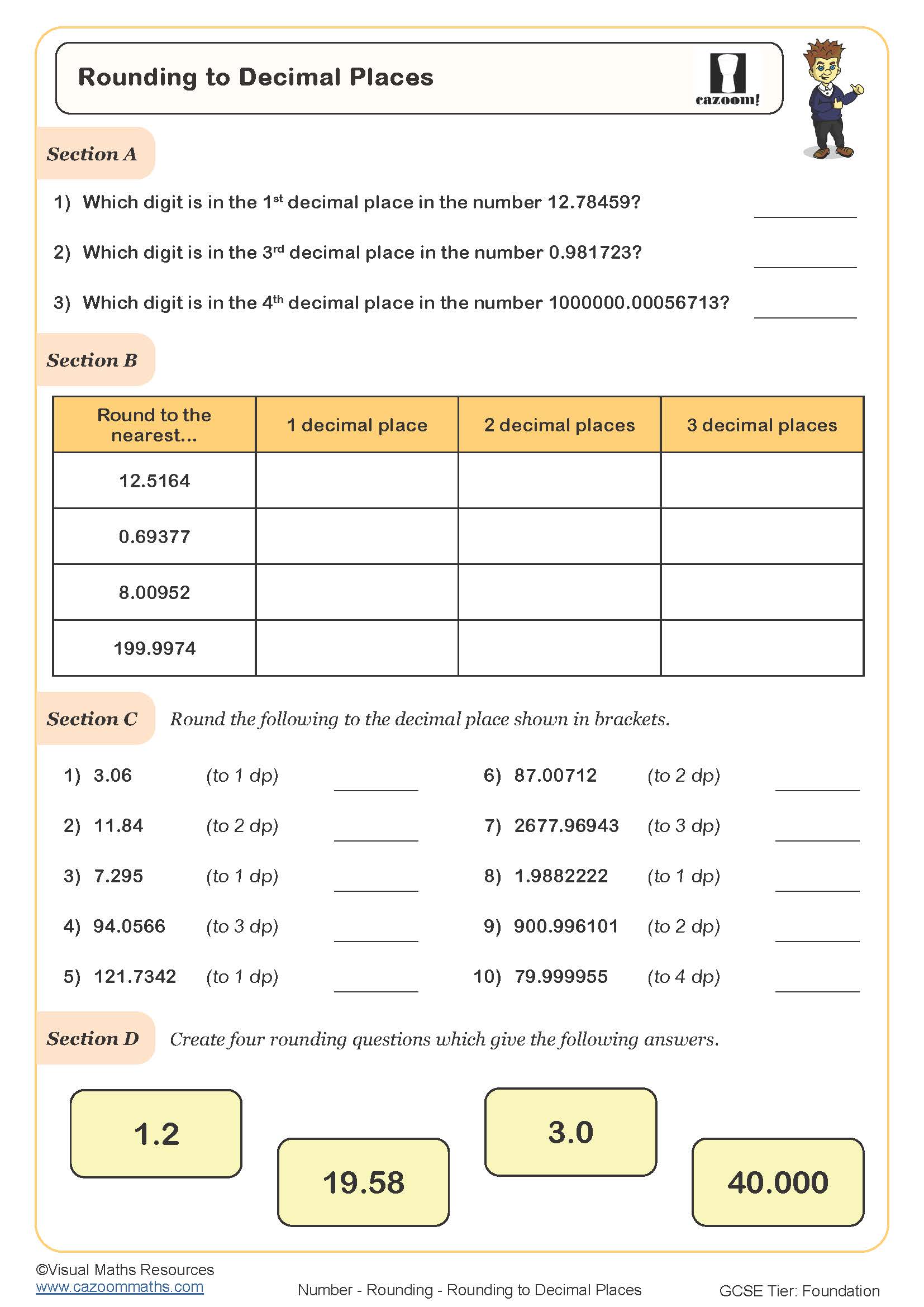
Rounding to One Decimal Place
Year groups: 7, 8
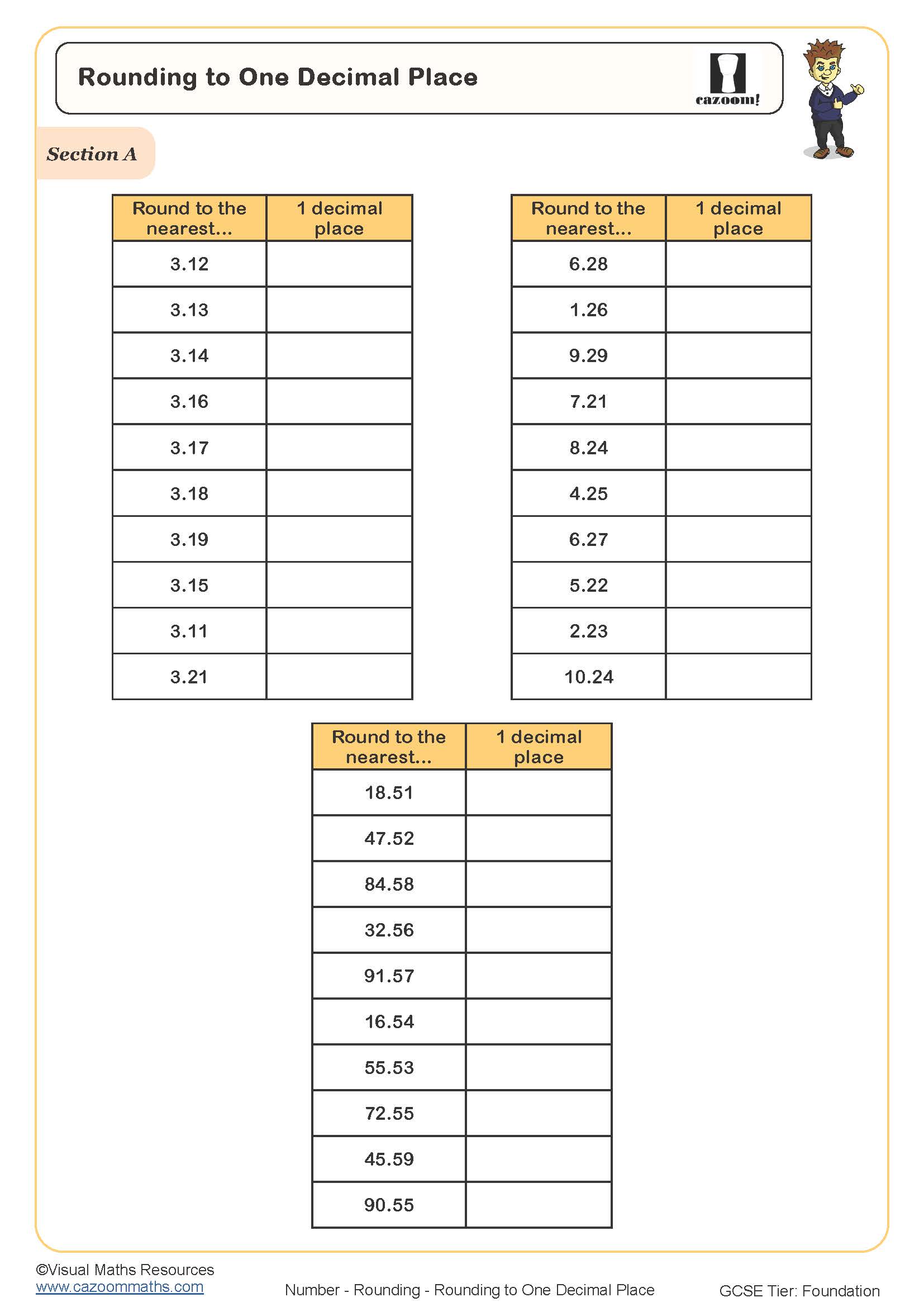
Rounding to the Nearest Hundred
Year groups: 7, 8
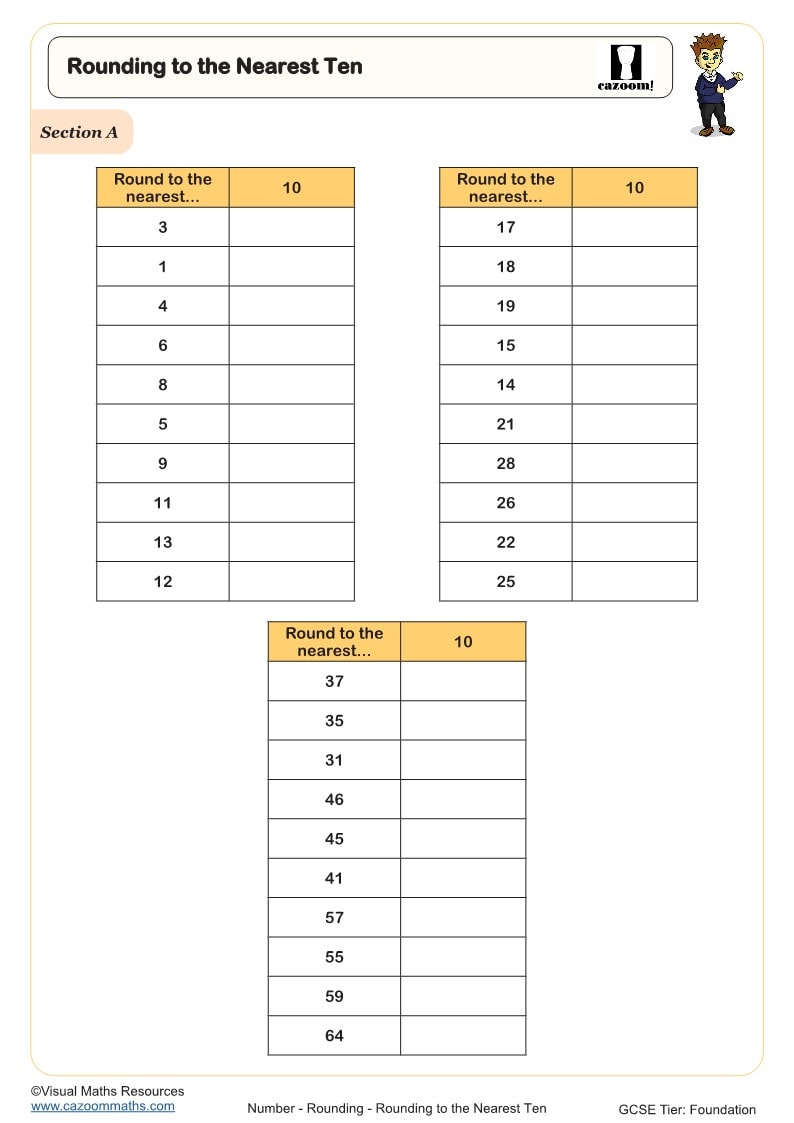
Rounding to the Nearest Ten
Year groups: 7, 8
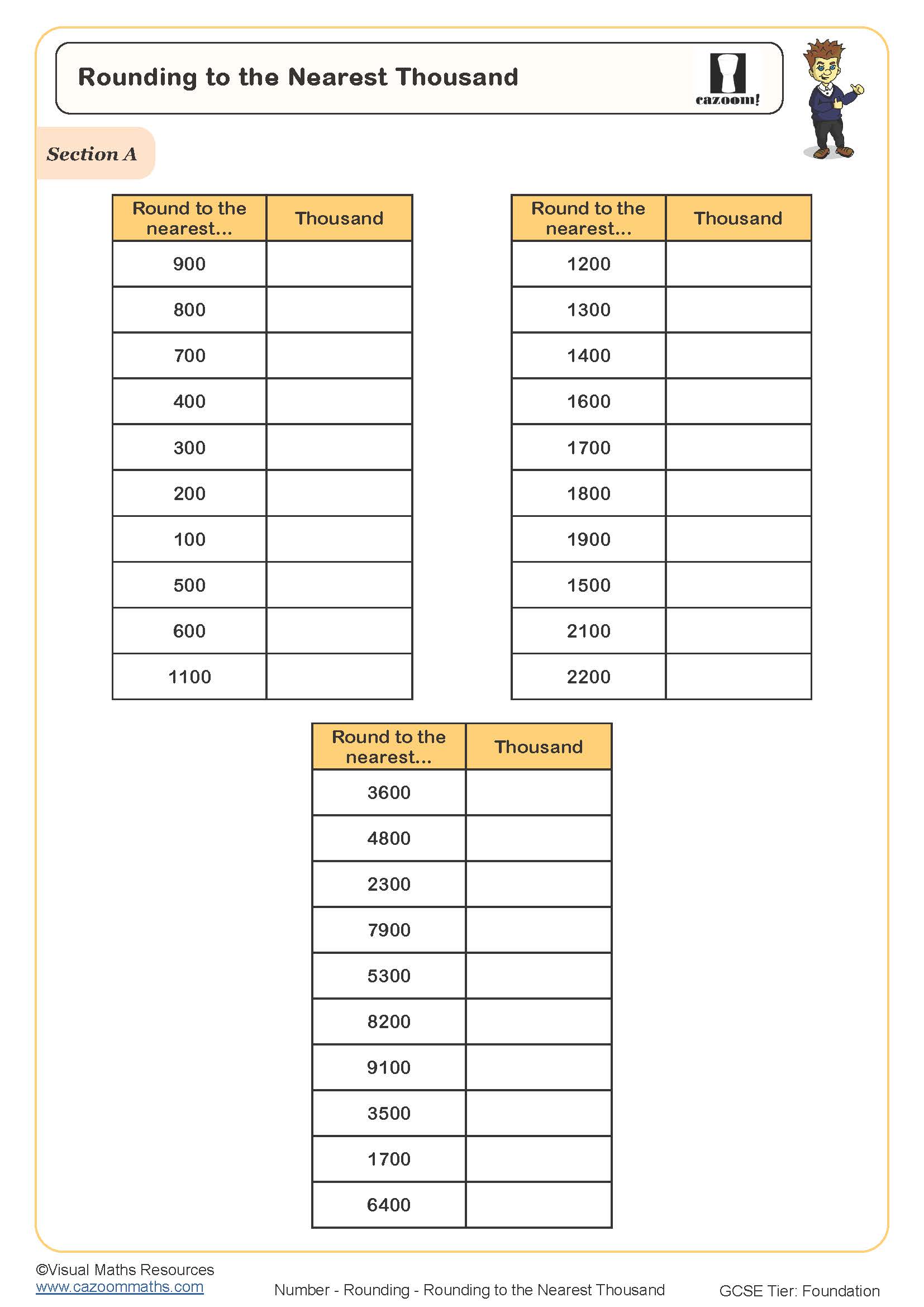
Rounding to the Nearest Thousand
Year groups: 7, 8
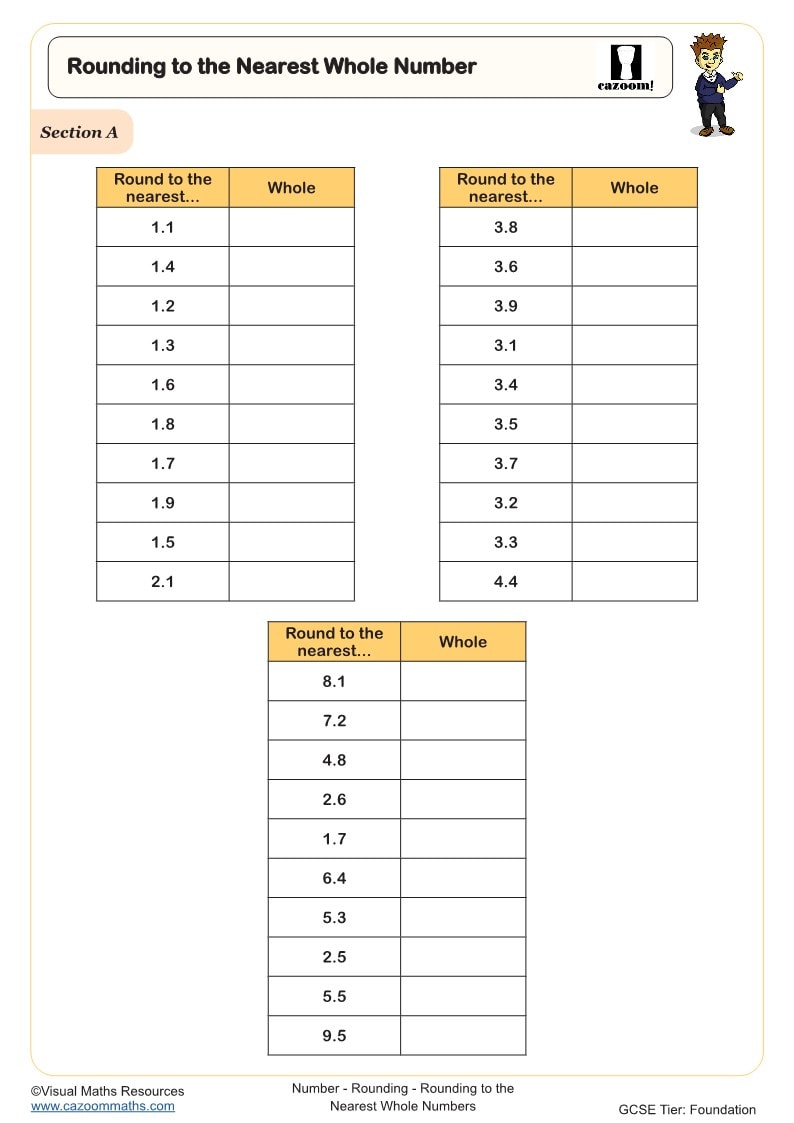
Rounding to the Nearest Whole Number
Year groups: 7, 8
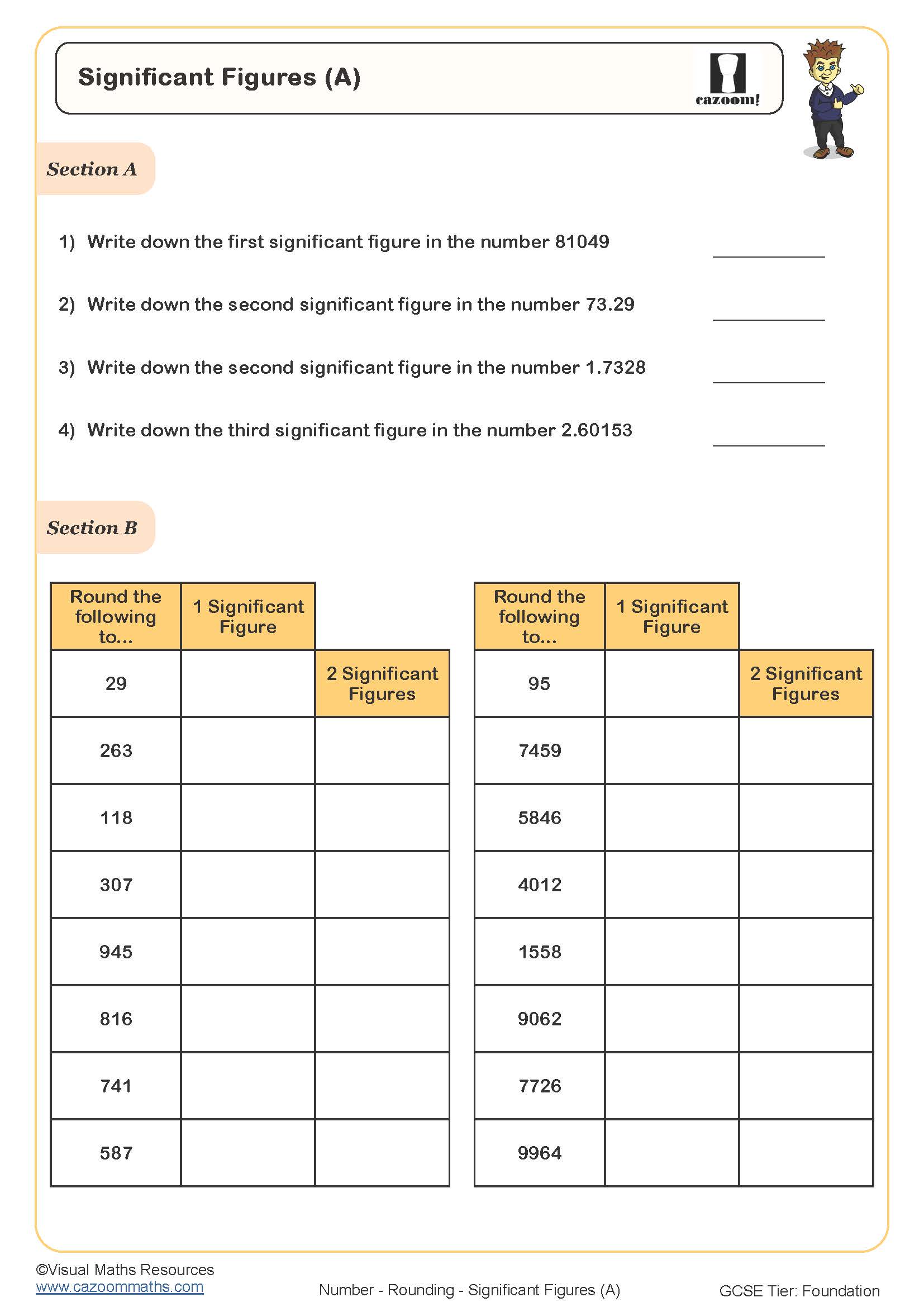
Significant Figures (A)
Year groups: 7, 8
Significant Figures (B)
Year groups: 7, 8
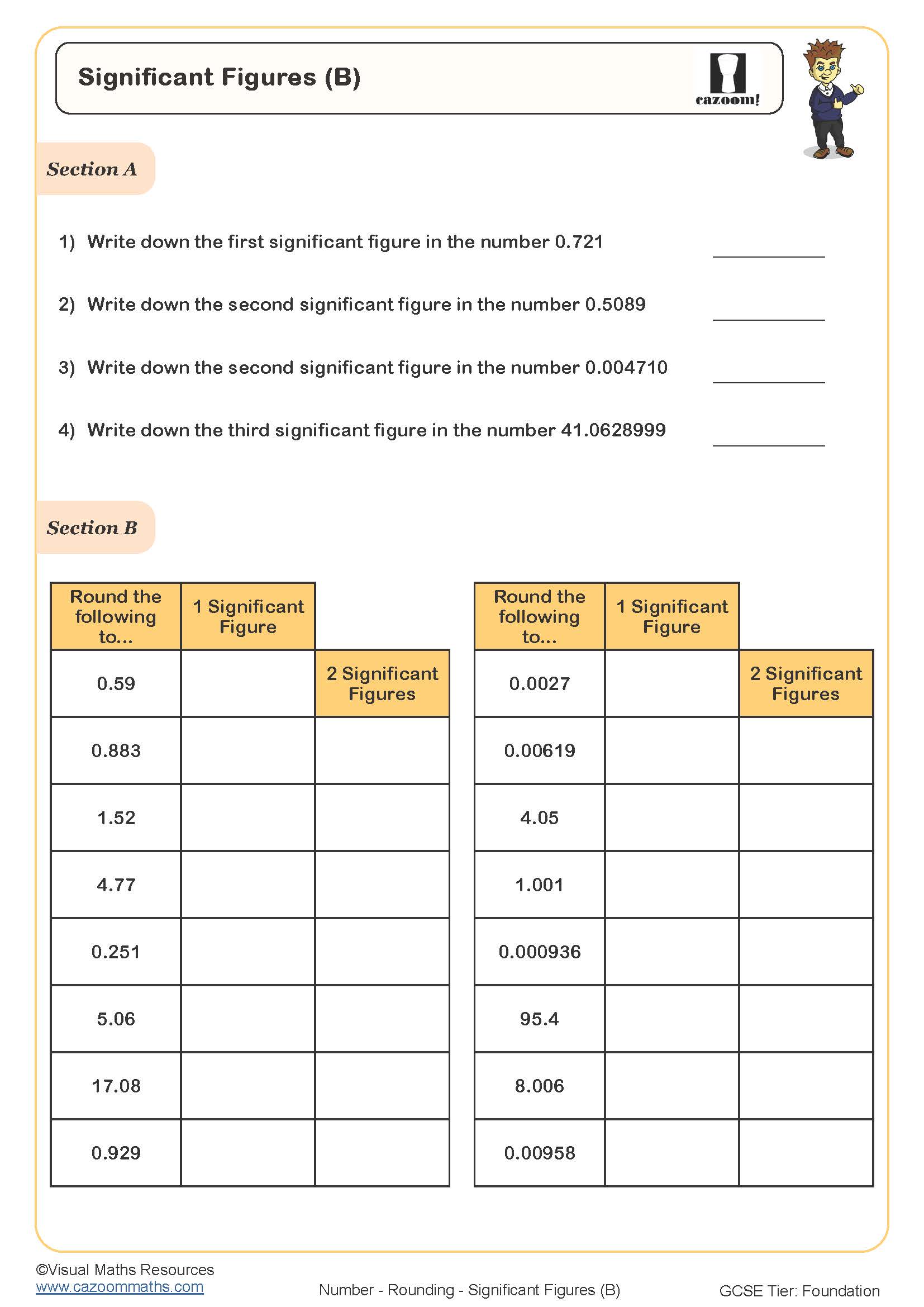
Upper and Lower Bounds
Year groups: 8, 9
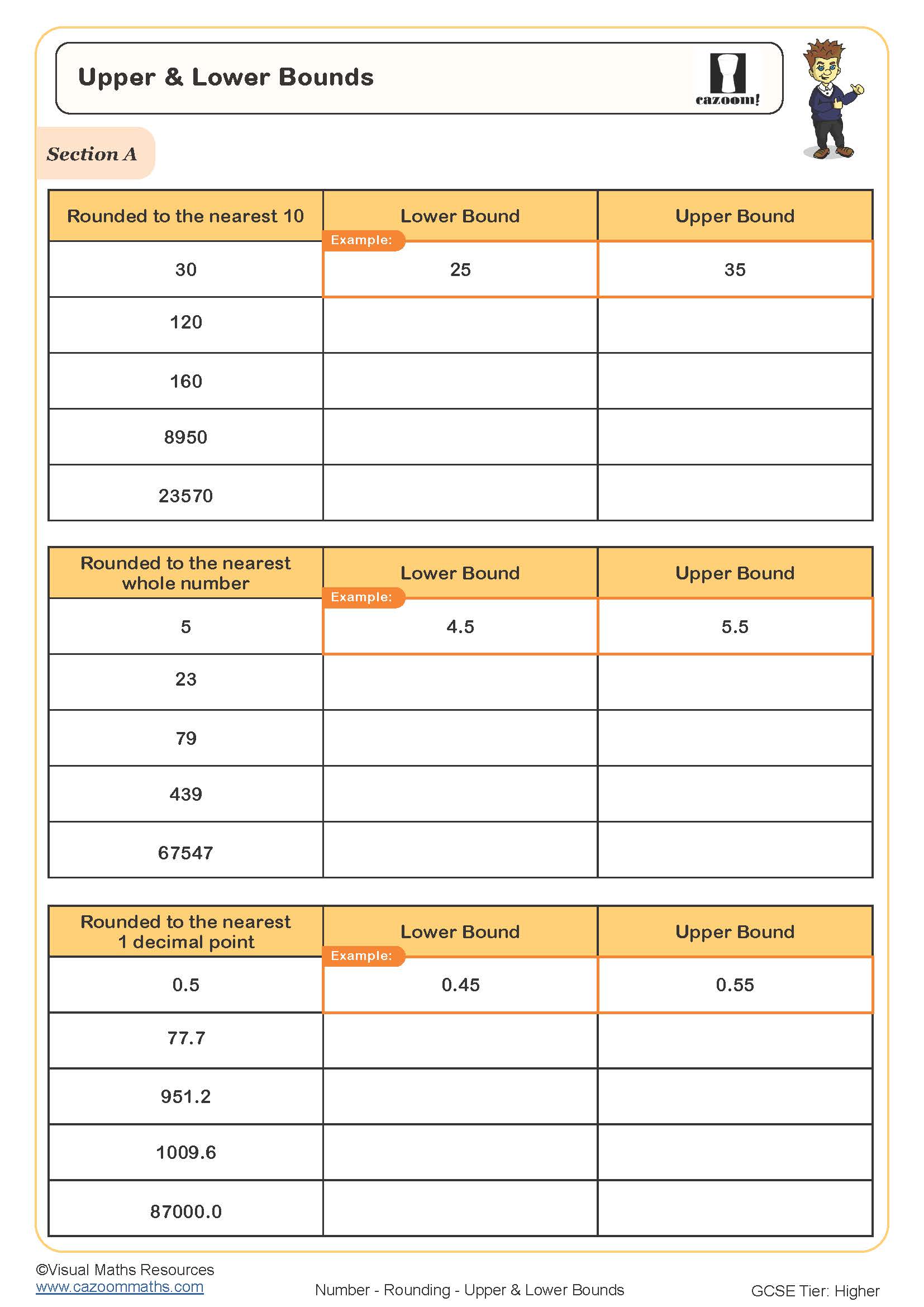
Calculating with Bounds
Year groups: 10, 11
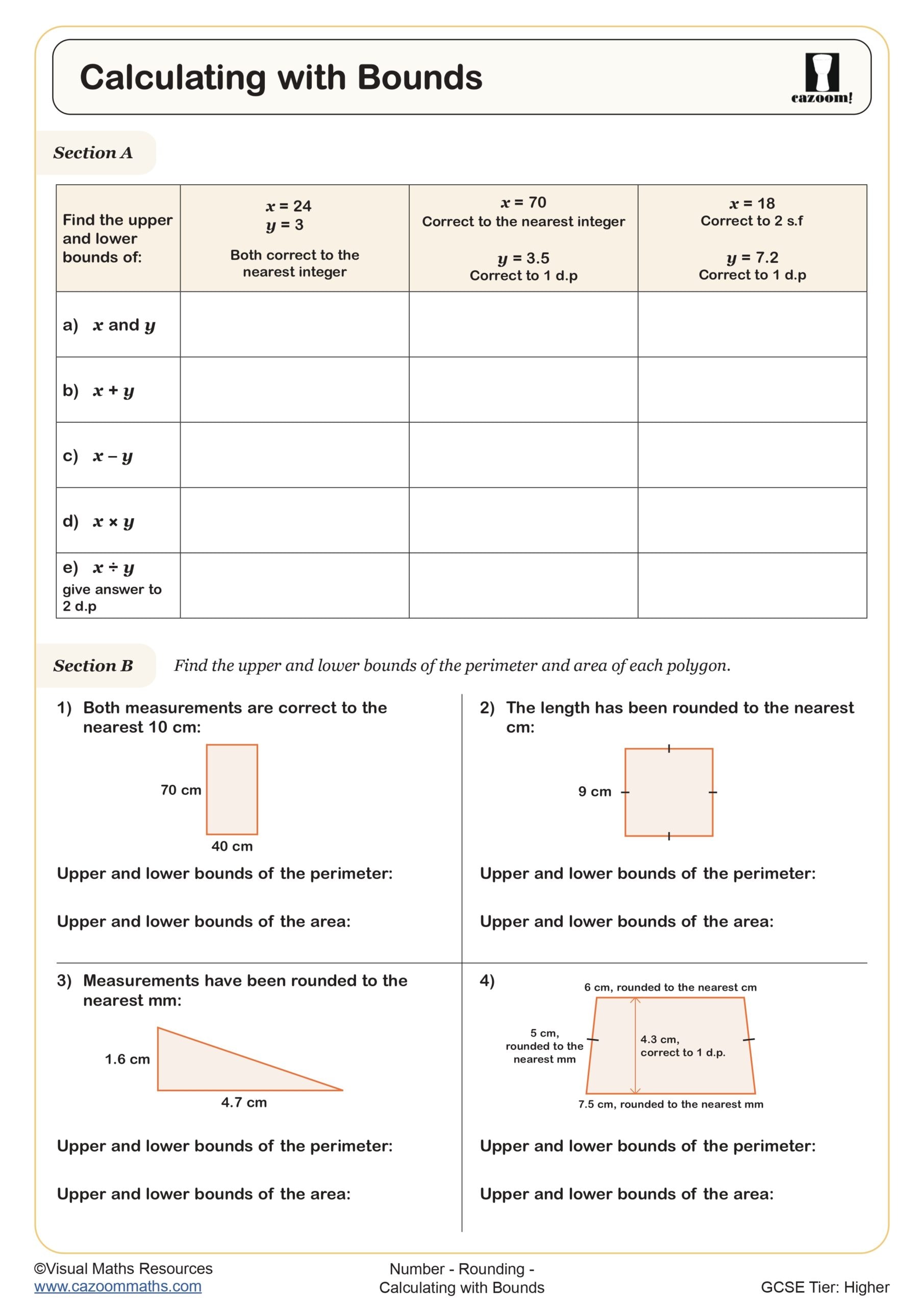
Error Intervals - Rounding
Year groups: 10, 11
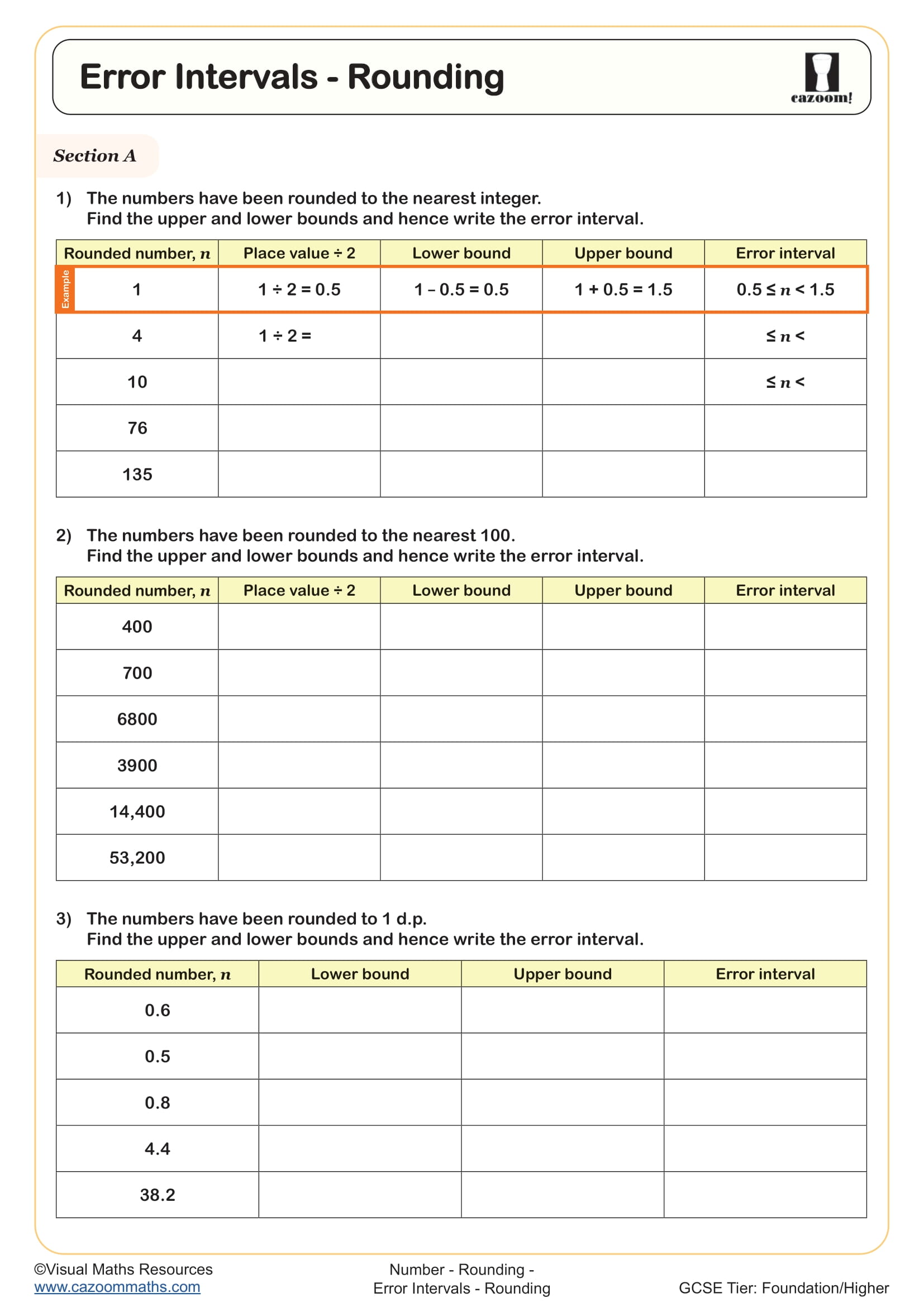
Truncating and Error Intervals
Year groups: 10, 11
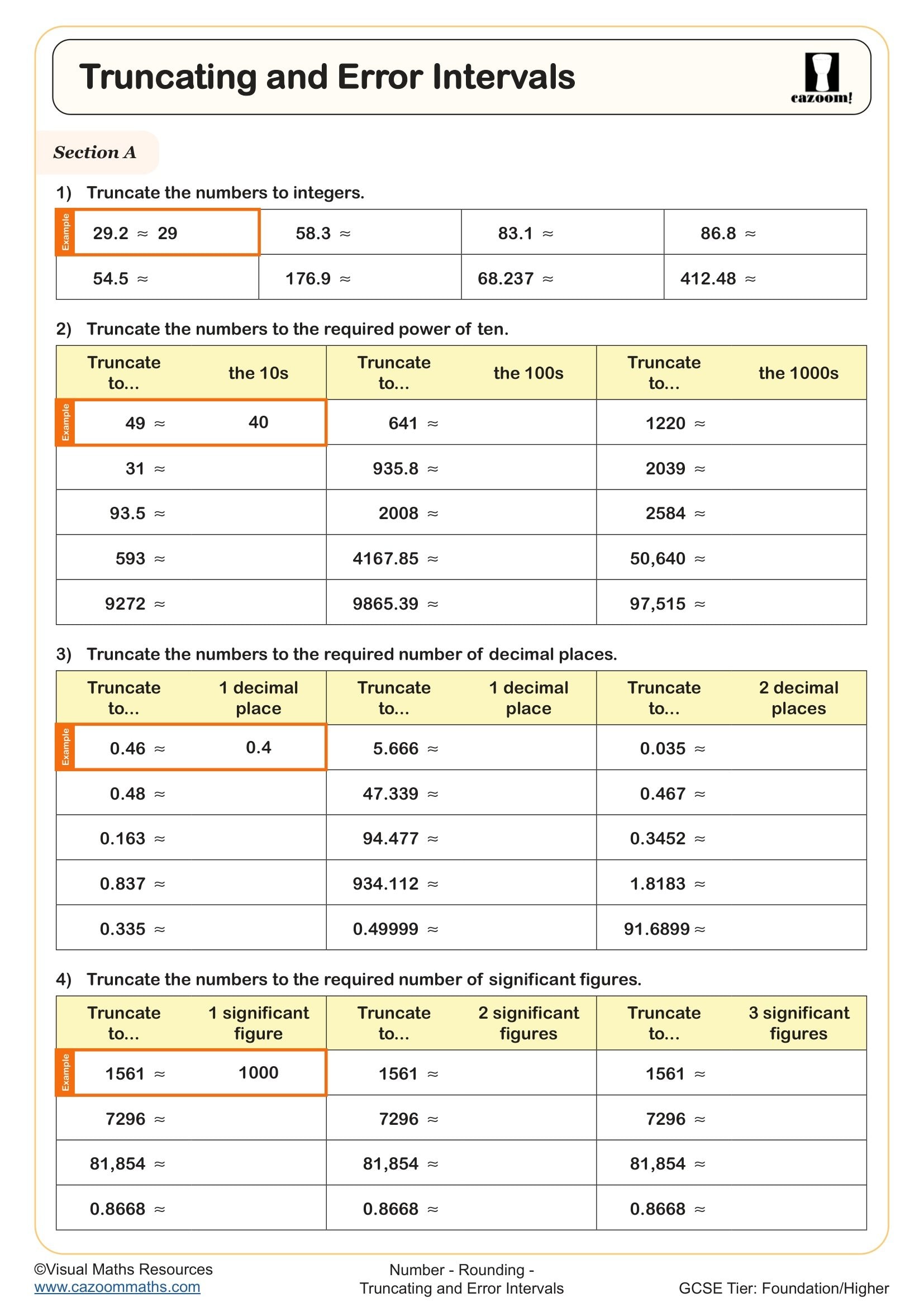
All worksheets are created by the team of experienced teachers at Cazoom Maths.
What makes effective rounding worksheets for secondary students?
Effective rounding worksheets systematically progress from whole numbers to decimals, incorporating both 'round to the nearest' and 'round to a given number of decimal places' questions. The National Curriculum expects KS3 students to round confidently to any power of 10, whilst GCSE students must apply rounding in context, particularly within algebraic manipulation and statistical work.
Teachers consistently notice that students who struggle with rounding often lack understanding of place value rather than the rounding rules themselves. Quality rounding numbers worksheets therefore include place value revision alongside varied question types, ensuring students recognise that rounding 4.5 to the nearest whole number requires understanding of the 'round up when 5' convention that varies between examination boards.
Which year groups should focus on different rounding skills?
Year 7 students typically consolidate rounding whole numbers and begin decimal work, progressing to rounding to one decimal place by year-end. Years 8-9 extend this to multiple decimal places and significant figures, whilst GCSE students apply rounding within algebraic contexts and interpret rounding errors in statistical analysis.
Maths teachers find that rushing through basic decimal place rounding creates gaps that resurface during GCSE coursework. Students who haven't mastered rounding 23.456 to 2 decimal places will struggle with standard form calculations and percentage error questions. This progression explains why rounding exercises should maintain regular review rather than being treated as a standalone topic finished in one term.
How should students approach significant figure rounding differently?
Significant figure rounding requires students to identify the first non-zero digit and count from there, unlike decimal place rounding which counts from the decimal point. This distinction proves challenging since students must recognise that 0.00456 rounded to 2 significant figures becomes 0.0046, not 0.00.
Classroom experience shows students often apply decimal place rules to significant figure questions, particularly in scientific contexts where precision matters. Teachers report success when explicitly contrasting these methods side-by-side, using examples like population data where 23,456,789 people becomes 23,000,000 (2 s.f.) rather than 23,456,790.00 (2 d.p.). This understanding becomes valuable for physics calculations and chemistry practical work.
How can teachers use rounding worksheets most effectively in lessons?
Strategic use involves starting each rounding lesson with diagnostic questions to identify specific misconceptions before introducing new material. The answer sheets enable peer marking activities where students explain their reasoning, revealing whether errors stem from place value confusion or misapplied rules.
Many teachers structure rounding practice across multiple short sessions rather than intensive single lessons, as research suggests distributed practice improves retention. Incorporating real-world contexts like sports statistics, scientific measurements, or financial calculations helps students appreciate when approximate answers are more appropriate than exact values. This contextual approach particularly benefits students preparing for GCSE problem-solving questions where rounding decisions affect mark allocation.