Year 7 Probability Worksheets
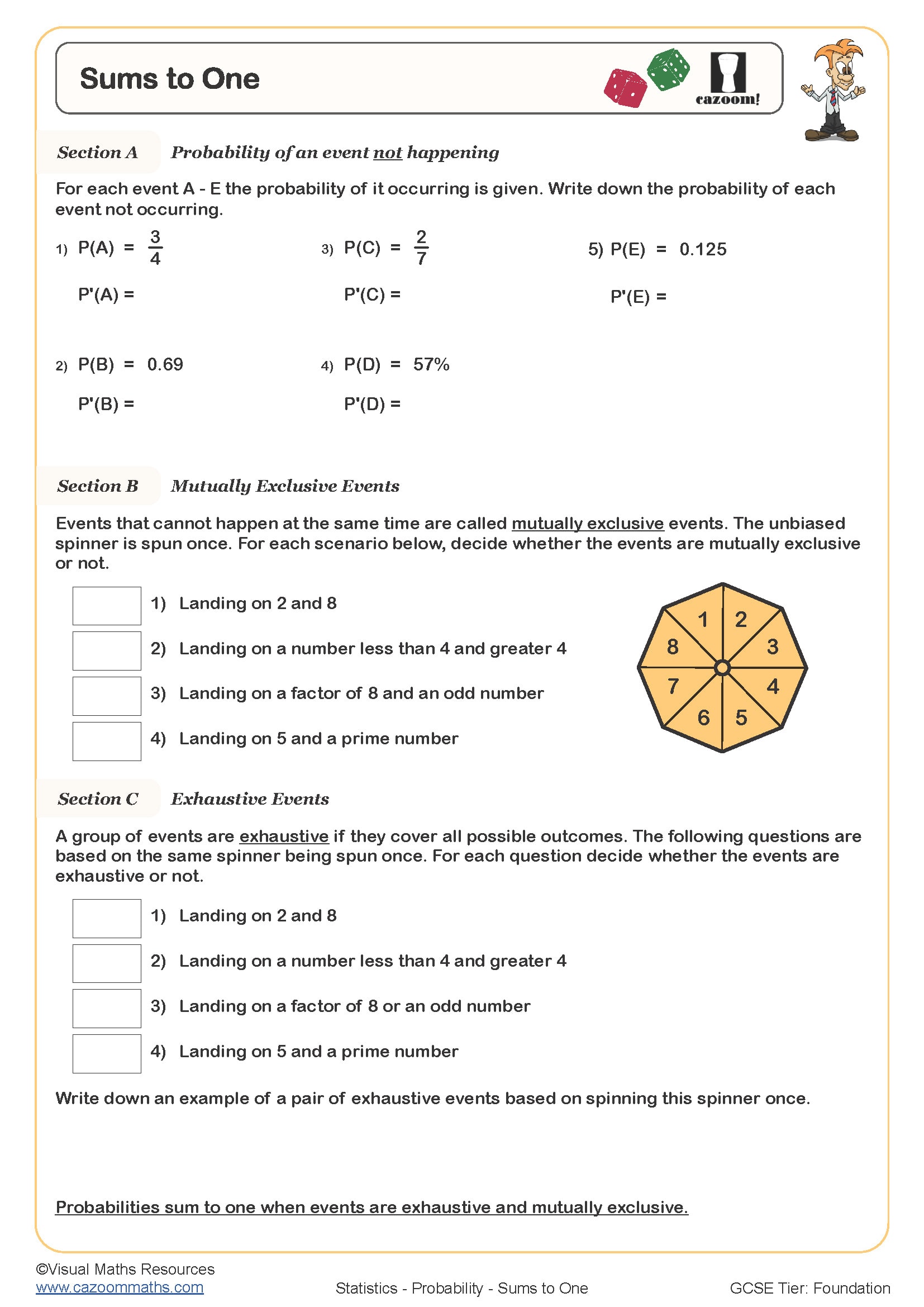
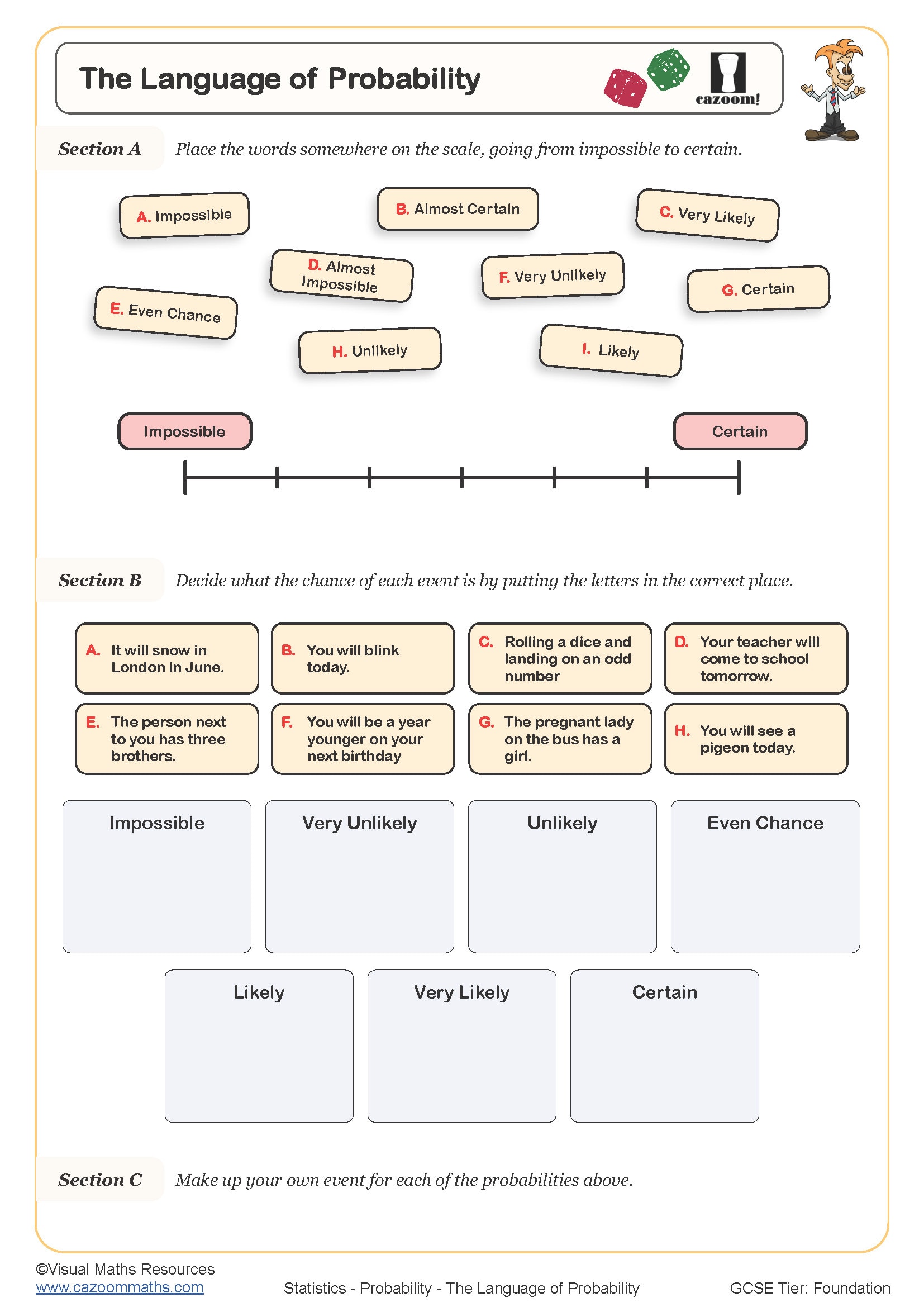
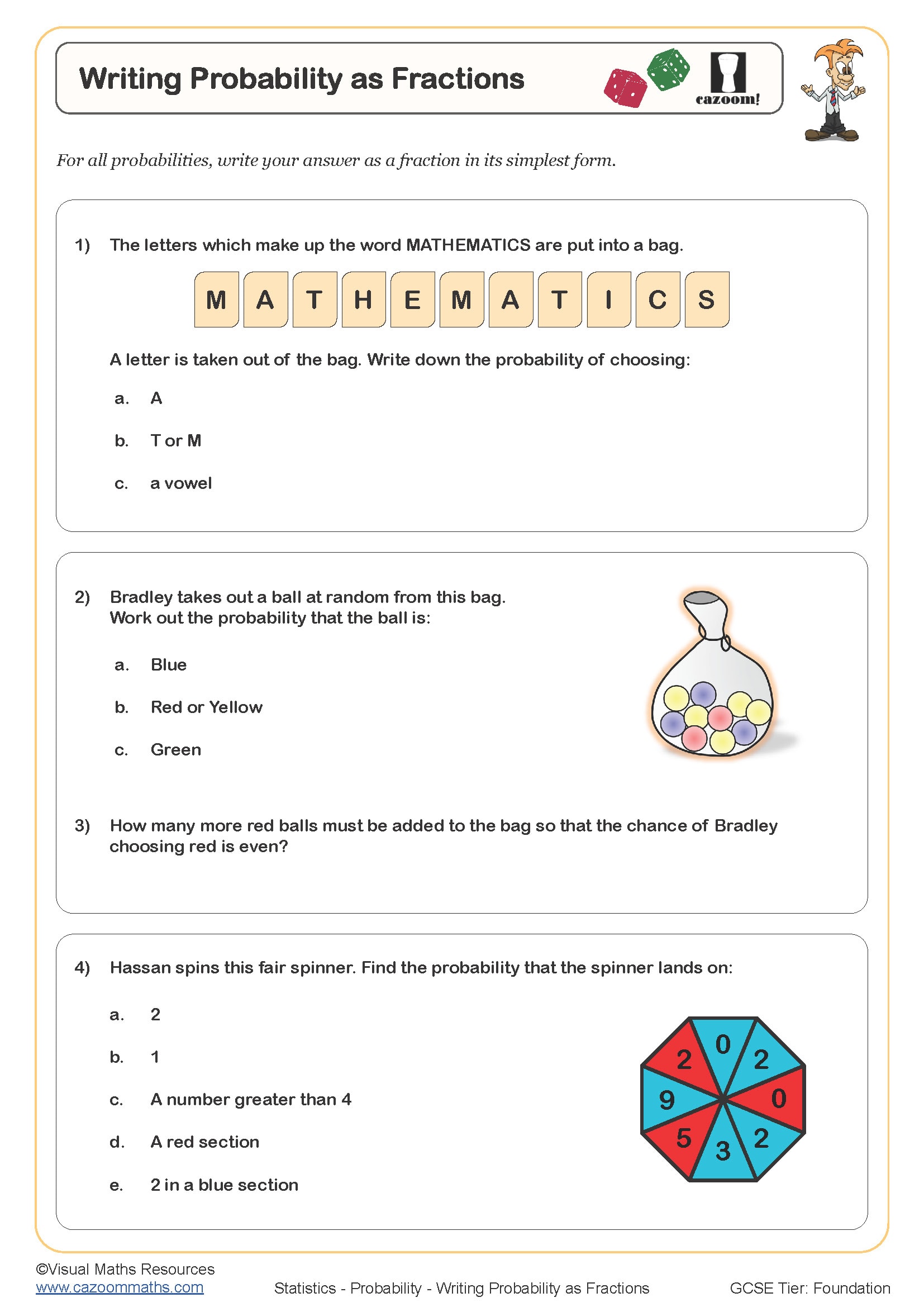
All worksheets are created by the team of experienced teachers at Cazoom Maths.
What topics are covered in a year 7 probability worksheet?
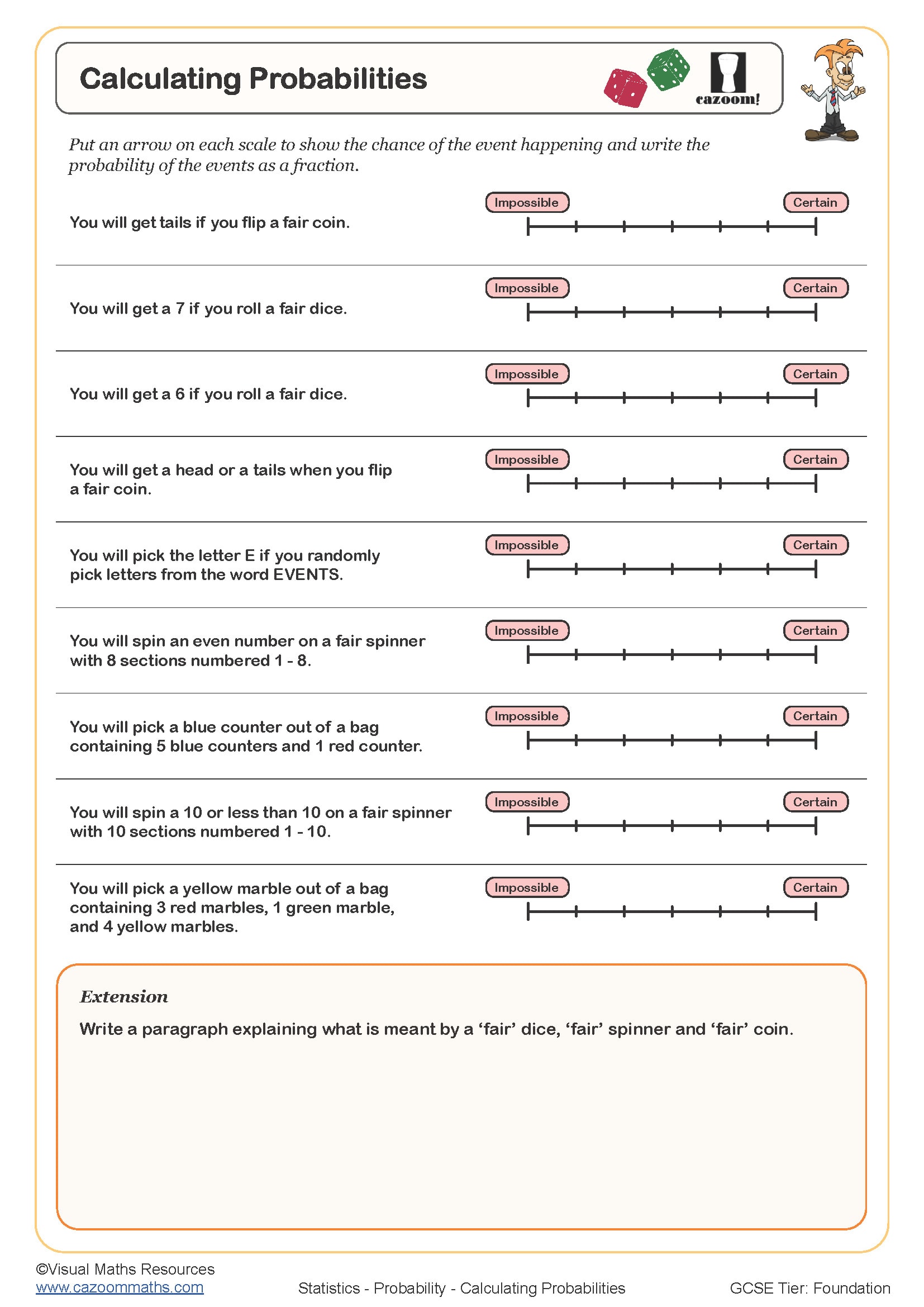
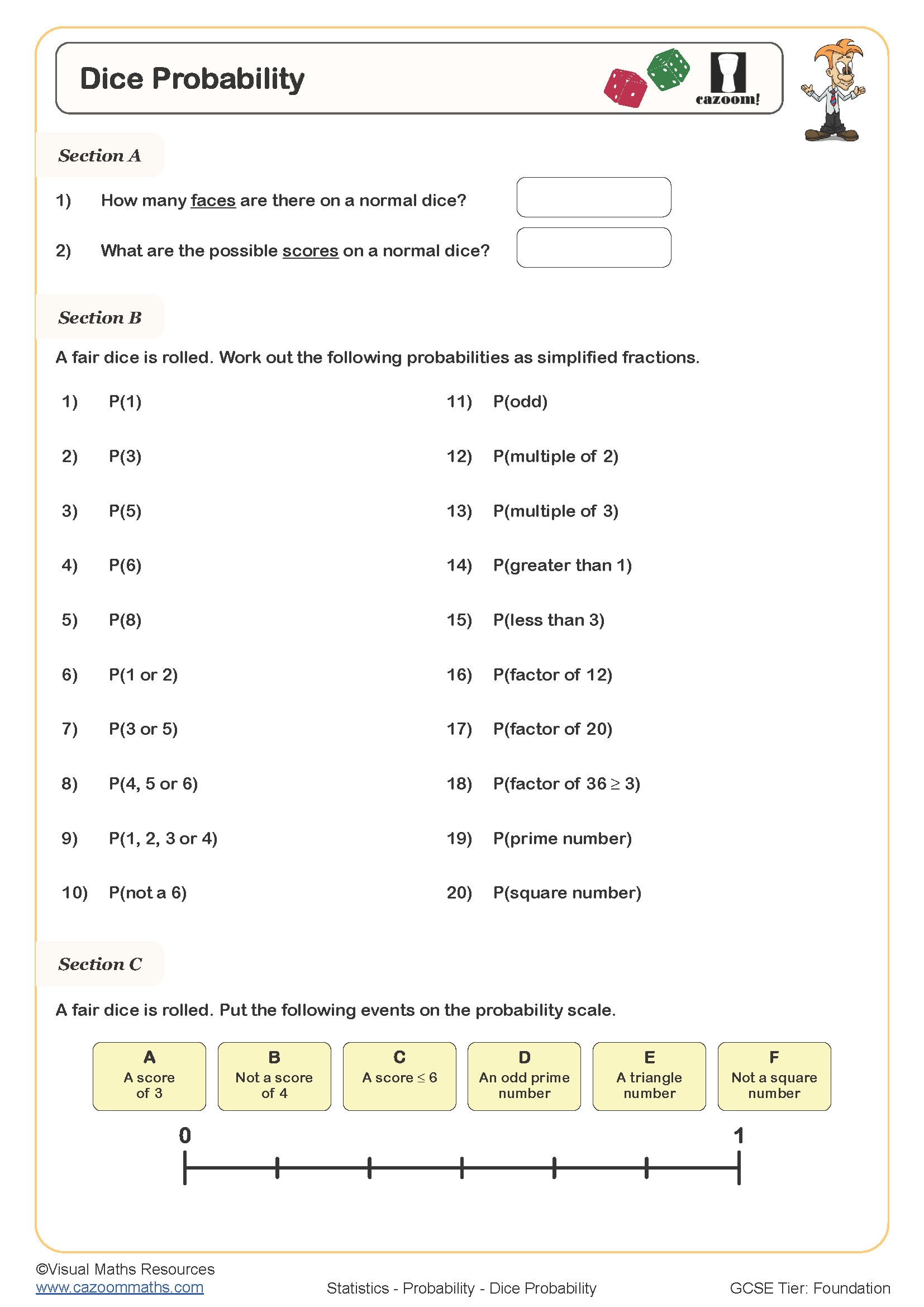
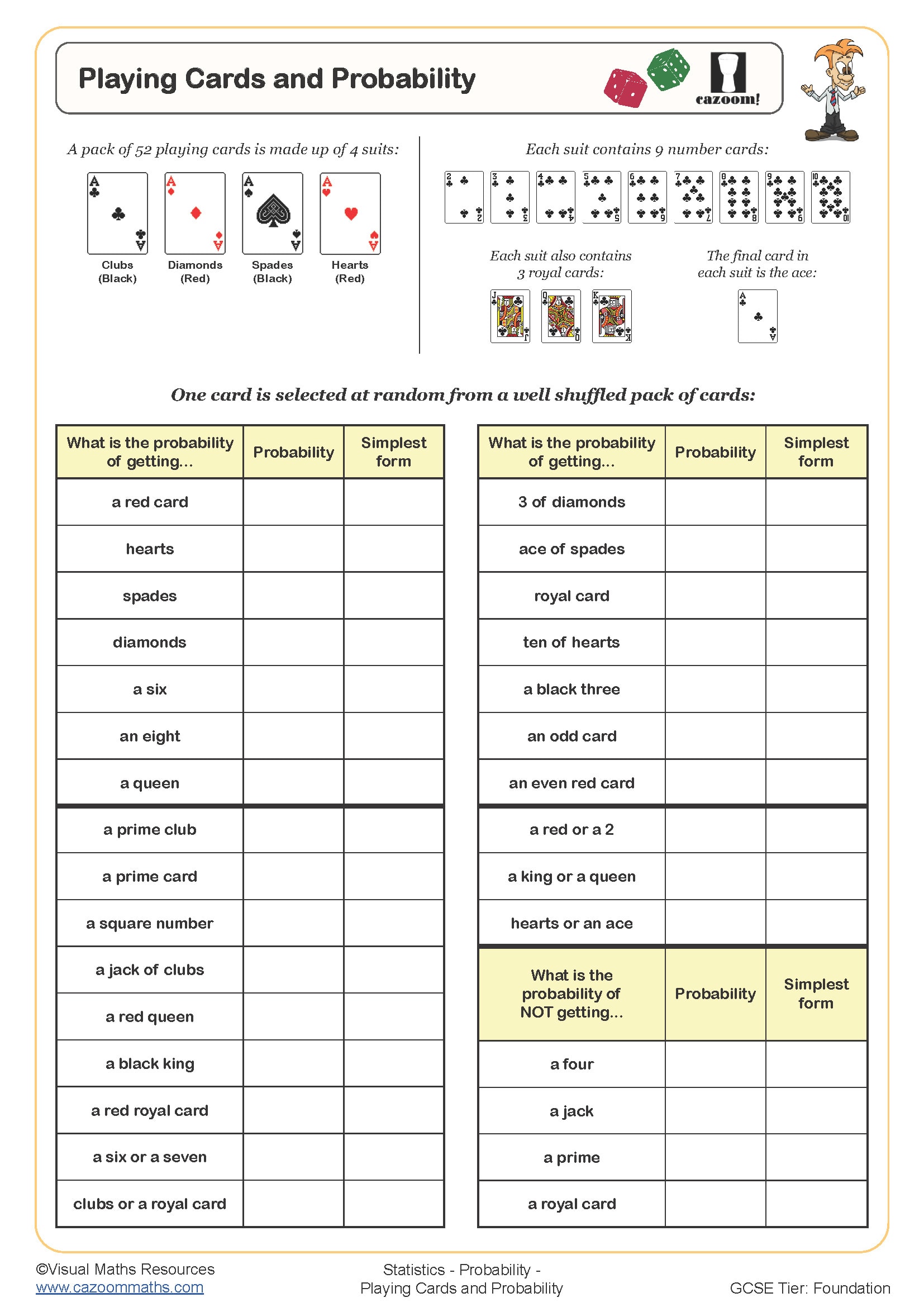
A thorough probability worksheet year 7 typically covers experimental probability using dice and coin tosses, theoretical probability calculations, probability scales from 0 to 1, converting between fractions, decimals and percentages, and simple combined events. These align with KS3 National Curriculum expectations for students aged 11-12.
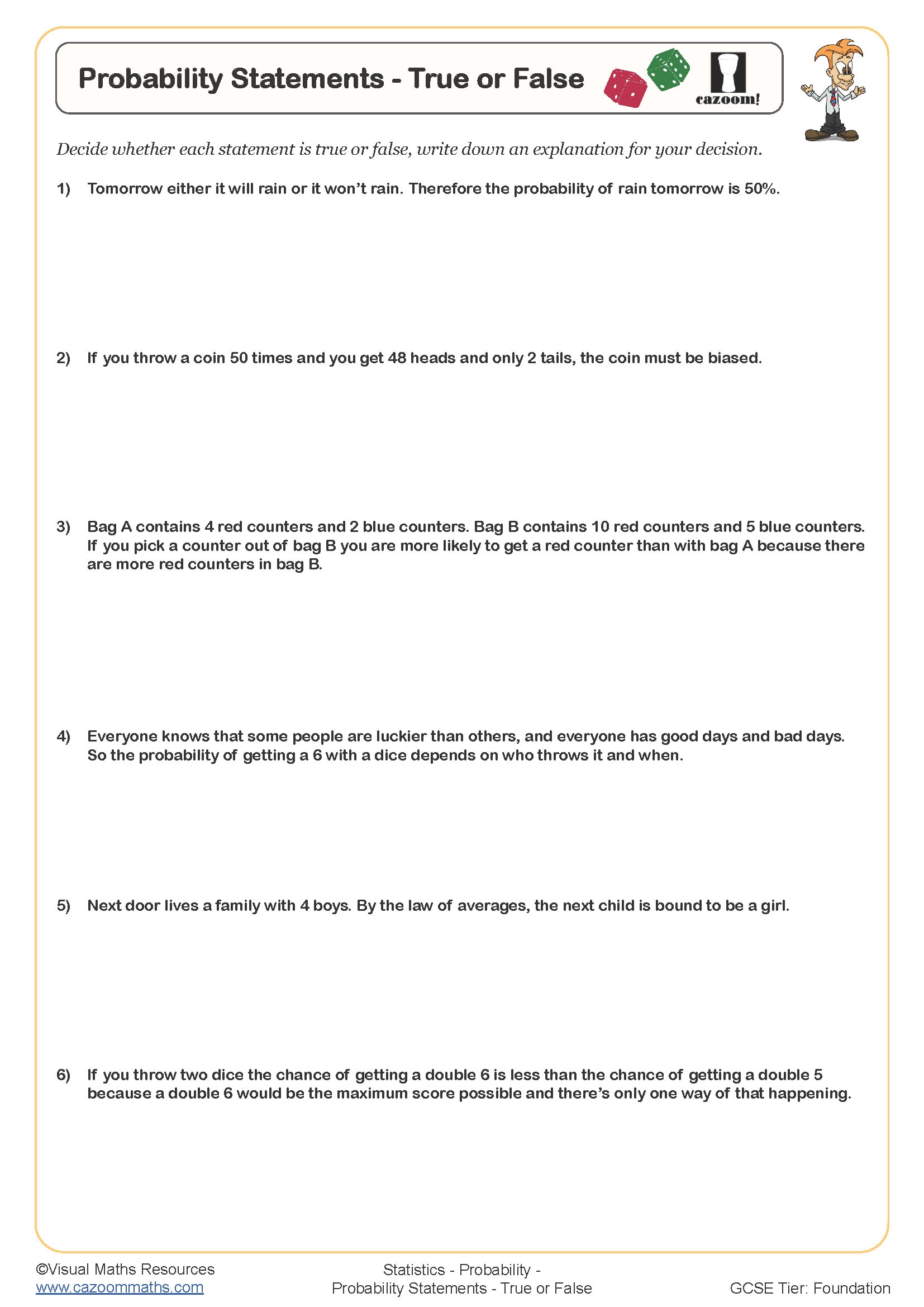
Teachers notice students often confuse 'probability of 0.3' with '3 out of 10 outcomes' rather than understanding it represents the likelihood of occurrence. The year 7 probability worksheet with answers pdf format helps address this by providing worked solutions that demonstrate proper mathematical language and reasoning, particularly when explaining why certain outcomes are more likely than others.
How does Year 7 probability connect to other year groups?
Year 7 probability builds directly on Year 6 work with simple fractions and introduces formal probability language that continues through to GCSE. Students move from describing events as 'likely' or 'unlikely' to using numerical scales and calculations, preparing them for Year 8 topics like tree diagrams and conditional probability.
Maths departments often find that students who struggle with fraction equivalence in Year 6 need extra support with probability conversions in Year 7. The progression requires solid understanding of basic fraction operations, as probability year 7 worksheet pdf materials frequently combine probability calculations with fraction simplification and decimal conversion skills that underpin later statistical work.
Why do students find probability scales challenging?
Students frequently misunderstand that probability scales run from 0 to 1, not 0 to 100, leading to errors when placing events on number lines or converting between formats. Many assume that 'probable' means 0.7 or higher, when mathematically it simply means greater than 0.5.
Classroom experience shows students benefit from visual representations and real-world contexts. Weather forecasts provide excellent examples - a 30% chance of rain translates to 0.3 probability, helping students connect mathematical concepts to familiar situations. Regular practice with probability year 7 worksheet materials that include scale work helps embed these crucial foundations for later statistical analysis.
How can teachers use these probability worksheets most effectively?
Teachers find success using probability worksheets as starter activities to recap previous learning, or as structured practice following demonstrations with physical equipment like dice and spinners. The answer sheets enable peer marking sessions that encourage mathematical discussion about different solution methods.
Many teachers integrate practical experiments before worksheet completion - students collect data from coin tosses or dice rolls, then compare experimental results with theoretical predictions using the worksheet calculations. This approach helps students understand why theoretical probability provides predictions rather than guarantees, addressing the common misconception that 'probability 0.5 means exactly half the outcomes will occur'.