Year 8 Probability Worksheets
All worksheets are created by the team of experienced teachers at Cazoom Maths.
What topics are covered in year 8 probability worksheet resources?
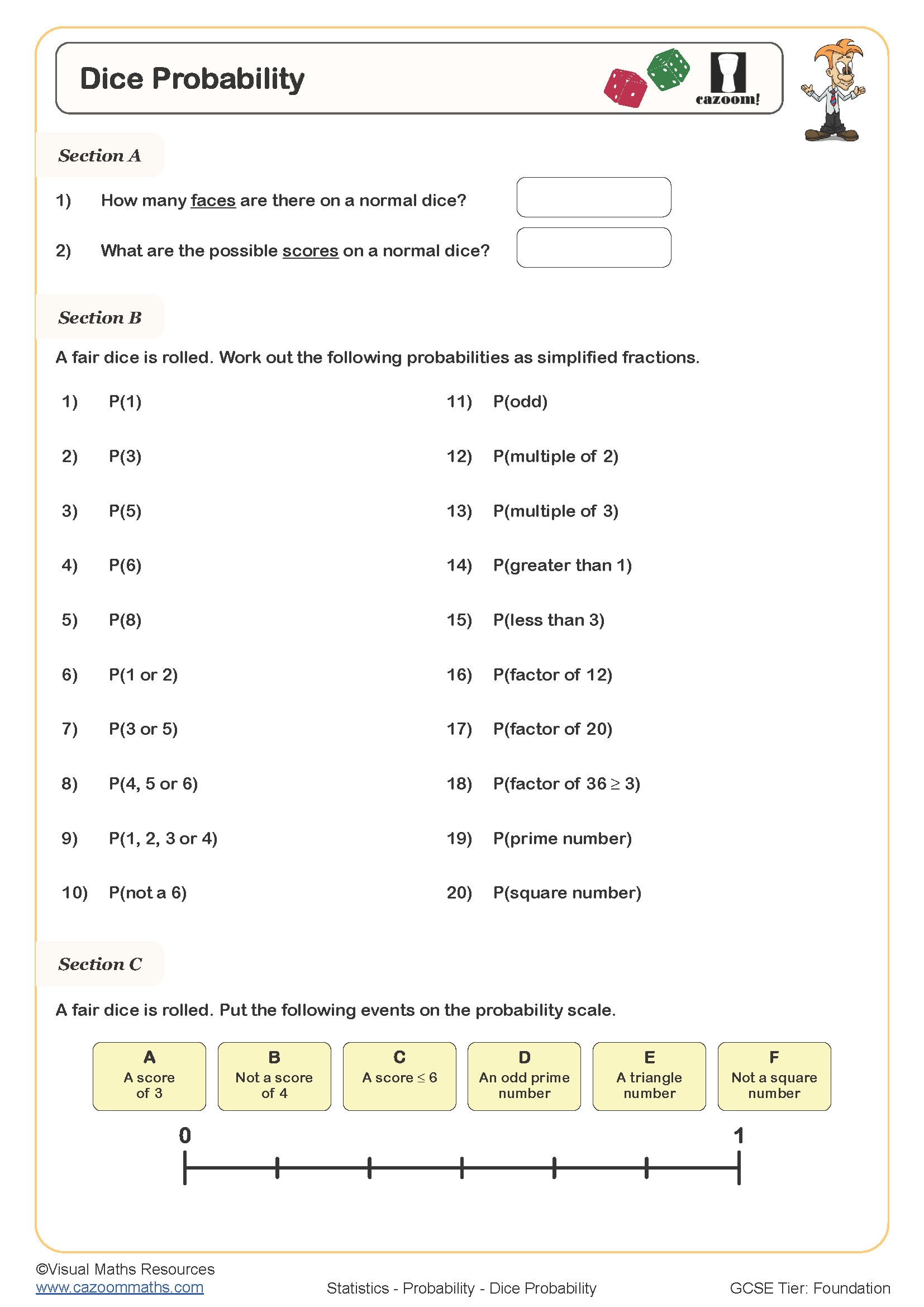
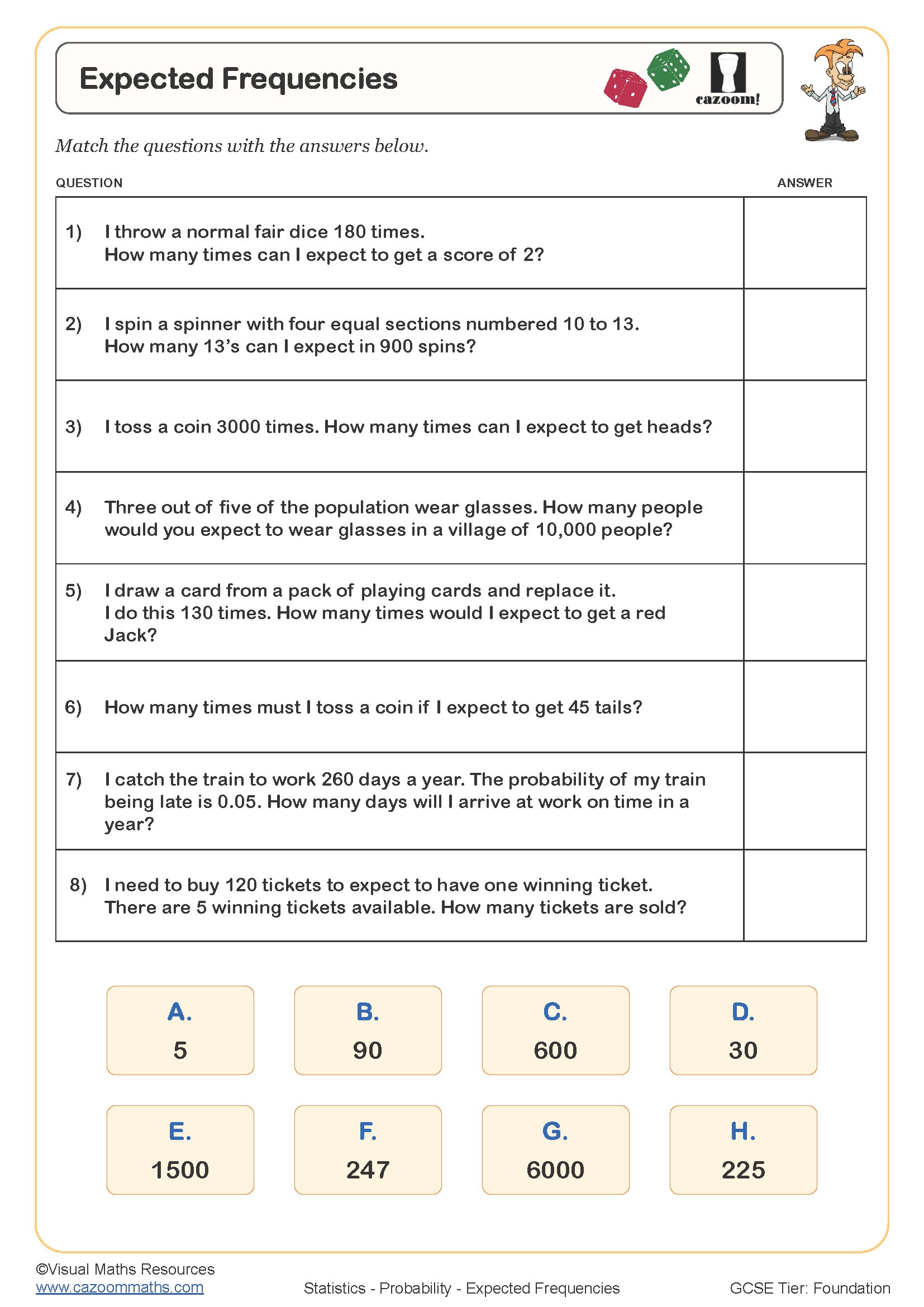
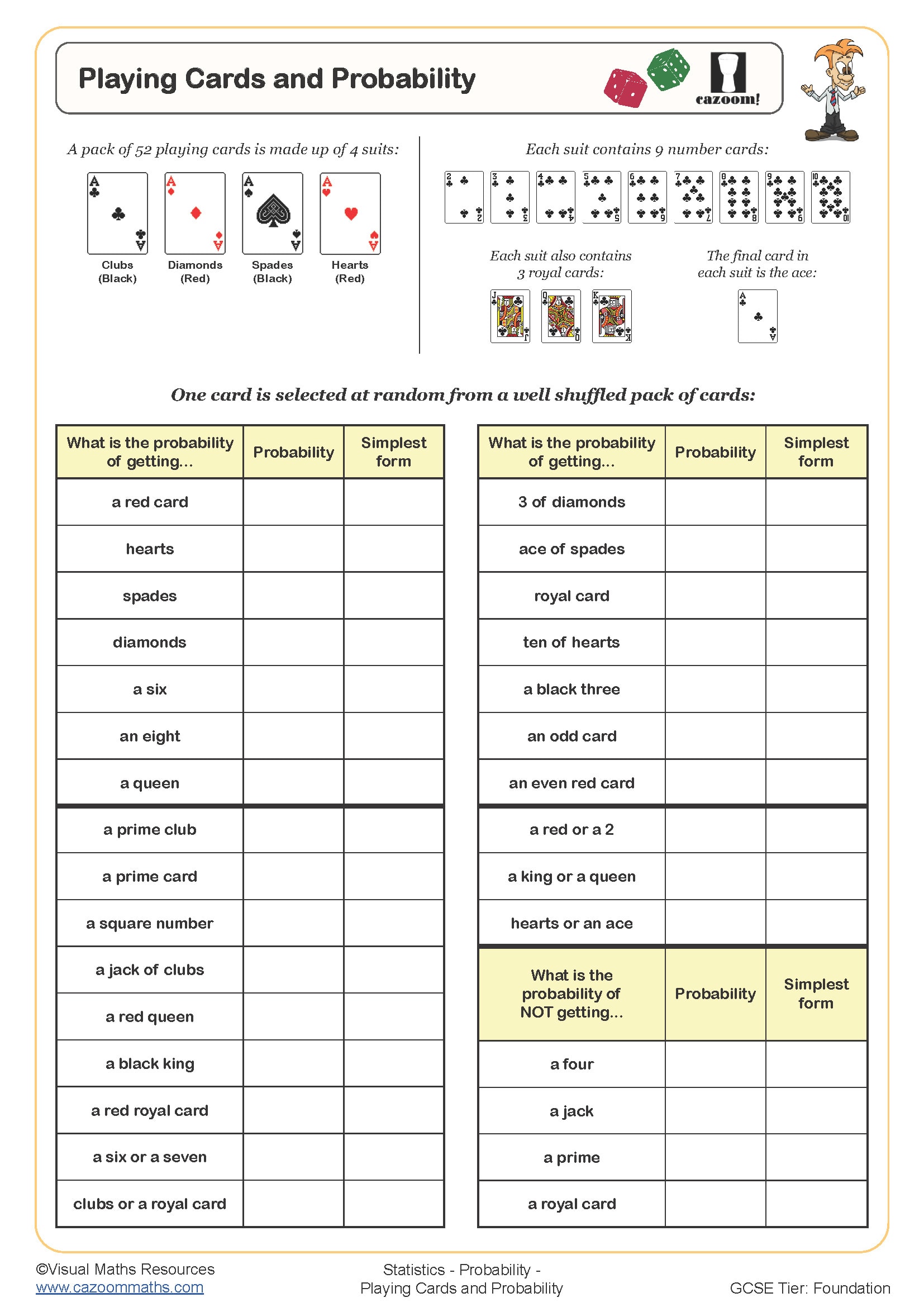
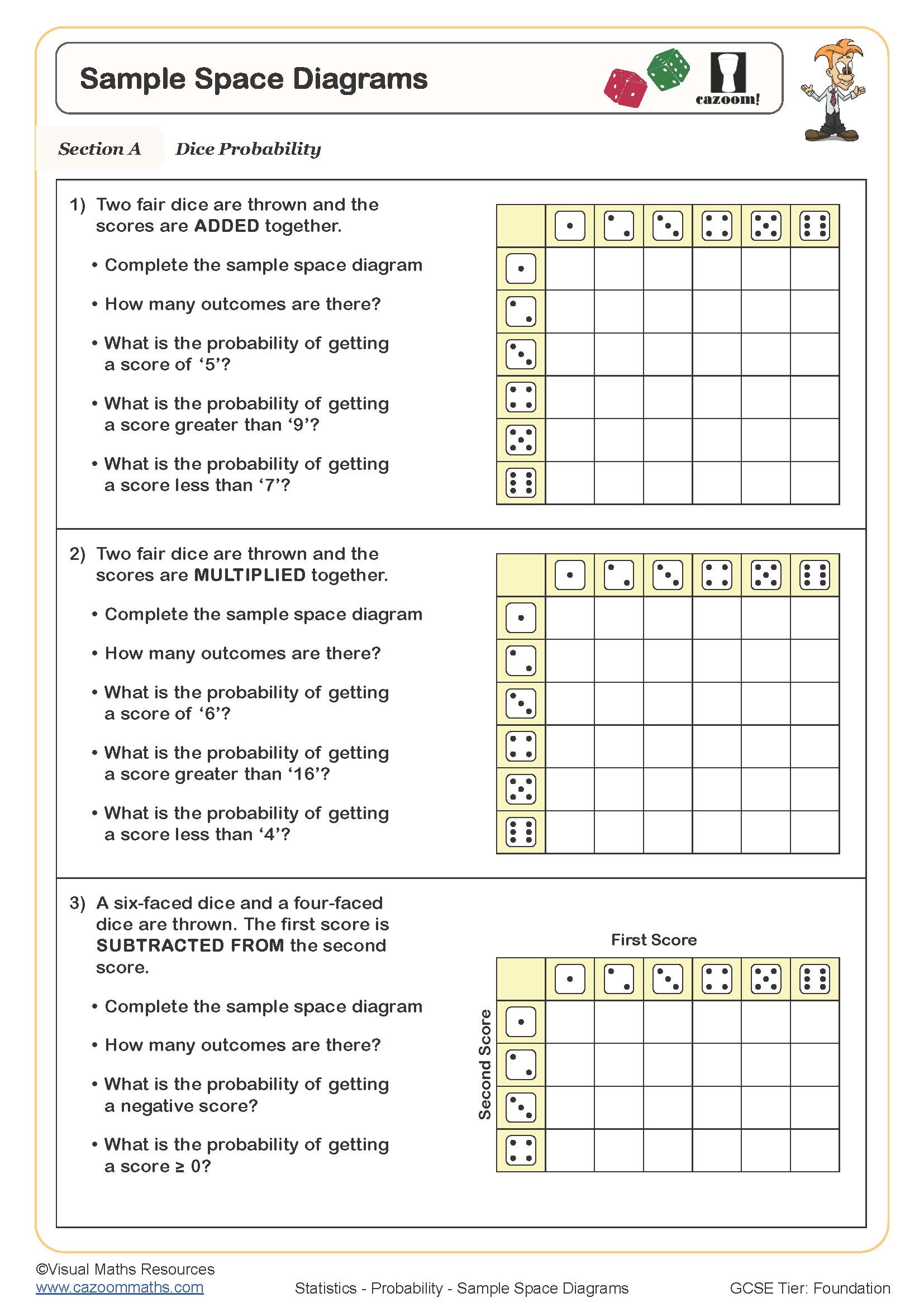
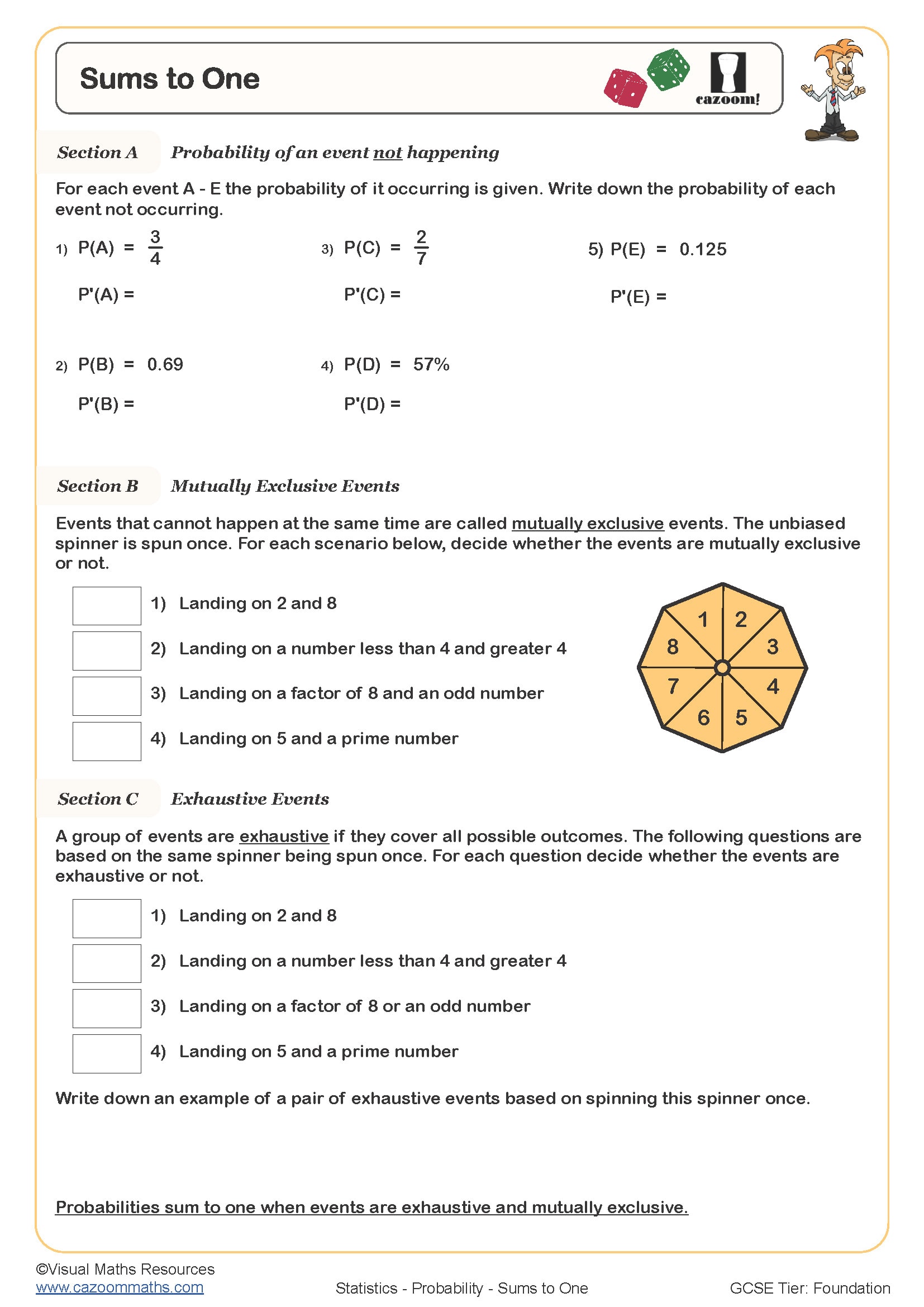
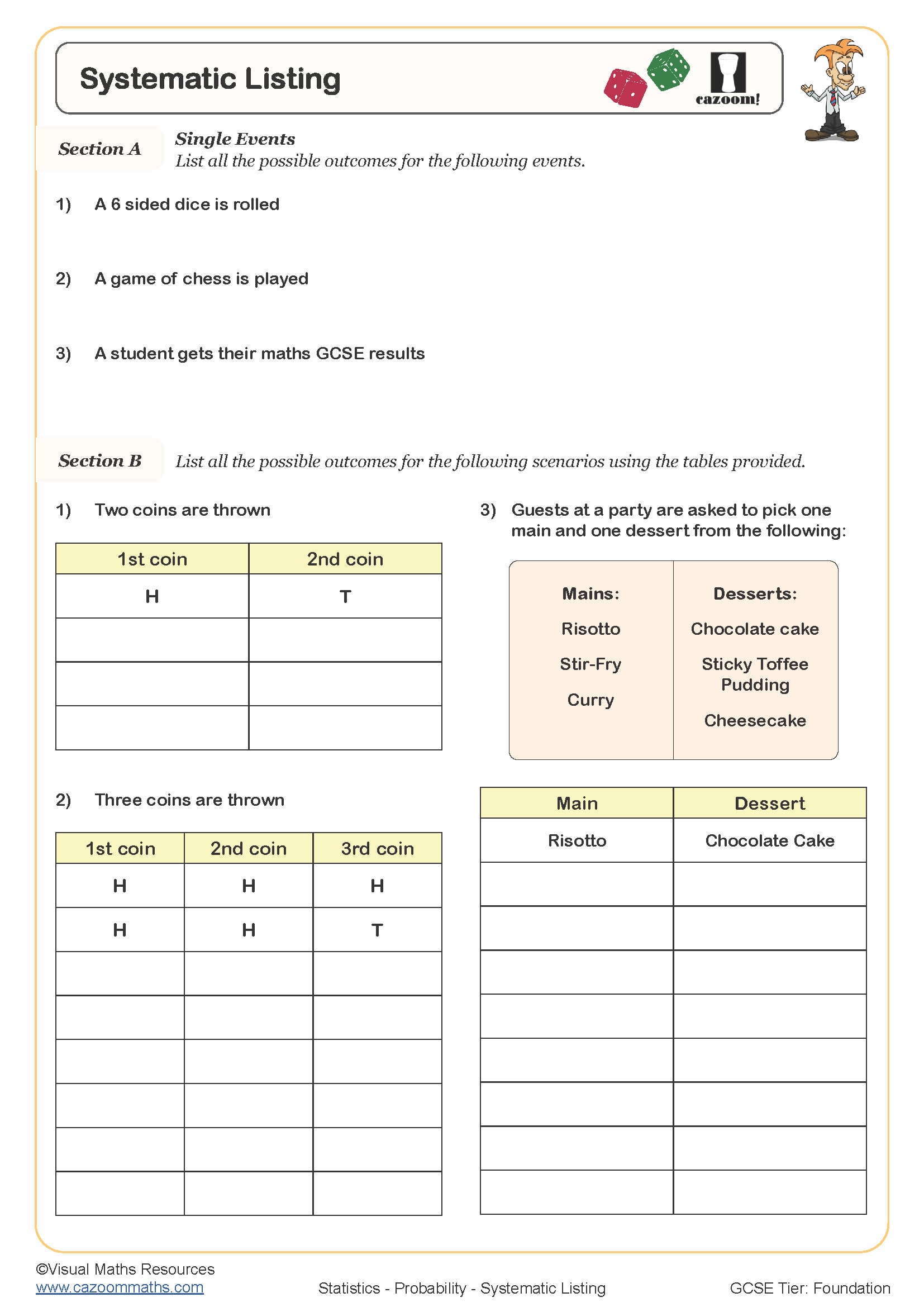
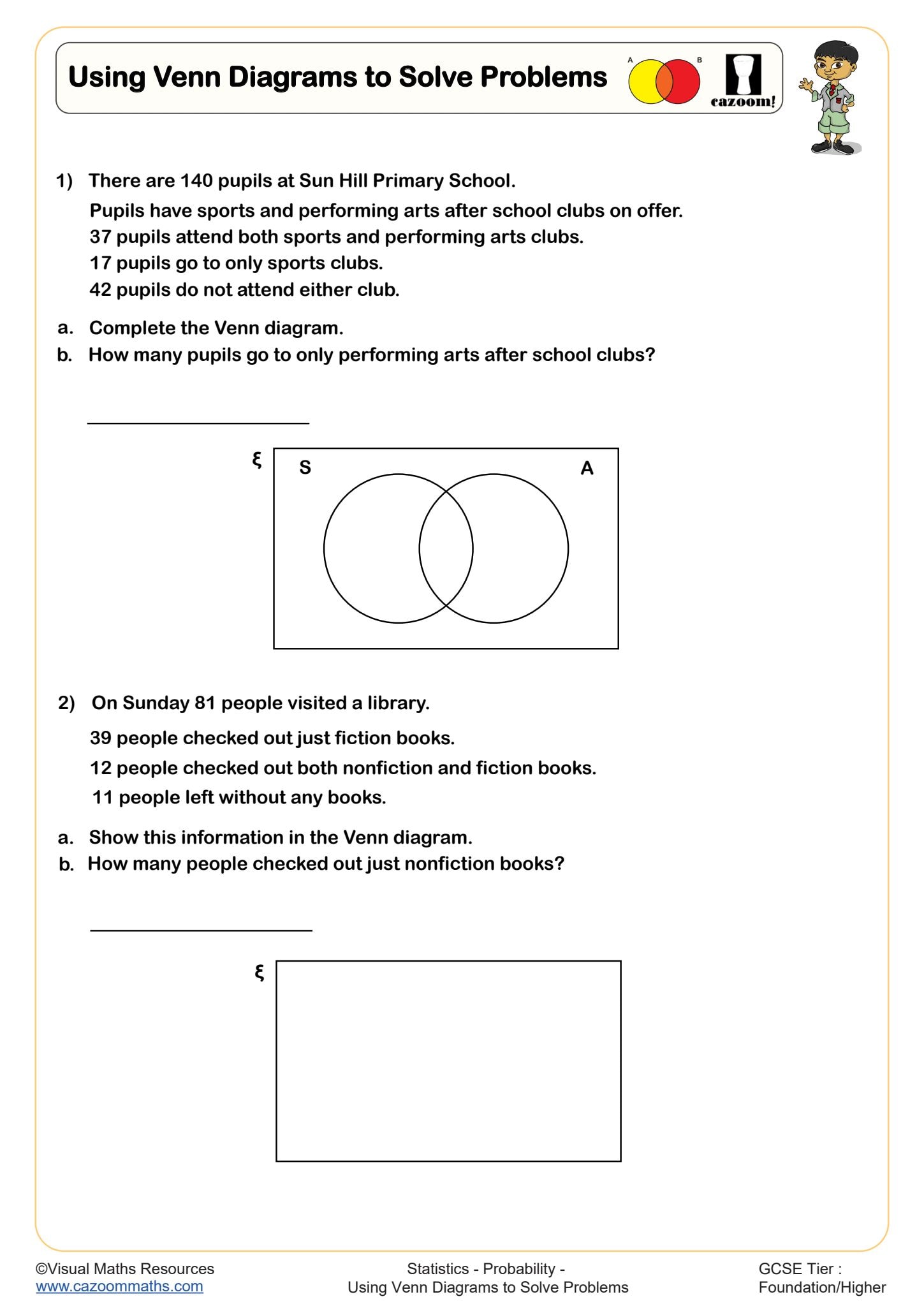
Year 8 probability worksheet materials typically cover theoretical probability calculations, experimental probability through trials, probability scales from 0 to 1, and combined events using sample space diagrams. Students work with single events like coin tosses and dice rolls before progressing to more complex scenarios involving multiple outcomes.
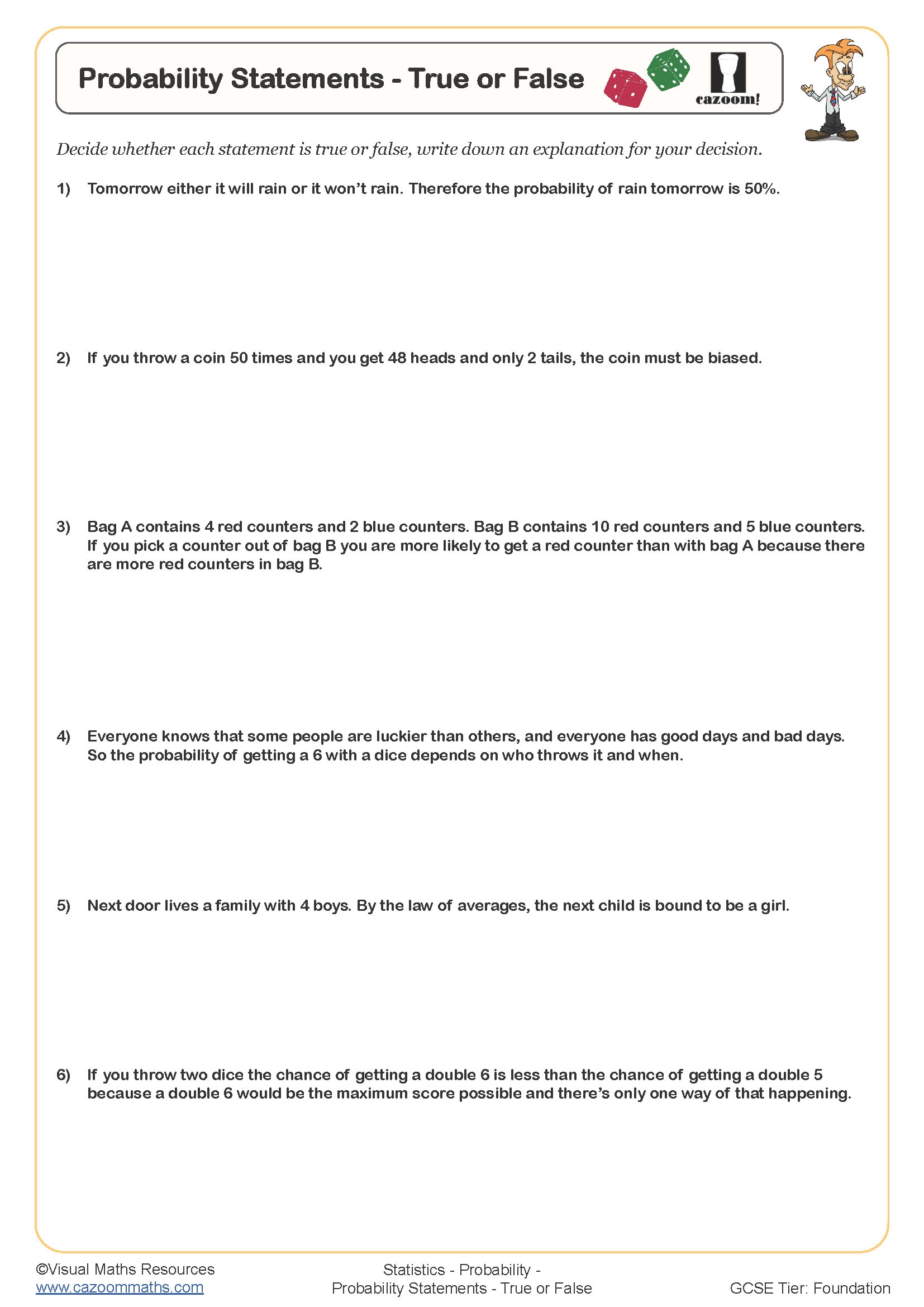
Maths teachers frequently observe that students initially confuse probability with frequency, writing answers like "3 out of 10" instead of "3/10" or "0.3". The worksheets address this by providing structured practice with different representations, helping students understand that probability expresses likelihood rather than raw counts from experiments.
How do year 8 probability topics build on earlier learning?
Year 8 probability work extends Year 7 foundations by introducing combined events and more sophisticated probability calculations. Students who previously worked with simple single events now explore sample space diagrams and tree diagrams to analyse multiple outcomes systematically.
Teachers notice that students often struggle when transitioning from listing outcomes to calculating probabilities efficiently. The progression requires solid fraction skills from earlier years, as students must simplify probability fractions and convert between fractions, decimals, and percentages. This connection reinforces number work whilst developing statistical thinking skills.
Why do students find experimental probability particularly challenging?
Experimental probability causes confusion because results rarely match theoretical predictions, especially with small sample sizes. Students expect experimental results to align perfectly with calculated theoretical probabilities, leading to frustration when coin tosses don't yield exactly 50% heads in 10 trials.
Classroom experience shows that students benefit from conducting larger experiments and comparing results across different sample sizes. The worksheets include activities where students record experimental data and compare their findings with theoretical expectations, helping them understand that experimental results approach theoretical probability as the number of trials increases.
How can teachers use these probability worksheets most effectively in lessons?
Probability questions KS3 work best when combined with practical activities using coins, dice, or coloured counters. Teachers find that starting lessons with hands-on experiments before moving to worksheet calculations helps students connect abstract probability concepts with tangible experiences.
The answer sheets enable students to check their working independently, but teachers should encourage students to explain their reasoning rather than just verify final answers. Group discussions about different solution methods often reveal alternative approaches and help address common misconceptions about probability calculations and interpretations.