Year 9 Probability Worksheets
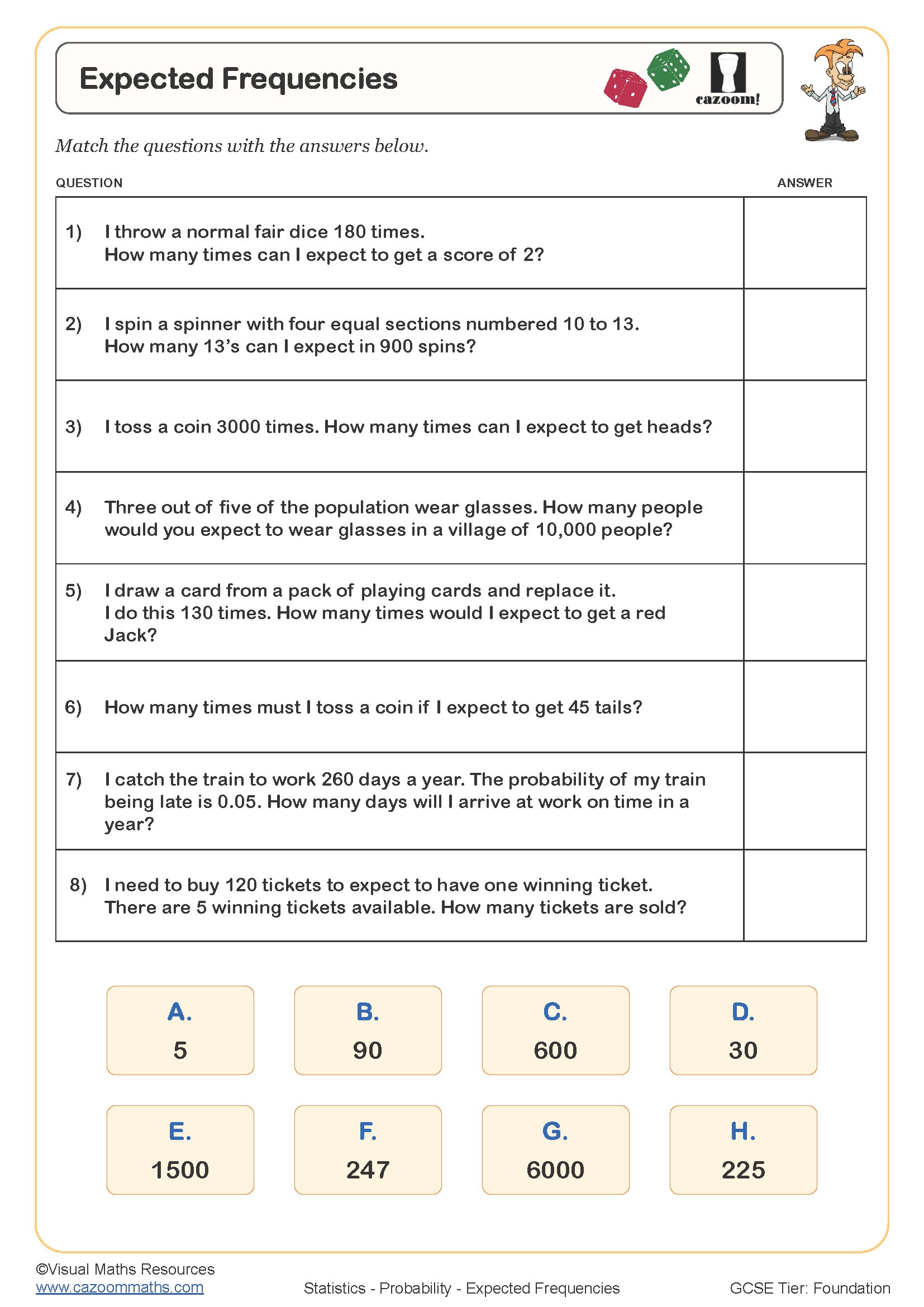
Expected Frequencies
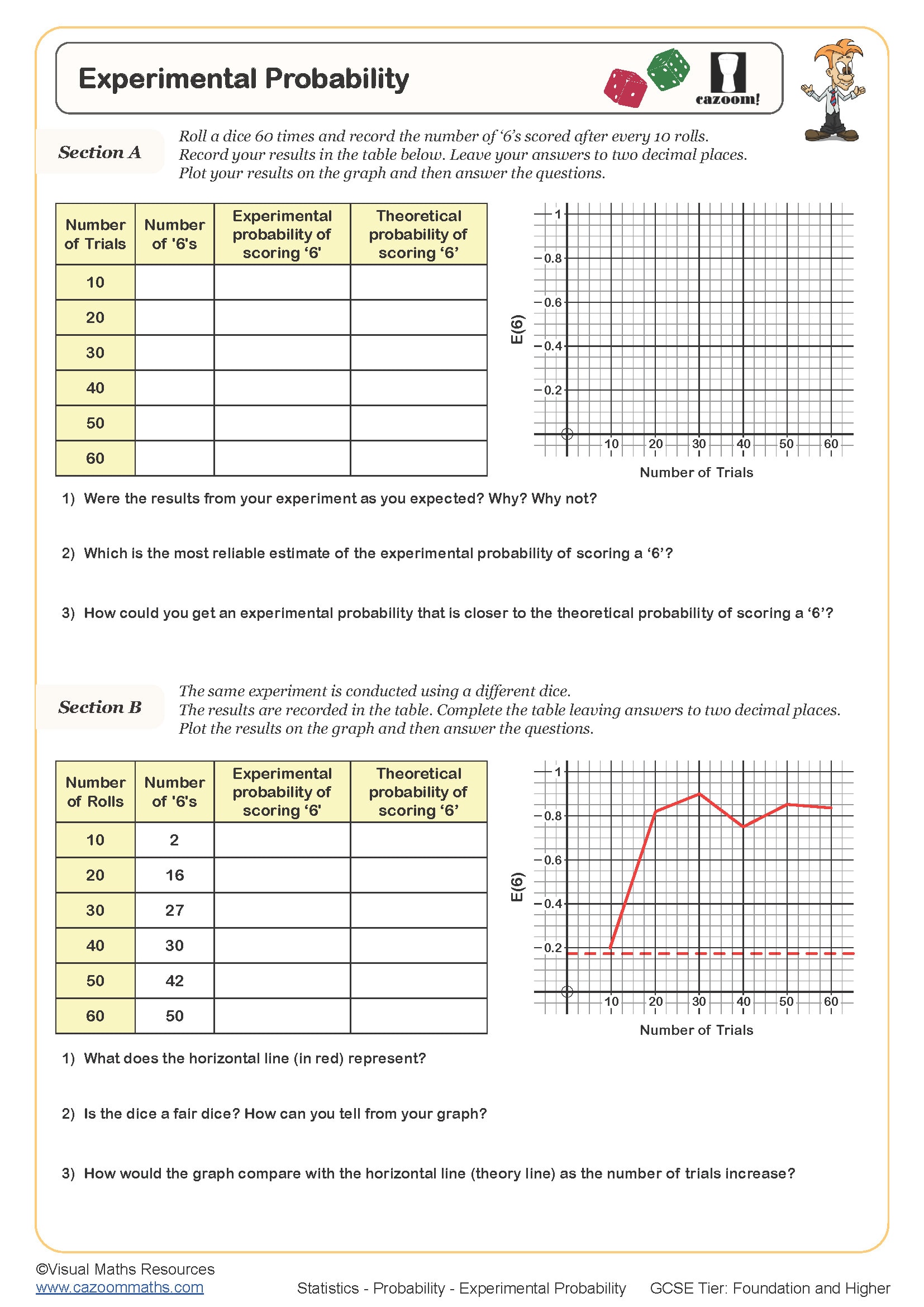
Experimental Probability
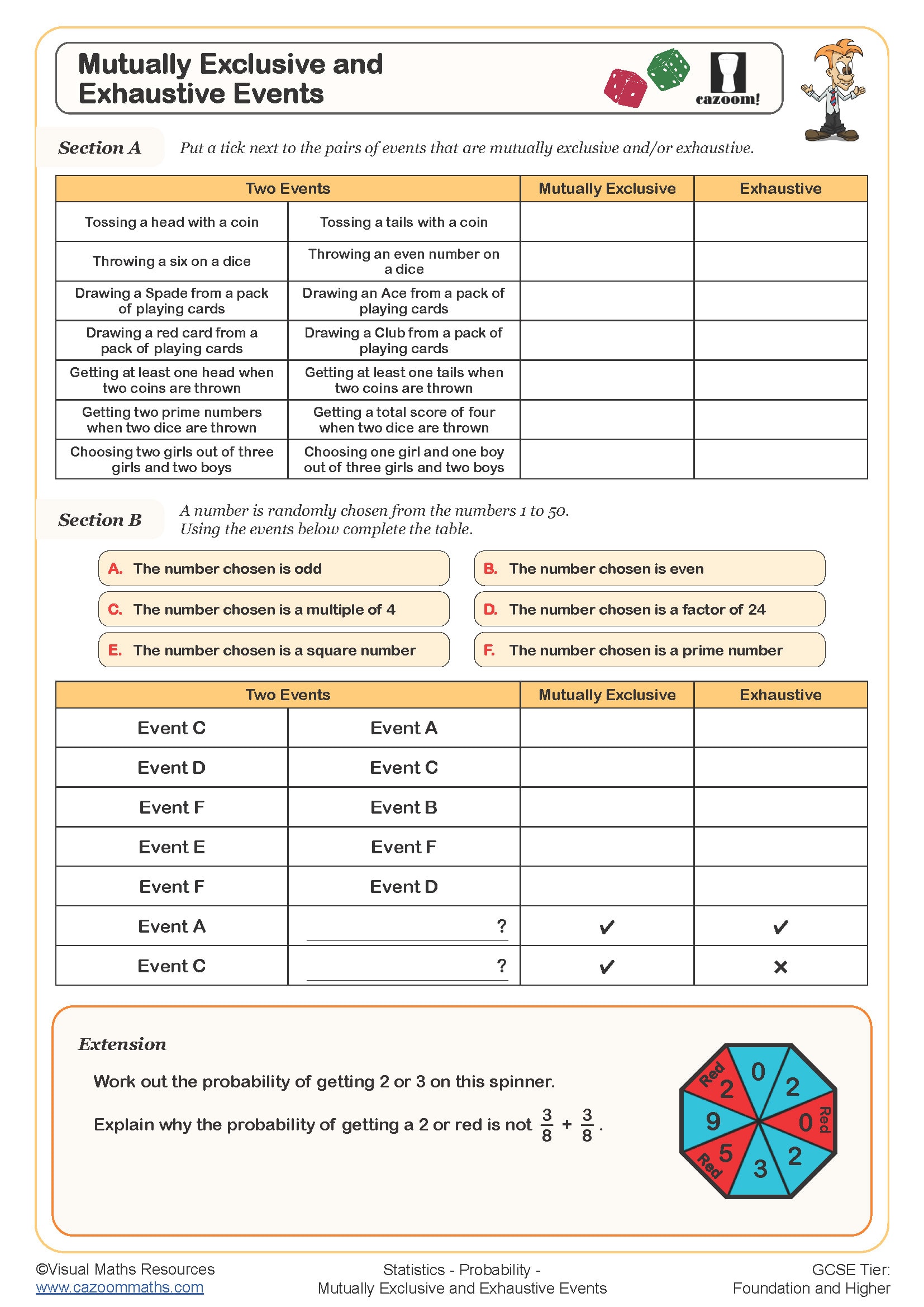
Mutually Exclusive and Exhaustive Events
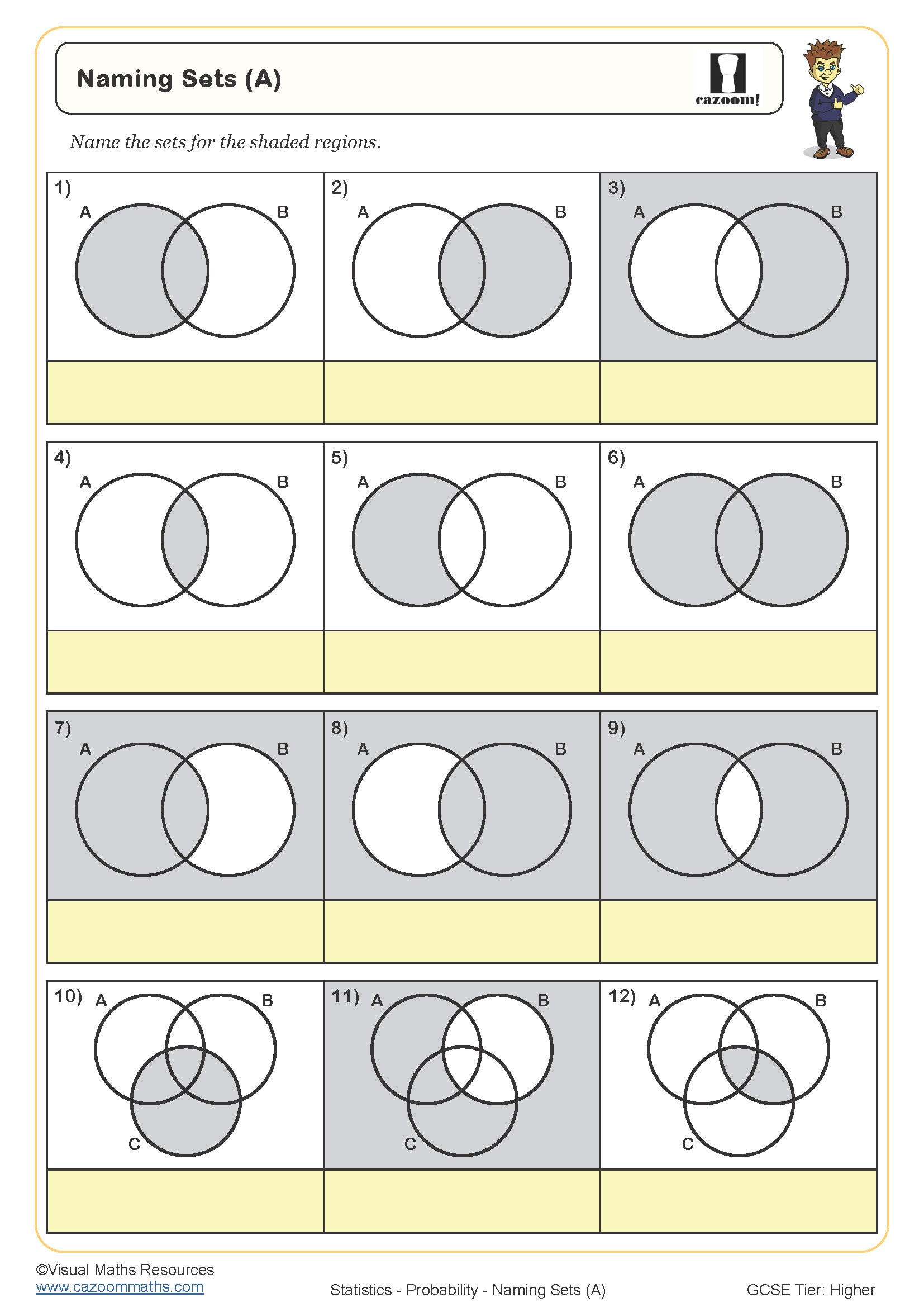
Naming Sets (A)
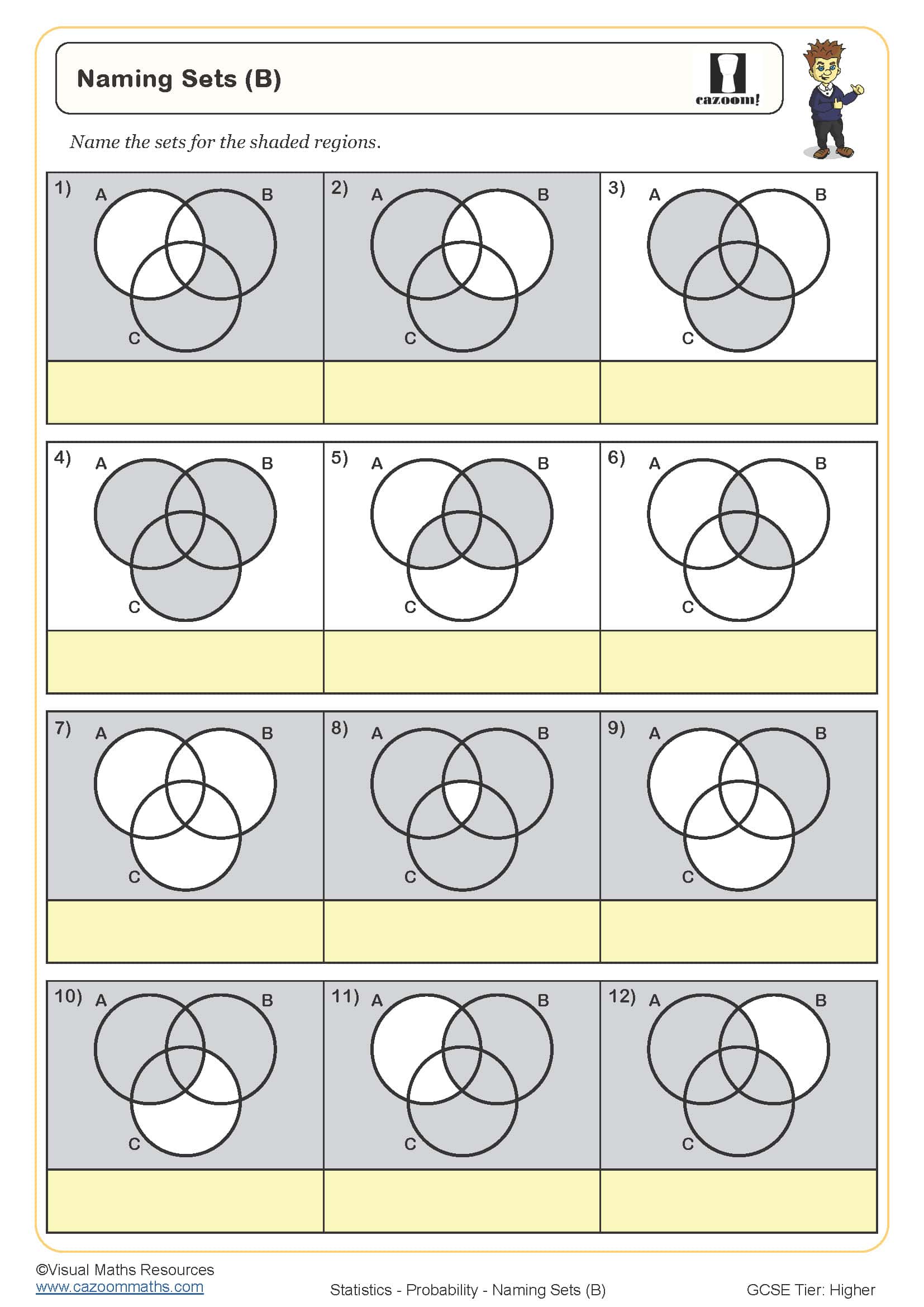
Naming Sets (B)
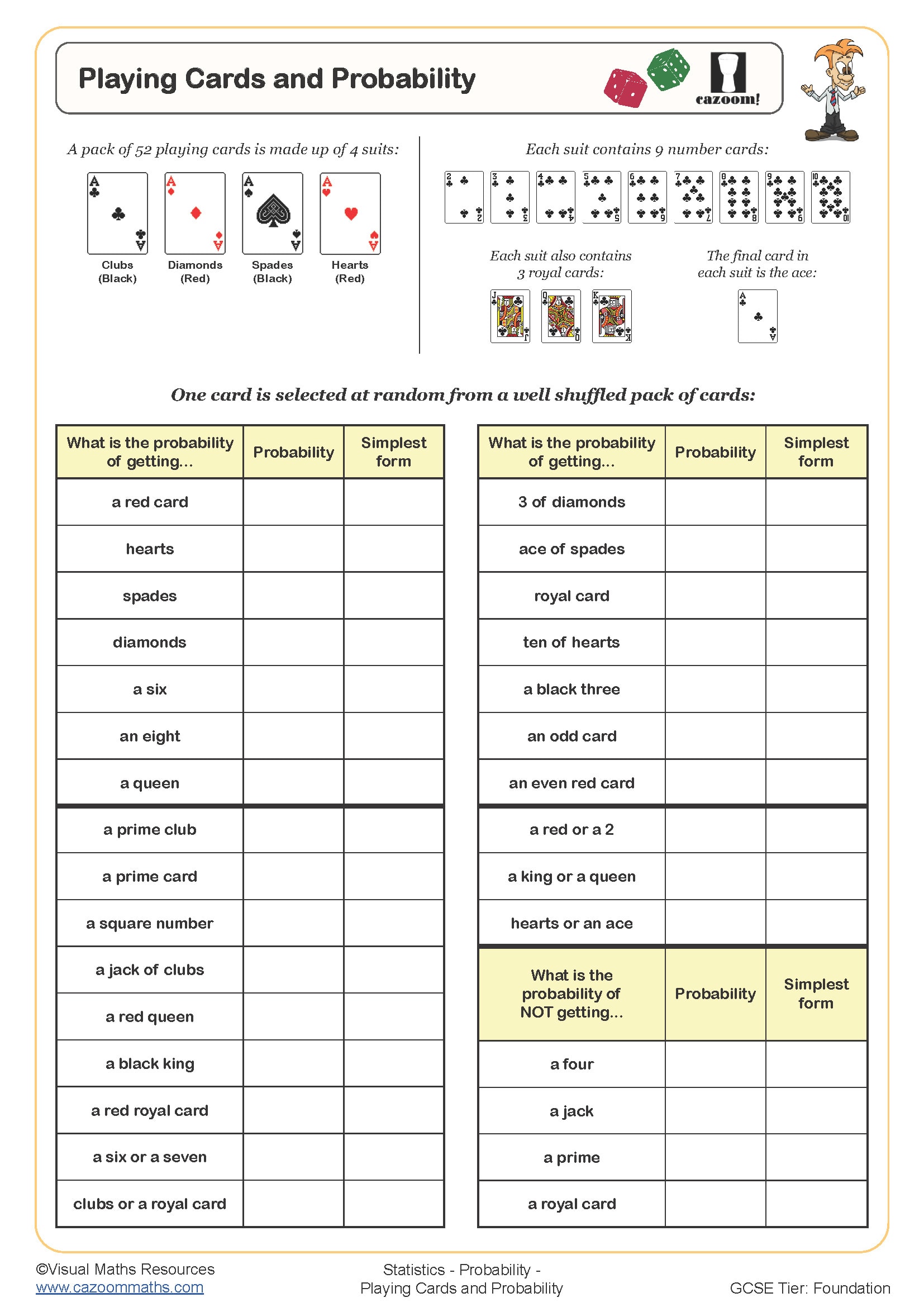
Playing Cards and Probability
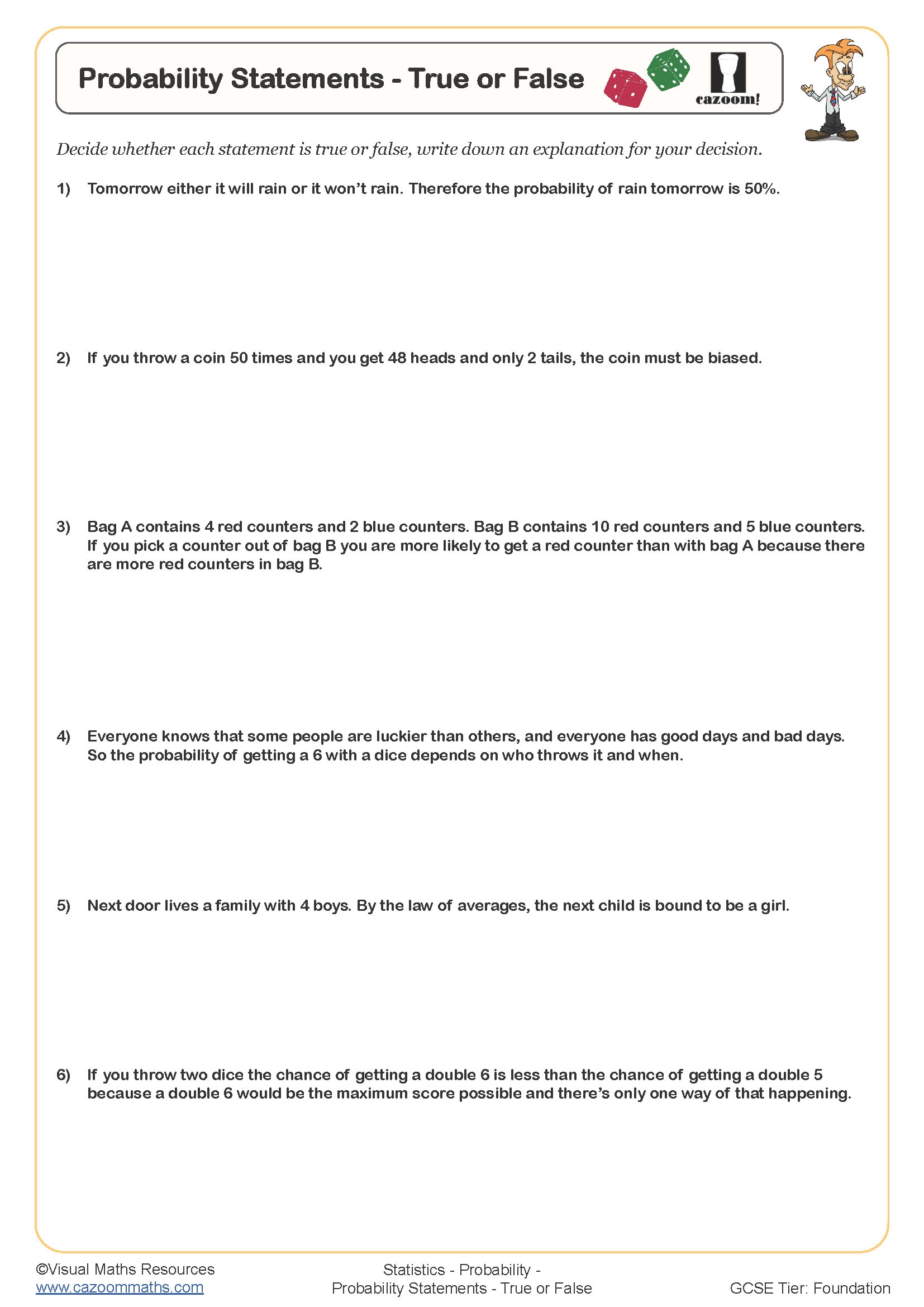
Probability Statements - True or False
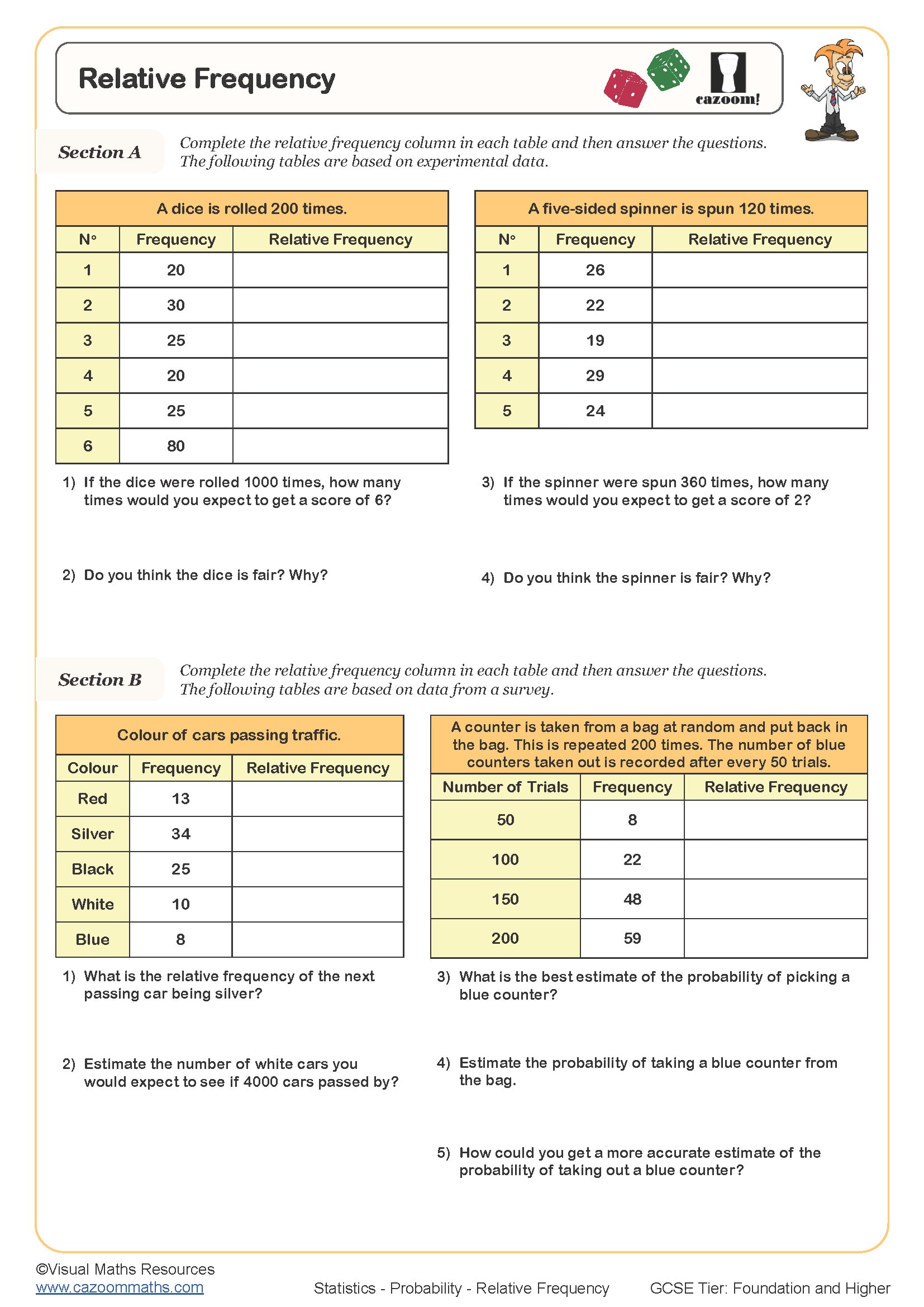
Relative Frequency
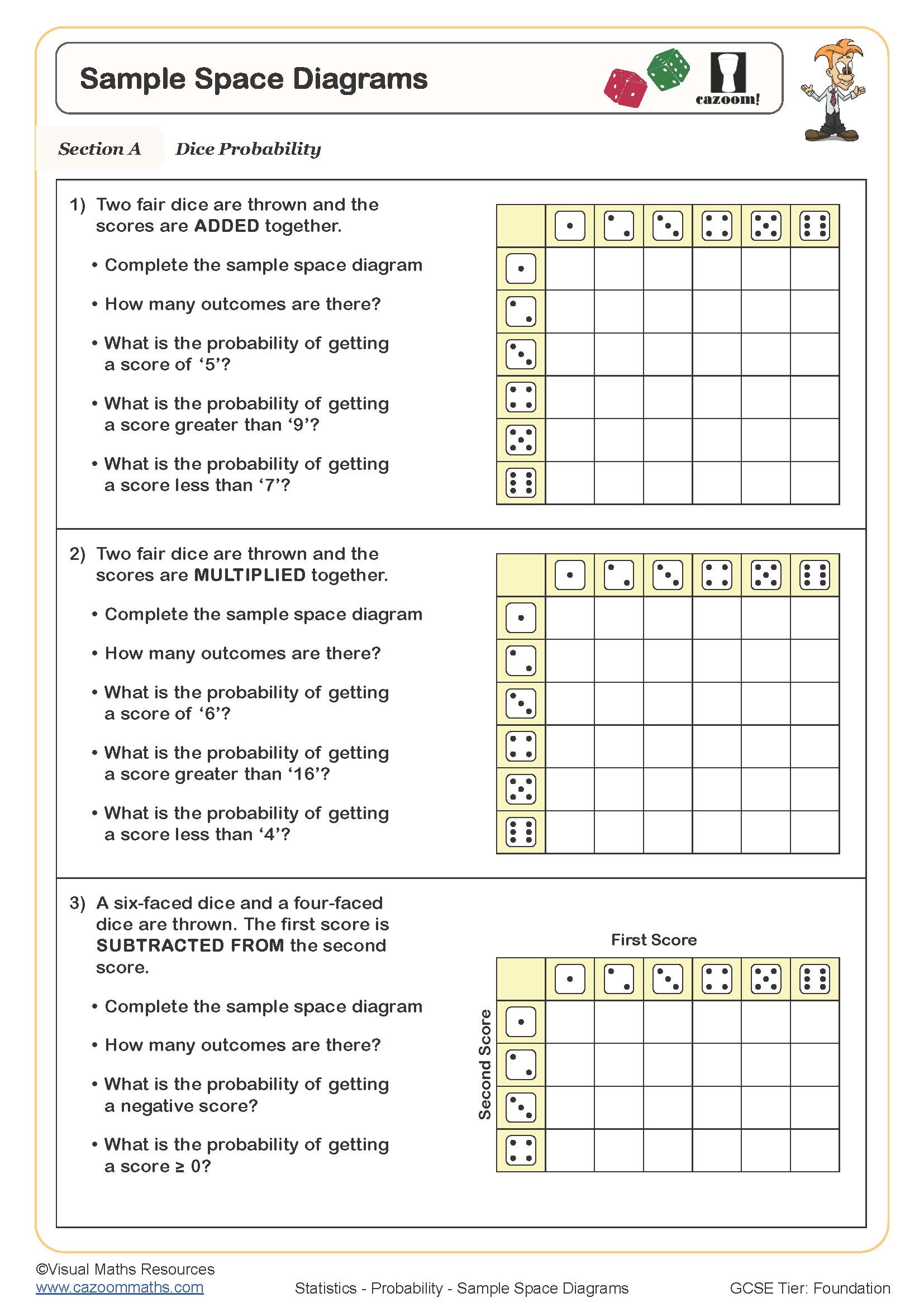
Sample Space Diagrams
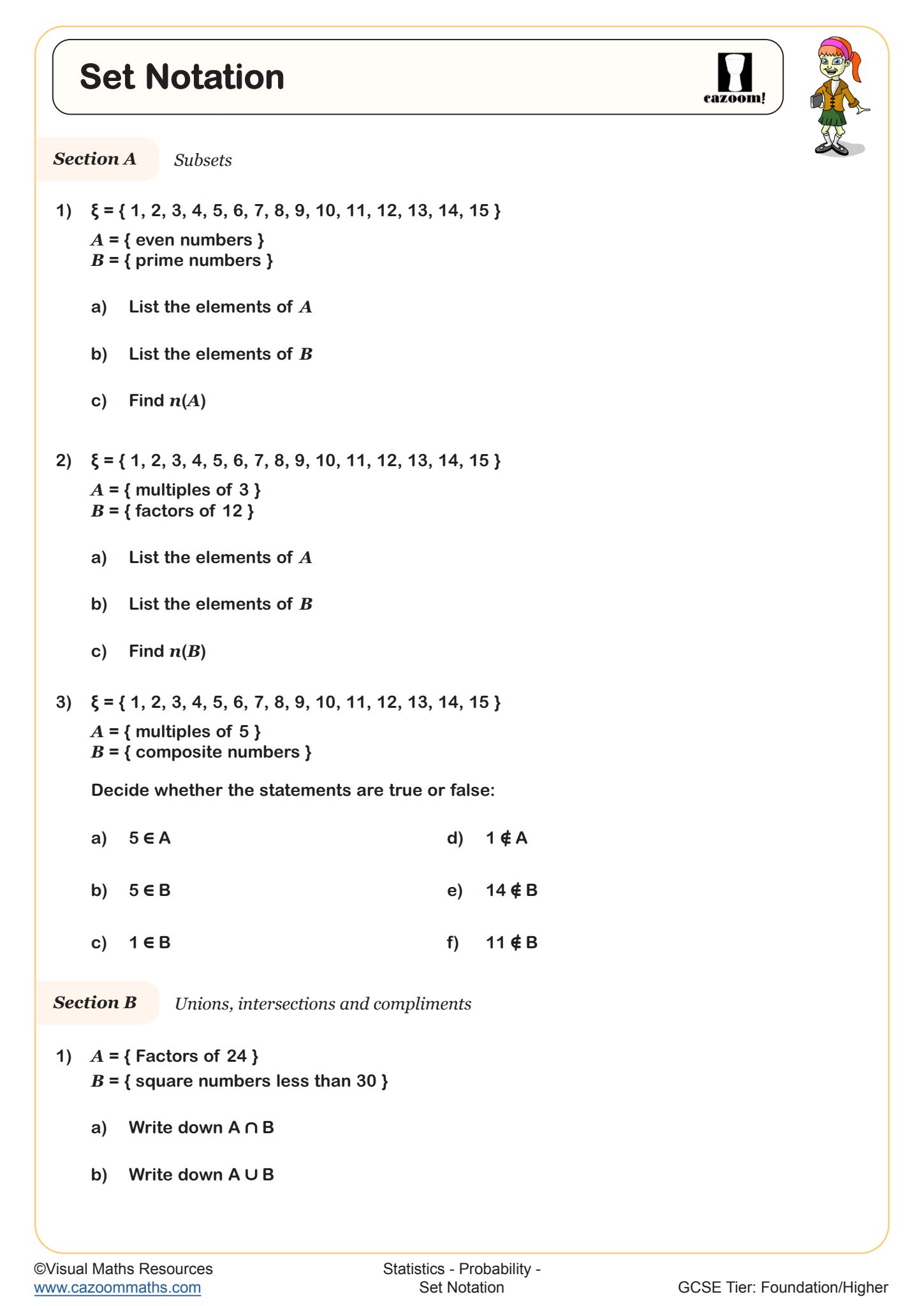
Set Notation
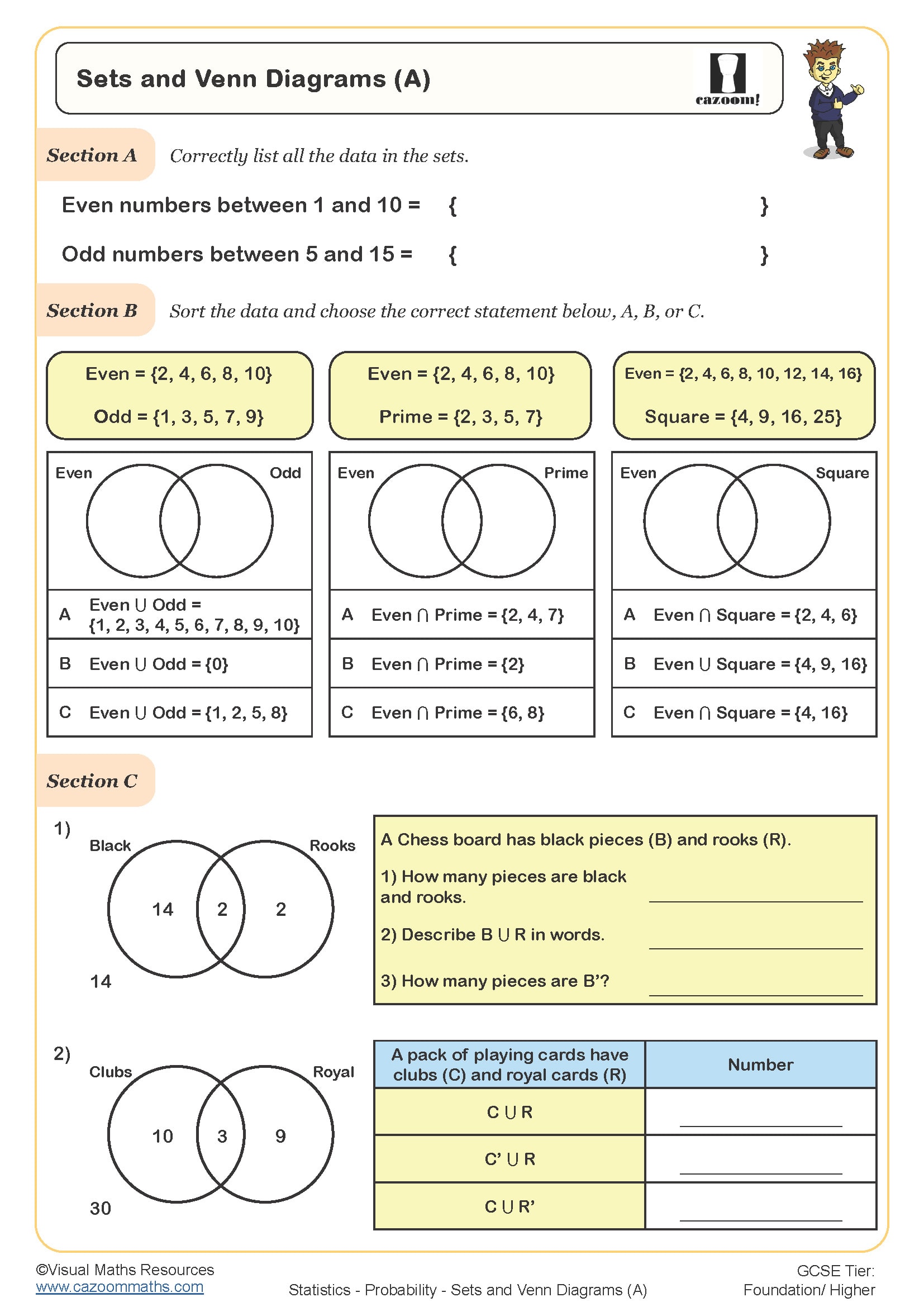
Sets and Venn Diagrams (A)
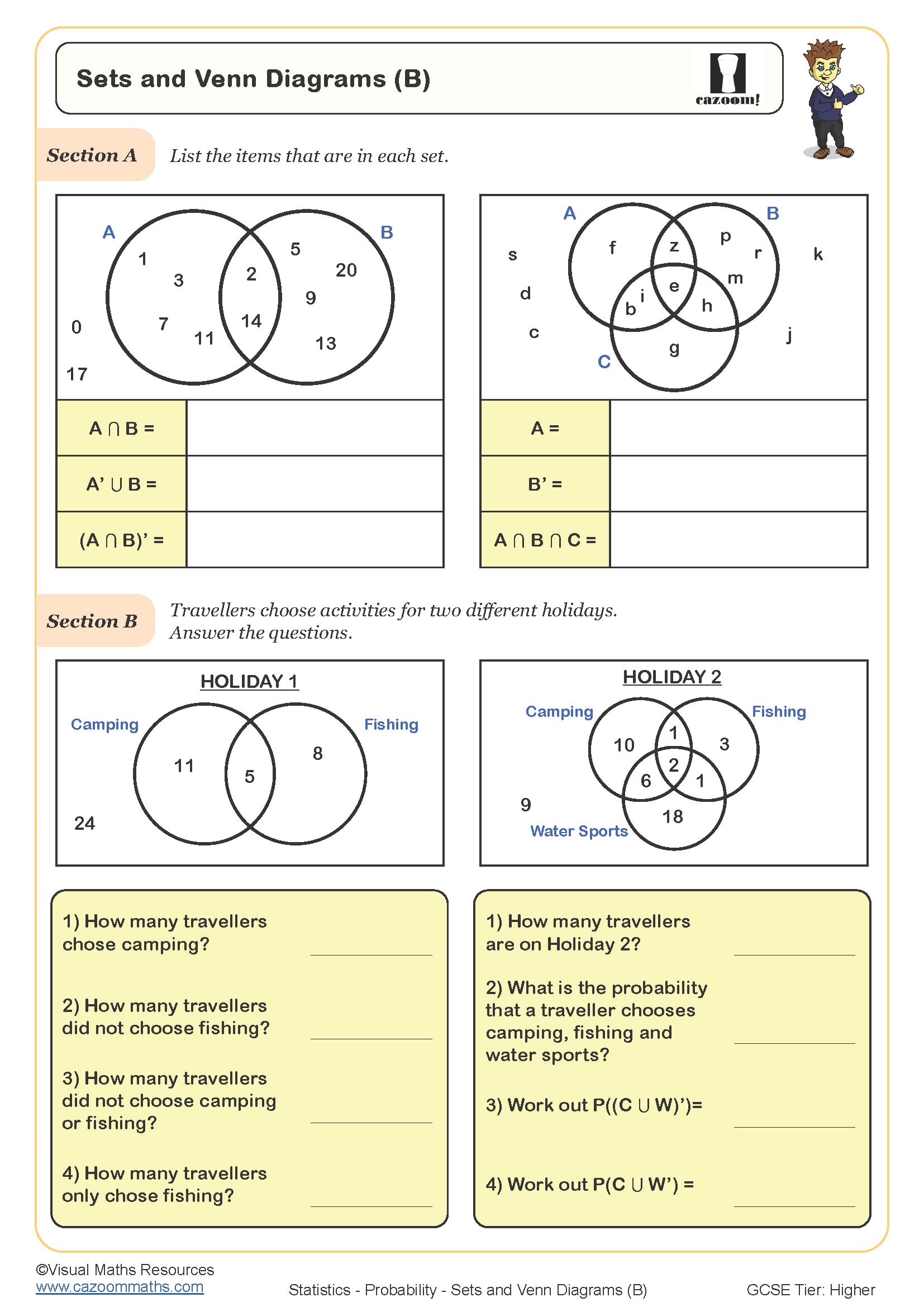
Sets and Venn Diagrams (B)
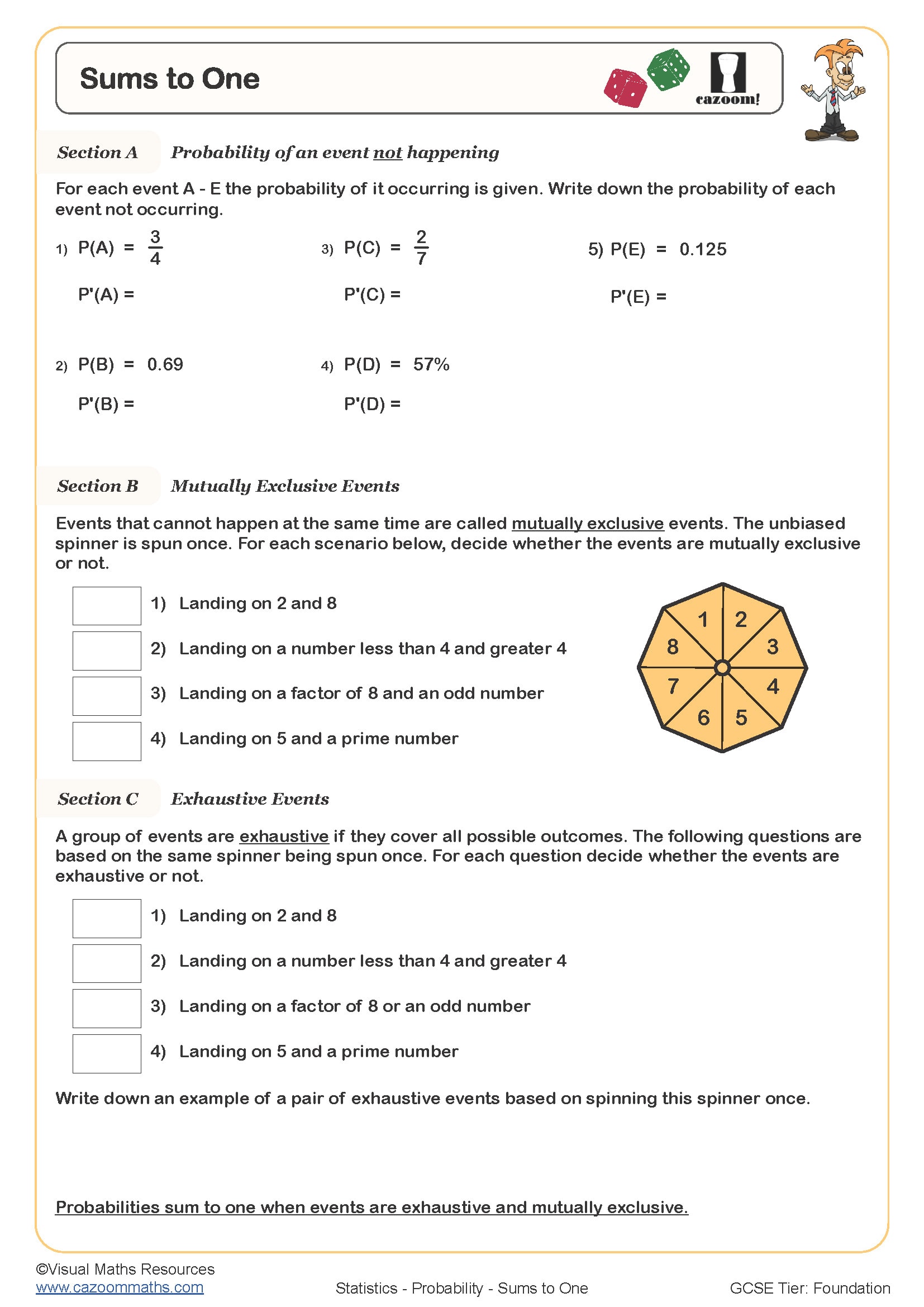
Sums to One
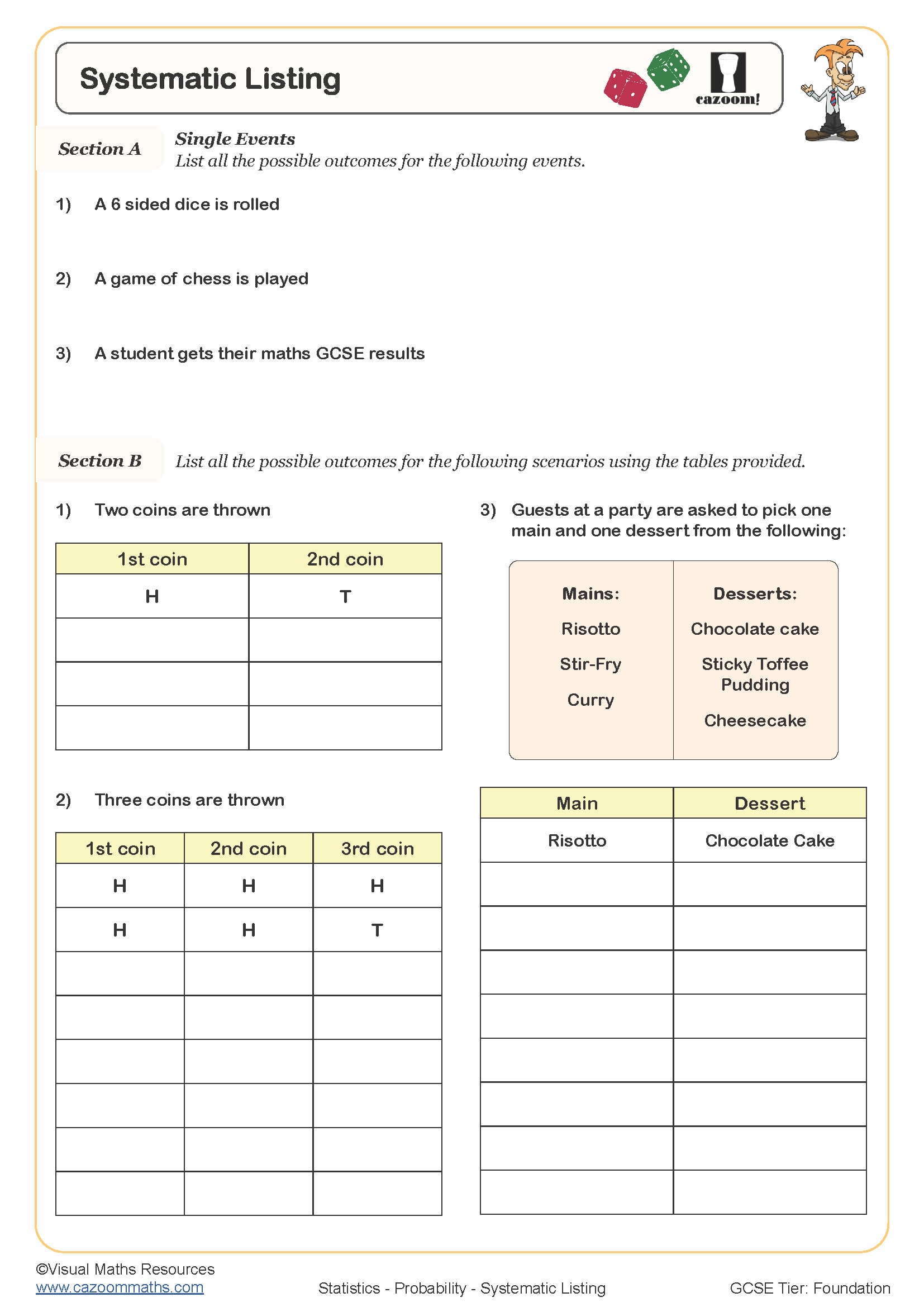
Systematic Listing
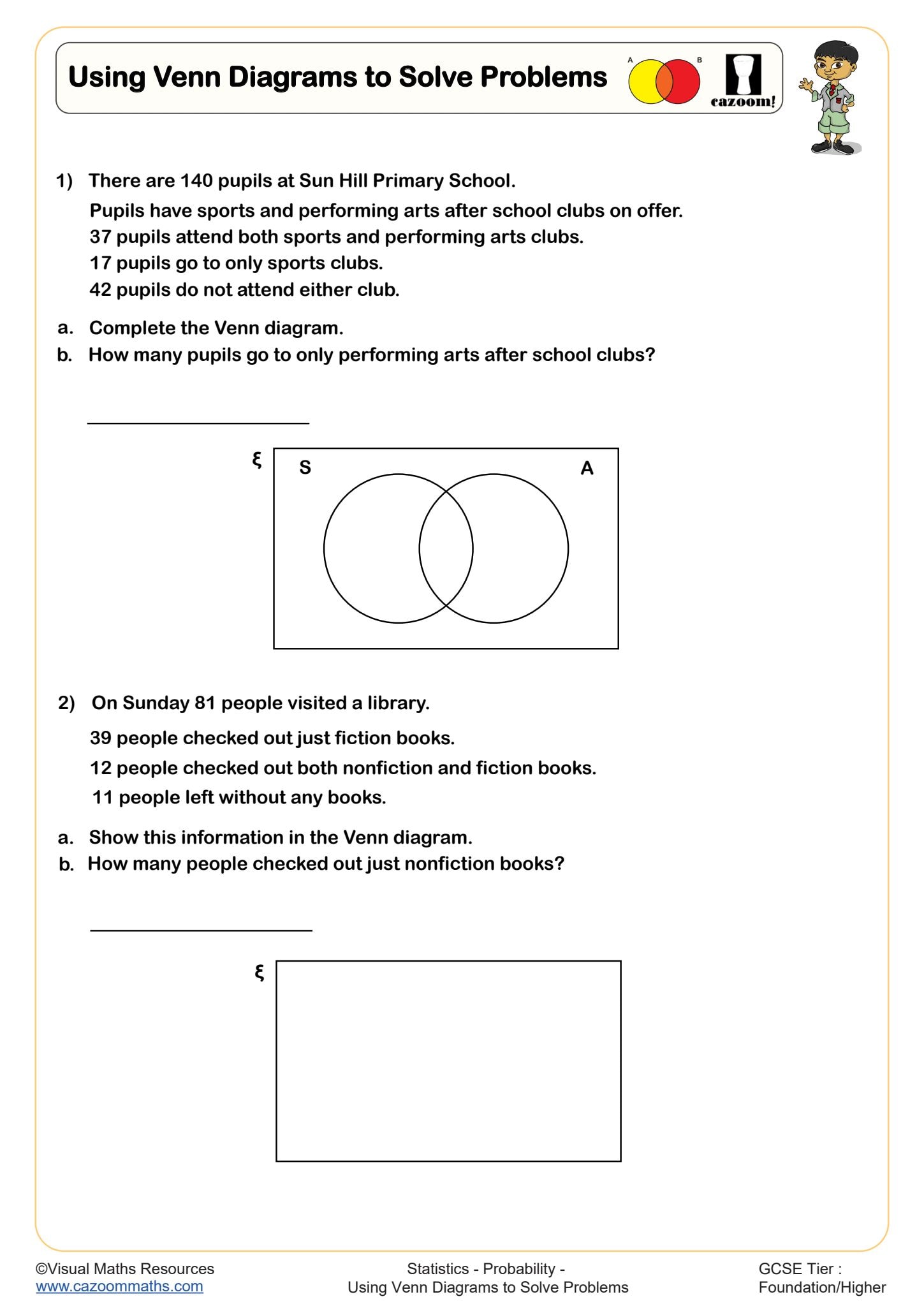
Using Venn Diagrams to Solve Problems
All worksheets are created by the team of experienced teachers at Cazoom Maths.
What makes a good probability Year 9 worksheet for Year 9 students?
A quality probability Year 9 worksheet balances conceptual understanding with procedural fluency, covering both theoretical calculations and practical applications. Year 9 students need structured practice moving from simple single-event problems to more complex scenarios involving multiple outcomes and conditional probability.
Teachers report that effective worksheets include visual representations like tree diagrams and Venn diagrams alongside numerical problems. Students often make errors when calculating compound probabilities, particularly confusing 'and' situations (multiplication) with 'or' situations (addition). Worksheets that explicitly model these differences help students recognise the underlying mathematical structure rather than relying on memorised procedures.
How do Year 9 probability topics connect to earlier and later learning?
Year 9 probability builds directly on Key Stage 2 concepts of likelihood and simple fractions, extending these ideas to more sophisticated mathematical contexts. Students apply fraction operations and percentage conversions whilst developing statistical reasoning that supports GCSE mathematics and science subjects.
The progression continues into Year 10 with conditional probability and statistical distributions, making Year 9 a crucial bridging year. Teachers notice students who master tree diagrams and systematic listing methods in Year 9 demonstrate significantly better performance in GCSE statistics questions. The logical thinking skills developed through probability work also enhance problem-solving abilities across other mathematical topics.
Why do students find tree diagrams challenging in probability work?
Tree diagrams require students to visualise sequential events and systematically track all possible outcomes, combining spatial reasoning with mathematical calculation. Many students initially struggle to identify whether events are dependent or independent, leading to incorrect probability calculations along the branches.
Teachers observe that students frequently forget to multiply probabilities along branches whilst correctly adding probabilities for final outcomes. This suggests they understand the conceptual framework but struggle with procedural execution. Regular practice with real-world scenarios, such as drawing cards without replacement or weather forecasting, helps students connect abstract tree diagram methods to meaningful contexts they can visualise and understand.
How should teachers use year 9 probability worksheets with answers pdf resources effectively?
The most effective approach involves using probability questions year 9 worksheets as diagnostic tools rather than just practice exercises. Teachers can identify common misconceptions by analysing incorrect responses before reviewing the complete answer sheets, allowing targeted intervention for specific concepts.
Year 9 probability worksheets with answers pdf format enables flexible classroom management, supporting both independent study and collaborative problem-solving sessions. Teachers report success using the worked solutions for peer assessment activities, where students mark each other's work and discuss different solution methods. This approach develops mathematical communication skills whilst reinforcing probability concepts through explanation and justification of reasoning.