Telling The Time Worksheets
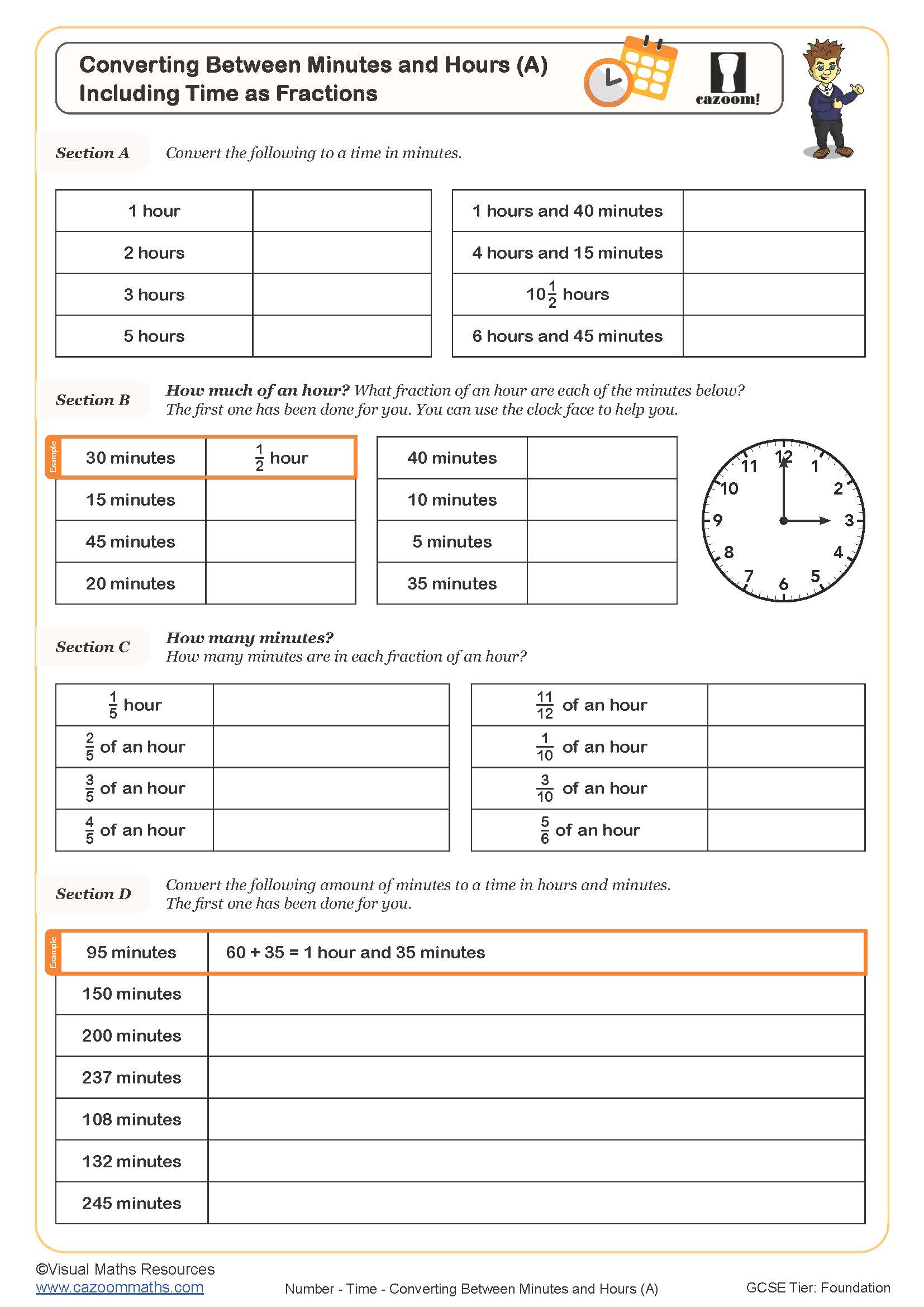
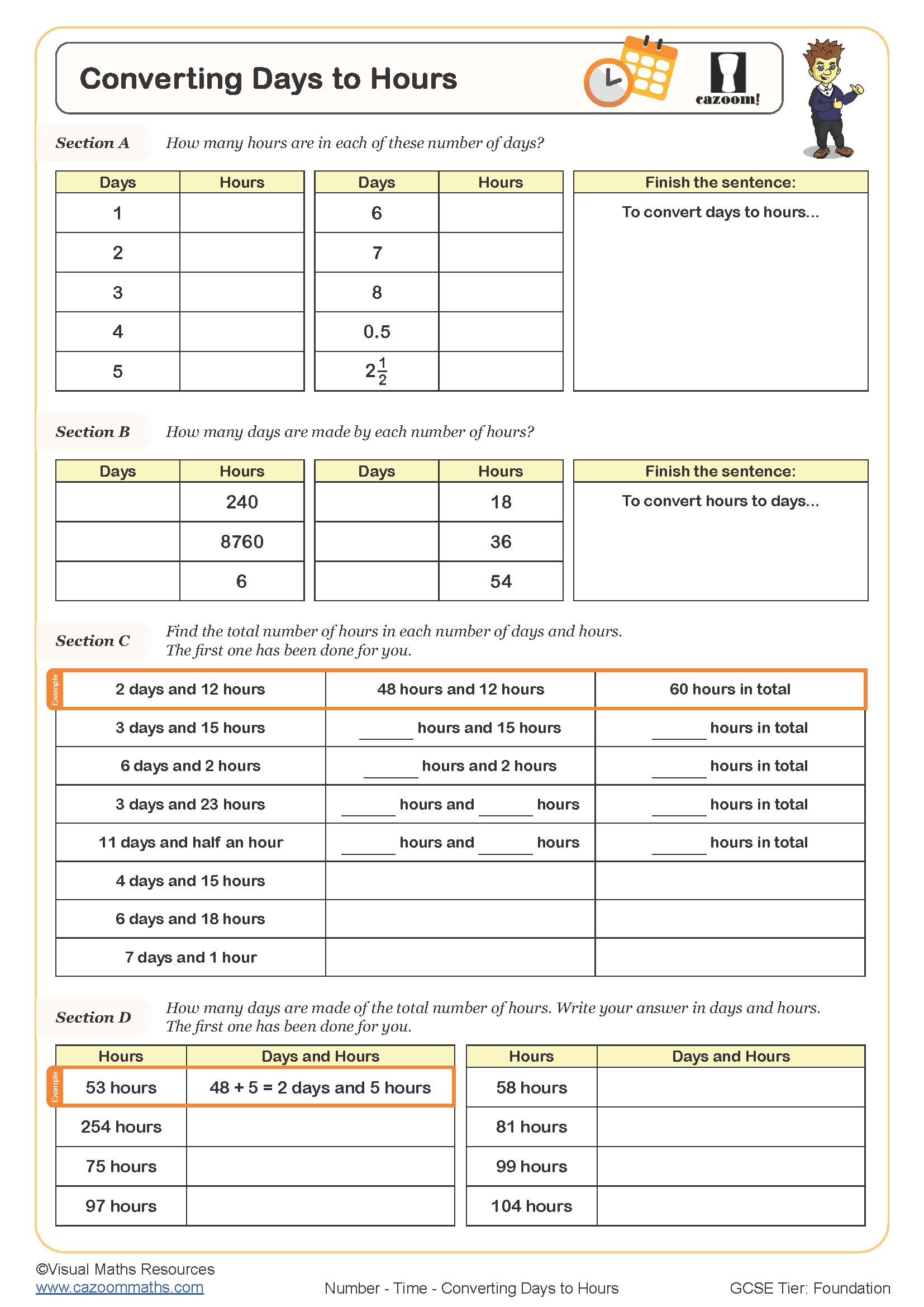
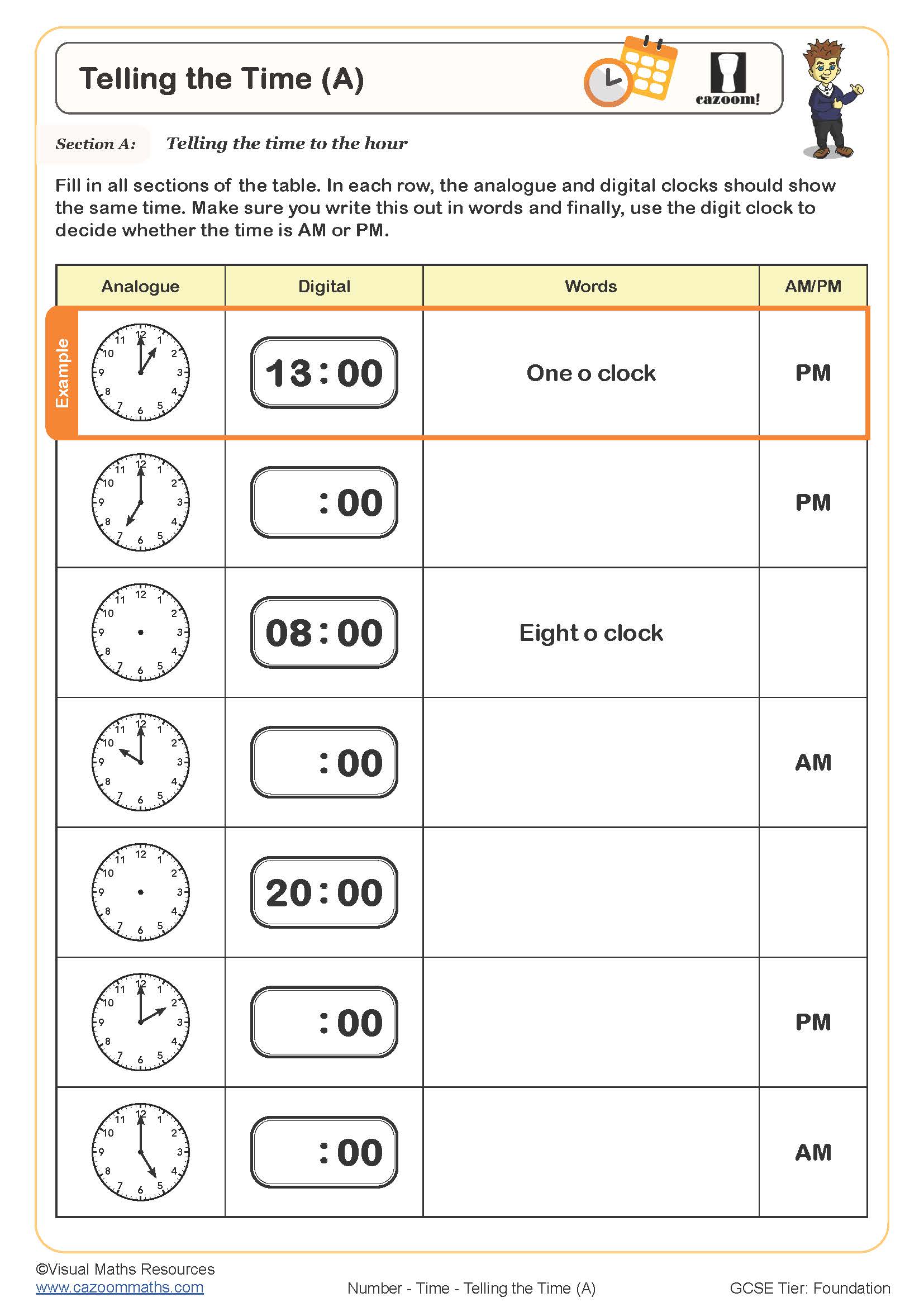
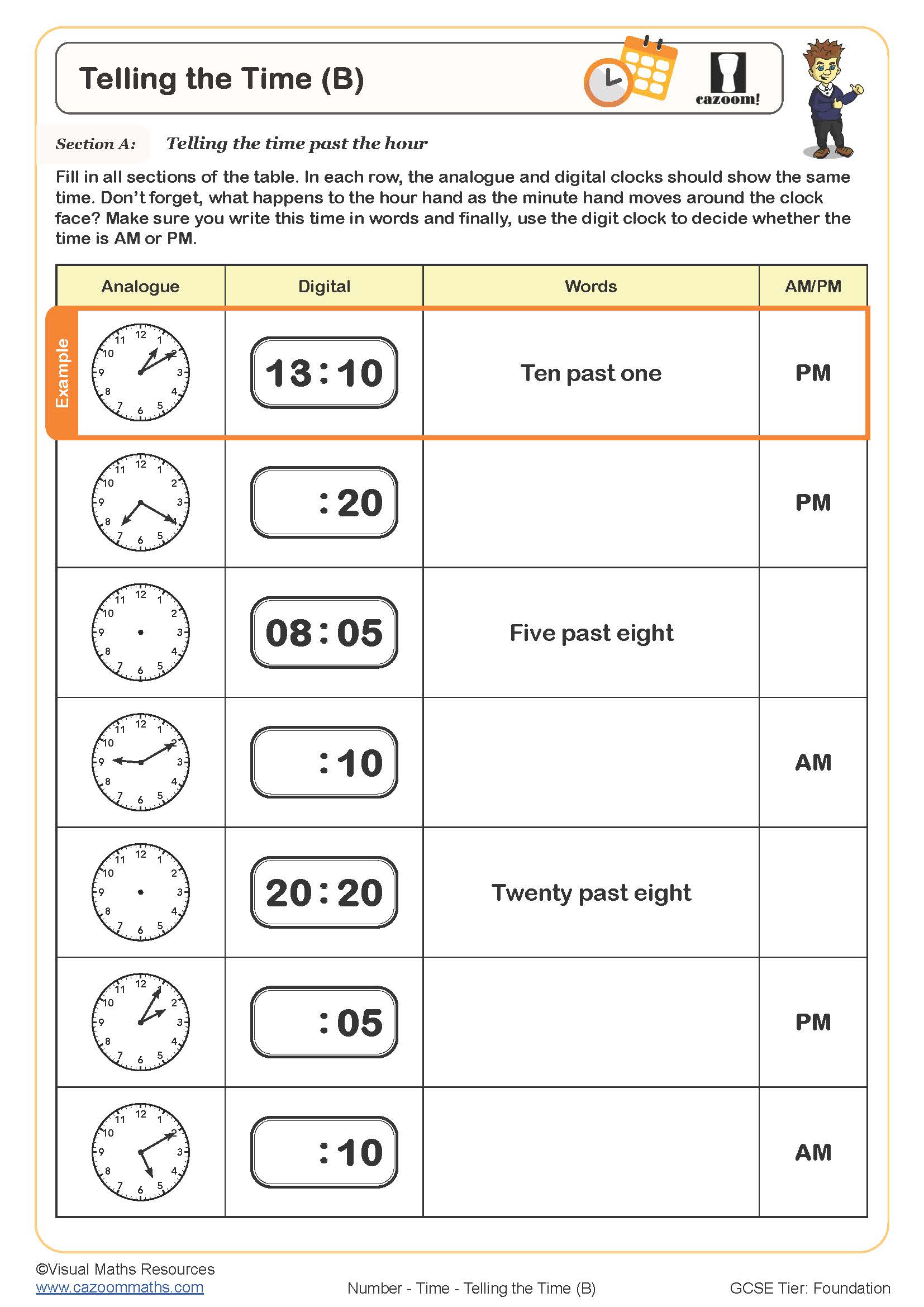
All worksheets are created by the team of experienced teachers at Cazoom Maths.
What skills do time worksheets help students develop?
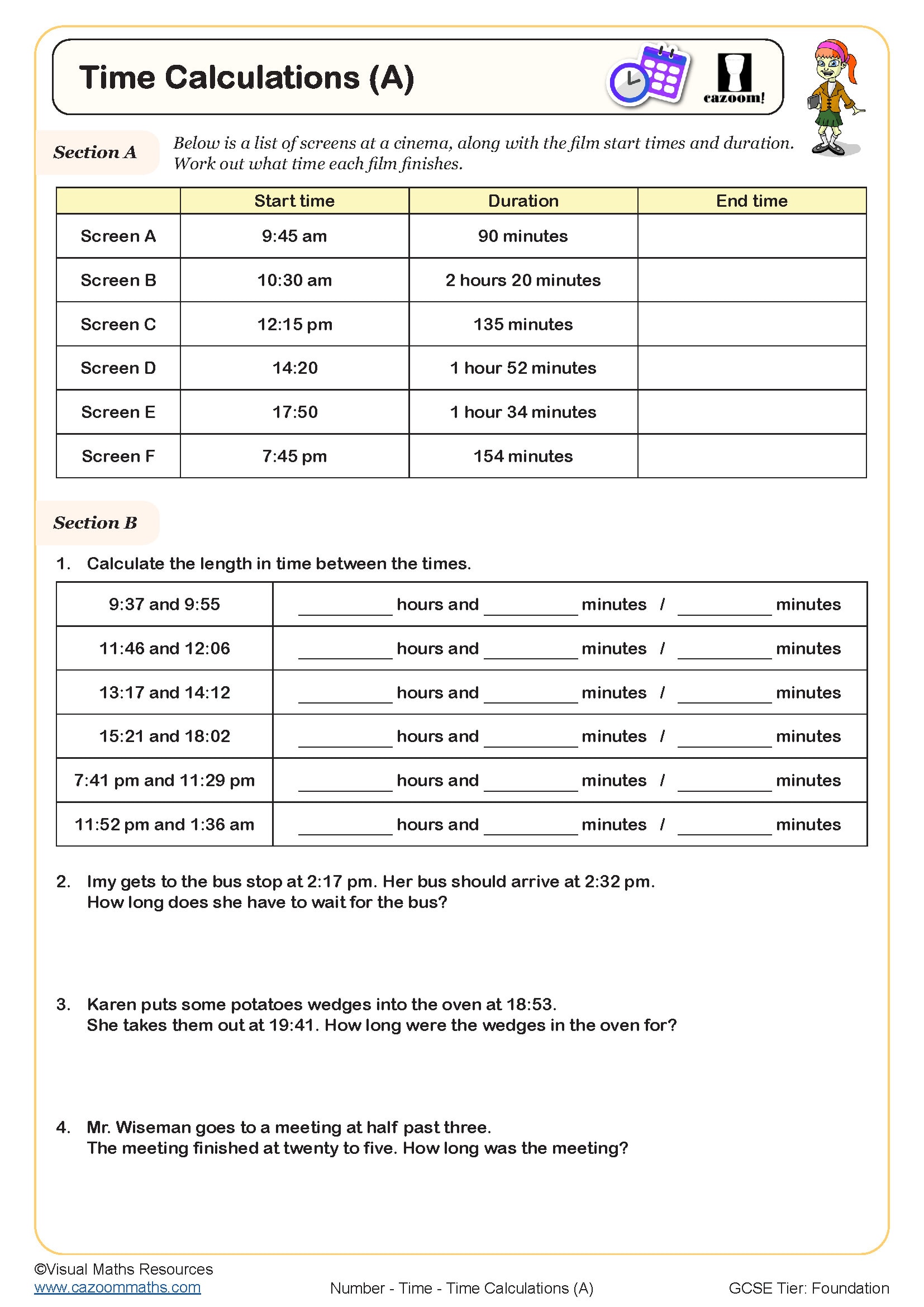
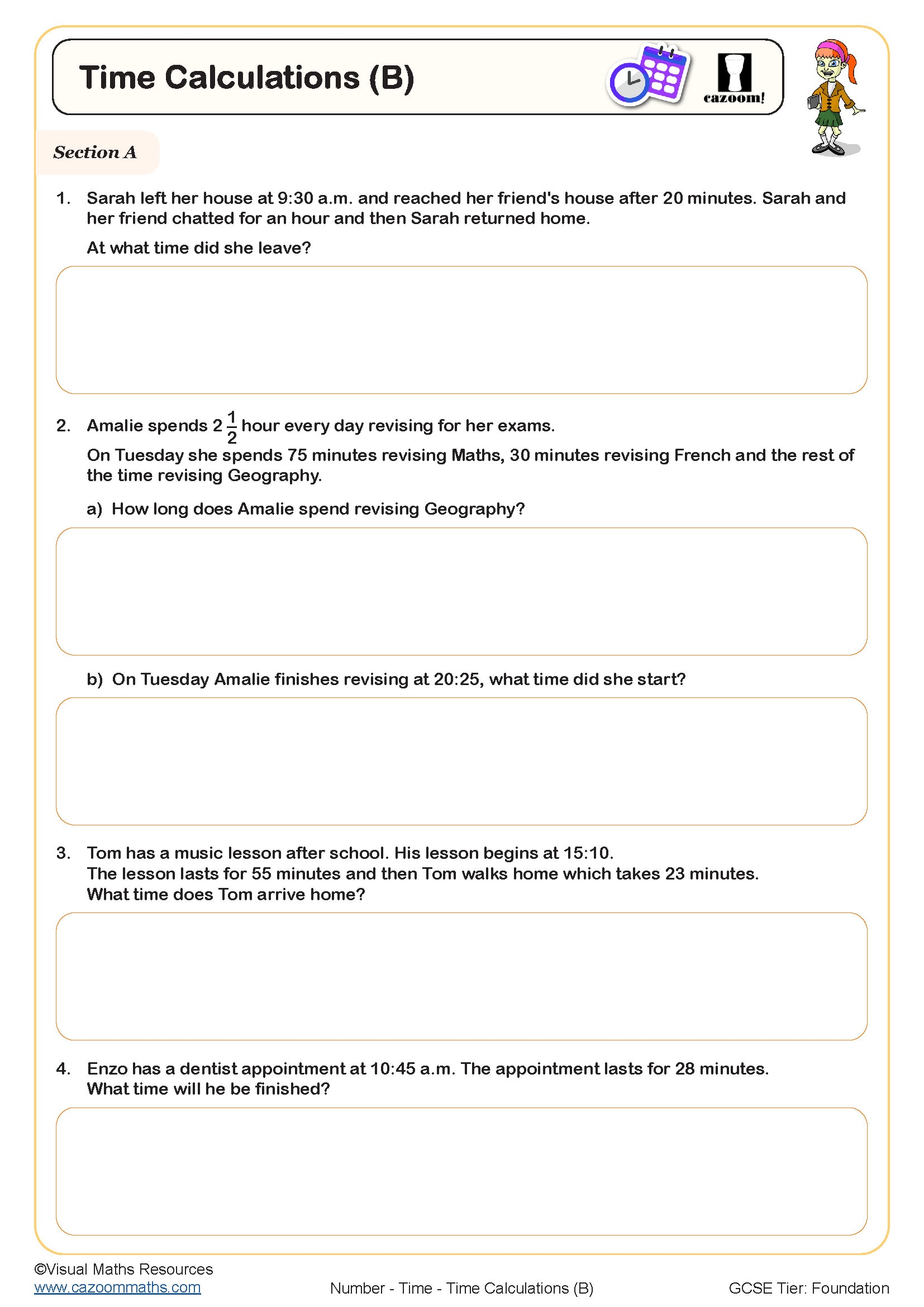
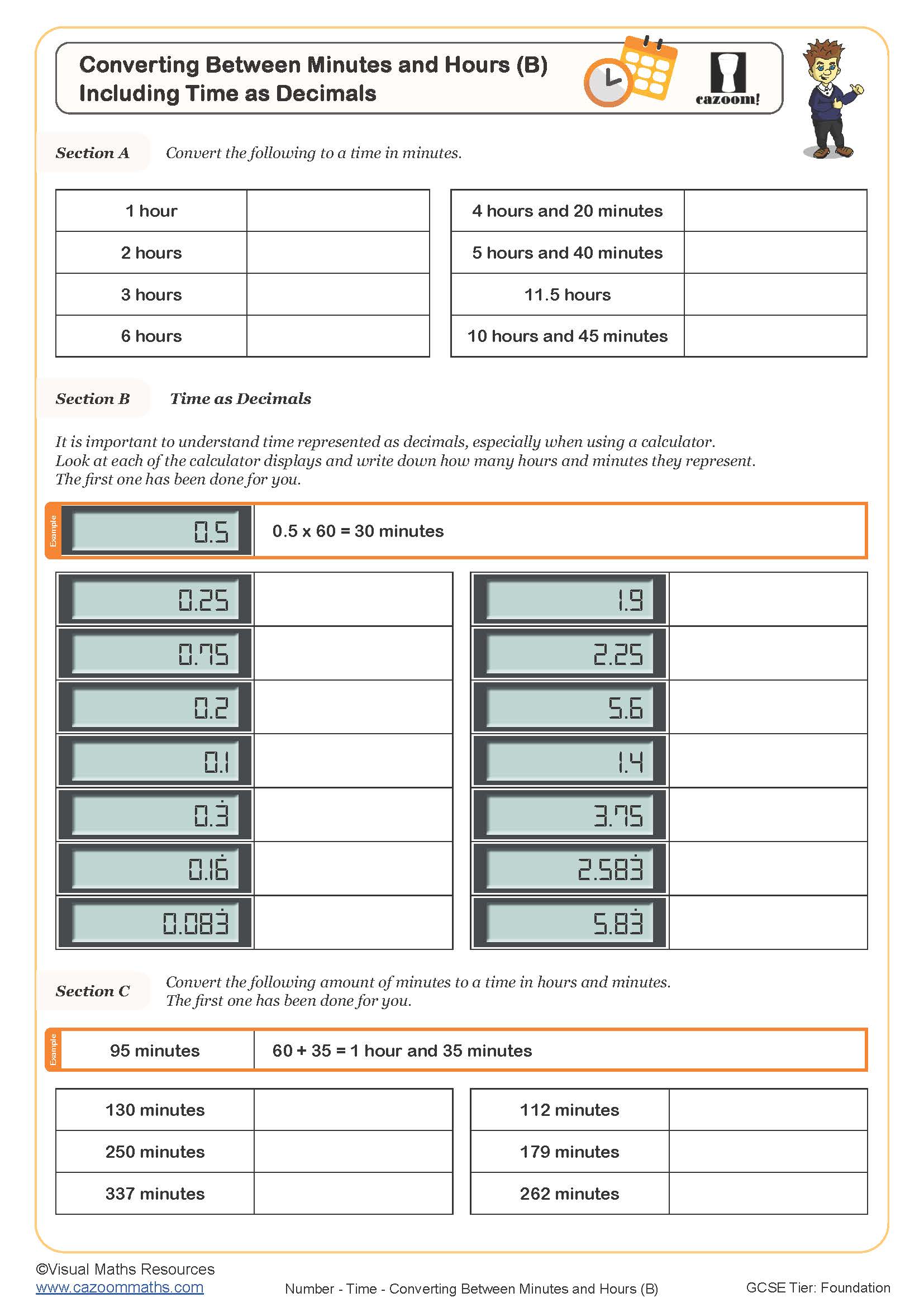
Time worksheets target the Key Stage 3 expectations for working with time, including reading analogue and digital clocks, converting between 12 and 24-hour formats, and calculating time intervals. Students practise structured skills like determining elapsed time, adding and subtracting time periods, and solving real-world problems involving timetables and schedules.
Teachers frequently notice that students make errors when crossing hour boundaries during calculations, particularly when working backwards from a given end time. The worksheet format allows systematic practise of these challenging concepts, with answer sheets enabling students to identify and correct their misconceptions independently.
Which year groups benefit most from these time worksheets?
While time concepts begin in primary school, these worksheets particularly support Years 7 and 8 students who need to consolidate their understanding before tackling more advanced topics. The progression from basic time-telling to complex interval calculations aligns with the increased mathematical demands of secondary school.
Year 9 students often revisit these skills when working with rates, speeds, and proportional reasoning, where accurate time calculations become crucial for success. Teachers report that students who struggle with time concepts in Key Stage 3 often face difficulties later with topics requiring temporal reasoning, making solid foundations practical.
How do these worksheets address 24-hour clock conversion?
The worksheets systematically build students' confidence with 24-hour time through structured practise, starting with straightforward conversions before progressing to more complex scenarios involving calculations. Students work through converting times like 14:30 to 2:30 PM, then advance to problems requiring multiple conversions within single questions.
Teachers observe that students often forget to adjust PM times correctly, frequently writing 3:00 PM as 15:00 instead of recognising it as already converted. The answer sheets help students identify these patterns in their errors, while the progressive difficulty allows teachers to target specific misconceptions effectively.
How can teachers use these worksheets most effectively in lessons?
Teachers find these worksheets work well as starter activities to refresh time concepts before introducing related topics like speed calculations or data handling with time scales. The variety of question types allows differentiation within mixed-ability classes, with some students tackling basic conversions while others work on complex multi-step problems.
The answer sheets prove particularly valuable for peer marking sessions, where students can discuss different approaches to solving elapsed time problems. Many teachers use selected questions for mini-whiteboards work, allowing immediate assessment of whole-class understanding before moving to independent worksheet practise.